Research on Structural Optimization and Process Parameter Response Surface Optimization of Vacuum Low-Temperature Fish Meal Dryer


Abstract
1. Introduction
2. Structural Optimization of the Vacuum Dryer
2.1. Core Defects at the Structural Design Level
2.1.1. Structure of the Transmission Heating Coil
2.1.2. Problems with the Traditional Structure
2.2. Optimal Design of Heating Coils
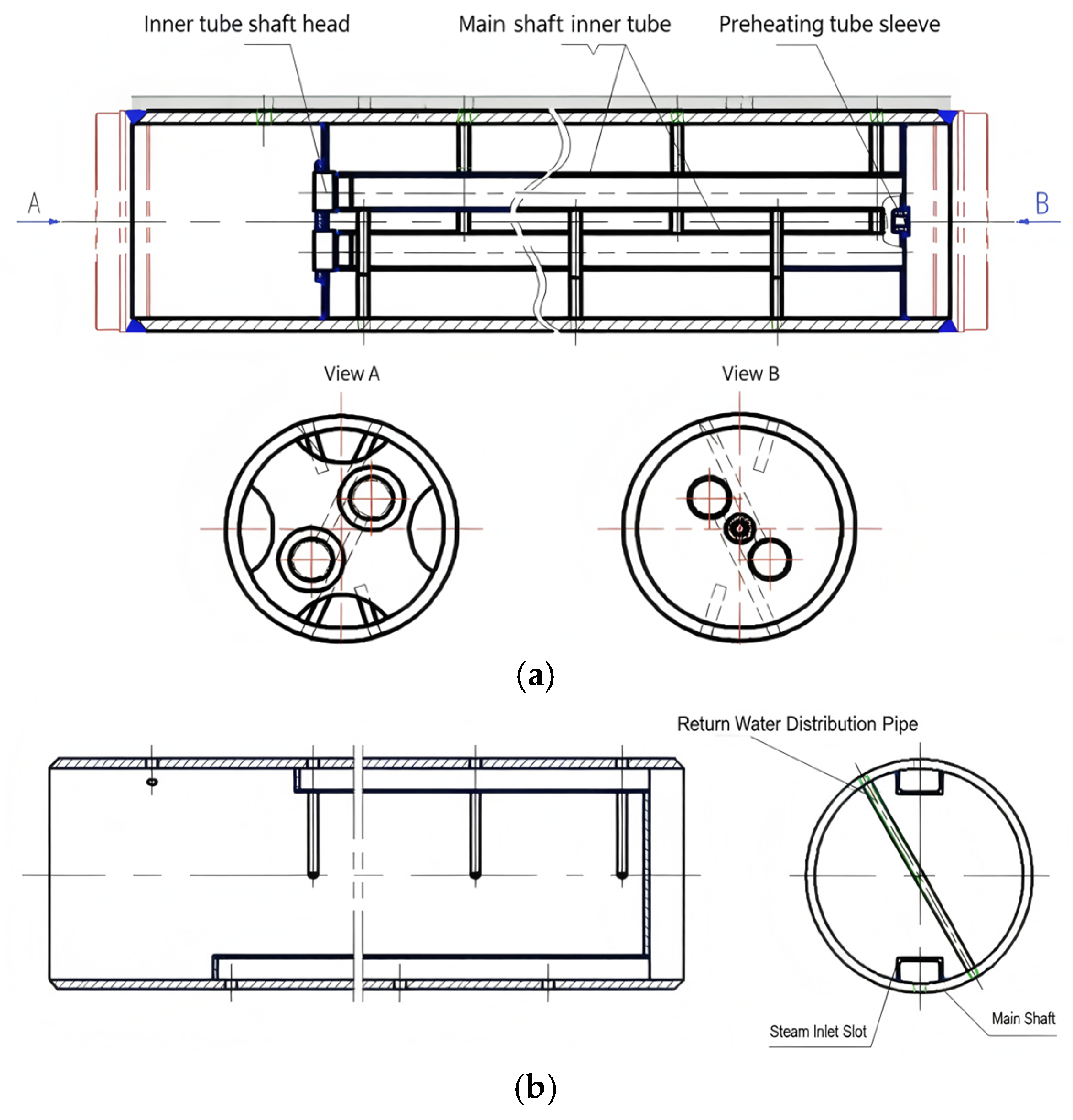
2.2.1. Optimization of the Main Shaft Structure
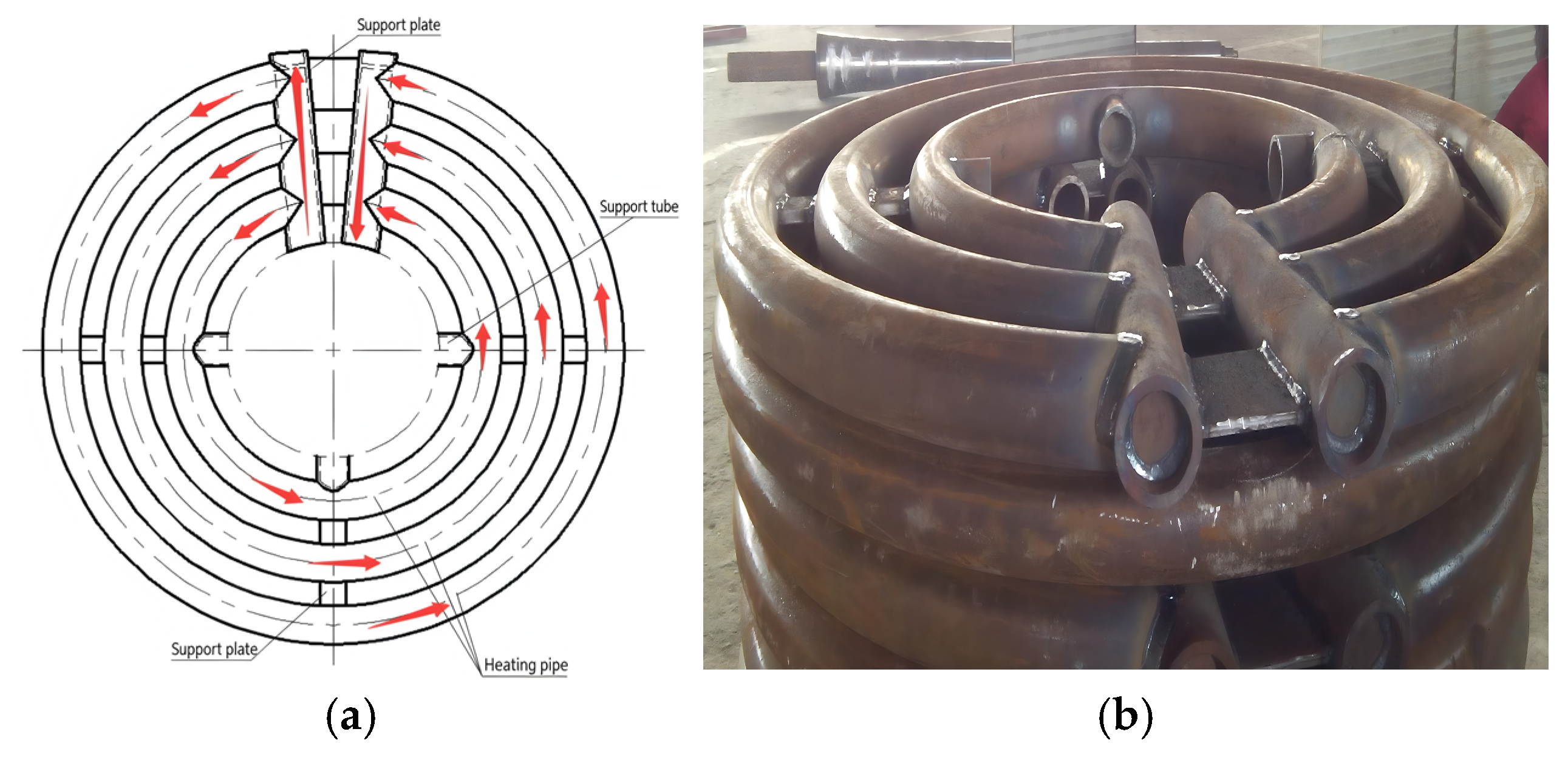
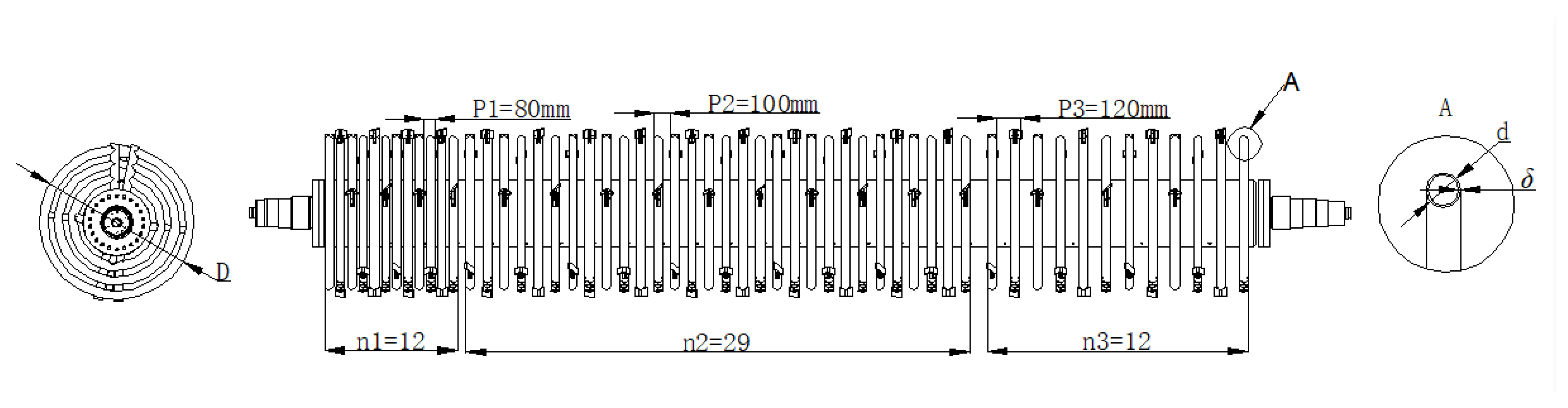
2.2.2. Optimization of the Heating Coil Structure
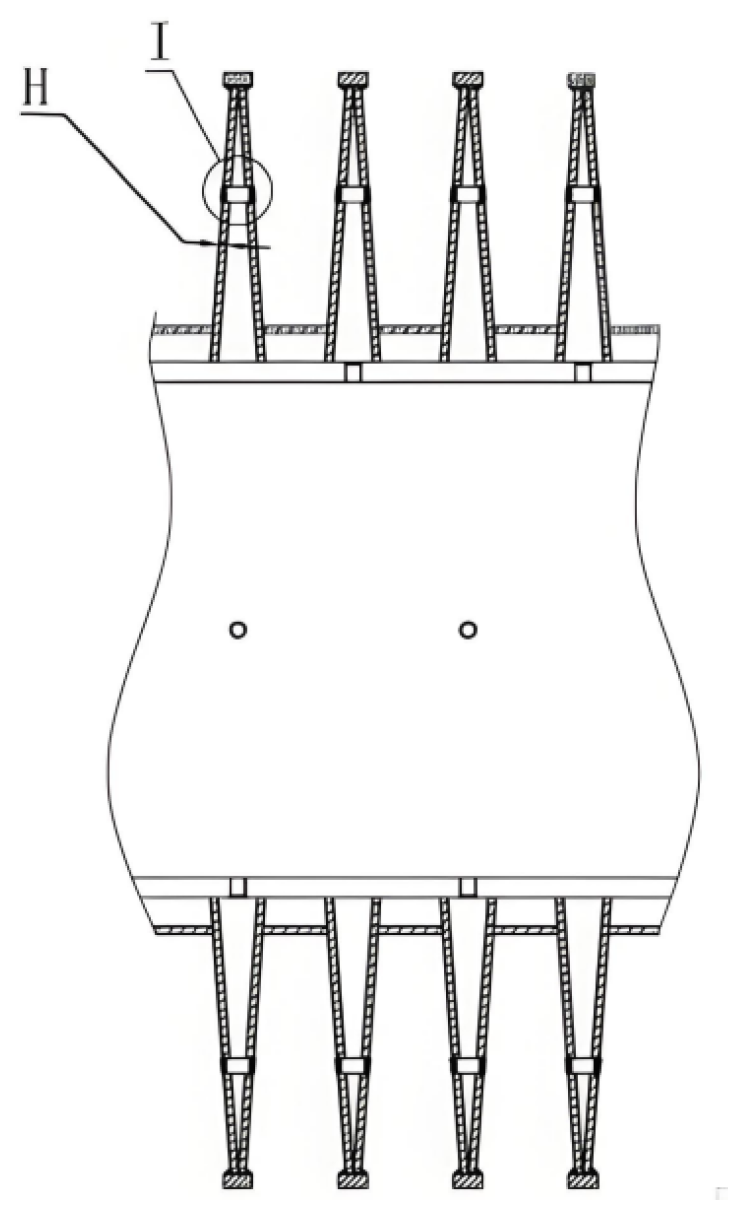
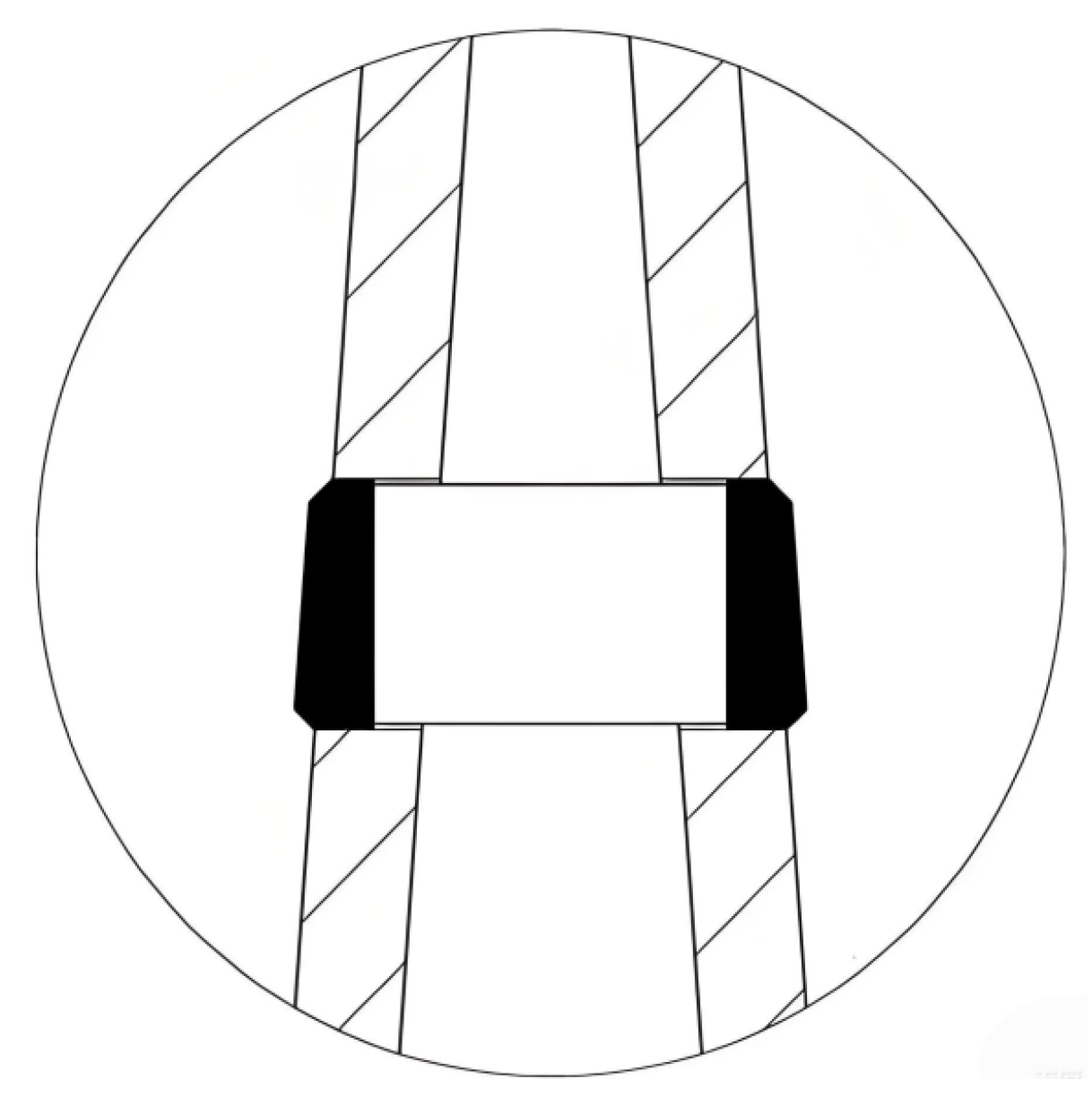
2.2.3. Wear-Resistant Structural Design
2.3. Dimension and Parameter Verification of the Heating Coil
2.3.1. Pipe Wall Thickness Calculation
2.3.2. Computational Models and Fundamental Parameters
- (1)
- Single-turn helix expanded length:
- (2)
- Coil heat transfer area (cylindrical lateral surface area):
- (3)
- Steady-state heat transfer rate:
- (4)
- Heat transfer temperature difference:
2.3.3. Optimized Three-Stage Coil Heat Transfer Power Calculation
2.3.4. Calculation of Heat Transfer Power for Traditional Constant-Pitch Coil Tubes
2.3.5. Comparison and Analysis of Heat Transfer Power
3. Static Structural Analysis of the Spiral Heating Coil
3.1. Equilibrium Control Equations and Modeling
- −
- Material properties: The 304 stainless steel was modeled as an isotropic, linear elastic material with no plastic deformation, creep, or initial defects;
- −
- Deformation state: Structural deformations were small; displacements were much smaller than the geometric dimensions of the structure, and strains remained ≤1%;
- −
- Load conditions: The system was subjected to steady-state static loading only, with no acceleration, impact loads, or dynamic excitation;
- −
- Medium characteristics: The coil was treated as a continuous solid medium, satisfying the applicability conditions of the fundamental equations of elasticity.
- (1)
- Momentum conservation equation: Under steady-state static conditions, the acceleration of the coil’s micro-element was zero, and the net external force vanished. The forces acting on the micro-element comprised surface tractions (represented by the Cauchy stress tensor ) and body forces (in this study, solely gravity). Applying the Gauss divergence theorem to convert the surface integral of tractions into a volume integral—and subsequently dividing through by the micro-element volume—yielded the spatial static equilibrium governing equation
- (2)
- Linear elastic constitutive equation: The one-dimensional Hooke’s law, , was extended to three-dimensional space. Both the stress tensor and the strain tensor are second-order tensors, and their linear relationship is governed by the fourth-order elastic stiffness tensor , yielding the three-dimensional linear elastic constitutive equation
- (3)
- Geometric strain displacement equation: Under the assumption of small deformation, to ensure the symmetry of shear strain (shear strain ), strain is defined by the symmetric part of the displacement gradient. Let the displacement vector of the infinitesimal element be
3.2. Geometric Models and Material Properties
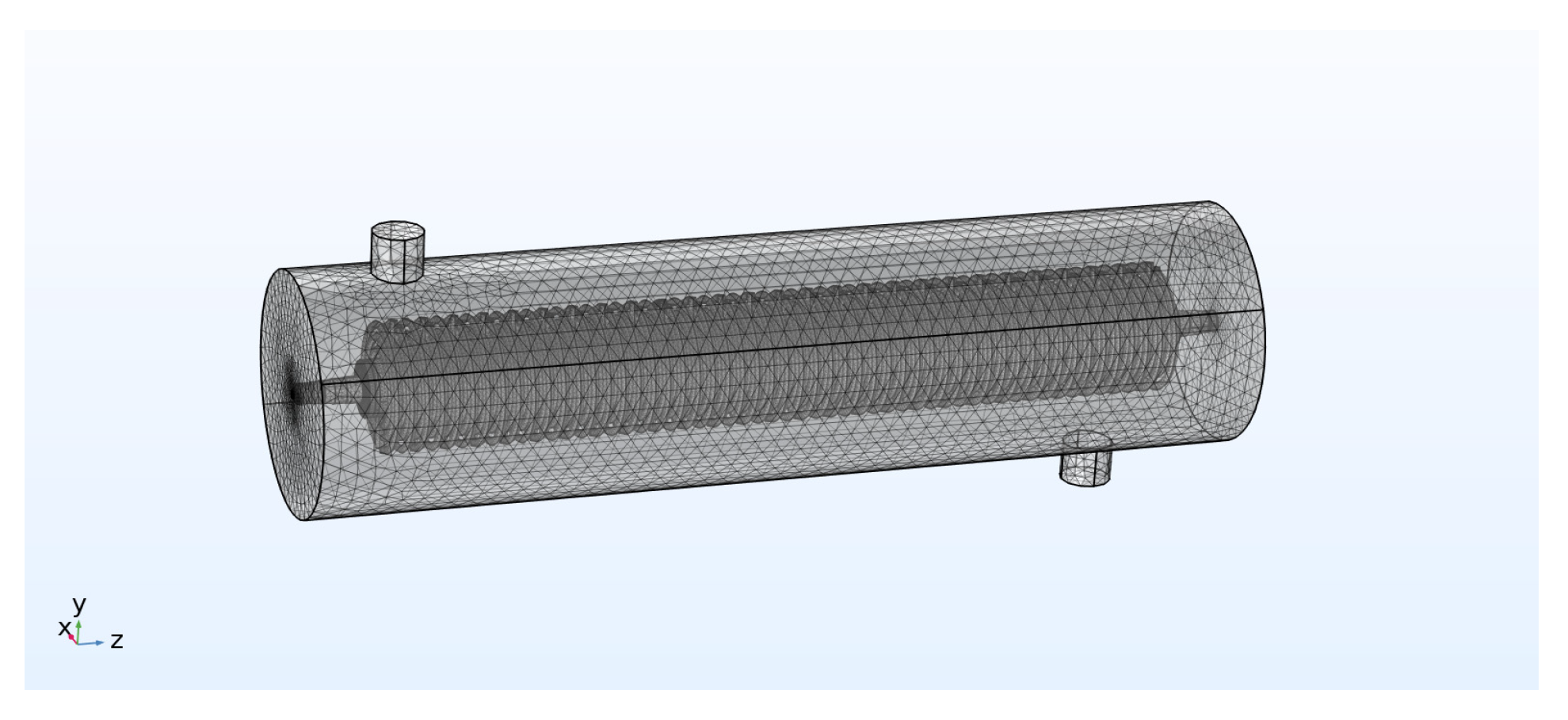
3.3. Grid Distribution Design and Independence Verification
3.4. Boundary Conditions
- (1)
- Displacement constraints: Both ends of the coil were fully clamped, consistent with its rigid mounting configuration in service.
- (2)
- Body force: A uniform gravitational acceleration of 9.81 m/s2 was applied in the negative y direction, accounting for the self-weight of the 304 stainless steel coil and the enclosed fish meal material.
- (3)
- Surface traction: Pressure loads representing bulk material loading were applied to the coil’s outer cylindrical surface. Under the full-load condition—corresponding to a total fish meal mass of 5000 kg—the resulting nominal pressure was 12.5 kPa, which was uniformly distributed over the loaded surface area.
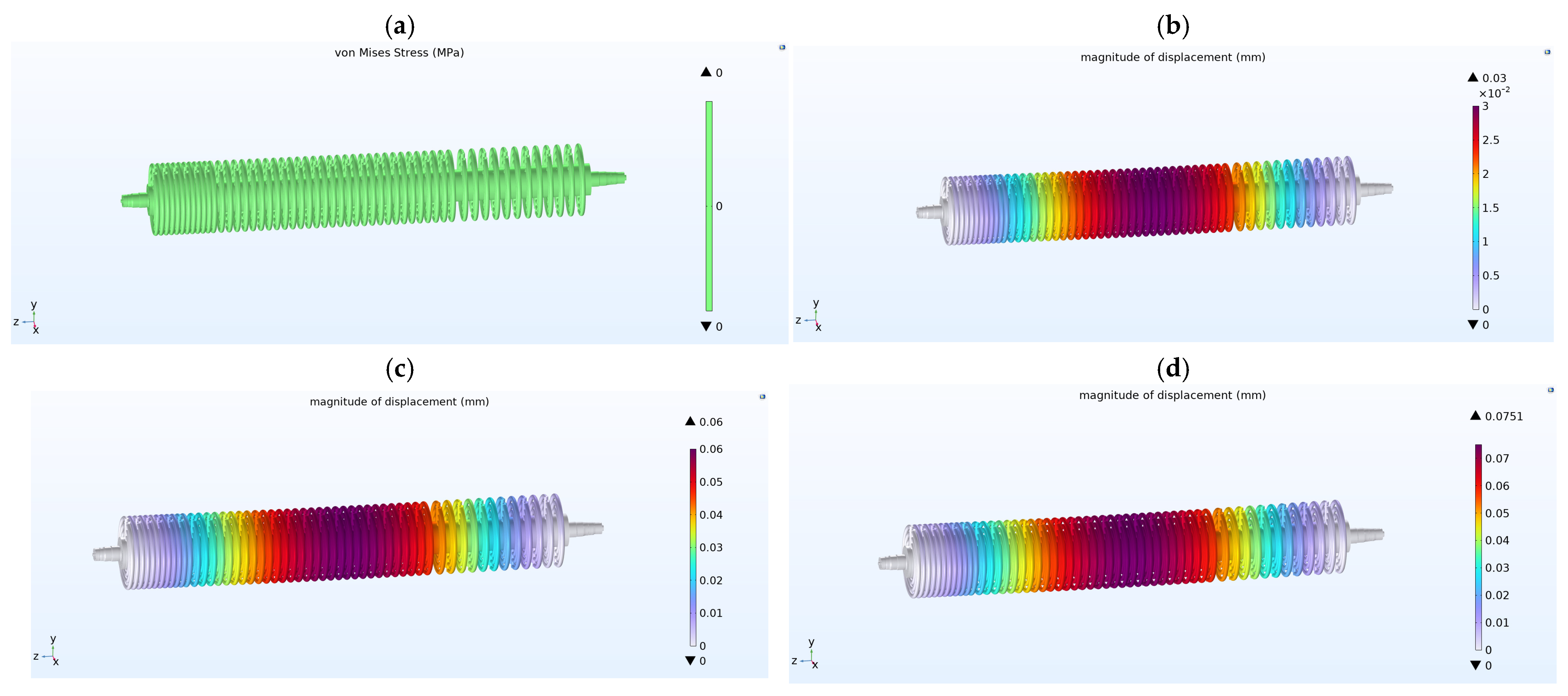
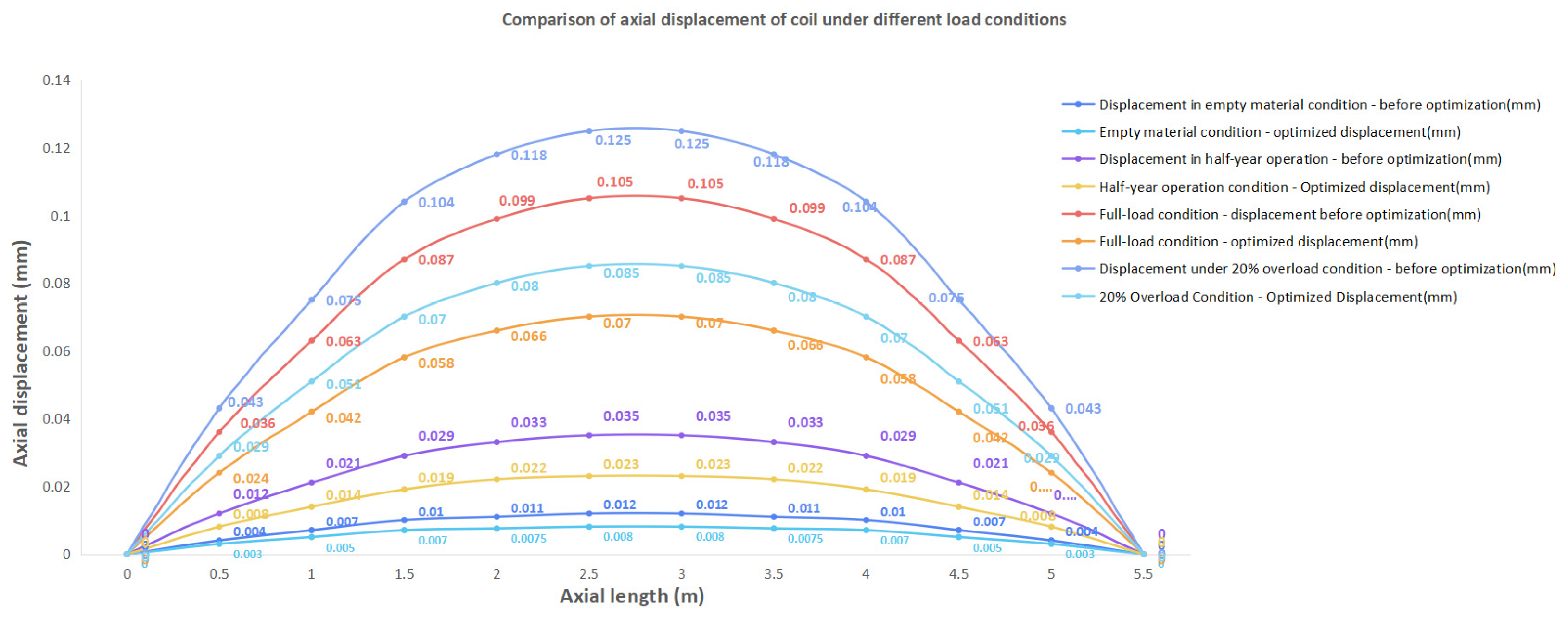
3.5. Displacement Field Distribution and Stiffness Verification
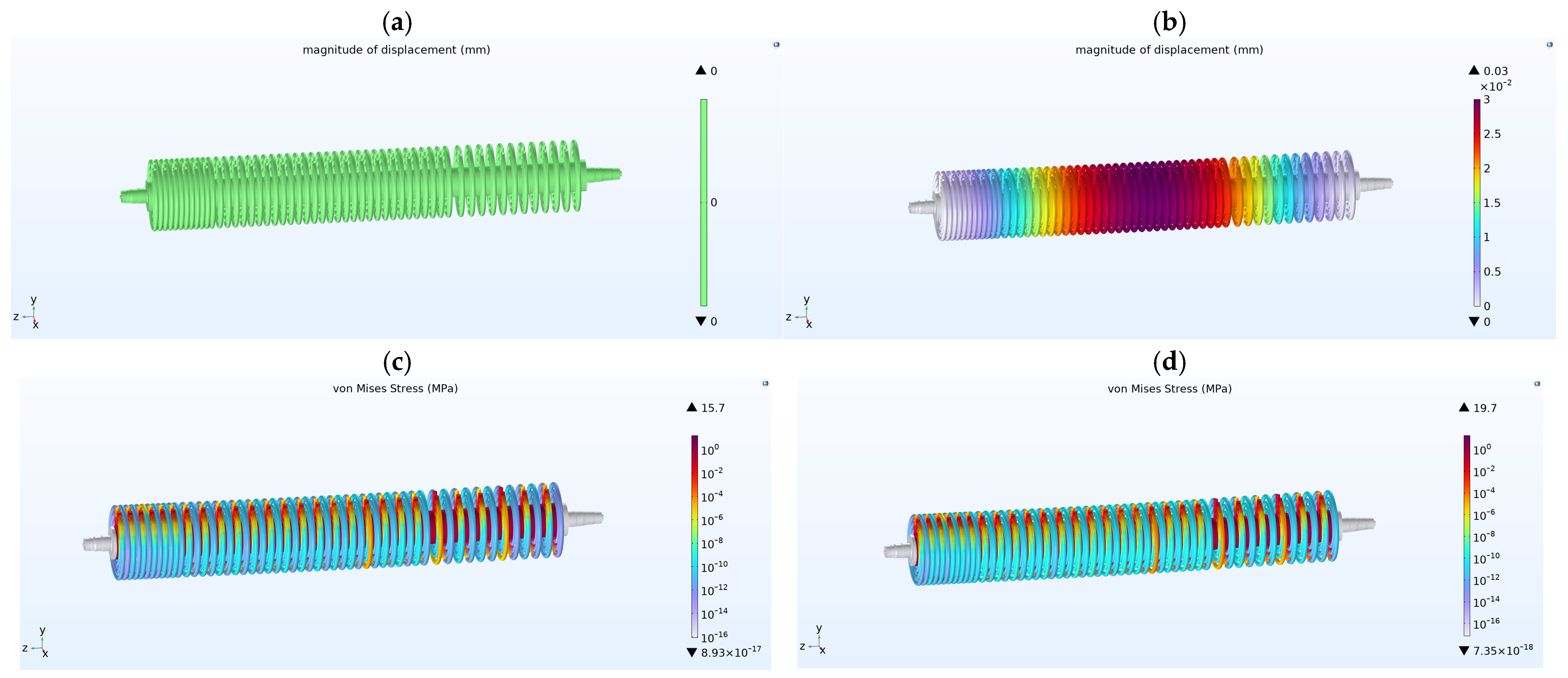
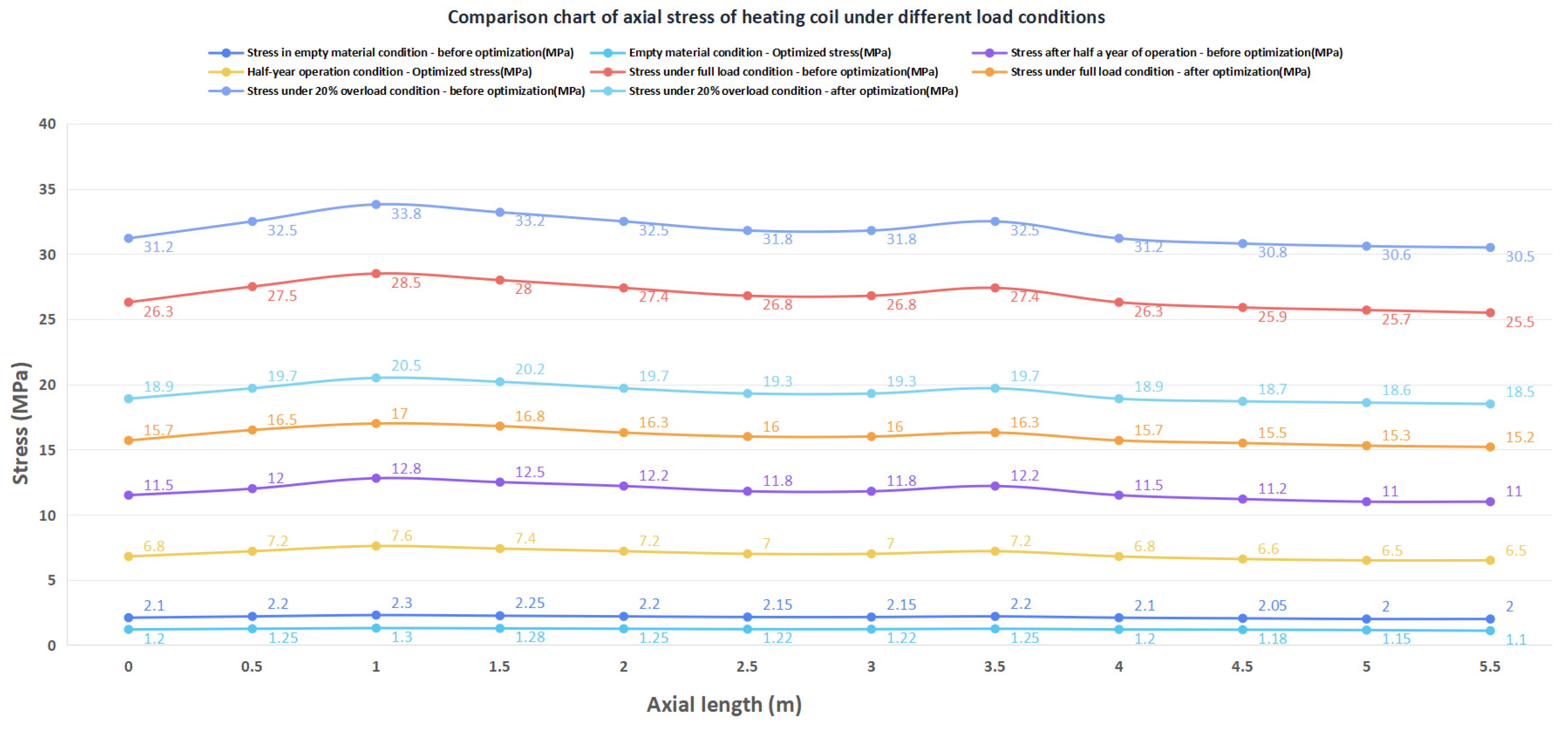
3.6. Stress Field Distribution and Structural Strength Assessment
4. Thermal Simulation Analysis of Spiral Heating Coil
4.1. Comparative Analysis of Temperature Field Distribution
- − Convection heat transfer in the vacuum chamber was negligible; only conduction, radiation, and phase-change heat transfer occurred.
- − Fish meal was modeled as a uniform, isotropic porous medium satisfying the equivalent continuum theory.
- − The heating steam flowed under steady-state conditions, and heat conduction through the pipe wall was governed by steady-state conduction.
- − The chamber insulation layer remained intact, with zero heat loss from the outer surface; thus, the outer boundary was treated as adiabatic.
4.1.1. Governing Equation for Heat Transfer
- (1)
- Energy conservation equation for solid regions: Based on the first law of thermodynamics (the principle of energy conservation) and Fourier’s law of heat conduction, the net rate of heat transfer into a differential element in a steady-state, source-free, and macroscopically stationary solid region is zero, ensuring local thermal equilibrium. This yields the governing equation when combined with Fourier’s law:
- (2)
- Equivalent heat transfer model for porous media: Fish meal was modeled as a solid–gas two-phase porous medium. The equivalent thermal conductivity was computed using the volume-weighted averaging method, where the total conductive heat flux equaled the sum of the contributions from the solid matrix and the pore gas. The resulting expression for the equivalent thermal conductivity is
- (3)
- Latent heat source term: Based on the phase-change heat transfer theory for water evaporation, latent heat was absorbed during liquid water evaporation in the fish meal drying process and modeled as a negative volumetric heat source term in the energy equation [28]. The expression for the latent heat absorption rate per unit volume is
- (4)
- Radiative heat transfer equation: Based on the Stefan–Boltzmann law and the surface-to-surface (S2S) radiation model, radiative heat exchange between the silo wall and the material dominated in vacuum conditions where convective heat transfer was absent. The net radiative heat flux density at a gray diffuse surface is
4.1.2. Material Properties
4.1.3. Boundary Conditions and Numerical Solution Configuration
- (1)
- Coil inlet: The heating inlet temperature was set to 70 °C, and the flow velocity was 0.8 m/s; the convective heat transfer coefficient h inside the tube was calculated using the Dittus–Boelter correlation:
- (2)
- Outer wall of the warehouse: A 0-mm-thick silica–alumina insulation layer was used, modeled as an adiabatic boundary (heat flux density = 0);
- (3)
- Initial conditions: The model’s initial temperature was 25 °C;
- (4)
- Solver: A steady-state solver with a relative residual convergence criterion of 1 × 10⁻⁶ was used.
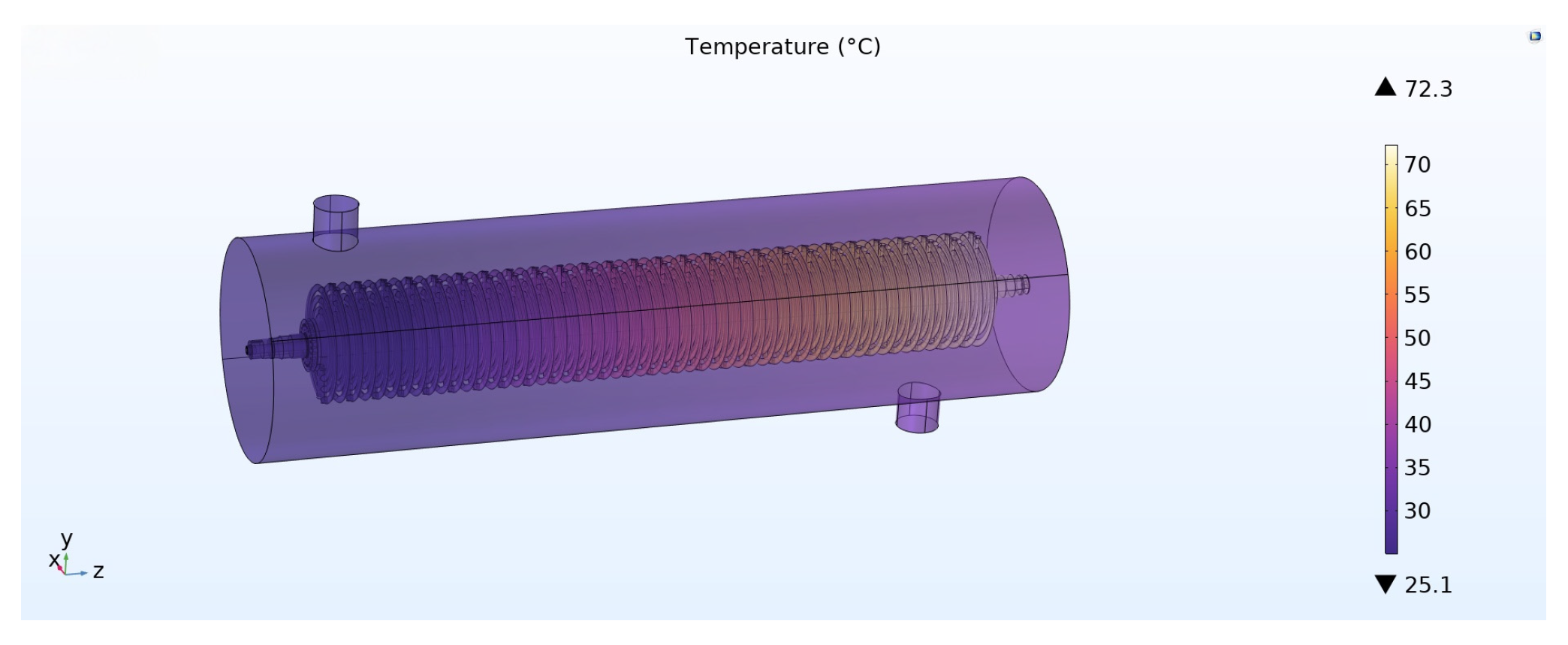
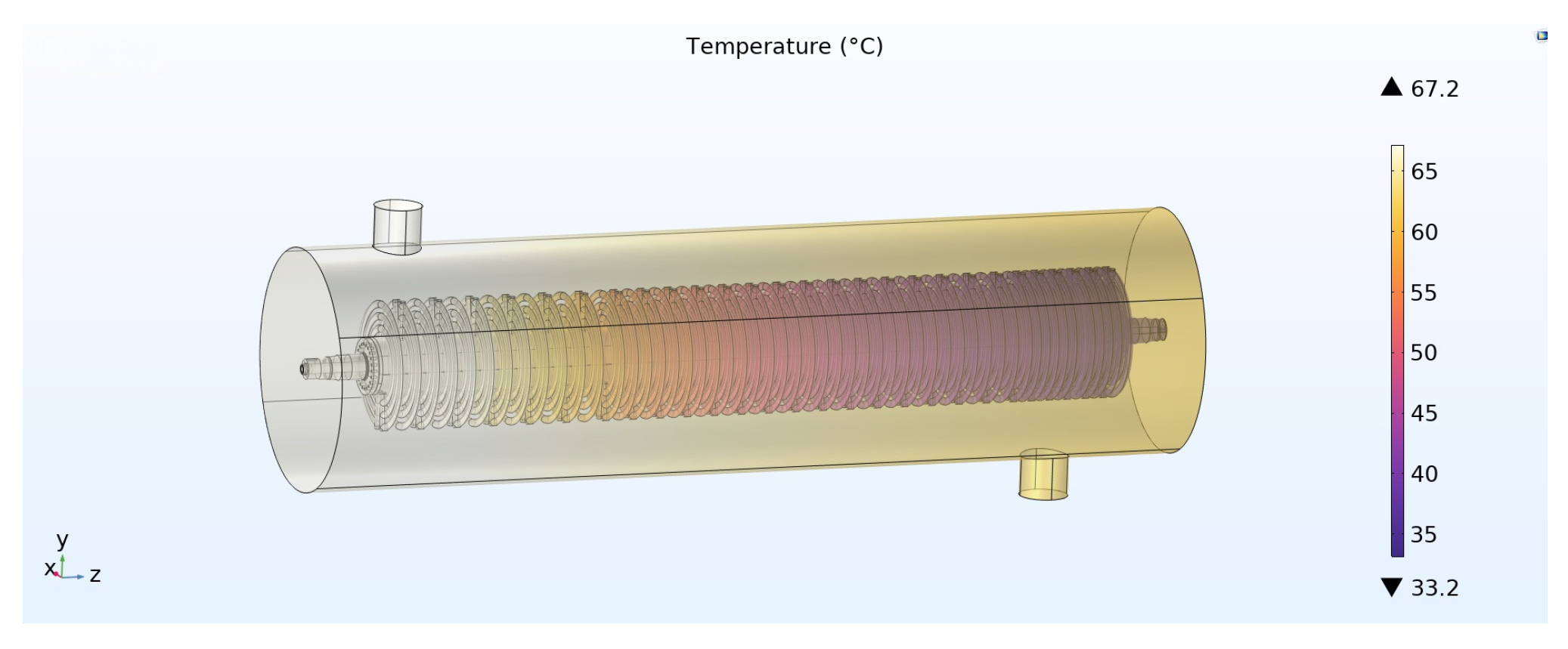
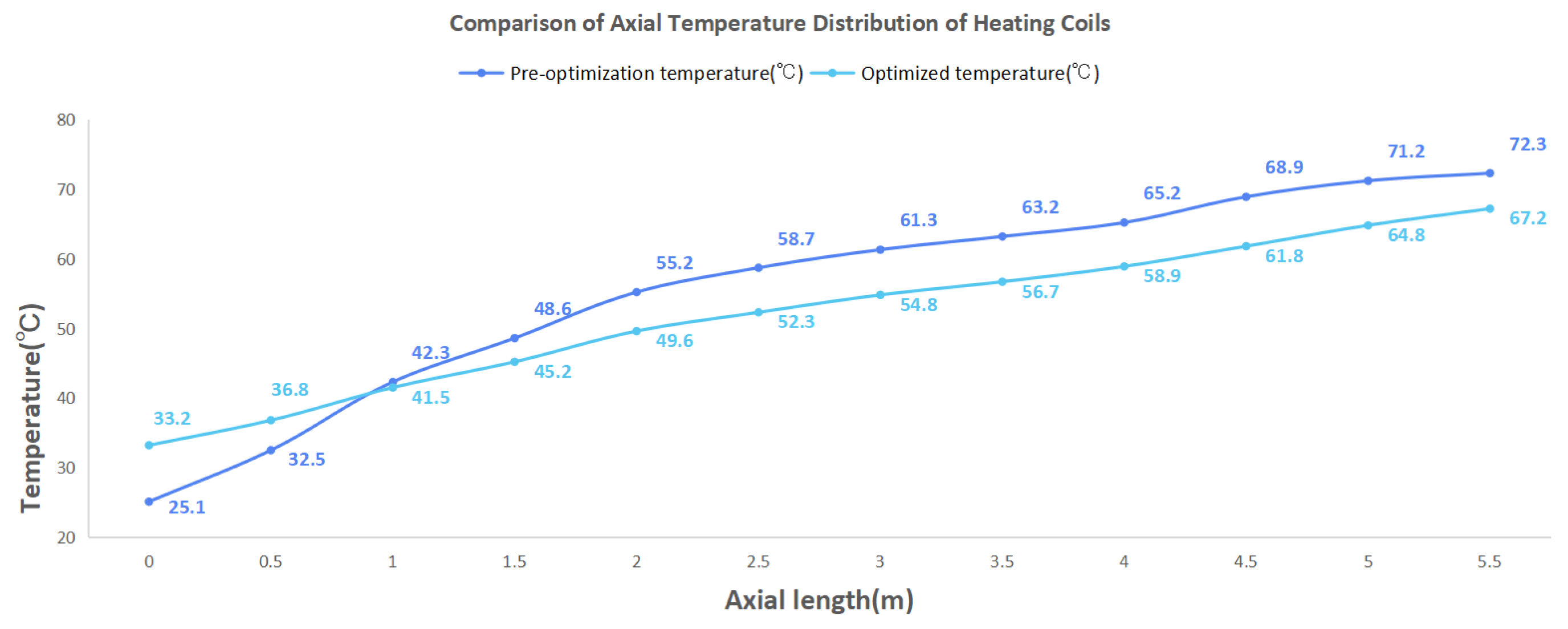
4.1.4. Comparative Analysis of Simulated Temperature Distributions
4.2. Thermo-Mechanical Coupled-Field Simulation
4.2.1. Governing Equation for Thermoelastic Stress
- (1)
- Continuity equation for linear momentum
- (2)
- Thermoelastic Constitutive Equation
4.2.2. Materials and Boundary Conditions for Coupled Simulation
- (1)
- Displacement constraints: The two ends of the coil pipe were fixed.
- (2)
- Temperature load: The simulation results of the mapped temperature field were used (with consistent grids to avoid interpolation errors).
- (3)
- Gravity load: This was set to 9.81 m/s2 in the y direction.
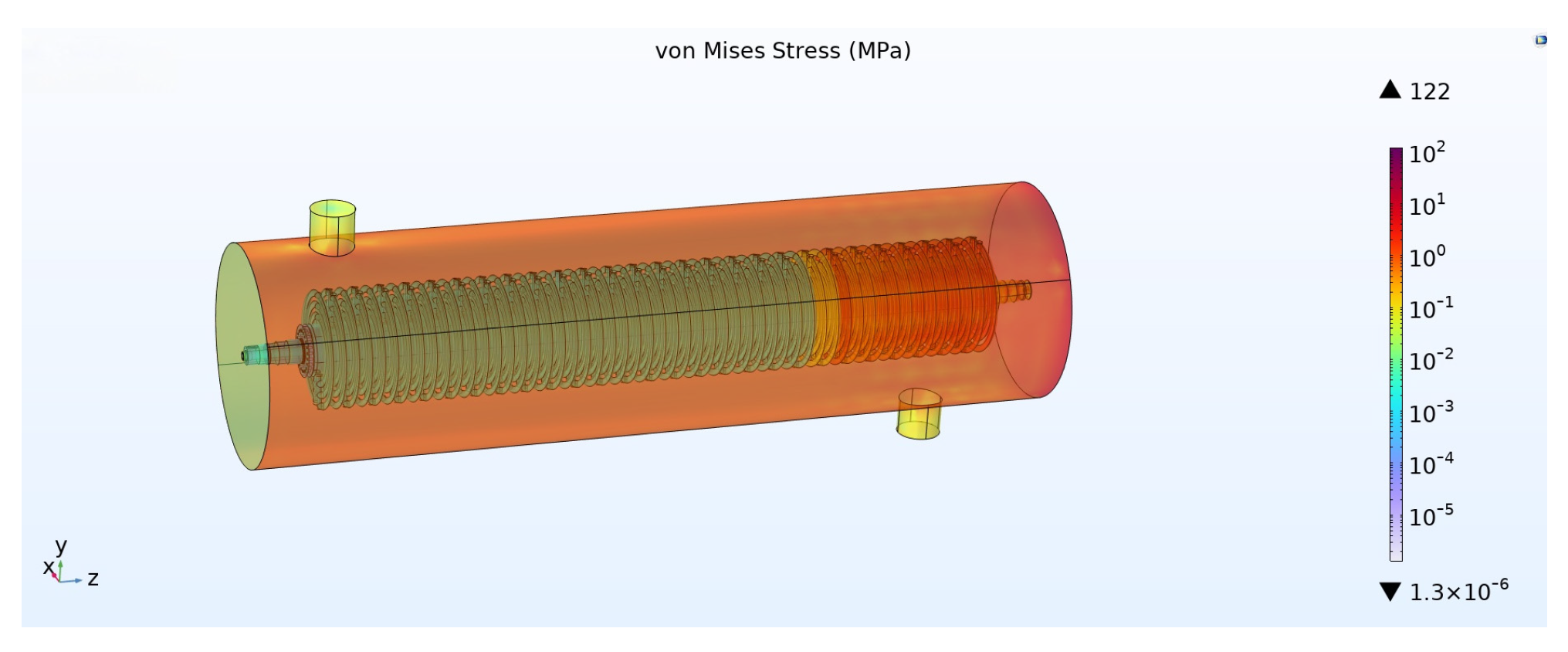
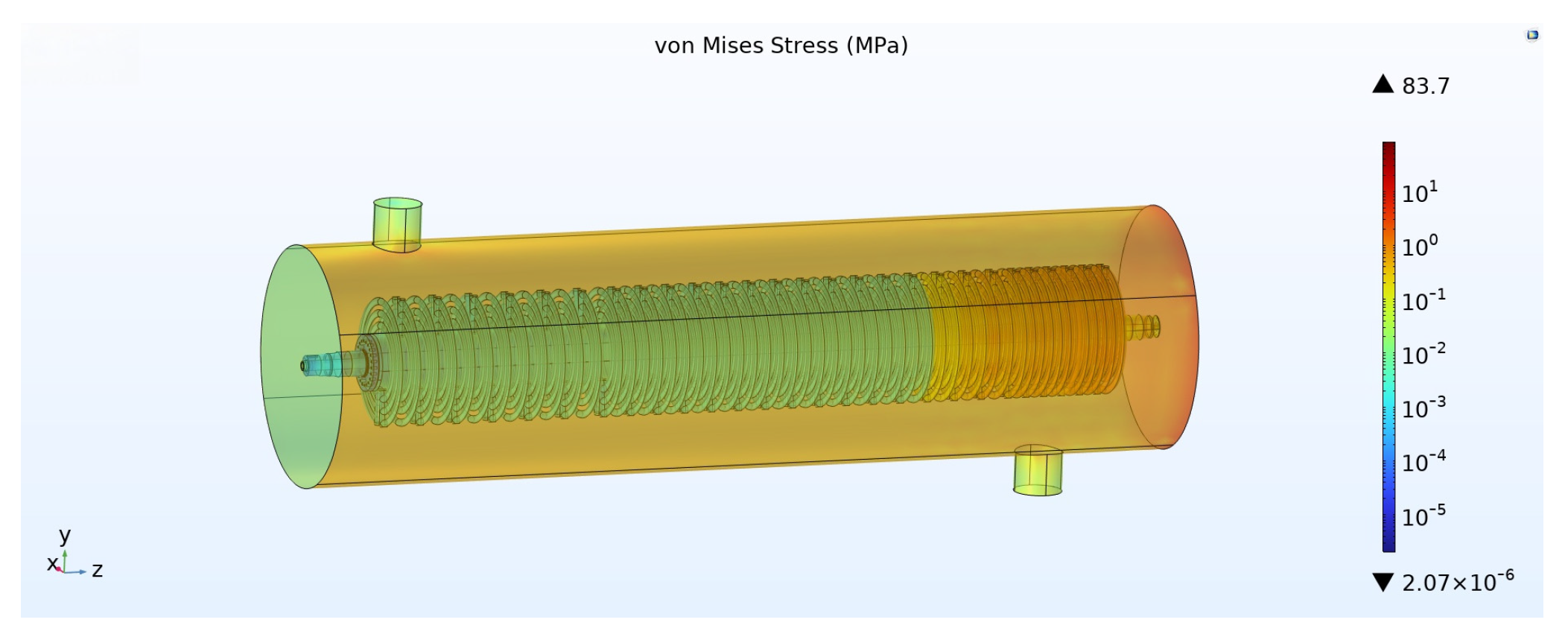
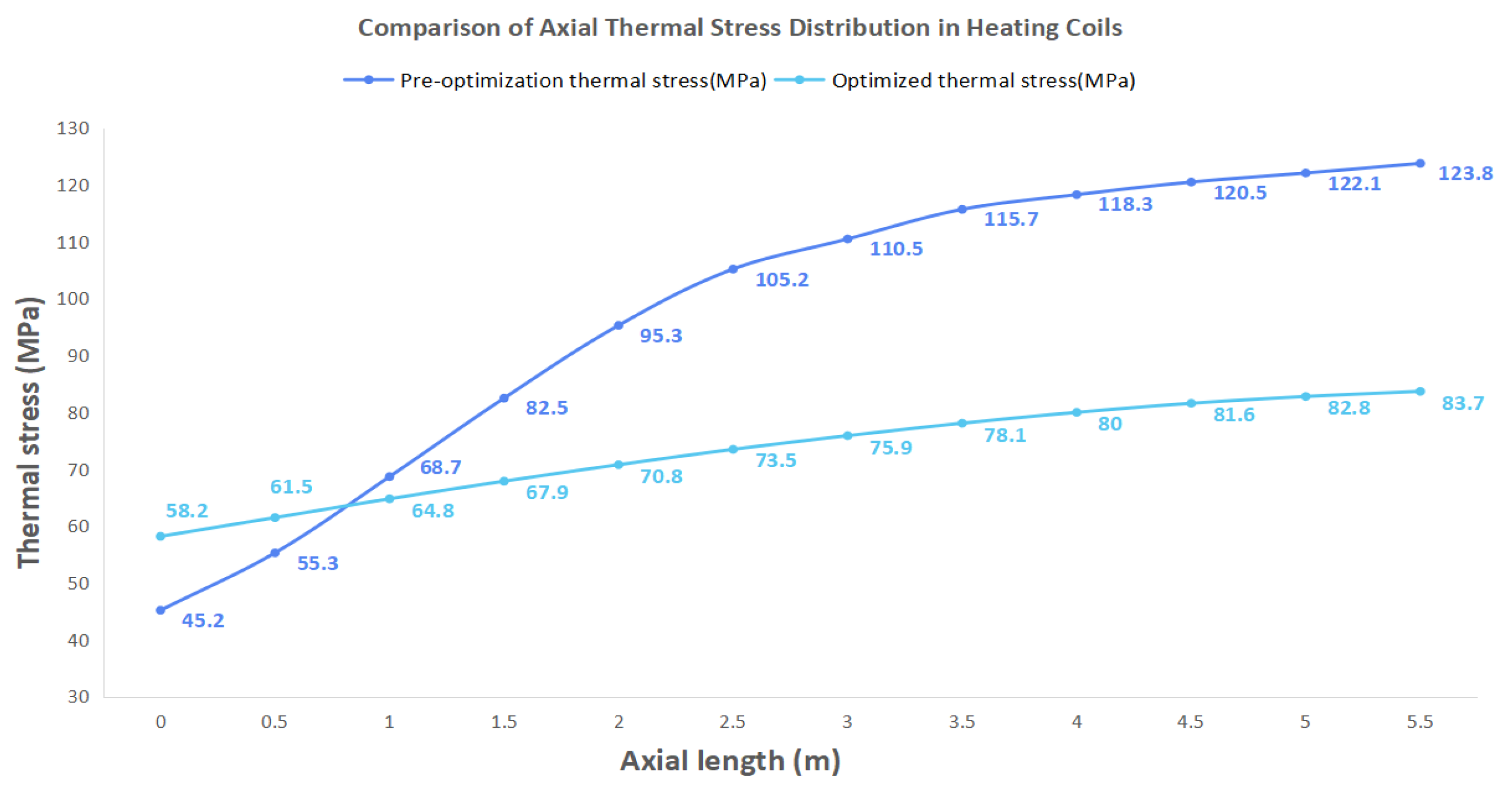
4.2.3. Comparison of Thermal Stress Simulation Results
4.3. Calculation and Analysis of Thermal Fatigue Life
4.3.1. Fatigue Life Calculation Model
- (1)
- Miner’s damage criterion: Derived from linear fatigue damage accumulation theory, this criterion states that material fatigue failure occurs when the cumulative damage across all stress levels reaches unity, i.e., the critical value of one, representing the threshold of fatigue failure. Consequently, the following relationship was obtained:
- (2)
- S-N fatigue curve
- (3)
- Mean Stress Correction
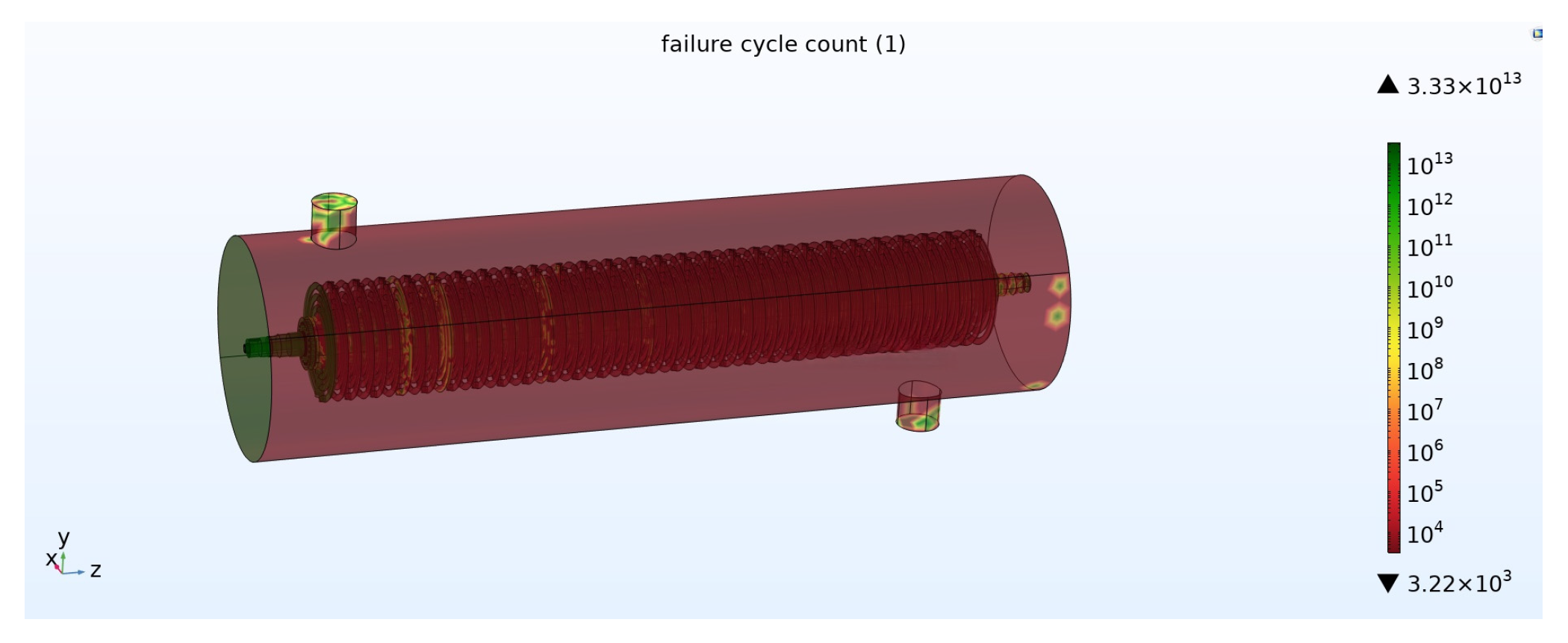
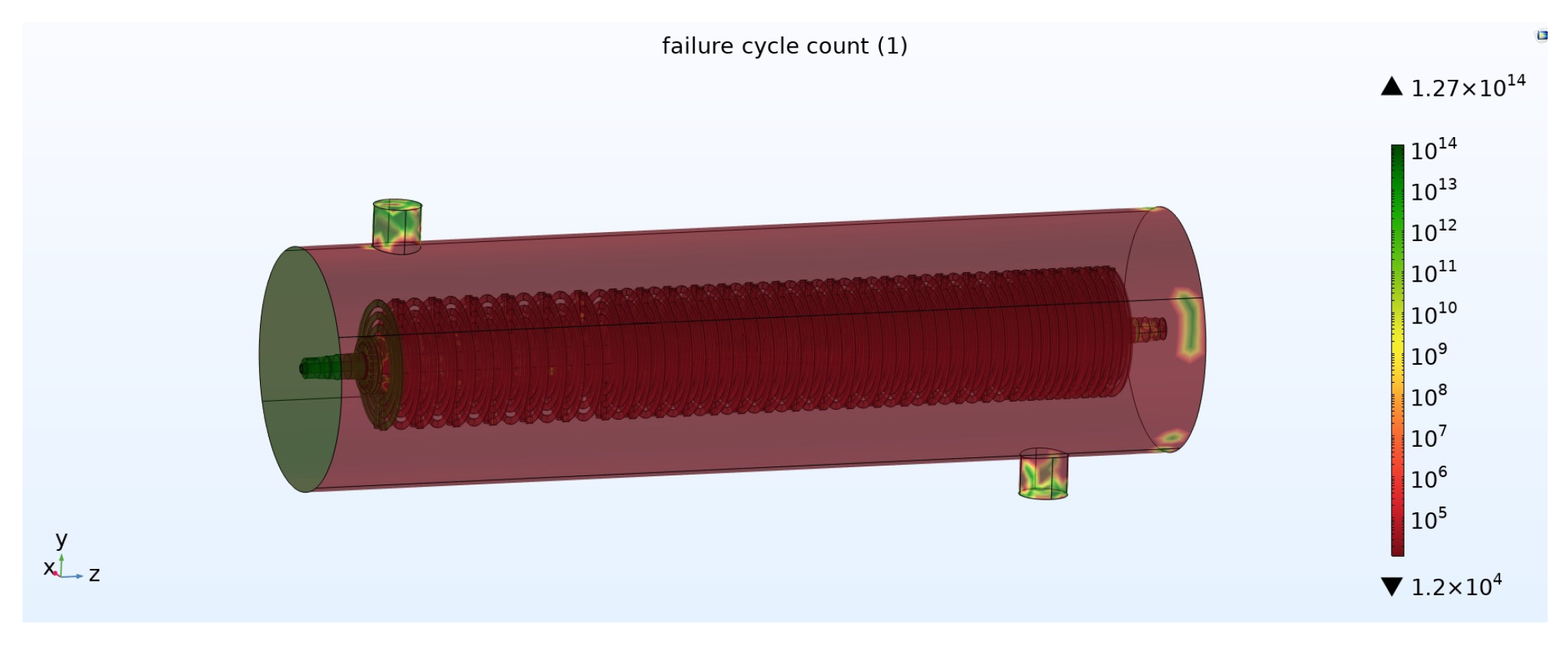
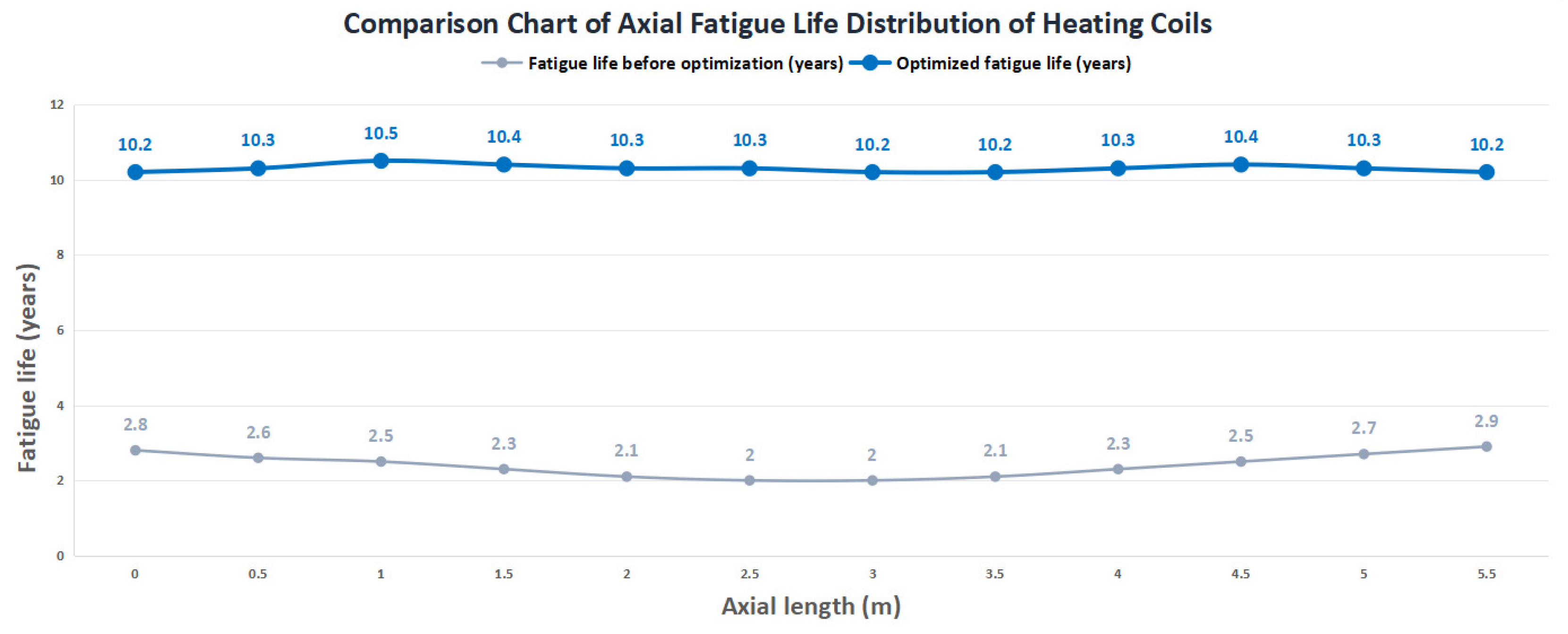
4.3.2. Comparison of Fatigue Life Calculation Results
5. Experimental Investigation and Optimization of Process Parameters for Fish Meal Drying
5.1. Key Process Parameters and Identification Methods of Fish Meal
5.2. Fish Meal Experiment Design
5.3. Experimental Process
5.4. Experimental Data Recording
5.5. Experimental Findings and Discussion
5.5.1. Analysis of Drying Kinetics Characteristics
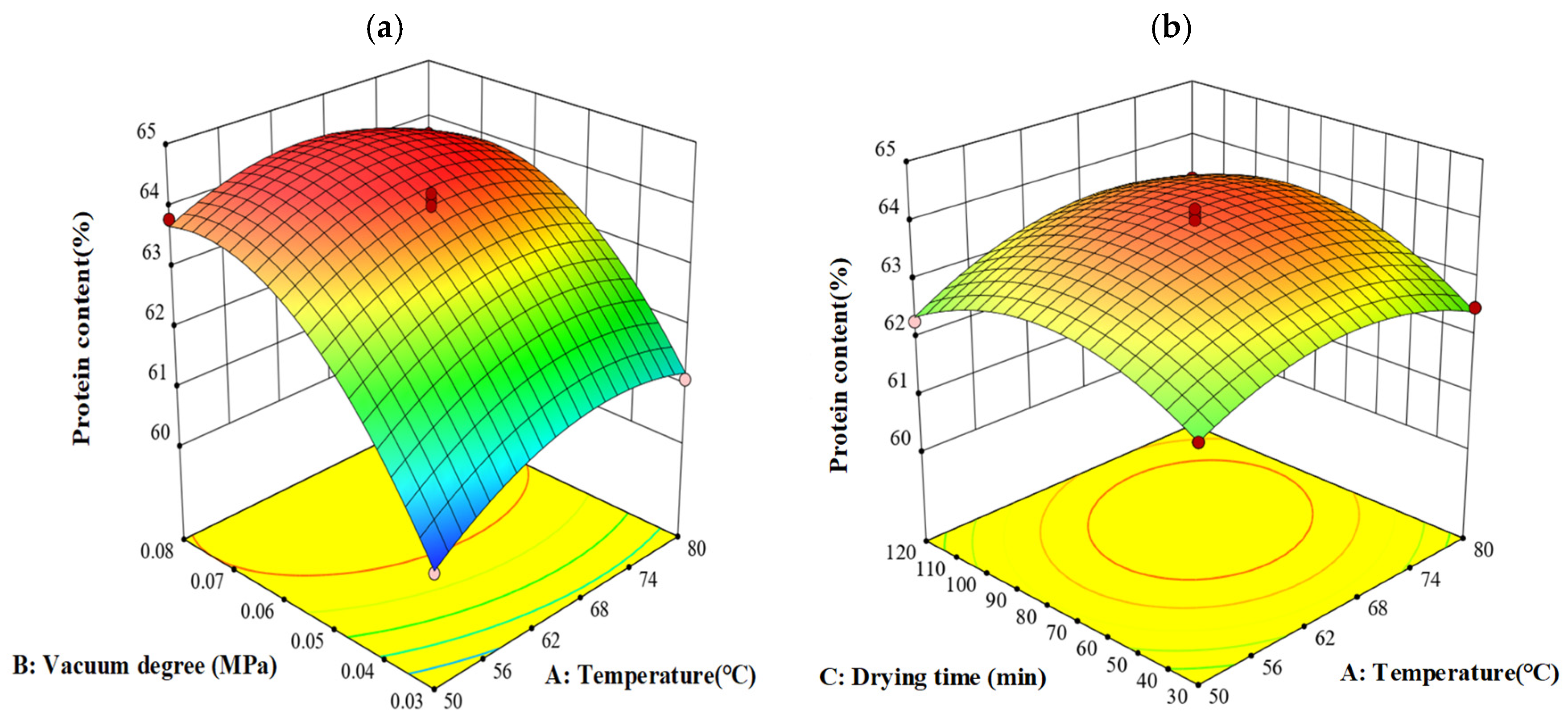
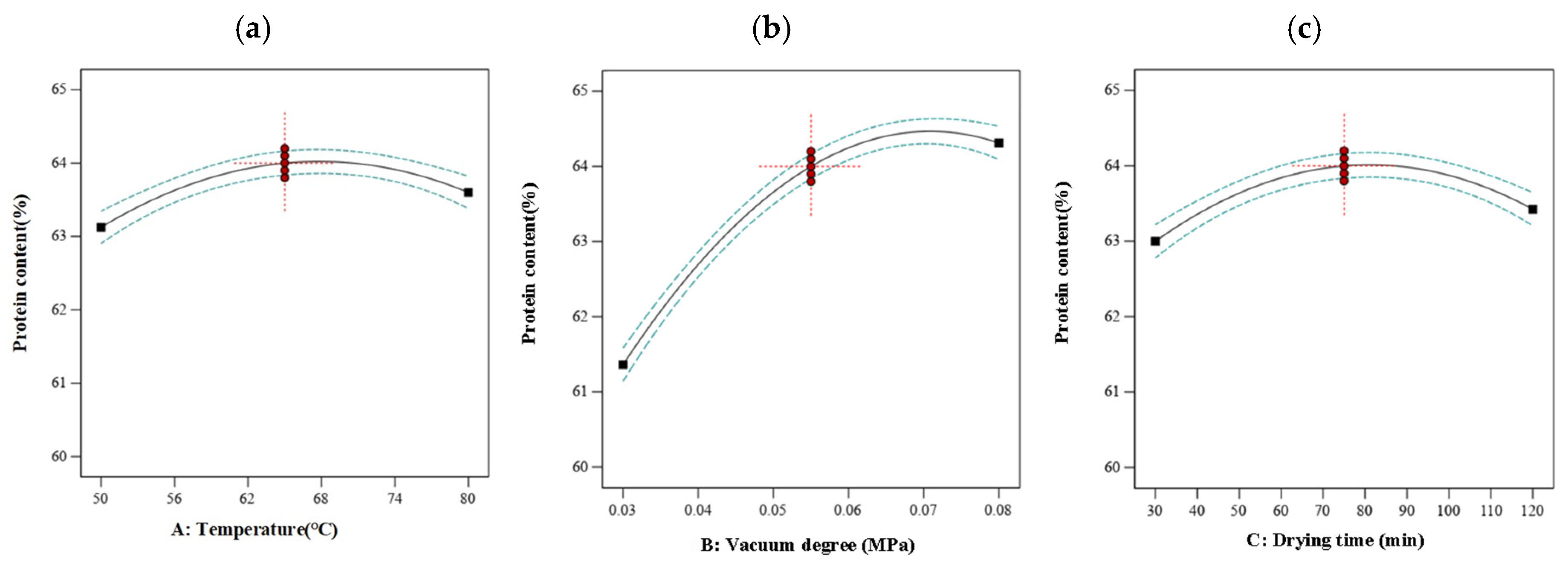
5.5.2. The Influencing Laws of Each Factor on Drying Quality and Their Interaction Effects
5.6. Performance Comparison Between the Optimized Equipment and the Traditional Equipment
6. Conclusions
Author Contributions
Funding
Data Availability Statement
Conflicts of Interest
References
- Wang, J.Q.; Zhang, B.; Zhang, B.T.; Li, A.Q. Classification, processing technology, and quality control measures of fish meal. Feed China 2012, 15, 25–27. [Google Scholar]
- Ministry of Agriculture and Rural Affairs of the People’s Republic of China. China Fisheries Statistical Yearbook; China Agriculture Press: Beijing, China, 2024. [Google Scholar]
- Duan, D.Y.; Chen, P.; Chen, X.J.; Qin, C.X. Construction of a grey system-based prediction model for Peruvian anchovy resources. J. Shanghai Ocean Univ. 2018, 27, 284–290. [Google Scholar]
- Zhang, X.H.; Gao, H.C.; Chen, P. Fluctuation characteristics of Peruvian anchovy resources at different time scales. J. Shanghai Ocean Univ. 2022, 31, 761–769. [Google Scholar]
- Ding, Q. Sustainable Utilization and Vulnerability Evaluation of Global Marine Fishery Resources. Master’s Thesis, Shanghai Ocean University, Shanghai, China, 2017. [Google Scholar]
- Leng, X.J. Research and application of low-fishmeal aquatic feed. Feed Ind. 2020, 41, 1–8. [Google Scholar]
- Wang, Z.W.; Zhang, W.Y.; Cui, J.H. Research progress and prospect of vacuum drying technology. Chem. Mach. 2021, 48, 321–325. [Google Scholar]
- Ren, J.Y.; Chen, W.D.; Wang, L.J.; Tian, X.Q.; Zhang, J.L. Discussion on the development trend of grain drying equipment. Agric. Mach. Use Maint. 2025, 12, 70–74. [Google Scholar]
- Xu, C.J. Current status and prospects of green and low-carbon technologies for grain drying. Agric. Eng. 2024, 14, 94–101. [Google Scholar]
- Liu, D.T.; Liu, Z.Y.; Liu, S.D.; Feng, T. Simulation of slow drying in porous media based on COMSOL Multiphysics. Food Mach. 2024, 40, 108–115. [Google Scholar]
- Meng, Q.T.; Liang, C.H.; Zheng, P.; Zhang, H. Hot-air drying model and heat–mass transfer analysis of sweet potato slices. Cereal Food Ind. 2025, 32, 30–35. [Google Scholar]
- Guo, W.B.; Li, Y.; Huang, C.H.; Du, J.Q.; Qian, S.Z.; He, Z.M.; Gao, J.J. Physical field analysis and structural optimization of drying chambers based on COMSOL. Chin. Agric. Sci. Bull. 2022, 24, 90–98. [Google Scholar]
- Wei, L.N.; Li, L.H.; Hao, S.X.; Huang, H.; Yang, X.Q.; Xiang, H.; Zhao, Y.Q.; Cen, J.W.; Wei, Y. Effects of heat pretreatment on freeze-drying of tilapia. Food Sci. 2023, 44, 51–59. [Google Scholar]
- Wei, J.; Wang, E.J.; Wei, M.Q.; Zhang, X.J.; Chen, Y.M. Optimization of low-temperature vacuum drying process of goji berries based on response surface methodology. China Food Addit. 2024, 35, 138–145. [Google Scholar]
- Zheng, Y.P.; Wang, C.T.; Zheng, G.H. Application research of continuous vacuum dryers in fish meal processing. J. Zhejiang Ocean Univ. (Nat. Sci. Ed.) 2014, 33, 534–537. [Google Scholar]
- Li, F.X.; Li, Y.X.; Xu, X.M. Design and simulation analysis of variable-pitch helical structures. Packag. Eng. 2019, 40, 214–221. [Google Scholar]
- Hou, Y. Research on Heat Transfer Characteristics and Mechanical Properties of Variable-Pitch Twisted Heat Exchanger Tubes. Master’s Thesis, Taiyuan University of Science and Technology, Taiyuan, China, 2026. [Google Scholar]
- Luo, Y.Z.; Zhang, C.Q.; Luo, H.R.; Chen, L.P. Calculation of thin-walled cylinders under external pressure. Mach. Res. Appl. 2017, 30, 125–127. [Google Scholar]
- Huang, Y.; Lin, H.Z.; Du, C.C. Relative error analysis of strength calculations for thin-walled cylinders. J. Chang. Univ. 2019, 29, 10–13+45. [Google Scholar]
- Zhang, Z.P.; Wu, C.D.; Zhang, B.; Chu, X.M.; Wang, X.; Hu, X.K.; Yang, T. Design and finite element simulation optimization of rotating brackets for near-ground crop imaging [DB/OL]. Trans. Chin. Soc. Agric. Mach. 2026. Available online: https://kns.cnki.net/kcms2/article/abstract?v=yLAonKG4u-T7P4257RT6A5WAS-eKV9id-LRtlAWy1zKbWipDUXhOU6PpgV3zToS-mrMIEJO6LuxHEaV0CL-2cXnK_6Q8JvGkIolh8vVGf68yFZ2zYCZlDe2b9FBVDgXpHHulykzEKM5ZUAHaAFp-I9rSdqB0uI2TDM0njjJbRPYmSV8ZKa5QdQ==&uniplatform=NZKPT&language=CHS (accessed on 14 May 2026).
- Xu, Z.L. Elastic Mechanics, 5th ed.; Higher Education Press: Beijing, China, 2016. [Google Scholar]
- Sun, Y.D.; Liu, X.Y.; Liu, H.; Liu, Y.J.; Wu, K. Stress state equation of surrounding rock in marine soft soil shield tunnels and its coupled solution method. Munic. Technol. 2026, 44, 55–65+96. [Google Scholar]
- Sui, J.M. Research on Coupled Heat Transfer Characteristics of Multi-Physics Fields in Porous Deposition Products Based on CRUD. Master’s Thesis, Northeast Electric Power University, Jilin City, China, 2025. [Google Scholar]
- Xu, L.W. Research on Transformer Modeling and Fault Diagnosis Algorithms Based on COMSOL. Master’s Thesis, Guizhou University, Guiyang, China, 2025. [Google Scholar]
- GB/T 150.1–2024; Pressure Vessels—Part 1: General Requirements. China Standards Press: Beijing, China, 2024.
- Yang, S.M. Heat Transfer, 5th ed.; Higher Education Press: Beijing, China, 2019. [Google Scholar]
- Liu, Q.S.; Xu, Z.P.; Chen, X.K.; Li, S.H. Simulation analysis of insulation materials in high-temperature environments based on COMSOL thermal design. J. Phys. Conf. Ser. 2025, 1, 012007. [Google Scholar] [CrossRef]
- Juckers, A.; Potschka, A. Advanced freeze-drying modeling: Validation of a sorption–sublimation model. ACS Omega 2025, 10, 16962–16976. [Google Scholar] [CrossRef]
- Huang, Y.J.; Zhou, S.Z.; Li, N. Fatigue performance testing of high-pressure manifold materials and fitting of P–S–N model curves. J. Yangtze Univ. (Nat. Sci. Ed.) 2024, 21, 55–61. [Google Scholar]
- Zhao, J.W.; Tao, Y.R.; Pei, J.X.; Zhang, Y. Research on fatigue life of SUS304 stainless steel spot-welded joints. J. Mech. Strength 2023, 45, 1005–1010. [Google Scholar]
- Fan, S.G.; Zhang, S.H.; Meng, C. Experimental study on high-temperature mechanical properties of S30408 austenitic stainless steel. Eng. Mech. 2017, 34, 167–176+186. [Google Scholar]
- Zheng, J.D.; Li, L.; Tian, L.Z.; Fan, J.L. Effect of annealing temperature on fatigue damage evolution behavior of 304 stainless steel. Hot Work. Technol. 2025, 54, 29–33. [Google Scholar]
- FKM. Guidelines for Design Proofs of Machine Parts by Calculation; VDMA Verlag: Frankfurt am Main, Germany, 2021. [Google Scholar]
- Erinosho, T.O.; Li, P.; Truman, C.E.; Smith, D.J. Pressure, temperature, and dwell time effects on fatigue life in 304 stainless steel using a R5-based mechanistic fatigue model. Procedia Eng. 2016, 160, 191–198. [Google Scholar] [CrossRef]
- Wang, S.L.; Pan, J.J.; Dong, R.X. Research on the effects of different drying parameters on the quality of Chimonanthus salicifolius tea. Zhejiang Agric. Sci. 2023, 64, 846–849. [Google Scholar]
- Han, F.; Wu, W.F.; Liu, Z. Simulation experiment system for continuous grain drying processes and process control. Cereal Oil Sci. Technol. 2023, 31, 83–89. [Google Scholar]
- Yu, X.; Zhang, Z.P.; Xie, P.X. Development of an intelligent temperature control system for continuous microwave dryers. Autom. Technol. Appl. 2021, 40, 21–26. [Google Scholar]
- Zhang, S.S.; Zheng, Y.; Guo, Q.Y. Vacuum drying characteristics of Antarctic krill powder and its impact on quality. Packag. Eng. 2024, 45, 91–100. [Google Scholar]
- Li, X.; Liu, Z.Q.; Zhang, B.B. Effects of cottonseed concentrated protein replacing fishmeal on the quality of low-starch slow-sinking extruded feed pellets and optimization of process parameters. J. Hydrobiol. 2025, 49, 145–156. [Google Scholar]
- Wen, H.X.; Gao, J.; Yu, Z.J. Effects of vacuum low-temperature drying process parameters on the quality of dried jujube slices. Food Ind. 2016, 37, 107–110. [Google Scholar]
- Kamau, B.K.; Atitwa, E.B.; Mwithiga, G. Modeling and optimization of quality indicators of blanched and dried cowpea leaves using response surface methodology (RSM). Heliyon 2026, 12, e44642. [Google Scholar] [CrossRef]
- Li, J.X.; Yu, X.Y.; Yang, L.W.; Wu, X.H. Research on hot-air drying characteristics and optimization of drying process parameters of alfalfa [DB/OL]. Chin. Agric. Sci. Bull. 2026. [Google Scholar] [CrossRef]
- Yang, L.; Yang, C.Y.; Cao, S.T.; Guan, R.; Zhang, B.; Yao, X.; Wang, Q.; Dong, W.; Huang, Y. Optimization of drying parameters and texture properties of winter jujube slices using radio frequency combined with hot air. Front. Nutr. 2025, 11, 1523078. [Google Scholar]
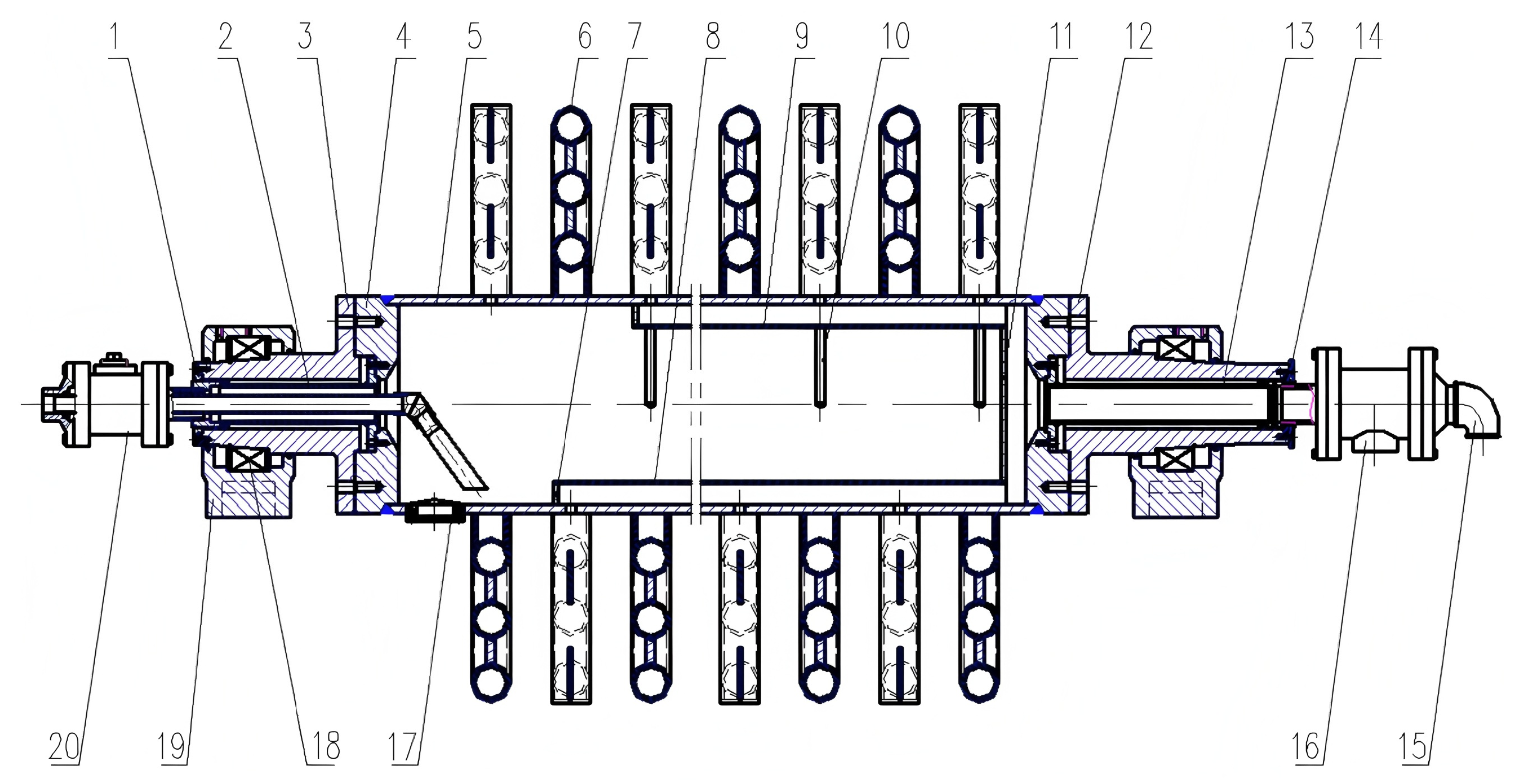



| Number | Part Name | Number | Part Name | Number | Part Name |
|---|---|---|---|---|---|
| 1 | Non-power end shaft head flange | 8 | Steam inlet channel I | 15 | 90° reducing elbow |
| 2 | Condensate water outlet pipe for the non-power end shaft head | 9 | Steam inlet channel II | 16 | Power end rotary joint |
| 3 | Non-power end journal | 10 | Backwater distribution pipe | 17 | Handhole seat |
| 4 | Shaft head connection plate | 11 | Main shaft head plate | 18 | Self-aligning roller bearing |
| 5 | Main shaft | 12 | Power end journal | 19 | Main shaft bearing housing |
| 6 | Heating coil assembly | 13 | Steam inlet pipe of the shaft head | 20 | Non-powered end rotary joint |
| 7 | Steam inlet channel cover plate | 14 | Power end shaft head flange |
| Structural Type | Paragraphing | Axial Length, m | Pitch, m | Pipe Diameter, m | Laps | Material Temperature, °C | Heat Transfer Temperature Difference, °C |
|---|---|---|---|---|---|---|---|
| After optimization | Feeding section | 1 | 0.08 | 0.055 | 12 | 28 | 24 |
| Middle section | 3 | 0.1 | 0.05 | 29 | 60 | 8 | |
| Discharge section | 1.5 | 0.12 | 0.05 | 12 | 67 | 15 | |
| Traditional equal pitch | Feeding section | 1 | 0.1 | 0.05 | 9 | 25 | 30 |
| Middle section | 3 | 0.1 | 0.05 | 27 | 60 | 5 | |
| Discharge section | 1.5 | 0.1 | 0.05 | 13 | 69 | 14 |
| Evaluation Indicators | Tradition | After Optimization | Range of Variation |
|---|---|---|---|
| Total heat transfer area, m2 | 12.11 | 13.38 | +10.5% |
| Total heat transfer power, kW | 116.096 | 143.866 | +23.9% |
| Feeding section power, kW | 53.28 | 62.4 | +17.1% |
| Intermediate section power, kW | 26.64 | 45.824 | +72% |
| Power of discharge section, kW | 36.176 | 35.64 | −1.5% |
| Grid Group Number | Number of Grid Cells | Maximum Temperature Calculation Value (°C) | Relative Error (%) Compared with the Previous Group | Single-Condition Calculation Time (h) |
|---|---|---|---|---|
| 1 | 423,562 | 76.6 | - | 1.2 |
| 2 | 612,894 | 78.7 | 2.7 | 2.1 |
| 3 | 801,247 | 79.1 | 0.5 | 3.5 |
| 4 | 1,023,561 | 79.3 | 0.25 | 5.8 |
| Operating Condition Number | Weight of Incoming Materials (kg) | Maximum Displacement (mm) | Design Limit (mm) | Compliance |
|---|---|---|---|---|
| 1—Empty material condition | 0 | 0 | 1 | Qualified |
| 2—Half-year operation condition | 2000 | 0.03 | 1 | Qualified |
| 3—Full load condition | 4000 | 0.06 | 1 | Qualified |
| 4—Overload conditions | 5000 | 0.075 | 1 | Qualified |
| Operating Condition Number | Weight of Incoming Materials (kg) | Maximum Stress (MPa) | Allowable Stress (MPa) | Compliance |
|---|---|---|---|---|
| 1—Empty material condition | 0 | 0 | 130 | - |
| 2—Half-year operation condition | 2000 | 7.87 | 130 | 16.52 |
| 3—Full load condition | 4000 | 15.7 | 130 | 8.28 |
| 4—Overload conditions | 5000 | 19.7 | 130 | 6.6 |
| Material Type | (kg/m3) | (J/(kg·°C)) | (W/(m·°C)) | |
|---|---|---|---|---|
| 304 stainless steel | 7930 | 500 | 16.2 | 0.35 |
| Fish meal porous medium | 650 | 2100 | 0.12 | 0.90 |
| Heating medium (steam) | 600 | 2043 | 0.025 | - |
| Detection Parameter | Sensor Model | Measurement Range |
|---|---|---|
| Drying chamber temperature | PT100 platinum resistance sensor | −50∼200 °C |
| Vacuum degree of drying chamber | Capacitive vacuum sensor | 0∼0.1 MPa |
| Material humidity | High-frequency capacitive humidity sensor | 0∼100% |
| Motor speed | Incremental encoder | 0∼6000 r/min |
| Heating tube current | Current transducer | 0∼5 A |
| Factor | Level | ||
|---|---|---|---|
| −1 | 0 | 1 | |
| Heating temperature A (°C) | 50 | 65 | 80 |
| Vacuum degree B (MPa) | 0.03 | 0.055 | 0.08 |
| Drying time C (min) | 30 | 75 | 120 |
| Experiment No. | Heating Temperature A (°C) | Vacuum Degree B (MPa) | Drying Time C (min) | Protein Content (%) |
|---|---|---|---|---|
| 1 | 50 | 0.03 | 75 | 60.2 |
| 2 | 80 | 0.055 | 30 | 62.5 |
| 3 | 65 | 0.03 | 120 | 60.8 |
| 4 | 65 | 0.055 | 75 | 64.2 |
| 5 | 80 | 0.055 | 120 | 63.2 |
| 6 | 65 | 0.055 | 75 | 64.1 |
| 7 | 65 | 0.055 | 75 | 64 |
| 8 | 65 | 0.08 | 30 | 63.1 |
| 9 | 50 | 0.08 | 75 | 63.8 |
| 10 | 80 | 0.08 | 75 | 63.7 |
| 11 | 65 | 0.055 | 75 | 63.8 |
| 12 | 80 | 0.03 | 75 | 61.1 |
| 13 | 50 | 0.055 | 30 | 62.3 |
| 14 | 65 | 0.08 | 120 | 63.8 |
| 15 | 65 | 0.055 | 75 | 63.9 |
| 16 | 50 | 0.055 | 120 | 62.3 |
| 17 | 65 | 0.03 | 30 | 60.5 |
| Source | Sum of Squares | Degree of Freedom | Mean Square | F Value | p Value | Salience |
|---|---|---|---|---|---|---|
| Model | 29.72 | 9 | 3.30 | 137.99 | <0.0001 | extremely significant |
| A, heating temperature | 0.4512 | 1 | 0.4512 | 18.86 | 0.0034 | significant |
| B, vacuum degree | 17.40 | 1 | 17.40 | 727.37 | <0.0001 | extremely significant |
| C, drying time | 0.3612 | 1 | 0.3612 | 15.10 | 0.0060 | significant |
| AB | 0.2500 | 1 | 0.2500 | 10.45 | 0.0144 | significant |
| AC | 0.1225 | 1 | 0.1225 | 5.12 | 0.0581 | not significant |
| BC | 0.0400 | 1 | 0.0400 | 1.67 | 0.2371 | not significant |
| A2 | 1.71 | 1 | 1.71 | 71.51 | <0.0001 | extremely significant |
| B2 | 5.69 | 1 | 5.69 | 237.80 | <0.0001 | extremely significant |
| C2 | 2.61 | 1 | 2.61 | 109.12 | <0.0001 | extremely significant |
| Residual | 0.1675 | 7 | 0.0239 | |||
| Lack-of-fit term | 0.0675 | 3 | 0.0225 | 0.9000 | 0.5151 | not significant |
| Pure error | 0.1000 | 4 | 0.0250 | |||
| Total deviation | 29.88 | 16 | ||||
| Project | Numerical Value | Project | Numerical Value |
|---|---|---|---|
| Standard deviation | 0.1547 | Coefficient of determination (R2) | 0.9944 |
| Mean | 62.78 | Adjusted coefficient of determination (R2Adj) | 0.9872 |
| Coefficient of variation C.V. % | 0.2464 | Predictive determination coefficient (R2Pre) | 0.9586 |
| Accuracy Adeq precision | 31.7134 |
| Benchmark | Traditional Hot Air Drying Process | Improved Vacuum Low-Temperature Drying Process | Increase Margin |
|---|---|---|---|
| Heating temperature | 110 °C | 65 °C | reduce 40.9% |
| Drying time | 120 min | 75 min | shorten 37.5% |
| Protein content of fish meal | 58.2% | 64.2% | enhance 10.3% |
| Energy consumption per unit product | 120 kWh per ton | 85 kWh per ton | reduce 29.2% |
| Operator allocation | 2 people | 0.5 person per machine | Reduction in labor costs 75% |
Disclaimer/Publisher’s Note: The statements, opinions and data contained in all publications are solely those of the individual author(s) and contributor(s) and not of MDPI and/or the editor(s). MDPI and/or the editor(s) disclaim responsibility for any injury to people or property resulting from any ideas, methods, instructions or products referred to in the content. |
© 2026 by the authors. Licensee MDPI, Basel, Switzerland. This article is an open access article distributed under the terms and conditions of the Creative Commons Attribution (CC BY) license.
Share and Cite
Chen, X.; Wang, W.; Feng, W.; Li, D.; Lin, R. Research on Structural Optimization and Process Parameter Response Surface Optimization of Vacuum Low-Temperature Fish Meal Dryer. Processes 2026, 14, 1653. https://doi.org/10.3390/pr14101653
Chen X, Wang W, Feng W, Li D, Lin R. Research on Structural Optimization and Process Parameter Response Surface Optimization of Vacuum Low-Temperature Fish Meal Dryer. Processes. 2026; 14(10):1653. https://doi.org/10.3390/pr14101653
Chicago/Turabian StyleChen, Xuchu, Wei Wang, Wuwei Feng, Danyu Li, and Rongsheng Lin. 2026. "Research on Structural Optimization and Process Parameter Response Surface Optimization of Vacuum Low-Temperature Fish Meal Dryer" Processes 14, no. 10: 1653. https://doi.org/10.3390/pr14101653
APA StyleChen, X., Wang, W., Feng, W., Li, D., & Lin, R. (2026). Research on Structural Optimization and Process Parameter Response Surface Optimization of Vacuum Low-Temperature Fish Meal Dryer. Processes, 14(10), 1653. https://doi.org/10.3390/pr14101653