Article

First Results on the Production of Natural Colorants by Amazonian Freshwater Fungi: Influence of Carbon Sources and Biological Potential

by
Anne Terezinha Fernandes de Souza
1,2,3,
Dorothy Ívila de Melo Pereira
2,3,4,
Cleudiane Pereira de Andrade Negreiros
1,2,3,
Italo Pereira de Lima
2,
Rayssa Souza dos Santos
2,
Liss Stone de Holanda Rocha
2,
Yuliana Padrón-Antonio
1,2,
Cleiton Fantin
4,
António M. Jordão
2,4,5,* and
Patrícia Melchionna Albuquerque
1,2,3,4,*
1
Post-Graduate Program in Biodiversity and Biotechnology—Bionorte, Amazonas State University, Manaus 69050-010, Brazil
2
Laboratory of Chemistry Applied to Technology, School of Technology, Amazonas State University, Manaus 69050-020, Brazil
3
Microbiological Collections Center, Amazonas State University, Manaus 69050-020, Brazil
4
Post-Graduate Program in Biotechnology and Natural Resources, Amazonas State University, Manaus 69050-010, Brazil
5
CERNAS Research Center, Agrarian School, Polytechnic University of Viseu, 3500-606 Viseu, Portugal
*
Authors to whom correspondence should be addressed.
Processes 2026, 14(10), 1652; https://doi.org/10.3390/pr14101652
Submission received: 14 April 2026 / Revised: 10 May 2026 / Accepted: 18 May 2026 / Published: 20 May 2026

Abstract

The increasing demand for safer and environmentally sustainable products has intensified the search for natural alternatives to synthetic dyes. Filamentous fungi are promising sources of natural pigments due to their metabolic diversity and the feasibility of large-scale production. In this study, filamentous fungi isolated from Amazonian freshwater environments were evaluated for their potential to produce natural pigment-associated metabolites under different nutritional conditions. Forty-five fungal isolates were screened in solid media and subsequently cultivated in submerged fermentation using three media: potato dextrose broth supplemented with yeast extract (BD + YE); malt extract broth (ME); and yeast extract–sucrose broth supplemented with magnesium sulfate (YES). Among the 39 pigment-producing isolates, seven were selected for further investigation. Sucrose favored the highest absorbance values of pigment extracts, particularly for isolates identified as Talaromyces amestolkiae. In addition, the extract of T. amestolkiae TA10P5-3 exhibited the highest absorbance value (6.83 abs. units at 400 nm) when cultivated in YES medium, indicating stronger chromophore-associated spectral signals. This extract also showed antimicrobial activity against Pseudomonas aeruginosa (625 μg/mL), Staphylococcus epidermidis (312 μg/mL), and Candida tropicalis (625 μg/mL). Finally, the TA10P5-3 extract presented high total phenolic content (246.30 mg GAE/g) and antioxidant activity (EC50 = 5470 μg/mL). These findings highlight Amazonian freshwater fungi as promising sources of natural pigments with potential industrial applications.

1. Introduction

Colorants are essential additives widely used in several industries, including cosmetics, food, textiles, and pharmaceuticals. Synthetic dyes remain more widely used than natural pigments, mainly due to their greater color intensity, improved characterization, and higher tinting strength [1]. In addition, attributes such as ease of production and low manufacturing costs have contributed to the widespread industrial use of synthetic colorants [2,3]. However, many synthetic dyes contain substances potentially harmful to human health and have been associated with mutagenicity, allergic reactions, and certain types of cancer, in addition to contributing to environmental pollution [4,5].
Due to the adverse effects associated with synthetic dyes and the increasing consumer demand for safer and environmentally sustainable products, interest in natural pigment-producing agents has grown considerably. Among natural sources, microorganisms have attracted particular attention because of their ease of cultivation, independence from seasonal variations, and ability to produce pigments through controlled bioprocesses. Furthermore, microbial systems allow scalable industrial production, high metabolite stability, and the possibility of improving pigment yields through optimization of cultivation parameters [1,6].
Filamentous fungi have been extensively investigated as potential pigment producers because they synthesize a wide variety of colored metabolites, including carotenoids, melanins, flavins, quinones, and monascins, which exhibit a broad spectrum of colors [7,8]. In addition, these organisms are known to produce bioactive secondary metabolites with considerable potential for pharmaceutical and biotechnological applications [9,10].
In the search for novel pigment-producing microorganisms, fungi derived from aquatic environments have attracted increasing scientific interest. Filamentous fungi are ubiquitous organisms with remarkable adaptability and the ability to synthesize diverse secondary metabolites. Studies involving marine fungi have revealed the production of numerous novel molecules, including pigments with potential industrial applications [11]. Environmental conditions such as low temperature, salinity, and limited light exposure may stimulate the biosynthesis of unique metabolites as adaptive responses [12]. Marine fungi belonging to the genera Rhodotorula and Phaffia have demonstrated strong potential for carotenoid production, compounds known for their antioxidant and anti-inflammatory properties and potential applications in skin protection [13].
Despite the growing interest in pigment-producing fungi from marine environments, freshwater fungi, particularly those from tropical ecosystems, remain poorly explored. The diversity of aquatic fungi in the Amazon region and their ecological contribution to tropical freshwater ecosystems are still insufficiently investigated. Pinto Filho Segundo et al. [14] evaluated the ability of aquatic fungi to produce antimicrobial compounds and isolated sixty-seven fungal strains, among which five inhibited the growth of Escherichia coli and extended-spectrum beta-lactamase-producing E. coli (ESBL). More recently, Bentes et al. [15] isolated fifteen fungi from water samples collected in the Lower Tapajós River Basin and demonstrated that metabolic broths produced by fungi belonging to the genera Aspergillus, Fusarium, Paecilomyces, and Penicillium exhibited antimicrobial and fungistatic activity against Candida albicans and Staphylococcus aureus. In contrast, most studies involving aquatic fungi have focused on marine environments, particularly tropical mangroves, which are widely investigated because of their high organic matter content, especially lignocellulosic materials that favor the development of heterotrophic microorganisms [16,17,18,19].
In recent years, several pigment-producing fungal genera have been isolated from aquatic environments, including water, sediments, decomposing organic matter, and living organisms such as plants, algae, and invertebrates. Genera such as Aspergillus, Penicillium, Paecilomyces, Talaromyces, Fusarium, and Alternaria have been frequently reported in marine biotopes [20,21]. These fungi are capable of producing pigments mainly belonging to the polyketide family, including azaphilones and anthraquinones [22,23]. Although pigments are not directly involved in primary fungal growth, they play important ecological roles by protecting fungi against environmental stresses such as extreme temperatures, radiation, photooxidation, and biotic interactions. Consequently, many fungal secondary metabolites exhibit valuable biological activities and represent promising compounds for applications in the pharmaceutical, food, cosmetic, and biotechnological industries [24,25].
Therefore, considering the limited knowledge regarding pigment-producing fungi from Amazonian freshwater environments, the exploration of these microorganisms and their ability to produce natural pigments represents an important opportunity for the discovery of novel natural colorants and bioactive metabolites. In this context, the present study aimed to identify filamentous fungi isolated from freshwater samples collected in the Amazon region that are capable of producing natural pigments under different nutritional conditions. Additionally, this study evaluated the biological potential of the produced metabolites, including their antimicrobial and antioxidant activities, thereby contributing to the discovery of potential sustainable alternatives to synthetic colorants for future industrial applications.

2. Materials and Methods

2.1. Reagents

All reagents used in this study were of analytical grade. Potato dextrose agar (PDA), malt extract, and Mueller–Hinton broth were purchased from Kasvi (São José dos Pinhais, Brazil). Sabouraud broth, agar, and yeast extract were obtained from Himedia (Thane, India). Sucrose was supplied by Neon Química Comercial (São Paulo, Brazil), and magnesium sulfate was purchased from Cromato Produtos Químicos (São Paulo, Brazil). The microbial strains used in the antimicrobial assays were obtained from Cefar Diagnóstica (Jardim Taquaral, Brazil).
Levofloxacin and terbinafine were obtained from EMS Pharma (Hortolândia, Brazil). Dextrose, methanol, ferric chloride (FeCl3), dimethyl sulfoxide (DMSO), 2,3,5-triphenyltetrazolium chloride (TTC), and Folin–Ciocalteu reagent were purchased from Dinâmica (Indaiatuba, Brazil). Chloroform (P.A.) was obtained from Êxodo Científica (São Paulo, Brazil), and ethyl acetate (P.A.) was supplied by Química Credie Ltd.a. (Manaus, Brazil). Resazurin, 2,2-diphenyl-1-picrylhydrazyl (DPPH), quercetin, ascorbic acid, Trolox, and gallic acid were purchased from Sigma-Aldrich (St. Louis, MO, USA). Finally, 2,4,6-tripyridyl-s-triazine (TPTZ) was obtained from Merck (Darmstadt, Germany).

2.2. Microorganisms

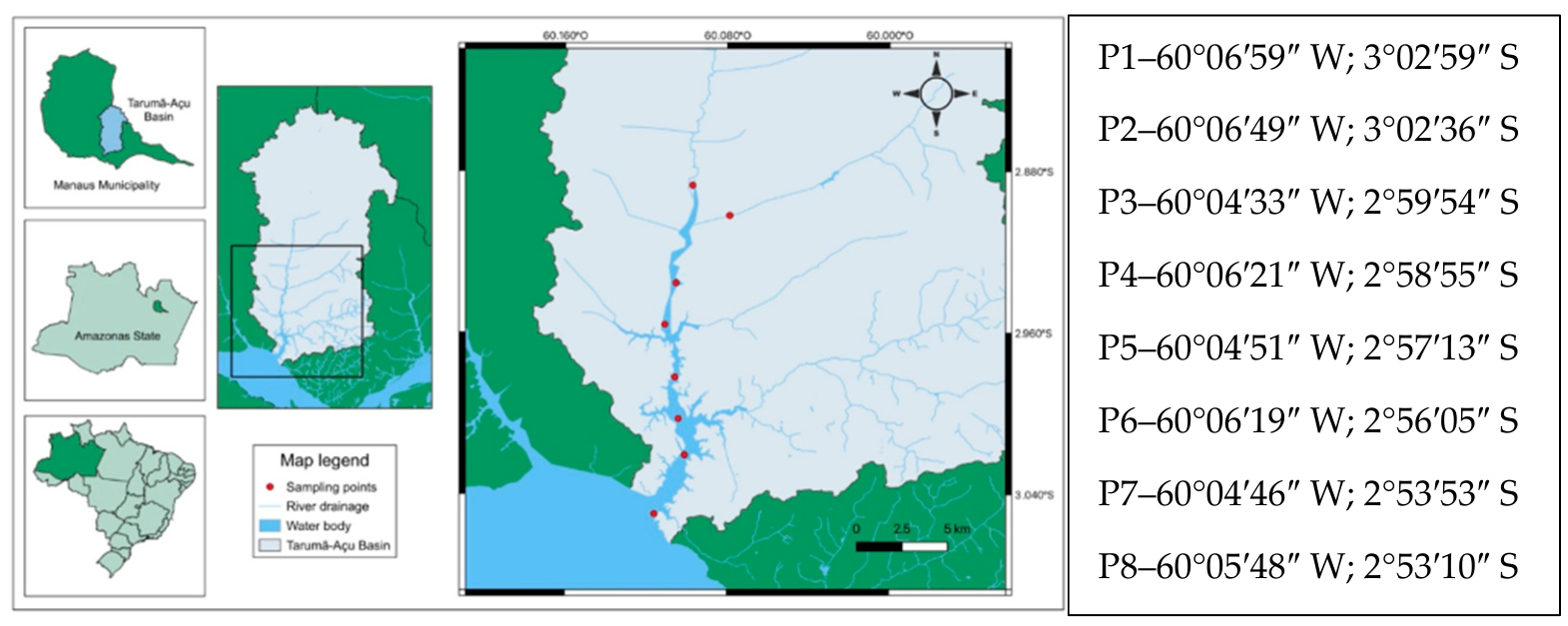
The aquatic fungi used in this study are deposited in the Microbial Collections Center (CCM) of Amazonas State University (UEA, Manaus, Brazil). The fungal strains were originally isolated from freshwater samples collected at eight sites along the Tarumã-Açu River in the Amazon region (Figure 1) between January and December 2021, following the conditions described in a previously published study [26].
The collection and use of biological material were registered in the Brazilian National System for the Management of Genetic Heritage and Associated Traditional Knowledge (SISGEN) under registration code AF0459B. A total of forty-five fungal isolates were obtained and are currently preserved under mineral oil and/or according to the Castellani preservation method [27].

2.3. Screening of Pigment-Producing Fungi

The fungal isolates were reactivated on Petri dishes containing potato dextrose agar (PDA, 39 g/L) and incubated at 28 °C for 7 days. Microscope slides were prepared from MEA cultures, stained with lactophenol blue (Sigma-Aldrich, Darmstadt, Germany), and examined under a light microscope (Nikon, Tokyo, Japan). Micromorphological characteristics were evaluated, including conidiophore branching patterns, stipe dimensions, shape and texture, as well as stipe and conidial ornamentation [28].
Pure cultures were subsequently transferred to new Petri dishes containing three different solid culture media to evaluate the influence of carbon sources on pigment production. The media used were potato dextrose agar supplemented with yeast extract (PDA + YE), yeast extract–sucrose agar supplemented with magnesium sulfate (YES), and malt extract agar (MEA) [5,29].
The plates were incubated in a biochemical oxygen demand (BOD) chamber (Tecnal Equipamentos Científicos, Piracicaba, Brazil) at 28 °C for 14 days. After incubation, pigment production was evaluated macroscopically based on the presence of pigments diffused into the culture medium [30], as well as pigmentation associated with the fungal mycelium. Isolates exhibiting pigmentation in at least two different culture media were selected for further evaluation under submerged cultivation conditions.

2.3.1. Pigment Production Under Submerged Culture

The fungal isolates that exhibited pigmentation on solid media were subsequently cultivated in liquid media to evaluate pigment production under submerged conditions. Three culture media were used: (i) potato dextrose broth supplemented with yeast extract (BD + YE)—potato infusion 200 g/L, D-glucose 20 g/L, and yeast extract 2 g/L [10]; (ii) malt extract broth (ME)—malt extract 20 g/L [29]; and (iii) yeast extract–sucrose broth (YES)—sucrose 150 g/L, yeast extract 20 g/L, and MgSO4 0.5 g/L [31]. The pH of all media was adjusted to 5.0 prior to sterilization at 121 °C for 15 min.
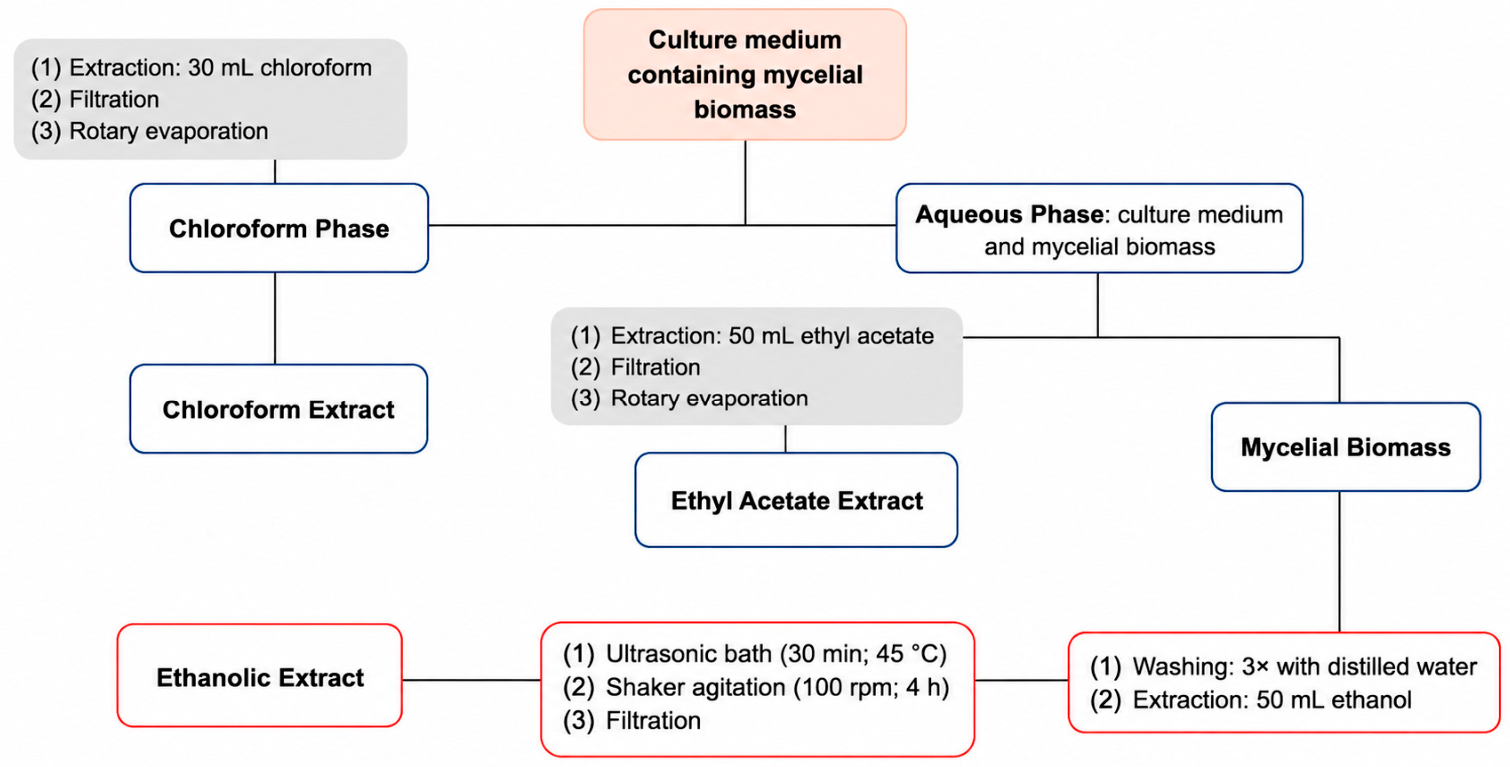
A standardized conidial suspension (1 × 10⁶ conidia/mL) was prepared, and 50 μL of the suspension was inoculated into 125 mL Erlenmeyer flasks containing 50 mL of the respective culture medium. Cultures were incubated under static conditions at 28 °C for 14 days in the absence of light [32]. After cultivation, compounds associated with pigmentation were extracted from the submerged cultures (Figure 2) to obtain crude extracts for subsequent analyses.

2.3.2. Extraction of Pigment-Associated Compounds and Determination of Absorbance Spectra

After cultivation, pigment-associated compounds were extracted from submerged cultures using a sequential liquid–liquid extraction procedure. Initially, 30 mL of chloroform was added to 50 mL of the culture broth (culture medium containing fungal biomass), corresponding to a 3:5 (v/v) ratio, in order to extract non-polar compounds. The mixture was agitated at 100 rpm for 24 h in the absence of light. Subsequently, the organic and aqueous phases were separated using a separatory funnel. After removal of the chloroform phase, 50 mL of ethyl acetate was added to the remaining culture system at a 1:1 (v/v) ratio to extract additional pigment-associated compounds. The mixtures were again agitated at 100 rpm for 24 h in the dark. The resulting system was subjected to vacuum filtration using Whatman No. 2 filter paper (Merck KGaA, Darmstadt, Germany) to separate the fungal biomass from the liquid phase. The ethyl acetate phase was then separated from the aqueous phase and filtered through a 0.22 μm PTFE membrane (Kasvi, Pinhais, Brazil) prior to analysis.
Absorbance spectra of the extracts were recorded using a UV–Vis spectrophotometer (UV-1800, Shimadzu, Kyoto, Japan) in the wavelength range of 400–700 nm to determine the wavelength of maximum absorbance (λmax) associated with the extracts. Analyses were performed using 1 mL quartz cuvettes (Kasvi, Pinhais, Brazil) with a 1 cm optical path length [10].

2.3.3. Extraction of Residual Biomass-Associated Pigment Compounds and Determination of Absorbance Spectra

After whole-culture extraction, the fungal biomass was separated and washed three times with sterile distilled water. Subsequently, 50 mL of 96% ethanol was added to the biomass. The mixture was subjected to ultrasonic bath treatment at 45 °C for 30 min, followed by agitation at 100 rpm for 4 h at 28 °C (Figure 2). The suspension was then filtered using Whatman No. 2 filter paper (Merck KGaA, Darmstadt, Germany) to recover the solvent phase containing compounds extracted from the fungal biomass [11].
The resulting extracts were filtered through a 0.22 μm PTFE membrane (Kasvi, Pinhais, Brazil) and analyzed by UV–Vis spectrophotometry (UV-1800, Shimadzu, Kyoto, Japan) in the wavelength range of 400–700 nm using 1 mL quartz cuvettes with a 1 cm optical path length. The wavelength of maximum absorbance (λmax) was determined for each extract and used as an indirect parameter associated with pigment-related compounds. This extraction step specifically aimed to recover compounds retained within the fungal biomass.

2.4. Study of Pigment-Producing Fungi

Promising pigment-producing fungi were identified by sequencing the internal transcribed spacer (ITS) region, the partial β-tubulin gene (tub2), the calmodulin gene (cal), and the partial second largest subunit of RNA polymerase II (rpb2). Genomic DNA was extracted using the CTAB method [33], and PCR amplification was performed according to the protocol described by Pereira et al. [10]. The final reaction volume was 15 µL, containing MgCl2 (3 mM), dNTPs (0.2 mM), 1× reaction buffer, forward primer (0.2 µM), reverse primer (0.2 µM), 1 U of Taq polymerase, and 50 ng of fungal genomic DNA.
Thermal cycling conditions consisted of an initial denaturation step at 95 °C for 5 min, followed by 35 cycles of denaturation at 95 °C for 30 s, annealing at either 58 °C or 62 °C depending on the primer set, and extension at 72 °C for 1 min. A final extension step was performed at 72 °C for 5 min. PCR products were purified using the PureLink™ kit (Thermo Fisher Scientific, Waltham, MA, USA) and sequenced using an automated sequencer (ABI 3500xl Genetic Analyzer, Applied Biosystems, Thermo Fisher Scientific, Waltham, MA, USA).
Sequence quality was evaluated using the Phred program [34]. Sequences were manually inspected, edited, and aligned using BioEdit version 7.2.6 (Tom Hall, Ibis Biosciences, Carlsbad, CA, USA) [35]. Preliminary identification was performed through comparison with sequences deposited in the GenBank database using BLASTN (NCBI). Multiple sequence alignment was conducted using MAFFT version 7 [36], and concatenation of loci was performed using MEGA X version 10.2.6 (Molecular Evolutionary Genetics Analysis, Arizona State University, Tempe, AZ, USA) [35]. Phylogenetic reconstruction was carried out using the IQ-TREE program (http://iqtree.cibiv.univie.ac.at/; accessed on 13 September 2024) [37] under the maximum likelihood (ML) method with 1000 bootstrap replicates. The best-fit evolutionary model was selected using ModelFinder [38]. The resulting phylogenetic trees were visualized using FigTree v1.4.4 (http://tree.bio.ed.ac.uk/software/figtree/; accessed on 22 February 2025) and edited using Inkscape version 1.4.2 (vector graphics editor).

2.5. Evaluation of Biological Activities of Pigmented Extracts

The extracts considered most promising, based on their maximum absorbance wavelengths (λmax) and associated spectral intensity, were selected for the evaluation of antimicrobial, cytotoxic, and antioxidant activities.

2.5.1. Antimicrobial Activity

Antimicrobial activity was determined using the broth microdilution method according to the guidelines of the Clinical and Laboratory Standards Institute (CLSI) [39]. Resazurin reduction was used for antibacterial assays, whereas TTC reduction was used for antifungal assays. The following microbial strains were tested: Escherichia coli CCCD-E005, Pseudomonas aeruginosa CCCD-P004, Bacillus subtilis CCCD-B005, Staphylococcus aureus CCCD-S009, Staphylococcus epidermidis CCCD-S010, Klebsiella pneumoniae CCCD-K003, Salmonella enterica CCCD-S003, Candida albicans CCCD-CC001, and Candida tropicalis CCCD-CC002.
The assay was performed in 96-well microplates containing 100 µL of extract diluted in 10% DMSO at different concentrations (5.0, 2.5, 1.25, 0.625, and 0.313 mg/mL) and 100 µL of microbial inoculum. The inoculum was prepared from 24 h cultures, adjusted to 0.5 on the McFarland scale (108 CFU/mL), and subsequently diluted in the appropriate culture medium (Mueller–Hinton broth for bacteria and Sabouraud broth for fungi) to obtain a final concentration of 5 × 10⁵ CFU/mL. Levofloxacin (0.25 mg/mL) was used as a positive control for bacteria, while terbinafine (0.40 mg/mL) was used as a positive control for fungi [40]. The growth control consisted of microbial inoculum without extract, whereas the sterility control contained sterile culture medium only. The negative control consisted of microbial inoculum in the presence of 10% DMSO.
Microplates were incubated in a BOD incubator at 37 °C for 24 h for bacteria and 48 h for fungi. After incubation, 30 µL of resazurin (0.01%) or TTC (1%) solution was added to each well. The plates were incubated again at 37 °C for 1–2 h to observe color changes indicative of microbial metabolic activity. The minimum inhibitory concentration (MIC) was defined as the lowest extract concentration capable of inhibiting visible microbial growth. All antimicrobial assays were performed in biological triplicate.

2.5.2. Antioxidant Activity

Antioxidant activity was evaluated using two complementary methods: radical scavenging activity against 2,2-diphenyl-1-picrylhydrazyl (DPPH•) and the ferric reducing antioxidant power (FRAP) assay.
The DPPH assay was performed according to the method previously described by Brand-Williams et al. [41]. Briefly, the DPPH solution was prepared at a concentration of 0.06 mmol/L in methanol and protected from light exposure. The assay was carried out in 96-well microplates containing 40 µL of extract diluted in methanol and 250 µL of DPPH solution. The negative control consisted of 40 µL of methanol and 250 µL of DPPH solution. The microplates were protected from light, and after 15 min, the absorbance was measured at 515 nm using a UV–Vis spectrophotometer (UV-1800, Shimadzu, Kyoto, Japan).
Pigmented fungal extracts were initially evaluated at a concentration of 10 mg/mL. Ascorbic acid was used as a standard at a concentration of 50 µg/mL. The percentage of DPPH radical scavenging activity was calculated using Equation (1), based on the decrease in sample absorbance (Abs. sample) relative to the control absorbance (Abs. control). The effective concentration required to scavenge 50% of DPPH radicals (EC50) was determined from successive sample dilutions, and linear regression curves were generated. Ascorbic acid was evaluated within a concentration range of 100–3125 µg/mL.
AA % = Abs control Abs sample Abs control × 100
The FRAP assay was performed according to the method described by Benzie and Strain [42], with minor modifications. The FRAP reagent consisted of 100 mL of acetate buffer (0.3 M), 10 mL of TPTZ solution (10 mM), and 10 mL of ferric chloride solution (20 mM). For the assay, 1.225 mL of FRAP reagent was mixed with 0.175 mL of sample and incubated for 30 min at 37 °C protected from light. Absorbance was then measured at 595 nm using a UV–Vis spectrophotometer (UV-1800, Shimadzu, Kyoto, Japan). All experiments were performed in triplicate. Extracts were evaluated at a concentration of 10 mg/mL [10,40]. A calibration curve was constructed using Trolox as the standard under the same conditions applied to the samples, generating the equation y = 0.0058x − 0.0652 (R2 = 0.9992). The results were expressed as micromoles of Trolox equivalents per gram of extract (µmol TE/g). Methanol was used as both solvent and blank. All measurements were performed in technical triplicate.

2.5.3. Cytotoxicity Assay

Cytotoxicity was evaluated using the human fibroblast cell line MRC-5. This cell line was obtained from the cell bank of the Laboratory of Biological Activity at the Faculty of Pharmaceutical Sciences, Federal University of Amazonas (UFAM), Manaus, Brazil. Cell viability was assessed using the Alamar Blue assay according to Ahmed et al. [43]. Fungal metabolites were prepared at a concentration of 50 µg/mL in 0.2% dimethyl sulfoxide (DMSO).
The MRC-5 cell line was cultured in DMEM (Dulbecco’s Modified Eagle Medium) supplemented with 10% fetal bovine serum and 1% antibiotics (penicillin–streptomycin). Cells were seeded into 96-well microplates at a density of 0.5 × 10⁴ cells/well and incubated for 24 h at 37 °C in a humidified atmosphere containing 5% CO2. After this period, the fungal extracts were added, and the plates were incubated for an additional 72 h under the same conditions. A control group received the same concentration of DMSO (0.1%) used in the treatments (negative control), while another group was treated with 20 µg/mL doxorubicin (positive control). After the treatment period, 10 µL of Alamar Blue solution (0.4%) was added to each well. Following 3 h of incubation, fluorescence was measured using a microplate reader (Beckman Coulter, Brea, CA, USA) with excitation at 540 nm and emission at 585 nm. All assays were performed in technical triplicate. Cell viability (%) was calculated according to Equation (1):
% viability = Ft Fc = 100

2.6. Chemical Profiling of Pigmented Fungal Extracts

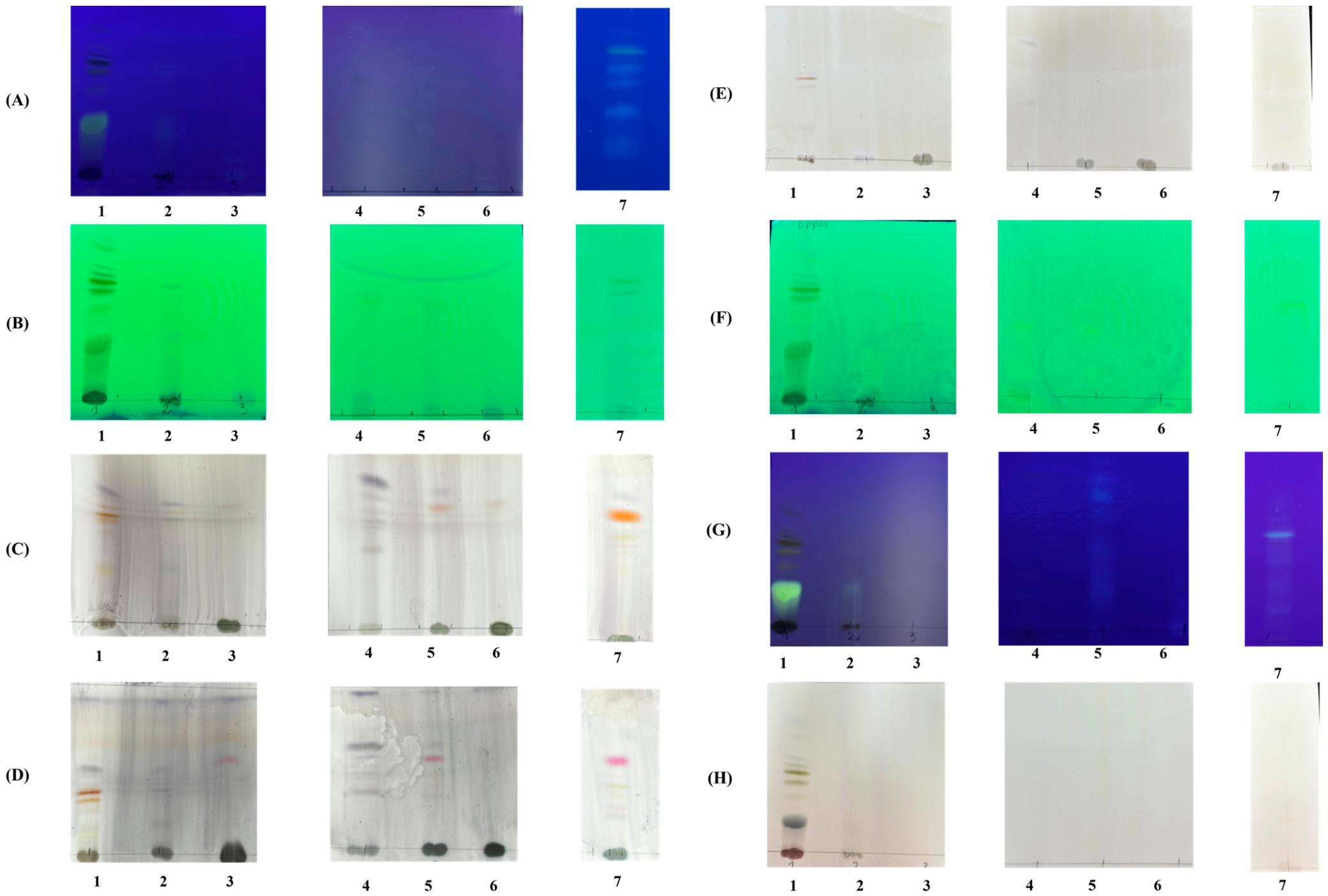
Selected extracts were analyzed by thin-layer chromatography (TLC) as a preliminary approach to investigate major classes of secondary metabolites. For this analysis, 10 mg of each extract was dissolved in 1 mL of methanol. Subsequently, 2 µL of each solution was applied onto silica gel TLC plates (Macherey–Nagel, Düren, Germany; aluminum sheets, 20 × 20 cm, silica gel 60 with fluorescent indicator). The mobile phase consisted of dichloromethane:formic acid:methanol (9:2:1, v/v/v), using a total volume of 10 mL as the eluent. Chemical classes were visualized under ultraviolet light at 254 and 365 nm and after spraying with the following revealing reagents: ferric chloride, aluminum chloride, ceric sulfate, vanillin/H2SO4, and Dragendorff reagent [44,45].
Ferric chloride reagent was prepared by dissolving 3 g of FeCl3 in 100 mL of ethanol. The aluminum chloride reagent consisted of 1 g of AlCl3 dissolved in 100 mL of ethanol. Ceric sulfate reagent was prepared by dissolving 2.1 g of ceric sulfate in 25 mL of distilled water, followed by the addition of concentrated sulfuric acid and heating. After cooling, the volume was adjusted to 50 mL with distilled water. For the vanillin/H2SO4 reagent, 5 mL of sulfuric acid was mixed with 100 mL of ethanol (solution I), and 1 g of vanillin was dissolved in 100 mL of ethanol (solution II). The plates were sprayed sequentially with solution I and solution II and subsequently heated. Dragendorff reagent was prepared using 5 mL of solution I (0.85 g basic bismuth nitrate dissolved in 10 mL glacial acetic acid plus 40 mL distilled water) and 5 mL of solution II (8 g potassium iodide dissolved in 20 mL distilled water), followed by the addition of 20 mL acetic acid and distilled water to a final volume of 100 mL.

2.7. Determination of Total Phenolic Content

Total phenolic content was determined using the Folin–Ciocalteu method according to the protocol described by Falcão et al. [46]. Extracts were diluted in methanol at a concentration of 10 mg/mL. In a microtube, 50 µL of extract was mixed with 550 µL of Folin–Ciocalteu reagent (3%). After homogenization, the mixture was allowed to react for 5 min. Subsequently, 50 µL of 10% sodium carbonate solution was added. The reaction mixture was incubated in the dark for 1 h, and absorbance was measured at 765 nm using a UV–Vis spectrophotometer (UV-1800, Shimadzu, Kyoto, Japan). A calibration curve was constructed using gallic acid as the standard under the same conditions applied to the samples, generating the equation y = 0.0041x + 0.0092 (R2 = 0.9953). Results were expressed as milligrams of gallic acid equivalents per gram of dry extract (mg GAE/g). All measurements were performed in technical triplicate.

2.8. Statistical Analysis

Pigment-associated assays and bioactivity experiments were performed in biological and technical triplicate, and the results are presented as mean ± standard deviation. Statistical comparisons were performed using analysis of variance (ANOVA). Differences between means were considered statistically significant when p < 0.05 and were further analyzed using Tukey’s post hoc test. All statistical analyses were performed using Statistica software version 10.0 (StatSoft Inc., Tulsa, OK, USA).

3. Results

3.1. Screening of Pigment-Producing Fungi in Solid Media

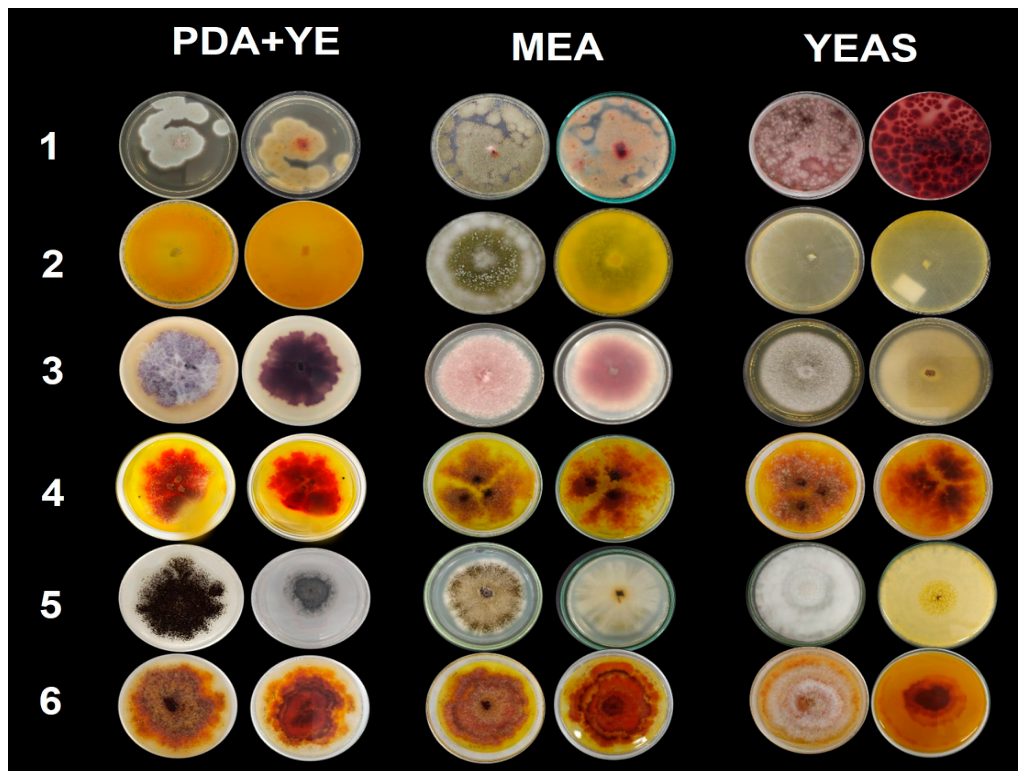
To evaluate pigment production by aquatic fungi, a macroscopic assessment of the isolates was performed using three different solid culture media: potato dextrose agar supplemented with yeast extract (PDA + YE), malt extract agar (MEA), and yeast extract–sucrose agar supplemented with magnesium sulfate (YES). Some fungal isolates exhibited pigments diffused into the culture medium, whereas others displayed pigmentation associated with the mycelium.
Isolates exhibiting pigmentation across all tested culture media showed more intense visual coloration when cultivated on PDA + YE and YES media, particularly in shades of red, yellow, orange, and brown. Among the 45 aquatic fungal isolates evaluated, 39 exhibited visible pigmentation in at least two of the tested culture media. Figure 3 presents images of the upper and reverse sides of fungal colonies displaying the most pronounced pigmentation profiles under solid culture conditions.
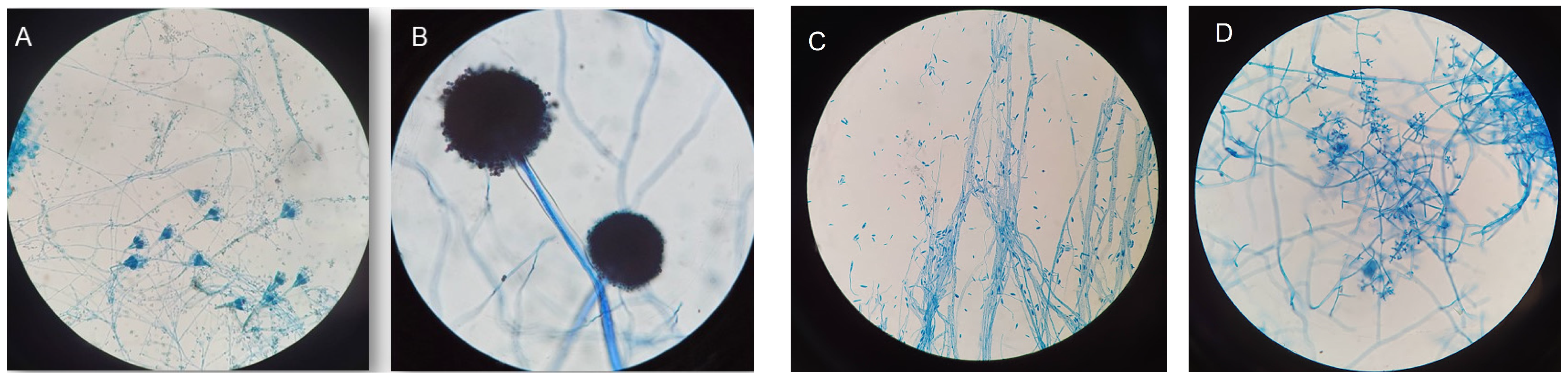
During the screening process on solid media, pigment-producing fungi were preliminarily identified at the genus level using the microculture technique (Figure 4). Among the isolates, 20 were identified as Penicillium spp., 7 as Aspergillus spp., 3 as Trichoderma spp., and 2 as Fusarium spp. The remaining 13 isolates could not be identified by microculture because they did not produce spores under the tested conditions.
The fungal isolates that exhibited pigmentation on solid media were subsequently selected and cultivated under submerged conditions to obtain pigmented extracts for further evaluation by UV–Vis spectrophotometry.

3.2. Spectrophotometric Characterization of Pigment-Associated Compounds Produced in Different Culture Media

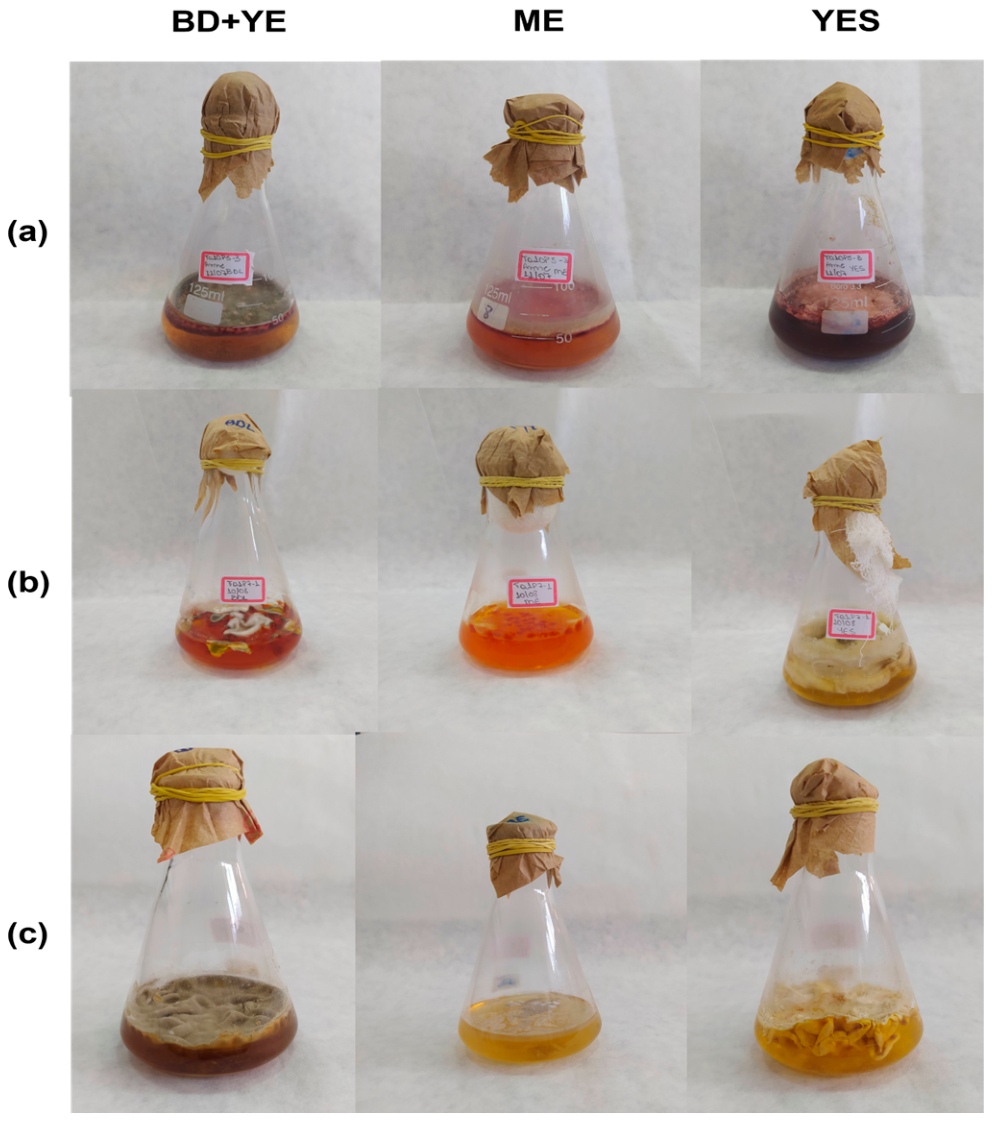
Fungi cultivated in YES medium exhibited more intense visual pigmentation. However, noticeable variations in colony morphology were observed during growth in this medium, including differences in colony texture and surface topography. These changes were associated with denser mycelial growth and a predominance of rough colony surfaces. In contrast, cultures grown in malt extract medium produced lower biomass and exhibited a finer mycelial texture. These observations suggest that the nutritional composition of the culture media influenced both fungal growth and the production of pigment-associated metabolites. Figure 5 presents representative fungal isolates grown in different liquid media, highlighting variations in pigmentation profiles.
Among the aquatic fungal isolates evaluated under submerged cultivation conditions, seven strains produced extracts with distinct absorbance profiles at different wavelengths depending on the culture medium used for fungal growth. The wavelengths of maximum absorbance (λmax) obtained for each extract are presented in Table 1.
As shown in Table 1, the YES medium was associated with higher absorbance values in pigmented extracts obtained from submerged cultures. The extract produced by isolate TA10P5-3 exhibited the highest absorbance at 400 nm (AU400 nm = 6.83 absorbance units), followed by TA2P4-1 (AU400 nm = 5.23 absorbance units) and TA12P2-2 (AU400 nm = 4.85 absorbance units). A secondary absorption band between 480 and 500 nm (Figure S1) was observed for extracts produced by isolates TA1P3-1, TA2P4-1, TA10P5-3, and TA10P5-4. Absorbance in this region is consistent with the reddish coloration observed in the YES medium, suggesting the possible presence of compounds with distinct chromophoric systems. The highest absorbance at 400 nm (AU400 nm = 8.00 absorbance units) was detected for the extract produced by the isolate TA9P8-3 cultivated in BD + YE medium. Although absorbance values varied depending on the culture medium, the results indicate that medium composition influenced the spectral profiles of the extracts.
For extracts obtained from biomass-associated fractions, the YES medium also resulted in higher absorbance values for all isolates compared with BD + YE and ME media. The extract produced by isolate TA10P5-4 exhibited the highest absorbance at 500 nm (AU500 nm = 6.45 absorbance units), corresponding to a reddish coloration, whereas the extract obtained from isolate TA9P8-3 showed the highest absorbance at 400 nm (AU400 nm = 6.35 absorbance units), associated with a yellowish-brown profile. These patterns were generally consistent with those observed for extracts obtained from submerged cultures. Overall, most isolates exhibited absorbance maxima in the range of 400–450 nm, commonly associated with yellowish-brown chromophoric compounds, and around 500 nm, typically related to reddish chromophoric compounds. In addition to the influence of culture medium composition, differences were observed between extracts obtained from submerged cultures and biomass-associated fractions, suggesting variations in metabolite composition (Figure S1).
As shown in Figure S1, the absorbance spectra indicate that extracts produced by the same fungal isolate may exhibit either similar spectral profiles, as observed for isolate TA1P3-1, or distinct profiles depending on the extraction matrix, as observed for isolate TA10P5-4.

3.3. Influence of Cultivation Conditions on the Visual Appearance of Fungal Pigmentation

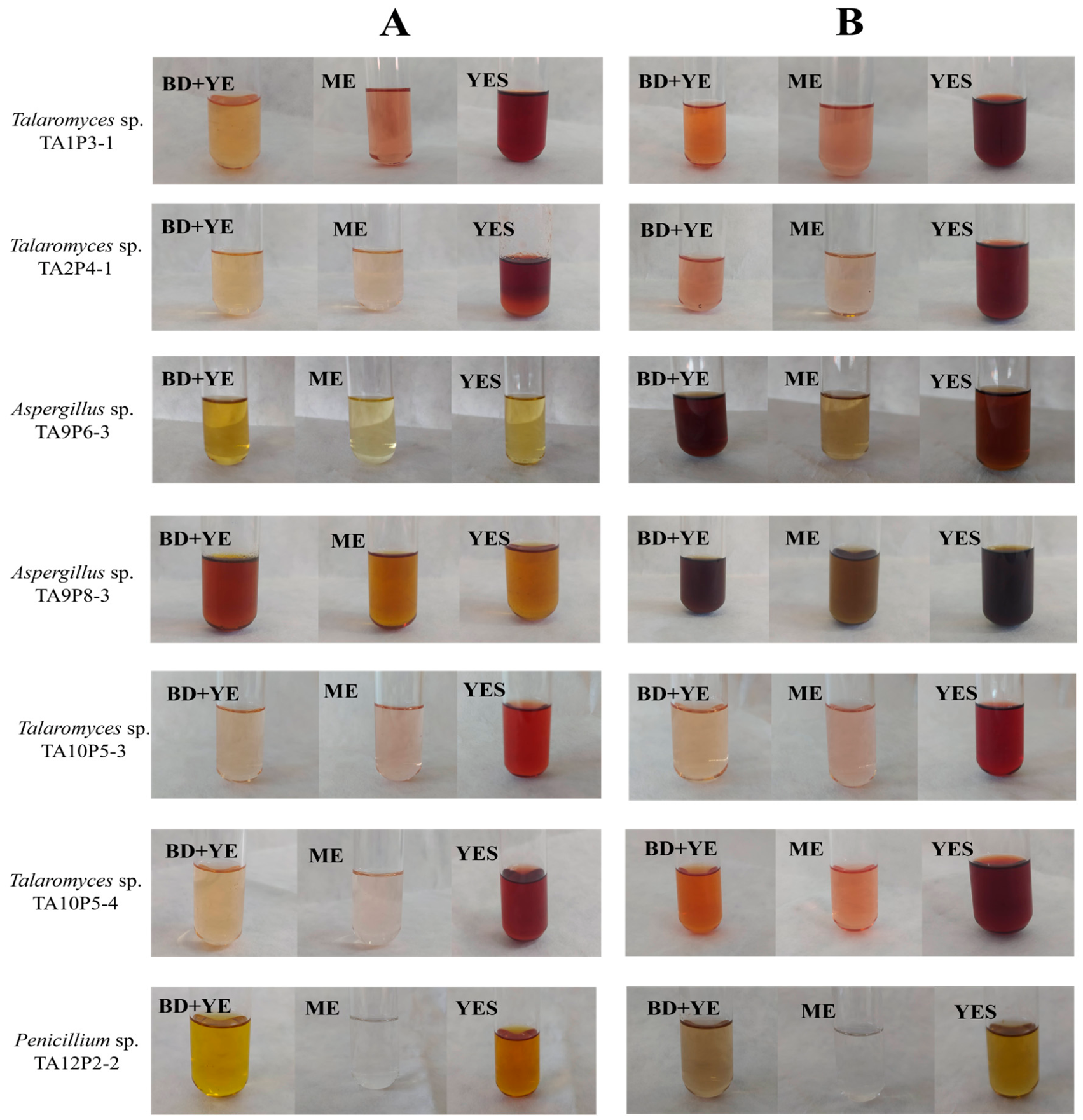
Under the same liquid culture conditions, fungi belonging to the same genus exhibited variations in pigmentation ranging from yellowish-brown and pale pink to intense red. This variation was observed among extracts produced by Talaromyces isolates (TA1P3-1, TA2P4-1, TA10P5-3, and TA10P5-4), contrasting with pigmentation profiles reported for other isolates cultivated under different carbon sources. Furthermore, these visual differences were also influenced by the culture medium composition. This effect was particularly evident for extracts produced by Aspergillus sp. TA9P8-3 and TA9P6-3 (Figure 6), which exhibited distinct color profiles depending on both the culture medium and extraction matrix.
The visible coloration of extracts obtained from biomass-associated fractions is presented in Figure 6B. Extracts obtained from submerged cultures exhibited predominantly yellowish-brown, yellow, brown, orange, pink, and red coloration, suggesting the possible presence of water-soluble chromophoric compounds released into the culture medium. However, several intensely pigmented cultures, particularly those exhibiting red or brown coloration, also yielded strongly colored biomass-associated extracts. This observation is consistent with the absorbance profiles presented in Table 1 and may indicate partial retention of chromophoric compounds within the fungal biomass.
As shown in Table 1 and corroborated by the visual profiles presented in Figure 6, the YES medium resulted in higher absorbance values at 400 nm for several extracts, particularly for Talaromyces sp. TA10P5-3 (6.83 absorbance units). The reddish coloration observed visually appeared to be associated with absorbance in the 480–500 nm range (Figure S1), contributing to the overall color profile of the extracts. The highest absorbance value at 400 nm associated with yellowish-brown coloration was observed for Aspergillus sp. TA9P8-3 cultivated in BD + YE medium (AU400 nm = 8.00 absorbance units).
In general, more intense visual coloration was observed in extracts obtained from biomass-associated fractions (Figure 6), suggesting differences in the distribution of chromophoric compounds between extraction matrices. For the remaining isolates (TA1P3-1, TA2P4-1, TA10P5-4, and TA12P2-2), although absorbance values varied depending on the culture medium, all tested media influenced the spectral profiles of the extracts. The YES medium was associated with higher absorbance values at 400 nm for Penicillium sp. TA12P2-2 (AU400 nm = 4.85 absorbance units), as well as for several other isolates evaluated in this study.

3.4. Identification of Pigment-Producing Fungi

The seven aquatic isolates selected based on the maximum absorbance profiles (λmax) of their extracts, used here as indicators of relative pigment-associated spectral signals, were identified through molecular analyses. All sequences generated in this study were deposited in GenBank (Table 2).
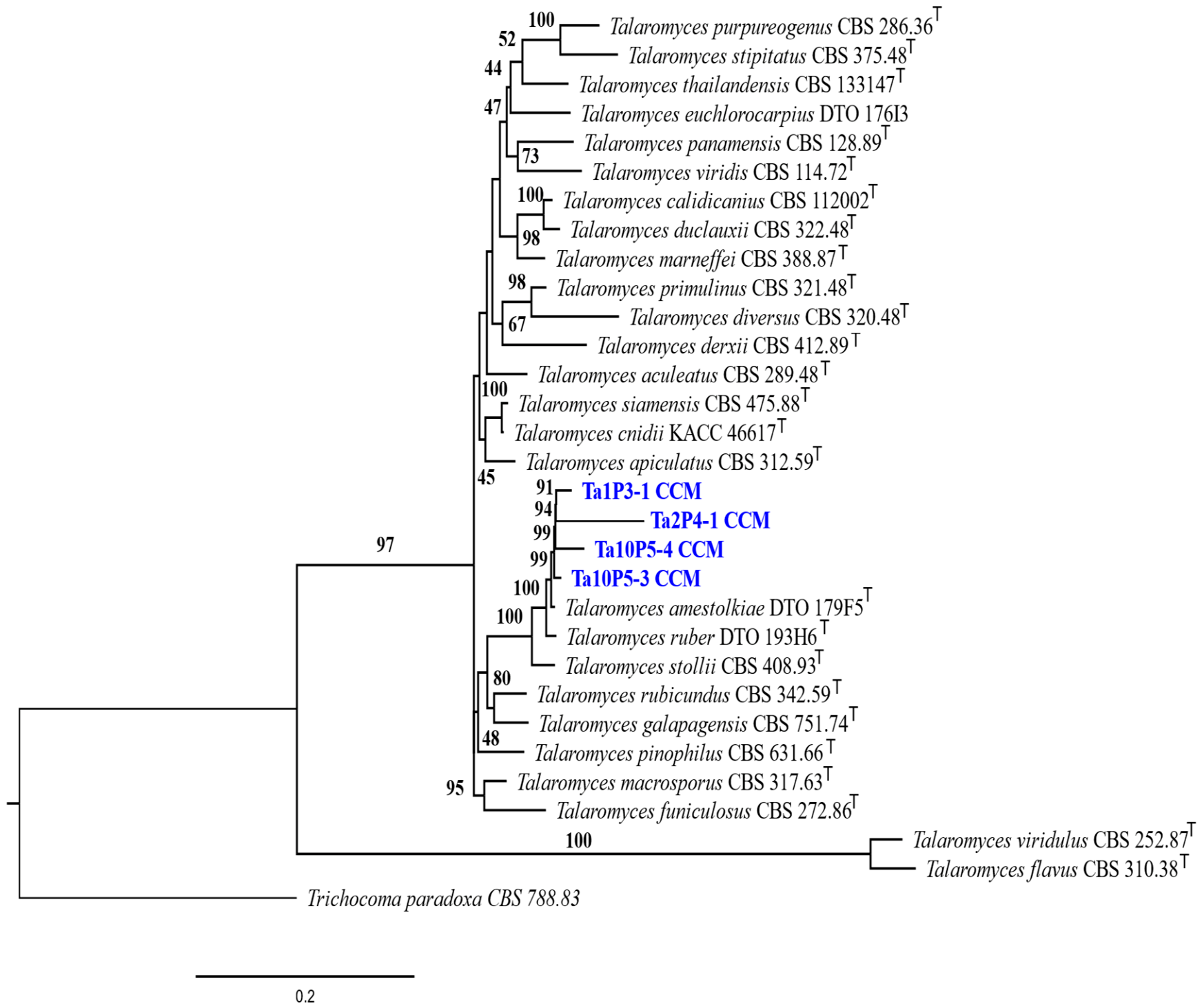
Isolates TA1P3-1, TA10P5-3, TA2P4-1, and TA10P5-4 were identified based on amplification of the internal transcribed spacer (ITS) region, the partial β-tubulin gene (tub2), and the partial gene encoding the second largest subunit of DNA-directed RNA polymerase II (rpb2). Phylogenetic analysis showed 100% bootstrap support for clustering with the type strain Talaromyces amestolkiae (DTO 179F5). For the construction of the phylogenetic tree of the genus Talaromyces (Figure 7), a combined dataset consisting of the ITS + rpb2 + tub2 loci was used. According to the Bayesian Information Criterion (BIC), the best-fit evolutionary models were TNe + G4 (partition 1), TNe + G4 (partition 2), and TVMe + G4 (partition 3).
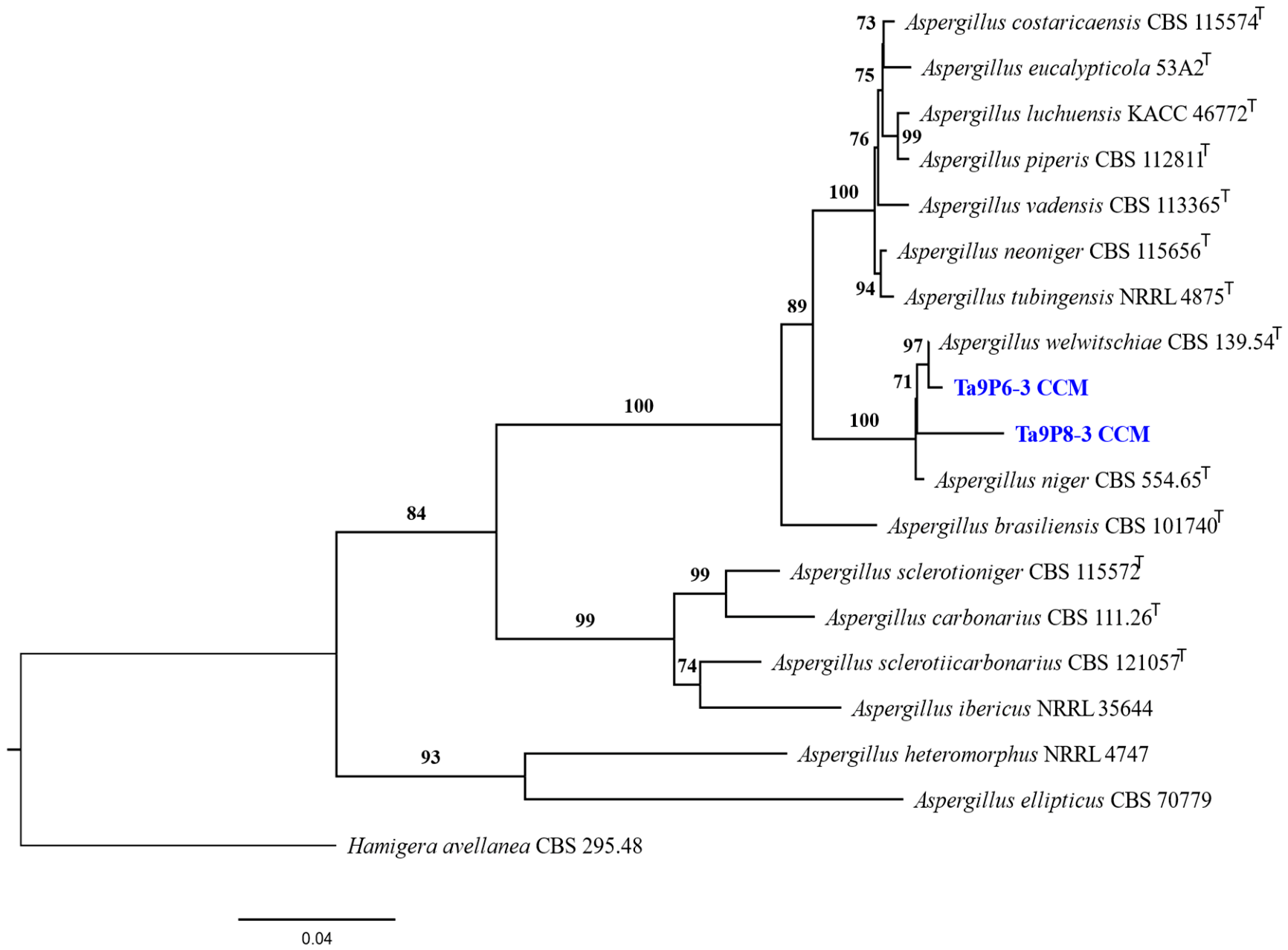
Isolate TA9P6-3 was identified based on amplification of the ITS region and the partial β-tubulin gene (tub2), whereas isolate TA9P8-3 was identified using amplification of the ITS region, the partial β-tubulin gene (tub2), and the partial calmodulin gene (cal). Isolate TA9P6-3 showed 97% bootstrap support for clustering with the type strain of Aspergillus welwitschiae (CBS 139.54), whereas isolate TA9P8-3 was identified only at the genus level as Aspergillus sp. (Figure 8). A combined dataset consisting of the ITS, tub2 and cal loci was used to construct the phylogenetic tree of the genus Aspergillus. According to the Bayesian Information Criterion (BIC), the best-fit evolutionary models were TNe + G4 (partition 1), TPM2 + F + I (partition 2), and TNe + G4 (partition 3).
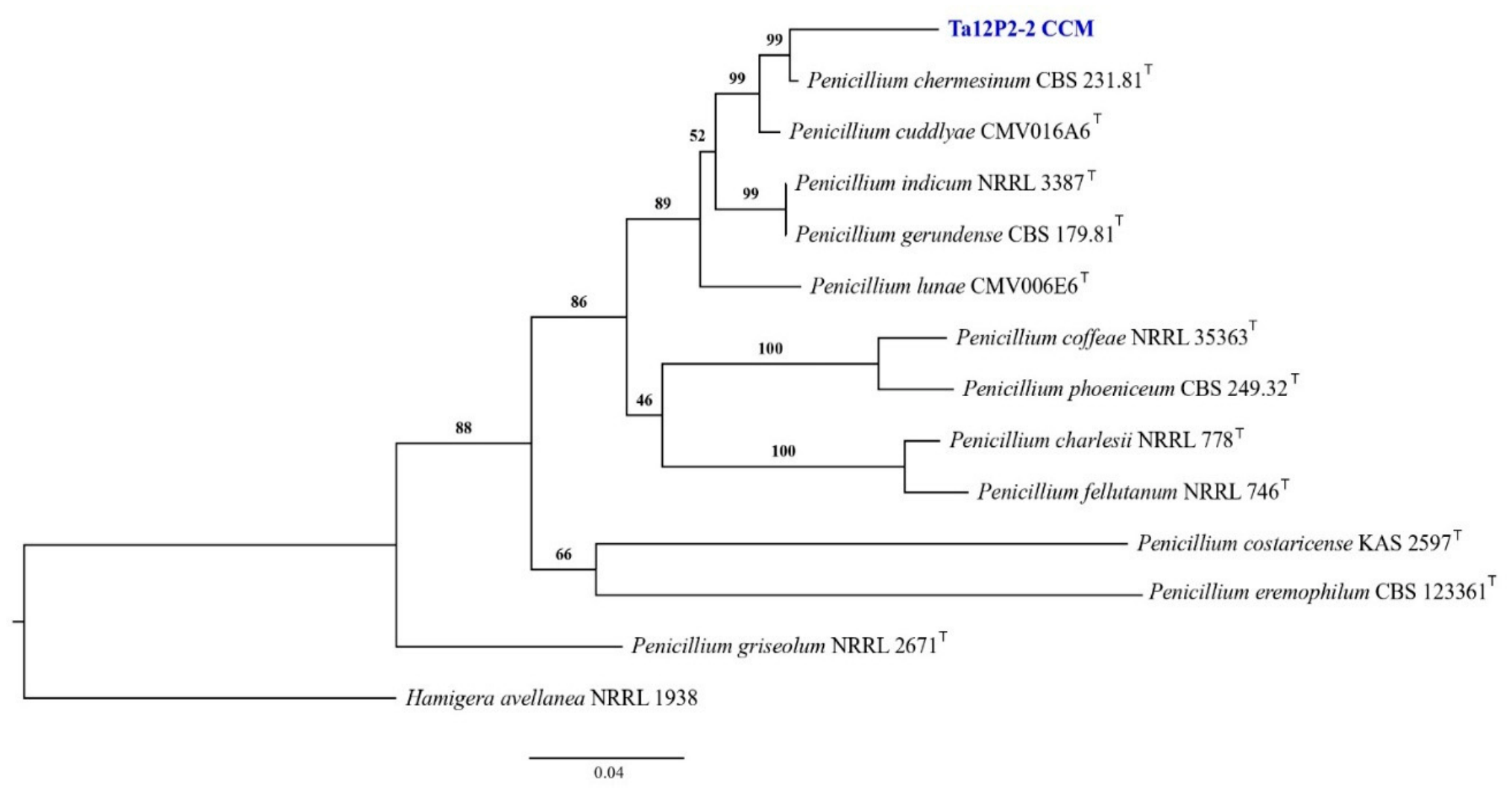
Isolate TA12P2-2 was identified based on amplification of the ITS region and the partial β-tubulin gene (tub2), showing 99% bootstrap support for clustering with the type strain of Penicillium chermesinum (CBS 231.81). For the construction of the phylogenetic tree of the genus Penicillium, representative isolates from the Nigri, Carbonarii, and Heteromorphi series were included using a combined dataset consisting of the ITS + tub2 loci (Figure 9). According to the Bayesian Information Criterion (BIC), the best-fit evolutionary models were TIM2 + F + G4 (partition 1) and TIM2e + G4 (partition 2).

3.5. Chemical Profiling of Pigmented Extracts

The pigment extracts obtained from the seven selected fungal isolates were analyzed by thin-layer chromatography (TLC) as a preliminary approach for chemical characterization. Chromatographic analysis under UV light at 254 and 365 nm revealed bands associated with conjugated systems (Figure 10A,B), consistent with aromatic or highly conjugated metabolite-associated bands, commonly found in fungal pigments. Development of the TLC plates using anisaldehyde–sulfuric acid reagent produced purple and pink coloration in several extracts (Figure 10C), indicating the possible presence of terpenoid-associated compounds.
In extract 1 (Aspergillus sp. TA9P8-3) and extract 4 (P. chermesinum TA12P2-2), a bluish band was observed, which may be associated with glycosidic or terpenoid-related compounds. In contrast, extract 7 (T. amestolkiae TA10P5-3) exhibited orange and pink bands, which may also be associated with terpenoid-related compounds (Figure 10C,D).
The blue fluorescence observed after treatment with aluminum chloride and visualization under UV light at 365 nm (Figure 10G) suggests the possible presence of flavonoid-like compounds in the extracts. The brown spot observed after development with ferric chloride (Figure 10H), detected only in extract 1 (Aspergillus sp. TA9P8-3), is consistent with the possible presence of phenolic compounds. Likewise, spots revealed after treatment with ceric sulfate reagent may indicate the presence of terpenoid-associated compounds (Figure 10E). No alkaloid-associated bands were observed in the analyzed extracts after treatment with Dragendorff reagent.

3.6. Antimicrobial Activity of Pigmented Extracts

All pigmented fungal extracts obtained from isolates presenting the highest maximum absorbance values (λmax) were evaluated for antimicrobial activity. All extracts exhibited inhibitory activity against at least one of the tested microbial strains, as presented in Table 3.
Among the evaluated isolates, TA9P6-3, TA9P8-3, and TA10P5-3 stood out due to the production of metabolites exhibiting a broad antimicrobial spectrum, inhibiting the growth of Gram-positive and Gram-negative bacteria, as well as yeasts. Among the tested samples, the extract obtained from A. welwitschiae TA9P6-3 exhibited activity against the largest number of microorganisms, with a minimum inhibitory concentration (MIC) of 313 μg/mL against C. tropicalis. In contrast, the extract produced by T. amestolkiae TA1P3-1 exhibited activity against the lowest number of tested microorganisms. The extracts obtained from T. amestolkiae TA10P5-3 exhibited the strongest antimicrobial activity, presenting MIC values of 625 μg/mL against P. aeruginosa, 313 μg/mL against S. epidermidis, and 625 μg/mL against C. tropicalis (Table 3).

3.7. Antioxidant Activity and Total Phenolic Content

The antioxidant activity of the pigmented fungal extracts and their respective total phenolic contents are presented in Table 4. The extract obtained from P. chermesinum TA12P2-2 exhibited high antioxidant activity, with 99.46% scavenging of DPPH• radicals. This extract also showed the highest ferric reducing antioxidant power (FRAP = 382.92 µmol TE/g), followed by the extract obtained from Aspergillus sp. TA9P8-3 (FRAP = 351.87 µmol TE/g). Based on EC50 values, the extract produced by A. welwitschiae TA9P6-3 demonstrated the highest antioxidant potential.
The results obtained for total phenolic content complement the preliminary TLC analysis. Although only Aspergillus sp. TA9P8-3 exhibited bands suggestive of phenolic compounds in the TLC analysis (Figure 10H), the Folin–Ciocalteu assay indicated that several extracts contained low concentrations of phenolic-associated compounds, which may have limited their detection by TLC. For example, although the extract obtained from T. amestolkiae TA10P5-3 exhibited the highest total phenolic content (246.30 mg GAE/g), no visible bands were observed after TLC development with ferric chloride reagent (Figure 10H). However, when vanillin reagent was applied (Figure 10D), several bands were detected, including one with intense pink coloration. Although vanillin is considered a general revealing reagent, it may also react with compounds containing conjugated unsaturations or aromatic rings, which could explain the detection of compounds not revealed by ferric chloride.
The DPPH reagent was also applied in TLC analyses to identify bands potentially associated with antioxidant activity. Several bands demonstrated radical-scavenging activity, particularly in the extract produced by Aspergillus sp. TA9P8-3 and, to a lesser extent, in the extract obtained from T. amestolkiae TA10P5-3. Notably, the extract produced by P. chermesinum TA12P2-2 exhibited the highest antioxidant activity in the DPPH assay. Although this isolate produced only a faint band after TLC revelation with DPPH reagent, multiple bands were observed after development with vanillin–sulfuric acid reagent, suggesting the possible presence of compounds that may contribute to the observed antioxidant activity but were not detected using ferric chloride.

3.8. Cytotoxicity of Pigmented Extracts

The cytotoxicity of the pigmented fungal extracts is presented in Table 5. None of the evaluated extracts exhibited significant cytotoxic effects against the MRC-5 fibroblast cell line. After 72 h of exposure to the pigmented extracts, cell viability remained above 76%, indicating low cytotoxicity under the evaluated conditions. These findings suggest that the analyzed pigmented fungal extracts exhibit a favorable preliminary safety profile.

4. Discussion

Filamentous fungi are increasingly recognized as promising natural alternatives to synthetic dyes due to their ability to produce pigmented secondary metabolites through controlled bioprocesses [6]. These organisms are highly versatile and capable of synthesizing a broad diversity of bioactive compounds. Compared with plant-derived pigments, fungal pigments offer several advantages, including rapid growth rates, independence from seasonal variations, and the possibility of enhancing metabolite production through optimization of cultivation parameters [5,8,10]. Furthermore, cultivation under different environmental and nutritional conditions may result in metabolites with distinct color profiles, stability, and solubility characteristics [47,48,49]. Beyond their coloring properties, many fungal metabolites also exhibit biological activities, such as antimicrobial, antioxidant, and anticancer effects, which further increase their industrial relevance [5].
In the present study, pigmented extracts obtained from submerged cultures and biomass-associated fractions were evaluated. The selection of culture media was based on previous studies investigating pigment production by filamentous fungi in both solid and liquid cultivation systems [45,50]. After the initial screening on solid media, thirty-nine fungal isolates were further evaluated under submerged cultivation conditions according to absorbance profiles associated with pigmentation. Among these isolates, only four did not exhibit visible pigmentation, reinforcing the potential of filamentous fungi as sources of pigment-associated metabolites.
The seven fungal isolates selected as promising pigment producers demonstrated the ability to assimilate different carbon sources; however, not all substrates promoted pigment production to the same extent. The efficiency of metabolite production depends on the metabolic capacity of each fungal species as well as on the availability of assimilable carbon and nitrogen sources in the cultivation medium [2].
Among the tested carbon sources, higher absorbance signals associated with pigmented extracts were consistently observed when sucrose (YES medium) was used as the primary carbon source, regardless of the visual coloration observed (Table 1). This effect may be associated with differences in metabolic accessibility and substrate utilization. Sucrose is a disaccharide composed of glucose and fructose, whereas maltose consists of two glucose units linked by an α(1→4) glycosidic bond. These structural differences may influence hydrolysis efficiency and carbon assimilation, potentially increasing carbon availability for secondary metabolite biosynthesis [51].
However, the YES medium is characterized by a high sucrose concentration, which may reduce water activity and impose osmotic stress on fungal cells. Such conditions are known to activate osmoadaptive responses, including the High Osmolarity Glycerol (HOG) pathway, which has been associated with the regulation of secondary metabolism [52]. In this context, osmotic stress may function as an environmental trigger that stimulates the biosynthesis of secondary metabolites. For example, Overy et al. [53] demonstrated that glycerol-induced osmotic stress and saline conditions significantly altered the secondary metabolite profile of Aspergillus aculeatus, increasing the production of compounds such as CJ-15,183 and aculenes A and B, while additional metabolites were upregulated under saline stress conditions.
Therefore, the increased pigmentation observed in the present study cannot be attributed solely to sucrose as a carbon source but may also be associated with the osmotic stress imposed by its elevated concentration in the medium. The investigated strains appear to tolerate these conditions and respond by intensifying secondary metabolite production. Nevertheless, further studies are necessary to better understand these responses, particularly regarding the possible co-production of mycotoxins [54,55].
Talaromyces amestolkiae was isolated from multiple sampling sites along the Tarumã-Açu River, and four of the seven most promising isolates belonged to this species. Despite this taxonomic similarity, notable differences were observed in pigmentation profiles, absorbance values (Table 1), and biological activities (Table 4). In addition, variations between extraction procedures suggest differences in metabolite composition depending on the extraction strategy employed [47].
In the present study, A. welwitschiae TA9P6-3 and Aspergillus sp. TA9P8-3 exhibited pigmentation with distinct visual color profiles depending on the culture medium and carbon source (Figure 6). These observations are consistent with previous reports demonstrating that environmental conditions, particularly nutrient composition, strongly influence fungal secondary metabolism [11].
The YES medium (yeast extract–sucrose supplemented with magnesium sulfate) was associated with higher absorbance values in extracts exhibiting reddish-brown and yellowish-brown coloration in T. amestolkiae isolates (Table 1 and Table 2). Similar findings were reported by Santos-Ebinuma et al. [32], who optimized red pigment production by Talaromyces amestolkiae DPUA 1275 using sucrose and yeast extract. According to these authors, increased nitrogen availability may favor reactions between pigment precursors and amino groups, leading to the formation of red pigment-associated metabolites.
Species belonging to the genus Talaromyces are known to produce yellow, orange, and red metabolites, both associated with the mycelium and diffused into the culture medium. Many of these compounds belong to the azaphilone family, a group of polyketide-derived metabolites structurally related to pigments produced by Monascus species [7,56,57,58,59]. For example, T. albobiverticillius isolated from marine environments has been reported to produce several azaphilone pigments, including derivatives related to monascorubramine and rubropunctamine [58]. Importantly, many Talaromyces species do not produce the mycotoxin citrinin, which is frequently associated with pigments produced by Monascus species [23].
In addition, species of the genus Penicillium are widely recognized as prolific producers of secondary metabolites. One notable example is Penicillium oxalicum, which produces Arpink Red™, the first fungal pigment commercially developed for industrial applications [59]. Several Penicillium species, including P. purpurogenum, P. aculeatum, P. funiculosum, and P. pinophilum, have been reported to produce pigment-associated metabolites such as azaphilones and amino acid derivatives without concomitant citrinin production [60,61,62].
In the present study, Talaromyces amestolkiae TA10P5-4 and Penicillium chermesinum TA12P2-2 exhibited distinct spectral and visual profiles depending on cultivation conditions. Higher absorbance values were observed under specific conditions (Table 1), suggesting differences in metabolite distribution and extraction efficiency. Previous studies have reported the production of azaphilone compounds, known as chermesionins, by P. chermesinum isolated from mangrove environments [63]. Although this species has been reported in diverse ecological niches, including plant-associated [64,65,66], airborne [47], and marine ecosystems [67], studies exploring its pigment-production potential remain limited. The present results suggest that the freshwater isolate of P. chermesinum may represent a promising source of pigment-associated metabolites extractable using solvents of intermediate polarity.
All selected isolates belonged to the family Trichocomaceae, which includes the genera Talaromyces, Penicillium, and Aspergillus, all widely recognized as prolific producers of pigment-associated secondary metabolites [11]. Aspergillus species also demonstrated notable bioactive potential in the present study. The isolate A. welwitschiae TA9P6-3 exhibited antimicrobial activity against several bacterial and fungal strains (Table 3). Members of the genus Aspergillus are known to produce a wide range of bioactive metabolites, including anthraquinones such as averantin and nidurufin, which exhibit antibacterial activity against Gram-positive pathogens [68]. Similar antimicrobial activity has also been reported for aquatic Aspergillus isolates obtained from the Tapajós River Basin [15].
Although previous studies have suggested that metabolites produced by Aspergillus species are generally more active against Gram-positive bacteria [69], the isolates evaluated in the present study also exhibited inhibitory activity against Gram-negative bacteria, including Pseudomonas aeruginosa, Salmonella enterica, and Escherichia coli (Table 3). Comparable findings were reported by Pinto Filho Segundo et al. [14], who observed antimicrobial activity in extracts obtained from aquatic fungi isolated from polluted streams in the Amazon region.
Fungal metabolites exhibiting antimicrobial and antioxidant activities often belong to diverse chemical classes, including phenolic-associated compounds, flavonoid-like compounds, and phenolic acids [40,70]. Preliminary chemical screening by thin-layer chromatography (TLC) suggested the possible presence of some of these compound classes in the pigmented extracts obtained from the seven selected fungal isolates (Figure 10). Similar observations were reported by Pereira et al. [10], who described phenolic- and terpenoid-associated fractions in pigmented extracts from the endophytic fungus Hypoxylon investiens. However, because TLC provides only a preliminary qualitative assessment, further studies employing more robust analytical approaches, such as HPLC-MS or NMR, are required for definitive chemical characterization of these extracts.
Antioxidant activity was also observed in several extracts evaluated in this study (Table 5). For example, the extract produced by T. amestolkiae TA10P5-3 exhibited a total phenolic content of 246.30 mg GAE/g. This relatively elevated value, compared with reports from non-optimized cultivation systems [49,70,71], suggests the potential of this isolate for the production of phenolic-associated metabolites under the tested conditions.
Despite these promising findings, potential limitations for future applications must be considered, particularly regarding toxicity. Species belonging to the genera Aspergillus, Penicillium, and Talaromyces are known to produce mycotoxins and other potentially toxic metabolites [72,73]. Rodrigues et al. [74], for example, evaluated kojic acid isolated from Aspergillus sp. and reported moderate cytotoxicity against MRC-5 cells, with cell viability remaining above 70% after 72 h of exposure within the tested concentration range (500–7.81 µg/mL). Similarly, Teixeira et al. [75] demonstrated that the toxicity of pigment-producing Amazonian fungi from the genera Aspergillus and Penicillium varied according to species and strain, with P. simplicissimum DPUA 1379 and P. janczewskii DPUA 304 exhibiting higher toxicity toward Artemia salina larvae. In contrast, Zaccarim et al. [76] reported low cytotoxicity for the fermented broth of T. amestolkiae DPUA 1275 against NIH-3T3 fibroblast cells (IC50 > 187.5 µg/mL).
Consistent with these reports, the extracts evaluated in the present study exhibited low cytotoxicity against MRC-5 cells, with cell viability exceeding 76% after 72 h of exposure. Nevertheless, further investigations, including in vivo toxicity assays, detailed mycotoxin profiling, and evaluation of potential synergistic effects within application matrices, are necessary before considering practical or industrial use.
Despite the recognized potential of microorganisms as sources of bioactive compounds, relatively few studies have investigated antimicrobial metabolites produced by freshwater fungi from the Brazilian Amazon in recent years. This highlights a significant gap in the exploration of aquatic fungal biodiversity within this biome [15]. To the best of our knowledge, this study represents one of the first reports focusing on freshwater fungi isolated from the Amazon region with potential for both pigment production and antimicrobial activity. These findings reinforce the importance of exploring aquatic fungal biodiversity as a source of natural pigments and bioactive metabolites with potential industrial and pharmaceutical applications.

5. Conclusions

This study provides new insights into the occurrence of pigment-associated metabolites produced by aquatic fungi isolated from freshwater environments in the Brazilian Amazon. Among the evaluated strains, Aspergillus welwitschiae TA9P6-3, Talaromyces amestolkiae TA10P5-3, and Penicillium chermesinum TA12P2-2 stood out due to their pronounced pigmentation and antimicrobial activity, exhibiting color profiles ranging from yellow to red. Pigmentation profiles varied according to the composition of the culture medium, with yeast extract–sucrose supplemented with magnesium sulfate (YES) medium being associated with higher absorbance values in the analyzed extracts.
The results indicate that secondary metabolites produced by these aquatic fungi may contain bioactive compounds with antimicrobial and antioxidant potential. In particular, the extract obtained from T. amestolkiae TA10P5-3 exhibited antimicrobial activity, low cytotoxicity, and antioxidant potential under the tested conditions. Based on UV–Vis spectroscopy and preliminary TLC analysis, the chemical profiles of these extracts suggest the possible presence of terpenoid- and phenolic-associated compounds; however, these findings should be considered preliminary and require confirmation through more advanced analytical approaches.
Although the results highlight the biotechnological potential of Amazonian freshwater fungi, additional chemical characterization and safety assessment studies are required before potential industrial application.

Supplementary Materials

The following supporting information can be downloaded at: https://www.mdpi.com/article/10.3390/pr14101652/s1, Figure S1: t Visible spectra (400–700 nm) of extracellular (EC) and intracellular (IC) pigments obtained from aquatic fungal isolates cultivated in different culture media (-BD + YE in red, –ME in green and –YES in black) after 14 days. The spectra correspond to the isolates that showed the highest maximum absorbance values.

Author Contributions

Conceptualization, A.T.F.d.S. and P.M.A.; methodology, D.Í.d.M.P., C.F. and P.M.A.; validation, A.T.F.d.S., D.Í.d.M.P., C.P.d.A.N. and P.M.A.; formal analysis, C.F., P.M.A. and A.M.J.; investigation, A.T.F.d.S., C.P.d.A.N., I.P.d.L., R.S.d.S., Y.P.-A. and L.S.d.H.R.; resources, P.M.A. and C.F.; data curation, A.T.F.d.S., D.Í.d.M.P. and C.P.d.A.N.; writing—original draft preparation, A.T.F.d.S.; writing—review and editing, D.Í.d.M.P., A.M.J. and P.M.A.; supervision, P.M.A. and D.Í.d.M.P.; project administration, C.F. and P.M.A.; funding acquisition, C.F. and P.M.A. All authors have read and agreed to the published version of the manuscript.

Funding

This research was funded by Fundação de Amparo à Pesquisa do Estado do Amazonas (FAPEAM) (grants number 01.02.016301.00568/2021-05 and 01.02.016301.00101/2024-08), and by Coordenação de Aperfeiçoamento de Pessoal de Nível Superior (CAPES) (finance code 001 and grant number 88881.510151/2020-01—PDPG Amazônia Legal).

Institutional Review Board Statement

Not applicable.

Informed Consent Statement

Not applicable.

Data Availability Statement

The original contributions presented in this study are included in the article; further inquiries can be directed to the corresponding authors.

Acknowledgments

The authors gratefully acknowledge Universidade do Estado do Amazonas-UEA, FAPEAM and CAPES for supporting this research.

Conflicts of Interest

The authors declare no conflicts of interest. The funders had no role in the design of the study; in the collection, analyses, or interpretation of data; in the writing of the manuscript; or in the decision to publish the results.

References

  1. Venkatachalam, M.; Singh, A.S.C.; Caro, Y.; Dufossé, L.; Fouillaud, M. OVAT Analysis and Response Surface Methodology Based on Nutrient Sources for Optimization of Pigment Production in the Marine-Derived Fungus Talaromyces albobiverticillius 30548 Submerged Fermentation. Mar. Drugs 2021, 19, 248. [Google Scholar] [CrossRef] [PubMed]
  2. Lagashetti, A.C.; Dufossé, L.; Singh, S.K.; Singh, P.N. Fungal Pigments and Their Prospects in Different Industries. Microorganisms 2019, 7, 604. [Google Scholar] [CrossRef]
  3. Venil, C.K.; Velmurugan, P.; Dufossé, L.; Devi, P.R.; Ravi, A.V. Fungal Pigments: Potential Coloring Compounds for Wide Ranging Applications in Textile Dyeing. J. Fungi 2020, 6, 68. [Google Scholar] [CrossRef]
  4. Rao, M.P.N.; Xiao, M.; Li, W.-J. Fungal and Bacterial Pigments: Secondary Metabolites with Wide Applications. Front. Microbiol. 2017, 8, 1113. [Google Scholar] [CrossRef] [PubMed]
  5. Oliveira, L.A.; Pinto Filho Segundo, W.O.; Souza, E.S.; Peres, E.G.; Koolen, H.H.F.; Souza, J.V.B. Ascomycota as a Source of Natural Colorants. Braz. J. Microbiol. 2022, 53, 1199–1220. [Google Scholar] [CrossRef] [PubMed]
  6. De Mejia, E.G.; Zhang, Q.; Penta, K.; Eroglu, A.; Lila, M.A. The Colors of Health: Chemistry, Bioactivity, and Market Demand for Colorful Foods and Natural Food Sources of Colorants. Annu. Rev. Food Sci. Technol. 2020, 11, 145–182. [Google Scholar] [CrossRef]
  7. Mapari, S.A.S.; Thrane, U.; Meyer, A.S. Fungal Polyketide Azaphilone Pigments as Future Natural Food Colorants? Trends Biotechnol. 2010, 28, 300–307. [Google Scholar] [CrossRef]
  8. Dufossé, L.; Fouillaud, M.; Caro, Y.; Mapari, S.A.S.; Sutthiwong, N. Filamentous Fungi Are Large-Scale Producers of Pigments and Colorants for the Food Industry. Curr. Opin. Biotechnol. 2014, 26, 56–61. [Google Scholar] [CrossRef]
  9. Oliveira, L.A.; Sanches, M.A.; Pinto Filho Segundo, W.O.; Santiago, P.A.L.; Lima, R.Q.; Cortez, A.C.A.; Souza, E.S.; Lima, M.P.; Lima, E.S.; Koolen, H.H.F.; et al. Exploring Colorant Production by Amazonian Filamentous Fungi: Stability and Applications. J. Basic Microbiol. 2024, 64, e2300444. [Google Scholar] [CrossRef]
  10. Pereira, D.I.M.; Gurgel, R.S.; Souza, A.T.F.; Matias, R.R.; Falcão, L.S.; Chaves, F.C.M.; Silva, G.F.; Martinez, J.G.; Procópio, R.E.L.; Fantin, C.; et al. Isolation and Identification of Pigment-Producing Endophytic Fungi from the Amazonian Species Fridericia chica. J. Fungi 2024, 10, 77. [Google Scholar] [CrossRef]
  11. Fouillaud, M.; Venkatachalam, M.; Llorente, M.; Magalon, H.; Cuet, P.; Dufossé, L. Biodiversity of Pigmented Fungi Isolated from Marine Environment in La Réunion Island, Indian Ocean: New Resources for Colored Metabolites. J. Fungi 2017, 3, 36. [Google Scholar] [CrossRef]
  12. Arifeen, M.Z.U.; Ma, Y.-N.; Xue, Y.-R.; Liu, C.-H. Deep-Sea Fungi Could Be the New Arsenal for Bioactive Molecules. Mar. Drugs 2020, 18, 9. [Google Scholar] [CrossRef]
  13. Vílchez, C.; Forján, E.; Cuaresma, M.; Bédmar, F.; Garbayo, I.; Vega, J.M. Marine Carotenoids: Biological Functions and Commercial Applications. Mar. Drugs 2011, 9, 319–333. [Google Scholar] [CrossRef] [PubMed]
  14. Pinto Filho Segundo, W.O.; Oliveira, R.S.; Lima, R.M.; Santiago, P.A.L.; Oliveira, L.A.; Cortez, A.C.A.; Lima, E.S.; Souza, E.S.; Frickmann, H.; Souza, J.V.B. Antimicrobial Potential of Metabolites in Fungal Strains Isolated from a Polluted Stream. Antibiotics 2023, 12, 27. [Google Scholar] [CrossRef]
  15. Bentes, V.S.; Santana, M.D.F.; Fernandes, G.S.T.; Santos, T.T.; Canto, E.S.M. Antimicrobial Activity Produced by Filamentous Fungi Isolated from the Waters of the Lower Tapajós River, Pará, Brazil. Sci. Plena 2023, 19, 7. [Google Scholar] [CrossRef]
  16. Kathiresan, K.; Bingham, B.L. Biology of Mangroves and Mangrove Ecosystems. Adv. Mar. Biol. 2001, 40, 81–251. [Google Scholar] [CrossRef]
  17. Jones, E.B.G.; Pang, K.-L. Marine Fungi and Fungal-Like Organisms; De Gruyter: Berlin, Germany, 2012. [Google Scholar]
  18. Cai, J.; Zhou, X.-M.; Yang, X.; Tang, M.-M.; Liao, Q.-Y.; Meng, B.-Z.; Liao, S.; Chen, G.-Y. Three New Bioactive Natural Products from the Fungus Talaromyces assiutensis JTY2. Bioorg. Chem. 2020, 94, 103362. [Google Scholar] [CrossRef] [PubMed]
  19. Chen, C.; Wang, X.; Fang, W.; Liang, J.; Cai, J.; Yang, D.; Luo, X.; Gao, C.; Yi, X.; Liu, Y.; et al. Talaketides A–G, Linear Polyketides with Prostate Cancer Cytotoxic Activity from the Mangrove Sediment-Derived Fungus Talaromyces sp. SCSIO 41027. Chin. J. Nat. Med. 2024, 22, 1047–1056. [Google Scholar] [CrossRef]
  20. Caro, Y.; Venkatachalam, M.; Lebeau, J.; Fouillaud, M.; Dufossé, L. Pigments and Colorants from Filamentous Fungi. In Fungal Metabolites; Merillon, J.M., Ramawat, K., Eds.; Springer: Cham, Switzerland, 2017; pp. 1–70. [Google Scholar] [CrossRef]
  21. Fouillaud, M.; Venkatachalam, M.; Girard-Valenciennes, E.; Caro, Y.; Dufossé, L. Anthraquinones and Derivatives from Marine-Derived Fungi: Structural Diversity and Selected Biological Activities. Mar. Drugs 2016, 14, 64. [Google Scholar] [CrossRef]
  22. Ebel, R. Natural Product Diversity from Marine Fungi. In Comprehensive Natural Products II.; Liu, H.-W., Mander, L., Eds.; Elsevier: Oxford, UK, 2010; pp. 223–262. [Google Scholar] [CrossRef]
  23. Venkatachalam, M.; Magalon, H.; Dufossé, L.; Fouillaud, M. Production of Pigments from the Tropical Marine-Derived Fungus Talaromyces albobiverticillius: New Resources for Natural Red-Colored Metabolites. J. Food Compos. Anal. 2018, 70, 35–48. [Google Scholar] [CrossRef]
  24. Imhoff, J.F. Natural Products from Marine Fungi—Still an Underrepresented Resource. Mar. Drugs 2016, 14, 19. [Google Scholar] [CrossRef] [PubMed]
  25. Padrón-Antonio, Y.; Falcão, L.d.S.; de Souza, A.T.F.; de Andrade, C.P.; da Silva, P.V.M.; Barbosa, L.K.; Duvoisin, S., Jr.; Correia, A.C.; Jordão, A.M.; Albuquerque, P.M. Comparative Analysis of Secondary Metabolite Production by Cophinforma mamane and Aspergillus niger Preserved for Long-Term Methods. Processes 2025, 13, 3834. [Google Scholar] [CrossRef]
  26. Amaral, T.S. Bioprospecting of Pigment-Producing Fungi from Amazonian Aquatic Environments. Master’s Thesis, Universidade Federal do Amazonas, Manaus, Brazil, 2022. [Google Scholar]
  27. Castellani, A. Viability of Some Pathogenic Fungi in Distilled Water. J. Trop. Med. Hyg. 1939, 42, 225–226. [Google Scholar]
  28. Procop, G.W.; Church, D.L.; Hall, G.S.; Janda, W.M.; Koneman, E.W.; Schreckenberger, P.C.; Woods, G.L. Koneman’s Color Atlas and Textbook of Diagnostic Microbiology, 7th ed.; Jones & Bartlett Learning: Burlington, MA, USA, 2016. [Google Scholar]
  29. Suwannarach, N.; Kumla, J.; Nishizaki, Y.; Sugimoto, N.; Meerak, J.; Matsui, K.; Lumyong, S. Optimization and Characterization of Red Pigment Production from an Endophytic Fungus, Nigrospora aurantiaca CMU-ZY2045, and Its Potential Source of Natural Dye for Textile Dyeing. Appl. Microbiol. Biotechnol. 2019, 103, 6973–6987. [Google Scholar] [CrossRef] [PubMed]
  30. Heo, Y.M.; Kim, K.; Kwon, S.L.; Na, J.; Lee, H.; Jang, S.; Kim, C.H.; Jung, J.; Kim, J.J. Investigation of Filamentous Fungi Producing Safe, Functional Water-Soluble Pigments. Mycobiology 2018, 46, 269–277. [Google Scholar] [CrossRef]
  31. Santiago, P.A.L. Investigação do Potencial Antimicrobiano e Químico de Penicillium spp. Aquático da Amazônia. Ph.D. Thesis, Universidade Federal do Amazonas, Manaus, Brazil, 2022. [Google Scholar]
  32. Santos-Ebinuma, V.C.; Teixeira, M.F.S.; Pessoa, A. Submerged Culture Conditions for the Production of Alternative Natural Colorants by a New Isolated Penicillium purpurogenum DPUA 1275. J. Microbiol. Biotechnol. 2013, 23, 802–810. [Google Scholar] [CrossRef]
  33. Doyle, J.; Doyle, J.L. Isolation of plant DNA from fresh tissue. Focus 1990, 12, 13–15. [Google Scholar]
  34. Togawa, R.C.; Brigido, M.M.; Santos, C.M.R.; Souza-Júnior, M.T. The use of the PHPH tool to assembly the gene sequences that are candidate to the biotic and abiotic stress in Musa acuminata. In 35th Annual Meeting of the Brazilian Society of Biochemistry and Molecular Biology (SBBq) 2006, Águas de Lindóia; Sociedade Brasileira de Bioquímica e Biologia Molecular: São Paulo, Brazil, 2006; Available online: http://lbi.cenargen.embrapa.br/phph/sbbq.pdf (accessed on 13 September 2024).
  35. Kumar, S.; Stecher, G.; Li, M.; Knyaz, C.; Tamura, K. MEGA X: Molecular Evolutionary Genetics Analysis across Computing Platforms. Mol. Biol. Evol. 2018, 35, 1547–1549. [Google Scholar] [CrossRef]
  36. Katoh, K.; Rozewicki, J.; Yamada, K.D. MAFFT Online Service: Multiple Sequence Alignment. Brief. Bioinform. 2019, 20, 1160–1166. [Google Scholar] [CrossRef]
  37. Trifinopoulos, J.; Nguyen, L.T.; von Haeseler, A.; Minh, B.Q. W-IQ-TREE: A Fast Online Phylogenetic Tool for Maximum Likelihood Analysis. Nucleic Acids Res. 2016, 44, W232–W235. [Google Scholar] [CrossRef]
  38. Kalyaanamoorthy, S.; Minh, B.Q.; Wong, T.K.F.; von Haeseler, A.; Jermiin, L.S. ModelFinder: Fast Model Selection for Accurate Phylogenetic Estimates. Nat. Methods 2017, 14, 587–589. [Google Scholar] [CrossRef]
  39. CLSI. Reference Method for Broth Dilution Antifungal Susceptibility Testing of Yeasts. In CLSI Standard M27; Clinical and Laboratory Standards Institute: Wayne, PA, USA, 2017. [Google Scholar]
  40. Gurgel, R.S.; Pereira, D.I.M.; Garcia, A.V.F.; Souza, A.T.F.; Silva, T.M.; Andrade, C.P.; Silva, W.L.; Nunez, C.V.; Fantin, C.; Procópio, R.E.L.; et al. Antimicrobial and Antioxidant Activities of Endophytic Fungi Associated with Arrabidaea chica (Bignoniaceae). J. Fungi 2023, 9, 864. [Google Scholar] [CrossRef]
  41. Brand-Williams, W.; Cuvelier, M.E.; Berset, C. Use of a Free Radical Method to Evaluate Antioxidant Activity. LWT—Food Sci. Technol. 1995, 28, 25–30. [Google Scholar] [CrossRef]
  42. Benzie, I.F.F.; Strain, J.J. The Ferric Reducing Ability of Plasma (FRAP) as a Measure of “Antioxidant Power”: The FRAP Assay. Anal. Biochem. 1996, 239, 70–76. [Google Scholar] [CrossRef]
  43. Ahmed, S.A.; Gogal, R.M.; Walsh, J.E. A new rapid and simple non-radioactive assay to monitor and determine the proliferation of lymphocyttes: An alternative to [3H] thymidine incorporation assay. J. Immunol. Methods 1994, 170, 211–224. [Google Scholar] [CrossRef]
  44. Wagner, H.; Bladt, S. Plant Drug Analysis: A Thin Layer Chromatography Atlas; Springer: Munich, Germany, 1996. [Google Scholar]
  45. Lopes, J.L.C. Cromatografia em Camada Delgada. In Fundamentos de Cromatografia; Editora da Unicamp: Campinas, Brazil, 2006. [Google Scholar]
  46. Falcão, L.S.; Oliveira, I.L.; Gurgel, R.S.; Souza, A.T.F.; Mendonça, L.S.; Usuda, E.O.; Amaral, T.S.; Veggi, P.C.; Campelo, P.H.; Vasconcellos, M.C.; et al. Development of Cassava Starch-Based Films with Phenolic Compounds from an Amazonian Fungus. Int. J. Biol. Macromol. 2024, 258, 128882. [Google Scholar] [CrossRef]
  47. Souza, P.N.C.; Grigoletto, T.L.B.; Moraes, L.A.B.; Abreu, L.M.; Guimarães, L.H.S.; Santos, C.; Galvão, L.R.; Cardoso, P.G. Production and Chemical Characterization of Pigments in Filamentous Fungi. Microbiology 2016, 162, 12–22. [Google Scholar] [CrossRef]
  48. Agrawal, S.; Adholeya, A.; Barrow, C.J.; Deshmukh, S.K. Marine fungi: An untapped bioresource for future cosmeceuticals. Phytochem. Lett. 2018, 23, 15–20. [Google Scholar] [CrossRef]
  49. Andrade, C.P.; Lacerda, C.D.; Valente, R.A.; Rocha, L.S.d.H.; de Souza, A.T.F.; Pereira, D.Í.d.M.; Barbosa, L.K.; Fantin, C.; Duvoisin Junior, S.; Albuquerque, P.M. An OSMAC Strategy for the Production of Antimicrobial Compounds by the Amazonian Fungi Talaromyces pinophilus CCM-UEA-F0414 and Penicillium paxilli CCM-UEA-F0591. Antibiotics 2025, 14, 756. [Google Scholar] [CrossRef]
  50. Silva, I.F. Produção de Pigmentos pelo Fungo Antártico Pseudogymnoascus sp. 6DC415-I: Otimização, Purificação e Identificação. Master’s Thesis, Universidade Estadual Paulista, Rio Claro, Brazil, 2023. [Google Scholar]
  51. Nelson, D.L.; Cox, M.M. Lehninger Principles of Biochemistry, 8th ed.; W.H. Freeman and Company: New York, NY, USA, 2021. [Google Scholar]
  52. Hohmann, S. Osmotic stress signaling and osmoadaptation in yeasts. Microbiol. Mol. Biol. Rev. 2002, 2, 300–372. [Google Scholar] [CrossRef]
  53. Overy, D.; Correa, H.; Roullier, C.; Chi, W.-C.; Pang, K.-L.; Rateb, M.; Ebel, R.; Shang, Z.; Capon, R.; Bills, G.; et al. Does osmotic stress affect natural product expression in fungi? Mar. Drugs 2017, 15, 254. [Google Scholar] [CrossRef]
  54. Duran, R.; Cary, J.W.; Calvo, A.M. Role of the osmotic stress regulatory pathway in morphogenesis and secondary metabolism in filamentous fungi. Toxins 2010, 2, 367–381. [Google Scholar] [CrossRef]
  55. Lillehoj, E.B.; Wall, J.H.; Bowers, E.J. Preharvest aflatoxin contamination: Effect of moisture and substrate variation in developing cottonseed and corn kernels. App. Environ. Microbiol. 1987, 53, 584–586. [Google Scholar] [CrossRef]
  56. Frisvad, J.C.; Samson, R.A.; Stolk, A.C. Chemotaxonomy of Eupenicillium javanicum and Related Species. In Modern Concepts in Penicillium and Aspergillus Classification; Samson, R.A., Pitt, J.I., Eds.; Springer: Boston, MA, USA, 1990; pp. 445–454. [Google Scholar] [CrossRef]
  57. Samson, R.A.; Yilmaz, N.; Houbraken, J.; Spierenburg, H.; Seifert, K.A.; Peterson, S.W.; Varga, J.; Frisvad, J.C. Phylogeny and Nomenclature of the Genus Talaromyces and Taxa Accommodated in Penicillium Subgenus Biverticillium. Stud. Mycol. 2011, 70, 159–183. [Google Scholar] [CrossRef]
  58. Yilmaz, N.; Visagie, C.M.; Houbraken, J.; Frisvad, J.C.; Samson, R.A. Polyphasic Taxonomy of the Genus Talaromyces. Stud. Mycol. 2014, 78, 175–341. [Google Scholar] [CrossRef]
  59. Dufossé, L. Current and potential natural pigments from microorganisms (bacteria, yeasts, fungi, microalgae). In Woodhead Publishing Series in Food Science, Technology and Nutrition, Handbook on Natural Pigments in Food and Beverages; Carle, R., Schweiggert, R.M., Eds.; Woodhead Publishing: London, UK, 2016; pp. 337–354. [Google Scholar] [CrossRef]
  60. Capon, R.J.; Stewart, M.; Ratnayake, R.; Lacey, E.; Gill, J.H. Citromycetins and Bilains A–C: New Aromatic Polyketides and Diketopiperazines from Australian Marine-Derived and Terrestrial Penicillium spp. J. Nat. Prod. 2007, 70, 1746–1752. [Google Scholar] [CrossRef]
  61. Mapari, S.A.S.; Hansen, M.E.; Meyer, A.S.; Thrane, U. Computerized Screening for Novel Producers of Monascus-like Food Pigments in Penicillium Species. J. Agr. Food Chem. 2008, 56, 9981–9989. [Google Scholar] [CrossRef]
  62. Mapari, S.A.; Meyer, A.S.; Thrane, U.; Frisvad, J.C. Identification of potentially safe promising fungal cell factories for the production of polyketide natural food colorants using chemotaxonomic rationale. Microb. Cell Fact. 2009, 8, 24. [Google Scholar] [CrossRef]
  63. Huang, H.; Feng, X.; Xiao, Z.; Liu, L.; Li, H.; Ma, L.; Lu, Y.; Ju, J.; Lin, Y. Azaphilones and p-Terphenyls from the Mangrove Endophytic Fungus Penicillium chermesinum (ZH4-E2) Isolated from the South China Sea. J. Nat. Prod. 2011, 74, 997–1002. [Google Scholar] [CrossRef]
  64. Hu, X.Y.; Li, X.M.; Yang, S.Q.; Liu, H.; Meng, L.H.; Wang, B.G. Three New Sesquiterpenoids from the Algal-Derived Fungus Penicillium chermesinum. Mar. Drugs 2020, 18, 194. [Google Scholar] [CrossRef]
  65. Hu, X.Y.; Li, X.M.; Liu, H.; Wang, B.G.; Meng, L.H. Mining New Meroterpenoids from the Marine Endophytic Fungus Penicillium chermesinum. Bioorg. Chem. 2022, 128, 106021. [Google Scholar] [CrossRef]
  66. Nuaimy, M.A.A.R.A.; Hawar, S.N. Isolation and Identification of Endophytic Fungi from Aloe vera. Indian J. Appl. Pure Bio. 2026, 41, 340–346. [Google Scholar]
  67. Zhang, J.; Zhong, J.; Guo, B. Azaphilones and Isocoumarin Derivatives from Penicillium chermesinum FS625. Tetrahedron Lett. 2021, 73, 153117. [Google Scholar] [CrossRef]
  68. Lee, Y.M.; Li, H.; Hong, J.; Cho, H.Y.; Bae, K.S.; Kim, M.A.; Kim, D.-K.; Jung, J.H. Bioactive Metabolites from the Sponge-Derived Fungus Aspergillus versicolor. Arc. Pharm. Res. 2010, 33, 231–235. [Google Scholar] [CrossRef]
  69. Jorge, A.J.; Garza, T.H.L.; Cruz, A.Z.; Cerda, R.B.; Noé, R.C. Optimization of Phenolic Compounds Extraction from Cactus Pear (Opuntia ficus-indica) Skin Using Response Surface Methodology. Asian Pac. J. Trop. Biomed. 2013, 3, 436–442. [Google Scholar] [CrossRef]
  70. Gurgel, R.S.; Pereira, D.I.M.; Martins, B.; Falcão, L.S.; Lacerda, C.D.; Neves, C.M.B.; Pinto, A.F.; Jordão, A.M.; Albuquerque, P.M. Global Phenolic Composition and Antioxidant Capacity of Extracts from the Endophytic Fungi Cophinforma mamane with Potential Use in Food Systems: The Effects of Time, Temperature, and Solvent on the Extraction Process. Appl. Sci. 2024, 14, 8784. [Google Scholar] [CrossRef]
  71. Myovela, H.; Hussein, J. Antioxidant potential of mangrove endophytic fungi: Mycochemical and metabolite profiling. Plant Biosyst. 2026, 160, 115. [Google Scholar] [CrossRef]
  72. Awuchi, C.G.; Ondari, E.N.; Nwozo, S.; Odongo, G.A.; Eseoghene, I.J.; Twinomuhwezi, H.; Ogbonna, C.U.; Upadhyay, A.K.; Adeleye, A.O.; Okpala, C.O.R. Mycotoxins’ Toxicological Mechanisms Involving Humans, Livestock and Their Associated Health Concerns: A Review. Toxins 2022, 14, 167. [Google Scholar] [CrossRef]
  73. Kushwaha, S.; Soni, H.; Tandon, S.; Singh, G.; Gandhi, Y.; Kumar, V.; Jagtap, C.; Narasimhaji, C.V.; Mathapati, S.; Srikanth, N.; et al. Fungal toxin (mycotoxin): Introduction, sources and types, production, detection, and applications. Food Nutr. 2025, 1, 100005. [Google Scholar] [CrossRef]
  74. Rodrigues, C.J.; Silva, W.L.d.; Silva, D.R.d.; Maia, C.R.; Goiabeira, C.V.S.; Chagas, H.D.F.; D’Elia, G.M.A.; Alves, G.S.B.; Zahner, V.; Nunez, C.V.; et al. Antimicrobial Activity os Aspergillus sp. from Amazon Biome: Isolate of Kojic Acid. Int. J. Microbiol. 2022, 1, 7. [Google Scholar] [CrossRef]
  75. Teixeira, M.F.S.; Martins, M.S.; Da Silva, J.S.; Kirsch, L.S.; Fernandes, O.C.C.; Carneiro, A.L.B.; Conti, R.d.; Durán, N. Amazonia Biodiversity: Pigments from Aspergillus and Penicillium Characterizations, Antibacterial Activies and their Toxicities. Curr. Trends Biotechnol. Pharm. 2012, 6, 300–311. Available online: https://www.researchgate.net/publication/236868805_Amazonian_Biodiversity_Pigments_from_Aspergillus_and_Penicillium-Characterizations_antibacterial_activities_and_their_toxicities (accessed on 24 January 2026).
  76. Zaccarim, B.R.; de Oliveira, F.; Passarini, M.R.Z.; Duarte, A.W.F.; Sette, L.D.; Jozala, A.F.; Teixeira, M.F.S.; de Carvalho Santos-Ebinuma, V. Sequencing and Phylogenetic Analyses of Talaromyces amestolkiae from Amazon: A Producer of Natural Colorants. Biotechnol. Prog. 2019, 35, e2684. [Google Scholar] [CrossRef]
Figure 1. Location of the Tarumã-Açu River (Manaus, Amazonas, Brazil) and the freshwater sampling sites used for fungal isolation. The map was generated using QGIS software version 3.32 (QGIS Development Team, London, UK).
Processes 14 01652 g001
Figure 2. Workflow for extraction of pigments from fungal cultures.
Processes 14 01652 g002
Figure 3. Visual appearance of pigmentation produced by fungal isolates obtained from the Tarumã-Açu River. Upper and reverse views of colonies cultivated on PDA + YE (potato dextrose agar supplemented with yeast extract), MEA (malt extract agar), and YEAS (yeast extract–sucrose agar supplemented with magnesium sulfate). (1) TA1P3-1; (2) TA1P3-2; (3) TA1P4-2; (4) TA1P7-1; (5) TA1P8-1; (6) TA3P5-1.
Processes 14 01652 g003
Figure 4. Microscopic features of pigment-producing aquatic fungi cultivated on MEA medium after 7 days of incubation (40× magnification), indicating the predominant genera. (A) Penicillium sp. TA11P-1; (B) Aspergillus sp. TA1P8-1; (C) Fusarium sp. TA1P4-2; and (D) Trichoderma sp. TA11P8-1.
Processes 14 01652 g004
Figure 5. Visual appearance of pigmentation produced by fungal isolates obtained from the Tarumã-Açu River (Manaus, Brazil) and cultivated in different liquid media: BD + YE (potato dextrose broth supplemented with yeast extract), ME (malt extract broth), and YES (yeast extract–sucrose broth supplemented with magnesium sulfate). (a) TA10P5-3; (b) TA1P7-1; and (c) TA12P2-2.
Processes 14 01652 g005
Figure 6. Visual appearance of pigmentation produced by filamentous fungi isolated from the Tarumã-Açu River (Manaus, Brazil), cultivated in different liquid media. BD + YE = potato dextrose broth supplemented with yeast extract; ME = malt extract broth; YES = yeast extract–sucrose broth supplemented with magnesium sulfate. (A) Pigmented extracts obtained from submerged cultures. (B) Pigmented extracts obtained from biomass-associated fractions.
Processes 14 01652 g006
Figure 7. Concatenated Maximum Likelihood (ML) phylogenetic analysis of the aquatic fungal isolates TA1P3-1, TA2P4-1, TA10P5-3, and TA10P5-4 belonging to the genus Talaromyces, isolated from the Tarumã-Açu River (Manaus, Brazil), based on partial ITS, rpb2, and tub2 sequences. The scale bar (0.2) represents the number of substitutions per site, and the values at the nodes indicate bootstrap support percentages. Sequences generated in this study are highlighted in blue. The tree was rooted using Trichocoma paradoxa CBS 788.83. The superscript “T” indicates type strains.
Processes 14 01652 g007
Figure 8. Maximum Likelihood (ML) phylogenetic analysis based on concatenated sequences of the aquatic fungal isolates TA9P6-3 (based on partial ITS and tub2 sequences) and TA9P8-3 (based on partial ITS, tub2, and cal sequences), belonging to the genus Aspergillus and isolated from the Tarumã-Açu River (Manaus, Brazil). The scale bar (0.04) represents the number of substitutions per site, and the values at the nodes indicate bootstrap support percentages. Sequences generated in this study are highlighted in blue. The tree was rooted using Hamigera avellanea CBS 295.48. The superscript “T” indicates type strains.
Processes 14 01652 g008
Figure 9. Concatenated Maximum Likelihood (ML) phylogenetic analysis of the aquatic fungal isolate TA12P2-2 belonging to the genus Penicillium, isolated from the Tarumã-Açu River (Manaus, Brazil), based on partial ITS and tub2 sequences. The scale bar (0.04) represents the number of substitutions per site, and the values at the nodes indicate bootstrap support percentages. The sequence generated in this study is highlighted in blue. The tree was rooted using Hamigera avellanea CBS 295.48. The superscript “T” indicates type strains.
Processes 14 01652 g009
Figure 10. Thin-layer chromatography (TLC) profiles of pigmented extracts obtained from aquatic fungi: (1) Aspergillus sp. TA9P8-3; (2) Aspergillus welwitschiae TA9P6-3; (3) Talaromyces amestolkiae TA1P3-1; (4) Penicillium chermesinum TA12P2-2; (5) T. amestolkiae TA2P4-1; (6) T. amestolkiae TA10P5-4; and (7) T. amestolkiae TA10P5-3. Detection conditions and revealing reagents: (A) UV light at 365 nm and (B) UV light at 254 nm, indicating conjugated systems; (C) anisaldehyde–sulfuric acid reagent, suggesting the possible presence of terpenoid- and flavonoid-associated compounds depending on coloration; (D) vanillin reagent, suggesting the possible presence of terpenoid- and aromatic-associated compounds depending on coloration; (E) ceric sulfate reagent, indicating possible terpenoid-associated compounds; (F) DPPH reagent followed by visualization under UV light at 254 nm, indicating antioxidant-associated compounds; (G) aluminum chloride reagent followed by visualization under UV light at 365 nm, suggesting flavonoid-like compounds; and (H) ferric chloride reagent, indicating possible phenolic-associated compounds.
Processes 14 01652 g010
Table 1. Maximum absorbance values obtained from spectral scanning in the 400–700 nm range for extracts derived from submerged cultures and biomass-associated fractions of aquatic fungi isolated from the Tarumã-Açu River (Manaus, Brazil), cultivated in different liquid media for 14 days.
Fungal
Isolate
λmax
(nm)
Submerged CulturesBiomass-Associated
BD + YEMEYESBD + YEMEYES
TA1P3-15000.31 ± 0.04 a *0.20 ± 0.02 a3.25 ± 0.09 b0.67 ± 0.02 a0.34 ± 0.03 b3.27 ± 0.05 c
TA2P4-14000.38 ± 0.02 a0.28 ± 0.02 a5.23 ± 0.09 b0.52 ± 0.03 a0.25 ± 0.02 a5.23 ± 0.09 b
TA9P6-34002.61 ± 0.33 a3.20 ± 0.00 b1.24 ± 0.04 c3.04 ± 0.13 a0.65 ± 0.09 b2.48 ± 0.07 c
TA9P8-34008.00 ± 0.16 a2.01 ± 0.02 b2.49 ± 0.10 c3.28 ± 0.07 a0.86 ± 0.04 b6.35 ± 0.08 c
TA10P5-34000.55 ± 0.09 a0.19 ± 0.02 b6.83 ± 0.05 c0.34 ± 0.03 a0.17 ± 0.03 b2.56 ± 0.06 c
TA10P5-45000.19 ± 0.02 a0.06 ± 0.01 b2.79 ± 0.06 c3.84 ± 0.07 a0.49 ± 0.04 b6.45 ± 0.08 c
TA12P2-24001.43 ± 0.15 a0.05 ± 0.02 b4.85 ± 0.05 c0.51 ± 0.01 a0.03 ± 0.00 b1.39 ± 0.02 c
BD + YE (potato dextrose broth supplemented with yeast extract), ME (malt extract broth), and YES (yeast extract–sucrose broth supplemented with magnesium sulfate). Absorbance values are expressed as mean ± standard deviation of triplicate measurements. * Values followed by different letters within the same row are significantly different (p < 0.05) according to Tukey’s test.
Table 2. GenBank accession numbers of pigment-producing fungal isolates obtained from the Tarumã-Açu River and used in this study.
Fungal
Isolate
SpeciesGenBank Accession Number
ITStub2rpb2cal
TA1P3-1Talaromyces amestolkiaePP930797PP934673PQ349271-
TA2P4-1Talaromyces amestolkiaePP930802PP934677PQ349273-
TA10P5-3Talaromyces amestolkiaePP930801PP934676PQ349272-
TA10P5-4Talaromyces amestolkiaePP930803PP934678PQ349274-
TA9P6-3Aspergillus welwitschiaePP930798PP934674--
TA9P8-3Aspergillus sp.PP930800PP934675-PQ349275
TA12P2-2Penicillium chermesinumPP930799PP934679--
“-” = no resolution. ITS = internal transcribed spacer region. tub2 = β-tubulin. cal = calmodulin. rpb2 = second-largest protein subunit of DNA-directed RNA polymerase II.
Table 3. Minimum inhibitory concentrations (MIC) of pigmented extracts obtained from filamentous fungi isolated from the Tarumã-Açu River (Manaus, Brazil) exhibiting antimicrobial activity.
Fungal ExtractsMIC (μg/mL)
Microorganisms
KPSAPAECSMSEpBSSEnEFCACT
T. amestolkiae TA1P3-1--5000---625500050005000-
T. amestolkiae TA2P4-1--5000--6253132500-5000-
A. welwitschiae TA9P6-3-500050005000625500050002500-2500313
Aspergillus sp. TA9P8-3-50005000-50006256255000-25002500
T. amestolkiae TA10P5-3-5000625--31350005000-2500625
T. amestolkiae TA10P5-4 ----5000-5000--2500
P. chermesinum TA12P2-2500025005000500025005000-5000-50001250
Levofloxacin2500.1220.0010.0610.00072500.0030.00071.00NTNT
TerbinafineNTNTNTNTNTNTNTNTNT5025
Negative Control-----------
KP = Klebsiella pneumoniae; SA = Staphylococcus aureus; PA = Pseudomonas aeruginosa; EC = Escherichia coli; SM = Serratia marcescens; SEp = Staphylococcus epidermidis; BS = Bacillus subtilis; SEn = Salmonella enterica; EF = Enterococcus faecalis; CA = Candida albicans; CT = Candida tropicalis. “-” = no evident antimicrobial activity at concentrations < 5000 μg/mL and not tested for concentration > 5000 μg/mL. Levofloxacin (0.25 mg/mL) was used as a positive control for bacterial strains, and terbinafine (0.40 mg/mL) was used as a positive control for fungal strains. The negative control consisted of microbial inoculum in the presence of 10% DMSO. NT = not tested.
Table 4. Antioxidant activity and total phenolic content of pigmented extracts produced by fungi isolated from the Tarumã-Açu River (Manaus, Brazil).
Fungal ExtractsAntioxidant ActivityTotal Phenolics
(mg GAE/g)
AA *
(%)
EC50 (µg/mL)FRAP *
(µmol TE/g)
T. amestolkiae TA1P3-179.62 ± 0.82 a4480145.40 ± 4.90 f47.92 ± 0.64 e
T. amestolkiae TA2P4-172.83 ± 1.36 b4690118.21 ± 1.38 g86.78 ± 0.34 c
A. welwitschiae TA9P6-382.79 ± 2.85 a1020150.91 ± 5.51 f29.81 ± 0.24 f
Aspergillus sp. TA9P8-382.07 ± 1.25 a2130351.87 ± 2.29 c81.70 ± 0.28 d
T. amestolkiae TA10P5-382.88 ± 0.28 a5470198.12 ± 1.77 e246.30 ± 0.49 a
T. amestolkiae TA10P5-456.25 ± 0.54 c6410275.46 ± 0.55 d205.32 ± 1.12 b
P. chermesinum TA12P2-299.46 ± 0.27 d2570382.92 ± 1.65 b30.43 ± 0.12 f
Ascorbic Acid97.10 ± 0.42 d14427.19 ± 4.42 aNT
Antioxidant activity (AA) determined by the DPPH assay; effective concentration required to scavenge 50% of DPPH• radicals (EC50); and ferric reducing antioxidant power (FRAP). * Assays were performed using fungal extracts at a concentration of 10 mg/mL. Ascorbic acid was evaluated at 100 μg/mL. NT = not tested. Results are expressed as mean ± standard deviation of three measurements. Values followed by different letters within the same column are significantly different (p < 0.05) according to Tukey’s test.
Table 5. Cytotoxicity of pigmented extracts produced by fungi isolated from the Tarumã-Açu River (Manaus, Brazil) against the MRC-5 cell line (human lung fibroblasts), expressed as percentage of cell viability.
Fungal ExtractsCell Viability (%)
T. amestolkiae TA1P3-185.08 ± 4.41
T. amestolkiae TA2P4-176.61 ± 7.48
A. welwitschiae TA9P6-388.11 ± 3.98
Aspergillus sp. TA9P8-386.38 ± 8.55
T. amestolkiae TA10P5-392.82 ± 5.21
T. amestolkiae TA10P5-491.70 ± 4.16
P. chermesinum TA12P2-293.38 ± 6.33
Doxorubicin36.54 ± 4.01
DMSO 0.1%100.00 ± 0.00
The results are expressed as the average of a triplicate ± standard deviation.
Disclaimer/Publisher’s Note: The statements, opinions and data contained in all publications are solely those of the individual author(s) and contributor(s) and not of MDPI and/or the editor(s). MDPI and/or the editor(s) disclaim responsibility for any injury to people or property resulting from any ideas, methods, instructions or products referred to in the content.