1. Introduction
Under conditions of depletion of high-grade mineral resources and increasingly stringent environmental requirements, the involvement of technogenic waste from metallurgical and alumina industries in secondary economic circulation is becoming increasingly important. Modern metallurgical and chemical enterprises generate significant volumes of waste, the storage of which is associated with land alienation, contamination of soils, surface and groundwater, as well as emissions of fine particulate matter into the atmosphere. At the same time, these wastes represent complex multi-component systems containing considerable amounts of valuable chemical elements potentially suitable for industrial use. Processing of technogenic formations is currently considered one of the key factors for the sustainable development of the metallurgical industry and the transition to resource-saving technologies [
1,
2,
3].
Among the largest-scale wastes are red mud (RM) and waste slurry (WS) generated during the processing of low-grade, high-silica bauxites in alumina production. Their accumulated volumes reach tens of millions of tons, while the rate of utilization significantly lags behind the rate of generation. RM and WS are characterized by high dispersity, alkaline or slightly alkaline medium, and a complex chemical and mineralogical composition, which complicates their processing by conventional methods and necessitates the development of specialized technological solutions [
4,
5,
6].
In terms of chemical composition, RM and WS contain elevated concentrations of iron, calcium, aluminum, silicon, and titanium oxides, as well as impurities of rare earth elements (REEs), mainly represented by light group elements such as lanthanum, cerium, neodymium, and praseodymium. Although the mass fraction of REEs in such sludges generally does not exceed tenths of a percent, the total reserves of these elements in technogenic formations are considered industrially significant. This is due both to the scale of waste accumulation and to the steady growth in global demand for rare earth elements used in electronics, energy, mechanical engineering, and defense industries [
7].
Conventional hydrometallurgical methods for sludge processing, based on acid or alkaline leaching, enable the extraction of individual components; however, they are associated with several significant drawbacks. These include high consumption of chemical reagents, generation of large volumes of secondary solutions, the need for complex wastewater treatment, and generally low selectivity toward target components. In addition, direct leaching of sludges without prior phase preparation leads to the simultaneous dissolution of a large number of accompanying elements, complicating subsequent separation and increasing the cost of the final products [
8,
9].
In this regard, combined processing schemes integrating pyrometallurgical and hydrometallurgical methods are becoming increasingly widespread. The application of pyrometallurgical operations at the initial stages enables phase separation of components, transformation of iron into the metallic state, and concentration of titanium, REEs, and alkaline earth oxides in the slag phase. This creates favorable conditions for subsequent hydrometallurgical processing of slags and significantly improves the overall efficiency of the technology [
10,
11,
12]. Pyrometallurgical processing of sludges by reduction smelting is one of the most promising approaches for the comprehensive utilization of technogenic raw materials. Reduction smelting in the presence of a carbon-containing reductant ensures efficient extraction of the bulk of iron into the metallic phase with the formation of pig iron. At the same time, titanium, REEs, as well as calcium and aluminum oxides, are predominantly concentrated in the slag phase. The resulting pig iron, in terms of its chemical composition, can be further used in metallurgical processing, which significantly enhances the economic attractiveness of the proposed technology [
13,
14,
15,
16].
However, the slag phase after reduction smelting typically contains a residual amount of iron in the form of metallic inclusions or ferrosilicate compounds. The presence of iron in the slag negatively affects the conditions for subsequent extraction of titanium and REEs, increases reagent consumption during leaching, and reduces the quality of the obtained concentrates. In this regard, an important stage of processing is additional demetallization of the slag aimed at minimizing the iron content [
17].
One of the most effective methods for reducing iron content in slag is magnetic separation. The application of magnetic fields allows the separation of slag into magnetic and non-magnetic fractions, with the majority of iron-containing phases concentrated in the magnetic product. The non-magnetic fraction is characterized by a significantly lower Fe:REEs ratio, which is a crucial condition for obtaining marketable REEs concentrates. It has been shown that a multiple reduction of this ratio leads to a significant increase in REEs recovery and simplification of their hydrometallurgical extraction schemes [
18,
19].
The non-magnetic fraction of demetallized slag, enriched in calcium, aluminum, and titanium oxides, represents a promising raw material for further hydrometallurgical processing. The slag is preliminarily leached in an alkaline solution to extract aluminum, followed by acid leaching, particularly using nitric acid, which ensures the dissolution of calcium and REEs with the formation of solutions suitable for their subsequent precipitation and concentration. The slag is preliminarily leached in an alkaline solution to recover aluminum, after which it is subjected to acid leaching [
20,
21,
22].
Thus, the development of a technology for processing demetallized cast iron slag based on a combination of reduction smelting, magnetic separation, and hydrometallurgical treatment aimed at obtaining aluminum hydroxide, REEs concentrates, and titanium dioxide is of practical interest. The implementation of this approach ensures the comprehensive extraction of valuable components, reduces environmental impact through the utilization of technogenic waste, and contributes to the formation of an additional raw material base for the production of strategically important materials.
2. Materials and Methods
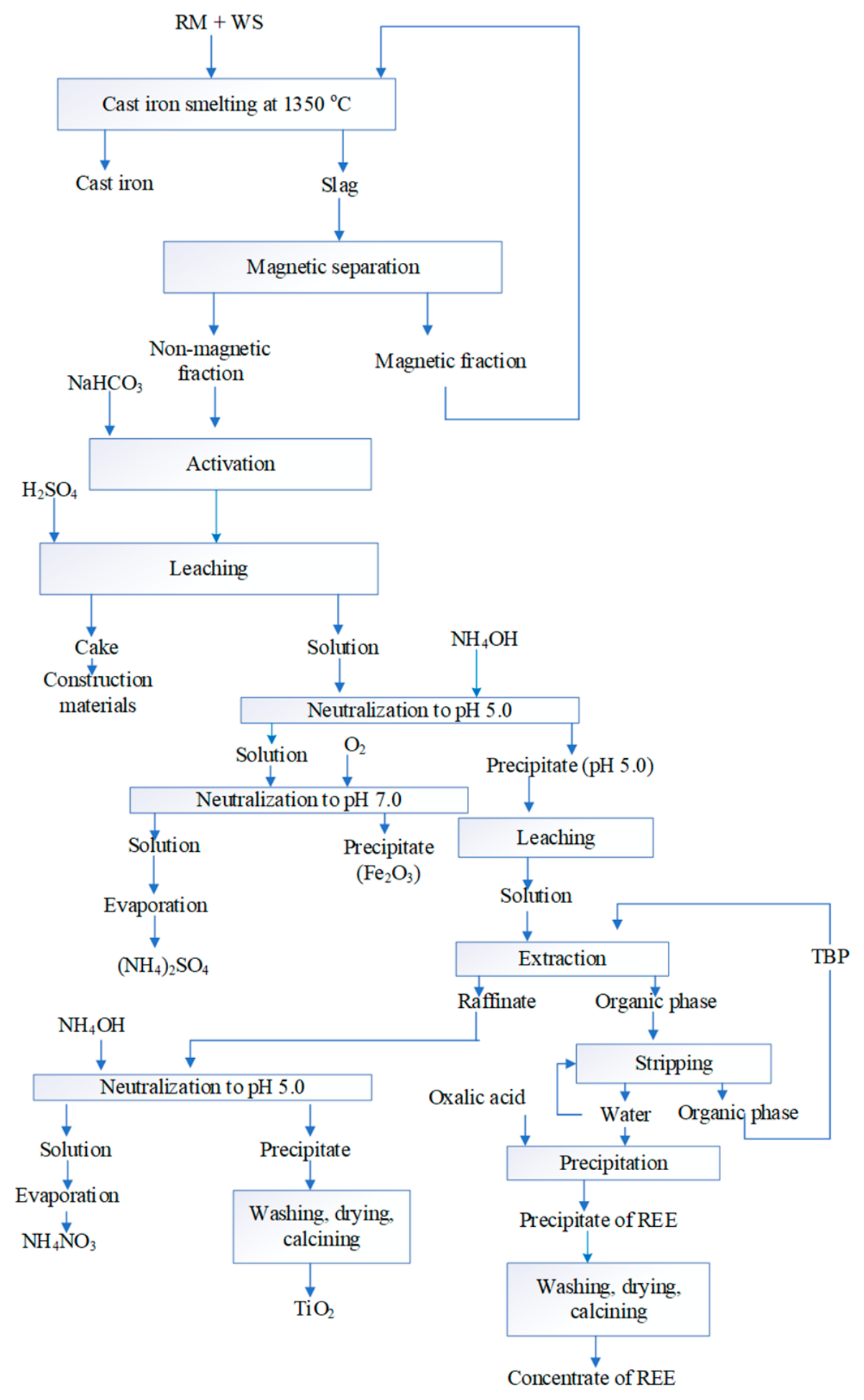
The research methodology is based on an integrated approach to the processing of technogenic raw materials, including a combination of pyrometallurgical and hydrometallurgical methods, as well as physicochemical and instrumental analysis methods (
Figure 1).
The selected approach is aimed at stepwise phase separation of components in the mixture of RM and WS, followed by targeted recovery of iron, aluminum hydroxide, concentrate of REEs, and titanium dioxide.
The initial materials of the study were RM and WS from alumina production, preliminarily subjected to reduction smelting to obtain pig iron and slag.
To determine the elemental composition, X-ray fluorescence analysis (XRF) was performed using an Axios Panalytical spectrometer (Malvern Panalytical B.V., Almelo, The Netherlands) equipped with a Rh anode and a power of 1 kW. The phase composition of the samples was determined by X-ray diffraction analysis (XRD) using an X’Pert PRO diffractometer (Malvern Panalytical B.V., Almelo, The Netherlands) with CuKα radiation.
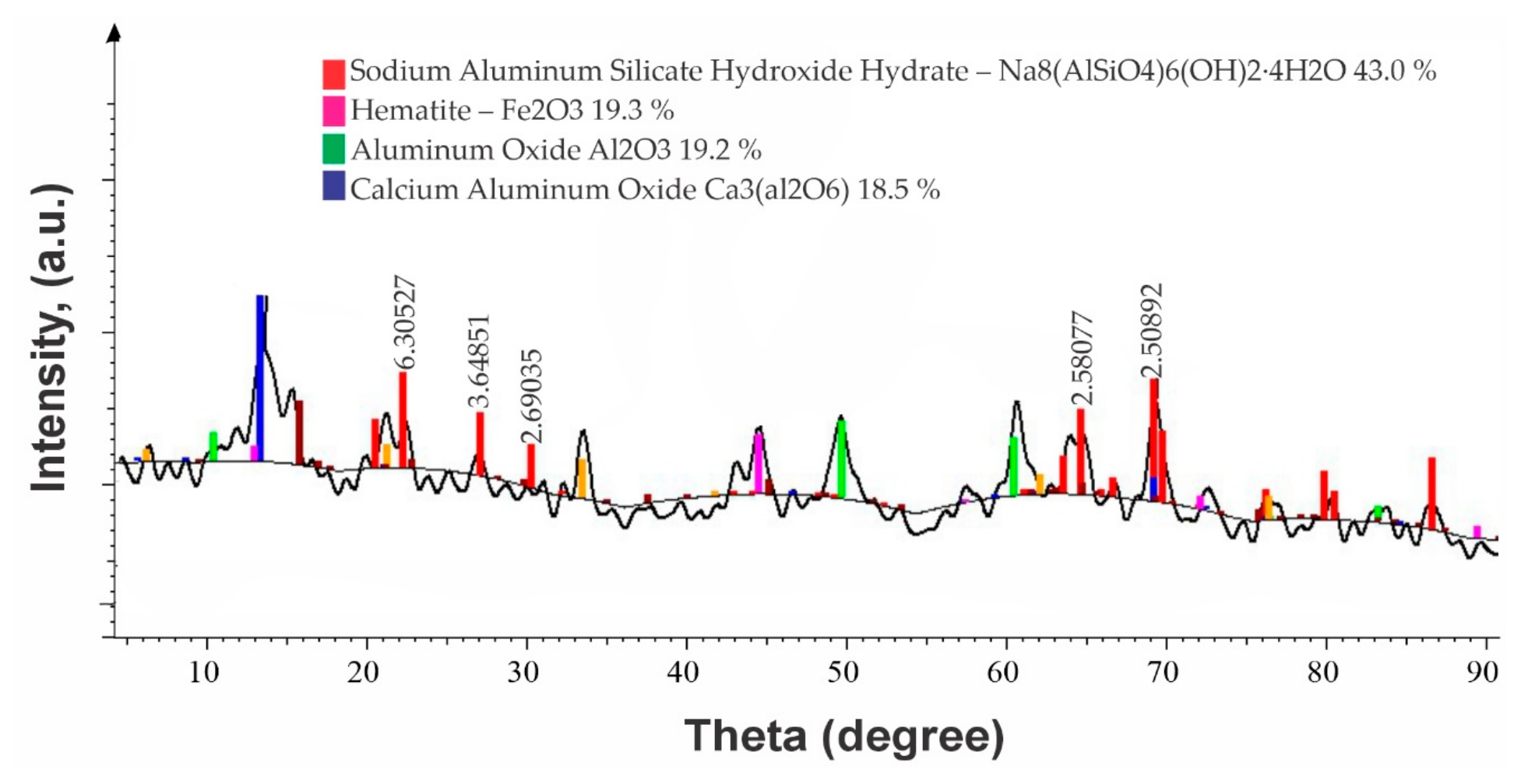
The chemical composition of the RM, wt. %: Na2O 15.0; Al2O3 19.47; SiO2 11.19; Fe2O3 26.95; CaO 1.49; TiO2 2.82; ∑REE oxides 0.0849; other products (o.p.) 22.99.
The X-ray diffraction pattern of the RM is presented in
Figure 2.
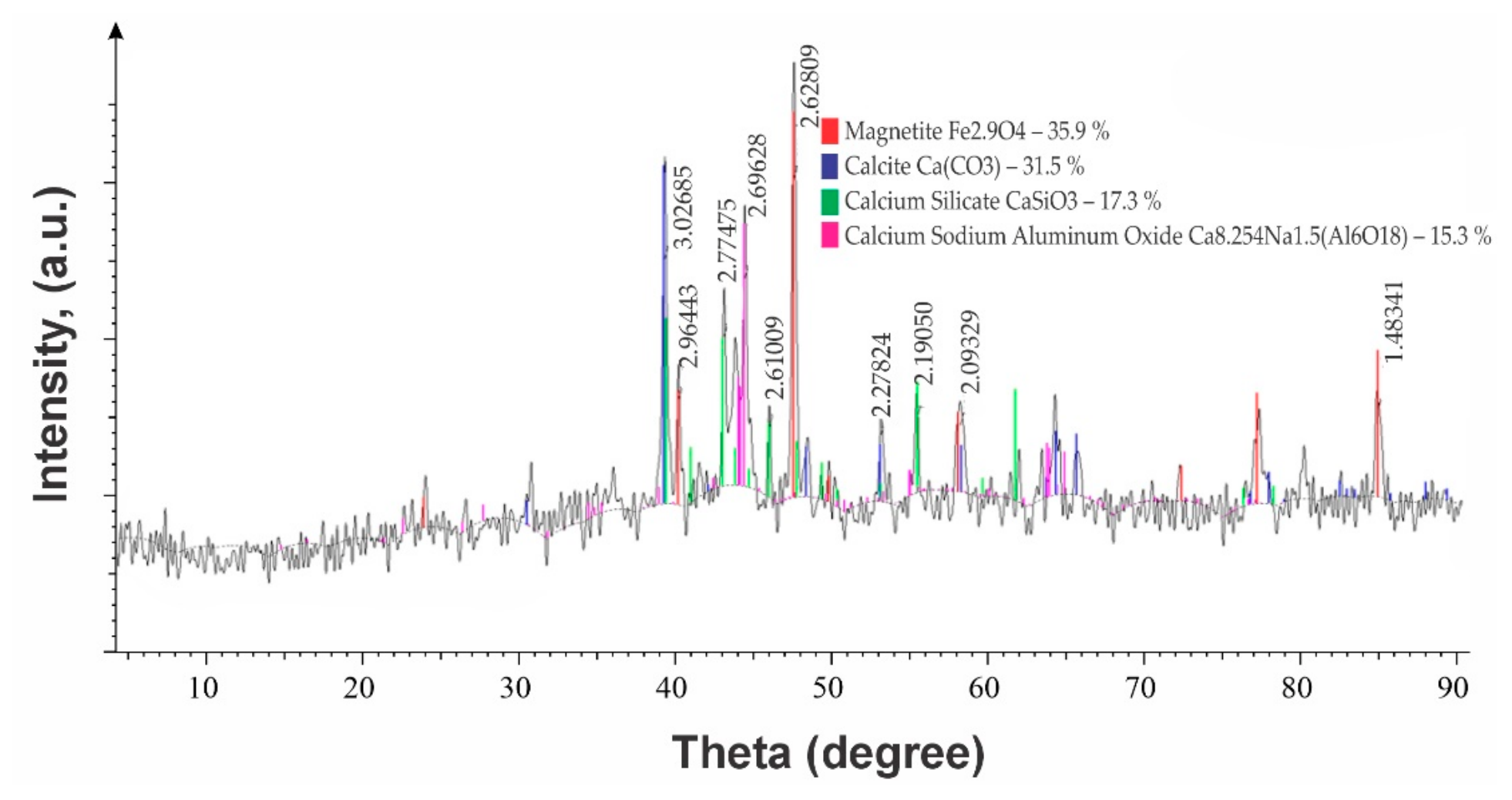
Chemical composition of WS, wt.%: Na2O 0.798; Al2O3 6.97; SiO2 15.6; Fe2O3 20.4; CaO 35.64; TiO2 5.93; ∑REO (rare earth oxides) 0.0727; o.p. 14.58.
The X-ray diffraction (XRD) analysis of WS is presented in
Figure 3.
According to X-ray diffraction analysis, more than half of the calcium in WS is present in a phase not bound to silicon, namely calcite. Thus, WS can serve as a calcium-containing component in joint pyrometallurgical processing with RM to bind silicon into calcium silicate.
The pyrometallurgical processing was carried out by reduction smelting in a muffle furnace (Nabertherm GmbH, Lilienthal, Germany). The smelting temperature regime was varied in the range of 1350–1400 °C, with an isothermal holding time of 90 min. This temperature range was selected experimentally. A decrease in the smelting temperature leads to an increase in the duration of the reduction process required for the separation of pig iron in the form of an ingot from the slag, while simultaneously increasing the amount of fine-dispersed metallic iron. Increasing the temperature above the specified range at the selected holding time does not result in an increase in the mass of the pig iron ingot.
Coke was used as a reducing agent, and its amount was calculated based on the stoichiometric ratios required for the complete reduction of iron oxides contained in the sludge. To prevent dust entrainment and improve the gas permeability of the charge, briquetting with the addition of an organic binder (molasses) in an amount of 0.5% of the total charge mass was applied. Briquetting was performed under an excess pressure of 200 kg/cm2, followed by drying at 350–400 °C.
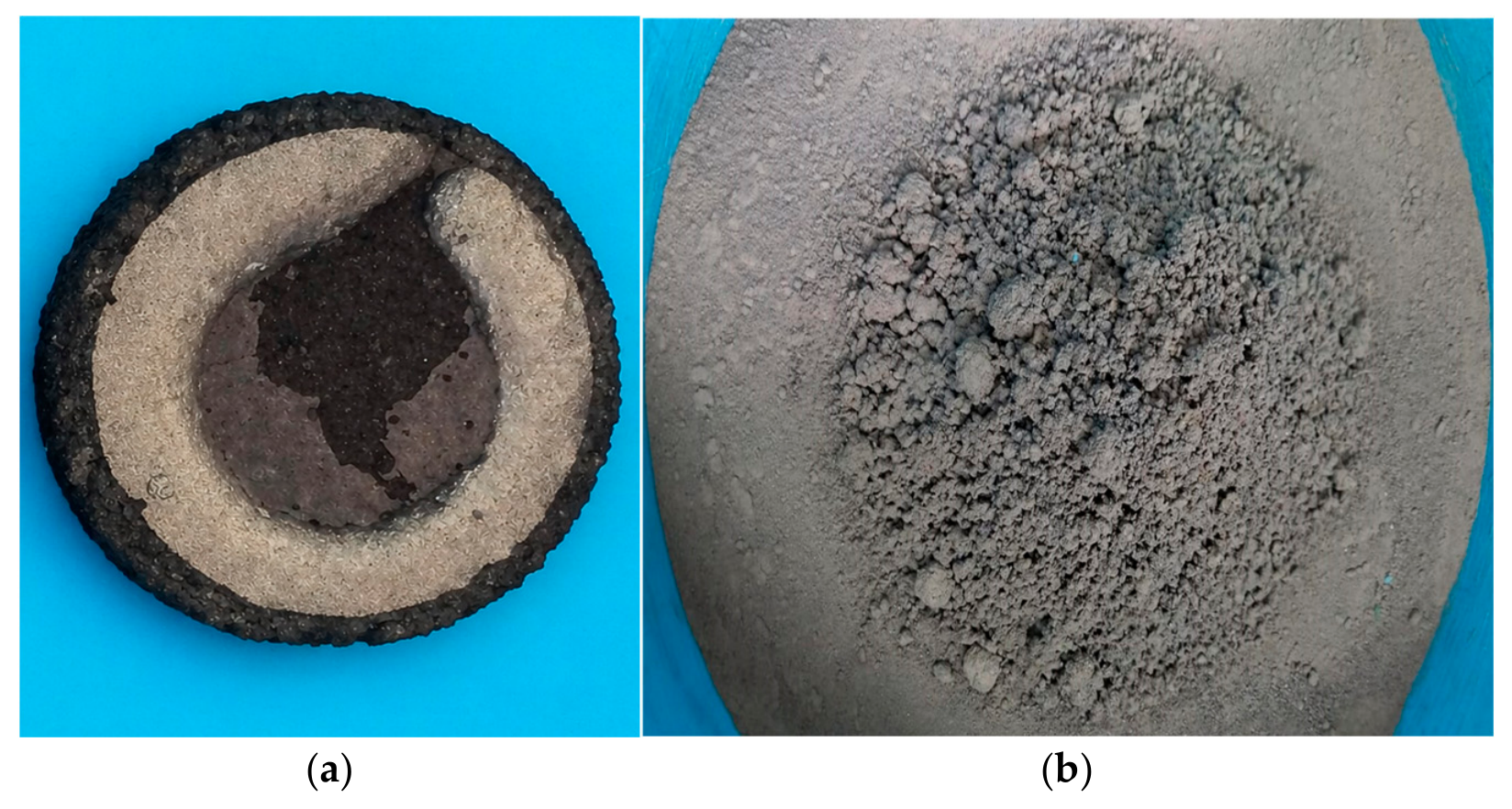
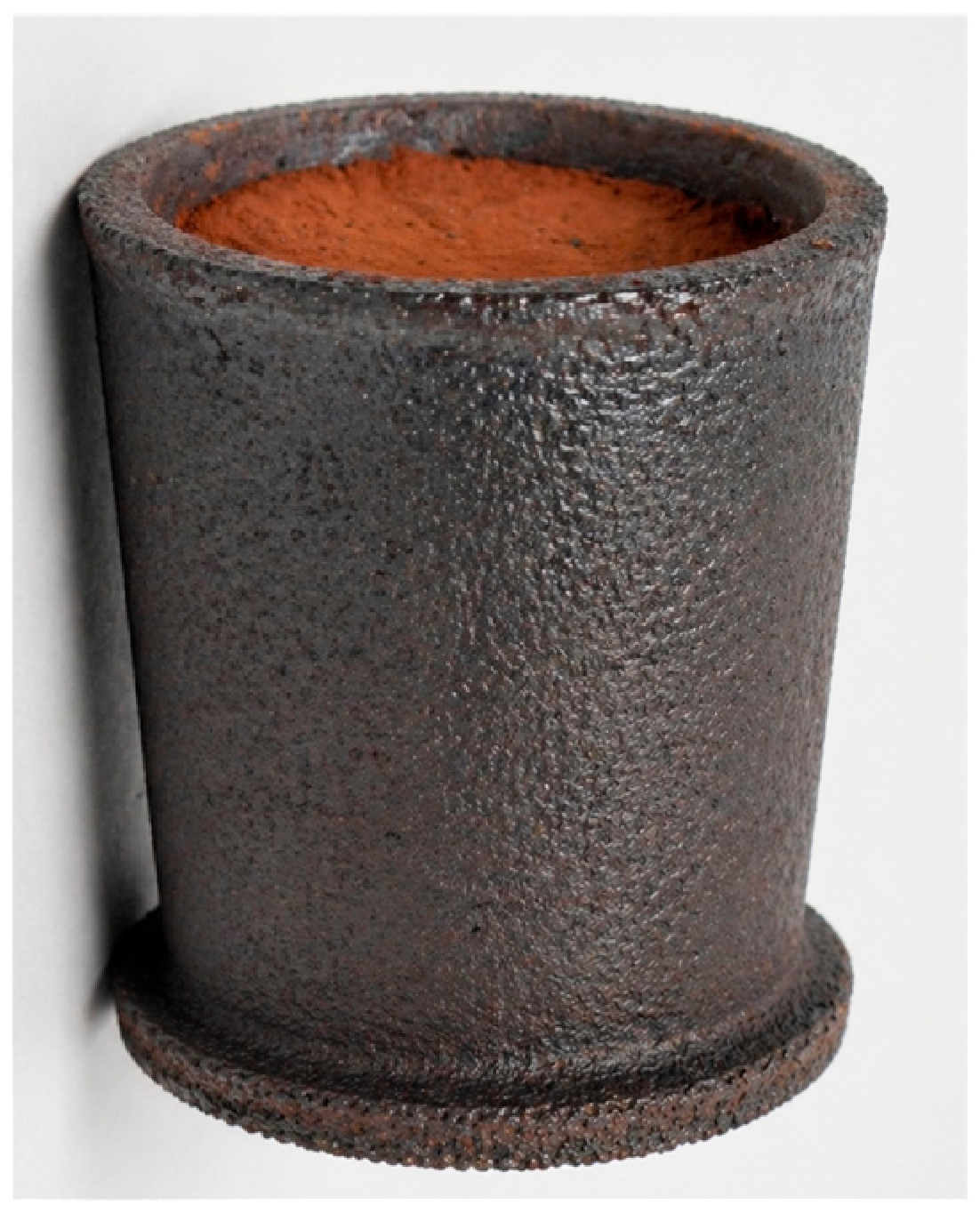
Smelting was carried out in graphite crucibles made of electrode graphite, which minimized contamination of the melt and ensured the stability of the chemical composition of the products (
Figure 4).
After completion of smelting, the products were cooled, mechanically separated into pig iron and slag, and subjected to quantitative and qualitative analysis.
To reduce the iron content in the slag and improve titanium and REEs recovery conditions, magnetic separation was applied. The slag was separated into magnetic and non-magnetic fractions at a magnetic field intensity of 40 mT. The obtained fractions were weighed, and their yield and chemical composition were determined.
For hydrometallurgical processing, the non-magnetic fraction of the slag was used in order to obtain an aluminate solution suitable for the production of aluminum hydroxide, REEs concentrate, and titanium dioxide.
Autoclave leaching of the non-magnetic fraction was carried out at 240 °C for 240 min. at a liquid-to-solid ratio (L:S) of 4:1 using a recycled alkaline aluminate solution, Pavlodar Aluminium Plant (PAP) with the following composition: Al2O3 164.5; Na2O (total) 317.5; Na2O (carbonate) 18.6; Na2O (caustic) 298.9; caustic modulus αk = 3.0 (The dosage of the recycled solution was calculated to obtain a solution with a target caustic modulus of αk = 1.48.
The caustic modulus of the aluminate solution was calculated using the following formula [
23]:
Activation of the autoclave leach residue was carried out in a sodium bicarbonate solution (NaHCO3, Sigma-Aldrich, St. Louis, MO, USA) with a concentration of 120 g/dm3 at temperatures ranging from 100 to 200 °C for 90 min. The concentration of the sodium bicarbonate solution was selected at its maximum value, considering its solubility.
Sulfuric acid leaching of the activated residue was performed using a 20% H2SO4 solution (Sigma-Aldrich, St. Louis, MO, USA) at 95 °C for 120 min.
The resulting sulfate solution was subjected to stepwise neutralization with an ammonium hydroxide solution (NH4OH, Sigma-Aldrich, St. Louis, MO, USA). In the first stage, neutralization was carried out to pH 5.0, resulting in the precipitation of a solid phase containing titanium dioxide and REEs. In the second stage, neutralization was continued to pH 7.0, followed by oxidation and precipitation of iron.
Treatment of the neutralization precipitate obtained at pH 5 was carried out by leaching in a 5% nitric acid solution (Sigma-Aldrich, St. Louis, MO, USA) at 60 °C, at a liquid-to-solid ratio (L:S) of 3:1, for 60 min.
Extraction of REEs from the nitric acid solution was performed using a mixture of tributyl phosphate (TBP, Sigma-Aldrich, St. Louis, MO, USA) in kerosene (Sigma-Aldrich, St. Louis, MO, USA), with an extractant concentration ranging from 1 to 3 mol/dm3, at an organic-to-aqueous phase ratio (O:A) from 1:1 to 1:10, and a contact time of 5 min.
The results of extraction were evaluated using equations for the extraction degree into the organic phase, distribution and separation coefficients, re-extraction efficiency, and precipitation efficiency during oxalate precipitation.
The extraction recovery of a component was calculated using the following equation:
where:
E—extraction of the component into the organic phase, %;
C0—initial concentration of the component in the aqueous phase, g/dm3 or mg/dm3;
Caq—equilibrium concentration of the component in the aqueous phase after extraction.
The distribution coefficient was calculated using the following equation:
where:
Corg—concentration of the component in the organic phase;
Caq—concentration of the component in the aqueous phase.
The separation factor between REEs and an impurity component was calculated as the ratio of distribution coefficients:
where:
β—separation factor;
DΣREES, DCa, and DFe—distribution coefficients of the corresponding components.
The stripping efficiency of REEs with water was calculated using the following equation:
where:
Caq—concentration of REEs in the aqueous phase after stripping;
Vaq—volume of the aqueous phase;
Corg,0—initial concentration of REEs in the organic phase;
Vorg—volume of the organic phase.
The precipitation recovery during oxalate precipitation was calculated using the following equation:
where:
mprec—mass of the metal in the precipitate;
m0—initial mass of the metal in the solution;
REEs stripping was carried out using water at varying organic-to-aqueous phase ratios (O:A) from 2:1 to 6:1.
REEs precipitates were recovered from the strip liquor using a 2 mol/dm3 oxalic acid solution (Sigma-Aldrich, St. Louis, MO, USA). The amount of precipitating agent was calculated based on the stoichiometry of the formation reactions of REEs, calcium, and iron oxalates.
After washing and drying at 105 °C, the oxalate precipitates were calcined in a muffle furnace at 900 °C for 120 min.
Neutralization of the nitrate leachate was performed with ammonia solution (NH4OH, Sigma-Aldrich, St. Louis, MO, USA) to pH 5, followed by separation of the titanium-containing precipitate. Calcination of the titanium-containing precipitate was carried out at 900 °C for 120 min.
For iron recovery, the solution was neutralized to pH 7.0 and aerated to oxidize iron to the trivalent state, the precipitation pH of which is 4–5 [
24].
3. Results and Discussion
The optimal conditions for the reduction smelting of RM with the use of WS as a calcium-containing component involve their proportioning to ensure the formation of a fluid slag with a basicity hydraulic modulus (HM) in the range of 0.55–0.8 [
23,
25]. Under conditions maintaining the specified HM value, the reductive smelting temperature was kept at 1350–1400 °C for 60 min.
As a result of the reductive smelting of the RM and WS mixture with an HM of 0.6 under the specified conditions, pig iron and a slag phase with good visual and structural separation were obtained (
Figure 5). The chemical composition of the pig iron, wt.%: Fe 95.9; Al 0.50; P 0.0011; TiO
2 0.82; S 0.052; Si 0.14; C 2.12; o.p 0.56. The pig iron yield was 33.0 wt.% of the charge mass, while the slag yield was 39.5 wt.%.
The chemical analysis of the slag and other solid products obtained is presented in
Table 1.
According to the chemical analysis of the pig iron slag, the phosphorus content does not exceed 0.001%, which is an important quality indicator of foundry-grade pig iron. The low concentrations of sulfur and phosphorus are attributed both to the composition of the feedstock and to the smelting conditions.
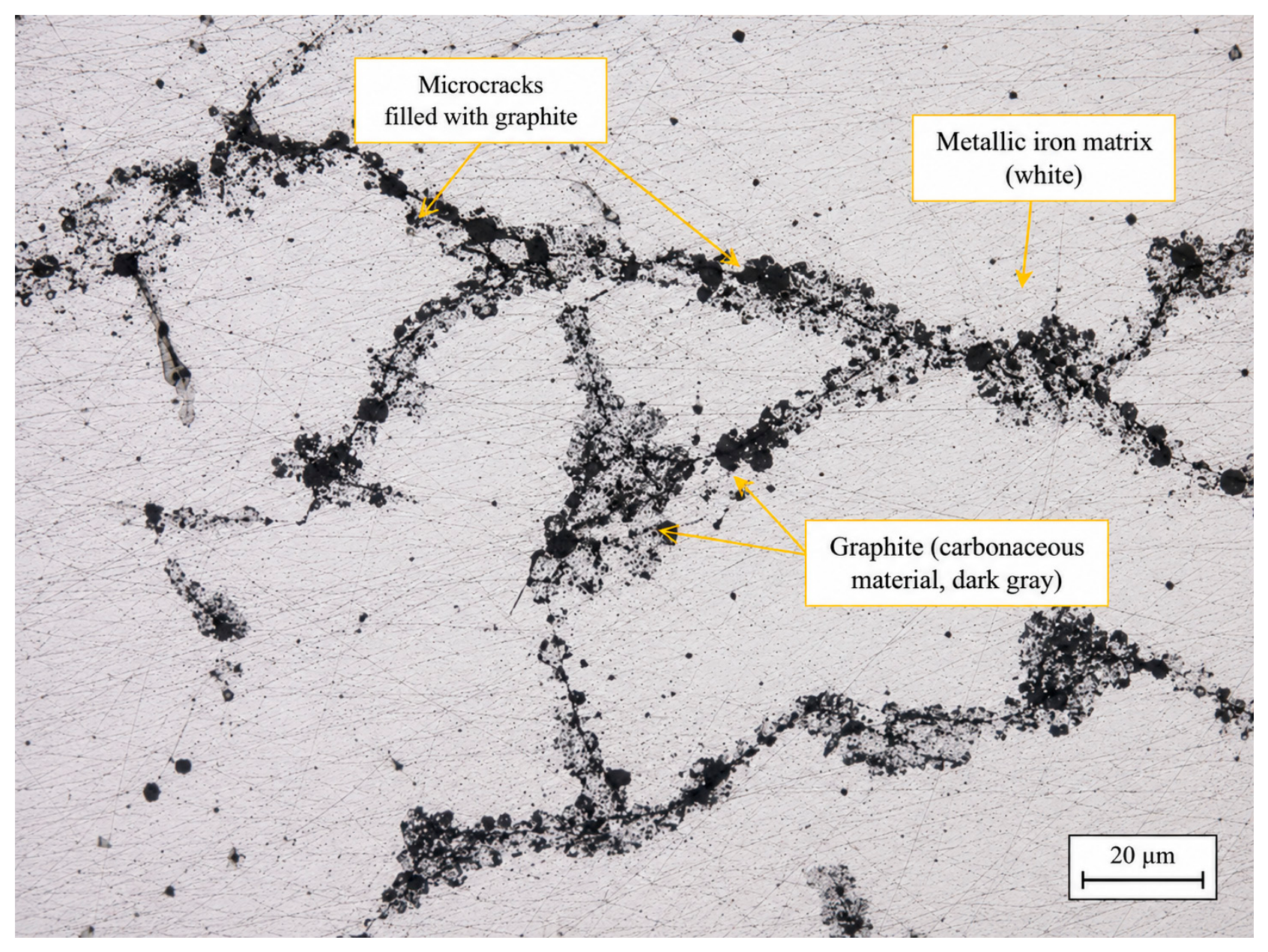
A crystallographic optical analysis of polished pig iron sections in reflected light showed a characteristic white color, indicating the predominance of a metallic iron matrix. The detected microcracks, ranging in thickness from 0.001 to 0.02 mm, are filled with a carbonaceous material of dark gray color, identified as graphite (
Figure 6).
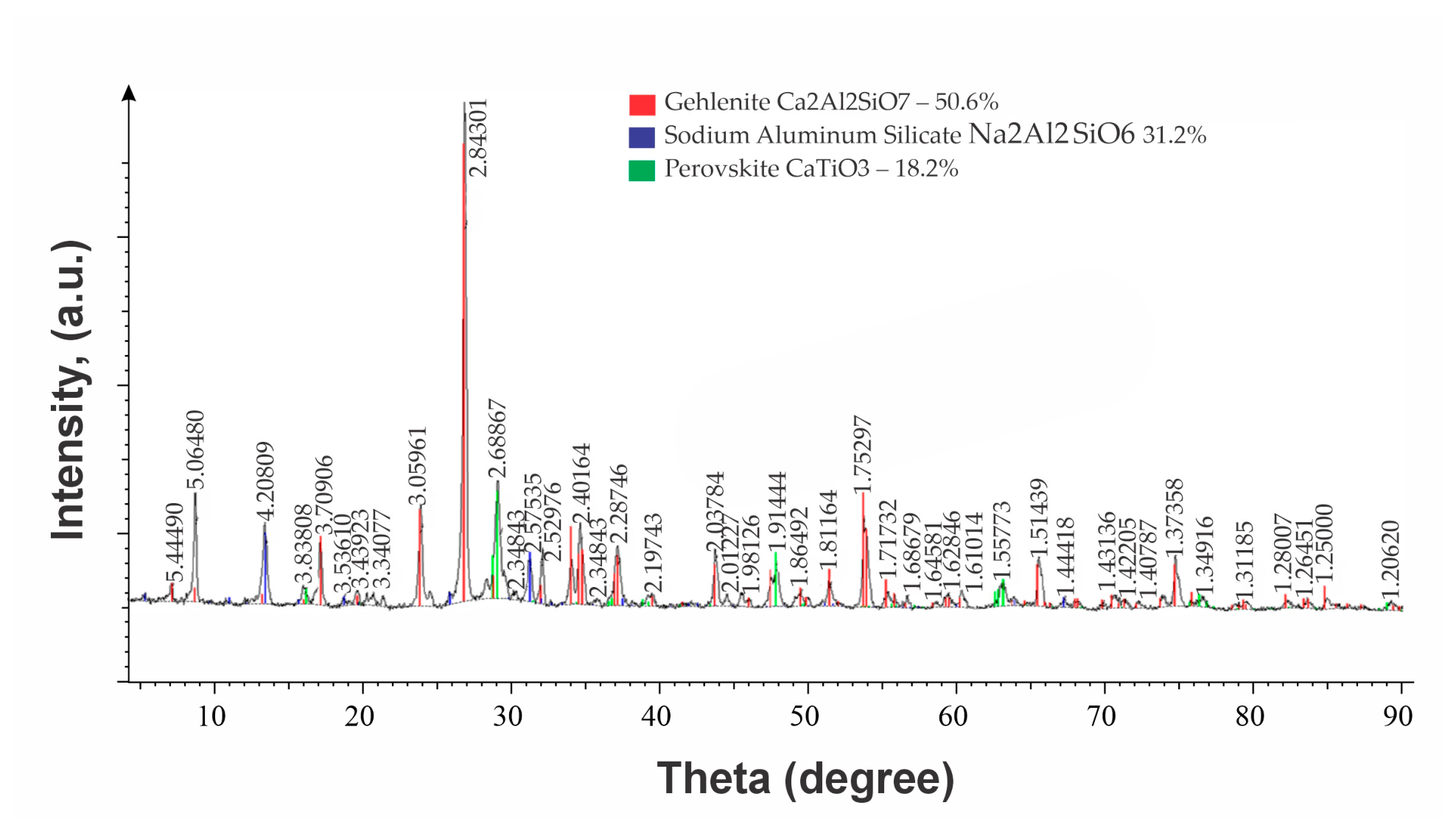
The X-ray phase analysis of the cast iron slag is shown in
Figure 7.
The phase composition analysis of cast iron slag showed that it is mainly represented by calcium-containing silicates and aluminosilicates. This mineral composition is determined by the conditions of reductive smelting of the charge consisting of RM and calcium-containing WS, during which silica is bound into stable calcium silicates and aluminosilicates, while titanium is incorporated into perovskite.
According to the obtained results, the Fe/REEs ratio in the slag is 16.1, which is not sufficiently low to obtain a high-quality REEs concentrate and requires additional slag treatment. The presence of residual iron in the slag is explained both by incomplete reduction of iron-bearing compounds and by mechanical entrainment of metallic iron into the slag phase. To eliminate this drawback and improve slag quality, magnetic separation was applied.
As a result of separation, magnetic and non-magnetic fractions were obtained with yields of 34.0% and 66.0%, respectively (see
Table 1). The REEs content in the magnetic fraction is only 0.01%, which indicates selective concentration of REEs in the non-magnetic slag fraction.
The magnetic fraction is characterized by a high iron content (38.6%), which confirms the effectiveness of magnetic separation. This can be explained by the formation of calcium-containing phases that promote the transfer of silicon into the slag and prevent its interaction with iron. As a result, iron is concentrated on the surface of slag particles and is easily removed by magnetic separation. This mechanism explains the low iron content in the non-magnetic fraction and confirms the effectiveness of the proposed technological scheme (
Figure 1).
The magnetic fraction of the slag was sent for re-smelting, during which titanium and REEs are again transferred into the slag phase. Due to the cyclic recycling of these components, all titanium from the initial materials is concentrated in the non-magnetic fraction of the slag, while REEs recovery stabilizes at the equilibrium distribution level between metal and slag.
Iron recovery into cast iron amounted to 88.0%, into the magnetic fraction—11.5%, and only 0.1% remained in the non-magnetic fraction, confirming a high degree of reduction and iron separation. The total recovery of iron in the form of cast iron and fine magnetic fraction obtained after magnetic separation was 99.5% of the initial iron content.
Titanium was distributed between the magnetic and non-magnetic fractions in proportions of 34.3% and 65.7%, respectively, indicating its predominant concentration in the non-magnetic slag fraction. A similar distribution is observed for REEs, with 66.1% recovered into the non-magnetic fraction.
The non-magnetic fraction is characterized by a low iron content (0.18%) and a total REE concentration of 0.085%. The Fe:REEs ratio decreases to 2.1, which is a technologically favorable indicator for subsequent hydrometallurgical processing. Thus, magnetic separation effectively removed iron from the slag and created prerequisites for obtaining high-quality REEs and titanium concentrates.
The non-magnetic fraction of the slag was subjected to hydrometallurgical processing (see process flow diagram).
As a result of autoclave leaching of the non-magnetic fraction in a recycled soda–alkaline solution, an alumino-alkaline solution was obtained with an αku of 1.48. A solution with such a modulus can be used in the Bayer process route of alumina production (see Ibragimov and Budlon reference).
The chemical composition of the obtained solutions is presented in
Table 2.
The acid treatment of the cake for the recovery of REEs and titanium dioxide was carried out using sulfuric acid. A 20% H
2SO
4 solution was employed, which enables the dissolution of the titanium-bearing mineral perovskite [
26].
Perovskite is a mineral of the complex oxide class with the chemical formula CaTiO3 (calcium titanate). It is characterized by high chemical stability and a dense crystal structure, which complicates its processing. The main difficulty lies in the fact that titanium in CaTiO3 is strongly bound within the crystal lattice and poorly transfers into solution under conventional leaching conditions. Effective decomposition of perovskite typically requires high acid concentrations, elevated temperatures, and prolonged treatment time.
As a result of treating the cake with 20% sulfuric acid, the recovery of REEs was only 30%. This can be explained by the formation of calcium sulfate (gypsum) during dissolution, which may create dense passivating layers on the particle surface, thereby reducing the degree of mineral decomposition.
To enhance REE recovery, a preliminary activation of the cake was carried out in a sodium bicarbonate solution [
27].
At temperatures of 60–200 °C, sodium bicarbonate decomposes according to the reaction [
28]:
The reaction is reversible. During activation in an autoclave, all components of sodium bicarbonate decomposition and formation are present in the solution volume in an active, freshly formed state. The components of the silicate feedstock interact with the solution, forming water-soluble bicarbonate salts and leaving the mineral structure. Subsequently, due to high temperature, these intermediates decompose with the formation of less soluble carbonates, which serve as the basis for the formation of a new mineral structure.
To select the optimal activation conditions, studies were carried out on the effect of temperature on changes in the phase composition (
Table 3).
Based on the analysis of the cake composition after activation (100–200 °C), changes in the phase composition were observed. In the initial state, calcium aluminate predominates (55.4%), while larnite (29.1%) and perovskite (15.5%) are also present. After activation, an increase in the calcium aluminate content to approximately 59–60% is observed, indicating its relative stabilization. At the same time, a decrease in the larnite content (from 29.1% to ~21–25%) is observed, indicating its participation in structural reorganization processes during heating.
Overall, activation leads to a redistribution of phases, with strengthening of the aluminate matrix and a reduction in the silicate component, indicating phase transformation processes occurring in the cake structure during low-temperature treatment.
The obtained activation results show that the optimal temperature is 150 °C, at which phase transformations in the cake are completed.
As a result of leaching the activated cake under optimal conditions, approximately 96% of REEs, 98% of aluminum and titanium dioxide, and about 50% of iron were transferred into the sulfuric acid solution. The high degree of REEs recovery is attributed to the effect of preliminary activation.
Despite the high calcium content in the initial cake, its concentration in the solution is limited by the low solubility of calcium sulfate and does not exceed 1–3 g/dm3. The main portion of calcium remains in the solid phase in the form of calcium sulfate and calcium silicate.
Under sulfuric acid leaching conditions, aluminum forms stable soluble sulfate complexes ([AlSO
4]
+, [Al(SO
4)
2]
−), which ensure its transition into solution [
29].
Silicon under sulfuric acid leaching conditions partially passes into solution (up to 10–15%), forming unstable silicic acid, which rapidly polymerizes to form colloidal SiO2·nH2O. Therefore, a significant portion of silicon may exist in solution in a pseudo-dissolved or colloidal form.
The sulfuric acid solution was subjected to fractional neutralization with ammonium hydroxide to pH 5.0 and pH 7.0. The chemical composition of the neutralization precipitates is presented in
Table 1.
At pH 5.0, a precipitate with low iron content and high contents of REEs and titanium dioxide was obtained, which was used to produce a REE and titanium dioxide concentrate. The precipitate yield was 8.7% of the mass of the non-magnetic slag fraction. The iron content in the neutralization precipitate was 0.16%, indicating that after reduction smelting, a small portion of iron was not fully reduced and remains in the Fe(III) form.
The obtained precipitate was treated with a 5% nitric acid solution (
Table 1). The choice of nitric acid is justified by the high stability of nitrate complexes of rare earth elements (REEs) [
30,
31,
32]. According to most researchers, nitrate complexes of rare earth metals may exist both as outer-sphere and inner-sphere complexes [
32,
33,
34]. An outer-sphere complex is generally understood as a stable association between a complexing ion and ligands, where interaction occurs through the intervening hydration shell. The interaction in such pairs is mainly governed by electrostatic forces [
33,
34,
35,
36].
For the extraction of REEs from the nitric acid solution into the organic phase, TBP was used as a low-cost extractant widely applied for nitric acid systems.
To determine the optimal conditions for the extraction of REEs from nitric acid solutions using TBP, studies were carried out to investigate the effect of extractant concentration (varying from 1 to 3 mol/dm
3), the organic-to-aqueous phase ratio (O:A) ranging from 1:1 to 1:10, and a phase contact time of 5 min (
Table 4).
No transfer of aluminum into the organic phase was observed; therefore, aluminum data are not included in the table.
Based on the obtained results of REEs extraction from nitric acid solutions, the optimal conditions were found to be a TBP concentration of 1 mol/dm3 and an organic-to-aqueous phase ratio (O:A) of 1:4. Under these conditions, REEs extraction into the organic phase reached 95.1%.
Further studies were carried out to determine the effect of contact time on extraction performance. Experiments were conducted at a TBP concentration of 1.0 mol/dm
3, an O:A ratio of 1:4, and a contact time ranging from 5 to 20 min (
Table 5).
An increase in extraction time did not lead to any additional recovery of REEs.
The re-extraction (stripping) of REEs was carried out using water by varying the organic-to-aqueous phase ratio (O:A) from 2:1 to 6:1 (
Table 6). The initial concentration of ΣREEs in the loaded organic phase was 0.68 g/dm
3.
With an increase in the volume ratio of the organic phase from 2 to 6, the extraction of ΣREE into the stripping solution decreases from 99.93% to 95.7%. The optimal O:A ratio is 6:1, at which the REEs recovery is 96.55%, while the maximum ΣREE concentration in the aqueous phase reaches 3.90 g/dm3.
Re-extraction was carried out using water. The use of water as a stripping agent reduces the consumption of chemical reagents, decreases the salt load in process solutions, and yields cleaner re-extracts compared to the use of mineral acids. An additional advantage is the reduced corrosive impact on equipment and the decreased degradation of the organic phase [
37]
The aqueous solution obtained after REEs stripping at an O:A ratio of 6:1 has the following composition, g/dm3: ΣREEs—3.90; calcium—18.4; iron—5.9.
REEs precipitation from the stripping solution was carried out using a 2 mol/dm
3 oxalic acid solution. The amount of precipitant was calculated based on the stoichiometry of oxalate formation reactions for REE, calcium, and iron (
Table 7).
It was found that increasing the amount of precipitant from 100% to 150% of the stoichiometric requirement leads to an increase in the completeness of REEs precipitation from the solution from 77.8% to 95.0%. However, this is accompanied by a simultaneous increase in the coprecipitation of impurities: calcium increases from 34.9% to 94.6%, and iron from 54.6% to 99.9%.
After washing and drying at 105 °C, the oxalate precipitates were calcined in a muffle furnace at 900 °C for 2 h. The composition of the calcined precipitates, representing ΣREEs concentrates, is presented in
Table 8.
It was established that, with an increase in the precipitant dosage from 100% to 150% of the stoichiometric amount, the content of Σoxalate-REEs in the concentrate increases from 17.62% to 21.71%, accompanied by a simultaneous increase in CaO content from 22.9% to 52.8% and Fe2O3 content from 19.31% to 20.05%.
The chemical composition of REEs in Concentrate 1 at Σoxalate-REEs = 17.62 wt.% is: 2.79 Sc; 1.15 La; 0.68 Gd; 0.21 Y; 0.013 Yb; 0.035 Pr; 0.37 Sm; 9.42 Ce; 0.14 Dy; 0.49 Er; 0.040 Eu; 0.96 Hf.
The chemical composition of REEs in Concentrate 2 at Σoxalate-REEs = 21.71 wt.% is: 3.56 Sc; 2.34 La; 0.84 Gd; 0.25 Y; 0.020 Yb; 0.061 Pr; 0.46 Sm; 11.71 Ce; 0.17 Dy; 0.63 Er; 0.072 Eu; 1.21 Hf.
The mother liquor containing REEs is recycled back to the re-extraction stage for additional recovery of valuable components.
The optimal conditions for REE extraction from nitric acid solution are a TBP concentration of 1 mol/dm3 and an O:A ratio of 1:4, at which ΣREEs extraction reaches 95.10%. The optimal re-extraction conditions correspond to an O:A ratio of 6:1, providing ΣREEs recovery of 95.80% with a maximum aqueous phase concentration of 3.85 g/dm3. Increasing oxalic acid dosage from 100% to 150% of the stoichiometric amount at the precipitation stage improves REE recovery into the concentrate from 77.8% to 95.0%.
To obtain a titanium dioxide concentrate, the eluate from REEs extraction was used, which was neutralized with ammonia to pH 5.0, resulting in the separation of a titanium-containing precipitate. The obtained precipitate was calcined at 900 °C to produce a titanium dioxide powder (
Table 1).
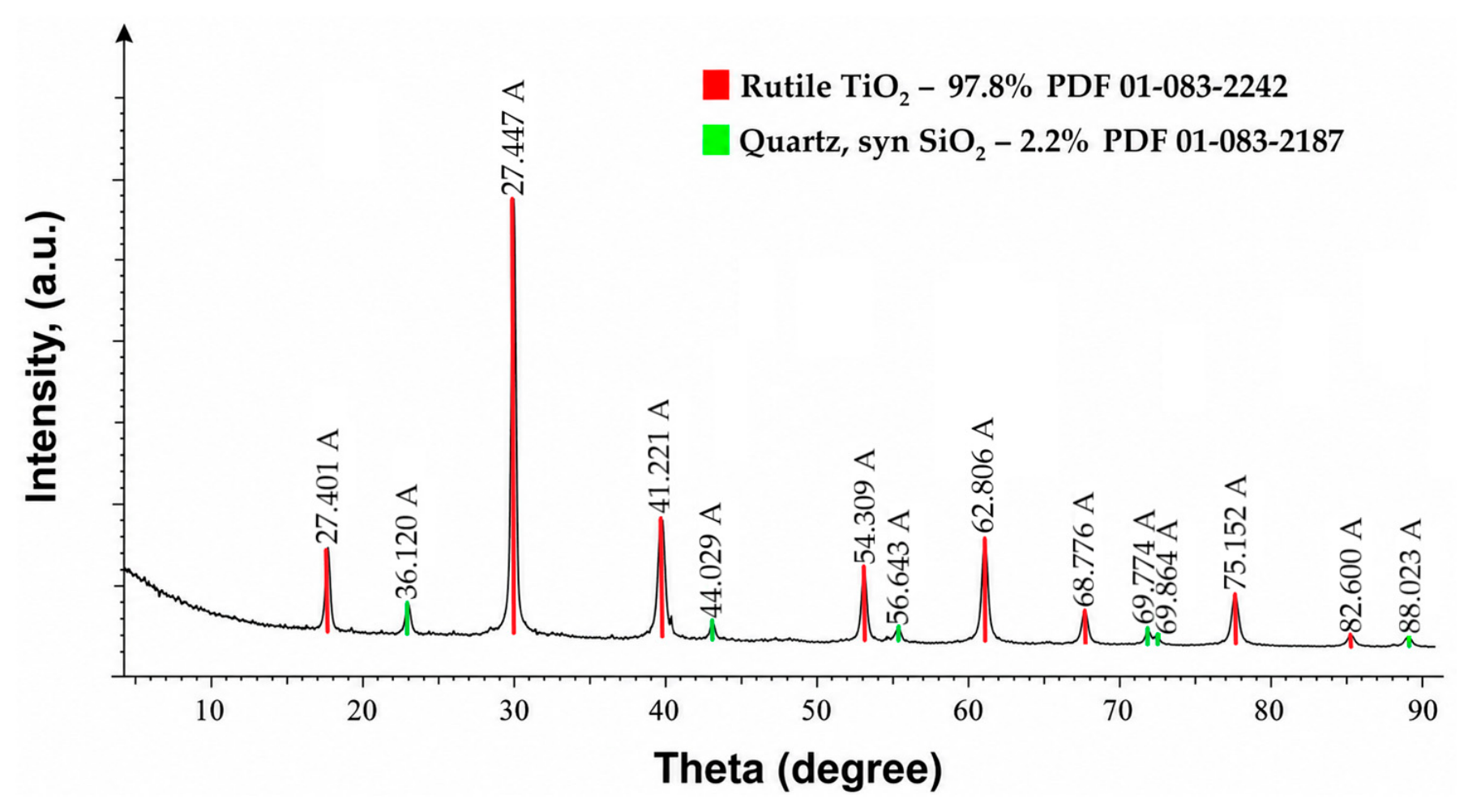
The phase composition of the titanium dioxide powder is represented by rutile at 97.8% and quartz at 2.2% (
Figure 8).
After separation of the titanium-containing precipitate, the solution was neutralized with ammonia to pH 7.0 and aerated to oxidize iron to the trivalent state, with a precipitation pH of 4.5–5.0.
As a result, an X-ray amorphous iron-containing precipitate was obtained. The yield of the precipitate was 1.5% of the slag mass.





 ,
,