Article

Characteristics and Enrichment Regularity of Coalbed Methane in the No.8+9 Coal Seams of the Taiyuan Formation in the Mugua Area, Shenfu Gas Field

1
China United Coalbed Methane Co., Ltd., Beijing 100015, China
2
School of Geoscience and Technology, Southwest Petroleum University, Chengdu 610500, China
*
Author to whom correspondence should be addressed.
Processes 2026, 14(10), 1637; https://doi.org/10.3390/pr14101637
Submission received: 7 April 2026 / Revised: 12 May 2026 / Accepted: 15 May 2026 / Published: 19 May 2026
(This article belongs to the Section Petroleum and Low-Carbon Energy Process Engineering)

Abstract

Deep coalbed methane (CBM) is a core exploration and development domain for increasing the reserves and production of unconventional natural gas in China. A systematic understanding has been established on the enrichment and accumulation mechanism of high-rank deep CBM in the southern section of the eastern margin of the Ordos Basin. However, the medium-rank deep CBM in the Mugua Area of the Shenfu Gas Field in the northern section of the eastern margin has essential differences from that in the southern section in terms of coal rank and hydrocarbon generation–occurrence mechanism, and its accumulation and enrichment regularity remain unclear. The core innovations of this study are as follows: aiming at the unclear accumulation regularity of medium-rank deep CBM in the northern section of the eastern margin of the Ordos Basin, we first reveal the spatiotemporal synergistic coupling reservoir-controlling mechanism of five factors (sedimentation–thermal evolution–temperature–pressure–preservation), determine the 1750 m critical transition zone of the deep CBM occurrence state, and establish two types of accumulation models adapted to the geological characteristics of medium-rank coal. Taking the No.8+9 coal seams of the Taiyuan Formation in the Mugua Area as the research object, based on the theoretical foundation of the dual properties of coal seams as the “source rock–reservoir”, this paper comprehensively adopted technical means such as core observation, drilling and logging data, and high-pressure isothermal adsorption experiments to carry out systematic multi-dimensional studies on sedimentary microfacies, coal reservoir characteristics, thermal evolution degree, and gas-bearing property; identified the main controlling factors of CBM accumulation; and constructed the accumulation model. The results show the following: ① The main burial depth of the coal seams is more than 1700 m, with a thickness ranging from 7.0 to 21.3 m and an average of 15.1 m, and the coal structure is dominated by the primary structure; maximum vitrinite reflectance (Ro,max) is generally distributed from 0.90% to 1.39% with an average of 1.08%, belonging to typical medium-rank coal; and the organic matter type is mainly Type III, with an average gas content of 10.01 m3/t, where the average proportion of desorbed gas in the total gas content is 83.91%, featuring superior source and reservoir conditions and a good foundation for CBM enrichment. ② The CBM accumulation in this area is jointly controlled by the coupling of four factors: sedimentation, thermal evolution degree, temperature–pressure effect, and preservation conditions. The tidal flat–lagoon facies control the development of high-quality coal seams; regional metamorphism dominates the hydrocarbon generation capacity and gas quality of coal seams; the temperature–pressure coupling forms a critical adsorption zone at 1750 m, defining the differentiation boundary of the occurrence state of deep CBM; and high-quality mudstone cap rocks, a stable structural environment, and closed hydrodynamic conditions constitute the three key guarantees for gas enrichment. ③ Two types of accumulation models are divided: “source–reservoir integration + multi-factor synergistic enrichment type” and “source–reservoir limited + insufficient accumulation condition type”. Among them, the four reservoir-controlling factors of the synergistic enrichment type are highly coupled, with excellent gas-bearing property and strong recoverability. This study systematically clarifies the enrichment and accumulation regularity of medium-rank deep CBM in the Mugua Area and improves the accumulation theory of medium-rank deep CBM in the northern section of the eastern margin of the Ordos Basin.

1. Introduction

Deep coalbed methane (with burial depth > 1500 m), as an important component of unconventional natural gas, is a core growth point for increasing reserves and production of oil and gas resources in China and also a key research direction in the field of geological exploration. According to the results of national resource evaluation, the total geological resources of CBM with burial depth > 1500 m in China reach 40.7 × 10¹² m3, showing huge resource potential. In recent years, major domestic oil and gas enterprises have continuously achieved breakthroughs in the exploration and development of deep CBM in coal-bearing basins such as the eastern margin of the Ordos Basin: PetroChina has made a major breakthrough in high-rank deep CBM in the Daning-Jixian Block in the southern section of the eastern margin and built China’s first pilot development base for deep CBM; CNOOC has carried out pilot production of deep CBM in the southern block of the Linxing-Shenfu structural belt in the eastern margin, realized high CBM production through the transformation of low-efficiency tight gas wells, and proven cumulative geological reserves of CBM of more than 1100 × 108 m3; and Sinopec has made a substantive breakthrough in deep CBM exploration in the Nanchuan Block in the southeastern Chongqing, forming a variety of distinctive exploration and development technical systems [1].
In terms of theoretical research, scholars at home and abroad have carried out a large number of systematic studies on the accumulation mechanism of deep CBM and achieved a series of landmark results: at the level of accumulation theoretical framework, Chen Zhenlong et al. proposed the “five-factor enrichment, accumulation and high-yield theory” for deep CBM in the Yanchuan South Area, clarifying the coupling reservoir-controlling mechanism of factors such as hydrocarbon source, reservoir, and cap rock [2]; at the level of single-factor reservoir control, Yan Xia et al. further revealed the controlling effect of minor structures on the CBM enrichment and high-yield areas in the Daning-Jixian Block [3]; and at the level of regional accumulation characteristics, Xu Fengyin et al. summarized the enrichment and accumulation characteristics of “extensive hydrocarbon generation and box-type sealing” for high-rank deep CBM in the southern section of the eastern margin [4]. The above results all focus on the high-rank deep CBM in the southern section of the eastern margin of the Ordos Basin and systematically clarify its accumulation regularity, but the applicable boundary of the theory is limited to the geological conditions of high-rank coal, and it is not applicable to the medium-rank deep CBM in the northern section of the eastern margin [5]. The southern section is characterized by high-rank coal (Ro,max > 1.3%) and high gas content, with a mature accumulation theory; the northern section is endowed with core geological characteristics such as medium-rank coal (0.90% ≤ Ro,max ≤ 1.39%), large single-layer thickness, and multiple coal seams [6]. The difference in coal rank leads to essential distinctions in its hydrocarbon generation potential, adsorption–desorption characteristics, and reservoir performance from the southern section, and the existing high-rank coal accumulation theory cannot be directly applied [7].
Compared with existing studies, the core contributions of this paper are reflected in three aspects: (1) breaking through the limitation of the “source–reservoir–cap rock” ternary reservoir-controlling theory for high-rank coal in the southern section, establishing the four-factor spatiotemporal coupling reservoir-controlling mechanism for medium-rank coal in the northern section; (2) quantitatively determining the 1750 m critical transition zone of deep CBM occurrence state in this area, revealing the dominant regulatory effect of temperature–pressure coupling on medium-rank CBM occurrence; (3) and dividing two differentiated accumulation models and clarifying the key parameter thresholds and exploration potential of each model. Based on the above research status and core scientific issues, taking the No.8+9 coal seams of the Taiyuan Formation in the Mugua Area as the research object, this paper comprehensively applied multi-disciplinary theories such as sedimentology, coal geology, and petroleum geology and technical means such as core observation, experimental testing, drilling, and logging to carry out systematic multi-dimensional studies on sedimentary microfacies, coal reservoir characteristics, thermal evolution degree, and gas-bearing property; clarified the accumulation conditions of medium-rank deep CBM; identified the main controlling factors of accumulation; revealed the enrichment and accumulation regularity; and constructed an accumulation model adapted to the geological characteristics of this area [8]. The core innovation of this study is to reveal the coupling reservoir-controlling mechanism of five factors (sedimentation–thermal evolution–temperature–pressure–preservation) aiming at the problem of unclear accumulation regularity of medium-rank deep CBM in the northern section of the eastern margin of the Ordos Basin [9].

2. Materials and Methods

2.1. Sample Collection

A total of more than 200 coal rock samples were collected from 10 drilling wells (M1-11, M1-21, T-M34, T-M64, T-M64-8, T-M84, T-M94, M-36, M-67-7, M-87, M-97, and M-08) in the Mugua Area of the Shenfu Gas Field, with a sampling depth range of 1700~2300 m, covering different sedimentary facies belts, thermal evolution zones, and structural belts in the whole area. All samples were taken from drilling core sections and sealed on site to avoid gas escape and oxidative contamination.

2.2. Experimental Test Methods

  • Coal Petrology and Coal Quality Analysis
The air-dried basis ash content (Ad), moisture (Md), and volatile matter (Vdaf) were determined using the standard proximate analysis method [10]; the maximum vitrinite reflectance (Ro,max) was measured using the standard microscopical method [11], with more than 20 measurement points per sample, and the average value taken; and the maceral content of coal rock was determined by the microscopic statistical method, with more than 500 particles counted per sample.
2.
Gas Content Test
The coalbed methane content was determined using the national standard method [12]. Desorbed gas and lost gas were measured on site, and residual gas was measured in the laboratory. The total gas content is the sum of the three.
3.
High-Pressure Isothermal Adsorption Experiment
High-pressure isothermal adsorption experiments were carried out following the corresponding national standard [13]. The experimental temperatures were set to 40 °C, 60 °C, 80 °C, and 100 °C (corresponding to the formation temperature of 1500~2500 m burial depth in this area), and the maximum experimental pressure was 25 MPa. The Langmuir model was used to fit the adsorption isotherms to obtain the Langmuir volume (VL) and Langmuir pressure (PL) at different temperatures.
4.
Gas Component Analysis
The CBM components, including methane, carbon dioxide, nitrogen, and heavy hydrocarbon content, were determined by gas chromatography using an Agilent 7890A instrument (Agilent Technologies, Santa Clara, CA, USA), with a detection limit of 0.01%.

2.3. Data Processing and Mapping

  • Drilling and Logging Data Processing
Logging interpretation software was used to process natural gamma, density, acoustic wave, resistivity, and other logging curves of 52 drilling wells, divide the top and bottom of coal seams, and calculate coal seam thickness and porosity.
2.
Plane Contour Map Drawing
The Kriging interpolation method was used to draw plane contour maps of coal seam thickness, Ro,max, gas content, and resource abundance, with an interpolation grid accuracy of 500 m × 500 m.
3.
Critical Adsorption Depth Calculation
Based on the temperature–pressure corrected Langmuir equation, combined with the measured geothermal gradient (3.2 °C/100 m) and pressure coefficient (1.02) in this area, the theoretical adsorption capacity of coal rock at different burial depths was calculated, and the critical adsorption depth was determined by the intersection point of theoretical adsorption capacity and measured gas content.
4.
Resource Abundance Calculation
The volumetric method was used to calculate CBM resource abundance with the formula:
Q = 0.01 × H × ρ × C × R
where Q is CBM resource abundance (104 m3/km2); H is coal seam thickness (m); ρ is coal rock density (t/m3, taken as 1.35 t/m3); C is air-dried basis gas content (m3/t); and R is gas-bearing area coefficient (taken as 0.85).

3. Regional Geological Setting

The Mugua Block of the Shenfu Gas Field is located in the northeastern part of the Yishan Slope in the Ordos Basin, with geographic coordinates of 110°30′~111°00′ E and 39°00′~39°30′ N, administratively belonging to Fugu County, Yulin City, Shaanxi Province. It was in the transition zone between the Yimeng Old Land and the Central Ancient Uplift during the Late Paleozoic coal-forming period, and the present structural pattern is mainly controlled by the multi-directional compressive stress field of the Yanshanian period in the Meso-Cenozoic (Figure 1) [14]. On a regional scale, the Linxing-Shenfu structural belt where the Mugua Block is located generally presents a structural pattern of “north–south zoning and east–west zoning”. From east to west, the Lüliang Mountain Uplift Belt, Fault Step Zone, Gentle Anticline Belt, and Gentle Slope Zone are developed in turn. The main part of the block is located in the Gentle Anticline Belt, and the northeast corner extends to the Fault Step Zone, presenting an overall gentle slope dipping in the northeast–southwest direction; it is divided into the southern Zizhin Mountain structural area, the central low-amplitude structural area, and the northern transition area from south to north. The fault development in the area shows obvious differences: the regional basin-controlling Lishi Fault is developed at the eastern boundary, and only small-scale, short-extended faults are locally developed inside, which do not damage the continuity of coal seams and provide a stable structural environment for the storage and preservation of CBM [15].
The No.8+9 coal seams of the Taiyuan Formation in the Mugua Block belong to the Taiyuan Formation of the Lower Permian, which is the main marker mineable coal seam in the lower member of the Taiyuan Formation in this area. The Taiyuan Formation where the coal seams are located is in continuous conformable contact with the iron–aluminum rock series of the Benxi Formation of the Upper Carboniferous in the lower part and the continental clastic rock series of the Shanxi Formation of the Lower Permian in the upper part; it was formed in a marine–continental transitional environment in the Early Permian [16]. Based on the measured drilling data in the area, the total thickness of the Taiyuan Formation in the study area is 80~120 m, which can be vertically divided into upper and lower members. The No.8+9 coal seams are concentrated in the lower member of the Taiyuan Formation, corresponding to the late transgressive systems tract to the early highstand systems tract of the regional second-order sequence. The sedimentary system is dominated by barrier coast–tidal flat sedimentation and locally affected by the delta front sedimentary system, formed in a tidal flat peat swamp environment under the background of large-scale transgression in the Late Paleozoic [17]. This paleogeographic setting is characterized by stable water dynamics and scarce terrigenous clastic input, providing favorable conditions for the extensive and contiguous development of peat swamps. Plant remains accumulated rapidly and were periodically submerged by seawater, eventually forming industrial coal seams with large thickness and stable lateral distribution (Figure 1) [18].

4. Results and Discussion

4.1. Accumulation Conditions of Deep Coalbed Methane

4.1.1. Coal Seam Thickness and Sedimentary Control Characteristics

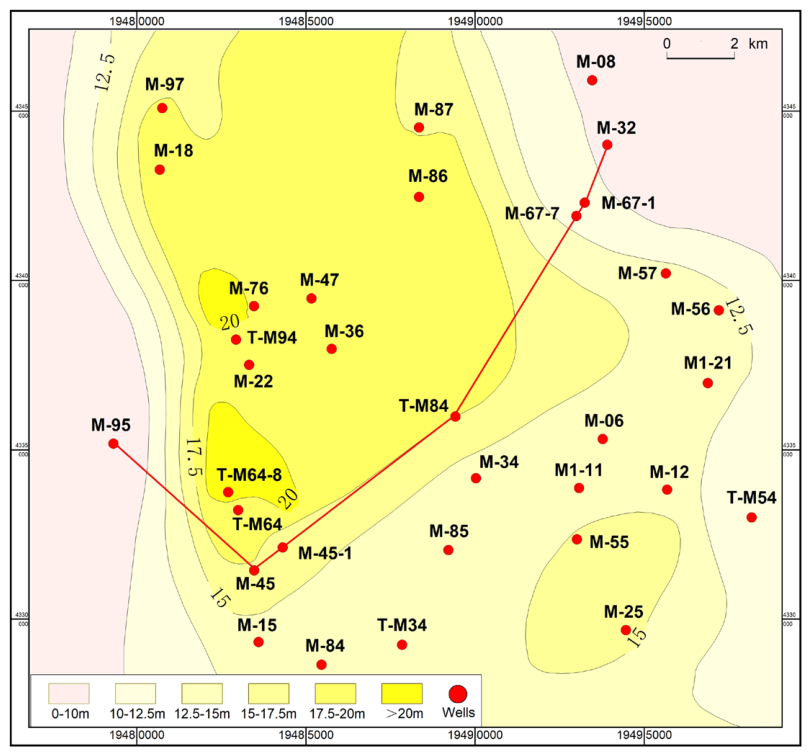
Based on the measured data of 52 drilling wells, the thickness of the main No.8+9 coal seams of the Taiyuan Formation in the Mugua Block ranges from 7.0 to 21.3 m with an average of 15.1 m, and the plane distribution shows a differentiation characteristic of “thick in the central part and thinning on the east and west sides”, which is mainly controlled by the coupling of sedimentary microfacies and paleogeomorphology before sedimentation (Figure 2) [19]. Quantitative correlation analysis shows that the contribution rate of sedimentary microfacies to coal seam thickness is 72%, and the contribution rate of pre-sedimentary paleogeomorphology is 28%.
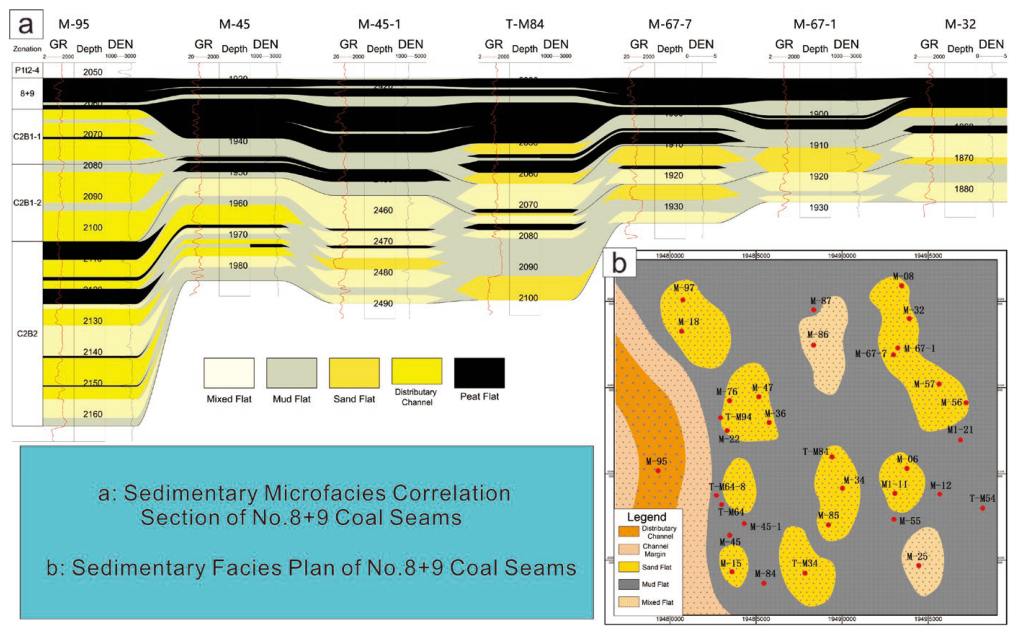
According to the sedimentary microfacies, paleogeomorphology, and coal seam thickness characteristics, the study area can be divided into three zones: ① tidal flat–lagoon thick coal core zone, located in the central part of the study area, the core sedimentary zone of tidal flat facies, with a coal seam thickness of 15.1~21.3 m, good continuity, strong stability, basically no bifurcation, few interlayers, and a coal structure dominated by the primary structure: it is the product of a continuously stable peat swamp environment during the coal-forming period and the highest-quality coal seam in the block [20]; ② delta front–paleo-channel thinning zone, located in the western part of the study area, controlled by the paleo-channel geomorphology before sedimentation, developed with underwater distributary channels and interdistributary bays of the delta front: frequent superposition and scouring of channel sand bodies destroy the continuity of peat accumulation, with coal seam thickness thinning to 7.0~14.3 m and poor stability [21]; ③ and tidal flat edge–paleogeomorphic highland thin coal zone, located in the northeastern part of the study area, on the paleogeomorphic highland before sedimentation, with strong water dynamics and an unstable peat accumulation environment, coal seam thickness of 7.0~10.0 m, and local pinch-out phenomenon. In summary, the thick coal core zone in the central part of the study area has few interlayers, excellent coal structure, and good lateral continuity, which is a favorable reservoir development zone for CBM enrichment and seepage, clearly revealing the main controlling effect of sedimentation–paleogeomorphology on the spatial distribution of high-quality coal seams (Figure 3) [22].

4.1.2. Coal Petrological and Geochemical Characteristics

  • Coal Structure and Macrolithotype Characteristics
Core observation data show that the No.8+9 coal seams of the Taiyuan Formation have excellent coal integrity, with the coal structure dominated by primary structural coal accounting for 78%, followed by cataclastic coal accounting for 20%, and only clastic coal and mylonitic coal are occasionally seen in local stress concentration areas, accounting for a total of 2% [23]. This structural characteristic indicates that the coal seams are slightly affected by late structural transformation, which is highly consistent with the geological background of the area with the lack of large faults and gentle tectonic activities, providing a stable structural framework for the efficient preservation of CBM [24].
The macrolithotypes are dominated by semi-bright coal and semi-dull coal, among which semi-bright coal accounts for more than 60%, with a typical banded structure and well-developed endogenic fractures, which is significantly conducive to the seepage and migration of CBM; semi-dull coal has dull luster due to high mineral content, and its reservoir physical properties are directly controlled by its component characteristics [25]. The maceral components are dominated by vitrinite and inertinite, followed by clarain. Quantitative microscopic statistics show that the average vitrinite volume fraction is 70.99% (Table 1), which provides a sufficient parent material basis for hydrocarbon generation during coalification, confirming that the coal seams have good gas generation potential [26].
  • Maceral and Proximate Analysis Characteristics
The organic matter content of the No.8+9 coal seams in the study area is generally more than 90%, with an average vitrinite volume fraction of 70.99%. This high vitrinite characteristic indicates that the coal-forming peat swamp was in a continuously submerged strong reduction environment, which can effectively preserve plant organic matter and provide a sufficient parent material basis for hydrocarbon generation during coalification [27]. Combined with the results of Rock-Eval pyrolysis analysis, the organic matter type of the coal seams is mainly Type III (humic) kerogen, while some are Type II2, and the source rocks have entered the mature evolution stage, providing a good material basis and thermal evolution conditions for in situ gas generation.
Proximate analysis shows that the average air-dried basis ash content (Aad) of the coal seams is 16.26%, belonging to low–medium ash coal, and its distribution has obvious sedimentary facies-controlled characteristics: the coal seams in the tidal flat facies zone have low ash content and pure coal quality, while the coal seams in the active area of underwater distributary channels have significantly increased ash content, which directly reflects the spatial difference in the input intensity of terrigenous clastics during syngenesis. The average air-dried basis moisture (Mad) of the coal seams is 1.3%, and the average dry ash-free basis volatile matter (Vdaf) is 32.07%. All coal quality indicators meet the requirements for efficient development of deep CBM; the combination of low–medium ash content and medium–high volatile matter makes the coal rock have moderate brittleness and plasticity. Coal rock with low ash content has better brittleness, and medium–high volatile matter corresponds to medium-rank coal, which is conducive to the extension and expansion of fracturing fractures. It is not only beneficial to the adsorption and storage of CBM but also provides good rock mechanical conditions for subsequent reservoir fracturing transformation.
  • Thermal Evolution and Coal Rank Characteristics
The metamorphism of coal seams in the study area is dominated by regional metamorphism, with no obvious superposition of magmatic thermal metamorphism, and the thermal evolution degree is generally stable. In this study, systematic maximum vitrinite reflectance (Ro,max) tests were carried out on 20 sets of coal rock samples from 10 wells, and the results show that the measured single-well Ro,max ranges from 0.90% to 1.39%, with an overall average of 1.08%; among them, the Ro,max at 2262.48~2274.30 m (the maximum burial depth section of the block) in Well T-M64 reaches 1.39%, and the Ro,max at 2134.51~2137.30 m (the relatively shallow burial section in the block) in Well M-08 is 0.90%.
Note on Coal Rank Classification: This paper classifies coal with 0.65% ≤ Ro,max < 2.0% as medium-rank coal according to the national standard for coal classification [28]. For comparison with international standards, Table 2 is supplemented to show the coal rank classification boundaries of different classification systems:
It can be seen from Table 2 that the Chinese standard is completely consistent with ASTM and ISO standards in the upper limit of medium-rank coal (2.0%) and only slightly different in the upper limit of low-rank coal. The maximum Ro,max of 1.39% in this area is still far below the upper limit of 2.0% for medium-rank coal, so it is fully justified to classify it as medium-rank coal.
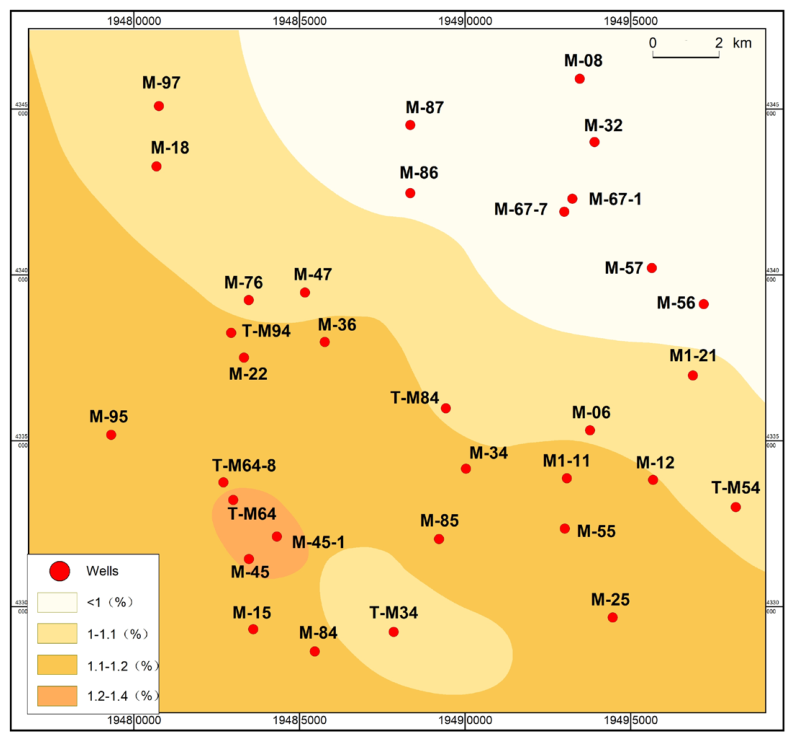
The distribution characteristics of Ro,max show a significant positive correlation with the burial depth of coal seams (correlation coefficient R2 = 0.87), which is further verified by single-well test data: under the background of normal geothermal gradient, the increase in coal seam burial depth can significantly enhance the duration and intensity of geothermal action, driving the regular increase in Ro,max. On a regional scale, Ro,max shows a differentiation characteristic of “high in the west and low in the east, high in the south and low in the north”, and the overall gradient distribution increases from northeast to southwest, which is highly consistent with the stratigraphic burial depth pattern of “deep in the west and shallow in the east, deep in the south and shallow in the north” in the study area (Figure 4).
On the plane, according to the Ro,max value and hydrocarbon generation evolution stage, the study area can be divided into four thermal evolution zones—<1.0%, 1.0~1.1%, 1.1~1.2%, and 1.2~1.4%—and their spatial distribution is highly coupled with the burial depth contour, further confirming that burial depth is the main controlling factor for coal rank differentiation.

4.1.3. Gas-Bearing Characteristics of Coal Rocks

Systematic gas-bearing tests were carried out on more than 200 sets of coal rock samples from the No.8+9 coal seams in 10 wells in this area by the direct method (Table 3). Combined with high-pressure isothermal adsorption experiments and gas chromatographic component analysis of 10 sets of samples from five wells, the results show that the gas-bearing property of the coal seams is generally in the medium-high range, with a good foundation for CBM enrichment (Table 4).
Among them, the measured air-dried basis gas content of single-well samples ranges from 4.12 to 19.94 m3/t, the average gas content of single well ranges from 6.67 to 14.60 m3/t, and the average gas content of the whole area is 10.01 m3/t. Well T-M64 shows an abnormally high lost gas proportion of 21.67%. This is mainly attributed to the development of local small reverse faults which caused severe gas escape during sampling. In addition, its large burial depth and high formation temperature led to a rapid gas release rate at the early stage of on-site desorption, further resulting in a high estimated lost gas value. Its plane distribution is highly consistent with the distribution characteristics of Ro,max (correlation coefficient R2 = 0.82), which directly confirms that the thermal evolution degree is one of the core factors controlling the gas content of the coal seams. Matching the gas content characteristics, the proportion of desorbed gas in the total gas content of the coal seams is 72.30~88.26%, with a total average of 83.91%, and the average proportion of most wells exceeds 83%, while the proportions of lost gas and residual gas are low, indicating that CBM is mainly stored in an easily desorbable adsorbed state, which is consistent with the typical characteristics of medium-rank CBM of “easy desorption and low residual”.
High-pressure isothermal adsorption experiments show that the Langmuir volume of the coal seams is 7.14~14.55 cm3/g (average 10.32 cm3/g), and the average Langmuir pressure is 1.91 MPa, which is consistent with the adsorption characteristics of medium-rank coal; the measured gas saturation is generally in the medium-high range, and the coexistence of high adsorption saturation and local free gas development reveals that the reservoir has experienced a dynamic balance of gas adsorption–desorption during geological evolution. Gas component analysis shows that CBM is dominated by methane with a content of 48.11~83.82% and an average of 69.80%, and the secondary components are carbon dioxide (average 23.12%), nitrogen (average 3.67%), and a small amount of heavy hydrocarbon gases (average 3.41%).

4.2. Enrichment Regularity of Coalbed Methane

The enrichment and accumulation of medium-rank deep CBM in the No.8+9 coal seams of the Taiyuan Formation in the Mugua Area are jointly controlled by the coupling of four factors: sedimentation, regional metamorphism, temperature–pressure coupling effect, and preservation conditions. These factors restrict and cooperate with each other, constituting the core regularity of CBM enrichment and accumulation in this area: sedimentation lays the material basis, regional metamorphism dominates the hydrocarbon generation capacity and gas quality, temperature–pressure coupling controls the gas occurrence state, and preservation conditions determine the final enrichment degree.
Core differences from the accumulation regularity of high-rank deep CBM in the southern section of the eastern margin of the Ordos Basin are as follows: The accumulation of high-rank CBM in the southern section is mainly controlled by the “source–reservoir–cap rock” ternary system, with strong hydrocarbon generation capacity but low reservoir permeability, and the temperature–pressure effect has a weak influence on occurrence. The medium-rank coal seams in the northern section have relatively weak hydrocarbon generation capacity but better reservoir performance, and the regulatory effect of the temperature–pressure effect on gas occurrence is more prominent, forming a unique four-factor coupling reservoir-controlling mechanism. Compared with the low-medium rank CBM in the southern margin of the Junggar Basin in Xinjiang, this area has higher thermal evolution degree, more sufficient hydrocarbon generation, and better preservation conditions, so the gas content and resource abundance are significantly higher.

4.2.1. Sedimentation Controls the Distribution of Source Rocks and the Basic Quality of Coal Seams

Sedimentation is the material basis for deep CBM accumulation in this area. It not only restricts the thickness, structure, and spatial distribution of coal seams by regulating the spatial distribution of sedimentary microfacies but also further determines the hydrocarbon generation potential, adsorption capacity, and reservoir performance of coal seams by controlling the coal macerals, ash content, and coal structure, being the primary controlling factor of CBM accumulation. Quantitative analysis shows that the contribution rate of sedimentary factors to CBM enrichment is about 35%.
The No.8+9 coal seams of the Taiyuan Formation in the study area are developed in the delta front–barrier tidal flat–lagoon sedimentary system. Controlled by regional sequence evolution, the sedimentary evolution of this set of coal seams has clear stages, and the coal-forming conditions of different sedimentary microfacies are significantly different, among which the tidal flat–lagoon facies form the core facies belt for the development of high-quality coal seams. After the abandonment of the tidal flat–lagoon facies, a large area of stable peat swamps developed in the region. This environment is characterized by weak water dynamics and scarce terrigenous clastic input, with continuous and stable peat accumulation, forming coal seams with large thickness, high vitrinite content, simple structure and few partings, and excellent hydrocarbon generation potential and reservoir performance; the coal-forming conditions of the interdistributary bay microfacies of the eastern delta front are secondary, with medium coal seam thickness, high vitrinite content, local interlayers, and medium reservoir performance; and the coal-forming conditions of the underwater distributary channel microfacies are the worst, with thin coal seams, low vitrinite content, developed partings, and poor continuity, which is not conducive to CBM enrichment.
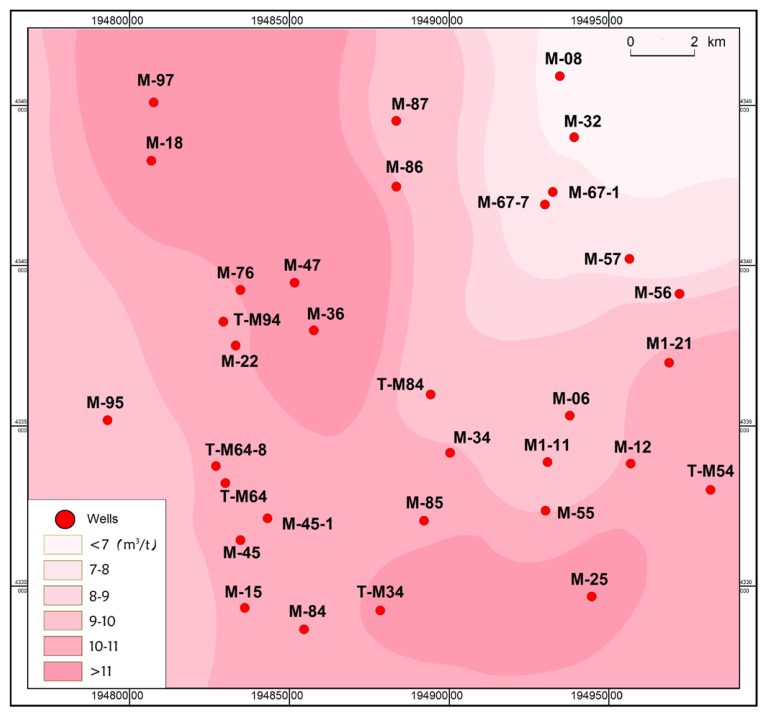
The regulatory effect of sedimentary microfacies differences during the coal accumulation period on coal seam structure is particularly significant: under the stable tidal flat-lagoon sedimentary environment, coal seams have few bifurcations, a high proportion of primary structural coal, and excellent reservoir seepage performance and fracturing transformation conditions; the transition zone between the eastern delta front and tidal flat is affected by sea level changes, with violent fluctuations in water dynamics and obvious bifurcation and complex structure of coal seams, which directly controls the spatial differentiation of coal seam reservoir performance and then restricts the enrichment and distribution regularity of CBM (Figure 5). From the perspective of the spatial distribution of experimental gas content, the high gas content zone of coal seams is completely superimposed with the thick coal core zone of tidal flat–lagoon facies, and all drilling wells with gas content > 11 m3/t are located in this facies belt; the gas content in the delta front facies zone and tidal flat edge facies zone is generally <9 m3/t, showing a significant positive correlation between them, further confirming that sedimentary microfacies not only control the thickness and structure of coal seams but also fundamentally determine the macroscopic distribution pattern of gas content, being the primary controlling factor of CBM enrichment.

4.2.2. Thermal Evolution Degree Dominates Hydrocarbon Generation Capacity and Gas Quality

The hydrocarbon generation amount and gas quality of CBM are mainly controlled by coal macerals and thermal evolution degree, among which the thermal evolution degree has a more critical impact on the hydrocarbon generation process and gas quality. Quantitative analysis shows that the contribution rate of thermal evolution factors to CBM enrichment is about 30%.
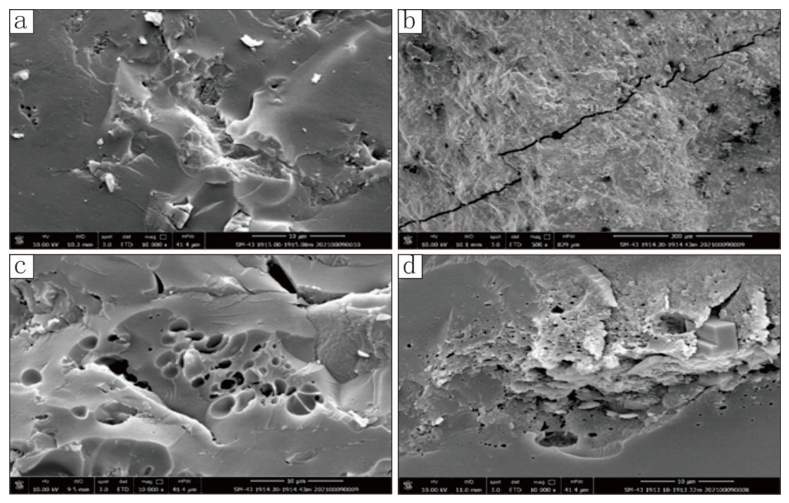
The macerals of the No.8+9 coal seams in the study area are dominated by vitrinite, and the organic matter type is mainly Type III kerogen. Vitrinite is derived from the humification–gelification of lignin and cellulose in plant stems and leaves; during coalification, a series of chemical reactions occur in the macromolecules of vitrinite, generating a large amount of methane accompanied by a small amount of other gases and forming a large number of micron-scale organic pores at the same time, providing sufficient space for methane occurrence (Figure 6). When the vitrinite volume fraction > 60%, the gas content of coal seams increases significantly. The high vitrinite content and mature stage thermal evolution degree in the Mugua Area jointly lay a good foundation for hydrocarbon generation.
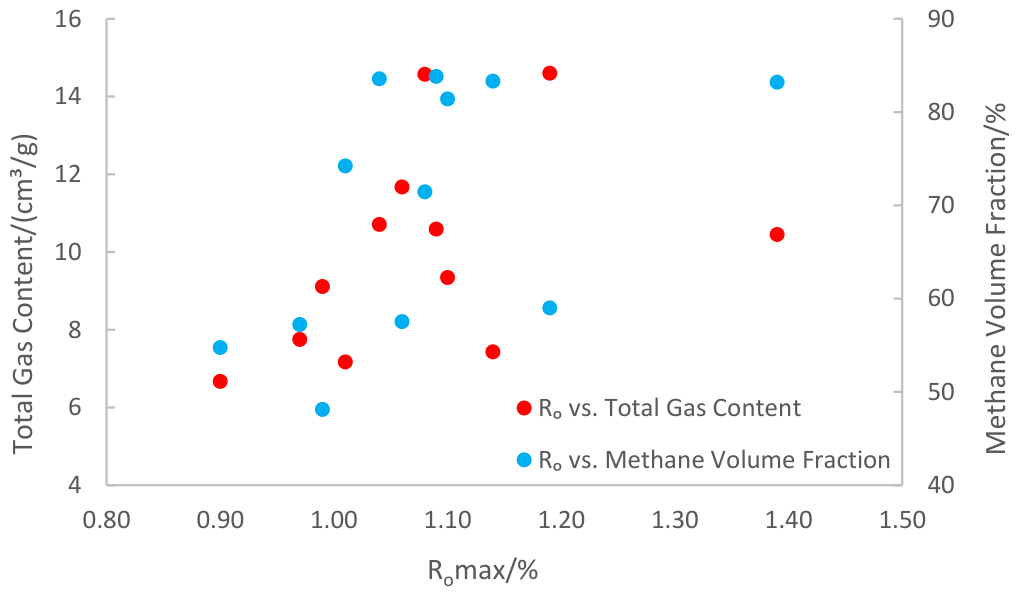
Previous coal whole-rock thermal simulation experiments show that the carbon dioxide generation reaches a peak in the low thermal evolution stage, followed by methane generation; with the increase in thermal evolution degree, the methane generation increases rapidly with a small amount of heavy hydrocarbon gases accompanied. Measured data show that both the gas content and methane content of the No.8+9 coal seams in the Mugua Area increase significantly with the increase in thermal evolution degree: when Ro,max > 1.1%, the gas content of coal seams ≥10 m3/t, and the methane content > 80%, with excellent gas quality; when Ro,max < 0.9%, the gas content of coal seams is low, and the methane content is 50~60%, with poor gas quality. The plane distribution characteristics of Ro,max directly control the spatial differentiation pattern of CBM gas content and gas quality (Figure 7), and its spatial matching degree with sedimentary facies belts directly determines the distribution range of high-quality hydrocarbon generation zones.

4.2.3. Temperature–Pressure Effect Controls the Present Occurrence State of Coalbed Methane

CBM is mainly stored in three forms—adsorbed, dissolved, and free—and its occurrence type and spatial distribution are synergistically regulated by reservoir temperature and pressure. The temperature–pressure coupling effect is the core geological factor controlling the present occurrence state of CBM (Figure 8). Quantitative analysis shows that the contribution rate of temperature–pressure factors to CBM enrichment is about 20%.
  • Quantitative Calculation of Critical Adsorption Depth
The temperature–pressure corrected Langmuir equation was used to calculate the theoretical adsorption capacity of coal rock at different burial depths:
v a = v L ( T ) × P P L ( T ) × P
where Va is the adsorption capacity of coal rock (cm3/g); VL(T) is the Langmuir volume at temperature T (cm3/g); PL(T) is the Langmuir pressure at temperature T (MPa); and P is the formation pressure (MPa).
Combined with the measured geothermal gradient (3.2 °C/100 m) and pressure coefficient (1.02) in this area, the intersection point of the theoretical adsorption capacity and measured gas content at different burial depths was calculated to be 1750 m, which is the critical adsorption depth in this area. This depth is the interface where the critical conversion of temperature–pressure coupling effect occurs: when the burial depth is <1750 m, the positive control effect of formation pressure on adsorption capacity is absolutely dominant, and the negative effect of temperature is extremely weak; when the burial depth is >1750 m, the negative inhibition effect of temperature on adsorption capacity gradually exceeds the positive promotion effect of pressure.
  • Sensitivity Analysis of Critical Adsorption Depth
The critical adsorption depth is jointly affected by geothermal gradient, coal rank, and pressure coefficient:
  • For every 0.5 °C/100 m increase in geothermal gradient, the critical adsorption depth decreases by about 100 m.
  • For every 0.1% increase in Ro,max, the critical adsorption depth increases by about 50 m.
  • For every 0.1 increase in pressure coefficient, the critical adsorption depth increases by about 80 m.
Comparison with similar coalfields at home and abroad: The critical adsorption depth of high-rank coal in the Daning-Jixian area in the southern section of the eastern margin of the Ordos Basin is about 2000 m and that of low-medium rank coal in the southern margin of the Junggar Basin in Xinjiang is about 1500 m. The critical depth of 1750 m in this area is highly consistent with the geological characteristics of medium-rank coal.
  • Vertical Zoning Characteristics and Mechanism Explanation of “Decrease followed by Increase”
Combined with the geological conditions of the study area, the temperature and pressure environments of coal seams with different burial depths are significantly different, leading to clear vertical zoning of CBM occurrence characteristics:
  • Burial depth < 1500 m: The positive control effect of pressure is absolutely dominant, the negative effect of temperature is extremely weak, CBM is mainly stored in an adsorbed state, and the contents of dissolved and free gas are extremely low.
  • 1500~1750 m: The reservoir pressure rises steadily, the negative impact of temperature on adsorption capacity is still not prominent, and the overall adsorption capacity of coal seams shows an increasing trend, forming an undersaturated CBM reservoir dominated by an adsorbed state with basically no free gas distribution.
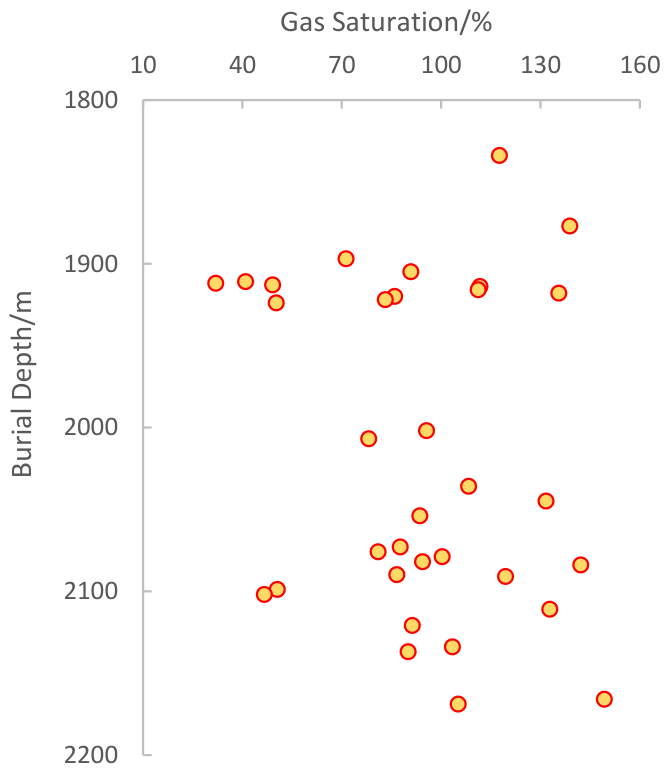
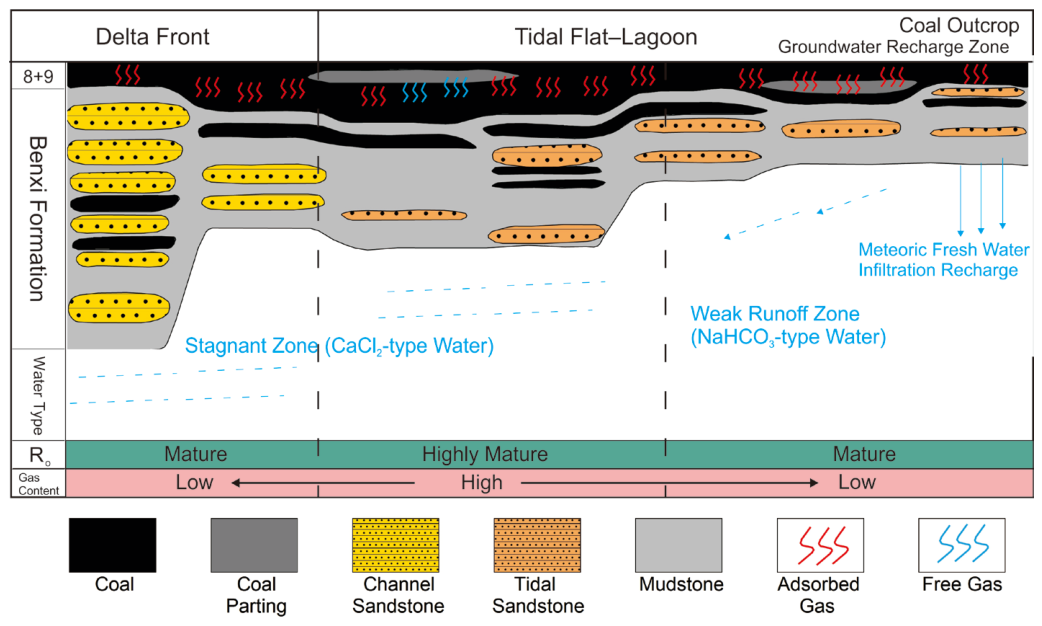
  • 1750~2000 m: Entering the critical adsorption zone, the negative effect of temperature gradually becomes dominant, and adsorbed natural gas desorbs from the coal seam surface, forming a saturated–supersaturated CBM reservoir with the coexistence of adsorbed and free gas. At this stage, hydrocarbon generation has entered the plateau period, and the hydrocarbon generation increment is limited. The gas loss caused by desorption cannot be effectively supplemented, so the gas saturation shows a fluctuating decreasing characteristic (10~130%).
  • >2000 m: On the one hand, the Ro,max of coal seams is generally >1.1%, entering the peak hydrocarbon generation period, and the hydrocarbon generation amount increases significantly, making up for the gas loss caused by desorption; on the other hand, under the dominance of temperature negative effect, the adsorbed gas continues to desorb to form free gas, and the occurrence characteristic of coexistence of adsorbed and free state further pushes up the gas saturation of coal seams. Measured data show that in the burial depth interval of 2000~2200 m, the gas saturation shows a significant increasing trend with the increase in burial depth, up to 160%, with prominent saturated–supersaturated reservoir characteristics, and the development of free gas further improves the CBM development potential of this interval.

4.2.4. Preservation Conditions Control the Enrichment Degree of Coalbed Methane

Preservation conditions are an important foundation for the effective accumulation of CBM. The coupling of high-quality mudstone cap rocks, a stable structural environment, and closed hydrodynamic conditions jointly determines the final enrichment degree of CBM. The three are indispensable and constitute the core system for the efficient preservation of CBM. Quantitative analysis shows that the contribution rate of preservation factors to CBM enrichment is about 15%.
  • Cap Rock Sealing Conditions
Cap rock is the core barrier to prevent the vertical escape of CBM. The No.8+9 coal seams in the Mugua Area were formed in a transgressive coal-forming model. After the coal accumulation, mudstone strata are widely developed in the region, and the vertical lithologic association presents a typical closed characteristic of “mudstone–coal seam–mudstone”. The thickness of the overlying mudstone is 8~10 m, with strong continuity, poor porosity and permeability, high breakthrough pressure, and good sealing capacity, providing good cap rock conditions for CBM storage and effectively curbing the vertical escape of CBM (Figure 1).
  • Tectonic Preservation Conditions
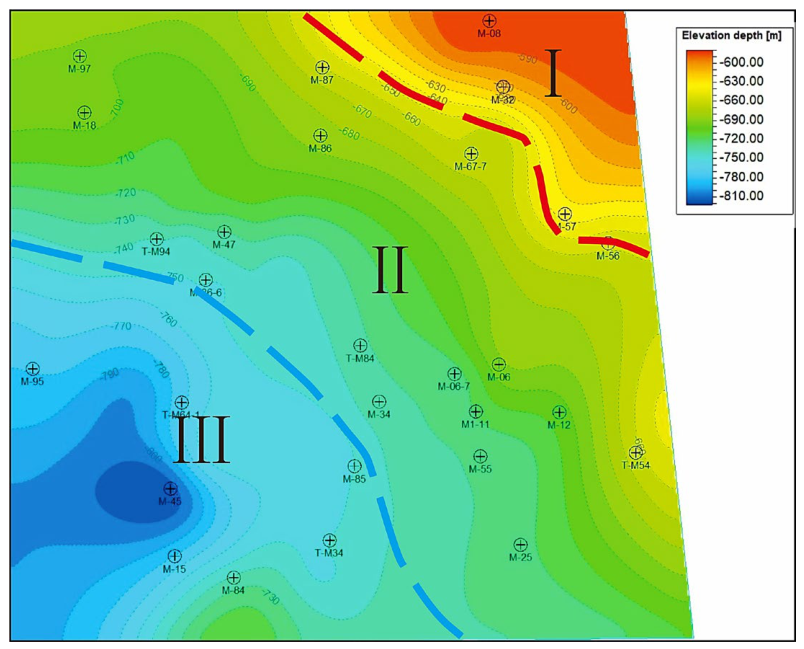
According to the tectonic deformation intensity, fault development characteristics, and trap conditions in the study area, the study area can be divided into three types of structural belts from west to east: Zone I is located in the eastern Fault Step Zone, with a large stratigraphic uplift amplitude and high water–sand ratio, natural gas is easy to escape along the stratigraphic uplift part, and the preservation conditions are poor; Zone II is located at the edge of the Gentle Anticline Belt, with local low-amplitude anticline traps developed, conducive to gas accumulation, and the preservation conditions are medium; and Zone III is located in the main part of the Gentle Anticline Belt, with gentle strata, few faults, coal seams dominated by the primary structure, and without strong structural damage, being the most favorable structural unit for CBM enrichment in the area. Tensional and transtensional faults are not developed in this structural belt, and only small-scale, short-extended faults are locally developed, all of which are dominated by compressional and transpressional properties, with tight fault planes and good sealing performance, without forming effective vertical escape channels for CBM, providing a stable structural background for the long-term preservation of CBM (Figure 9).
  • Hydrodynamic Reservoir-Controlling Conditions
Hydrodynamic conditions are the key controlling factors for CBM enrichment and preservation in the study area, and its core reservoir-controlling mechanism is manifested as follows: a relatively stagnant groundwater environment can form hydraulic plugging and hydrocarbon concentration sealing, effectively inhibiting the desorption and diffusion escape of CBM, while an active and alternating strong hydrodynamic environment will destroy the coal seam adsorption balance, leading to a large loss of CBM with groundwater runoff.
The outcrop area of the Lüliang Mountain Uplift on the eastern side of the Mugua Area is the regional groundwater recharge area. Driven by regional gravity flow, groundwater runs off from east to west. From the shallow recharge area to the deep buried area, the groundwater runoff intensity gradually weakens, showing clear hydrodynamic zonation characteristics, and has a good spatial matching with the structural belt zoning: the eastern Type I structural belt is a weak groundwater runoff zone, where the coal seam water is mainly NaHCO3 type with moderate salinity and weak water–rock interaction, without obvious hydrodynamic scouring and escape effect, which is generally conducive to CBM preservation; the western Type III structural belt is a groundwater stagnant zone, the coal seam water is mainly CaCl2 type, and the high salinity indicates a good deep closed environment, providing an excellent hydrodynamic closed condition for the long-term preservation of CBM.

4.2.5. Coupling Relationship of Reservoir-Controlling Factors and Accumulation Model

  • Spatiotemporal Coupling Reservoir-Controlling Mechanism of Four Factors
The four reservoir-controlling factors of sedimentation, regional metamorphism, temperature–pressure coupling effect, and preservation conditions do not act on CBM accumulation independently but form an organic matching of “material basis–reservoir performance–closed guarantee” in space, jointly determining the final enrichment degree and accumulation effect of medium-rank deep CBM in the No.8+9 coal seams of the Taiyuan Formation in the Mugua Area.
  • Temporal Evolution Sequence
    • Late Permian–Triassic (Sedimentary Diagenesis and Early Hydrocarbon Generation Stage): Sedimentation laid the spatial distribution and basic quality of coal seams, were the burial depth of coal seams gradually increased, entered the immature–low mature evolution stage, and mainly generated biogas and early pyrolysis gas.
    • Jurassic–Cretaceous (Main Hydrocarbon Generation Stage): Dominated by regional metamorphism, the burial depth of coal seams reached the maximum, the thermal evolution degree entered the mature stage, and a large amount of thermogenic methane was generated, which was the main accumulation period of CBM in this area.
    • Cenozoic (Adjustment and Preservation Stage): The basin was uplifted as a whole, the burial depth of coal seams decreased somewhat, the temperature-pressure field was adjusted, and the 1750 m critical adsorption zone was formed; the stable structural environment and closed hydrodynamic conditions ensured the effective preservation of CBM and finally formed the present accumulation pattern.
  • Spatial Coupling Characteristics
Sedimentary microfacies are the material basis of accumulation, directly determining the plane distribution range and source–reservoir performance of high-quality coal seams: the thick and stable coal seams are developed in the core zone of tidal flat–lagoon facies, with an average thickness of more than 15 m and a vitrinite content generally more than 70%, providing a sufficient material basis for regional metamorphism and hydrocarbon generation of coal seams and also forming high-quality source–reservoir integration conditions of “autochthonous generation and autochthonous storage” for CBM; this facies belt is also highly superimposed with the Type III structural belt (stable slope belt) in the area in the plane, with supporting development of regional mudstone cap rocks with thickness > 8 m, and is located in the groundwater stagnant–weak runoff closed zone, forming the spatial high-efficiency coupling characteristic of “high-quality source–reservoir background + multi-dimensional preservation conditions”, becoming the core area of CBM enrichment in the study area. In the delta front facies zone on the northeast and western sides, the coal seam thickness is generally less than 8 m, with a complex structure, developed partings, vitrinite content less than 60%, and poor innate source–reservoir conditions; at the same time, this area is spatially matched with the Type I structural belt (eastern uplift belt) with relatively active hydrodynamic conditions, forming the spatial coupling characteristic of “limited source–reservoir background + insufficient preservation conditions”, and the overall CBM enrichment degree is low. The tidal flat–delta transition facies belt between them is matched with the Type II structural belt, forming a transition zone with a medium enrichment degree, showing an obvious spatial differentiation regularity of facies belt–tectonic–hydrodynamic synergistic reservoir control.
2.
Classification and Key Parameters of Accumulation Models
Based on the spatiotemporal coupling reservoir-controlling mechanism of the four factors, taking the sedimentary microfacies background conditions as the core classification basis, combined with the matching relationship of accumulation elements, enrichment characteristics, and development potential, the deep CBM of the No.8+9 coal seams in the study area is divided into two types of accumulation models (Figure 10), with significant differences in accumulation characteristics and geological effects between the two types (Table 5):
① Tidal flat–lagoon facies “source–reservoir integration + multi-factor synergistic enrichment type” accumulation model
This model is mainly developed in the core zone of tidal flat–lagoon facies in the central and northern parts of the study area, being the most favorable accumulation model in the area. The core accumulation characteristics are as follows: the coal seam thickness is generally >12 m, the vitrinite content > 70%, and Ro,max is concentrated in 1.0~1.3%, forming a thick high-quality source–reservoir integrated reservoir; the peak hydrocarbon generation period forms a good spatiotemporal matching with the Cenozoic stable structural background and closed stagnant hydrodynamic conditions, with superior preservation conditions; and the main burial depth is greater than the critical adsorption depth of 1750 m, the proportion of free gas increases significantly, the gas content is generally >10 m3/t, the desorbed gas proportion > 83%, and the CBM resource abundance > 4.0 × 10⁴ t/km2, with excellent exploration and development potential.
② Delta front facies “source–reservoir limited + insufficient accumulation condition type” accumulation model
This model is mainly developed in the delta front facies zone on the western side of the study area or the tidal flat edge area on the northeast side, with generally limited accumulation conditions. The core accumulation characteristics are as follows: the coal seam thickness is generally <8 m, with developed partings, complex coal structure, vitrinite content < 60%, Ro,max < 1.0%, and innate insufficient material basis for hydrocarbon generation; the northeast side is located in the eastern weak runoff zone and structural transition zone with general preservation conditions, no obvious free gas enrichment, CBM mainly in an adsorbed state, gas content generally <8 m3/t, and resource abundance concentrated in 1.0 × 10⁴~3.0 × 10⁴ t/km2, where coal seam permeability and desorbability are lower than those in the core zone, with limited exploration and development potential.
3.
Geological Verification of Accumulation Model
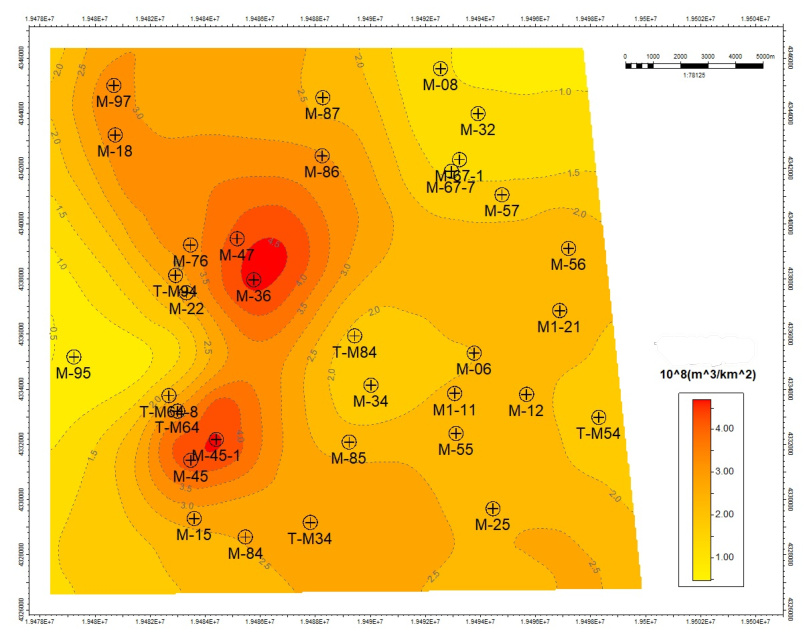
The plane distribution characteristics of CBM reserve abundance in the study area form a direct geological verification for the two types of accumulation models (Figure 11): the high reserve abundance zone (>4.0 × 10⁴ t/km2) is mainly concentrated in the core zone of tidal flat–lagoon facies, distributed continuously in lumps on the plane, and highly superimposed with the distribution range of the “source–reservoir integration + multi-factor synergistic enrichment type” accumulation model, directly verifying the accumulation foundation advantage of thick high-quality coal seams in this facies belt; in the delta front facies zone on the northeast and western sides, the CBM reserve abundance is generally 1.0 × 10⁴~3.0 × 10⁴ t/km2, with low abundance and scattered distribution, which completely corresponds to the spatial distribution of the “source–reservoir limited + insufficient accumulation condition type” accumulation model, further confirming the innate controlling effect of sedimentary facies on accumulation potential.
From the results of multi-parameter superposition, the plane distribution of the two types of accumulation models is highly consistent with the distribution of thermal evolution degree zones, high gas content zones, and favorable preservation condition zones in the study area. Among them, the core distribution area of the “source–reservoir integration + multi-factor synergistic enrichment type” accumulation model has Ro,max mainly >1.1% and coal seam gas content generally >10 m3/t, and all are located in the groundwater stagnant closed zone. The four reservoir-controlling factors have achieved efficient spatiotemporal coupling, being the most favorable CBM exploration target area in the area, while the distribution area of the “source–reservoir limited + insufficient accumulation condition type” accumulation model has obvious shortcomings in the source–reservoir, thermal evolution, and preservation conditions, with overall limited exploration and development potential.

5. Conclusions

Taking the No.8+9 coal seams of the Taiyuan Formation in the Mugua Area of the Shenfu Gas Field on the eastern margin of the Ordos Basin as the research object, this paper carried out systematic studies on the accumulation conditions, enrichment regularity, and accumulation model of medium-rank deep CBM by comprehensively using technical means such as drilling core analysis, logging interpretation, high-pressure isothermal adsorption experiment, sedimentary facies characterization, and burial–thermal evolution history analysis and obtained the following core conclusions:
(1)
The geological accumulation basis of medium-rank deep CBM in the study area has been clarified. The No.8+9 coal seams of the Taiyuan Formation are typical medium-rank humic coal seams, with a main burial depth > 1500 m, a thickness ranging from 7.0 to 21.3 m, and an average thickness of 15.1 m, and the coal structure is dominated by primary structure (accounting for 78%); the maximum vitrinite reflectance (Ro,max) is distributed from 0.90% to 1.39% with an average of 1.08%, the organic matter is mainly Type III kerogen, the average gas content is 10.01 m3/t, and the average proportion of desorbed gas in the total gas content reaches 83.91%, with high-quality “source–reservoir integration” accumulation conditions and good exploration and development potential of deep CBM.
(2)
The “spatiotemporal synergistic coupling of four factors” reservoir-controlling mechanism of deep CBM in the study area has been revealed. Among them, sedimentation is the material basis of accumulation, and the tidal flat–lagoon facies form the core development zone of high-quality coal seams; regional metamorphism dominates the hydrocarbon generation process, hydrocarbon generation scale, and gas quality of coal seams; temperature–pressure coupling controls the occurrence state of “adsorbed + free gas” of CBM in coal seams deeper than 1750 m; high-quality mudstone cap rocks, a stable compressional structural background, and closed stagnant hydrodynamic conditions constitute the three major preservation guarantees for CBM enrichment; and the organic matching in space and dynamic synergy in time of the four factors jointly determine the final enrichment degree of CBM.
(3)
Two types of deep CBM accumulation models in the study area have been established, clarifying the key parameters and exploration potential of each model:
  • Source–reservoir integration + multi-factor synergistic enrichment type: Developed in the tidal flat–lagoon facies belt, with coal seam thickness > 12 m, Ro,max > 1.0%, and gas content > 10 m3/t, the four reservoir-controlling factors are highly coupled, with excellent gas-bearing property and recoverability, being the most favorable exploration target area in the area;
  • Source–reservoir limited + insufficient accumulation condition type: Developed in the delta front/tidal flat edge facies belt, with coal seam thickness < 8 m, Ro,max < 1.0%, and gas content < 8 m3/t, this model shows obvious shortcomings in accumulation conditions and limited exploration and development potential.
This study supplements the geological understanding of the accumulation of medium-rank deep CBM in the northern section of the eastern margin of the Ordos Basin, improves the theoretical system of deep CBM accumulation in this region, can provide accurate geological basis for the optimization of favorable CBM enrichment areas and the deployment of exploration wells in the study area, and also has reference significance for the large-scale exploration and development of the same type of deep CBM on the eastern margin of the Ordos Basin.

Author Contributions

Conceptualization, G.Z. and G.G.; methodology, J.D.; software, Z.Z.; validation, G.Z., G.G. and J.D.; formal analysis, X.M.; investigation, L.S.; resources, C.T.; data curation, H.T.; writing—original draft preparation, L.S.; writing—review and editing, L.S. and J.H.; visualization, X.M.; supervision, G.Z.; project administration, G.G.; funding acquisition, G.Z. All authors have read and agreed to the published version of the manuscript.

Funding

This research was funded by the project "Sedimentary Microfacies and Favorable Reservoir Prediction in the Central and Northern Shenfu Area" (contract No. 202416118008) supported by China United Coalbed Methane Co., Ltd.

Data Availability Statement

The data that support the findings of this study are not publicly available due to confidentiality requirements of the research project but are available from the corresponding author upon reasonable request.

Conflicts of Interest

Zhao Gang, Guo Guangshan, Du Jia, Zhang Zihan, and Mei Xiaohan were employed by China United Coalbed Methane Co., Ltd. The remaining authors declare that the research was conducted in the absence of any commercial or financial relationships that could be construed as a potential conflict of interest.

Abbreviations

The following abbreviations are used in this manuscript:
CBMCoalbed Methane

References

  1. Xu, C.G.; Ji, H.Q.; Wang, C.W.; Zhu, X.S. Enrichment Regularity and Exploration Countermeasures of Deep Coalbed Methane in Linxing-Shenfu Block on the Eastern Margin of Ordos Basin. Coal Geol. Explor. 2024, 52, 2. [Google Scholar]
  2. Du, J.; Zhu, G.; Li, Y.; Wu, P.; Gao, J.; Zhu, Y. Exploration and Development Challenges and Technical Countermeasures of Tight Sandstone Gas Reservoirs on the Margin of Ordos Basin: A Case Study of Linxing-Shenfu Gas Field. Nat. Gas Ind. 2022, 42, 114–124. [Google Scholar]
  3. Mi, L.J.; Zhu, G.H. Accumulation Geological Characteristics and Exploration Breakthrough of Linxing-Shenfu Tight Gas Field on the Northeastern Margin of Ordos Basin. China Pet. Explor. 2021, 26, 53–67. [Google Scholar]
  4. Li, S.; Tang, D.Z.; Xu, H.; Tao, S. Research Progress on Deep Coalbed Methane Reservoir Geology. Earth Sci. Front. 2016, 23, 10–16. [Google Scholar]
  5. Huangfu, Z.H.; Lü, W.; Tang, Y.H.; Zeng, L.; Deng, Z.; Wu, Y. Logging Calculation Method of Present In-Situ Stress in Deep Coalbed Methane Reservoirs: A Case Study of Benxi Formation Coal Seams in Daning-Jixian Area. Chin. J. Geol. 2024, 59, 1662–1674. [Google Scholar]
  6. Du, J.; Zhu, G.H.; Wu, L.F.; Zhang, Z.; Gao, J.; Yu, Y.; Ma, Z.; Zhang, M. “Multi-layer Quasi-continuous” Accumulation Model of Tight Gas in Linxing Area and Exploration Practice of Large Gas Fields. Nat. Gas Ind. 2021, 41, 58–71. [Google Scholar]
  7. Wu, B. Study on Coal Reservoir Characteristics and CBM Development Modes in Hexi Minefield. Shandong Coal Sci. Technol. 2018, 36, 184–186. [Google Scholar]
  8. Li, Y.; Wu, P.; Gao, J.; Du, J.; Wu, J.; Ma, Z.; Chen, J. Multi-layer Enrichment Mechanism and Total Gas-Bearing System Model of Coal-Derived Gas: A Case Study of Linxing Block on the Eastern Margin of Ordos Basin. Nat. Gas Ind. 2022, 42, 52–64. [Google Scholar]
  9. Ding, X.J.; Gao, T.Z.; Li, S.F.; Zhao, L.M.; Sun, Y.P. Research Status of Characteristics and Development Mechanism of Coal Measure Source Rocks. Sci. Technol. Eng. 2023, 23, 5373–5389. [Google Scholar]
  10. GB/T 212-2008; Proximate Analysis of Coal. Standards Press of China: Beijing, China, 2008.
  11. GB/T 6948-2008; Method of Microscopical Determination of Vitrinite Reflectance of Coal. Standards Press of China: Beijing, China, 2008.
  12. GB/T 19559-2008; Method for Determination of Coalbed Methane Content. Standards Press of China: Beijing, China, 2008.
  13. GB/T 19560-2008; Experimental Method of High-Pressure Isothermal Adsorption for Coal. Standards Press of China: Beijing, China, 2008.
  14. Ji, X.Y.; Xia, J.; Wang, G.K.; Zhang, Z.F.; Fan, F.W.; Li, G.; Ma, S.D.; Yang, D.Q.; Ma, X.J.; Sun, J. Study on Coal Petrological and Geochemical Characteristics and Coal-Forming Environment of Taiyuan Formation in Siguanquan Mining Area. Coal Technol. 2024, 43, 136–140. [Google Scholar]
  15. Li, B.; Zhang, Y.J.; Yao, L.W.; Hu, Y.C.; Zhao, K.J.; Gu, M.S.; Chen, J.M.; Cai, Y.D. Geological characteristics and exploration direction of low-rank coalbed methane accumulation in Wujianfang Basin, Inner Mongolia. Geoscience 2026, 40, 207–219. [Google Scholar] [CrossRef]
  16. Qi, X.; Jiang, Z.D.; Zhang, S.L.; Chen, F.G.; Chen, L.; Zou, Y.J.; Xiao, W.D.; Xiao, F.Q. Geological characteristics and accumulation model of coalbed methane in the western section of Pingle Depression, Jiangxi: A case study of Yuancun Block, Xinyu City. J. Xi’an Shiyou Univ. (Nat. Sci. Ed.) 2026, 41, 11–19. [Google Scholar]
  17. Wang, D.G.; Ma, F.H.; Ma, R.Y.; He, Q.Z.; Wang, C.; Li, T.; Tan, Z. Minerals in coal and coalbed methane reservoir characteristics of Taiyuan Formation in Ningdong Coalfield, Ningxia. J. Mineral. Petrol. 2025, 45, 186–196. [Google Scholar] [CrossRef]
  18. Wei, Q.S.; Chen, S.; Yang, Y.Z.; Cao, L.; Pu, Z.; Wang, X.; Ren, P. Geological characteristics and favorable area distribution of deep coalbed methane in Su 14 Block, Sulige Gas Field. J. Mineral. Petrol. 2025, 45, 1–13. [Google Scholar]
  19. Cai, X.; Xia, W.; Li, X.Y.; Liu, Y.X.; Gong, Y.; Gao, H. Reservoir space characteristics of deep coalbed methane and its influence on adsorption and desorption in Shanxi area. Oil Gas Reserv. Eval. Dev. 2026, 16, 329–343. [Google Scholar] [CrossRef]
  20. Tu, Z.M.; Che, Y.Q.; Li, X.J.; Ren, Y.J.; Chang, X.L.; Li, P. Geological characteristics and exploration ideas of middle-low rank coalbed methane in Xinjiang: A case study of Liuhuanggou Block in southern margin of Junggar Basin. J. Northwest Univ. (Nat. Sci. Ed.) 2025, 55, 1169–1180. [Google Scholar] [CrossRef]
  21. Gu, J.; Liu, Z.J.; Tao, R.J.; Chen, Y.Q.; Geng, D.Y.; Wang, Y. Structural characteristics of coal measures and occurrence state of coalbed methane in Badaowan Formation, Fukang Block. China Min. Mag. 2025, 34, 796–799. [Google Scholar]
  22. Fu, Y.S.; Yang, L.B. Geological characteristics and favorable area division of coalbed methane in northeastern Qinshui Basin. Coal Eng. 2025, 57, 161–170. [Google Scholar]
  23. Wang, P.; Ju, H.J.; Tian, B.L. Geological characteristics and enrichment factors of coalbed methane in Heshui West Exploration Area, Longdong Coalfield. Coal Geol. China 2025, 37, 10–14. [Google Scholar]
  24. Wu, G.D. Research on reservoir characteristics and optimization of exploration technology of coalbed methane in Anhui area. Coal New Vis. 2025, 1, 207–208. [Google Scholar]
  25. Xie, F. Accumulation characteristics and development potential of No.10 coal seam coalbed methane of Taiyuan Formation in Yanchuannan Block. Coal Geol. China 2025, 37, 17–23. [Google Scholar]
  26. Hou, Y.; Yu, J.; Zhang, C.; Zhang, D.; Zhang, H.; Li, Y.; He, Z.; Yang, P.; Lin, D. Enrichment geological characteristics and exploration prospect of deep coalbed methane in Benxi Formation of Carboniferous, Ordos Basin. Acta Pet. Sin. 2025, 46, 857–874. [Google Scholar]
  27. Fan, P.P. Coal seam characteristics in Yanchuannan and their guiding significance for coalbed methane development. Petrochem. Ind. Technol. 2025, 32, 285–287. [Google Scholar]
  28. GB/T 5751-2009; Chinese Coal Classification. Standards Press of China: Beijing, China, 2009.
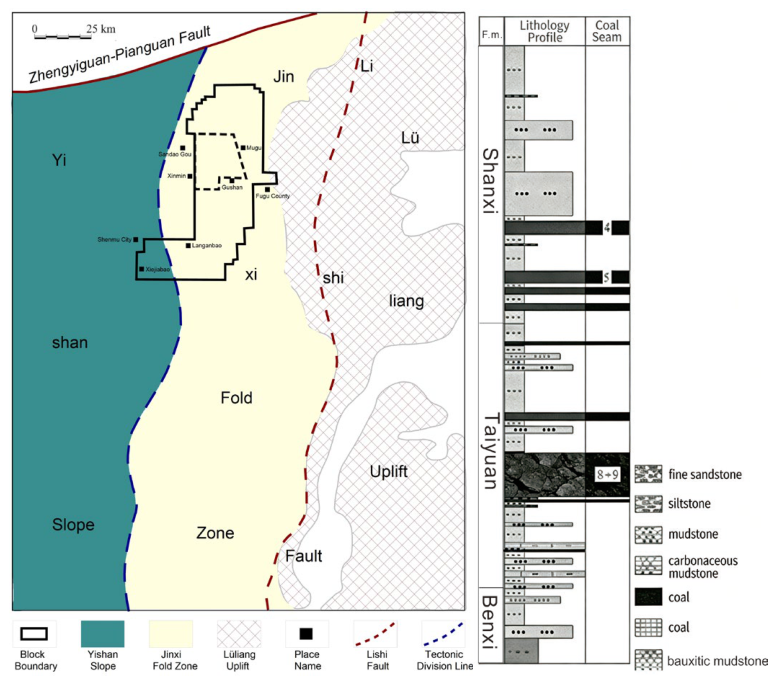
Figure 1. Structural location and comprehensive stratigraphic column chart of the Mugu Area, Shenfu Gas Field.
Processes 14 01637 g001
Figure 2. Coal seam thickness contour map of No.8+9 coal seams in the Taiyuan Formation, Mugu Area, Shenfu Gas Field.
Processes 14 01637 g002
Figure 3. Sedimentary facies profile and plan view of No.8+9 coal seams in the Benxi-Taiyuan Formations, Mugu Area, Shenfu Gas Field (section location: see Figure 2).
Processes 14 01637 g003
Figure 4. Distribution map of maximum vitrinite reflectance (Ro,max) of No.8+9 coal seams in the Taiyuan Formation, Mugu Area, Shenfu Gas Field.
Processes 14 01637 g004
Figure 5. Distribution map of gas content of No.8+9 coal seams in the Taiyuan Formation, Mugu Area, Shenfu Gas Field.
Processes 14 01637 g005
Figure 6. Gas pores and fractures in vitrinite of No.8+9 coal seams, Mugu Area, Shenfu Gas Field. (a) Well M34, 1915–1915.08 m, coal, with a small number of gas pores developed in vitrinite, ×10,000; (b) Well M34, 1914.30–1914.43 m, coal, with microfractures developed in vitrinite, ×500; (c) Well M34, 1914.30–1914.43 m, coal, with gas pores developed in vitrinite, ×10,000; (d) Well M34, 1913.18–1913.32 m, coal, with gas pores developed in vitrinite, ×10,000.
Processes 14 01637 g006
Figure 7. Relationship between Ro,max and total gas content, as well as methane volume fraction of No.8+9 coal seams, in the Taiyuan Formation, Mugu Area, Shenfu Gas Field.
Processes 14 01637 g007
Figure 8. Relationship between gas saturation and burial depth of No.8+9 coal seams in the Taiyuan Formation, Shenfu Gas Field.
Processes 14 01637 g008
Figure 9. Structural zoning map of the top surface of the Benxi Formation, Mugu Block, Shenfu Gas Field.
Processes 14 01637 g009
Figure 10. Enrichment model of No.8+9 coal seams in the Taiyuan Formation, Mugu Area, Shenfu Gas Field.
Processes 14 01637 g010
Figure 11. Coalbed methane (CBM) reserve abundance map of No.8+9 coal seams in the Taiyuan Formation, Mugu Area, Shenfu Gas Field.
Processes 14 01637 g011
Table 1. Statistical table of coal petrology and coal quality for No.8+9 coal seams of the Taiyuan Formation, Mugu Area, Shenfu Gas Field.
Volume Fraction of Maceral ComponentsAsh Mass FractionRo,max
VitriniteInertiniteLiptiniteOrganic ComponentsClay MineralsSulfide Minerals
Range62.10~86.3513.55~37.800.10~0.1588.25~94.354.55~7.500.10~4.2511.12~23.070.9~1.39
Mean Value70.9928.900.1192.736.131.1516.261.08
Table 2. Comparison of coal rank classification by different standards.
Classification StandardLow-Rank Coal Ro,max/%Medium-Rank Coal Ro,max/%High-Rank Coal Ro,max/%
GB/T 5751-2009<0.650.65~2.0≥2.0
ASTM D388-22<0.50.5~2.0≥2.0
ISO 11760-2018<0.60.6~2.0≥2.0
Table 3. Statistical table of gas content of No.8+9 coal seams in the Taiyuan Formation, Mugu Area, Shenfu Gas Field.
Well No.Number of
Samples
Air-Dry Basis Gas
Content (cm3/g)
Gas Content Composition (%)
Desorbed GasLost GasResidual Gas
RangeAvg.RangeAvg.RangeAvg.RangeAvg.
M1-1168.38~11.079.3483.73~87.8185.396.61~10.778.985.51~5.795.63
M1-2179.85~11.8110.7185.99~89.7587.494.68~8.456.975.24~6.125.54
T-M34712.07~16.4914.5786.05~87.9286.975.87~7.716.826.04~6.456.21
T-M64174.34~16.7010.4555.66~81.2572.3012.87~37.9721.675.53~6.536.03
T-M64-8234.12~10.517.4374.85~83.9379.009.63~19.4415.095.29~6.775.91
T-M84184.32~9.987.1767.97~86.5781.397.47~26.5612.215.46~7.246.40
T-M94185.91~17.2510.5983.95~89.0886.215.53~10.918.335.14~5.665.46
M-362010.19~19.9414.6083.36~89.8985.206.77~10.428.643.34~6.606.16
M-67-786.20~8.937.7582.55~88.3085.527.48~11.299.062.96~8.385.42
M-87157.52~11.849.1182.87~87.1785.766.66~11.458.345.59~6.185.91
M-97149.53~14.6111.6782.63~84.8983.379.23~11.9810.844.95~6.145.79
M-08144.88~8.266.6786.73~91.0288.262.90~7.515.845.57~6.225.90
Average Value 10.01 83.91 8.44 5.86
Table 4. Results of high-pressure isothermal adsorption experiments.
Well No.Depth/mRo,max/%Experimental Temperature/°CLangmuir Volume VL/(cm3/g)Langmuir Pressure PL/MPa
T-M341913~19151.054014.552.31
T-M341913~19151.056012.172.05
T-M341913~19151.058010.321.91
T-M341913~19151.051008.761.78
M-362056~20581.128011.241.85
M-971892~18941.02809.871.93
Table 5. Comparison of key parameters of two types of accumulation models.
Accumulation ModelSedimentary Facies BeltCoal Seam Thickness/mVitrinite Content/%Ro,max/%Gas Content/(m3/t)Desorbed Gas Proportion/%Resource Abundance/(104 m3/km2)Structural BeltHydrodynamic ConditionDevelopment Potential
Source–reservoir integration + multi-factor synergistic enrichment typeTidal flat–lagoon facies>12>701.0~1.3>10>83>4.0Zone IIIStagnant zoneExcellent
Source–reservoir limited + insufficient accumulation condition typeDelta front/tidal flat edge<8<60<1.0<8<801.0~3.0Zone IWeak runoff zoneLimited
Disclaimer/Publisher’s Note: The statements, opinions and data contained in all publications are solely those of the individual author(s) and contributor(s) and not of MDPI and/or the editor(s). MDPI and/or the editor(s) disclaim responsibility for any injury to people or property resulting from any ideas, methods, instructions or products referred to in the content.