3.1. The Influence of Iron-Containing Material Ratios in the MK-RM-FA System on the Properties of Geopolymer
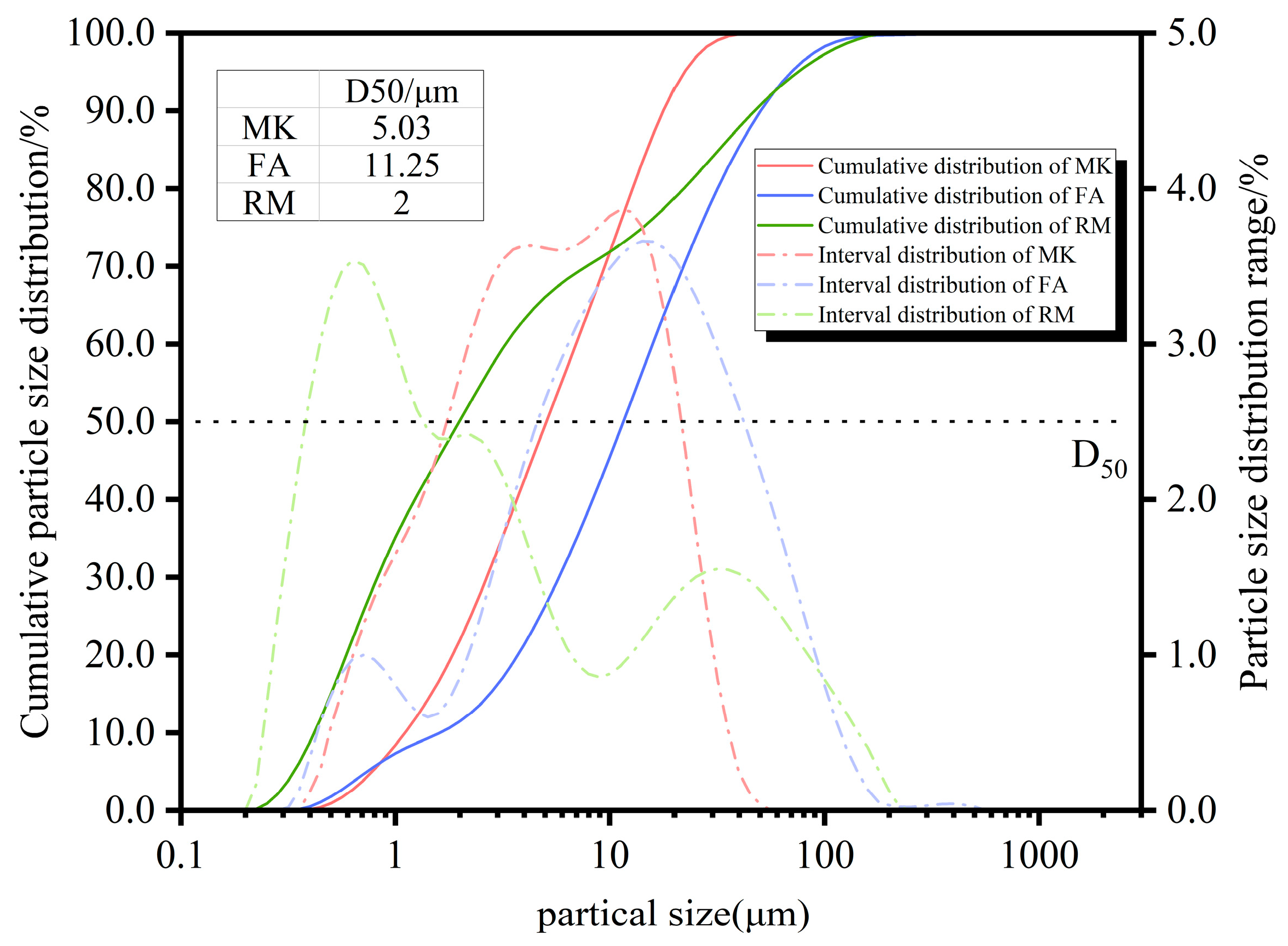
To develop a suitable binder phase for water-retaining geopolymer subgrade materials, the effects of metakaolin (MK), fly ash (FA), and red mud (RM) proportions on the early-age compressive strength of the ternary precursor system were first evaluated. MK, owing to its high alkali-activation reactivity, provides sufficient reactive Si and Al species for the formation of the geopolymer gel network and thus plays a dominant role in establishing the load-bearing skeleton of the matrix. FA contributes to industrial-waste utilization and can improve particle packing and workability, but its contribution to early-age strength under ambient curing is relatively limited because of its slower dissolution rate. RM not only promotes the utilization of Fe-rich industrial residue, but may also participate in matrix stabilization through its Fe-bearing and Al-containing phases. However, excessive RM may introduce more weakly reactive or inert components and may also raise environmental and engineering concerns. Therefore, in this study, the RM content was restricted to no more than 40% to balance mechanical performance, waste utilization, and service safety [
17].
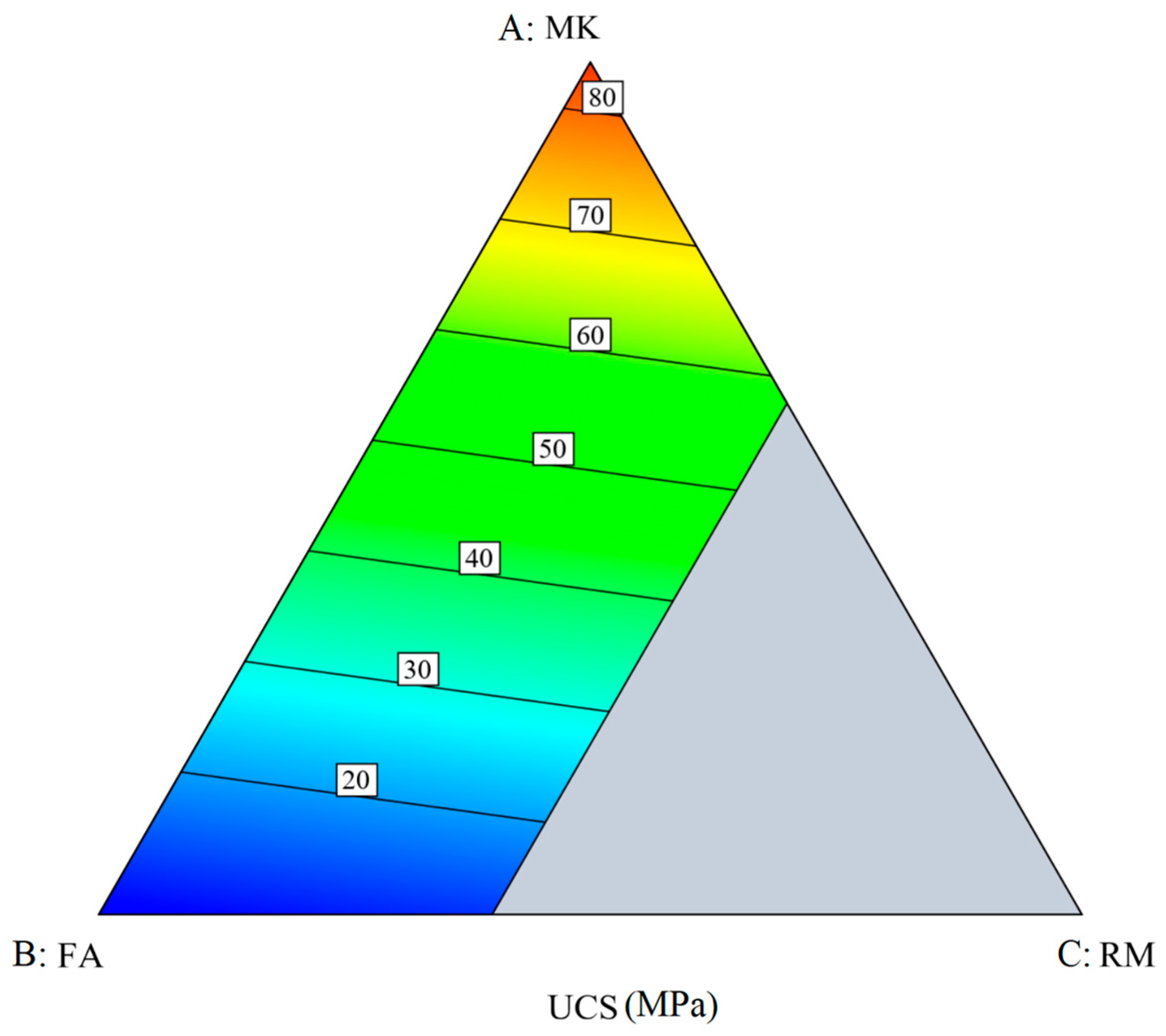
To quantitatively evaluate the compositional effects, a constrained ternary mixture design was adopted, and the compressive-strength results were fitted using a linear Scheffé mixture model. Within the investigated compositional range, the fitted model showed good statistical adequacy for preliminary composition screening and optimization (
Figure 2). The model was highly significant (F = 41.30,
p < 0.0001), and the regression sum of squares accounted for 85.5% of the total variation, indicating that the mixture proportions exerted a strong influence on compressive strength. In addition, the lack-of-fit test was not significant (
p = 0.3058), suggesting that the fitted model can adequately describe the variation trend of the experimental data within the current design space. The linear mixture model obtained for compressive strength σ
c is expressed as:
where σ
c (MPa) is the 7 day compressive strength, and A, B, and C represent the mass fractions of MK, FA, and RM. Statistical analysis confirmed the model’s reliability, with an F-value of 41.30 and
p < 0.0001, indicating a highly significant effect of composition on strength. The regression explained 85.5% of total variation, and the lack-of-fit test (
p = 0.3058) indicated strong predictive accuracy. All variance inflation factors (VIFs) were below 2, confirming the absence of severe multicollinearity and validating the robustness of the coefficients.
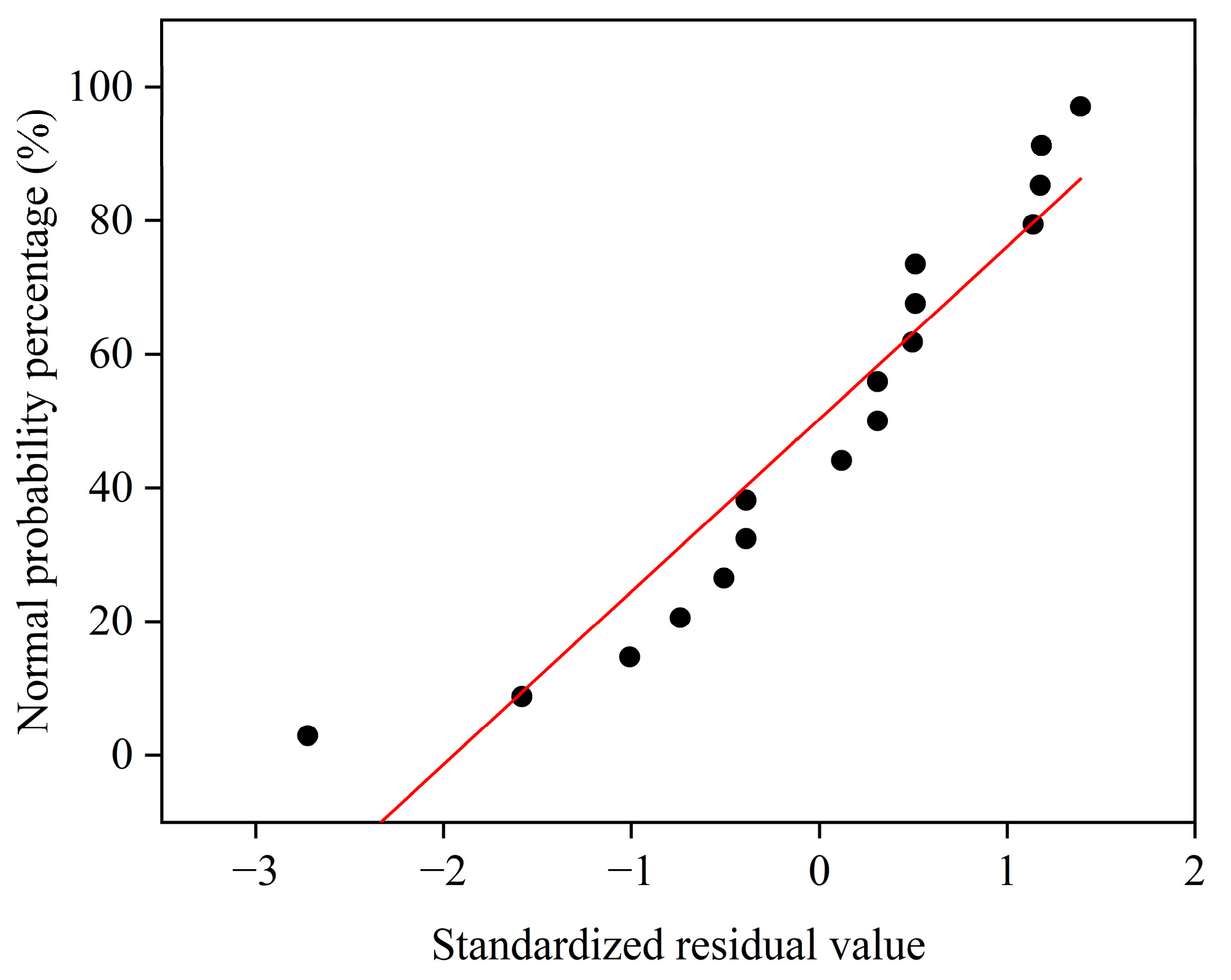
The normal probability plot of residuals further confirmed the statistical reliability of the fitted model. In this study, 17 standardized residuals were ranked and converted into the corresponding normal probability percentages (
Figure 3). The residuals ranged from −2.722 to 1.391, corresponding to a probability interval of 2.9% to 97.1%. The least-squares fitted line can be expressed as y = 25.83x + 50.29, where x is the standardized residual and y is the normal probability percentage. Most data points were distributed close to the fitted straight line, especially within the central probability range of 20–80%, indicating good agreement with the normality assumption. Only slight deviations were observed at the extreme ends, which did not constitute significant outliers. Overall, the residual distribution supports the validity of the normality assumption and confirms that the fitted model is statistically reliable for the present screening purpose.
The regression coefficients indicate that MK made the greatest contribution to compressive strength, followed by RM, while FA showed the smallest contribution within the present experimental range. This result is consistent with the much higher reactivity of MK under ambient alkali activation, which enables rapid dissolution and gel formation at early ages. By contrast, although FA contains a considerable vitreous phase, its dissolution rate at room temperature is relatively low, so its role in early-age strength development is mainly associated with physical filling and delayed reactivity. RM showed a higher contribution than FA within the investigated range. This difference is consistent with the possible participation of Al- and Fe-bearing phases from RM in the reaction process, together with the physical filling effect of its fine particles. However, RM remained significantly less effective than MK, most likely because RM also contains a substantial fraction of weakly reactive or inert phases. Therefore, the positive role of RM should be interpreted within the current compositional range and should not be extrapolated to higher replacement levels without further verification.
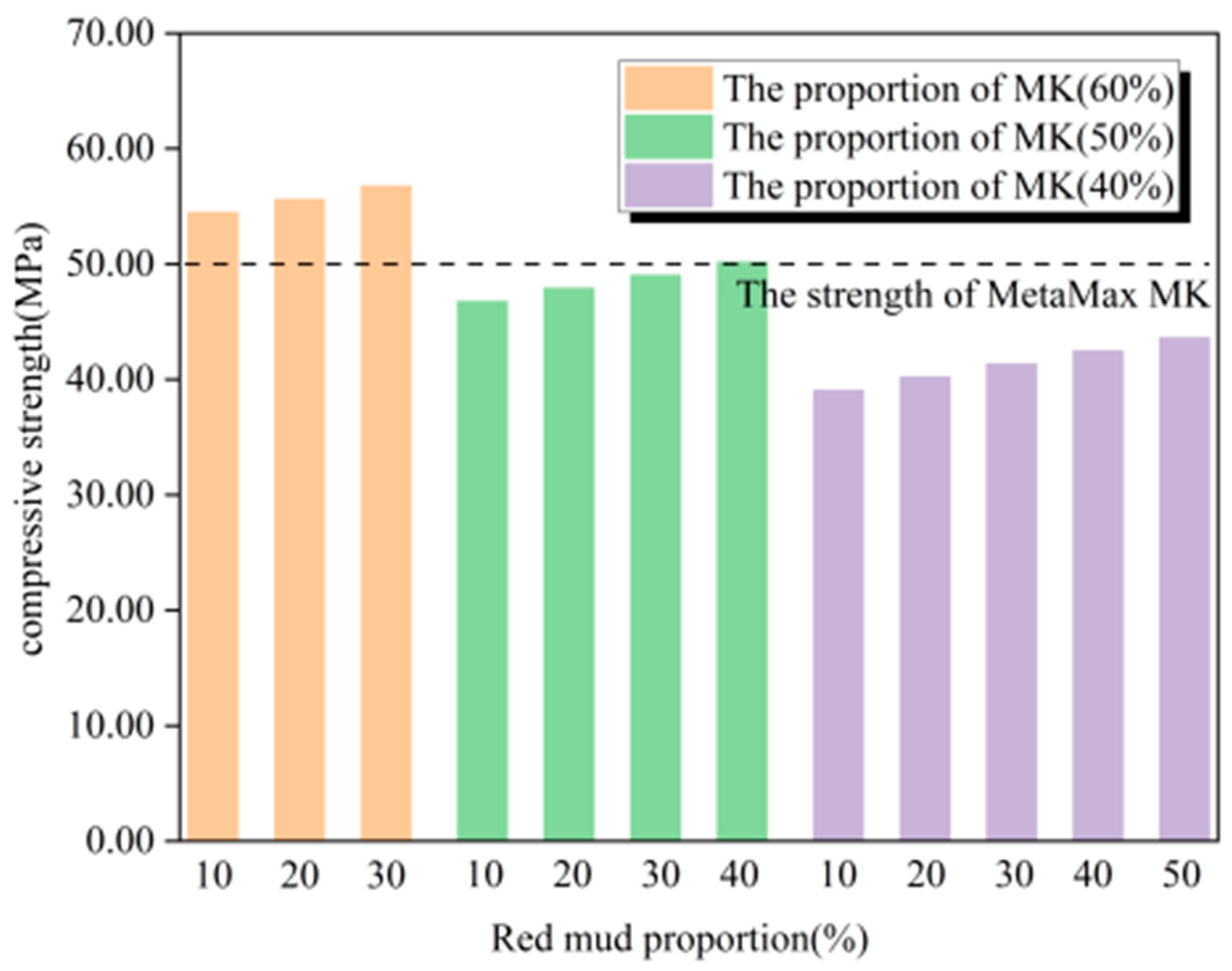
To further clarify the relative influence of FA and RM, the fitted model was used to compare compressive-strength variation at fixed MK contents (
Figure 4). The results show that, within the investigated range, increasing RM by 10% led to an increase of approximately 1.14 MPa in compressive strength, whereas increasing FA tended to suppress strength development. This opposite trend suggests that partial replacement of FA by RM is beneficial to the early-age mechanical performance of the MK–FA–RM system, provided that the RM content remains within an appropriate range.
Based on the fitted model, the proportion of 60% MK, 30% RM, and 10% FA was selected as the optimal precursor composition. This selection was not based solely on the fitted compressive-strength trend, but also on the engineering relationship established in our previous study between the compressive strength of MetaMax metakaolin-based geopolymer cubes and that of water-retaining subgrade materials prepared with the same binder system. That earlier study showed that when the compressive strength of the geopolymer cube exceeded 50 MPa, the corresponding water-retaining subgrade material could satisfy the strength requirement for inorganic stabilized base materials specified in JTG D50–2017 [
18]. Therefore, the 60% MK–30% RM–10% FA formulation was selected as the optimal proportion by considering both mechanical performance and economic feasibility, and was adopted in the subsequent pilot-scale preparation and performance evaluation of the water-retaining subgrade materials. It should be noted that the compressive-strength analysis in this section was conducted on geopolymer binder specimens without coarse aggregates and was intended for precursor screening under ambient curing conditions, rather than for direct comparison with structural geopolymer concretes.
3.2. Phase Evolution and Mechanism Discussion
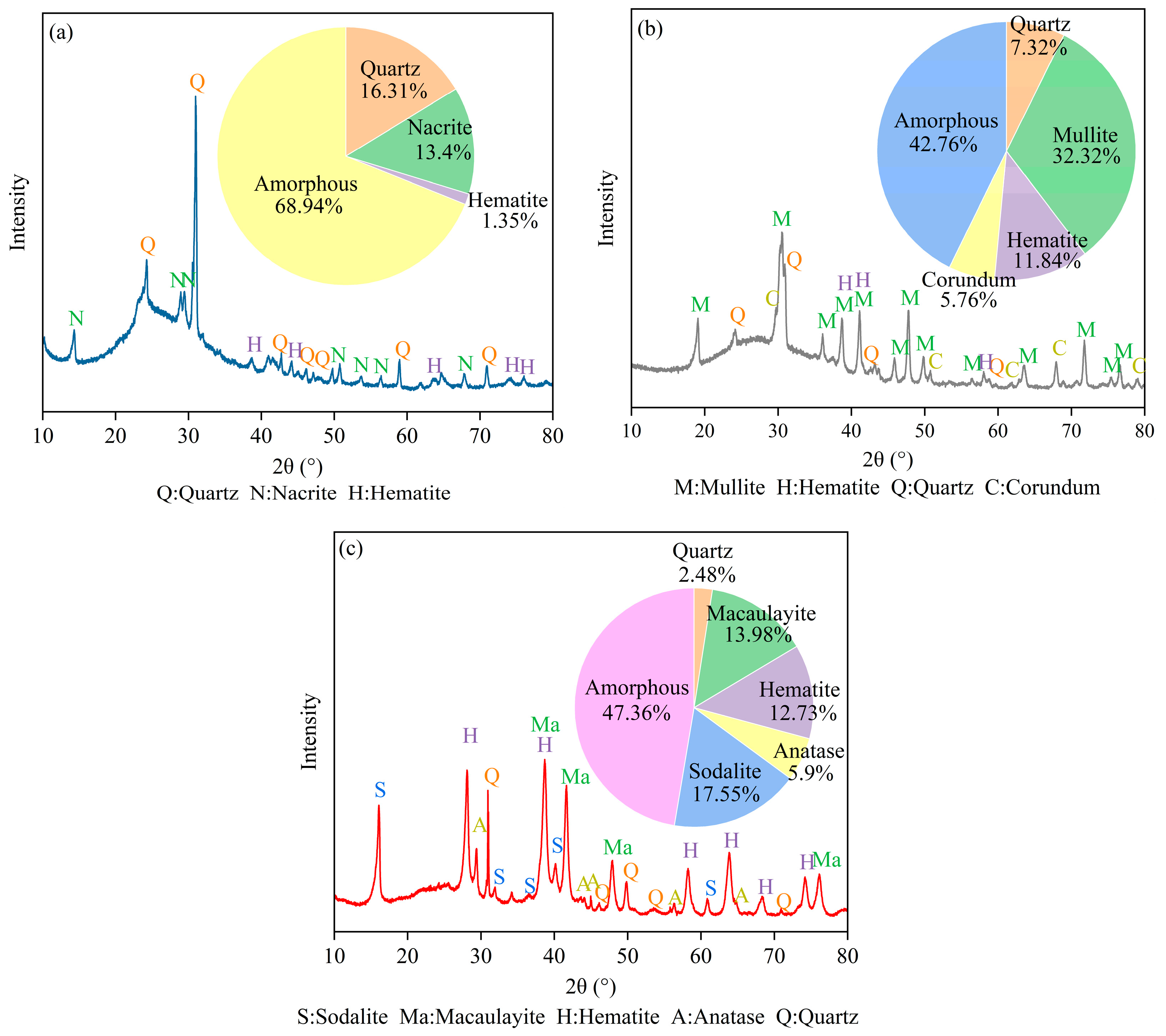
To clarify the origin of the different mechanical contributions of metakaolin (MK), fly ash (FA), and red mud (RM) in the ternary system, the intrinsic characteristics of the three precursor materials were first quantitatively analyzed. XRF and XRD were used to determine their major oxide compositions, phase assemblages, and Fe occurrence states. For clarity, the terms Structural Fe, Free Fe-bearing phase, and Amorphous phase content describe different characteristics of the precursor and should not be interpreted as three mutually exclusive categories. Structural Fe refers to Fe incorporated into mineral lattices or disordered solid frameworks, whereas Free Fe-bearing phase refers to Fe present as discrete Fe-rich phases such as hematite. Amorphous phase content, by contrast, describes the overall fraction of non-crystalline or poorly ordered material in the precursor. Accordingly, part of the Structural Fe may be included within the amorphous phase, whereas the Free Fe-bearing phase is generally treated as a separate crystalline or discrete Fe-rich component [
19,
20].
The quantitative analysis showed that RM contained a very high total Fe content of 35.82%. Although part of the Fe occurred as a Free Fe-bearing phase, a considerable fraction was present as Structural Fe associated with amorphous or weakly crystalline environments, including macaulayite, accounting for approximately 64% of the total Fe. In contrast, FA contained 13.85% Fe, of which about 85% existed as hematite, indicating that most Fe in FA was present as a Free Fe-bearing phase with relatively low reactivity. MK contained much less Fe overall, but it exhibited the highest Amorphous phase content, reaching 68.9%, which was significantly higher than those of FA (42.76%) and RM (47.36%). This high amorphous aluminosilicate fraction is consistent with the dominant role of MK in early-age geopolymer gel formation and strength development [
21]. The corresponding XRD patterns and quantitative phase-analysis results are presented in
Figure 5 and
Table 3.
These compositional differences help explain the mechanical trends observed in
Section 3.1. Under the condition of fixed MK content, increasing RM while decreasing FA led to a clear increase in compressive strength. This tendency is consistent with the different occurrence states of Fe in the two industrial residues. In RM, a larger proportion of Fe exists as Structural Fe, some of which is associated with amorphous or weakly crystalline environments and may participate, to some extent, in the dissolution–reorganization process under strong alkali activation. Such participation may facilitate the development of a more stable or more compact aluminosilicate reaction network. By contrast, the Fe in FA is predominantly present as Free Fe-bearing phases, which are less likely to participate effectively in geopolymerization and are more likely to behave as inert fillers during early-age reaction [
22]. This difference provides a plausible explanation for why RM showed a higher contribution to compressive strength than FA within the investigated compositional range.
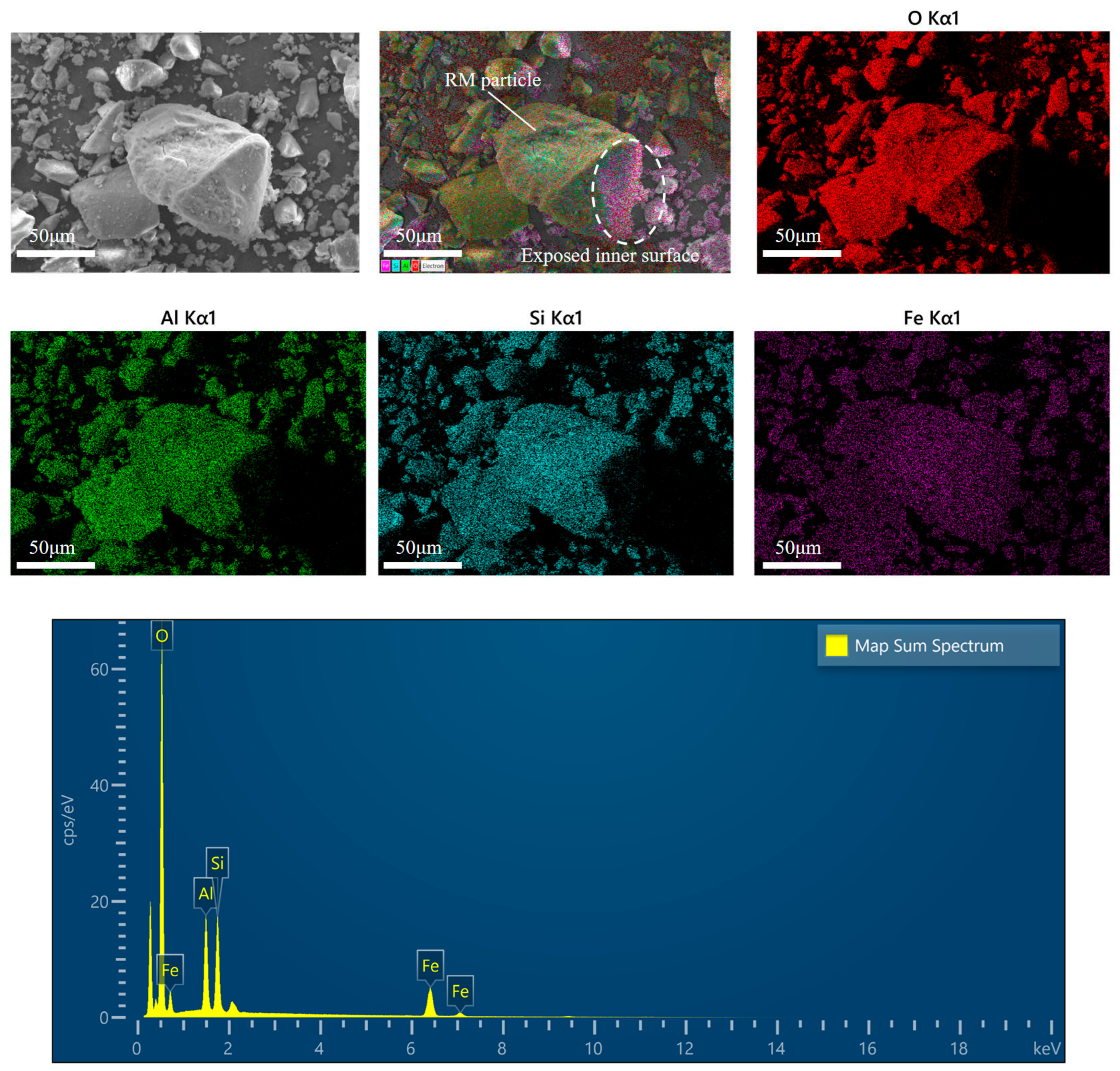
To further examine the role of RM at the local interface, SEM–EDS mapping (
Figure 6) was performed on a representative reacted RM particle. The SEM image showed that the particle was not simply embedded in the matrix as an inert inclusion, but was surrounded by a relatively dense interfacial layer. The corresponding elemental maps revealed substantial spatial overlap among O, Al, Si, and Fe around the particle boundary, indicating the formation of a Si–Al–Fe-rich reaction zone. The map-sum spectrum (
Table 4) of the selected region mainly contained O (62.42 wt.%), Al (8.89 wt.%), Si (9.08 wt.%), and Fe (19.61 wt.%). In particular, the interfacial region exhibited a Si/Al ratio close to 1, together with evident Fe enrichment. This composition is consistent with the formation of Al-rich aluminosilicate reaction products, possibly including N–A–S–H/N–A–F–S–H-type gel domains around the RM particle, since Si/Al ratio is an important compositional indicator for geopolymer gel environments [
21,
23].
The morphology of the reacted particle also suggests a shell-like reaction pattern, in which the outer surface of the RM particle was more strongly involved in geopolymerization, whereas part of the inner core may have remained less reacted. Similar shell-like or surface-preferential reaction features have been reported in Fe-rich or red-mud-containing alkali-activated systems, where the external layer reacts more readily than the interior under alkaline conditions [
24]. This observation implies that RM did not behave as a purely inert filler in the ternary system. Instead, its outer surface appears to have undergone interfacial dissolution and reprecipitation, leading to the formation of a compact reaction layer with good continuity to the surrounding matrix, which is consistent with the interfacial densification behavior reported for red-mud-based geopolymer systems [
25,
26]. Such a feature is beneficial for particle–matrix bonding and local matrix densification, and is therefore consistent with the positive contribution of RM to compressive strength within the investigated range [
27].
Taken together, the phase-analysis and mapping results suggest that the role of Fe-bearing precursors depends not only on total Fe content, but more importantly on the occurrence state and interfacial reactivity of Fe. Previous studies have also emphasized that the chemical state, mineral association, and local reactivity of Fe-bearing species can significantly influence geopolymer reaction pathways and the resulting microstructure, rather than total Fe content alone [
28]. In the present system, Fe appears more likely to act as an interfacial modifier or network-stabilizing component within Si–Al-rich reaction products, rather than as the dominant framework-forming species, which is consistent with recent discussions on the role of Fe in Fe-containing aluminosilicate reaction networks [
19]. This interpretation also helps explain why RM, despite containing a lower Amorphous phase content than MK, still contributed more positively to strength development than FA under the investigated ambient curing conditions, whereas FA-rich systems containing a larger proportion of free hematite or other low-reactivity Fe-bearing phases often show weaker early-age contribution [
29].
It should be emphasized, however, that the present mechanistic interpretation is based mainly on quantitative phase analysis, Fe occurrence-state analysis, SEM–EDS mapping, and the macroscopic strength response of the ternary system. Therefore, the results support a possible role of Fe-bearing components from RM in matrix evolution and structural stabilization, but they do not directly prove the formation of a specific Fe-bearing gel structure or the definite coexistence of distinct gel types. Similar caution has been noted in recent reviews, which point out that XRD and SEM–EDS can support phase-based or compositional interpretation but are generally insufficient, by themselves, to unambiguously identify specific gel species or Fe coordination environments [
19]. In particular, although the interfacial Si/Al ratio is compatible with Al-rich N–A–S–H-type products, the mapped region contains mixed interfacial products and Fe-bearing phases, so the present EDS evidence alone cannot directly confirm a pure N–A–S–H gel; Si/Al ratio is informative for gel chemistry, but its interpretation should be combined with complementary spectroscopic evidence [
21,
23]. Direct identification of Fe coordination environments and Fe-modified gel domains would therefore require further spectroscopic and microscopic investigation. Nevertheless, the present results clearly indicate that the occurrence state of Fe, rather than merely its total content, is closely related to the mechanical behavior of the MK–FA–RM geopolymer system.
3.3. Effect of Aggregate Particle Size on Water Retention and Mechanical Performance
After the optimal MK–FA–RM precursor composition was determined, the influence of coarse aggregate particle size on the functional performance of the water-retaining subgrade material was further evaluated. In this system, aggregate size governs the pore structure formed between neighboring particles and therefore strongly affects both water retention capacity and load-bearing behavior. The objective of this section is not simply to maximize porosity or strength alone, but to identify an appropriate aggregate size range that can balance water-storage function with sufficient mechanical support for subgrade applications. Similar multifunctional design requirements have been emphasized in recent studies on pervious and sponge-city pavement materials, where hydraulic regulation and structural support must be considered simultaneously [
14,
30].
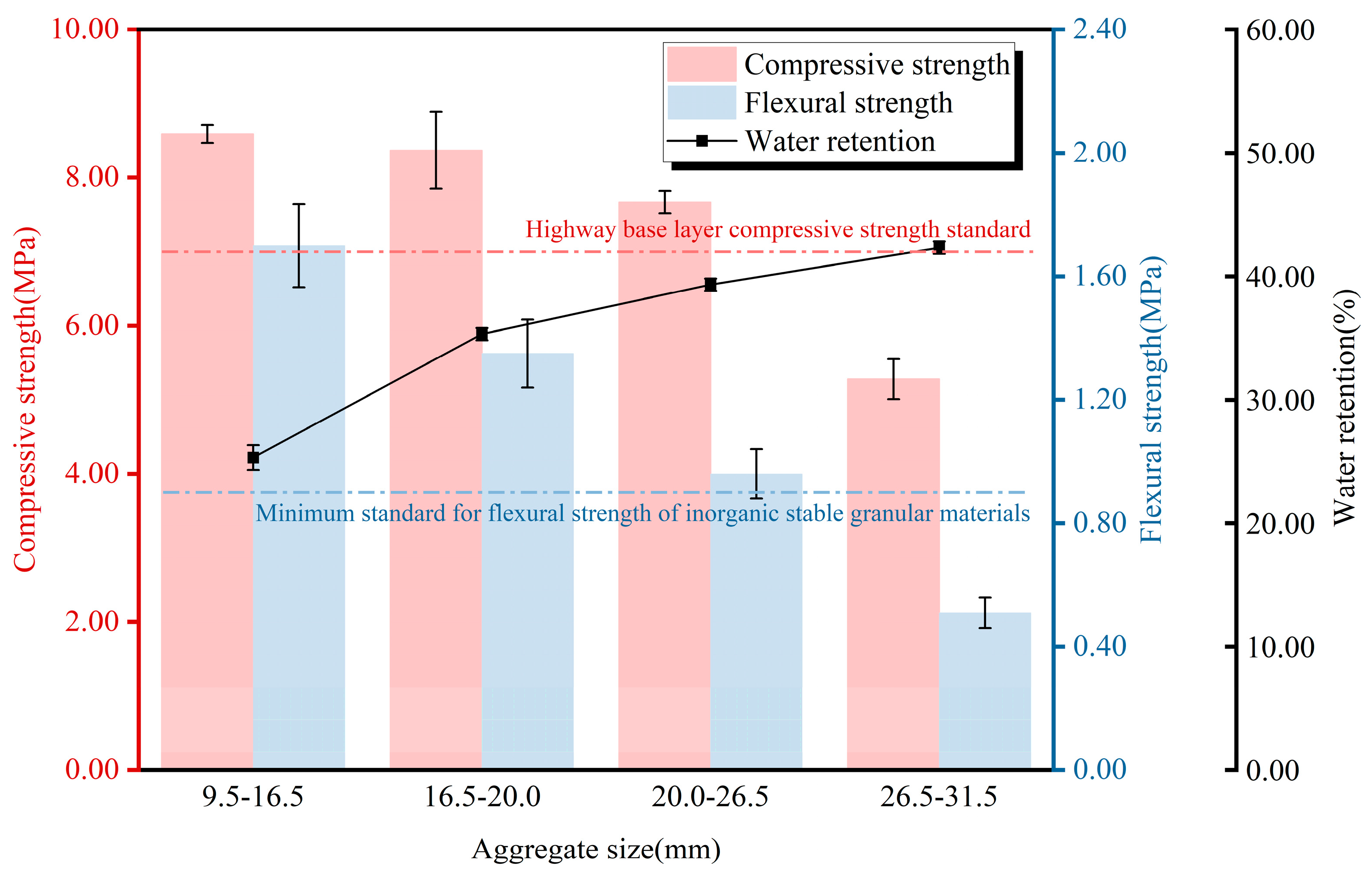
As shown in
Figure 7, the water retention rate increased progressively with increasing aggregate size. The water retention rate was 25.3% for the 9.5–16.5 mm group, increased to 35.3% for the 16.5–20.0 mm group, and further rose to 42.3% for the 26.5–31.5 mm group. This trend indicates that larger aggregates tend to generate larger and more connected interparticle voids, thereby increasing the effective pore volume available for water storage. In other words, aggregate size directly regulates the storage space and connectivity of the pore system, which are key factors controlling the water retention function of the material. Similar size-dependent effects of aggregate gradation on pore connectivity, water permeability, and hydraulic performance have also been reported for porous and pervious cementitious systems [
31,
32].
In contrast to the improvement in water retention capacity, the mechanical properties decreased with increasing aggregate size. The compressive strength declined from 8.59 MPa for the 9.5–16.5 mm group to 8.37 MPa, 7.67 MPa, and 5.28 MPa for the 16.5–20.0 mm, 20.0–26.5 mm, and 26.5–31.5 mm groups, respectively. Flexural strength exhibited the same tendency, decreasing from 1.70 MPa to 1.35 MPa, 0.96 MPa, and 0.51 MPa. The largest aggregate group failed to satisfy the compressive-strength requirement of 7 MPa and also fell below the minimum flexural-strength threshold of 0.9 MPa for inorganic stabilized granular materials. Therefore, although larger aggregates improved the water-storage function, they also weakened the mechanical reliability of the material. Similar inverse relationships between coarse pore development and strength have been widely reported for pervious concrete and alkali-activated porous pavement materials.
This trade-off between water retention and strength is mainly governed by the evolution of pore structure and skeleton continuity. As the aggregate size increases, the number of contact points between adjacent particles decreases while the interparticle gaps become larger, which directly changes the geometry and connectivity of the pore network [
32]. Although this favors the formation of interconnected storage voids and thus improves hydraulic functionality, coarser or gap-graded aggregate structures are also known to reduce the continuity of the load-bearing skeleton in pervious concrete systems [
14]. Meanwhile, the effective binder-covered contact area becomes smaller, weakening the bridging effect of the geopolymer binder at particle contacts and making force transmission through the skeleton less uniform [
30]. Under such conditions, stress is more likely to concentrate around pore boundaries and weak contact zones, which accelerates local damage development [
31]. Larger interparticle pores can also reduce packing compactness and interfacial continuity, thereby promoting crack initiation and premature failure [
33]. By contrast, smaller aggregate sizes tend to form a denser particle skeleton with more uniform binder distribution and stronger particle–matrix bonding, which improves compressive and flexural strength, although at the expense of water-storage space [
34].
From an engineering perspective, aggregate size should therefore be selected by considering both hydraulic regulation and structural support, rather than optimizing only one function [
35]. Excessively small aggregates are unfavorable for water storage because the void system becomes relatively compact and the effective storage space is restricted [
36]. In contrast, excessively large aggregates can provide high water retention capacity, but this is commonly accompanied by reduced mechanical stability because the open-pore system becomes too coarse to maintain sufficient structural integrity [
37]. Among the investigated size ranges, the 16.5–20.0 mm group showed the most balanced overall performance, with a compressive strength of 8.37 MPa, a flexural strength of 1.35 MPa, and a water retention rate of 35.3%, all satisfying the relevant engineering requirements. This result is consistent with the widely reported optimization principle that intermediate aggregate gradation often provides the most favorable balance between hydraulic performance and mechanical reliability in porous pavement materials [
31]. Therefore, within the investigated range and under the present mix design, 16.5–20.0 mm can be regarded as the most suitable aggregate size range for water-retaining geopolymer subgrade materials, because it provides a reasonable compromise between water-storage capacity and structural performance.
3.4. Short-Term Water Stability and Acid Resistance
Short-term durability under aqueous and acidic environments is a key performance criterion for water-retaining geopolymer subgrade materials, because the material is expected to remain in frequent contact with infiltrated water and may also be exposed to acidic species during service. In alkali-activated aluminosilicate systems, durability under immersion is closely related to the stability of the reaction products, pore connectivity, and the resistance of the interfacial structure to ion ingress and dissolution [
38]. Therefore, in addition to compressive strength and water retention capacity, the resistance of the optimized material to water immersion and acid attack must be evaluated.
As shown in
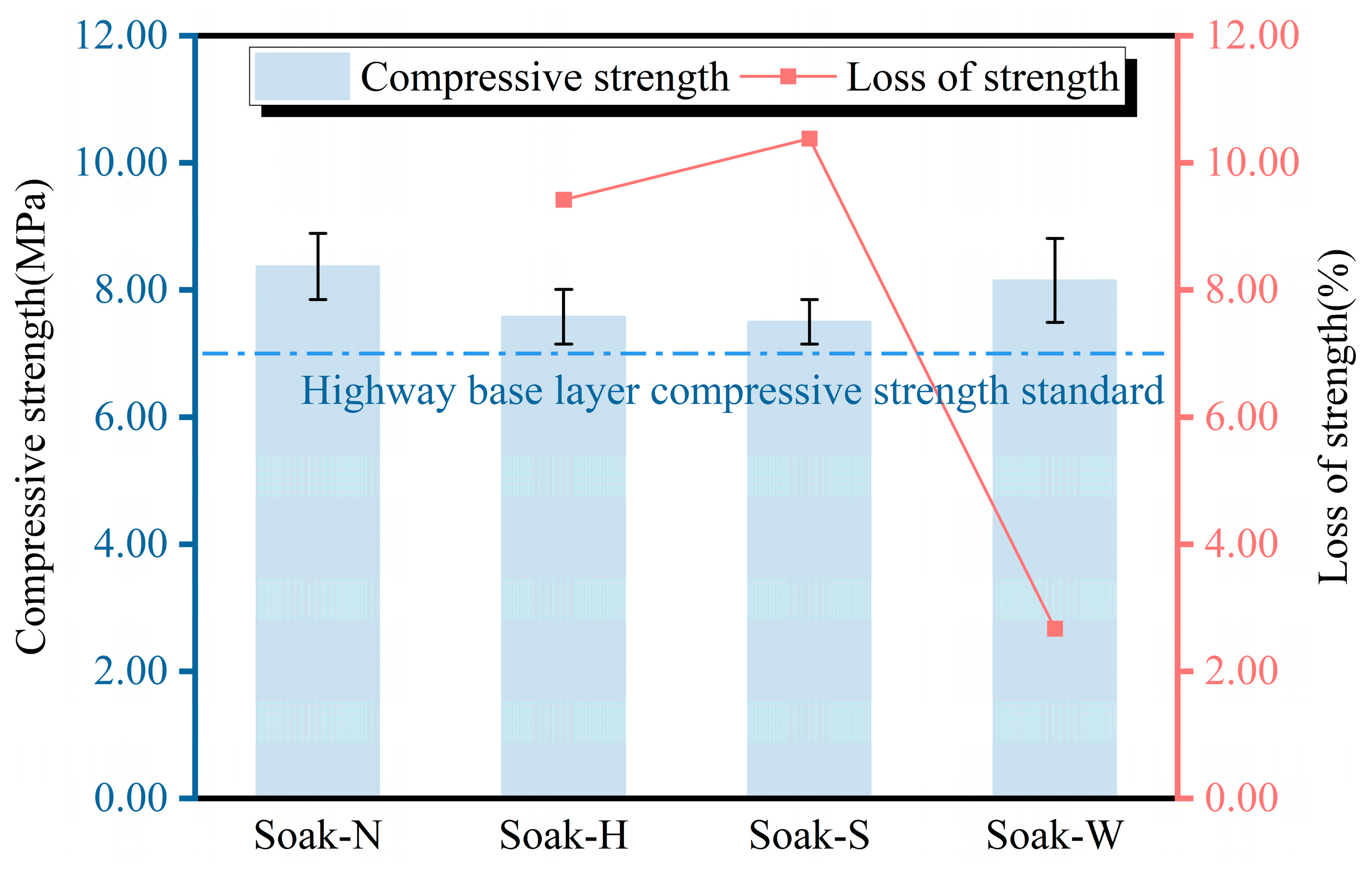
Figure 8, specimens soaked in tap water (Soak-W), 5% HCl (Soak-H), and 5% H
2SO
4 (Soak-S) exhibited a decrease in compressive strength compared with the unsoaked reference specimen (Soak-N), indicating that water and acidic media caused a certain degree of structural degradation. However, the degree of strength loss varied with the soaking medium. The smallest reduction was observed after tap-water immersion, whereas both acidic solutions caused more pronounced deterioration. In 5% HCl, the compressive strength decreased by an average of 9.40%, while immersion in 5% H
2SO
4 resulted in a slightly higher average loss of about 10.32%. Despite these reductions, all immersed specimens retained compressive strengths above 7.10 MPa, which still satisfied the engineering requirement for stabilized base materials specified in JTG D50–2017. These results indicate that the material maintained acceptable residual load-bearing capacity under short-term soaking conditions.
Among the tested environments, the relatively limited strength loss after tap-water immersion suggests that the geopolymer matrix possessed good short-term water stability. This behavior is consistent with previous studies showing that aluminosilicate-based geopolymer systems generally maintain good stability under simple water immersion, owing to the relatively stable gel network formed during geopolymerization [
39]. The observed reduction in strength under water immersion is more likely associated with limited alkali leaching, local interfacial weakening, and partial dissolution of soluble species, rather than severe destruction of the main reaction matrix.
The deterioration became more evident under acidic conditions. In 5% HCl, the moderate strength loss indicates that hydrochloric acid caused clear but still limited degradation of the geopolymer matrix. This reduction can be attributed mainly to the attack of H
+ ions on the aluminosilicate network and the progressive dissolution of charge-balancing alkali species, which may induce partial depolymerization in the outer reaction layer [
40]. Nevertheless, the residual compressive strength remained above the design threshold, indicating that the material still preserved basic structural integrity under short-term hydrochloric acid exposure.
Immersion in 5% H
2SO
4 produced the greatest strength loss among the tested conditions, showing that sulfuric acid was more aggressive than hydrochloric acid in the present system. In addition to proton attack, sulfate-containing solutions may intensify deterioration through coupled dissolution and surface damage, leading to more severe weakening of the exposed region than that caused by HCl alone [
41]. Even so, the difference in strength loss between the two acidic environments remained limited, suggesting that the optimized MK–FA–RM binder system still maintained a relatively stable reaction matrix during short-term exposure.
Overall, the results show that the developed material possesses satisfactory short-term environmental durability for water-retaining subgrade applications. Although all soaking conditions caused some reduction in compressive strength, the residual strengths remained above the engineering requirement, and the material exhibited particularly good stability under tap-water immersion. The more pronounced deterioration in sulfuric acid indicates that acidic environments, especially sulfate-containing ones, deserve greater attention in long-term service evaluation. Therefore, while the present results support the short-term applicability of the material in water-retaining roadbed systems, further study under prolonged chemical exposure and cyclic wetting–drying conditions is still necessary.
3.5. Pilot-Scale Preparation and Seasonal Applicability
To verify the engineering feasibility of the optimized material beyond the laboratory scale, pilot-scale preparation was carried out using the selected MK–FA–RM precursor composition and aggregate size range. Two field-oriented pilot sections were constructed under representative summer and winter conditions, each with dimensions of 3 m × 5 m × 0.5 m. The winter trial was conducted at an ambient temperature of 0–5 °C, whereas the summer trial was performed at 30–40 °C. To ensure that the mechanical test results could more realistically reflect the performance of the in situ material, specimens were prepared by synchronous pouring using the same batch of mixture, placement procedure, and compaction method as those adopted in the pilot sections. Compared with conventional laboratory specimens, this approach provided a more direct basis for evaluating field construction applicability.
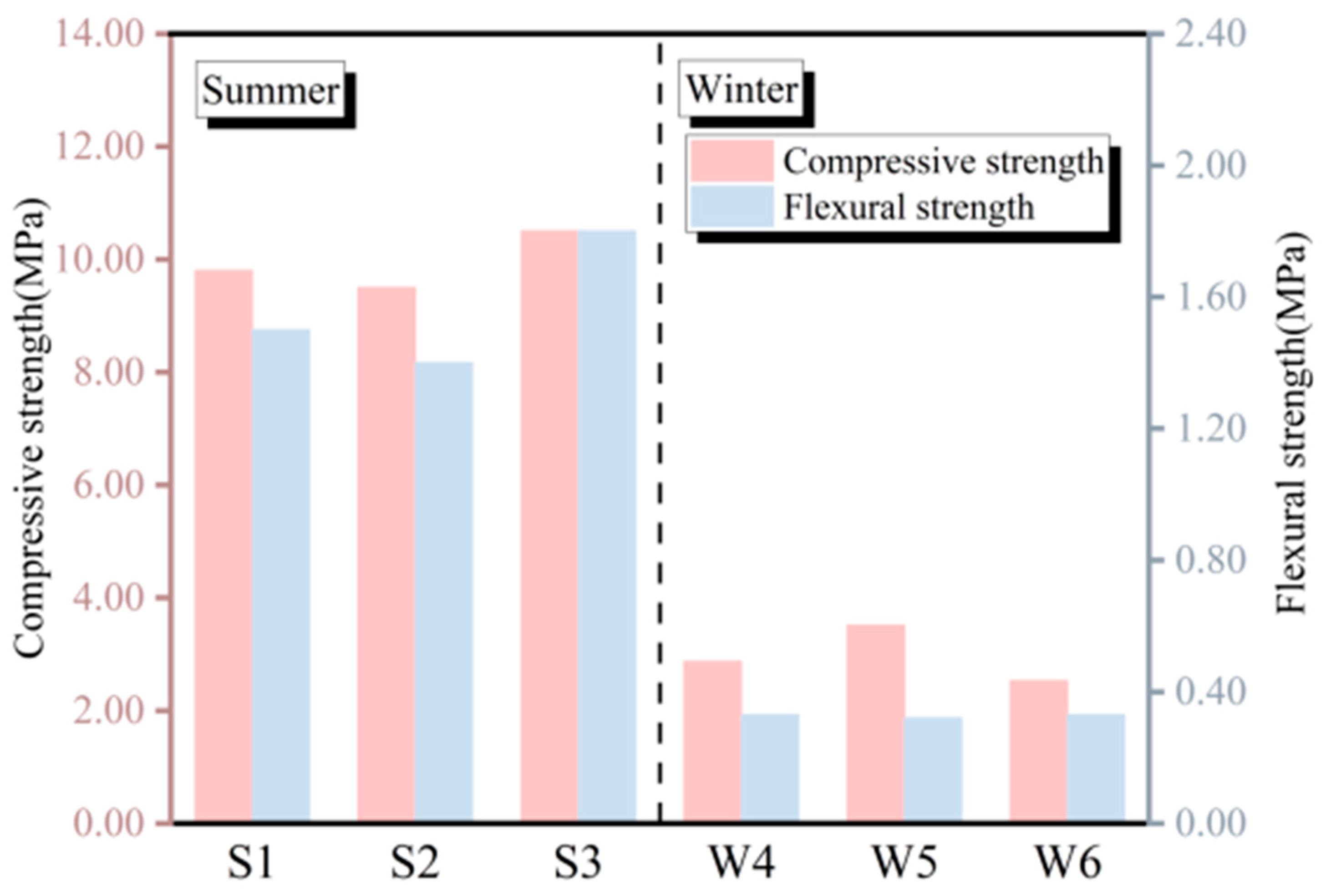
The mechanical results showed that the system was highly sensitive to the construction season. As shown in
Figure 9, the summer-prepared specimens S1–S3 achieved compressive strengths of 9.8, 9.5, and 10.5 MPa, respectively, corresponding to an average of 9.93 MPa. Their flexural strengths were 1.5, 1.4, and 1.8 MPa, respectively, with an average of 1.57 MPa. By contrast, the winter-prepared specimens W4–W6 exhibited compressive strengths of only 2.9, 3.5, and 2.5 MPa, while all three specimens showed flexural strengths of merely 0.3 MPa. These results indicate that both compressive and flexural performance were markedly reduced under winter preparation conditions, demonstrating that near-freezing temperatures severely suppressed early-age strength development at the pilot scale. This observation is consistent with previous studies reporting that low-temperature curing significantly delays the development of mechanical properties in metakaolin-based geopolymers and geopolymer-stabilized systems [
42,
43].
The above performance differences can be attributed mainly to the strong temperature sensitivity of geopolymerization and interfacial evolution. Elevated ambient temperature accelerates the dissolution of reactive aluminosilicate species and promotes gel formation and polycondensation, thereby facilitating the rapid establishment of a continuous binding network and a dense matrix structure [
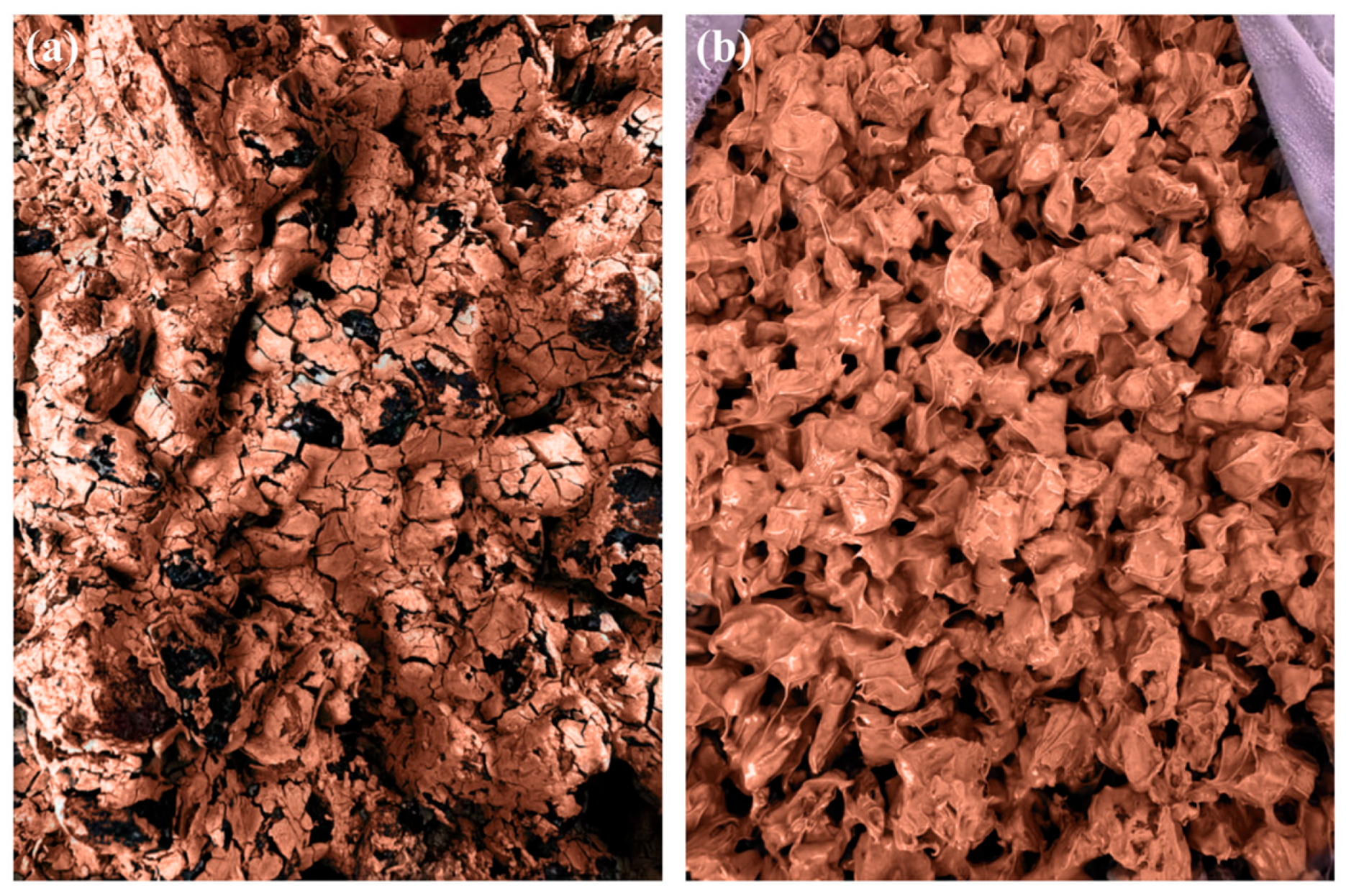
43]. At the same time, warm conditions improve the rheological evolution of metakaolin-based geopolymer pastes, enabling the binder to more effectively wet and coat aggregate surfaces during mixing and placement. In contrast, under winter low-temperature conditions, reduced ion mobility and slower dissolution–condensation processes delay gel formation and hinder the development of the interfacial transition zone. As a result, the binder cannot fully encapsulate the aggregates before structural stiffening and moisture loss occur, making the material more susceptible to shrinkage cracking, interfacial debonding, and strength deficiency. The surface morphology shown in
Figure 10 is fully consistent with this interpretation: the summer samples exhibited continuous encapsulation and a relatively dense structure, whereas the winter samples showed severe cracking and discontinuous bonding. Previous reviews have likewise emphasized that curing regime and thermal environment are critical variables governing early geopolymer network formation and construction applicability [
19,
23].
From an engineering perspective, the pilot-scale results indicate that the optimized MK–FA–RM system has good construction potential under warm-season conditions, whereas its field applicability is highly sensitive to ambient temperature. Considering the severe deterioration observed in the winter pilot trial (0–5 °C), together with previous studies showing that low-temperature curing markedly suppresses metakaolin-based geopolymerization and early strength development [
44], it is recommended that the minimum ambient temperature for direct field construction of this material should be controlled above 10 °C. When the ambient temperature falls within 5–10 °C, auxiliary measures such as thermal insulation, preheating, or enclosed curing should be adopted. Direct construction below 5 °C is not recommended. Overall, the pilot-scale study demonstrates that construction season is a key factor controlling the practical applicability of the developed material and should be explicitly considered in future field implementation and construction specifications.
3.6. Economic and Carbon-Emission Assessment
A pilot-scale cost evaluation was conducted to assess the economic feasibility of iron-based geopolymer water-retaining subgrade materials and to identify the primary cost drivers in production (
Table 5). The optimized ternary system consisted of MK, FA, and RM as cementitious precursors, activated by sodium hydroxide and sodium silicate (modulus 2.25), with crushed aggregates incorporated to form a stable skeleton. Material loss during production was approximately 50%, and mixing and curing water were also considered in the calculation. For benchmarking (
Table 6), a MetaMax-based geopolymer system was prepared under the same production conditions. In that system, each 10 × 10 × 10 cm block contained 65 g of MetaMax, 111 g of sodium silicate, 3.2 g of sodium hydroxide, 14 g of water, and 800 g of coarse aggregate. The total production volume was about 7.5 m
3, which was considered sufficient to simulate practical engineering conditions.
Equipment costs were relatively minor and mainly included a flat-mouth mixer and a PE mixing barrel, with a total purchase cost of ¥1930. Assuming a 5% residual value, a service life of 3000 production cycles, and an electricity consumption of 20 kWh per shift, the equipment-related cost was estimated to be approximately ¥3.06/m3. Labor expenses were calculated based on the local construction wage of ¥250/day. A total of five worker-days were required for material preparation, mixing, transport, casting, and curing, resulting in a labor cost of ¥1250. Water costs were negligible, amounting to only ¥1.05 for 0.3 tons of water consumed. In contrast, material cost was the dominant component of the overall expenditure. For the ternary system, 2025 Wuhan market data indicated a total material cost of ¥8502, accounting for 87% of the total direct cost, among which metakaolin and red mud together contributed ¥5576.5, corresponding to 57.2% of the total cost. In comparison, the MetaMax-based system showed a much stronger dependence on high-purity metakaolin, which alone accounted for 67.8% of the total cost. This is consistent with previous studies identifying high-reactivity aluminosilicate precursors as one of the principal cost drivers in geopolymer production. In comparison, the MetaMax-based mix showed a significantly higher reliance on high-purity metakaolin, which alone represented 67.8% of the total cost, consistent with prior studies identifying high-reactivity aluminosilicate precursors as the principal cost driver in geopolymer production. The total cost of the ternary geopolymer material was approximately ¥9752.65, equivalent to ¥1300/m3, with materials contributing ~¥1133/m3—roughly 61% of the cost of MetaMax-based materials—while labor represented 12.8% and other factors were negligible. These findings confirm that raw material inputs overwhelmingly determine production costs, yet the use of industrial by-products such as fly ash and red mud can substantially reduce expenditure without compromising performance. From an engineering perspective, high-grade precursors like metakaolin remain indispensable for achieving superior compressive strength, impermeability, and durability, and although their unit cost is higher, life-cycle assessments demonstrate that these materials can offset initial expenses through extended service life and reduced maintenance requirements. Labor costs in the pilot-scale study were relatively elevated due to the absence of mechanization, but future automated and continuous production processes are expected to significantly lower labor input and improve cost-efficiency. Overall, the analysis demonstrates both the technical and economic feasibility of ternary iron-based geopolymers as sustainable alternatives for water-retaining roadbed construction.
The transition toward large-scale utilization of industrial by-products such as fly ash and red mud offers significant opportunities to optimize the cost structure and enhance the sustainability of iron-based geopolymer water-retaining roadbed materials. In the current pilot-scale production, these materials are still purchased as raw materials, contributing ¥1842.1, or 18.9% of the total cost. However, with the development of regional solid waste co-processing systems and policies promoting resource recovery, these by-products could be sourced directly from local power and alumina plants, reducing procurement costs and limiting expenses to transportation and minimal pretreatment. Under such a scenario, the total production cost could be reduced by ¥2449.5, decreasing from ¥9752.65 to ¥7303 and lowering the unit cost from ¥1302/m3 to ¥974/m3, representing a 25% cost reduction. This aligns with international findings that the use of industrial waste-based geopolymers can reduce raw material costs by 20–30% compared with conventional systems.
Beyond economic benefits, the large-scale utilization of fly ash and red mud also provides substantial environmental advantages. By replacing virgin raw materials and reducing landfill disposal, this strategy can mitigate greenhouse gas emissions, reduce leachate and heavy-metal pollution risks, and lower the ecological burden associated with waste stockpiling. Previous life-cycle assessment studies have consistently shown that geopolymer systems incorporating industrial by-products exhibit a markedly lower carbon footprint than Portland cement-based materials. From a broader sustainability perspective, this approach also aligns well with China’s “zero-waste city” strategy and current policy directions concerning solid-waste pollution prevention and resource utilization. Nevertheless, the variability in the composition, mineralogy, and reactivity of industrial waste streams means that a stable supply chain and quality-control system are still essential to ensure consistent field performance. Overall, the synergistic use of industrial by-products in iron-based geopolymers offers clear potential for cost reduction, environmental protection, and engineering promotion, making these materials promising candidates for large-scale application in sustainable infrastructure construction. A life-cycle carbon emission analysis was conducted for the pilot-scale production of approximately 6.2 t of iron-based geopolymer water-retaining roadbed material, comprising 519 kg metakaolin, 87 kg fly ash, 259 kg red mud, 73 kg sodium hydroxide, 435 kg sodium silicate, 6000 kg coarse aggregate, and 218 kg water. The assessment focused on three primary stages: metakaolin calcination, alkaline activator production, and electricity consumption during mixing, curing, and early-age maintenance. The emission factor for metakaolin was set at 0.40 kg CO
2-e/kg based on reported values for dehydroxylation at ~850 °C. Sodium hydroxide, produced through energy-intensive membrane electrolysis, was assigned a factor of 5.8 kg CO
2-e/kg, while sodium silicate was estimated at 1.5 kg CO
2-e/kg. Electricity-related emissions were calculated using the 2025 Central China Grid average of 0.7 kg CO
2-e/kWh [
45].
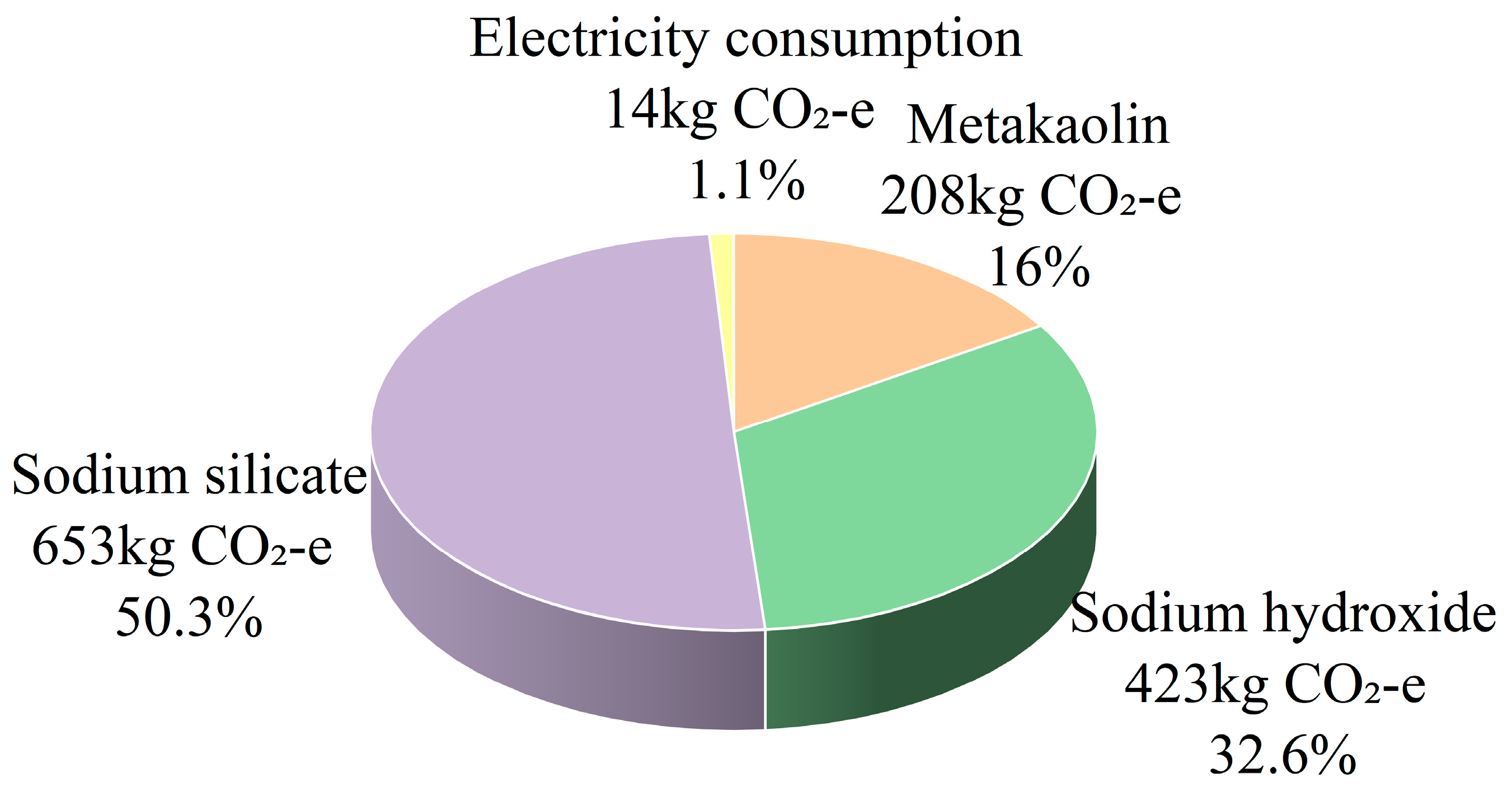
The results (
Figure 11) show that the total carbon footprint of the geopolymer system is approximately 210 kg CO
2-e/t—about 70–75% lower than conventional CEM I cement concrete (800–900 kg CO
2-e/t)—demonstrating the significant emission reduction potential of alkali-activated materials and industrial by-product utilization. Emission partitioning reveals that sodium silicate is the largest contributor (50.3%), followed by sodium hydroxide (32.6%), metakaolin calcination (16%), and electricity consumption (1.1%). These results align with previous LCA findings that alkaline activators dominate geopolymer carbon emissions, highlighting the need for targeted mitigation strategies.
Two approaches can further reduce emissions: (i) optimizing activator formulations, for example by partially replacing sodium hydroxide or sodium silicate with lower-carbon alternatives such as sodium carbonate or recycled silica sol; and (ii) adopting alternative heat sources—including industrial waste heat, solar thermal energy, or biomass gasification—for metakaolin production. Future large-scale production scenarios that integrate locally sourced fly ash and red mud with renewable electricity or carbon capture technologies could potentially reduce total emissions to around 150 kg CO2-e/t, offering substantial carbon savings relative to Portland cement-based systems. These findings provide robust quantitative evidence for the low-carbon potential of iron-based geopolymer roadbed materials and support their adoption in sustainable infrastructure applications, including sponge city drainage systems, ecological slope protection, and stormwater retention projects.