A Refined Numerical Simulation Method for Amine-Ether Gemini Surfactant Emulsion Flooding

Abstract
1. Introduction
2. Methods
2.1. Basic Model Assumptions
- (1)
- (2)
- The reservoir is assumed to be isothermal, the solid phase is stationary, solute transport is governed by Fickian dispersion, fluid mixing is ideal, and seepage flow follows Darcy’s law. The generation, transport, retention, and loss of surfactant and emulsion components are governed by mass conservation. The model considers both the rheological behavior of the injected chemicals and their interactions with reservoir rock and in situ fluids.
- (3)
- The developed numerical simulation model is based on a two-phase, multicomponent oil–water flow system, in which the aqueous phase comprises water, surfactant, and an oil-in-water (O/W) emulsion component.
2.2. Refined Characterization of Emulsification Mechanism
2.2.1. Fundamentals of Reaction Kinetics
2.2.2. Four Key Mechanisms of Emulsification Reaction
- (1)
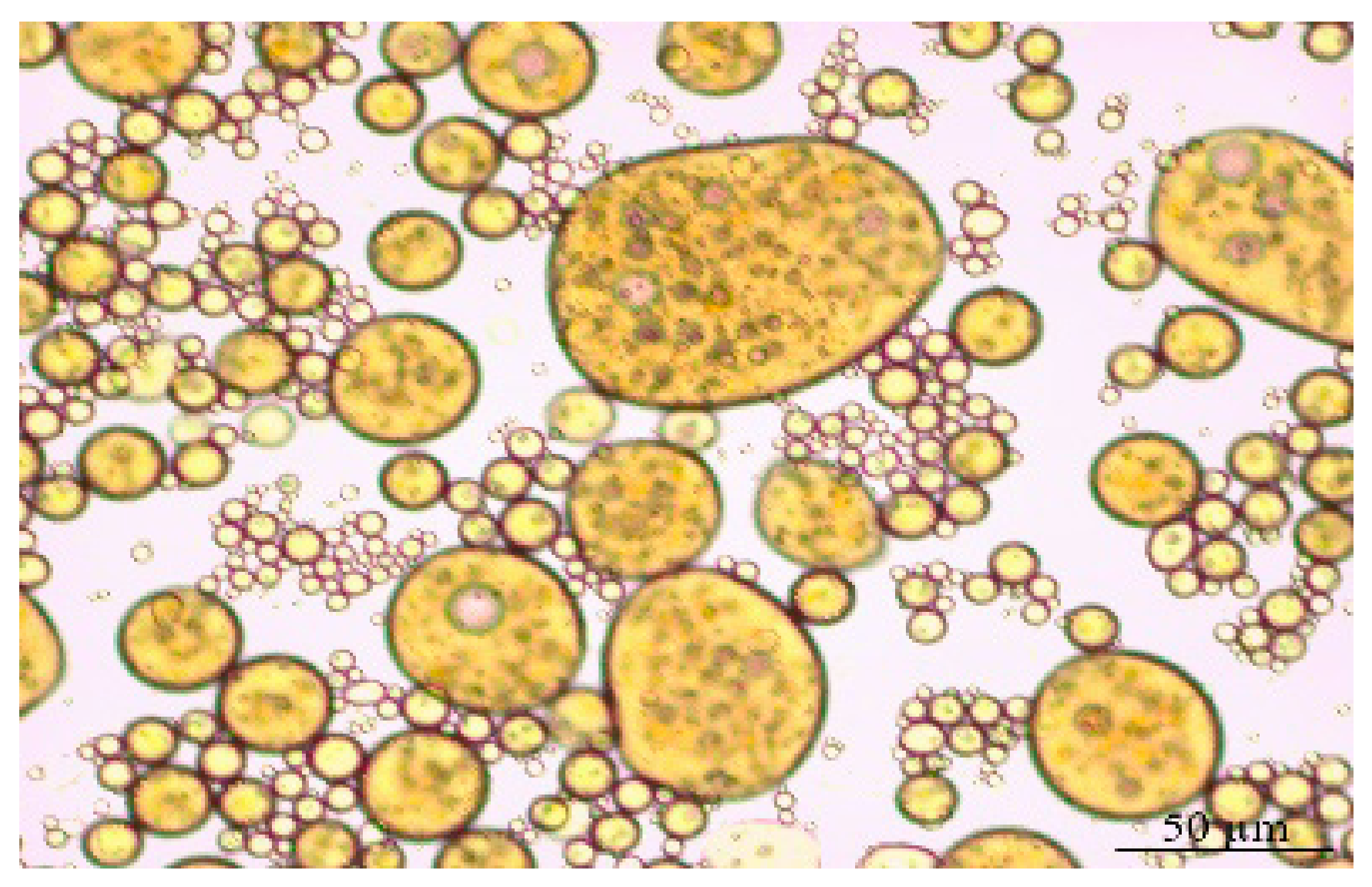
- Emulsion generation mechanism
- (2)
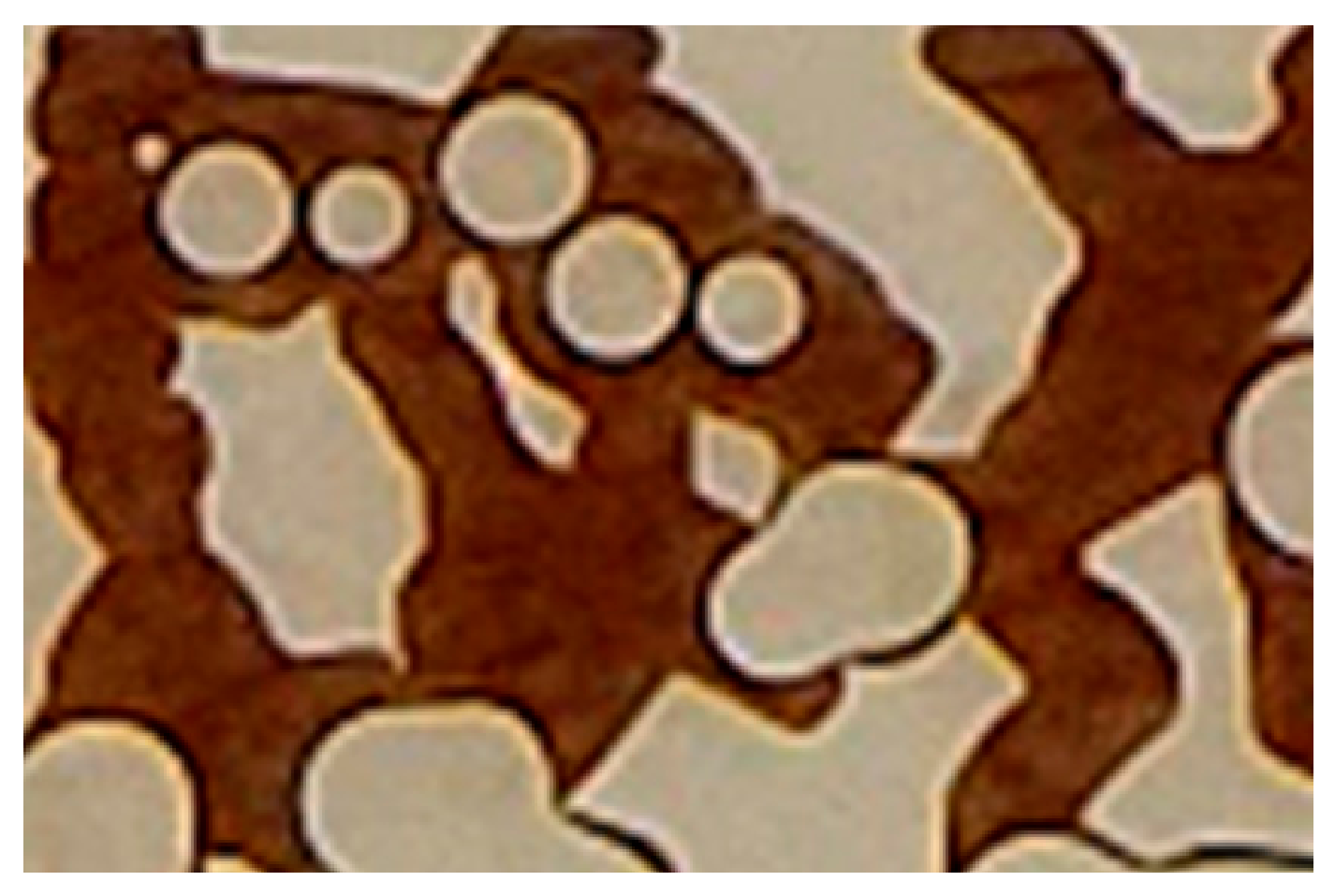
- Emulsion coalescence and plugging mechanism
- (3)
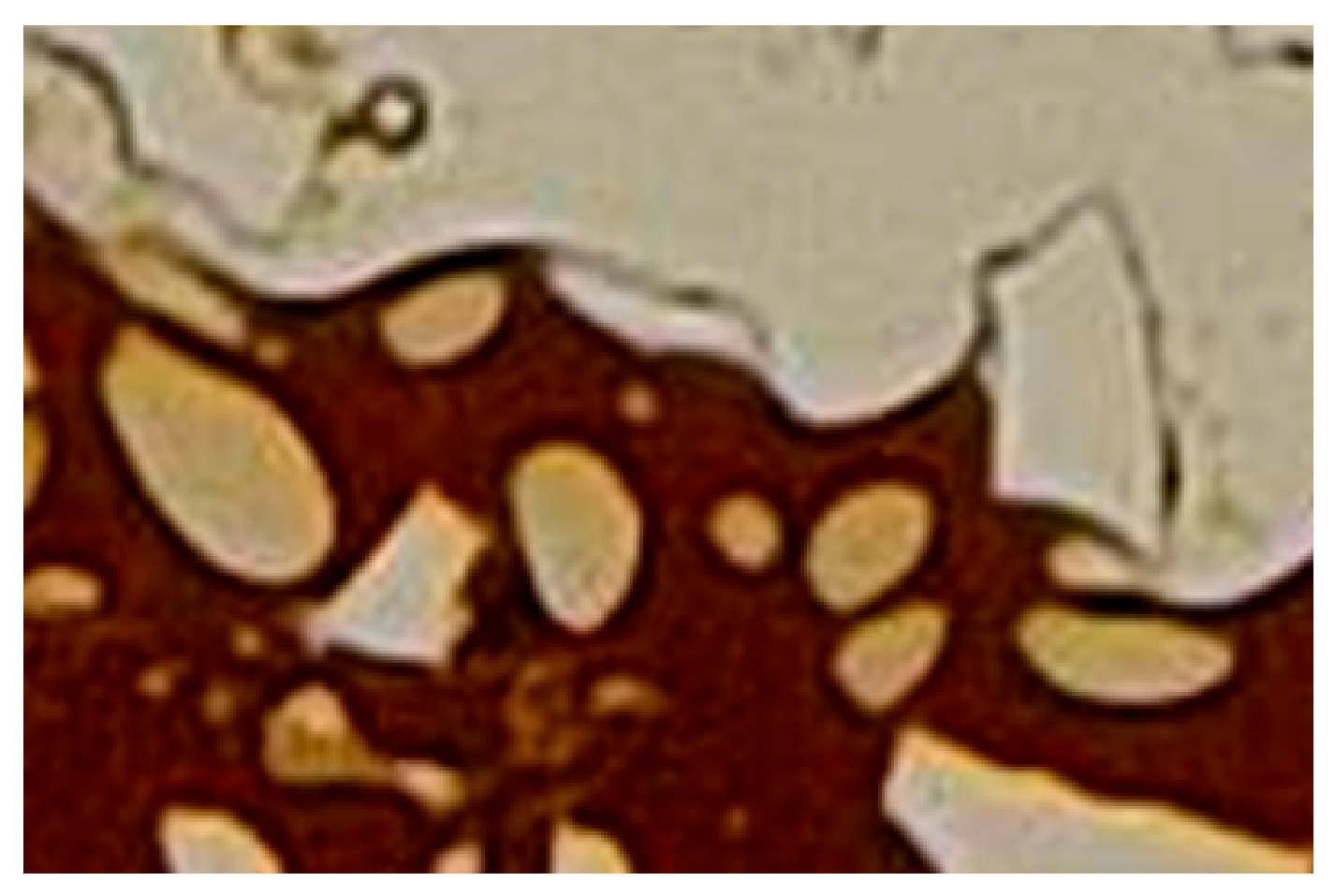
- Emulsion dispersion and oil-displacement mechanism
- (4)
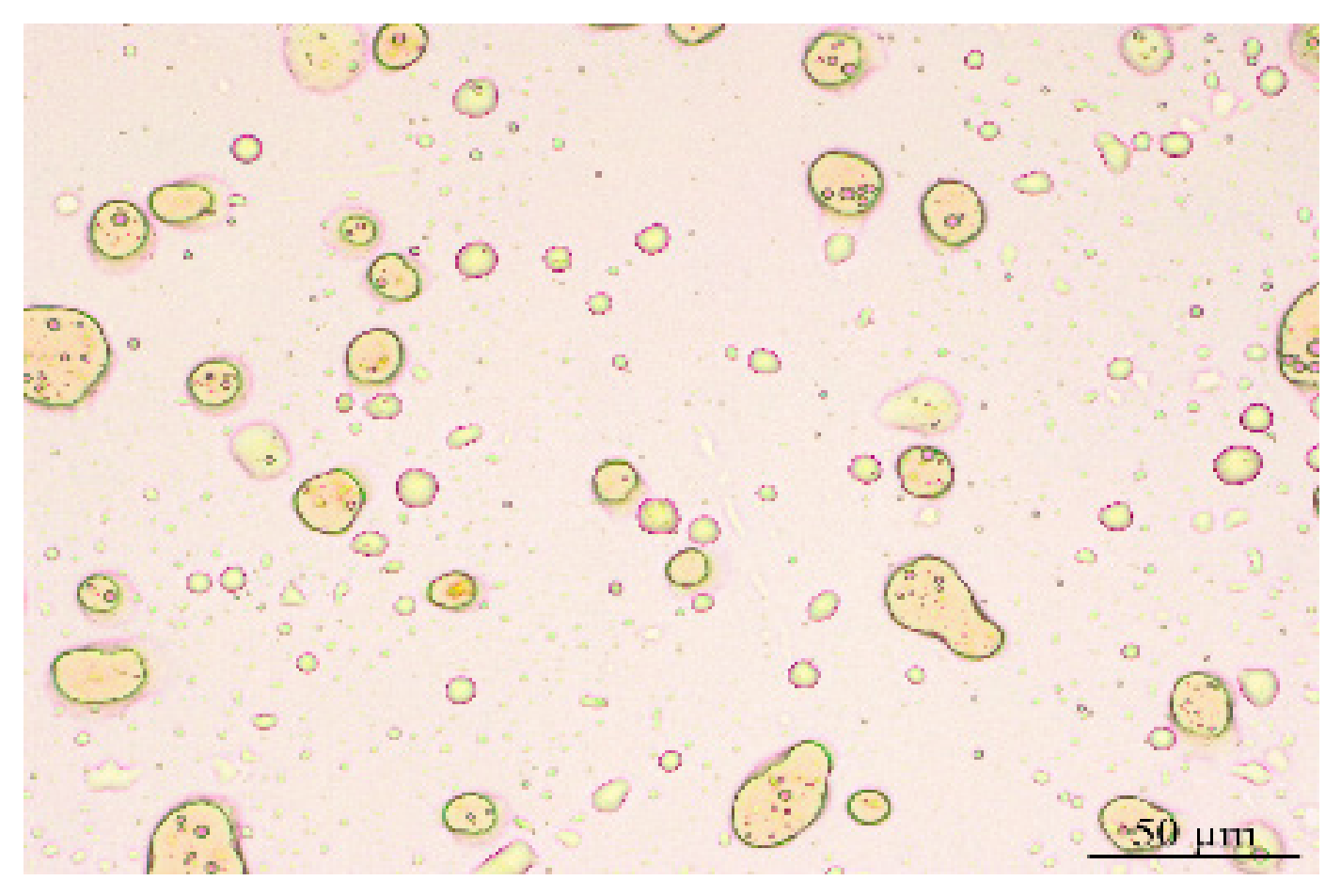
- Emulsion depletion and demulsification mechanism
2.3. Mathematical Model Formulation
2.3.1. Emulsion Transport Model
- The first term is the accumulation term, which represents the temporal variation of emulsion concentration within the control volume and reflects the accumulation or depletion of emulsion in porous media.
- The second term is the convection–diffusion term, which describes the transport and spatial redistribution of emulsion within the pore space. Specifically, the dispersive effect is represented by the spatial gradient of the emulsion component concentration, whereas the convective transport of the emulsion component is governed by the aqueous-phase flow velocity, reflecting the co-transport behavior of the emulsion with the aqueous phase.
2.3.2. Emulsification Kinetic Model
- (1)
- Reaction kinetic parameters
- (2)
- Critical micelle concentration (CMC)
2.3.3. Emulsification Profile Control Model
- (1)
- Matching Relationship Between Emulsion Droplet Size and Pore-Throat Size
- When rp/rh ≤ 0.15, the emulsion droplets can pass freely through the pore throats with the flowing fluid, causing almost no Jamin effect or additional flow resistance and exerting little influence on reservoir-seepage behavior;
- When 0.15 < rp/rh ≤ 1, the emulsion droplets are affected by the Jamin effect as well as adsorption and retention in porous media, resulting in temporary plugging of relatively high-permeability flow channels and thereby improving sweep efficiency;
- When 1 < rp/rh < 1.5, the emulsion droplets can pass through pore throats by interfacial deformation once the injection pressure exceeds a critical value, although considerable additional flow resistance still exists during the passage process;
- When rp/rh ≥ 1.5, the emulsion droplets are more likely to undergo coalescence and retention at pore throats, leading to persistent plugging and a significant reduction in the effective permeability of the reservoir.
- (2)
- Inaccessible Pore Volume (IPV) Model
- (3)
- Residual Resistance Factor (RRF) Model
3. Results
3.1. Core Flooding-Based Validation of the Proposed Method
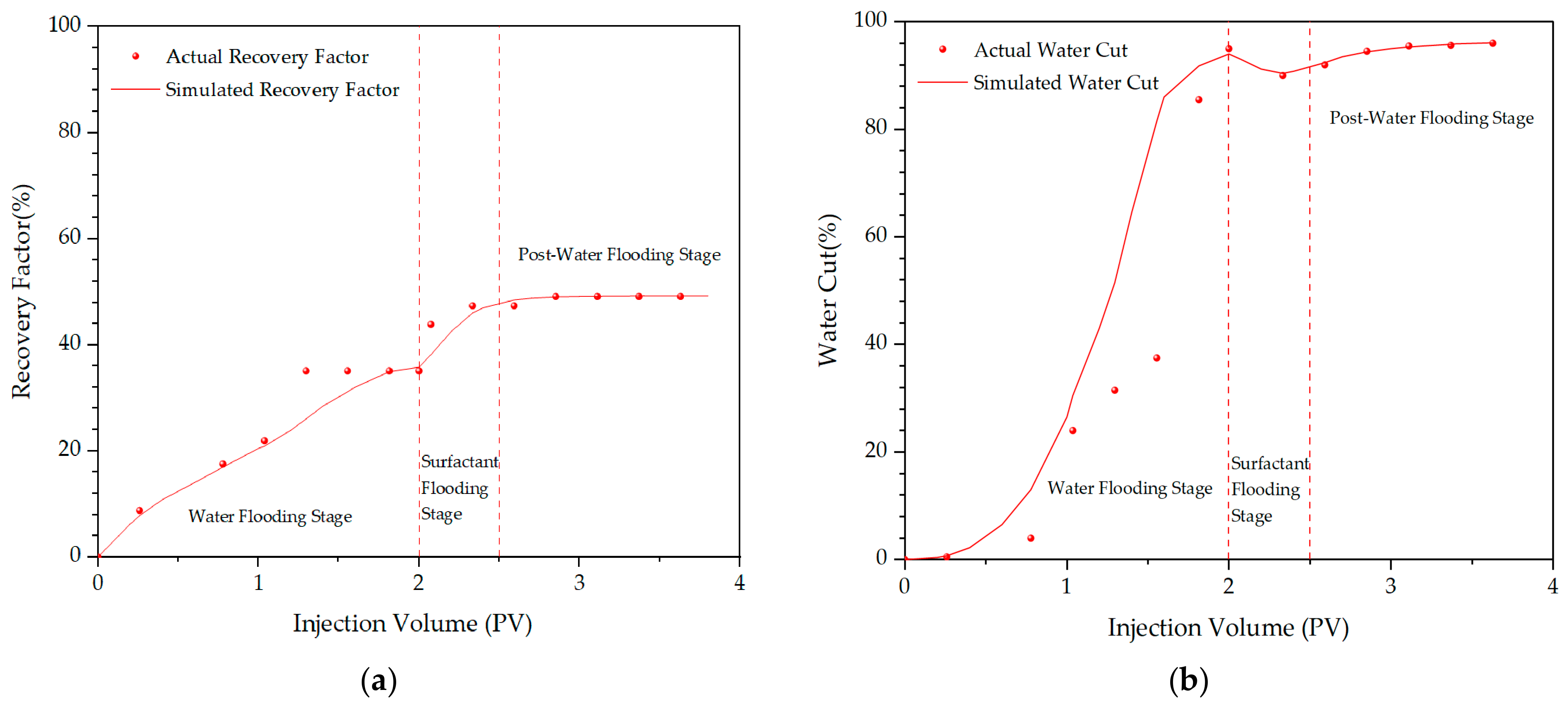
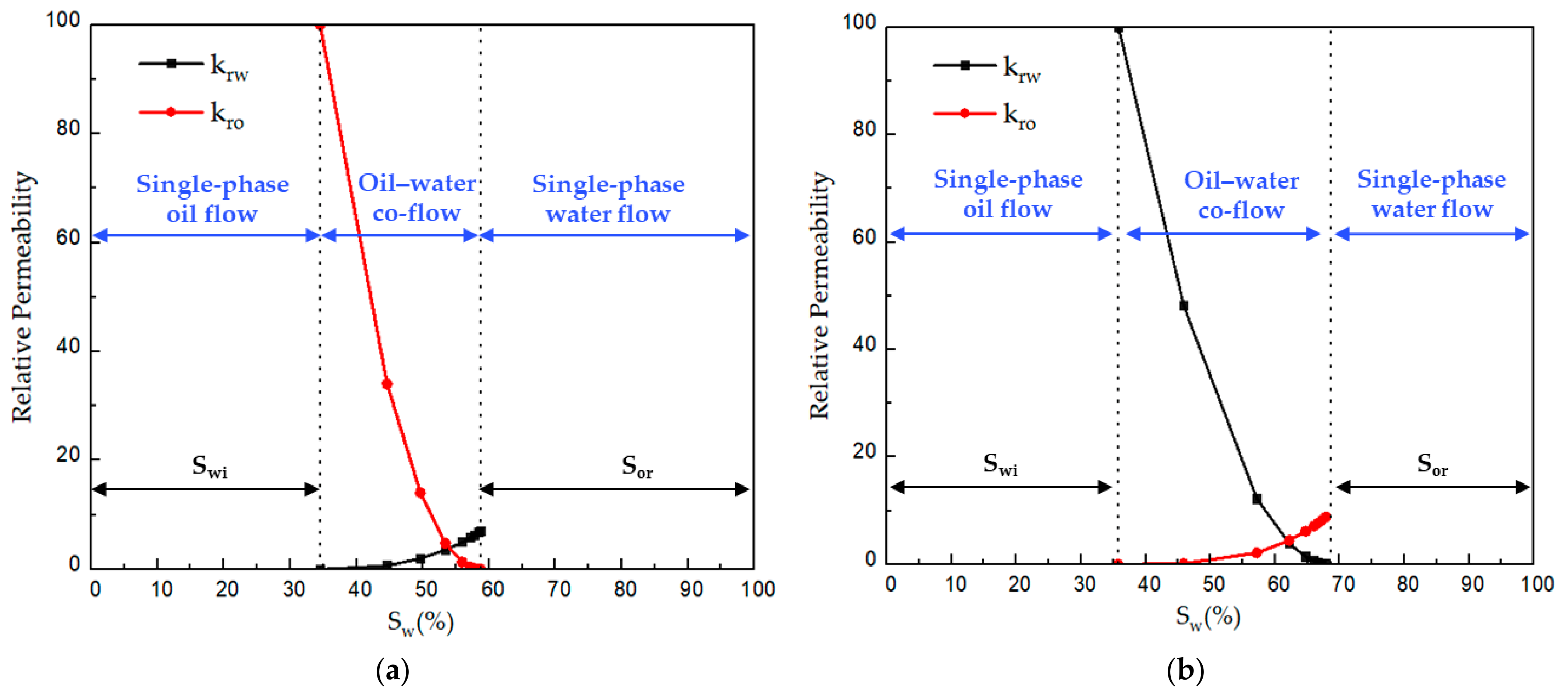
3.2. Analysis of the Enhanced Oil Recovery Mechanism
3.3. Field Case Application of the Proposed Method
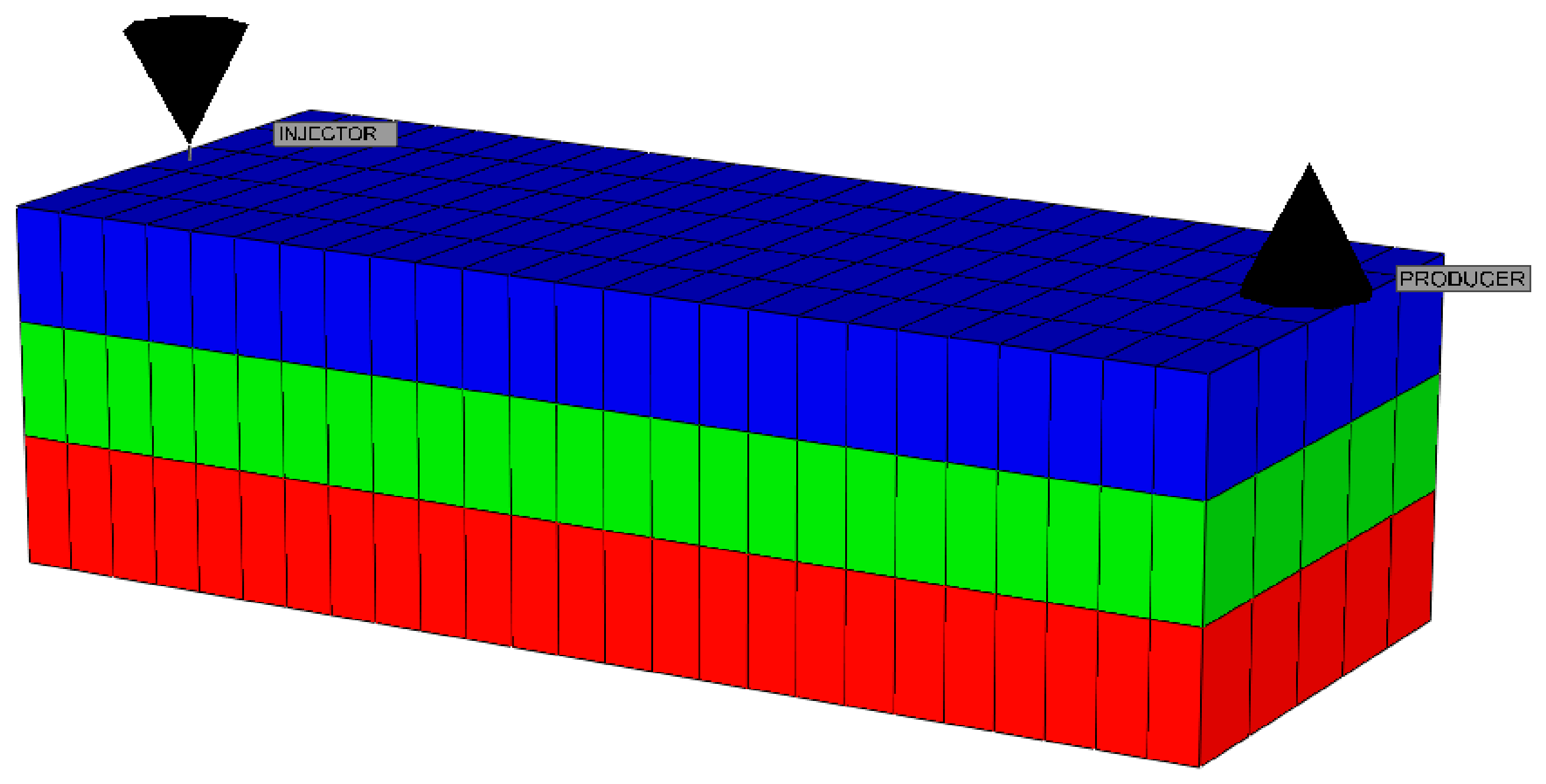
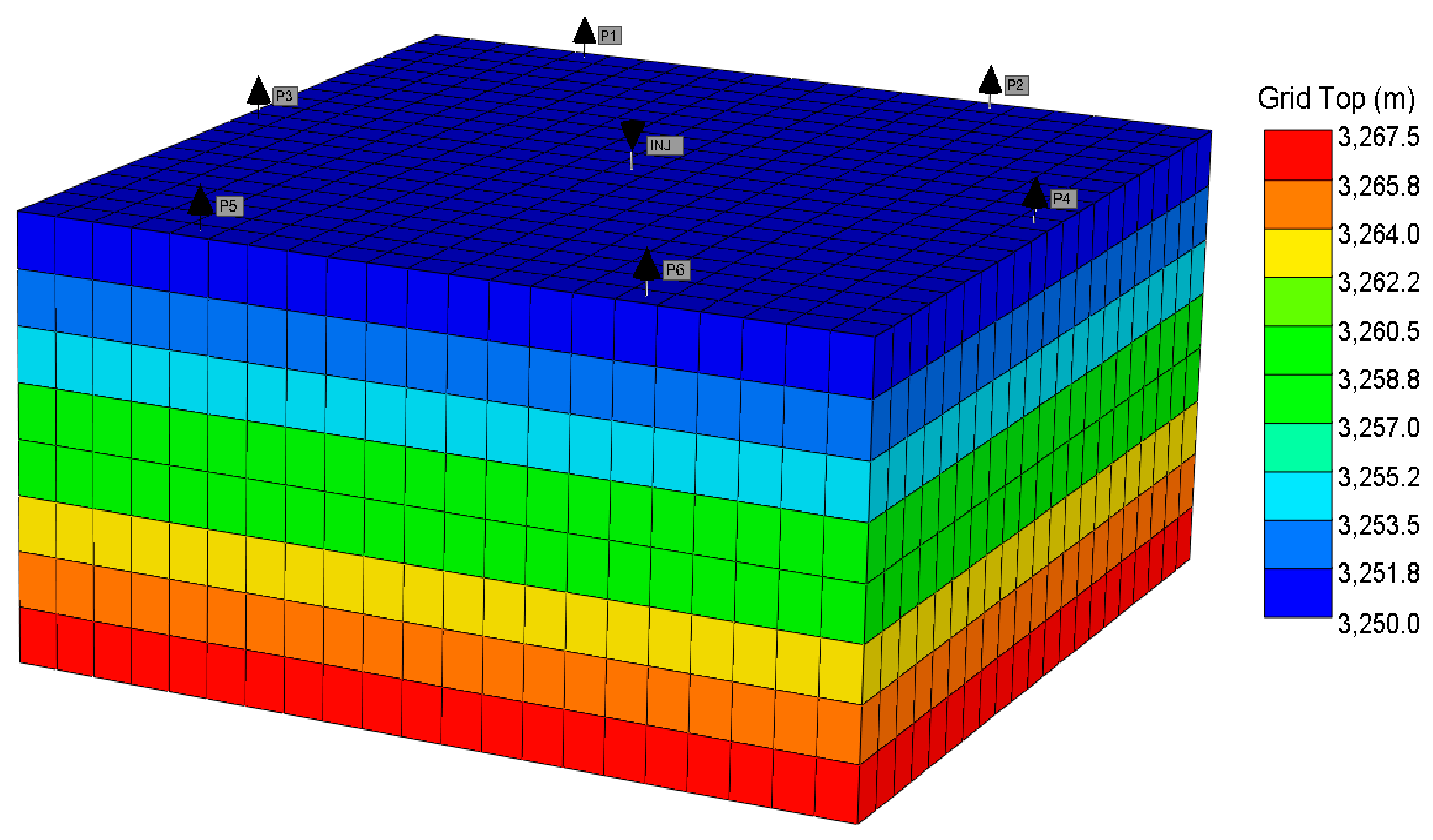
3.3.1. Field-Scale Model Construction
3.3.2. Parameter Optimization Design
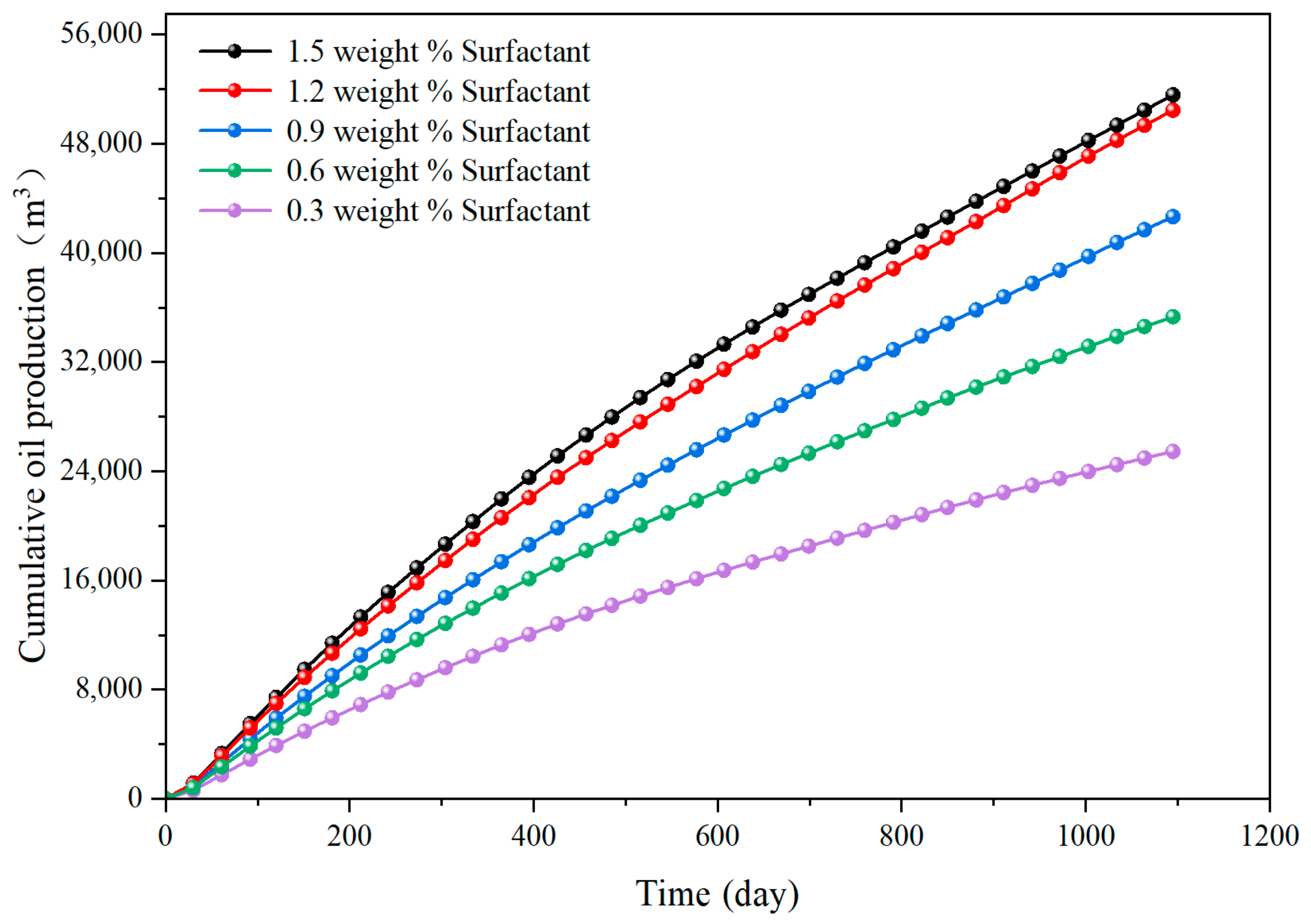
- (1)
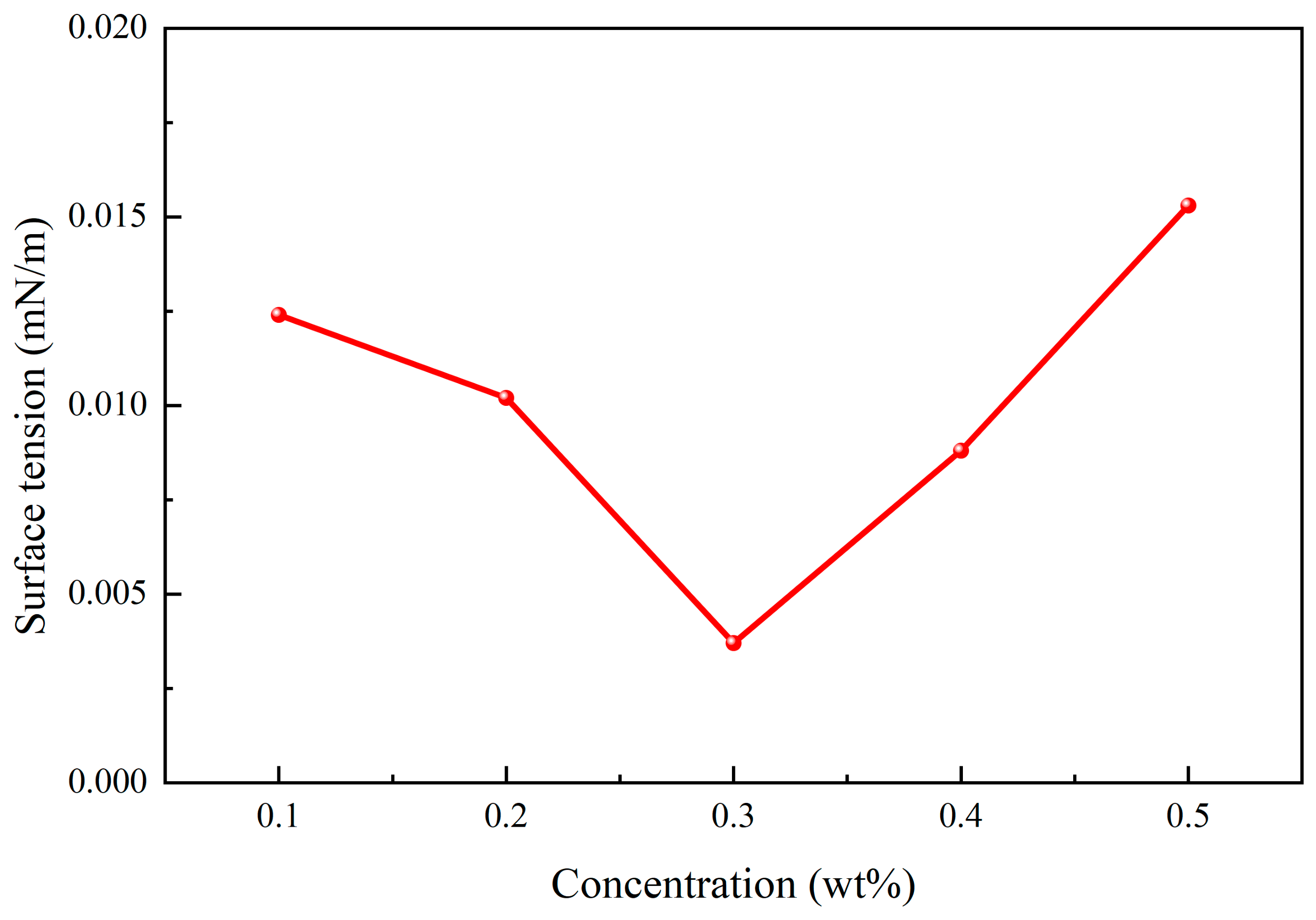
- Injection Concentration Optimization
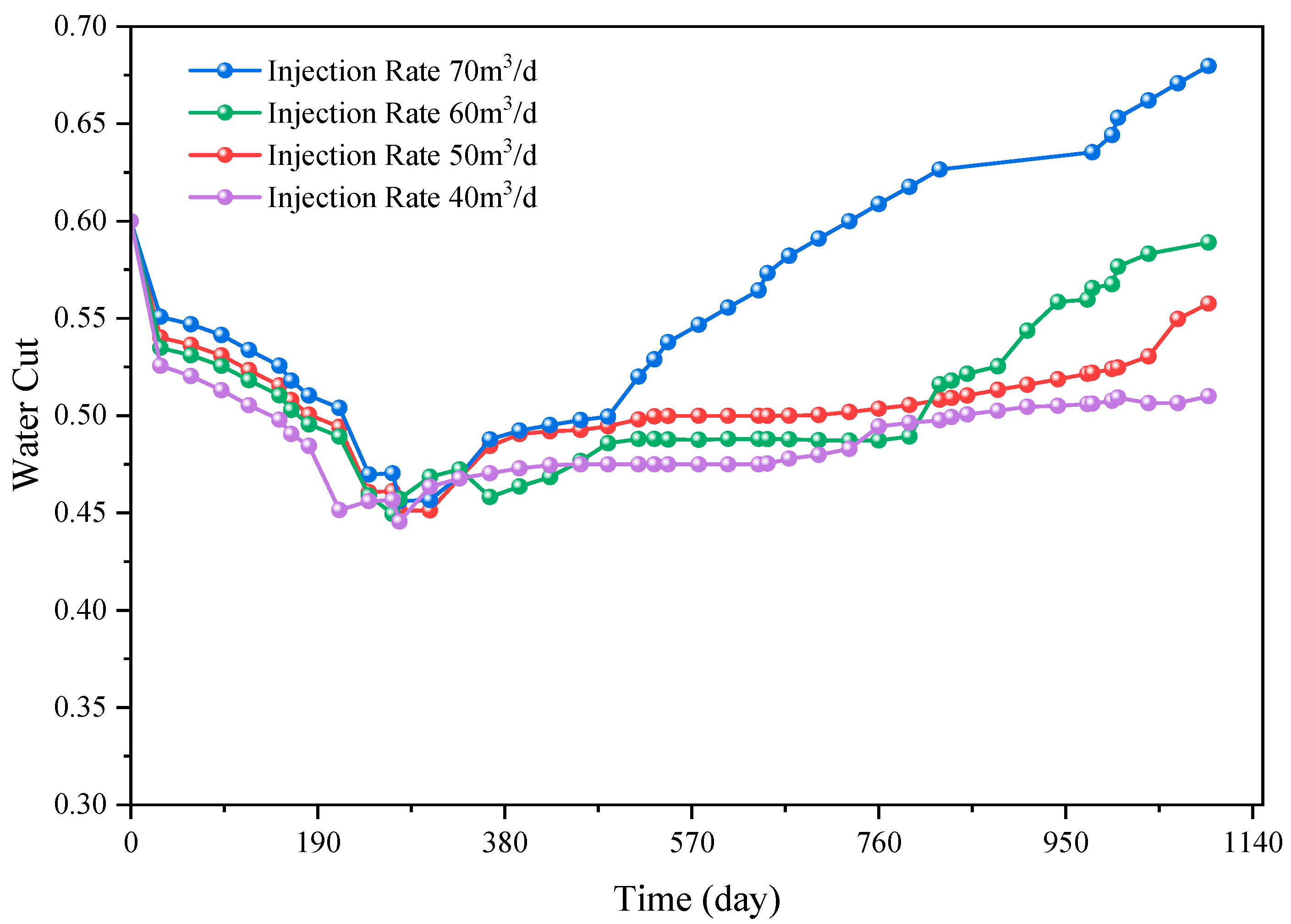
- (2)
- Injection Rate Optimization
- (3)
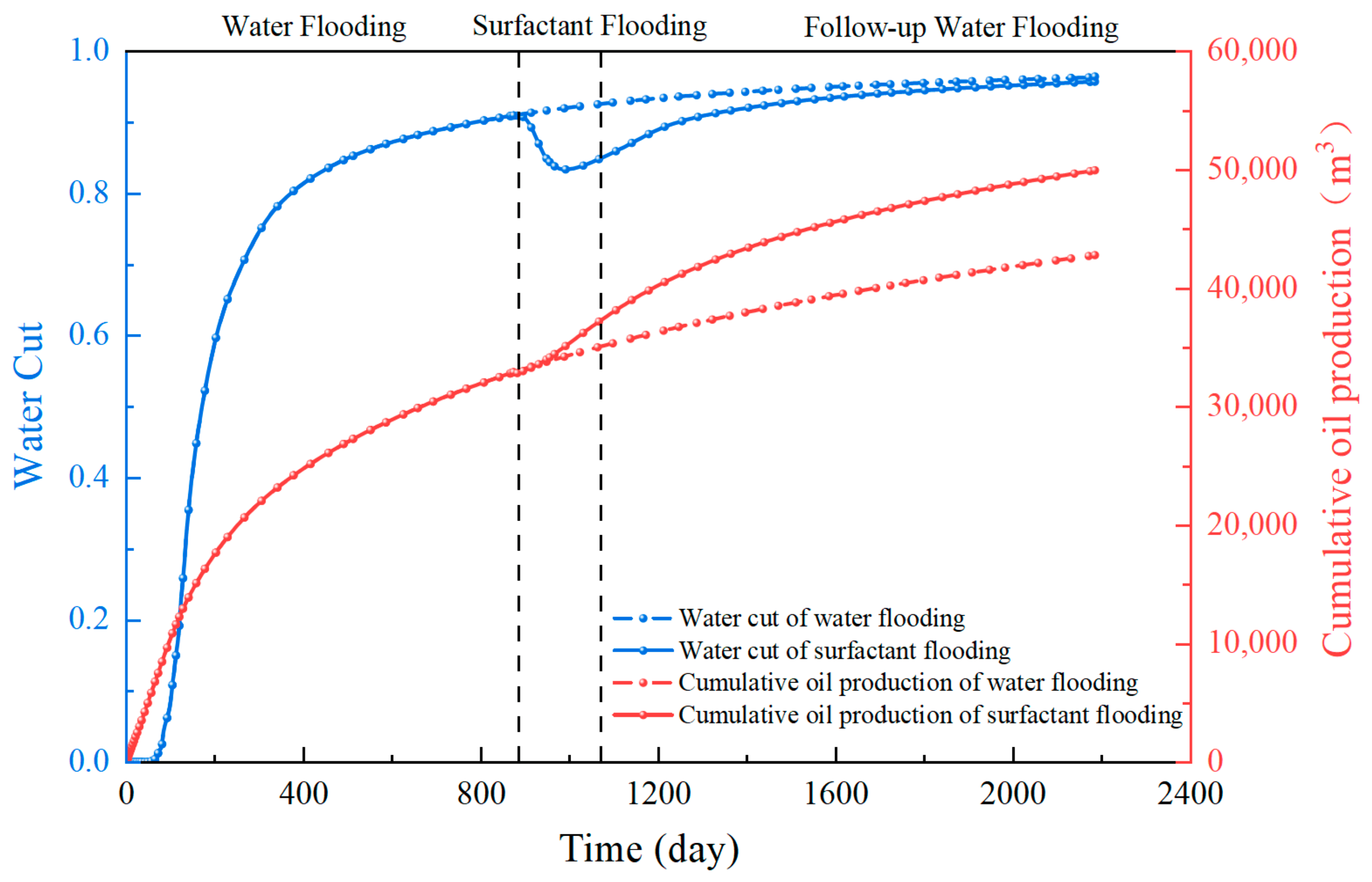
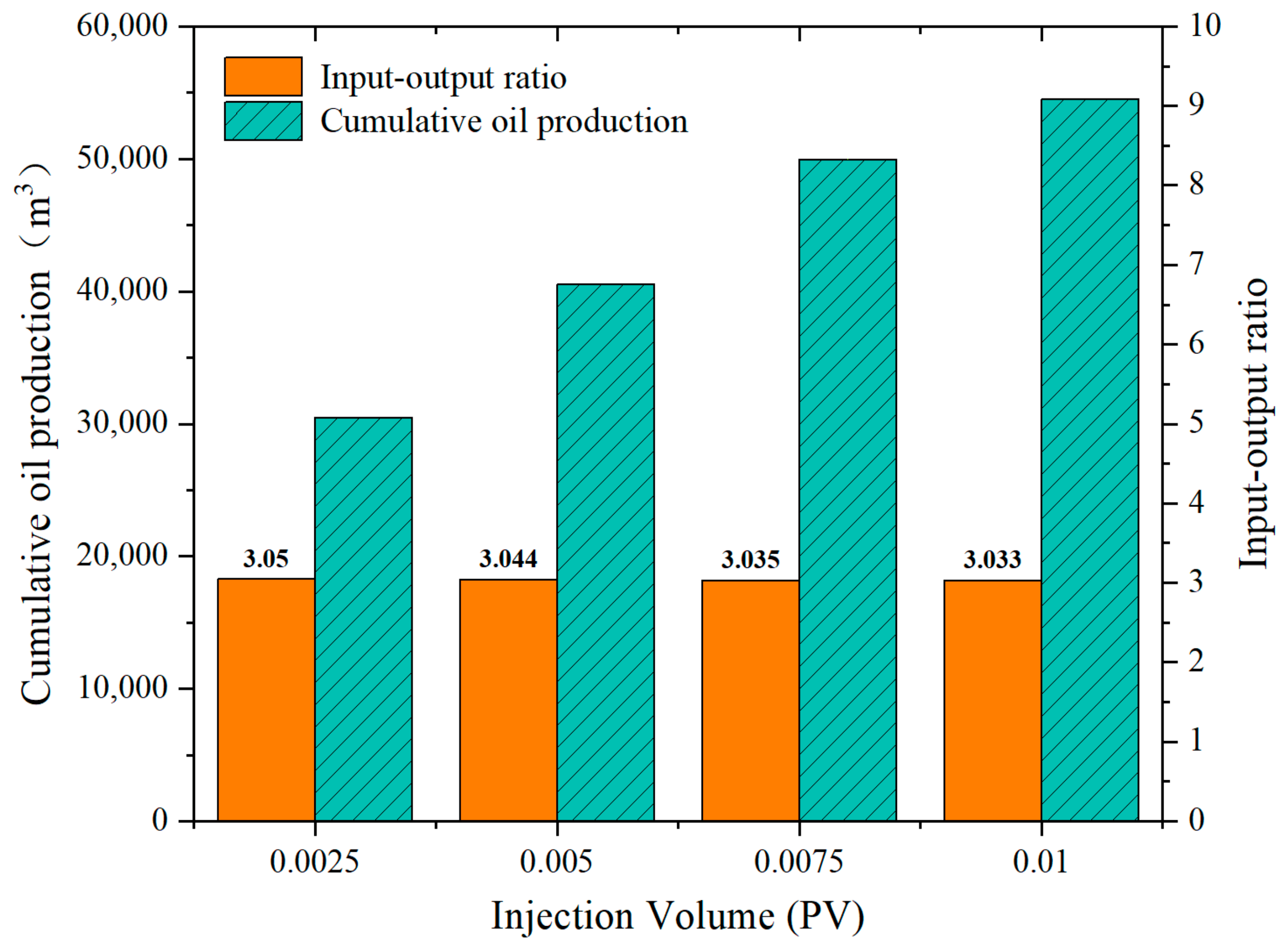
- Injected Slug Size Optimization
- (4)
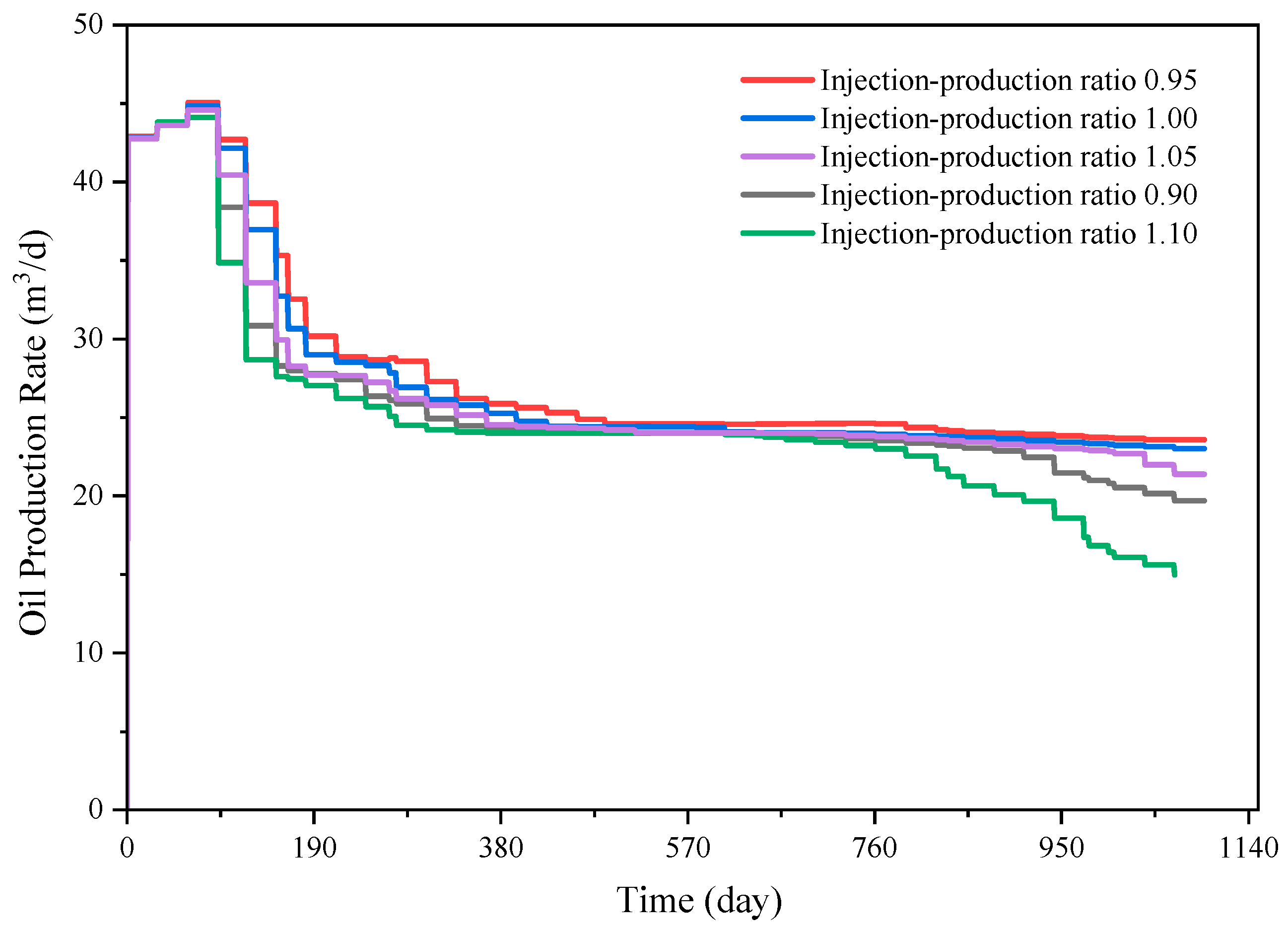
- Injection–Production Ratio Optimization
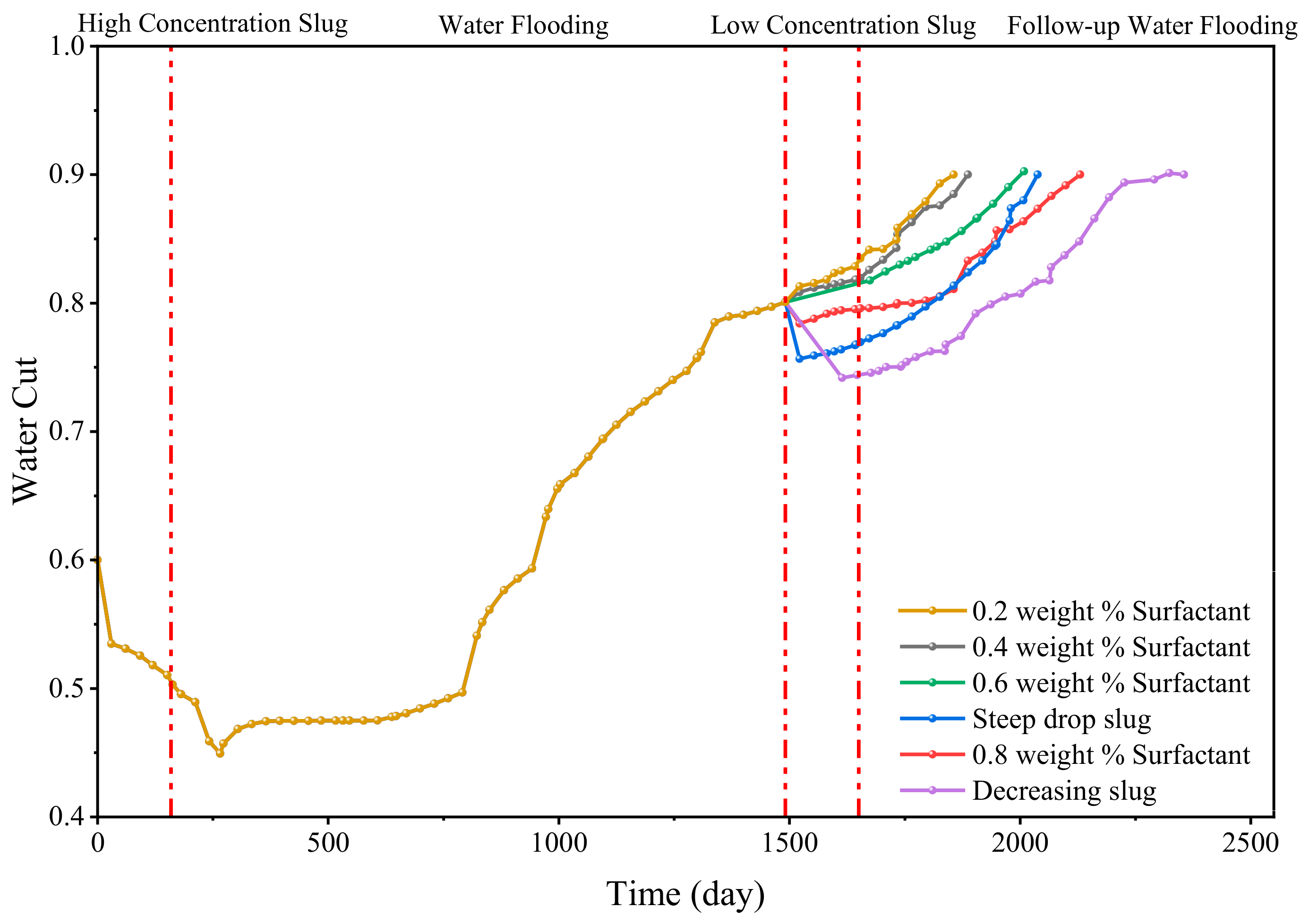
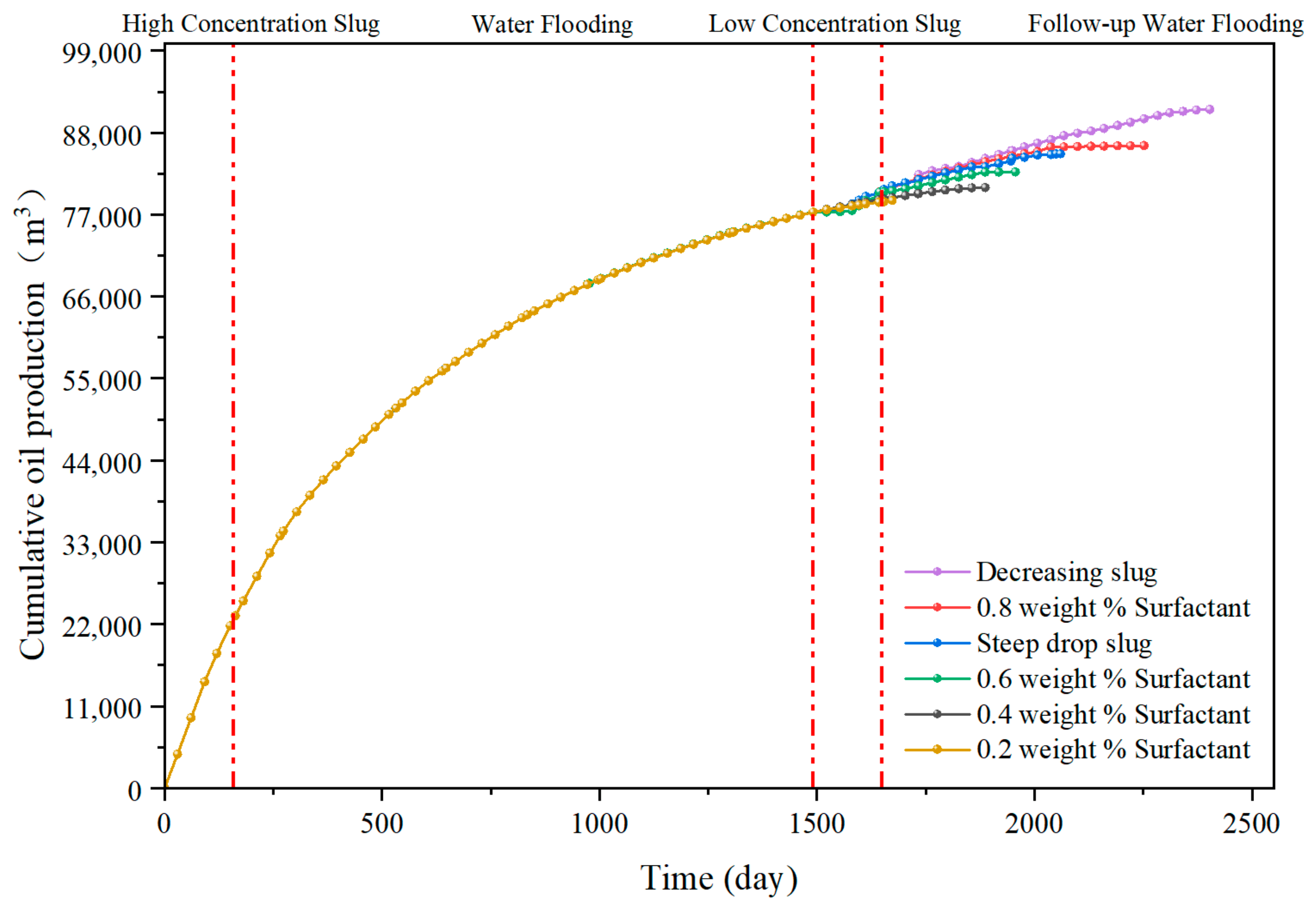
- (5)
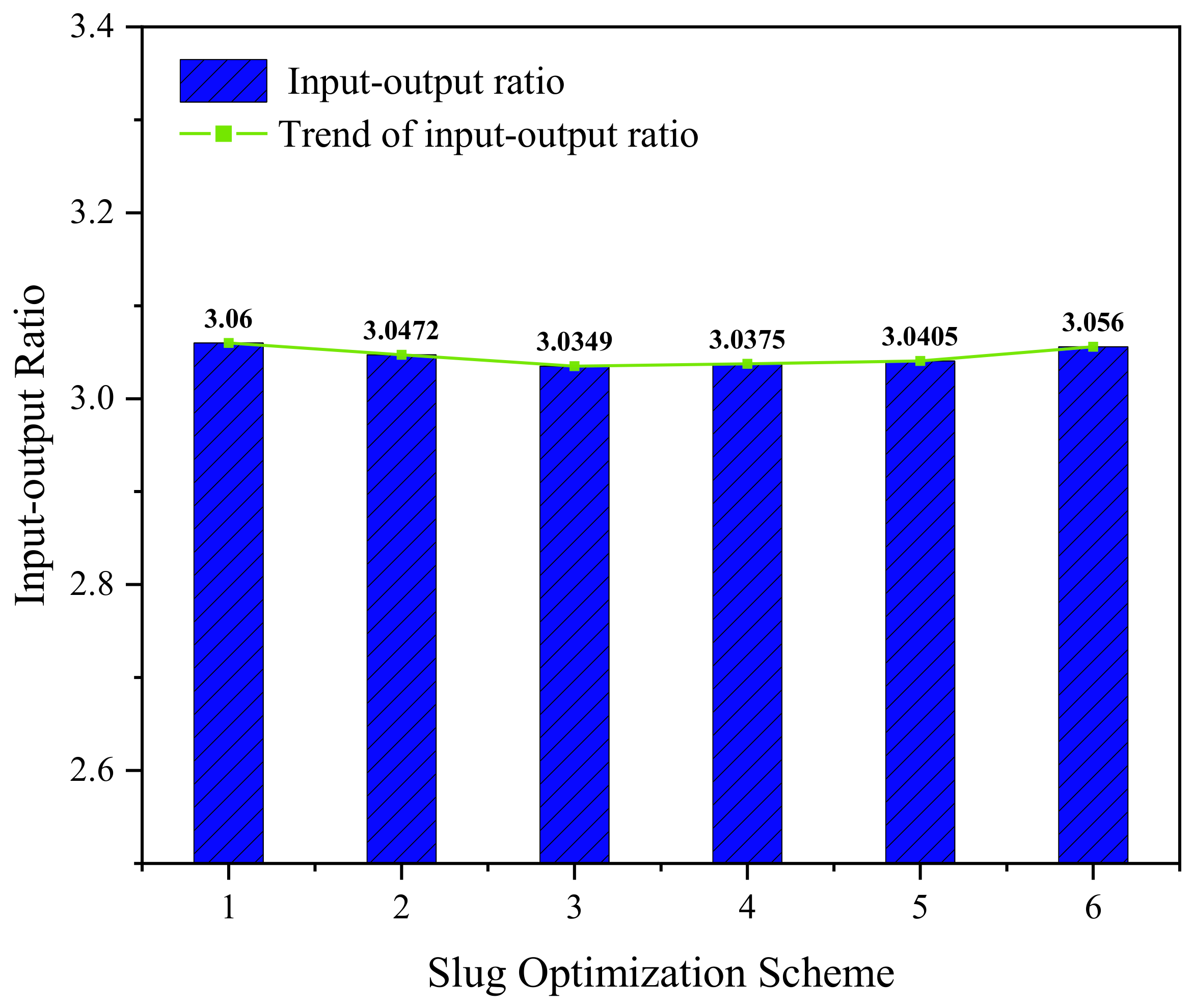
- Slug Pattern Optimization
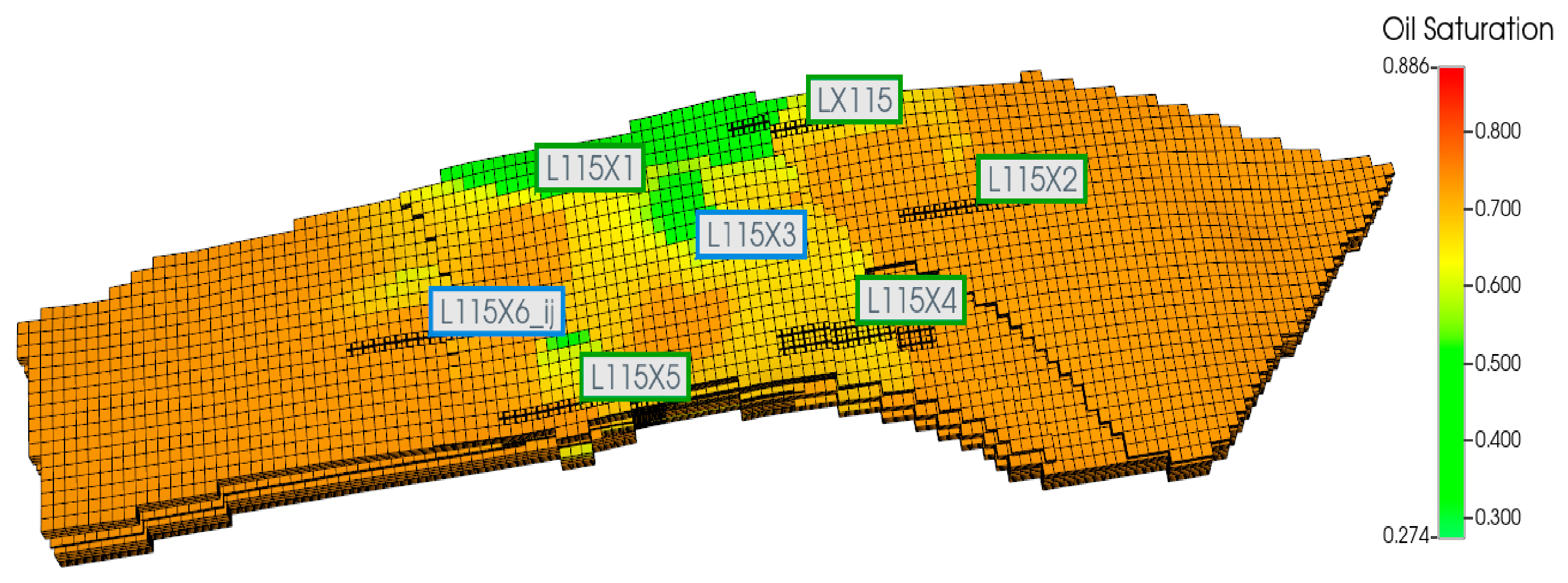
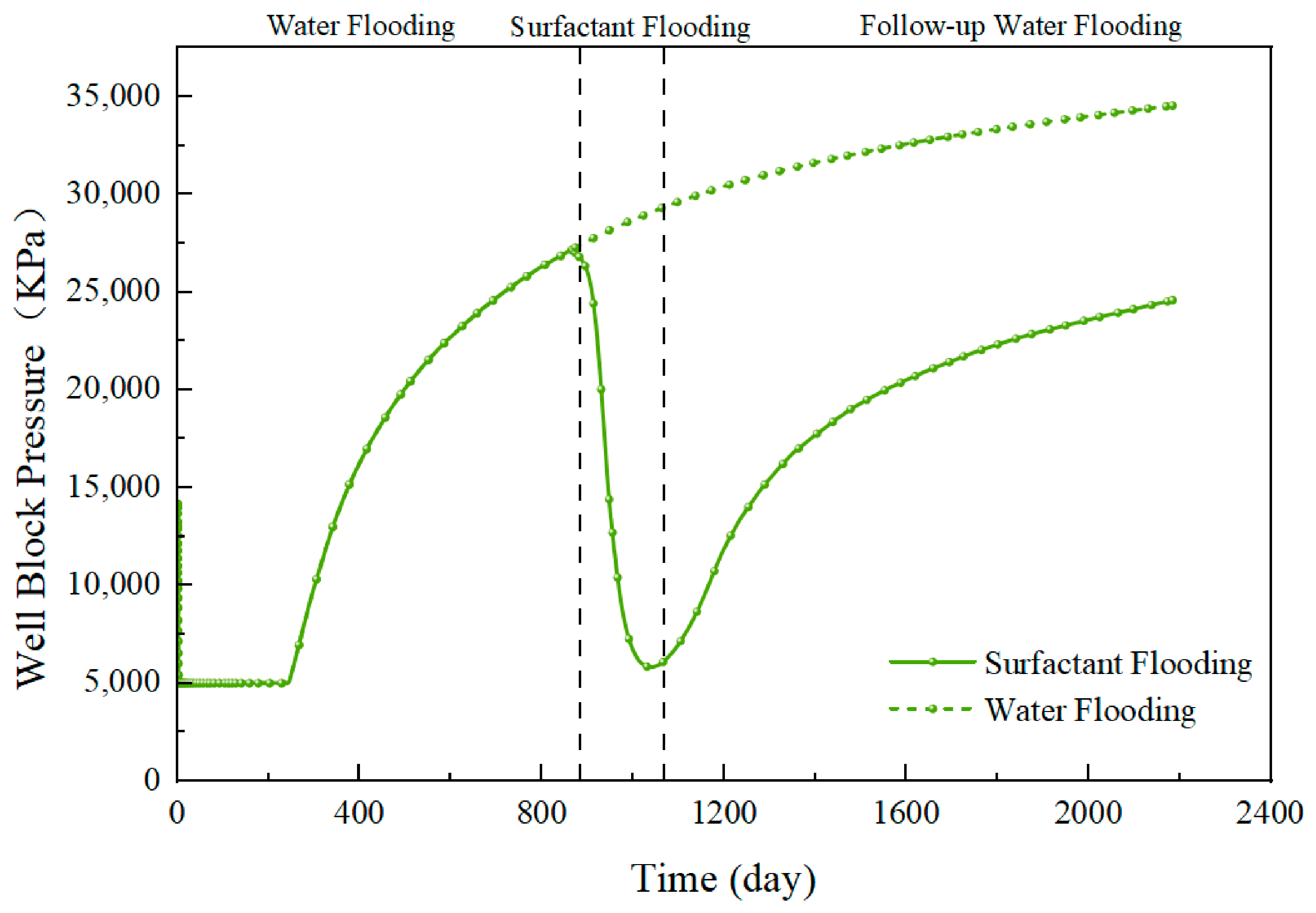
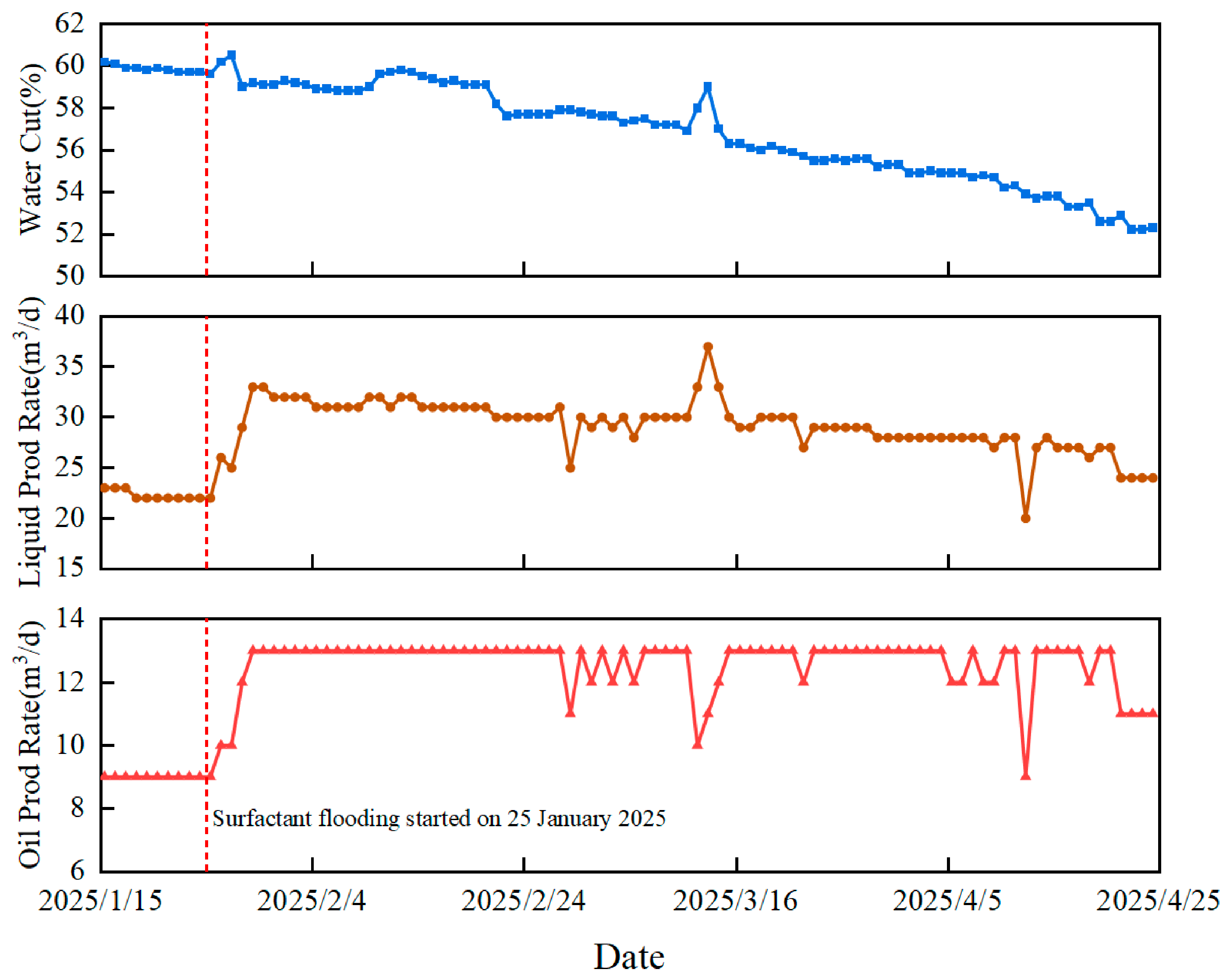
3.3.3. Field Pilot Application and Effect Evaluation
4. Discussion
5. Conclusions
Author Contributions
Funding
Data Availability Statement
Conflicts of Interest
References
- Zhang, Y.; Chen, Y.; Deng, X.; Wei, K.; Wang, J. Depressurized-augmented injection and enhanced oil recovery by the surfactant for the ultra-low-permeability oil reservoir. Pet. Geol. Oilfield Dev. Daqing 2016, 35, 126–130. [Google Scholar] [CrossRef]
- Yuan, S.; Han, H.; Wang, H.; Luo, J.; Wang, Q.; Lei, Z.; Xi, C.; Li, J. Research progress and potential of new enhanced oil recovery methods in oil field development. Pet. Explor. Dev. 2024, 51, 841–854. [Google Scholar] [CrossRef]
- Zhang, X.; Sun, Y.; Qu, H.; Mao, Z.; Xu, Y.; Qi, D.; Wang, C. Assessment of oil displacement performance of new amine-ether gemini surfactant and its application. Pet. Geol. Recovery Effic. 2024, 31, 153–159. [Google Scholar] [CrossRef]
- Sun, Y.; Wang, C.; Qu, H.; Guo, H.; Guo, Y.; Wu, Q.; Li, J.; Hou, J. Research Progress of Zwitterionic Surfactants in the Field of Enhanced Oil Recovery in Low-Permeability Reservoirs. Contemp. Chem. Ind. 2024, 53, 2931–2935. [Google Scholar] [CrossRef]
- Zhang, F. Numerical simulation of surfactant flooding for low-permeability reservoirs. J. Daqing Pet. Inst. 2007, 31, 31–34. [Google Scholar] [CrossRef]
- Li, Y.; Yin, L. A new surfactant flooding model for low permeability reservoirs. Open J. Fluid Dyn. 2013, 3, 1–8. [Google Scholar] [CrossRef]
- Daripa, P.; Dutta, S. Modeling and simulation of surfactant–polymer flooding using a new hybrid method. J. Comput. Phys. 2017, 335, 249–282. [Google Scholar] [CrossRef]
- Kumar, A.; Mandal, A. Core-scale modelling and numerical simulation of zwitterionic surfactant flooding: Designing of chemical slug for enhanced oil recovery. J. Pet. Sci. Eng. 2020, 192, 107333. [Google Scholar] [CrossRef]
- Ahmadi, M.; Hou, Q.; Wang, Y.; Chen, Z. Experimental and numerical modeling of a novel surfactant flooding: Core scale to reservoir models. Chem. Eng. Res. Des. 2024, 204, 32–52. [Google Scholar] [CrossRef]
- Chen, X.; Li, Y.; Gao, W.; Chen, C. Experimental investigation on transport property and emulsification mechanism of polymeric surfactants in porous media. J. Pet. Sci. Eng. 2020, 186, 106687. [Google Scholar] [CrossRef]
- Fernandes, B.R.B.; Sepehrnoori, K.; Delshad, M.; Marcondes, F. New fully implicit formulations for the multicomponent surfactant-polymer flooding reservoir simulation. Appl. Math. Model. 2022, 105, 751–799. [Google Scholar] [CrossRef]
- Zhao, X.; Liao, G.; Gong, L.; Luan, H.; Chen, Q.; Liu, W.; Liu, D.; Feng, Y. New insights into the mechanism of surfactant enhanced oil recovery: Micellar solubilization and in-situ emulsification. Pet. Sci. 2022, 19, 870–881. [Google Scholar] [CrossRef]
- Liu, J.; Sun, C.; Lun, Z.; Li, Y.; Tang, X.; Zhang, Q.; Yang, P. Study on the kinetics of formation process of emulsion of heavy oil and its functional group components. Sci. Rep. 2024, 14, 8916. [Google Scholar] [CrossRef] [PubMed]
- Pu, W.; Yuan, C.; Hu, W.; Tan, T.; Hui, J.; Zhao, S.; Wang, S.; Tang, Y. Effects of interfacial tension and emulsification on displacement efficiency in dilute surfactant flooding. RSC Adv. 2016, 6, 50640–50649. [Google Scholar] [CrossRef]
- Cao, W. Research and application of numerical simulation method for emulsion surfactant flooding. Pet. Geol. Recovery Effic. 2017, 24, 58–62. [Google Scholar] [CrossRef]
- Alade, O.S.; Mahmoud, M.; Al Shehri, D.; Mokheimer, E.M.A.; Sasaki, K.; Ohashi, R.; Kamal, M.S.; Muhammad, I.; AlNakhli, A. Experimental and numerical studies on production scheme to improve energy efficiency of bitumen production through insitu oil-in-water (O/W) emulsion. Energy 2022, 244, 122700. [Google Scholar] [CrossRef]
- Du, Y.; Xu, K.; Mejia, L.; Balhoff, M. Surface-active compounds induce time-dependent and non-monotonic fluid-fluid displacement during low-salinity water flooding. J. Colloid Interface Sci. 2023, 631, 245–259. [Google Scholar] [CrossRef] [PubMed]
- Kumar, N.; Pal, N.; Mandal, A. Nanoemulsion flooding for enhanced oil recovery: Theoretical concepts, numerical simulation and history match. J. Pet. Sci. Eng. 2021, 202, 108579. [Google Scholar] [CrossRef]
- Al-Azani, K.; Abu-Khamsin, S.; Al-Abdrabalnabi, R.; Kamal, M.S.; Patil, S.; Zhou, X.; Hussain, S.M.S.; Al-Shalabi, E. Oil recovery performance by surfactant flooding: A perspective on multiscale evaluation methods. Energy Fuels 2022, 36, 13451–13478. [Google Scholar] [CrossRef]
- Van Quy, N.; Labrid, J. A numerical study of chemical flooding—Comparison with experiments. Soc. Pet. Eng. J. 1983, 23, 461–474. [Google Scholar] [CrossRef]
- Keshtkar, S.; Sabeti, M.; Mohammadi, A.H. Numerical approach for enhanced oil recovery with surfactant flooding. Petroleum 2016, 2, 98–107. [Google Scholar] [CrossRef]
- Peleg, M.; Normand, M.D.; Corradini, M.G. The Arrhenius equation revisited. Crit. Rev. Food Sci. Nutr. 2012, 52, 830–851. [Google Scholar] [CrossRef] [PubMed]
- Fan, Y.; Han, Y.; Wang, Y. Effects of molecular structures on aggregation behavior of gemini surfactants in aqueous solutions. Acta Phys. Chim. Sin. 2016, 32, 214–226. [Google Scholar] [CrossRef]
- Yao, C.; Meng, X.; Qu, X.; Zhang, G.; Li, L.; Lei, G. Reaction kinetics model and numerical simulation method of microbial flooding in oil reservoirs. J. China Univ. Pet. 2021, 45, 84–91. [Google Scholar] [CrossRef]
- Zou, P.; Yang, Y.; Shen, M.; Xiao, J. Experimental Analysis of the Interfacial Properties of Water-in-Heavy Oil Emulsions. Mine Eng. 2024, 13, 81. [Google Scholar] [CrossRef]
- Wu, Z. Effects of Surfactant’s Emulsifying Capacity and Interfacial Activity on Oil Displacement in Low-permeability Reservoir. Oilfield Chem. 2017, 34, 119–125. [Google Scholar] [CrossRef]
- Liu, Y.; Zhang, H.; Zhong, L.; Jia, G.; Zuo, R.; Wei, K. Injection Parameters Optimization and Displacement Mechanism of Polymer Flooding. Oilfield Chem. 2022, 39, 100–107. [Google Scholar] [CrossRef]
- Hilden, S.T.; Nilsen, H.M.; Raynaud, X. Study of the well-posedness of models for the inaccessible pore volume in polymer flooding. Transp. Porous Media 2016, 114, 65–86. [Google Scholar] [CrossRef]
- Nowrouzi, I.; Mohammadi, A.H.; Khaksar Manshad, A. Water-oil interfacial tension (IFT) reduction and wettability alteration in surfactant flooding process using extracted saponin from Anabasis Setifera plant. J. Pet. Sci. Eng. 2020, 189, 106901. [Google Scholar] [CrossRef]
- Klippenstein, S.J.; Pande, V.S.; Truhlar, D.G. Chemical kinetics and mechanisms of complex systems: A perspective on recent theoretical advances. J. Am. Chem. Soc. 2014, 136, 528–546. [Google Scholar] [CrossRef]
- Youssef, A.A.-A.; Salas, A.H.; Al-Harbi, N.; Basheer, N.M.; Nassr, D.I. Determination of chemical kinetic parameters in Arrhenius equation of constant heating rate: Theoretical method. Alex. Eng. J. 2023, 67, 461–472. [Google Scholar] [CrossRef]
- Bai, J.; Qian, K.; Dou, X.; He, Y. Experimental study of surfactant flooding system in low permeability reservoir. Sci. Rep. 2025, 15, 12534. [Google Scholar] [CrossRef] [PubMed]
- Zhao, C.; Zhao, Y.; Zhan, S. Probabilistic Modeling and Interpretation of Inaccessible Pore Volume in Polymer Flooding. Processes 2025, 13, 1720. [Google Scholar] [CrossRef]
- Wang, Y.; Wei, J.; Ye, P.; Zhong, L.; Zhang, D.; Wang, G.; Zhou, R.; Shen, A.; Ren, X. Study on the accessible pore volume coefficient of chemical flooding systems under different permeability, layer combination, and planar phase transition conditions. Can. J. Chem. Eng. 2025, 103, 4608. [Google Scholar] [CrossRef]
- Duggan, J.W.; Bruell, C.J.; Ryan, D.K. In Situ emulsification and mobilization of gasoline range hydrocarbons using surfactants. J. Soil Contam. 1994, 3, 159–182. [Google Scholar] [CrossRef]
- Cao, J.; Zhu, S.; Shu, Z.; Shi, L. Effects of residual resistance factor in the mobility control of the polymer flooding. J. Appl. Polym. Sci. 2022, 139, e53217. [Google Scholar] [CrossRef]
- Jia, L.; Zhong, L.; Wang, G.; Hu, C.; Gong, Y.; Shang, C.; Luan, Z.; Liu, H. Flow Law and Liquid Resistance Effect of Water-in-oil Emulsion in Porous Media. Oilfield Chem. 2024, 41, 664–670+679. [Google Scholar] [CrossRef]
- Zhou, Y.; Wang, D.; Wang, Z.; Cao, R. The formation and viscoelasticity of pore-throat scale emulsion in porous media. Pet. Explor. Dev. 2017, 44, 110–116. [Google Scholar] [CrossRef]
- Yang, L.; Pei, Y.; Zhang, J.; Jiang, X.; Dong, G.; Zhu, K.; Yu, Y.; Chen, H. Research on the Flow Rules of Nanoemulsions Based on Microfluidic Experiments. J. South China Norm. Univ. 2025, 57, 22–35. [Google Scholar] [CrossRef]
- Zhu, W.; Ma, Q.; Han, H. Theoretical study on profile control of a nano-microparticle dispersion system based on fracture–matrix dual media by a low-permeability reservoir. Energy Rep. 2021, 7, 1488–1500. [Google Scholar] [CrossRef]
- Long, Y.; Zhu, W.; Song, F.; Song, H.; Yue, M. Multi-phase flow of aqueous dispersion system of nano/micron-sized polymer particles in low permeability reservoir. J. Cent. South Univ. 2015, 46, 1812–1819. [Google Scholar] [CrossRef]
- Chen, G.; Zhao, G.; Ma, Y. Mathematical model of enhanced oil recovery for viscous-elastic polymer flooding. J. Tsinghua Univ. 2006, 46, 882–885. [Google Scholar] [CrossRef]
- Shao, Z.; Chen, G.; Sun, G. A new mathematical model for polymer flooding. Acta Pet. Sin. 2008, 29, 409–413. [Google Scholar] [CrossRef]
- Wang, J.; Liu, H. A novel model and sensitivity analysis for viscoelastic polymer flooding in offshore oilfield. J. Ind. Eng. Chem. 2014, 20, 656–667. [Google Scholar] [CrossRef]
- Wang, J.; Liu, H.; Xu, J. Mechanistic simulation studies on viscous-elastic polymer flooding in petroleum reservoirs. J. Dispers. Sci. Technol. 2013, 34, 417–426. [Google Scholar] [CrossRef]
- Mirzaei, M.; Dicarlo, D. Imbibition of anionic surfactant solution into oil-wet capillary tubes. Transp. Porous Media 2013, 99, 37–54. [Google Scholar] [CrossRef]









| Parameter | Value |
|---|---|
| Number of grid blocks | 25 × 5 × 3 |
| Core length, cm | 9.7 |
| Porosity, % | 12.3 |
| Core density, g/cm3 | 2.1 |
| Core height, cm | 5.0 |
| Temperature, °C | 70.0 |
| Formation water viscosity, mPa·s | 0.4 |
| Surfactant concentration, wt.% | 0.3 |
| Crude oil viscosity, mPa·s | 6.8 |
| Time (min) | PV | Fluid Volume (mL) | Oil Volume (mL) | Water Volume (mL) |
|---|---|---|---|---|
| 0 | 0 | 0 | 0 | 0 |
| 10 | 0.259 | 0.5 | 0.497 | 0.002 |
| 30 | 1.037 | 1.25 | 1.167 | 0.082 |
| 50 | 1.555 | 2.5 | 1.993 | 0.506 |
| 70 | 2 | 2.7 | 2.004 | 0.695 |
| 90 | 2.592 | 6.5 | 2.334 | 4.165 |
| 110 | 3.111 | 17.5 | 2.924 | 14.575 |
| 130 | 3.629 | 21.5 | 3.092 | 18.407 |
| Component | Density (kg/m3) | Viscosity (mPa·s) | Molecular Weight (g/mol) | IPV | RRF | Admax (mol/m2) |
|---|---|---|---|---|---|---|
| Amine-ether gemini surfactant | 1100 | 2 | 300 | 0 | 1.0 | 0.3 |
| Small-droplet emulsion | 960 | 8 | 500 | 0.08 | 1.15 | 0.1 |
| Large-droplet emulsion | 920 | 15 | 800 | 0.16 | 1.48 | 0.03 |
| Injection Modes | High-Concentration Slug | Water Flooding | Low-Concentration Slug | Follow-Up Water Flooding |
|---|---|---|---|---|
| 1 | 1.2% × 0.01 PV slug | to 80% water cut | 0.2% × 0.01 PV slug | to 90% water cut |
| 2 | 1.2% × 0.01 PV slug | to 80% water cut | 0.4% × 0.01 PV slug | to 90% water cut |
| 3 | 1.2% × 0.01 PV slug | to 80% water cut | 0.6% × 0.01 PV slug | to 90% water cut |
| 4 | 1.2% × 0.01 PV slug | to 80% water cut | 0.8% × 0.01 PV slug | to 90% water cut |
| 5 | 1.2% × 0.01 PV slug | to 80% water cut | 0.8% × 0.005 PV + 0.2% × 0.005 PV slug | to 90% water cut |
| 6 | 1.2% × 0.01 PV slug | to 80% water cut | 0.8% × 0.004 PV + 0.6% × 0.003 PV + 0.4% × 0.003 PV slug | to 90% water cut |
| Parameter | Before Surfactant Injection | After Surfactant Injection | Comparison | ||||||
|---|---|---|---|---|---|---|---|---|---|
| Daily Fluid (t) | Daily Oil (t) | Water Cut (%) | Daily Fluid (t) | Daily Oil (t) | Water Cut (%) | Daily Fluid (t) | Daily Oil (t) | Water Cut (%) | |
| X1 | 0.9 | 0.1 | 82.2 | 9.0 | 3.0 | 66.06 | 8.1 | 2.9 | −16.17 |
| X5 | 6.1 | 3.8 | 37.5 | 5.5 | 3.6 | 33.75 | −0.6 | −0.2 | −3.75 |
| X4 | 11.8 | 4.7 | 60.0 | 13.2 | 6.0 | 54.0 | 1.4 | 1.3 | −6.0 |
Disclaimer/Publisher’s Note: The statements, opinions and data contained in all publications are solely those of the individual author(s) and contributor(s) and not of MDPI and/or the editor(s). MDPI and/or the editor(s) disclaim responsibility for any injury to people or property resulting from any ideas, methods, instructions or products referred to in the content. |
© 2026 by the authors. Licensee MDPI, Basel, Switzerland. This article is an open access article distributed under the terms and conditions of the Creative Commons Attribution (CC BY) license.
Share and Cite
Liu, G.; Shang, Q.; Mao, Z.; Sun, Y.; Wang, C.; Qu, H.; Feng, Q. A Refined Numerical Simulation Method for Amine-Ether Gemini Surfactant Emulsion Flooding. Processes 2026, 14, 1594. https://doi.org/10.3390/pr14101594
Liu G, Shang Q, Mao Z, Sun Y, Wang C, Qu H, Feng Q. A Refined Numerical Simulation Method for Amine-Ether Gemini Surfactant Emulsion Flooding. Processes. 2026; 14(10):1594. https://doi.org/10.3390/pr14101594
Chicago/Turabian StyleLiu, Gaowen, Qianli Shang, Zhenqiang Mao, Yuhai Sun, Cong Wang, Huimin Qu, and Qihong Feng. 2026. "A Refined Numerical Simulation Method for Amine-Ether Gemini Surfactant Emulsion Flooding" Processes 14, no. 10: 1594. https://doi.org/10.3390/pr14101594
APA StyleLiu, G., Shang, Q., Mao, Z., Sun, Y., Wang, C., Qu, H., & Feng, Q. (2026). A Refined Numerical Simulation Method for Amine-Ether Gemini Surfactant Emulsion Flooding. Processes, 14(10), 1594. https://doi.org/10.3390/pr14101594