Research on the Multi-Objective Optimization of Drilling Parameters Based on an Improved Coupling Model of MSE and ROP

Abstract
1. Introduction
2. Data Processing
2.1. Data Acquisition
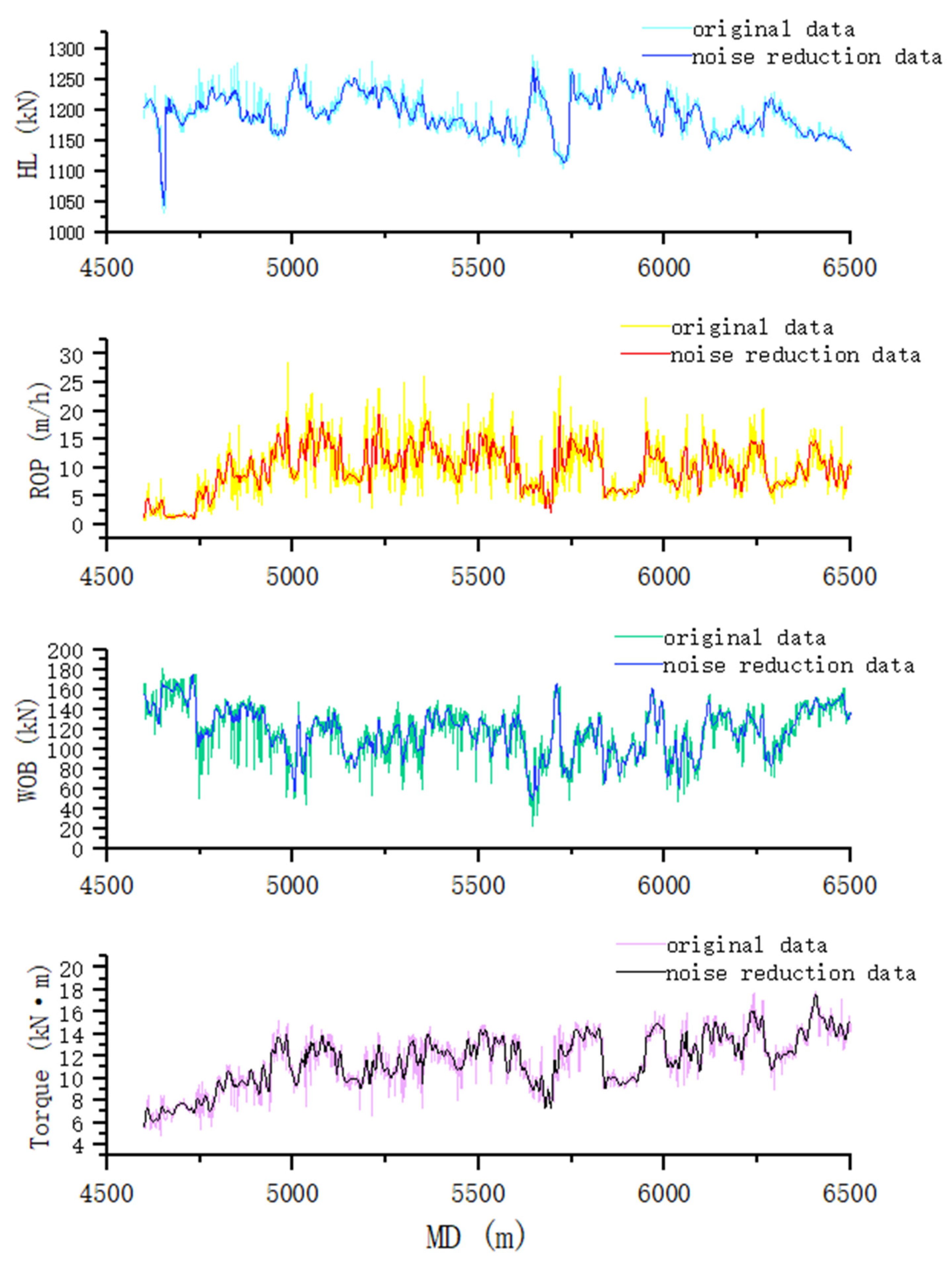
2.2. Data Preprocessing
2.3. Model Evaluation Metrics
3. Model Establishment
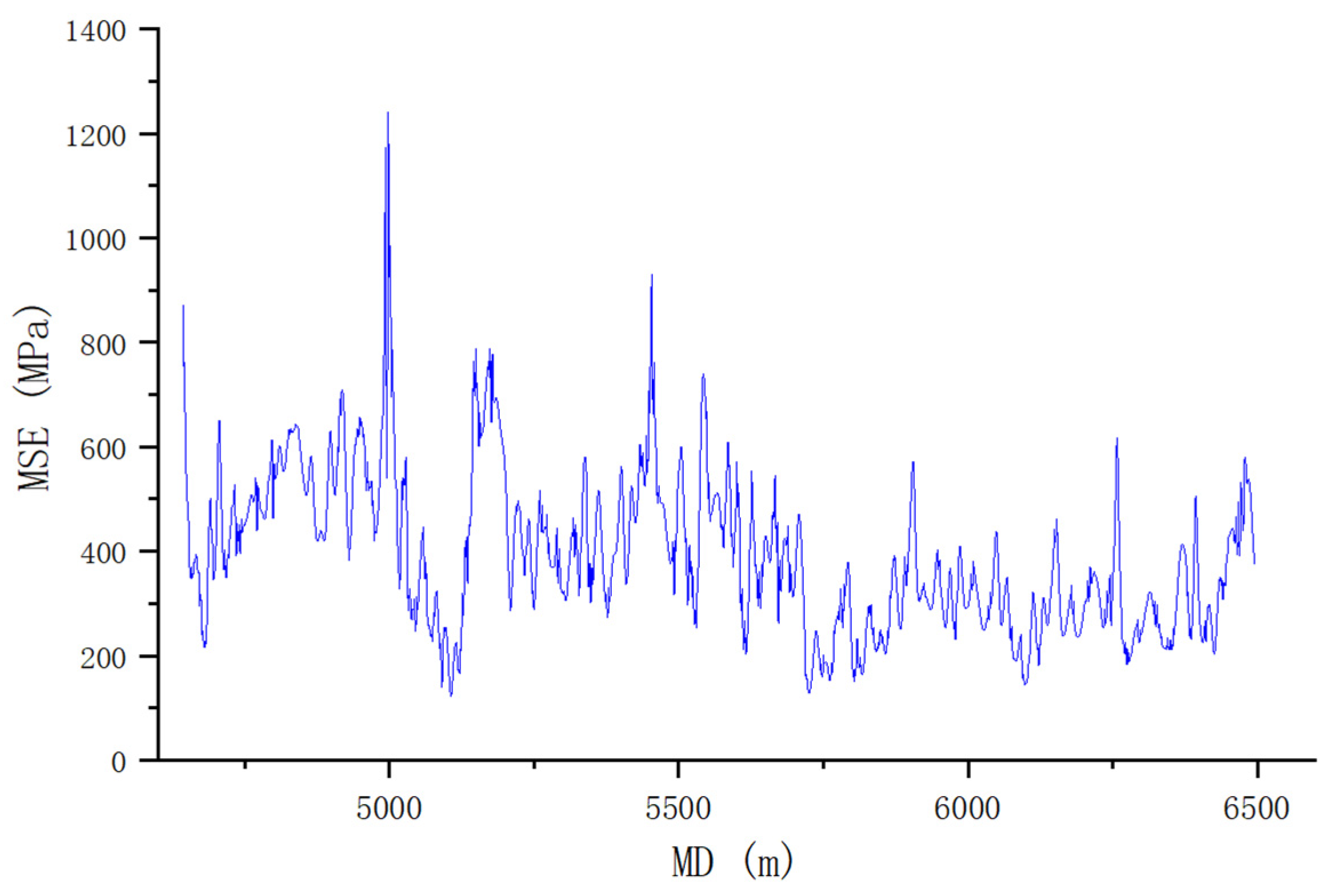
3.1. Mechanical Specific Energy Model
3.1.1. Principle of the Traditional Mechanical Specific Energy Model
3.1.2. Construction of Mechanical Specific Energy Model Considering Torque
3.2. Rate of Penetration Prediction Model
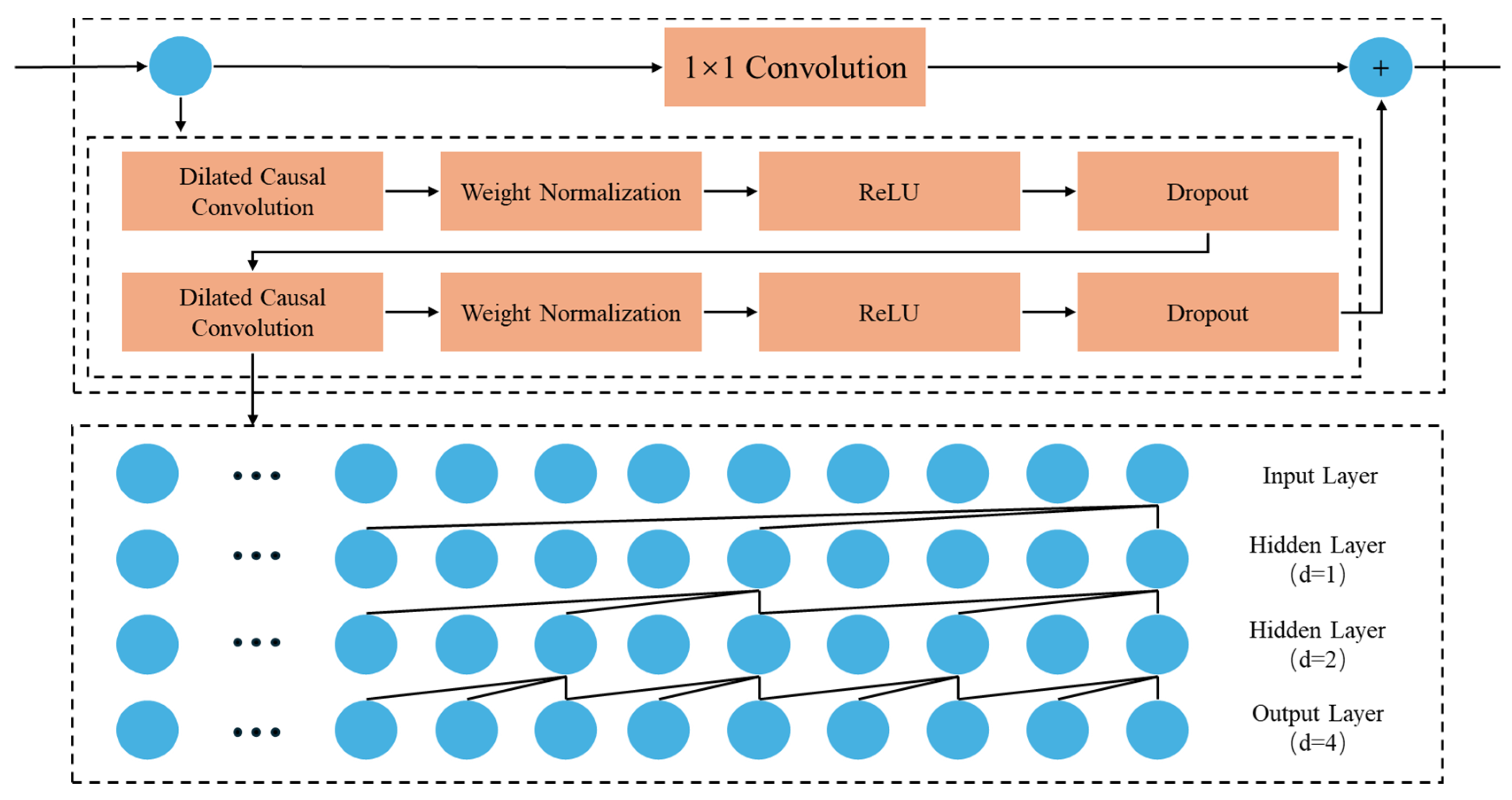
3.2.1. Temporal Convolutional Network
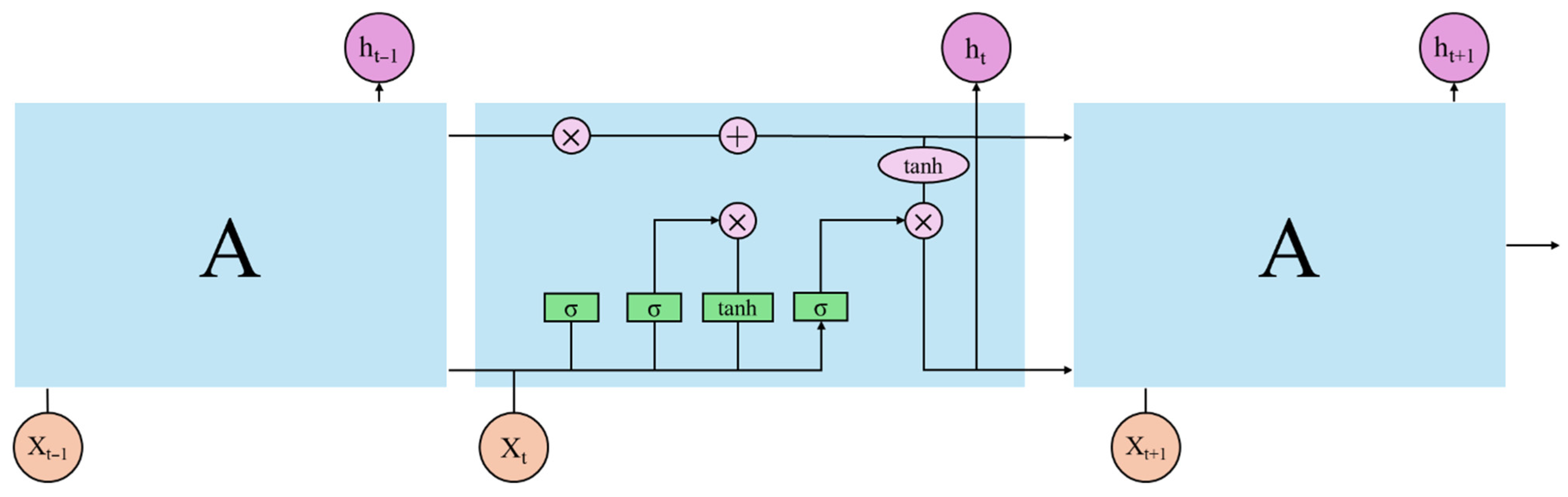
3.2.2. Long Short-Term Memory Network
3.2.3. Additive Attention Mechanism
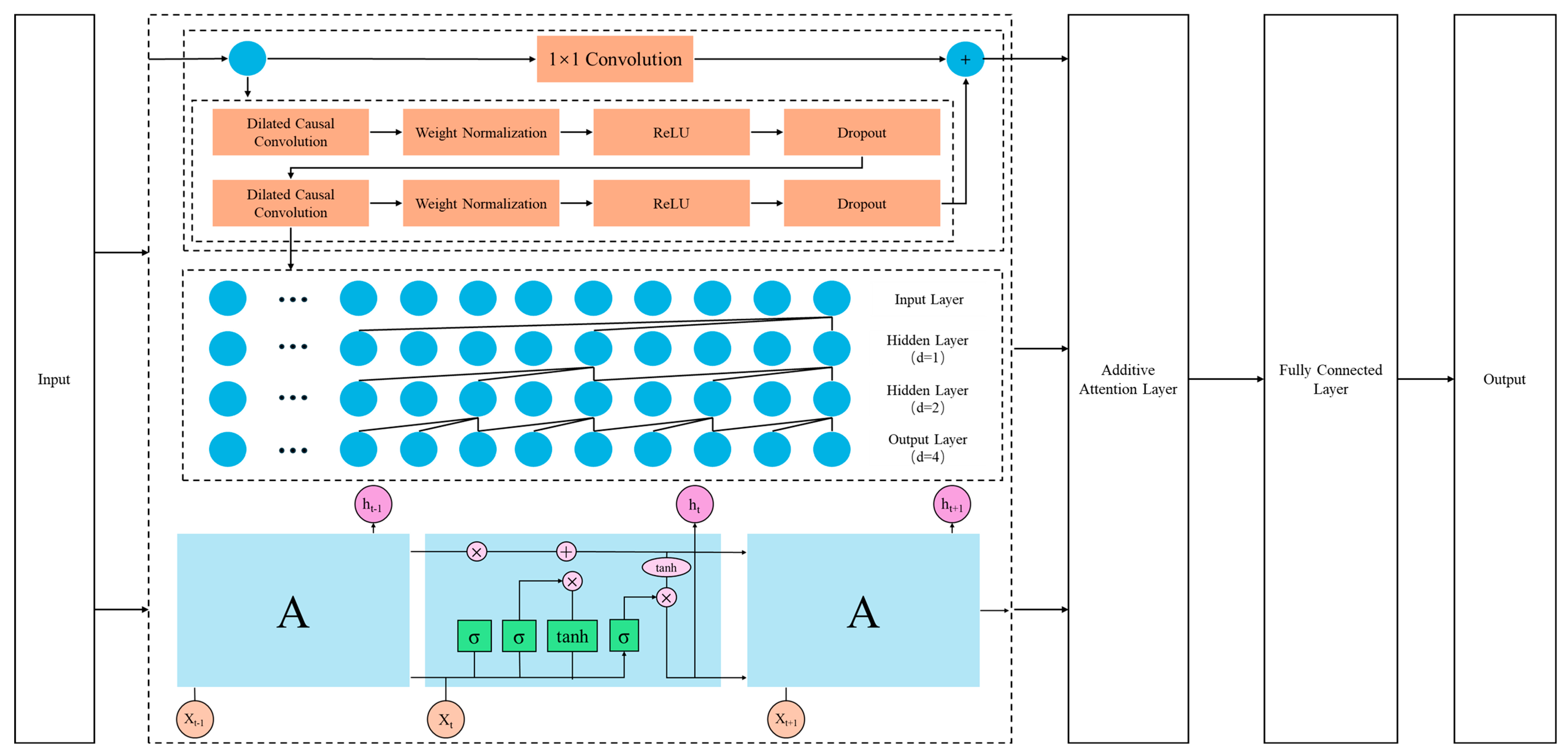
3.2.4. Tcn-Lstm Model Fused with Additive Attention Mechanism
3.3. Multi-Objective Optimization Algorithm
3.3.1. Determination of Core Model Elements
3.3.2. Model Solution Based on Standard Genetic Algorithm
4. Case Study
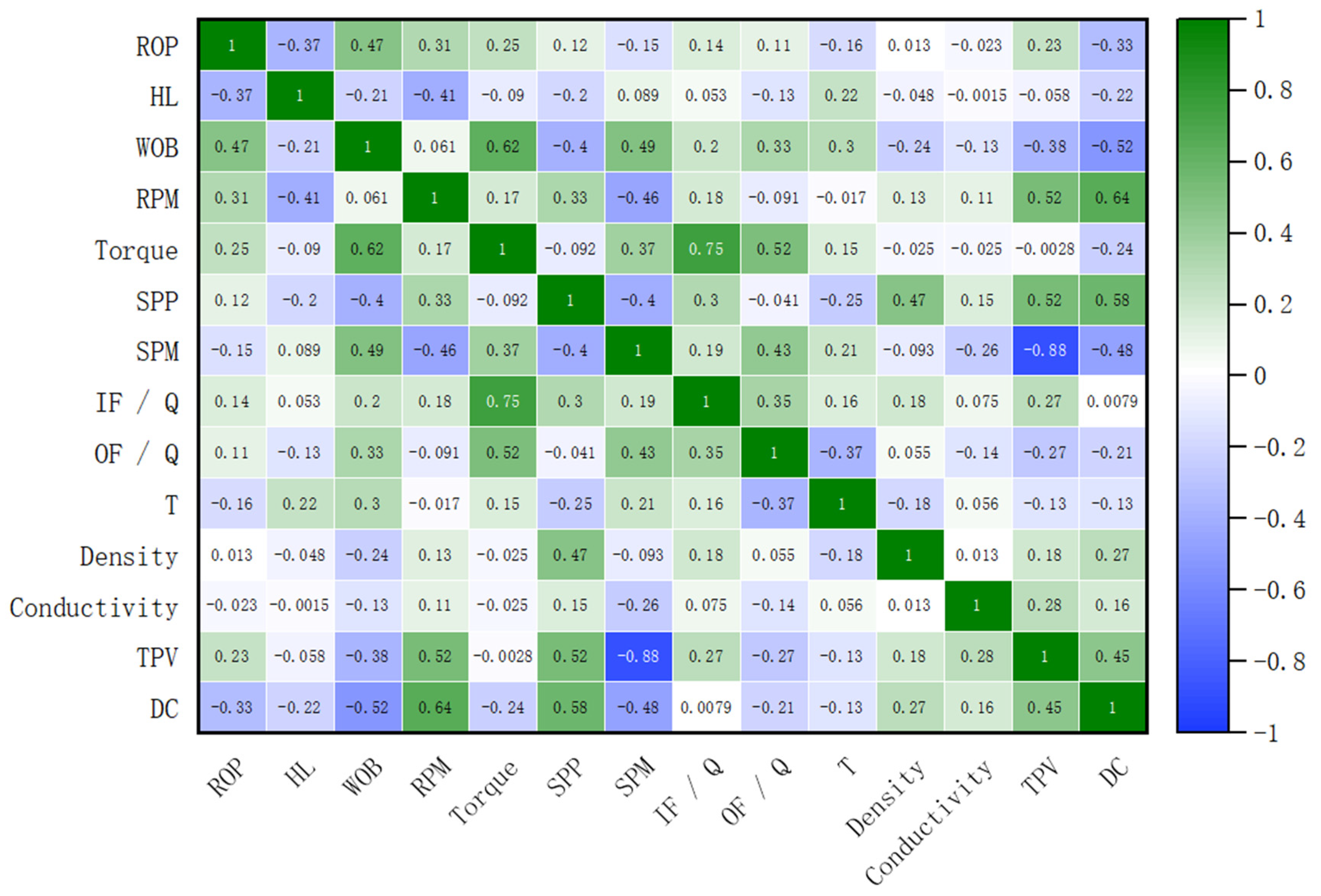
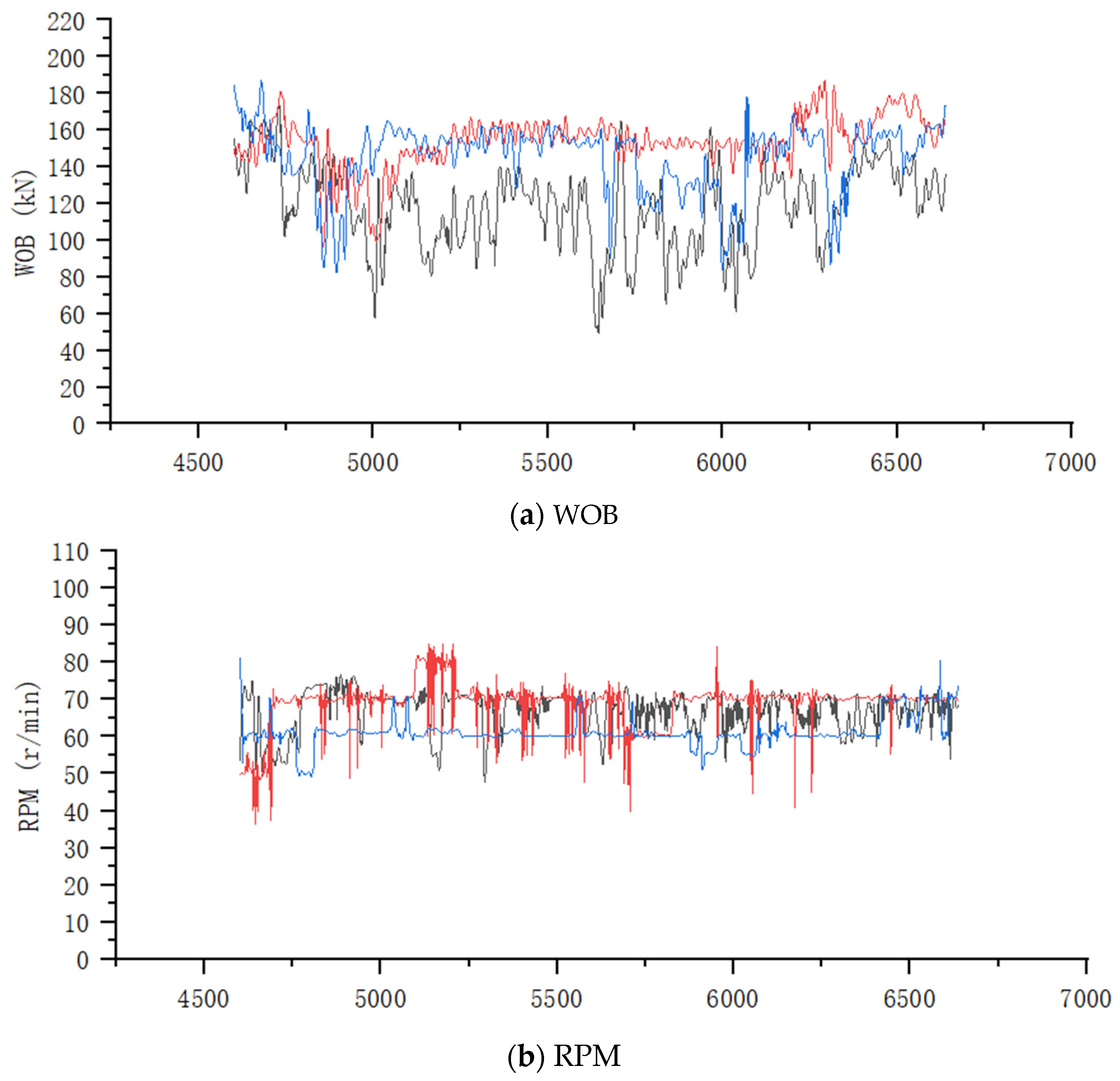
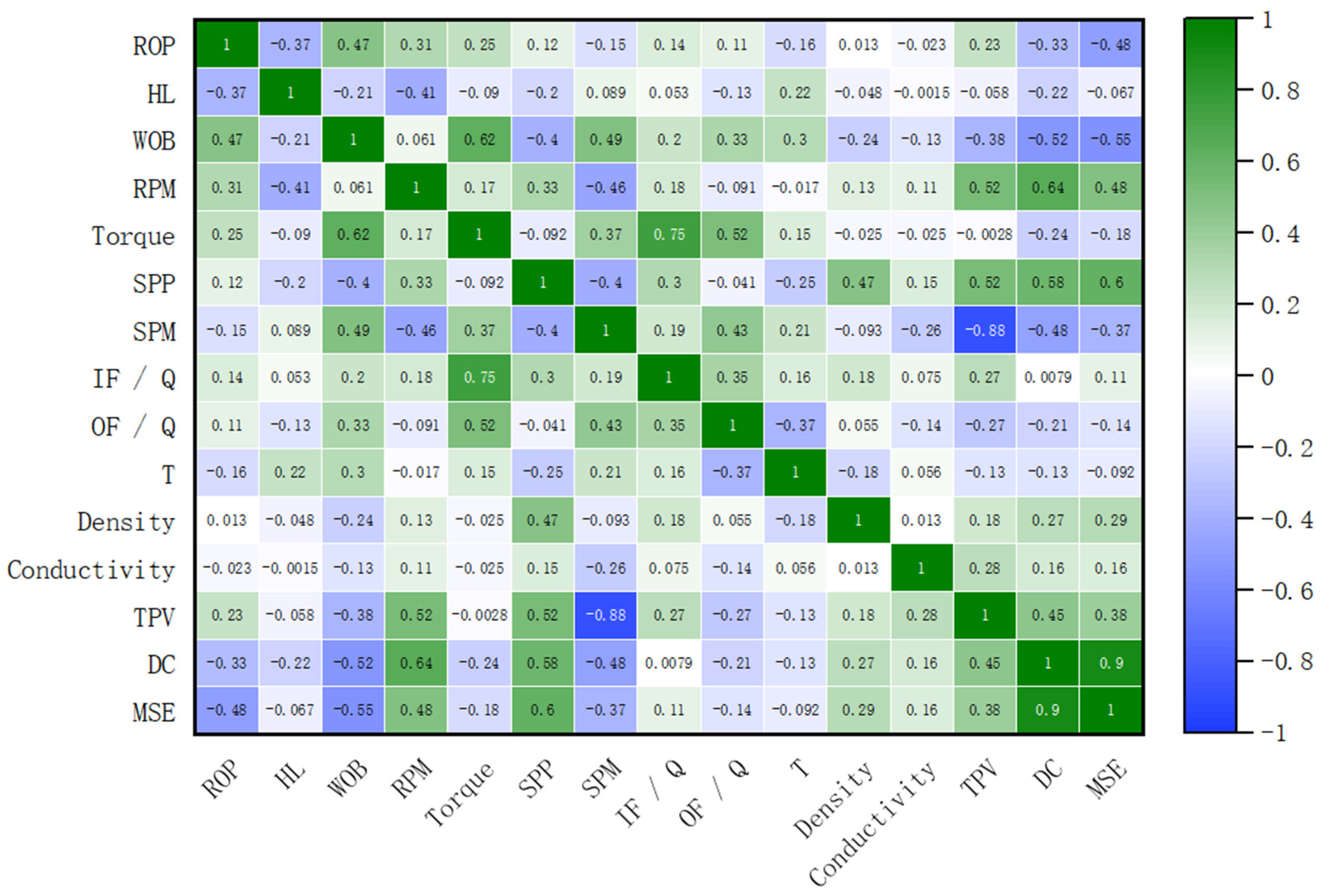
4.1. Characteristic Analysis
4.2. Rop Prediction Model Training and Accuracy Verification
4.2.1. Model Training Setup and Hyperparameter Tuning
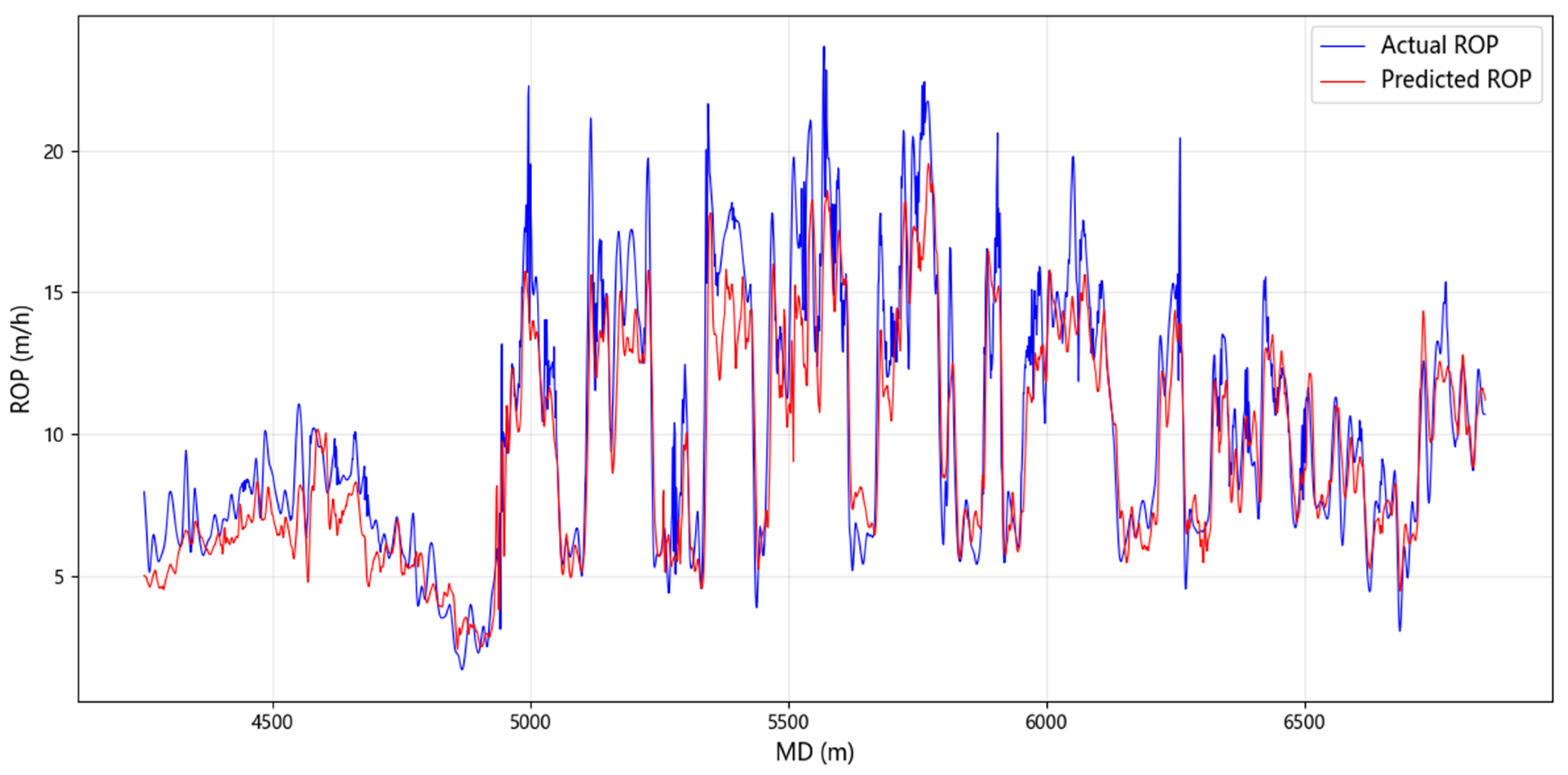
4.2.2. Model Prediction Accuracy Verification
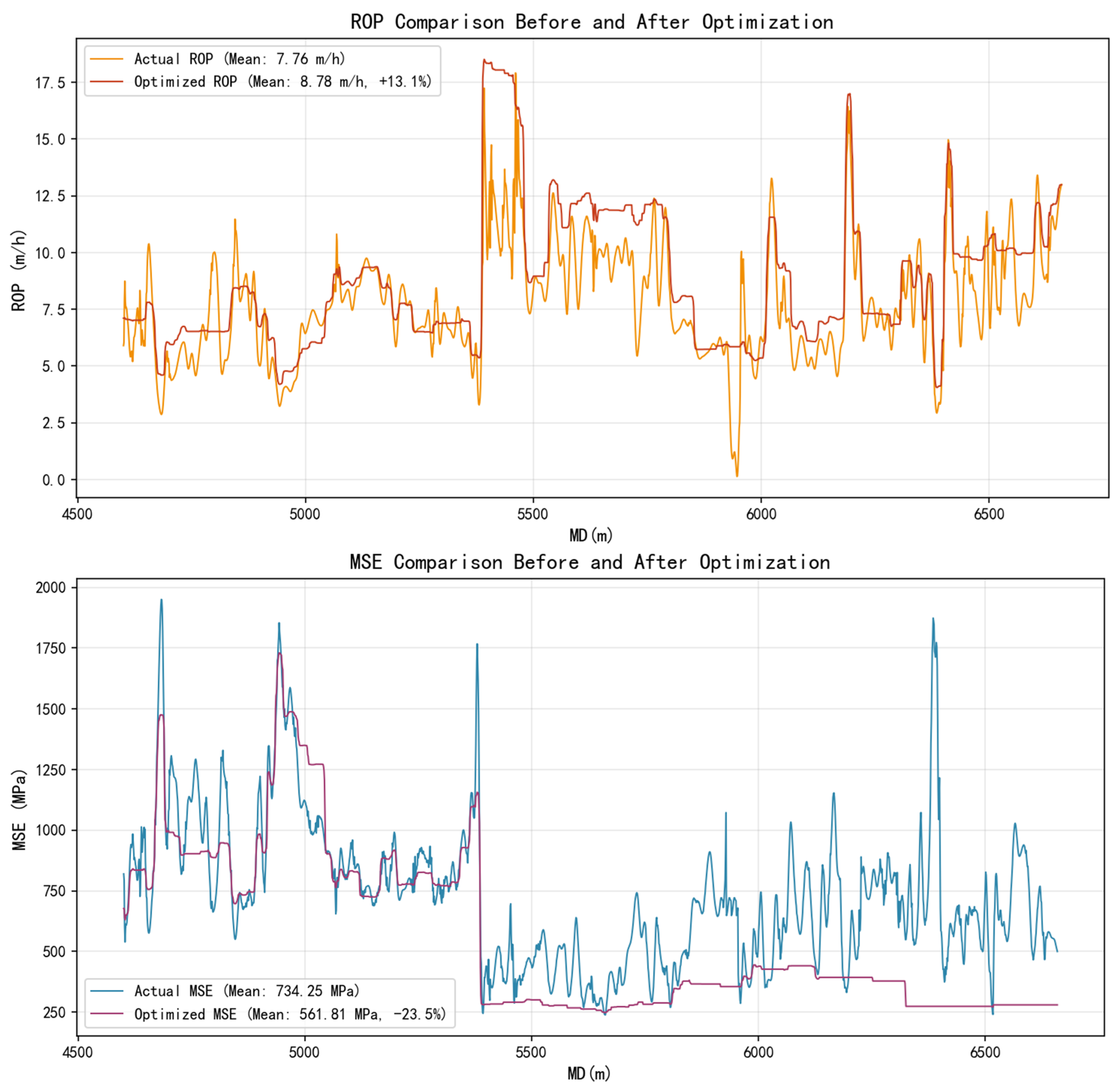
4.3. Multi-Objective Optimization Solution of Drilling Parameters Based on Standard Genetic Algorithm
5. Conclusions
Author Contributions
Funding
Data Availability Statement
Conflicts of Interest
References
- Feng, J.; Gao, Z.; Cui, J.; Zhou, C. The exploration status and research advances of deep and ultra-deep clastic reservoirs. Adv. Earth Sci. 2016, 31, 718. [Google Scholar] [CrossRef]
- Zhang, Y.R.; Guo, X.L.; Zhang, J.; Zhao, N. Research progress on drilling parameter optimization in petroleum drilling. Inn. Mong. Petrochem. Ind. 2023, 49, 92–95. [Google Scholar] [CrossRef]
- Teale, R. The concept of specific energy in rock drilling. Int. J. Rock Mech. Min. Sci. Geomech. Abstr. 1965, 2, 245. [Google Scholar] [CrossRef]
- Zhou, Y.; Zhang, W.; Gamwo, I.; Lin, J.-S. Mechanical specific energy versus depth of cut in rock cutting and drilling. Int. J. Rock Mech. Min. Sci. 2017, 100, 287–297. [Google Scholar] [CrossRef]
- Zhou, F. Intelligent Optimization of Drilling Parameters Based on Mechanical Specific Energy and Rate of Penetration Data-Driven Model. Ph.D. Thesis, China University of Petroleum (Beijing), Beijing, China, 2024. [Google Scholar] [CrossRef]
- Barbosa, L.F.F.M.; Nascimento, A.; Mathias, M.H.; de Carvalho, J.A., Jr. Machine learning methods applied to drilling rate of penetration prediction and optimization—A review. J. Pet. Sci. Eng. 2019, 183, 106332. [Google Scholar] [CrossRef]
- Zhou, Y.; Chen, X.; Zhao, H.; Wu, M.; Cao, W.; Zhang, Y.; Liu, H. A novel rate of penetration prediction model with identified condition for the complex geological drilling process. J. Process Control 2021, 100, 30–40. [Google Scholar] [CrossRef]
- Yang, S.; Guo, Z.; Zhang, H.; Gao, M. Prediction of rate of penetration based on integrated transfer learning. Comput. Syst. Appl. 2022, 31, 270–278. [Google Scholar] [CrossRef]
- Zhou, D.; Li, J.; Xu, H. Research on PDC drilling parameter optimization based on dynamic drilling strategy. E3S Web Conf. 2023, 438, 01023. [Google Scholar] [CrossRef]
- Li, L.; Guan, B.; Ming, R.; Zhang, X.; Zhang, J.; Lv, X.; Wang, G.; Zhao, X. The method for prediction of formation pore pressure based on mechanical specific energy theory. IOP Conf. Ser. Earth Environ. Sci. 2021, 859, 012004. [Google Scholar] [CrossRef]
- Zhai, H.; Chen, H.; Shi, B.; Zhao, H.; Gao, F. Drilling Monitoring While Drilling and Comprehensive Characterization of Lithology Parameters. Appl. Sci. 2025, 15, 11134. [Google Scholar] [CrossRef]
- Chen, Y.M.; Yan, Z.L. Calculation method of actual bottom-hole weight on bit in directional wells. Drill. Prod. Technol. 1996, 4, 1–5. [Google Scholar]
- Meng, Y.F.; Yang, M.; Li, G.; Li, Y.J.; Tang, S.H.; Zhang, J.; Lin, S.Y. New method of real-time evaluation and optimization of drilling efficiency based on mechanical specific energy theory. J. China Univ. Pet. (Ed. Nat. Sci.) 2012, 36, 110–114+119. [Google Scholar]
- Srinivas, S.; Jayaram, A.; Bhavadharani, K.; Pant, K.S.; Thirumala, K.; Kumar, T.S. Classification of Power Quality Disturbances Using Convolutional Neural Network and Temporal Convolutional Network Models. In Proceedings of the 2024 23rd National Power Systems Conference, NPSC, Indore, India, 14–16 December 2024. [Google Scholar] [CrossRef]
- Chu, D.J.; Hu, Y.Z. Application research on pre-drill wave impedance prediction based on temporal convolutional network. In Proceedings of the 5th Oil and Gas Geophysics Academic Annual Conference, Qingdao, China, 19 April 2023; pp. 133–138. [Google Scholar] [CrossRef]
- Williams, A.E.D.; Robinson, A.W.; Wells, J.; Tsakalidis, K.; Shen, Y.-C.; Browning, N.D. Deep Convolutional Neural Network Based Image Denoising in STEM. In Proceedings of the 13th Asia Pacific Microscopy Congress 2025 (APMC13), Brisbane, Australia, 2–7 February 2025. [Google Scholar] [CrossRef]
- Arora, D.; Garg, M.; Gupta, M. Diving deep in Deep Convolutional Neural Network. In Proceedings of the 2020 2nd International Conference on Advances in Computing, Communication Control and Networking (ICACCCN), Greater Noida, India, 18–19 December 2020; pp. 749–751. [Google Scholar] [CrossRef]
- Wang, J.; Ma, Y.; Huang, Z.; Xue, R.; Zhao, R. Performance Analysis and Enhancement of Deep Convolutional Neural Network. Bus. Inf. Syst. Eng. 2019, 61, 311–326. [Google Scholar] [CrossRef]
- Majerus, S.; D’argembeau, A. Verbal short-term memory reflects the organization of long-term memory: Further evidence from short-term memory for emotional words. J. Mem. Lang. 2011, 64, 181–197. [Google Scholar] [CrossRef]
- Liu, C.; Jin, Z.; Gu, J.; Qiu, C. Short-term load forecasting using a long short-term memory network. In Proceedings of the IEEE PES Innovative Smart Grid Technologies Conference Europe, Turin, Italy, 26–29 September 2017. [Google Scholar] [CrossRef]
- Sherstinsky, A. Fundamentals of recurrent neural network (RNN) and long short-term memory (LSTM) network. Phys. D Nonlinear Phenom. 2020, 404, 132306. [Google Scholar] [CrossRef]
- Chen, H.; Li, N.; Li, M.; Sun, Z.; Meng, F.; Su, J. Ensemble Learning with Additive Attention Mechanism for Short-Term Load Forecasting. In Proceedings of the 2024 43rd Chinese Control Conference (CCC), Kunming, China, 28–31 July 2024; pp. 7113–7118. [Google Scholar] [CrossRef]
- Wang, L.F.; Chen, J.Z. TCN-LSTM roadway deformation prediction model incorporating additive attention mechanism. Gold Sci. Technol. 2025, 33, 1020–1030. [Google Scholar]
- Zouache, D.; Arby, Y.O.; Nouioua, F.; Ben Abdelaziz, F. Multi-objective chicken swarm optimization: A novel algorithm for solving multi-objective optimization problems. Comput. Ind. Eng. 2019, 129, 377–391. [Google Scholar] [CrossRef]
- Zakaria, L.; Salim, C. Comparison of Genetic Algorithm and Quantum Genetic Algorithm. Int. Arab. J. Inf. Technol. 2012, 9, 243–249. [Google Scholar]
- Smith, M.G.; Bull, L. Genetic Programming with a Genetic Algorithm for Feature Construction and Selection. Genet. Program. Evolvable Mach. 2005, 6, 265–281. [Google Scholar] [CrossRef]
- Liao, X.; Khandelwal, M.; Yang, H.; Koopialipoor, M.; Murlidhar, B.R. Effects of a proper feature selection on prediction and optimization of drilling rate using intelligent techniques. Eng. Comput. 2020, 36, 499–510. [Google Scholar] [CrossRef]
- Messaoud, A.; Weihs, C. Monitoring a deep hole drilling process by nonlinear time series modeling. J. Sound Vib. 2009, 321, 620–630. [Google Scholar] [CrossRef]
- Zang, C.; Lu, Z.; Ye, S.; Xu, X.; Xi, C.; Song, X.; Guo, Y.; Pan, T. Drilling parameters optimization for horizontal wells based on a multiobjective genetic algorithm to improve the rate of penetration and reduce drill string drag. Appl. Sci. 2022, 12, 11704. [Google Scholar] [CrossRef]
- Liu, W.; Fu, J.; Tang, C.; Huang, X.; Sun, T. Real-time prediction of multivariate ROP (rate of penetration) based on machine learning regression algorithms: Algorithm comparison, model evaluation and parameter analysis. Energy Explor. Exploit. 2023, 41, 1779–1801. [Google Scholar] [CrossRef]
- Peng, C.; Zhang, H.-L.; Fu, J.-H.; Su, Y.; Li, Q.-F.; Yue, T.-Q. A novel drilling parameter optimization method based on big data of drilling. Pet. Sci. 2025, 22, 1596–1610. [Google Scholar] [CrossRef]
- Ramba, V.; Selvaraju, S.; Subbiah, S.; Palanisamy, M.; Srivastava, A. Optimization of drilling parameters using improved play-back methodology. J. Pet. Sci. Eng. 2021, 206, 108991. [Google Scholar] [CrossRef]






| Parameter Name | Value |
|---|---|
| Population size | 100 |
| Maximum number of generations | 200 |
| Crossover probability | 0.9 |
| Mutation probability | 0.1 |
| Crossover distribution index | 20 |
| Mutation distribution index | 20 |
| Predictive Model | R2 | MAE | RMSE |
|---|---|---|---|
| BP | 0.79 | 1.86 | 2.37 |
| CNN | 0.725 | 1.95 | 3.1 |
| LSTM | 0.82 | 1.58 | 2.04 |
| TCN-LSTM | 0.88 | 1.15 | 1.76 |
| TCN-LSTM-Attention | 0.91 | 0.96 | 1.69 |
| Fold | Number of Training Wells | Number of Test Wells | R2 | MAE (m/h) | RMSE (m/h) |
|---|---|---|---|---|---|
| 1 | 9 | 3 | 0.902 | 1.01 | 1.75 |
| 2 | 10 | 2 | 0.915 | 0.93 | 1.62 |
| 3 | 9 | 3 | 0.897 | 1.05 | 1.81 |
| 4 | 10 | 2 | 0.921 | 0.89 | 1.58 |
| 5 | 10 | 2 | 0.908 | 0.97 | 1.67 |
| Mean | - | - | 0.9086 | 0.97 | 1.686 |
| Indicator | Mean | Standard Deviation | Standard Error | Lower Limit of 95% Confidence Interval | Upper Limit of 95% Confidence Interval |
|---|---|---|---|---|---|
| R2 | 0.909 | 0.0092 | 0.0041 | 0.897 | 0.921 |
| MAE | 0.97 | 0.062 | 0.028 | 0.89 | 1.05 |
| RMSE | 1.69 | 0.087 | 0.039 | 1.58 | 1.80 |
| Decision Variables | Constraint Interval | Field Drilling Mean | Optimal Solution |
|---|---|---|---|
| WOB/kN | 20~200 | 135 | 125 |
| RPM/(r·min−1) | 30~90 | 69 | 52 |
| Drilling Parameters | Pre-Optimization | Post-Optimization | Improvement Rate |
|---|---|---|---|
| ROP/(m·h−1) | 7.76 | 8.78 | +13.1% |
| MSE/MPa | 734.25 | 561.81 | −23.5% |
Disclaimer/Publisher’s Note: The statements, opinions and data contained in all publications are solely those of the individual author(s) and contributor(s) and not of MDPI and/or the editor(s). MDPI and/or the editor(s) disclaim responsibility for any injury to people or property resulting from any ideas, methods, instructions or products referred to in the content. |
© 2026 by the authors. Licensee MDPI, Basel, Switzerland. This article is an open access article distributed under the terms and conditions of the Creative Commons Attribution (CC BY) license.
Share and Cite
Wan, L.; Song, H.; Wang, A.-G.; Li, M.; Zhang, Z.; Su, K.; Xu, J.; Kong, L.; Yan, Y.; Hu, G.; et al. Research on the Multi-Objective Optimization of Drilling Parameters Based on an Improved Coupling Model of MSE and ROP. Processes 2026, 14, 1570. https://doi.org/10.3390/pr14101570
Wan L, Song H, Wang A-G, Li M, Zhang Z, Su K, Xu J, Kong L, Yan Y, Hu G, et al. Research on the Multi-Objective Optimization of Drilling Parameters Based on an Improved Coupling Model of MSE and ROP. Processes. 2026; 14(10):1570. https://doi.org/10.3390/pr14101570
Chicago/Turabian StyleWan, Lifu, Hongchen Song, Ai-Guo Wang, Meng Li, Zhili Zhang, Kanhua Su, Jiangen Xu, Lulin Kong, Yan Yan, Gui Hu, and et al. 2026. "Research on the Multi-Objective Optimization of Drilling Parameters Based on an Improved Coupling Model of MSE and ROP" Processes 14, no. 10: 1570. https://doi.org/10.3390/pr14101570
APA StyleWan, L., Song, H., Wang, A.-G., Li, M., Zhang, Z., Su, K., Xu, J., Kong, L., Yan, Y., Hu, G., & Zhang, G. (2026). Research on the Multi-Objective Optimization of Drilling Parameters Based on an Improved Coupling Model of MSE and ROP. Processes, 14(10), 1570. https://doi.org/10.3390/pr14101570