Article

Effects of Biochar and Zeolite on the Co-Composting of Agricultural Waste Under Psychrophilic Conditions


by
Maria Fernanda Rios-Mercado
1,
Viviana Sanchez-Torres
2,
German Zafra
3,
Delia Rueda-López
3,
Nelson Rodriguez-Lopez
4,
Cristian Rodriguez
1,
Jonathan Blanco
1,
Karen Vides
1,
Jessica Vargas
1 and
Edgar Ricardo Oviedo-Ocaña
1,*
1
Grupo de Investigación en Recursos Hídricos y Saneamiento Ambiental—GPH, Universidad Industrial de Santander, Carrera 27 Calle 9 Ciudad Universitaria, Bucaramanga 680002, Colombia
2
Grupo de Investigación en Ciencia y Tecnología de Alimentos—CICTA, Universidad Industrial de Santander, Carrera 27 Calle 9 Ciudad Universitaria, Bucaramanga 680002, Colombia
3
Grupo de Investigación en Bioquímica y Microbiología—GIBIM, Universidad Industrial de Santander, Carrera 32 # 29-31, Bucaramanga 680002, Colombia
4
Grupo de Investigación en Ecofisiología Vegetal & Ecosistemas Terrestres—GIEFIVET, Universidad Industrial de Santander, Carrera 27 Calle 9 Ciudad Universitaria, Bucaramanga 680002, Colombia
*
Author to whom correspondence should be addressed.
Processes 2026, 14(10), 1530; https://doi.org/10.3390/pr14101530
Submission received: 8 April 2026 / Revised: 4 May 2026 / Accepted: 5 May 2026 / Published: 9 May 2026
(This article belongs to the Special Issue Application of Biochar in Environmental Research)

Abstract

Biochar and zeolite are promising additives for improving composting; however, their effects during the co-composting of agricultural waste have not yet been sufficiently studied. This study evaluated their influence on the composting of green onion residues and chicken manure under psychrophilic conditions on a pilot scale using 200 kg piles. Three treatments were evaluated: a control, 5% biochar, and 2% zeolite. Both amendments increased the maximum composting temperature by approximately 3 °C and improved the germination index, with increases of around 10% for biochar and 26% for zeolite compared to the control. Biochar increased the relative abundance of the amoA gene, associated with ammonia oxidation and nitrification, suggesting greater biochemical potential for nitrification. During maturation, zeolite reduced pH and electrical conductivity, indicating greater compost stability. In fast-growing crops, compost from zeolite treatment did not significantly affect plant growth when applied alone, but improvements were observed when combined with synthetic fertilizer. Overall, both additives improved composting performance and compost quality, with zeolite showing the most consistent effects.

1. Introduction

Improper disposal of agricultural waste generates emissions and leachate that can negatively impact soil and water quality. Composting is an effective method for treating this waste; however, some agricultural waste contains nutritional imbalances or excessive moisture, which makes it difficult to process [1]. For example, chicken [2], cattle [3], or swine manure [4] can contain total nitrogen concentrations exceeding 3% on a dry matter basis, which could lead to nutrient loss during composting. In contrast, plant-based residues have low nitrogen content (<1%), which creates an imbalance in the C/N ratio [1,5].
A commonly used strategy to improve the composting of agricultural waste is the use of additional co-substrates that complement the physicochemical characteristics of the main substrate [6]. These co-substrates can improve moisture control and increase porosity, and provide carbon or specific nutrients, thus improving processing conditions and product quality [7]. However, nutrient losses or low biological activity may still occur, leading to product deficiencies and limiting their agronomic potential. Therefore, other additives have emerged, such as biochar [8,9,10] and zeolite [11,12,13], with promising results.
Previous studies have reported that biochar enhances composting by regulating pH, reducing nutrient losses, promoting nitrification, and improving the formation of stable humic substances. Its high surface area and porosity also improve oxygen and moisture distribution, creating favorable conditions for microbial activity and accelerating organic matter degradation [14,15]. In agricultural waste composting, biochar additions of 3–10% (w/w) have been associated with faster increases in thermophilic temperatures compared to treatments without biochar [16,17].
Similarly, it has been reported that inorganic additives, such as zeolite, improve composting by increasing water and nutrient retention and aeration, thanks to their porous structures and high cation-exchange capacities. These properties can promote microbial activity and contribute to the stability of the process and the transformation of organic matter [18,19]. In the composting of agricultural waste, the addition of zeolite has been associated with reduced ammonia emissions and nitrogen losses, as well as increased temperatures during the final stages of the process, indicating greater biological activity and stabilization [20]. A 6% (w/w) dose of zeolite in deer manure composting increased the temperature during cooling, indicating greater biological activity and stabilization of the organic matter [21].
Despite the reported benefits of biochar and zeolite in agricultural waste composting, studies directly comparing their individual effects in the same substrate mixture under psychrophilic conditions remain limited. In cold climates, composting presents greater challenges due to the prevailing low temperatures, limited microbial population, and low moisture, which can lead to shorter thermophilic phases and lower final product quality due to the presence of unstable organic matter [22]. Biochar plays an important role in composting in cold areas, as it can raise the temperature during the first few days of the process and prolong the thermophilic stage [23]. For example, Liu et al. [24] implemented a 10% dose of biochar in the composting of pig manure in an area with temperatures between −5 °C and 15 °C; the treatment with biochar significantly prolonged the duration of the thermophilic phase and reached 56 °C. While biochar has been shown to enhance temperature profiles and prolong the thermophilic stage under cold conditions, comparable evidence for zeolite under similar conditions remains less explored.
In addition, limited attention has been given to how these amendments influence microbial processes related to the nitrogen cycle under psychrophilic conditions. Functional genes such as nifH, amoA, nirS, and nosZ play key roles in nitrogen transformations during composting, including nitrogen fixation, nitrification, and denitrification [25,26]. Furthermore, it is important to understand how these amendments modulate microbial activity within the nitrogen cycle under psychrophilic conditions. However, their response to different amendments under low-temperature conditions is still not well understood.
Therefore, this research evaluates the impact of applying biochar and zeolite on process variables and product quality during the co-composting of chicken manure and green onion waste) under psychrophilic environmental conditions. To assess the genetic potential for nitrogen cycling, the abundance of four functional genes (nifH, amoA, nirS, and nosZ) was monitored throughout the process. Furthermore, the agronomic value of the resulting composts was validated through soil characterization and growth variables for a fast-growing crop (Raphanus sativus) cultivation. Thus, this study provides key information on the effect of biochar and zeolite in the co-composting of agricultural waste under psychrophilic environmental conditions.

2. Materials and Methods

2.1. Co-Substrates and Amendments

Chicken manure and green onion (Allium fistulosum) residues were utilized as co-substrates for the composting process. The chicken manure was obtained from suppliers who deliver the material to the Berlín páramo (Colombia), while the green onion residues were collected from several local farms. The green onion residues were mechanically shredded to a particle size of 3–5 cm to maximize surface area and oxygenation, thereby facilitating microbial degradation under low-temperature conditions. Additionally, sawdust was incorporated as support material. The physicochemical characterization of the co-substrates is reported by Rios-Mercado et al. [27].
Commercial biochar, produced by pyrolyzing pruning waste and agricultural residues at 650 °C, was used. The process was carried out in a tubular reactor equipped with four independent heating zones, operating within a temperature range of 300 to 800 °C [28]. The biochar had a specific surface area of 567.28 m2/g and a pore volume of 0.369 cm3/g. The zeolite nanoparticles were obtained from a commercial mixture (Antracitas de Cundinamarca, Colombia) and were ground to an average particle size of 300 nm [27].

2.2. Experimental Design and Setup of the Composting Process

The experiment was carried out at the Luz de la Esperanza Educational Institution, located in the Berlín páramo (Colombia), where the average temperature is 8.9 °C. The experimental units were 200 kg conical piles, approximately 1.5 m in diameter and 0.8 m high, placed inside a closed experimental area (greenhouse) to prevent contact with external agents and to reduce the effects of low temperatures. All treatments were set up in duplicate, for a total of six piles. The proportions of the mixtures were determined to ensure an initial C/N ratio of 25:1 to 30:1. Biochar and zeolite were applied at rates of 5% [16,29,30] and 2% [27,31] (w/w), respectively. These dosages were selected as the lowest effective application rates, considering the limited resources available to farmers in the study context. At the same time, they were chosen based on previous studies reporting measurable effects on composting process variables and product quality within similar ranges. The three treatments were defined using a base substrate mixture (M) composed of 46% chicken manure, 34% green onion residues, and 20% sawdust (wet mass basis). The treatments were a control (TC) with 100% M, a biochar treatment (TB) with 95% M + 5% biochar, and a zeolite treatment (TZ) with 98% M + 2% zeolite nanoparticles.

2.3. Sampling and Monitoring of Composting Parameters

For each composting pile, 300 g of material was collected from five different points within each experimental unit and mixed to obtain a representative composite sample. Temperature was measured twice daily during the first two weeks of the process, and once daily thereafter using a K-type digital thermometer (HANNA Instruments). Ambient temperature data were obtained from the Institute of Hydrology, Meteorology, and Environmental Studies (IDEAM) based on records from the Berlin weather station [32].

2.3.1. Analytical Procedures

Moisture content, pH, electrical conductivity (EC), total organic carbon (TOC), total nitrogen (TN), total phosphorus (TP), and total potassium (TK) were determined according to the NTC 5167 Colombian standard for organic fertilizers [33]. Moisture content was monitored during the process and determined gravimetrically by drying the samples at 105 °C until constant weight. The pH and EC were measured daily during the first two weeks and three times per week thereafter using the potentiometric method at a 1:10 (w/v) sample-to-water ratio.
The germination index (GI) was measured every two weeks, using Raphanus sativus seeds. For each treatment, 10 g of sample was diluted in 100 mL of distilled water at a 1:10 ratio (w/v), while the control consisted of 10 mL of distilled water only. Ten seeds were used per assay, and all tests were conducted in triplicate [34].
G I % = %   S e e d s   g e r m i n a t i o n t r e a t m e n t %   S e m i l l a s   g e r m i n a t i o n c o n t r o l R o o t   l e n g t h t r e a t m e n t R o o t   l e n g h t c o n t r o l 100 %
A GI < 50% denotes phytotoxicity, values between 50% and 80% indicate moderate phytotoxic effects, values from 80% to 120% reflect the absence of phytotoxicity, and values > 120% are associated with biostimulant effects.
Total organic carbon (TOC) and total nitrogen (TN) were measured at four stages of the process: at the beginning, during the thermophilic phase, during the cooling phase, and at maturation [27]. TOC was determined by the Walkley–Black method, whereas TN was measured using the Kjeldahl titrimetric method. Total phosphorus (TP) and total potassium (TK) were quantified by spectrophotometric methods [33].
Manual turning was performed according to changes in temperature and moisture. During the initial phases, turning was performed when temperatures decreased to restore oxygen availability, homogenize the material, and facilitate moisture adjustment. In later stages, turning was performed to maintain pile homogeneity. The material was mixed with a shovel and then reshaped into a conical form.
When the compost mixtures reached a temperature close to ambient (±2 °C) the process was considered as completed. Self-heating tests were used to verify the completion of the process using the RM 82 equipment (Umwelt Elektronik, Göppingen, Germany).

2.3.2. Molecular Biology Analysis

Samples were collected at three stages of the process (day 0, day 14, and day 40), as well as from the final unscreened product, for genomic DNA extraction using the DNeasy PowerSoil Pro Kit (QIAGEN, Hilden, Germany). DNA quantity and quality were assessed by agarose gel electrophoresis and by measuring the absorbance ratio at 260/280 nm with an Implen NP80 NanoPhotometer® (Implen GmbH, Munich, Germany). The copy numbers of functional genes involved in the nitrogen cycle, including nitrogen fixation (nifH), nitrification (amoA) in bacteria and archaea, and denitrification (nirS and nosZ) were quantified by real-time PCR (qPCR) using ExcelTaq™ 2X Q-PCR Master Mix (SYBR, no ROX) (SMOBIO, Hsinchu City, Taiwan) on a CFX96™ Touch Real-Time PCR Detection System (C1000, Bio-Rad, California, United States). The primer sequences and the main reaction conditions used for qPCR are shown in Table 1.
Compost Quality
At the end of the composting process, the compost was sieved (No. 35 mesh), in accordance with NTC 5167 [33]. Representative samples were then collected, and physicochemical and biological quality parameters were measured, including water-holding capacity (WHC), cation exchange capacity (CEC), pH, moisture, ash, EC, TOC, and macronutrients (N, P, K). Microbiological safety was validated by counts of Enterobacteriaceae (CFU/g), molds, and yeasts.

2.4. Product Evaluation in a Fast-Growing Crop

2.4.1. Soil Characterization

Soil characterization was performed pre-planting and post-harvest to evaluate the changes in CEC, exchangeable bases (Ca, Mg, K, Na), available P, TOC, organic matter, total N, and pH. Manual irrigation was performed daily based on the crop water requirement (ETc), calculated using the specific crop coefficient (Kc) and reference evapotranspiration (ETo) at each stage, since the crop did not receive any rainfall. Harvesting took place at the end of the growing cycle, and the following morphological parameters (number of leaves, leaf area, radish diameter) and growth parameters (radish height, leaf weight, and radish weight) were measured.

2.4.2. Experimental Design and Setup

A randomized experimental design was implemented for a single-cycle greenhouse cultivation of radish (Raphanus sativus L. var. “Cherry Belle”). Certified seeds (Colombian Agricultural Institute, 3168 and 06756) were sown in 2 kg capacity pots at the Plant Growth and Ecophysiology Unit (UCEV) of the Universidad Industrial de Santander (7°7′31.4″ N 73°7.188′ W, 960 m.a.s.l.). The substrate consisted of a clay-loam Inceptisol, which is the predominant soil type used for local green onion cultivation at the Berlín páramo. Based on a standard nitrogen requirement of 80–100 kg N/ha [37], the product obtained from the zeolite treatment (TZ) was selected for the agronomic test, as it showed slightly better performance during composting, as reflected in process variables and final compost quality. Five treatments were considered, with three randomized replicates for each, for a total of 15 experimental units. The treatments were as follows: T1: 7 t/ha of compost TZ; T2: 0.2 t/ha of NPK (15-15-15); T3: 2.5 t/ha of raw chicken manure; T4: 3.5 t/ha of compost TZ + 0.1 t/ha of NPK (15-15-15); T5: control without the addition of any fertilizer.

2.5. Statistical Processing

Data were analyzed using one-way analysis of variance (ANOVA) at a significance level of α = 0.05 to evaluate the effects of the studied factors on the response variables. When normality assumptions were not met, the Kruskal–Wallis test was applied. Differences among treatments were assessed using Tukey’s test. All statistical analyses were performed in R software through the RStudio interface (version 4.4.0).

3. Results and Discussion

3.1. Influence of Biochar and Zeolite on Composting Performance and Nitrogen Cycling Genes

3.1.1. Temperature

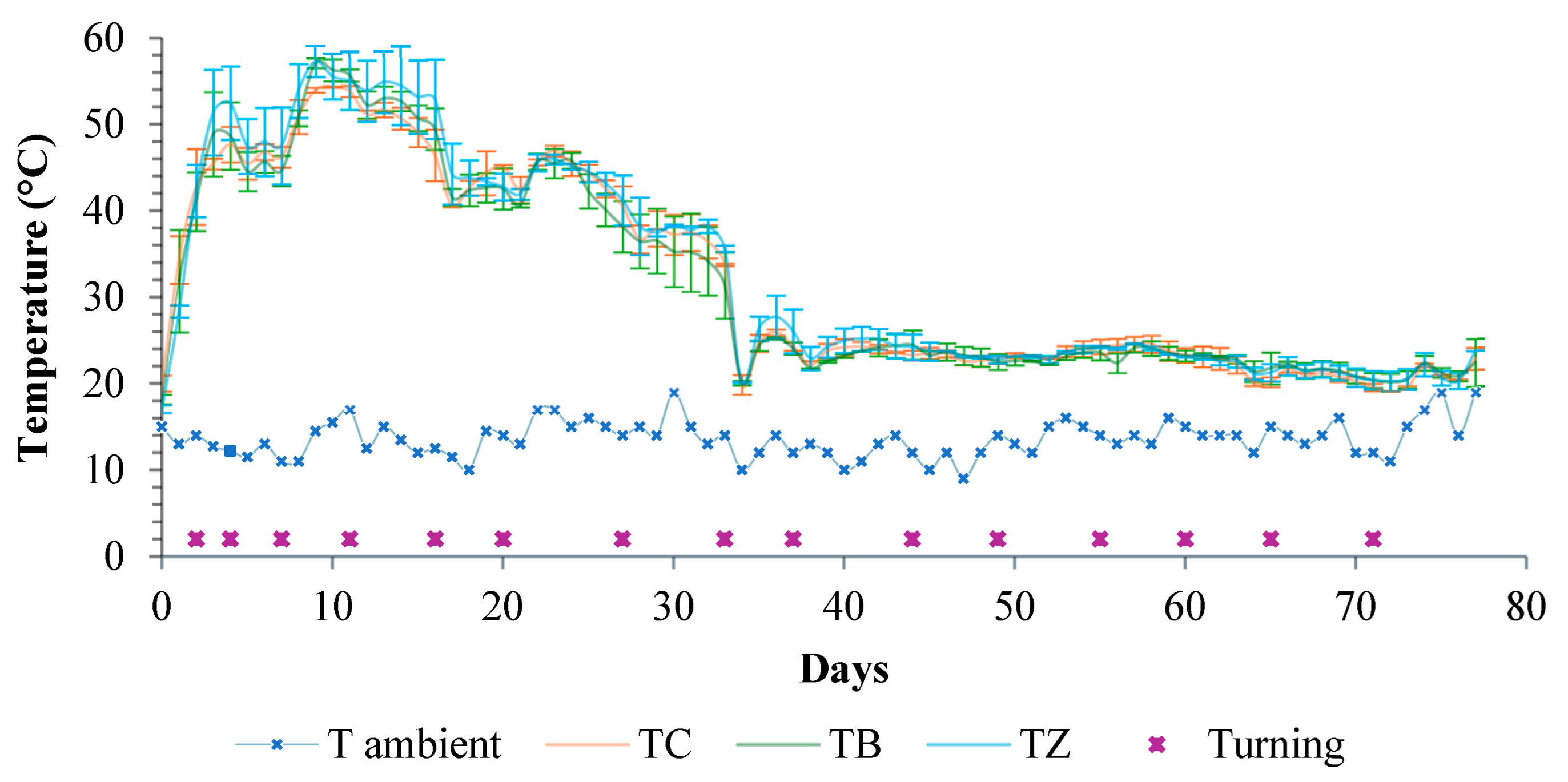
The process followed a typical composting behavior, passing through four phases: mesophilic, thermophilic, cooling, and maturation, with a total duration of 77 days. During the initial stage, the temperature of all three treatments increased rapidly due to high microbial activity until day 3, when they reached the thermophilic stage by exceeding 45 °C. All three treatments reached the thermophilic temperature within similar timeframes; TC exhibited similar behavior to TB and TZ. However, as shown in Figure 1, TZ maintained the highest temperatures during the thermophilic stage, with the highest peak temperature, followed by TB and, lastly, TC (Table 2). This enhancement is likely attributed to the high porosity and surface area of biochar and zeolite, which promote an environment conducive to microbial activity, which leads to an increase in pile temperature during the early stages of composting [38,39,40]. These results are consistent with previous studies about chicken manure composting with biochar [41] and with zeolite [13].
The differing behaviors of biochar and zeolite can be attributed to their distinct physicochemical properties and their specific interactions with the co-substrates. Although both amendments increased the temperature during the thermophilic stage, the underlying mechanisms were likely different: the porous structure of biochar may have improved aeration and provided a more stable habitat for thermophilic microorganisms [19], while zeolite likely acted through its high cation exchange capacity (CEC), mitigating the inhibitory effects of ammonium [42,43].
The temperatures reached in TZ required greater wetting due to the heat generated, which rapidly reduced the moisture content of the piles (i.e., between 1.4 and 1.9 times more water). The increased water demand in TZ is due to the zeolite’s porous structure, which allows it to retain large amounts of water [13]. This adjustment was necessary to prevent the piles from drying out, which would inhibit microbial activity. Although water volumes varied, the target humidity levels were kept constant to ensure comparability among treatments.
Although the addition of biochar and zeolite increased the temperature of the co-composting mixtures, these increments were not statistically significant (p > 0.05). Additionally, no significant differences in the duration of the thermophilic stage were observed among treatments (Table 2). These results are consistent with previous studies indicating that although biochar increased the temperature during the thermophilic phase, it did not prolong this stage [44]; a similar situation was reported for zeolite addition to chicken manure composting [13]. Furthermore, only the TB and TZ treatments maintained temperatures around 55 °C for three days (Figure 1), a sufficient time to inactivate pathogens [45] and ensure the safety of the mixtures [46].
After day 9 (peak temperature), the piles’ temperature gradually decreased, marking the beginning of the cooling stage on day 17. During this phase, continuous temperature fluctuations occurred, associated with the process’s operating conditions, such as turning and wetting the piles (e.g., day 33). From day 38 onward, temperature stabilization was observed in all three treatments, with no significant differences between them. It was not possible to reach ambient temperatures during this stage because the greenhouse maintained a higher temperature than the outside air.
While the greenhouse temperature at the time of measurement ranged from 20 to 25 °C, the outside temperature during the day ranged from 9 to 18 °C and could drop to 0 °C at night. In general, although TZ recorded the highest temperatures, the behavior was similar to that of TC and TB, with little variation between cooling and maturation. This trend could be related to the presence of recalcitrant compounds in green onion residues, whose degradation is complex and requires specialized enzymes [1]. Little temperature variation during the cooling stage was observed for chicken manure composting between the treatments with and without biochar [47]; that is, biochar mainly influences the temperature during the active phase of the process.
Wu et al. [40] observed that ambient temperature influenced the final stages of composting in warm climates that naturally promote microbial activity. In this study, although outdoor conditions were psychrophilic, with temperatures often dropping below freezing at night, the greenhouse served as a strategic barrier against extreme winds and temperature fluctuations. While it helped retain heat during the day, the system remained exposed to intense cold from late afternoon until early morning. Therefore, the heat levels reached in the piles primarily reflect the metabolic success of the process under altitude stress, rather than the influence of an artificially heated environment.

3.1.2. pH

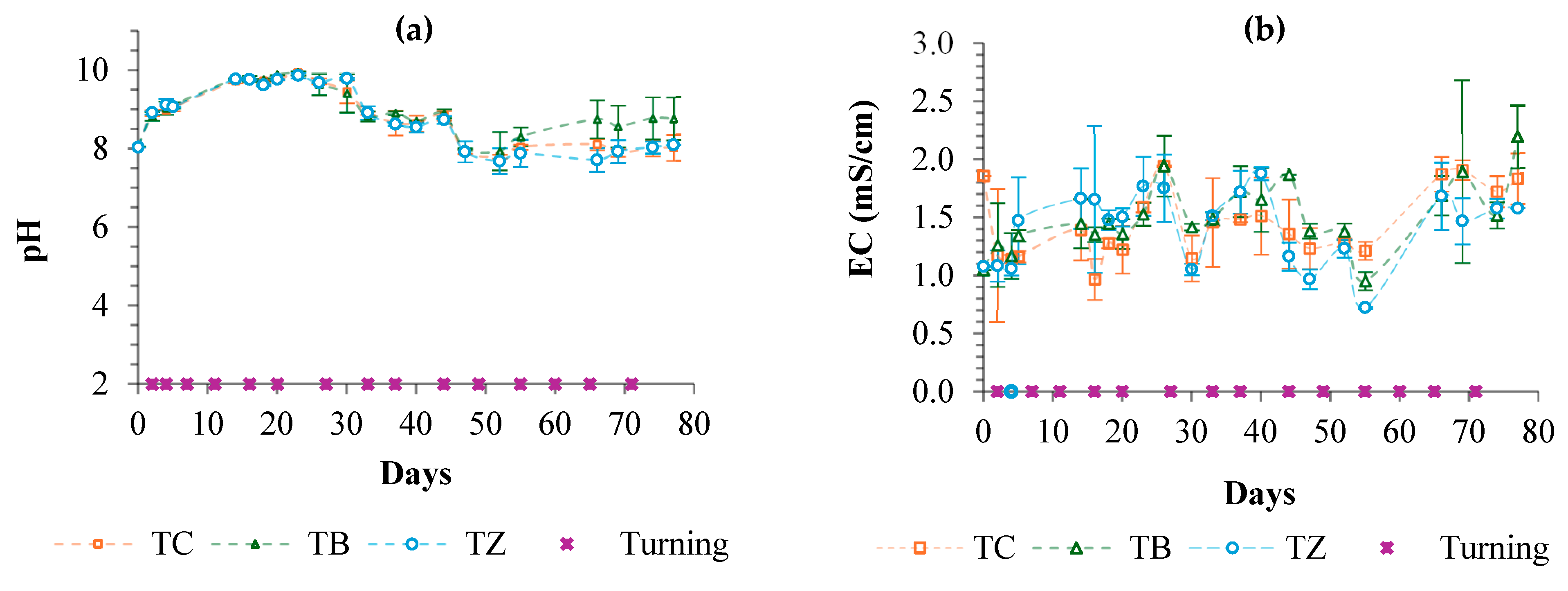
At the start of the process, all treatments exhibited alkaline pH values, mainly due to the characteristics of the chicken manure (Table 1). As the temperature increased, pH values also rose (Figure 2a), likely due to ammonia (NH3) accumulation resulting from the mineralization of organic matter, including proteins and amino acids [48], as well as CO2 release during the active phase. A similar trend has been reported in the composting of chicken manure amended with biochar [49] and zeolite [50]. The highest pH was reached on day 23: 9.92, 9.93, and 9.87 for the three treatments (TC, TB, and TZ), respectively with no significant differences among them (p > 0.05). From that day onward, the pH decreased in all treatments, with a similar pattern. From day 66 onwards, the pH of TB remained higher than that of TC and TZ, which could be due to the slightly alkaline pH of the biochar used [28]. Wu et al. [40] also compared the impact of biochar and zeolite on straw and vegetable waste composting and reported a greater increase in pH in the biochar treatment; however, they did not find a significant effect of zeolite on pH.

3.1.3. Electrical Conductivity

Figure 2b shows the EC behavior of the three treatments throughout the process. Although the chicken manure used has an EC greater than 3 mS/cm (Table 1), the treatments started at EC values below 2 mS/cm, which may be related to the other materials added to the co-composting mixtures. As the temperature increased and the thermophilic phase was reached, electrical conductivity (EC) also increased, likely due to the mineralization of organic matter and the consequent release of soluble ions [51]. In contrast, Chen et al. [41] reported that biochar significantly reduced EC compared to the control.
Between days 5 and 18, TZ maintained the highest EC; however, during the cooling and maturation stages, TZ had a lower EC compared to TC and TB. This reduction could be due to the zeolite’s adsorption capacity for soluble ions [42]. Similar behavior was observed for the composting of rice straw amended with zeolite [52]. At the end of the process, EC values in all treatments were below 2 mS/cm, suggesting that the resulting products were safe for crop application [41].

3.1.4. Nitrogen Content and Associated Gene Abundance

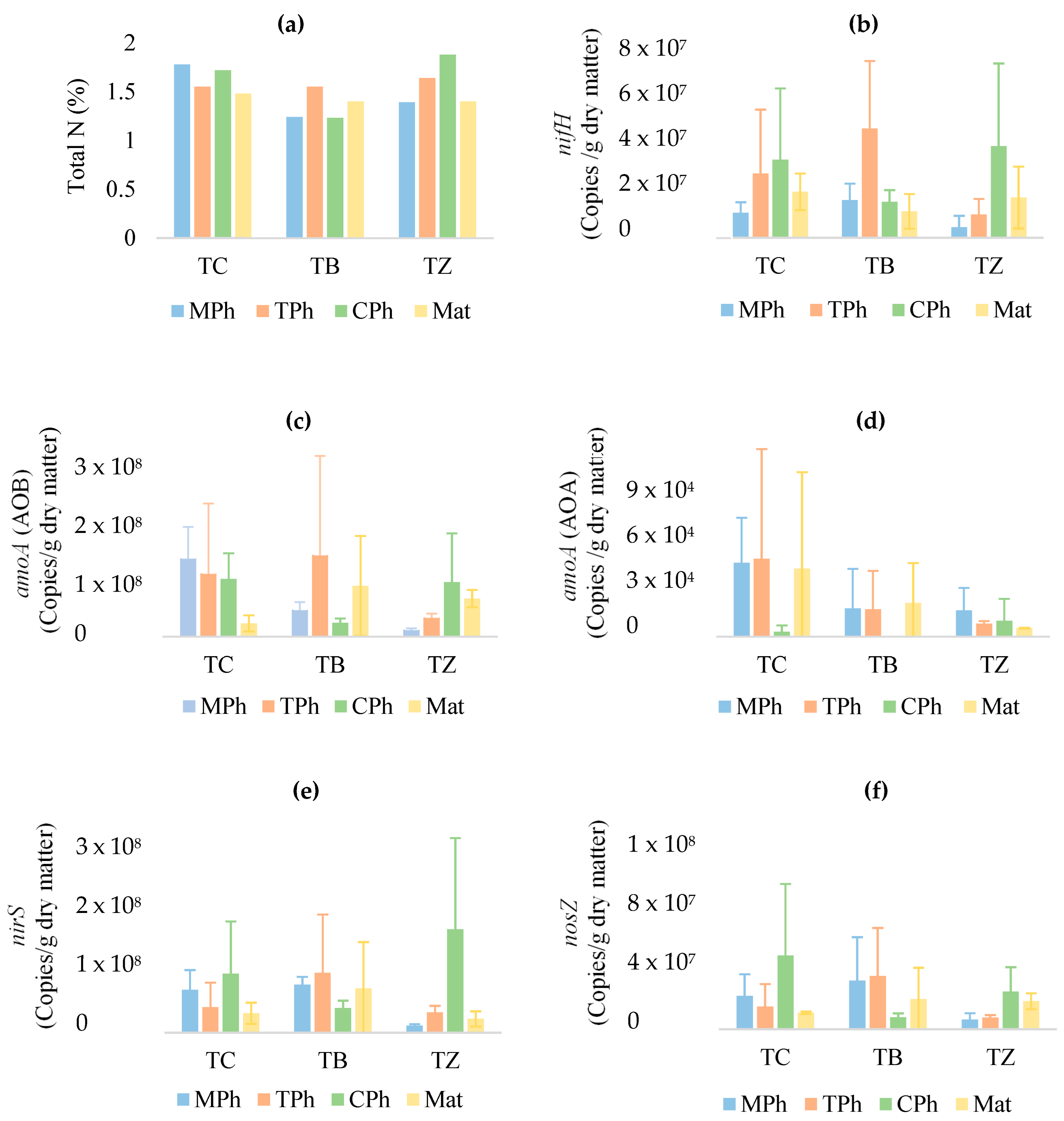
Figure 3a shows the monitoring of total N; on day 0, the total N content was 1.78%, 1.24%, and 1.39% for TC, TB, and TZ, respectively. Despite having the same mixture, the influence of biochar and zeolite additions is observed in the TB and TZ treatments, which, due to their characteristics, do not provide nutrients and, therefore, decrease nitrogen concentration.
In the thermophilic phase, the total N in the control treatment decreased to 1.55%, whereas in the TB and TZ treatments, it increased to 1.64% and 1.68%, respectively. Similarly, Agyarko-Mintah et al. [44] reported an increase in total N during the initial days of composting with biochar addition, which was associated with a rise in ammonium resulting from the degradation of organic compounds. The intrinsic properties of biochar, including its high porosity and large specific surface area [28], allow it to retain ammonium and ammonia ions, promoting nitrogen retention in the thermophilic stage. Zeolite, for its part, has an affinity for the ammonium ion due to its porous structure and cation exchange capacity; therefore, it helps reduce nitrogen losses via ammonia volatilization [39]. Maleki et al. [52] also found an increase in total N in the thermophilic phase of composting in treatments with the addition of biochar and zeolite. During the cooling stage, total N in TB decreased to 1.23%, whereas it increased in TC and TZ. This variation in total N may be associated with the ongoing degradation and transformation of nitrogenous compounds throughout the composting process [53].
Regarding the functional nitrogen cycle genes involved in composting, the nifH gene participates in biological nitrogen fixation, while amoA catalyzes the initial nitrification step by oxidizing ammonium. Meanwhile, nirS and nosZ are associated with the denitrification process, with nosZ responsible for the final reduction of N2O to N2, thereby decreasing nitrogen losses [35]. At the beginning of the composting process, the abundance of the nifH gene was low, which can be attributed to the initial mixture’s total nitrogen availability. Its abundance increased during the thermophilic and cooling stages (Figure 3b), possibly associated with nitrogen losses during composting, which create conditions of relative nitrogen limitation. Finally, the abundance of nifH decreased at the end of the process, coinciding with the stabilization of the mixture (Figure 3b). These findings differ from previous reports by Qian et al. [54] and Zhong et al. [55], which reported higher nifH abundance in the early stages, underscoring that composting systems may employ distinct microbial strategies depending on initial feedstock characteristics and process conditions.
According to Figure 3c,d, at the beginning of the process, the zeolite and biochar treatments resulted in lower amoA gene abundance than the control treatment, in both bacteria and archaea. During the thermophilic stage, TB showed the highest amoA abundance among bacteria, while TC showed the highest abundance among archaea, followed by TB; this suggests a higher biochemical potential for nitrification. This behavior may be associated with reduced nitrogen losses through ammonia volatilization (Figure 3a). The addition of biochar can influence the microbial transformation of inorganic nitrogen, promoting processes such as nitrification and nitrogen retention [15]. In contrast, zeolite treatment consistently showed the lowest amoA abundance throughout the process, which may be related to its role in ammonium retention via ion exchange, potentially limiting substrate availability for ammonia-oxidizing microorganisms. This trend differs from the findings of Geng et al. [43], who reported higher amoA abundance at a 5% zeolite dose.
Overall, the dynamics of functional nitrogen cycle genes during composting demonstrate that microbial responses are strongly shaped by substrate composition and the amendments applied. The variation in nifH abundance compared with previous studies indicates that biological nitrogen fixation is not uniform across composting systems but instead reflects nitrogen availability and losses at specific stages. Similarly, the modulation of amoA abundance by biochar and zeolite treatments shows that amendments can selectively influence nitrification pathways. Biochar promoted activity even under thermophilic conditions, potentially reducing nitrogen losses by lowering ammonia volatilization, whereas zeolite consistently suppressed amoA abundance, in contrast to previous reports. These findings underscore that microbial strategies in composting are context-dependent and highlight the importance of considering gene abundance, substrate characteristics, and amendment effects when aiming to optimize nitrogen retention in composting systems.

3.1.5. Germination Index

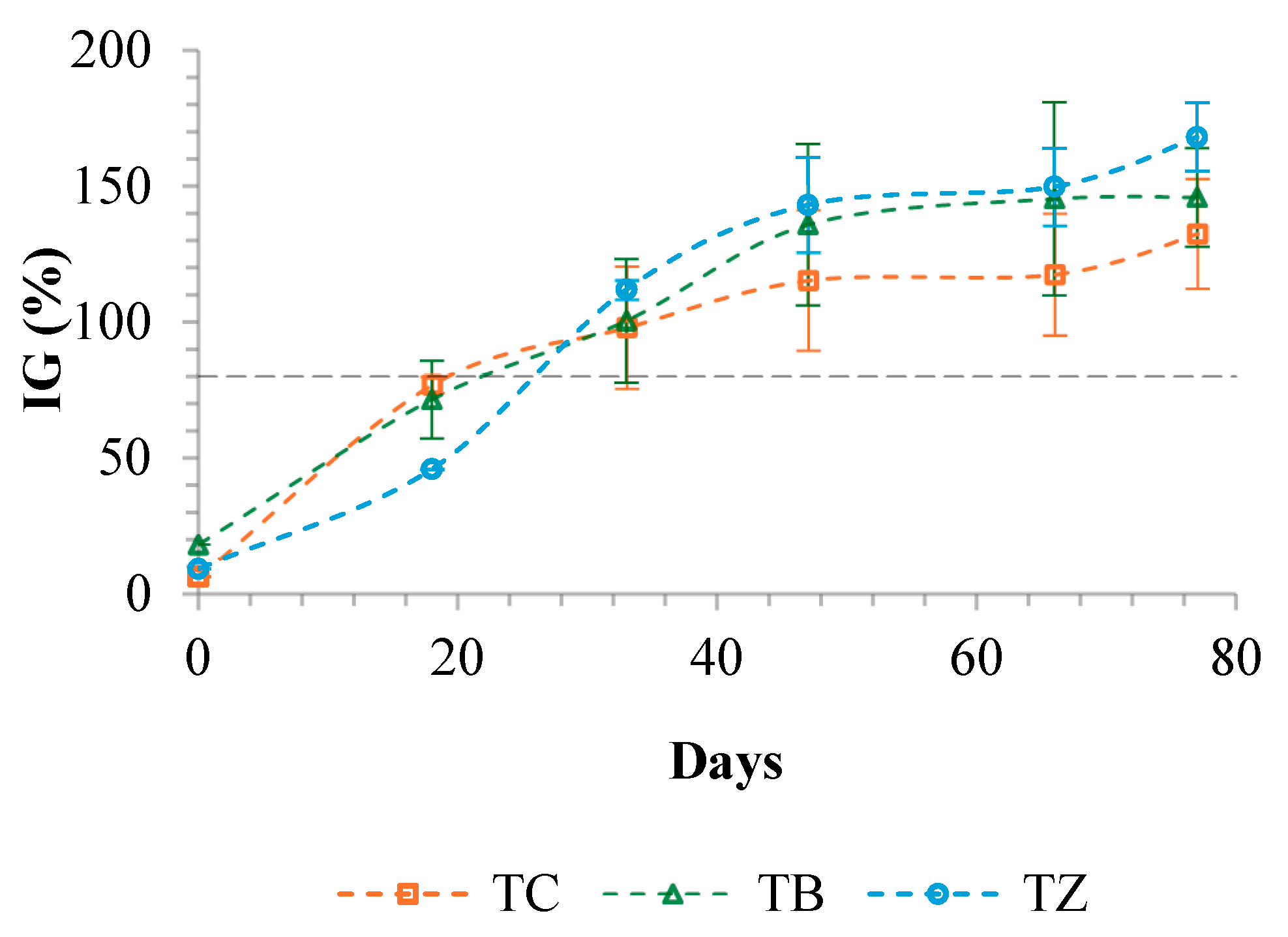
At the beginning of the process, the GI of the treatments was low due to the presence of phytotoxic substances in the co-substrates, especially in the chicken manure, which has a high EC. As the process progressed, the GI gradually increased until it exceeded the phytotoxicity threshold (GI > 80%) during the cooling stage (Figure 4). Although TZ showed the lowest GI values during the first 20 days, from day 33 onwards it surpassed TC and TB and remained above them until the end of the process; however, no significant differences were observed between treatments at the end of the process (p > 0.05). This behavior could be explained by the zeolite’s salt adsorption capacity and its subsequent gradual release [41], which is consistent with the higher EC observed in TZ during the active phase and its subsequent decrease.
In the maturation phase, all three treatments achieved GI values above 120%, with TZ and TB exceeding the control. Zhang et al. [56] reported that a 5% (w/w) biochar dose also increased the GI compared to the treatment without biochar in sewage sludge composting. Fan et al. [57] found that 5% (w/w) biochar did not significantly affect GI, whereas the higher dose (10%) reached a GI of 199%. Doni et al. [43] also found that zeolite improved the GI in vineyard waste composting, increasing it from 72% in the treatment without zeolite to 126% in the treatment with 10% (w/w) zeolite. These results suggest that both biochar and zeolite have the potential to reduce phytotoxicity during composting and to improve humification and compost maturity.

3.1.6. Compost Quality

The physicochemical characterization of the composts for each treatment is shown in Table 3. All three treatments reached maturity and stability, as indicated by the germination and self-heating test results. However, all products showed phosphorus deficiencies, according to NTC 5167 [33], which could be associated with the low phosphorus content of green onion residues (Table 1). In general, the amendments did not have a significant effect on quality parameters; however, higher GI and lower TOC were observed in treatments with biochar and zeolite, associated with higher organic matter transformation rates in the substrate mixture. Similarly, Tung et al. [58] reported a GI of 158% when a 10% dose of biochar was added to the composting of vegetable waste. In a related study, Doni et al. [43] observed that zeolite, added at a rate of 10–30%, not only increased the GI but also enhanced the nutrient content, further supporting the role of these amendments in improving compost quality. The final values for EC and pH fell within the ranges recommended by standards NTC 5167 and NCh 2880, indicating that the soluble salt content does not reach phytotoxic levels. Consequently, the compost obtained poses no risk for agricultural use and is suitable for soil application.
Additionally, TZ had the highest CEC, suggesting better nutrient utilization when applied to a crop. The results also suggest greater transformation of recalcitrant compounds during zeolite treatment, demonstrating the additive’s ability to promote microbial communities that favor their transformation. It is possible that the psychotrophic environmental conditions of the study area influenced the microbial population and the degradation of organic matter during the last phase, especially at night, when the ambient temperature can reach 0 °C.

3.2. Product Evaluation in Radish Cultivation

3.2.1. Soil Characterization Before Planting

The characterization of the cultivation soil is presented in Table 4. The soil used in the experiment had a sandy loam texture with a slightly acidic pH, consistent with the findings of Rey-Romero et al. [60]. The soil organic matter content is associated with the fertilization practices in the area (use of raw chicken manure). Soil organic matter is constantly degrading, generating compounds, such as organic acids, that influence the composition and activity of the soil microbiota. Organic carbon is a key indicator of soil quality and nutrient availability for crops. The low concentration of organic matter compared to páramo soils [60] may be associated with the fact that the sampled soil was under intensive cultivation practices that can decrease organic matter. A deficiency of exchangeable magnesium is observed, which could be due to competition from cations for high levels of exchangeable potassium and calcium [61], especially in this soil, which is used for agricultural purposes.

3.2.2. Post-Harvest Soil Characterization

Table 5 presents the results of the soil variables measured after harvest. The NPK treatment significantly reduced soil pH (p < 0.05), probably due to the influence of ammonia nitrogen, which tends to acidify the soil over time through nitrification [62]. Conversely, the compost treatment resulted in the highest pH, which is favorable for the soil and crop growth. Although raw chicken manure has an alkaline pH (Table 1), it did not significantly affect soil pH. This could be due to the application rate, which was based on nitrogen requirements. Generally, in the Berlín páramo, chicken manure is applied in excess, leading to higher pH, increased ammonia volatilization, and higher greenhouse gas emissions.
No significant differences were found between treatments for the other measured variables (p < 0.05). Regarding nutritional content, soil nitrogen ranged from 0.19% to 0.23% across the five treatments, indicating that the treatments did not affect initial soil nitrogen. However, treatment T4 (compost + NPK) increased available soil phosphorus compared to the soil prior to planting. It is important to highlight that chicken manure adds unstable organic matter to the soil, which, in the long term, affects the availability of nitrogen and other nutrients for crops, as these nutrients are required by microorganisms during degradation. Furthermore, these nutrients in chicken manure are present in complex organic molecules that are not directly assimilable by plants. Therefore, microbial action is required to convert the nutrients into usable mineral forms [63].
Regarding cation exchange capacity (CEC) and exchangeable bases, there were no significant differences between treatments. Compared with the initial soil, the Na+ concentration increased at the end of all treatments, especially in T3. The greater increase in T3 may be related to the salt content in the compost [1]. All treatments reduced soil magnesium content compared to pre-planting levels, with T4 showing the smallest reduction. Magnesium is an essential macronutrient for plant growth and health; therefore, in soil with low magnesium deficiency, the growth and quality of a radish crop could be affected [64].
A three-year study on the application of biowaste compost in crop rotations of wheat, sunflower, tomato, and pepper in Italy observed that the compost increased the soil’s organic matter content (from 2% to 2.7%), available phosphorus (from 12 mg/kg to 18.5 mg/kg), potassium (from 380 mg/kg to 451.4 mg/kg), and nitrogen (from 1.4% to 1.7%), demonstrating the positive long-term effect of compost on soil and various crops [65]. Long-term compost use helps reduce the need for synthetic fertilizers by increasing soil concentrations of nitrogen, phosphorus, and potassium; boosting microbial populations; and improving soil structure and hydrophysical properties related to moisture retention, thus promoting fertility and productivity.

3.2.3. Growth Variables

Plants under the NPK treatment had statistically greater leaf area and leaf weight than the other treatments (p < 0.05), except for T4 leaf area, which did not show significant differences (Table 6). It was observed that T2 (NPK treatment) showed the best overall performance across all growth variables and was the only treatment that significantly influenced (p < 0.05) radish diameter and weight. This is because, as a synthetic fertilizer, the nutrients are in forms readily available to the crops, meaning they can be used immediately after application due to the ease with which crops assimilate nutrients [66]. This contrasts with compost, which has a slower nutrient release rate, meaning that in the first growing cycle not all its benefits would be obtained [67].
Compared to T3 (raw chicken manure), the compost treatment did not show a visibly negative effect on radish production. In contrast, although there were no significant differences among treatments, the radish dimensions in T4 (NPK + compost) were larger than those in T3 and T1. In an experiment conducted in Morocco, the compost and synthetic fertilizer treatment was found to increase the growth variables of a broccoli crop compared to the unfertilized control and the compost treatment [66]. Similarly, Issoufa et al. [68] reported that, over a two-year period, the combined application of compost (8 t/ha) and 50% of the recommended rate of synthetic fertilizer increased black-eyed pea (Vigna unguiculata) yield by 51% compared to the use of synthetic fertilizer alone. Therefore, it is feasible to combine NPK with compost to reduce the harmful effects of synthetic fertilization without significantly affecting crop production, and, in the long term, the benefits will be greater.
In an experiment conducted in Brazil, five different compost doses (0–175 t/ha) were evaluated, and it was determined that higher doses resulted in greater radish height, diameter, and weight in a single growing cycle [69]. Similarly, four different doses of coffee husk compost were evaluated for two particle sizes; for fine particles, the doses ranged from 0 to 9 t/ha, and for coarse particles, from 0 to 12 t/ha. The higher doses performed better, and granular compost showed a slower and more prolonged release of nutrients, resulting in higher radish yields than in the treatments with fine compost [70]. Although the compost treatment did not yield the best results for the measured parameters, it is noteworthy that the crop developed adequately and that positive effects on the soil and the crop will likely be evident in the long term. Furthermore, the analysis should consider the environmental benefits of this type of organic fertilizer when used for fertilization, such as improved soil properties and reduced pollution, compared with raw animal manure and/or synthetic fertilizers. Future studies should investigate the long-term effects of compost at different dosages; specifically, in the Berlín páramo, the most suitable crop for the evaluation of the application of compost should be green onion.

4. Conclusions

Under psychrophilic environmental conditions, both 5% biochar and 2% zeolite enhanced composting performance by increasing the maximum temperature by approximately 3 °C and improving the germination index by 10% and 26%, respectively. Although neither amendment significantly altered the final product quality, both promoted the thermophilic phase and organic matter degradation. Zeolite contributed to the stabilization of pH and electrical conductivity. In contrast, biochar increased the relative abundance of the amoA gene, indicating a greater biochemical potential for nitrification during the thermophilic stage. These results indicate that each amendment provides specific benefits at the tested doses. Further research should compare their performance at equivalent concentrations and evaluate higher application rates, including potential synergistic effects.
In the pot experiment, the combined application of compost and NPK proved a viable alternative to raw chicken manure and synthetic fertilization, yielding radish growth comparable to that with raw chicken manure (2.9 g and 4.5 cm) while maintaining a more favorable soil pH (6.56). Given that compost benefits are often observed in the medium and long term, future studies should focus on optimizing application rates and timing to progressively reduce reliance on synthetic fertilizers and raw manure without compromising crop productivity.

Author Contributions

M.F.R.-M.: Research, visualization, methodology, writing. V.S.-T.: Resources, funding acquisition, writing, review, and editing. G.Z.: Formal analysis, research, resources, and writing, review, and editing. D.R.-L.: Research, methodology. N.R.-L.: Formal analysis, research, and resources. C.R.: Research, methodology. J.B.: Research, methodology. K.V.: Investigation, methodology. J.V.: Investigation, methodology. E.R.O.-O.: Conceptualization, resources, funding acquisition, writing, review, and editing. All authors have read and agreed to the published version of the manuscript.

Funding

This research was supported by the Universidad Industrial de Santander (Project VIE-UIS 3953). Maria Fernanda Rios Mercado thanks Universidad Industrial de Santander and MINCIENCIAS (BPIN 2020000100536) for funding her master’s degree studies.

Data Availability Statement

The data that supports this study are available from the corresponding author upon request.

Conflicts of Interest

The authors declare no conflicts of interest.

Abbreviations

The following abbreviations are used in this manuscript:
ECElectrical conductivity
VSVolatile solids
TOCTotal organic carbon
NDNot detected
MBase substrate mixture
TCControl treatment
TBBiochar treatment
TZZeolite treatment
GIGermination index
WHCWater holding capacity
CECCation exchange capacity
CFUColony forming units

References

  1. Oviedo-Ocaña, E.R.; Hernández-Gómez, A.; Dominguez, I.; Alexis Parra-Orobio, B.; Soto-Paz, J.; Sánchez, A. Evaluation of Co-Composting as an Alternative for the Use of Agricultural Waste of Spring Onions, Chicken Manure and Bio-Waste Produced in Moorland Ecosystems. Sustainability 2022, 14, 8720. [Google Scholar] [CrossRef]
  2. Kacprzak, M.; Malińska, K.; Grosser, A.; Sobik-Szołtysek, J.; Wystalska, K.; Dróżdż, D.; Jasińska, A.; Meers, E. Cycles of Carbon, Nitrogen and Phosphorus in Poultry Manure Management Technologies–Environmental Aspects. Crit. Rev. Environ. Sci. Technol. 2023, 53, 914–938. [Google Scholar] [CrossRef]
  3. Han, Z.; Zeng, J.; Zhao, X.; Dong, Y.; Han, Z.; Yan, T. Enhancement of Nitrogen Retention in Cow Manure Composting with Biochar: An Investigation into Migration and Regulation Mechanisms. Agronomy 2025, 15, 265. [Google Scholar] [CrossRef]
  4. Rong, H.; Du, Z.; Gao, W.; Ma, L.; Peng, X.; Jiang, Y.; Yan, D.; Zhou, H. Long-Term Pig Manure Application Increases SOC through Aggregate Protection and Fe-C Associations in a Subtropical Red Soil (Udic Ferralsols). Soil 2025, 11, 1095–1108. [Google Scholar] [CrossRef]
  5. Musa, A.M.; Ishak, C.F.; Karam, D.S.; Jaafar, N.M. Effects of Fruit and Vegetable Wastes and Biodegradable Municipalwastes Co-Mixed Composts on Nitrogen Dynamics in an Oxisol. Agronomy 2020, 10, 1609. [Google Scholar] [CrossRef]
  6. Hoang, H.G.; Thuy, B.T.P.; Lin, C.; Vo, D.-V.N.; Tran, H.T.; Bahari, M.B.; Le, V.G.; Vu, C.T. The Nitrogen Cycle and Mitigation Strategies for Nitrogen Loss during Organic Waste Composting: A Review. Chemosphere 2022, 300, 134514. [Google Scholar] [CrossRef]
  7. Reyes-Torres, M.; Oviedo-Ocaña, E.R.; Dominguez, I.; Komilis, D.; Sánchez, A. A Systematic Review on the Composting of Green Waste: Feedstock Quality and Optimization Strategies. Waste Manag. 2018, 77, 486–499. [Google Scholar] [CrossRef] [PubMed]
  8. Chen, X.; Yang, S.H.; Jiang, Z.W.; Ding, J.; Sun, X. Biochar as a Tool to Reduce Environmental Impacts of Nitrogen Loss in Water-Saving Irrigation Paddy Field. J. Clean. Prod. 2021, 290, 125811. [Google Scholar] [CrossRef]
  9. He, W.; Wang, N.; Al-Dhabi, N.A.; He, Y.; Zhang, X.; Zhang, J.; Tang, W.; Zhao, X.; Yan, B.; Qi, R.; et al. Role of Biochar and Microbial Agent in Reducing Greenhouse Gas Emissions and Modulating Microbial Succession during Co-Composting of Tea Residue and Poultry Manure. J. Environ. Chem. Eng. 2026, 14, 122342. [Google Scholar] [CrossRef]
  10. Zou, J.; Hua, Y.; Cheng, Y.; Zhang, L.; Zhang, H.; Shen, F. Comprehensive Evaluation Framework for Compost Maturity with Biochar Amendment. Bioresour. Technol. 2025, 436, 132970. [Google Scholar] [CrossRef]
  11. Mindžáková, I.; Gregová, G.; Szabóová, T.; Sasáková, N.; Venglovský, J. Devitalization of Bacteria in Composted Cattle Manure with Natural Additives and Risk for Environment. Life 2024, 14, 490. [Google Scholar] [CrossRef]
  12. Wang, Y.; Zhou, P.; Zheng, Y.; Wan, J.; Wang, Y.; Hu, X. Zeolite Enhanced Nitrogen Retention in Chicken Manure Composting: Differential Responses of Abundant and Rare Bacteria. J. Environ. Chem. Eng. 2026, 14, 120654. [Google Scholar] [CrossRef]
  13. Wang, B.; Zhang, P.; Guo, X.; Bao, X.; Tian, J.; Li, G.; Zhang, J. Contribution of Zeolite to Nitrogen Retention in Chicken Manure and Straw Compost: Reduction of NH3 and N2O Emissions and Increase of Nitrate. Bioresour. Technol. 2024, 391, 129981. [Google Scholar] [CrossRef]
  14. Alarefee, H.A.; Ishak, C.F.; Othman, R.; Karam, D.S. Effectiveness of Mixing Poultry Litter Compost with Rice Husk Biochar in Mitigating Ammonia Volatilization and Carbon Dioxide Emission. J. Environ. Manag. 2023, 329, 117051. [Google Scholar] [CrossRef]
  15. Chen, X.; Zhao, Y.; Yang, L.; Yang, Y.; Wang, L.; Wei, Z.; Song, C. Identifying the Specific Pathways to Improve Nitrogen Fixation of Different Straw Biochar during Chicken Manure Composting Based on Its Impact on the Microbial Community. Waste Manag. 2023, 170, 8–16. [Google Scholar] [CrossRef]
  16. Chung, W.J.; Chang, S.W.; Chaudhary, D.K.; Shin, J.; Kim, H.; Karmegam, N.; Govarthanan, M.; Chandrasekaran, M.; Ravindran, B. Effect of Biochar Amendment on Compost Quality, Gaseous Emissions and Pathogen Reduction during in-Vessel Composting of Chicken Manure. Chemosphere 2021, 283, 131129. [Google Scholar] [CrossRef] [PubMed]
  17. He, J.; Li, L.; Shi, Y.; Wang, K.; He, J.; Ruan, Y.; Bao, H.; Khan, M.U.; Li, D.; Chen, S.; et al. Oyster Shell-Functionalized Biochar Enhanced Compost Humification during the Co-Composting of Pig Manure with Rice Straw. Carbon Res. 2026, 5, 7. [Google Scholar] [CrossRef]
  18. Cui, H.; Ou, Y.; Wang, L.; Yan, B.; Li, Y.; Bao, M. Critical Passivation Mechanisms on Heavy Metals during Aerobic Composting with Different Grain-Size Zeolite. J. Hazard. Mater. 2021, 406, 124313. [Google Scholar] [CrossRef]
  19. Stacey, N.E.; Tea, T.; Seefeldt, S.S.; Bary, A.; Collins, D.P. Biochar-Poultry Manure Compost Alters Temperature and Nitrogen Dynamics during Composting and Improves Potato Growth Following Field Application. Compos. Sci. Util. 2024, 31, 86–102. [Google Scholar] [CrossRef]
  20. Geng, X.; Yang, H.; Gao, W.; Yue, J.; Mu, D.; Wei, Z. Greenhouse Gas Emission Characteristics during Kitchen Waste Composting with Biochar and Zeolite Addition. Bioresour. Technol. 2024, 399, 130575. [Google Scholar] [CrossRef] [PubMed]
  21. Wang, H.; Lu, Y.; Xu, J.; Liu, X.; Sheng, L. Effects of Additives on Nitrogen Transformation and Greenhouse Gases Emission of Co-Composting for Deer Manure and Corn Straw. Environ. Sci. Pollut. Res. 2021, 28, 13000–13020. [Google Scholar] [CrossRef]
  22. Kumari, S.; Manyapu, V.; Kumar, R. 9—Recent Advances in Composting and Vermicomposting Techniques in the Cold Region: Resource Recovery, Challenges, and Way Forward. In Advanced Organic Waste Management; Hussain, C., Hait, S., Eds.; Elsevier: Amsterdam, The Netherlands, 2022; pp. 131–154. [Google Scholar] [CrossRef]
  23. Wei, L.; Shutao, W.; Jin, Z.; Tong, X. Biochar Influences the Microbial Community Structure during Tomato Stalk Composting with Chicken Manure. Bioresour. Technol. 2014, 154, 148–154. [Google Scholar] [CrossRef] [PubMed]
  24. Liu, H.; Wang, L.; Lei, M. Positive Impact of Biochar Amendment on Thermal Balance during Swine Manure Composting at Relatively Low Ambient Temperature. Bioresour. Technol. 2019, 273, 25–33. [Google Scholar] [CrossRef] [PubMed]
  25. Shan, G.; Li, W.; Liu, J.; Zhu, L.; Hu, X.; Yang, W.; Tan, W.; Xi, B. Nitrogen Loss, Nitrogen Functional Genes, and Humification as Affected by Hydrochar Addition during Chicken Manure Composting. Bioresour. Technol. 2023, 369, 128512. [Google Scholar] [CrossRef] [PubMed]
  26. Dang, R.; Cai, Y.; Li, J.; Kong, Y.; Jiang, T.; Chang, J.; Yao, S.; Yuan, J.; Li, G.; Wang, G. Biochar Reduces Gaseous Emissions during Poultry Manure Composting: Evidence from the Evolution of Associated Functional Genes. J. Clean. Prod. 2024, 452, 142060. [Google Scholar] [CrossRef]
  27. Rios-Mercado, M.F.; Oviedo-Ocaña, E.R.; Parra-Orobio, B.A.; Gonzalez, E.D.; Zafra, G.; Sanchez-Torres, V.; Sanchez, A. Enhancement of Microbial Activity during the Composting Process of Agricultural and Farm Waste Using Zeolite Solid and Suspended Nanoparticles. Waste Biomass Valorization 2026, 17, 2805–2817. [Google Scholar] [CrossRef]
  28. Parra-Orobio, B.A.; Soto-Paz, J.; Hernández-Cruz, J.A.; Gómez-Herreño, M.C.; Domínguez-Rivera, I.C.; Oviedo-Ocaña, E.R. Evaluation of Biochar as an Additive in the Co-Composting of Green Waste and Food Waste. Sustainability 2023, 15, 7437. [Google Scholar] [CrossRef]
  29. Abban-Baidoo, E.; Manka’abusi, D.; Apuri, L.; Marschner, B.; Frimpong, K.A. Biochar Addition Influences C and N Dynamics during Biochar Co-Composting and the Nutrient Content of the Biochar Co-Compost. Sci. Rep. 2024, 14, 23781. [Google Scholar] [CrossRef]
  30. Chung, W.; Shim, J.; Chang, S.W.; Ravindran, B. Effect of Biochar Amendments on the Co-Composting of Food Waste and Livestock Manure. Agronomy 2023, 13, 35. [Google Scholar] [CrossRef]
  31. Venglovsky, J.; Sasakova, N.; Vargova, M.; Pacajova, Z.; Placha, I.; Petrovsky, M.; Harichova, D. Evolution of Temperature and Chemical Parameters during Composting of the Pig Slurry Solid Fraction Amended with Natural Zeolite. Bioresour. Technol. 2005, 96, 181–189. [Google Scholar] [CrossRef]
  32. Instituto de Hidrología Meteorología y Estudios Ambientales (IDEAM). Datos Históricos de Temperatura. Available online: https://www.ideam.gov.co/dhime (accessed on 6 June 2025).
  33. Norma Técnica Colombiana 5167; Productos Para La Industria Agrícola, Productos Orgánicos Usados Como Abonos o Fertilizantes y Enmiendas de Suelo. ICONTEC: Bogota, Colombia, 2022.
  34. Jiang, J.; Liu, X.; Huang, Y.; Huang, H. Inoculation with Nitrogen Turnover Bacterial Agent Appropriately Increasing Nitrogen and Promoting Maturity in Pig Manure Composting. Waste Manag. 2015, 39, 78–85. [Google Scholar] [CrossRef]
  35. Levy-Booth, D.J.; Prescott, C.E.; Grayston, S.J. Microbial Functional Genes Involved in Nitrogen Fixation, Nitrification and Denitrification in Forest Ecosystems. Soil Biol. Biochem. 2014, 75, 11–25. [Google Scholar] [CrossRef]
  36. Liu, M.; Xue, R.; Han, N.; Yang, S.; Wang, D.; Hu, Y.; Gu, K.; Su, J. The Impact of Different Preceding Crops on Soil Nitrogen Structure and Nitrogen Cycling in Tobacco-Planting Soil. Sci. Rep. 2024, 14, 1767. [Google Scholar] [CrossRef] [PubMed]
  37. Hamayoun, H.; Omer Darwash, M.; Rahim Ghafari, S.; Wase Tajzadah, A.; Mahammad Modaser, M.; Qayum Mangle, M.; Mahammadi, F.M. Effect of Different Levels of Nitrogen and Intra Row Spacing on Growth and Yield of Radish (Raphanus sativus L.) Variety Red to under Green House Condition. Int. J. Appl. Res. 2018, 4, 9–11. [Google Scholar]
  38. Czekała, W.; Malińska, K.; Cáceres, R.; Janczak, D.; Dach, J.; Lewicki, A. Co-Composting of Poultry Manure Mixtures Amended with Biochar—The Effect of Biochar on Temperature and C-CO2 Emission. Bioresour. Technol. 2016, 200, 921–927. [Google Scholar] [CrossRef]
  39. Soudejani, H.T.; Kazemian, H.; Inglezakis, V.J.; Zorpas, A.A. Application of Zeolites in Organic Waste Composting: A Review. Biocatal. Agric. Biotechnol. 2019, 22, 101396. [Google Scholar] [CrossRef]
  40. Wu, X.; Ren, L.; Luo, L.; Zhang, J.; Zhang, L.; Huang, H. Bacterial and Fungal Community Dynamics and Shaping Factors during Agriculturalwaste Composting with Zeolite and Biochar Addition. Sustainability 2020, 12, 7082. [Google Scholar] [CrossRef]
  41. Chen, H.; Awasthi, S.K.; Liu, T.; Duan, Y.; Ren, X.; Zhang, Z.; Pandey, A.; Awasthi, M.K. Effects of Microbial Culture and Chicken Manure Biochar on Compost Maturity and Greenhouse Gas Emissions during Chicken Manure Composting. J. Hazard. Mater. 2020, 389, 121908. [Google Scholar] [CrossRef]
  42. Hedström, A. Ion Exchange of Ammonium in Zeolites: A Literature Review. J. Environ. Eng. 2001, 127, 673–681. [Google Scholar] [CrossRef]
  43. Doni, S.; Peruzzi, E.; Manzi, D.; Masini, C.; Mattii, G.B.; Macci, C.; Masciandaro, G. Co-Composting Winery Waste and Zeolite: A Sustainable Valorisation Example. J. Mater. Cycles Waste Manag. 2024, 26, 1086–1101. [Google Scholar] [CrossRef]
  44. Agyarko-Mintah, E.; Cowie, A.; Van Zwieten, L.; Singh, B.P.; Smillie, R.; Harden, S.; Fornasier, F. Biochar Lowers Ammonia Emission and Improves Nitrogen Retention in Poultry Litter Composting. Waste Manag. 2017, 61, 129–137. [Google Scholar] [CrossRef]
  45. Hemidat, S.; Jaar, M.; Nassour, A.; Nelles, M. Monitoring of Composting Process Parameters: A Case Study in Jordan. Waste Biomass Valorization 2018, 9, 2257–2274. [Google Scholar] [CrossRef]
  46. Soobhany, N. Assessing the Physicochemical Properties and Quality Parameters during Composting of Different Organic Constituents of Municipal Solid Waste. J. Environ. Chem. Eng. 2018, 6, 1979–1988. [Google Scholar] [CrossRef]
  47. Jia, X.; Wang, M.; Yuan, W.; Ju, X.; Yang, B. The Influence of Biochar Addition on Chicken Manure Composting and Associated Methane and Carbon Dioxide Emissions. Bioresources 2016, 11, 5255–5264. [Google Scholar] [CrossRef]
  48. Gigliotti, G.; Proietti, P.; Said-Pullicino, D.; Nasini, L.; Pezzolla, D.; Rosati, L.; Porceddu, P.R. Co-Composting of Olive Husks with High Moisture Contents: Organic Matter Dynamics and Compost Quality. Int. Biodeterior. Biodegrad. 2012, 67, 8–14. [Google Scholar] [CrossRef]
  49. Feng, M.; Wu, X.; Qiu, X.; Wang, H. Influence of Peat and Biochar on Gas Emissions and Microbial Metabolism During Co-Composting of Chicken Manure and Maize Straw. Waste Biomass Valorization 2023, 14, 197–208. [Google Scholar] [CrossRef]
  50. Peng, S.; Li, H.; Xu, Q.; Lin, X.; Wang, Y. Addition of Zeolite and Superphosphate to Windrow Composting of Chicken Manure Improves Fertilizer Efficiency and Reduces Greenhouse Gas Emission. Environ. Sci. Pollut. Res. 2019, 26, 36845–36856. [Google Scholar] [CrossRef] [PubMed]
  51. Gong, X.; Li, S.; Sun, X.; Zhang, L.; Zhang, T.; Wei, L. Maturation of Green Waste Compost as Affected by Inoculation with the White-Rot Fungi Trametes versicolor and Phanerochaete chrysosporium. Environ. Technol. 2017, 38, 872–879. [Google Scholar] [CrossRef]
  52. Maleki, S.; Ranjbar, F.; Beheshti-Alagha, A.; Sharifi, R. Release Kinetics of Carbon, Nitrogen, Phosphorus, and Potassium During Co-Composting of Poultry Manure Mixed with Different Ratios of Wheat Straw and Zeolite. Waste Biomass Valorization 2023, 14, 57–68. [Google Scholar] [CrossRef]
  53. Li, R.; Wang, Q.; Zhang, Z.; Zhang, G.; Li, Z.; Wang, L.; Zheng, J. Nutrient Transformation during Aerobic Composting of Pig Manure with Biochar Prepared at Different Temperatures. Environ. Technol. 2015, 36, 815–826. [Google Scholar] [CrossRef]
  54. Qian, X.; Gu, J.; Sun, W.; Wang, X.J.; Su, J.Q.; Stedfeld, R. Diversity, Abundance, and Persistence of Antibiotic Resistance Genes in Various Types of Animal Manure Following Industrial Composting. J. Hazard. Mater. 2018, 344, 716–722. [Google Scholar] [CrossRef]
  55. Zhong, X.Z.; Zeng, Y.; Wang, S.P.; Sun, Z.Y.; Tang, Y.Q.; Kida, K. Insight into the Microbiology of Nitrogen Cycle in the Dairy Manure Composting Process Revealed by Combining High-Throughput Sequencing and Quantitative PCR. Bioresour. Technol. 2020, 301, 122760. [Google Scholar] [CrossRef]
  56. Zhang, C.; Zhou, M.; Du, H.; Li, D.; Lv, D.; Hou, N. Influence of Microbial Agents-Loaded Biochar on Bacterial Community Assembly and Heavy Metals Morphology in Sewage Sludge Compost: Insights from Community Stability and Complexity. Bioresour. Technol. 2025, 419, 132070. [Google Scholar] [CrossRef] [PubMed]
  57. Fan, X.; Wei, Y.; Song, D.; Zhou, T.; Li, R.; Su, X.; Zhang, T.; Cheng, S.; Xiao, R. Biochar Enhanced Co-Composting for Peat-Free Seedling Substrate: A Win-Win Solution for Sustainable Development of Modern Vegetable Industry. Process Saf. Environ. Prot. 2025, 194, 1504–1514. [Google Scholar] [CrossRef]
  58. Van Tung, T.; Kim, H.T.; Mai, L.T.T.; Tri, N.T.; Linh, D.T.T.; Duy, N.H.; My, P.L.; Mukherjee, S.; Tran, H.-T. Impact of Biochar Addition for Odor Emission Reduction and Compost Quality Enhancement. Proc. Indian Natl. Sci. Acad. 2025, 91, 1666–1684. [Google Scholar] [CrossRef]
  59. Norma Chilena 2880; Compost—Quality Requirements and Classification. INN: Santiago, Chile, 2015.
  60. Rey-Romero, D.C.; Daza-Torres, M.C.; Sanchez-Torres, V.; Oviedo-Ocaña, E.R. Effects of Green Onion (Allium fistulosum) Cropping on Topsoil Nitrogen Species Contents in a Páramo Ecosystem. Geoderma Reg. 2025, 41, e00958. [Google Scholar] [CrossRef]
  61. Ishfaq, M.; Wang, Y.; Yan, M.; Wang, Z.; Wu, L.; Li, C.; Li, X. Physiological Essence of Magnesium in Plants and Its Widespread Deficiency in the Farming System of China. Front. Plant Sci. 2022, 13, 802274. [Google Scholar] [CrossRef]
  62. Barak, P.; Jobe, B.O.; Krueger, A.R.; Peterson, L.A.; Laird, D.A. Effects of Long-Term Soil Acidification Due to Nitrogen Fertilizer Inputs in Wisconsin; Kluwer Academic Publishers: Norwell, MA, USA, 1997; Volume 197. [Google Scholar] [CrossRef]
  63. Nicholson, F.A.; Chambers, B.J.; Dampney, P.M.R. Nitrogen Value of Poultry Litter Applications to Root Crops and Following Cereal Crops. J. Agric. Sci. 2003, 140, 53–64. [Google Scholar] [CrossRef]
  64. Yousaf, M.; Bashir, S.; Raza, H.; Shah, A.N.; Iqbal, J.; Arif, M.; Bukhari, M.A.; Muhammad, S.; Hashim, S.; Alkahtani, J.; et al. Role of Nitrogen and Magnesium for Growth, Yield and Nutritional Quality of Radish. Saudi J. Biol. Sci. 2021, 28, 3021–3030. [Google Scholar] [CrossRef]
  65. Fecondo, G.; Bucciarelli, S.; Di Paolo, E.; Ghianni, G. Biowaste Compost Effects on Productive and Qualitative Characteristics of Some Field Crops and on Soil Fertility. Ital. J. Agron. 2015, 10, 85–89. [Google Scholar] [CrossRef]
  66. Yıldırım, G.H.; Yılmaz, N.; Soysal, A.Ö.Ş.; Öztürk, Ş.; Akçin, Ö.E.; Ay, E.B. Effects of Different Synthetic and Organic Fertilizer Applications on the Micromorphological Characteristics of Maize (Zea mays L.) Leaves and Some Silage Quality Traits. Indian J. Agric. Res. 2024, 58, 752–760. [Google Scholar] [CrossRef]
  67. De Rosa, D.; Basso, B.; Rowlings, D.W.; Scheer, C.; Biala, J.; Grace, P.R. Can Organic Amendments Support Sustainable Vegetable Production? Agron. J. 2017, 109, 1856–1869. [Google Scholar] [CrossRef]
  68. Issoufa, B.B.; Ibrahim, A.; Abaidoo, R.C. Agronomic and Economic Benefits of Integrated Nutrient Management Options for Cowpea Production. Exp. Agric. 2020, 56, 440–452. [Google Scholar] [CrossRef]
  69. Lanna, N.B.L.; Silva, P.N.L.; Colombari, L.F.; Corrêa, C.V.; Cardoso, A.I.I. Residual Effect of Organic Fertilization on Radish Production. Hortic. Bras. 2018, 36, 47–53. [Google Scholar] [CrossRef]
  70. Hidayat, E.; Adrinal; Mitoma, Y.; Harada, H. Analysing the Effect of Coffee Husk Compost on Soil Quality and Yield of Radish Green (Raphanus Sativus Var. Caudatus) Under Greenhouse Conditions. Cut.-Edge Res. Agric. Sci. 2021, 11, 120–129. [Google Scholar] [CrossRef]
Figure 1. Evolution of the temperature in the composting process of several mixtures: TC: control; TB: biochar; TZ: zeolite (n = 2 biological replicates).
Processes 14 01530 g001
Figure 2. Evolution of pH (a) and EC (b) for the composting treatments (TC: control; TB: biochar; TZ: zeolite) (n = 2 biological replicates).
Processes 14 01530 g002
Figure 3. Evolution of total nitrogen (a) and the abundance of nitrogen cycle functional genes: nifH (b), amoA (AOB) (c), amoA (AOA) (d), nirS (e), and nosZ (f) across composting treatments (TC: control, TB: biochar, TZ: zeolite) during the four composting phases: mesophilic (MPh), thermophilic (TPh), cooling (CPh), and maturation (Mat) (n = 2 biological replicates).
Processes 14 01530 g003
Figure 4. Evolution of germination index for composting treatments (TC: control; TB: biochar; TZ: zeolite) (n = 2 biological replicates).
Processes 14 01530 g004
Table 1. Primer sequences and qPCR conditions used for the quantification of nitrogen-cycling genes.
Target GenePrimer Sequence (5′→3′)Annealing Temperature (°C)Reference
Nitrogenase reductase (nifH)F: AAAGGYGGWATCGGYAARTCCACCAC
R: TTGTTSGCSGCRTACATSGCCATCA
56[35]
Nitrous oxide reductase (nosZ)F: CGYTGTTCMTCGACAGCCAG
R: CGSACCTTSTTGCCSTYGCG
54[35]
Bacterial ammonium monooxygenase (amoA—AOB)F: GGGGHTTYTACTGGTGGT
R: CCCCTCNGNAAAGCCTTCTTC
55[35]
Archaeal ammonium monooxygenase (amoA—AOA)F: TAATGGTCTGGCTTAGACG
R: CGGCCATCCATCTGTATGT
55[36]
Nitrite reductase (nirS)F: AACGYSAAGGARACSGG
R: GASTTCGGRTGSGTCTTSAYGAA
54[35]
Table 2. Temperature main facts for the treatments: TC: control; TB: biochar; TZ: zeolite.
TreatmentTmax (°C)Day the Thermophilic Phase Started Day the Thermophilic Phase EndedAdded Water (L)Initial pH Final pH
TC54.4314658.08.0
TB57.1315888.18.8
TZ57.33161268.08.1
Table 3. Characterization of the composts obtained in this study (TC: control; TB: biochar; TZ: zeolite). Values for the standard NTC 5167 and Nch 2880 are also presented for comparison.
TreatmentTCTBTZNTC 5167Nch 2880
Physicochemical
Moisture (%)44 ± 2 a38 ± 3 a41 ± 1 a<2530–45%
Ash (%)25 ± 2 a25 ± 1 a33 ± 0 b<60<80
CEC (meq/100 g)47.746.363.9>30-
TOC (%)3831.832.7>15-
WHC (%)246237187>100-
pH8.0 ± 0.3 a8.8 ± 0.5 a8.0 ± 0.2 a>4–<95–8.5
EC (mS/cm)1.8 ± 0.2 a2.2 ± 0.3 a1.8 ± 0.2 a-<3
Total N (%)1.481.451.4>1>0.5
C/N252123<25≤25
Total P (%)0.90.850.92>1-
Total K (%)2.42.33.3>1-
Hemicellulose (%)11.310.711.7--
Cellulose (%)6.85.65.5--
Lignin (%)56.457.855.2--
GI (%)133 ± 20 a146 ± 18 a168 ± 13 a-≥80
Microbiological
Molds (CFU/g)000--
Yeast (CFU/g)8002000--
Enterobacteriaceae (CFU/g) 162180202<1000-
Note: NTC 5167 [33], NCh 2880 [59]. Different letters (a, b) indicate significant differences between treatments, whereas treatments sharing the same letter are not significantly different. Data are presented as mean ± standard deviation (n = 2 biological replicates).
Table 4. Soil characterization. CEC: cation exchange capacity; Ca2+: exchangeable calcium; Mg2+: exchangeable magnesium; K+: exchangeable potassium; Na+: exchangeable sodium.
ParameterResults
TextureSandy loam
pH6.58 ± 0.17
Organic carbon (%) 2.62 ± 0.36
Organic matter (%)4.52 ± 0.62
Total N (%)0.23 ± 0.03
Available P (mg/Kg)537.98 ± 156.41
CEC (cmol(+)/Kg)14.99 ± 1.87
Ca2+ (cmol(+)/Kg)19.62 ± 3.36
Mg2+ (cmol(+)/Kg)1.35 ± 0.12
K+ (cmol(+)/Kg)0.99 ± 0.09
Na+ (cmol(+)/Kg)0.07 ± 0.01
Note: Data are presented as mean ± standard deviation (n = 3).
Table 5. Post-harvest soil characterization. T1: compost; T2: NPK; T3: chicken manure; T4: NPK + compost; T5: control; CEC: cation exchange capacity; Ca2+: exchangeable calcium; Mg2+: exchangeable magnesium; K+: exchangeable potassium; Na+: exchangeable sodium.
VariableT1T2T3T4T5
pH6.93 ± 0.13 b6.14 ± 0.18 a6.59 ± 0.03 c6.56 ± 0.08 c6.75 ± 0.07 bc
Organic carbon (%) 2.15 ± 0.47 a2.51 ± 0.73 a2.65 ± 0.48 a2.65 ± 0.27 a2.22 ± 0.12 a
Organic matter (%)3.71 ± 0.81 a4.33 ± 1.26 a4.57 ± 0.83 a4.57 ± 0.46 a3.82 ± 0.20 a
Total N (%)0.19 ± 0.04 a0.21 ± 0.06 a0.23 ± 0.04 a0.23 ± 0.02 a0.19 ± 0.01 a
Available P (mg/Kg)469.05 ± 109.87 a501.98 ± 107.15 a388.67 ± 70.47 a626.52 ± 124.94 a452.58 ± 121.55 a
CEC (cmol(+)/Kg)12.94 ± 4.47 a12.88 ± 0.49 a13.58 ± 2.01 a13.86 ± 3.54 a14.11 ± 3.18 a
Ca2+ (cmol(+)/Kg)14.70 ± 5.48 a12.58 ± 1.71 a13.18 ± 2.28 a17.06 ± 3.52 a14.83 ± 3.32 a
Mg2+ (cmol(+)/Kg)1.16 ± 0.30 a1.08 ± 0.19 a1.08 ± 0.20 a1.22 ± 0.28 a1.06 ± 0.40 a
K+ (cmol(+)/Kg)1.26 ± 0.42 a0.99 ± 0.16 a0.91 ± 0.25 a1.02 ± 0.15 a0.75 ± 0.27 a
Na+ (cmol(+)/Kg)0.27 ± 0.11 a0.13 ± 0.04 a0.41 ± 0.38 a0.19 ± 0.06 a0.11 ± 0.02 a
Note: Different letters (a, b, c) indicate significant differences between treatments, whereas treatments sharing the same letter are not significantly different. Data are presented as mean ± standard deviation (n = 3).
Table 6. Morphological and growth parameters in radish plants subjected to the treatments: T1: compost; T2: NPK; T3: CM; T4: NPK + compost; T5: control.
ParameterT1T2T3T4T5
Number of leaves7 ± 1 a8 ± 1 a7 ± 1 a6 ± 1 a6 ± 1 a
Leaf area (cm2)169 ± 10 b336 ± 5 a226 ± 44 b255 ± 48 ab203 ± 35 b
Radish height (cm)4.2 ± 1.3 a5.6 ± 0.6 a4.3 ± 0.6 a5.9 ± 0.5 a4.8 ± 0.3 a
Radish diameter (cm)4.4 ± 0.4 ab4.6 ± 0.4 a4.1 ± 0.2 ab4.5 ± 0.2 ab3.6 ± 0.3 b
Leaf weight (g)0.6 ± 0.2 b1.5 ± 0.1 a0.9 ± 0.2 b1.0 ± 0.2 b0.8 ± 0.1 b
Radish weight (g)2.5 ± 0.6 ab3.4 ± 0.2 a2.2 ± 0.4 ab2.9 ± 0.6 ab2.2 ± 0.3 b
Note: Different letters (a, b) indicate significant differences between treatments, whereas treatments sharing the same letter are not significantly different. Data are presented as mean ± standard deviation (n = 3).
Disclaimer/Publisher’s Note: The statements, opinions and data contained in all publications are solely those of the individual author(s) and contributor(s) and not of MDPI and/or the editor(s). MDPI and/or the editor(s) disclaim responsibility for any injury to people or property resulting from any ideas, methods, instructions or products referred to in the content.