1. Introduction
Over the past several decades, the miniaturization of integrated circuits has been achieved by scaling down transistors in accordance with Moore’s Law [
1]. However, in recent years, this approach has encountered physical limits and the bottleneck of circuit interconnection [
2], leading to the proposal of concepts that go beyond Moore’s Law. One of the key aspects of surpassing Moore’s Law is that enhancements in integration capability can be realized through advanced packaging technologies, rather than solely relying on the reduction in transistor sizes. Various advanced packaging techniques, such as chip stacking, wafer-level stacking, and through-silicon vias (TSVs), have enabled the heterogeneous integration of chips from different technology nodes within the same package. For heterogeneous integration, 3D integration technology has emerged as one of the solutions to continue scaling down integrated circuit devices within the post-Moore’s Law paradigm [
3], as traditional packaging technologies face challenges such as long interconnects, high power consumption, and large size [
4,
5]. Moreover, 3D ICs can offer higher integration density, lower power consumption, and reduced RC delay [
6,
7].
3D ICs can leverage TSV interconnect technology for vertical stacking architectures, resulting in higher integration density and improved performance. Due to the commonality of materials, Cu-Cu thermo-compression bonding has become one of the main techniques in chip stacking processes. The advantage of direct Cu-Cu thermo-compression bonding is that it provides an adhesive layer for two active layers as well as electrical interconnects between layers. To achieve a reliable bonding process, it is essential to understand the surface preparation techniques for bonding, process conditions, and the temperatures required for bonding [
8,
9,
10]. The temperature should be as low as possible to reduce mechanical stress and degradation, yet high enough to ensure reliable bond strength. Thus, precise control over the temperature of the bonding surface is a key factor for effective bonding.
Since Tuckerman and Pease [
11] proposed the construction of microchannels within a chip to advance embedded cooling technology, this approach has been widely researched and applied due to its efficiency, which surpasses that of conventional air cooling methods. Zhang and colleagues [
12] explored the characteristics of microneedle radiators in different cooling stages and examined the impact of microcooling technology on the electrical properties of 3D interconnects. Sarvey and others [
13] achieved significant thermal resistance reduction by etching microneedle structures on the back of Field-Programmable Gate Array (FPGA) chips, validating the effectiveness of microcooling in integrated circuits. Hu and colleagues [
14] designed a thin microgap coolant manifold that accommodates multiple high-power modules, providing a viable thermal management solution for stacked 2.5D integrated circuits. Remco and others [
15] demonstrated the cooling efficiency under high heat fluxes with a monolithically integrated manifold microchannel cooling system designed on the chip, confirming its potential. Bar-Cohen and colleagues [
16] summarized the experimental validation of embedded cooling technology in enhancing output power, acknowledging its broad prospects. These technologies enhance heat transfer performance through microstructural design improvements, though they increase flow resistance. Harpole and Eninger [
17] effectively reduced thermal resistance by segmenting the flow channels to optimize flow. Jung [
18] improved microfluidic cooling performance through 3D manifolds and co-design, while Chen and colleagues [
19] demonstrated the significant role of microfluidics in temperature control by designing microchannel modules to reduce flow resistance, proving the technology’s maturity. Despite the demonstrated effectiveness of microfluidic technology in temperature control, to date, there have been no studies on its application in thermal compression bonding processes.
While the aforementioned studies [
11,
12,
13,
14,
15,
16,
17,
18,
19] have extensively demonstrated the efficacy of microfluidic structures in dissipating high heat fluxes for electronics cooling, the application of this precise thermal control capability to chip-level bonding processes remains largely unexplored. Current thermo-compression bonding techniques typically rely on uniform heating across the entire substrate, which introduces thermal stresses and imposes a high thermal budget on the integrated devices. There is a distinct lack of research focusing on the deliberate manipulation of spatial temperature gradients at the bonding interface to facilitate low-temperature metal diffusion. Therefore, introducing microfluidics to induce a controlled temperature differential presents a novel and underexamined strategy to address the limitations of conventional uniform heating in advanced packaging.
The advancement of microfluidic technology has significantly improved chip cooling efficiency, thereby enhancing the thermal stability of chips. This paper investigates a copper-to-copper thermo-compression bonding method facilitated by microfluidic technology. This technique utilizes microfluidic regulation to induce a temperature differential at the single bonding interface, orchestrated through meticulously designed flow channel structures and fluid dynamics to establish a temperature gradient within the bonding region. Such precise control over the temperature gradient ensures the realization of high-quality bonding, demonstrating the further application potential of microfluidic technology in the microelectronics manufacturing realm. The simulation results presented in this work demonstrate that the proposed microfluidic approach can achieve a bonding interface temperature ranging from approximately 116 °C to 221 °C, with a maximum temperature differential exceeding 100 °C across a single bonding plane, thereby establishing a well-defined thermal gradient conducive to enhanced copper diffusion and bonding.
2. Experimental Structure Fabrication and Preliminary Parametric Analysis
To evaluate the feasibility of temperature regulation via microchannels, a series of parametric numerical simulations was initially conducted. It is important to note that the results presented in this section are derived from finite element simulations aiming to identify the sensitivity of bonding surface temperature to key operational variables. The fabrication of the silicon wafer with microchannels is described as follows.
Firstly, a silicon wafer is used as the substrate. Microchannels are fabricated on the back side of the silicon wafer through an etching process.
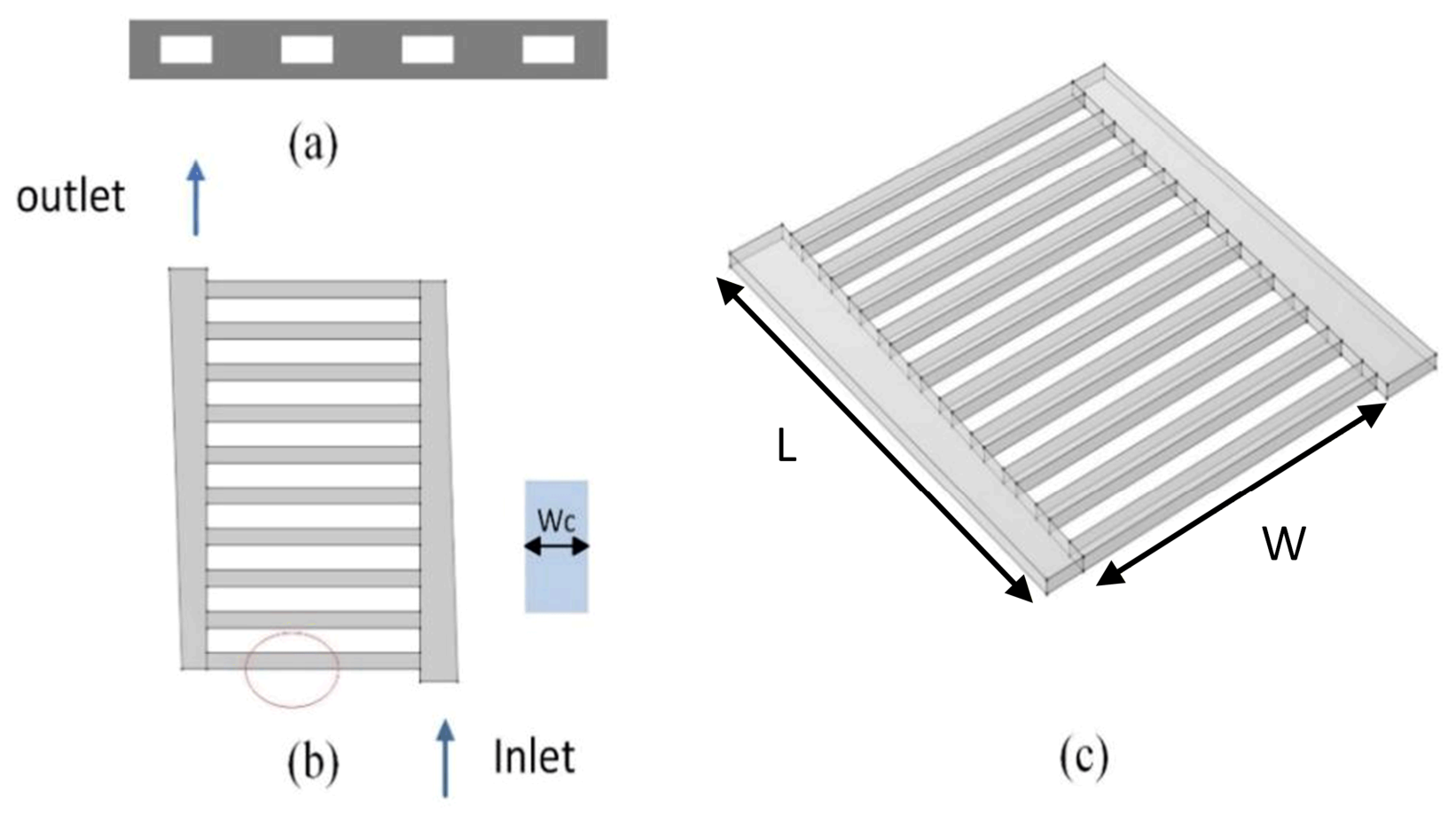
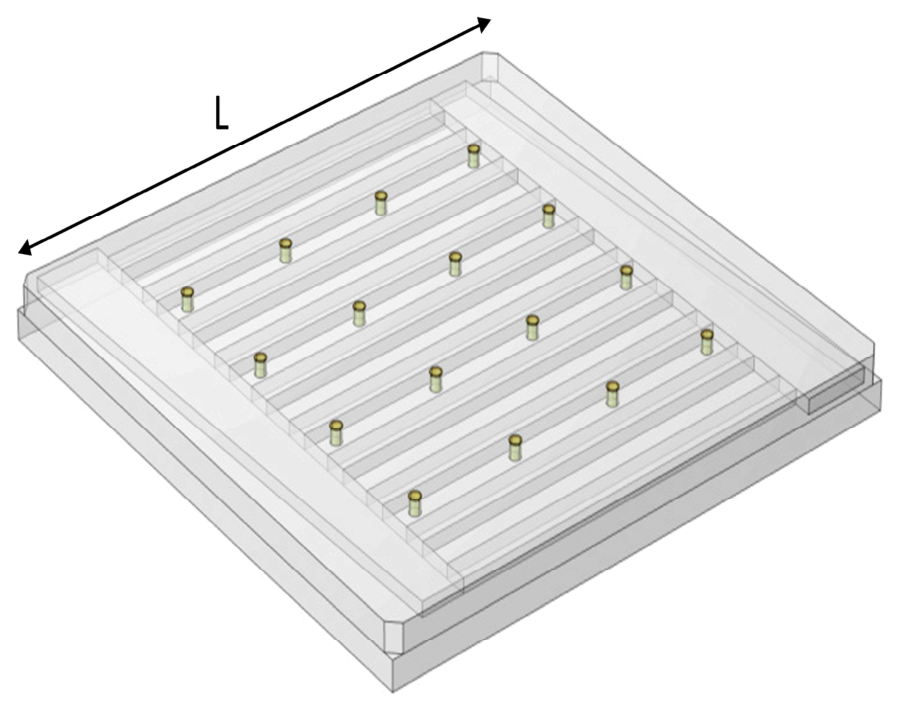
Figure 1 provides an overview of the internal flow channel distribution within the wafer. The heat sink consists of two layers, with the inlet and outlet located at both ends of the trapezoidal channel. The distribution channel, collection channel, and microchannels are set in the silicon layer. The coolant enters through the inlet, then flows through the distribution channel, collection channel, and microchannels. Finally, the heated coolant exits through the outlet. L refers to the length of the trapezoidal channel, and W denotes the length of the middle rectangular channel. In this example, L = 4.7 mm and W = 3.4 mm. W
C represents the microchannel width of 0.2 mm, and the thickness of the silicon layer is 200 μm. The choice of a trapezoidal channel geometry for the distribution and collection manifolds is motivated by two primary considerations. First, the tapered shape promotes a more uniform flow distribution among the parallel microchannels by reducing the pressure variation along the manifold length, thereby minimizing flow maldistribution that could lead to uneven cooling. Second, trapezoidal structures are readily fabricated using anisotropic wet etching of silicon, a well-established and cost-effective microfabrication technique. The specific dimensions (L = 4.7 mm, W = 3.4 mm, W
C = 0.2 mm) were selected to accommodate the 5 mm × 5 mm chip footprint while providing sufficient total heat transfer area to achieve the desired temperature reduction at the bonding interface.
The fabrication of such microchannel structures on the backside of a silicon wafer is well within the capabilities of standard microfabrication processes, particularly deep reactive ion etching (DRIE), which is routinely employed in the production of microelectromechanical systems (MEMS) and microfluidic devices. This ensures that the proposed design is not only theoretically viable but also practically manufacturable using established semiconductor processing techniques.
Various approaches have been implemented to control the temperature of the bonding surface. By comparing these approaches, the optimal solution is selected for implementation in subsequent experiments. The selection of inlet fluid velocity, number of microchannels, and fluid temperature as primary control variables is based on fundamental convective heat transfer principles. According to Newton’s law of cooling, the rate of heat removal is governed by the convective heat transfer coefficient h, which is a function of fluid velocity (Reynolds number) and channel geometry [
20]. For microchannels with characteristic hydraulic diameters below 1 mm, the Reynolds number typically remains below 200 under practical flow conditions, confirming that the flow remains well within the laminar regime [
20,
21]. Furthermore, the bulk temperature difference between the fluid and the solid surface dictates the driving force for heat exchange, and the thermal boundary layer develops along the flow direction, progressively thickening as the coolant absorbs heat from the substrate [
20]. Consequently, varying the flow rate alters h, changing the channel count modifies the heat transfer area and flow distribution, and adjusting the fluid temperature directly impacts the thermal driving potential.
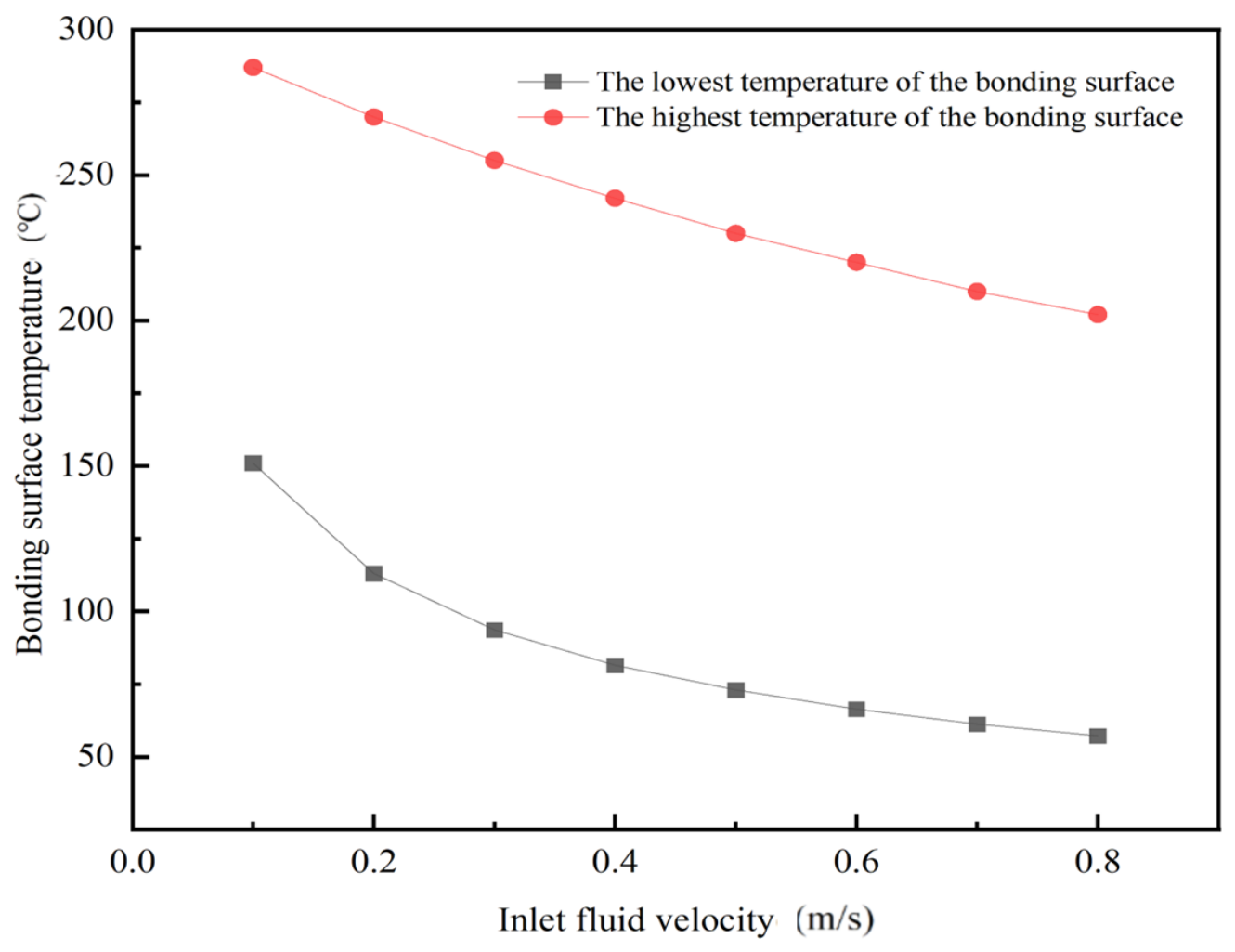
The temperature of the bonding surface is controlled by altering the flow speed of the fluid entering the microchannels. The fluid velocity is set between 0.1 and 0.8 m/s, with the ambient temperature set at 20 °C. The pressure at both ends of the pressing plate is set to 0.2 MPa, and the temperature of the heating plates at both ends is set to 300 °C. At this time, the internal channels within the silicon wafer are configured to 10 channels, with the fluid temperature set to match the ambient temperature, also at 20 °C. The corresponding simulation results are presented in
Figure 2.
Based on the data above, it is observed that at a coolant flow rate of 0.1 m/s, the bonding surface reaches its peak temperatures, with the lowest and highest temperatures being 151 °C and 287 °C, respectively. With an increase in flow rate, the temperature peaks begin to decline. When the fluid velocity reaches 0.8 m/s, the lowest temperature on the bonding surface is 57.2 °C, and the highest temperature is 202 °C. With the increase in flow rate, the lowest temperature decreases by 93.8 °C, and the highest temperature decreases by 85 °C. By altering the flow rate, it is possible to achieve a variation in the temperature of the bonding surface, thereby realizing the temperature gradient bonding we propose. This trend is physically consistent with the fact that an increased flow velocity elevates the convective heat transfer coefficient, thereby enhancing the rate of heat removal from the bonding surface to the coolant.
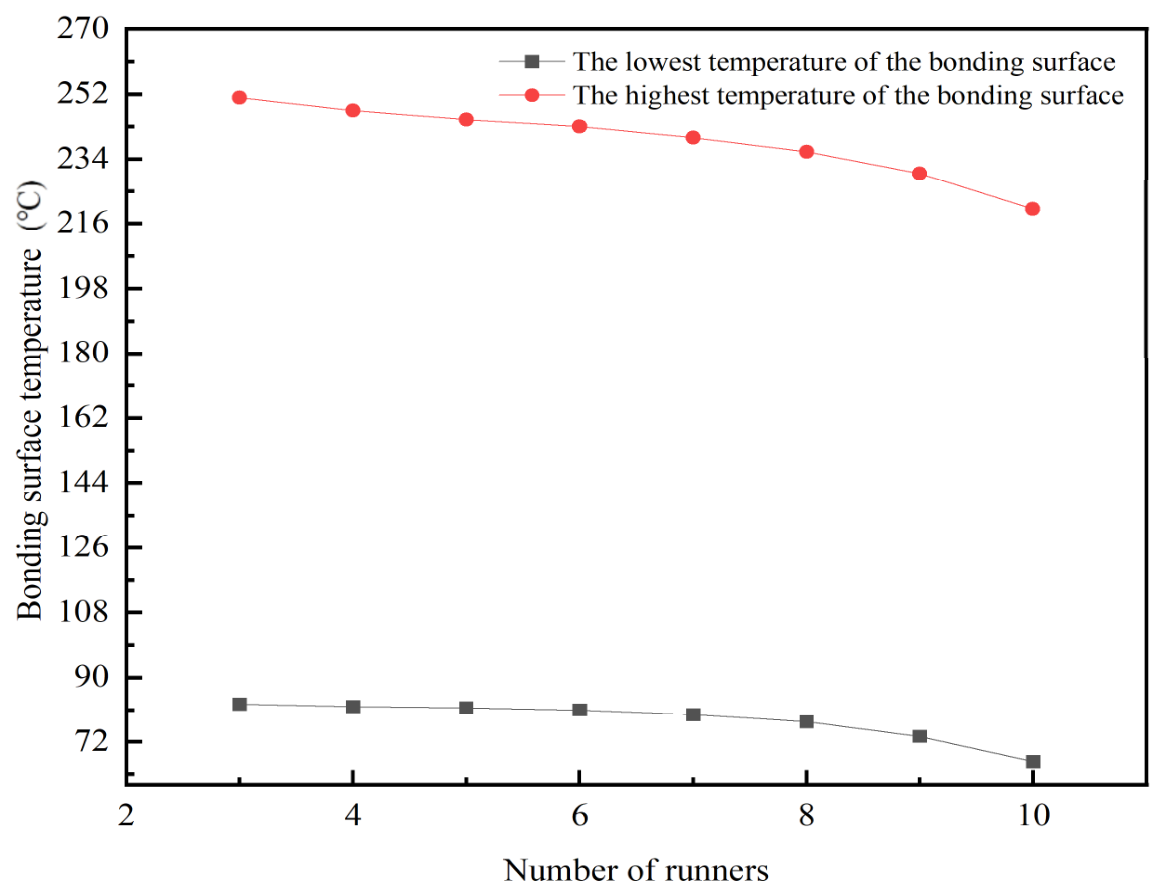
By altering the number of microchannels within the silicon wafer, the temperature of the bonding interface is controlled. The microchannels are set to range between 3 and 10 in number, with the ambient and fluid temperatures established at 20 °C. The pressure at both ends of the pressurized plate is set at 0.2 MPa, and the temperatures of the heating plates at both ends are set to 300 °C. The fluid flow rate is determined to be 0.6 m/s. Through simulation experiments, the data, as presented in
Figure 3, was obtained.
From the data in
Figure 3, it is observed that at a microchannel count of 3, the bonding surface reaches its peak temperatures, with the lowest and highest temperatures being 82.6 °C and 251 °C, respectively. With the increase in the number of microchannels, the temperature on the bonding surface begins to decrease. When the microchannel count is set to 10, the lowest temperature on the bonding surface is 66.4 °C, and the highest temperature is 220 °C. With the increase in the number of microchannels, the lowest temperature decreases by 16.2 °C, and the highest temperature decreases by 31 °C, indicating a significant reduction in temperature. This demonstrates that by altering the number of microchannels within the silicon wafer, it is possible to control the temperature of the bonding surface, thereby achieving the temperature gradient bonding as proposed. The observed temperature reduction with increasing channel count is attributable to the enlarged total heat transfer area and the more distributed fluid flow, both of which contribute to a higher overall convective heat removal capacity.
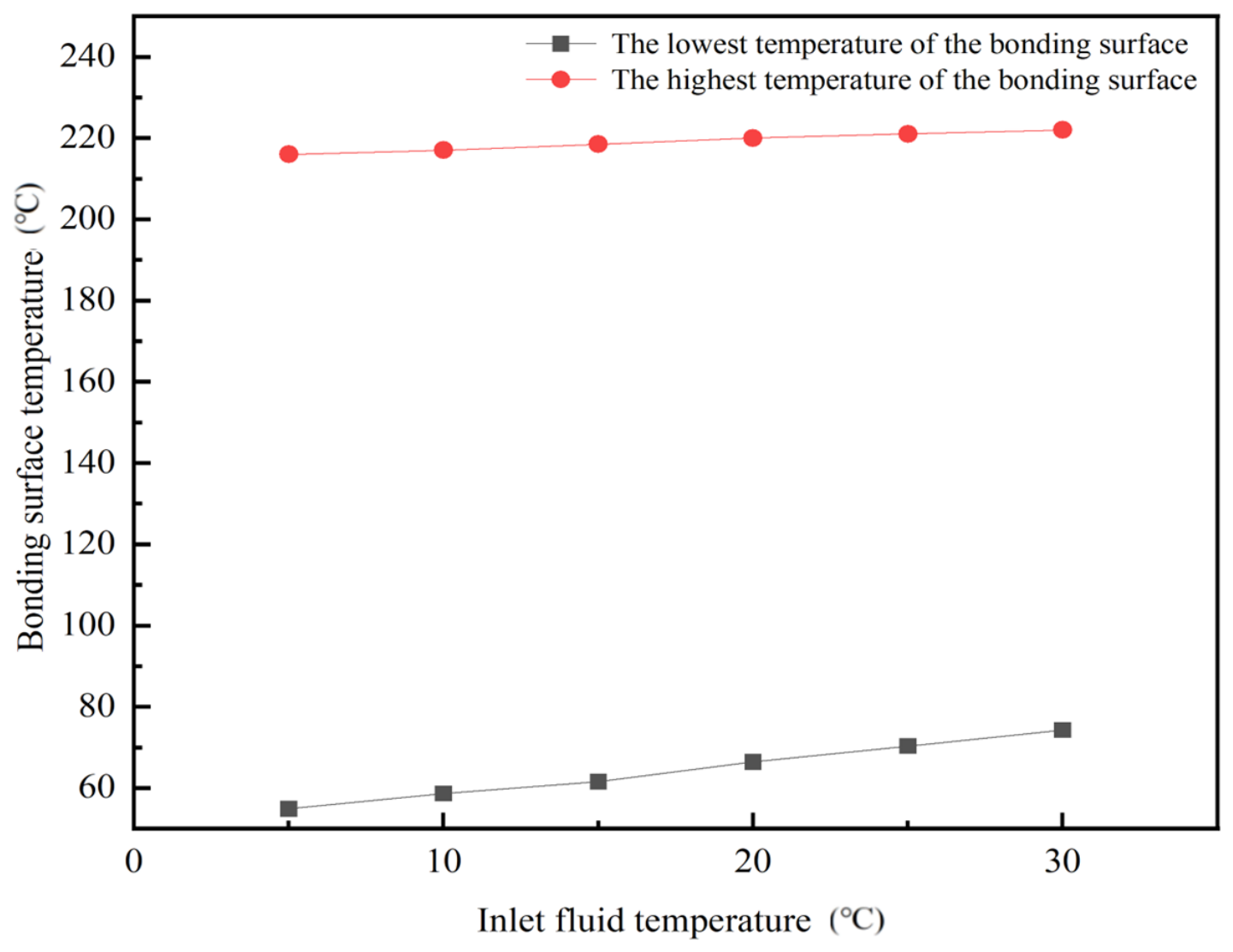
The temperature distribution at the bonding surface is regulated by modifying the temperature of the cooling fluid. The fluid temperature is set in the range of 5–30 °C, with 5 °C increments. The ambient temperature is established at 20 °C. The pressure at both ends of the pressurized plate is set at 0.2 MPa. The temperatures of the heating plates at both ends are set to 300 °C. The fluid flow rate is maintained at 0.6 m/s. At this setting, the number of microchannels within the silicon wafer is fixed at 10. Data variations such as those presented in
Figure 4 are derived from simulation experiments.
Based on the data provided, it can be observed that when the inlet fluid temperature is set at 5 °C, the lowest and highest temperatures on the bonding surface are 54.8 °C and 216 °C, respectively. As the fluid temperature increases, the temperatures on the bonding surface also rise. At an inlet fluid temperature of 30 °C, the lowest and highest temperatures on the bonding surface reach 74.3 °C and 222 °C, respectively. With the rise in the inlet fluid’s temperature, the lowest and highest temperatures on the bonding surface increase by 19.5 °C and 6 °C, respectively, with the change in the lowest temperature being more pronounced than that of the highest temperature. The relatively modest temperature variation observed when changing the fluid inlet temperature reflects the fact that the thermal driving force—the temperature difference between the heated substrate and the coolant—is only incrementally altered within the investigated 5–30 °C range.
From the comparison of the three options mentioned above, it is evident that, compared to the impact of flow rate, the number of microchannels and the fluid temperature have relatively minor effects on the changes in the temperature of the bonding surface. This could be attributed to the limitations in the size of the microchannels which may not significantly alter the temperature. Since the variation in the inlet fluid temperature is small, its impact on the bonding surface temperature is also minimal. Following the comparison of these three schemes, we have selected the following experimental conditions for the subsequent finite element simulation experiments: an inlet fluid flow rate of 0.6 m/s, a microchannel count of 10, and an inlet fluid temperature of 20 °C, with other boundary conditions remaining constant.
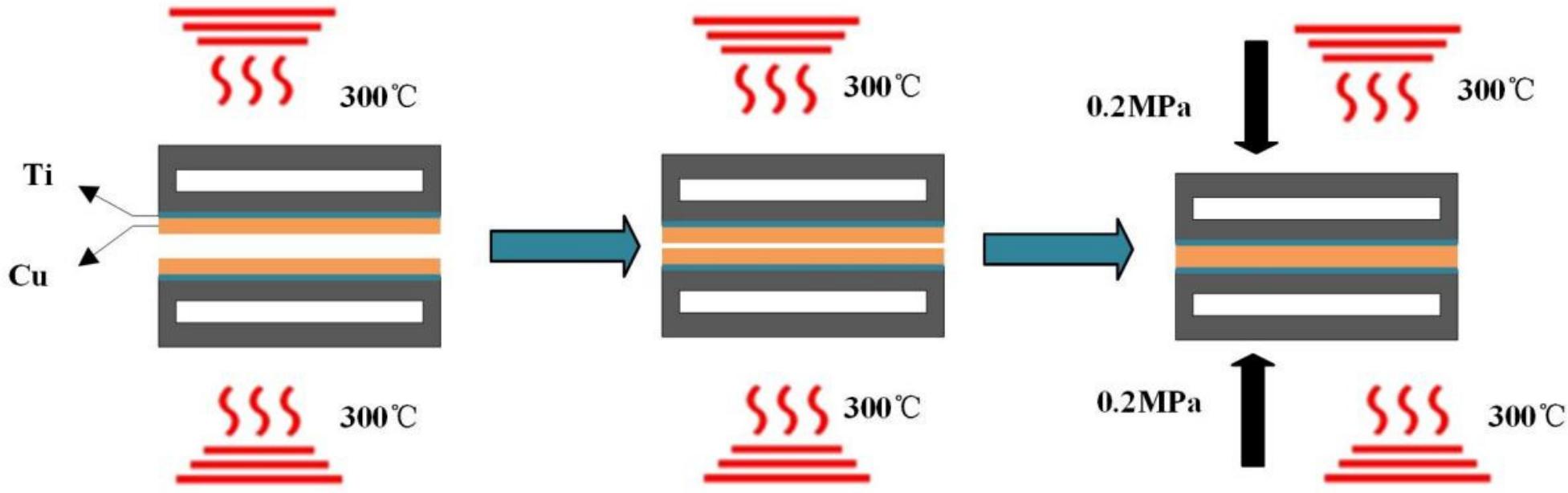
With the preferred operating parameters identified, the overall bonding procedure can now be outlined before proceeding to the detailed finite element model. A mold is affixed to the press head with the copper-plated surface facing downward. Another mold is positioned directly beneath and aligned with the affixed mold, and then the setup is placed on a heating plate at a temperature of 300 °C. The copper surfaces of the two molds are brought into contact for 1 min before the pressure is gradually increased to 0.2 MPa. The thermocompression process lasts for 10 min. The 1 min waiting period after initial Cu-Cu contact and before full pressure application allows the bonding interface to reach thermal equilibrium with the microchannel-controlled temperature field. During this interval, mild plastic deformation of surface asperities occurs under the low contact force, which helps disrupt native oxide layers and promotes intimate metal-to-metal contact. This brief thermal and mechanical preconditioning step enhances the subsequent diffusion bonding process once the full 0.2 MPa pressure is applied. A schematic diagram of the bonding process is shown in
Figure 5.
3. Finite Element Modeling: Cu-Cu Temperature Gradient Hot Press Bonding
Finite element modeling was carried out using the commercial software COMSOL Multiphysics version 6.1 to solve the conjugate heat transfer problem involving both solid heat conduction and single-phase laminar flow within the microchannels. The governing equations for the solid and fluid domains are presented below.
For the solid domains—including the silicon wafer, copper pillars, and LTCC heating layers—the steady-state heat conduction equation is solved:
where
ks is the thermal conductivity of the respective solid material and
T is the temperature field.
The fluid domain, consisting of deionized water flowing through the microchannels, is modeled as an incompressible, steady-state laminar flow. The continuity and momentum conservation (Navier–Stokes) equations are given by
where
is the fluid density,
is the velocity vector,
p is the pressure, and
is the dynamic viscosity. The thermal energy transport within the fluid is described by
Cp denotes the specific heat capacity and kf the thermal conductivity of the fluid.
In the model, a uniform velocity of 0.6 m/s and a constant temperature of 20 °C are prescribed, while a zero-gauge pressure condition is imposed at the outlet; the top and bottom surfaces of the LTCC heating plates are maintained at 300 °C, and a uniform compressive load of 0.2 MPa is applied to the external bonding surfaces, with all remaining exterior boundaries treated as adiabatic.
The computational domain was discretized using a physics-controlled mesh in COMSOL, with a finer element size in the fluidic regions to adequately resolve the velocity and thermal boundary layers along the microchannel walls. A boundary layer mesh was applied adjacent to the channel surfaces. A grid independence study confirmed that the relative deviation in peak bonding interface temperature was less than 1.5%, verifying the adequacy of the selected mesh resolution.
The fluid flow within the microchannels is characterized by a low Reynolds number (Re ≈ 120 at the maximum velocity of 0.8 m/s, based on the hydraulic diameter of the channel), confirming that the flow remains well within the laminar regime. Under such conditions, the convective heat transfer coefficient is a strong function of the local flow velocity and the thermal boundary layer thickness. As the coolant travels along the channel and absorbs heat from the substrate, its bulk temperature rises, which reduces the local temperature difference driving heat transfer and consequently diminishes the cooling effectiveness near the outlet. This phenomenon is responsible for the gradual temperature increase along the flow direction observed in the simulation results. The use of a boundary layer mesh with five prism layers adjacent to the channel walls ensures adequate resolution of the steep velocity and temperature gradients within the viscous and thermal boundary layers, which is critical for accurately predicting the local heat transfer rates.
Within the finite element model, a bonding model was established as shown in
Figure 6. The materials for each part of the model are as listed in
Table 1. The low-temperature co-fired ceramic (LTCC) was used as the heating layer for the bottom layer, typically composed of a mixture of ceramic and glass powders, exhibiting excellent electrical properties and high-temperature resistance. Silicon material was utilized as the chip layer, and through the use of through-silicon via (TSV) technology, metal copper was infused into the silicon layer, utilizing the diffusion of the Cu interface under heating conditions to bond the two chips together. The entire model had a planar dimension of 5 mm × 5 mm, with pre-bonding of the Si interface as the initial condition. The copper pillars, which serve as the vertical interconnects and bonding interfaces, are cylindrical in shape with a diameter of 50 μm and a height of 20 μm. The pillars are arranged in a 4 × 4 array corresponding to the microchannel layout, with the spacing between adjacent pillars determined by the underlying channel positions to ensure direct thermal coupling between the fluid flow and the bonding regions.
Table 2 displays the various boundary conditions set for the model.
The boundary conditions applied in the finite element model, as summarized in
Table 2, were selected based on a combination of practical bonding process requirements and the parametric simulation results presented in
Section 2. The heating plate temperature was set to 300 °C. Prior studies have demonstrated that reliable Cu-Cu bonds can be achieved at this temperature under appropriate pressure and surface conditions [
8,
10,
22]. The compressive load of 0.2 MPa was chosen as a representative value within the typical pressure range for thermocompression bonding, providing sufficient intimate contact without inducing excessive mechanical deformation of the copper pillars. An ambient and fluid inlet temperature of 20 °C was adopted to represent standard room-temperature cooling conditions. The inlet fluid velocity was fixed at 0.6 m/s based on the parametric velocity study in Option One of
Section 2. While a higher velocity of 0.8 m/s produced a slightly larger temperature gradient across the bonding interface, 0.6 m/s was identified as a practical compromise that maintains a substantial thermal differential—exceeding 100 °C across the 16 copper pillars—while ensuring the pressure drop remains manageable and the flow remains stably within the laminar regime throughout the microchannel network. At the fluid outlet, a zero-gauge pressure condition was imposed, consistent with an open discharge to the ambient environment. All remaining external surfaces of the model were treated as adiabatic boundaries by default, representing the assumption that heat exchange with the surrounding environment is negligible compared to the active cooling provided by the microchannels and the heating supplied by the LTCC plates.
Based on the bonding process described in
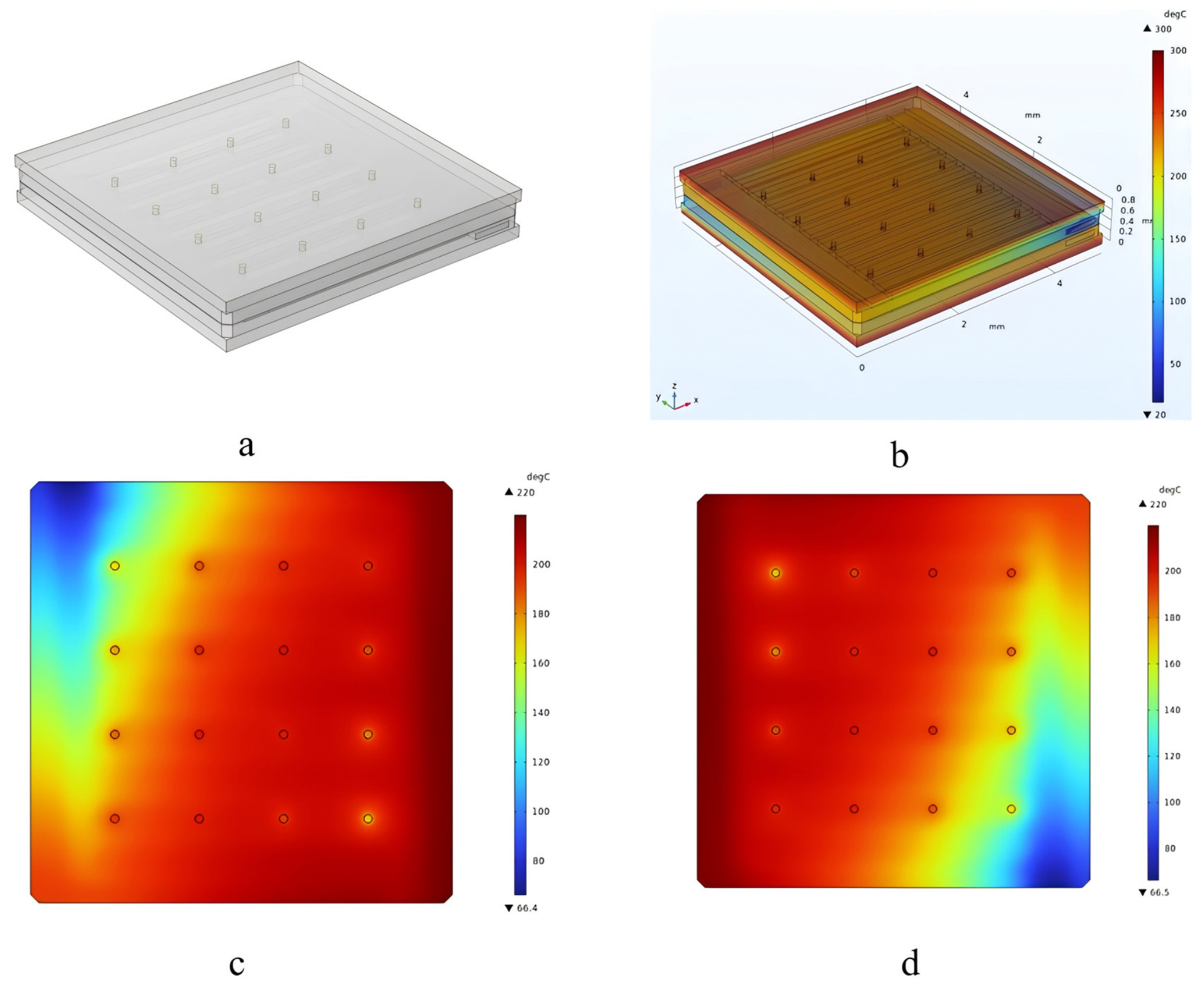
Section 2, a finite element simulation model was established as shown in
Figure 7a. Following the model in
Figure 5, two layers were constructed, with the models placed opposite to each other. A temperature boundary condition of 300 °C was applied on the heating plate. Inlet conditions for the fluid in the upper and lower layers were set in opposition. By adjusting the fluid flow rate, aspect ratio of the channel depth to width, and the number of channels, the temperature at the bonding interface was controlled to achieve a Cu-Cu temperature gradient bond. The temperature distribution of the simulation model is presented in
Figure 7b.
The simulation recorded the temperatures at 16 contact points between the copper pillars and the bonding surface as shown in
Table 3. Additionally, the simulation depicted the temperature distribution on the two bonding surfaces under this condition as illustrated in
Figure 7. The temperature range was essentially identical for both upper and lower surfaces, spanning approximately 116 °C to 221 °C. However, due to the channel distribution and the opposing directions of the inlet and outlet, there was a pronounced temperature gradient across the upper and lower bonding faces within this same temperature range. As indicated in
Figure 7c,d, the temperature was consistently lower at the channel inlets and increased progressively along the flow direction, reaching a peak at the outlets. This spatial variation reflects the continuous absorption of heat by the cooling fluid as it traverses the microchannels, which gradually elevates the fluid temperature and consequently diminishes its local cooling capacity.
Based on the data from
Table 3, with the temperature of the upper and lower heating plates set at 300 °C, microfluidic technology is capable of adjusting the temperature at the copper pillar contact points to fall between 116.36 °C and 220.83 °C. A closer examination of the data reveals a systematic temperature progression across the 16 copper pillars, with the lowest temperatures recorded at Copper Pillar 1 (located nearest to the fluid inlet) and the highest temperatures observed at Copper Pillar 16 (situated at the fluid outlet). The indices indicate that the temperature difference between Copper Pillar 1 and Copper Pillar 16 exceeds 100 °C, demonstrating that microfluidic adjustment can create a significant and controllable temperature differential across a single bonding interface.
This thermal gradient is not merely a byproduct of the cooling configuration but represents a deliberate design feature intended to enhance the bonding process. Owing to the opposed arrangement of fluid channel inlets in the upper and lower structures, the spatial distribution of temperature across the upper and lower bonding planes is distinct and complementary, as illustrated in
Figure 7c,d. During bonding, the copper pillars near the fluid inlet on the upper layer (at a relatively lower temperature) are precisely aligned with the copper pillars near the fluid outlet on the lower layer (at a relatively higher temperature). This opposing configuration ensures that each bonded copper pillar pair experiences a net temperature offset, wherein one side of the interface is maintained at a higher temperature than the other.
From a solid-state diffusion perspective, such a temperature offset is advantageous because the atomic diffusion coefficient in copper exhibits an Arrhenius-type exponential dependence on temperature. The hotter side of each pillar pair therefore serves as a source of highly mobile copper atoms, while the cooler side acts as a sink, promoting directional mass transport across the bond interface. This thermally driven diffusion mechanism is fundamentally similar to the temperature gradient bonding (TGB) approach demonstrated in other metal systems, where an imposed temperature differential across the bond line has been shown to significantly accelerate atomic interdiffusion and intermetallic compound formation compared with isothermal bonding conditions [
23]. In the present configuration, the temperature gradient established by the microchannel flow provides a continuous driving force for atomic migration from the hotter to the cooler regions, thereby accelerating interfacial void closure and enhancing grain boundary migration. Recent experimental studies on Cu-Cu bonding have confirmed that grain boundary migration and atomic diffusion actively eliminate bonding interfaces under appropriate thermal conditions, with grains from one side growing across the interface into the opposite side [
24]. Furthermore, high grain boundary density has been shown to provide multiple diffusion pathways for atomic migration, further enhancing grain boundary mobility and facilitating interfacial healing under modest thermal budgets [
25]. Consequently, the controlled temperature gradient approach is expected to improve the mechanical integrity and electrical reliability of the bonded interconnects without requiring a uniformly elevated temperature across the entire assembly.
It is important to acknowledge that the present study is focused on the numerical demonstration and thermal analysis of the proposed microchannel-controlled temperature gradient bonding concept. While the simulation results confirm that a substantial and spatially controlled temperature differential can be established across the bonding interface, the actual bond quality metrics—including interfacial bond strength, void density, specific contact resistance, and microstructural evolution such as grain growth across the bond line—remain to be experimentally characterized. The favorable thermal conditions identified in this work, particularly the temperature range of approximately 116–221 °C and the complementary temperature distributions on opposing bonding surfaces, provide a well-defined parameter space for future experimental investigations. Planned experimental work will involve the fabrication of silicon chips with integrated microchannels, followed by Cu-Cu thermocompression bonding under the simulated conditions, with subsequent characterization via scanning electron microscopy (SEM), focused ion beam (FIB) cross-sectioning, four-point probe electrical measurements, and die shear testing. The results of those experimental studies will be reported in a follow-up publication to fully validate the bonding effectiveness enabled by this microfluidic thermal gradient approach.