


Abstract
The ZN Oilfield shale reservoir is characterized by thin sand–shale interbeds, strong lateral and vertical heterogeneity, poor porosity–permeability, low formation pressure coefficient, and low brittleness, which together limit fracture propagation and suppress production after conventional hydraulic fracturing. To overcome these constraints, we propose an intensive-stage, closely spaced volumetric fracturing technology that couples energy-replenishment pressurization with differentiated parameter design. Numerical simulations were used to quantify how injected fluid volume affects the post-fracturing formation pressure coefficient and estimated ultimate recovery (EUR), and to determine economically optimal energy-replenishment scales. Guided by a “dual sweet spot” evaluation (geological + engineering), field designs reduced stage spacing from 80–100 m to 30–50 m and cluster spacing from 10–20 m to 6–10 m, and increased proppant and fluid intensities to ~5.0 t/m and 22.0 m3/m, respectively. Field monitoring and production data show average fracture half-length increased to 193 m, and average initial oil production per well rose from 8.8 t/d to 12.9 t/d (≈46% increase). These results demonstrate that the proposed approach effectively enlarges fracture-controlled reservoir volume, enhances formation energy, and substantially improves single-well performance in low-pressure shale oil systems.
1. Introduction
With the development of the global economy, population growth, and changes in the international landscape, the demand for energy continues to rise. Currently, China’s shale oil resources are widely distributed, of high quality, and estimated to exceed 100 billion tons in reserves, demonstrating enormous development potential. However, shale oil is one of the most challenging unconventional resources to extract. China’s shale oil is primarily found in continental sedimentary basins, influenced by orogeny and faulting, exhibiting characteristics such as low porosity, low permeability, strong heterogeneity, high stress differentials, and multiple thin layers [1]. These factors result in suboptimal hydraulic fracturing performance in reservoirs.
Zheng Ning (ZN) Oilfield in this study faces three major challenges in hydraulic fracturing: the reservoir is tight and strongly heterogeneous, resulting in limited fracture half-lengths and uneven propagation; insufficient rock brittleness combined with a large horizontal stress difference suppresses the development of complex fracture networks; and the low formation pressure coefficient weakens fluid mobility, causing rapid production decline and single-well EUR far below economic viability.
In response to the aforementioned challenges, scholars have conducted extensive research in recent years. Zhang [2] systematically investigated the influence of in-situ stress contrast on fracture initiation and propagation behavior during volumetric fracturing in shale oil reservoirs of Block Y, Ordos Basin, using a numerical simulation approach based on the cohesive zone model. Zheng [3] investigated fracture morphology under various parameters through numerical simulations, revealing that hydraulic fracture propagation is jointly influenced by multiple factors, including stress field magnitude, direction, internal fracture pressure, and rock mechanical properties. Ni [4] developed a phase-field model is and applied for investigating the hydraulic fracturing propagation in saturated poroelastic rocks with pre-existing fractures. Zheng [5] developed a numerical model to simulate the interaction between hydraulic fractures and natural fractures. The simulations revealed that natural fractures can initiate and propagate under the influence of induced stress fields, without necessarily intersecting with hydraulic fractures. Tian [6] found that the important controlling factor for the increase of moisture cut and the extension of the backflow period of the Mahu tight oil well group is the low formation pressure coefficient. Zhou [7] investigated the hydraulic fracturing effect of groundwater on rock fractures and derived the tangential friction equation of hydrodynamic pressure acting on rock fractures. The study analyzed the relationship between crack orientation and the lateral pressure coefficient as well as the friction angle of the fracture plane. It was demonstrated that when the static lateral pressure coefficient of surrounding rock equals 1.0, the critical pressure becomes independent of crack orientation. Lu [8,9] simulated the influence of pore pressure gradient on fracture initiation and propagation by coupling seepage, stress, and damage. The study demonstrated that pore pressure gradient can effectively reduce fracture initiation pressure, with fractures tending to propagate toward regions of higher pore pressure. Liu [10] proposed a new strategy for modeling the heterogeneity of structural and attribute models starting from the heterogeneity of the reservoir. Yu [11] systematically revealed the spatiotemporal evolution law of the stress field during deep shale gas fracturing by establishing a four-dimensional dynamic stress field coupling model. Soroush Ahmad [12] analyzed chemical stimulation approaches involving additives used to inhibit asphaltene precipitation, which can enhance oil mobility and improve production performance. Yang Mou et al. [13] investigated inter-well stress interference and found that zipper fracturing can significantly increase stimulated rock volume and well productivity through stress shadow effects and enhanced diversion capability. CO2 fracturing has recently attracted attention as an alternative stimulation fluid. Owing to its low viscosity, high diffusivity, and immunity to water-sensitivity effects, CO2 can penetrate deeper into the fracture network and reduce formation damage during stimulation. Studies by Wang Jianxiang et al. [14] indicate that CO2 fracturing can promote fracture propagation, enhance hydrocarbon mobility, and provide additional benefits associated with partial carbon sequestration during the fracturing process. Compared to CO2 fracturing and zipper fracturing, the intensive clustered fracturing method used in this study offers greater operational flexibility, eliminating the need for CO2 injection or coordinated operations with adjacent wells. Additionally, intensive clustered fracturing can dynamically adjust cluster density and scale to better adapt to highly heterogeneous reservoirs, whereas CO2 fracturing is limited by reservoir permeability, and zipper fracturing imposes higher requirements on well spacing and reservoir homogeneity.
Previous studies have investigated shale-oil hydraulic fracturing from four main perspectives: (1) fracture propagation mechanisms, (2) reservoir heterogeneity, (3) formation-pressure behavior, and (4) engineering optimization strategies. Although these works have provided valuable insights, several important limitations remain. Most existing studies focus on fracture morphology or heterogeneity, while the role of formation-energy enhancement during hydraulic fracturing has not been adequately addressed [15,16]. In addition, the quantitative relationship between improvements in the formation pressure coefficient and estimated ultimate recovery (EUR) has rarely been examined, and geological and engineering sweet spots are often evaluated separately rather than within an integrated optimization framework [17,18,19,20,21]. These gaps are particularly evident in the ZN Oilfield. The reservoir is characterized by thin sand–shale interbeds, strong heterogeneity, low formation pressure coefficients, and large horizontal stress differences. These geological factors lead to uneven fracture propagation and limited stimulated reservoir volume, making conventional hydraulic-fracturing strategies less effective. Existing research provides limited guidance on how to enhance formation energy during stimulation or how to jointly optimize geological and engineering sweet spots under ultra-low-pressure reservoir conditions. Addressing these unresolved issues forms the core motivation for this study and provides the basis for the pressure-enhanced volumetric fracturing strategy proposed herein.
This study proposes intensive-stage fracturing technology that creatively integrates energy-replenishment pressurization with differentiated parameter design. Through numerical simulation, we investigate how different fracturing fluid volumes affect the formation pressure coefficient. We also analyze how these variations influence the estimated ultimate recovery (EUR) per well. Based on these results, the economically optimal energy-replenishment scale is evaluated by evaluating the reservoir conditions and the fracability of horizontal sections using the “dual sweet spot” approach from both geological and engineering perspectives. Based on this evaluation, targeted parameter designs—such as segment-cluster strategies, perforation techniques, and proppant-fluid volumes—are proposed. These designs guide the optimization of fracturing parameters under different reservoir conditions.
The rest of the paper is structured as follows. The second part describes the geological engineering conditions of ZN Oilfield in detail; the third part puts forward the reservoir transformation ideas, such as energy replenishment and pressurization process as well as differentiated parameter design for the problems faced by ZN Oilfield. The fourth part verifies the feasibility of dense cutting fracturing technology through on-site construction application. The fifth part presents the conclusions drawn from the study.
2. Geological Overview of Shale Oil in ZN Oilfield
This study primarily focuses on the interbedded shale in ZN Oilfield as a case study. ZN Oilfield is located on the southern margin of the Yishan Slope in the Ordos Basin. The Chang 7 shale oil reservoir was deposited in a semi-deep to deep lacustrine gravity flow environment, with sediment sources from the south and southwest. The formation exhibits a wedge-shaped thinning trend from east to west, with a total thickness of approximately 120 m in the main area. The Chang 7 member is divided into three sub-layers (Chang 71, Chang 72, and Chang 73) from top to bottom, with a burial depth of 1400–1550 m [22]. Chang 71 is the primary development target, with single sand bodies 2–4 m thick and a stacked thickness of 6–12 m (avg. 8.2 m). Interlayers (mudstone or silty mudstone) are 0.5–1.5 m thick, contributing to strong lateral heterogeneity. The reservoir exhibits ultra-low porosity (avg. 8.5%) and permeability (avg. 0.12 mD), classifying it as a shale oil reservoir. Specific reservoir and fluid properties are summarized in Table 1.
Table 1.
Reservoir and fluid properties of the ZN Oilfield.
3. Research on Intensive-Stage Fracturing Technology for Shale Oil
The core approach of this study involves first enhancing the formation pressure coefficient through energy replenishment and pressurization processes to provide energy sources for oil and gas flow. Subsequently, targeted fracturing parameter design is implemented based on the evaluation of both geological and engineering “dual sweet spots” to achieve economically viable development.
3.1. Mechanism of Energy Replenishment and Pressure Boosting for Production Enhancement
Pressure-boosting stimulation process refers to a fracturing technique where a portion of the fracturing fluid is used to fracture the formation and infiltrate into the reservoir, thereby increasing pore pressure, while the remaining portion fills the fracture network to compress formation fluid and rock via fracture dilation. This dual mechanism achieves the objectives of energy replenishment and pressure restoration in the reservoir. As the pressure coefficient increases, the overall compressive state of the formation is enhanced, which substantially reduces the effective horizontal stress difference and consequently lowers the mechanical anisotropy of the underlying strata. With a more balanced stress field, lateral diversion and propagation hindrance are minimized, allowing fractures to extend more uniformly and steadily in the intended direction.
Based on the principle of volume conservation, the following equilibrium equation is derived:
where Vf is the volume of fracturing fluid (m3); Va is the volume of proppant (m3); Vi is the original pore volume of the fracturing segment (m3); Vs is the volume of fracturing fluid lost to formation leakoff (m3); C is the dimensionless coefficient relating volume change to pressure change; Pf is the post-fracturing formation pressure; and P is the initial formation pressure before fracturing.
Simplifying Equation (1), the volume of proppant is used to support the fractures and can be approximately considered as Va = 0. The formation fluid loss coefficient is approximately 0.4; thus, Vs = 0.4 Vf. The value of Pf/P represents the formation pressure coefficient after fracturing, and the equation can be further simplified as
where VSRV is the controlled fracture volume after fracturing, m3.
The simplification of Equations (1) and (2) is based on representative characteristics of low-permeability shale reservoirs. The leakoff coefficient of 0.4 is determined by the geological conditions of ZN Oilfield. To characterize the pressure buildup induced by fluid injection, a zero proppant volume (Va = 0) is adopted. As the fluid loss coefficient increases, the volume of fracturing fluid leaking into the formation rises, thereby reducing fracture propagation efficiency and decreasing the stimulated reservoir volume (SRV). Simultaneously, the leakage of fluid into the formation can lead to a localized increase in the formation pressure coefficient.
Taking the N51-H702 well as an example, the horizontal section of the Chang 7 shale oil reservoir is 1506 m long, with an original formation pressure coefficient of 0.73, a formation pressure of 11 MPa, a rock compressibility coefficient of 0.0008/bar, and a matrix permeability of less than 0.01 mD. The well was fractured in 17 segments, and numerical simulations were conducted on the fluid intensity per segment, pressure coefficient, and changes in EUR to analyze the corresponding relationships among these parameters.
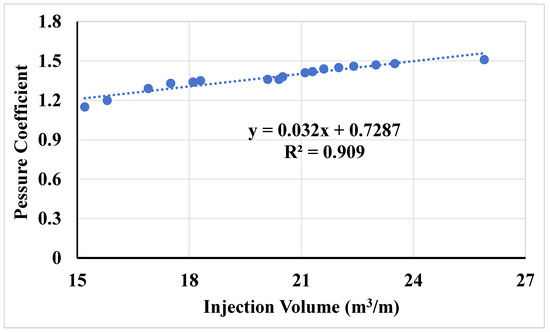
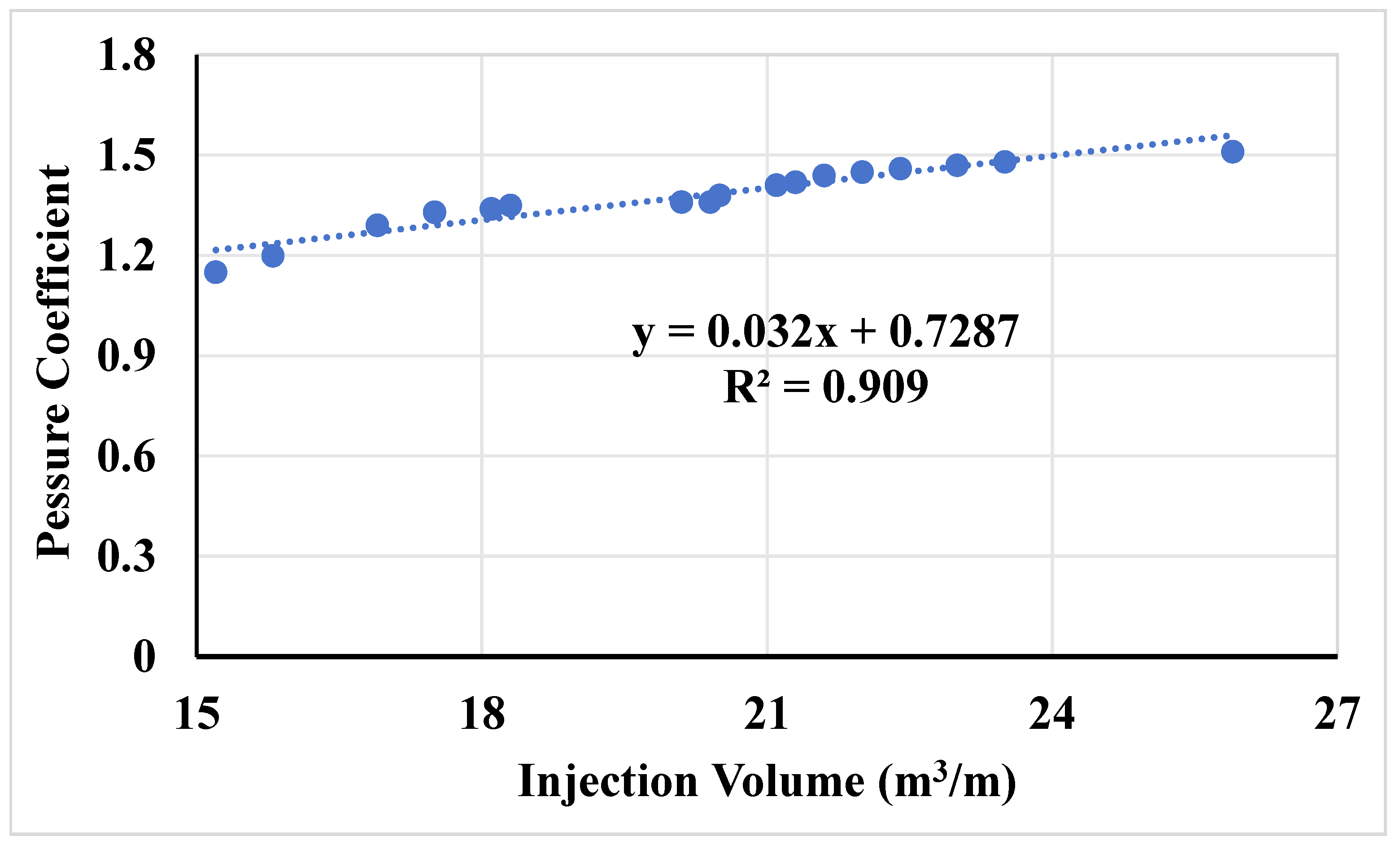
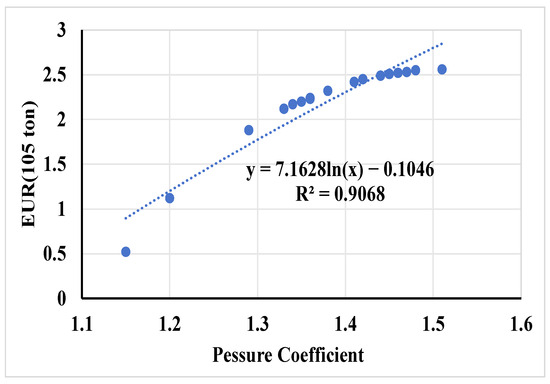
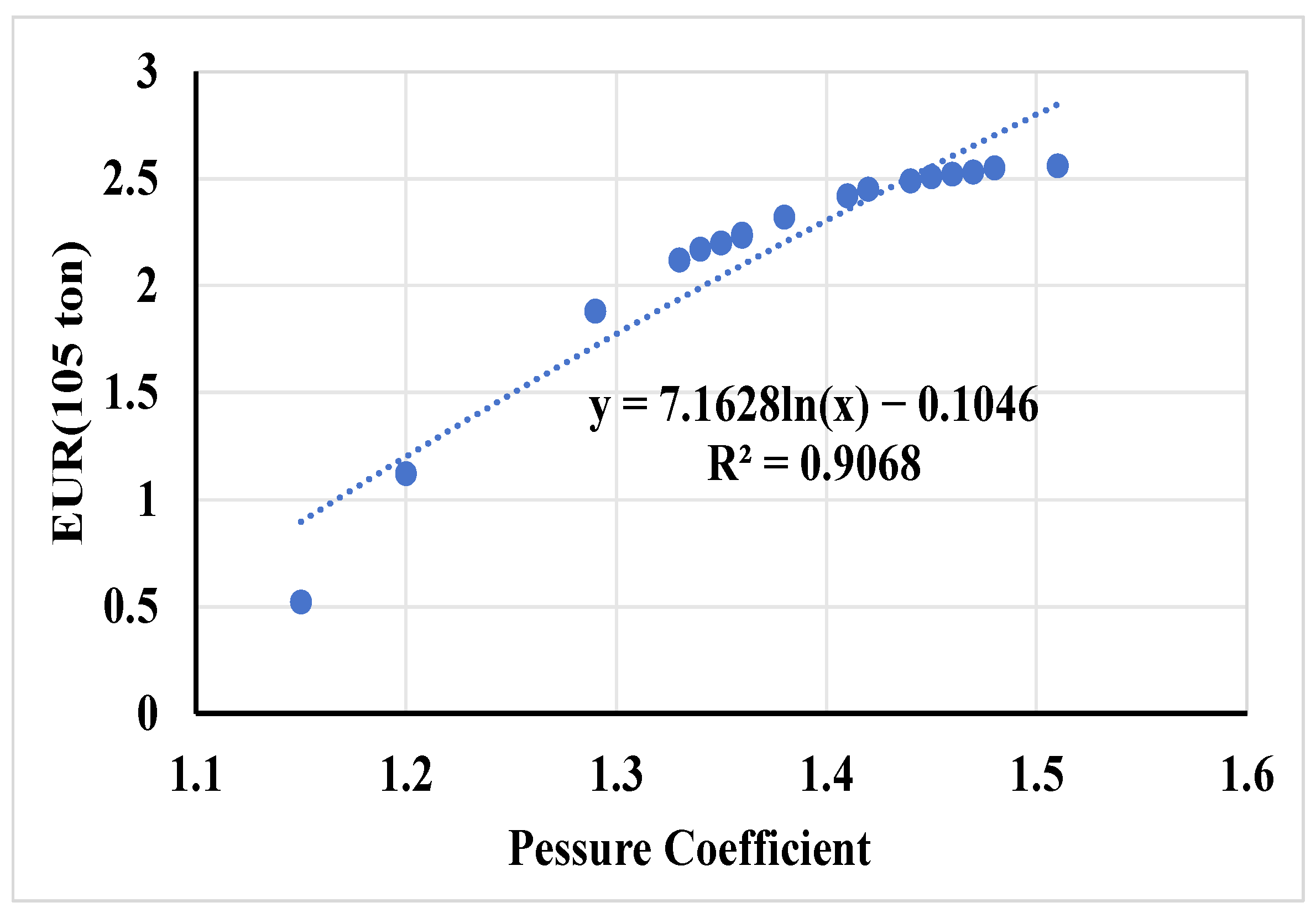
The simulation results are shown in Figure 1 and Figure 2. From Figure 1, it can be observed that during the fracturing process, the infiltration of fracturing fluid into the formation effectively increases the formation pressure. The coefficient of determination (R2) measures the proportion of variation in the dependent variable explained by the independent variables in a regression model. A higher value indicates a stronger fit, meaning the model accounts for most of the variability in the dependent variable. A larger injected fluid volume leads to a higher formation pressure coefficient and greater in situ stress. As the in situ stress increases, the EUR also improves significantly, ultimately achieving the goal of production enhancement (Figure 2). The linear relation between injection volume and pressure coefficient reflects direct pore-volume pressurization (Δp ≈ ΔV/(Vpore·Ct)). The log relationship between EUR and pressure coefficient indicates diminishing marginal returns: early pressure increases mobilize more reservoir and improve fracture conductivity, but further pressure increases yield progressively smaller EUR gains due to geomechanical limits, leakoff, and stress-shadow effects.
Figure 1.
Relationship between injection volume of hydraulic fluid and the pressure coefficient of the formation.
Figure 2.
Relationship between single-well EUR and the pressure coefficient of the formation.
The pressure coefficient increased from 1.2 to 1.4, and the EUR doubled. This is because the increase in formation pressure coefficient has fundamentally improved the reservoir energy system, fluid phase behavior, and dynamic reservoir performance it represents. Specifically, when the pressure coefficient reaches 1.4, the reservoir enters a strongly overpressured state. This first leads to a shift in drive energy from limited elastic drive to strong elastic drive. Secondly, the high pressure maintains formation pressure above the bubble point pressure for an extended period, avoiding gas-phase permeability damage and preserving high oil mobility. Finally, overpressure effectively supports the reservoir pore structure, ensuring long-term effectiveness of flow channels.
3.2. Differentiated Parameter Design
To address heterogeneous geological characteristics, this section proposes a differentiated parameter design approach. First, a “dual sweet spot” evaluation method integrating geological and engineering factors is established to classify horizontal reservoir sections. Next, reservoir stimulation is prioritized for high-potential sections. Finally, the effectiveness of the stimulation is evaluated.
3.2.1. Evaluation of Geological and Engineering “Dual Sweet Spots”
By integrating seismic, geological, drilling, and logging data, a 3D geological model is constructed to quantitatively characterize key geological parameters, such as lithology, physical properties, thickness, and oil saturation, enabling a comprehensive evaluation of spatial geological sweet spots within the horizontal section.
Based on laboratory triaxial stress and chevron-notched Brazilian disc tests, parameters such as Young’s modulus, Poisson’s ratio, and failure load are determined. These are used to calculate the brittleness index, fracture toughness, and axial failure strength, providing a comprehensive characterization of reservoir fracability. For fracability evaluation within the horizontal section, logging data—including natural gamma (GR), acoustic transit time (DT), density (DEN), and compensated neutron (CNL)—are analyzed. Multivariate regression is employed to predict shear wave transit time. Equations (3)–(7) establish a workflow for deriving formation mechanical parameters from basic well-logging data using multivariate regression and elastic-wave theory. Equation (3) is first applied to predict the shear-wave transit time, after which Equations (4) and (5) are used to calculate the dynamic Young’s modulus and dynamic Poisson’s ratio. These dynamic parameters are then converted into static elastic parameters through Equations (6) and (7), making them suitable for in situ stress estimation and hydraulic-fracturing simulation. This parameter system effectively characterizes the mechanical properties of the reservoir and provides essential inputs for evaluating fracability and optimizing engineering design [23,24,25,26,27]. Through comprehensive analysis of geological parameters, this study establishes a reservoir classification and evaluation standard for the target block, as shown in Table 1.
where is the shear wave transit time, µs/ft; is the compressional wave transit time, µs/ft; AC denotes the acoustic transit time, µs/ft; CNL represents the compensated neutron porosity, %; GR is the natural gamma ray, API; Ed stands for the dynamic Young’s modulus, GPa; Es is the static Young’s modulus, GPa; μd is the dynamic Poisson’s ratio, dimensionless; and μs is the static Poisson’s ratio.
This study classifies the horizontal reservoir sections in ZN Oilfield based on the influence of key parameters on post-fracturing performance (Table 2), with Category 1 representing the most favorable conditions, followed by progressively lower grades. The specific impacts of various parameters on fracturing effectiveness are as follows: higher porosity and permeability significantly enhance hydrocarbon flow efficiency, while increased rock brittleness index combined with lower stress differentials promotes the development of complex fracture networks during stimulation. Notably, oil saturation emerges as the critical parameter governing ultimate recoverable reserves. The classification thresholds were determined by dividing the fluctuation ranges of each parameter according to a 2:3:3:2 ratio.
Table 2.
Classification and evaluation criteria for reservoir parameters of horizontal sections of shale oil wells in ZN Oilfield (SO represents oil saturation; BI represents brittleness index).
3.2.2. Fracturing Parameter Design
- (1)
- Optimization of Segment-Cluster and Perforation Parameters
During the early development phase, a strategy of large-stage multi-cluster fracturing was adopted, with an average stage length of 80–100 m and five to eight clusters per segment. However, wide-area electromagnetic fracture monitoring revealed significant issues: severe fluid channeling in certain zones, leading to uneven fluid entry across clusters and along the horizontal section; unstimulated “blank” areas between clusters, with many fractures shorter than 100 m, poorly matching the 400 m well spacing; and limited effectiveness of ball-sealer temporary plugging in controlling dominant perforation clusters, particularly in large-segment multi-cluster sections.
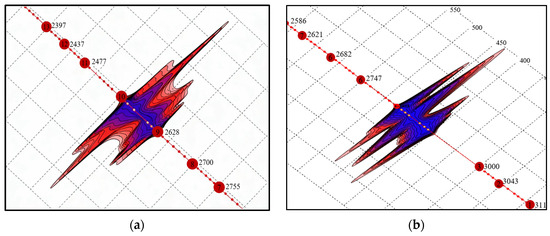
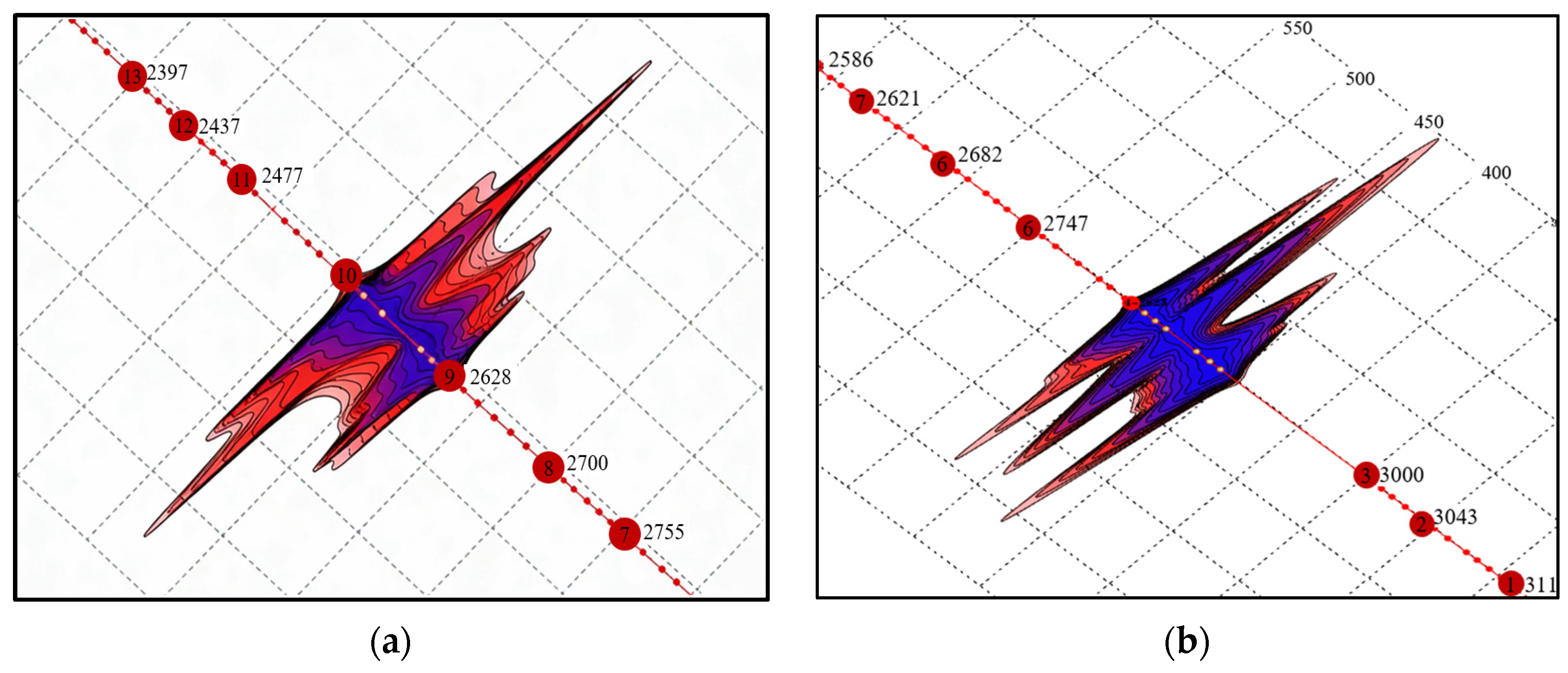
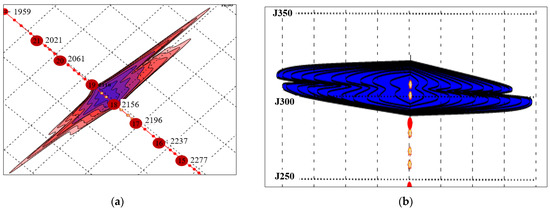
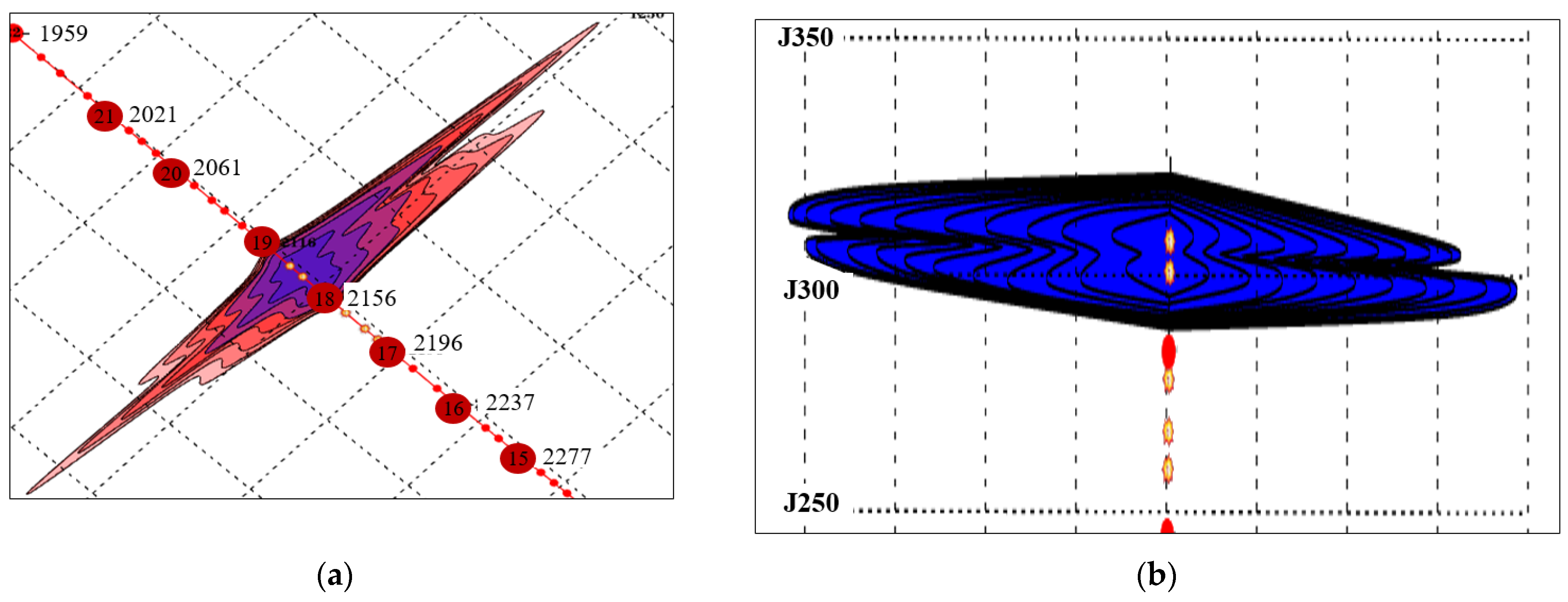
As shown in Figure 3 and Figure 4, the post-fracturing monitoring results for Segment 2 and Segment 10 demonstrate strong planar heterogeneity within the horizontal section, with high horizontal stress differences fractures primarily propagated along the maximum horizontal stress direction, resulting in low fracture complexity and extensive unstimulated zones, and poor post-fracturing production performance, characterized by a high water cut, with a liquid production of 34 t/d and an oil production of only 4.2 t/d after 100 days, as well as a cumulative oil production of merely 324 t.
Figure 3.
Fracture monitoring results before parameter adjustment for Well L13-H701: (a) the fourth fracturing segment and (b) the tenth fracturing segment.
Figure 4.
Fracture monitoring results after parameter adjustment: (a) the second fracturing segment of Well L13-H701 and (b) the first fracturing segment of Well N185-H704.
To address the challenges of fracture channeling, uneven propagation, and insufficient fracture length, this study proposes solutions focusing on mitigating significant horizontal stress differences and increasing net pressure within fractures to enhance fracture-controlled volume (FCV) and stimulation effectiveness. Optimizations were implemented in three key aspects: segment-cluster design, perforation techniques, and extreme limited-entry perforation. The specific parameter adjustments are detailed in Table 3.
Table 3.
Comparison of numerical values before and after optimization of construction parameters.
The post-optimization fracture monitoring results are shown in Figure 4. Compared with pre-optimization conditions, fluid distribution across clusters became more uniform; previously unstimulated inter-cluster zones achieved effective coverage; and fracture fluid channeling was significantly mitigated. Field tests demonstrated that after implementing multi-segment, fewer-cluster intensive fracturing techniques, artificial fracture propagation patterns improved markedly, and stimulation uniformity and FCV increased substantially.
- (2)
- Optimization of Proppant Combination and Placement Volume
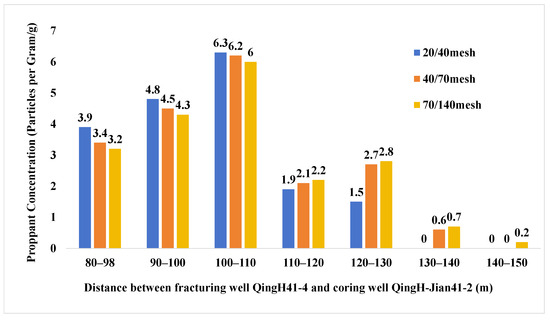
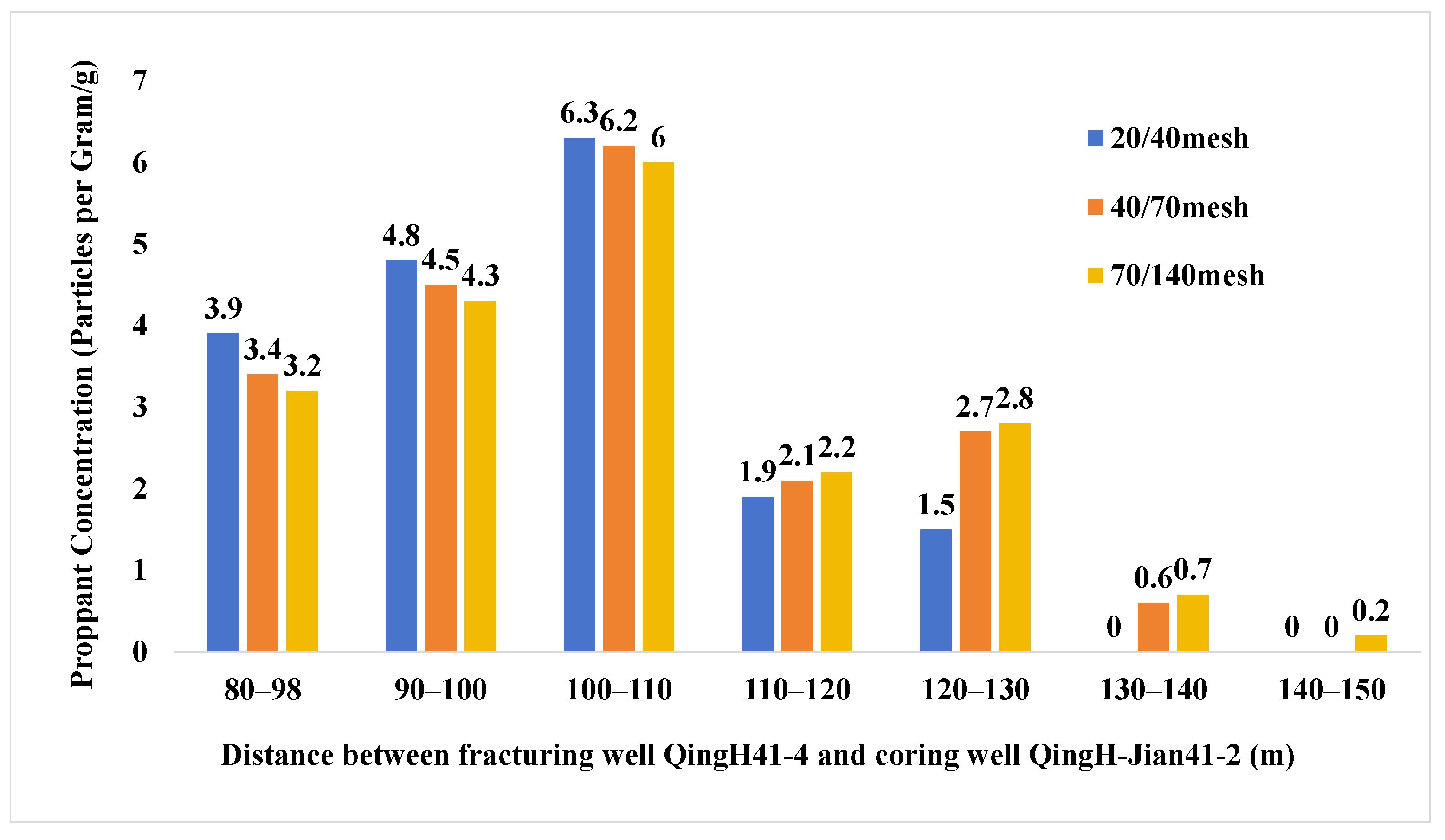
During the early development phase, a 40/70-mesh and 20/40-mesh quartz sand blend was used to enhance conductivity. Based on further insights, the optimized proppant strategy adopted 70/140-mesh and 40/70-mesh quartz sand as the primary proppants with 20/40-mesh quartz sand as tail-in proppant to improve near-wellbore conductivity. The final proppant ratio was set at 70/140-mesh:40/70-mesh:20/40-mesh = 5:4:1. The prediction of proppant placement involves multiple uncertainties, such as the highly stochastic nature of whether offset well locations happen to intersect the propped fractures and the influence of drilling fluid erosion on proppant concentration. Nevertheless, this method remains one of the few currently available technologies capable of directly observing proppant distribution in deep subsurface formations. The direct geological evidence it provides constitutes the most reliable and valuable conclusions achievable with existing technical capabilities. Field test results (see Figure 5) demonstrated that smaller proppants (70/140-mesh) are more effectively transported to the fracture extremities, significantly increasing the propped fracture length. The proppant distribution shown in the figure reflects the combined effects of particle settling behavior, fracture-width evolution, and localized leakoff. Smaller proppants (70/140-mesh) exhibit lower settling velocities and can be transported deeper into the fracture, especially in intervals where net pressure favors wider and more conductive fracture channels. The rapid decline in concentration at greater distances indicates enhanced leakoff or stress-shadow-induced energy loss, which limits slurry transport and results in coarse proppants settling earlier. These coupled geomechanical and hydraulic mechanisms explain the observed differences among distances and particle sizes.
Figure 5.
Distribution map of proppant concentration in cuttings logging at different distances between QingH Well 41-2 and QingH Well 41-4.
The viscosity of fracturing fluid significantly influences proppant placement. High-viscosity fluid exhibits slower proppant settling rates, facilitating transport to fracture extremities and enabling long, continuous proppant distribution. Conversely, low-viscosity fluid promotes complex fracture networks, but risk near-wellbore sand dune formation. In this study’s low-permeability reservoir stimulation, we implemented a “viscosity time-sequence optimization” strategy: initial high-viscosity stages ensured proppant delivery to distal regions, followed by large-scale sand-laden treatments to fill fractures, ultimately creating a continuous, high-conductivity proppant pack extending from the wellbore to fracture tips.
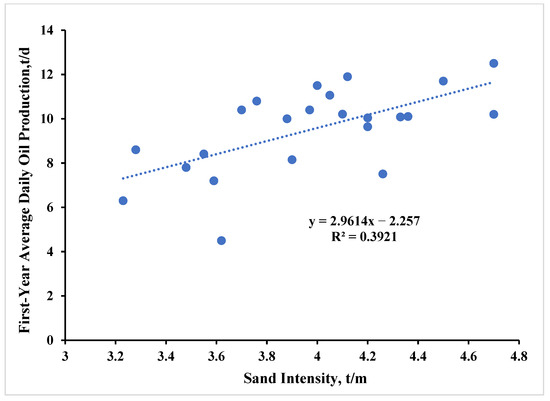
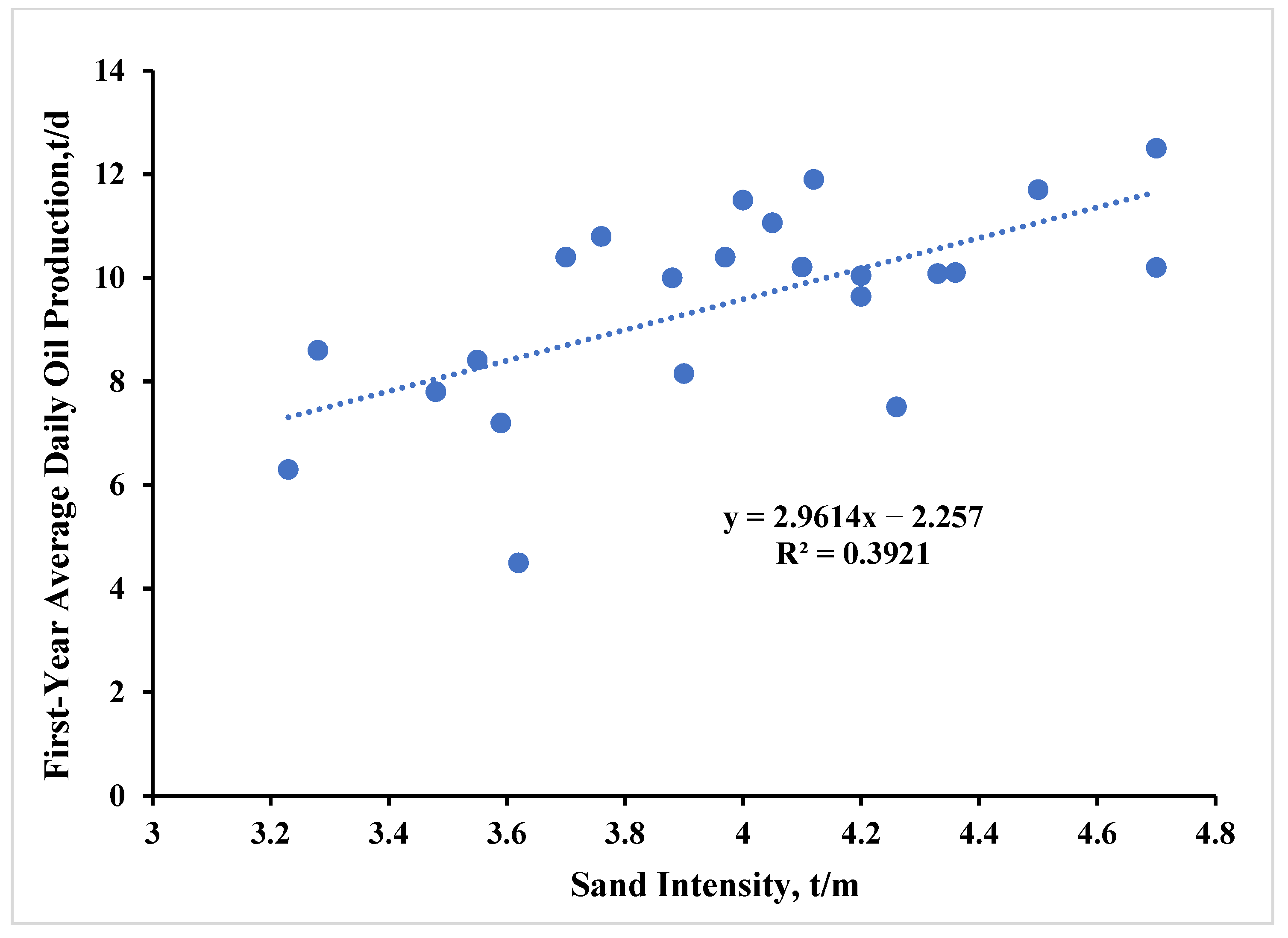
The actual oil production data from ZN Oilfield is shown in Figure 6. Field tests indicate a clear positive correlation between proppant placement intensity in horizontal sections and the average daily oil production per well during the first year. Additionally, studies from the Qingcheng Shale Oil Fracturing Pilot Site revealed, at a proppant placement intensity of 3.0–4.5 t/m, the farthest observed proppant distance in cuttings logging was only 130 m, resulting in an effective propped fracture length of 65% of the well spacing. Based on these findings, the proppant placement intensity in horizontal sections was increased from 3.0–4.5 t/m to 5.0–6.0 t/m to achieve longer effective propped fractures.
Figure 6.
Relationship between sand addition intensity of horizontal shale oil wells in ZN Oilfield and the average annual oil production in the first year.
- (3)
- Differentiated Stimulation Strategy
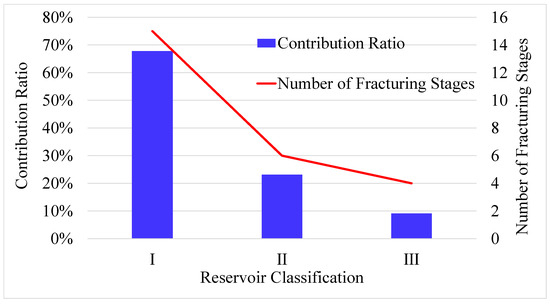
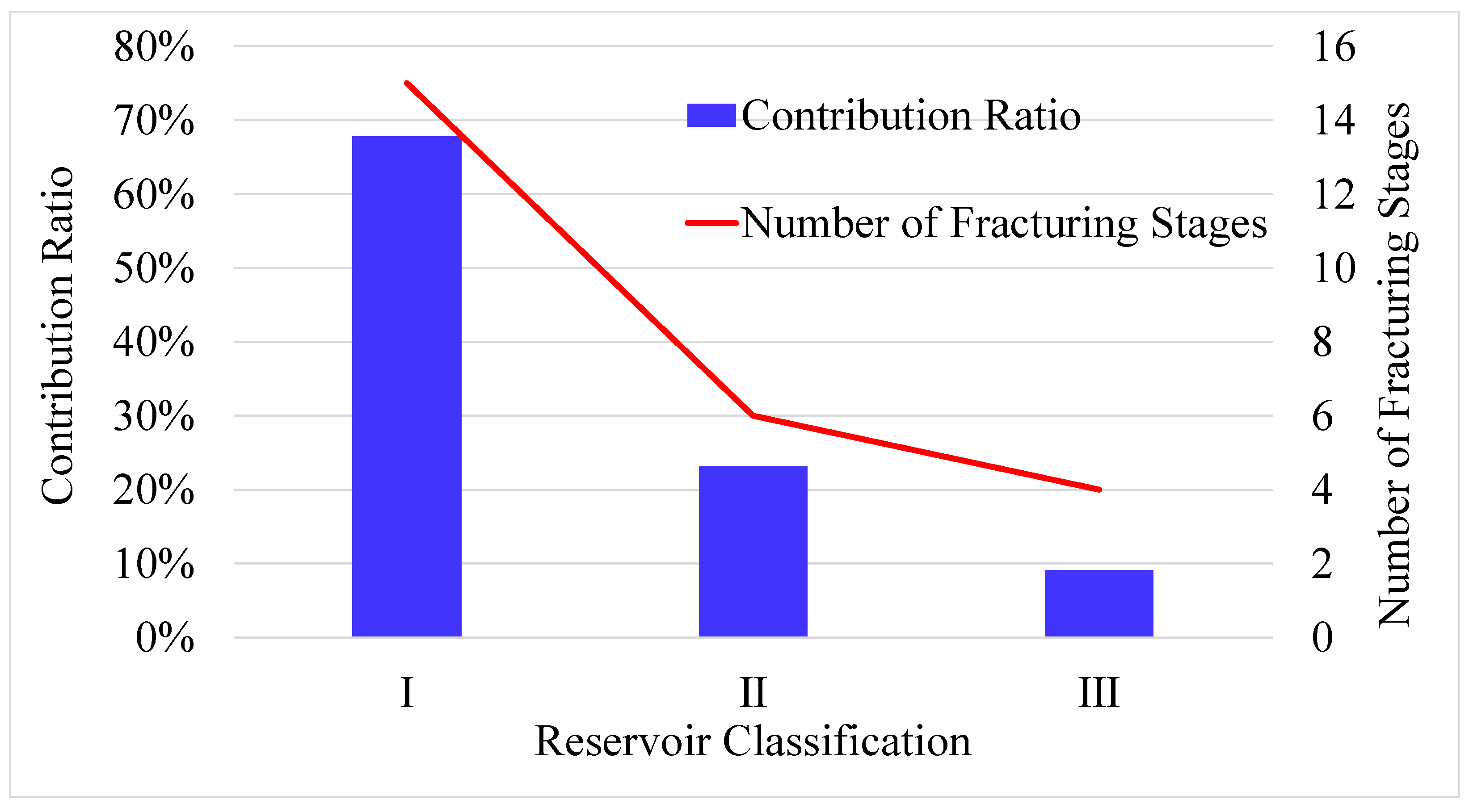
Based on tracer data from multiple horizontal wells in the ZN Oilfield (Figure 7), it was found that Category I and II reservoirs contribute over 90% of total production, with Category I reservoirs alone accounting for more than 60% of oil output. This further validates the accuracy of the reservoir classification in Section 3.2.1, demonstrating that Category I reservoirs contribute the most to production, followed by progressively decreasing contributions from lower categories. Therefore, by analyzing the correlation between production data from existing horizontal wells, single-well EUR predictions, and fracturing parameters such as proppant placement intensity and fluid volume intensity, differentiated stimulation should be implemented for horizontal well sections. The core logic is as follows: First, classify the horizontal reservoir sections based on geological parameters and then design the fracturing operations (segment length and cluster density) according to the classification results, thereby ensuring optimal production potential from high-quality reservoir zones. Specifically, as shown in Table 4.
Figure 7.
Statistical histogram of oil phase tracer monitoring results in ZN Oilfield.
Table 4.
Differentiated design chart for shale oil reservoir improvement in ZN Oilfield.
- (4)
- Evaluation of Reservoir Stimulation Effectiveness
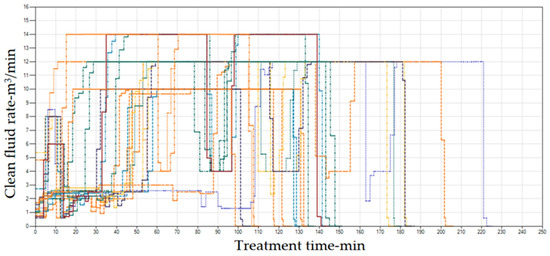
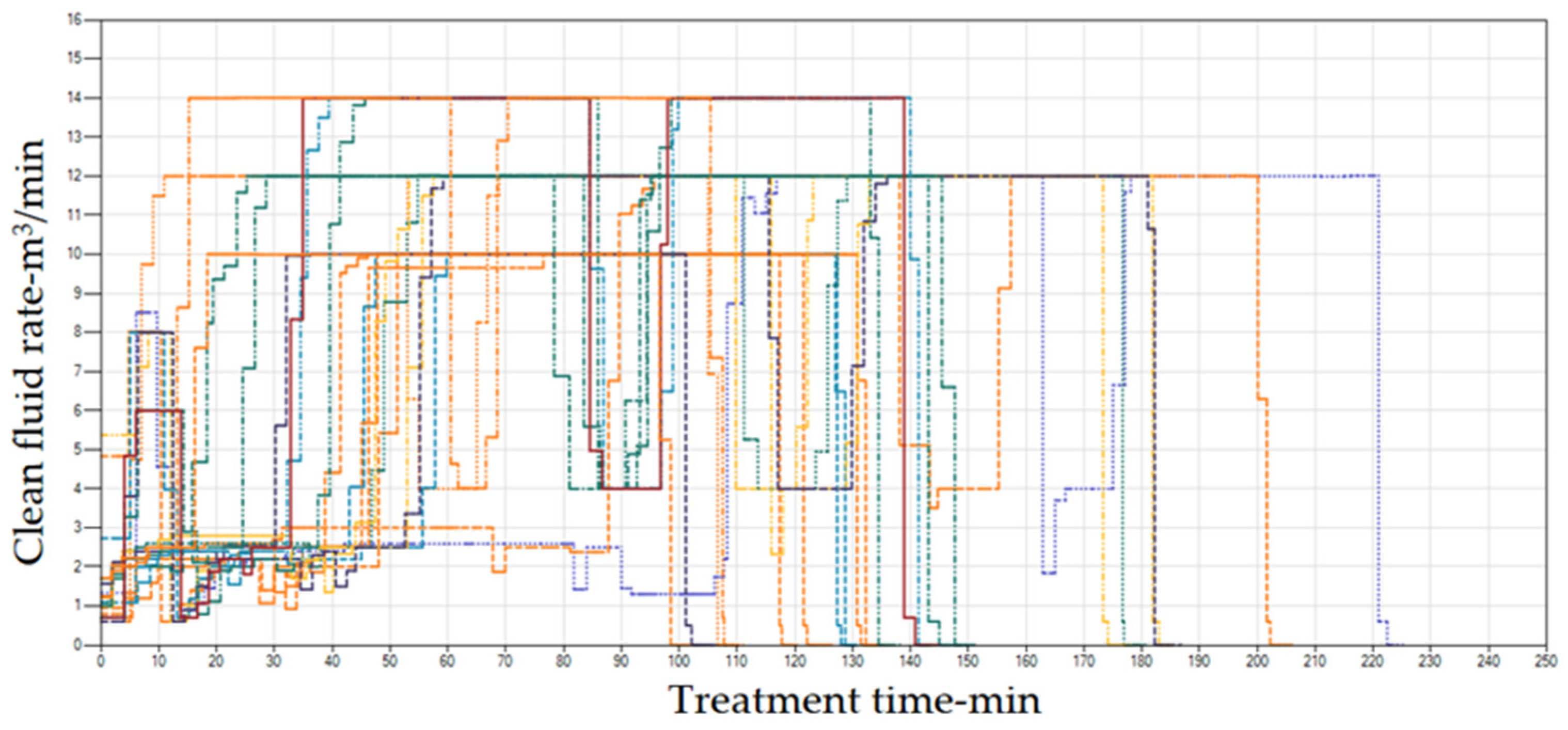
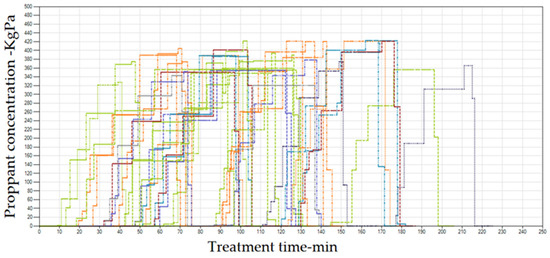
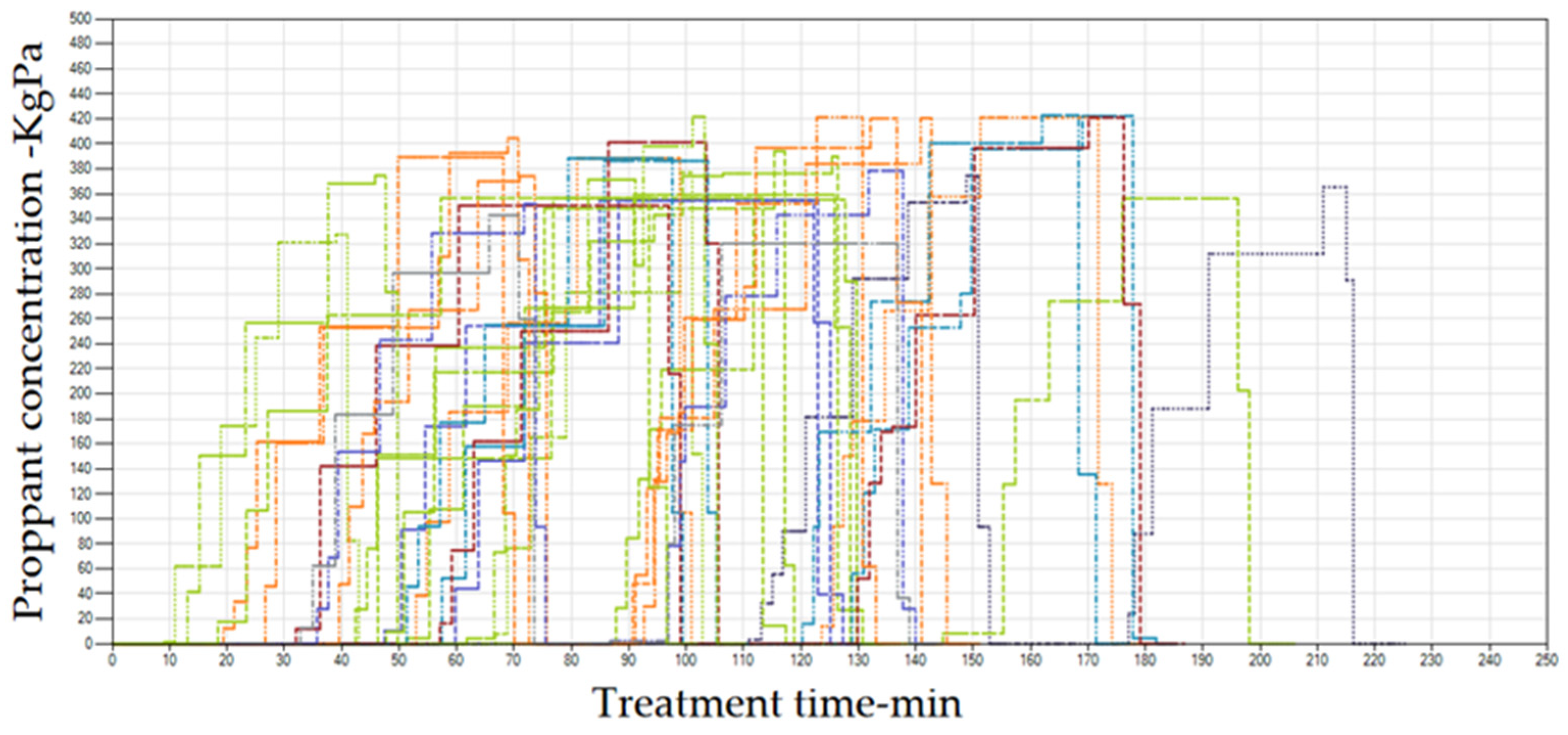
To accurately reproduce fracture propagation behavior in the ZN shale oil reservoir, a fully coupled geomechanics-fracturing simulation was conducted using the Kinetix module in Petrel. The geological model, natural fracture mode, and mechanical property model were first imported. Rock-mechanics parameters—including Young’s modulus, Poisson’s ratio, tensile strength, and fracture toughness—were calibrated using laboratory triaxial compression and Brazilian tests and converted into static values through dynamic–static correlations. A 3D unstructured mesh was generated around the wellbore and perforation clusters to refine the near-wellbore stress field and capture fracture initiation more accurately. Initial in situ stress fields and pore-pressure distribution were assigned as boundary constraints. Actual pumping schedules—including stage-by-stage injection rate, fluid viscosity, and proppant concentration curves—were directly input to ensure consistency with field operations. The model solves fluid leak off using Darcy flow and fracture propagation using a pseudo-3D stress-shadow-coupled algorithm. Natural and hydraulic fractures are represented using a discrete fracture network method, enabling the simulation of complex fracture networks under high stress contrast. Model validation was performed by comparing simulated fracture half-length, height, and azimuth with EM fracture monitoring results. The simulated average fracture half-length and fracture height showed strong agreement with monitoring data, confirming the reliability of the model for evaluating stimulation effectiveness and supporting the optimization of stage spacing, cluster spacing, and proppant placement strategy. Geological and petrophysical uncertainties were explicitly incorporated into the modeling workflow. Structural uncertainty was addressed by generating multiple stochastic, seismic-guided horizon realizations, and the resulting variability in layer thickness served as boundary constraints for constructing the 3D grid. For petrophysical properties, sequential Gaussian simulation (SGS) was employed using independently derived variogram models for porosity, permeability, and brittleness index. Each variogram was perturbed within its ±15% confidence interval to quantify interpolation uncertainty and capture the plausible range of reservoir heterogeneity. These steps ensured that the final geological model reflects realistic uncertainty in stratigraphic interpretation, well-control limitations, and the rapid vertical–lateral variability of sand–shale interbeds. For the horizontal well Le61-H701, a total of 21 segments of hydraulic fracturing were conducted based on actual field pumping procedures. Partial data on fracture stage spacing and cluster spacing are shown in Table 5. Based on geological construction parameters, the model’s Young’s modulus, in situ stress, near-wellbore friction, and other parameters were calibrated by fitting the fracturing stage construction curves. The correlation between the calibrated construction curves and the simulated construction curves exceeds 90%. The flow rate and proppant concentration during each fracturing stage are shown in Figure 8 and Figure 9. In this study, reservoir compressibility mainly reflects the volumetric response of the rock matrix–pore system under high net-pressure conditions. Because the simulations focus on fracture opening and propagation rather than depletion-induced fracture closure, the contribution of fracture compressibility to the overall reservoir compressibility is minimal. Therefore, fracture compressibility was not explicitly incorporated as a controlling parameter in the coupled model.
Table 5.
Partial data on fracture stage spacing and cluster spacing.
Figure 8.
Construction displacement curve (21 segments).
Figure 9.
Sand addition curve (21 segments).
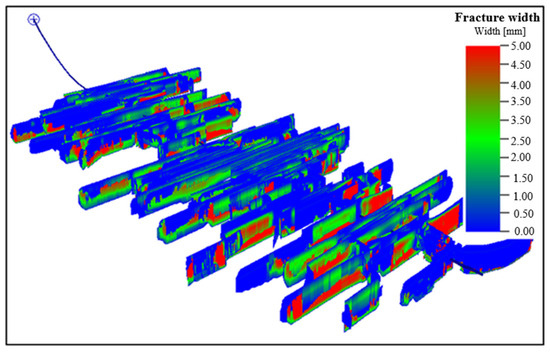
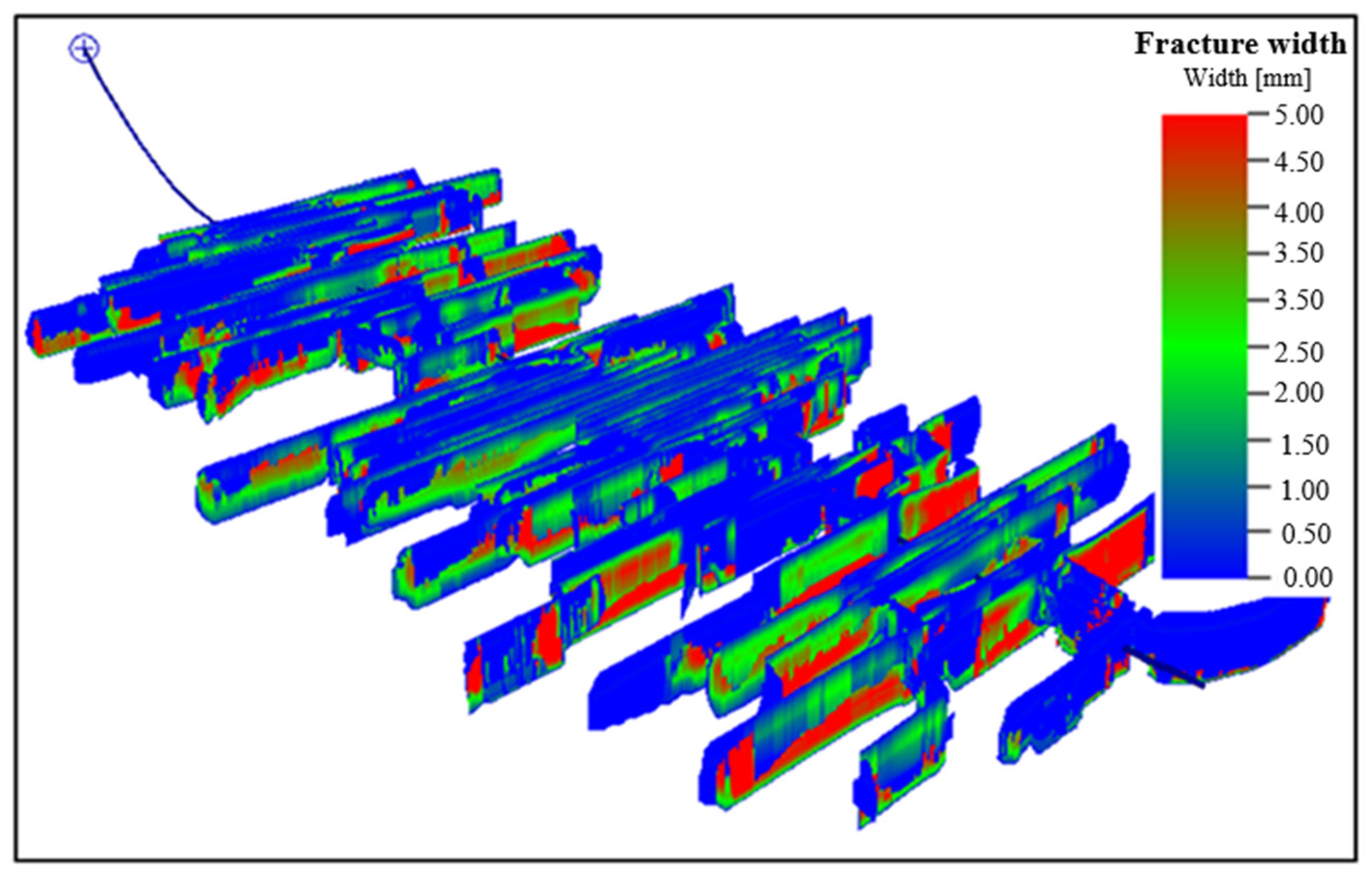
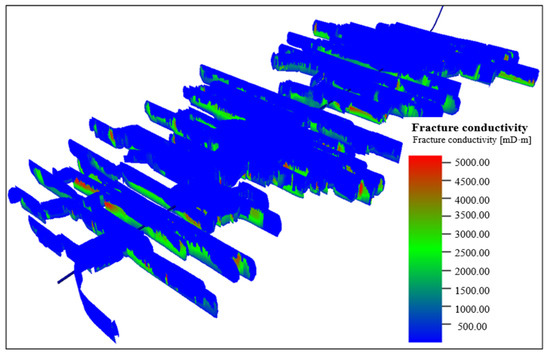
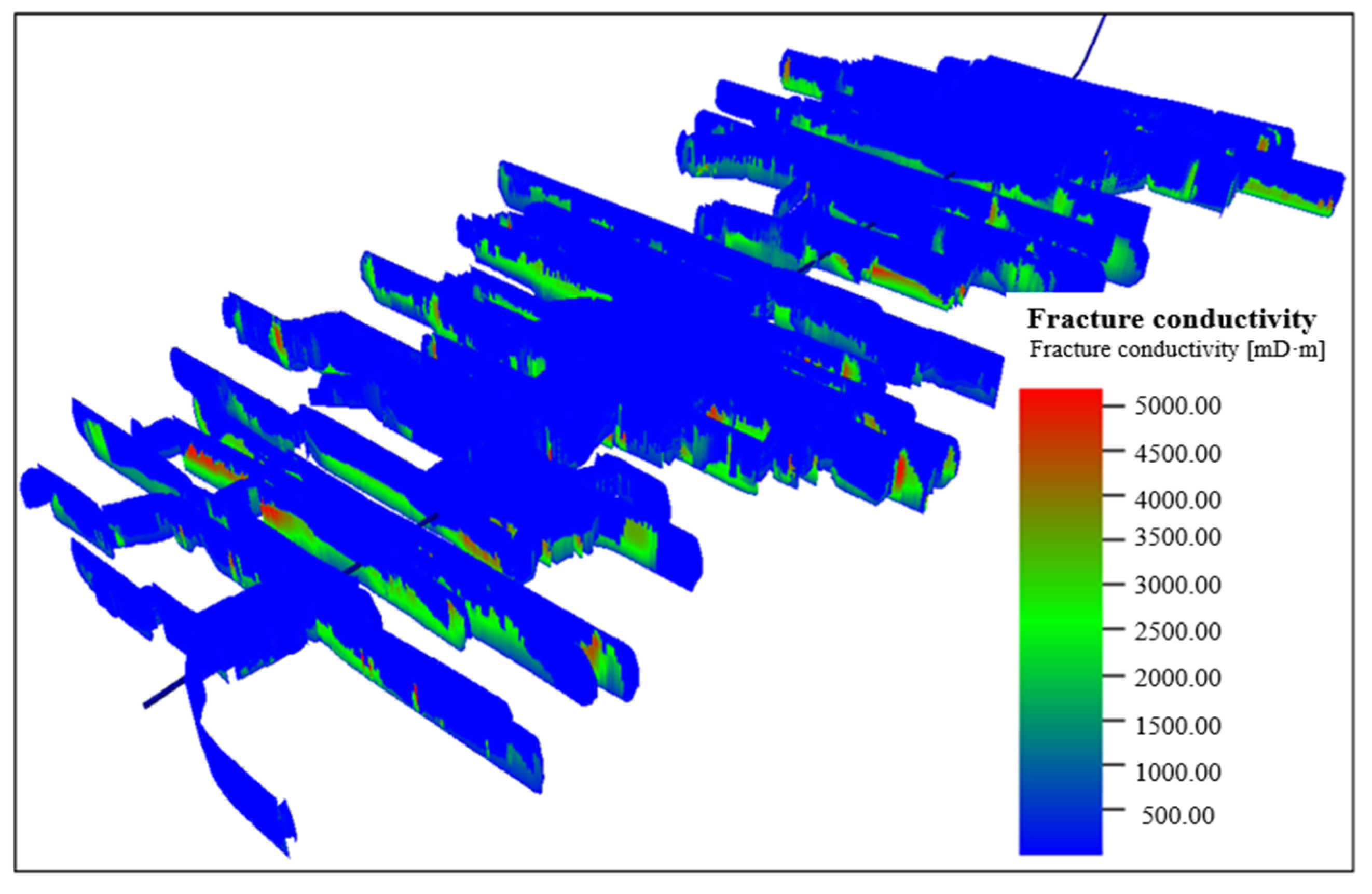
The simulation results are shown in Figure 10 and Figure 11. The average fracture half-length is 165.24 m, average fracture width is 3.24 mm, average fracture height is 45.21 m, and average conductivity is 251.22 mD·m. The specific results are shown in Table 6. The artificial fracture length meets the well spacing requirement of 350–400 m, and the fracture conductivity satisfies the production needs of the oil well. The variation in fracture conductivity is primarily driven by proppant settling, resulting in enhanced conductivity with increasing depth along the vertical fracture profile. Meanwhile, inadequate proppant transport to the fracture tip leads to progressively reduced conductivity along the fracture length.
Figure 10.
Simulation results of expanded seam width of sewn mesh (L61-H701).
Figure 11.
Simulation results of sewn net extended diversion capacity (L61-H701).
Table 6.
Summary table of mesh expansion simulation results (L61-H701).
4. Field Application
The intensive-cut volumetric fracturing technology was applied to four horizontal wells in the N185 platform of a shale oil well area in the ZN Oilfield, and a comparison was made with three horizontal wells in the Z161 platform, which employed conventional volumetric fracturing under similar reservoir conditions, to evaluate the effectiveness of the intensive-cut fracturing technology in the ZN Oilfield. The horizontal section lengths and reservoir drilling encounter rates of the wells in both platforms are shown in Table 7 and Table 8. The results indicate that the stimulated section length of intensive-cut volumetric fracturing was shorter than that of conventional fracturing, with the proportion of stimulated horizontal sections decreasing from 95.8% to 81.4%, and the average stimulated horizontal section per well reduced from 1417 m to 1233 m, enabling more concentrated stimulation of high-quality intervals. Compared to the conventional fracturing technology used in the Z161 platform, the intensive-cut volumetric fracturing in the N185 platform increased the average number of segments per well from 17 to 36, raised the proppant intensity from 3.2 t/m to 4.9 t/m, and increased the fluid intensity from 17.7 m3/m to 22.1 m3/m. Fracture monitoring data showed that the average fracture half-length (measured by wide-area electromagnetic monitoring) increased from 152 m to 193 m, with significantly reduced unstimulated zones between wells, segments, and clusters.
Table 7.
Parameters of intensive-stage fracturing technology for N185 platform.
Table 8.
Conventional fracturing parameter for Z161Z platform.
The first-year average daily oil production per well in the N185 platform’s four wells was 12.9 tons, compared to 8.8 tons for the three wells in the Z161 platform, representing an increase of 4.1 tons per well—a significant production enhancement. The primary reasons for this improvement are (1) the intensive-cut fracturing, with smaller segment and cluster spacing, overcame the challenge of limited fracture zone expansion caused by high bidirectional stress differences, substantially reducing unstimulated areas; (2) limited-entry fracturing and uniform-diameter perforation technology ensured full activation of cluster points and perforations in heterogeneous reservoir sections, further increasing FCV; and (3) higher proppant and fluid volumes effectively extended fracture length, aligning it with the current well spacing. Additionally, the increased fluid injection volume enhanced the formation pressure coefficient, delayed production decline during the life cycle, and improved single-well EUR.
5. Conclusions and Recommendations
To address the development challenges of shale oil in the ZN Oilfield, this study optimized parameters such as energy replenishment and pressurization scale, segment-cluster strategy, perforation technology, and proppant-fluid volume by evaluating reservoir conditions and fracability along horizontal sections through a “dual sweet spot” approach integrating geological and engineering factors, combined with reservoir numerical simulation and field monitoring data, thereby guiding differentiated stimulation strategies for varying reservoir conditions and establishing the ZN Oilfield’s shale oil horizontal well intensive-cut volumetric fracturing technology.
- (1)
- The shale oil in the ZN Oilfield exhibits high bidirectional stress differences (>6 MPa), necessitating smaller cluster spacing to minimize unstimulated intervals between clusters. Additionally, higher per-cluster injection rates (>4.5 m3/min) and net fracture pressure (>8 MPa), combined with uniform-diameter perforation technology, can mitigate fracture asymmetry and uneven propagation caused by reservoir heterogeneity.
- (2)
- Monitoring data revealed that with a fluid intensity of 22.0 m3/m and proppant intensity of 5.0 t/m, the average fracture half-length reached 193 m, roughly matching the 400 m well spacing. However, insights from fracturing test sites indicate that proppant fails to reach some areas far from the wellbore despite fluid penetration, compromising effective reserve recovery. Therefore, further optimization of fracturing scale and well spacing is required to align artificial fracture length with well patterns, thereby enhancing FCV and recovery efficiency.
- (3)
- Low pressure coefficient remains the most significant challenge in developing the ZN Oilfield’s shale oil. One-time energy replenishment during fracturing remains crucial for maintaining formation energy throughout a well’s life cycle. Conducting replenishment tests with more efficient energy-boosting agents like CO2 and nano-activated water (better displacement efficiency) is essential. Further evaluation and optimization of replenishment media types and volumes will play a vital role in slowing production decline and improving recovery rates.
Limitations of intensive-stage fracturing: First, the higher fluid and proppant requirements inevitably increase operational costs, and the economic benefits depend on whether the corresponding uplift in EUR justifies the additional investment. Second, large-scale fluid injection may lead to unintended fracture propagation or inter-well connectivity due to abnormal pressure buildup, requiring careful monitoring and pressure management. Finally, despite the wider fractures formed under high net pressure, the long-term fracture conductivity after closure remains uncertain, particularly in formations with low brittleness and high stress contrast. Further studies are needed to evaluate the persistence of conductivity over the production life cycle.
Author Contributions
Conceptualization, L.-P.Z.; methodology, L.-P.Z.; software, B.L.; investigation, Y.-F.W.; data curation, S.-B.W.; writing—original draft preparation, L.-P.Z.; writing—review and editing, P.Z. and Z.-R.W. All authors have read and agreed to the published version of the manuscript.
Funding
This research was funded by the China Petroleum Scientific Research and Technology Development Project “Key Technologies for Effective Development of Low/Ultra-Low Permeability Oilfields” (2021DJ1304), the National Natural Science Foundation of China (Grant No. U23B2089), and Shaanxi Provincial Natural Science Basic Research Program Project (Grant No. 2024JC-YBQN-0378).
Data Availability Statement
Data to support the findings of this study are available upon request from the corresponding author zhengpeng@xsyu.edu.cn.
Conflicts of Interest
Authors Lin-Peng Zhang, Bin Li, Yi-Fei Wang, Si-Bo Wang were employed by Exploration and Development Research Institute of Liaohe Oilfield Company, PetroChina. The remaining authors declare that the research was conducted in the absence of any commercial or financial relationships that could be construed as a potential conflict of interest.
References
- Mu, L.; Bai, J.; Qi, Y.; Xue, X. Geological Engineering Integrated Fracturing Technology for Qingcheng Interlayer Shale Oil. Pet. Drill. Tech. 2023, 51, 33–41. [Google Scholar] [CrossRef]
- Zhang, J.; Chen, J.; Sun, Z.; Xiong, J.; Wang, H.; Song, W.; Lei, J. Numerical Simulation Study on Volume Fracturing of Shale Oil Reservoirs in Y Block of Ordos Basin, China. Processes 2025, 13, 3356. [Google Scholar] [CrossRef] [Scilit]
- Zheng, P.; Liu, E.; Zhou, D.; Du, X.; Ma, Z. Factors Controlling the Hydraulic Fracture Trajectory in Unconventional Reservoirs. Geofluids 2022, 2022, 8793136. [Google Scholar] [CrossRef] [Scilit]
- Ni, L.; Zhang, X.; Zou, L.; Huang, J. Phase-field modeling of hydraulic fracture network propagation in poroelastic rocks. Comput. Geosci. 2020, 24, 1767–1782. [Google Scholar] [CrossRef] [Scilit]
- Zheng, P.; Xia, Y.; Yao, T.; Jiang, X.; Xiao, P.; He, Z.; Zhou, D. Formation mechanisms of hydraulic fracture network based on fracture interaction. Energy 2022, 243, 123057. [Google Scholar] [CrossRef] [Scilit]
- Tian, H.; Liao, K.; Liu, J.; Chen, Y.; Ma, J.; Wang, Y.; Song, M. Flowback Characteristics Analysis and Rational Strategy Optimization for Tight Oil Fractured Horizontal Well Pattern in Mahu Sag. Processes 2023, 11, 3377. [Google Scholar] [CrossRef] [Scilit]
- Zhou, Z.; Yang, H.; Wang, X.-C.; Zhang, Q.-F. Fractured rock mass hydraulic fracturing under hydrodynamic and hydrostatic pressure joint action. J. Cent. South Univ. 2016, 23, 2695–2704. [Google Scholar] [CrossRef] [Scilit]
- Lu, W.; He, C. Numerical simulation on the effect of pore pressure gradient on the rules of hydraulic fracture propagation. Energy Explor. Exploit. 2021, 39, 1878–1893. [Google Scholar] [CrossRef] [Scilit]
- Lu, W.; He, C. Numerical simulation on the simultaneous stress interference of parallel multiple hydraulic fractures. Energy Explor. Exploit. 2021, 39, 1143–1161. [Google Scholar] [CrossRef] [Scilit]
- Liu, D.; Song, X.; Zhang, W.; Wang, J.; Wang, Y.; Deng, Y.; Gao, M. Challenges and Strategies in Modeling Thin-Bedded Carbonate Reservoirs Based on Horizontal Well Data: A Case Study of Oilfield A in the Middle East. Processes 2025, 13, 2951. [Google Scholar] [CrossRef] [Scilit]
- Yu, J.; Yang, C.; Xie, Y.; Tang, H.; Zhang, Y.; Wei, X.; Ding, Y. Study on Evolution Law of Four Dimensional In-Situ Stress in Shale Formation. Chem. Technol. Fuels Oils 2025. [Google Scholar] [CrossRef] [Scilit]
- Ahmadi, S.; Khormali, A.; Kazemzadeh, Y. A Critical Review of the Phenomenon of Inhibiting Asphaltene Precipitation in the Petroleum Industry. Processes 2025, 13, 212. [Google Scholar] [CrossRef] [Scilit]
- Liu, F.; Mou, Y.; Wen, F.; Yao, Z.; Yi, X.; Xu, R.; Zhang, N. A Damage-Based Fully Coupled DFN Study of Fracture-Driven Interactions in Zipper Fracturing for Shale Gas Production. Energies 2025, 18, 4722. [Google Scholar] [CrossRef] [Scilit]
- Guo, H.; Wang, J.; Zhang, Y.; Xu, N.; Jiang, Z.; Bao, B. Microscopic Transport During Carbon Dioxide Injection in Crude Oil from Jimsar Oilfield Using Microfluidics. Energies 2025, 18, 4774. [Google Scholar] [CrossRef] [Scilit]
- Lu, X.; Wang, L.; Zheng, K.; Dong, C.B. Evaluation and Analysis of High-Efficiency Development Technology for the A83 C7 Shale Oil Reservoir in X Oilfield. Chem. Eng. Equip. 2021, 1, 95–97. [Google Scholar]
- Wang, X.; Cai, B.; Li, S.; Ma, F.; Yan, Z.M.; Tong, Z.; Zhang, H.Y. Development Process and Prospect of CNPC’s Reservoir Stimulation Technologies. Oil Drill. Prod. Technol. 2023, 45, 67–75. [Google Scholar]
- Zhang, K.; Wang, W.; Xu, C.; Li, X.H.; Wang, W.D.; Su, Y.L. Analysis on Stimulation Potential and Productivity Influencing Factors of Network-Fractured Horizontal Wells. Sci. Technol. Eng. 2013, 13, 10475–10480. [Google Scholar]
- Lei, Q.; Weng, D.; Xing, S.; Liu, H.; Guan, B.; Deng, Q.; Yan, X.; Liang, H.; Ma, Z. Progress and Development Directions of Shale Oil Reservoir Stimulation Technology of China National Petroleum Corporation. Pet. Explor. Dev. 2021, 48, 1035–1042. [Google Scholar] [CrossRef] [Scilit]
- Zhao, Z.; Li, K.; Zhao, P.; Tao, L. Practice and Development Suggestions for Volumetric Fracturing Technology for Shale Oil in the Ordos Basin. Pet. Drill. Tech. 2021, 49, 85–91. [Google Scholar]
- Zhang, R.; Zhang, L.; Lu, X.; Luo, Y.; Liu, Q. Deliverability Analysis of Fractured Horizontal Wells in Low-Permeability Fractured Reservoirs. Sci. Technol. Eng. 2014, 14, 41–48. [Google Scholar]
- Zhao, W.; Hou, L.; Yang, Z.; Zhu, R. Development Potential and Technical Strategy of Continental Shale Oil in China. Pet. Explor. Dev. 2020, 47, 819–828. [Google Scholar] [CrossRef] [Scilit]
- Xing, Y.; Zhao, P. Shale Oil Reservoir Stimulation and Efficient Development Technology in the Ordos Basin: A Case Study of the Qingcheng Oilfield. China Pet. Chem. Stand. Qual. 2024, 60, 188–190. [Google Scholar]
- Wang, X.; Feng, Y. Experimental Study on Rock Mechanical Properties of Shale Oil Reservoir in North China Exploration, Southern Ordos Basin. Unconv. Oil Gas 2024, 11, 110–118. [Google Scholar]
- Hou, J.; Cao, J.; Zhuang, Y.; Xing, L.J.; Li, G.H. Evaluation and Characteristics of Chang7 Hydrocarbon Source Rock in the Xun–Yi Exploration Area, Southern Ordos Basin. Miner. Resour. Geol. 2021, 35, 708–716. [Google Scholar]
- Zhang, G.; Jin, Y.; Chen, M. Using the Kaiser Effect of Rock under Confining Pressure to Measure In-Situ Stress. Chin. J. Rock Mech. Eng. 2002, 3, 360–363. [Google Scholar]
- Fu, J.; Wu, S.; Luo, A.; Zhang, L.; Li, Z.; Li, J. Reservoir Quality and Its Controlling Factors of the Chang8 and Chang6 Members in the Longdong Area, Ordos Basin. Earth Sci. Front. 2013, 20, 98–107. [Google Scholar]
- Yang, H.; Qiao, B. Reconstructing Pseudo-Shear-Wave Transit Time Logs Based on a Multivariate Regression Model. Uranium Geol. 2021, 37, 500–505. [Google Scholar]

Disclaimer/Publisher’s Note: The statements, opinions and data contained in all publications are solely those of the individual author(s) and contributor(s) and not of MDPI and/or the editor(s). MDPI and/or the editor(s) disclaim responsibility for any injury to people or property resulting from any ideas, methods, instructions or products referred to in the content. |
© 2025 by the authors. Licensee MDPI, Basel, Switzerland. This article is an open access article distributed under the terms and conditions of the Creative Commons Attribution (CC BY) license.