Article

Effect of Fluidized Bed Drying on the Physicochemical, Functional, and Morpho-Structural Properties of Starch from Avocado cv. Breda By-Product


by
Anna Emanuelle S. Tomé
1,
Yann B. Camilo
1,
Newton Carlos Santos
1,*,
Priscylla P. D. Rosendo
1,
Elizabeth A. de Oliveira
2,
Jéssica G. Matias
1,
Sinthya K. Q. Morais
2,
Thaisa A. S. Gusmão
1,
Rennan P. de Gusmão
1,
Josivanda P. Gomes
2 and
Ana P. T. Rocha
1
1
Laboratory of Biomass Processing, Food Engineering Department, Federal University of Campina Grande, 882-Universitário, Campina Grande 58429-900, PB, Brazil
2
Laboratory of Storage and Processing of Agricultural Products, Federal University of Campina Grande, 882-Universitário, Campina Grande 58429-900, PB, Brazil
*
Author to whom correspondence should be addressed.
Processes 2026, 14(1), 122; https://doi.org/10.3390/pr14010122 (registering DOI)
Submission received: 17 November 2025 / Revised: 11 December 2025 / Accepted: 25 December 2025 / Published: 29 December 2025

Abstract

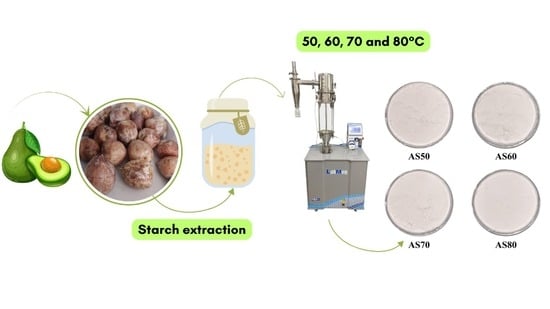
Fluidized bed drying has been widely applied in the food industry due to its high heat and mass transfer rates. In this study, the impact of drying temperatures (50, 60, 70 and 80 °C) in a fluidized bed on the physicochemical, functional, morpho-structural, and thermal properties of avocado seed starch was evaluated. The process yield for all temperatures ranged from 52.3 to 58.5% (p > 0.05), with a starch content of 59.20–60.9 g/100 g, amylose content of 28.85–31.84 g/100 g, and amylopectin content of 29.13–30.37 g/100 g. Additionally, all samples showed high water, milk, and oil absorption capacity (>90%), low solubility (5.22–8.35%), good flow characteristics, and swelling power greater than 50%. There was also a greater release of water (syneresis) after 168 h of storage, regardless of the drying temperature, which likewise did not influence the texture parameters. The granules had a smooth surface, without cracks or cavities, predominantly oval and partially rounded, being classified as type B. In the FT-IR analysis, no new functional groups were observed, only a reduction in peak intensity with increasing drying temperature. Finally, the thermal properties indicated high conclusion temperatures (>130 °C), with gelatinization enthalpy in the range of 14.18 to 15.49 J/g, reflecting its thermal resistance and structural integrity under heat conditions. These results demonstrated that fluidized bed drying is an alternative technique for drying avocado seed starch pastes.

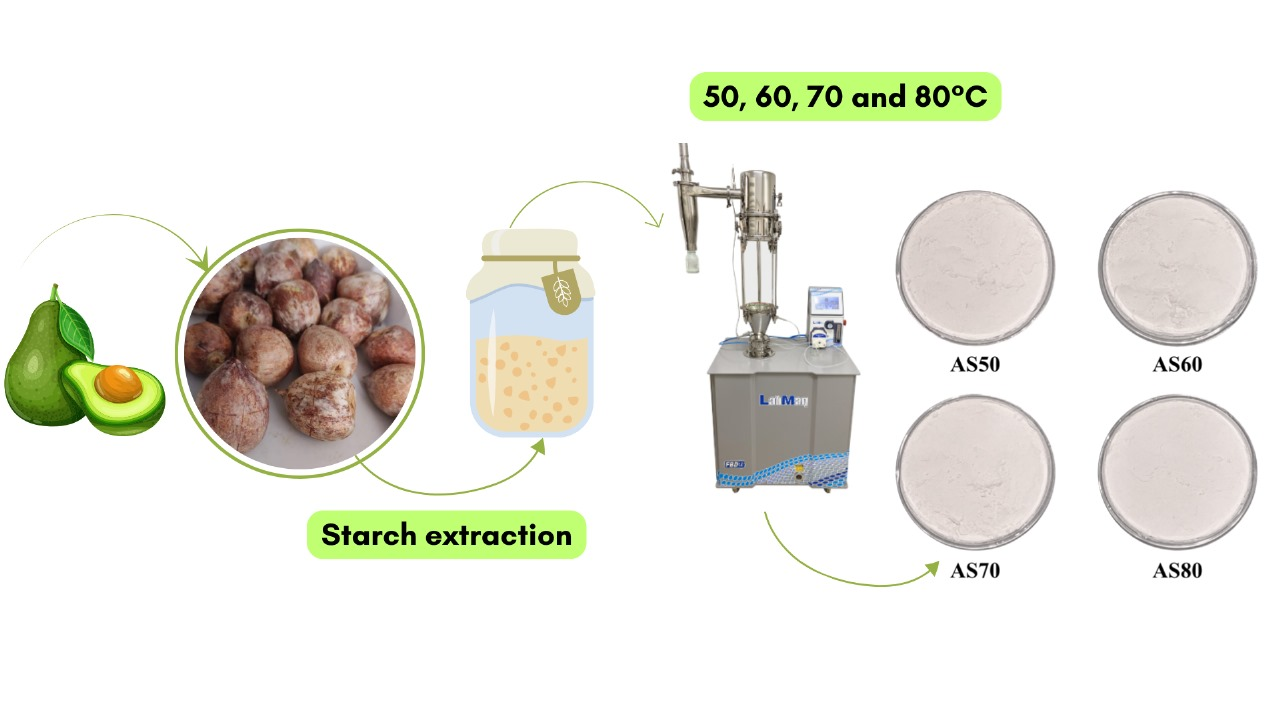
Graphical Abstract

1. Introduction

The avocado tree (Persea americana Mill.) is a popular perennial tree with a pear-shaped fruit consisting of a peel, pulp, and seed. Native to Mexico and Central America, it has a global distribution due to its rich nutritional and antioxidant potential, which are often associated with health benefits [1]. In Europe, Spain leads avocado production, contributing more than 90%, with Italy, Greece, and Portugal also playing significant roles [2]. In Brazil, avocado production reached 338,238 tons in 2022 [3]. The growing demand for avocados and the consequent increase in production and consumption result in the generation of large quantities of by-products, mainly peels and seeds. These residues correspond to approximately 1.6 million tons of avocado by-products [4]. Therefore, the reuse of these by-products is an important issue for the circular economy, promoting efficient, proper, and environmentally friendly routes for waste management [5].
Avocado by-products, such as peels, are particularly promising due to their richness in bioactive compounds with antioxidant, antimicrobial, and antibacterial properties, which are even more abundant than in the pulp itself [6]. Similarly, the avocado seed, which constitutes 15–16% of the fruit and contains about 30% starch [7], can be utilized as an alternative source of this polysaccharide. Starch is a carbohydrate polymer that exists as semicrystalline granules and is composed of two polymers: amylose, a linear biopolymer of α-D-glucose units linked by α-1,4-glycosidic bonds, and amylopectin, a highly branched biopolymer in which α-D-glucose units are linked through α-1,4- and α-1,6-glycosidic bonds [8].
However, starches from different plant sources exhibit distinct properties and characteristics, including granule morphology and size, amylose content, crystallinity, thermal properties, expansion strength, and hydrolytic properties [9]. Regardless of its extraction source, this natural polysaccharide type has the advantages of renewability, biodegradability, and abundance, and is the main component of many foods, providing most of the energy for human life [10].
After starch extraction, it becomes essential to apply appropriate drying methods to preserve its quality, prevent microbial degradation, reduce moisture content, and facilitate storage and transportation, while maintaining the desired properties for future industrial applications [11]. Among the drying methods, fluidized bed drying has stood out due to its high heat and mass transfer, resulting in a short process time [12]. Furthermore, this process is considered a potential alternative to spray drying in industrial applications [13], as it leads to products of similar quality with significantly lower investment costs [14].
In a fluidized bed, air is introduced through a single inlet located at the center of the base, creating a preferred path in the bed. This air flow drags the inert solid particles through the inlet to the bed surface, where a fountain is formed. From there, the air continues to rise, while the particles descend by gravity along the periphery of the fountain to the bed surface [15]. The particles then descend through the annular zone and re-enter the spout along the height of the bed. This specific movement of particles is one of the main characteristics of fluidized beds, distinguishing them from other gas-solid contact methods. The introduced gas not only rises through the inlet but also permeates through the annular zone along the entire height of the bed, ensuring good gas-solid contact and, consequently, high heat and mass transfer rates [15].
To ensure adequate control of the drying process, it is important to evaluate different processing temperatures, as temperature directly influences the drying rate and may affect both the composition and technological characteristics of the final product [16]. In this context, the present study aims to extract starch from avocado seeds and evaluate the impact of drying temperature in a fluidized bed on the physicochemical, functional, morpho-structural, and thermal properties of the starch.

2. Materials and Methods

2.1. Raw Material

Ripe avocados of cv. Breda (Persea americana Mill.) were purchased from the Paraibana Company of Supply and Agricultural Services (EMPASA), Campina Grande, PB, Brazil, in 2023. Initially, the fruits were sanitized with a sodium hypochlorite solution at a concentration of 200 mg/L free chlorine for 15 min and then rinsed with running water. Subsequently, the fruits were manually peeled, and their fractions (pulp, seeds, and peels) were separated and stored in a freezer (−20 °C) for later use. All chemicals and organic solvents used in this study were obtained from Neon Produtos Químicos, Ltd. (Suzano, São Paulo, Brazil), and reagents were freshly prepared on the day of analysis.

2.2. Starch Extraction

The starch from avocado seeds was extracted according to the method proposed by Adebowale et al. [17] with adaptations. Briefly, the seeds were cut into pieces of approximately 1 cm3 and then immersed in a 0.5% sodium metabisulfite solution for 24 h with a ratio of 1:2 (w/v). After this period, the seeds were blended with the metabisulfite solution using a blender (Phillips Walita, 800 w, São Paulo, Brazil) at 1000 rpm for 5 min. Subsequently, the resulting mixture was filtered through an organza mesh to obtain a starch suspension. The starch suspension was allowed to settle for 12 h in a refrigerated environment at 5 °C. After the first settling, the supernatant was discarded, and the precipitate was resuspended in distilled water and allowed to settle again for 12 h. The supernatant was discarded six times at 12 h intervals, with the addition of 200 mL of distilled water each time, and the mixture was stored at 5 °C. This process resulted in the preparation of a starch paste, which was used in the drying step.

2.3. Starch Paste Drying

The starch paste (800 mL) extracted from avocado seeds was subjected to a fluidized bed drying process. For this, a fluidized bed dryer (FBD 1.0, LabMaq, São Paulo, Brazil) (Figure 1) was used with a constant air-drying speed (8.5 m/s), a suspension feed rate of 4.6 mL/min, and an atomization pressure of 2 bar (conditions defined based on preliminary tests)). Because this process configuration does not operate with a fixed batch time but rather with continuous feeding of the starch suspension, the drying step was considered complete when the entire volume of the feed mixture had been atomized, dried, and collected in the cyclone. Thus, the endpoint of each drying run was defined by the full depletion of the feed reservoir rather than by a predetermined drying duration. The process was conducted at inlet temperatures of 50, 60, 70, and 80 °C (temperatures defined based on the starch gelatinization temperature) and used 1200 g of high-density polyethylene (HDPE) particles inside the equipment. The feed was kept under continuous agitation on a magnetic stirrer. At the end of drying, the powders were collected directly from the cyclone and water activity was measured immediately after processing. The dried powders were then sealed in flexible metallized packages and stored in a desiccator at 25 °C for no longer than 30 days before further analyses.

Sample Identification

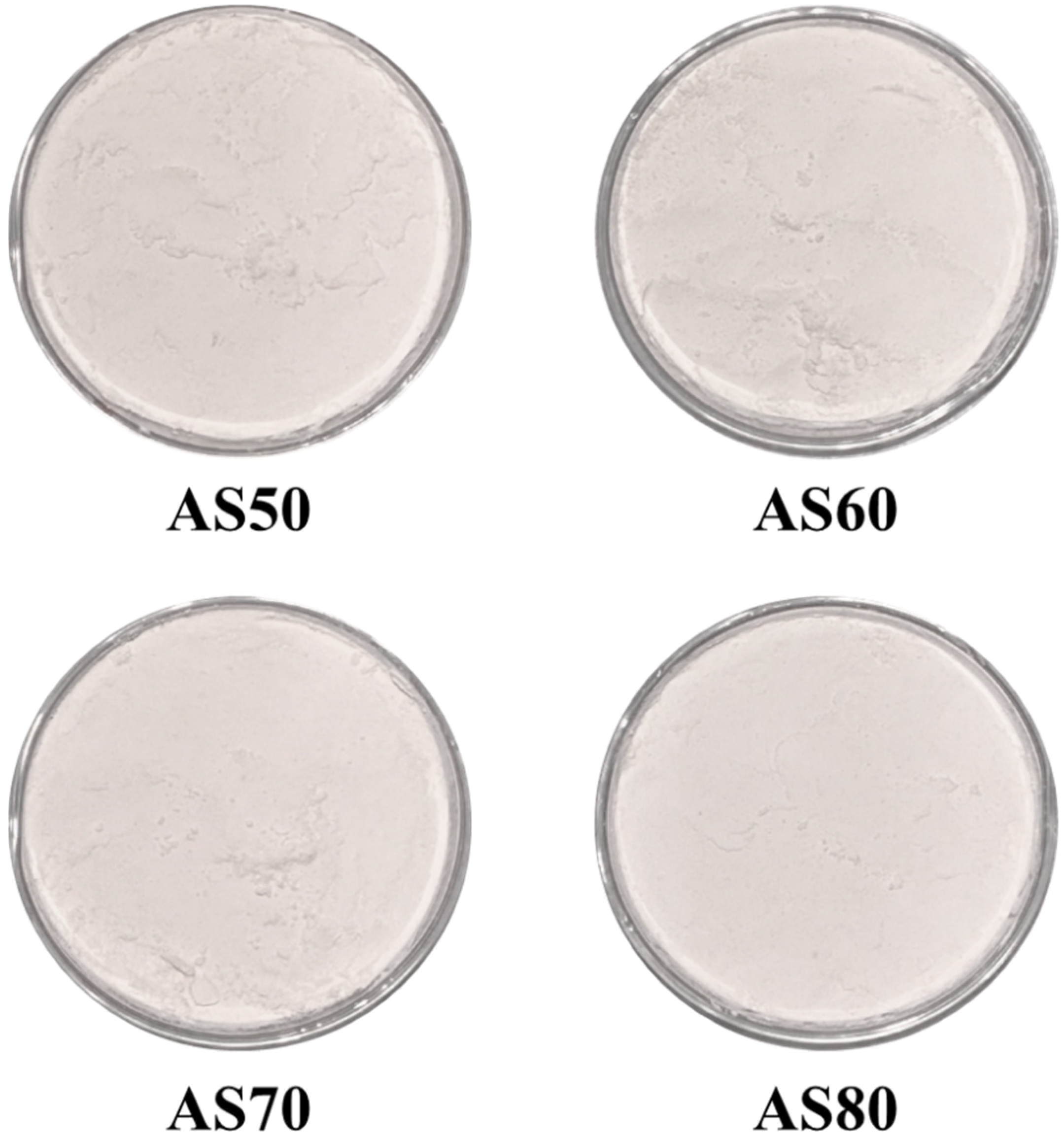
The operating conditions allowed for the creation of four experimental groups: AS50 (starch extracted from avocado seeds and dried in a fluidized bed at 50 °C), AS60 (starch extracted from avocado seeds and dried in a fluidized bed at 60 °C), AS70 (starch extracted from avocado seeds and dried in a fluidized bed at 70 °C), and AS80 (starch extracted from avocado seeds and dried in a fluidized bed at 80 °C). The native starch samples AS50, AS60, AS70, and AS80 can be seen in Figure 2.

2.4. Yield

The yield was calculated according to Equation (1).
Y i e l d   % = 1 X P × M P 1 X a × M a × 100 %
where Mp is the total mass of powder obtained (wet basis); Ma is the total mass of the feed mixture (wet basis); Xp is the moisture content of the powder obtained (mass fraction, wet basis); Xa is the moisture content of the feed mixture (mass fraction, wet basis).

2.5. Physical and Chemical Analyses

2.5.1. Water Content and Water Activity

Water content was determined according to the methodology proposed by the AOAC [18], and water activity was measured directly from the sample using a dew point hygrometer (Aqualab, model 3TE, Decagon, WA, USA) at a temperature of 25 °C.

2.5.2. Starch, Amylose, and Amylopectin Content

Starch content was determined according to the methodology established by the AOAC [18], which is based on quantifying the compound formed by the reaction between anthrone and glucose at 620 nm. Amylose content was quantified using the method proposed by Magel [19]. For this, starch (10.0 mg) was added to 2 mL of dimethyl sulfoxide and then heated at 85 °C for 15 min. The solution volume was adjusted to 25 mL, then 1 mL of the starch solution was pipetted into a 50 mL volumetric flask, followed by the addition of 5 mL of iodine solution (2%, prepared with iodine and potassium iodide three hours before the analysis) and the volume was made up to 50 mL. The absorbance of the sample was determined at a wavelength of 620 nm. Amylopectin content in the samples was calculated as the difference between the starch and amylose values.

2.5.3. Water-, Oil-, and Milk-Holding Capacities

The determination of water- and oil-holding capacity followed the method of Beuchat [20], where 1 g of starch was mixed with 10 mL of distilled water or sunflower oil. The suspension was homogenized for 30 s and allowed to rest for 30 min. The samples were then centrifuged (KASVI, K14-5000 M, São Paulo, Brazil) at 2000× g for 15 min. For milk, starch (2.5 g) was added to 30 mL of milk at 25 ± 2 °C for 30 min and then centrifuged at 2000× g for 15 min. Immediately after centrifugation, the supernatant was transferred to a Petri dish of known mass. The milk-holding capacity, which corresponds to the mass of the gel obtained after removing the supernatant, was calculated.

2.5.4. Swelling Power (SP) and Solubility

The SP and solubility of the samples were determined according to a method modified from Tangsrianugul et al. [21]. Samples (0.25 g) were mixed with 25 mL of distilled water and the mixture was then incubated in a water bath at 90 °C for 30 min with gentle stirring. After heating, the samples were cooled to room temperature and centrifuged at 300× g for 15 min. The supernatant was transferred to a Petri dish and dried at 105 °C until constant weight was achieved. The wet sediment fraction was weighed to determine the swelling power. SP was calculated as the ratio of the mass of the wet sediment sample to the mass of the original sample, while solubility was calculated as the percentage of dry weight of soluble molecules in the supernatant relative to the weight of the original sample.

2.5.5. Bulk and Tapped Density

Bulk density was determined according to the methodology described by Caparino [22]. Approximately 2 g of the sample was weighed into a 10 mL graduated cylinder, and the volume occupied by the sample was recorded. The ratio between mass and volume occupied was then calculated. To determine the tapped density, the methodology of Tonon et al. [23] was followed, which involves weighing approximately 2 g of the sample into a 10 mL graduated cylinder and applying 50 taps to the cylinder on a bench from a fixed height of 2.5 cm, recording the volume occupied by the sample. The ratio between mass and volume occupied was then calculated.

2.5.6. Hausner Ratio (HR) and Carr Index (CI)

The HR and CI were calculated following the methodologies proposed by Wells [24]. The flowability and cohesiveness of the starch powders were evaluated in terms of CI and HR, respectively. Flowability indicators (CI) are: very good (<15%), good (15–20%), satisfactory (20–35%), poor (35–43%), and very poor (>43%). Cohesiveness indicators (HR) are: low (<1.2), intermediate (1.2–1.4), and high (>1.4) [25,26].

2.5.7. Color

The color parameters L, a*, and b* from the CIELAB scale were determined using a portable colorimeter (Agilent Cary 60, Agilent Technologies, Santa Clara, CA, USA). The L* parameter represents lightness (0 is completely black and 100 is completely white), a* defines the transition from green (−a*) to red (+a*), and b* represents the transition from blue (−b*) to yellow (+b*).

2.5.8. Syneresis

The starch suspension (5%, w/w) was heated to 90 °C for 30 min in a temperature-controlled water bath, followed by rapid cooling in an ice bath to room temperature (25 °C). The starch sample was stored for 48, 72, 96, and 168 h at 4 °C. Syneresis was measured as the percentage of water released after centrifugation at 5000 rpm for 15 min [27].

2.5.9. Instrumental Texture

The starch pastes were prepared by mixing starch and water at a ratio of 1:10 (w/v). This mixture was then heated to 80 ± 2 °C until the paste formed, a process that took approximately 30 min. After the paste was formed, the samples were refrigerated at 8 °C for 24 h (BRM44, Brastemp, São Paulo, Brazil). Subsequently, the samples were allowed to reach room temperature (25 ± 2 °C) before being analyzed for texture using the Texture Profile Analysis (TPA) method, which assesses firmness, elasticity, cohesiveness, adhesiveness, and gumminess.

2.6. Morphological, Structural and Thermal Properties

2.6.1. Scanning Electron Microscopy (SEM)

The surface morphology of the particles was assessed using a scanning electron microscope (VEGA3 TESCAN, Waltham, MA, USA) operated at 5 kV and with magnifications of 500×. No coating was required. SEM images were analyzed in triplicate using ImageJ (available at: https://imagej.net/, accessed on 5 June 2024) to determine the average particle diameter.

2.6.2. X-Ray Diffraction (XRD)

The X-ray patterns of the samples were determined using an X-ray diffractometer (Shimadzu-XRD-7000, Kyoto, Japan) at 80 mA and 40 kV. Scanning was performed with a step size of 0.02 and a counting time of 2 s from 5° to 60° at room temperature [28,29]. The diffractograms were used to determine the degree of crystallinity of the formulations according to Equation (2):
R C   % = A c A t × 100
where RC is the relative crystallinity (%), Ac: area of the crystalline region; At: total area.

2.6.3. Fourier-Transform Infrared (FT-IR) Spectroscopy

The spectra in the infrared region were obtained using a Fourier-transform infrared (FTIR) system (Perkin Elmer Spectrum 400 Series, Waltham, MA, USA) over a range of 400–4000 cm−1, using potassium bromide (KBr) pellets. The absorbance ratio at 1047 cm−1 to 1022 cm−1 (IR 1047/1022) in the deconvoluted spectra was used to evaluate the short-range ordered structure of the samples.

2.6.4. Differential Scanning Calorimetry (DSC)

The thermal properties of the starch were determined using a differential scanning calorimeter (DSC) (2920 Modulated DSC, TA Instruments, New Castle, DE, USA) equipped with a cooling system [30]. Starch samples (2.0 mg) were weighed into aluminum pans, to which distilled water (6.0 µL) was added. The samples were sealed and allowed to equilibrate at room temperature overnight before analysis. Heating of the samples was performed at a rate of 10 °C/min, from 30 to 190 °C. An empty pan was used as the reference. Initial (To), peak (Tp), conclusion (Tc) temperatures, and enthalpy (ΔH) were recorded from the thermograms.

2.7. Statistical Analysis

The results were presented as mean ± standard deviation. All experiments were performed in triplicate. One-way ANOVA was performed using Assistat 7.0 software (available at: https://assistat.software.informer.com, accessed on 5 February 2025). To determine statistically significant differences between means, Tukey’s test was applied (p ≤ 0.05).

3. Results and Discussion

3.1. Drying Yield of the Avocado Seed Native Starch in Fluidized Bed

Yield is a crucial parameter for optimizing industrial processes involving the utilization of avocado by-products. For the drying process of avocado seed starch in a fluidized bed, the yield ranged from 52.3% (AS50) to 58.5% (AS80) (p > 0.05). The yields obtained here are considered ideal for industrial processes, as yields above 50% are considered successful [31]. Although AS80 presented the highest numerical yield, this variation was not statistically significant (p > 0.05). An explanation for the higher value at 80 °C is the reduced loss of material during processing. At higher temperatures, the lower moisture content of the particles may improve their fluidization behavior, decreasing wall adhesion, agglomeration, and retention of fines in the cyclone, factors that collectively increase the effective mass recovered at the end of drying [14]. These observations are supported by a previous study that reported yields ranging from 29.7% to 49.7% for mango seed starch dried in a fluidized bed (60 to 80 °C) [12]. Although the drying of extracted starches is typically carried out by lyophilization or convective drying, both methods generally yield values close to 100%; they are difficult to scale up and offer low productivity. Therefore, we consider our process to be scalable.

3.2. Starch, Amylose, and Amylopectin Content

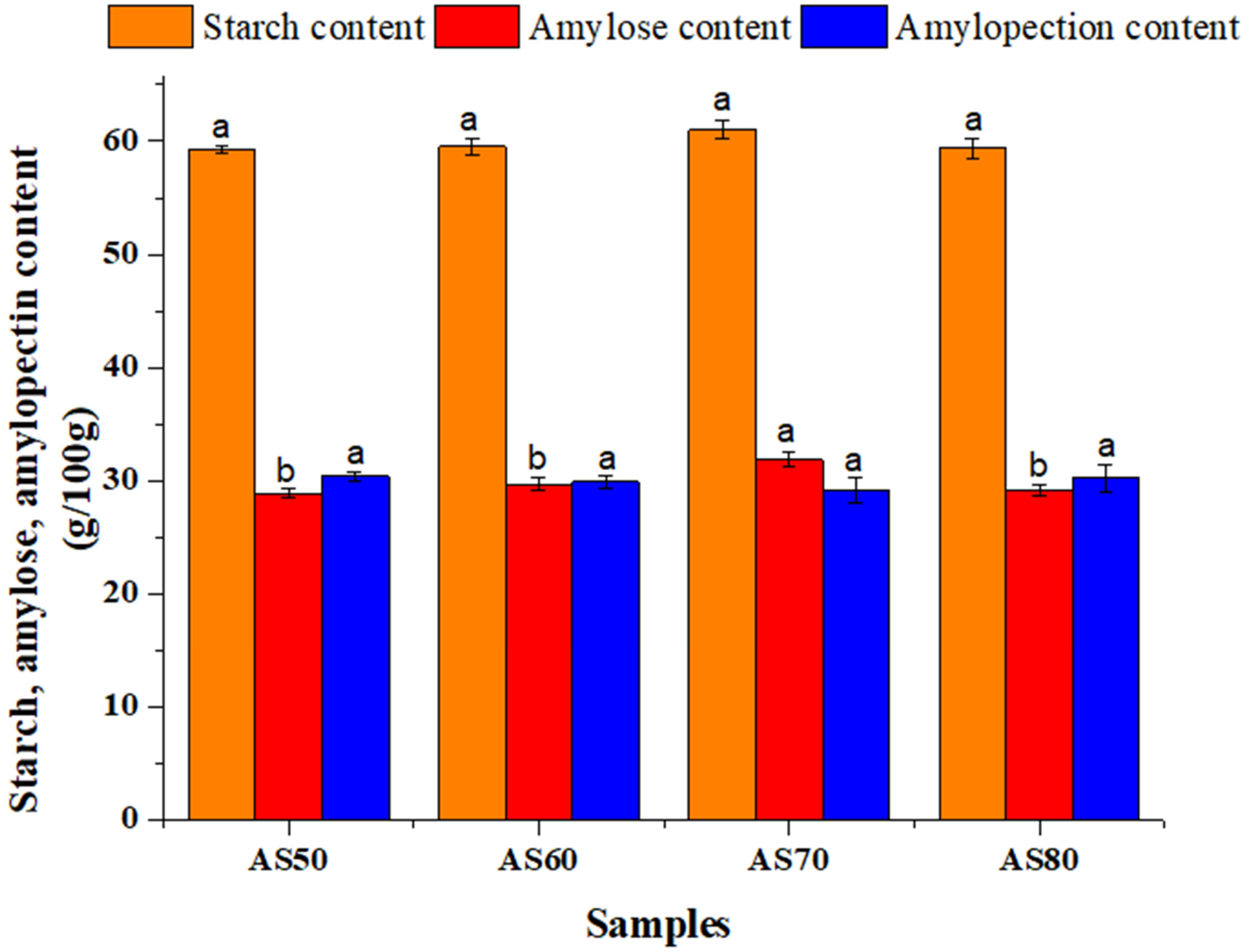
The starch, amylose, and amylopectin content of native avocado seed starch are shown in Figure 3. The variation in drying temperature between 50 and 80 °C did not result in statistically significant differences (p > 0.05) in starch, amylose, or amylopectin contents, indicating that the process, within this range, preserves the integrity of the starch’s chemical composition. The starch content ranged from 59.20 g/100 g (AS50) to 60.9 g/100 g (AS70), with AS70 showing the highest value. However, there was no significant difference (p > 0.05) between the samples, indicating that the drying conditions did not exhibit a clear trend regarding the final starch content. This suggests that other factors, such as the botanical source of origin [32], extraction method, and material composition [7], may influence this parameter, making the effect of drying temperature less noticeable. Values close to those of the present study were reported by Ferraz et al. [29] for mango seed starch (59.4%) obtained by oven drying and are similar to those of other starch sources [33].
Amylose content is an important property as it can influence functional, rheological, and gelling properties [34]. The amylose contents were 28.85 g/100 g, 29.68 g/100 g, 31.84 g/100 g, and 29.13 g/100 g for AS50, AS60, AS70, and AS80, respectively. It can be observed that the obtained values were not significantly different (p > 0.05), except for AS70. Previous studies conducted by Irrazabal et al. [35] reported amylose contents of 28.18 g/100 g, 17.79 g/100 g, and 15.91 g/100 g for avocado seed starch from the Hass, Criolla, and Fuerte varieties, respectively. According to Chen et al. [36], these differences may be associated with the determination method, cultivation conditions, variety, or geographical origin, as well as the drying technique applied [36].
According to Guerrero et al. [7], the amylose and amylopectin content in starch affects its functional properties and industrial applications. Thus, the amylopectin contents were also determined and can be seen in Figure 3. The amylopectin content ranged from 29.13 g/100 g (AS70) to 30.37 g/100 g (AS50) (p > 0.05). Once again, it is evident that the temperature range used did not significantly influence the amylopectin levels. In fact, starch composition is predominantly 15–30% amylose and 70–85% amylopectin, with the ratio of these two polysaccharides being dependent on the starch’s botanical origin [37]. This study observed that the composition of amylose and amylopectin in avocado seed starch was around 30 g/100 g, with amylopectin being lower than that found by Tosif et al. [38] for loquat seed starch.
Overall, the results show that the drying temperature, within the evaluated range, does not significantly alter the proportion between amylose and amylopectin, which reinforces the compositional stability of the extracted starch, contributing to its potential use in food formulations, biodegradable packaging, and other applications.

3.3. Physical and Functional Properties of Avocado Seed Native Starch

Different temperatures applied during the drying process cause changes in the physical, functional, and structural properties of the starch [39]. Table 1 shows the results obtained for the physical and functional properties of avocado seed starch obtained by fluidized bed drying at temperatures of 50, 60, 70, and 80 °C.
Water content is a crucial quality parameter for determining the stability of powdered products over time [40]. As shown in Table 1, the water content of the starches ranged from 8.16 g/100 g (AS80) to 9.57 g/100 g (AS50), with higher temperatures resulting in reduced water content in these samples, showing a significant difference between them (p < 0.05). Regarding water activity (aw), values ranged from 0.52 (AS50) to 0.36 (AS80) (p < 0.05). It is evident that the results for water content and aw in this study were significantly influenced by the drying temperature due to the heat and mass transfer processes when the drying temperature increased. Indeed, at a drying temperature of 80 °C, low water content (8.75 g/100 g) and aw (0.36) were obtained. According to Costa et al. [14], air temperature is one of the most influential input variables affecting the water content of the product, which corroborates findings by Almeida et al. [41] for native red rice starch with a water content of 9.30 g/100 g, and Castro et al. [42] with an aw around 0.14 for pitomba seed starch, both obtained by convective drying.
Water-holding capacity (WHC) is related to the starch chain length and its interaction with water molecules [43], while oil-holding capacity (OHC) depends on the physical trapping of oil in the nonpolar structure of starch [44]. The values for WHC and OHC, presented in Table 1, were over 90 g/100 g for both parameters. Although the drying temperature did not have a significant impact (p > 0.05), the process conducted at 80 °C (AS80) resulted in the highest values: 92.38 g/100 g for WAC and 92.34 g/100 g for OHC. Interestingly, the AS80 sample also had the lowest water content (8.16 g/100 g), indicating that the higher drying temperature (i.e., 80 °C) is effective in promoting water removal without causing significant thermal degradation of the starch’s molecular structures, thereby ensuring the highest values for WHC and OHC. These observations are consistent with previous studies conducted by Castro et al. [42] for pitomba seed starch with values of 89.49% (WHC) and 85.07% (OHC), and Zhang et al. [45] for jackfruit seed starch with values of 70.09% (WHC) and 85.66% (OHC). Comparing our findings with the literature, avocado seed starch has potential applications in various industries, contributing to the improvement of texture, stability, and functionality of final products [17].
Another important property when developing food products is milk-holding capacity (MHC), and its values are also presented in Table 1. It can be observed that the MHC values were higher than those for WHC and OHC, confirming the starch’s ability to bind to fat globules present in milk, particularly for AS60, which had the highest value (135.94 g/100 g). Although the drying temperature did not significantly affect (p > 0.05) the results, the MHC values were above 100 g/100 g for all conditions, highlighting its high capacity for use in new food products. Lower values compared to this study were reported by Ribeiro et al. [46] for red and black rice starch obtained by convective drying (50 °C) with values of 64.31 g/100 g and 70.57 g/100 g, respectively. This suggests that the higher rate of heat and mass transfer in bed drying, which provides faster and more uniform drying, creates particles with a more defined structure suitable for greater absorption, compared to more traditional drying methods, such as convective drying in an oven.
Solubility is a parameter that measures the extent to which starch granules dissolve during the swelling process, while swelling power (SP) quantifies the starch granules’ ability to absorb water during heating [47]. The solubility and SP values are presented in Table 1. For both parameters, no distinct behavior was observed with an increase in drying temperature; only a variation was noted, with solubility ranging from 4.51% (AS80) to 8.35% (AS60) and SP ranging from 56.25% (AS80) to 58.13% (AS70) (p < 0.05). Lower solubility values (1.60%) were reported by Castro et al. [42] for pitomba starch, and SP values (6.9–33.7%) were reported by Waterschoot et al. [48] for potato, corn, and rice starches. According to Zieglar et al. [49], low starch solubility may be associated with the degree of branching in the chain, as solubility results from the leaching of amylose. On the other hand, starches with SP values in the range of 50% are indicative of being suitable for use in frozen foods that require higher stability [7,50].
Bulk density and tapped density refer to the volume occupied by powdered foods and are important factors for the industry, especially for packaging and handling purposes [51]. The results are presented in Table 1. The values for bulk and tapped density did not show a defined trend with increasing drying temperature (p > 0.05), with bulk density ranging from 0.54 g/cm3 (AS70) to 0.58 g/cm3 (AS50) and tapped density ranging from 0.65 g/cm3 (AS60) to 0.58 g/cm3 (AS70). According to Castro et al. [42], low bulk and tapped density values may be associated with smaller particle sizes of the starch, which results in better consolidation during powder rearrangement. Similar values to those of the present study were obtained by Pachuau et al. [52] for bulk density, which was 0.45 g/cm3 for glutinous rice starch, and by Yaowiwat et al. [53], who found a higher tapped density value (2.57 g/cm3) for jackfruit starch.
The Carr Index (CI) and Hausner Ratio (HR) reflect the flowability of a powder and are calculated based on the ratio between apparent density and tapped density. Lower index values indicate that the difference between apparent density and tapped density is smaller, which implies less compaction and greater powder flowability [25]. As shown in Table 1, the AS70 sample had the highest Carr Index (22.50%), followed by the AS80 sample with a value of 15.90%, which did not differ significantly from the AS60 sample, with a value of 14.20% (p > 0.05). The lowest result was obtained for the AS50 sample (13.20%). According to the CI classification, the AS50, AS60, and AS70 samples can be categorized as having good flowability, as their values fall between 11% and 15%. However, the AS80 sample was classified as having acceptable flowability.
Regarding the Hausner Ratio (HR), the highest value was obtained for the AS70 sample, which was 1.29, followed by the AS80, AS60, and AS50 samples with values of 1.19, 1.17, and 1.15, respectively. According to HR classification, the AS50 and AS60 samples can be categorized as having good cohesiveness, as their HR values fall between 1.12 and 1.18. In contrast, the AS70 and AS80 samples received an acceptable classification, with values ranging from 1.19 to 1.20. Thus, good flowability can ensure efficient distribution of starch in product formulation. The AS70 sample exhibits intermediate cohesiveness (values between 1.20 and 1.40), which can be a desirable characteristic when used as a texture improver in food products, as cohesiveness is related to the tendency of molecules to stick together.
Color is an important physical property in starch because it determines product quality and applicability. The presence of dark pigments can reduce the quality and acceptance of the final product [54]. Color determination (Table 1) was assessed in three different shades: L*, a*, and b*. Among these, luminosity (L*), which indicates a whitish hue, is the most important and significant for characterizing the starch in this study. The L* parameters observed for avocado seed starches differed statistically (p ≤ 0.05), ranging from 42.46 (AS70) to 51.93 (AS60). For the a* parameter, low values were observed (2.49 (AS70)–3.12 (AS50), p < 0.05), indicating a tendency towards red, meaning the extracted starch has a lower +a* intensity, as shown in Figure 2. The intensity of yellow (+b*) also differed among the avocado seed starches, with greater color intensity compared to the +a* hue, ranging from 4.96 (AS70) to 6.11 (AS50). According to Díaz et al. [55], low +b* values associated with high L* values are related to desirable color characteristics for starch acceptance. Based on the color parameters, the starch extracted from avocado seeds can be classified as having a light color, as shown in Figure 2.

3.4. Syneresis Index

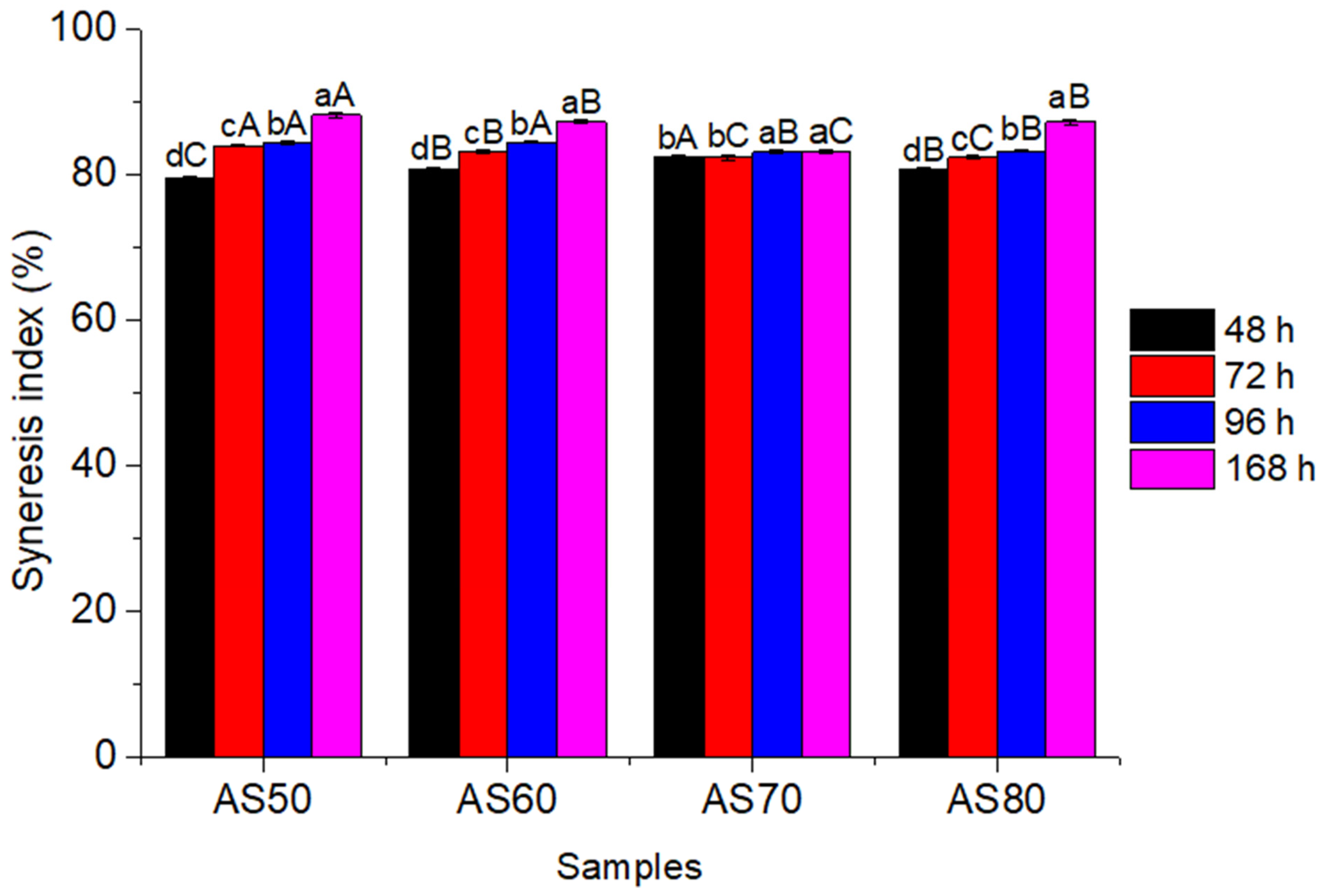
During refrigerated storage, the reorganization of starch molecules can result in water release or syneresis, affecting the alignment of the gel network [56]. Thus, the syneresis of gels prepared from avocado seed starch was measured as the amount of water released from the gels during refrigerated storage (4 °C) at intervals of 48, 72, 96, and 168 h, with results shown in Figure 4.
It was observed that as the storage time increased, the syneresis of all starches increased gradually. According to Abelti et al. [57], starch granules are also important for emulsifying and stabilizing frozen desserts such as ice cream, to prevent the formation of ice crystals and improve beating quality. Therefore, starches that exhibit higher syneresis tend to retrograde more at low storage temperatures. It can be noted that the highest value for the syneresis index was obtained for AS50 after 168 h (88.28%), indicating that avocado seed starch exhibits high syneresis and is not suitable for use in food systems involving refrigerated food processing [57]. However, AS50 at 48 h showed the lowest syneresis (79.56%) among all samples, suggesting it might be more suitable for refrigerated food processing [57]. Importantly, the high syneresis values observed (79–88%) can be explained by the molecular characteristics of this starch. Avocado seed starch has a relatively high amylose content (~30 g/100 g), and amylose-rich starches with type B crystalline structures tend to retrograde quickly at low temperatures. During gelatinization (90 °C/30 min), the granules lose their crystalline order and the amylose chains become fully dispersed in the gel. As the gel cools, these linear chains rapidly reassociate and form new crystalline regions, pushing water out of the gel matrix. Thus, the high syneresis is mainly due to fast amylose recrystallization after cooling, not to limitations in water absorption by the granules. Previous studies by Pachuau et al. [52] reported syneresis values ranging from 10.14% to 25.17% over 24 to 120 h for glutinous rice starch obtained by vacuum oven drying at 40 °C, while Paramasivam et al. [58] reported values ranging from 68.19% to 86.21% for starch from different banana cultivars dried at 50 °C over a 120 h storage period.
Generally, products stored at low temperatures lose their quality when the water bound to the food matrix begins to be released from the gel [58]. Therefore, understanding the characteristics of starch gelatinization and retrogradation is essential for designing equipment, controlling quality, and producing starch-based products [59]. Lower syneresis values are thus a better choice for products such as ice cream, yogurt, mayonnaise, and frozen foods, where temperature variation frequently influences the product’s functional value [60]. Furthermore, differences in syneresis among starches can be attributed to several factors, such as amylose content, amylopectin, lipid and protein content, granule size and distribution, crystallinity, and the intermolecular distance of the glucan chain, which significantly affect gel strength [61].

3.5. Starch Gel Texture

Evaluating the texture of starch gels is important because amylose content influences water mobility, which also affects the specific viscoelasticity and textural properties of starch gels [62]. Therefore, starch gels were prepared, and texture parameters (firmness, elasticity, cohesiveness, adhesiveness, and gumminess) were assessed. The results are presented in Table 2. In general, it was observed that none of the evaluated texture parameters were significantly influenced by the drying temperature (p > 0.05). These observations are supported by evidence from previous studies, where Lee et al. [63] reported that the textural properties of starch gels are highly influenced by starch concentration, heating temperature, and methods of starch modification.
Firmness, defined as the force (N) required to compress a product to a predetermined deformation [64], showed values below 4 N, ranging from 2.37 N (AS60) to 3.89 N (AS80) (p > 0.05). Low firmness values were also obtained for rice starch gels by [65], with a value of 3.28 N. When evaluating elasticity, defined as a measure of the extent of structural breakdown of the gel after initial compression [66], all samples, regardless of the drying temperature, showed values equal to 1.00 N (p > 0.05). Lower values compared to the present study were reported by Cao et al. [67] for quinoa starch gels (0.62 N). According to Hedayati et al. [68], higher elasticity values indicate greater interactions within the three-dimensional network of the starch gel.
Cohesiveness is related to the intramolecular interactions within starch chains [68]. The obtained results were low, ranging from 0.51 to 0.54 N (p > 0.05), with AS70 and AS80 showing the highest value of 0.54 N. This suggests that these samples have molecular structures that favor the formation of hydrogen bonds at comparable levels. Values close to those in the present study were reported by Cao et al. [67] for quinoa starch gels (0.56 N). According to Marboh et al. [64], adhesiveness measures the stickiness of starch gels. If gels become sticky after deformation, a negative force will be generated. The adhesiveness values observed ranged from 0.85 N·m (AS50) to 1.34 N·m (AS60) (p > 0.05), which were higher than those reported by Marboh et al. [64] for sohphlang starch gels, which had values below −0.2. However, in contrast to the negative values reported in that study, the positive adhesiveness values obtained here indicate that the gels required work to detach from the probe surface, reflecting the presence of adhesive or sticky characteristics. Therefore, the results indicate that the avocado seed starch gels exhibit a measurable adhesive behavior.
Gumminess represents the energy required to disintegrate a semisolid food so that it can be swallowed without chewing [69]. As shown in Table 2, the values ranged from 1.23 N (AS60) to 1.48 N (AS70) (p > 0.05). According to Edwards et al. [70], the gumminess values in starch gels are low due to the high amylose content, which contributes to the low chewability.

3.6. Morphology and Specific Surface Area

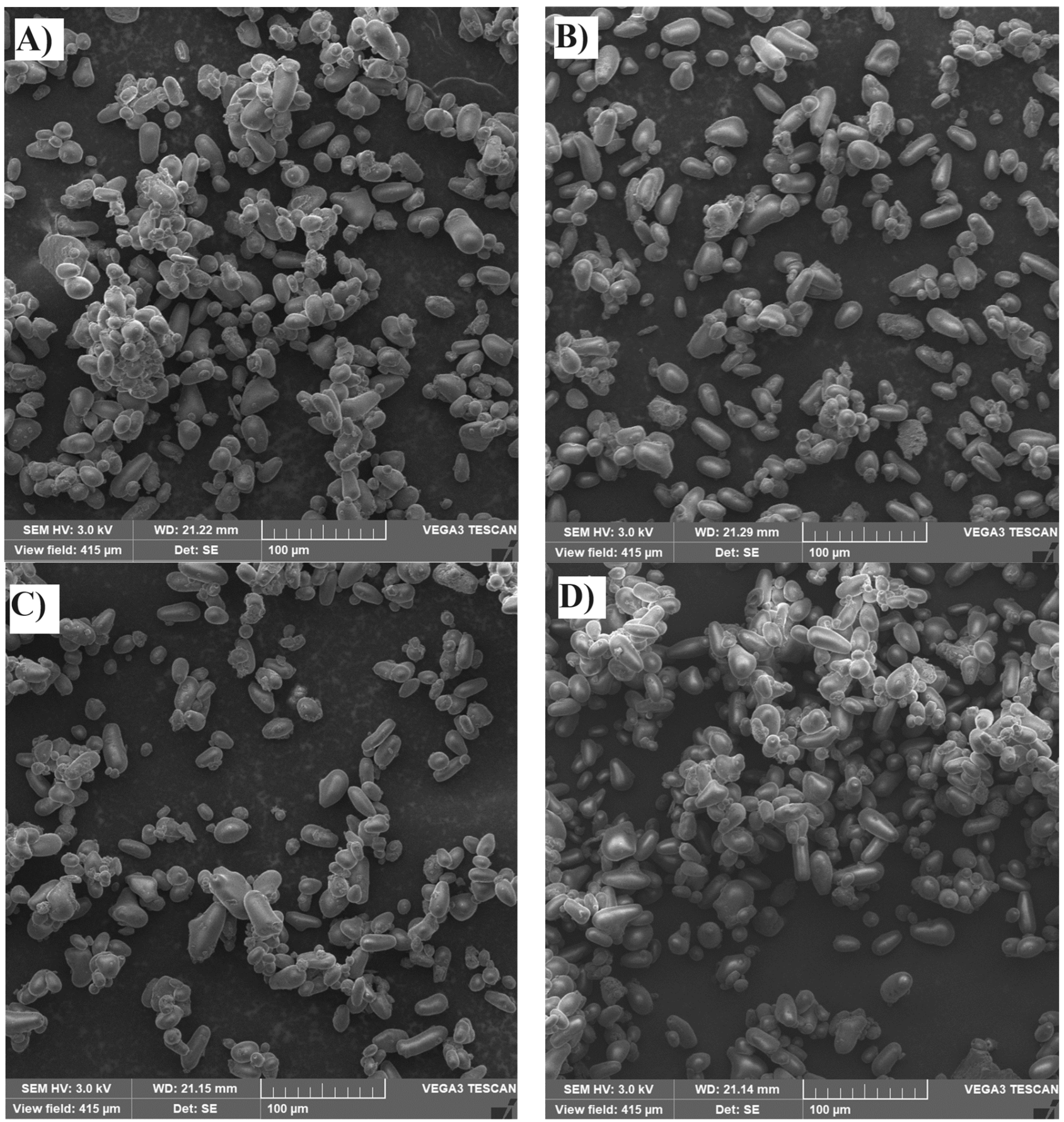
The shape of the granules and the surface appearance of avocado seed starch, obtained through fluidized bed drying, are shown in Figure 5.
The morphological features of all samples (Figure 5) displayed similar patterns, regardless of the drying temperature applied. Granules with smooth surfaces, without cracks or cavities, were observed, with a predominance of oval and somewhat rounded shapes. These observations are consistent with results from previous studies on avocado seed starch obtained through convective drying at 40 °C [71] and on azuki bean, pea, and white bean starches obtained through convective drying at 40 °C [72]. However, the minor visual differences observed in Figure 5A, such as slight agglomerations, may be related to the higher water content in avocado starch (AS50), which promotes a state prone to particle agglomeration. On the other hand, the clusters observed in Figure 5D are characteristic of the early stage of gelatinization, resulting from the high drying temperature (80 °C). Similar observations were reported by Martins et al. [71] and Irrazabal et al. [35] for starch from seeds of different avocado cultivars.
As mentioned earlier, temperature was not a predominant factor in altering the morphological structure of avocado seed starch granules. However, it was observed that as the drying temperature increased, the starch granules showed an increase in the average particle diameter (Table 2) between samples AS50 and AS70 (p > 0.05). In contrast, the AS80 sample, which was dried at the highest temperature (80 °C), exhibited a reduction in average particle diameter (117.23 μm), although this difference was not statistically significant (p > 0.05). Because no evidence of granule rupture was observed in the SEM micrographs (Figure 5D), these changes can be attributed to increased particle shrinkage during water removal or to variations in the extent of granule agglomeration induced by higher drying temperatures. Overall, the average diameter values ranged from 101.67 μm (AS50) to 130.68 μm (AS70) (p > 0.05). These results are consistent with the findings of Irrazabal et al. [35], who obtained avocado seed starch from Hass, Criolla, and Fuerte varieties through oven drying at 40 °C, with granules of diameters of 112.20, 128.82, and 112.20 μm, respectively. According to Oyeyinka et al. [73], morphological characteristics can vary depending on cultivar, plant growth stage, environmental conditions, and extraction and purification methods.

3.7. Structural Properties (XRD and FT-IR)

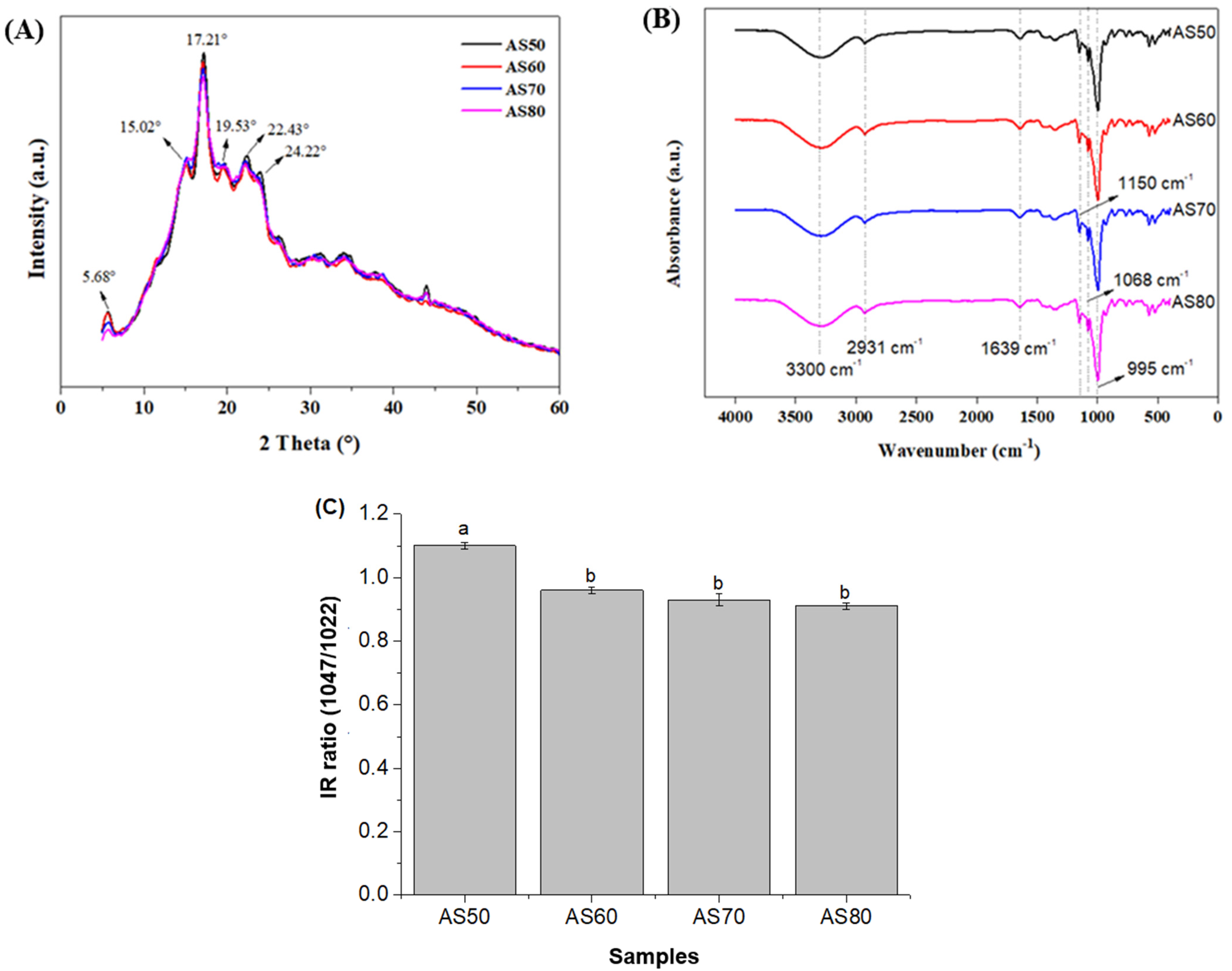
X-ray diffraction patterns and FT-IR spectra of native avocado seed starch obtained by fluidized bed drying at temperatures of 50, 60, 70, and 80 °C are presented in Figure 6.
All samples exhibited a typical B-type polymorph (Figure 6A), as evidenced by the presence of diffraction peaks at 2θ angles of 5.68°, 15.02°, 17.21°, 19.53°, 22.43°, and 24.22°. According to Miranda et al. [74], B-type starches display the strongest diffraction peak around 17°, with smaller peaks around 15°, 22°, and 24°, and a characteristic peak around 5.6°. This classification is attributed to starches with a higher quantity of long chains [75]. These findings are consistent with previous observations for jaboticaba seed starch [74], Malaysian red apple seed starch [76], and avocado seed starch [77]. Additionally, the temperature used in the fluidized bed drying process did not have a significant impact on the crystalline structure of the starch (p > 0.05), with relative crystallinity varying from 23.29% (AS80) to 24.27% (AS50). Therefore, as indicated by Ferreira et al. [12], who reported a crystalline fraction of 28% for mango seed starch, native avocado seed starch is semicrystalline, regardless of the drying temperature applied.
The FTIR spectra of avocado seed starch obtained at different drying temperatures are presented in Figure 6B. It can be observed that all samples exhibited absorption peaks at 995, 1068, 1150, 1639, 2931, and 3300 cm−1. Notably, the drying temperature did not influence the formation of new functional groups; instead, the intensity of the absorption peaks decreased with increasing temperature gradients, indicating a weakening of the starch chains. The absorbance bands between 929 and 1080 cm−1 are attributed to water-amylose interactions, indicating C-OH curvature and modes related to CH2, while the peak at 1150 cm−1 is attributed to C-C and C-O stretching, as well as contributions from C-OH groups [78].
The absorbance band at 2931 cm−1 is generated by the CH stretching vibration, and the peak at 1639 cm−1 is associated with H-O bending vibration [79]. A broad range between 3800 and 3000 cm−1 in the spectra is linked to the stretching vibrations of hydroxyl groups (-OH). Depending on the water content of the sample, the intensity of this band can vary. In fact, samples with lower water content (AS70 and AS80, Table 1) showed lower peak intensities.
To further quantify molecular ordering within the starch structure, the absorbance ratio at 1047 cm−1 to 1022 cm−1 (IR1047/1022) was evaluated (Figure 6C). This ratio is widely used as an indicator of short-range molecular order and the degree of organization within double helices. A clear decreasing trend was observed as the drying temperature increased, following the order AS50 > AS60 > AS70 > AS80. This behavior indicates a gradual reduction in molecular order at higher temperatures, reinforcing the interpretation that elevated drying intensities weaken internal hydrogen bonding and disrupt local structural arrangements. Importantly, this trend is in strong agreement with the relative crystallinity values obtained from XRD analysis, which also showed slight reductions at higher drying temperatures.

3.8. Thermal Properties (DSC)

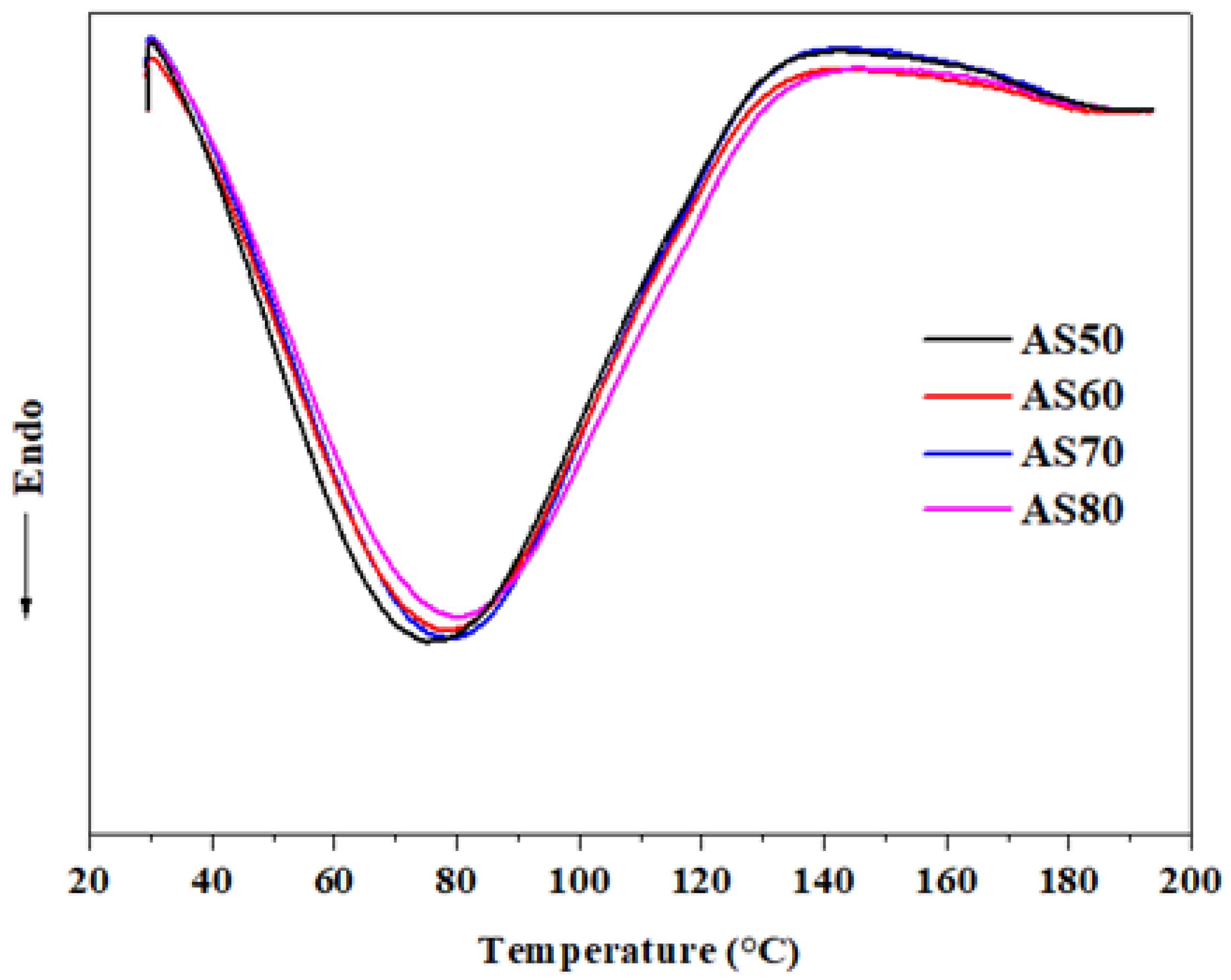
Understanding the thermal properties of starches is essential to determine their potential applications, as the changes that occur during the disruption of the crystalline structure of the granules under heating reveal their thermal characteristics [74]. Thus, the temperatures (To, Tp, Tc) of gelatinization and the gelatinization enthalpy (∆H) are shown in Table 2, and the thermograms are displayed in Figure 7.
It was observed in Table 2 that, as the drying temperature increased from 50 to 80 °C, a significant increase in the temperatures (To, Tp, Tc) was noted (p < 0.05). The initial temperature (To) values ranged from 30.01 °C (AS50) to 31.73 °C (AS80). According to Wang et al. [47], this increase can be attributed to the fact that drying at higher temperatures reduces the residual water content of the starch granules, making them less prone to initiating structural disorganization. The peak temperature (Tp) values were around 75.78 °C (AS50) and 79.56 °C (AS80), suggesting that the starch granule structure became more resistant to heat due to drying at elevated temperatures (in this case, 80 °C). Tp values similar to those in the present study were reported by Torre-Gutiérrez et al. [80] for banana starch (79.8 °C).
Finally, the conclusion temperature (Tc) values ranged from 134.05 °C (AS50) to 137.17 °C (AS80), reflecting the high thermal stability of the starch. Tc values above 100 °C have also been reported by Builders et al. [81] for avocado seed starch, with a value of 101.50 °C. This suggests that avocado seed starch requires high temperatures for complete gelatinization, demonstrating its thermal resistance and structural integrity under heat conditions. Notably, the avocado seed starches (AS50, AS60, AS70, and AS80) exhibited high gelatinization temperatures, with an endothermic peak above 70 °C and a Tc of 137.17 °C, yet required a low onset temperature (To) to induce structural disorganization in the starch granules. According to Wang et al. [82], these characteristics indicate that the starch obtained in the present study could be used in the production of resistant starch.
The gelatinization enthalpy (ΔH) is related to the crystalline structure of the crystalline region and the double helix structure of amylose in the amorphous region, representing the energy required for the dissociation of the double helix structure [67]. The ΔH for avocado seed starch obtained by fluidized bed drying (Table 2) ranged from 14.18 J/g (AS50) to 15.49 J/g (AS80) (p < 0.05). Lower values than those in the present study were reported for quinoa starch (6.79 J/g) by Cao et al. [67] and loquat starch (11.31 J/g) by Kong et al. [83]. Interestingly, samples with lower relative crystallinity also exhibited lower gelatinization enthalpy. Since the intermolecular bonds are weaker and less organized, less thermal energy is needed to induce gelatinization [67].
This trend is strongly consistent with the infrared absorbance ratio (IR1047/1022), which also decreased progressively with increasing drying temperature (AS50 > AS60 > AS70 > AS80). Because the 1047/1022 ratio is widely recognized as a marker of short-range molecular order in starch, its reduction indicates a gradual loss of structural organization within the crystalline lamellae and amorphous domains. Thus, the lower IR ratios observed for AS70 and AS80 align with their higher gelatinization temperatures and greater ΔH values, reinforcing the interpretation that drying at higher temperatures promotes changes in molecular packing that increase thermal resistance but reduce short-range order.

4. Conclusions

This study developed a simple, efficient, and rational route for drying avocado seed starch pastes using a fluidized bed, achieving a yield of over 50% and water activity below 0.52. The results indicated that drying temperature did not significantly impact (p > 0.05) the physicochemical and functional properties of the starch. However, the process conducted at 70 °C (AS70) resulted in avocado seed starch with a higher starch content (60.9 g/100 g), amylose content (31.84 g/100 g), and swelling power (58.13 g/100 g). Additionally, all samples demonstrated good flow properties, with smooth-surfaced, oval, and partially rounded granules (101.67–130.68 μm). Regardless of the drying temperature, the textural properties of the gels and the relative crystallinity were not affected (p > 0.05). Avocado seed starch was classified as a typical type B polymorph, and no new functional groups were identified in the FTIR analysis. Finally, the high conclusion temperatures (>130 °C) and gelatinization enthalpy (14.18–15.49 J/g) demonstrate the high functionality of avocado seed starch for use in the development of starch-based foods. This approach promotes the valorization of avocado by-products, especially its seeds, contributing to the sustainable management of these residues.

Author Contributions

Conceptualization: A.E.S.T., N.C.S. and S.K.Q.M. Methodology: A.E.S.T., Y.B.C., P.P.D.R. and J.G.M.; Formal analysis and investigation: A.E.S.T., Y.B.C., R.P.d.G., E.A.d.O. and T.A.S.G.; Data curation: A.E.S.T., Y.B.C. and S.K.Q.M. Writing—original draft preparation: A.E.S.T. and N.C.S., Writing—review and editing: A.E.S.T., N.C.S., A.P.T.R. and J.P.G.; Supervision: J.P.G. and A.P.T.R.; Funding acquisition: A.E.S.T., J.P.G. and A.P.T.R. All authors have read and agreed to the published version of the manuscript.

Funding

This work was sponsored by Coordenação de Aperfeiçoamento de Pessoal de Nível Superior (CAPES), Conselho Nacional de Desenvolvimento Científico e Tecnológico (CNPq) and Fundação de Apoio à Pesquisa do Estado da Paraíba (FAPESQ-PB).

Data Availability Statement

The original contributions presented in this study are included in the article. Further inquiries can be directed to the corresponding author.

Acknowledgments

The authors are grateful to the Federal University of Campina Grande (UFCG) for technical support.

Conflicts of Interest

The authors declare no conflicts of interest.

References

  1. Fan, S.; Qi, Y.; Shi, L.; Giovani, M.; Zaki, N.A.A.; Guo, S.; Suleria, H.A.R. Screening of Phenolic Compounds in Rejected Avocado and Determination of Their Antioxidant Potential. Processes 2022, 10, 1747. [Google Scholar] [CrossRef]
  2. García, I.S.; Fernández, E.H.; Fernandez, J.J.G.; Hormaza, J.I.; Pedreschi, R.; Rodríguez, P.R.; González, M.F.; García, L.O.; Pancorbo, A.C. Prolonged on-tree maturation vs. cold storage of Hass avocado fruit: Changes in metabolites of bio-active interest at edible ripeness. Food Chem. 2022, 394, 133447. [Google Scholar] [CrossRef] [PubMed]
  3. Brazilian Institute of Geography and Statistics (IBGE). Quantity of Avocado Produced in 2022. IBGE Report. 2023. Available online: https://www.ibge.gov.br/explica/producao-agropecuaria/abacate/br (accessed on 9 April 2024).
  4. Salazar-López, N.J.; Avila, J.A.D.; Yahia, E.M.; Herrera, B.H.B.; Medrano, A.W.; González, E.M.; Aguilar, G.A.G. Avocado fruit and by-products as potential sources of bioactive compounds. Food Res. Int. 2020, 138, 109774. [Google Scholar] [CrossRef] [PubMed]
  5. Nabi, B.G.; Mukhtar, K.; Ansar, S.; Hassan, S.A.; Hafeez, M.A.; Bhat, Z.F.; Aadil, R.M. Application of ultrasound technology for the effective management of waste from fruit and vegetable. Ultrason. Sonochem. 2024, 102, 106744. [Google Scholar] [CrossRef] [PubMed]
  6. Sakirigui, A.; Ladekan, E.; Fagbohoun, L.; Sika, K.; Assogba, F.; Gbenou, J.D. Comparative phytochemical analysis and antimicrobial activity of extracts of seed and leaf of Persea americana Mill. Acad. J. Med. Plants 2020, 8, 58–63. [Google Scholar] [CrossRef]
  7. Guerrero, L.C.; Martín, E.B.; Antonio, A.M.; Mondragón, E.G.; Ancona, D.B. Some physicochemical and rheological properties of starch isolated from avocado seeds. Int. J. Biol. Macromol. 2016, 86, 302–308. [Google Scholar] [CrossRef]
  8. Leandro, G.C.; Laroque, D.A.; Monteiro, A.R.; Carciofi, B.A.M.; Valencia, G.A. Current status and perspectives of starch powders modified by cold plasma: A review. J. Polym. Environ. 2024, 32, 510–523. [Google Scholar] [CrossRef]
  9. Kaur, L.; Dhull, S.B.; Kumar, P.; Singh, A. Banana starch: Properties, description, and modified variations—A review. Int. J. Biol. Macromol. 2020, 165, 2096–2102. [Google Scholar] [CrossRef]
  10. Yong, H.; Liu, J. Recent advances on the preparation conditions, structural characteristics, physicochemical properties, functional properties and potential applications of dialdehyde starch: A review. Int. J. Biol. Macromol. 2024, 259, 129261. [Google Scholar] [CrossRef]
  11. Almeida, R.L.J.; Santos, N.C.; Pereira, T.S.; Monteiro, S.S.; Silva, L.R.I.; Silva Eduardo, R.; Santos, E.S. Extraction and modification of Achachairu’s seed (Garcinia humilis) starch using high-intensity low-frequency ultrasound. J. Food Process Eng. 2022, 45, e14022. [Google Scholar] [CrossRef]
  12. Ferreira, S.; Araujo, T.; Souza, N.; Rodrigues, L.; Lisboa, H.M.; Pasquali, M.; Rocha, A.P. Physicochemical, morphological and antioxidant properties of spray-dried mango kernel starch. J. Agric. Food Res. 2019, 1, 100012. [Google Scholar] [CrossRef]
  13. Santos, N.C.; Almeida, R.L.J.; Albuquerque, J.C.; Andrade, E.W.V.; Gregório, M.G.; Santos, R.M.S.; Mota, M.M.A. Optimization of ultrasound pre-treatment and the effect of different drying techniques on antioxidant capacity, bioaccessibility, structural and thermal properties of purple cabbage. Chem. Eng. Process. 2024, 201, 109801. [Google Scholar] [CrossRef]
  14. Costa, R.G.; Andreola, K.; Mattietto, R.A.; Faria, L.J.G.; Taranto, O.P. Effect of operating conditions on the yield and quality of açaí (Euterpe oleracea Mart.) powder produced in spouted bed. LWT 2015, 64, 1196–1203. [Google Scholar] [CrossRef]
  15. Bolaños, M.; Sukunza, X.; Tellabide, M.; Estiati, I.; Altzibar, H.; Arabiourrutia, M.; Olazar, M. Spout geometry of fine particle conical spouted beds equipped with internal devices. Powder Technol. 2024, 440, 119788. [Google Scholar] [CrossRef]
  16. Demirkol, M.; Tarakci, Z. Effect of grape (Vitis labrusca L.) pomace dried by different methods on physicochemical, microbiological and bioactive properties of yoghurt. LWT 2018, 97, 770–777. [Google Scholar] [CrossRef]
  17. Adebowale, K.O.; Owolabi, B.I.O.; Olawumi, E.K.; Lawal, O.S. Functional properties of native, physically and chemically modified breadfruit (Artocarpus artilis) starch. Ind. Crops Prod. 2005, 21, 343–351. [Google Scholar] [CrossRef]
  18. Association of Official Analytical Collaboration (AOAC). Official Methods of Analysis of AOAC International, 20th ed.; AOAC: Rockville, MD, USA, 2016. [Google Scholar]
  19. Magel, E. Qualitative and quantitative determination of starch by a colorimetric method. Starch 1991, 43, 384–387. [Google Scholar] [CrossRef]
  20. Beuchat, L.R. Functional and electrophoretic characteristics of succinylated peanut flour protein. J. Agric. Food Chem. 1977, 25, 258–261. [Google Scholar] [CrossRef]
  21. Tangsrianugul, N.; Wongsagonsup, R.; Suphantharika, M. Physicochemical and rheological properties of flour and starch from Thai pigmented rice cultivars. Int. J. Biol. Macromol. 2019, 137, 666–675. [Google Scholar] [CrossRef]
  22. Caparino, O.A.; Tang, J.; Nindo, C.I.; Sablani, S.S.; Powers, J.R.; Fellman, J.K. Effect of drying methods on the physical properties and microstructures of mango (Philippine ‘Carabao’ var.) powder. J. Food Eng. 2012, 111, 135–148. [Google Scholar] [CrossRef]
  23. Tonon, R.V.; Brabet, C.; Hubinger, M.D. Influência da temperatura do ar de secagem e da concentração de agente carreador sobre as propriedades físico-químicas do suco de açaí em pó. Rev. Ciênc. Tecnol. Aliment. 2009, 29, 444–450. [Google Scholar] [CrossRef]
  24. Wells, J.I. Pharmaceutical Preformulation: The Physicochemical Properties of Drug Substances; E. Horwood: Chichester, UK, 1988; p. 553. [Google Scholar]
  25. Asokapandian, S.; Venkatachalam, S.; Swamy, G.J.; Kuppusamy, K. Optimization of foaming properties and foam mat drying of muskmelon using soy protein. J. Food Process Eng. 2016, 39, 692–701. [Google Scholar] [CrossRef]
  26. Li, T.S.; Sulaiman, R.; Rukayadi, Y.; Ramli, S. Effect of gum Arabic concentrations on foam properties, drying kinetics and physicochemical properties of foam mat drying of cantaloupe. Food Hydrocoll. 2020, 116, 106492. [Google Scholar] [CrossRef]
  27. Sodhi, N.S.; Singh, N. Morphological, thermal and rheological properties of starches separated from rice cultivars grown in India. Food Chem. 2003, 80, 99–108. [Google Scholar] [CrossRef]
  28. Won, C.; Jin, Y.I.; Kim, M.; Lee, Y.; Chang, Y.H. Structural and rheological properties of potato starch affected by degree of substitution by octenyl succinic anhydride. Int. J. Food Prop. 2017, 20, 3076–3089. [Google Scholar] [CrossRef]
  29. Ferraz, C.A.; Fontes, R.L.; Fontes-Sant’Ana, G.C.; Calado, V.; López, E.O.; Rocha-Leão, M.H. Extraction, modification and characterization of starch from mango agro-industrial residue (Mangifera indica L. var. Ubá). Starch 2019, 71, 1800023. [Google Scholar] [CrossRef]
  30. Zhu, D.; Zhang, H.; Guo, B.; Xu, K.; Dai, Q.; Wei, C.; Zhou, G.; Huo, Z. Physicochemical properties of indica–japonica hybrid rice starch from Chinese varieties. Food Hydrocoll. 2017, 63, 356–363. [Google Scholar] [CrossRef]
  31. Zhang, L.; Zeng, X.; Qiu, J.; Du, J.; Cao, X.; Tang, X.; Sun, Y.; Li, S.; Lei, T.; Liu, S.; et al. Spray-dried xylooligosaccharides carried by gum Arabic. Ind. Crops Prod. 2019, 135, 330–343. [Google Scholar] [CrossRef]
  32. Wang, S.; Guo, P. Starch Structure, Functionality and Application in Foods; Wang, S., Ed.; Springer: Singapore, 2020; pp. 131–149. [Google Scholar]
  33. Bharti, I.; Singh, S.; Saxena, D.C. Influence of alkali treatment on physicochemical, pasting, morphological and structural properties of mango kernel starches derived from Indian cultivars. Int. J. Biol. Macromol. 2019, 125, 203–212. [Google Scholar] [CrossRef]
  34. Yang, X.; Pan, Y.; Li, S.; Li, C.; Li, E. Effects of amylose and amylopectin molecular structures on rheological, thermal and textural properties of soft cake batters. Food Hydrocoll. 2022, 133, 107980. [Google Scholar] [CrossRef]
  35. Irrazabal, M.D.S.; Tixe, E.E.R.; Barreto, F.F.V.; Pérez, L.A.B. Avocado seed starch: Effect of the variety on molecular, physicochemical, and digestibility characteristics. J. Biol. Macromol. 2023, 247, 125746. [Google Scholar] [CrossRef] [PubMed]
  36. Chen, L.; Tong, Q.; Ren, F.; Zhu, G. Pasting and rheological properties of rice starch as affected by pullulan. Int. J. Biol. Macromol. 2014, 66, 325–331. [Google Scholar] [CrossRef] [PubMed]
  37. Pietrzyk, S.; Fortuna, T.; Juszczak, L.; Galkowska, D.; Baczkowicz, M.; Łabanowska, M.; Kurdziel, M. Influence of amylose content and oxidation level of potato starch on acetylation, granule structure and radicals’ formation. Int. J. Biol. Macromol. 2018, 106, 57–67. [Google Scholar] [CrossRef] [PubMed]
  38. Tosif, M.M.; Bains, A.; Sadh, P.K.; Sarangi, P.K.; Kaushik, R.; Burla, S.V.S.; Chawla, P.; Sridhar, K. Loquat seed starch—Emerging source of non-conventional starch: Structure, properties, and novel applications. Int. J. Biol. Macromol. 2023, 244, 125230. [Google Scholar] [CrossRef]
  39. Correia, P.; Beirão-da-Costa, M.L. Effect of drying temperature on functional and thermal properties of chestnut flours. Food Bioprod. Process. 2012, 90, 284–294. [Google Scholar] [CrossRef]
  40. Martins, J.J.A.; Marques, J.I.; Santos, D.D.C.; Rocha, A.P.T. Modelagem matemática da secagem de cascas de mulungu. Biosci. J. 2014, 30, 1652–1660. [Google Scholar]
  41. Almeida, R.L.J.; Pereira, T.S.; Freire, V.A.; Santiago, A.M.; Oliveira, H.M.L.; Conrado, L.S.; Gusmão, R.P. Influence of enzymatic hydrolysis on the properties of red rice starch. Int. J. Biol. Macromol. 2019, 141, 1210–1219. [Google Scholar] [CrossRef]
  42. Castro, D.S.; Moreira, I.S.; Silva, L.M.M.; Lima, J.P.; Silva, W.P.; Gomes, J.P.; Figueirêdo, R.M.F. Isolation and characterization of pitomba endocarp starch. Food Res. Int. 2019, 124, 181–187. [Google Scholar] [CrossRef]
  43. Noris, A.K.A.M.; Millan, J.B.L.R.; Moreno, C.C.R.; Serna-Saldivar, S.O. Physicochemical, functional properties and digestion of isolated starches from pigmented chickpea (Cicer arietinum L.) cultivars. Starch 2017, 69, 1600152. [Google Scholar] [CrossRef]
  44. Abu, J.O.; Duodu, K.G.; Minnaar, A. Effect of γ-irradiation on some physicochemical and thermal properties of cowpea (Vigna unguiculata L. Walp) starch. Food Chem. 2006, 95, 386–393. [Google Scholar] [CrossRef]
  45. Zhang, Y.; Xu, F.; Wang, Q.; Zhang, Y.; Wu, G.; Tan, L.; Zhang, Z. Effects of moisture content on digestible fragments and molecular structures of high amylose jackfruit starch prepared by improved extrusion cooking technology. Food Hydrocoll. 2022, 133, 108023. [Google Scholar] [CrossRef]
  46. Ribeiro, V.H.D.A.; Cavalcanti-Mata, M.E.R.M.; Almeida, R.L.J.; Silva, V.M.D.A. Characterization and Evaluation of Heat–Moisture-Modified Black and Red Rice Starch: Physicochemical, Microstructural, and Functional Properties. Foods 2023, 12, 4222. [Google Scholar] [CrossRef] [PubMed]
  47. Wang, J.; Liu, T.; Bian, X.; Hua, Z.; Chen, G.; Wu, X. Structural characterization and physicochemical properties of starch from four aquatic vegetable varieties in China. Int. J. Biol. Macromol. 2021, 172, 542–549. [Google Scholar] [CrossRef] [PubMed]
  48. Waterschoot, J.; Gomand, S.V.; Delcour, J.A. Impact of swelling power and granule size on pasting of blends of potato, waxy rice and maize starches. Food Hydrocoll. 2016, 52, 69–77. [Google Scholar] [CrossRef]
  49. Zieglar, V.; Ferreira, C.D.; Silva, J.; Zavareze, E.R.; Días, A.R.G.; Oliveira, M.; Elias, M.C. Heat-moisture treatment of oat grains and its effects on lipase activity and starch properties. Starch 2018, 70, 1700010. [Google Scholar] [CrossRef]
  50. Souza, J.C.A.; Macena, J.F.F.; Andrade, I.H.P.; Camilloto, G.P.; Cruz, R.S. Functional characterization of mango seed starch (Mangifera indica L.). Res. Soc. Dev. 2021, 10, e30310310118. [Google Scholar] [CrossRef]
  51. Dantas, D.; Pasquali, M.A.; Cavalcanti-Mata, M.; Duarte, M.E.; Lisboa, H.M. Influence of spray drying conditions on the properties of avocado powder drink. Food Chem. 2018, 266, 284–291. [Google Scholar] [CrossRef]
  52. Pachuau, L.; Dutta, R.S.; Roy, P.K.; Kalita, P.; Lalhlenmawia, H. Physicochemical and disintegrant properties of glutinous rice starch of Mizoram, India. Int. J. Biol. Macromol. 2017, 95, 1298–1304. [Google Scholar] [CrossRef]
  53. Yaowiwat, N.; Madmusa, N.; Yimsuwan, K. Potential of Thai aromatic fruit (Artocarpus species) seed as an alternative natural starch for compact powder. Int. J. Biol. Macromol. 2023, 242, 124940. [Google Scholar] [CrossRef]
  54. Reddy, C.K.; Luan, F.; Xu, B. Morphology, crystallinity, pasting, thermal and quality characteristics of starches from adzuki bean (Vigna angularis L.) and edible kudzu (Pueraria thomsonii Benth). Int. J. Biol. Macromol. 2017, 105, 354–362. [Google Scholar] [CrossRef]
  55. Díaz, M.; Rossini, C. Bioactive Natural Products from Sapindaceae: Deterrent and Toxic Metabolites Against Insects; IntechOpen: London, UK, 2012; pp. 287–308. [Google Scholar] [CrossRef]
  56. Pongsawatmanit, R.; Srijunthongsiri, S. Influence of xanthan gum on rheological properties and freeze–thaw stability of tapioca starch. J. Food Eng. 2008, 88, 137–143. [Google Scholar] [CrossRef]
  57. Abelti, A.L.; Teka, T.A.; Bultosa, G. Structural and physicochemical characterization of starch from water lily (Nymphaea lotus) for food and non-food applications. Carbohydr. Polym. Technol. Appl. 2024, 7, 100458. [Google Scholar] [CrossRef]
  58. Paramasivam, S.K.; Saravanan, A.; Narayanan, S.; Shiva, K.N.; Ravi, I.; Mayilvaganan, M.; Pushpa, R.; Uma, S. Exploring differences in the physicochemical, functional, structural, and pasting properties of banana starches. Int. J. Biol. Macromol. 2021, 191, 1056–1067. [Google Scholar] [CrossRef] [PubMed]
  59. Wang, W.; Zhou, H.; Yang, H.; Zhao, S.; Liu, Y.; Liu, R. Effects of salts on the gelatinization and retrogradation properties of maize starch and waxy maize starch. Food Chem. 2017, 214, 319–327. [Google Scholar] [CrossRef]
  60. Paramasivam, S.K.; Subramaniyan, P.; Thayumanavan, S.; Shiva, K.N.; Narayanan, S.; Raman, P.; Subbaraya, U. Influence of chemical modifications on dynamic rheological behaviour, thermal techno-functionalities, morpho-structural characteristics and prebiotic activity of banana starches. Int. J. Biol. Macromol. 2023, 249, 126125. [Google Scholar] [CrossRef]
  61. Kaur, M.; Singh, N.; Sandhu, K.S.; Guraya, H.S. Physicochemical, morphological, thermal and rheological properties of starches from mango kernels. Food Chem. 2004, 85, 131–140. [Google Scholar] [CrossRef]
  62. Lu, S.; Chen, J.; Chen, Y.; Lii, C.; Lai, P.; Chen, H. Water mobility, rheological and textural properties of rice starch gel. J. Cereal Sci. 2011, 53, 31–36. [Google Scholar] [CrossRef]
  63. Lee, S.W.; Rhee, C. Effect of heating condition and starch concentration on the structure and properties of freeze-dried rice starch paste. Food Res. Int. 2007, 40, 215–223. [Google Scholar] [CrossRef]
  64. Marboh, V.; Mahanta, C.L. Rheological and textural properties of sohphlang (Flemingia vestita) starch gels as affected by heat moisture treatment and annealing. Food Chem. Adv. 2023, 3, 100542. [Google Scholar] [CrossRef]
  65. Wen, Y.; Yao, T.; Xu, Y.; Corke, H.; Sui, Z. Pasting, thermal and rheological properties of octenylsuccinylate modified starches from diverse small granule starches differing in amylose content. J. Cereal Sci. 2020, 95, 103030. [Google Scholar] [CrossRef]
  66. Huang, J.F.M.; Li, K.B.; Xu, X.; Xie, B.J. Characters of rice starch gel modified by gellan, carrageenan, and glucomannan: A texture profile analysis study. Carbohydr. Polym. 2007, 69, 411–418. [Google Scholar] [CrossRef]
  67. Cao, H.; Sun, R.; Liu, Y.; Wang, X.; Guan, X.; Huang, K.; Zhang, Y. Appropriate microwave improved the texture properties of quinoa due to starch gelatinization from the destructed cyptomere structure. Food Chem. X 2022, 14, 100347. [Google Scholar] [CrossRef]
  68. Hedayati, S.; Shahidi, F.; Majzoobi, M.; Koocheki, A.; Farahnaky, A. Structural, rheological, pasting and textural properties of granular cold water swelling maize starch: Effect of NaCl and CaCl2. Carbohydr. Polym. 2020, 242, 116406. [Google Scholar] [CrossRef] [PubMed]
  69. Wedamulla, N.E.; Fan, M.; Choi, Y.J.; Kim, E.K. Effect of pectin on printability and textural properties of potato starch 3D food printing gel during cold storage. Food Hydrocoll. 2023, 137, 108362. [Google Scholar] [CrossRef]
  70. Edwards, R.H.; Berrios, J.D.J.; Mossman, A.P.; Takeoka, G.R.; Wood, D.F.; Mackey, B.E. Texture of jet cooked, high amylose corn starch-sucrose gels. LWT 1998, 31, 432–438. [Google Scholar] [CrossRef]
  71. Martins, S.H.F.; Pontes, K.V.; Fialho, R.L.; Fakhouri, F.M. Extraction and characterization of the starch present in the avocado seed (Persea americana mill) for future applications. J. Agric. Food Res. 2022, 8, 100303. [Google Scholar] [CrossRef]
  72. Li, S.; Zhang, L.; Sheng, Q.; Li, P.; Zhao, W.; Zhang, A.; Liu, J. The effect of heat moisture treatment times on physicochemical and digestibility properties of adzuki bean, pea, and white kidney bean flours and starches. Food Chem. 2024, 440, 138228. [Google Scholar] [CrossRef]
  73. Oyeyinka, S.A.; Oyeyinka, A.T. A review on isolation, composition, physicochemical properties and modification of Bambara groundnut starch. Food Hydrocoll. 2018, 75, 62–71. [Google Scholar] [CrossRef]
  74. Miranda, B.M.; Almeida, V.O.; Terstegen, T.; Hundschell, C.; Flöter, E.; Silva, F.A.; Ulbrich, M. The microstructure of the starch from the underutilized seed of jaboticaba (Plinia cauliflora). Food Chem. 2023, 423, 136145. [Google Scholar] [CrossRef]
  75. Wang, J.; Huang, J.; Liang, Q.; Gao, Q. Effects of heat–moisture treatment on structural characteristics and in vitro digestibility of A-and B-type wheat starch. Int. J. Biol. Macromol. 2024, 256, 128012. [Google Scholar] [CrossRef]
  76. Santos, G.P.; Miranda, B.M.; Di-Medeiros, M.C.; Almeida, V.O.; Ferreira, R.D.; Morais, D.A.; Fernandes, K.F. The potential exploitation of the Malay-red apple (Syzygium malaccense) seed as source of a phosphorylated starch. Carbohydr. Res. 2024, 535, 109008. [Google Scholar] [CrossRef]
  77. Esquivel-Fajardo, E.A.; Martinez-Ascencio, E.U.; Oseguera-Toledo, M.E.; Londoño-Restrepo, S.M.; Rodriguez-García, M.E. Influence of physicochemical changes of the avocado starch throughout its pasting profile: Combined extraction. Carbohydr. Polym. 2022, 281, 119048. [Google Scholar] [CrossRef]
  78. Almeida, R.L.J.; Santos, N.C.; Leite, A.C.N.; Freire, B.; Da Silva, P.N.J.; Morais, J.R.F.; Bonfim, K.S.D.; da Silva, Y.T.F.; de Melo, G.M.P.C.; Nóbrega, M.M.G.; et al. Dual modification of starch: Synergistic effects of ozonation and pulsed electric fields on structural, rheological, and functional attributes. Food Chem. 2025, 464, 141718. [Google Scholar] [CrossRef]
  79. Almeida, R.L.J.; Santos, N.C.; Morais, J.R.F.; Mota, M.M.A.; Eduardo, R.S.; Muniz, C.E.S.; Cavalcante, J.A.; da Costa, G.A.; Silva, R.A.; Oliveira, B.F.; et al. Effect of freezing rates on α-amylase enzymatic susceptibility, in vitro digestibility, and technological properties of starch microparticles. Food Chem. 2024, 453, 139688. [Google Scholar] [CrossRef]
  80. Torre-Gutiérrez, L.; Chel-Guerrero, L.A.; Betancur-Ancona, D. Functional properties of square banana (Musa balbisiana) starch. Food Chem. 2008, 106, 1138–1144. [Google Scholar] [CrossRef]
  81. Builders, P.F.; Nnurum, A.; Mbah, C.C.; Attama, A.A.; Manek, R. The physicochemical and binder properties of starch from (Persea americana Miller) (Lauraceae). Starch 2010, 62, 309–320. [Google Scholar] [CrossRef]
  82. Wang, J.; Li, Y.; Jin, Z.; Cheng, Y. Physicochemical, Morphological, and Functional Properties of Starches Isolated from Avocado Seeds, a Potential Source for Resistant Starch. Biomolecules 2022, 12, 1121. [Google Scholar] [CrossRef]
  83. Kong, X.; Yang, W.; Zuo, Y.; Dawood, M.; He, Z. Characteristics of physicochemical properties, structure and in vitro digestibility of seed starches from five loquat cultivars. Int. J. Biol. Macromol. 2023, 253, 126675. [Google Scholar] [CrossRef] [PubMed]
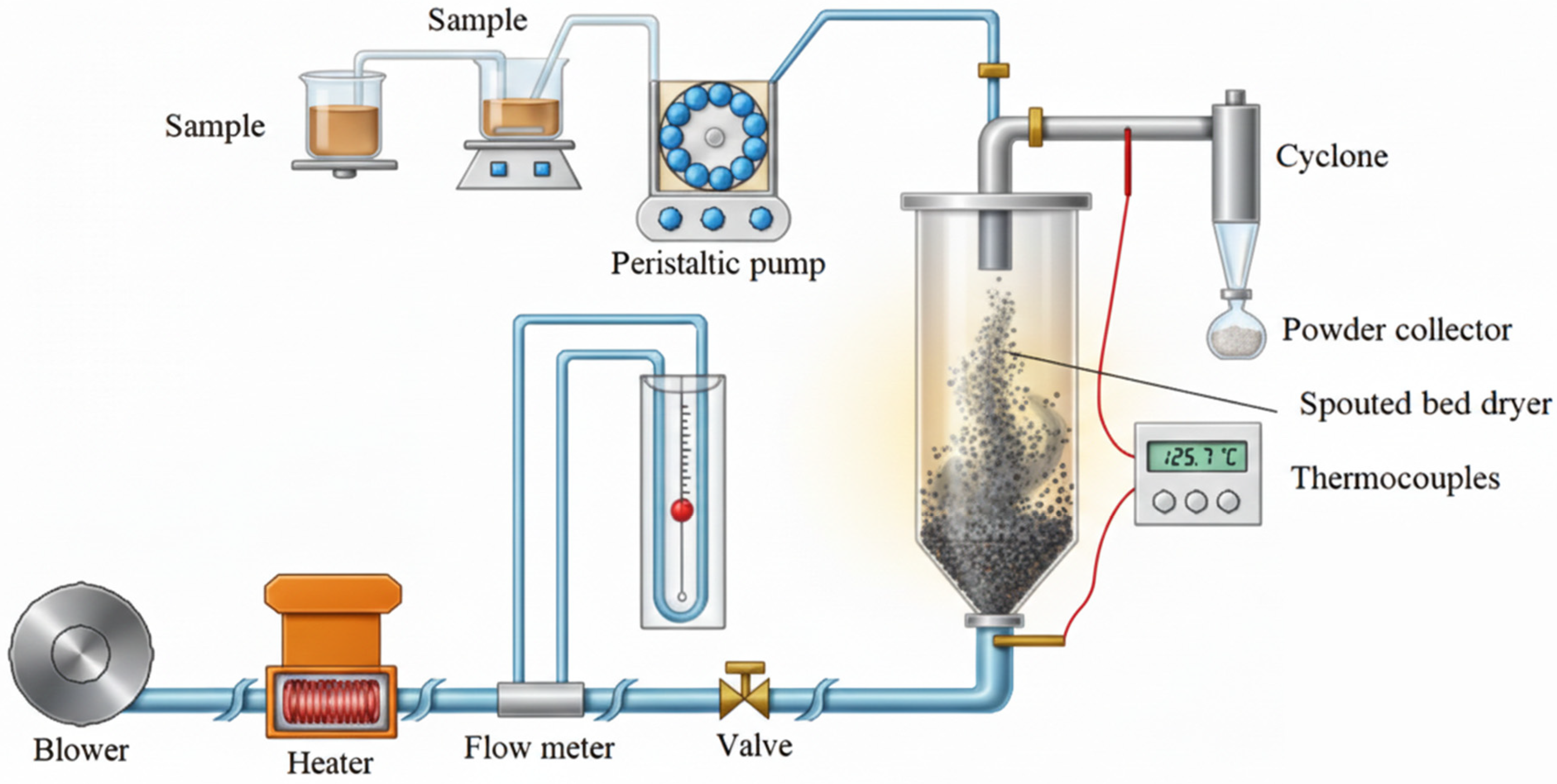
Figure 1. Schematic representation of the fluidized bed dryer used in the drying process of native avocado seed starch. Authored by Santos et al. [13].
Processes 14 00122 g001
Figure 2. Native starch samples (AS50, AS60, AS70, and AS80) from avocado seeds obtained by fluidized bed drying. AS50: starch extracted from avocado seeds and dried in a fluidized bed at 50 °C; AS60: starch extracted from avocado seeds and dried in a fluidized bed at 60 °C; AS70: starch extracted from avocado seeds and dried in a fluidized bed at 70 °C; AS80: starch extracted from avocado seeds and dried in a fluidized bed at 80 °C.
Processes 14 00122 g002
Figure 3. Starch, amylose and amylopectin contents of avocado seed starch obtained by fluidized bed drying at temperatures of 50, 60, 70, and 80 °C. AS50: starch extracted from avocado seeds and dried in a fluidized bed at 50 °C; AS60: starch extracted from avocado seeds and dried in a fluidized bed at 60 °C; AS70: starch extracted from avocado seeds and dried in a fluidized bed at 70 °C; AS80: starch extracted from avocado seeds and dried in a fluidized bed at 80 °C. Bars with different letters indicate statistical difference according to Tukey’s post hoc test (p < 0.05).
Processes 14 00122 g003
Figure 4. Syneresis index of avocado seed starch obtained by fluidized bed drying at temperatures of 50, 60, 70, and 80 °C over 168 h of refrigerated storage (4 °C). AS50: starch extracted from avocado seeds and dried in a fluidized bed at 50 °C; AS60: starch extracted from avocado seeds and dried in a fluidized bed at 60 °C; AS70: starch extracted from avocado seeds and dried in a fluidized bed at 70 °C; AS80: starch extracted from avocado seeds and dried in a fluidized bed at 80 °C. Bars with different letters (a–d) indicate a statistically significant difference between samples in the same storage period according to the post hoc Tukey test (p < 0.05); Bars with different letters (A–C) indicate a statistically significant difference between storage periods for the same sample according to the post hoc Tukey test (p < 0.05).
Processes 14 00122 g004
Figure 5. Surface micrographs of avocado seed starch obtained by fluidized bed drying at temperatures of 50 °C—AS50 (A), 60 °C—AS60 (B), 70 °C—AS70 (C), and 80 °C—AS80 (D).
Processes 14 00122 g005
Figure 6. X-ray diffraction patterns (A), FT-IR spectra (B) and absorbance ratio of 1047 cm−1 to 1022 cm−1 (IR1047/1022) (C) of native avocado seed starch obtained by fluidized bed drying at temperatures of 50, 60, 70, and 80 °C. AS50: starch extracted from avocado seeds and dried in a fluidized bed at 50 °C; AS60: starch extracted from avocado seeds and dried in a fluidized bed at 60 °C; AS70: starch extracted from avocado seeds and dried in a fluidized bed at 70 °C; AS80: starch extracted from avocado seeds and dried in a fluidized bed at 80 °C. Bars with different letters (a, b) indicate statistically significant differences among the starch samples (p < 0.05).
Processes 14 00122 g006
Figure 7. DSC thermograms of avocado seed starch dried in a fluidized bed. AS50: starch extracted from avocado seeds and dried in a fluidized bed at 50 °C; AS60: starch extracted from avocado seeds and dried in a fluidized bed at 60 °C; AS70: starch extracted from avocado seeds and dried in a fluidized bed at 70 °C; AS80: starch extracted from avocado seeds and dried in a fluidized bed at 80 °C.
Processes 14 00122 g007
Table 1. Physical and functional properties of avocado seed starch obtained by fluidized bed drying at temperatures of 50, 60, 70, and 80 °C.
ParametersAS50AS60AS70AS80
Water content (g/100 g)9.57 ± 0.05 a9.18 ± 0.0 b8.64 ± 0.0 c8.16 ± 0.0 d
Water activity (aw)0.52 ± 0.0 a0.49 ± 0.0 b0.41 ± 0.0 c0.36 ± 0.01 d
WHC (g/100 g)92.19 ± 0.05 a92.34 ± 0.01 a92.28 ± 0.04 a92.38 ± 0.01 a
OHC (g/100 g)92.21 ± 0.04 a92.28 ± 0.02 a92.21 ± 0.01 a92.34 ± 0.04 a
MHC (g/100 g)125.43 ± 0.04 a135.94 ± 0.02 a133.05 ± 0.04 a131.16 ± 0.01 a
Solubility (%)7.42 ± 0.75 ab8.35 ± 1.41 a5.22 ± 0.33 bc4.51 ± 0.83 c
SP (g/100 g)57.10 ± 1.95 a57.39 ± 2.57 a58.13 ± 4.45 a56.25 ± 4.06 a
Bulk density (g/cm3)0.58 ± 0.03 a0.56 ± 0.05 a0.54 ± 0.01 a0.56 ± 0.01 a
Tapped density (g/cm3)0.67 ± 0.02 ab0.65 ± 0.02 b0.70 ± 0.01 a0.67 ± 0.0 ab
Carr index (CI) (%)13.20 ± 0.04 b14.20 ± 0.05 ab22.50 ± 0.02 a15.90 ± 0.01 ab
Hausner ratio (HR)1.15 ± 0.05 b1.16 ± 0.08 ab1.29 ± 0.03 a1.18 ± 0.02 ab
L*45.39 ± 0.0 c51.93 ± 0.07 a42.46 ± 0.10 d46.92 ± 0.02 b
a*3.12 ± 0.01 a2.70 ± 0.01 c2.49 ± 0.03 d2.94 ± 0.03 b
b*6.11 ± 0.01 a5.79 ± 0.02 c4.96 ± 0.02 d5.98 ± 0.02 b
Legend: WHC: Water-holding capacities; OHC: Oil-holding capacities; MHC: Milk-holding capacities; SP: Swelling Power; AS50: starch extracted from avocado seeds and dried in a fluidized bed at 50 °C; AS60: starch extracted from avocado seeds and dried in a fluidized bed at 60 °C; AS70: starch extracted from avocado seeds and dried in a fluidized bed at 70 °C; AS80: starch extracted from avocado seeds and dried in a fluidized bed at 80 °C. The values in rows with different letters (a, b, c, d) are significantly different according to the post hoc Tukey test (p < 0.05).
Table 2. Textural properties of starch pastes, average particle diameter, relative crystallinity, and thermal properties (To, Tp, Tc) and gelatinization enthalpy (ΔH) of avocado seed starch.
ParametersAS50AS60AS70AS80
Firmness (N)2.63 ± 0.18 a2.37 ± 0.16 a2.75 ± 0.61 a3.89 ± 0.26 a
Elasticity1.00 ± 0.00 a1.00 ± 0.00 a1.00 ± 0.00 a1.00 ± 0.00 a
Cohesiveness (N)0.51 ± 0.07 a0.52 ± 0.00 a0.54 ± 0.05 a0.54 ± 0.04 a
Adhesiveness (N·m)0.85 ± 0.16 a1.34 ± 0.14 a1.32 ± 0.10 a1.27 ± 0.29 a
Gumminess (N)1.34 ± 0.10 a1.23 ± 0.10 a1.48 ± 0.17 a1.28 ± 0.04 a
Diameter (µm)101.67 ± 8.76 a108.54 ± 11.48 a130.68 ± 6.40 a117.23 ± 9.34 a
RC (%)24.27 ± 0.44 a23.84 ± 0.37 a23.55 ± 0.52 a23.29 ± 0.43 a
To (°C)30.01 ± 0.02 d30.34 ± 0.01 c31.39 ± 0.05 b31.73 ± 0.04 a
Tp (°C)75.78 ± 0.15 d78.23 ± 0.18 c78.90 ± 0.10 b79.56 ± 0.11 a
Tc (°C)134.05 ± 0.22 c135.11 ± 0.11 b136.84 ± 0.14 a137.17 ± 0.19 a
ΔH (J/g)14.18 ± 0.16 d14.66 ± 0.21 c15.04 ± 0.12 b15.49 ± 0.18 a
Legend: RC: relative crystallinity; To: initial temperature; Tp: peak temperature; Tc: conclusion temperature; ΔH: Gelatinization enthalpy; AS50: starch extracted from avocado seeds and dried in a fluidized bed at 50 °C; AS60: starch extracted from avocado seeds and dried in a fluidized bed at 60 °C; AS70: starch extracted from avocado seeds and dried in a fluidized bed at 70 °C; AS80: starch extracted from avocado seeds and dried in a fluidized bed at 80 °C. The values in rows with different letters (a, b, c, d) are significantly different according to the post hoc Tukey test (p < 0.05).
Disclaimer/Publisher’s Note: The statements, opinions and data contained in all publications are solely those of the individual author(s) and contributor(s) and not of MDPI and/or the editor(s). MDPI and/or the editor(s) disclaim responsibility for any injury to people or property resulting from any ideas, methods, instructions or products referred to in the content.