


Abstract
This paper demonstrates the comprehensive research of the target Middle Eastern carbonate oilfield on waterflooding technologies, including geological characteristics, integrated research, and principal development techniques. Geological research reveals that the Mishrif Formation in the B Oilfield is a gentle-sloping carbonate platform, with granular limestone serving as the primary reservoir rock and micrite limestone serving as the secondary reservoir rock. In addition, based on understandings drawn from geological characteristics and numerical simulation, the water flooding mode of IBPT, which can take full use of the gravity effect, has been proven to yield better sweep efficiency in the context of a thick and heterogeneous reservoir. Furthermore, a large-scale physical model experiment is designed to investigate the fluid migration between the producer and injector and indicates that the injected water migration is mainly divided into four phases, including a two-peak advance phase, a gravitational differentiation phase, a secondary bottom water phase, and a wellbore water coning phase. Subsequently, the principal techniques and corresponding optimized production responses of water flooding development are systematically illustrated, which consist of well type optimization, differentiated water injection strategies, injection pattern conversion, unstable water injection, selective well perforation, as well as tracer surveillance methodology. The outcomes of this study are directly derived from field performances and could provide concrete practical experiences for water flooding technology in the Middle East.
1. Introduction
Abundant oil and gas resources are contained in carbonate reservoirs globally, and the oil and gas production from carbonate reservoirs accounts for 60% of the total global hydrocarbon production. In addition, 80% of the reservoirs in the Middle East are carbonate rocks, and they contribute to nearly 70% of the global production [1,2,3]. The main reservoir type under development in the Middle East is a porous carbonate reservoir, and natural energy is relatively limited. Hence, water flooding is a vital method for enhancing oil recovery in carbonate reservoirs in the Middle East, while challenges such as fast water breakthrough and regional pressure deficit pose significant obstacles to achieving optimal oil recovery. In order to obtain a better understanding of the water flooding mechanism of this type of oilfield, many studies have been conducted. Reservoir characteristics are very crucial for formulating a development plan in the later stage, and a certain number of studies have concentrated on the field of sedimentary evolution, rock classification, sequence stratigraphy, diagenesis, and their impact on the reservoir’s physical properties [4,5,6,7,8,9,10,11].
Aiming at clarifying the oil seepage law during water flooding processes, a series of studies was conducted to investigate the effect of injection and production performance regarding different types of carbonate reservoirs based on physical models [12,13,14]. Specifically, for thick carbonate reservoirs, gravity differentiation serves as an important influencing factor in the migration of injected water between the injector and the corresponding producer. Li et al. [15] designed a 3D physical model to investigate the main mechanism behind water flooding in a typical carbonate reservoir with bottom water. Liu et al. [16] analyzed the longitudinal water flooding seepage law of a typical carbonate reservoir in the Middle East through the combination of reservoir engineering and simulation methods. Liu et al. [17] studied the microscopic residual oil change characteristics after water flooding based on the SRCNN method. In recent years, several new methods of water flooding techniques adapted to carbonate reservoirs have been carried out. To avoid fast water breakthrough and enhance the sweep efficiency, the cyclic alternating water injection method was systematically investigated and applied to field development [18,19]. With the goal of enhancing the development effect of each sublayer buried inside the thick reservoir, a balanced water flooding technology for thick and complex carbonate reservoirs was proposed on the basis of fine development unit division [3]. Song et al. [20] proposed a set of high-efficiency water injection development options and strategies based on a comprehensive analysis of several carbonate reservoirs in the Middle East. Sun et al. [21] developed a classified evaluation method of waterflood development strategies in the Middle East based on the principal component biplot and K-means clustering diagram.
In addition to the regular re-injection of the produced formation water, low-salinity water flooding (LSWF) has been a widely acknowledged technique to enhance the recovery factor by reversing the wettability of the reservoir rock. Yousef et al. [22] designed a laboratory coreflooding test and investigated the impact of salinity and ionic composition on oil/brine/rock interactions. Kalantariasl et al. [23] studied the variation trend of mineral dissolution and multi-ion exchange mechanisms in carbonate samples. Façanha et al. [24,25] studied the qualitative potential of improved oil recovery by LSWF through heterogeneous carbonate rocks under relevant test conditions. Negahdari et al. [26] used a genetic algorithm to optimize the water composition during LSWF. Chemical Enhanced Oil Recovery (CEOR) technologies continue to evolve globally. Nanotechnology, owing to its advantages such as small particle size, high specific surface area, and tunable functionality, has provided novel insights for CEOR [27]. Rezk et al. [28] identified interfacial tension (IFT) reduction and wettability alteration as the primary mechanisms behind enhanced oil recovery using ZnO nanoparticles. Taborda et al. [29] experimentally demonstrated that SiO2 nanoparticles significantly reduce heavy oil viscosity, suggesting that ZnO may similarly modulate mobility. Jafarbeigi et al. [30] incorporated rare earth elements into the ZnO lattice and employed ZnO-γAl2O3 nanocomposites to markedly reduce IFT and wettability contact angles in carbonate reservoirs. In addition, other CEOR techniques, such as bio-based synergistic flooding, electrochemically-assisted chemical flooding, and advanced nanoemulsion flooding, are also undergoing investigation and development [31,32]. A series of representative studies, as mentioned above, provides extensive knowledge on technologies for water flooding development. However, there is still a lack of integrated case studies on water flooding of carbonate reservoirs in the Middle East, which is expected to contain geological context, development history, water injection mode investigation, and fluid migration law, along with specific water flooding enhancement technologies.
The B Oilfield is located in the Mesopotamian Basin in southeastern Iraq, adjacent to the Iranian border (Figure 1a). It was discovered in 1969 and brought onstream in 1976. It is a foreland anticline formed during the Mio-Pliocene Zagros Orogeny and contains one pool, located in the Cenomanian-early Turonian Mishrif Formation. The B Oilfield exhibits an almost NW-SE elongated anticline. The Mishrif Formation is widely distributed across the Arabian Peninsula and comprises a shallowing-upward succession of shallow-water facies, representing a second-order systems tract [33,34]. The Mishrif Formation is in gradational contact with the underlying Rumaila Formation, and it has a regional unconformity at the top contact with the Khasib Formation [35]. Regional sedimentological studies indicate that the Mishrif carbonates were deposited on a ramp platform. Based on fossils found in a variety of microfacies, depositional environments represented by the Mishrif Formation include slope, lagoonal, shallow open marine, and shoal [36,37]. The Mishrif Formation in the B Oilfield exhibits a thickness range of 320 m to 370 m, with an average thickness of 340 m. Based on the well-logging curves and petrophysical properties, this formation can be classified into three main members, six zones, and six subzones [38]. The main pay, i.e., the MB21 subzone, based on reservoir physical characteristics, can be further divided into eight layers from the bottom to the top, which are named as Layers VIII, VII, VI, V, IV, III, II, and I (Figure 1b), respectively. The thickness of MB21 is about 80 m, and the reservoir belongs to a structural-edge water type with a certain scale of oil–water transition zone (Figure 2a). The high-permeability streaks are mostly developed at the top of reservoir MB21 (Figure 2b). The oil in the Mishrif Formation is 24~28 ° API, with a high sulfur content (~3.8%) and a GOR of 600~650 SCF/STB. The saturation pressure of oil is 2770 psi, and the oil volume factor is 1.41, with a viscosity of 0.8 mPa·s.
Figure 1.
Location map of the study area (a) and vertical stratification (b).
Figure 2.
MB21 reservoir profile map from north to south of the B Oilfield: (a) initial oil saturation map and (b) permeability map.
As shown in Figure 3, this paper first demonstrates the geological background of the B Oilfield, including depositional facies, reservoir characteristics, petrophysical properties, and reservoir connectivity. Based on reservoir understandings, the water flooding mode was then optimized through reservoir simulation. After determining the IBPT (injection at bottom and production at top) water injection mode as the best scenario, a large-scale physical model was built to investigate the migration law of injected water, which characterized the influence of gravitational differentiation. Afterwards, a series of principal waterflooding technologies were presented, aiming at optimizing the overall development effect, the results of which proved the feasibility of the methodologies applied in water flooding processes and simultaneously provided abundant practical experiences for developing similar oilfields in the Middle East.
Figure 3.
A simplified flowchart that illustrates the step-by-step integration process of this study.
2. Field Geology
2.1. Depositional Facies
Based on the core and thin section data, in conjunction with regional sea level fluctuations, the Mishrif carbonate platform can be classified into five distinct microfacies that illustrate both lateral and vertical transitions. These microfacies encompass the following: (1) a slope silt-fine grade wackestone characterized by sparse pelagic foraminifera; (2) a shallow open marine succession of wackestone-packstone exhibiting an upward coarsening trend; and (3) a bioclastic-dominated shoal environment. Subsequently, the shoal facies are overlain by (4) back shoal facies and (5) shallow-water lagoonal deposits. The slope microfacies (MF1) is composed of finely graded bioclastic wackestone, with a scarcity of pelagic foraminifera (Figure 4a). This microfacies primarily consists of mud and exhibits elevated gamma-ray readings due to its substantial clay content. The shallow open marine microfacies (MF2) association described is the most abundant lithology encountered in the Mishrif Formation of the B Oilfield, consisting primarily of bioclastic-dominated wackestone and packstone (Figure 4b). The microfacies can exhibit either low-energy mud-supported or high-energy grain-supported characteristics depending on the proportion of bioclasts present. The shoal microfacies (MF3) consists of packstone to grainstone facies containing rudist bioclasts and other components, such as echinoderms, algae, and mollusks (as depicted in Figure 4c,d). These facies represent the most prevalent coarse-grained facies at the upper levels of the MB21 subzone. Dissolution vugs and freshwater cementation are evident in core samples as well as casting thin sections. The back shoal microfacies (MF4) association has been identified in the uppermost section of shoal facies successions but is clearly separated from the latter by a distinct contact. These sediments display greater variability, induration, and stylolitization compared to other coarse facies (Figure 4e). The lagoonal microfacies (MF5) is characterized by poorly defined bedding of benthonic foraminiferal and peloidal mudstone and wackestone (Figure 4f). The presence of benthic foraminifera, along with the muddy texture, indicates that the subtidal zone experienced low-energy conditions below the wave base.
Figure 4.
Thin sections showing lithofacies characteristics of depositional environments within the Mishrif Formation from the B Oilfield. (a) Well B-22, 3968 m, wackestone. (b) Well B-22, 3974 m, wackestone to packstone. (c) Well B-98, 4041 m, packstone. (d) Well B-22, 3915m, grainstone. (e) Well B98, 4034 m, wack-estone to packstone. (f) Well B-22, 3913 m, dolomitic skeletal peloidal packstone.
2.2. Reservoir Characteristics
The Mishrif Formation primarily consists of shallow-water limestone. Based on 105 thin sections obtained from casting samples in the B Oilfield, the reservoirs within this formation are predominantly composed of grainstone, packstone, and wackestone lithologies. These lithologies contain skeletal fragments such as echinoderm and benthic foraminifera grains alongside rudist fossils; non-skeletal fragment grains include sand cuttings and peloids. The grainstone comprises spark-crystal grainstone, slightly spark-crystal grainstone, and micritic grainstone. Most of the marl observed under the microscope is composed of micrite; however, in highly porous limestone, the marl is prone to deformation and transformation into microlite. Vertically, the micrite limestone primarily develops in the lower part of the shoal body, consisting of fine particles, and serves as a secondary reservoir rock. The upper part of the shoal mainly consists of grainstone/packstone, which constitutes the primary reservoir rock type in this study area.
The analysis of core and thin sections provides insights into the formation’s pore development. Various pore types are identified in the Mishrif Formation, such as intergranular pores, moldic pores, dissolution pores, intragranular dissolution pores, and intercrystalline (micro) pores, along with micro-fractures (Figure 5). Additionally, distinct dissolution voids can be observed within the core samples. Predominantly occurring in high-energy shoal grainstone characterized by poor sorting and large pore diameter is the intergranular pore type. This particular type constitutes 15% of effective porosity within the Mishrif Formation due to its exceptional connectivity and permeability. The moldic pore is the predominant type of pore in the lower section of the MB21 subzone, accounting for 42% of all pores. This specific type of pore typically develops within isolated dissolved pores and demonstrates high porosity but low permeability when not associated with other types of pores. The shoal and back shoal reservoirs of MB21-I, II, and VII layers exhibit intergranular dissolution pores with irregular boundaries, complex harbor shapes, and non-uniform sizes, accounting for 17% of the total pore volume. These pores often coexist with other types, contributing to a more intricate pore structure. The grainstone of the Mishrif Formation commonly displays intragranular dissolution pores, which account for 23% of its composition. These pores exhibit irregular shapes and non-uniform sizes. The intercrystalline pores, primarily situated between dolomite crystals, play a pivotal role in fluid flow. However, these pores constitute less than 2% of the entire reservoir interval. Porosity is predominantly porous, with the localized development of micro-fractures. Fractures such as tectonic fractures, stylolites, grain breakage fractures, corrosion fractures, and micro-stylolites account for less than 1%.
Figure 5.
Micro-pore structural characteristics of the Mishrif Formation reservoir in the B Oilfield. (a) Well B-52, 3924 m, grainstone with primary intergranular dissolution and calcite cement. (b) Well B-58, 3997 m, packstone with intergranular dissolution pores. (c) Well B-98, 4043 m, packstone with intragranular dissolution pores and moludic pores. (d) Well B-98, 4041 m, packstone with intra-granular dissolution pores and intercrystalline pores. (e) Well B-22, 3946 m, dolomite with inter-crystalline pores and intragranular dissolution pores. (f) Well B-98, 4042 m, packstone with inter-granular dissolution pores and microfracture.
2.3. Petrophysical Properties
Based on statistical analysis conducted on a dataset comprising physical properties derived from core samples collected from sixteen wells located in the B Oilfield, it can be observed that porosity values range between a minimum of 1.7% and a maximum of 28.5%, with an average value of 15.6%. The majority of the porosity values fall within the range of 12–20%. Permeability varies widely, ranging from as low as 0.02 mD to as high as 3627.30 mD, with an average value of approximately 45.71 mD (Figure 6a). The primary distributions of permeability are in the range of 1.0 mD to 10.0 mD, followed by those ranging from 10 mD to 100 mD. Among all the layers, the MB21-I layer exhibits the most favorable petrophysical properties, followed by the MB21-VII layer. The physical characteristics of other layers within the MB21 subzone seem to be similar. Production performance data indicate that dynamic permeability in some producers’ perforated intervals greatly exceeds plug measurement-derived permeability. Furthermore, the analysis of physical property statistics across various layers within the MB21 subzone (see Figure 6b) reveals a gradual decrease in reservoir permeability from top to bottom, primarily attributed to diminishing dissolution strength with increasing depth.
Figure 6.
Relationship between porosity and permeability of the Mishrif Formation (a) and comparison of physical properties of different layers in the MB21 subzone (b).
Due to the influence of the pore structure, carbonate rocks have strong reservoir heterogeneity, and it is difficult to accurately interpret permeability using a single pore–permeability relationship. Therefore, the commonly used permeability interpretation method in carbonate reservoirs, i.e., the rock type methodology, is applied to overcome the difference between dynamic and well log interpreted permeability [39]. As for reservoir MB21, combined with the response characteristics of different sublayers’ logging curves, a permeability interpretation template was constructed through clustering analysis with layered classification, which largely improved the accuracy of permeability interpretation and achieved reliable reservoir characterization, thus providing available input parameters for reservoir models.
2.4. Reservoir Connectivity
Based on the statistical data of core sample tests, the average Kv/Kh of the subzone MB21 in the B Oilfield is 0.76, which indicates good vertical connectivity. In addition, according to the analysis of MFT data (Figure 7), the pressure depletion is relatively uniform from the top to the bottom of the main development layer, MB21, even though only the top layers were perforated for oil production, which also reflects good vertical connectivity. In addition, the formation pressure of new wells with more than 1 km well spacing from the produced wells was depleted, which indicates good lateral connectivity as well.
Figure 7.
Scatter plots of 14 vertical wells’ MFT data indicating vertical connectivity in the B Oilfield.
3. Oilfield Development History
The B Oilfield has been in production for over 40 years and was in depletion development since production until the end of 2016. Due to the weak natural energy, the formation pressure dropped rapidly with an increase in oil production, which led to a reduction in individual well productivity and caused problems such as asphalt precipitation. As a result, the natural decline rate increased as the depletion development progressed (Figure 8). In 2016, the pilot water injection well was put on injection with the purpose of testing injectivity, observing the pressure response, and determining the feasibility of the well pattern. In 2017, after the successful implementation of the pilot injection well, on the basis of large amounts of research and analogical understandings, the IBPT (injection in bottom and production at top) water injection mode was carried out. Afterwards, in 2018, to promote the waterflooding effect and improve the water injectivity, the first peripheral horizontal injector was put into injection successfully. With the expansion of the waterflooding scale, the first internal horizontal injector was implemented in the following year, greatly improving the water injection effect in the northern part of the oilfield. From 2016 to 2019, a total of 8 vertical producers were converted to water injectors, aiming to accelerate water injection progress. Up to 2024, the peripheral circular, combined with an internal reverse nine-spot well pattern, was formed with approximately 30 online injectors. The field VRR (voidage replacement ratio) has reached 1.0 since 2020. As a result, the formation pressure and dynamic performance show positive responses to energy replenishment from water injection.
Figure 8.
Gradual decrease in formation pressure (a) and acceleration of natural decline rate (b) in the depletion development period.
4. Water Flooding Research
To restore formation energy and improve well productivity, after extensive geological and reservoir studies, it was crucial to adopt a reasonable water injection development strategy to effectively enhance the development effect. For water injection development of thick carbonate reservoirs with strong heterogeneity, it is necessary to consider the gradual restoration of formation pressure by water injection while avoiding rapid water breakthrough at producer ends. Additionally, the selection of water injection modes must ensure the effective utilization of geological reserves and the initial injectivity. This section applies numerical simulation as well as physical model experiments based on the distribution and connectivity characteristics of the reservoir of the B Oilfield to illustrate the reasonable water injection mode and fluid migration discipline under certain injection modes of the thick carbonate reservoir.
4.1. Water Injection Mode Investigation
Water injection modes have significant impacts on the development performance of carbonate reservoirs. Considering the reservoir thickness, geological characteristics, combined with waterflooding case studies in the Middle Eastern region, different well types, and water injection methods (commingled and bottom water injection), were initially designed. The conceptual model was established, reflecting the reverse-rhythm sedimentation of the reservoir with 8 sublayers vertically distributed; the main physical parameters of the model are shown in Table 1. The grid numbers in the directions of I, J, and K were set to 125, 125, and 36, with individual grid sizes of 10 m, 10 m, and 2 m, respectively. In addition, the Kv/Kh value of the model was set to 0.76 uniformly, and the NTG for all sublayers was equal to 1.0, indicating no interlayer development. The fluid and rock properties were set to be consistent with the global model, and the equilibrium method was used for model initialization. In this precondition, a standard reverse nine-spot well pattern including 8 producers and 1 injector was established, and the sweep efficiency of different cases was analyzed by numerical simulation.
Table 1.
Main physical parameters of each sublayer in the conceptual numerical model.
To compare the results, different strategies were applied: the first case consists of commingled water injection by a vertical well (vertical injector + commingled injection), the second case consists of injection in bottom layers by a vertical well (vertical injector + bottom injection), and the third case consists of injection in bottom layers by a horizontal well (horizontal injector + bottom injection). According to the streamline simulation results (Figure 9), injecting water in the bottom layers could increase the streamline density in the bottom layers compared to commingled water injection, and many more streamlines of horizontal injectors would be distributed in the bottom layers compared to that of bottom injection by the vertical well. Similarly, according to the saturation profile of all three cases, the water sweep area of bottom injection by the horizontal well is much larger than that of the other two cases. Therefore, an extended water-free production period and a lower water cut growth rate are obtained in the horizontal well injection case based on the simulation result (Figure 10). In conclusion, bottom injection by the horizontal well can obviously enhance oil recovery by restricting water moving upwards to the top high-permeability zone and improving water sweep efficiency in the lower reservoir zone with poor reservoir physical properties.
Figure 9.
Streamline and saturation field by reservoir simulation for different cases: (a) commingled injection by vertical well; (b) bottom injection by vertical well; and (c) bottom injection by horizontal well. The character P in the figure represents producer and character I represents injector.
Figure 10.
Water cut growth (a) and cumulative oil production (b) versus production time for different cases.
Based on simulation understandings, water injection by the horizontal well at the bottom is recommended for the B Oilfield. However, due to contract and drilling cycle issues, in the actual water injection ramp-up period, converted old vertical producers with bottom perforation were first considered to achieve a fast growth of injection well spots.
4.2. Large-Scale Physical Model Experiment
In this section, we describe how we used artificial carbonate cores to simulate the porous reservoir of the target reservoir and designed a large-scale physical simulation experiment for the water drive development of typical thick porous carbonate reservoirs.
By monitoring changes in the saturation field within the physical model in real time, the water sweep pattern inside the reservoir was studied, providing a reference for the water migration pattern under the IBPT mode in thick carbonate reservoirs.
4.2.1. Anisotropic Characteristics of the Model
Due to the limitation of artificial core technology, it is difficult to establish an anisotropic physical model only according to the similarity theory. In order to reflect the influence of anisotropy on fluid migration behavior, an equivalent isotropic reservoir was first built according to porous flow theory to replace the anisotropic reservoir. Second, parameters of the physical model were calculated according to similarity theory based on the parameters of an equivalent isotropic reservoir [15,40], including (1) a dimensionless location in different directions; (2) the ratio of wellbore radius to flow unit; (3) dimensionless permeability in all directions; (4) dimensionless porosity; (5) oil–water viscosity ratio; (6) the ratio of gravity difference to production pressure difference; and (7) dimensionless time. Subsequently, the main parameters of the physical model can be computed through similarity theory based on the physical parameters of the equivalent isotropic reservoir.
The conversion of an anisotropic reservoir to an isotropic reservoir could be achieved through anisotropic permeability. First, the equivalent isotropic permeability of the anisotropic reservoir needs to be calculated, and then, the coordinates x, y, and z of anisotropic conditions are converted to the coordinates x1, y1, and z1 under isotropic conditions based on the formula below [41]:
where is the characteristic permeability of the isotropic reservoir, mD; x, y, and z are the lengths of the model along x, y, and z directions, cm; x1, y1, and z1 are coordinates of the isotropic medium, m; and Kx, Ky, and Kz are permeability along different directions, mD.
4.2.2. Physical Simulation Model Design
Geological data show that the reservoir MB21 is divided into 8 layers with no evident interlayer development. In addition, the physical properties of the upper reservoir parts are significantly better than those of the lower parts, which is reflected in the permeability ratio of 12.1. Since the vertical heterogeneity of the reservoir is the key factor that affects the water flooding pattern, it is necessary to maintain consistency in vertical heterogeneity and rhythmic features between the reservoir and the physical model. Limited by core production technology, the maximum layers of the artificial carbonate rock cores are recommended to be set within 5 layers in order to guarantee one-time compression and more accurate physical properties as the initial design. Regarding the above reasons, in the artificial core, the vertically adjacent layers with similar permeability in MB21 were merged, while the rhythm and heterogeneity of the reservoir were kept. Based on the illustrated methodology, the conversions of the main parameters between the reservoir and physical model are shown in Table 2. Under the current experimental conditions, the maximum planar size that can be achieved by a single compression of artificial cores is 80 cm × 80 cm. Therefore, the dimension of each core layer in the physical model is determined to be the same.
Table 2.
Reservoir parameter conversion between the target reservoir and the large-scale physical model.
In order to fully investigate the water flooding behavior within the reservoir, 1/4 of the units in the reverse nine-spot well pattern were selected for modeling. For the purpose of monitoring changes in the saturation field comprehensively, this study requires 30 saturation probes to be buried in each sublayer. In addition, a 2 mm thick water tank was installed at the bottom of the model to simulate the bottom water of the reservoir.
As presented in Figure 11, the experimental setup consists of an injection system, a bottom water simulation system, a physical model system, and a data acquisition system. Both the water injection and simulated bottom water were injected under constant pressure. The discharge measurement device consists of a measuring cylinder and an electronic balance. The saturation sensor consists of a resistivity meter, and it is necessary to calibrate the resistivity using experimental oil and simulated formation water prior to the start of the experiment. After connecting different systems of the physical model, a constant pressure of 1.07 kPa was provided to the bottom water tank, and a constant injection pressure of 3.5 kPa was used for injector I1. Three producers, including P1, P2, and P3, were put into production at the same time. The producers would be shut down when the water cut reached 98%. The experiment was conducted at room temperature and pressure.
Figure 11.
Schematic of the large-scale physical simulation model.
The simulated oil used in this experiment has a density of 0.87 g/cm3 and a viscosity of 2.23 mPa·s, which is essentially the same as the physical properties of kerosene under room temperature and pressure. Therefore, kerosene was chosen as the experimental oil. The simulated salinity of the water in the experiment is 238,229.6 mg/L, the density is 1.14 g/cm3, and the viscosity is 1.13 mPa·s, which are similar to the properties of the formation water.
4.2.3. Analysis of the Main Mechanism
Through the physical simulation model investigation, the effect of gravity is demonstrated in the fluid migration process under the condition of a thick reservoir. According to the experimental result, the water breakthrough time of the corner well P2 was 8 h, while the edge wells P1 and P3 had a shorter water breakthrough time of 5 h, and the water cut of the corner well P2 was lower than that of the edge wells throughout the experimental process. The recovery degree of the well group in the low water cut stage was 10.5%, and the ultimate recovery factor of the model was 43.9% after producing for 55 h. To obtain a deeper understanding of the whole migration process, the saturation field variation of bottom injector I1 to top corner producer P2 is presented in Figure 12, and the result reveals that the production process under the IBPT mode can be mainly divided into 4 phases; detailed descriptions for each phase are stated below.
Figure 12.
Saturation field variation characteristics of I1 to P2 well section in the large-scale physical model (I1 to P2 well section). (a) Saturation field after 5 hours. (b) Saturation field after 15 hours. (c) Saturation field after 25 hours. (d) Saturation field after 35 hours.
Phase 1: In the early stage of production, due to the vertical displacement pressure gradient being greater than the gravity gradient, and with the influence of interlayer differences in permeability, the injected water first migrates vertically from the bottom of the model to the high-permeability layer in the upper part near the injection well area and then moves forward along the high-permeability layer at the top. At the same time, due to the relatively high permeability of the fourth layer at the bottom of the model, it exhibits a two-peak advancing shape, as shown in Figure 12a.
Phase 2: In the middle stage of production, as the oil–water front advances and moves away from the injection well area, the displacement pressure gradient decreases and the influence of gravity on oil–water migration gradually increases (Figure 12b). This causes the injected water, which has been advancing upwards, to gradually flow downwards under the influence of gravity, resulting in a transition from a two-peak advance phase to a gravitational differentiation phase.
Phase 3: In this phase, injected water mainly advances forward along the fourth layer and first breaks through to the bottom of the production end in the fourth layer, forming secondary bottom water (Figure 12c).
Phase 4: In the late stage of production, the water moves along the fourth layer under the effects of gravity and then moves downwards, causing the fifth layer to be flooded. Meanwhile, due to the secondary bottom water formed in the middle stage, the water drive characteristics of the model change from interlayer fingering caused by permeability differences to upward uplift of secondary bottom water. The remaining layers are flooded in the following order: the third layer in the middle is flooded first, followed by the second and first layers (Figure 12d).
Overall, the physical modeling experiment reveals that, without an extremely high permeability ratio, the injected water migration under the IBPT mode is mainly divided into 4 phases, including a two-peak advance phase, a gravitational differentiation phase, a secondary bottom water phase, and a wellbore water coning phase.
5. Principal Practices of Water Flooding
The main injection mode and water drive path were investigated by reservoir simulation and a physical model, while in the actual oilfield development, affected by the strong heterogeneity of the carbonate reservoir, the production performance can be different from the initial forecast of the development plan. Some unexpected issues may arise during the actual water flooding implementation, including insufficient injection capacity, unbalanced formation pressure distribution, fast water breakthrough, undetected injected water flow path, and so on. In order to address these issues, a series of strategic and technical countermeasures needs to be taken collectively to enhance the effect of water flooding.
5.1. Well Type Optimization
As the water injection mode in the B Oilfield is optimized as IBPT according to reservoir simulation and the physical properties in the main injection intervals of MB21-VII~VIII are comparatively worse than those of the top layers, the injectivity of the vertical injectors is generally not sufficient to achieve the target VRR. As for the B Oilfield, the average injectivity of a single vertical injector is tested at approximately 3.5 bbl/d/psi, which leads to a maximum injection rate of 7000 bbl/d per well, considering a reasonable pressure differential. In order to guarantee the overall injection rate and improve the water drive effect, combined with reservoir simulation understandings, horizontal injectors with a 600 m length have been widely implemented in the oilfield since 2018. Production data show that the average injectivity of a horizontal injector could reach 1.5 times that of a vertical injector (Figure 13). Meanwhile, as has been investigated in Section 4.1, due to a larger contact area with the reservoir as well as a lower pressure differential required by horizontal injectors, the water drive process becomes more balanced, and the water breakthrough time is prolonged. The enhanced development effect can be reflected in the relationship of cumulative water and oil production within 6 typical well groups with different injector well types (Figure 14).
Figure 13.
Tested water injectivity values of vertical and horizontal injectors in the B Oilfield.
Figure 14.
Comparison of cumulative water production versus cumulative oil production of well groups with different injector well types.
While the injectivity and water injection effect can be enhanced to some extent by well type conversion from vertical to horizontal, some drawbacks need to be taken into account at the same time. According to the statistical results of 125 drilled wells, the average drilling cycle of a single horizontal well is 90 days, which is about 1.6 times the drilling cycle of a vertical or directional well (57 days). A longer drilling cycle implies higher drilling and completion costs, and the feasibility needs to be evaluated against the improvement in the regional development effect before implementation. Moreover, the injection profile of a horizontal injector, which is caused by strong heterogeneity of carbonate reservoirs, may be very uneven along the horizontal section and may lead to unbalanced water drive within the well group. Therefore, the physical properties of the target perforating layer of horizontal injectors should be maintained within a relatively stable range to ensure balanced water absorption along the horizontal section. Overall, a trade-off needs to be carried out, considering both the economic drawback and reservoir characteristics when placing a horizontal water injector instead of a vertical or directional injector.
5.2. Pressure-Based Differentiated Water Injection
Due to the aquifer size and recovery degree variation in different regions, 3 different pressure regions have been formed from north to south of the oilfield (Figure 15). The pressure regions are divided based on the observed pressure decline rate (static pressure drop versus regional recovery degree) through statistics of a single-well pressure gauge. The pressure decline per recovery degree of Region 1 to Region 3 is 290 psi, 180 psi, and 110 psi, respectively, indicating variable aquifer sizes in different areas. In Region 1, the aquifer multiple is only 1.5, and the regional recovery degree is the largest; as a result, the pressure has fallen to about 4100~4300 psi. In Region 2, the aquifer multiple is about 4.0, and the recovery degree is lower than that of Region 1; the current formation pressure is about 4400~4700 psi. In Region 3, with a broad water body connected, the aquifer multiple is more than 15.0, and the recovery degree is similar to Region 2, which leads to an average regional pressure that is still higher than 5000 psi.
Figure 15.
Planar distribution of different pressure regions generated from global reservoir simulation and the corresponding water injection scheme according to the geological characteristics and pressure maintenance requirements.
Regarding the distinct pressure partition, differentiated water injection strategies are taken accordingly. As for low-pressure Region 1, the regional VRR is set to approximately 1.2, and the internal and peripheral injection VRRs are set to 1.4 and 1.0, respectively, to achieve balanced waterflooding. Meanwhile, more horizontal injectors are deployed in this region to increase the injectivity and quickly replenish formation energy. As for mid-pressure Region 2, the regional VRR is set to an average of 1.0 to maintain the pressure level, while the internal and peripheral VRRs are 0.6 and 1.3, respectively. As the internal injectors in this region are mostly vertical well types converted from the original producers, intensified water injection may cause rapid water breakthrough along the high-permeability zone at the top of the reservoir; therefore, the internal VRR is lowered. In high-pressure Region 3, as the formation pressure is much higher than the other 2 regions and the water encroachment is stronger according to the dynamic performance, the regional VRR is set to around 0.8 to slow down the pressure decline speed and control the risk of water breakthrough at the same time. The internal VRR is set to 0.5, and the peripheral VRR is set to 1.0. This region mainly relies on the peripheral injectors to supplement formation energy.
5.3. Well Pattern Conversion
As shown in Figure 16, a stepwise water injection well pattern evolution scheme has been designed to meet the requirement of energy supply and recovery degree enhancement regarding different water cut stages of the B Oilfield; the quantitative targets for each pattern phase are shown in Table 3.
Figure 16.
Schematic of stepwise well pattern conversion in the B Oilfield regarding different water cut stages.
Table 3.
Quantitative targets and key parameters for each phase in the pattern conversion process.
In the first step, in consideration of reservoir heterogeneity, based on case comparison accomplished by reservoir simulation, an inverted nine-spot water injection well pattern with 800 m well spacing was initially set up to quickly supplement the formation energy and reduce the water breakthrough risk. The vertical producers were mostly deployed in the crestal region with the flexibility of producing other sublayers in subsequent stages, while the horizontal producers were deployed in the flank part to efficiently produce the thin oil pay under a lower pressure differential. The water injection spots in this step were mostly converted from the original vertical producers, and the perforated intervals of these wells were switched from the top to the bottom layers. As the peripheral well spacing (1200 m) is larger than the internal well spacing, the VRR values are set to 0.8 and 1.2 for the internal and peripheral regions, respectively.
In the second step, as the field water cut rises to 20%, the infill producers are drilled following the basic well pattern to form an internally rotated and inverted nine-spot pattern to tap the remaining oil between the corresponding injectors and producers, as well as to fulfill the goal of rapid production ramp-up. The internal VRR in this step is further reduced to control the speed of water breakthrough as the injection-production well spacing becomes smaller, while the overall VRR is still kept at 1.0.
In the third step, as the field water cut continues rising to 40%, the liquid production rate further increases, and more internal producers will be converted to injectors to form the line-cutting well pattern with the objective of adding water injection spots and balancing the flow field. Through this adjustment, the water injection rate of a single injector can be reduced, and the liquid discharge rate of the producers can be adjusted flexibly according to the water cut status with a higher formation energy level.
In the final step, as the field water cut reaches greater than 60%, the producers in the crestal part are converted to injectors and form a local five-spot well pattern to further improve the water injection intensity and enhance the sweep efficiency of water flooding.
5.4. Unstable Water Injection Technology
There is a close relationship between reef shoal carbonate reservoirs and paleogeomorphology, and the paleogeomorphology mainly affects the distribution of sediments, types of sedimentary environments, as well as the process of diagenesis. The role of paleogeomorphology is particularly crucial in the formation process of carbonate reservoirs [8,37]. To guide field-scale water injection optimization, the paleogeomorphology of the B Oilfield is recovered by the grainstone thickness. Based on the dominating development factors of the grain shoal within the platform, the grainstone thickness within a certain period can be used to recover its microtopography prominence when it begins to occur [42]. In order to better characterize the differences in microtopography between wells, the root mean square amplitude attribute is used as a constraint, and the thickness of the granular rock on each well is used as hard data to conduct interpolation.
It can be seen from the map in Figure 17 that in the southwest side of the oilfield, the paleogeomorphology characteristic belongs to the highland, in which rocks were more exposed to the surface and the leaching effect of meteoric freshwater was strengthening. With high sedimentation rates and strong hydrodynamic conditions, the high-permeability streaks are more developed in this region. Therefore, the producers in this area, under the influence of the streaks, are mostly producing with middle to high water cut caused by edge water channeling combined with peripheral injected water breakthrough.
Figure 17.
Actual single-well water cut performance distribution superimposed on a paleogeomorphology map based on grainstone thickness in the southern part of the field.
Unstable water injection has been successfully applied in several oilfields with strong heterogeneity, resulting in a reduction in water production and acceleration of oil extraction [18,19,43]. This method can induce an unstable pulse pressure in the reservoir by changing the water injection intensity for certain time periods and cause the fluid redistribution in the reservoir scale under the influence of capillary imbibition and interlayer pressure difference [44]. An additional crossflow is formed, and the sweep efficiency of injected water is enhanced under this mechanism. Therefore, it is considered a possible economic EOR technique to improve the waterflooding development effect of the B Oilfield, especially in the middle to high water cut zone.
As stated in Section 5.2, the southern part of the B Oilfield currently does not have a pressure deficit issue, and the injection well pattern is comparatively complete with a total of 12 injectors deployed. A pilot test of unsteady water injection was first applied in this severely water-affected zone in early 2024. According to the reservoir engineering analysis and simulation results, considering reservoir planar heterogeneity, asymmetrical half-cycles are set in the unsteady injection period for the west side—the regional VRR for two months for the first half-cycle is equal to 0.7, and the regional VRR for one month for the second half-cycle is equal to 0.9. However, on the east side of the southern area, the reservoir property becomes worse, and there is rarely a water breakthrough; opposite cyclic injection settings are designed in this region (Figure 18), which also meets the wastewater re-injection requirements.
Figure 18.
Unsteady water injection diagram on the west and east sides in the south part of the oilfield (a) and attractive production responses obtained within a typical water-out well group on the west side of the structure (b).
After implementing unsteady water injection for two full cycles, the well group evokes obvious production responses with increased oil production of around 700 STB/d and a lowered water cut of 4%; the production decline tendency is also slowed down under this scheme. In the first cycle from March to May of 2024, the converted annual decline rate was 12.3%, while in the second cycle from June to August, the converted annual decline rate increased to 17.8%, and the water cut also showed a trend of slight rebound, which indicates that the oil increment effect of unsteady injection becomes attenuated as the cyclic injection time increases. In the third cycle from September to November, the liquid level of the well group was uplifted slightly, depending on an increasingly stable production status, there was a fluctuation in water cut, and the water injection was not set to strong injection in the third half-cycle to control the water breakthrough risk in the liquid rising process. Overall, from the long-term observation of the dynamic responses within the pilot well group, the sustainability and effectiveness of unsteady water injection are proven and are thus suggested to be implemented in other well groups with frequent high-permeability streak development.
In actual field practice, as the streamline distribution within a certain well pattern is highly affected by the planar distribution of physical properties and production allocation, unbalanced water drive may take place, especially in strong injection cycles, which will cause water breakthrough in producers with high production rates. Moreover, frequent operations in water injector ends will possibly accelerate the injector wear and increase the failure risk in the injection system; hence, it is suggested to adjust the water injection scheme flexibly according to actual field production and operation conditions in order to make the scheme more economically feasible.
5.5. Selective Perforation
As demonstrated in the physical model, under the IBPT mode, the injected water will move towards the producer at the bottom of the reservoir and form secondary bottom water when the vertical permeability ratio is not significant. However, when a high-permeability streak exists at the top of the reservoir, the injected water will probably break through faster along the top thief zone towards the producer ends, especially for vertical injectors with larger differential pressure, which will yield a greater drive pressure gradient near the wellbore and cause the injected water to move upwards in the beginning. Moreover, the pressure drop mainly concentrates at the top of the reservoir since most vertical producers are perforated in sublayers I~II. The unbalanced pressure field would accelerate the planar breakthrough speed of the injected water and form a preferential flow channel between the injector and the corresponding producer in the top sublayers, ultimately leading to invalid water cycles. The phenomenon has been observed in some water injection zones of the B Oilfield, as shown in Figure 19. In several vertical producers, the top sublayers of MB21 have been flooded by injected water based on well logs, while a large amount of the remaining oil is still trapped in the middle parts of the reservoir.
Figure 19.
Vertical wells with water flooded at the top streaks in the water injection zone.
Under these circumstances, operations of selective perforation are carried out as a countermeasure to balance the vertical streamline distribution and enlarge the sweep efficiency. With the well pattern conversion progress and infill producers deployed, the perforation will be flexible according to the regional geological understandings and water-out conditions, instead of producing the top layers at all times. As shown in Figure 20a, with perforation intervals moving down, the flow field becomes more balanced, and the middle and bottom layers can be effectively swept by the injected water in this way.
Figure 20.
Vertical streamline distribution comparison under selective production by infill well (a) and actual oil increment effect in field practices (b).
In field practice, to enhance group dynamic performance and control the water cut rising of well B20, which is at the main streamline direction of the injection group B36, infill well B126 was put online and selectively perforated in the middle and bottom parts of MB21. Once well B126 was implemented, the old well B20 started to produce with a decreasing water cut for a long period, with a steady oil production rate, proving the effectiveness of selective perforation.
From the field attempt, it can be seen that producing selectively can be an effective measure to enhance vertical sweep efficiency for well groups with heavy water breakthrough situations at the top thief zone. Nevertheless, as the perforation interval moves downwards, the single-well productivity also decreases. Overall, the productivity index of the wells with perforations in the middle part of the reservoir is 0.65 times that of the wells with top perforations in the B Oilfield. The production decrease and water cut rising control effects need to be evaluated comprehensively when conducting selective perforation. In addition, the stability of fluid properties and the absence of sand production are also prerequisites for the implementation of selective perforation.
5.6. Tracer Surveillance
Tracer technology has been widely used in the oil and gas industry to obtain a deeper insight into fluid flow behavior in the reservoir [45]. The method is conducted by injecting the chemical material, which moves synchronously with the injected water into the injection wells, and testing the material production from the corresponding oil producers. According to the test results, the motion of the fluid could be traced; inter-well connectivity and other parameters could also be interpreted.
In accordance with test requirements, more than 30 kinds of organic micro-material tracers are qualified to be used in different well groups simultaneously, and the tracer material should be selected with the following standards: (1) no background concentration; (2) low cost; (3) good stability; (4) no absorption to rocks; and (5) high accuracy. After conducting a series of experimental tests, tracer material MT-Q1 was selected to be injected at the well site. Aiming to mitigate the influence of aquifer encroachment and injection from other injectors, the ideal well group should be located in the upper part of the structure and have no obvious responses related to other injectors outside the well group scale. After an elaborate selection within the entire oilfield, well group B42 was chosen to conduct the tracer surveillance from July 2019, and it became the first tracer test well in the B Oilfield.
Up to March 2021, a total of 544 samples from 7 surrounding wells were collected in the producer end. As shown in Figure 21, two corresponding producers were detected with tracer material production. The tracer arrival time for B16 and B49 were 164 and 420 days, and the water breakthrough velocities were 4.8 m/d and 1.5 m/d, respectively; the peak tracer concentration of B16 can reach as high as 400 ppb with a tracer output lasting time of 280 days, which indicated good inter-well connectivity with injector B42.
Figure 21.
Tracer detection results of the corresponding producers within the B42 well group.
In addition, by applying the streamline model simulation and matching the tracer concentration curves, the water breakthrough channel permeability and volume were calculated based on the mean residence time method [46]. The equations used to interpret channel permeability and swept volume are presented as follows:
where T is the tracer arrival time, s; μ is the viscosity of the fluid, mpa·s; L is the well spacing, m; φ is the average porosity of the inter-well zone; ΔP is the pressure differential between bottom hole pressure of injector and producer, Mpa; mp is the mass of tracer produced at a given well; Minj is the mass of tracer injected; tb is the starting time of exponential decay of the produced tracer concentration; d; q is the liquid flow rate; m3/d; C is the concentration of tracer, ug/L; and V is the volume of tracer slug, m3.
Based on well site monitoring data, the channel permeability of B16 and B49 was computed as 386 mD and 82 mD, respectively, according to the aforementioned calculation method. To ensure the reliability of the interpreted results, a streamlined model was also established to calculate the channel parameters between the corresponding wells. By matching the tracer production concentration, the permeability and channel volume can be interpreted. It can be seen that the tracer concentration was difficult to match well due to strong fluctuations in the tracer concentration, leading to some calculation error in the simulation result (Figure 22). After reaching the maximum matching accuracy, a high-permeability channel between B42 and B16 was clearly depicted by the streamline simulation model (Figure 23). The interpreted results of the two methods are shown in Table 4. Due to abnormal fluctuations in the tracer concentration, it is difficult to determine which method is more similar to the subsurface reality. However, the range of large channel parameters was obtained through both methods. The interpreted channel volume of B16 is much smaller than that of B49, and the permeability between B16 and B42 was interpreted to be higher, which largely accelerated the breakthrough speed of the injected water.
Figure 22.
Matching results of tracer concentrations in the corresponding producers B16 (a) and B49 (b) in the streamline simulation model.
Figure 23.
Water breakthrough channel permeability map generated from streamline model simulation after matching the tracer concentration.
Table 4.
Channel parameters calculated from different methods in the tracer pilot test.
With the progression of water flooding, more wells start to produce with a higher water cut. In addition to regular dynamic analysis in specific well groups, tracer surveillance has been an effective tool to confirm the corresponding relationship between the injector and the producer, which is beneficial for water injection scheme adjustment. However, in the aforementioned test, intense fluctuations were observed in tracer concentration curves in the low water cut stage, which led to a longer time for the output signal to be stable and demonstrate a regular decay tendency. In addition, for the carbonate reservoir, since the high-permeability channels are not as continuous as the sandstone reservoir, the quantitative analysis may be misleading when the thief layers are discontinuous and multi-laminar.
6. Field Application Effect
Up to 2024, after implementing water flooding for about 8 years, nearly 30 injectors had been deployed in the field, the instant VRR had reached 1.0 since 2020, and the field water cut was about 24% at the end of 2024. With the continuous expansion of the water injection scale, obvious pressure responses have been observed in many producers after 2020 (Figure 24), and the average formation pressure increases by about 300 psi. With a tested AOP (asphaltene onset pressure) of approximately 4000 psi, under the effect of continuous energy supplement, the occurrence of asphaltene precipitation has been subsequently controlled, and the natural decline rate has continuously gone down in the last 5 years, with a value of 4.6%. The ESP inspection period has been extended, and the producer’s working efficiency has been largely improved at the same time. The gradually increasing pressure also provides enough capability for liquid uplifting in the main water flooding area. In addition, from the oil production rate and water cut comparison between the global model forecast and actual performance data starting from 2022 (Figure 25), it can be seen that the actual field-scale water cut at the end of 2024 is about 9.0% lower than that of the model forecast under the precondition of a similar oil production rate, proving the effectiveness of series of water flooding techniques. Moreover, the periodic water cut rising rate (water cut rising value with 1% geological reserve production) since the start of water injection is kept as low as 2.7%, and the average water breakthrough time in injection well groups is extended to 510 days according to dynamic data, reflecting the good development performance of water flooding.
Figure 24.
Scatter plot of static pressure measurement in the B Oilfield (2000~2024). The solid dots with different colors in the figure stand for the tested static pressure in different well spots.
Figure 25.
Comparison of daily oil production (a) and water cut (b) between global model forecasts and actual production data of the B Oilfield.
7. Discussion
The water flooding technologies presented in this paper have enhanced the development effect to a great extent. However, this study has certain limitations caused by the contract mode, the research scale, and the reservoir variety.
- (1)
- As the contract mode of the B Oilfield belongs to the TSC (Technical Service Contract) framework, the CAPEX and OPEX paid by operators in advance will be fully recovered by the governments of countries with resources [47]. The final benefits for a contractor are equal to the product of the remuneration fee per barrel and increased oil production beyond the base production set in the contract, and the profits of contractors are mainly affected by the reached PPT (production plateau target) and the length of the stable production period. Hence, this paper mainly concentrates on the technical success results from a series of development technologies instead of economic enhancement. However, in other contract modes, economic evaluation is also necessary to comprehensively demonstrate the enhancements led by water flooding technologies.
- (2)
- In this paper, the scale of research mainly focuses on the macro level, especially for the water flooding techniques applied in the B Oilfield. However, for the carbonate reservoir in the Middle East, the diversity of porous structures has a great impact on the fluid flow characteristics. For instance, different water drive velocities and displacement multiples may lead to a completely different recovery effect in different rock types due to microscopic heterogeneity of the pore media [17]. Therefore, microscopic water flooding experiments of different rock types need to be conducted to obtain an in-depth understanding of fluid behavior in this type of reservoir.
- (3)
- For the thick anti-rhythmic reservoir like MB21 of the B Oilfield, the water flooding technique of IBPT is able to acquire a positive development effect by making use of the gravitational differentiation and prolonging the water breakthrough time. Yet, in the area of the Middle East, there are thinner reservoirs with a thickness of less than 20 m as well [21]. Under this reservoir condition, the wells’ productivity and injectivity need to be satisfied first, which makes it preferable for horizontal wells and difficult to apply the strategy of IBPT and selective perforation in the meantime.
8. Conclusions
After implementing water flooding development for over 8 years, the formation energy of the B Oilfield was efficiently replenished, and notable effects were observed in the process. Some key understandings could be drawn from the research and practices: (1) The thickness of the main developed layer, MB21, is about 80 m, and it can be further divided into eight segments (I~VIII) with reverse-rhythm sedimentary characteristics. (2) The Mishrif Formation in the B Oilfield is a gentle-sloping carbonate platform, with granular limestone serving as the primary reservoir rock and micrite limestone serving as the secondary reservoir rock. The reservoirs have undergone diagenesis and exhibit various types of reservoir space. (3) Regarding this type of thick reservoir with good vertical connectivity, the strategy of injection at the bottom and production at the top could yield a good development effect, which can make full use of the gravity effect to improve the sweep efficiency and delay injected water breakthrough. (4) The large-scale physical model experiment reveals that the injected water migration under the IBPT mode is mainly divided into four phases, including a two-peak advance phase, a gravitational differentiation phase, a secondary bottom water phase, and a wellbore water coning phase. (5) According to related research, along with field practice, a better water drive effect can be obtained by applying horizontal injectors at the bottom of the reservoir, compared to vertical injectors. (6) Due to different aquifer sizes and geological characteristics, the regional water injection strategies should be differentiated in order to maintain proper formation pressure levels and avoid fast water breakthrough. (7) In order to meet the energy supplement requirements in different water cut stages, a stepwise well pattern conversion is carried out, and the well pattern is switched from the initial reverse nine-spot to the final local five-spot pattern with the implementation of infill wells combined with producer conversion. (8) Unsteady water injection and selective production measures were successfully applied in the water injection adjustment and yielded positive dynamic responses.
Author Contributions
Methodology, Y.Z. and C.L.; validation, R.N. and P.C.; software, J.P. and W.S.; investigation, Y.Z. and C.L.; resources, J.P.; writing—original draft, Y.Z., P.C. and R.N.; writing—review and editing, C.L., J.P. and W.S.; supervision, Y.Z., C.L. and J.P.; project administration, C.L.; funding acquisition, J.P. All authors have read and agreed to the published version of the manuscript.
Funding
The project was supported by the Major Science and Technology Project of CNOOC Limited during the 14th Five-Year Plan—Key Technologies for Overseas Oil and Gas Exploration and Development (Number KJGG2022-0905).
Data Availability Statement
The original contributions presented in this study are included in the article. Further inquiries can be directed to the corresponding author.
Acknowledgments
The authors would like to thank CNOOC International Limited for permission to publish this paper.
Conflicts of Interest
Authors Yu Zhang, Peiyuan Chen, Risu Na, Changyong Li, Jian Pi and Wei Song were employed by the company CNOOC International Limited. The authors declare that this study received funding from CNOOC Limited. The funder was not involved in the study design, collection, analysis, interpretation of data, the writing of this article or the decision to submit it for publication.
References
- Mu, L.X.; Fan, Z.F.; Xu, A.Z. Development characteristics, models and strategies for overseas oil and gas fields. Pet. Explor. Dev. 2018, 45, 690–697. [Google Scholar] [CrossRef] [Scilit]
- Li, Y.; Zhang, Q.; Wang, D.G.; Song, B.; Liu, P. A fast method of waterflooding performance forecast for large-scale thick carbonate reservoirs. J. Pet. Sci. Eng. 2020, 192, 107227. [Google Scholar] [CrossRef] [Scilit]
- Song, X.M.; Li, Y.; Li, F.F.; Yi, L.; Song, B.; Zhu, G.; Su, H.; Wei, L.; Yang, C. Separate-layer balanced waterflooding development technology for thick and complex carbonate reservoirs in the Middle East. Pet. Explor. Dev. 2024, 51, 661–673. [Google Scholar] [CrossRef] [Scilit]
- Awadeesian, A.M.; Al-Jawed, S.N.; Saleh, A.H.; Sherwani, G.H. Mishrif carbonates facies and diagenesis glossary, South Iraq microfacies investigation technique: Types, classification, and related diagenetic impacts. Arab. J. Geosci. 2015, 8, 10373–10715. [Google Scholar] [CrossRef] [Scilit]
- Al-Khafaji, A.J.; Hakimi, M.H.; Najaf, A.A. Organic geochemistry characterization of crude oils from Mishrif reservoir rocks in the southern Mesopotamian Basin, South Iraq: Implication for source input and paleoenvironmental conditions. Egypt. J. Petrol. 2018, 27, 117–130. [Google Scholar] [CrossRef] [Scilit]
- Al-Ali, M.; Mahdi, M.M.; Alali, R. Microfacies and depositional environment of Mishrif Formation, North Rumaila oil field, southern Iraq. Iraqi Geol. J. 2019, 52, 91–104. [Google Scholar] [CrossRef] [Scilit]
- Zhao, L.M.; Zhou, W.; Zhong, Y.; Guo, R.; Jin, Z.; Chen, Y. Control factors of reservoir oil-bearing difference of Cretaceous Mishrif Formation in the H oilfield, Iraq. Petrol. Explor. Dev. 2019, 46, 314–323. [Google Scholar] [CrossRef] [Scilit]
- Ismail, M.J.; Ettensohn, F.R.; Handhal, A.M.; Al-Abadi, A. Facies analysis of the Middle Cretaceous Mishrif Formation in southern Iraq borehole image logs and core thin-sections as a tool. Mar. Petrol. Geol. 2021, 133, 105324. [Google Scholar] [CrossRef] [Scilit]
- Wang, H.; Shi, K.B.; Ma, Y.S.; Liu, B.; Song, X.; Ge, Y.; Liu, H.; Hoffmann, R.; Immenhauser, A. Control of depositional and diagenetic processes on the reservoir properties of the Mishrif Formation in the AD oilfield, Central Mesopotamian Basin, Iraq. Mar. Pet. Geol. 2021, 132, 105202. [Google Scholar] [CrossRef] [Scilit]
- Chen, L.X.; Jiang, Z.X.; Sun, C.; Ma, B.; Su, Z.; Wan, X.; Han, J.; Wu, G. An overview of the differential carbonate reservoir characteristic and exploitation challenge in Tarim Basin (NW China). Energies 2023, 16, 5586. [Google Scholar] [CrossRef] [Scilit]
- Lazim, A.A.; Ismail, J.M.; Mahdi, M.M. High resolution sequence stratigraphy of the Mishrif Formation (Cenomanian-Early Turonian) at zubair oilfield (Al-Rafdhiah dome), southern Iraq. Pet. Res. 2024, 9, 61–71. [Google Scholar] [CrossRef] [Scilit]
- Yuan, D.; Hou, J.; Song, Z.; Wang, Y.; Luo, M.; Zheng, Z. Residual oil distribution characteristic of fractured-cavity carbonate reservoir after water flooding and enhanced oil recovery by N2 flooding of fractured-cavity carbonate reservoir. J. Petrol. Sci. Eng. 2015, 129, 15–22. [Google Scholar] [CrossRef] [Scilit]
- Yang, B.; He, J.; Lyu, D.L.; Tang, H.; Zhang, J.; Li, X.; Zhao, J. Production optimization for water flooding in fractured-vuggy carbonate reservoir—From laboratory physical model to reservoir operation. J. Petrol. Sci. Eng. 2020, 184, 106520. [Google Scholar] [CrossRef] [Scilit]
- Tong, K.J.; He, J.; Chen, P.Y.; Li, C.; Dai, W.; Sun, F.; Tong, Y.; Rao, S.; Wang, J. Key Technologies for the Efficient Development of Thick and Complex Carbonate Reservoirs in the Middle East. Energies 2024, 17, 4566. [Google Scholar] [CrossRef] [Scilit]
- Li, S.Q.; Liu, Y.T.; Xue, L.; Yang, L.; Yuan, Z.; Jian, C. An investigation on water flooding performance and pattern of porous carbonate reservoirs with bottom water. J. Petrol. Sci. Eng. 2021, 200, 108353. [Google Scholar] [CrossRef] [Scilit]
- Liu, G.W.; Liu, Y.; Yang, L.; Li, C.Y. Longitudinal water flooding seepage law of typical Mishrif reservoir in the Middle East. Sci. Technol. Eng. 2021, 21, 138–143. [Google Scholar]
- Liu, Y.J.; Pi, J.; Tong, K.J. Pore-scale experimental investigation of the residual oil formation in carbonate sample from the Middle East. Processes 2023, 11, 2289. [Google Scholar] [CrossRef] [Scilit]
- Li, Y.; Zhao, L.M.; Wang, S.; Sun, L.; Zhang, W.; Yang, Y.; Hu, D.; Chen, Y. Using cyclic alternating water injection to enhance oil recovery for carbonate reservoirs developed by linear horizontal well pattern. Pet. Explor. Dev. 2021, 48, 1139–1151. [Google Scholar] [CrossRef] [Scilit]
- Adil, M. From field trial to full-scale deployment of pulse waterflooding on mature oil fields. Incremental oil at no cost. In Proceedings of the Abu Dhabi International Petroleum Exhibition & Conference, Abu Dhabi, United Arab Emirates, 2–5 October 2023. Paper number SPE-216329-MS. [Google Scholar]
- Song, X.M.; Li, Y. Optimum development options and strategies for water injection development of carbonate reservoirs in the Middle East. Pet. Explor. Dev. 2018, 45, 679–689. [Google Scholar] [CrossRef] [Scilit]
- Sun, L.; Li, Y.; Li, B.Z. Classified Evaluation methods and waterflood development strategies for carbonate reservoir in the Middle East. Acta Pet. Sin. 2022, 43, 270–280. [Google Scholar]
- Yousef, A.A.; Al-Saleh, S.; Al-Kaabi, A.; Al-Jawfi, M.S. Laboratory investigation of the impact of injection water salinity and ionic content on oil recovery from carbonate reservoirs. SPE Reserv. Eval. Eng. 2011, 14, 578–593. [Google Scholar] [CrossRef] [Scilit]
- Kalantariasl, A.; Tale, F.; Parsaei, R.; Keshavarz, A.; Jahanbakhsh, A.; Maroto-Valer, M.M.; Mosallanezhad, A. Optimum salinity/composition for low salinity water injection in carbonate rocks: A geochemical modelling approach. J. Mol. Liq. 2022, 362, 119754. [Google Scholar] [CrossRef] [Scilit]
- Façanha, J.M.F.; Farzaneh, S.A.; Sohrabi, M. Qualitative assessment of improved oil recovery and wettability alteration by low salinity water injection for heterogeneous carbonates. J. Petrol. Sci. Eng. 2022, 213, 110312. [Google Scholar] [CrossRef] [Scilit]
- Khandoozi, S.; Malayeri, M.R.; Riazi, M.; Ghaedi, M. Inspectional and dimensional analyses for scaling of low salinity waterflooding (LSWF): From core to field scale. J. Petrol. Sci. Eng. 2020, 189, 106956. [Google Scholar] [CrossRef] [Scilit]
- Negahdari, Z.; Khandoozi, S.; Ghaedi, M.; Malayeri, M.R. Optimization of injection water composition during low salinity water flooding in carbonate rocks: A numerical simulation study. J. Petrol. Sci. Eng. 2022, 209, 109847. [Google Scholar] [CrossRef] [Scilit]
- Ahmadi, Y.; Mansouri, M.; Pourafshary, P. Enhanced oil recovery by using modified ZnO nanocomposites in sandstone oil reservoirs. Sci. Rep. 2024, 14, 2766. [Google Scholar] [CrossRef] [Scilit]
- Rezk, M.Y.; Allam, N.K. Unveiling the synergistic effect of ZnO nanoparticles and surfactant colloids for enhanced oil recovery. Colloid Interface Sci. Commun. 2019, 29, 33–39. [Google Scholar] [CrossRef] [Scilit]
- Taborda, E.A.; Alvarado, V.; Franco, C.A.; Cortés, F.B. Rheological demonstration of alteration in the heavy crude oil fluid structure upon addition of nanoparticles. Fuel 2017, 189, 322–333. [Google Scholar] [CrossRef] [Scilit]
- Jafarbeigi, E.; Mohammadidoust, A.; Ranjbar, B. A review on applications of nanoparticles in the enhanced oil recovery in carbonate reservoirs. Pet. Sci. Technol. 2022, 40, 1811–1828. [Google Scholar] [CrossRef] [Scilit]
- Ihekoronye, K.K. Formulation of bio-surfactant augmented with nanoparticles for enhanced oil recovery. In Proceedings of the SPE Nigeria Annual International Conference and Exhibition, Lagos, Nigeria, 1–3 August 2022. Paper number SPE-212001-MS. [Google Scholar]
- Rodriguez, F.; Belhaj, H.; Morales, R.; Velasquez, R.; AlDhuhoori, M.; Alhameli, F. Electrical/electromagnetic enhanced oil recovery for unconventional reservoirs: A review of research and field applications in Latin America. In Proceedings of the SPE Oman Petroleum & Energy Show and Conference, Muscat, Oman, 22–24 April 2024. Paper number SPE-218665-MS. [Google Scholar]
- Al-Musawi, F.A.; Idan, R.M.; Salih, A.L.M. Reservoir characterization, Facies distribution, and sequence stratigraphy of Mishrif Formation in a selected oilfield, South of Iraq. In Proceedings of the 1st International Conference on Pure Science (ISCPS-2020), Najaf, Iraq, 13–14 July 2020. Paper number ISCPS-012073. [Google Scholar]
- Ali, F.H.M.; Ali, Z.; Embong, M.K.; Azmi, A.A. Microfacies analysis and reservoir characterisation of late cenomanian to early turonian Mishrif reservoirs, garraf field, Iraq. In Proceedings of the International Petroleum Technology Conference, Beijing China, 26–28 March 2013. Paper number IPTC-16976. [Google Scholar]
- Al-Ameri, T.K.; Al-Khafaji, A.J.; Zumberge, J. Petroleum system analysis of the Mishrif reservoir in the ratawi, Zubair, North and South Rumaila oil fields, southern Iraq. GeoArabia 2009, 14, 91–108. [Google Scholar] [CrossRef] [Scilit]
- Aqrawi, A.A.M.; Thehni, G.A.; Sherwani, G.H.; Kareem, B.M.A. Mid-Cretaceous rudist-bearing carbonates of the Mishrif Formation: An important reservoir sequence in the Mesopotamian basin, Iraq. J. Pet. Geol. 1998, 21, 57–82. [Google Scholar] [CrossRef] [Scilit]
- Chafeet, H.A.; Handhal, A.M.; Raheem, M.K.H. Microfacies and depositional analysis of the Mishrif Formation in selected wells of Ratawi oilfield, Southern Iraq. Iraqi Geol. J. 2020, 53, 127–153. [Google Scholar] [CrossRef] [Scilit]
- Chen, P.Y.; Guo, L.N.; Li, C.; Tong, Y. Karstification characteristics of the Cenomanian–Turonian Mishrif Formation in the Missan Oil Fields, southeastern Iraq, and their effects on reservoirs. Front. Earth Sci. 2022, 16, 435–445. [Google Scholar] [CrossRef] [Scilit]
- Chen, P.Y.; Wang, Z.B.; Guo, L.N.; Wang, L.; Qi, M.M. Multi-parameters quantitative evaluation for carbonate reservoir based on geological genesis. J. Southwest Pet. Univ. (Sci. Technol. Ed.) 2019, 41, 55–64. [Google Scholar]
- Liu, Y.T.; Ding, Z.P.; Ao, K.; Zhang, Y.; Wei, J. Manufacturing method of large-scale fractured porous media for experimental reservoir simulation. Soc. Pet. Eng. J. 2013, 18, 1081–1091. [Google Scholar] [CrossRef] [Scilit]
- Liu, Y.T. Methodology for horizontal well pattern design in anisotropic oil reservoirs. Pet. Explor. Dev. 2008, 35, 619–624. [Google Scholar] [CrossRef] [Scilit]
- Tan, X.C.; Nie, Y.; Liu, H.; Zhou, Y.; Li, L.; Zhao, L.Z.; Zhang, B.J.; Feng, Y. Research on the method of recoverying microtopography of epeiric carbonate platform in depositional stage: A case study from the layer A of Jia 2 2 Member in Moxi Gas Field, Sichuan Basin. Acta Sedimentol. Sin. 2011, 29, 486–493. [Google Scholar]
- Perez, D.; Salicioni, F.; Ucan, S. Cyclic water injection in San Jorge Gulf Basin, Argentina. In Proceedings of the SPE Latin America and Caribbean Petroleum Engineering Conference, Maracaibo, Venezuela, 21–23 May 2014. Paper number SPE-169403-MS. [Google Scholar]
- Liu, L.J.; Liu, Y.Z.; Yao, J.; Huang, Z. Mechanistic study of cyclic water injection to enhance oil recovery in tight reservoirs with fracture deformation hysteresis. Fuel 2020, 271, 117677. [Google Scholar] [CrossRef] [Scilit]
- Tayyib, D.; Al-Qasim, A.; Kokal, S.; Huseby, O. Overview of Tracer Applications in Oil and Gas Industry. In Proceedings of the SPE Kuwait Oil & Gas Show and Conference, Mishref, Kuwait, 13–16 October 2019. Paper number SPE-198157-MS. [Google Scholar]
- Shook, G.M.; Pope, G.A.; Kazuhiro, A. Determining reservoir properties and flood performance from tracer test analysis. In Proceedings of the SPE Annual Technical Conference and Exhibition, New Orleans, LA, USA, 4–7 October 2009. Paper number SPE-124614-MS. [Google Scholar]
- Li, C.Y.; He, J.; Zhang, Y.; Dai, W.; Pi, J.; Qi, C. The method and strategy to optimize well density for oilfield development projects in technical service contract framework. In Proceedings of the Abu Dhabi International Petroleum Exhibition & Conference, Abu Dhabi, United Arab Emirates, 9–12 November 2020. Paper number SPE-203067-MS. [Google Scholar]
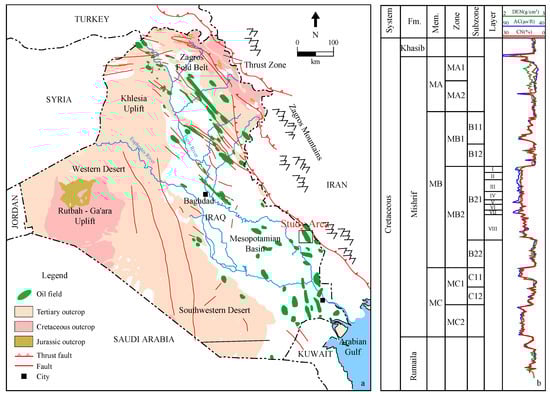
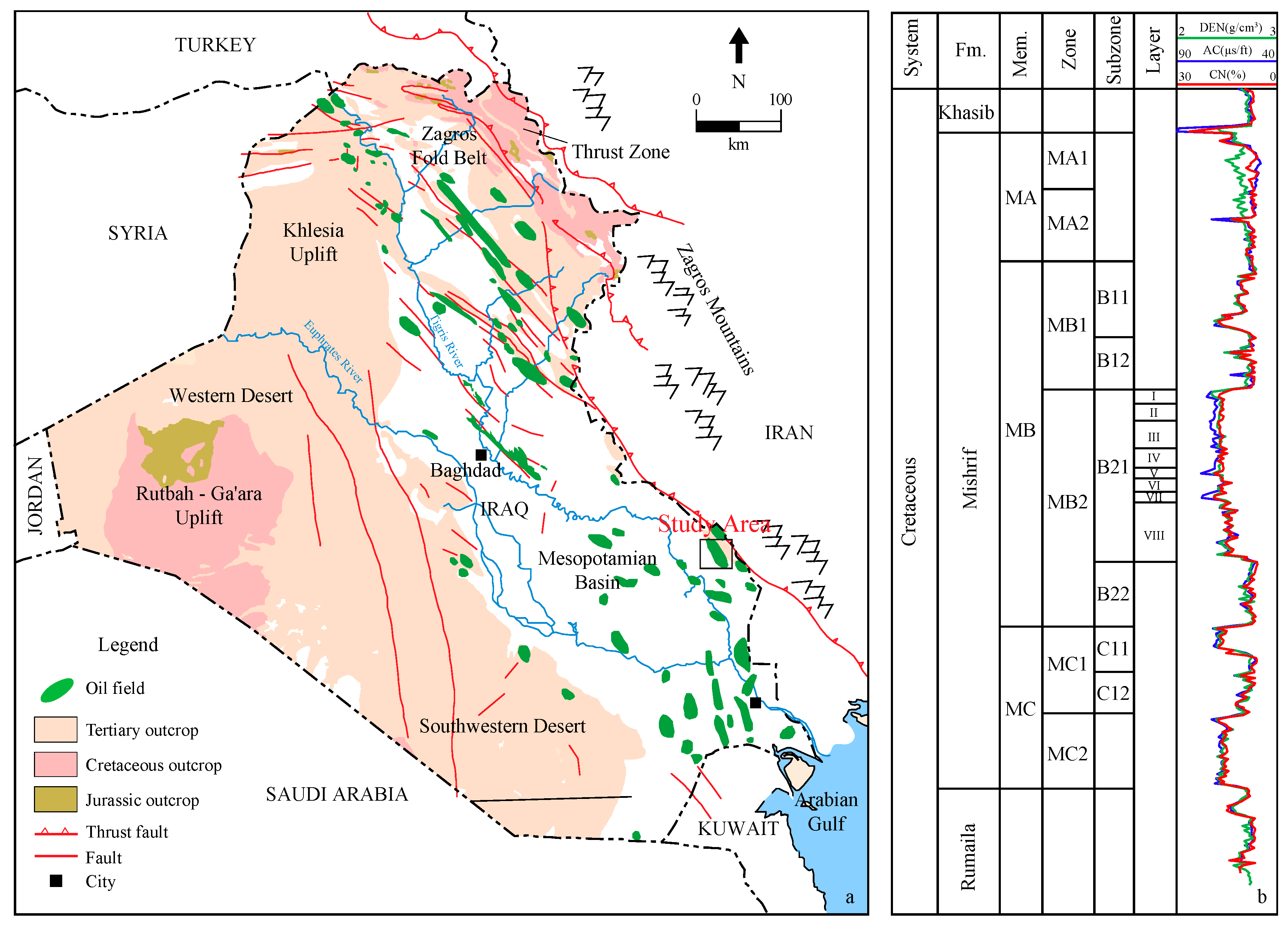
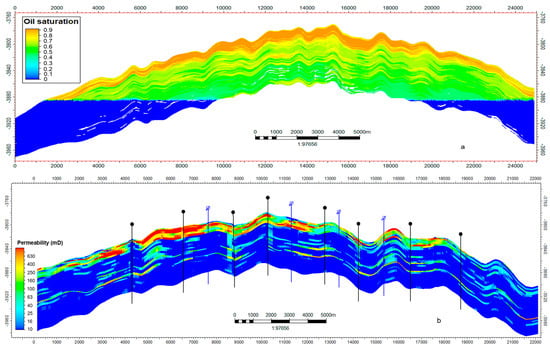
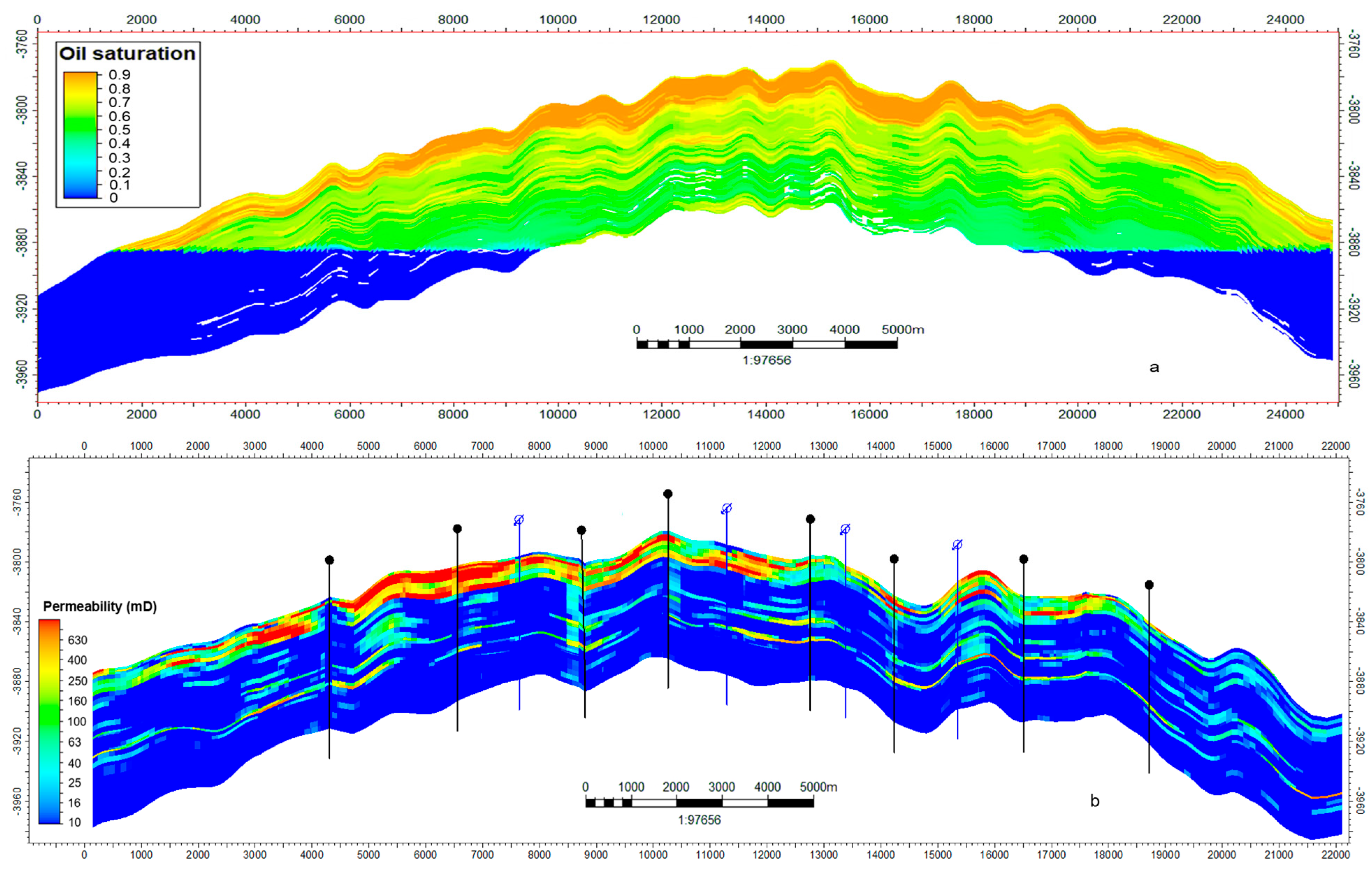
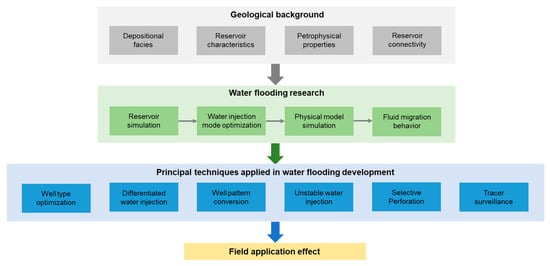
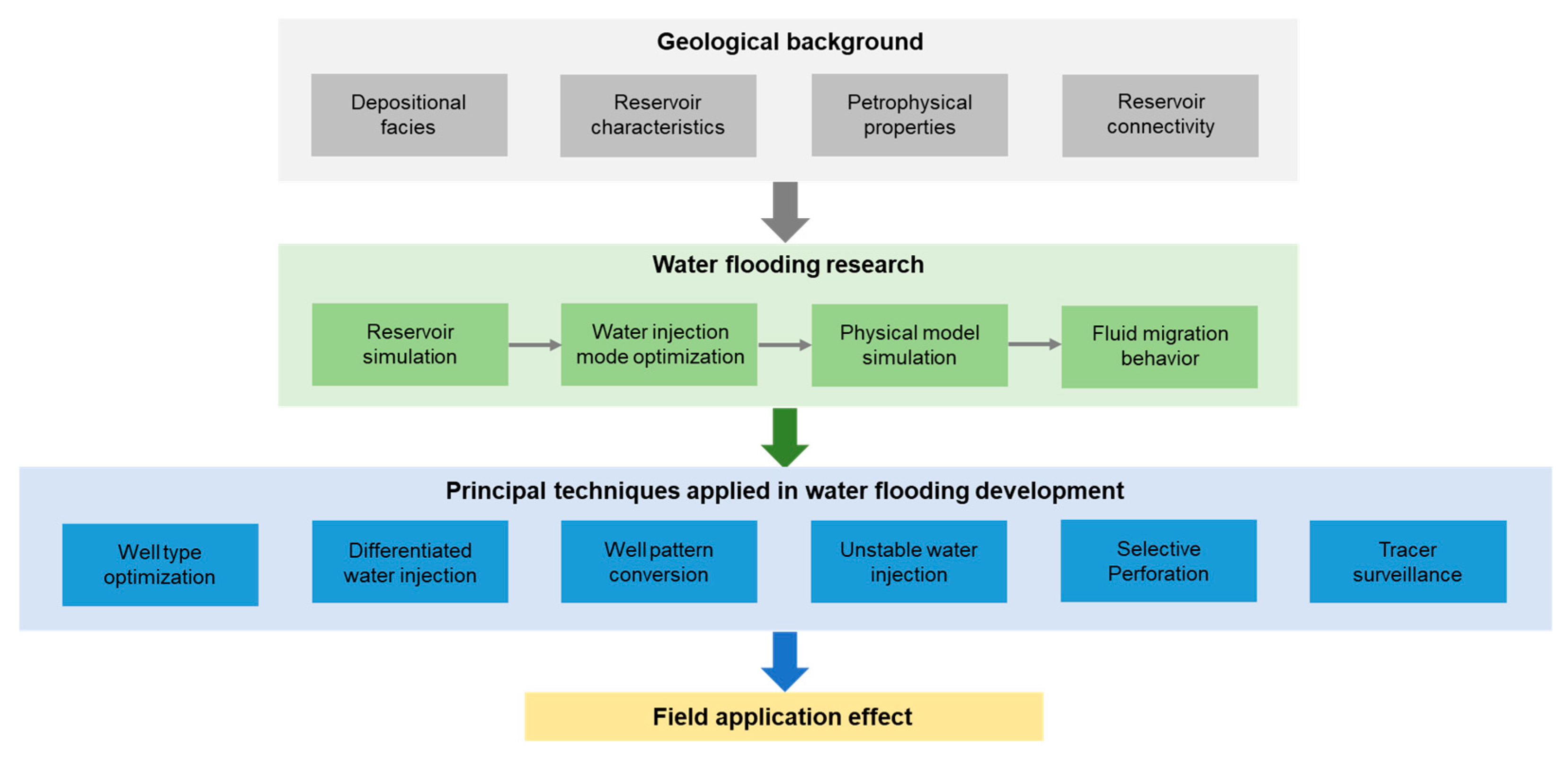
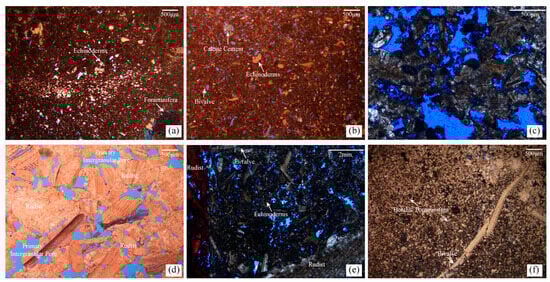
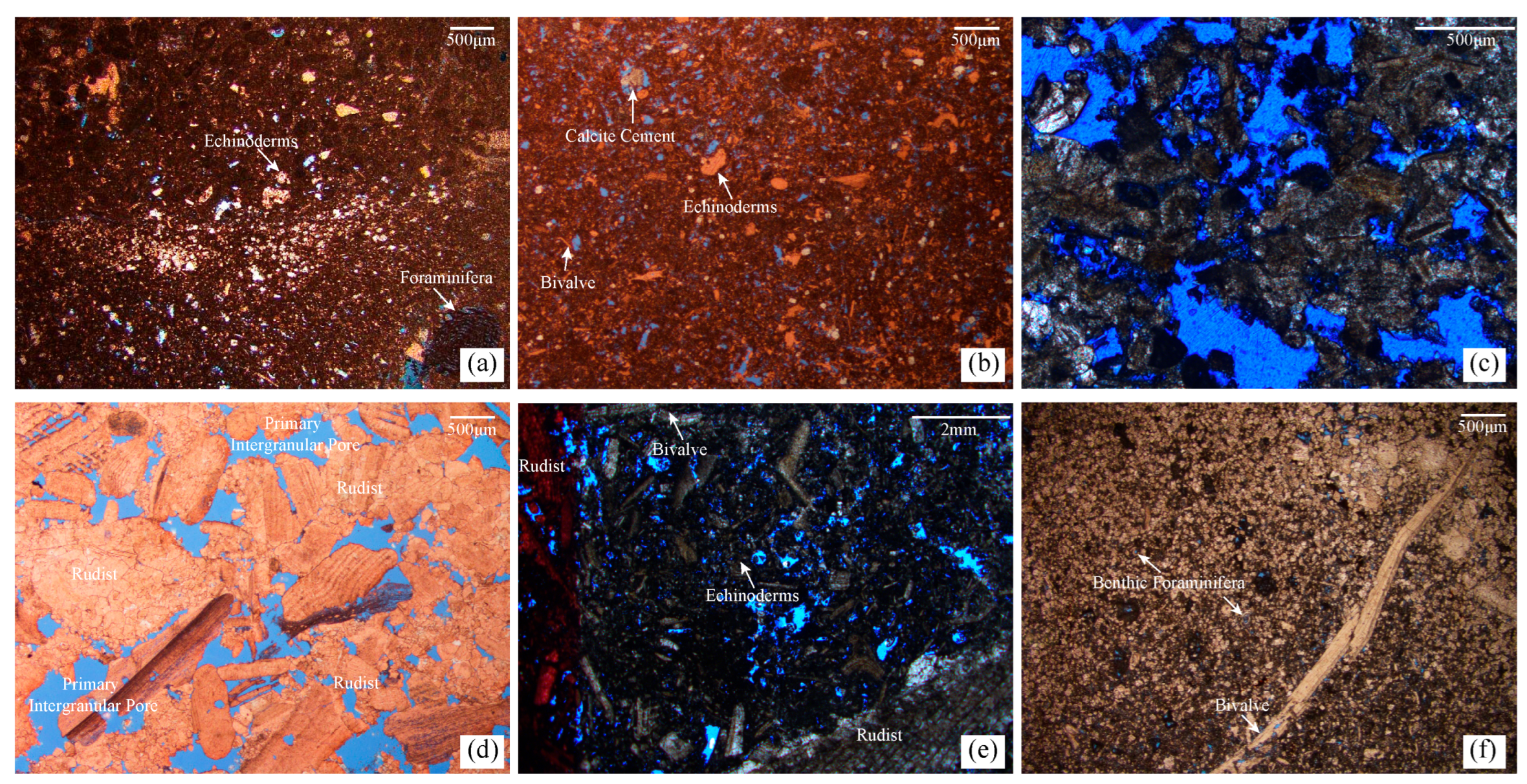
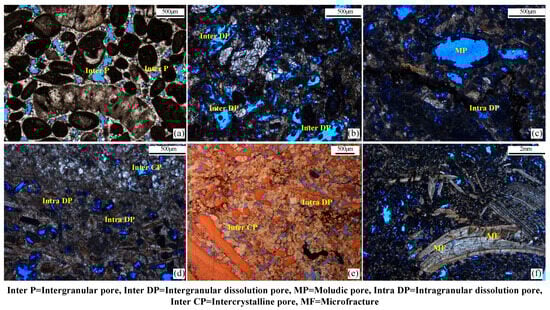
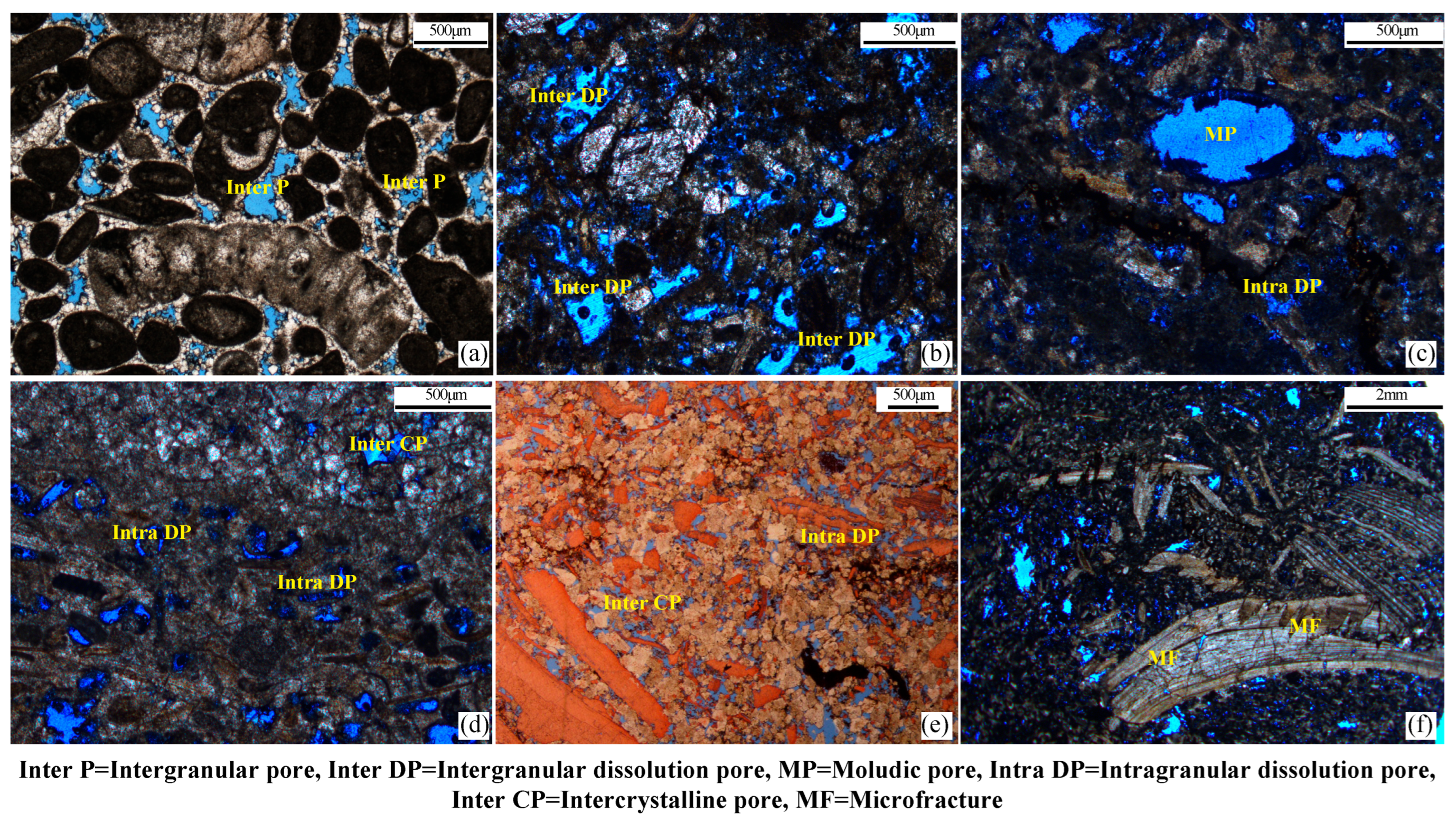
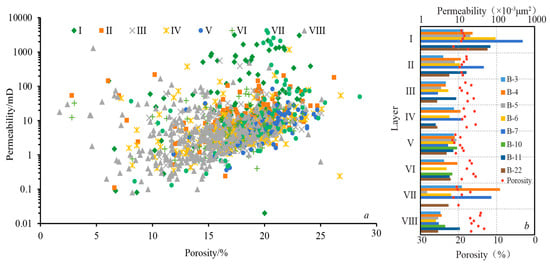
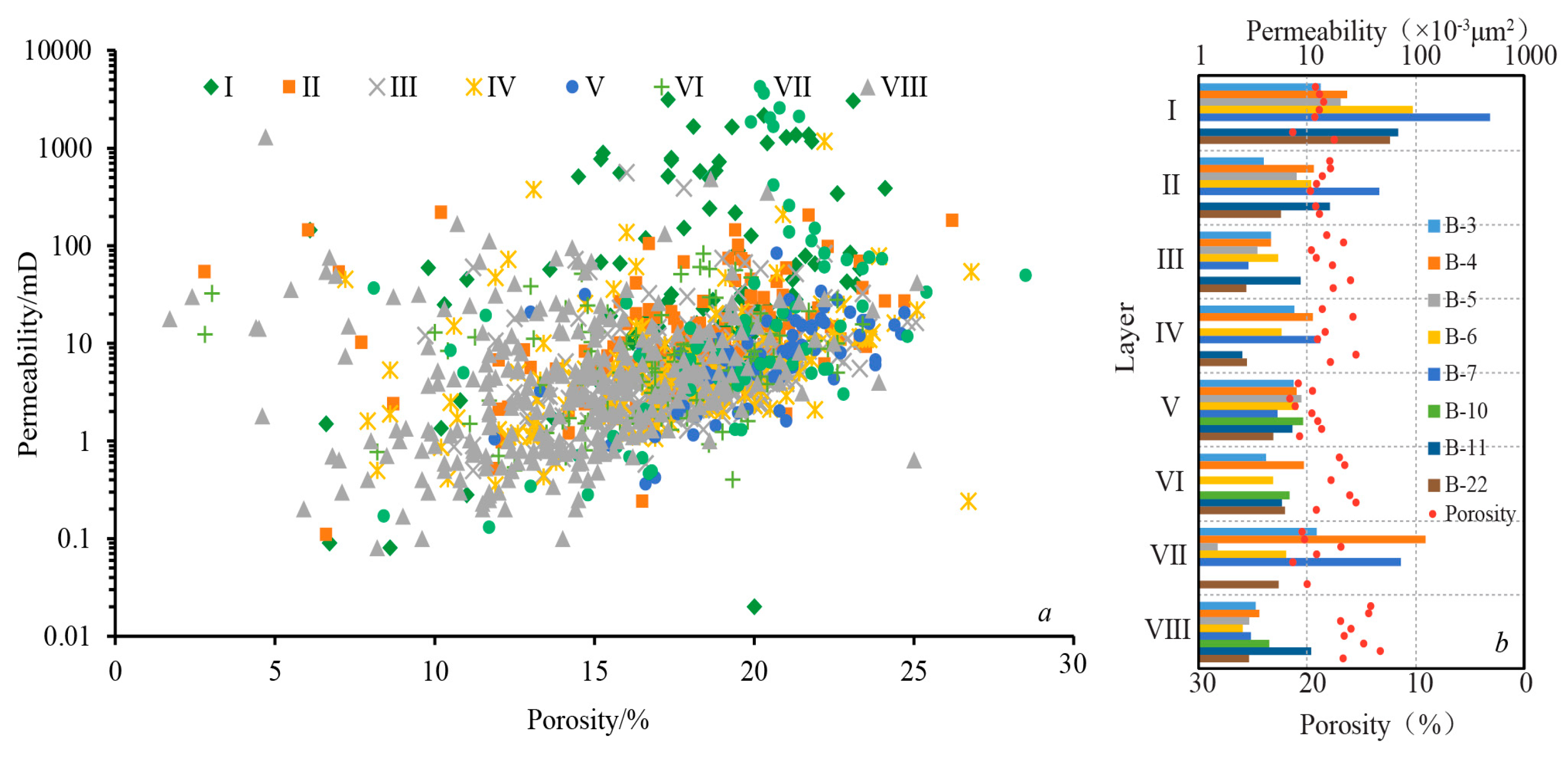
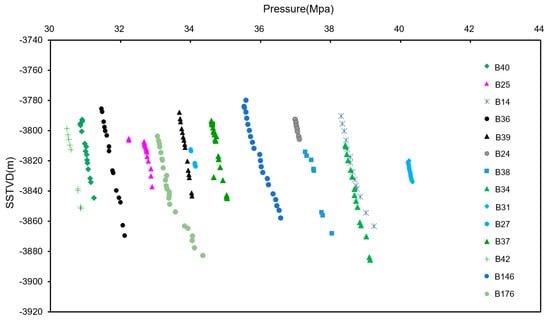
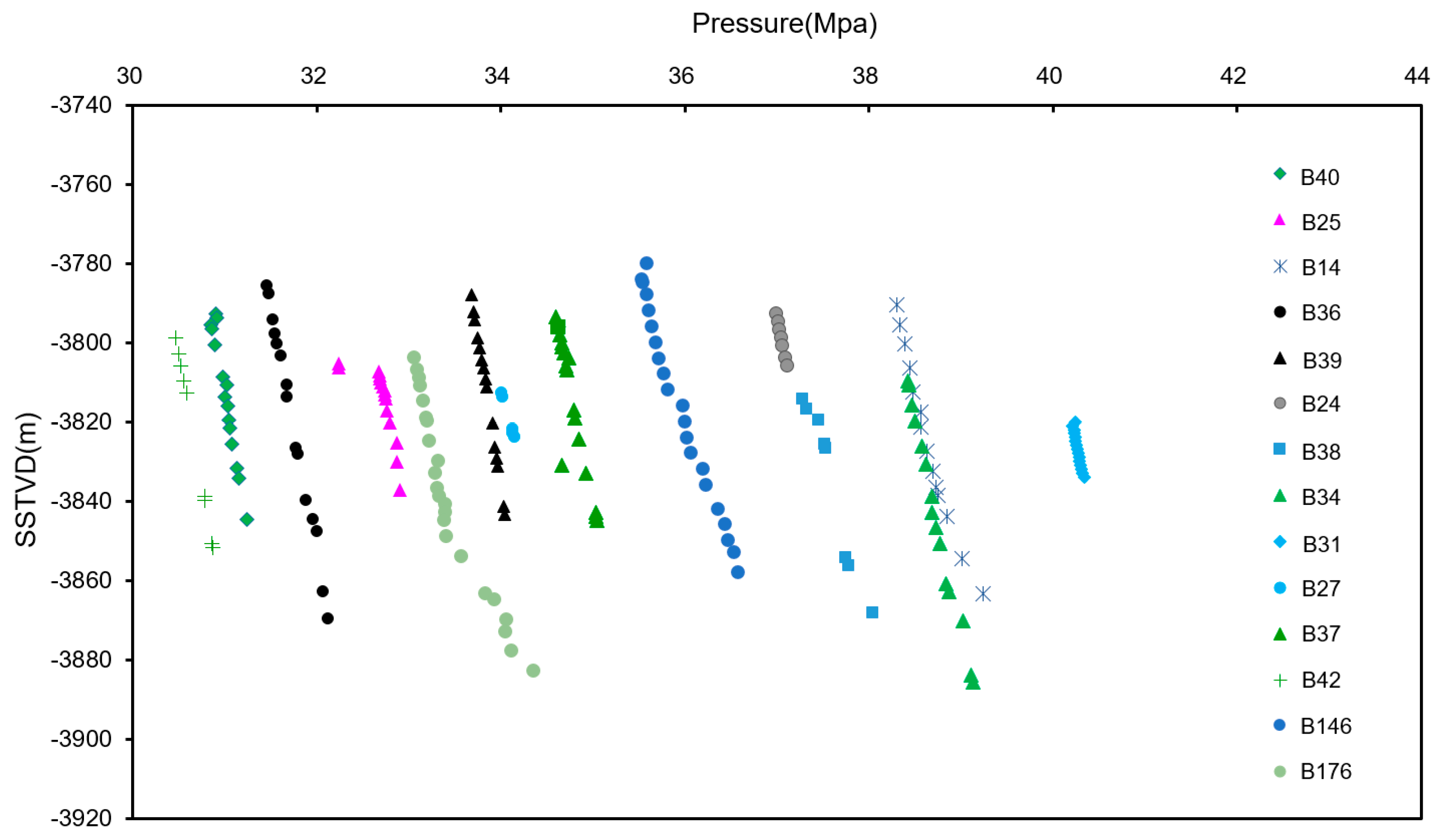
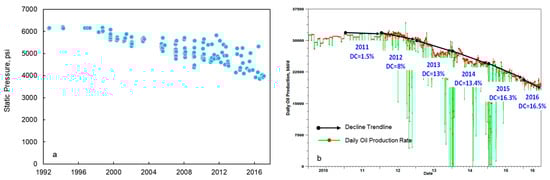
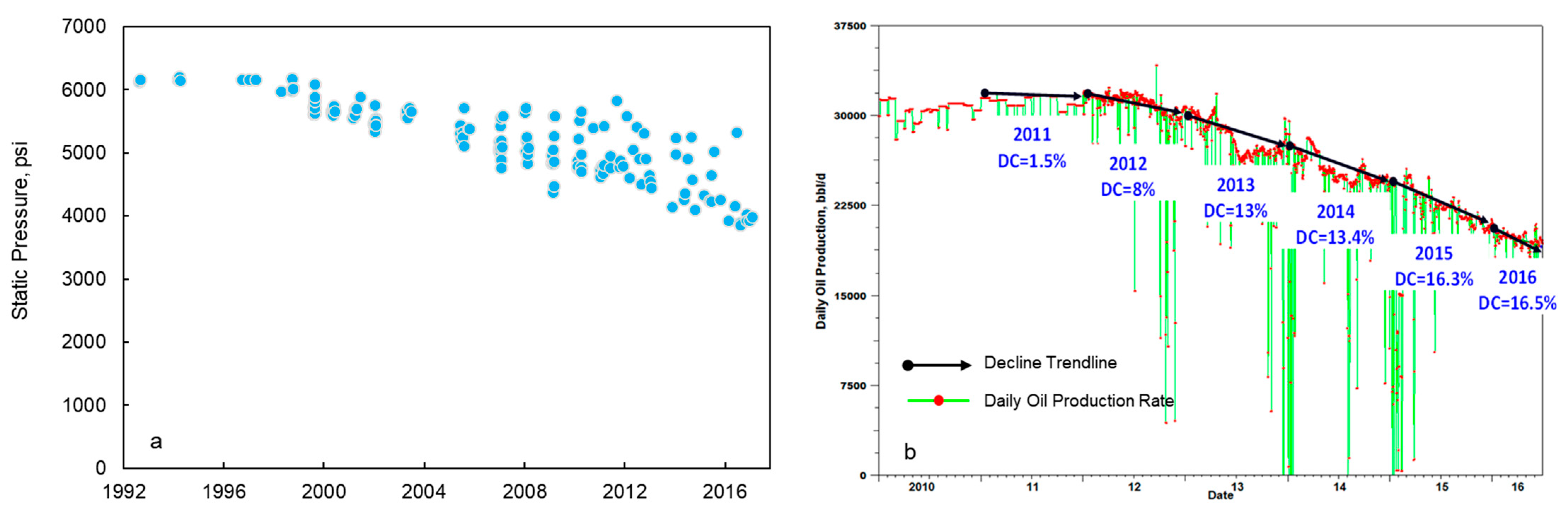
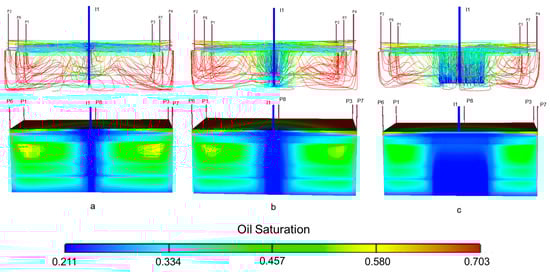
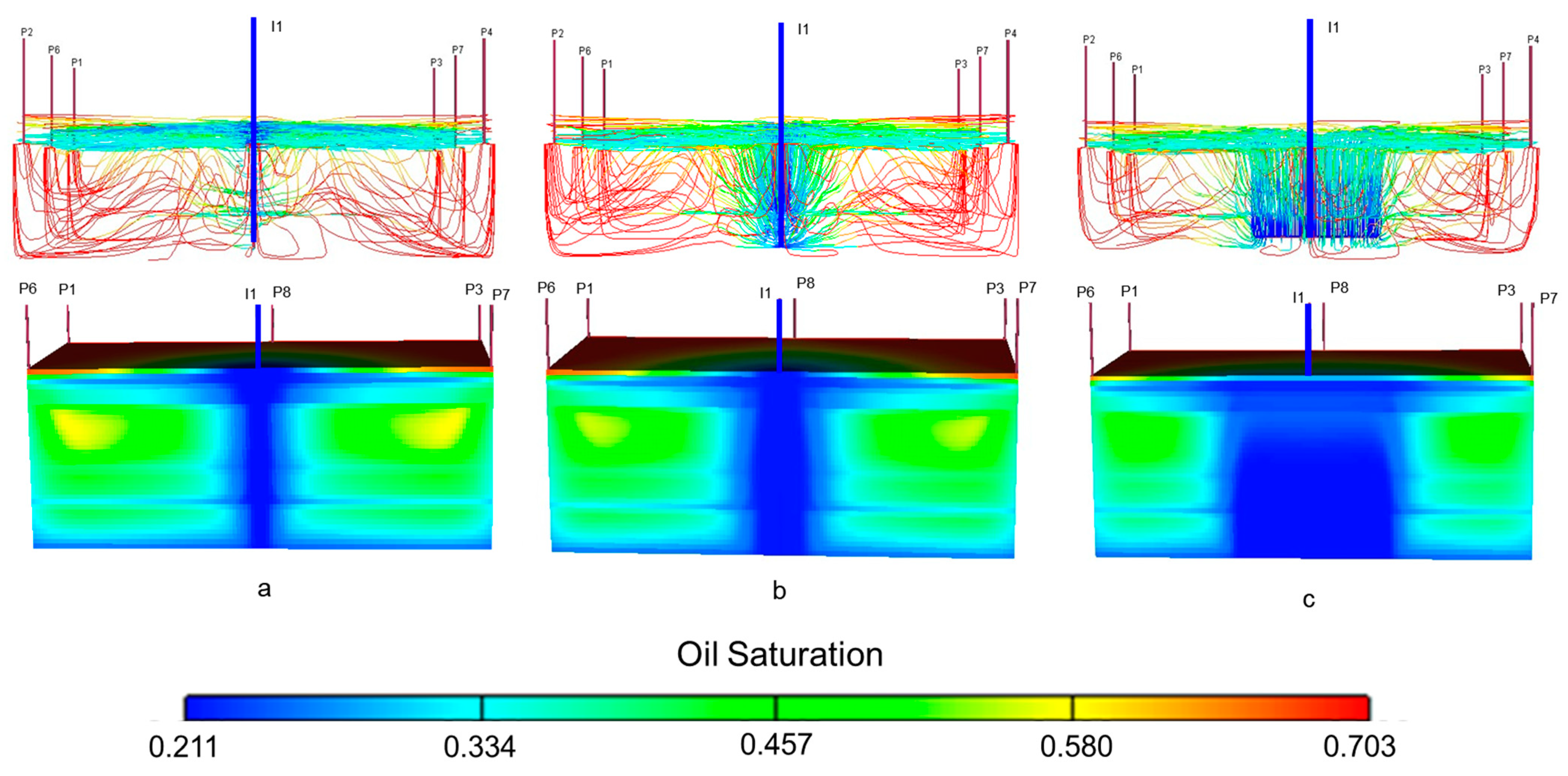
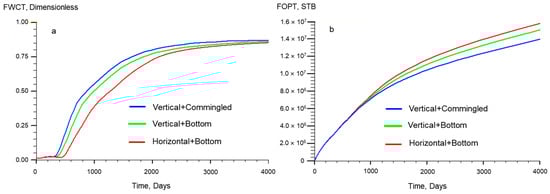
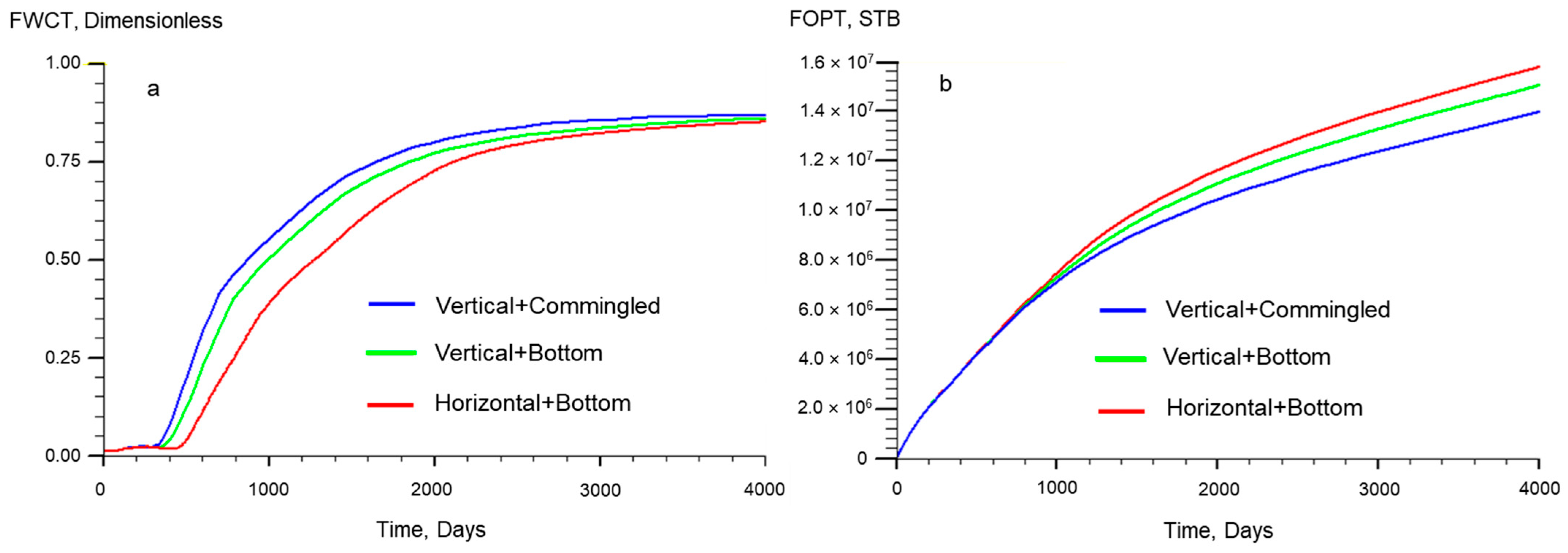
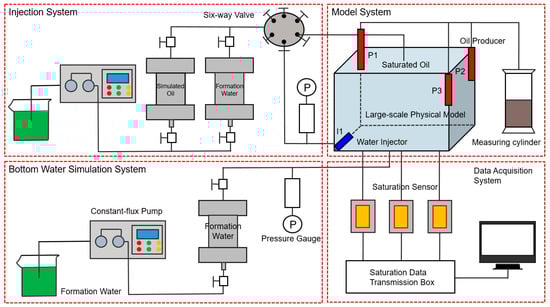
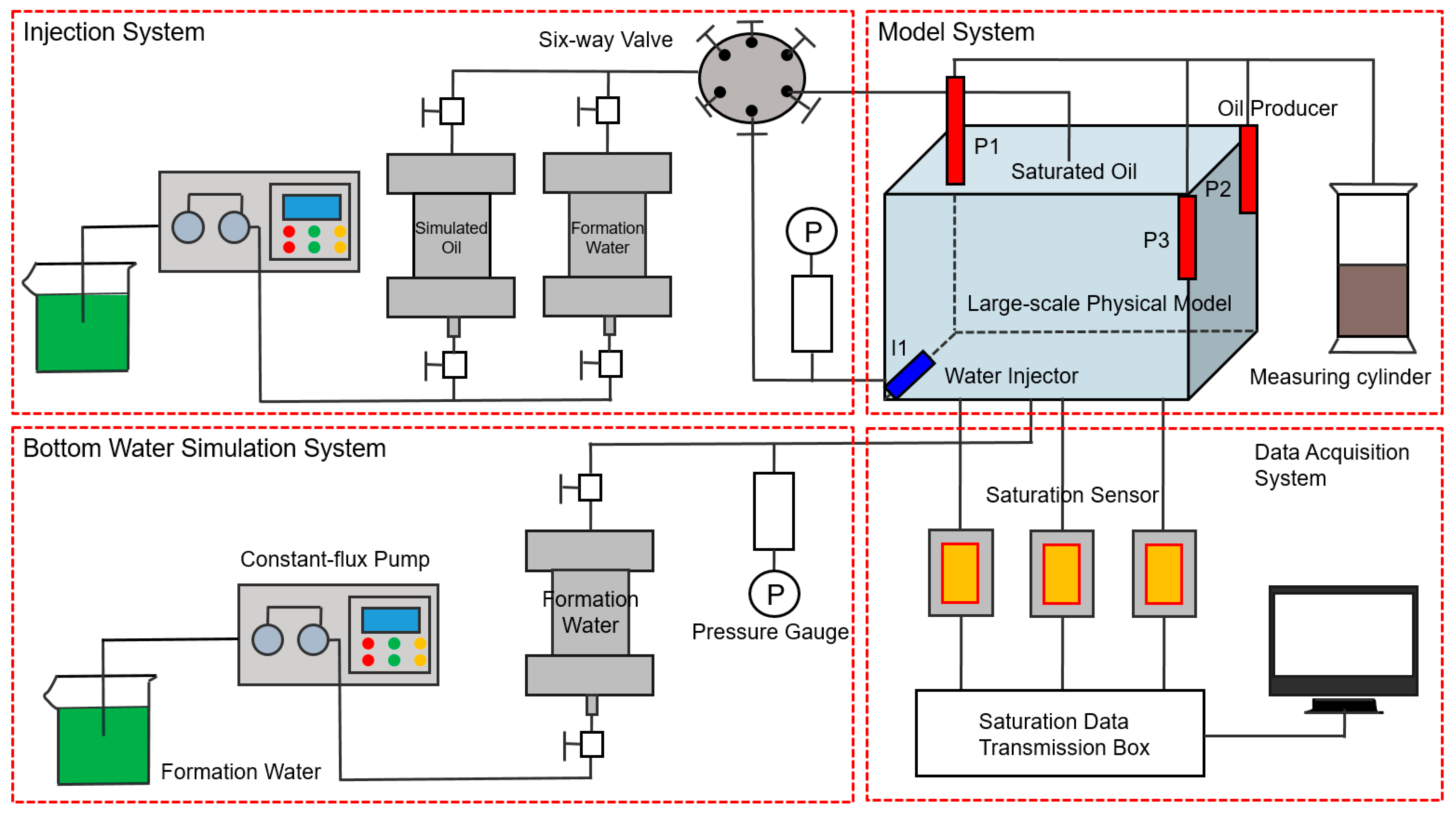
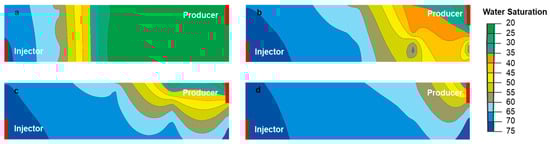
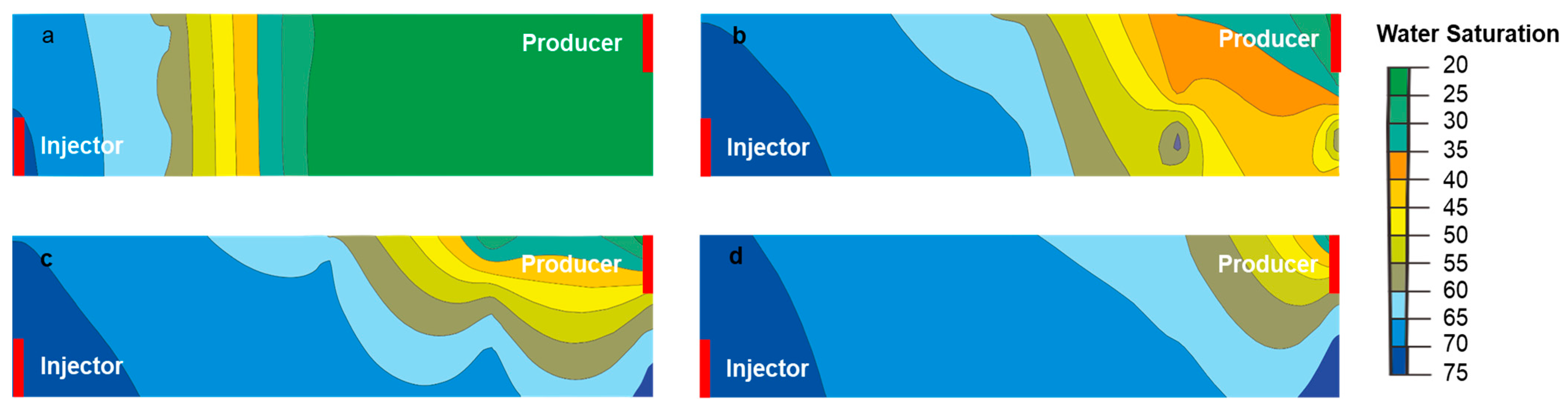
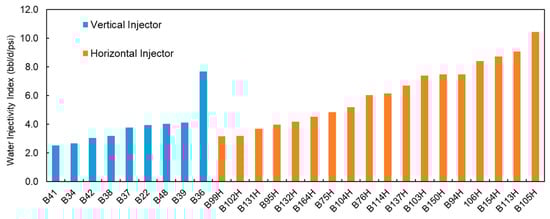
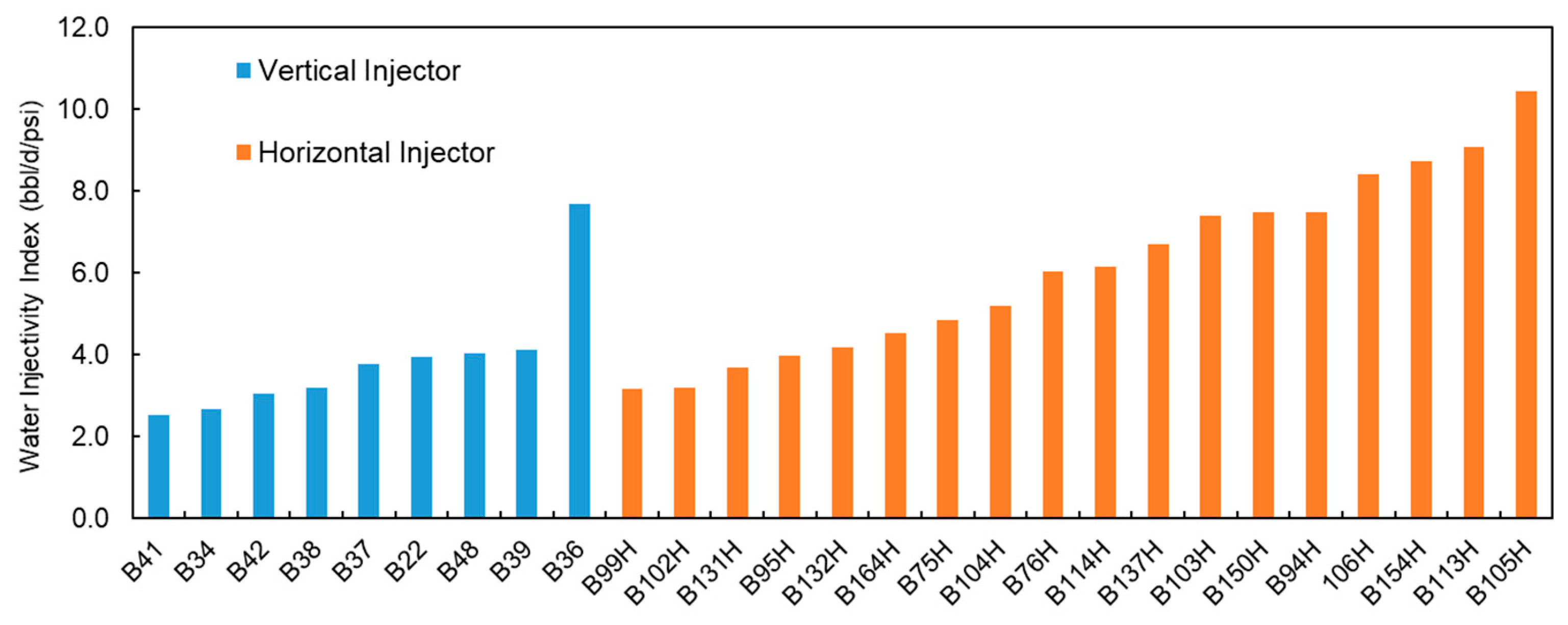
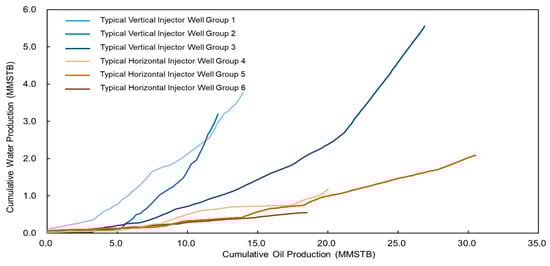
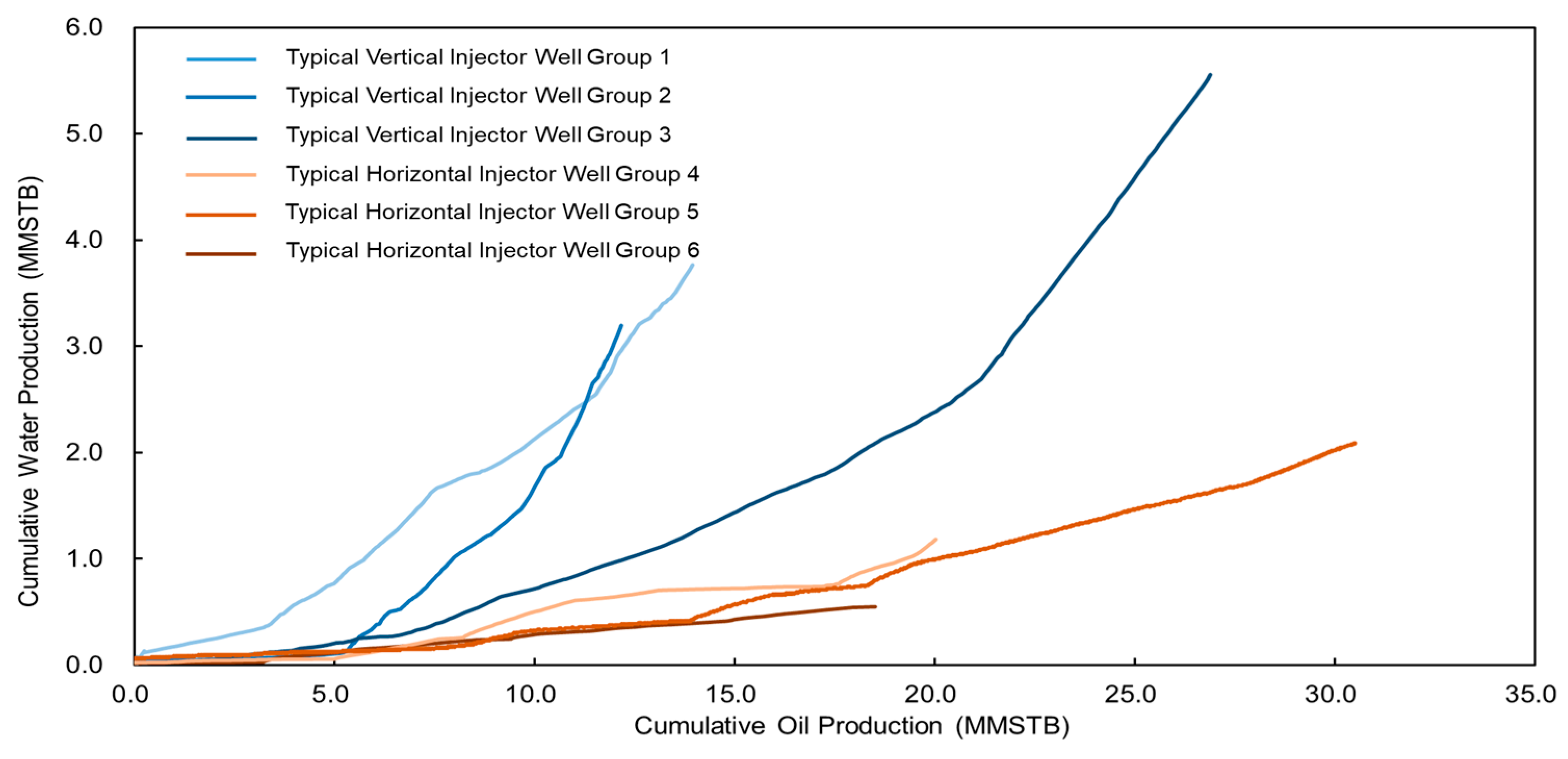
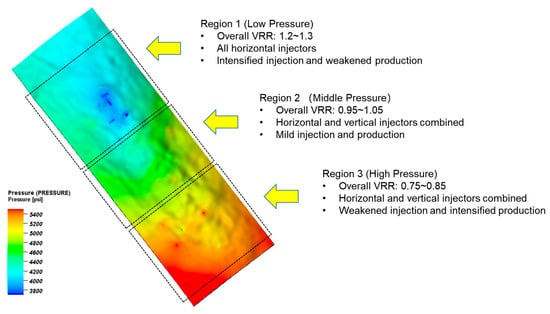
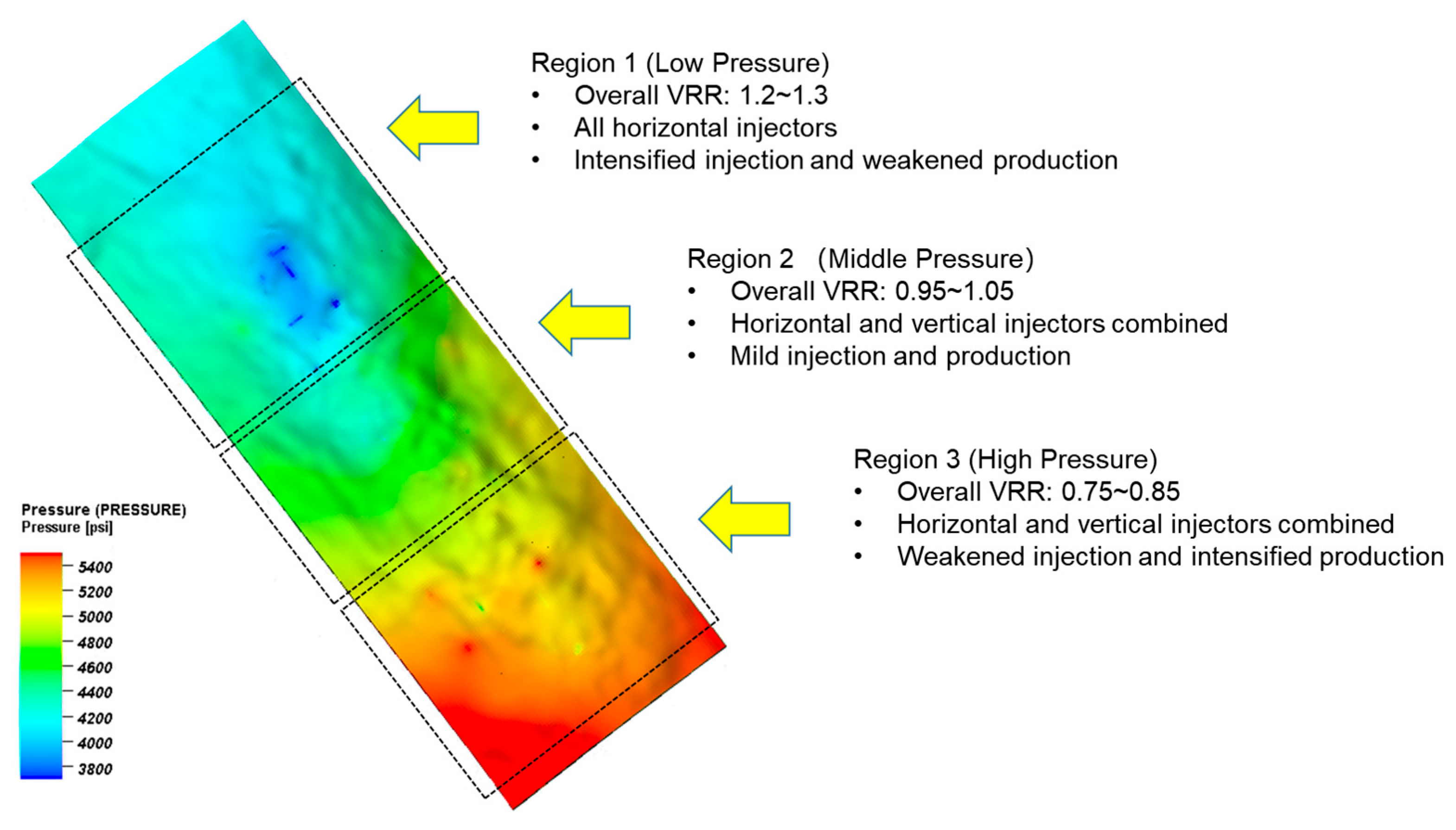
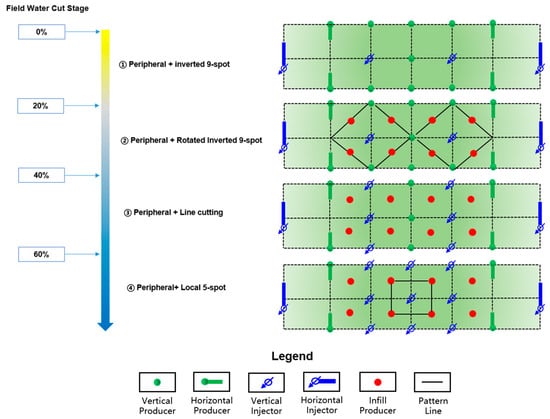
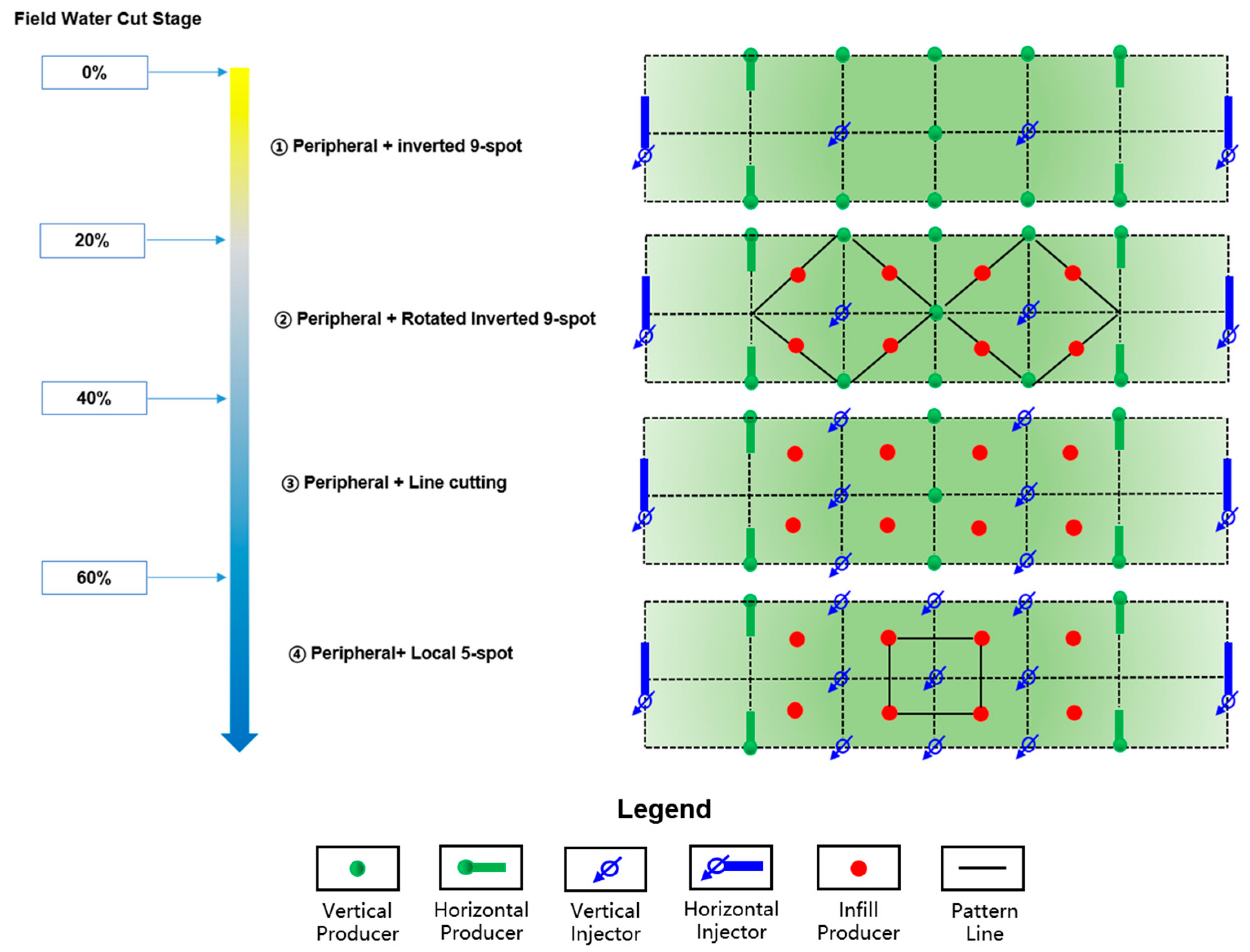
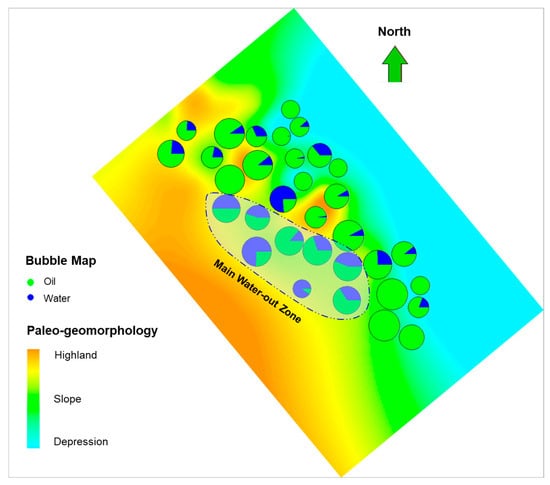
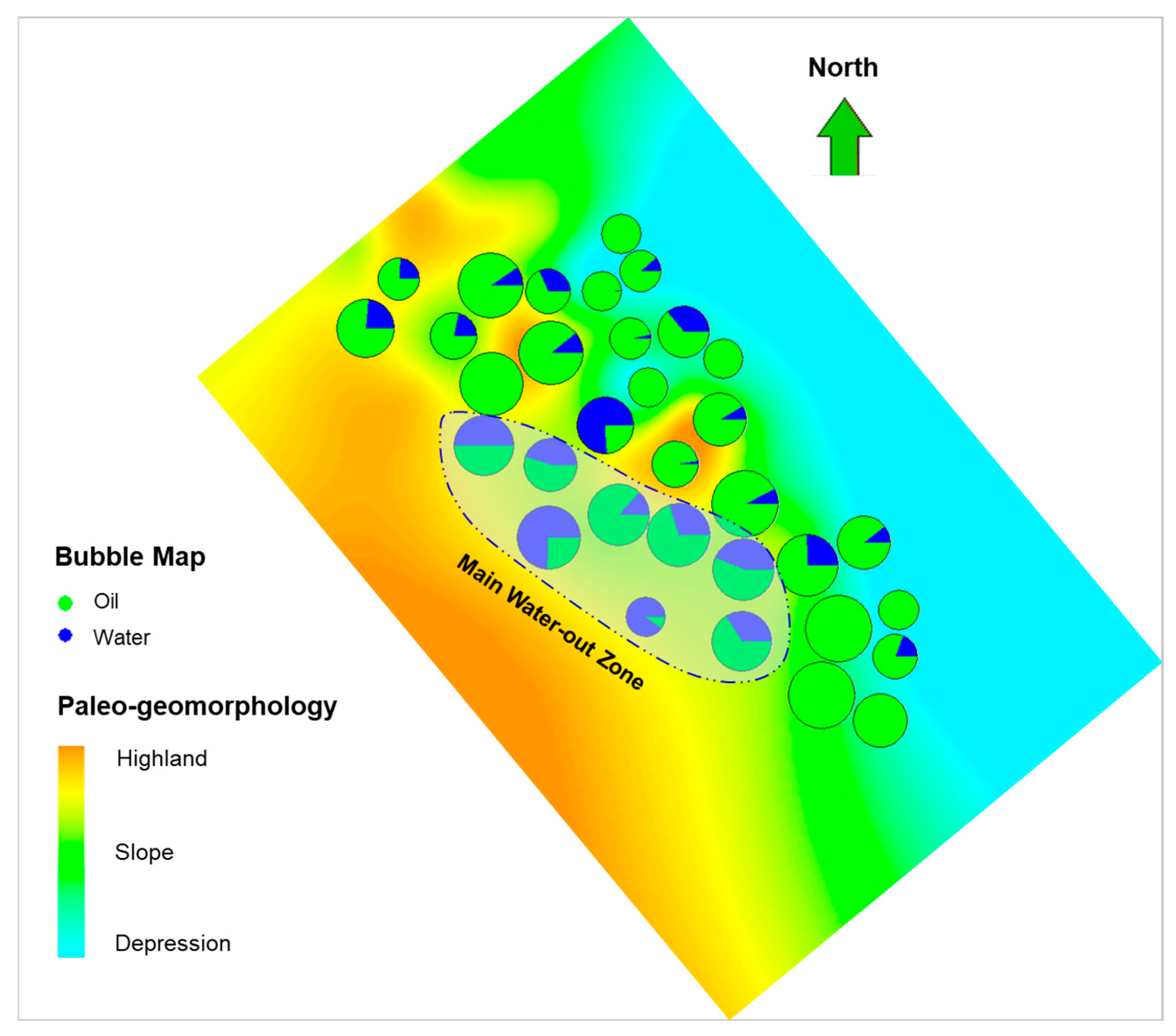
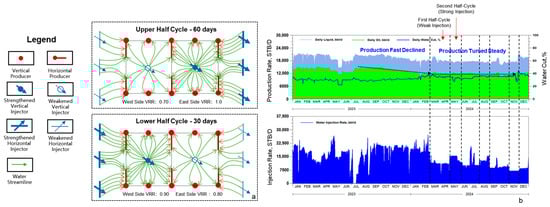
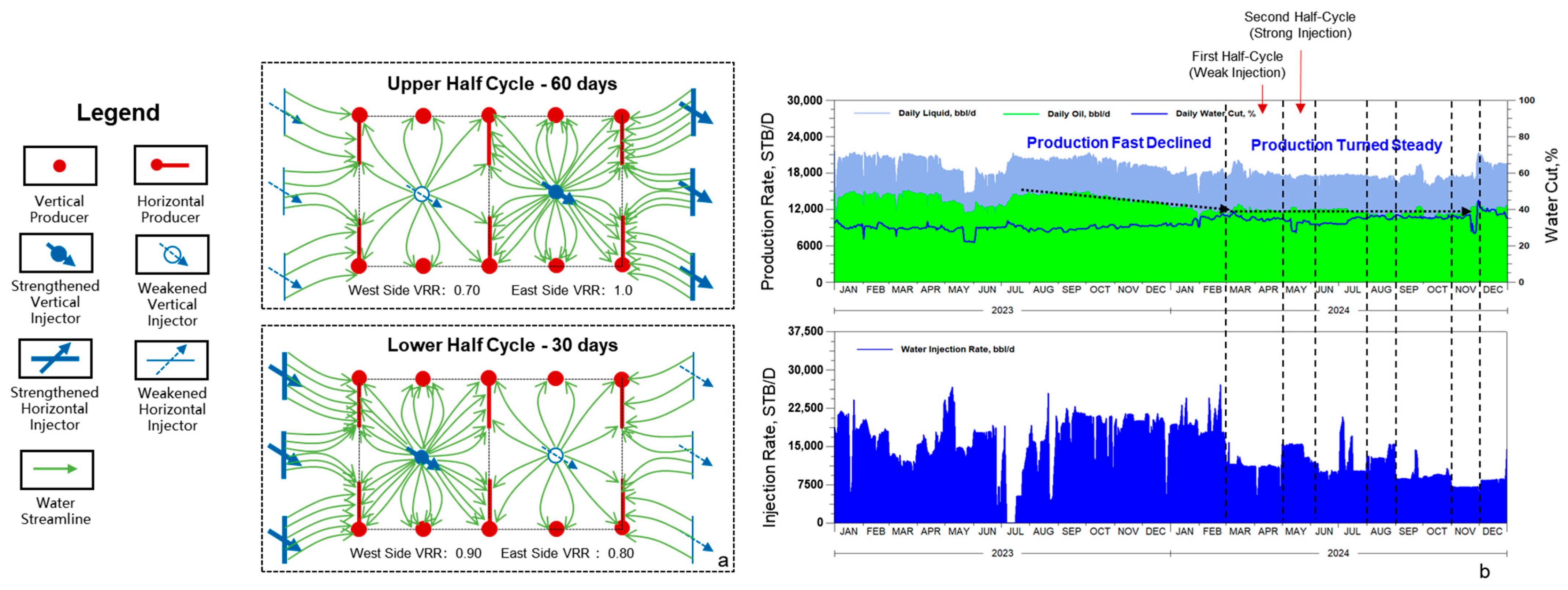
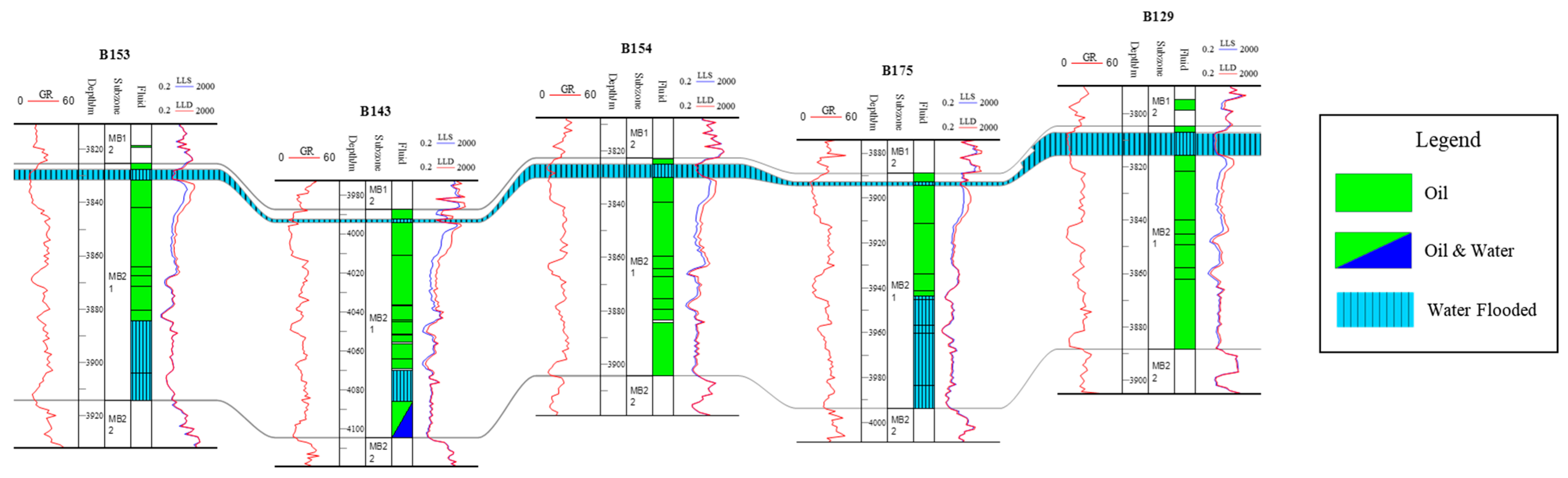
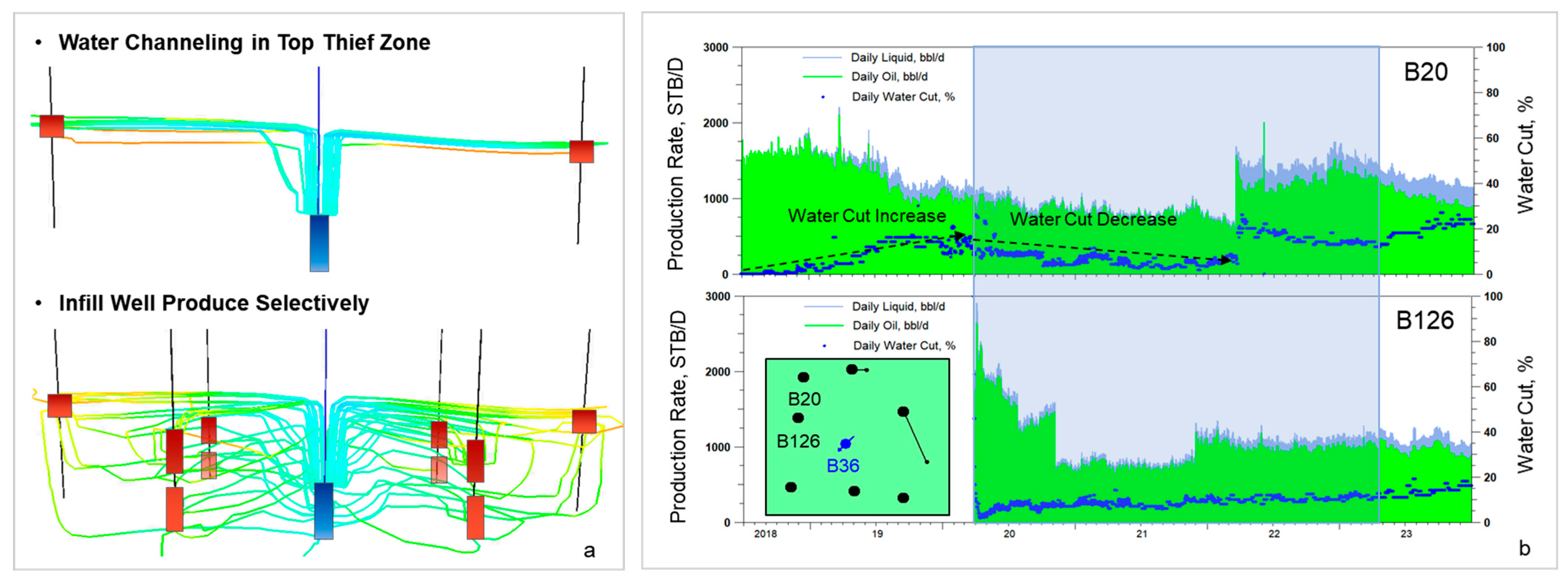
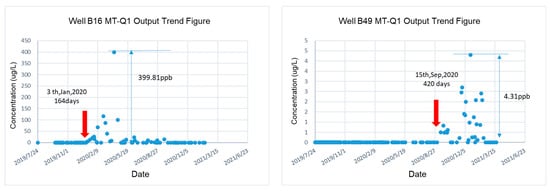
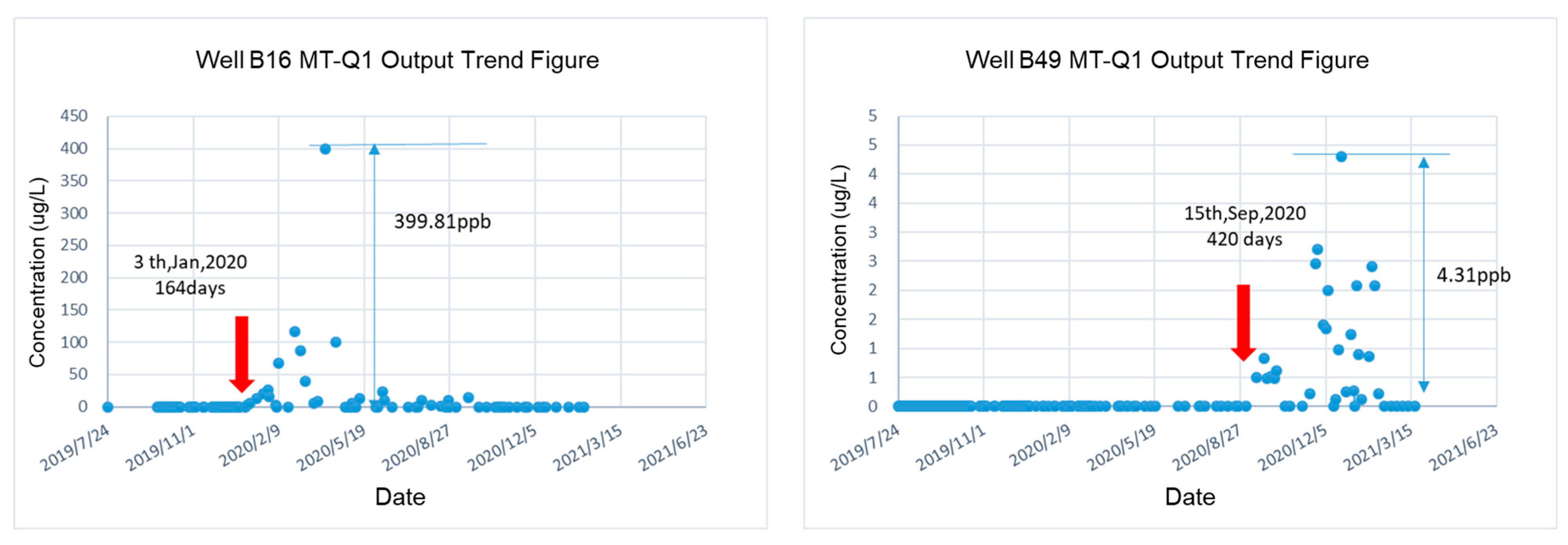
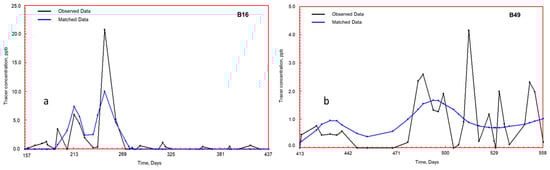
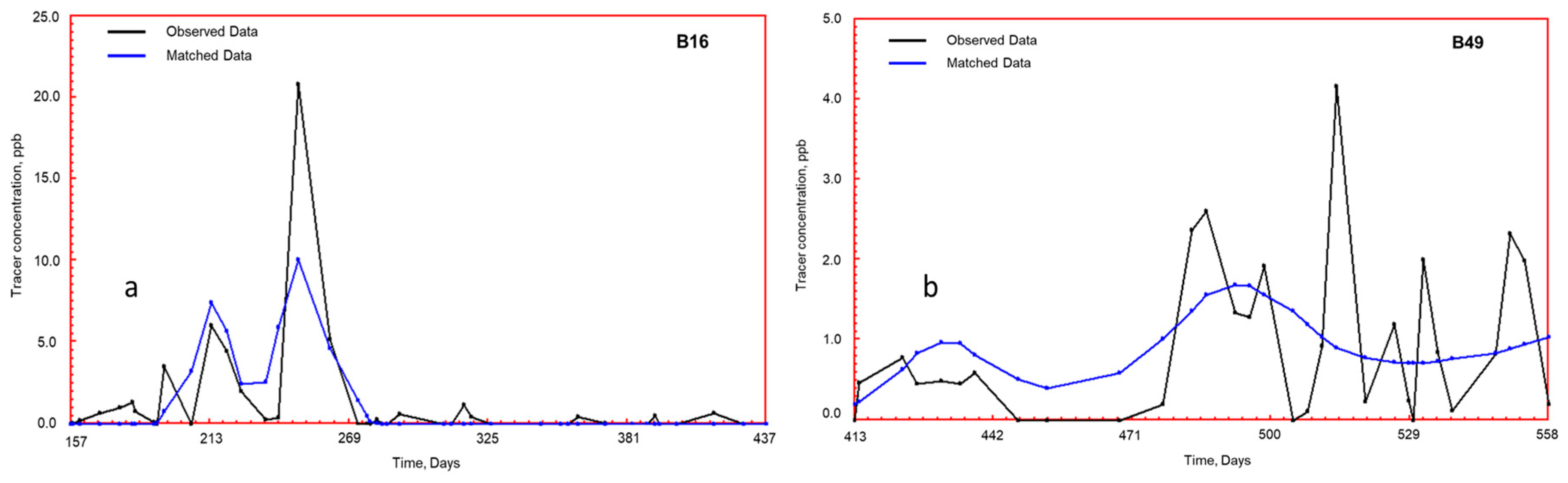
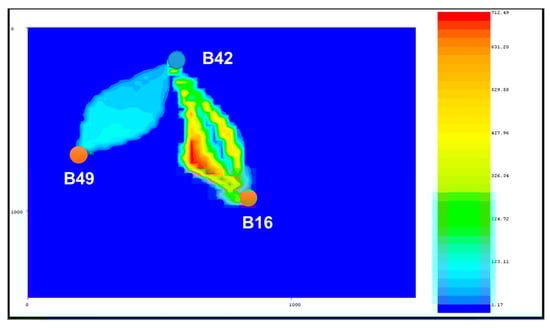
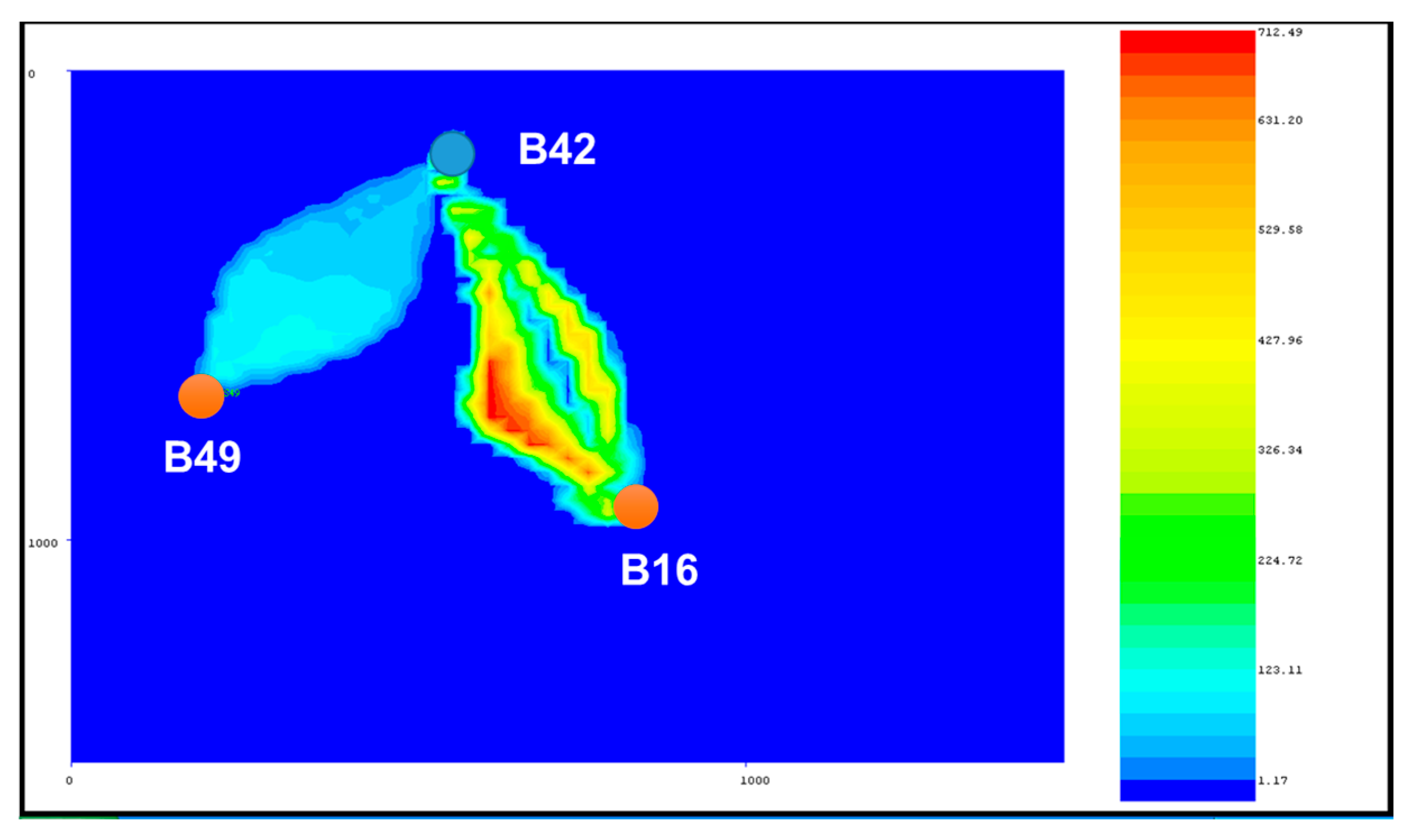
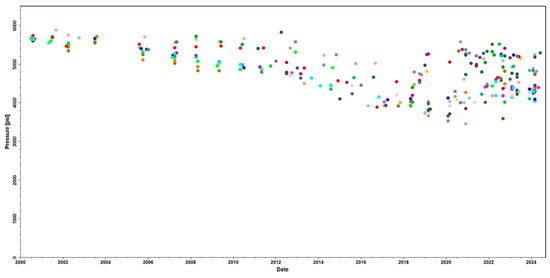
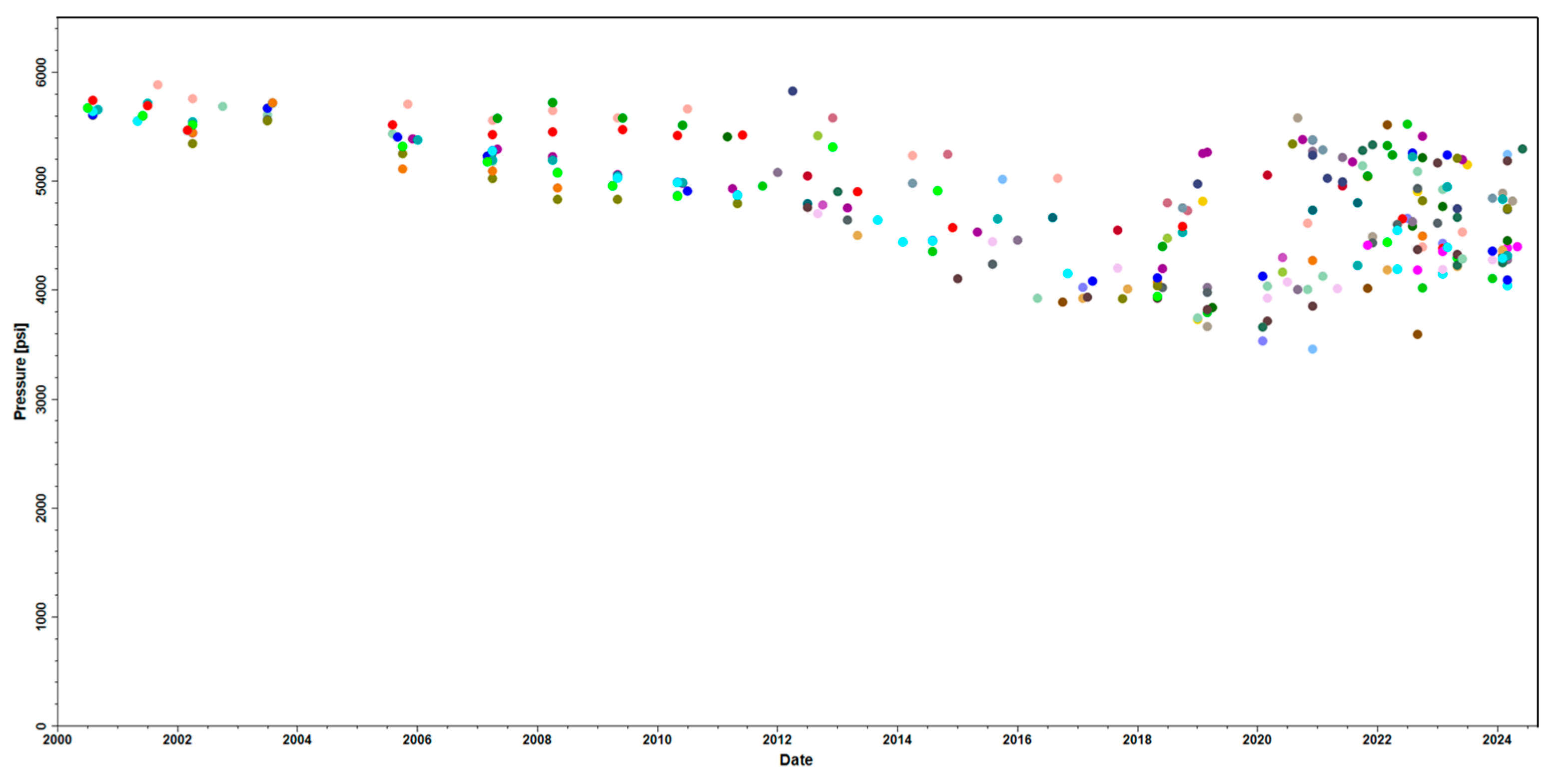
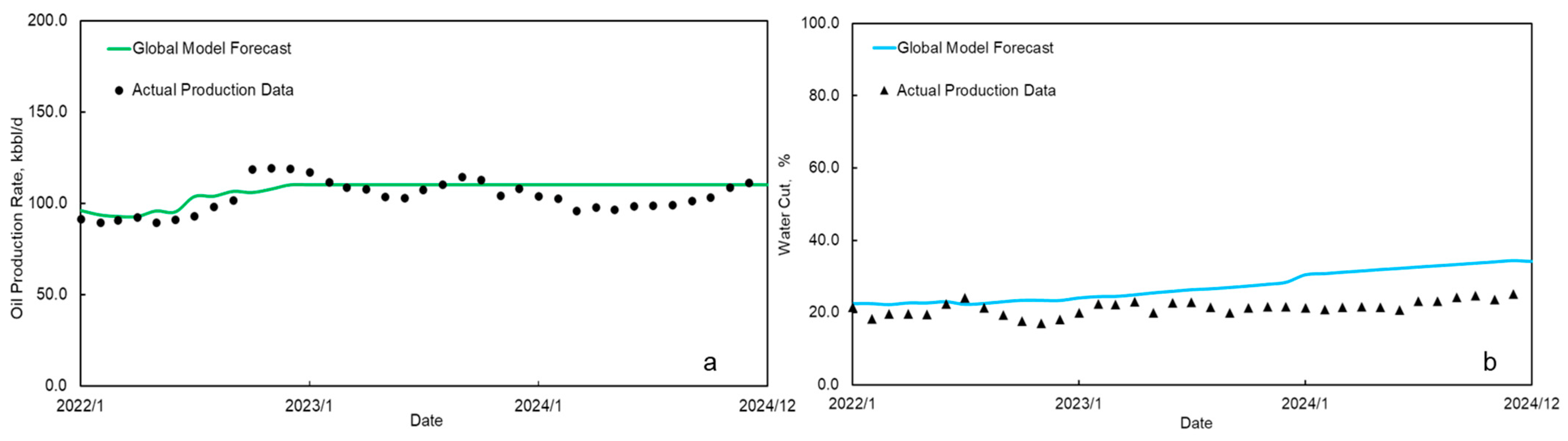

Disclaimer/Publisher’s Note: The statements, opinions and data contained in all publications are solely those of the individual author(s) and contributor(s) and not of MDPI and/or the editor(s). MDPI and/or the editor(s) disclaim responsibility for any injury to people or property resulting from any ideas, methods, instructions or products referred to in the content. |
© 2025 by the authors. Licensee MDPI, Basel, Switzerland. This article is an open access article distributed under the terms and conditions of the Creative Commons Attribution (CC BY) license (https://creativecommons.org/licenses/by/4.0/).