Article

Fractal Dimension and Classification Evaluation of Microfractured Tight Reservoirs in Yongjin Oilfield


1
Key Laboratory of Enhanced Oil Recovery (Northeast Petroleum University), Ministry of Education, Daqing 163318, China
2
Shanxi Key Laboratory of Advanced Stimulation Technology for Oil & Gas Reservoirs, Xi’an Shiyou University, Xi’an 710065, China
3
Shengli Oilfield Branch, Sinopec, Dongying 257061, China
4
China National Petroleum Corporation Jilin Oilfield Branch, Songyuan 138001, China
*
Author to whom correspondence should be addressed.
Processes 2025, 13(7), 2228; https://doi.org/10.3390/pr13072228
Submission received: 16 June 2025 / Revised: 5 July 2025 / Accepted: 8 July 2025 / Published: 12 July 2025
(This article belongs to the Section Energy Systems)

Abstract

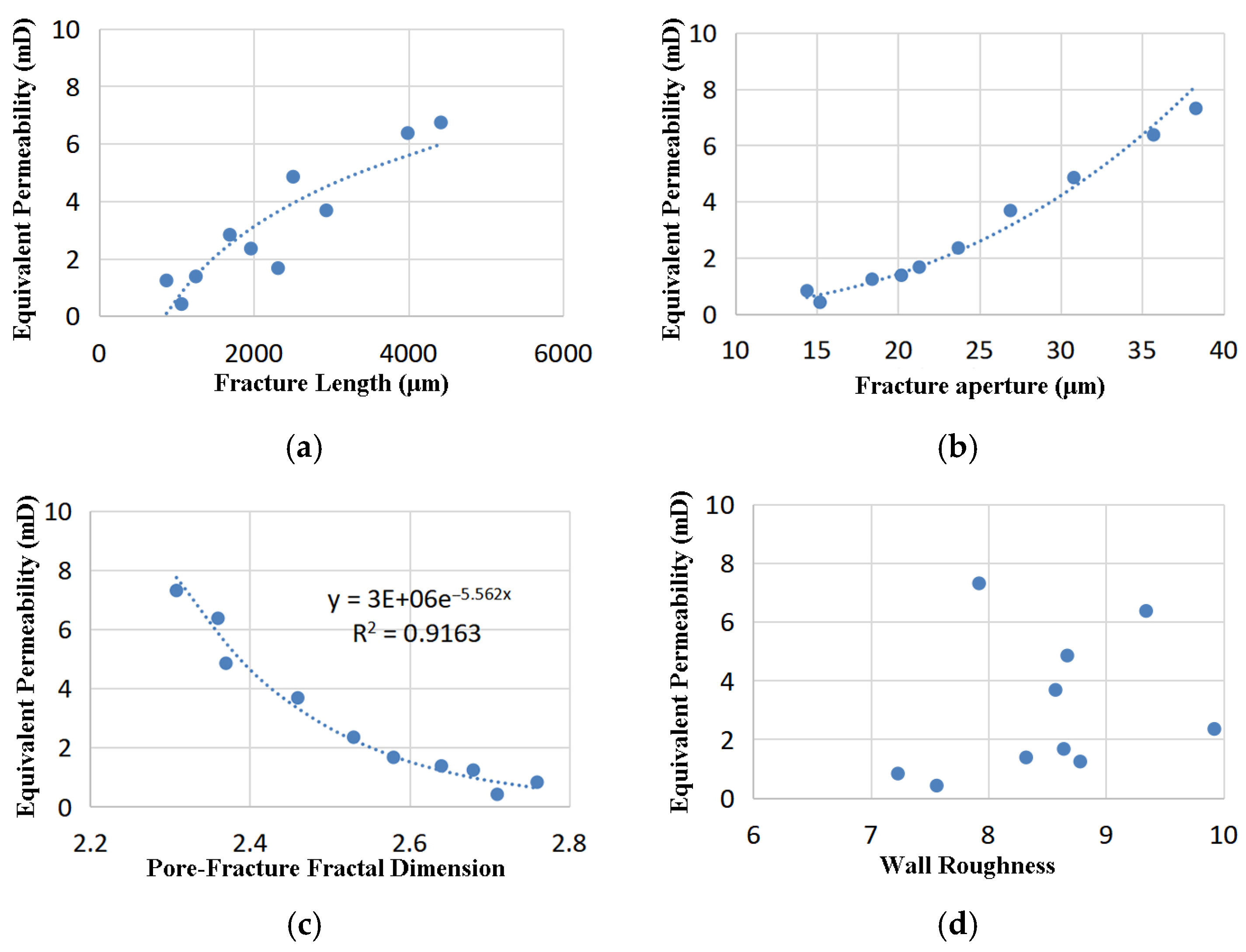
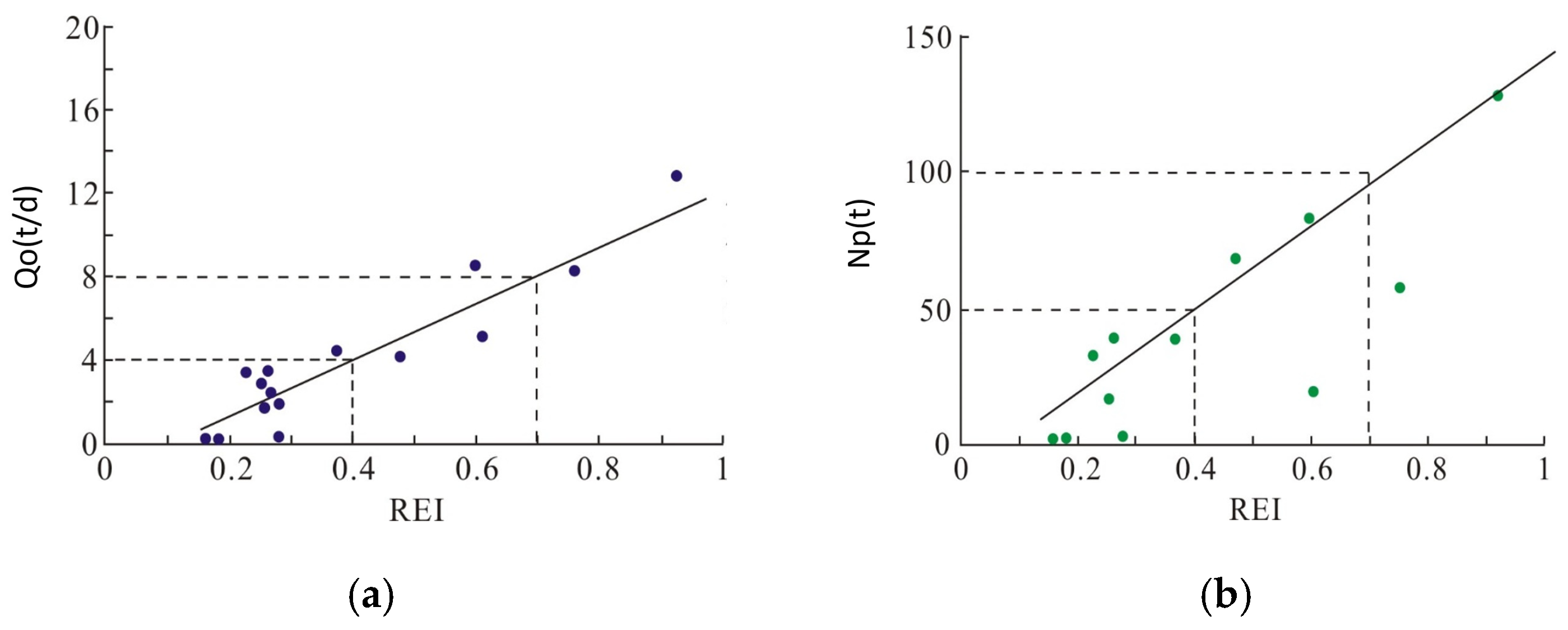
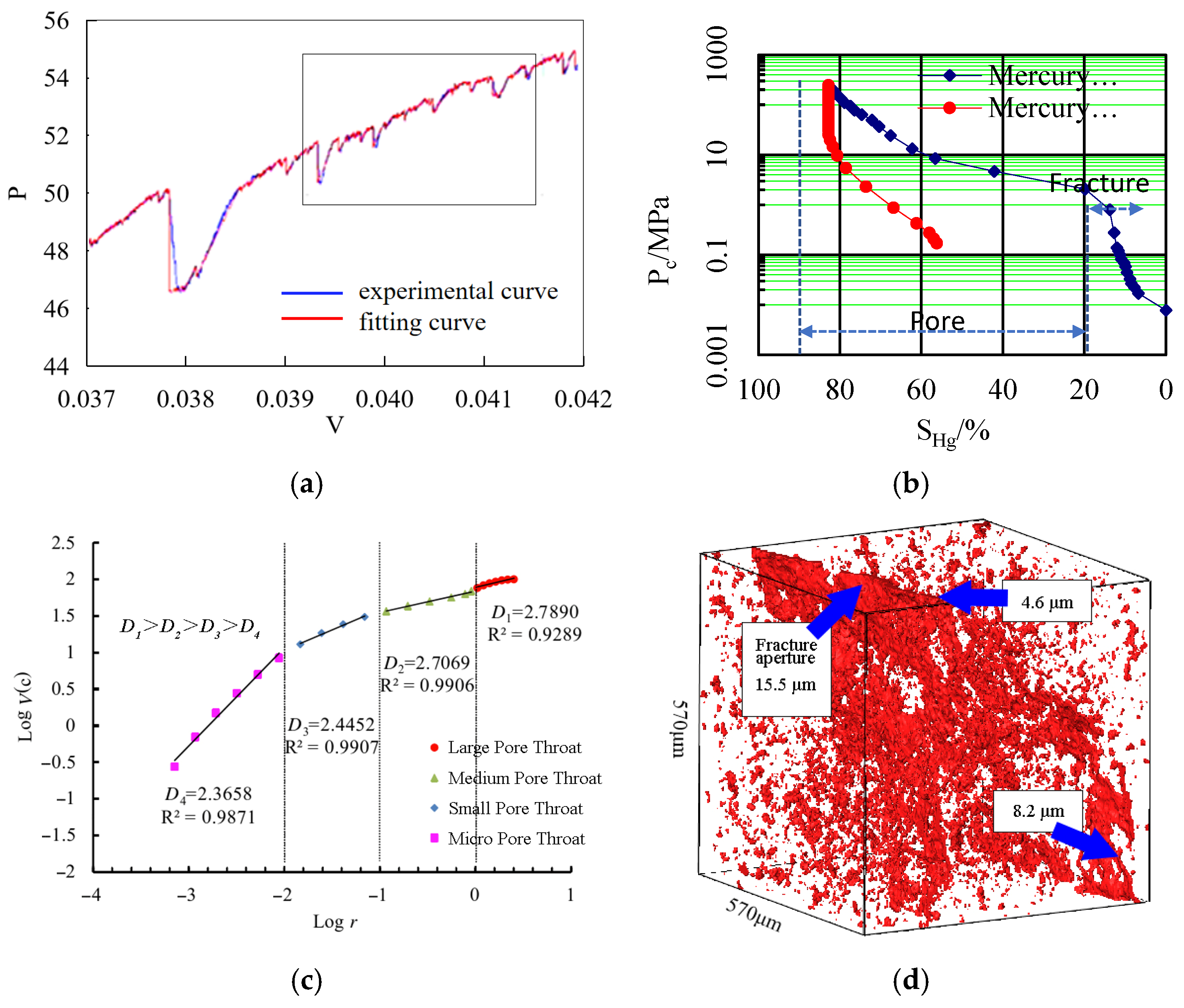
The microfractured tight reservoirs in Yongjin Oilfield have low permeability and a complex pore structure. The development of microfractures in reservoirs is crucial for their impact on productivity. To understand the impact of pore structure and microfracture development on permeability and productivity, research on the fractal dimension and classification evaluation of microfractured tight reservoirs is proposed. Micropore and microfracture parameter characteristics are determined via CT scanning and mercury intrusion experiments. Based on the fractal theory and box counting dimension methods, the fractal dimension of pores and fractures in microfractured tight reservoirs are calculated, which can be used as an evaluation index. Then, a comprehensive quantitative evaluation method (REI) is conducted on the microfractured tight reservoir of Yongjin Oilfield to determine the classification boundary of evaluation indicators and reservoir classification results. The research results show that the microfractured tight reservoirs in Yongjin Oilfield can be classified into three types based on their development effect from good to poor. The comprehensive evaluation index (REI) of type I reservoirs is greater than 0.7, and the fractal dimension of pores and fractures is less than 2.4. The comprehensive evaluation index (REI) of type II reservoirs ranges from 0.4 to 0.7, and the fractal dimension of pores and fractures ranges from 2.4 to 2.6. The comprehensive evaluation index (REI) of type III reservoirs is less than 0.4, and the fractal dimension of pores and fractures is greater than 2.6. The classification results are consistent with the dynamic data, and this achievement can provide a scientific basis for rapid reservoir evaluation and development strategy formulation.
Keywords: microfractures; tight reservoir; microscopic parameter characteristics; fractal dimension; classification evaluation; reservoir modification microfractures; tight reservoir; microscopic parameter characteristics; fractal dimension; classification evaluation; reservoir modification