Article

Enhanced Prediction of Muscle Activity Using Wearable Textile Stretch Sensors and Multi-Layer Perceptron

1
Department of Materials Science and Engineering, Soongsil University, Seoul 06978, Republic of Korea
2
Department of Smart Wearable Engineering, Soongsil University, Seoul 06978, Republic of Korea
*
Author to whom correspondence should be addressed.
Processes 2025, 13(4), 1041; https://doi.org/10.3390/pr13041041
Submission received: 7 January 2025 / Revised: 17 March 2025 / Accepted: 29 March 2025 / Published: 31 March 2025
(This article belongs to the Special Issue Research on Intelligent Fault Diagnosis Based on Neural Network)

Abstract

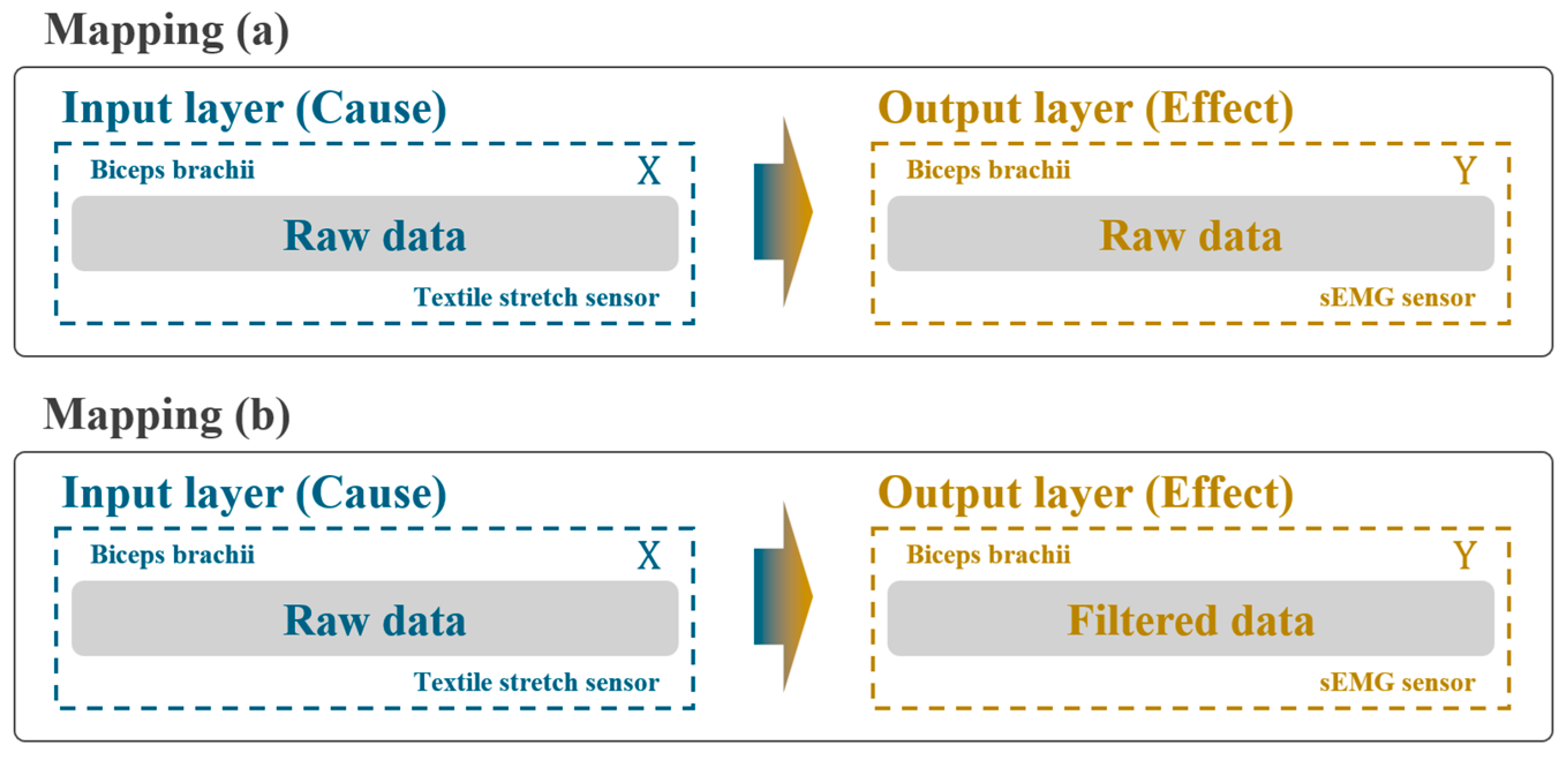
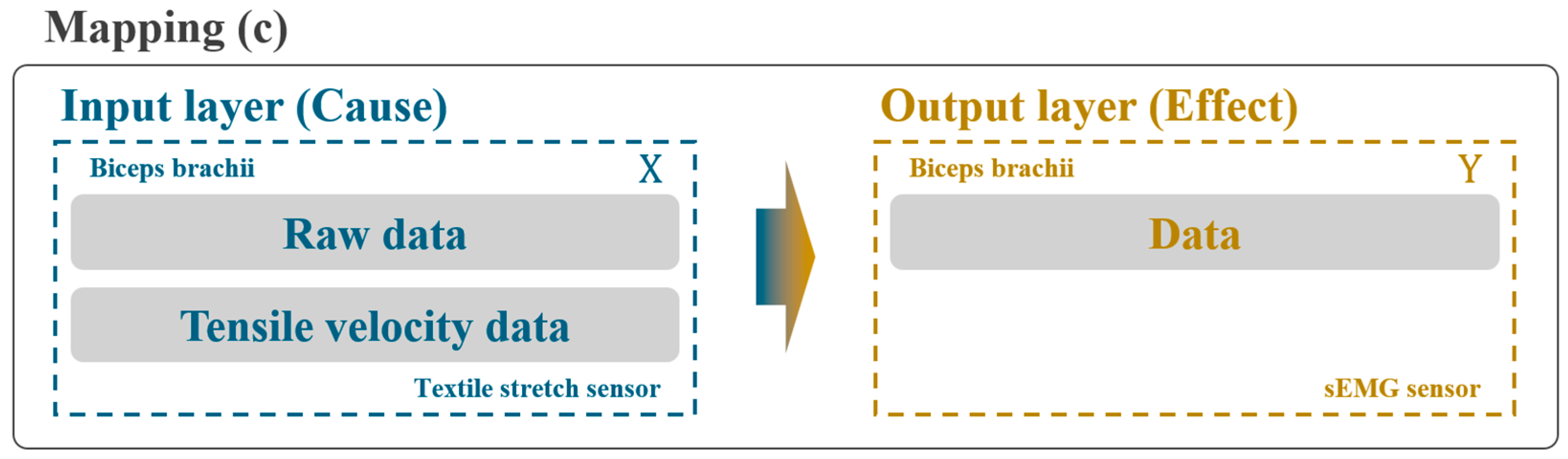
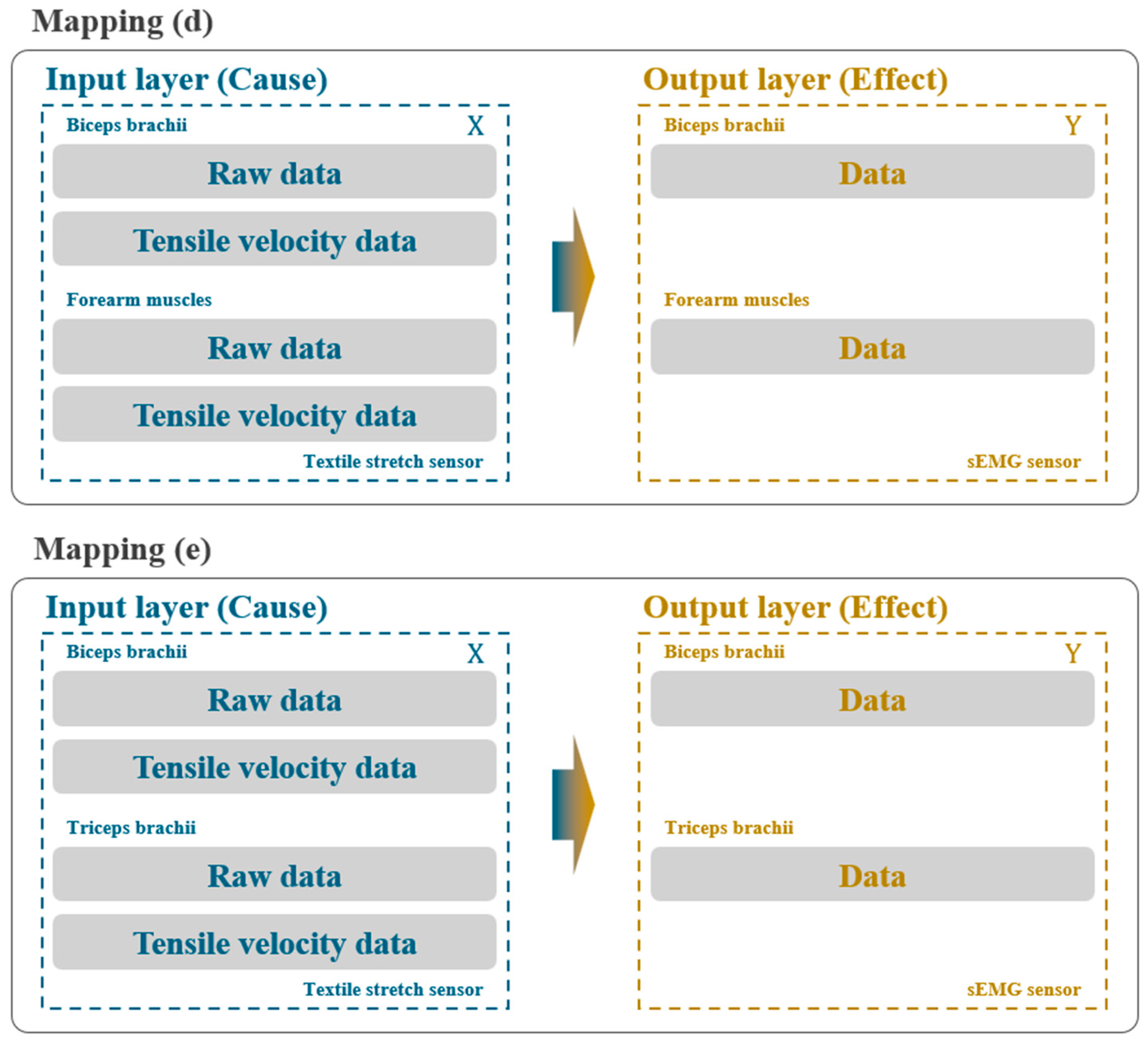
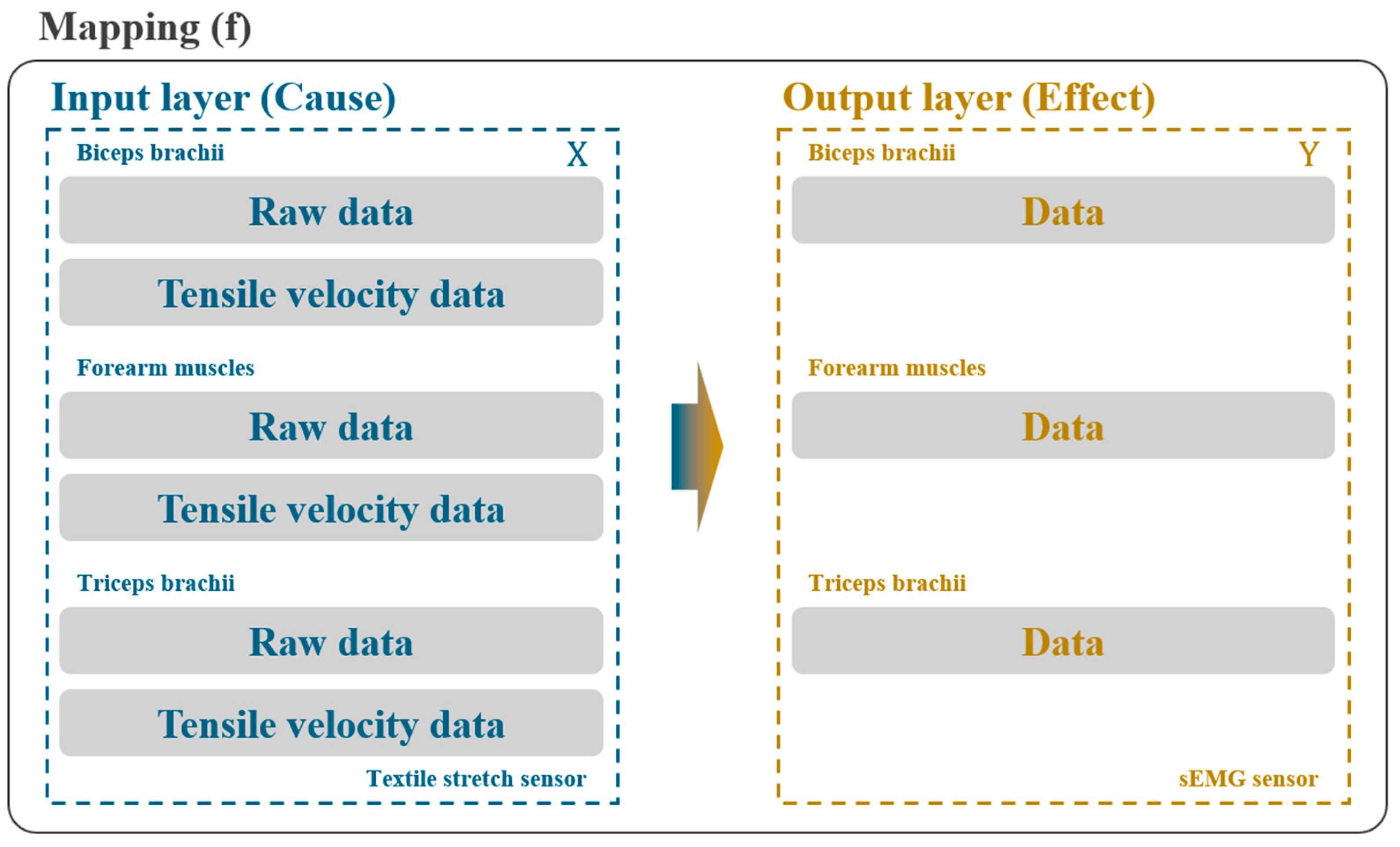
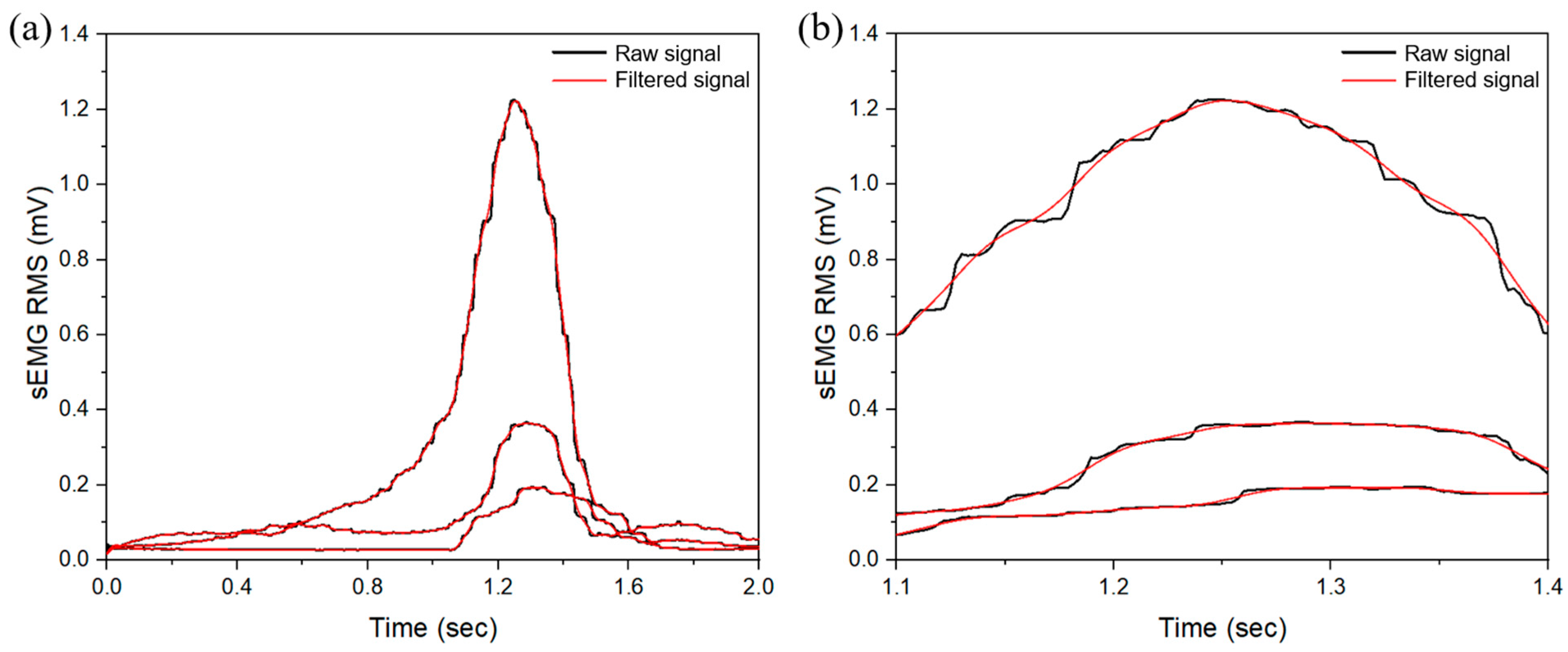
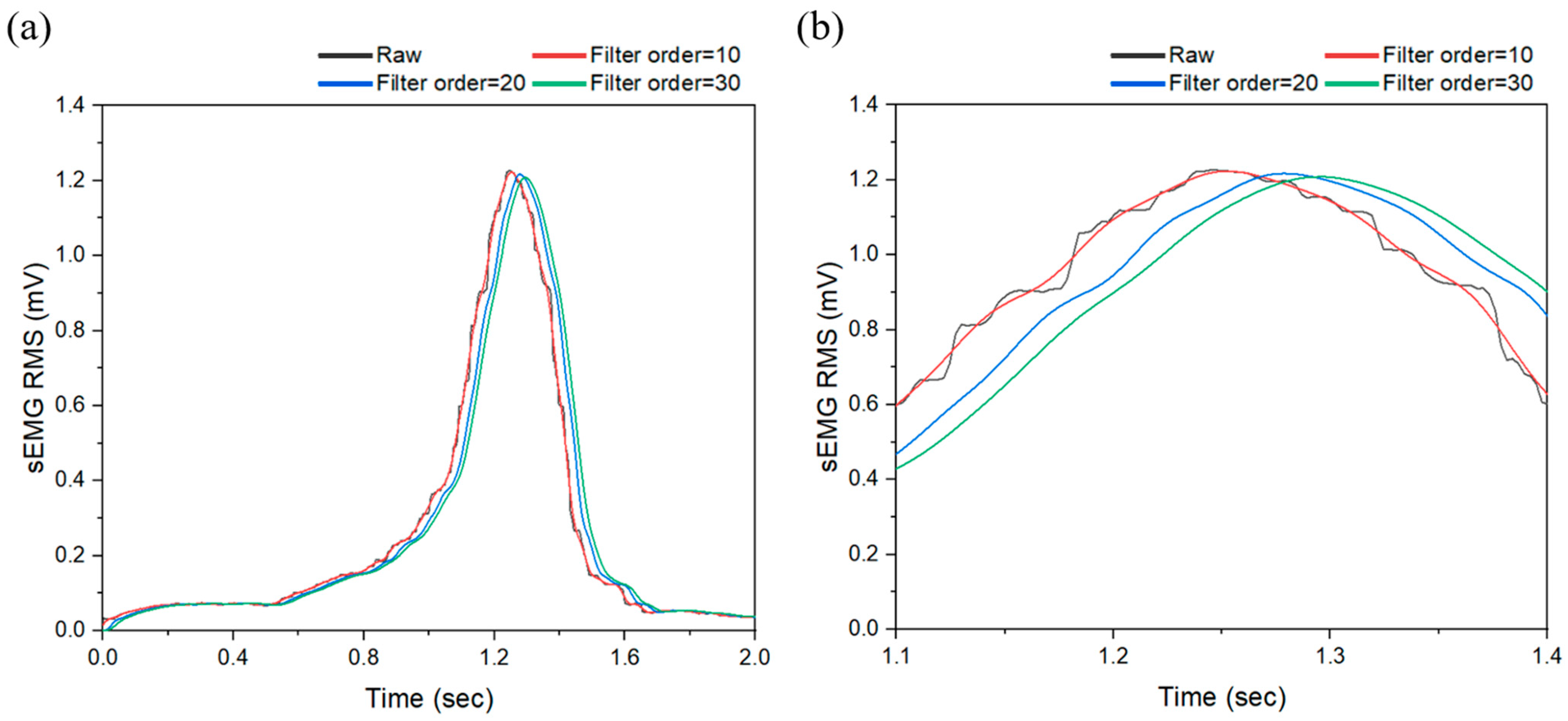
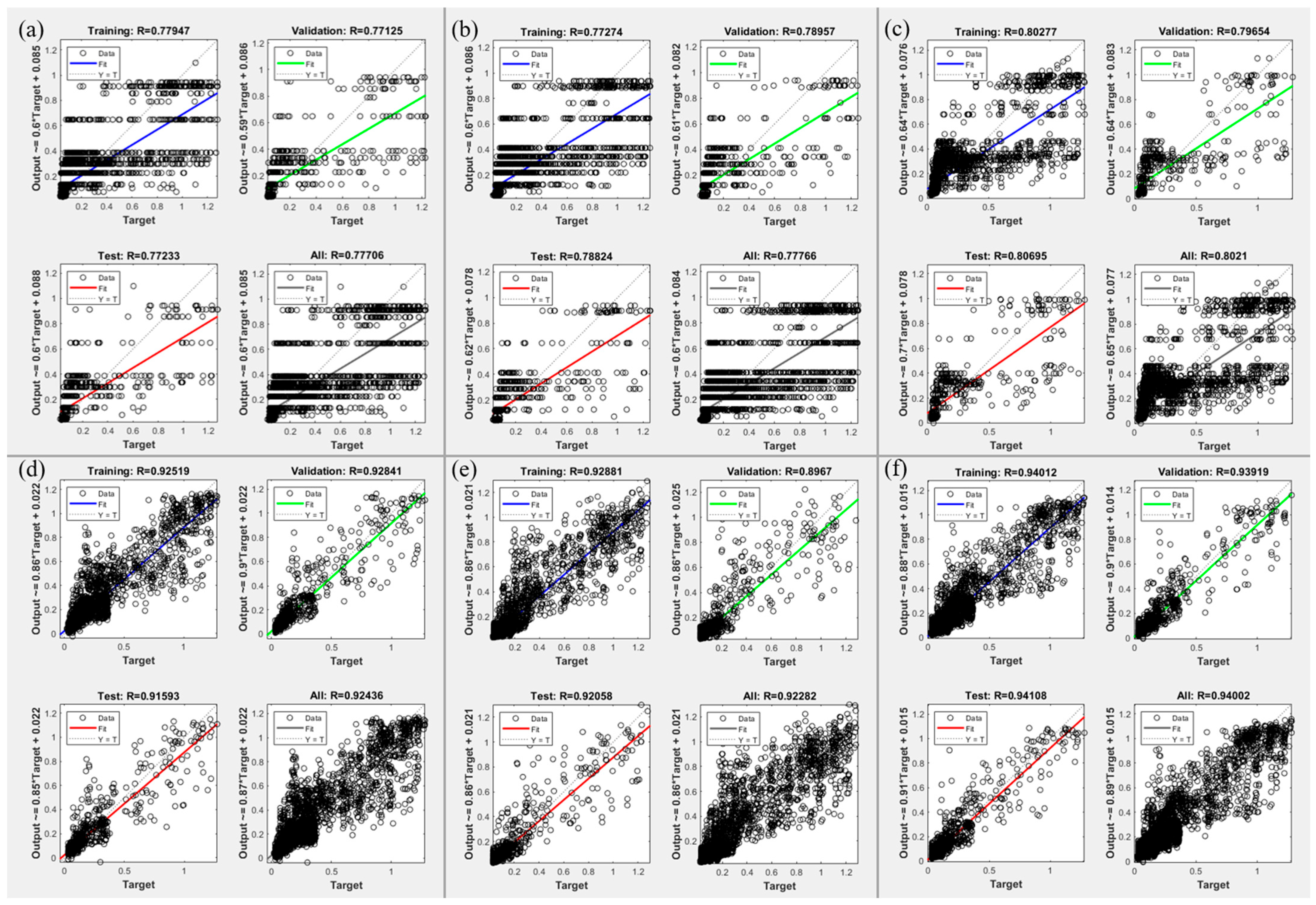
This study investigates the use of surface electromyography (sEMG) sensors in measuring muscle activity and mapping it onto wearable textile stretch sensors using a basic deep learning model, the Multi-Layer Perceptron (MLP). Wearable sensors are gaining attention for their ability to monitor physiological data while maintaining user comfort. A three-stage experimental approach was employed to evaluate the mapping process. In the first stage, the impact of applying a low-pass finite impulse response (FIR) filter was assessed by comparing filtered and unfiltered sEMG data. The results showed minimal impact on accuracy (R-squared ~ 0.77), as RMS preprocessing effectively reduced noise. In the second stage, adding tensile velocity data improved the model’s predictive performance (R-squared ~ 0.80), emphasizing the importance of integrating dynamic variables. In the third stage, data from multiple muscle groups, including the biceps brachii, forearm muscles, and triceps brachii, were incorporated, achieving the highest R-squared value of ~0.94. These findings establish wearable textile stretch sensors as reliable tools for monitoring muscle activity during exercise. By demonstrating improved accuracy with a basic MLP model, this study provides a foundation for advancing wearable health monitoring systems and exploring additional physiological parameters and activities.
Keywords: wearable sensors; textile stretch sensors; surface electromyography; machine learning; deep learning; multilayer perceptron; muscle activity monitoring; low-pass FIR filter; tensile velocity; data mapping; biceps barbell curl wearable sensors; textile stretch sensors; surface electromyography; machine learning; deep learning; multilayer perceptron; muscle activity monitoring; low-pass FIR filter; tensile velocity; data mapping; biceps barbell curl