Abstract
Although rubber waste devulcanization has been widely studied, its industrial-scale implementation remains limited due to challenges in process scalability. This study examines the feasibility of devulcanizing off-spec latex waste through a two-phase approach involving laboratory and pilot-scale trials. The latex waste was sourced from off-spec condom products composed of natural rubber latex. Laboratory-scale experiments were initially conducted to establish process parameters and generate baseline data, including gel content before and after the devulcanization process. Thermogravimetric analysis (TGA), gel permeation chromatography (GPC), and dynamic mechanical analysis (DMA) were employed. The laboratory findings have been used to design and operate the subsequent pilot-scale devulcanization process, using a retrofitted waste rubber machine. Samples from the pilot trials underwent the same analytical tests to assess consistency and process performance at scale. Results from the pilot scale experiments suggest that comparable levels of devulcanization were achieved, with gel contents of 52.5% and 55.2% achieved at the laboratory scale and pilot scale. GPC analysis confirmed a uniform distribution, with an increase in the number average molecular weight, indicating the scission of crosslinks in the sample. GPC analysis also revealed a decrease in dispersity index (Ð) value of 2.27 in lab scale conditions and 1.76 for pilot scale conditions, suggesting a more uniform molecular weight distribution and improved devulcanization efficiency, which enhances the possibility of recycling. The successful translation from lab-scale to the pilot setup highlights the process’s potential for industrial rubber recycling using retrofitted equipment.
1. Introduction
In the 12th Malaysia Plan Kick-off conference, a circular economy plan for municipal and industrial waste was introduced [1]. This circular economy plan involves the recovery of waste materials, their recycling, and transformation to upcycle them, before reintroducing the recovered waste to the market as new raw materials. A study conducted by McKinsey shows that a circular economy could yield a net economic gain of EUR 1.8 trillion annually by 2030 [2], suggesting that embracing sustainable practices can lead to significant financial benefits while mitigating environmental impact.
Natural rubber (NR) is a polymer consisting mainly of cis-1,4-polyisoprene and possesses desirable characteristics such as elasticity [3] and durability, making it suitable for various manufacturing applications. Malaysia is one of the key producers of NR in the world, along with Thailand, Indonesia, Cote d’Ivoire, Vietnam, China, India, Cambodia, Laos, and Myanmar. Table 1 shows the production of rubber by each country in the year 2024 [4].
Table 1.
Production of natural rubbers in 2024.
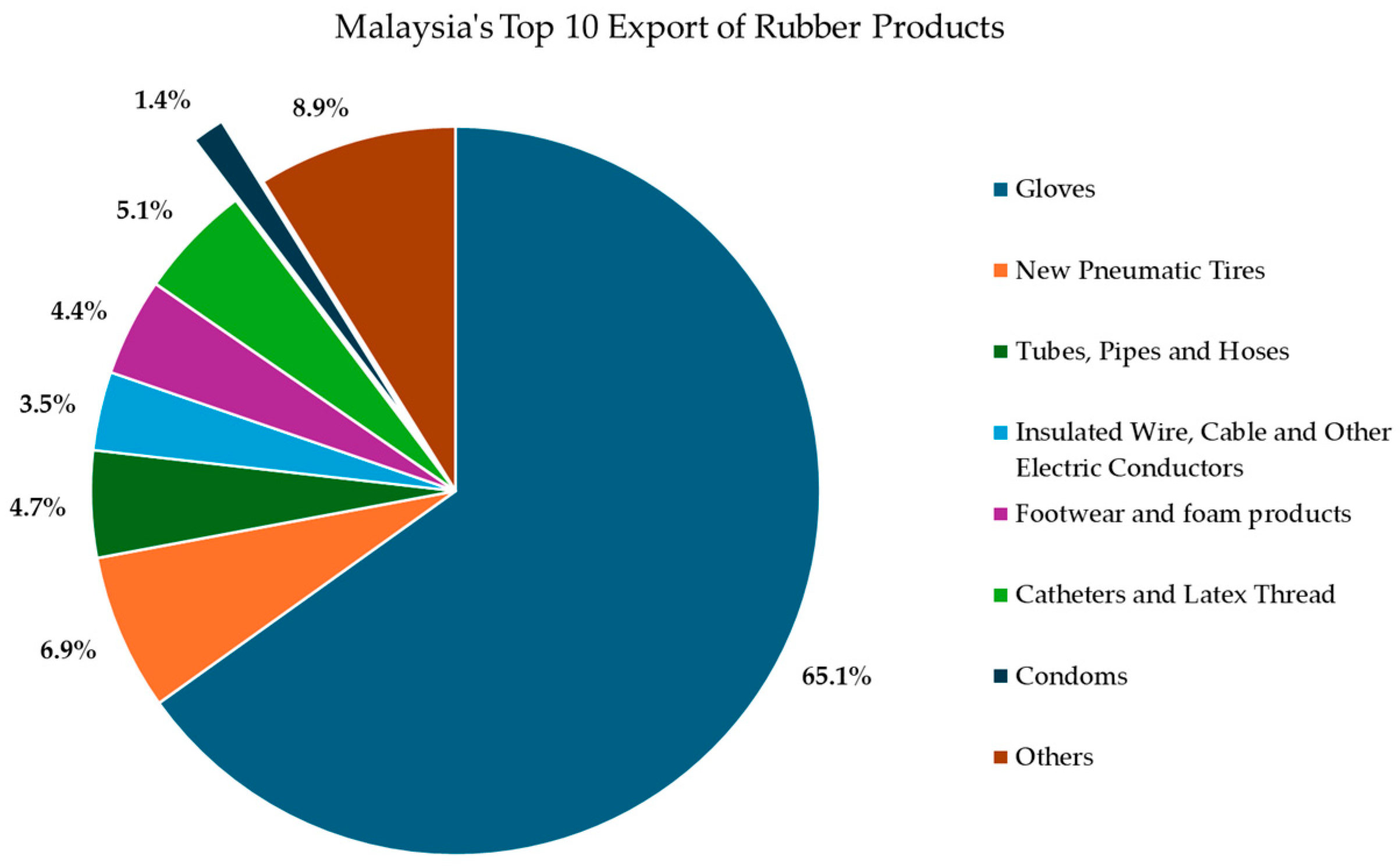
In 2024, Malaysia’s production of rubber is 409.4 thousand tons, a 6% increment compared to the year 2023, while the consumption of rubber throughout the same period also increased from 539.2 thousand tons to 571.5 thousand tons in the year of 2023 [4]. The top ten exports of Malaysia’s rubber products are gloves, new pneumatic tires, tubing and piping, wires and electrical conductors, footwear, latex thread, and condoms, as shown in Figure 1.
Figure 1.
Malaysia’s rubber export in 2024.
Among these rubber exports, Malaysia is recognized as one of the world’s leading producers of condoms. In 2024, Malaysia exported condoms worth MYR 341 million [4], strengthening its position as one of the world’s leading condom producers [3]. The primary component found in condoms is NR latex, which undergoes a vulcanization process to enhance the strength and resilience of the rubber. However, condom processing generates off-spec latex waste that is non-degradable, which poses an environmental concern.
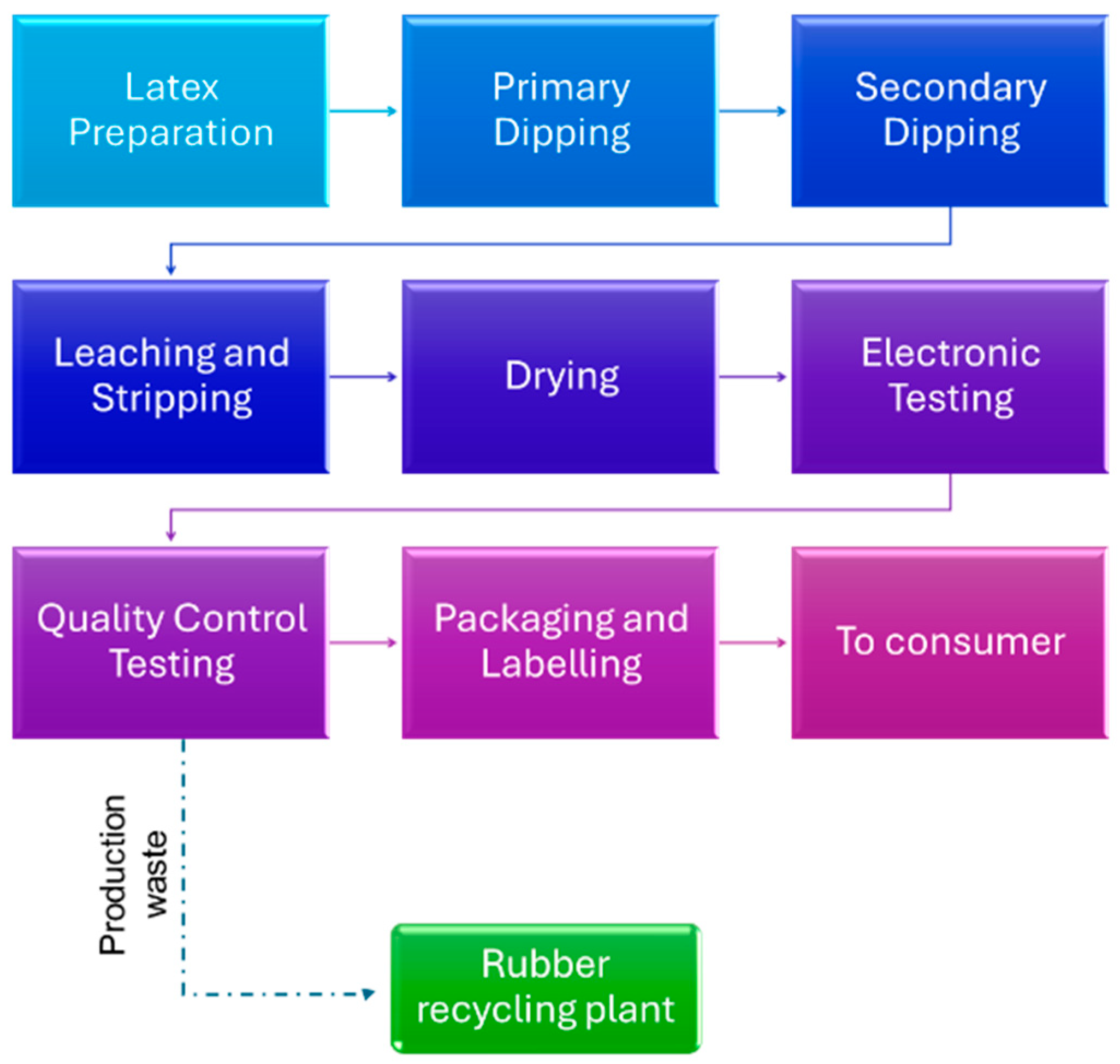
Condom processing involves dipping, leaching, and stripping, followed by drying, quality control testing, and packaging [5], as shown by the general process flow in Figure 2. To produce strong and durable condoms, the vulcanization process is required. Vulcanization is the process of adding sulfur or sulfur-containing compounds into a mixture, with or without heat. In the quality control testing steps, physical and mechanical testing activities such as the burst test, tensile strength test, and leakage test were conducted. The condoms that adhere to the strict standards will be sent for packaging and labeling before being shipped off to the consumers, while the products that fail the quality control tests will be sent to the rubber recycling plant.
Figure 2.
Condom processing flow.
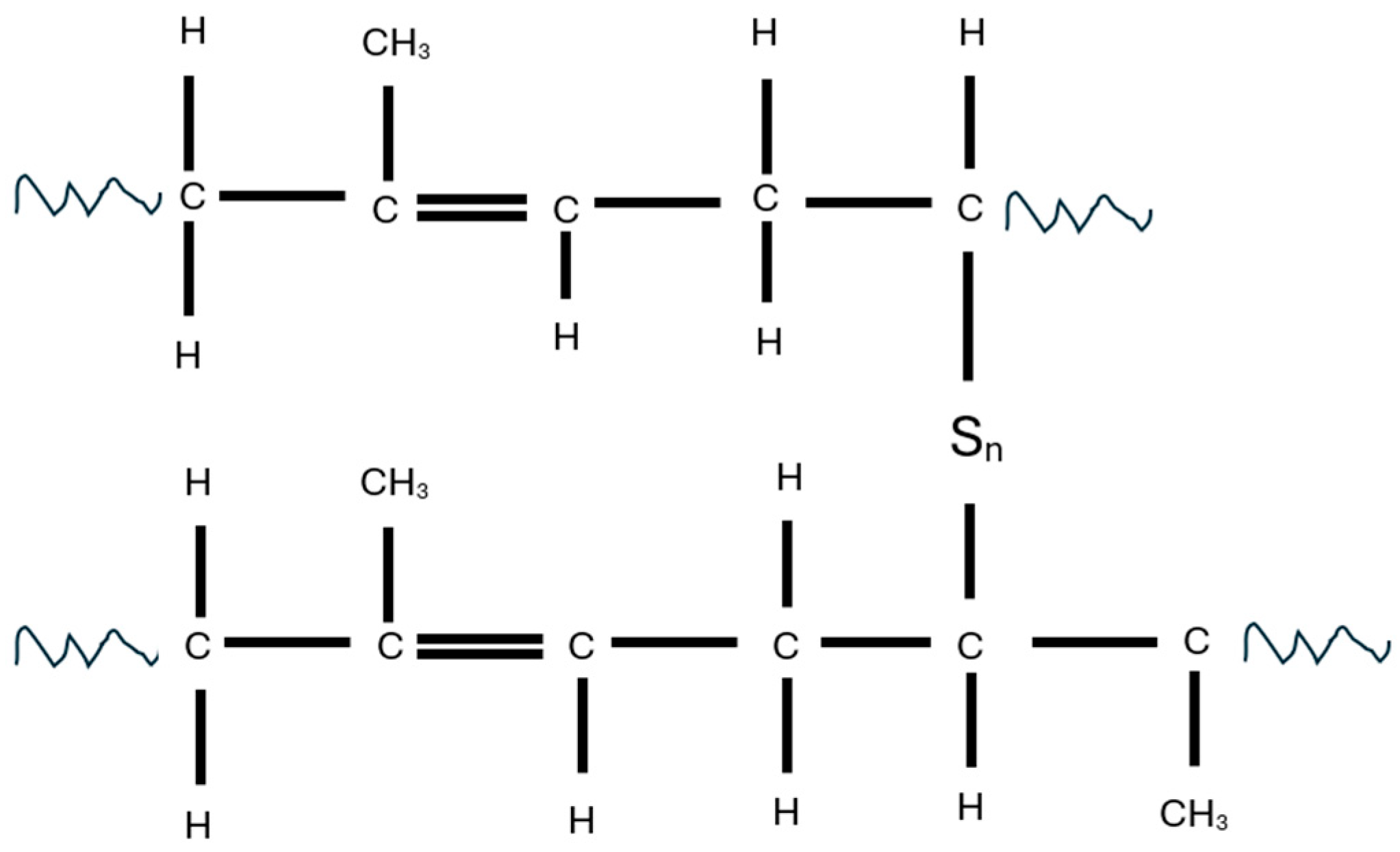
While the vulcanization process has played a crucial role in ensuring the production of strong and reliable condoms, it also presents environmental challenges when dealing with off-spec latex waste such as defective products, trimming scraps, and expired inventory [6]. Note that the off-spec latex waste is vulcanized rubber, a strong 3D rubber network containing long polyisoprene molecular chains (C5H8) and crosslinked by sulfur (S), as illustrated in Figure 3.
Figure 3.
Chemical structure of vulcanized rubber.
Due to its vulcanized properties, the off-spec latex waste is resistant to natural degradation, making its disposal a significant environmental concern. As one of the world’s leading exporters, Malaysia generates high production volumes, which in turn result in substantial amounts of production waste, highlighting the critical need for sustainable waste disposal strategies.
Other than concerns about disposal methods, there is also an increasing need to reclaim raw materials from waste, driven by the shift towards a circular economy. In the past years, efforts have been made to reclaim raw material from rubber waste using methods such as pyrolysis, devulcanization, and mechanical recycling. The difference between these techniques is presented in Table 2.
Table 2.
Rubber reclaiming processes.
In Malaysia, there are several well-known tire recycling plants, such as Evergreen Corporate [15], that employ pyrolysis to generate synthetic diesel, carbon black, syngas, and recover steel wires from the used tires. A significant research gap can be seen in the recycling of off-spec latex waste from condom production. Unlike tire recycling, which has established recovery processes, the recycling of off-spec condom production waste remains largely unexplored due to its small volume and vulcanized structure.
To address this challenge, the devulcanization process has been identified as a potential recycling pathway for the treatment of off-spec latex waste originating from the condom manufacturing processes. Devulcanization, the process of breaking down vulcanized rubber into its constituent components [6], offers a promising solution for the recycling of off-spec latex waste from condom production. These recycled materials could then be utilized in the production of items like rubber components for automotive parts, footwear, and other consumer goods. In rubber product formulation, incorporating devulcanized rubber allows manufacturers to reduce the proportion of virgin NR required, while maintaining desirable product quality. A review by Xiao [16] reported that blends of devulcanized rubber with NR exhibit higher mechanical properties than blends of NR with non-devulcanized rubber. This improvement was attributed to the success of the devulcanization process, where crosslinks were broken while the main chains were preserved, producing compatible surface chemistry, which leads to the optimized blending of NR and devulcanized rubber, and leads to the improved mechanical properties of the final products.
Devulcanization can be achieved through various methods, including mechanical, thermal, chemical, ultrasonication, and microwave-assisted processes, and the combination of these methods. The devulcanization processes are summarized in Table 3.
Table 3.
Devulcanization process.
Despite notable progress in devulcanization research, the majority of these practices remain confined to laboratory-scale experiments, with only limited adoption at the industrial level. Currently, the only known industrial-scale devulcanization plants are SSH Recycling in Scotland [27] and Tyromer [28] in Canada, which focus on tire recycling using the devulcanization process. While the use of devulcanization for treating the off-spec latex waste from condom production in laboratory-scale studies [29,30] has demonstrated its capability to break the crosslinked structure, its potential for scale-up and practical implementation requires further investigation through a technical feasibility study. To the best of our knowledge, there are no known large-scale facilities dedicated to processing off-spec latex waste. The lack of industrial implementation for off-spec latex waste highlights a significant gap in the field.
The objective of this study is to establish a thermo-mechanical devulcanization process for off-spec latex waste sourced from condom production waste at a laboratory scale and to modify the existing heaters used in waste rubber plants for pilot-scale devulcanization purposes. With the modification of a waste rubber machine, this study aims to identify optimal operating parameters while preserving the quality of devulcanized rubber for potential reuse in various applications.
2. Materials and Methods
2.1. Materials
Latex waste was sourced from off-spec condoms provided by Karex Industries Sdn. Bhd. (Pontian, Johor, Malaysia).
2.2. Methods
The thermo-mechanical devulcanization process of off-spec latex waste was carried out at the laboratory scale and pilot plant scale. The mechanical shear was applied using an overhead stirrer at the laboratory scale and an adjustable double-layer speed stirrer at the pilot plant scale. The thermal effect was regulated through controlled temperature adjustment via an oil bath and jacketed heater at the lab scale and pilot plant scale, respectively. The devulcanization process was free from any chemical agents or additives and took place in a closed vessel.
To mitigate odor emission and ensure laboratory safety, the devulcanization process was conducted in an open environment with adequate ventilation throughout the heating stage.
2.2.1. Lab-Scale Testing
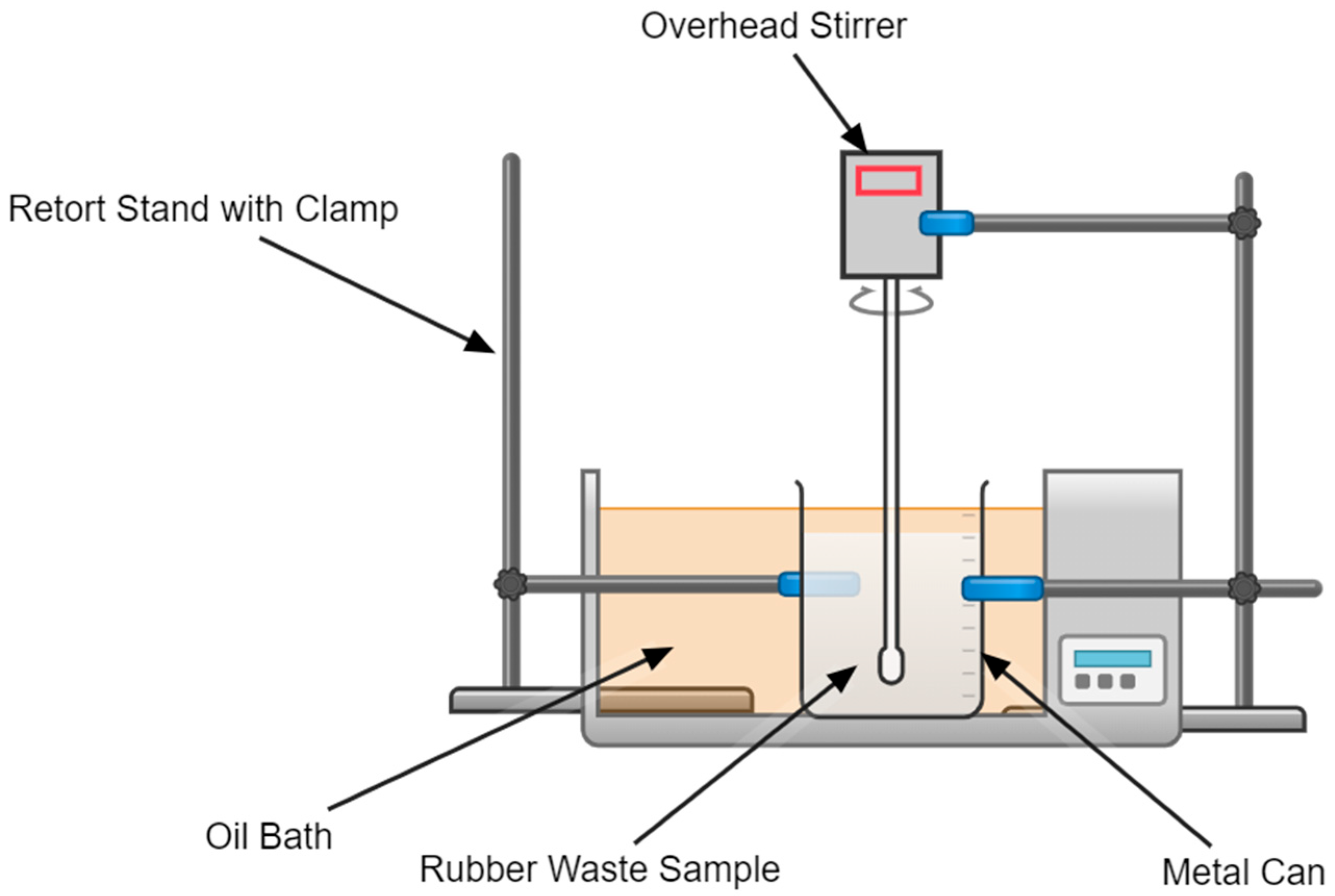
To establish the devulcanization process at a lab scale, an experimental setup comprising a metal can, an oil bath with a temperature probe, an overhead stirrer, and two sets of retort stands with clamps, as depicted in Figure 4, was prepared to simulate the waste rubber tank used at the recycling plant.
Figure 4.
Laboratory-scale experimental setup for rubber devulcanization process.
Devulcanization of Rubber in a Lab-Scale Setup
The samples were prepared by exposing the off-spec latex waste to various temperatures and times. The shredded samples were loaded into a metal can, which was immersed in an oil bath. The temperature of the oil bath can be regulated to achieve a temperature set point. To analyze the influence of temperature and time on the devulcanization of rubber, temperature and time were varied according to Table 4. The overhead stirrer was set at a constant speed, 120 RPM. Residence times were adjusted according to temperature: shorter at high temperatures to avoid melting and excessive degradation, and longer at low temperatures to ensure adequate thermal activation for devulcanization.
Table 4.
Operating condition for lab-scale devulcanization setup.
Scaled-Up Configuration of the Waste Rubber Machine for Rubber Devulcanization
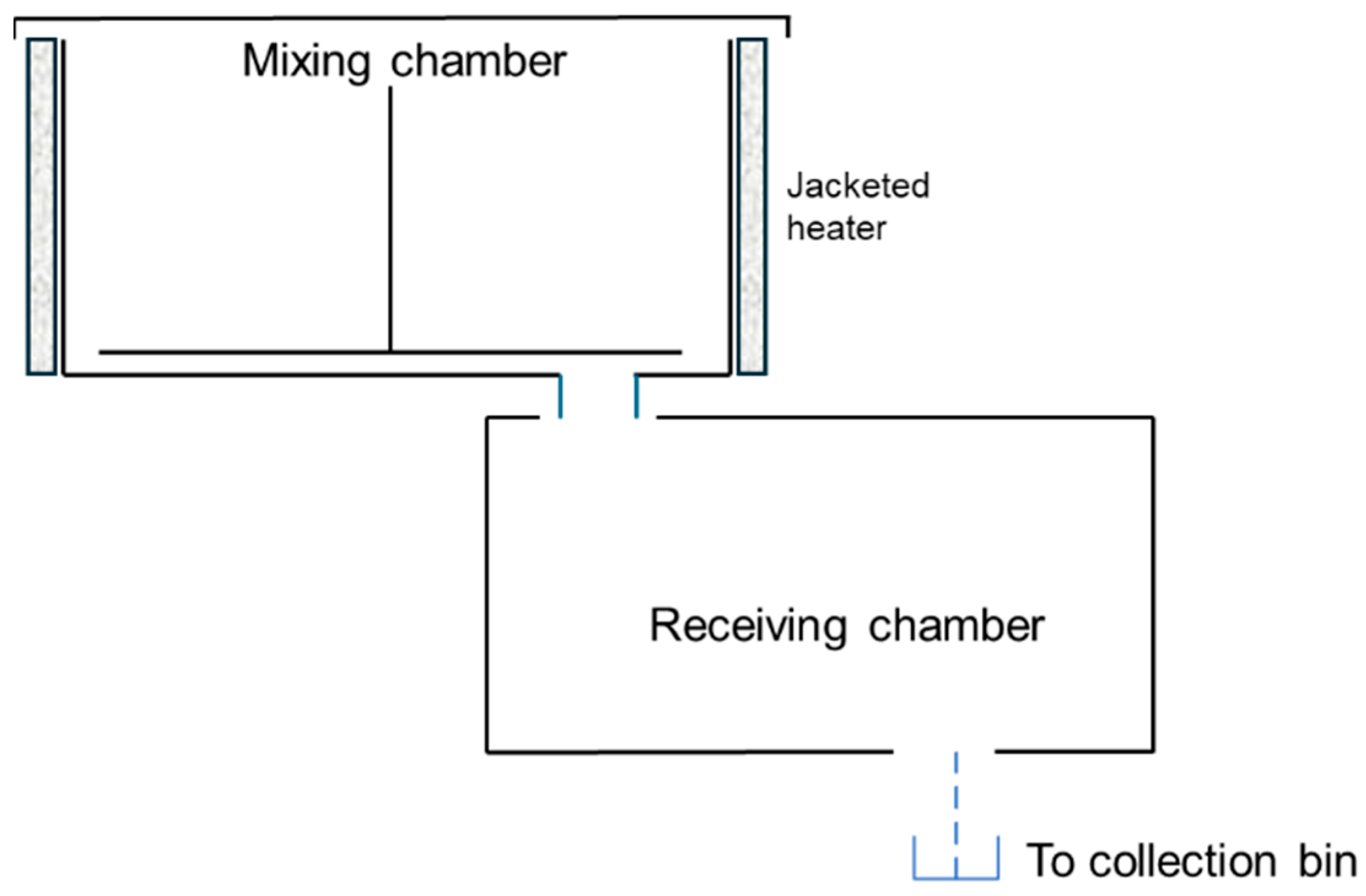
The rubber devulcanization process was carried out in an existing waste rubber machine available in the rubber recycling plant. The waste rubber machine comprised two mixing chambers, with the first mixing chamber equipped with an electrical jacketed heater, as illustrated in Figure 5. The bottom stirrer in the first mixing chamber was designed to transfer the rubber from the first chamber to the second chamber.
Figure 5.
Existing rubber waste machine.
2.2.2. Devulcanization of Rubber in Modified-Waste Rubber Machine
The devulcanization process was performed in the modified waste rubber heater equipped with temperature sensors and an inverter motor. A constant weight of off-spec latex waste was used in each run. To evaluate the performance of the modified heater in the devulcanization process, the operating temperature and speed of the stirrer were varied. The off-spec latex waste was kept in ambient conditions before treatment. In each run, after the samples have reached the designated mixing time of 15 min, the waste rubber will be transferred into the second chamber for cooling before being discharged into a hopper bin. The operating conditions of the devulcanization process in the modified rubber machine are summarized in Table 5.
Table 5.
Operating conditions for devulcanization in modified rubber machine.
Characterization
- Gel content analysis
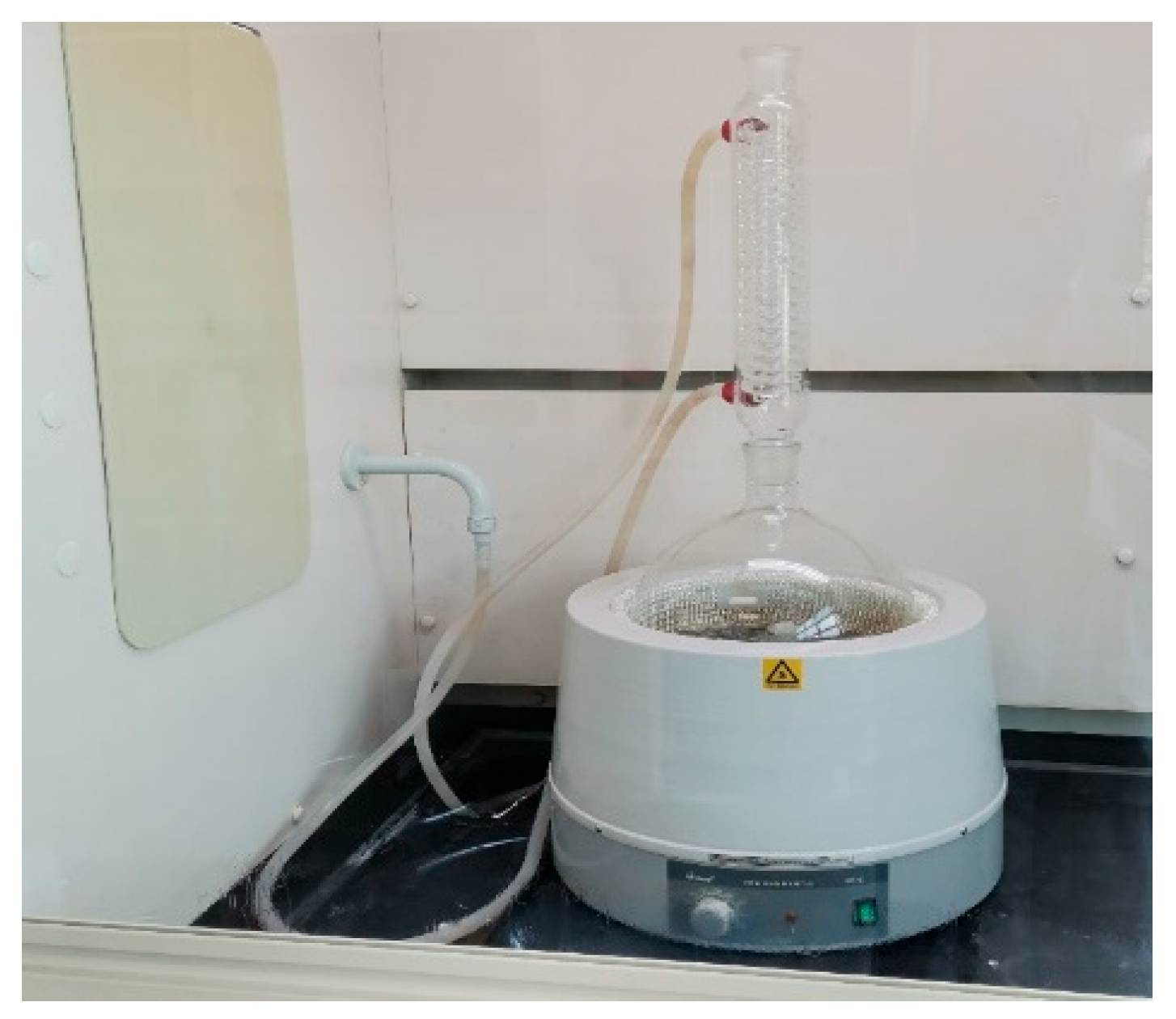
Figure 6 shows the experimental setup for gel content analysis.
Figure 6.
Laboratory setup for gel content analysis.
Rubber samples were characterized by boiling toluene extraction as per the setup shown in Figure 5, adapted from ASTM D3616 [31], and the gel content value for each sample was determined according to Equation (1). Gel content value refers to the insoluble part of the rubber samples, which was extracted in a boiling toluene extraction process. A measure of 300 g of rubber was placed in a pouch made of 100-mesh-sized stainless-steel wire mesh and completely immersed in boiling toluene for 24 h. After the extraction, the samples were thoroughly washed using fresh toluene and dried for 48 h at 70 °C to eliminate the adsorbed solvent. Each sample underwent weighing twice: before extraction and after drying.
The gel and sol content values are determined using Equations (1) and (2), as below:
- b.
- Thermogravimetric analysis (TGA)
TGA tests were conducted using a thermogravimetric analyzer from Metler Toledo, Columbus, OH, USA. The analysis was performed at a 10 °C/minute heating rate under a N2 atmosphere (50 mL/min). Approximately 8 to 10 mg of the samples was used in each test. The samples were heated from 25 to 600 °C. The temperature at the maximum decomposition rate (Tmax) was determined from the TGA curve obtained.
- c.
- Dynamic mechanical analysis (DMA)
DMA was carried out to determine the storage modulus (E′), loss tangent (tan δ), and associated glass transition temperature (Tg) as a function of temperature at a heating rate of 10 °C/min using a PerkinElmer Pyrus Diamond DMA from PerkinElmer Inc., Shelton, CT, USA. Test conditions included a specimen gauge length of 10 mm operated at a temperature range between −170 °C and 100 °C at 1 Hz frequency.
- d.
- Gel permeation chromatography (GPC)
GPC was conducted using a Waters 1500 Series from Waters Corporation, Milford, MA, USA with a refractive index detector operating at 5 µm columns: Phenomenex (300 × 7.8 mm), Phenogel 5 µm 105 A (10K–1M, MW), Phenogel 5 µm 500 A (1K–15K, MW), and Phenogel 5 µm 50 A (100–3K, MW). The column temperature was set to 40 °C. Tetrahydrofuran (THF) was used as the mobile phase, with a flow rate of 1 mL/minute. The molecular weight distributions were calibrated using polystyrene (THF Dissolve) (Waters) standard solution.
- e.
- Dispersity (Ð)
From the average molecular weight (Mw) and number average molecular weight (Mn) values obtained from the GPC analysis, the polydispersity index of the samples can be calculated using Equation (3).
3. Results and Discussion
3.1. Laboratory-Scale Devulcanization
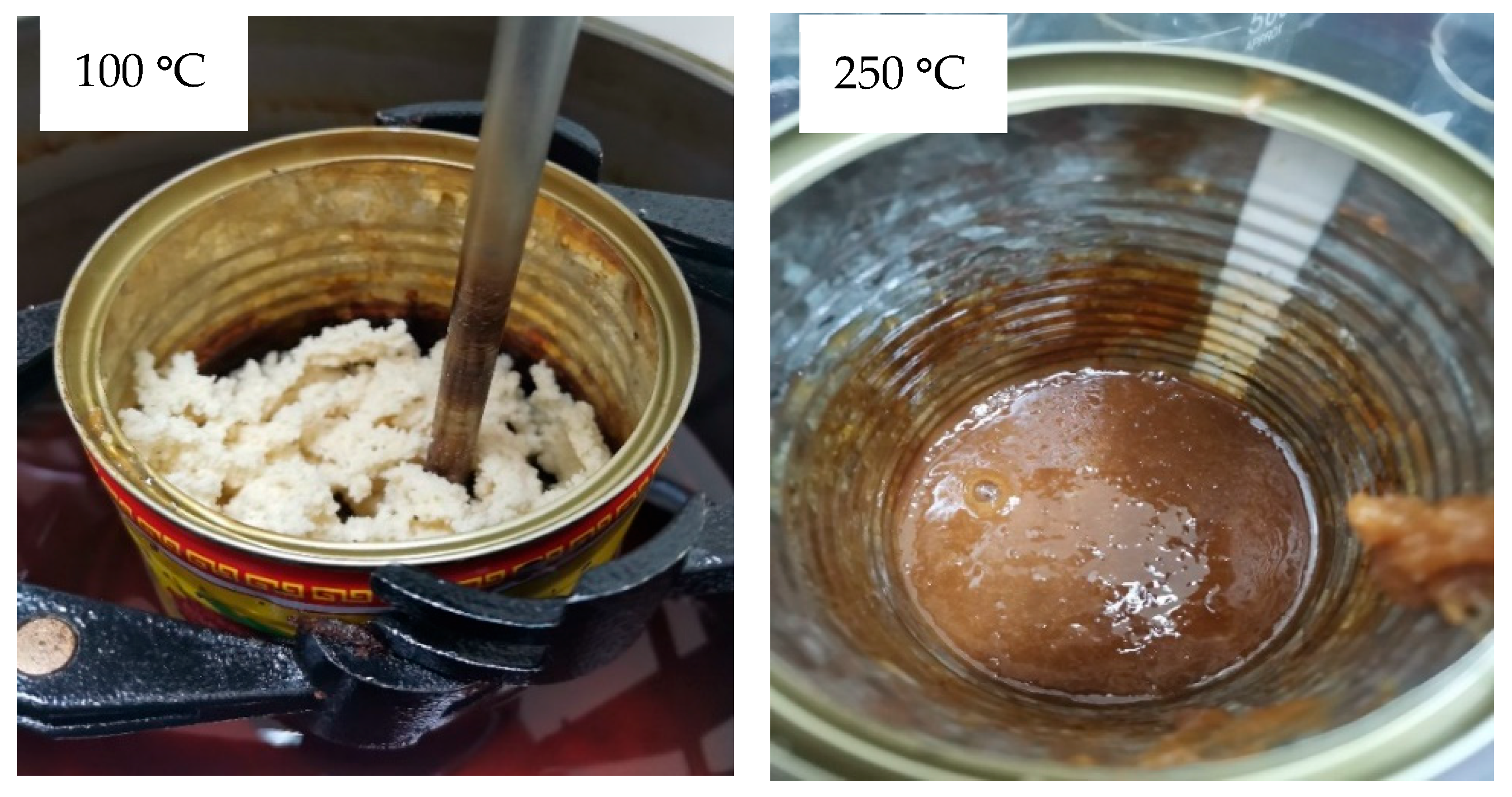
To study the effect of operating temperature on the devulcanization process, the off-spec latex waste sample was exposed to different temperatures and times according to Table 4. At low temperatures, the physical structure of the latex waste was maintained, whilst at high temperatures, the off-spec waste was completely melted. Figure 7 shows that the thermal stability of the off-spec latex waste is temperature-dependent, with lower temperatures preserving its structural integrity, while at high temperatures, the sample undergoes a phase transition.
Figure 7.
Off-spec latex sample after exposure to low temperature (100 °C) and high temperature (250 °C).
3.1.1. Effect of Temperature on Devulcanization Process
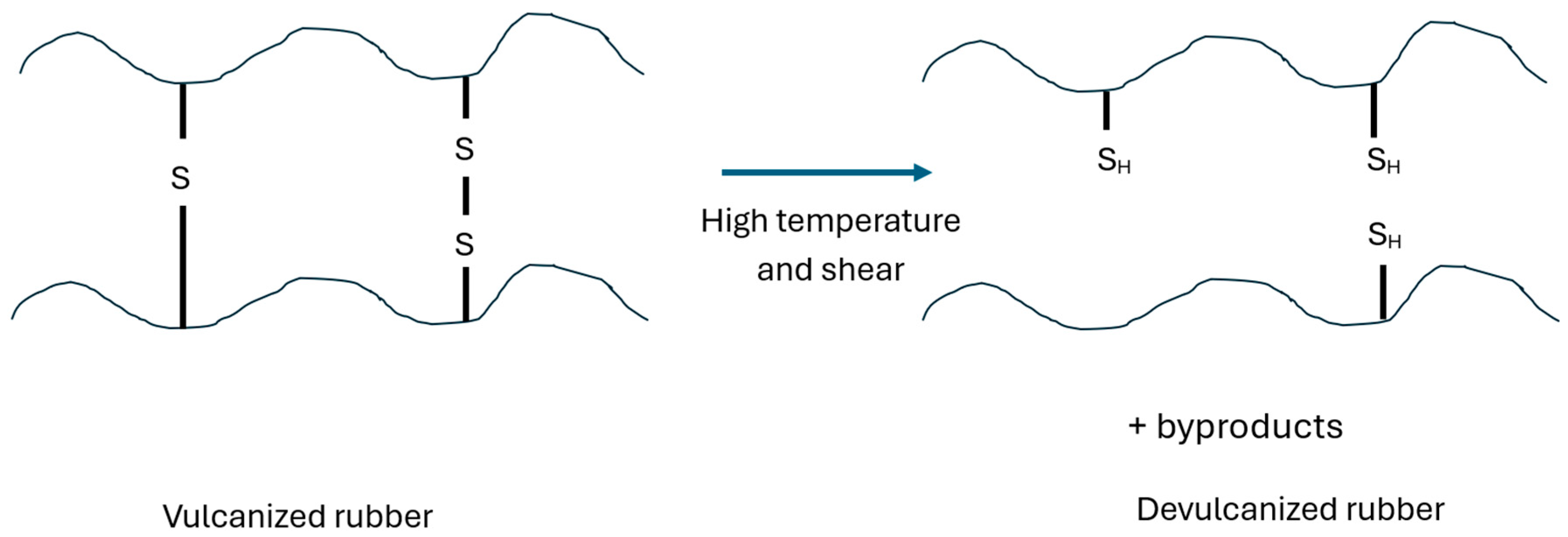
The devulcanization process aims to modify the chemical structure of vulcanized rubber, and this can be deduced by evaluating the gel content value. A devulcanization mechanism proposed in this work is shown in Figure 8. In general, a higher gel content value indicates a higher degree of a three-dimensional crosslinked network.
Figure 8.
Proposed devulcanization mechanism.
Therefore, a reduction in gel content value indicates the breakdown of crosslinks and main-chain polymers during the process. To determine the fraction of crosslinked (insoluble or “gel”) rubber and the soluble part of the rubber sample, gel content analysis is commonly used. The insoluble fraction or the gel fraction indicates the insoluble portion of the sample when the sample is exposed to a suitable solvent, such as toluene. To study the effect of operating temperature on the physical properties of the rubber waste, gel content analysis was carried out, and gel content percentage and soluble content percentage were calculated. The results were summarized in Table 6.
Table 6.
Effect of temperature on gel content and Tmax for devulcanization of off-spec latex waste at lab scale.
As shown in Table 6, the control sample at 25 °C has a gel content value of 84.09%. After the devulcanization process, it is shown that exposing the off-spec latex waste to temperatures from 100 °C to 250 °C has reduced the gel content value to the range of 79.36 to 0.37%. The soluble content of the samples increases from 41.57% to 99.63% when the temperature increases from 150 °C to 200 °C. In general, the higher the final temperature of the sample, the smaller its gel content. As operating temperature increases, the gel content is reduced, thus proving that the rise in temperature is responsible for the occurrence of the devulcanization. The investigation of the thermal degradation of the prepared materials is important for assessing their potential applications when elevated temperatures are involved. However, as shown in the results, while operating at high temperatures, the gel content reduces. This is due to the fact that the thermal energy can scission the sulfur–sulfur bond, and carbon–sulfur bonds can also increase the possibility of undesirable reactions such as the scission of the polymer backbone, which can be reflected in an extremely low gel content value.
To further study the effect of temperature on the devulcanization process, the thermal stability of the samples was studied using thermogravimetry (TG) and derivative thermogravimetric analysis (DTG). From Table 6, it can be seen that the most stable sample at 30 min of devulcanization was the sample that had been exposed to operating temperatures of 150 °C and 200 °C, recording a Tmax of 377.33 °C and 377.17 °C, respectively. As the temperature increased to 250 °C, the Tmax shifted to 376.33 °C. The shift in the temperature at the maximum rate of decomposition indicates a reduction in thermal stability, likely due to chain scission and partial degradation of the rubber sample.
3.1.2. Effect of Time on Devulcanization Process
To study the effect of operating time on the rubber devulcanization process, the rubber wastes were exposed at various times, from 10 min to 30 min. From the previous results, due to the stability of rubber at 150 and 200 °C, these two operating temperatures were selected while the operating times varied, at 10, 20, and 30 min. The results of the percentage of devulcanization and Tmax are shown in Table 7.
Table 7.
Effect of time on gel content and Tmax for devulcanization of off-spec latex waste at lab scale.
From the results, it was shown that treatment time plays a significant role during the chemical devulcanization of rubber waste compounds. The results show that longer exposure times led to lower gel contents. The devulcanization process can thermally destabilize the rubber, thus promoting its degradation at a lower temperature. However, consideration of the optimum temperature does not solely depend on the degradation temperature data; the gel and sol contents must be considered. From data collected in this study, the optimum temperature and time are chosen as 150 °C at 20 min and 200 °C at 10 min.
The laboratory-scale test demonstrated that temperature and time control are essential not only for optimizing the devulcanization process but also for ensuring efficient material handling.
3.2. Pilot-Scale Devulcanization: Modification of Waste Rubber Tank
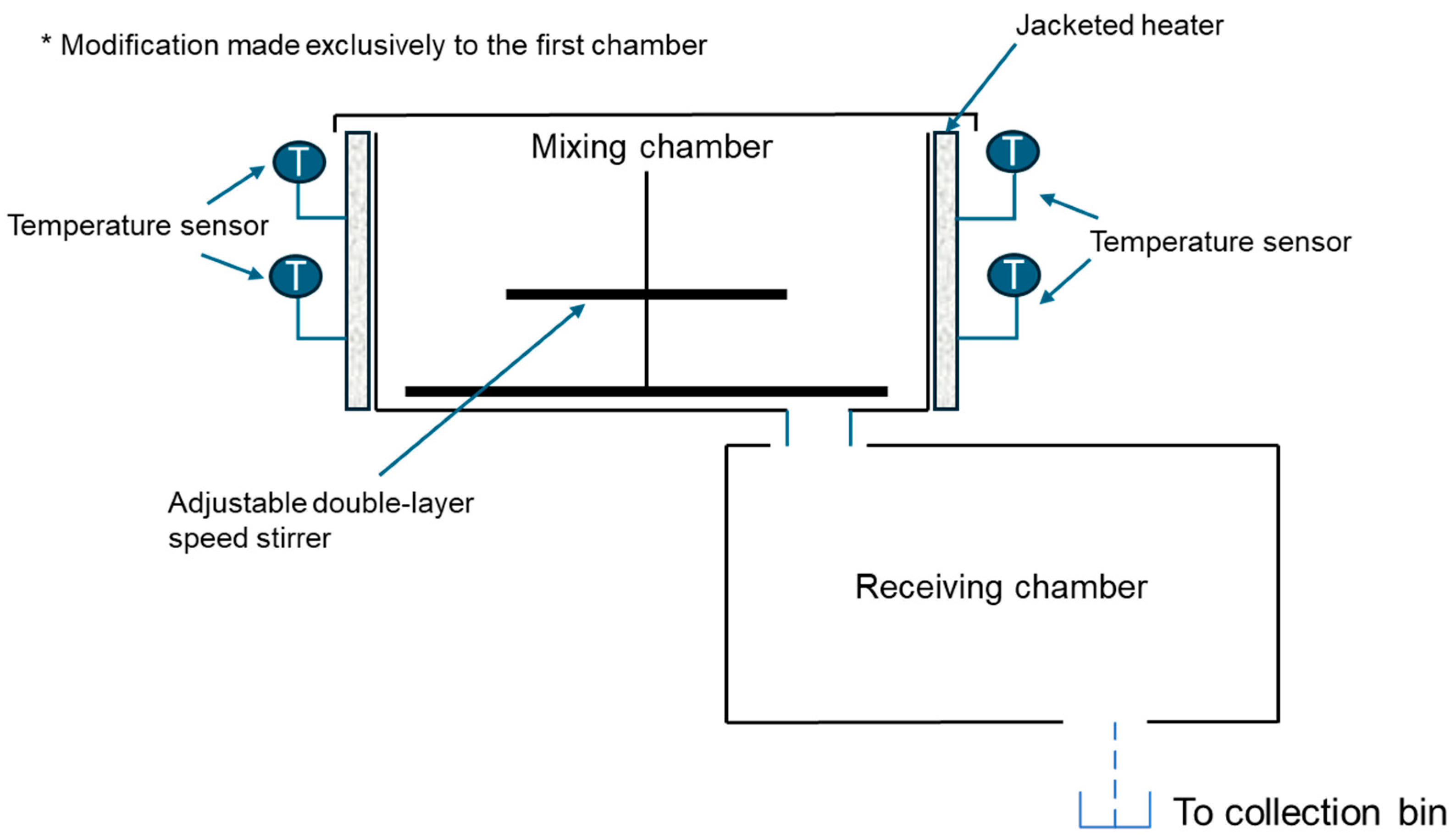
Initially, all off-spec latex waste was processed in a rubber waste machine without any control over critical parameters like operating temperature or stirring speed. The lack of process control has resulted in the inconsistent quality of recycled rubber and represented a missed opportunity to produce high-quality rubber with enhanced properties. To improve mixing efficiency and ensure uniform heat distribution, a two-layer impeller with adjustable speed was installed in the waste rubber machine. The purpose was twofold: to enhance the mixing of rubber waste within the tank and to prevent dead volume accumulation beneath the top stirrer [32]. To regulate the temperature in the rubber waste machine, four temperature sensors were placed at the top right, top left, bottom right, and bottom left of the machine. The design of the new stirrer and the position of the temperature sensors are presented in Figure 9 and Figure 10.
Figure 9.
New stirrer design and thermocouple location for waste rubber machine.
Figure 10.
New stirrer for the waste rubber machine.
3.2.1. Physical Appearance
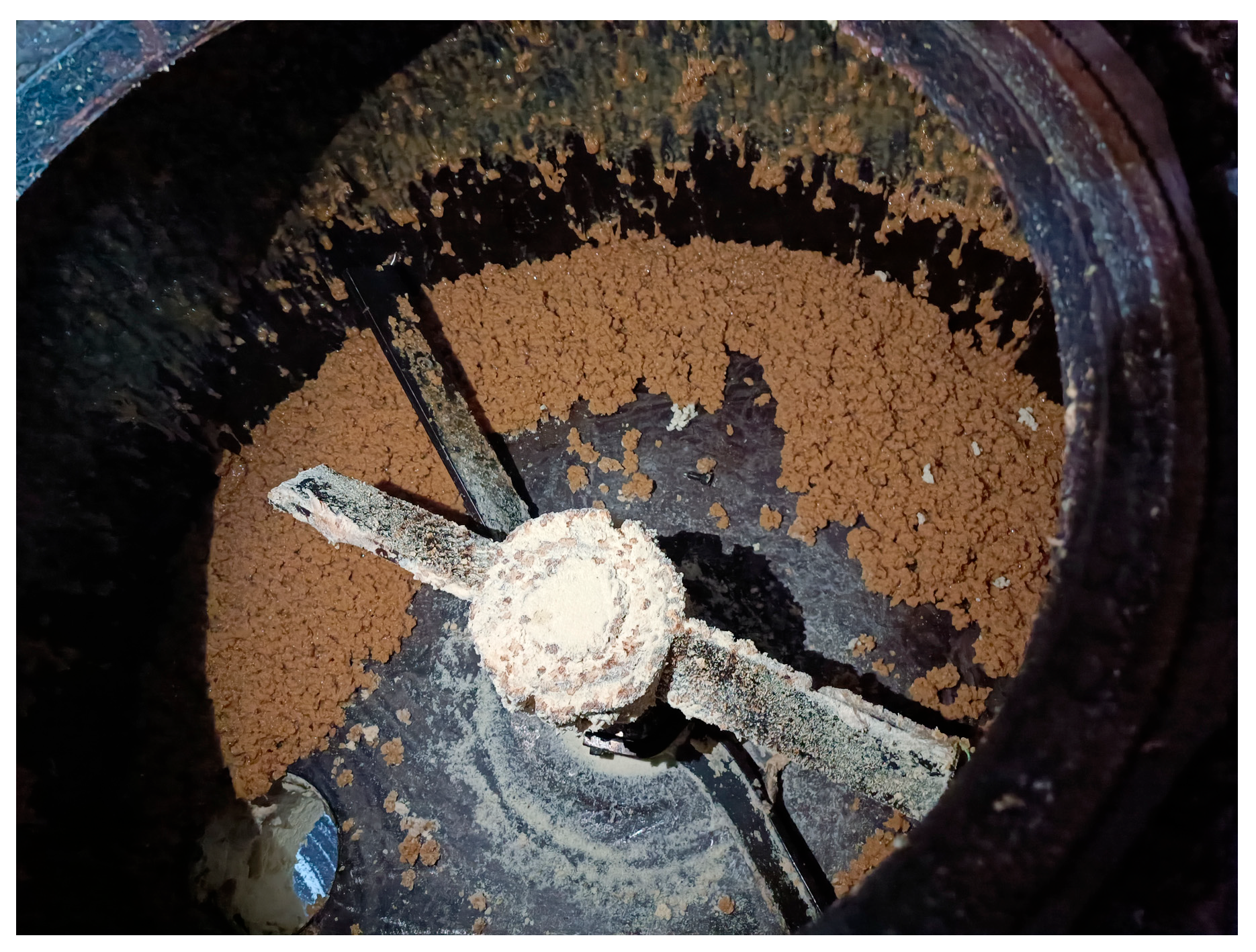
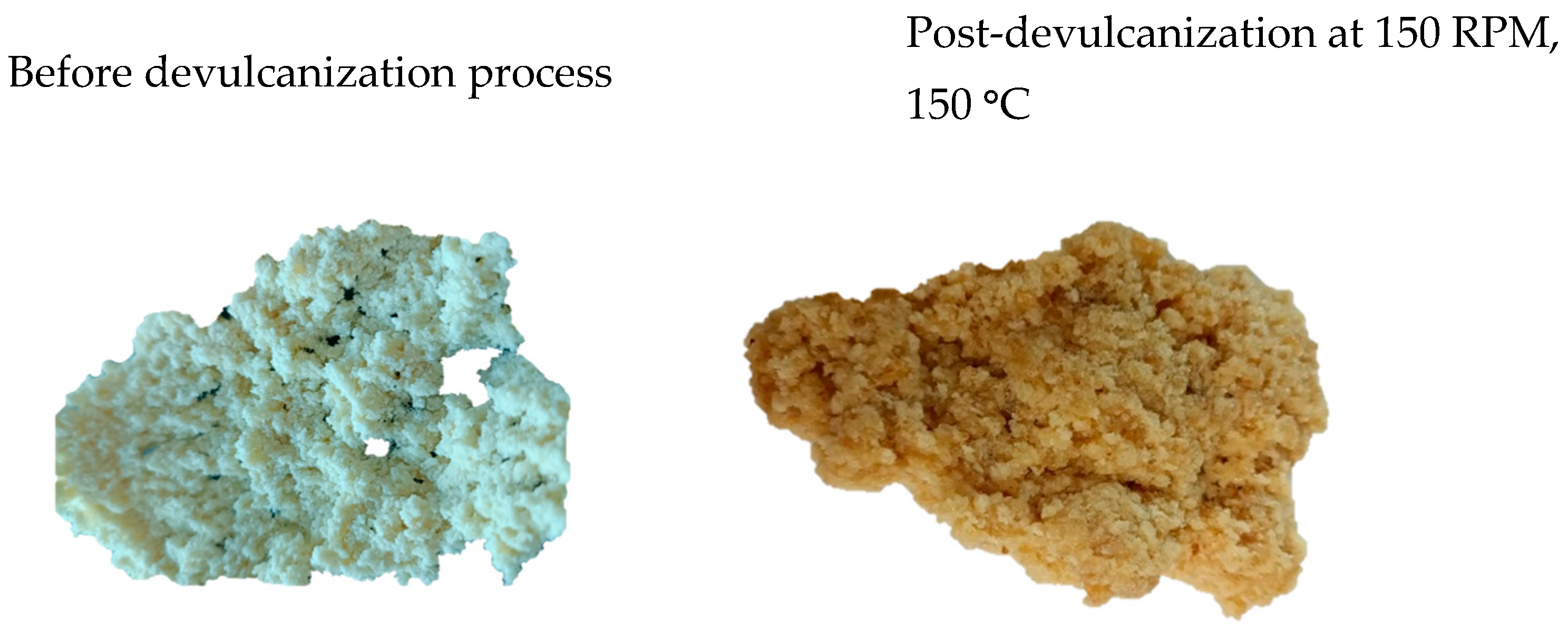
After the modification of the waste rubber machine, the devulcanization process was carried out. Figure 11 presents the resulting devulcanized rubber after a thermo-mechanical devulcanization process.
Figure 11.
Photos of the rubber samples before devulcanization (left) and after devulcanization process (right) in the modified tank.
During the devulcanization process, exposure to heat caused changes to the texture and appearance of the off-spec latex waste. Compared to a dry, non-sticky waste rubber sample, the devulcanized sample has a sticky, uncured rubber-like appearance. The stickiness and tackiness of the devulcanized rubber are due to the breakage of polymer crosslinks and the molecules being reverted to their original chains. However, it is crucial to closely monitor the process to prevent the samples from sticking to the outlet chute and obstructing the outlet. Following this initial observation, a more detailed understanding of the structural changes that occurred after the devulcanization process and their effect on the final properties of the devulcanized samples was required.
3.2.2. Gel and Sol Content Analysis
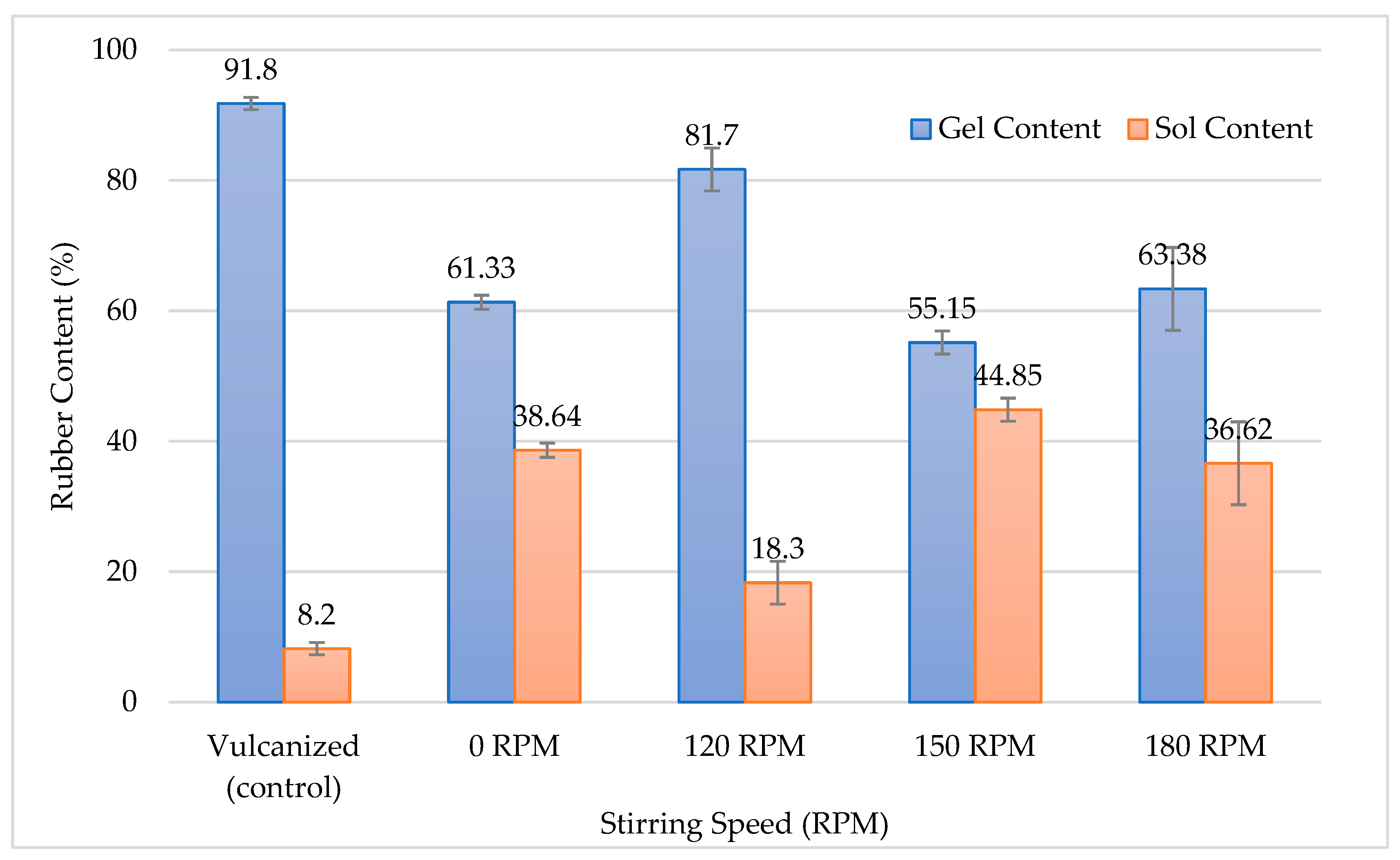
For this study, the waste rubber machine has been modified by adding a two-layer impeller and four temperature gauges. A comparison between gel and sol content between the vulcanized sample (control), the devulcanized sample (pre-modification of waste machine, 0 RPM), and the devulcanized sample at different impeller speeds was made and is summarized in Figure 12.
Figure 12.
Gel and sol content of devulcanized sample at 150 °C.
In the modified waste rubber machine, the stirring speed was varied between 120, 150, and 180 RPM. Stirring of the material in the rubber tank helps to ensure uniform distribution of heat and prevent localized overheating and underheating during the devulcanization process. The stirring alone does not provide sufficient mechanical energy to break sulfur crosslinks; thus, the process has to be carried out at a certain temperature, which in this case is 150 °C. Close attention must be given to stirrer speed, as a low stirring speed will lead to non-uniform heat transfer, causing a temperature gradient between the rubber samples, and a high stirring speed will generate additional frictional heat, which may raise the temperature beyond the optimal range. An increase in gel content was recorded at 180 RPM, probably due to the increase in temperature inside the mixing tank and the possibility of the re-crosslinking of polymers at high temperature. At a speed of 150 RPM, it was observed that the gel content was the lowest, at 55.15%, making it a favorable set point for stirring speed.
The effect of operating temperature was also studied. From the laboratory-scale test, it was found that excessive heat leads to the complete melting of the rubber, which affects the chemical structure of the devulcanized product and makes handling difficult. Even though at the lab-scale the selected optimum temperature was 150 °C, with an operating time of 20 min, and 200 °C, with an operating time of 10 min, the temperature selected for operation at the pilot plant scale was limited to below 150 °C. This selection was made to maintain a controlled heating profile with sufficient time for stabilization and to prevent the rubber from completely melting inside the modified rubber tank and possibly clogging the discharged outlet. The operating temperature of the rubber waste machine varied between 130, 140, and 150 °C.
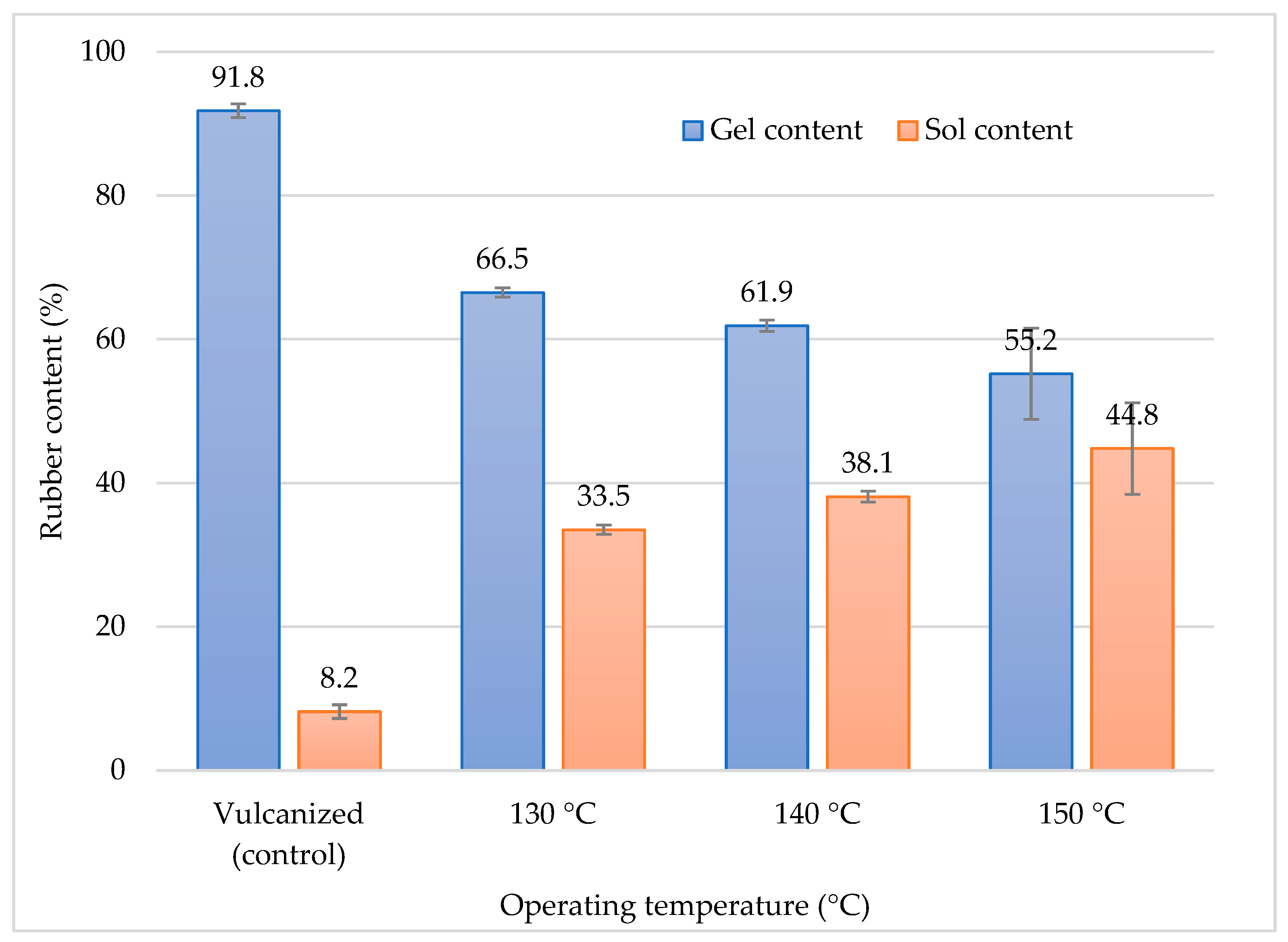
The percentages of soluble (sol) and insoluble (gel) content after devulcanization are shown in Figure 13.
Figure 13.
Gel and sol content value at three different operating temperatures at 150 RPM.
By keeping the rotation speed constant at 150 RPM and varying the operating temperature to 130, 140, and 150 °C, it is observed that as the temperature increases, the gel content value decreases. The gel content value decreased from 91.8% to the lowest gel content value of 55.15% at 150 °C.
Temperature is one of the important factors in the devulcanization process, acting as a dual influence: both a facilitator of carbon–sulfur (C-S) bond and sulfur–sulfur (S-S) bond crosslink cleavage and a potential contributor to rubber degradation due to carbon–carbon (C-C) bond scission. Appropriate temperature levels provide the energy required to break S-S and C-S bonds within the rubber’s crosslinked network, enabling effective devulcanization. The energy needed to break the C-S and S-S bonds is 273 kJ/mol and 227 kJ/mol, respectively. However, careful selection is required to prevent main-chain degradation. The bond-dissociating energy of C-C and C = C is 348 kJ/mol and 621 kJ/mol, respectively [33]. The set-point temperature of 130 °C is inadequate to break a significant amount of carbon–sulfur and sulfur–sulfur bonds, and this was reflected by the high gel content value of the samples. At temperatures of 140 °C and 150 °C, more of the S-S and C-S bonds within the rubber network start to weaken, thus resulting in a lower gel content.
Based on observations during the operation, it was determined that a minimum of 15 min of mixing must be performed for the devulcanization of rubber to take place. During the devulcanization process, an increase in temperature is expected. However, the increase in temperature in the tank should be monitored, as it should not exceed 170 °C. Once the temperature of the waste rubber machine has reached 170 °C, the rubber must be directly discharged. This step must be carried out to prevent rubber from aggregating and forming clumps inside the tank and making it difficult for it to be discharged from the equipment. For this study, the optimum operating conditions have been identified as being a temperature of 150 °C at 150 RPM.
The reported gel (55.2%) and sol (44.8%) fractions obtained at 150 °C and 150 RPM represent the analytical distribution of crosslinked and solubilized segments within the same rubber matrix, rather than two physically separated phases. The devulcanized rubber remains as a single, cohesive piece, in which partial network cleavage occurs while a portion of the original crosslinks is retained. Such partial devulcanization is intentionally targeted to preserve mechanical integrity and prevent excessive chain scission. The resulting material can be directly reused or blended with virgin rubber in new formulations without the need for physical separation. Therefore, the process achieves effective material recycling and minimizes waste generation.
3.2.3. Thermal Analysis
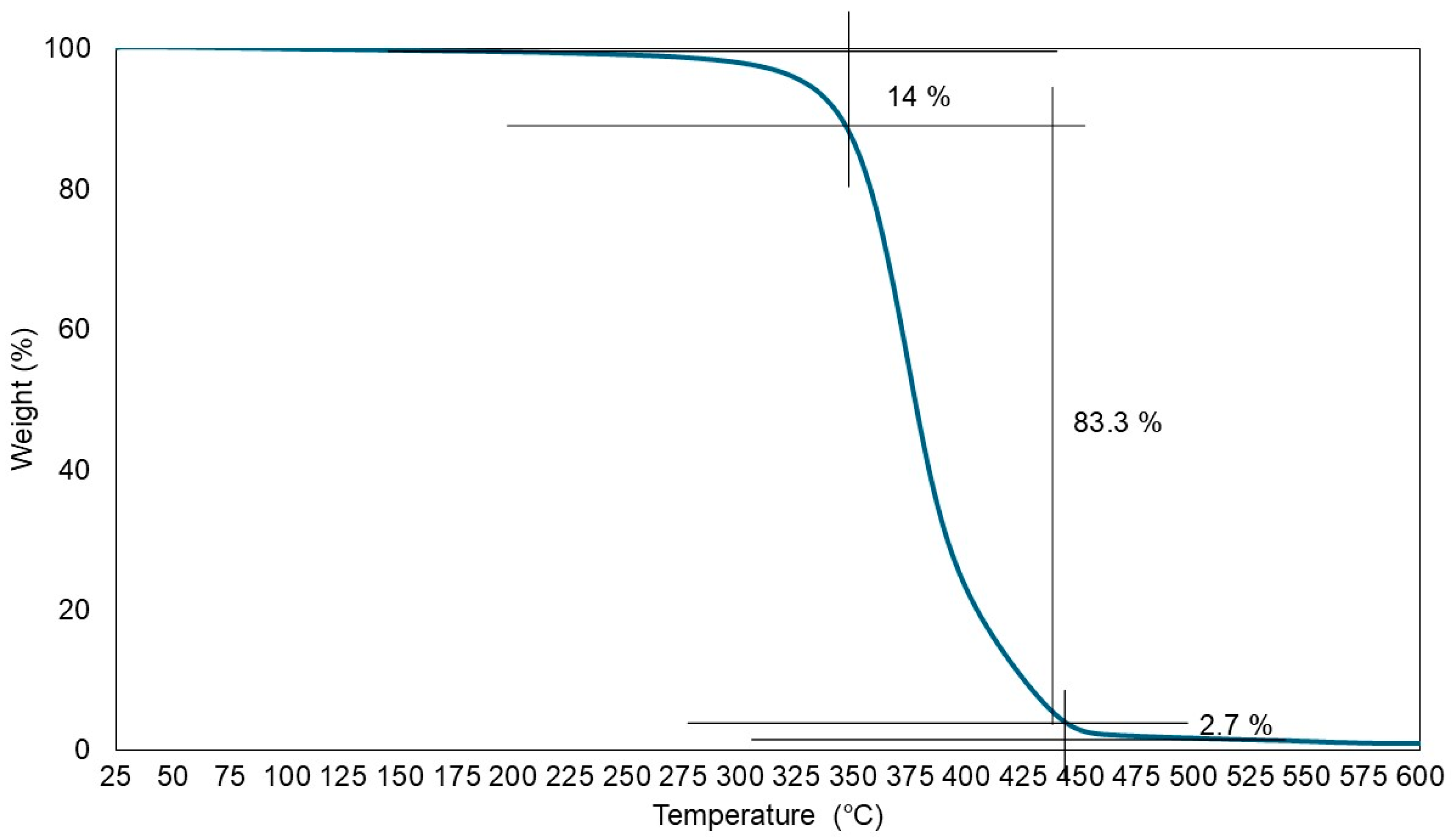
Figure 14 presents the evaluation of devulcanized rubber by thermogravimetric analysis (TGA) from 25 °C to 600 °C. The thermogram shows that the first weight loss (14%) occurs below 325 °C, corresponding to a loss of water and other highly volatile materials such as oils, antioxidants, and accelerators.
Figure 14.
Thermogravimetric analysis (TGA) result of devulcanized rubber.
The second weight loss, at 325–475 °C, was due to degradation of the rubber chain, cis-1,4-polyisoprene. Since the devulcanized rubber is mainly natural rubber, only small amounts of residue remained after 475 °C, which was due to the presence of inorganic fillers such as zinc oxide, which is a common additive in the condom manufacturing process. Derivative thermogravimetry (DTG) peaks that were derived from TGA curves were analyzed to identify the Tmax of the devulcanized sample, which is summarized in Table 8.
Table 8.
Maximum degradation temperature of control sample, pre-modification sample, and pilot-scale devulcanized rubber sample.
From Table 8, it is clear that the vulcanized (control) sample has a Tmax of 375.8 °C, and the pre-modification rubber sample has a Tmax of 376.8 °C. The increase in the degradation temperature of the pre-modification devulcanized rubber is probably due to the uneven temperature distribution in the mixing chamber. Some regions in the mixing chamber have a high temperature profile, leading to partial re-crosslinking during the devulcanization process, which leads to a more thermally stable network structure. This re-crosslinking may result from the interaction of residual sulfur bonds between polymer chains, resulting in the improved thermal stability of the sample. However, excessive re-crosslinking could also reduce the flexibility of the sample, potentially affecting its processability and reusability in new applications.
At 150 °C and 150 RPM, Tmax recorded a value of 374.3 °C, which is a lower value compared to the control sample. There was a leftward shift in the DTG peak for devulcanized rubber compared to the vulcanized (control) sample. The shift in the DTG curve indicates changes in the thermal decomposition behavior of the devulcanized rubber. This shift is probably due to the reduction in molecular mass, which is due to the scission of crosslinks and macromolecules (C-S, S-S, and C-C). In the devulcanization process, sulfur crosslinks and macromolecular chains were broken, resulting in fewer crosslinks in the rubber sample, thus making the polymer chains less stable. These results corroborate the gel content value, as both criteria are strongly related to structural changes induced during the devulcanization process. It is expected that a lower gel content value leads to an earlier DTG peak due to reduced thermal stability; however, a well-controlled devulcanization process can balance the gel content value and temperature at the maximum decomposition rate to maintain reusability in new rubber products.
3.2.4. Molecular Weight Distribution
To study the molecular mass weight and distribution of the devulcanized rubber sample, a gel permeation chromatography analysis (GPC) was conducted. It should be noted that the GPC analysis was performed on a soluble rubber sample. The number and weight average molecular weights (Mn and Mw) and the dispersity (Ð) are presented in Table 9.
Table 9.
GPC results.
The results for the GPC analysis in Table 9 show a comparison of the control, lab-scale, and pilot plant samples. Due to the scission of sulfur bonds, the molecular weight (Mw) of the devulcanized samples increased to 16,418 and 109,907, at the lab scale and pilot plant scale, respectively. This is an indication that in lab- and pilot plant-scale samples, more macromolecular chains are freed from the complex 3D network structure of vulcanized rubber.
The dispersity (Ð) of the vulcanized sample (control sample) was 1.97, reflecting the initial molecular weight distribution of the crosslinked rubber. After the devulcanization process, an increase in molecular weight distribution occurred due to the partial breakdown of the rubber network, resulting in increase in the Ð to 2.27. At the pilot scale, the Ð decreased to 1.76, suggesting a more uniform molecular weight distribution and improved control over the devulcanization process at a larger scale.
The devulcanization process produces a higher molecular weight rubber as the sulfur bonds are being scissioned, but the targeted scission process has helped to control the distribution of the molecular weight distribution.
3.2.5. Dynamics Mechanical Properties of Devulcanized Rubber
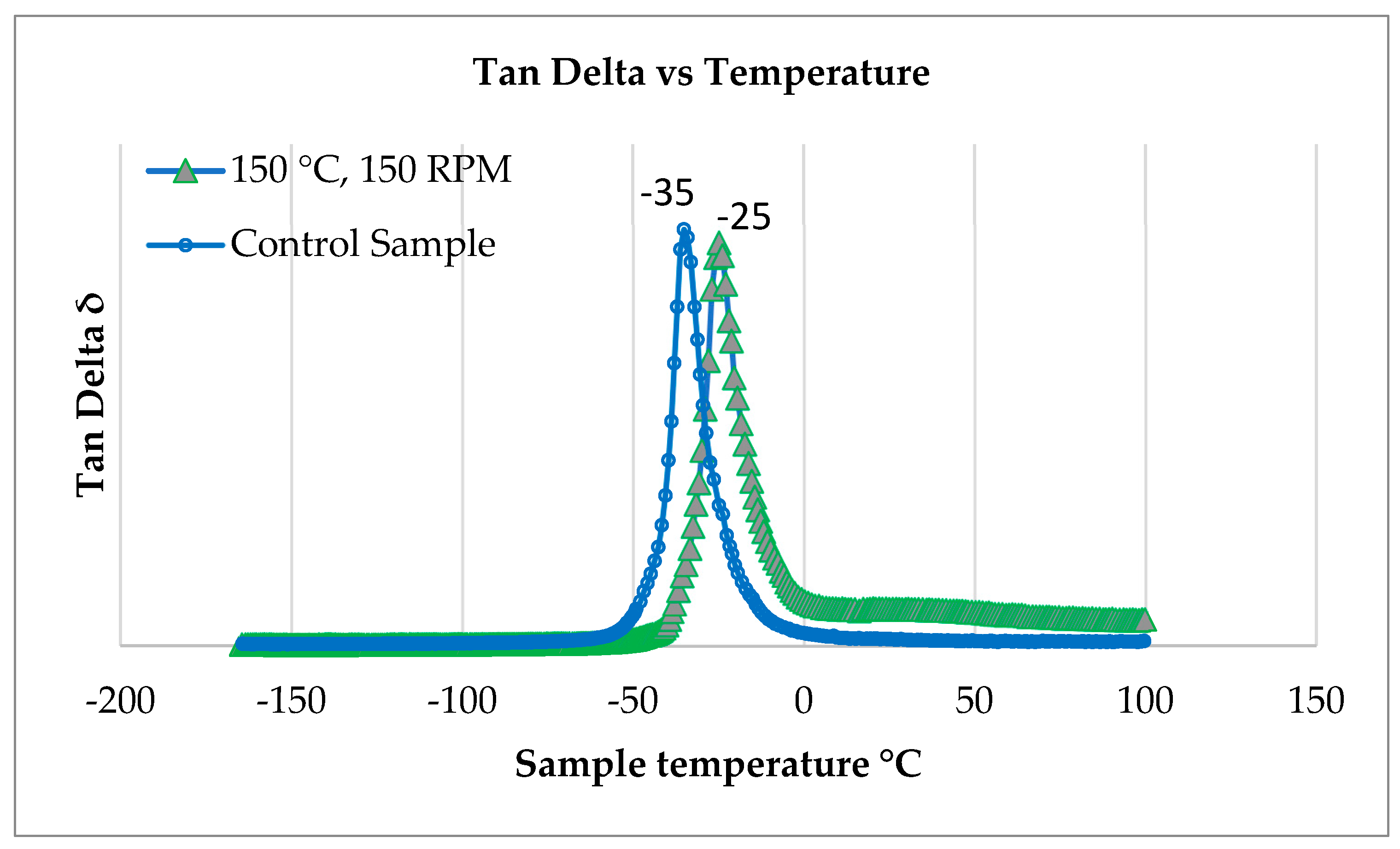
Figure 15 illustrates the effect of the devulcanization process on loss tangent (tan δ) as a function of test temperature for the devulcanized rubber and control samples.
Figure 15.
Effect of devulcanization on loss tangent as a function of temperature.
Tan δ reflects the dynamic behavior of the devulcanized rubber. The tan δ versus temperature curves showed damping peaks around temperatures between −60 and −10 °C, or else known as a transition region. The damping peaks of the curves represent the glass transition temperature (Tg). The glass transition temperature of the devulcanized sample is −25 °C, compared to that of the control sample, which is −35 °C. The glass transition temperature of the devulcanized sample is higher than the control sample, signifying that the devulcanized sample is less flexible at the molecular level compared to the control sample. This is due to the increased number average molecular weight and weight average molecular weight of the devulcanized sample. A higher Mn and Mw results in an increased free chain length, which enables active physical entanglements, hence increasing the Tg of the devulcanized sample. It was also observed that the width of both curves is similar, thus indicating that the devulcanization process in the modified heater does not alter the uniformity of the devulcanized rubber sample, as corroborated the Ð values from the GPC analysis in Table 9. This behavior shows promise for the reuse of devulcanized rubber as feed material in the new rubber processing applications.
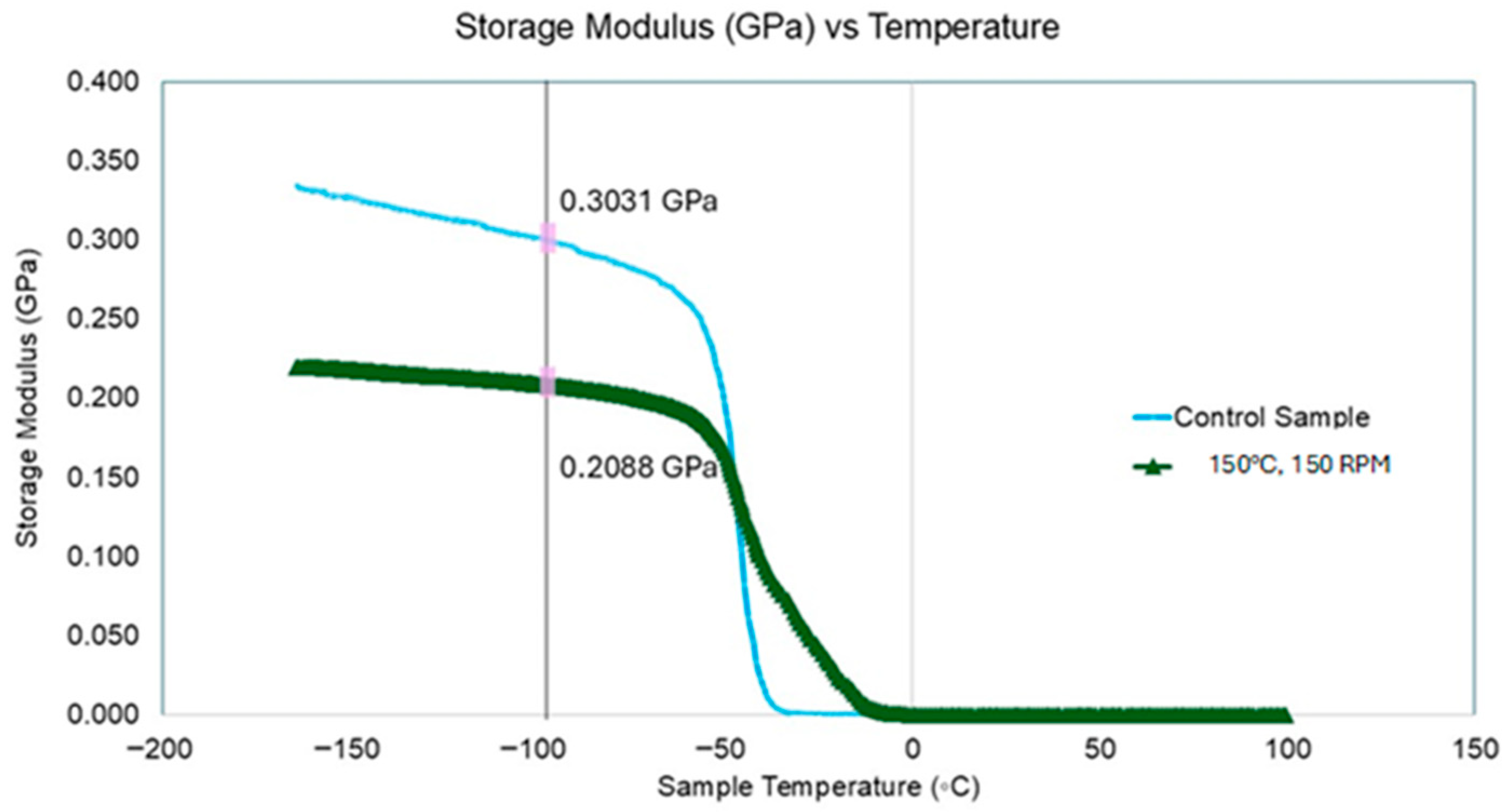
The storage modulus vs. temperature curve is shown in Figure 16.
Figure 16.
Storage modulus (GPa) vs. temperature for control sample and devulcanized rubber sample.
The storage modulus of the vulcanized (control) sample was higher than the devulcanized rubber samples. This may be due to the strong carbon–sulfur and sulfur–sulfur bonds available in the control sample. At −100 °C, the storage modulus for the control sample is 0.3031 GPa compared to the devulcanized sample, with 0.2088 GPa of storage modulus. The lower storage modulus of the devulcanized sample is deduced to be due to the reduced complexity of 3D network chains because of devulcanization. Hence, the decrease in storage modulus value and the shift in glass transition temperature recorded indicated that the devulcanization process has occurred.
4. Conclusions
In this work, a devulcanization process was carried out on off-spec latex waste originating from condoms. Laboratory-scale devulcanization was conducted, and it was found that the off-spec latex waste sample had been successfully devulcanized, with 58.4% gel content. A waste rubber machine was retrofitted with a two-layer impeller and a temperature gauge to demonstrate the devulcanization process at a pilot plant scale. The effect of stirring speed and operating temperature was investigated. Gel content analysis showed that the value decreased from 91.8% to 55.15% as the temperature increased, indicating that increasing the temperature can enhance the devulcanization process. However, the operating temperature must be limited to below 170 °C to prevent the rubber samples from agglomerating and the formation of clumps at the outlet chute. It was also observed that the devulcanization process at 150 RPM and 150 °C gave the most prominent result in terms of gel and sol contents. The results from TGA, GPC, and DMA indicated that devulcanization had occurred with minimal loss of properties, as evidenced by the comparable thermal stability of the devulcanized rubber at 374.3 °C; a more uniform molecular weight distribution, with Ð of 1.76; and a moderate shift in glass transition temperature from −35 °C to −25 °C, indicating that the molecular and thermal characteristics of the rubber were largely maintained. The thermo-mechanical devulcanization process in the retrofitted waste rubber machine shows good promise in making value-added rubber products from rejected condom waste. This work directly supports Sustainable Development Goal 9—Industry, Innovation and Infrastructure—by promoting sustainable rubber recycling technologies, and helps to create high-value rubber products for various industries.
Author Contributions
Conceptualization, S.R., D.K.S.N., L.Y.N. and V.A.; methodology, S.R., D.A. and D.K.S.N.; validation, S.R., D.A., D.K.S.N., J.B.C.L. and F.P.L.; formal analysis, D.A., F.P.L. and J.B.C.L.; resources, F.P.L., J.B.C.L., J.J.L. and D.K.S.N.; supervision, D.K.S.N.; project administration, S.R. and D.A.; funding acquisition, S.R., D.K.S.N. and J.J.L. All authors have read and agreed to the published version of the manuscript.
Funding
This research was funded by Karex Industries Sdn. Bhd and Heriot-Watt University Malaysia Sdn. Bhd., grant number P22Karex.
Data Availability Statement
The original contributions presented in this study are included in the article. Further inquiries can be directed to the corresponding authors.
Acknowledgments
For the support and insightful discussions provided by the project’s industrial partner, Karex Industries Sdn. Bhd, the authors extend their gratitude. In particular, the authors would like to thank the staff and technicians from Karex Industries Sdn. Bhd., whose direct and indirect involvement was instrumental in the successful completion of this project.
Conflicts of Interest
The authors declare that there is no conflict of interest. This research was funded by Karex Industries Sdn Bhd., which collaborated with the authors in designing the study. The funder had no influence on data collection, data analysis, interpretation of results, or the decision to submit the manuscript for publication.
Abbreviations
The following abbreviations are used in this manuscript:
| NR | Natural rubber |
| TGA | Thermogravimetric analysis |
| GPC | Gel permeation chromatography |
| DMA | Dynamic mechanical analysis |
| D | Dispersity |
| DTG | Derivative thermogravimetry |
References
- Umeswara, S.S. Towards a Circular Economy Waste Management in Malaysia. In Proceedings of the MEA 12MP Kick-Off Conference, Kuala Lumpur, Malaysia, 1–4 July 2019. [Google Scholar]
- Growth Within: A Circular Economy Vision for a Competitive Europe. Available online: https://www.mckinsey.com/capabilities/sustainability/our-insights/growth-within-a-circular-economy-vision-for-a-competitive-europe (accessed on 20 December 2024).
- Tono, T.; Nakazawa, Y.; Sato, K.; Hashimoto, M.; Aizawa, M.; Ikeda-Fukazawa, T. Effects of thermal history of silica composite polyisoprene rubber on structure of contact water. Chem. Phys. Lett. 2024, 847, 141373. [Google Scholar] [CrossRef]
- Malaysian Rubber Council. World Rubber Production, Consumption and Trade. Available online: https://www.myrubbercouncil.com/industry/world_production.php (accessed on 26 February 2025).
- Jawjit, W.; Pavasant, P.; Kroeze, C.; Tuffey, J. Evaluation of the potential environmental impacts of condom production in Thailand. J. Integr. Environ. Sci. 2021, 18, 89–114. [Google Scholar] [CrossRef]
- Markl, E.; Lackner, M. Devulcanization technologies for recycling of tire-derived rubber: A review. Materials 2020, 13, 1246. [Google Scholar] [CrossRef]
- Tang, X.; Chen, Z.; Liu, J. Dynamic pyrolysis behaviors, products, and mechanisms of waste rubber and polyurethane bicycle tires. J. Hazard. Mater. 2021, 402, 123516. [Google Scholar] [CrossRef]
- Maga, D.; Aryan, V.; Blömer, J. A comparative life cycle assessment of tyre recycling using pyrolysis compared to conventional end-of-life pathways. Resour. Conserv. Recycl. 2023, 199, 107255. [Google Scholar] [CrossRef]
- Brunella, V.; Aresti, V.; Romagnolli, U.; Muscato, B.; Girotto, M.; Rizzi, P.; Luda, M.P. Recycling of EPDM via Continuous Thermo-Mechanical Devulcanization with Co-Rotating Twin-Screw Extruder. Polymers 2022, 14, 4853. [Google Scholar] [CrossRef]
- Simon, D.Á.; Bárány, T. Microwave Devulcanization of Ground Tire Rubber and Its Improved Utilization in Natural Rubber Compounds. ACS Sustain. Chem. Eng. 2023, 11, 1797–1808. [Google Scholar] [CrossRef]
- Karunarathna, S.; Linforth, S.; Kashani, A.; Liu, X.; Ngo, T. Effect of recycled rubber aggregate size on fracture and other mechanical properties of structural concrete. J. Clean. Prod. 2021, 314, 128230. [Google Scholar] [CrossRef]
- Ceretti, D.V.A.; Edeleva, M.; Cardon, L.; D’hooge, D.R. Molecular Pathways for Polymer Degradation during Conventional Processing, Additive Manufacturing, and Mechanical Recycling. Molecules 2023, 28, 2344. [Google Scholar] [CrossRef]
- Candau, N.; Leblanc, R.; Maspoch, M.L. A comparison of the mechanical behaviour of natural rubber-based blends using waste rubber particles obtained by cryogrinding and high-shear mixing. Express Polym. Lett. 2023, 17, 1135–1153. [Google Scholar] [CrossRef]
- Muzyka, R.; Mumtaz, H.; Sobek, S.; Werle, S.; Adamek, J.; Semitekolos, D.; Charitidis, C.A.; Tiriakidou, T.; Sajdak, M. Solvolysis and oxidative liquefaction of the end-of-life composite wastes as an element of the circular economy assumptions. J. Clean. Prod. 2024, 478, 143916. [Google Scholar] [CrossRef]
- Evergreen Corporate Sdn Bhd. Evergreen Corporate Making the World a Better Place. Available online: https://www.evergreencorporate.com/ (accessed on 6 March 2025).
- Xiao, Z.; Pramanik, A.; Basak, A.K.; Prakash, C.; Shankar, S. Material recovery and recycling of waste tyres—A review. Clean. Mater. 2022, 3, 100115. [Google Scholar] [CrossRef]
- Guo, L.; Wang, C.; Lv, D.; Ren, D.; Zhai, T.; Sun, C.; Liu, H. Rubber reclamation with high bond-breaking selectivity using a low-temperature mechano-chemical devulcanization method. J. Clean. Prod. 2021, 279, 123266. [Google Scholar] [CrossRef]
- Pirityi, D.Z.; Bárány, T.; Pölöskei, K. Recycling of EPDM rubber via thermomechanical devulcanization: Batch and continuous operations. Polym. Degrad. Stab. 2024, 230, 111014. [Google Scholar] [CrossRef]
- Gschwind, L.; Jordan, C.S.; Vennemann, N. Devulcanization of ethylene-propylene-diene monomer rubber waste. Effect of diphenyl disulfide derivate as devulcanizing agent on vulcanization, and devulcanization process. J. Appl. Polym. Sci. 2022, 139, 52141. [Google Scholar] [CrossRef]
- Cataldo, F. Thermochemistry of Sulfur-Based Vulcanization and of Devulcanized and Recycled Natural Rubber Compounds. Int. J. Mol. Sci. 2023, 24, 32623. [Google Scholar] [CrossRef]
- Shabani, M.; Jamshidi, M. Recycling NR/SBR waste using probe sonication as a new devulcanizing method; study on influencing parameters. RSC Adv. 2022, 12, 26264–26276. [Google Scholar] [CrossRef]
- Ghamarpoor, R.; Jamshidi, M. Synergistic effect of microwave assisted devulcanization of waste NBR rubber and using superhydrophobic/superoleophilic silica nanoparticles on oil-water separation. Alex. Eng. J. 2023, 69, 67–84. [Google Scholar] [CrossRef]
- Li, J.; Jiang, N.; Sheng, Z.; Qin, L.; Li, C.; Wang, Y.; Liu, Z.; Yang, J.; Li, J. Devulcanization of ground tire rubber using a plasma-assisted fluidized-bed system. Appl. Surf. Sci. 2025, 684, 161784. [Google Scholar] [CrossRef]
- Ghowsi, M.A.; Jamshidi, M. Recycling waste nitrile rubber (NBR) and improving mechanical properties of Re-vulcanized rubber by an efficient chemo-mechanical devulcanization. Adv. Ind. Eng. Polym. Res. 2023, 6, 255–264. [Google Scholar] [CrossRef]
- Costamagna, M.; Brunella, V.; Luda, M.P.; Romagnolli, U.; Muscato, B.; Girotto, M.; Baricco, M.; Rizzi, P. Environmental assessment of rubber recycling through an innovative thermo-mechanical devulcanization process using a co-rotating twin-screw extruder. J. Clean. Prod. 2022, 348, 131352. [Google Scholar] [CrossRef]
- Colom, X.; Cañavate, J.; Formela, K.; Shadman, A.; Saeb, M.R. Assessment of the devulcanization process of EPDM waste from roofing systems by combined thermomechanical/microwave procedures. Polym. Degrad. Stab. 2021, 183, 109450. [Google Scholar] [CrossRef]
- SSH Recycling. Available online: https://sshrecyclingltd.org.uk/our-process/ (accessed on 17 March 2025).
- Tyromer Inc. Technology Rubber Devulcanization. Available online: https://tyromer.com/technology/ (accessed on 17 March 2025).
- Asaro, L.; Gratton, M.; Poirot, N.; Seghar, S.; Hocine, N.A. Devulcanization of natural rubber industry waste in supercritical carbon dioxide combined with diphenyl disulfide. Waste Manag. 2020, 118, 647–654. [Google Scholar] [CrossRef]
- Saiwari, S.; Nobnop, S.; Bueraheng, Y.; Thitithammawong, A.; Hayeemasae, N.; Salaeh, S. Segregated MWCNT Structure Formation in Conductive Rubber Nanocomposites by Circular Recycling of Rubber Waste. ACS Appl. Polym. Mater. 2022, 4, 7463–7475. [Google Scholar] [CrossRef]
- ASTM D3616-95(2024); Standard Test Method for Rubber—Determination of Gel, Swelling Index, and Dilute Solution Viscosity. ASTM International: West Conshohocken, PA, USA, 2024.
- Ge, M.; Zheng, G. Fluid–Solid Mixing Transfer Mechanism and Flow Patterns of the Double-Layered Impeller Stirring Tank by the CFD-DEM Method. Energies 2024, 17, 1513. [Google Scholar] [CrossRef]
- Walvekar, R.; Afiq, Z.M.; Ramarad, S.; Khalid, S. Devulcanization of Waste Tire Rubber Using Amine Based Solvents and Ultrasonic Energy. MATEC Web Conf. 2018, 152, 01007. [Google Scholar] [CrossRef]
Disclaimer/Publisher’s Note: The statements, opinions and data contained in all publications are solely those of the individual author(s) and contributor(s) and not of MDPI and/or the editor(s). MDPI and/or the editor(s) disclaim responsibility for any injury to people or property resulting from any ideas, methods, instructions or products referred to in the content. |
© 2025 by the authors. Licensee MDPI, Basel, Switzerland. This article is an open access article distributed under the terms and conditions of the Creative Commons Attribution (CC BY) license (https://creativecommons.org/licenses/by/4.0/).