


Abstract
Biofuels, such as biodiesel, bioethanol, and biohydrogen produced from organic waste, constitute a sustainable alternative to non-renewable fuels and drive the energy transition. In this work, the inherent safety methodology was implemented to quantify and evaluate the intrinsic risks of obtaining hydrogen from African palm stems through direct gasification with Selexol. The methodology indicators were calculated with reference to databases, the literature, and safety data sheets, considering critical stages of the process. The total inherent safety index (ISI) was 38, classifying the process as intrinsically unsafe, with the chemical component scoring 21 points, with hydrogen being the main chemical risk (8 points), along with hazards generated by chemical reactions. Likewise, high temperature and pressure conditions indicate the presence of potentially unsafe equipment such as reactors and heat exchangers, giving the process index 17 points. Based on the results, it is recommended to reduce raw material inventories and optimize operating conditions to reduce the potential for hazardous events and improve overall inherent safety.
1. Introduction
Currently, hydrogen is experiencing a high demand in its production, due to its promising viability as a substitute for conventional fossil fuels, being a clean and abundant energy source, which makes it a strategic resource in the move towards a global economy free of carbon emissions [1]. At the same time, renewable sources such as solar, tidal, and wind energy have been widely studied as sustainable generation options, with countries such as Germany, China, the United States, Canada, Brazil, and India positioning themselves as the main pioneers. However, these sources are limited by meteorological phenomena that prevent them from providing a continuous energy supply [2]. This is where hydrogen plays an important role in the energy transition as a renewable energy carrier [3], because its implementation, together with other alternative energies, will allow carbon emissions to be reduced, with the objective of achieving a 100% renewable and environmentally responsible energy transition [4]. In addition to promoting economic growth, improving air quality, and increasing energy independence in industries and communities [5].
Hydrogen (H2) has a global production of 60 million tons per year and is mostly used for multiple applications, such as obtaining fertilizers, hydrogen peroxide, and alcohols, as well as energy production, which is obtained from non-renewable sources (natural gas and hydrocarbons) for the most part and is called blue hydrogen [6]. This substance, having a high energy content per unit of mass, with a high calorific value of 1141.9 MJ/kg, becomes an efficient fuel [7]. Lately, hydrogen production has focused on obtaining it from renewable and sustainable sources such as biomass [8]. In Colombia, good climatic conditions and biodiversity represent an advantage for the development of agro-industries, with African palm being the second most important crop in the country [9]. The oil is extracted from this African palm, and the palm rachis is left as a residue, the usefulness of which is its application as a biomass for the production of hydrogen through gasification in a reactor, which takes advantage of its high energy content, which is related to its composition of oxygen and hydrogen [10]. However, achieving the conversion of a solid material such as the rachis into hydrogen requires considerably risky process conditions, with temperatures exceeding 700 °C and pressures greater than 25 bar [11].
Due to these high-intensity process conditions, a constant fuel supply is required; however, hydrogen production from biomass gasification does not contribute to greenhouse gas emissions in the same way as other energy sources, making it a greener and cleaner option than fossil fuels due to its low sulfur and nitrogen content [12]. However, although there is a broad understanding of the associated risks and consolidated experience in their safe management, significant limitations persist in the processes of large-scale hydrogen production, storage, and distribution [13], primarily due to its marked chemical reactivity with heat sources and species present in the system, which promotes the formation of undesirable byproducts that accelerate the corrosion of equipment and pipes [14].
The inherent danger of the process has sparked work to study and prevent the possible risks that the chemical substances and energies used and operations carried out in the industry may present in order to avoid the loss of human lives, becoming a primary starting point for plant design [15]. This management began to develop in response to disasters that occurred in the last century, such as the chemical catastrophe in Bhopal, India, the oil spill in the Gulf of Mexico, and the explosion of a methyl ethyl ketone (MEK) tank, among others [16]. This methodology allows the reduction and elimination of the hazards associated with substances and process operations that have the potential to cause harm to people, property, or the environment, which may be intrinsic to the materials, storage conditions, and uses [17]. Reducing the risks regarding the safety of a process is necessary because it provides a criterion for selecting synthesis processes that present low levels of danger and that at the same, it time it allows attention to be focused on those elements of the selected process that make it more unsafe [18], with the objective of designing a containment plan based on the three strategies that an inherently safe design requires, which are the prevention of cumin effects, additional security, and the procedure to prevent accidents [19]. Hazards should be avoided rather than managed and controlled by replacing hazardous materials and operations with less risky ones in the plant and by using additional protection systems [20]. The greatest benefits are obtained by verifying that inherent safety has been identified early in the engineering process and design [21].
This type of research is relevant as it supports accident prevention by providing specialist documentation, something important for future research that, when combined with artificial intelligence (AI), would allow industries to be automated and improve the efficiency of operations, in addition to developing predictive models that function as monitoring tools in industrial processes, and in addition to anticipating equipment failures and system downtime [22]. AI is essential in managing security in the fourth Industrial Revolution, also known as Industry 4.0 [23]. However, AI requires established information to process, compare, and predict, so this study serves and increases the documentation and databases that they require regarding inherent safety in industrial processes.
2. Materials and Methods
2.1. Process Description
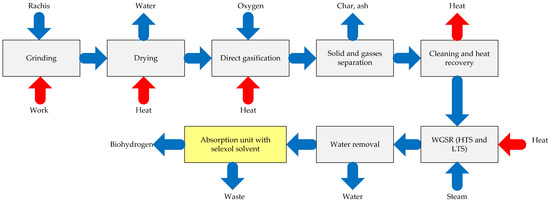
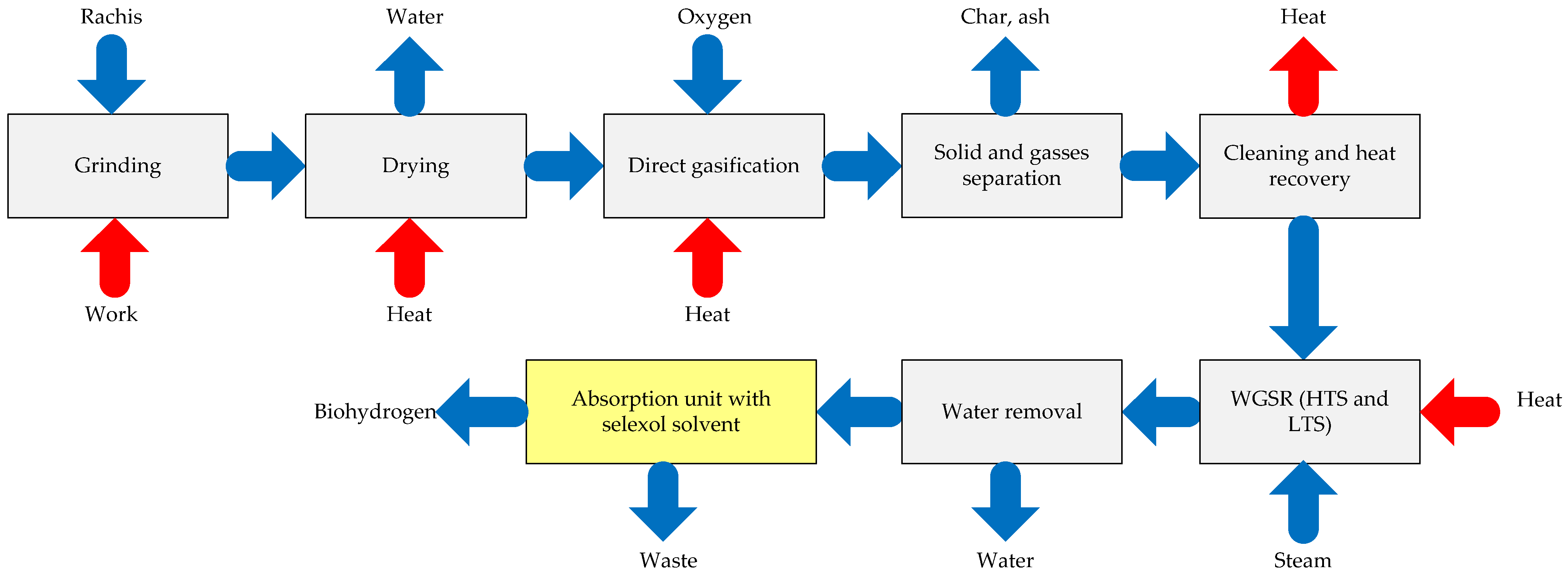
Figure 1 shows a block diagram describing the industrial-scale production of biohydrogen from the direct gasification of African oil palm rachis and purification with Selexol. This process was developed by the authors based on operational data from plants and the specialized literature. For more information related to the production process and simulation, please refer to the authors’ previous research [24]. The simulation of the direct gasification process of African palm rachis with a Selexol purification unit was carried out in Aspen Plus V.14 (Aspen Technology, Inc., Bedford, MA, USA) software, thanks to the thermodynamic models that allowed the correct simulation of the physicochemical properties of the palm rachis and its subsequent conversion were the NTRL and UNIFAC models due to the low linearity between liquid substances, differences in polarity and the affinity to predict the behavior of the activity coefficients [25]. The rachis of the African palm (Elaeis guianensis) is fed into a mill with a mass flow of 41,667 kg/h to reduce its particle size from 0.3 m to in the range of 0.3 to 1 mm [26]; once ground, this stream is sent to a heat exchanger which increases the temperature of the ground rachis up to 101 °C, and said output stream will be taken to a dryer which aims to remove much of the moisture (5.18–7.95%) [26] from the rachis, which will then be sent to a heat exchanger which works at 1 bar pressure and a process temperature of 500 °C; that is, it will bring the ground rachis to that temperature [27].
Figure 1.
Process block diagram (PBD) of the hydrogen production process from palm rachis using direct gasification.
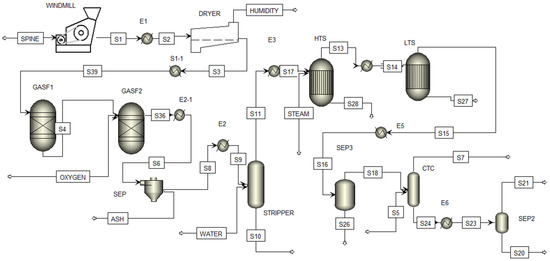
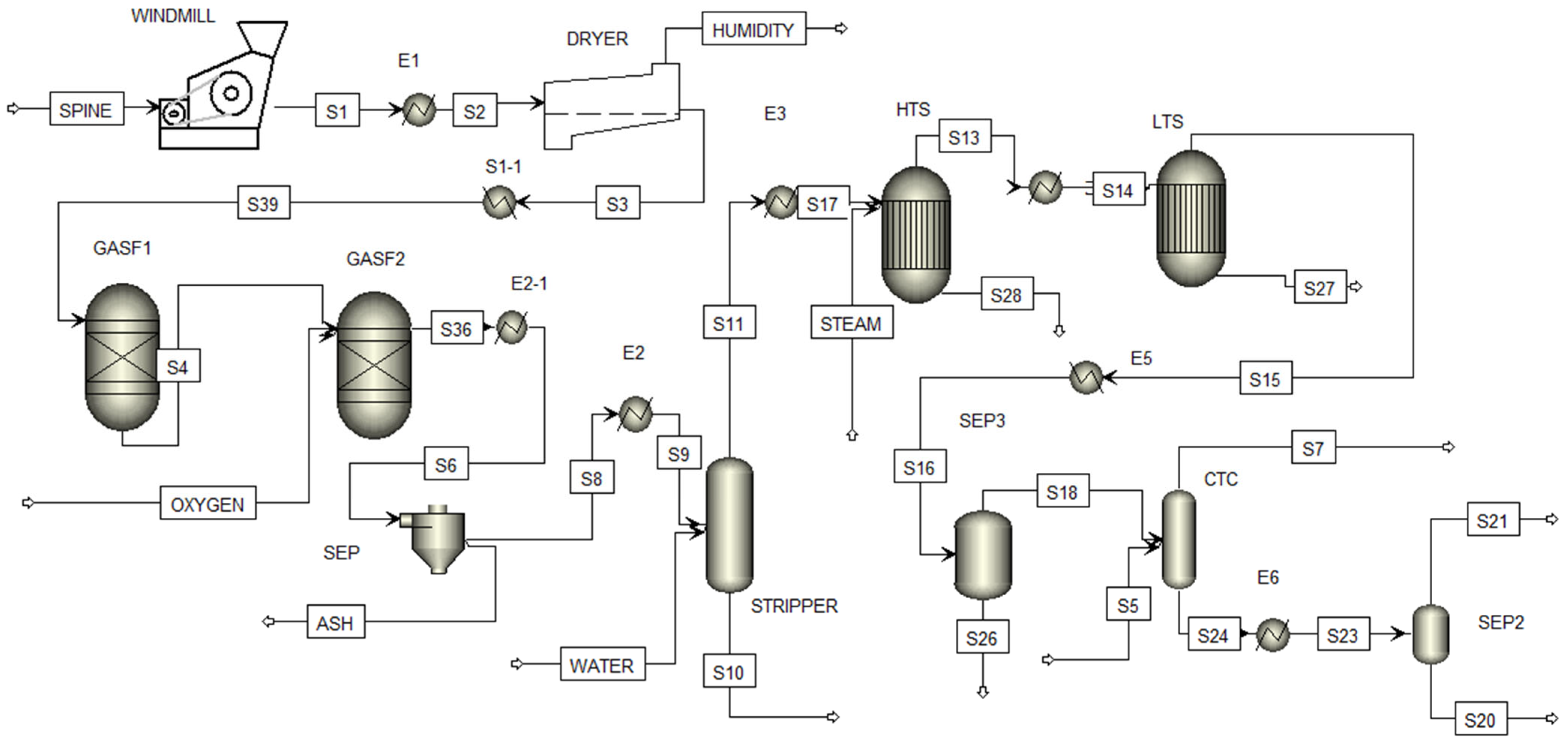
The output stream will pass to the gasification reactor in which all the chemical reactions outlined in Table 1 and Table 2 are be carried out; these occur at a temperature of 900 °C and a pressure of 60 bar, since the rachis is converted into syngas by supplying a stream of oxygen (O2) which enters at 900 °C, a pressure of 60 bar, and a mass flow of 1000 kg/h. In the reactor, mainly carbon monoxide (CO), methane (CH4), and carbon dioxide (CO2) are present, and other secondary reactions are obtained in smaller proportions, including water (H2O), sulfur (S), and sulfur dioxide (SO2), the latter two in small quantities [27]. However, for this work, a global optimization method based on a stoichiometric reactor was chosen. In this approach, the last reaction in Table 1 is assumed to be the most important in maximizing hydrogen production, simplifying the kinetic effects to some extent due to the stoichiometric nature of the equipment. Figure 2 shows two gasification reactors, labeled gas F1 and gas F2, which represent stoichiometric reactors. However, their separation is solely for ease of use within the simulator, since both actually correspond to the same reactor. The division was used because gas F1 incorporates the proximate analysis of the biomass, while F2 uses the ultimate analysis, thus allowing the required conversion values to be obtained in the simulation.
Table 1.
Reaction enthalpies of the main reactions of the process.
Table 2.
Reaction enthalpies of the secondary reactions of the process.
Figure 2.
Diagram of the simulation (using Aspen Plus V.14) of the hydrogen production process using direct gasification.
This resulting stream is sent to a heat exchanger to reduce the temperature of the gases obtained to 600 °C, and from there it passes to an ash separator (rachis residue) and then a stripper composed of a condenser and a reboiler that work at 10 °C and 14.34 °C; these output streams then enter a heat exchanger which operates at 378 °C and 50 bar pressure, and then enters, together with a stream of water vapor at 1100 °C and 50 bar, to the HTS and LTS reactors, where mainly carbon monoxide reacts with water to produce carbon dioxide and hydrogen. As a secondary reaction in the HTS reactor, methane and water also react to form carbon monoxide and hydrogen. As a solution to removing the resulting carbon dioxide, hydrogen is separated from the remaining gas mixture in an absorption tower with Selexol (tetraethylene glycol dimethyl ether), to later be sent to a final separator, which operates at 35 °C and 1 bar of pressure and aims to remove the Selexol from the carbon monoxide stream. The reactions in Table 1 correspond to the reactions with the highest exothermic contribution, in addition to being the main reactions mentioned throughout the documented bibliography [28].
The reactions in Table 2 represent those secondary reactions that are located in the process reactors, but are characterized by being reversible reactions and/or with low participation.
2.2. Process Safety Evaluation
Process analysis was based on the Inherent Safety Index (ISI), a tool developed by Anna-Mari Heikkilä, which allows the assessment of the intrinsic safety associated with the operational conditions of a process [15]. Its objective is to avoid and eliminate risks by reducing hazardous materials and operations in the plant. Its evaluation is numerical and scores with indices such as inherent safety by chemical (ICI), determined by 7 concepts or sub-indices such as main reaction heat, secondary reaction heat, chemical interaction, flammability, toxicity, explosiveness, and corrosivity, and inherent process safety (IPI), which is determined by 5 sub-indices such as inventory, process temperature, process pressure, equipment, and process structure. The sum of the scores of these indices defines the safety of the process. If the result scores below 24, it is considered safe. Otherwise, if it exceeds this number, it is considered intrinsically unsafe [29].
However, the work of the author of the methodology is based on studies conducted in the 1970s by Kletz, who describes different accidents in industrial plants and proposes improvements based on detailed analysis and safe design [30]. This concept originated from the need to control, mitigate, and reduce the inherent risks in industrial plants by incorporating safer, more efficient, and sustainable process designs. In this sense, Trevor proposes the replacement of highly hazardous substances with compounds with lower toxicity, flammability, or reactivity, in addition to the strategic reduction in inventories of critical materials. These actions not only strengthen process safety and facility integrity but also optimize risk management, improve operational reliability, reduce the likelihood of major incidents, and promote compliance with international standards in industrial safety and sustainability [31]. The total inherent safety indicator ISI is estimated using the following Equation (1):
where ICI corresponds to the inherent safety chemical index and IPI represents the inherent safety index of the process.
ISI = ICI + IPI
2.3. Chemical Index of Inherent Safety (ICI)
Equation (2) represents the chemical index of the inherent safety of the process, which is determined from the analysis of the physicochemical characteristics and properties of the substances and the reactions present in the industrial system. Critical parameters such as chemical reactivity, flammability, toxicity, volatility or flammability, and corrosiveness are considered for its estimation, factors that allow the level of hazard associated with the process to be quantified.
ICI = IRM + IRS + IINT + (IFL + IEX + ITOX)max + ICOR
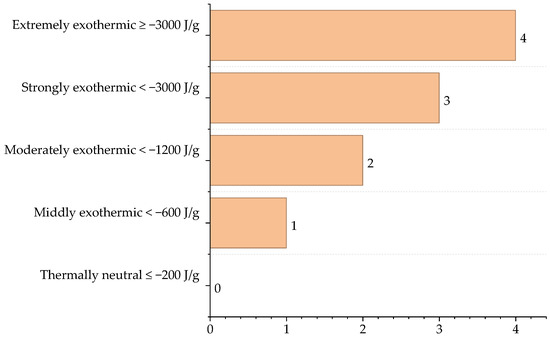
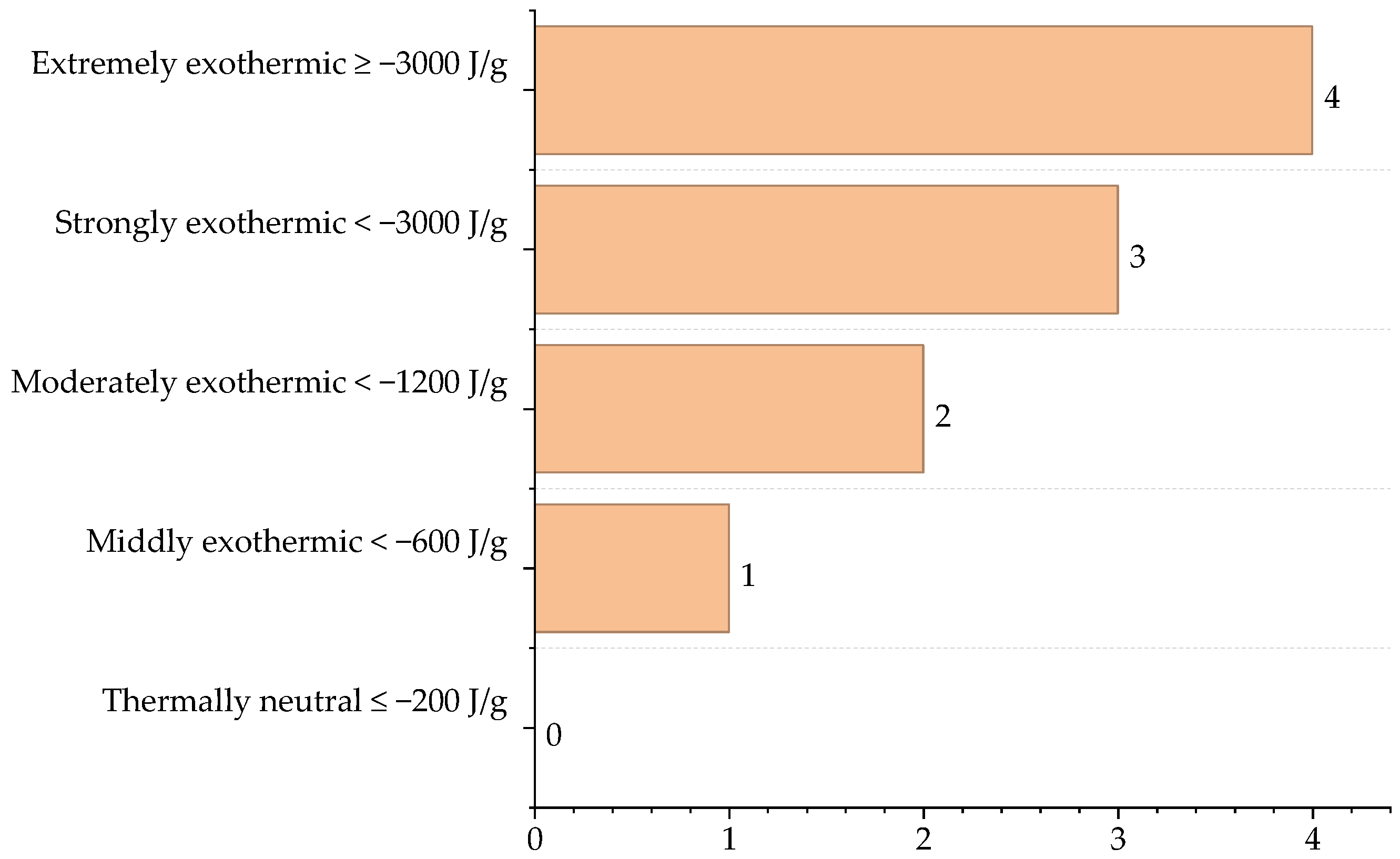
Figure 3 presents the classification of reaction types based on the heat released or enthalpy of reaction, establishing a scale that varies from a score of 0, corresponding to thermally neutral reactions, to a maximum score of 4, associated with highly exothermic reactions. These heats are quantified using Hess’s law, expressed in units of J/g. This figure is applicable to both the subscript of the main reaction (IRM) and the secondary reaction (IRS), constituting a key tool for assessing the energy hazards of chemical processes and guiding safer design strategies from the perspective of inherent safety.
Figure 3.
Subscripts by main chemical reaction (IRM) and secondary (IRS).
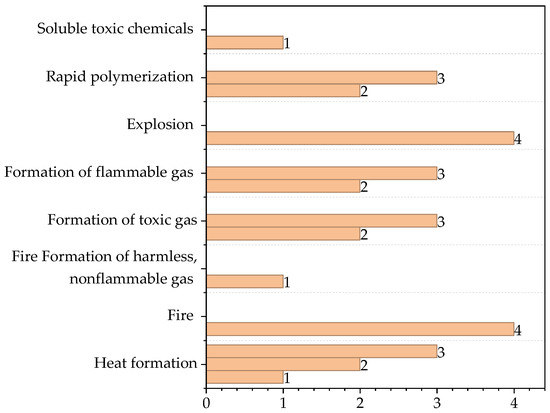
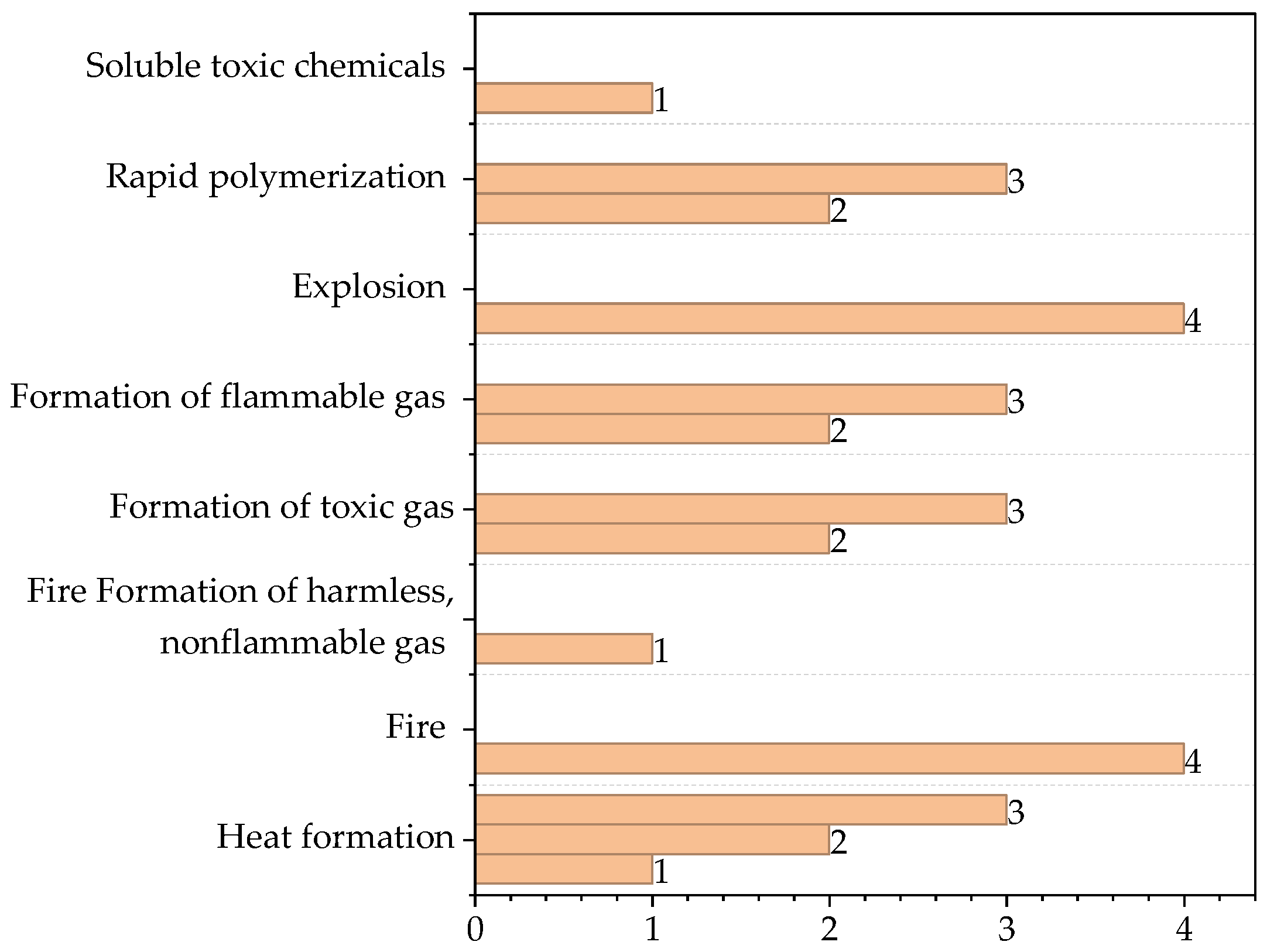
The subscript of chemical interactions (IINT), which may occur in an industrial process, reflects a potential additional risk in production due to the interactions that can arise both between the substances involved in the process and with the immediate environment (equipment construction materials or atmospheric air). Figure 4 shows the types of interactions and the score assigned to each, which range from heat generation (with values from 1 to 3, depending on the amount of heat released) to the formation of soluble toxic compounds (with a score of 1). This indicator makes it possible to identify relevant secondary risks that, although not directly involved in the main reaction, may compromise the operational safety and integrity of the facilities.
Figure 4.
Subscript for chemical interactions (IINT).
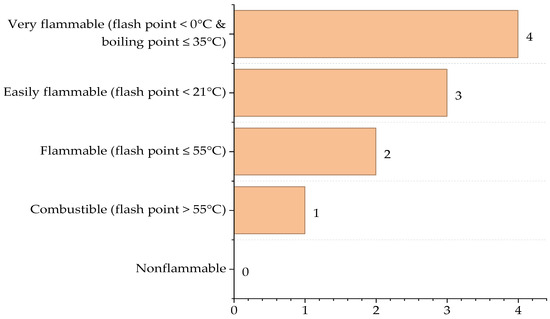
Figure 5 shows the flammability index (IFL), defined using the flash point concept. This indicator ranges from the non-flammable category, with a score of 0, to the highly flammable category, corresponding to substances with a flash point below 0 °C or a boiling point ≤35 °C, which are assigned a score of 4. This sub-index is an essential criterion for assessing inherent risk, as it allows the degree of susceptibility of compounds to ignition under industrial operating conditions to be identified.
Figure 5.
Flammability sub-index (IFL).
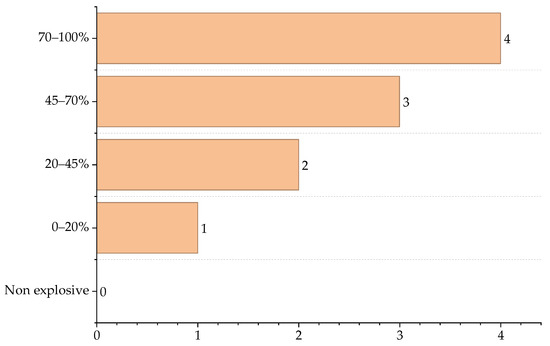
Given the existence of possible leaks of explosive substances in industrial processes, the explosiveness sub-index, or IEX, needs to be classified (Figure 6) according to the difference between its maximum (UEL%) and minimum (LEL%) concentration limits to generate a trend according to the formation of an explosive mixture between a substance and air.
Figure 6.
Explosiveness sub-index (IEX).
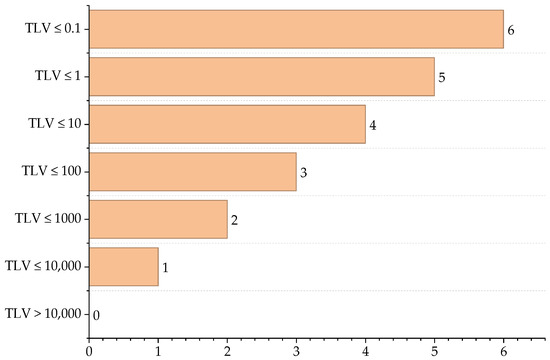
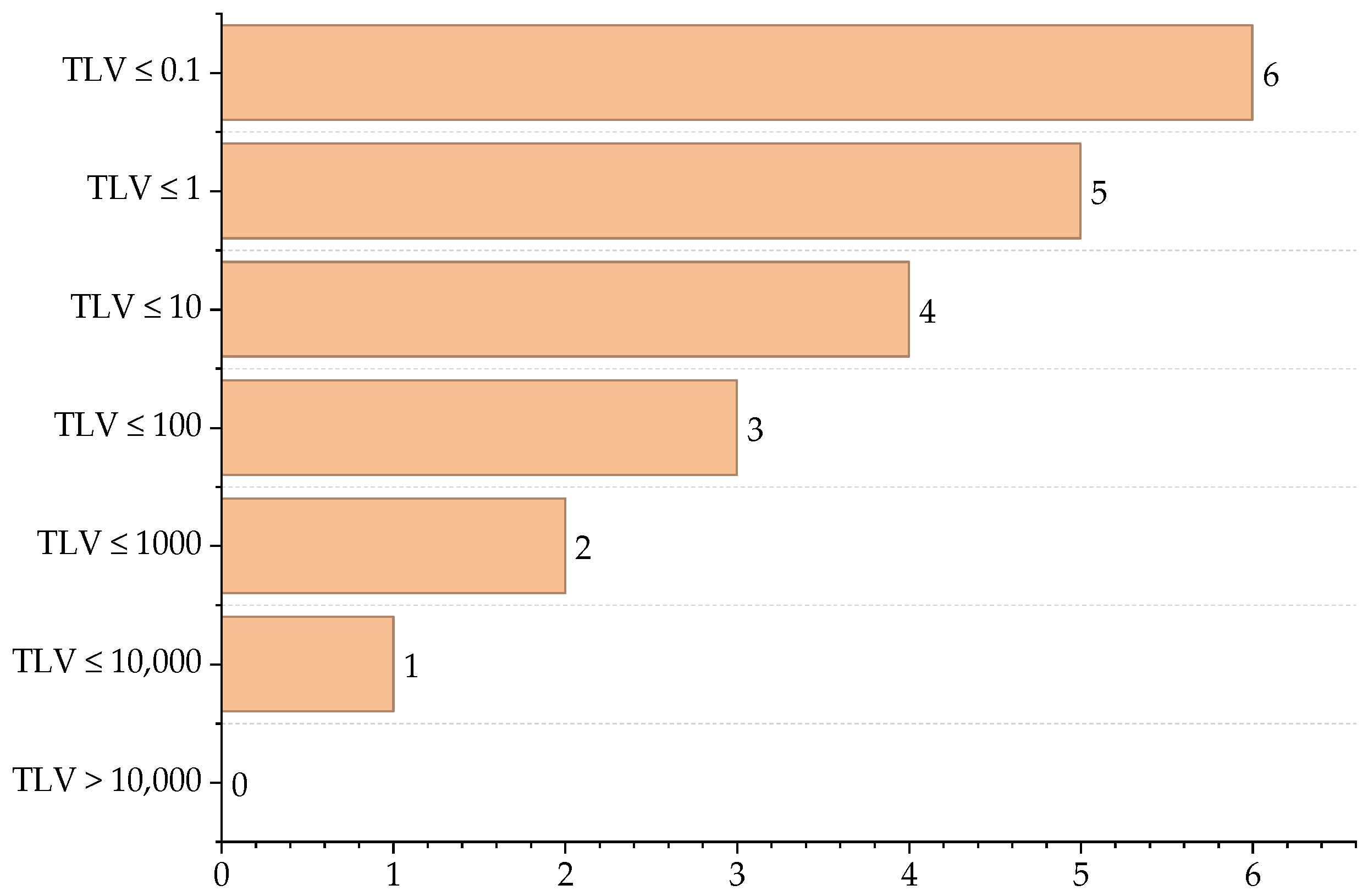
Figure 7 shows the classifications and scores associated with the toxicological risks of substances present in a process, whose mere presence can affect inherent safety. The indicator is divided into six levels, from a TLV > 10,000 ppm (low toxicological risk, score 0) to a TLV ≤ 0.1 ppm (imminent risk to the worker or operator), with a score of 6. A TLV is a toxicological threshold limit.
Figure 7.
Toxicity sub-index (ITOX).
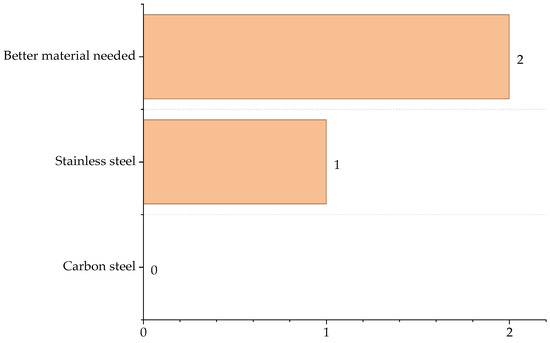
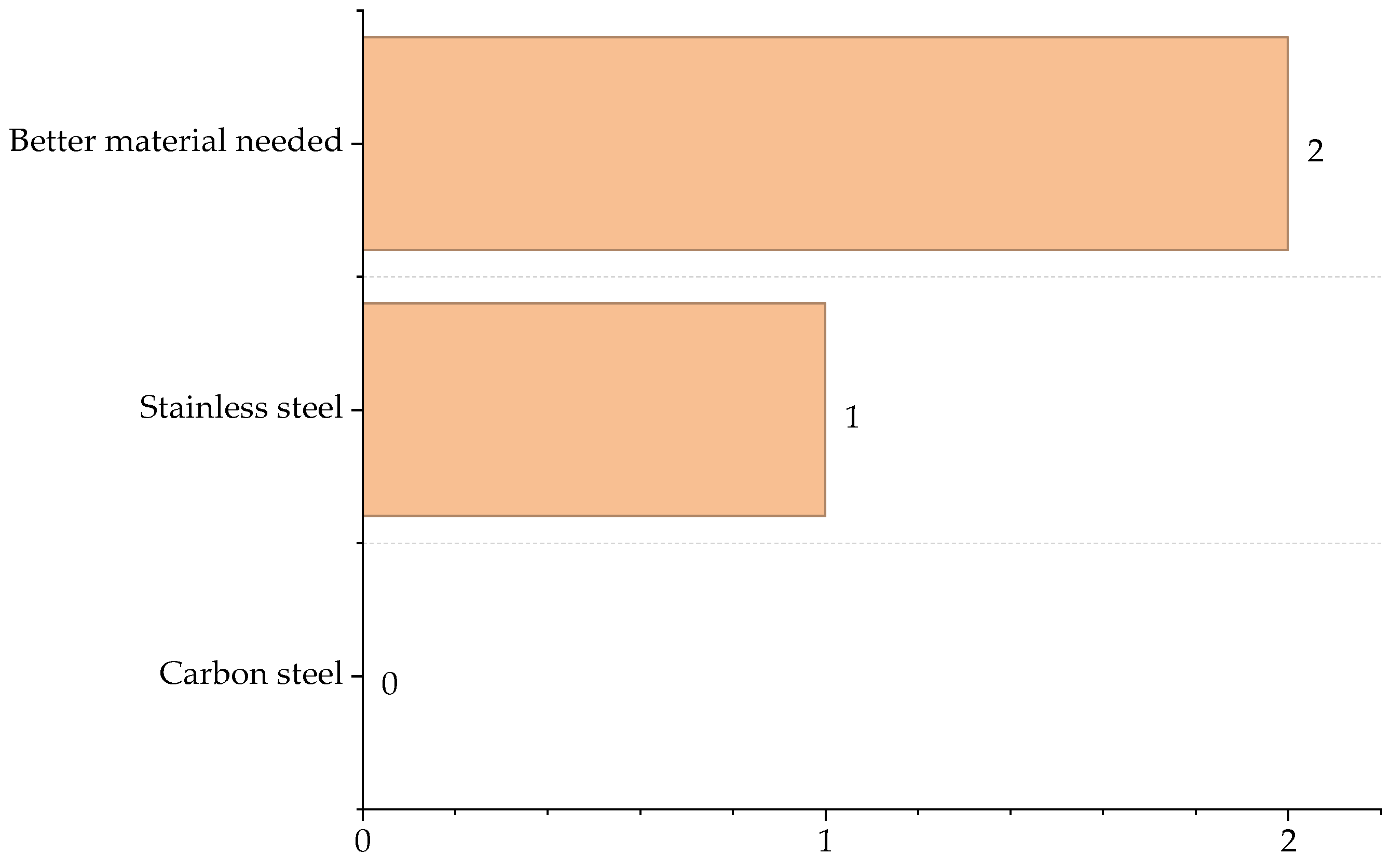
Once the three initial sub-indices have been determined, the most hazardous substance is identified, that is, the one that, when combined with flammability, explosiveness, and toxicity values, represents the most critical scenario within the process. The corrosivity sub-index is then incorporated, which depends on both the properties of the most hazardous substance and the operating conditions. For its correct estimation, the methodology suggests considering variables such as temperature and pressure, as these define the mechanical stresses to which the equipment will be continuously exposed [15]. Figure 8 presents the scale established based on the construction material, in which carbon steel corresponds to a score of 0 and stainless steel to a score of 1, and in conditions that require higher resistance materials due to chemical reactivity or the severity of the process, a score of 2 is assigned.
Figure 8.
Corrosivity sub-index (ICOR).
2.4. Inherent Process Safety Index (IPI)
The Inherent Process Safety Index (IPI), defined in Equation (3), constitutes a fundamental tool for the comprehensive safety assessment, considering both the operating conditions and the structural design aspects of the plant. This index is broken down into various technical sub-indices, which allow for a more precise and valuable analysis from a process engineering perspective. These include the inventory sub-index, associated with the volume and nature of the substances involved; the maximum operating conditions sub-index (temperature and pressure), which determines the severity of the process variables; the equipment safety index, which evaluates the location and proximity of the equipment to the critical core of the plant; and, finally, the structural safety level, which focuses on the facility’s ability to withstand mechanical and environmental stresses under both normal conditions and contingency scenarios.
IPI = II + IT + IP + IEQ + IST
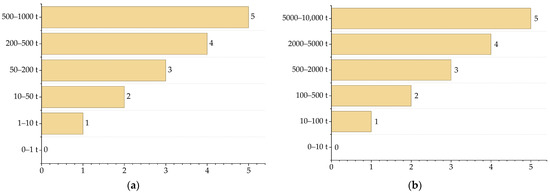
Figure 9 shows the scoring scales assigned to the inventory indicator, calculated based on the total tons of raw materials and products managed during a one-hour residence time in the different process equipment (such as reactors, distillation columns, among others). However, one of the main challenges is that the inherent safety index methodology is applied in the early design stages, which makes it difficult to accurately identify all the equipment that will be included in the final plant design. To overcome this limitation, the methodology’s author proposes classifying equipment according to Inside Battery Limits (ISBL) and Outside Battery Limits (OSBL) [32]. This distinction allows essential equipment for the production process to be located in the plant core (ISBL), while auxiliary or support equipment is located outside these limits (OSBL). Figure 9a shows that the ISBL inventory can score from 0 to 5, within a range of 0 to 1000 tons. In contrast, Figure 9b shows the OSBL inventory, which uses the same scoring scale (0–5) but with a significantly larger capacity range, from 0 to 10,000 tons.
Figure 9.
(a) Range of values for inventory sub-index from internal battery limit (ISBL). (b) Range of values for inventory sub-index from external battery limit (OSBL).
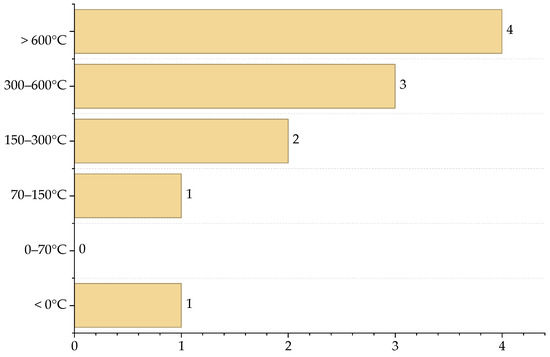
The maximum operating temperature is a critical parameter in the design of chemical plants, since an increase in this value increases the accumulated thermal energy and jeopardizes the integrity of the equipment’s construction materials. The temperature subscript (IT), represented in Figure 10, assigns 0 points at 0 °C, 1 point at temperatures below 0 °C, and up to 4 points for values above 600 °C.
Figure 10.
Temperature sub-index (IT).
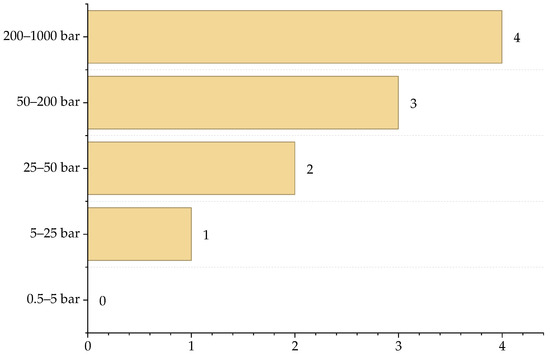
The behavior of industrial processes is strongly influenced by the maximum operating pressure, a key parameter for defining both the normal working pressure and the design pressure that the equipment must withstand. Figure 11 presents the pressure ranges, which extend from 0.5 bar (score of 0) to 1000 bar (score of 4).
Figure 11.
Pressure sub-index (IP).
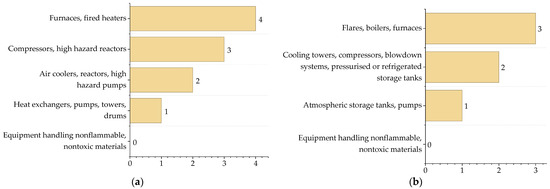
The equipment safety sub-index (IEQ) for the ISBL and OSBL equipment, represented in Figure 12, assesses the risks associated with equipment located at the plant boundaries (ISBL and OSBL) that may compromise the integrity of the facilities, such as high-pressure compressors, furnaces, reactors, and storage tanks. Its objective is to identify the equipment that poses the greatest danger to process operation. While some equipment cannot be replaced because it belongs to the operational core of the plant, in other cases, the risk can be mitigated by incorporating safer technologies.
Figure 12.
(a) Equipment safety sub-index from the internal battery limit (ISBL); (b) equipment safety sub-index from external battery limit (OSBL).
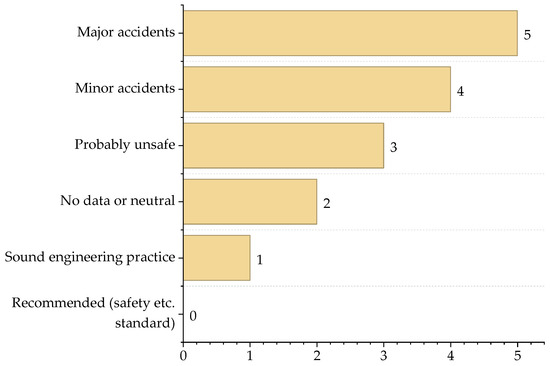
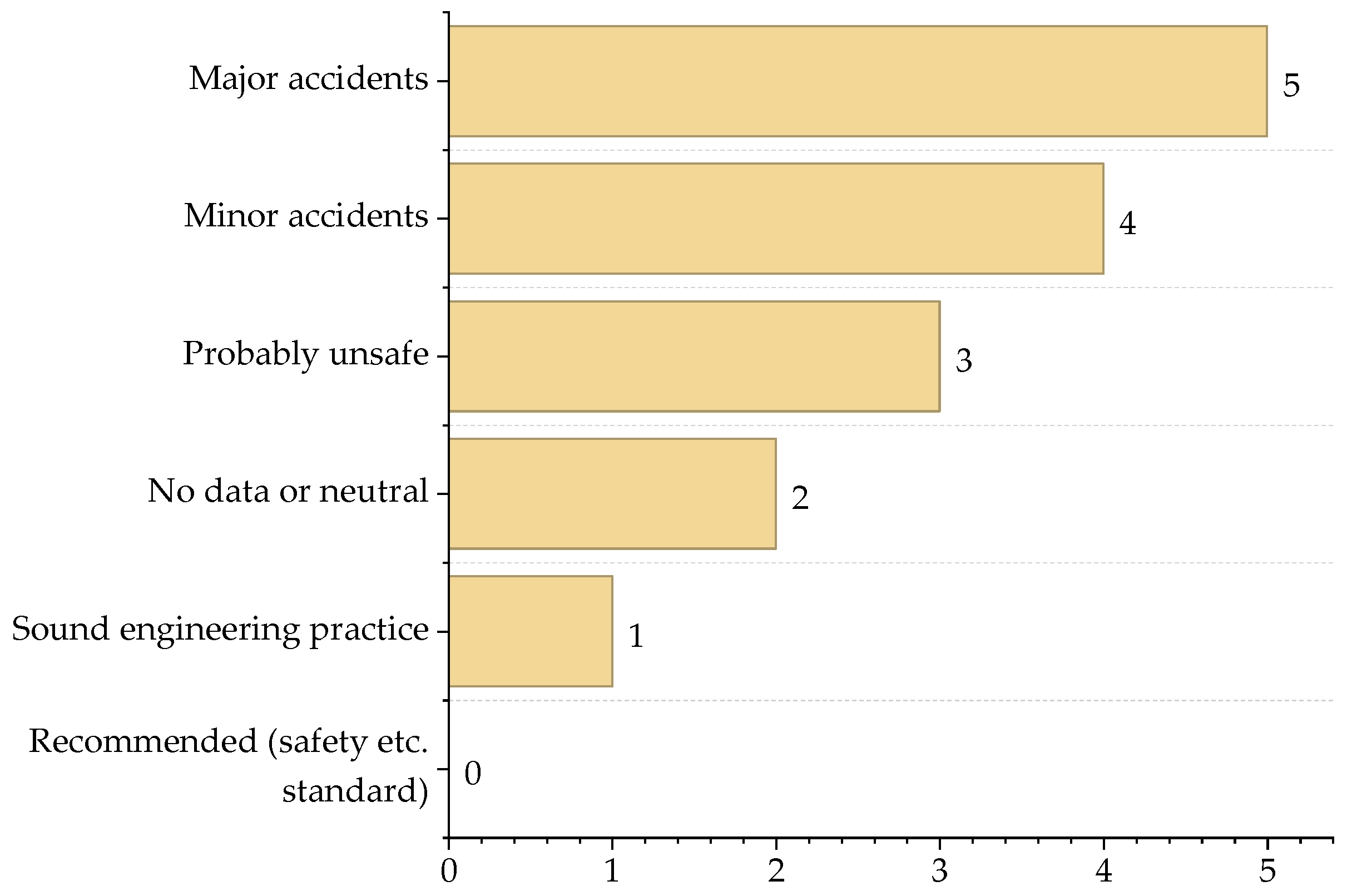
Finally, the secure structure sub-index (IST) in the safety risk assessment system, shown in Figure 13, assesses the level of insecurity associated with the structural configuration of the industrial process, allowing the estimation of the efficiency of unit operations and other relevant elements involved in the system. For its correct application, it is essential to review the technical literature, including safety reports and accident records in plants with similar processes or equipment. This provides a comparative basis for identifying vulnerabilities and strengthening prevention measures [22], which guides decision-making towards more resilient and sustainable designs, minimizing the likelihood of repeating past disasters.
Figure 13.
Secure structure sub-index (IST).
3. Results and Discussion
3.1. Contribution of Chemical Process Indicators
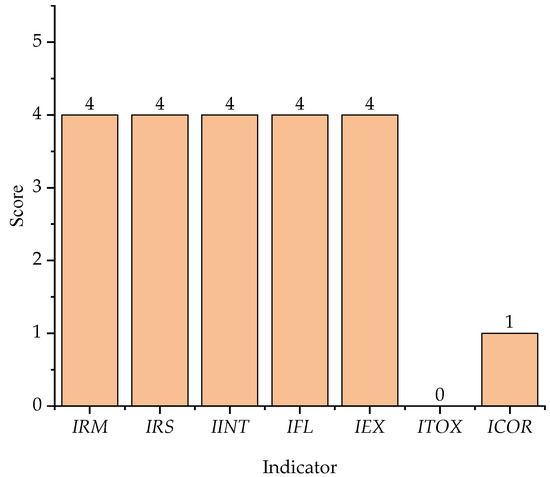
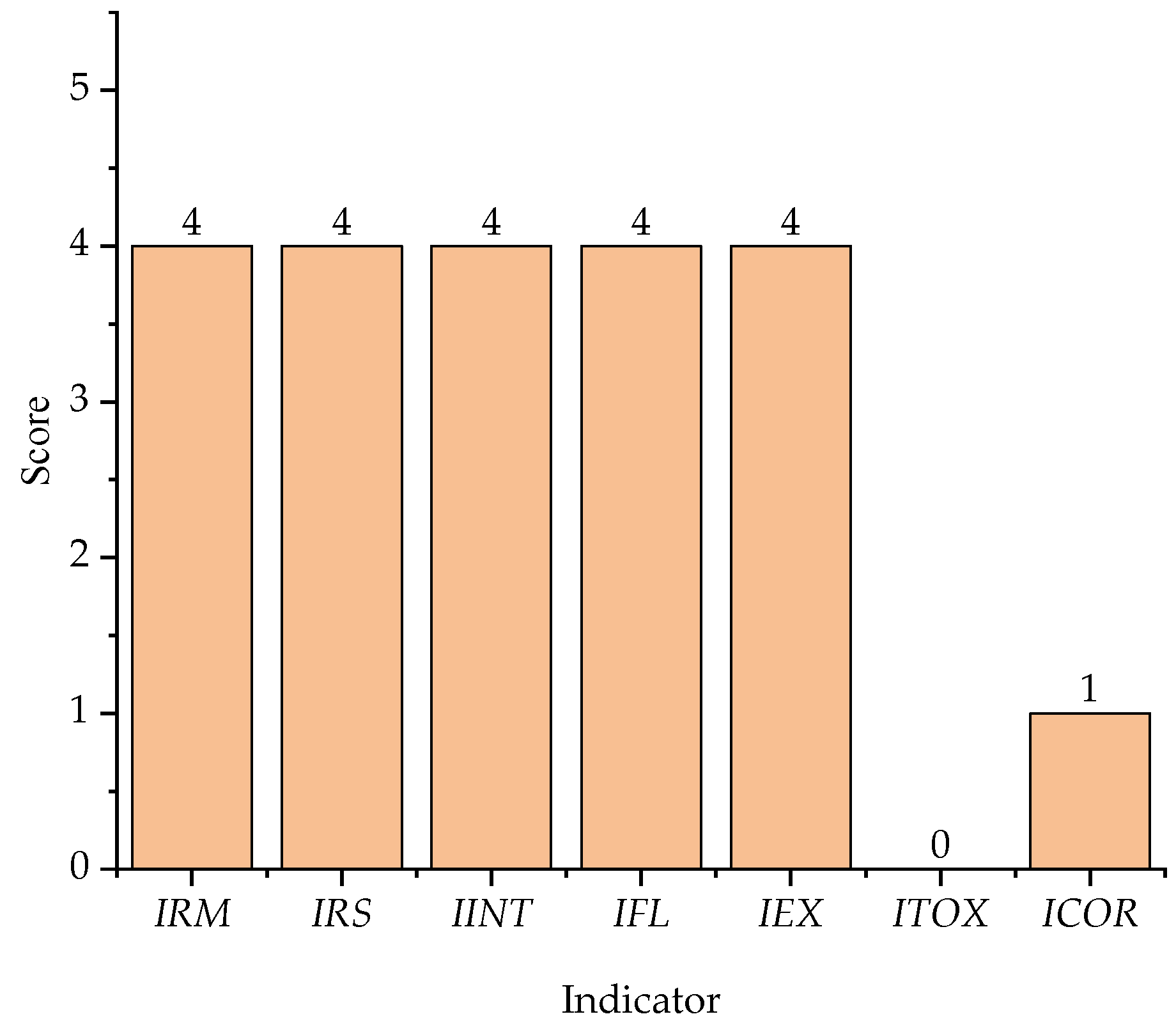
Figure 14 compiles the inherent safety chemical sub-indexes for the palm rachis gasification process by purification with Selexol (Dow Chemical Company, Freeport, TX, USA), starting with the main reaction sub-index, where we have three reactors (gasifier, HTS, and LTS), where the reaction of methane (CH4) and oxygen (O2) was chosen from Table 1 to produce carbon dioxide (CO2) and water (H2O) because it presented a heat or enthalpy of reaction (∆Hr) of −31,148.49 J/g, classifying it as the most exothermic within the entire process, thus granting a score of 4 to the IRM sub-index. However, for the secondary reaction sub-index IRS, the reaction enthalpies located in Table 2 were also compared, from which the most exothermic was taken, being the third secondary reaction of the gasifier with a reaction enthalpy of −14,171.55 J/g, giving the maximum score of 4 for the IRS.
Figure 14.
Chemical indices of inherent safety of the H2 production process by direct gasification with Selexol as solvent.
To assess the sub-indices of chemical interaction, flammability, explosiveness, and toxicity, the technical data sheets and safety data sheets of all compounds present in the process were consulted; most of the technical sheets were taken from the database known as International Chemical Safety Cards (ICSCs) and CAMEO Chemicals | NOAA.
Within the framework of the inherent safety methodology, the chemical interaction sub-index (IINT) receives the maximum score of 4. This assignment is based on the fact that methane (CH4), a substance with an autoignition point of 537 °C, is generated during gasification. Additionally, the process involves compounds such as hydrogen and sulfur, which present similar risks of hazardous interactions. Since the reactors operate at temperatures exceeding 600 °C, the conditions favor the possibility of uncontrolled reactions and explosive phenomena resulting from the combination of these compounds.
Therefore, the chemical interaction sub-index is rated 4. Furthermore, Table 3 was constructed, which systematizes the potential chemical interactions between the most relevant substances in the process, according to the ISI assessment criteria.
Table 3.
Chemical interactions of substances.
For the flammability sub-index (IFL), Table 4 displays the various flash points, or known flash points, that express the lowest temperature at which a material can release gases that, when mixed with air, can explode. This information was compiled from the technical sheets [33]. So, the substances that represent the greatest danger of flammability are hydrogen and methane, where both have the same score of 4. However, hydrogen has a flash point of −231 °C compared to that of methane (CH4), which has a value of −187.8 °C, concluding that H2 requires a lower temperature to form explosive vapors. Even at an industrial level, concerns about the handling of this substance and its mixtures have increased due to its easy detonation [34].
Table 4.
Flammability subindex.
For the quantification of the explosiveness sub-index (IEX), the lower and upper explosive limits (UEL and LEL) must be subtracted; these limits represent the minimum and maximum concentrations at which the presence of a substance in the air can generate an explosion [35]. Hydrogen is the substance with the greatest difference in explosive limits, as seen in Table 5, presenting a value of 71%, which is why it receives a score of 4 in the inherent safety index of the chemical part of the process.
Table 5.
Explosivity subindex.
Continuing with the data obtained from safety data sheets, we obtain the TLVs (threshold limit values) for toxicity, which express the maximum concentrations to which people can be exposed without suffering harm. This allows us to define sulfur dioxide as the most toxic substance for humans, with a limit of 0.25 ppm, highlighted in Table 6. It is a toxic and harmful gas that can cause multiple injuries to human organs. It thus receives a value of 5 for ITOX, the highest compared to the other chemical subscripts.
Table 6.
Toxicity subindex.
According to the methodology, a substance must be selected that is part of the industrial process that represents the greatest danger in it and for this, the sum of the last three indicators is required (flammability, explosiveness and toxicity) [15], where the substance with the highest sum presents the greatest danger; therefore, hydrogen, by contributing 9 points, is classified as the substance that poses the greatest danger in the process of hydrogen production from the gasification of African palm rachis. As a last indicator of the chemical part of the process, there is the corrosiveness sub-index, which is based on the requirement of construction materials for the substances involved in this process that do not affect the structures; therefore, for this case of the gasification of African palm rachis, a stainless steel material was chosen, providing a score of 1 for this indicator, because it works with hydrogen, which is capable of degrading carbon steel structures; these degradations are known as hydrogen attacks and it is a reaction that takes place at temperatures above 200 °C, where hydrogen binds to the carbons present in the metal structure (decarburization), producing methane gas (CH4) which generates a loss of mechanical strength and toughness of the material or, in some cases, methane hydrate (reticular structure where water traps gases inside, such as methane or propane) [36]. Therefore, stainless steel reiterates its position as the most suitable material to resist high temperatures, mechanical stress, and chemical interactions [37].
3.2. Contribution of Process Safety Indicator
For the inventory subindex, there are two types of location, depending on proximity (ISBL) or distance (OSBL) to the plant’s core. The ISBL inventory corresponds to the inventory of the hydrogen production process using direct gasification and purification using Selexol, which represents 699.27 t/h, and the OSBL corresponds to the storage tanks in this case, where the palm rachis is stored, and 41.06 t/h is sent. Therefore, they would have scores of 3 and 1, respectively.
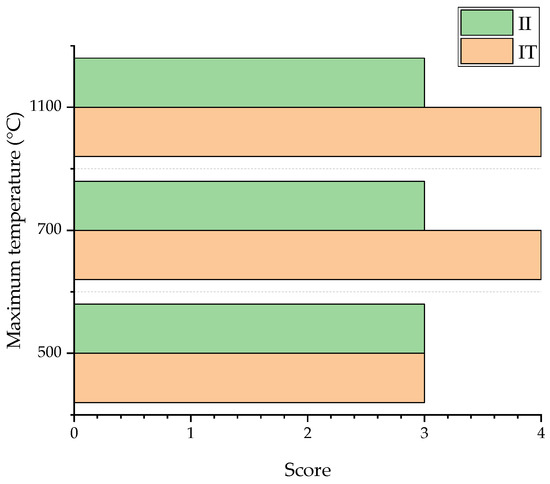
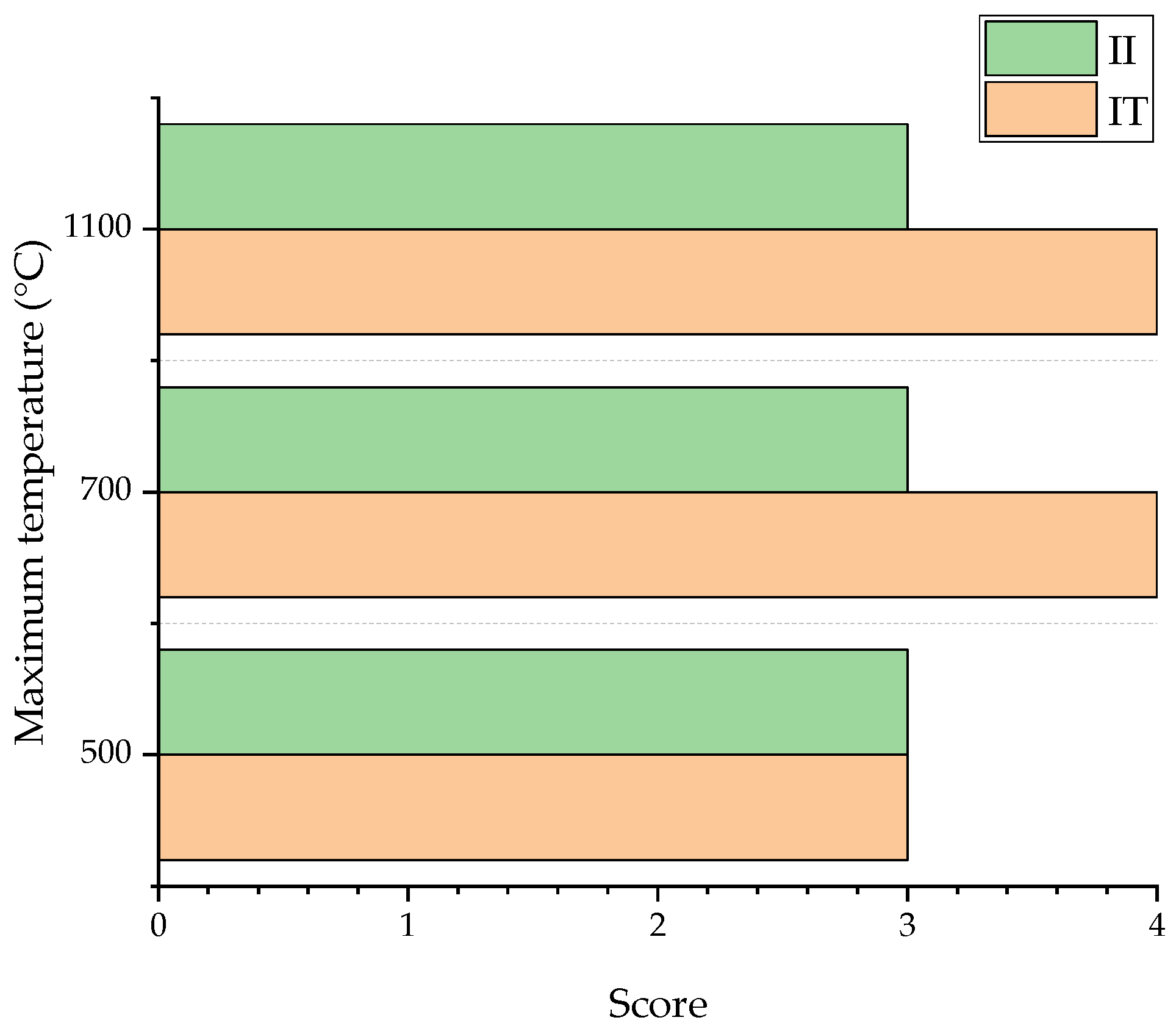
To determine the main safety indicators associated with temperature (IT) and inventory (II), an evaluation was performed on the effect of the maximum operating temperature on the gasification reactors, as shown in Figure 15. However, the sensitivity analysis of hydrogen production through temperature modification had already been developed in a previous investigation by the authors [24]; in the present work, the focus was on evaluating the inherent safety associated with this sensitivity, where the variation in reactor operating temperatures between the range of 500 to 1100 °C was observed. The results show that, as the temperature increases, the sub-index (IT) increases its score. On the other hand, the inventory sub-index remained static, since it is based on the amount of mass in tons contained in industrial equipment over a period of one hour, regardless of whether it is raw material, main product, or waste. Therefore, the ISBL inventory would remain at 699.27 t/h. The previous safety analysis at different temperatures demonstrated that temperature has a more decisive effect on the intrinsic risks of the system than the inventory of substances, especially at 1100 °C, which corresponds to the worst-case scenario and has a score of 4, contributing to the overall indicator.
Figure 15.
Effect of the temperature of the gasification reactor on the inventory and temperature sub-indices (temperature values were previously obtained by authors [24]).
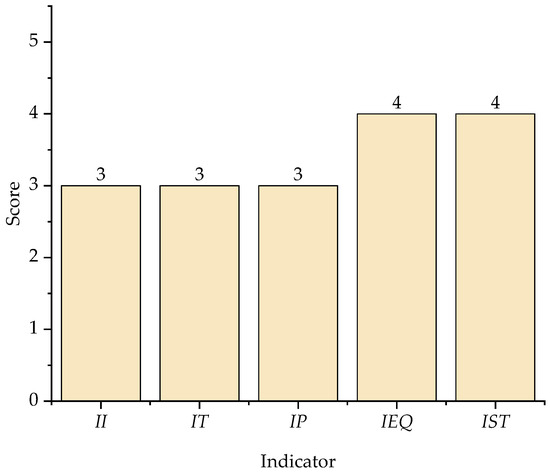
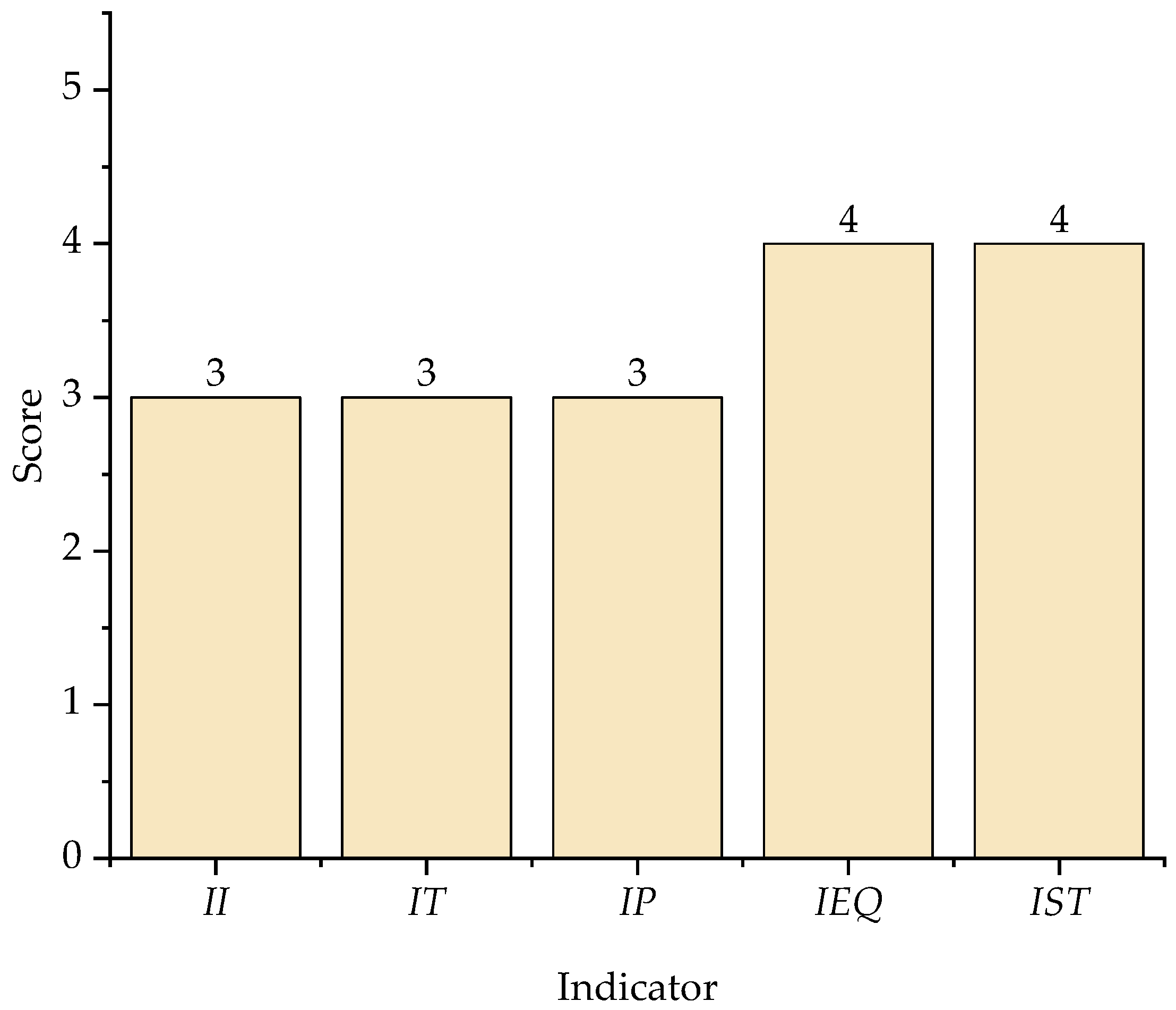
Figure 16 represents the compilation of the inherent safety indicators of the process (IPI); therefore, these were based on the operating conditions of the equipment, such as the sub-indexes of temperature, pressure, inventory (mass flow per 1 h residence time), safety level, and process equipment. Since the gasifiers are the equipment that uses the greatest pressure in the hydrogen production process, at 60 bar, they would in turn achieve a score of 3.
Figure 16.
Process index of the inherent safety of the process of obtaining H2 by direct gasification with Selexol as solvent.
For the sub-index that describes the presence of hazardous equipment (IEQ), at its internal (ISBL) or external (OSBL) battery limits, different pieces of equipment are presented that are categorized as potentially dangerous for the inherent safety of the hydrogen production process from the gasification of African palm rachis; among them are the reactors, such as the gasification one, which can process 41.06 t/h of raw material under high-intensity conditions such as at 900 °C and 60 bar. On the other hand, the HTS and LTS reactors increase this to 1100 °C and 50 bar, thus allowing them to be categorized as high-risk reactors with a score of 3 according to the range of ISBL values presented in Figure 12a. Finally, the safe structure level sub-index was based on accidents at other biofuel production plants, a clear example of which was the accident at the alkaline water electrolysis pilot plant in Gangneung19, South Korea, where a tank containing hydrogen exploded due to an oxygen leak in the hydrogen separator, which acted as a corrosive medium so that static electricity (poor connections in the electrical network) caused the accident that left two workers dead and six injured [38]. Another major incident was the explosion of hydrogen storage tanks in Norway, which, due to human error, caused the escape of large quantities of high-pressure gas [39]. In 2012, a relief valve failed, resulting in the release of more than 300 kg of hydrogen into the environment, which caught fire instantly upon exiting the pipeline. The main victims were those of a nearby school and surrounding businesses [40]. These latest accidents allow the hydrogen production process to be classified as having minor accidents, which is reflected in 4 points for this last indicator of the inherent safety of the process.
4. Discussion
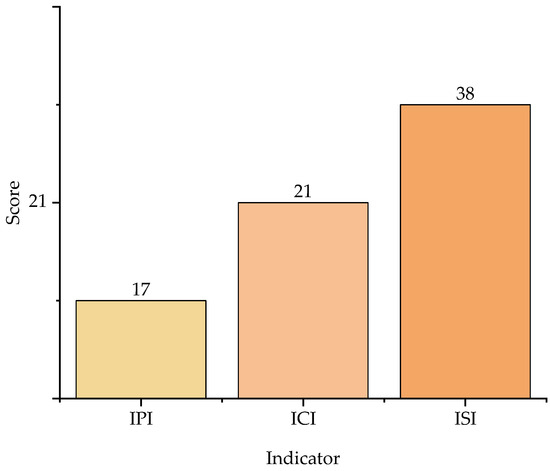
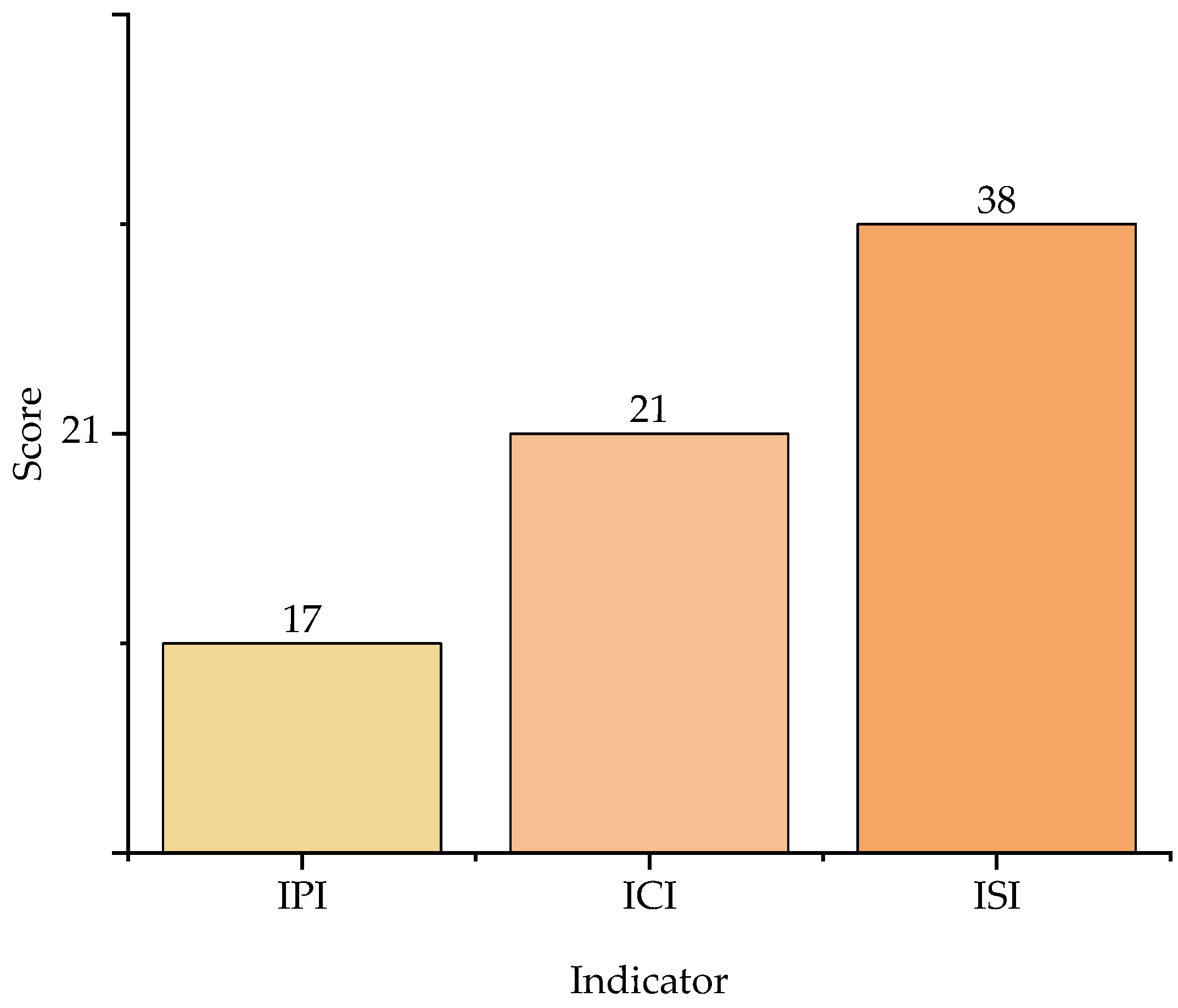
Figure 17 shows that the biohydrogen production process using the direct gasification of African palm rachis coupled to a Selexol solvent purification unit has a total inherent safety index value of 38, indicating negative performance in terms of process safety. The chemical safety index had a value of 21 and the process safety index had a value of 17. The presence of methane and hydrogen in the process is the main source of chemical risk. On the other hand, unsafe equipment and high inventory are the main problems; these risks arise from the use of process units with hazardous substances under high operating conditions such as high flow rates, temperatures, and pressures.
Figure 17.
Total inherent safety index (ISI) of the gasification of palm stems to obtain hydrogen.
In previous work, González-Delgado et al. analyzed the inherent safety of the palm oil production process from which the palm rachis of the present investigation are obtained as a residue; it had a score (ISI) of 9, which denotes it as inherently safe [41]. This is because it does not involve chemical reactions, the substances involved are neither flammable nor corrosive, and the critical temperatures and pressures do not pose any risk. The highest indicator score assigned was in the equipment safety index, due to the presence of a boiler and dryer, with a score of 4. On the other hand, González-Delgado et al. implemented this same methodology to evaluate three algae-based biodiesel production topologies: conventional transesterification, in situ transesterification, and hydrothermal liquefaction (HTL). Their scores were 30, 29, and 36, respectively, indicating that they are inherently unsafe processes [42].
These three topologies were assigned mostly maximum metrics, primarily due to the chemical inherent safety index. The reactions carried out exhibit highly exothermic behavior; the substances involved, such as pentane, toluene, hexane, methanol, and carbon monoxide, are highly flammable and toxic and can exhibit dangerous chemical interactions with each other. Most of the substances involved in the process are corrosive. In the case of the process inherent safety index, the operating temperatures and pressures were considered safe for the first topologies, while the third had a dangerous performance.
Li et al. implemented the original inherent safety methodology to compare biodiesel production topologies using homogeneous and heterogeneous catalysis. Their scores were 17 and 16, respectively, indicating that they exhibit similar risk. These two configurations were assigned virtually identical metrics for most sub-indices, primarily due to the strong influence of methanol, whose high flammability, toxicity, and explosiveness dominated the evaluation. The transesterification reactions are slightly exothermic, and the presence of corrosive compounds such as NaOH and H3PO4 in the conventional process marginally increases the risk compared to the heterogeneous process. However, due to the limitations of the original method, the differentiation between the two processes is minimal [43].
Table 7 shows a comparison of the different studies that have been carried out and whose objective was the production of biofuels and their inherent safety assessment, to determine how viable it is to implement the process that has been studied from a safety point of view.
Table 7.
Comparison of process indicators with related literature.
From Table 7, it can be seen that the work in question is quite unsafe due to its large-scale production nature, compared to the four biodiesel production routes, which handle inventories less than 100 t/h. The three routes proposed by González-Delgado et al. present inventories of 41.08 t, 28.63 t, and 53.73 t, respectively, in addition to having maximum operating temperatures and pressures lower than the hydrogen production process presented in this work (1100 °C, 60 bar, and 699.27 t/h). On the other hand, the fourth route covers the production of biodiesel through heterogeneous catalysis and has inventories of less than 6 t/h, making it a pilot-scale process and therefore likely to be safer than any industry with large production. Conversion processes for biofuels show varying levels of industrial maturity. Conventional transesterification is currently the most scalable and commercial technology for producing biodiesel [44,45], while in situ transesterification remains largely in the pilot phase due to its separation limitations and costs. Hydrothermal liquefaction (HTL) is advancing as a promising option for wet biomass such as algae, sludge, and waste, with growing relevance due to its ability to produce refinery-compatible biorefinery feedstock [46]. Heterogeneous catalytic processes offer environmental and operational improvements, with moderate industrial use in small-to-medium-sized plants, and the use of direct biomass gasification to produce hydrogen is scaling up to demonstration projects, being industrially relevant in the context of the energy transition but still less widespread than other alternatives [47,48].
In general, biomass gasification faces significant challenges in terms of energy consumption, safety, and water use. The process requires high temperatures (800–1000 °C) and additional energy to dry wet biomass and clean the gas produced, which reduces its overall efficiency [49,50]. In terms of safety, the presence of flammable and toxic gases such as H2, CO, and H4, along with risks of explosion, corrosion, and tar formation, increases operational complexity and the need for strict industrial controls [51,52]. In addition, the use of steam, wet scrubbers, and gas cooling increases water consumption and generates contaminated effluents that are difficult to treat [53,54]. As an alternative to reduce costs and improve efficiency, energy integration through Pinch analysis is proposed, since the process generates high-flow, high-energy hot streams that can be recovered to preheat biomass, produce steam, or feed other thermal stages, significantly reducing the external energy required [55].
5. Conclusions
The inherent safety methodology was applied to assess and determine the inherent risks of the biohydrogen (H2) production process through the gasification of African palm stems. The process showed a negative inherent safety performance, with a total index of 38. The chemical and process inherent safety indices reached values of 21 and 17, respectively. The highest sub-indices correspond to the chemical substances sub-index. Many risks are associated with the chemical reactivity sub-index due to the highly exothermic reaction and the danger posed by a toxicity limit score (ITOX) of 5, mainly due to the presence of sulfur dioxide (SO2). In addition, several unsafe pieces of equipment are present in the process, such as reactors and gasifiers, where operating conditions present significant risks, with high temperatures and low pressures. This was evaluated using a sensitivity analysis to quantify the effect of temperature on process safety indicators, concluding that hydrogen production from palm oil is susceptible to increases in operating temperature, contributing up to 4 points in the worst-case scenario. For this research, artificial intelligence was not used to quantify or prevent risks through predictive models because this requires a much more detailed process design, including details such as the location of the industrial plant, inventory, and equipment necessary to provide industrial services, such as furnaces, boilers, compressors, pumps, cooling towers, etc. Therefore, artificial intelligence is much better suited to real-world plants, where the development of neural networks and machine learning would enable the identification of significant risks. Given that this is a preliminary version for future research that could delve deeper into computer-aided process engineering (CAPE) to improve the intrinsic safety of the process, it is recommended to reduce inventory and relocate the most dangerous equipment from the ISBL boundary to the OSBL. In addition, the application of the energy integration methodology using pinch analysis would provide an innovative solution to the excessive energy requirements of hydrogen production through biomass gasification.
Author Contributions
Conceptualization, Á.D.G.-D.; methodology, Á.D.G.-D.; software, L.M.-G. and A.M.-A.; validation, Á.D.G.-D.; formal analysis, L.M.-G. and A.M.-A.; investigation, L.M.-G., A.M.-A. and Á.D.G.-D.; resources, Á.D.G.-D.; data curation, A.M.-A. and L.M.-G.; writing—original draft preparation, L.M.-G. and A.M.-A.; writing—review and editing, Á.D.G.-D.; visualization, L.M.-G. and A.M.-A.; supervision, Á.D.G.-D.; project administration, Á.D.G.-D.; funding acquisition, Á.D.G.-D. All authors have read and agreed to the published version of the manuscript.
Funding
The authors declare that this research received no external funding. No financial support from public, private, or non-profit agencies was received for the development, analysis, writing, or publication of this work. It was carried out solely with the authors’ own resources and those of their affiliated institution.
Data Availability Statement
The original contributions presented in this study are included in the article. Further inquiries can be directed to the corresponding author.
Acknowledgments
The authors would like to thank the University of Cartagena for providing the equipment and software to successfully conduct this work.
Conflicts of Interest
The authors declare no conflicts of interest.
Abbreviations
The following abbreviations are used in this manuscript:
| ISI | Inherent Safety Index |
| ICI | Inherent safety index by chemicals |
| IPI | Inherent Process Safety Index |
| IRM | Main Reaction Heat subindex, J/g |
| IRS | Secondary Reaction Heat Subindex, J/g |
| IINT | Chemical Interactions Subindex |
| IFL | Flammability Subindex, °C |
| IEX | Explosiveness Subindex, % |
| ITOX | Toxicity Subindex, ppm |
| ICOR | Corrosivity Subindex |
| II | Inventory Subindex, t/h |
| IT | Temperature Subindex, °C |
| IP | Pressure Subindex, bar |
| IEQ | Equipment Safety Subindex |
| IST | Safe Structure Level Subindex |
References
- Alvarado-Flores, J.J.; Alcaraz-Vera, J.V.; Ávalos-Rodríguez, M.L.; Guzmán-Mejía, E.; Rutiaga-Quiñones, J.G.; Pintor-Ibarra, L.F.; Guevara-Martínez, S.J. Thermochemical Production of Hydrogen from Biomass: Pyrolysis and Gasification. Energies 2024, 17, 537. [Google Scholar] [CrossRef] [Scilit]
- Hassan, Q.; Viktor, P.; Al-Musawi, T.J.; Ali, B.M.; Algburi, S.; Alzoubi, H.M.; Al-Jiboory, A.K.; Sameen, A.Z.; Salman, H.M.; Jaszczur, M. The renewable energy role in the global energy Transformations. Renew. Energy Focus 2024, 48, 100545. [Google Scholar] [CrossRef] [Scilit]
- Mekonnin, A.S.; Wacławiak, K.; Humayun, M.; Zhang, S.; Ullah, H. Hydrogen Storage Technology, and Its Challenges: A Review. Catalysts 2025, 15, 260. [Google Scholar] [CrossRef] [Scilit]
- Jara-Cobos, L.; Abril-González, M.; Pinos-Vélez, V. Production of Hydrogen from Lignocellulosic Biomass: A Review of Technologies. Catalysts 2023, 13, 766. [Google Scholar] [CrossRef] [Scilit]
- Al-Shetwi, A.Q.; Abidin, I.Z.; Mahafzah, K.A.; Hannan, M.A. Feasibility of future transition to 100% renewable energy: Recent progress, policies, challenges, and perspectives. J. Clean. Prod. 2024, 478, 143942. [Google Scholar] [CrossRef] [Scilit]
- Khan, F.; Hashemi, S.J.; Paltrinieri, N.; Amyotte, P.; Cozzani, V.; Reniers, G. Dynamic risk management: A contemporary approach to process safety management. Curr. Opin. Chem. Eng. 2016, 14, 9–17. [Google Scholar] [CrossRef] [Scilit]
- Dehane, A.; Merouani, S.; Chibani, A.; Hamdaoui, O. Clean hydrogen production by ultrasound (sonochemistry): The effect of noble gases. Curr. Res. Green Sustain. Chem. 2022, 5, 100288. [Google Scholar] [CrossRef] [Scilit]
- Herrera, T.; Parejo, V.; González-Delgado, Á. Chemical and Process Inherent Safety Evaluation of Avocado Oil Production (Laurus persea L.) in North Colombia. Chem. Eng. Trans. 2022, 91, 247–252. [Google Scholar] [CrossRef]
- Meramo, S.; Gonzalez-Quiroga, A.; Gonzalez-Delgado, A. Technical, Environmental, and Process Safety Assessment of Acetone-Butanol-Ethanol Fermentation of Cassava Residues. Sustainability 2022, 14, 16185. [Google Scholar] [CrossRef] [Scilit]
- Roa, C.A.B.; Navarro, J.G.G.; Jeisson, G.; Ricaurte, H. Hacia el aprovechamiento energético de los raquis de palma en calderas de biomasa. Palmas 2023, 44, 51–64. [Google Scholar] [CrossRef] [Scilit]
- Steff ania López Cuervo, L.; Alberto Ríos, L. Del Raquis de Palma a Combustibles más Limpios. Rev. Exp. 2018, 10, 1. [Google Scholar]
- Segurado, R.; Pereira, S.; Correia, D.; Costa, M. Techno-economic analysis of a trigeneration system based on biomass gasification. Renew. Sustain. Energy Rev. 2019, 103, 501–514. [Google Scholar] [CrossRef] [Scilit]
- Pasman, H.; Sripaul, E.; Khan, F.; Fabiano, B. Energy transition technology comes with new process safety challenges and risks. Process Saf. Environ. Prot. 2023, 177, 765–794. [Google Scholar] [CrossRef] [Scilit]
- Łukajtis, R.; Hołowacz, I.; Kucharska, K.; Glinka, M.; Rybarczyk, P.; Przyjazny, A.; Kamiński, M. Hydrogen production from biomass using dark fermentation. Renew. Sustain. Energy Rev. 2018, 91, 665–694. [Google Scholar] [CrossRef] [Scilit]
- Heikkilä, A.-M. Inherent Safety in Process Plant Design: An Index-Based Approach; Technical Research Centre of Finland (VTT): Espoo, Finland, 1999; ISBN 951-38-5371-3. [Google Scholar]
- Kletz, T. Explosions. In Still Going Wrong! Elsevier: Amsterdam, The Netherlands, 2004; pp. 102–117. [Google Scholar] [CrossRef] [Scilit]
- Hendershot, D.C. Inherently safer chemical process design. J. Loss Prev. Process Ind. 1997, 10, 151–157. [Google Scholar] [CrossRef] [Scilit]
- González-Delgado, Á.D.; García-Martínez, J.B.; Barajas-Solano, A.F. Inherent Safety Analysis and Sustainability Evaluation of a Vaccine Production Topology in North-East Colombia. Sustainability 2022, 14, 9985. [Google Scholar] [CrossRef] [Scilit]
- Zhu, J.; Liu, Z.; Cao, Z.; Han, X.; Hao, L.; Wei, H. Development of a general inherent safety assessment tool at early design stage of chemical process. Process Saf. Environ. Prot. 2022, 167, 356–367. [Google Scholar] [CrossRef] [Scilit]
- Li, J.; Goerlandt, F.; Reniers, G. Trevor Kletz’s scholarly legacy: A co-citation analysis. J. Loss Prev. Process Ind. 2020, 66, 104166. [Google Scholar] [CrossRef] [Scilit]
- Hansson, S.O. Promoting inherent safety. Process Saf. Environ. Prot. 2010, 88, 168–172. [Google Scholar] [CrossRef] [Scilit]
- Arunthavanathan, R.; Sajid, Z.; Amin, M.T.; Tian, Y.; Khan, F.; Pistikopoulos, E. Process safety 4.0: Artificial intelligence or intelligence augmentation for safer process operation? AIChE J. 2024, 70, e18475. [Google Scholar] [CrossRef] [Scilit]
- Park, J.; Kang, D. Artificial Intelligence and Smart Technologies in Safety Management: A Comprehensive Analysis Across Multiple Industries. Appl. Sci. 2024, 14, 11934. [Google Scholar] [CrossRef] [Scilit]
- Vargas-Mira, A.; Zuluaga-García, C.; González-Delgado, Á.D. A Technical and Environmental Evaluation of Six Routes for Industrial Hydrogen Production from Empty Palm Fruit Bunches. ACS Omega 2019, 4, 15457–15470. [Google Scholar] [CrossRef] [Scilit] [PubMed]
- Durán-García, M.E.; Ruiz-Navas, R.A. Simulador de propiedades termodinámicas en la conversión de la biomasa forestal de aserrín de pino. Maderas-Cienc Tecnol 2020, 22, 347–364. [Google Scholar] [CrossRef] [Scilit]
- Mohammed, M.; Salmiaton, A.; Azlina, W.W.; Amran, M.M. Gasification of Empty Fruit Bunch for Hydrogen Rich Fuel Gas Production. J. Appl. Sci. 2011, 11, 2416–2420. [Google Scholar] [CrossRef] [Scilit]
- Aholoukpè, H.; Dubos, B.; Flori, A.; Deleporte, P.; Amadji, G.; Chotte, J.L.; Blavet, D. Estimating aboveground biomass of oil palm: Allometric equations for estimating frond biomass. For. Ecol. Manag. 2013, 292, 122–129. [Google Scholar] [CrossRef] [Scilit]
- Mohammed, M.; Salmiaton, A.; Azlina, W.W.; Amran, M.M. Gasification of oil palm empty fruit bunches: A characterization and kinetic study. Bioresour. Technol. 2012, 110, 628–636. [Google Scholar] [CrossRef] [Scilit]
- González-Delgado, A.D.; Pájaro-Gómez, N.; Ortega-Toro, R. Inherent safety analysis and sustainability evaluation of dual crude palm and kernel oil production in North Colombia. Rev. Mex. Ing. Quim. 2023, 22, 1–15. [Google Scholar] [CrossRef] [Scilit]
- Kletz, T.A. Inherently safer design: The growth of an idea. Process Saf. Prog. 1996, 15, 5–8. [Google Scholar] [CrossRef] [Scilit]
- Kletz, T.A. Inherently safer plants. Plant/Oper. Prog. 1985, 4, 164–167. [Google Scholar] [CrossRef] [Scilit]
- Mendivil-Arrieta, A.; Diaz-Pérez, J.M.; González-Delgado, Á.D. Effect of Energy Integration on Safety Indexes of Suspension PVC Production Process. Processes 2025, 13, 2926. [Google Scholar] [CrossRef] [Scilit]
- Chakrabarty, A.; Mannan, S.; Cagin, T. Molecular-Level Modeling and Simulation in Process Safety. In Multiscale Modeling for Process Safety Applications; Elsevier: Amsterdam, The Netherlands, 2016; pp. 111–210. [Google Scholar] [CrossRef] [Scilit]
- Sánchez, A.L.; Williams, F.A. Recent advances in understanding of flammability characteristics of hydrogen. Prog. Energy Combust. Sci. 2014, 41, 1–55. [Google Scholar] [CrossRef] [Scilit]
- Wang, W.-Q.; Sun, Z.-Y. Experimental studies on explosive limits and minimum ignition energy of syngas: A comparative review. Int. J. Hydrogen Energy 2019, 44, 5640–5649. [Google Scholar] [CrossRef] [Scilit]
- Hu, P.; Chen, D.; Zi, M.; Wu, G. Effects of carbon steel corrosion on the methane hydrate formation and dissociation. Fuel 2018, 230, 126–133. [Google Scholar] [CrossRef] [Scilit]
- Veysi, A.; Roushani, M.; Najafi, H. Synthesis and evaluation of CuNi-MOF as a corrosion inhibitor of AISI 304 and 316 stainless steel in 1N HCl solution. Heliyon 2025, 11, e41296. [Google Scholar] [CrossRef] [Scilit] [PubMed]
- Calabrese, M.; Portarapillo, M.; Di Nardo, A.; Venezia, V.; Turco, M.; Luciani, G.; Di Benedetto, A. Hydrogen Safety Challenges: A Comprehensive Review on Production, Storage, Transport, Utilization, and CFD-Based Consequence and Risk Assessment. Energies 2024, 17, 1350. [Google Scholar] [CrossRef] [Scilit]
- Wen, J.X.; Marono, M.; Moretto, P.; Reinecke, E.-A.; Sathiah, P.; Studer, E.; Vyazmina, E.; Melideo, D. Statistics, lessons learned and recommendations from analysis of HIAD 2.0 database. Int. J. Hydrogen Energy 2022, 47, 17082–17096. [Google Scholar] [CrossRef] [Scilit]
- Guo, L.; Su, J.; Wang, Z.; Shi, J.; Guan, X.; Cao, W.; Ou, Z. Hydrogen safety: An obstacle that must be overcome on the road towards future hydrogen economy. Int. J. Hydrogen Energy 2024, 51, 1055–1078. [Google Scholar] [CrossRef] [Scilit]
- González-Delgado, A.D.; Barajas-Solano, A.F.; Leon-Pulido, J. Evaluating the Sustainability and Inherent Safety of a Crude Palm Oil Production Process in North-Colombia. Appl. Sci. 2021, 11, 1046. [Google Scholar] [CrossRef] [Scilit]
- González-Delgado, A.D.; García-Martínez, J.B.; Barajas-Solano, A.F. Evaluation of Algae-Based Biodiesel Production Topologies via Inherent Safety Index (ISI). Appl. Sci. 2021, 11, 2854. [Google Scholar] [CrossRef] [Scilit]
- Li, X.; Zanwar, A.; Jayswal, A.; Lou, H.H.; Huang, Y. Incorporating Exergy Analysis and Inherent Safety Analysis for Sustainability Assessment of Biofuels. Ind. Eng. Chem. Res. 2011, 50, 2981–2993. [Google Scholar] [CrossRef] [Scilit]
- Balat, M.; Balat, H. Progress in biodiesel processing. Appl. Energy 2010, 87, 1815–1835. [Google Scholar] [CrossRef] [Scilit]
- Leung, D.Y.; Wu, X.; Leung, M. A review on biodiesel production using catalyzed transesterification. Appl. Energy 2010, 87, 1083–1095. [Google Scholar] [CrossRef] [Scilit]
- Elliott, D.C.; Biller, P.; Ross, A.B.; Schmidt, A.J.; Jones, S.B. Hydrothermal liquefaction of biomass: Developments from batch to continuous process. Bioresour. Technol. 2015, 178, 147–156. [Google Scholar] [CrossRef] [Scilit] [PubMed]
- Kumar, A.; Jones, D.D.; Hanna, M.A. Thermochemical Biomass Gasification: A Review of the Current Status of the Technology. Energies 2009, 2, 556–581. [Google Scholar] [CrossRef] [Scilit]
- Ruhul, A.M.; Kalam, M.A.; Masjuki, H.H.; Fattah, I.M.R.; Reham, S.S.; Rashed, M.M. State of the art of biodiesel production processes: A review of the heterogeneous catalyst. RSC Adv. 2015, 5, 101023–101044. [Google Scholar] [CrossRef] [Scilit]
- Demirbas, A. Hazelnut Shell to Hydrogen-Rich Gaseous Products via Catalytic Gasification Process. Energy Sources 2004, 26, 25–33. [Google Scholar] [CrossRef] [Scilit]
- Safarian, S.; Unnþórsson, R.; Richter, C. A review of biomass gasification modelling. Renew. Sustain. Energy Rev. 2019, 110, 378–391. [Google Scholar] [CrossRef] [Scilit]
- Rahman, M.; Henriksen, U.B.; Ciolkosz, D. Startup process, safety and risk assessment of biomass gasification for off-grid rural electrification. Sci. Rep. 2023, 13, 21395. [Google Scholar] [CrossRef] [Scilit] [PubMed]
- Guan, G.; Kaewpanha, M.; Hao, X.; Abudula, A. Catalytic steam reforming of biomass tar: Prospects and challenges. Renew. Sustain. Energy Rev. 2016, 58, 450–461. [Google Scholar] [CrossRef] [Scilit]
- Yao, D.; Xu, Z.; Qi, H.; Zhu, Z.; Gao, J.; Wang, Y.; Cui, P. Carbon footprint and water footprint analysis of generating synthetic natural gas from biomass. Renew. Energy 2022, 186, 780–789. [Google Scholar] [CrossRef] [Scilit]
- Benoît, C.; Norris, G.A.; Valdivia, S.; Ciroth, A.; Moberg, A.; Bos, U.; Prakash, S.; Ugaya, C.; Beck, T. The guidelines for social life cycle assessment of products: Just in time! Int. J. Life Cycle Assess. 2010, 15, 156–163. [Google Scholar] [CrossRef] [Scilit]
- Desiderio, E.; Östergren, K. Beyond the fields: Unravelling the social consequences of green pea protein production from a Swedish perspective. Clean. Responsible Consum. 2025, 19, 100361. [Google Scholar] [CrossRef] [Scilit]

Disclaimer/Publisher’s Note: The statements, opinions and data contained in all publications are solely those of the individual author(s) and contributor(s) and not of MDPI and/or the editor(s). MDPI and/or the editor(s) disclaim responsibility for any injury to people or property resulting from any ideas, methods, instructions or products referred to in the content. |
© 2025 by the authors. Licensee MDPI, Basel, Switzerland. This article is an open access article distributed under the terms and conditions of the Creative Commons Attribution (CC BY) license (https://creativecommons.org/licenses/by/4.0/).