


Abstract
The accelerating pace of global population growth, urbanization, and industrialization is exerting considerable pressure on freshwater resources. In developing countries, where infrastructure constraints often hinder the adoption of advanced treatment technologies, cost-effective and efficient wastewater solutions are essential. Algal–bacterial bioremediation represents a promising, eco-friendly method for removing organic pollutants through biological processes. This study evaluates a hybrid treatment system composed of three ponds: a covered anaerobic pond for organic matter digestion, a microalgal pond equipped with rotating biological contactors (RBCs) that facilitate interactions between heterotrophic bacteria and diatoms, and a final settling pond. Granular activated carbon embedded within the RBC enhances biofilm formation by attracting heterotrophic bacteria, thereby increasing treatment efficiency. Under optimal conditions—10 g of activated carbon and 1.7 d hydraulic retention time—the system achieved removal efficiencies of 95.8% for total suspended solids (TSS), 96.3% for turbidity, 85% for biological oxygen demand (BOD), and 99.9% for Escherichia coli. Bacteriological analysis showed complete removal of fecal coliform and total coliform. The characteristics of the outflow treated wastewater are 3 mg/L, 0.9 NTU, and 3.2 mg/L for TSS, turbidity, and BOD, respectively, while E. coli detection is under detection limit. The treated effluent complies with Category A for the reuse of treated wastewater in the Egyptian code for the reuse of treated municipal wastewater for agricultural purposes, offering a scalable and sustainable solution for wastewater management in resource-constrained regions.
1. Introduction
Wastewater treatment is critical for mitigating environmental contamination caused by domestic, industrial, and agricultural discharges [1,2]. The reuse of treated wastewater for irrigation aligns with both national water policies and global sustainability goals [3,4]. Municipal wastewater is rich in essential nutrients, primarily nitrogen and phosphorus; it also harbors organic pollutants, pathogens, and suspended solids [5,6]. Biological treatment processes, especially those involving microbial consortia, are widely used due to their effectiveness and environmental compatibility [7,8]. Among biological treatment strategies, high-rate algal ponds (HRAP) and rotating biological contactors (RBCs) have gained attention for their operational simplicity, nutrient recovery potential, and low energy requirements [9,10].
HRAPs have been extensively studied for their dual function of wastewater treatment and algal biomass production, which can be harvested for biofuel or fertilizer production. However, HRAPs require large land areas, longer retention times, and are sensitive to environmental fluctuations, making them less suitable for urban or decentralized applications [11,12]. Conversely, RBCs employ a biofilm-based mechanism in which microorganisms adhere to rotating surfaces and degrade organic matter. The surfaces’ rotation promotes their contact with wastewater and air, enhancing oxygen transfer and supporting aerobic microbial metabolism. The synergistic interaction between bacteria and microalgae further boosts treatment efficiency since microbial metabolism degrades the organic matter, while microalgae uptake the nitrogen and phosphorus [13]. The oxygen produced by photosynthetic microalgae supports bacterial activity, creating a self-sustaining cycle [14,15].
Biofilm development depends on multiple factors, including substrate properties, fluid shear stress, microbial interaction, and nutrient availability [16]. Microorganisms embedded themselves within an extracellular polymeric substance (EPS), whose formation is influenced by the physical and chemical characteristics of the substrate [17,18]. RBCs provide a dynamic surface for microbial communities, including algae and bacteria, to colonize and form biofilms [19]. The biofilm acts as a natural treatment medium, breaking down organic pollutants and nutrients in the wastewater [20]. The material of RBC should be durable and corrosion-resistant [21]. Integrating adsorptive materials like granular activated carbon into RBCs can enhance microbial adhesion, biofilm stability, and overall treatment performance [22]. However, conventional RBCs face limitations such as inadequate biofilm stability, suboptimal shear stress, and limited microbial integration.
This study proposes an advanced hybridized bioremediation system that merges the strengths of RBCs and microalgae cultivation within a compact, modular framework designed for wastewater treatment collected from the Zenin wastewater treatment plant located in the Giza governorate in Egypt. This system incorporates granular activated carbon within RBCs to foster biofilm development. In this article, the primary hypothesis is to evaluate the treatment efficiency of this system by optimizing the amount of activated carbon, which is a key factor in stimulating biofilm formation. Additionally, this article aims to optimize the hydraulic retention time and shear stress to maximize contaminant removal, ensuring compliance with Egyptian code ECP 501/2015 for reusing treated wastewater for agricultural irrigation [23,24]. The TSS, turbidity, BOD, and E. coli are measured to comply with ECP 501/2015. Moreover, the removal percentage of fecal coliform, total coliform, and COD is measured to evaluate the treatment efficiency.
2. Materials and Methods
2.1. Wastewater Characterization
In this study, the designed system is fed by a wastewater stream from a municipal wastewater treatment plant (WWTP) in the Giza governorate in Egypt. This feed stream was collected after the primary stage, where the bulk solids were removed, and no other treatment was applied before feeding to the system. The main aim of the applied system is to reuse the treated wastewater in irrigation. Therefore, the nutrient characterization of the feed stream was characterized to ensure sufficient nutrients for microalgae growth, while the nutrient characterization is not necessary for the output stream due to the restricted usage of irrigation. The standard deviation of each value refers to the variation in the municipal wastewater characteristics during the seven-month sampling period. The characterization methods according to APHA (2017) [25], including the method of 2540 B-total solids to measure TSS, 2130 B-Nephelometric method to measure turbidity, 5210 B-5-day BOD method to measure BOD, 5220 D-closed reflux colorimetric method to measure COD, 4500-NO2 B colorimetric method to measure nitrite content, 4500-NO3 B-ultraviolet spectrophotometric screening method to measure nitrate, 4500-NH3 F-phenate method to measure ammonia, 4500-Norg C. semi-micro-Kjeldahl method to measure TKN, and 4500-P D. Stannous chloride method to measure phosphorus according to APHA (2017) [25].
The bacteriological characteristics were measured using the most probable number method. These methods are 9221 B. standard total coliform fermentation technique, 9221 E. thermotolerant (Fecal) coliform procedure, and 9221 F. Escherichia coli procedure according to APHA (2017). The microalgae strain detection was applied using periodic microscopic examination during the 7 months. The wastewater characteristics are exhibited in Table 1.

Table 1.
Wastewater characteristics.
2.2. System Description
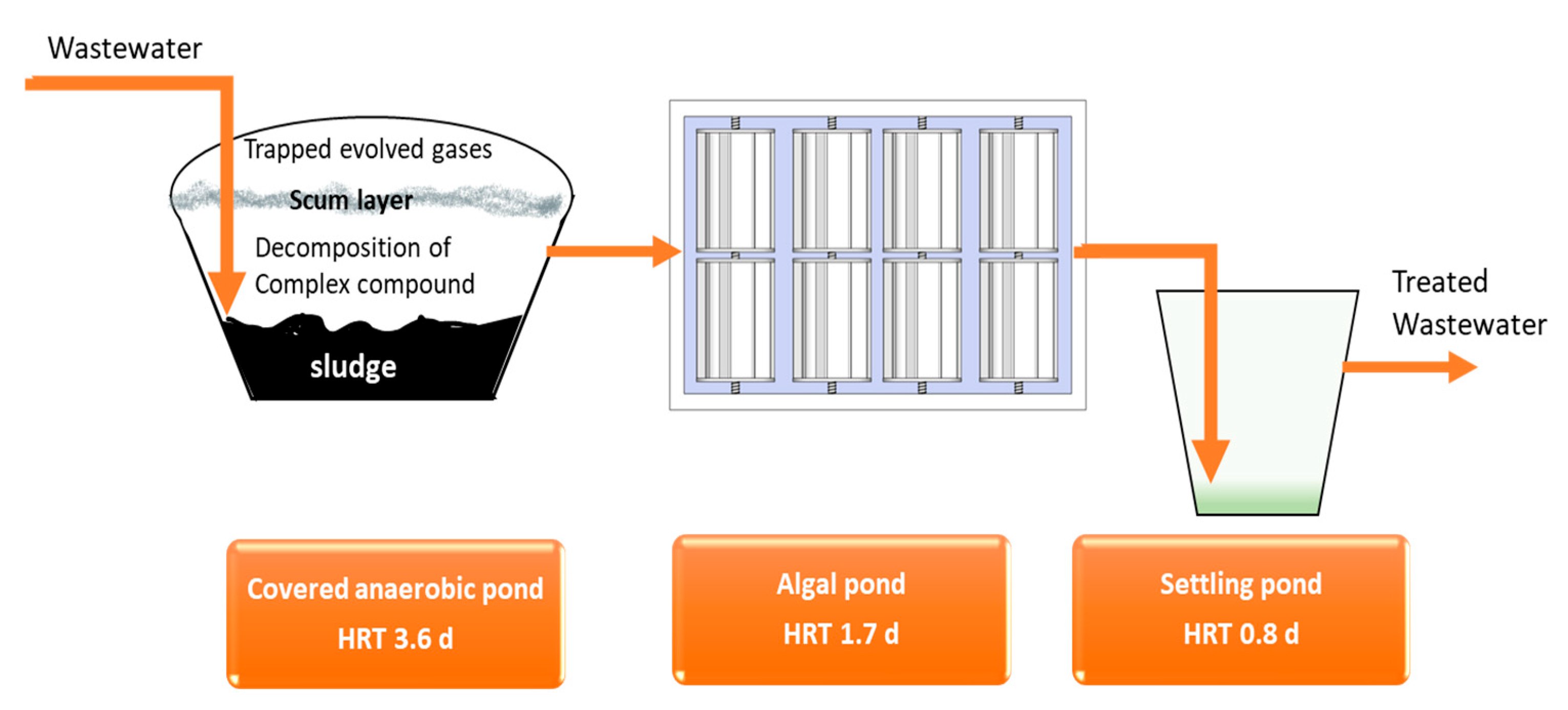
The bioremediation system employed in this study utilized microbial communities to remove contaminants through biological absorption and degradation. The feed stream of wastewater was collected from the WWTP after the primary stage, where the large bulk wastes were removed. This feed stream flew continuously in a covered anaerobic pond; this pond enhances the decomposition of complex organic compounds, and sludge was precipitated. It was based on prior designs by El-Mekkawi et al. (2021, 2024), transitioning from a facultative to a fully covered anaerobic pond [11,26]. The upper stream contains simplified compounds of nitrogen and phosphorus that flow continuously into the microalgae pond. The microalgae pond has a rectangular shape where rotating biological contactors (RBC) are supported in a parallel arrangement inside the pond. The outflow of the microalgae pond is fed continuously to the settling tank to obtain treated wastewater. The actual volume of the covered anaerobic pond was double that of the algal pond, which was double the volume of the settling pond as optimized in previous work [26]. This sequence of treatment systems is illustrated in Figure 1.
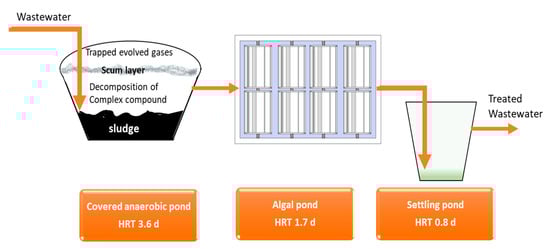
Figure 1.
The treatment system.
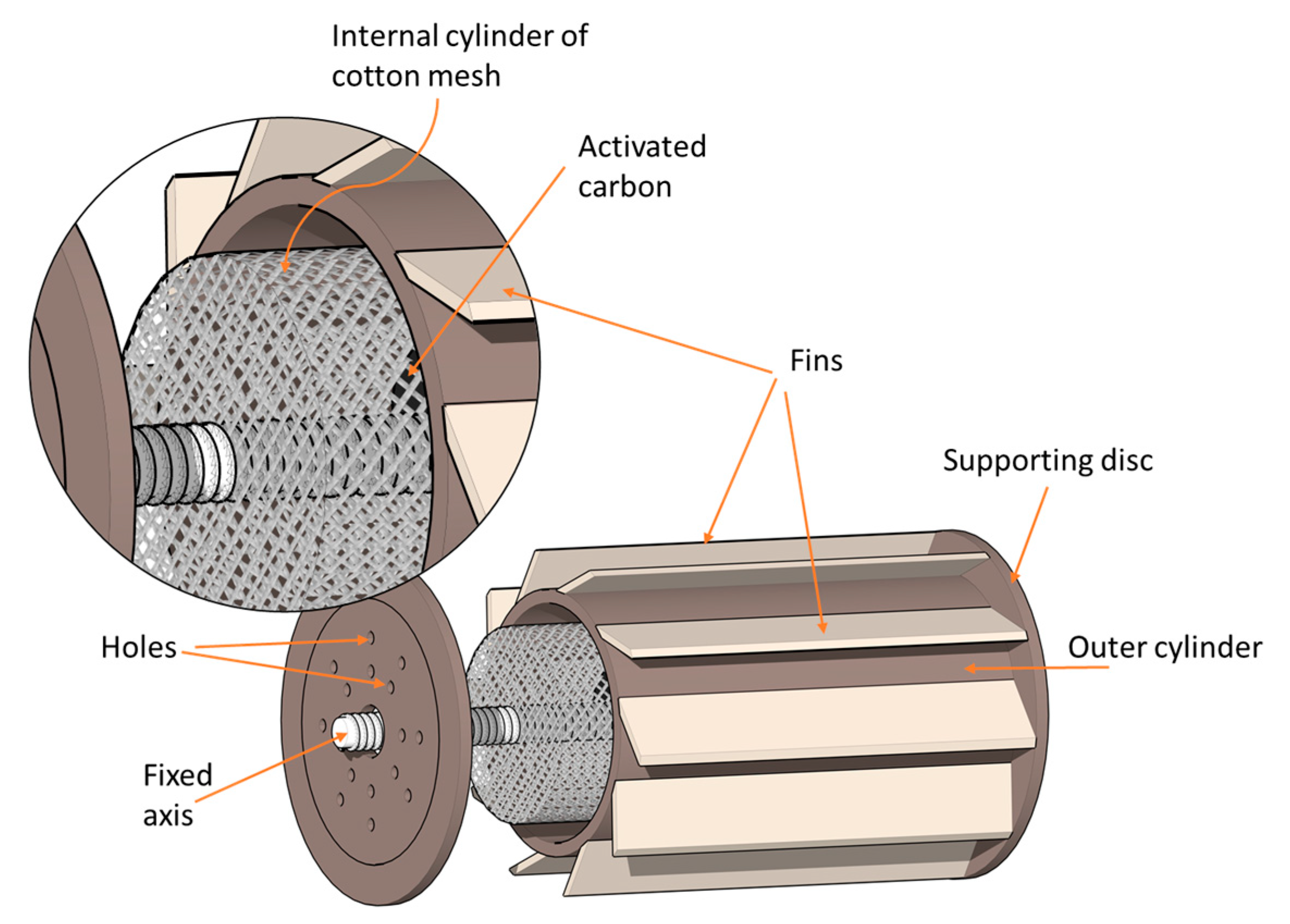
The mechanism of the RBCs is based on increasing the surface area conducive to biofilm formation. Therefore, the RBCs were designed in a cylindrical shape with rectangular fins supported on the outer surface, as illustrated in Figure 2. The inner cylinder was made from cotton fabrics with openings of 25 mesh and contained an amount of granular activated carbon of size 1mm. As the treatment process is based on the biofilm formation and the stability of the biofilm on the surface, the shear stress was calculated at different air flow rates, and then the optimum air flow rate was used to operate the system to study the optimum hydraulic retention time (HRT) in the range of 1 day to 2.4 days and the amount of activated carbon in the range of 5 g to 15 g.
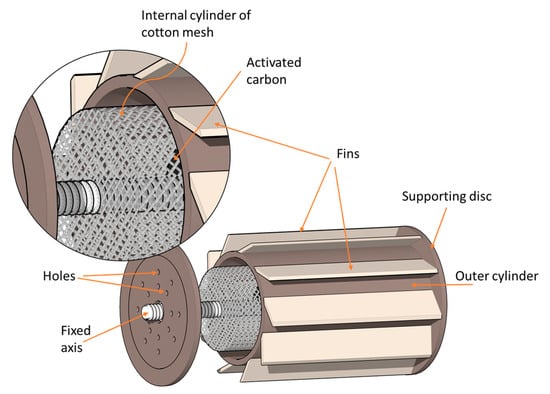
Figure 2.
Sketch of the rotating body.
The shear stress of RBC was calculated by Equation (1), the angular velocity (w) was calculated by Equation (2), the tangential velocity (v) by Equation (3), the Reynolds number (Re) for the rotating cylinder by Equation (4), and the friction coefficient by Equation (5) [27,28,29].
where T is the shear stress exerted on the biofilm (Pa), Cf is the friction coefficient, p is the fluid density (kg/m3), and v is the tangential velocity at the cylinder surface.
where 2π is the conversion factor to radians per revolution, and f is the rotational frequency in rev/s
where r is the cylinder radius (m), w is the angular velocity (rad/s), and µ is the dynamic viscosity of the fluid (Pa. s)
T = 0.5 Cf·p·v2
w = 2πf
v = r·w
Re = (p·r2·w)/µ
C = 0.0791/(Re0.25)
2.3. System Monitoring
The treated wastewater was sampled every second day to measure the physicochemical characteristics. The characterization methods, including TSS, turbidity, BOD, and COD were performed according to APHA (2017), as mentioned in the raw wastewater characterization. However, the nutrient analyses in the treated wastewater were not applied since the main target was meeting the requirements of reusing treated wastewater in irrigation, as characterized in the Egyptian codes 501/2015.
The microbiological characteristics were measured to check the removal efficiency of coliform from wastewater after treatment using the most probable number method according to APHA (2017). The collected samples were examined by a microscope (Olympus X3 microscope, Olympus Corporation, Tokyo, Japan). The algal community identification followed the key for freshwater algae [25,27]. The biofilm samples were coated with a gold layer before scanning by a scanning electron microscope (SEM) model JSM 6360LV, JEOL, Tokyo, Japan, to obtain biofilm morphology [30,31].
3. Results
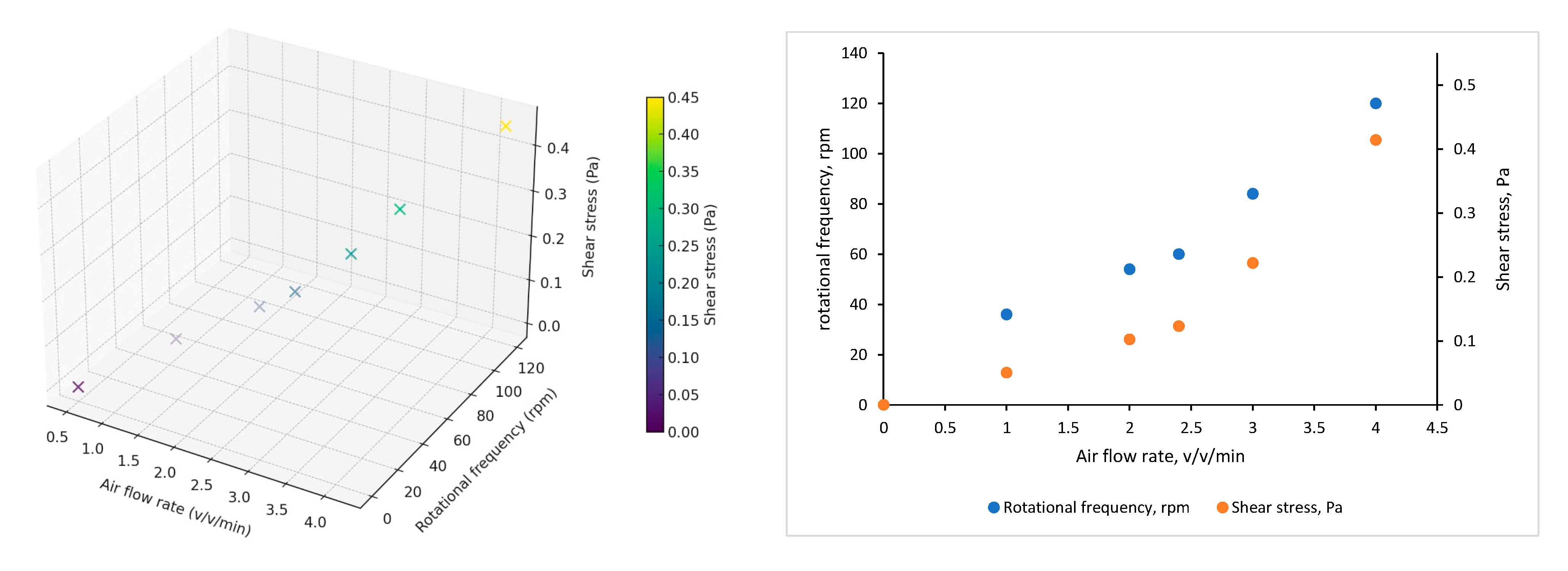
The presented system moves pneumatically using the airflow below the fins, which are supported on the cylinder. Figure 3 illustrates the effect of airflow rate on rotational frequency and shear stress as a consequence. Low shear stress is required in the beginning to promote biofilm initiation; meanwhile, after the biofilm is formed, the rotation speed should be increased to enhance the microorganism growth, which increases the treatment efficiency.
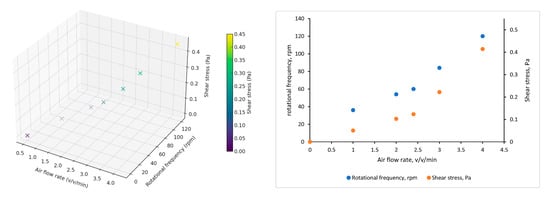
Figure 3.
The effect of airflow rate on rotational speed and the total shear stress.
The results of the optimization run were obtained at the following flow rates of wastewater: 2.8 L/d, 4.1 L/d, and 7.2 L/d. The variation in the inlet flow rate has no significant effect on optimizing shear stress applied on the rotating cylinders; the sole effect is the air flow rate, which causes the rotation of the RBC. Low rotational velocity 1.3 rad/s resulting in laminar flow of Re number equal to 813 and very low shear stress (0.01 Pa). Increasing the angular velocity to 5 rad/s increases the Re number to 3125, which means this flow is transitional to turbulent. This occurs with a total shear stress of 0.1 Pa. At 12.5 rad/s, the flow behavior is turbulent with Re number of 7812 and a total shear stress of 0.4 Pa. Therefore, the study of the effect of HRT and the amount of activated carbon is applied at an airflow rate of 2.4 v/v/min, i.e., rotational velocity of 6.3 rad/s and 0.12 Pa to promote the initiation of the biofilm and the start to develop for each run.
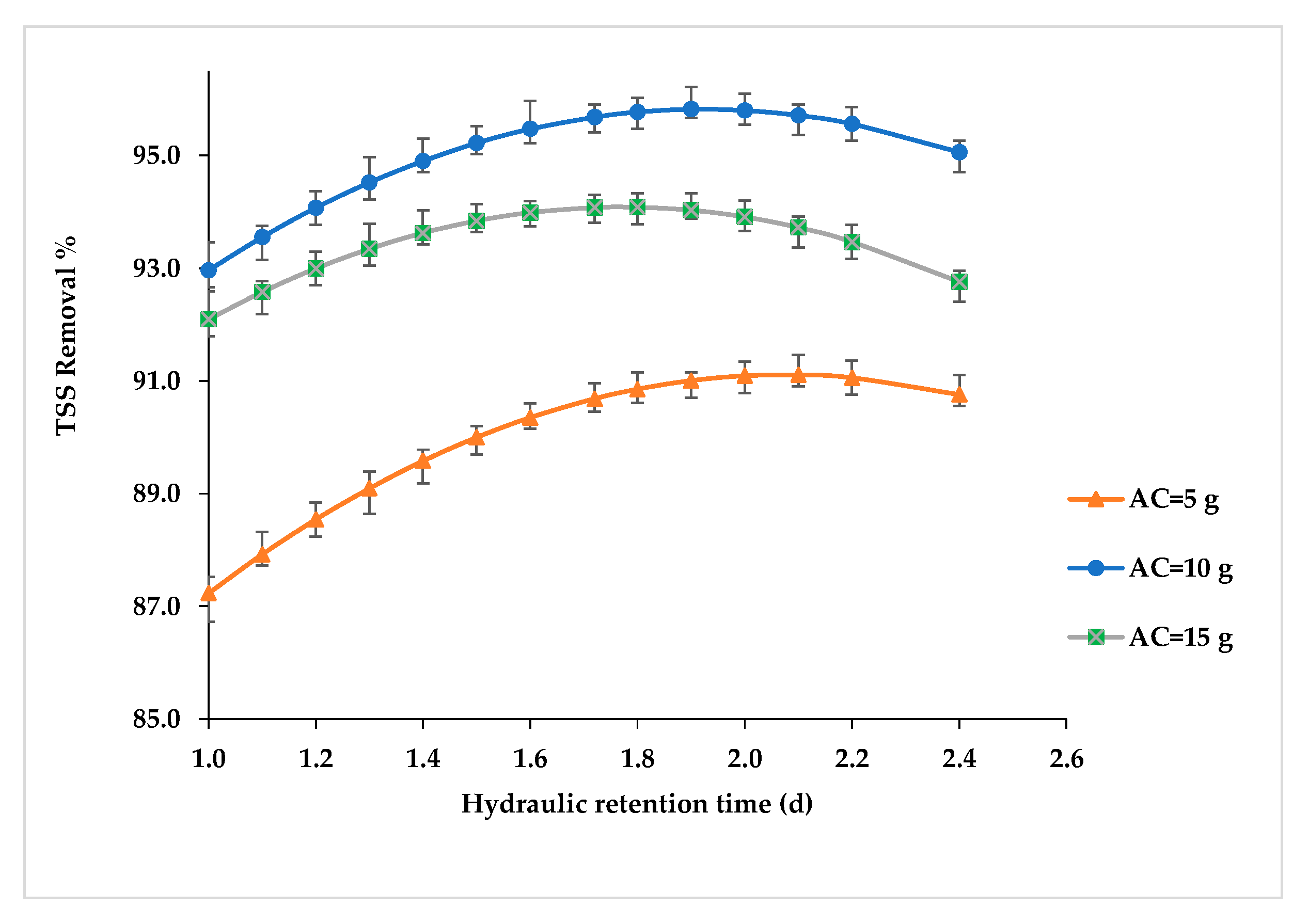
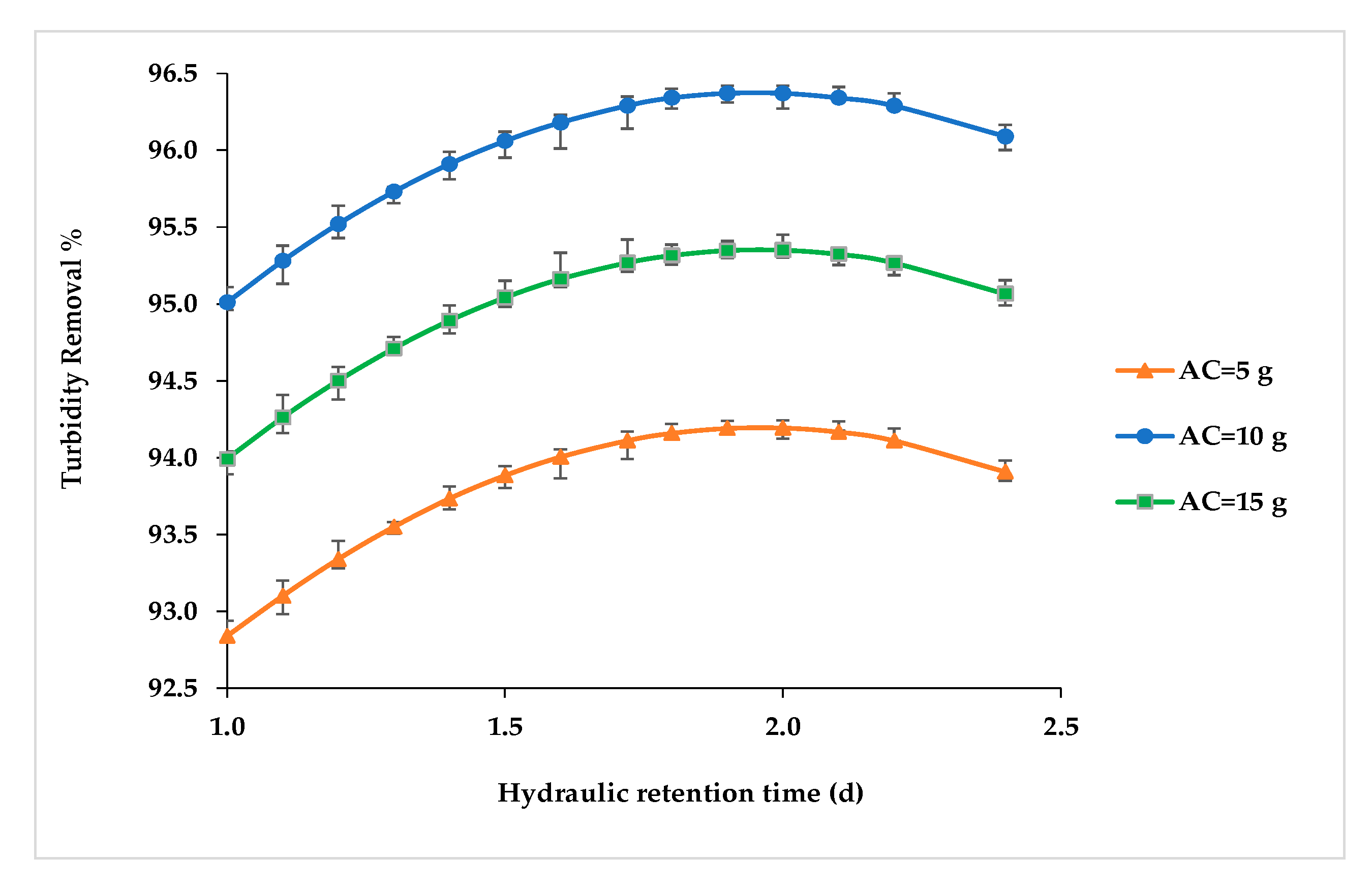
The results of treating municipal wastewater using the designed system elucidate that the maximum removal percentage of TSS is 95.8% and turbidity is 96.3%, as elucidated in Figure 4 and Figure 5. Maximum removal percentage is achieved by using the amount of granular carbon of 10 g at HRT 1.7 d. Under these conditions of operation, the BOD result is 3.2 mg O2/L, i.e., the removal percent is 85%. The E. coli in the treated water was below the detection level, which means the removal efficiency of E. coli approaches 100% with a significance p < 0.05. The potential of using the treated wastewater for the irrigation of edible crops is high, according to the Egyptian code for agricultural purposes [23,24].
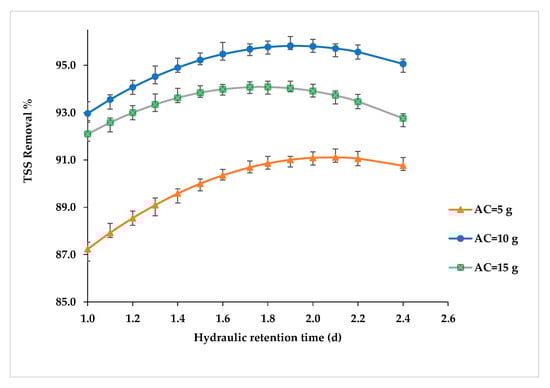
Figure 4.
Effect of granular carbon amount and hydraulic retention time on total suspended solid removal percentage.
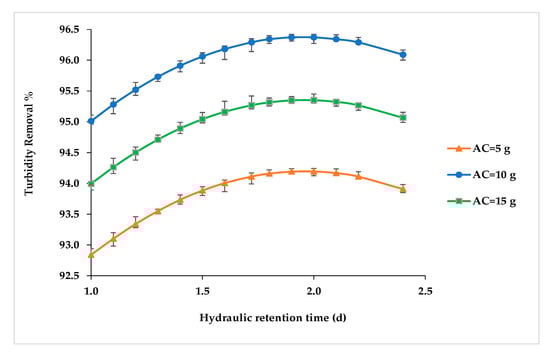
Figure 5.
Effect of granular carbon amount and hydraulic retention time on turbidity removal percentage.
Table 2 summarizes the comparison between the results of treatment at the optimum conditions and the restricted conditions stated by the Egyptian reuse standards of treated wastewater for irrigation. Meanwhile, the total coliform is not stated in the standard; however, it is measured since it is a pointer to the pathogenic growth. The total coliform of the treated wastewater is 1.0 × 10⁵ MPN/100 mL, and the average of fecal coliform is 2.0 × 10⁴ MPN/100 mL; the removal efficiency exceeds 99% with significance p < 0.05.
Table 2.
Comparison between the results at the optimum conditions and the restricted conditions stated by the Egyptian reuse standards of treated wastewater for irrigation.
The microscopic examination of the samples of the treated wastewater under the optimum operating conditions revealed that the microalgal pond is dominated by Chlorella vulgaris, which is also attached to the biofilm formed on the pond walls and the outer surface of the rotating body in many counts, compared to the raw wastewater that has a few amount of C. vulgaris as illustrated in Table 3. Raw wastewater is dominated by Oscillatoria limnetica, while it is reproduced in high amounts, forming biofilm on the pond walls and the outer surface of the rotating body. The pond contains significant amounts of O. limnetica. Nitzschia linearis, which belongs to the diatoms group, forming a biofilm on the pond walls and the outer surface of the rotating bodies, and are found in abundance inside the rotating body, whereas their existence is significant in the pond culture. Scenedesmus obliquus exists in smaller amounts in the pond and the raw wastewater. Cyclotella comta, Stephanodiscus sp., Selenastrum sp., Ankistrodesmus acicularis, and Microscystis sp. are many in the whole pond, whereas they exist in the raw wastewater.
Table 3.
Algal strain distribution.
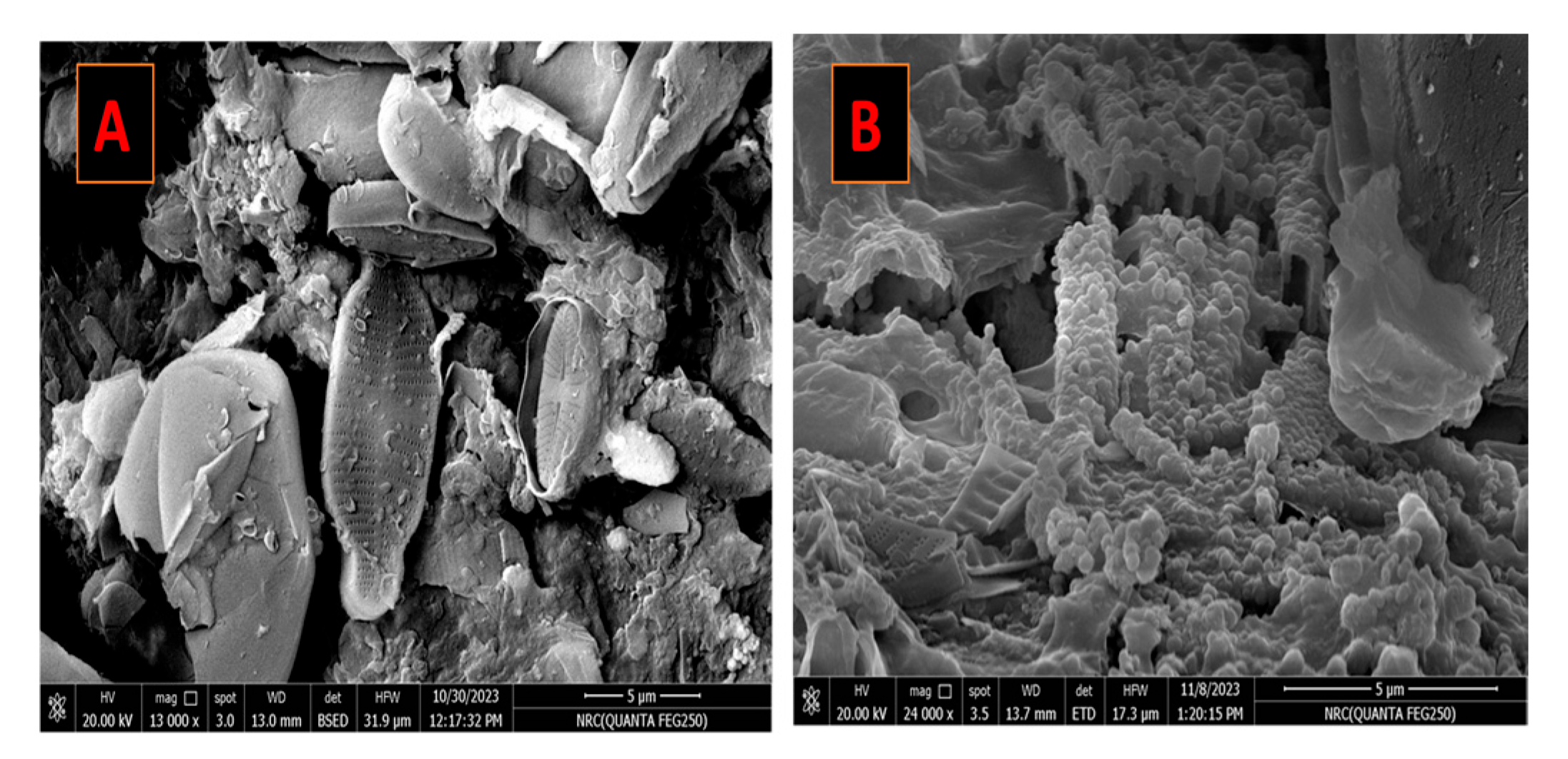
Figure 6 shows the SEM analysis results for the biofilm that formed on the cotton cylinder. SEM results confirm the microscopical examination, where the diatom group represented in Nitzschia linearis was found in abundance, in addition to the rarely observed presence of Cyclotella comta. Interestingly, the biofilm is characterized by a huge density of coccoid-shaped bacteria along with different types of algae, especially diatoms, as clearly indicated in Figure 6. Previous studies have shown that the major heterotrophic bacterial phyla associated with diatoms are Proteobacteria and Bacteroidetes, such as Sulfitobacter, Roseobacter, Flavobacterium, and Alteromonas [31,32,33].
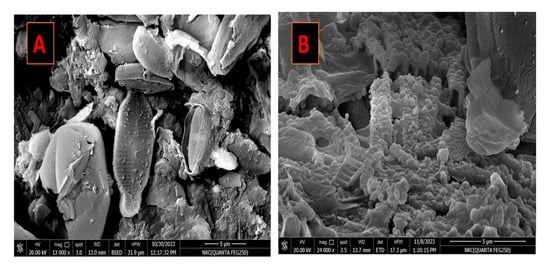
Figure 6.
SEM images of biofilm. (A) Nitzschia linearis at 13,000×; (B) bacterial colonies at 24,000×.
4. Discussion
The main principle of the presented system is improving the previous bioremediation wastewater treatment systems as HRAP in wastewater treatment, and other biological contactors. In this research, the system consists of three ponds. The first one is the covered anaerobic pond; this pond is a modification of a previous research that used a facultative pond in the HRAP wastewater treatment system. The covered anaerobic pond prevents algae from growing on the wastewater surface and accelerates the decomposition of complex organic compounds [11]. The second pond is the microalgae pond, which consists of parallel arrays of RBCs containing granular activated carbon.
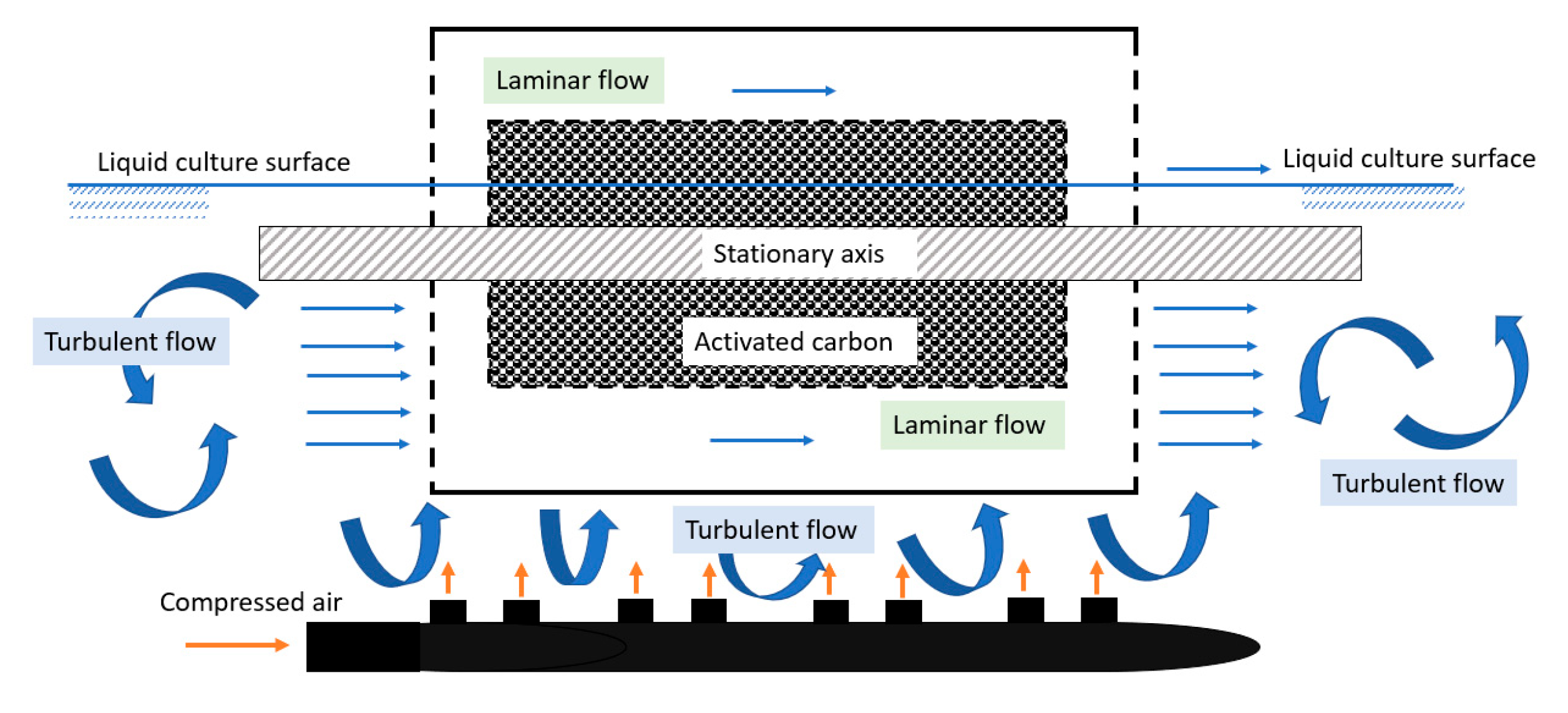
The design of the RBC, as illustrated in Figure 7, is based on using compressed air flow at a sufficient rate capable of rotating the cylinder, which moves freely around the stationary axis. The air bubbles flow, causing turbulence in the liquid culture medium. This turbulency should not affect the biofilm fixation on the outer surface of the RBC. Meanwhile, the small openings of the two-sided disks (1 mm diameter) in the main cylinder promote wastewater to move inside smoothly, changing its behavior into laminar flow with minimum velocity gradient variation, which diminishes the shear stress and enhances the biofilm formation on the cotton cylinder and the pores of the granular activated carbon.
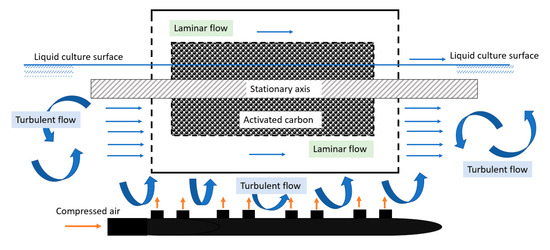
Figure 7.
Cross-section of the RBC.
The outer surface of the RBC is rotating due to the effect of airflow, which generates shear stress beside the shear stress generated by the airflow. The total shear stress affects the biofilm formation on the outer surface. Low shear stress helps the initiation of the biofilm, while shear stress up to 0.3 Pa helps develop the biofilm cells, which is suitable for the period of experiments. Shear stress from 0.3 Pa to 0.6 Pa promotes strong cell accumulation in biofilm; however, this range of shear stress is applicable for continuous treatment, not for the experimental run period. The correlation between shear stress, biofilm formation, and bacterial activity is evident from the observed treatment outcomes. Low shear stress (0.01–0.012), optimized by controlling the rotational velocity of RBCs, was essential for initiating and sustaining biofilm formation. As the system transitioned from laminar to transitional flow, microbial adhesion and growth were enhanced without destabilizing the biofilm, thereby increasing nutrient degradation and bacterial removal.
The incorporation of granular activated carbon served as a biofilm stabilizer and microbial attractant, particularly for bacteria, which benefited from increased surface area and favorable physicochemical properties. In previous research, utilizing an absorber enhanced the treatment efficiency via stabilizing the biofilm, giving the presented system more advantage than the rotating belt system, or algae wheel of BOD reduction by 51% [34,35]. Some of these systems are based on adding silica or iron to enhance the diatom growth [35].
SEM analysis confirmed the dense colonization by coccoid-shaped bacteria, particularly in consortia with dominant diatom species like N. linearis. The existing bacteria have an essential role in organic matter degradation and nutrient cycling. Previous research has shown that diatoms can grow phototrophic, mixotrophic, or heterotrophic [36]. Moreover, some diatom species shift to heterotrophy under dark conditions, highlighting key metabolic adaptations [37]. Bacteria enhance diatom heterotrophy by breaking down complex organic matter into usable substrates [38]. The distinctive advantage of the bacterial system lies in its ability to maintain metabolic activity under low energy input, effectively synergizing with algal oxygen production. This dual functionality led to superior TSS, turbidity, and BOD reduction, with complete E. coli removal.
The integration between bacteria and microalgae appears in different scopes, as the dual gas exchange diffusion, so bacteria groups are attracted to the phycosphere, the external part of algal cells [39]. Moreover, the extracellular polymeric substances (EPS) stabilize their agglomeration [40,41]. The micronutrient vitamin B12, which is necessary for microalgae, is provided by heterotrophic bacteria, which in turn absorb the oxygen evolved by microalgal photosynthesis to oxidize organic carbon [41,42]. The removal of E. coli could be due to the presence of some mechanisms and interactions that occurred as a result of microalgae–bacteria consortia, such as the type of microalgae present. The removal of certain pathogens can be influenced by the genus/species of microalgae [43,44].
The applied system of RBC is superior to the previous work on high-rate algal ponds (HRAP) [11]. The removal percentages using RBC for TSS and BOD are 95.8% and 85%, respectively. Meanwhile, the removal percentages using HRAP of TSS and BOD are 56% and 49%, respectively. The optimum HRT achieved by RBC is 1.7 days, while the optimum HRT of HRAP is 4 days. The required surface area for treating 1 m3 of wastewater is minimal for the RBC system, which could be constructed in a multi-floor configuration. In contrast, HRAP is typically built over a large hectare-scale area. In the RBC system, low energy is consumed due to passive aeration, whereas the HRAP system has a higher energy demand for paddlewheel mixing. However, HRAP produces biomass at a high rate, which can be used for biofuel production. This high biomass productivity has a positive effect on carbon dioxide capture. In general, both systems contribute to sustainable water reuse. The RBC system is more suitable for urban, decentralized WWT with low energy consumption, whereas the HRAP is better for large-scale WWT, biofuel production, and carbon capture. However, HRAP requires higher energy input and a larger land footprint.
The findings of this study present meaningful implications for decentralized wastewater treatment, particularly in regions where infrastructure, space, and operational costs pose significant constraints. The present study examined the integration of algal–bacterial consortia with granular activated carbon in RBC-based system technologies. The high removal efficiencies of TSS, turbidity, BOD, and E. coli, alongside compliance with national reuse standards, suggest that this system may be effectively scaled for urban and peri-urban applications, especially in water-scarce or developing contexts. The limitation of this study is the focus on the overall system performance without detailed stagewise analysis and microbial identification. However, this limitation does not affect the system performance; meanwhile, further studies should include unit-specific water quality profiling, advanced microbial identification, and pilot-scale trials to validate system robustness and optimize design for practical deployment.
5. Conclusions
This study presents a novel hybrid algal–bacterial bioremediation system that integrates anaerobic digestion, microalgal cultivation, and rotating biological contactors (RBCs) enhanced with granular activated carbon for efficient municipal wastewater treatment. The system demonstrated high removal efficiencies of 95.8% for total suspended solids (TSS), 96.3% for turbidity, 85% for biological oxygen demand (BOD), and nearly 100% for E. coli, fecal coliform, and total coliform. These outcomes align with the highest values, Category A, of the Egyptian code of reusing treated wastewater for irrigation. The design effectively supports biofilm formation and microbial synergy under optimized hydraulic retention time and controlled shear stress conditions. Unlike a conventional high-rate algal pond (HRAP), this compact, energy-efficient system is better suited for decentralized urban applications with limited land and operational costs. The incorporation of granular activated carbon further enhances microbial attachment and biofilm stability. This eco-friendly, scalable, and cost-effective approach holds promise for sustainable wastewater reuse in water-scarce regions, offering a practical solution for advancing environmental and agricultural sustainability.
Author Contributions
Conceptualization, S.A.E.-M.; methodology, S.M.A. and M.Y.; software, S.A.E.-M.; validation, S.A.E.-M. and S.M.A.; formal analysis, S.M.A.; investigation, M.Y.; resources and data curation, all authors; writing—original draft preparation, S.A.E.-M.; writing—review and editing, S.M.A. and M.Y.; visualization, S.A.E.-M.; supervision, S.A.E.-M. All authors have read and agreed to the published version of the manuscript.
Funding
This research received no external funding.
Data Availability Statement
The original contributions presented in this study are included in the article. Further inquiries can be directed to the corresponding author.
Acknowledgments
The authors acknowledge the National Research Centre, Egypt.
Conflicts of Interest
The authors declare no conflicts of interest.
Abbreviations
The following abbreviations are used in this manuscript:
| BOD | Biological oxygen demand |
| COD | Chemical oxygen demand |
| EBS | Extracellular polymeric substance |
| HRAP | High-rate algal pond |
| HRT | Hydraulic retention time |
| RBC | Rotating biological contactors |
| TSS | Total suspended solids |
| SEM | Scanning electron microscope |
| WWT | Wastewater treatment |
| WWTP | Wastewater treatment plant |
References
- Rathod, S.V.; Saras, P.; Gondaliyam, S.M. Environmental pollution: Threats and challenges for management. In Eco-Restoration of Polluted Environment; CRC Press: Boca Raton, FL, USA, 2025; pp. 1–34. [Google Scholar] [CrossRef]
- Khanam, Z.; Sultana, F.M.; Mushtaq, F. Environmental Pollution Control Measures and Strategies: An Overview of Recent Developments. In Geospatial Analytics for Environmental Pollution Modeling; Mushtaq, F., Farooq, M., Mukherjee, A.B., Ghosh Nee Lala, M., Eds.; Springer: Berlin/Heidelberg, Germany, 2023; pp. 385–414. [Google Scholar] [CrossRef]
- Obaideen, K.; Shehata, N.; Sayed, E.T.; Abdelkareem, M.A.; Mahmoud, M.S.; Olabi, A.G. The role of wastewater treatment in achieving sustainable development goals (SDGs) and sustainability guideline. Energy Nexus 2022, 7, 100112. [Google Scholar] [CrossRef]
- Fito, J.; Van Hulle, S.W. Wastewater reclamation and reuse potentials in agriculture: Towards environmental sustainability. Environ. Dev. Sustain. 2021, 23, 2949–2972. [Google Scholar] [CrossRef]
- Srimongkol, P.; Sangtanoo, P.; Songserm, P.; Watsuntorn, W.; Karnchanatat, A. Microalgae-based wastewater treatment for developing economic and environmental sustainability: Current status and future prospects. Front. Bioeng. Biotechnol. 2022, 10, 904046. [Google Scholar] [CrossRef]
- Sepúlveda-Muñoz, C.A.; de Godos, I.; Muñoz, R. Wastewater treatment using photosynthetic microorganisms. Symmetry 2023, 15, 525. [Google Scholar] [CrossRef]
- Shukla, H.; Gautam, S.; Bapodariya, H.; Maliwad, M.B.; Gangawane, A.K.; Kaushal, R.S. Bioremediation of waste water: In-depth review on current practices and promising perspectives. J. Aquac. Trop. 2022, 37, 117–152. [Google Scholar] [CrossRef]
- Kumar, A.; Kumar, R.; Parnian, A.; Mahbod, M.; AbdelRahman, M.A. Bioremediation: A better technique for wastewater treatment and resource recovery. In Biotechnologies for Wastewater Treatment and Resource Recovery, 1st ed.; Kumar, A., Parnian, A., AbdelRahman, M.A., Eds.; Elsevier: Amsterdam, The Netherlands, 2025; pp. 17–32. [Google Scholar] [CrossRef]
- Sahal, S.; Khaturia, S.; Joshi, N. Application of microbial enzymes in wastewater treatment. In Genomics Approach to Bioremediation: Principles, Tools, and Emerging Technologies; Kumar, V., Bilal, M., Romanholo Ferreira, L.F., Iqbal, H.M.N., Eds.; Wiley: Hoboken, NJ, USA, 2023; pp. 209–227. [Google Scholar] [CrossRef]
- Ali, S.S.; Hassan, L.H.; El-Sheekh, M. Microalgae-mediated bioremediation: Current trends and opportunities-a review. Arch. Microbiol. 2024, 206, 343. [Google Scholar] [CrossRef] [PubMed]
- El-Mekkawi, S.A.; Doma, H.S.; Ali, G.H.; Abdo, S.M. Case study: Effective use of microphytes in wastewater treatment, profit evaluation, and scale-up life cycle assessment. J. Water Process Eng. 2021, 41, 102069. [Google Scholar] [CrossRef]
- Ruas, G.; Lacerda, S.F.; Nantes, M.A.; Serejo, M.L.; da Silva, G.H.R.; Boncz, M.Á. CO2 addition and semicontinuous feed regime in shaded HRAP—Pathogen removal performance. Water 2022, 14, 4047. [Google Scholar] [CrossRef]
- Tang, C.C.; Hu, Y.R.; He, Z.W.; Li, Z.H.; Tian, Y.; Wang, X.C. Promoting symbiotic relationship between microalgae and bacteria in wastewater treatment processes: Technic comparison, microbial analysis, and future perspectives. Chem. Eng. J. 2024, 206, 155703. [Google Scholar] [CrossRef]
- Dhanker, R.; Khatana, K.; Verma, K.; Singh, A.; Kumar, R.; Mohamed, H.I. An integrated approach of algae-bacteria mediated treatment of industries generated wastewater: Optimal recycling of water and safe way of resource recovery. Biocatal. Agric. Biotechnol. 2023, 54, 102936. [Google Scholar] [CrossRef]
- Ennaceri, H.; Ishika, T.; Mkpuma, V.O.; Moheimani, N.R. Microalgal biofilms: Towards a sustainable biomass production. Algal Res. 2023, 72, 103124. [Google Scholar] [CrossRef]
- Jeon, E.; Kim, H.; Kim, G.; Lee, D. A review of bacterial biofilm formation and growth: Rheological characterization, techniques, and applications. Korea-Aust. Rheol. J. 2023, 35, 267–278. [Google Scholar] [CrossRef]
- Krishnan, S.; Patil, S.A.; Nancharaiah, Y.V. Environmental microbial biofilms: Formation, characteristics, and biotechnological applications. In Material-Microbes Interactions; Aryal, N., Zhang, Y., Patil, S.A., Pant, D., Eds.; Academic Press: Cambridge, MA, USA, 2023; pp. 3–45. [Google Scholar] [CrossRef]
- Lago, A.; Rocha, V.; Barros, O.; Silva, B.; Tavares, T. Bacterial biofilm attachment to sustainable carriers as a clean-up strategy for wastewater treatment: A review. J. Water Process Eng. 2024, 63, 105368. [Google Scholar] [CrossRef]
- Paul, P.; Chakraborty, P.; Das, S.; Sarkar, S.; Gupta, A.D.; Roy, R.; Malik, M.; Tribedi, P. Microbial Biofilms in Wastewater Treatment: A Sustainable Approach. In Application of Microbial Technology in Wastewater Treatment and Bioenergy Recovery; Ray Chaudhuri, S., Ed.; Springer: Singapore, 2023; pp. 405–418. [Google Scholar] [CrossRef]
- Sharma, A.; Dhiman, S. Microbial Biofilms in Wastewater Remediation. In Microbial Technologies in Industrial Wastewater Treatment; Shah, M.P., Ed.; Springer Nature: Singapore, 2023; pp. 101–118. [Google Scholar] [CrossRef]
- Mahto, K.U.; Das, S. Bacterial biofilm and extracellular polymeric substances in the moving bed biofilm reactor for wastewater treatment: A review. Bioresour. Technol. 2022, 345, 126476. [Google Scholar] [CrossRef]
- Wang, C.; Tan, Y.; Zhu, L.; Zhou, C.; Yan, X.; Xu, Q.; Ruan, R.; Cheng, P. The intrinsic characteristics of microalgae biofilm and their potential applications in pollutants removal—A review. Algal Res. 2022, 68, 102849. [Google Scholar] [CrossRef]
- The Ministry of Housing Utilities and Urban Communities. ECP 501: Egyptian Code of Wastewater Reuse; The Ministry of Housing Utilities and Urban Communities ECP 501/2015; The Ministry of Housing Utilities and Urban Communities: Cairo, Egypt, 2015.
- Elbana, T.A.; Bakr, N.; Elbana, M. Reuse of Treated Wastewater in Egypt: Challenges and Opportunities. In Unconventional Water Resources and Agriculture in Egypt; The Handbook of Environmental Chemistry; Negm, A., Ed.; Springer: Berlin/Heidelberg, Germany, 2017; Volume 75, pp. 429–453. [Google Scholar] [CrossRef]
- APHA—American Public Health Association; American Water Works Association; Water Environment Federation. Standard Methods for the Examination of Water and Sewage, 24th ed.; LMC—Pharma Books: Vaughan, ON, Canada, 2017. [Google Scholar]
- El-Mekkawi, S.A.; Abdo, S.M.; Youssef, M.; Ali, G.H. Optimizing performance efficiency of algal-bacterial-based wastewater treatment system using response surface methodology. Groundw. Sustain. Dev. 2024, 26, 101273. [Google Scholar] [CrossRef]
- Guadalima, M.P.G.; Monteros, D.A.N. Evaluation of the rotational speed and carbon source on the biological removal of free cyanide present on gold mine wastewater, using a rotating biological contactor. J. Water Process Eng. 2018, 23, 84–90. [Google Scholar] [CrossRef]
- Brugnoni, L.I.; Cubitto, M.A.; Lozano, J.E. Role of shear stress on biofilm formation of Candida krusei in a rotating disk system. J. Food Eng. 2011, 102, 266–271. [Google Scholar] [CrossRef]
- Tsagkari, E.; Connelly, S.; Liu, Z.; McBride, A.; Sloan, W.T. The role of shear dynamics in biofilm formation. npj Biofilm. Microbiomes 2022, 8, 33. [Google Scholar] [CrossRef]
- Abdo, S.M.; Youssef, A.M.; El-Liethy, M.A.; Ali, G.H. Preparation of simple biodegradable, nontoxic, and antimicrobial PHB/PU/CuO bionanocomposites for safely use as bioplastic material packaging. Biomass Convers. Biorefin. 2023, 14, 28673–28683. [Google Scholar] [CrossRef]
- Grossart, H.P.; Levold, F.; Allgaier, M.; Simon, M.; Brinkhoff, T. Marine diatom species harbour distinct bacterial communities. Environ. Microbiol. 2005, 7, 860–873. [Google Scholar] [CrossRef]
- Infante, C.D.; Castillo, F.; Pérez, V.; Riquelme, C. Inhibition of Nitzschia ovalis biofilm settlement by a bacterial bioactive compound through alteration of EPS and epiphytic bacteria. Electron. J. Biotechnol. 2018, 33, 1–10. [Google Scholar] [CrossRef]
- Abate, R.; Oon, Y.L.; Oon, Y.S.; Bi, Y.; Mi, W.; Song, G.; Gao, Y. Diverse interactions between bacteria and microalgae: A review for enhancing harmful algal bloom mitigation and biomass processing efficiency. Heliyon 2024, 10, e36503. [Google Scholar] [CrossRef] [PubMed]
- Wang, X.; Hong, Y. Microalgae biofilm and bacteria symbiosis in nutrient removal and carbon fixation from wastewater: A review. Curr. Pollut. Rep. 2022, 8, 128–146. [Google Scholar] [CrossRef]
- Johnson, D.B.; Schideman, L.C.; Canam, T.; Hosen, J.D.; Hudson, R.J. Spatial and temporal differences in the composition and structure of bacterial assemblages in biofilms of a rotating algal-bacterial contactor system treating high-strength anaerobic digester filtrate. Bioresour. Technol. Rep. 2020, 10, 100413. [Google Scholar] [CrossRef]
- Villanova, V.; Spetea, C. Mixotrophy in diatoms: Molecular mechanism and industrial potential. Physiol. Plant. 2021, 173, 603–611. [Google Scholar] [CrossRef]
- Onyshchenko, A.; Roberts, W.R.; Ruck, E.C.; Lewis, J.A.; Alverson, A.J. The genome of a nonphotosynthetic diatom provides insights into the metabolic shift to heterotrophy and constraints on the loss of photosynthesis. New Phytol. 2021, 232, 1750–1764. [Google Scholar] [CrossRef]
- Wang, X.; Liu, Y.; Zhang, Y.; Wu, P.; Liu, X.; Nan, F.; Liu, Q.; Lv, J.; Feng, J.; Xie, S. The complex relationships between diatoms, bacterial communities, and dissolved organic matter: Effects of silicon concentration. Algal Res. 2024, 79, 103460. [Google Scholar] [CrossRef]
- Tong, C.Y.; Honda, K.; Derek, C.J.C. A review on microalgal-bacterial Co-culture: The multifaceted role of beneficial bacteria towards enhancement of microalgal metabolite production. Environ. Res. 2023, 228, 115872. [Google Scholar] [CrossRef]
- Oviedo, J.A.; Muñoz, R.; Donoso-Bravo, A.; Bernard, O.; Casagli, F.; Jeison, D. A half-century of research on microalgae-bacteria for wastewater treatment. Algal Res. 2022, 67, 102828. [Google Scholar] [CrossRef]
- Takahashi, M.; Yamada, R.; Matsumoto, T.; Ogino, H. Co-culture systems of microalgae and heterotrophic microorganisms: Applications in bioproduction and wastewater treatment and elucidation of mutualistic interactions. World J. Microbiol. Biotechnol. 2024, 40, 368. [Google Scholar] [CrossRef] [PubMed]
- Zhou, H.; Zhao, X.; Kumar, K.; Kunetz, T.; Zhang, Y.; Gross, M.; Wen, Z. Removing high concentration of nickel (II) ions from synthetic wastewater by an indigenous microalgae consortium with a Revolving Algal Biofilm (RAB) system. Algal Res. 2021, 59, 102464. [Google Scholar] [CrossRef]
- Pompei, C.M.E.; Ruas, G.; Bolzani, H.R.; da Silva, G.H.R. Assessment of total coliforms and E. coli removal in algae-based pond under tropical temperature in addition of carbon dioxide (CO2) and shading. Ecol. Eng. 2023, 196, 107102. [Google Scholar] [CrossRef]
- Botavara, L.A.; Ragaza, J.A.; Lim, H.C.; Teng, S.T. Morphological and molecular characterization of two potentially toxigenic species of the genus Pseudo-nitzschia (Bacillariophyceae) in Luzon Island, Philippines. Diatom Res. 2024, 39, 217–229. [Google Scholar] [CrossRef]
Disclaimer/Publisher’s Note: The statements, opinions and data contained in all publications are solely those of the individual author(s) and contributor(s) and not of MDPI and/or the editor(s). MDPI and/or the editor(s) disclaim responsibility for any injury to people or property resulting from any ideas, methods, instructions or products referred to in the content. |
© 2025 by the authors. Licensee MDPI, Basel, Switzerland. This article is an open access article distributed under the terms and conditions of the Creative Commons Attribution (CC BY) license (https://creativecommons.org/licenses/by/4.0/).