


Abstract
This study innovatively combines the cyclic catalytic pyrolysis system (CCPS) with a circular pipe device, using biochar from potato peels (PP) and pig manure (PM) to passivate Cd and Pb in the soil, and explores the influencing mechanisms via multiple methods. Results showed that in aqueous adsorption, biochar from the CCPS performed better, with the potato peel-based biochar produced via the cyclic catalytic pyrolysis system (PPB-2) achieving 100% removal of Cd2+ and Pb2+ within 100–270 min. In the soil remediation experiment using a ring pipe setup, pig manure-based biochar produced via the cyclic catalytic pyrolysis system (PMB-2) exhibited superior performance, reducing Cd concentration from 22.36 mg/kg to 11.21 mg/kg (49.87% removal) and Pb concentration from 718.28 mg/kg to 400.09 mg/kg (44.3% removal) after 40 days. This confirms that the PM-derived biochar prepared by CCPS is more suitable for the remediation of cadmium- and lead-contaminated soils, providing a reference for research on soil heavy metal passivation. Notably, the raw materials (PP and PM) are low-cost, locally abundant agricultural wastes, enabling resource recycling and lowering large-scale application costs. The ring pipe encapsulation further simplifies operational procedures for practical promotion while avoiding direct biochar–soil contact and mitigating secondary pollution risks.
1. Introduction
The significance and complexity of the soil environment have garnered considerable attention. As urbanization and industrialization continue to advance, various pollutants, including both organic and inorganic substances, are infiltrating the soil through multiple pathways, surpassing permissible limits and resulting in soil environmental contamination. Soil pollution in China is particularly severe [1], with extensive sources of heavy metals [2]. At key sites, the exceedance rate reaches as high as 19.4%, with cadmium (Cd) identified as the primary pollutant, exhibiting an exceedance rate of 7.0%. Additionally, the over-standard rate for lead (Pb) levels has reached 1.5% [3]. Excessive Cd and Pb in soil primarily stem from anthropogenic activities such as agricultural non-point source emissions, industrial manufacturing, and domestic waste discharge; both can accumulate through the food chain [4,5], with Cd linked to renal impairment and osteoporosis [6], and Pb posing risks to the nervous system (especially in children) [7]. Consequently, remediating Cd- and Pb-contaminated soil has become a critical research focus.
Currently, existing remediation technologies are categorized into physical, chemical, biological, and combined approaches. Physical methods (e.g., soil replacement, thermal desorption) modify heavy metal forms or distribution but suffer from high energy consumption [8]. Chemical techniques (e.g., leaching, electrochemical treatment) alter metal toxicity but may cause secondary soil damage [9,10,11]. Biological remediation (e.g., phytoremediation, microbial fixation) is eco-friendly but has long cycles [12]. This approach encompasses various methods, such as plant extraction, plant fixation, plant volatilization, microbial remediation, and animal remediation [13,14]. Combined remediation integrates multiple techniques to enhance the efficiency and rate of pollutant removal while mitigating the limitations associated with single remediation methods [15]. Examples include chelating-induced phytoremediation and plant-microbial remediation technologies [16,17]. Most of these technologies are unsuitable for widespread application due to high costs, slow efficiency, or environmental side effects, creating an urgent need for cost-effective, efficient, and stable alternatives.
Among potential solutions, adsorption stands out for its rapidity, low cost, and versatility, with biochar as the core adsorbent. Biochar is a carbon-rich, porous, highly aromatic material produced by low-temperature pyrolysis (<700 °C) of biomass under oxygen limitation; it has become a focus of environmental research due to abundant raw materials (e.g., municipal sludge, livestock manure, crop straw [18,19]), simple preparation, and strong performance [20,21]. Extensive studies confirm its efficacy: it reduces total concentrations of Cr, Cd, Pb, Cu, and Zn in soil [22,23], adsorbs heavy metals from wastewater [24], and acts as a modifier to immobilize soil metals [25,26,27]. Notably, Muhammad Irfan et al. further demonstrated that biochar can simultaneously enhance plant growth while adsorbing soil heavy metals [28], making it a sustainable, eco-friendly option for remediation [29,30].
Moreover, the pyrolysis method critically determines biochar properties and its subsequent remediation efficacy. The cyclic catalytic pyrolysis system (CCPS) is an advanced pyrolysis technology that incorporates circulating pipes and fans to enhance gas recirculation. This promotes secondary cracking of pyrolysis vapors, leading to biochar with higher specific surface area, optimized pore structure, and increased functional groups, which collectively improve adsorption performance [31,32]. However, the application of CCPS-derived biochar for heavy metal passivation in soil remains a significant research gap, with comparative studies between different biomass feedstocks (e.g., plant-based vs. manure-based) under CCPS being particularly scarce.
Furthermore, a critical yet often overlooked issue in biochar application is the potential for secondary pollution. Direct mixing of biochar into soil may lead to the leaching of inherent heavy metals present in the biochar itself [33,34]. Therefore, there is a pressing need to develop innovative application methods that can effectively immobilize heavy metals while minimizing direct biochar–soil contact. This study aims to address these dual challenges by (1) investigating the novel use of CCPS for producing biochar from potato peel (PP) and pig manure (PM), and (2) employing a pioneering ring pipe setup to encapsulate the biochar, thereby preventing its direct mixing with soil and mitigating the risk of secondary pollution.
This study innovatively combines several aspects: (1) utilization of CCPS for biochar production from locally abundant agricultural wastes (potato peel and pig manure), (2) application of biochar via a ring pipe setup to minimize direct soil contact and secondary pollution, and (3) comprehensive comparison of Cd and Pb passivation mechanisms through multiple characterization techniques. These approaches provide new insights into sustainable and eco-friendly soil remediation strategies. This study evaluated the heavy metal adsorption capacity of soils and its subsequent impact on metal passivation following a looped-pipe release process. To elucidate the underlying mechanisms, key biochar properties—including surface morphology, functional groups, and phase composition—were characterized using scanning electron microscopy (SEM), Fourier transform infrared spectroscopy (FTIR), and X-ray diffraction (XRD).
2. Materials and Methods
2.1. Biomass Raw Materials
Biochar is a carbon-rich solid produced through the high-temperature pyrolysis of organic biomass, with the process carried out under anoxic or anaerobic environments [35]. The primary raw materials for biochar include agricultural waste, forestry waste, livestock and poultry manure, and other biomass sources. The study area is situated in Wanzhou District, Chongqing City, which is located in the southwest region of China and serves as the second largest potato production area in the country. Potatoes are integral to the local food system and are among the most common staple foods [36]. Currently, Chongqing is home to 27,300 pig-related enterprises, the highest number in the nation. This large-scale breeding has resulted in the substantial discharge of pig manure [37]. Consequently, this study chose to utilize two common raw materials from Wanzhou District—namely, potato peels as agricultural waste and pig manure as livestock manure—for the production of biochar.
2.2. Preparation of Biochar
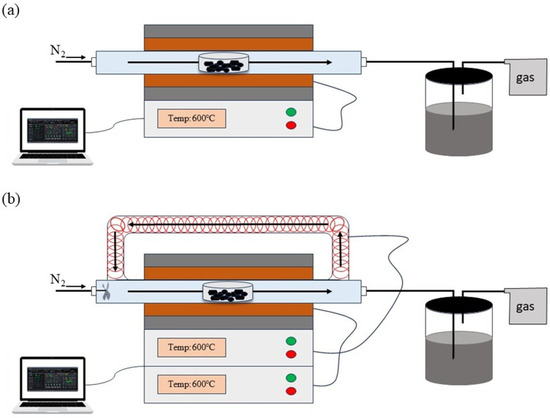
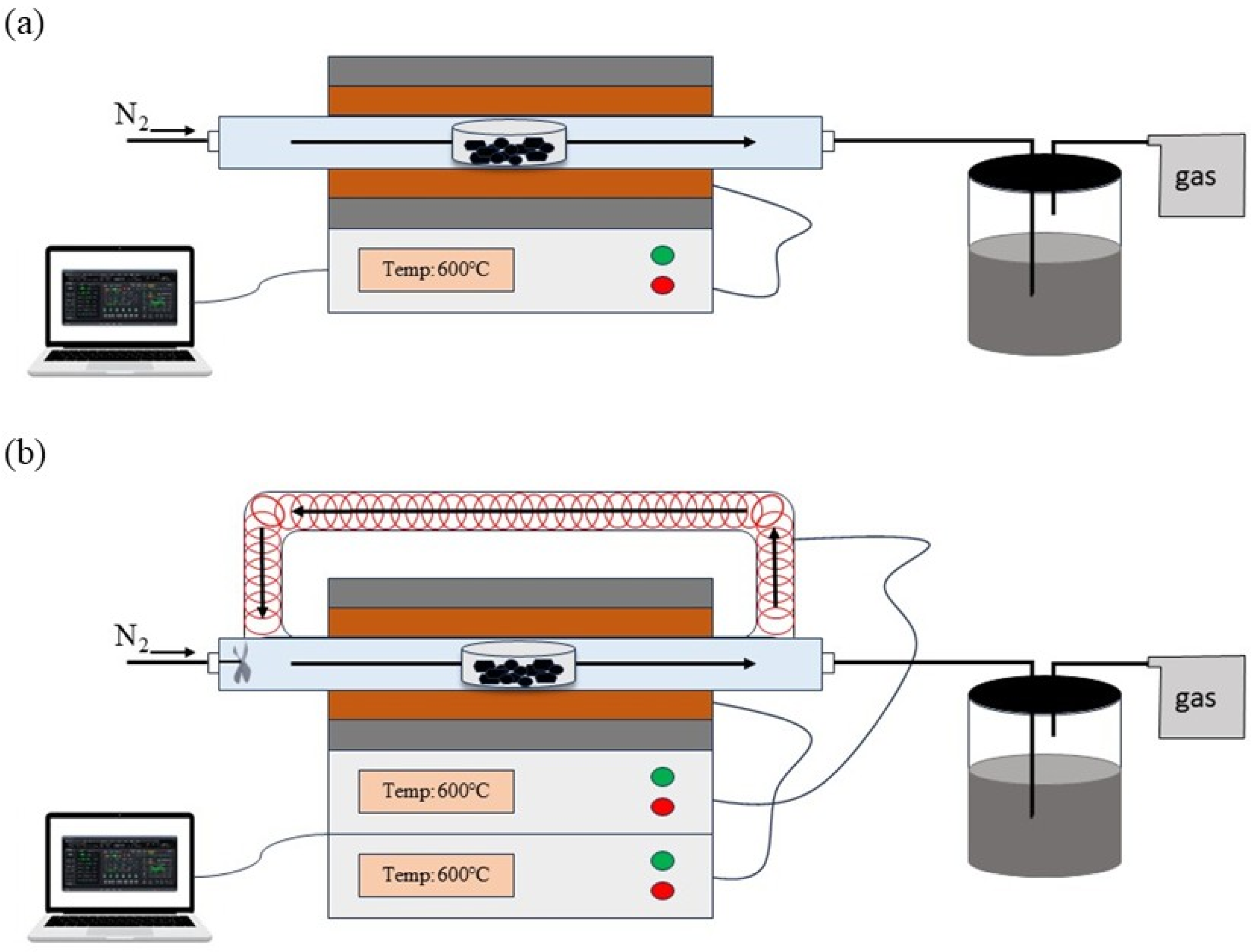
The collected potato peels (PP) were repeatedly washed with distilled water to remove impurities and then oven-dried at 80 °C until a constant weight was achieved. Similarly, the pig manure (PM) was dried at 108 °C to constant weight. Subsequently, all dried samples were ground and passed through a 10-mesh (∼2 mm) nylon sieve to ensure homogeneous particle size. Our prior study demonstrated that biochar derived from PM and PP pyrolyzed at 600 °C possesses an optimized pore structure, superior surface chemical properties, a higher carbonization degree, and increased adsorption sites, thus promoting its efficacy for heavy metal ion adsorption. The CCPS has been incorporated into the conventional tubular furnace by adding circulating pipes and fans [32,38]. By regulating the fan speed, the circulation rate of gas within the furnace can be adjusted, facilitating the recycling of pyrolysis oil molecules (Figure 1). This modification enhances the contact efficiency between the pyrolysis gas and the solid material, improves the diffusion of the pyrolysis gas, and optimizes temperature and material transfer during the pyrolysis process. The resulting biochar displays a significantly higher specific surface area, a more optimized pore structure, and an increased quantity of functional groups—all of which collectively enhance its adsorption performance. In this study, 20.0 g of potato peels (PP) and pig manure (PM) were loaded into a tube furnace and a CCPS furnace, respectively, with both systems set to a temperature of 600 °C. The preparation was conducted in both the conventional and circulating catalytic pyrolysis system while continuously introducing N2. After a pyrolysis duration of 1 h, potato peel biochar (PPB) and pig manure biochar (PMB) were obtained. The biochar produced in the conventional pyrolysis system is designated as PPB-1 and PMB-1, whereas the biochar obtained from the circulating catalytic pyrolysis system is labeled as PPB-2 and PMB-2. The four varieties of biochar were processed using a 10-mesh nylon sieve and subsequently kept in sealed plastic bags.
Figure 1.
Common pyrolysis system (a) and CCPS (b) (N2 output pressure 0.1 MPa).
2.3. Soil Samples
Soil samples were obtained from the topsoil layer (0–20 cm) of the experimental planting field at Chongqing Three Gorges University using the plum blossom collection method, which involves sampling from multiple areas around the designated point. The soil samples were completely mixed to achieve homogeneity (to ensure uniformity) and then promptly transported to the laboratory for natural air-drying. Subsequently, the samples were pulverized and sieved through a 10-mesh nylon sieve to obtain a uniform particle size.
According to the “Soil Environmental Quality-Risk Control Standards for Soil Pollution in Agricultural Land (Trial)” (GB15618-2018) and drawing from literature [39,40], exogenous Cd2+ and Pb2+ were introduced to air-dried soil to enhance the remediation of soil contaminants and mitigate the effects of other heavy metals. The concentration of Cd2+ was set at over 20 mg/kg, while Pb2+ was set at over 700 mg/kg. Solutions of 50 mg/L Cd2+ and 100 mg/L Pb2+ were prepared using Cd(NO3)2 and Pb(NO3)2, respectively. These solutions were sprayed evenly in multiple applications onto the air-dried and ground soil. Following thorough mixing, the soil was then left to air-dry naturally under ambient conditions. Following air-drying, the soil was sieved through a 10-mesh nylon sieve to remove coarse debris and aggregates. The speciation of heavy metals in the soil samples was then determined using the Tessier five-step sequential extraction procedure. Key soil physicochemical properties, along with the concentrations of the heavy metals Cd and Pb, are presented in Table 1.
Table 1.
Basic Physicochemical Characteristics and Heavy Metal Concentrations (Cd and Pb) of the Soil.
2.4. Experimental Steps
To evaluate the removal efficacy of PPB and PMB on Cd2+ and Pb2+, experiments were conducted in both solution and soil.
2.4.1. Feasibility Study
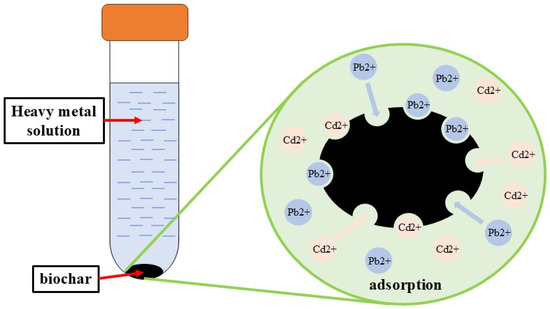
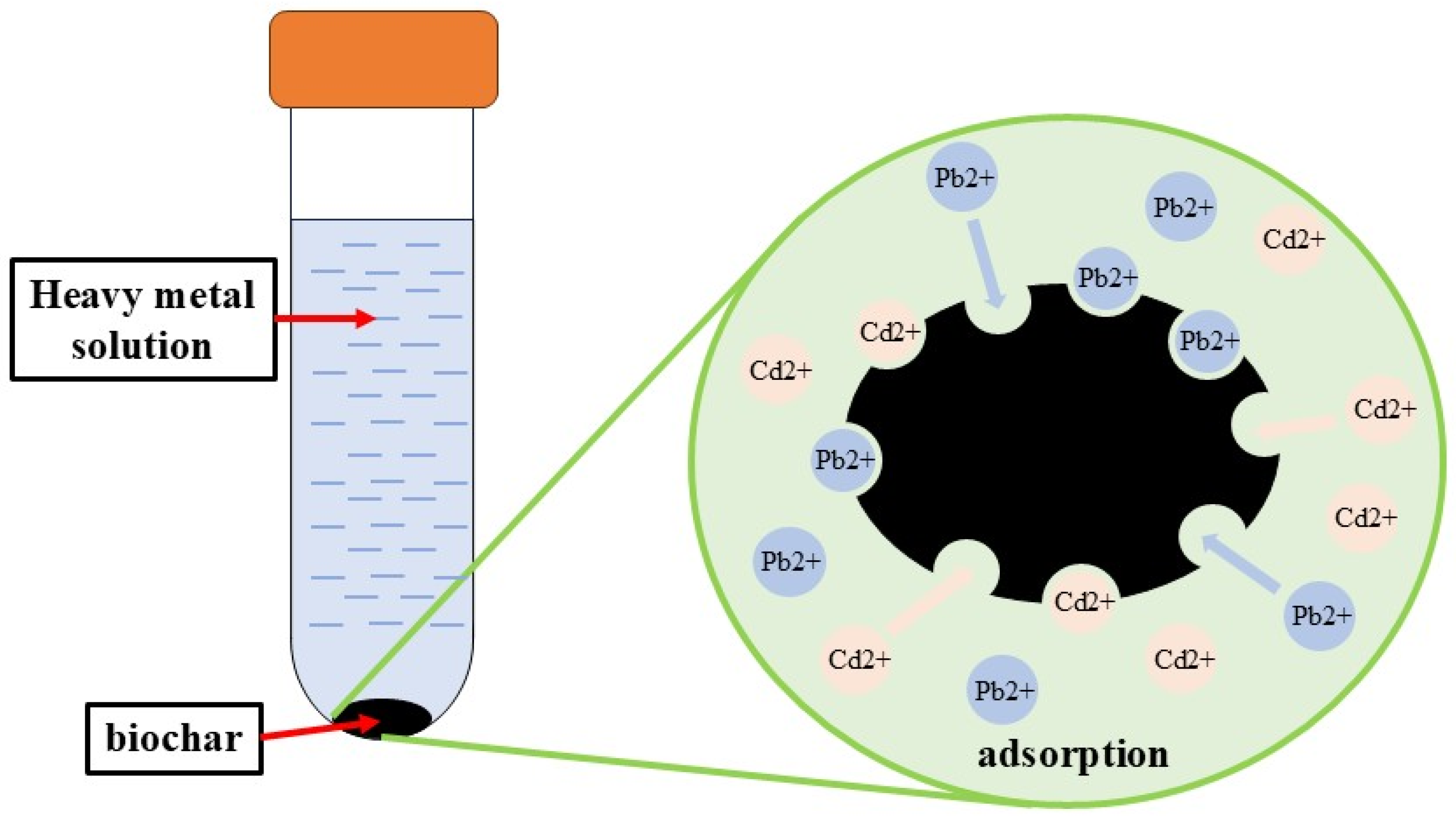
A feasibility study on heavy metal adsorption was performed in solution. This study utilized centrifuge tubes, each containing either 50 mg/L aqueous Cd2+-contaminated solution or 100 mg/L aqueous Pb2+-contaminated solution. PPB-1, PMB-1, PPB-2, and PMB-2 were added sequentially, and the mixtures were continuously agitated to ensure thorough contact (Figure 2). Throughout the adsorption process, the pH of the solution was maintained at 5.0 ± 0.2 using 0.1 M HNO3 or NaOH, and the ionic strength was controlled with 0.01 M NaNO3 to minimize precipitation and speciation effects of the heavy metals. Solution samples were collected at predetermined time intervals (10, 40, 100, 270, 480, 810, and 1440 min) to determine the residual concentrations of heavy metals.
Figure 2.
Schematic diagram of the feasibility experiment.
2.4.2. Experimental Research on Soil Remediation
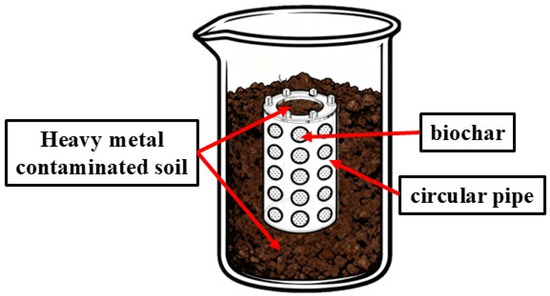
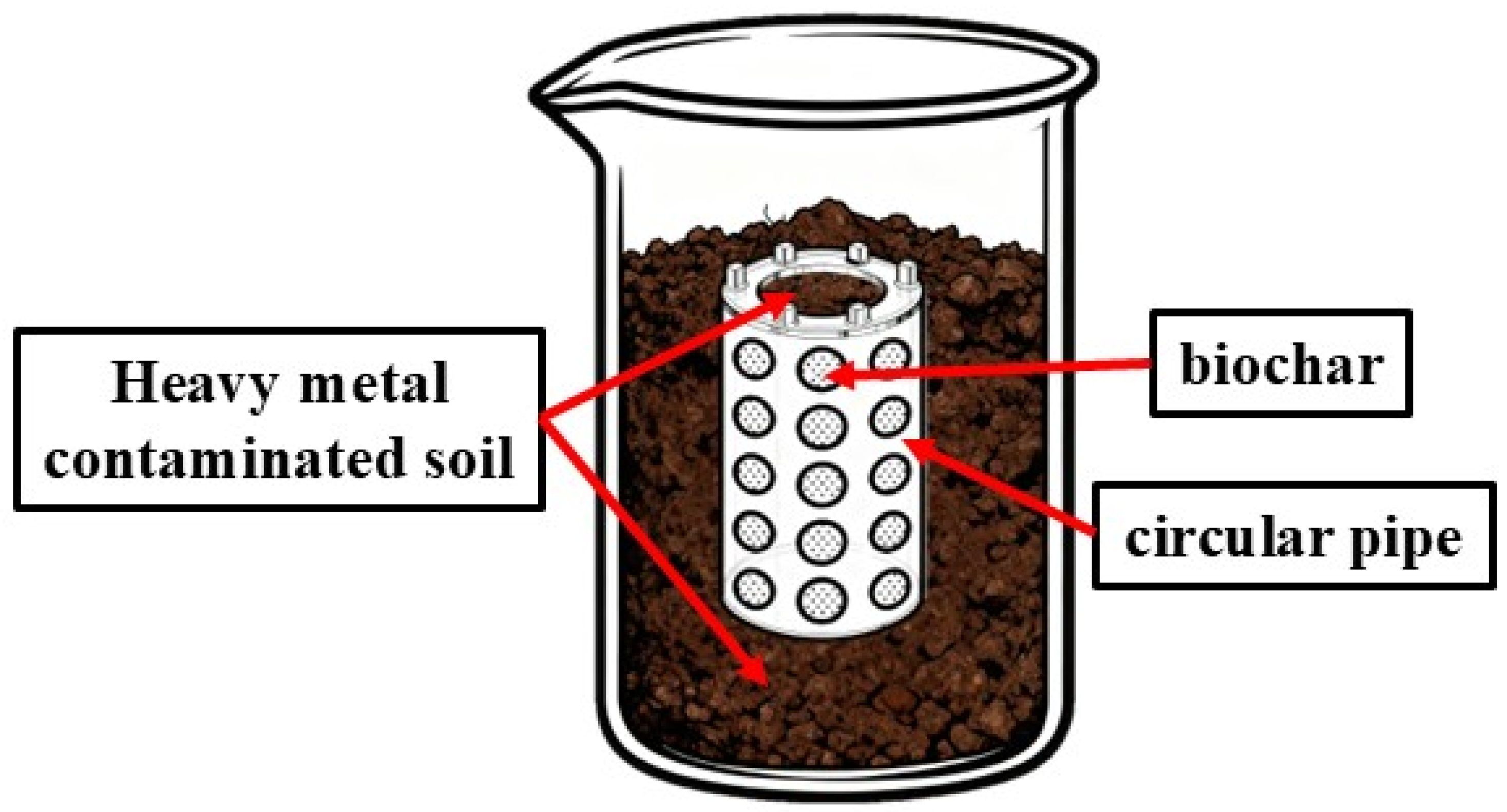
Further research was conducted on the soil. Biochar was introduced into the biochar ring tube (Figure 3) [41], which was subsequently placed in the target soil. A blank control group (CK group) was established without the addition of biochar. The temperature was maintained at normal temperature (consistent with the actual temperature in the wild), and the soil moisture content was maintained at 75% of its field capacity. Due to the fixed volume of the ring tube and the varying densities of the biochar, the dosages for each type of biochar differed. Table 2 presents the varying dosages of biochar.
Figure 3.
Schematic diagram of soil remediation experiment.
Table 2.
Different dosages of biochar.
Soil samples are collected every 10 days. Several samples are mixed thoroughly and air-dried naturally. Subsequently, following sieving through 10-mesh and 100-mesh standard sieves for particle size uniformity, the chemical forms and total concentrations of Cd and Pb in the soil are determined by the Tessier five-step sequential extraction method. Throughout the experimental period, which concluded on the 40th day, four research samples were obtained.
2.5. Statistical Analysis
All experiments were conducted in triplicate. Data are presented as mean ± standard deviation. Statistical significance among different treatment groups was determined by one-way analysis of variance (ANOVA) followed by Tukey’s post hoc test using SPSS 26.0. Differences were considered significant at p < 0.05.
3. Results and Discussion
3.1. Experimental Results
3.1.1. Feasibility Experiment
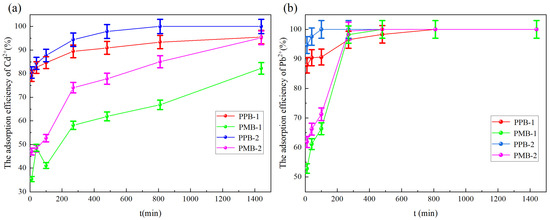
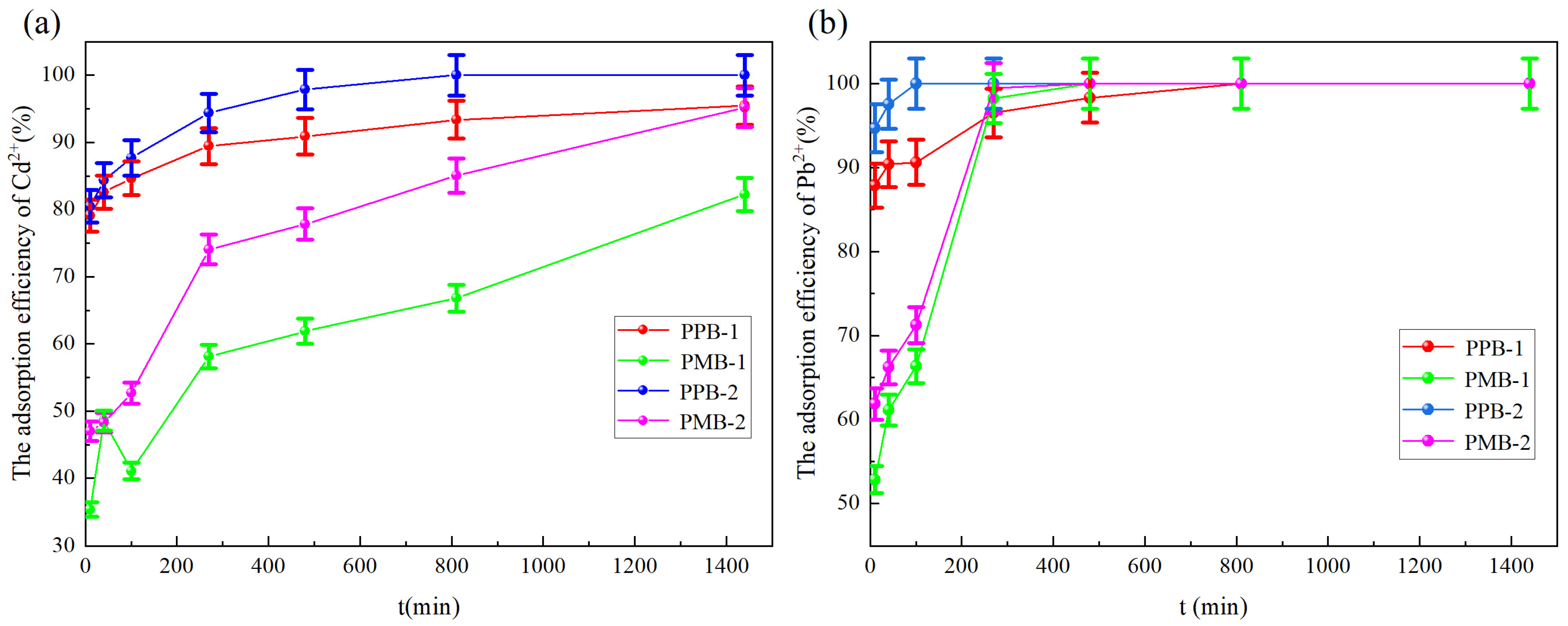
Figure 4 illustrates the variations in adsorption efficiency of PPB and PMB for Cd2+ and Pb2+ in aqueous media. Over time, the concentration of heavy metals in the contaminated solution consistently declines; however, notable differences exist in both the adsorption capacity and the adsorption rate among various biochars and heavy metals.
Figure 4.
Changes in adsorption efficiency of PPB-1, PMB-1, PPB-2 and PMB-2 for Cd2+ (a) and Pb2+ (b) in water. Values are presented as mean ± SD (n = 3).
In the common pyrolysis system, the adsorption of Cd2+ by PPB-1 occurred primarily within the first 270 min, with the removal efficiency reaching 90%. The adsorption process progressed more slowly thereafter and approached equilibrium (95% removal) by 1440 min. In contrast, the adsorption rate of PMB-1 remains relatively consistent, attaining 82% by 1440 min. For Pb2+, the adsorption rate of PPB-1 is similarly fast from 0 to 270 min, with an efficiency of 97%. The rate then slows from 270 to 810 min, culminating in 100% efficiency. The adsorption rate of PMB-1 is also rapid from 0 to 270 min, reaching an efficiency of 98%, followed by a slower phase from 270 to 480 min, where it ultimately achieves 100%.
In the circulating catalytic pyrolysis system, the adsorption rate of Cd2+ by PPB-2 was highly efficient in the initial phase (0–270 min), achieving an adsorption efficiency of 94%. This rate slows from 270 to 810 min, ultimately reaching 100%. In contrast, the adsorption by PMB-2 showed a more gradual progression over time, attaining 95% at 1440 min. For Pb2+, the adsorption rate of PPB-2 remains relatively uniform, achieving 100% within 100 min. Similarly, PMB-2 demonstrates a consistent rate, reaching 99.5% at 270 min before subsequently attaining 100%.
The comparison reveals that biochar produced by the circulating catalytic pyrolysis system significantly outperforms that generated by the conventional pyrolysis system, achieving higher removal efficiencies within a shorter time frame. Furthermore, among the four types of biochar examined, PPB-2 exhibits the most effective adsorption of Cd2+ and Pb2+, achieving 100% removal in a shorter time frame. Consequently, PPB-2 and PMB-2 were selected for further soil experimental research. This enhanced performance may be attributed to the circulating catalytic pyrolysis system’s ability to improve contact efficiency between the pyrolysis gas and the solid material, facilitate gas diffusion, and optimize temperature and material transport during the pyrolysis process. As a result, the enhanced adsorption capacity of the prepared biochar is attributed to its high specific surface area, developed pore structure, and increased number of functional groups.
3.1.2. Soil Experiment
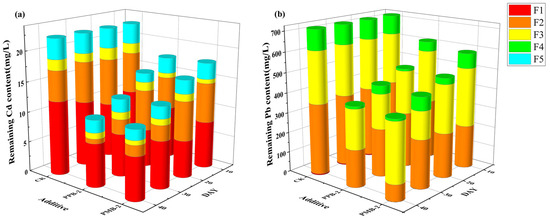
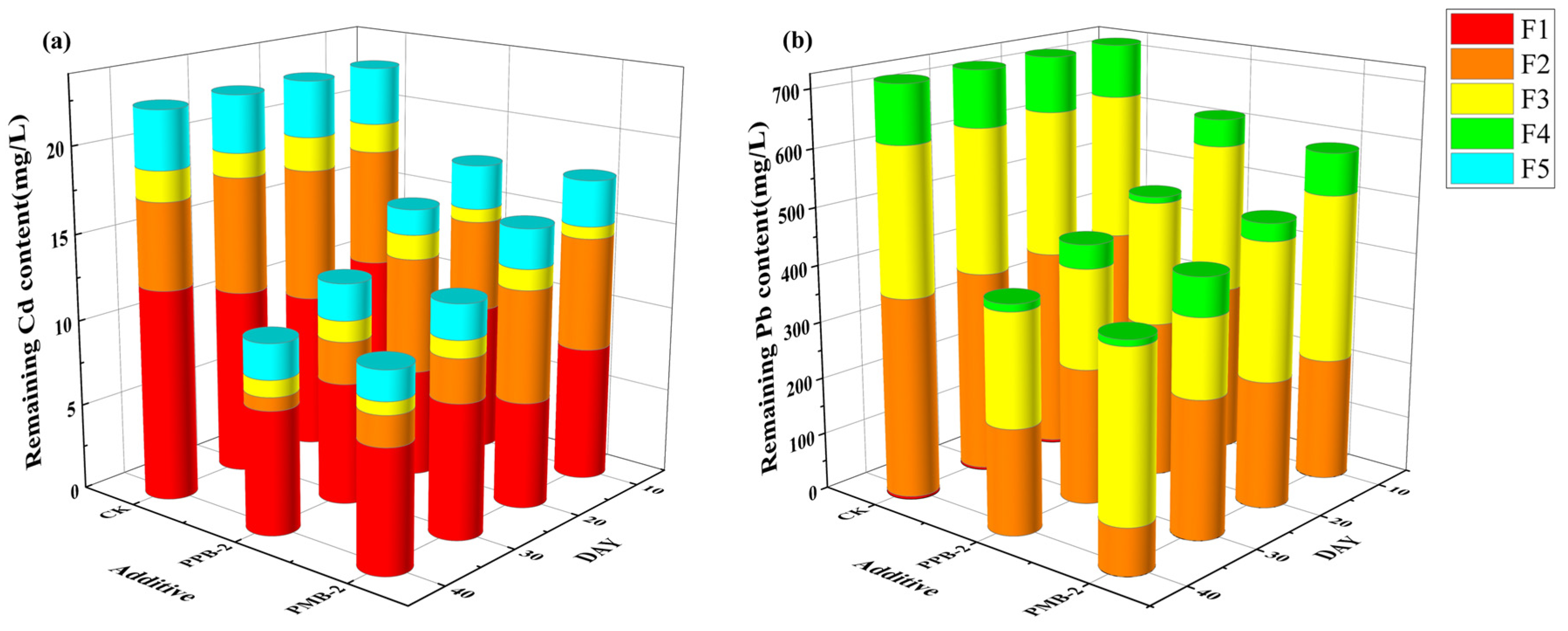
This study investigated the content and chemical forms of residual heavy metals in soil following the amendment with biochar ring tubes (see Figure 5 and Figure 6 for details). In Cd-contaminated soil, a significant decrease in Cd concentration was observed between Day 10 and Day 40 when compared to the control (CK). For the soil treated with PPB-2, the concentration of Cd2+ declined from an initial 22.36 mg/kg to 17.48 mg/kg by Day 10, and further decreased to 10.91 mg/kg by Day 40. This overall change in the PPB-2 treatment group represents a Cd2+ reduction of approximately 51.21%. In contrast, the concentration of Cd2+ in soil treated with PMB-2 decreased from 22.36 mg/kg to 17.77 mg/kg on the 10th day, and subsequently to 11.21 mg/kg on the 40th day, indicating a decrease of approximately 49.87%. A comparison revealed that the adsorption capacities of PPB-2 and PMB-2 for Cd2+ in soil were roughly equivalent, with PPB-2 exhibiting a slight advantage over PMB-2.
Figure 5.
The effects of PPB-2 and PMB-2 on the contents and forms of Cd (a) and Pb (b) in soil. (F1, exchangeable; F2, carbonate bound; F3, Fe-Mn oxides bound; F4, organic matter bound; F5, residual). Values are presented as mean ± SD (n = 3).
Figure 6.
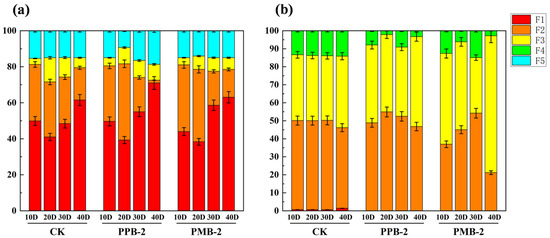
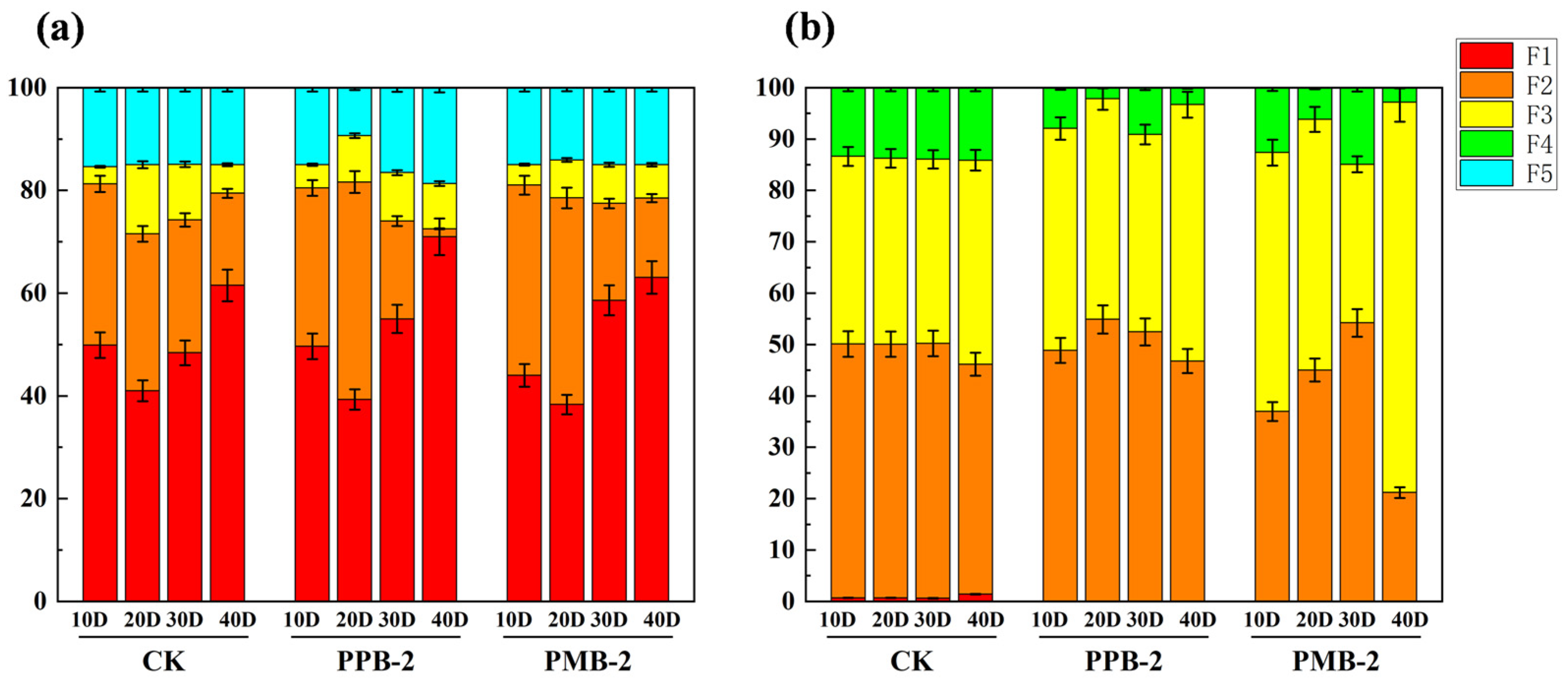
Changes in the speciation of (a) Cd and (b) Pb in soil. (F1, exchangeable; F2, carbonate bound; F3, Fe-Mn oxides bound; F4, organic matter bound; F5, residual). Values are presented as mean ± SD (n = 3).
In soil contaminated with Pb, a significant decline in Pb content was observed from days 10 to 40 when compared to the control (CK). For the PPB-2-treated soil, Pb2+ concentration dropped from an initial 718.28 mg/kg to 643.89 mg/kg by the 10th day, and further fell to 396.93 mg/kg by the 40th day. This sequential reduction resulted in an overall decrease of approximately 44.74% in soil Pb2+. A substantial reduction in Pb2+ concentration (approximately 44.3%) was recorded in the PMB-2-amended soil by the end of the 40-day experiment, decreasing from an initial 718.28 mg/kg to 400.09 mg/kg, with an intermediate value of 610.16 mg/kg observed on day 10. Comparative analysis indicated that the adsorption capacities of PPB-2 and PMB-2 for Pb2+ in soil were approximately equivalent, with PPB-2 exhibiting slightly superior performance, consistent with the observed trend for Cd. This enhanced adsorption capacity can be ascribed to the well-developed porous network of PPB-2. This structure primarily utilizes van der Waals forces or electrostatic attraction to achieve effective adsorption of Cd and Pb in the soil. This hypothesis is further substantiated in the subsequent text.
Figure 5 and Figure 6 illustrate the concentrations and proportions of various forms of Cd and Pb. Specifically, F1 represents the exchangeable state, F2 denotes the reduced state, F3 indicates the oxidized state, F4 corresponds to the organically bound state, and F5 signifies the residual state. The treatment with PPB-2 demonstrates a pronounced effect on the removal and morphological stabilization of Cd, significantly reducing its effective concentration. At 40 days of control (CK), the concentration of F1 was measured at 12.26 mg/L, while the concentration of the reduced state F2 was 5.01 mg/L. Following treatment with PMB-2 for 40 days, the concentration of F1 decreased to 7.75 mg/L, reflecting a reduction of 4.51 mg/L. Concurrently, the concentration of F2 diminished to 0.17 mg/L, a decrease of 4.84 mg/L, leading to a total concentration reduction from 22.37 mg/L to 10.92 mg/L. This treatment also indicated a trend toward transformation into more stable states, such as F3 and F5. PMB-2 effectively regulates the morphology of lead (Pb), resulting in a significant reduction in F2 concentration and facilitating its transformation to F3. At 40 days of control (CK), the concentration of F2 was measured at 315.25 mg/L, while the content of F4 was 99.54 mg/L. Following treatment with PMB-2 for the same duration, the concentration of F2 decreased to 81.83 mg/L, reflecting a reduction of 233.42 mg/L. Concurrently, the concentration of F4 diminished to 10.92 mg/L, representing a decrease of 88.62 mg/L, and F2 was transformed into more stable forms, including F3.
This phenomenon can likely be ascribed to the abundant pore structures and surface-bound aromatic hydrocarbons of PPB-2. Electrostatic interactions and π-electron conjugation facilitate the enrichment of Cd2+ and Pb2+ ions on the surface of PPB-2, ultimately leading to the formation of a stable coordination structure [42]. Additionally, the surface-bound oxygen-containing functional groups of PPB-2 effectively promote the complexation and precipitation of heavy metal ions, thereby converting them into a stable state [43]. Each approach provides unique advantages for the removal and targeted optimization of different types of heavy metals, which in turn effectively lowers these heavy metals’ bioavailability. A comparative analysis with existing literature demonstrates that biochar incorporation significantly improves heavy metal removal from contaminated soil [44,45].
3.2. Mechanism Analysis
To better contextualize the performance of the CCPS-derived biochar in this study, a comparative summary with recent literature on biochar for heavy metal passivation is provided in Table 3. Unlike most previous works that applied biochar via direct soil mixing, this study utilizes a novel ring pipe setup, which minimizes secondary pollution while achieving comparable or superior removal efficiencies for Cd and Pb.
Table 3.
Comparison of recent studies on biochar for heavy metal passivation in soil.
3.2.1. Basic Physicochemical Properties of PPB-2 and PMB-2
As shown in Table 4, the yield and ash content of PMB-2 were notably higher than those of PPB-2. This difference is primarily due to the inherent richness of pig manure in inorganic salts, such as calcium and phosphorus, resulting in a higher proportion of inorganic components in PMB. Furthermore, both PPB-2 and PMB-2 demonstrated alkalinity. Their respective pH values were recorded at 9.67 and 11.06. The alkalinity arises primarily from a high density of alkaline functional groups present on the material surfaces, including alkaline aromatization groups. These functional groups facilitate the fixation of heavy metals by elevating soil pH, thereby promoting the precipitation of heavy metal ions. Previous research has established that biochar can enhance soil pH and ultimately encourage metal precipitation [46]. The alkaline properties of PPB-2 and PMB-2 suggest significant potential for regulating soil pH and fixing heavy metals, with the pronounced alkalinity of PMB-2 enhancing its capacity to immobilize metal ions [47].
Table 4.
Basic physicochemical Properties of PPB-2 and PMB-2.
3.2.2. Surface Structure Analysis
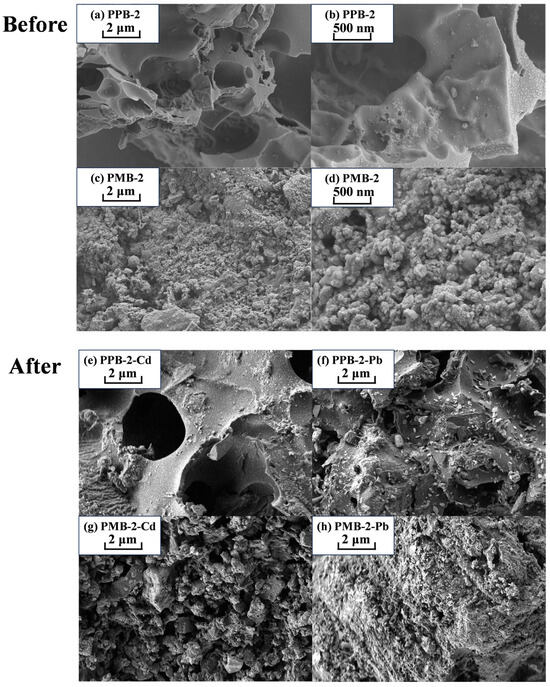
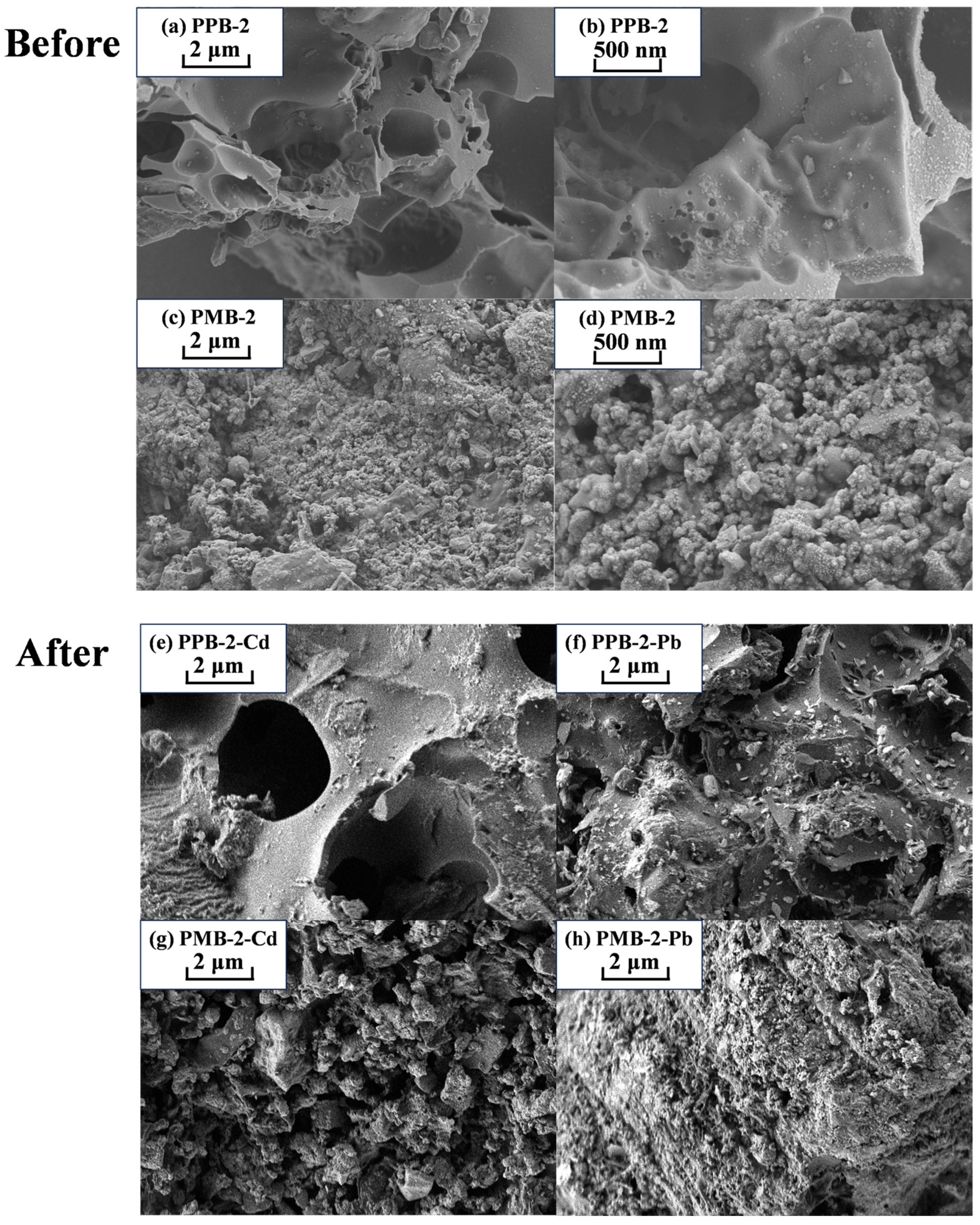
The microstructure of PPB-2 and PMB-2 was examined by scanning electron microscopy (SEM), with representative images presented in Figure 7. PPB-2 exhibits an interconnected honeycomb-like pore structure and features a multi-level “macropores-micropores” arrangement on the pore walls, a morphology likely resulting from the pyrolysis of lignin- and cellulose-rich raw materials. In contrast, PMB-2 displays a dense configuration with fine particle agglomeration and only small inter-particle pores, a structure potentially arising from oxidation reactions and elevated pyrolysis temperatures due to the oxygen content in PM [48]. The multi-level macroporous structure of PPB-2, characterized by a higher specific surface area (as indicated in Table 5), facilitates the physical adsorption of Cd and Pb through its large pores and enhances diffusion, thereby promoting the adsorption process. Conversely, PMB-2’s relatively weaker adsorption performance in aqueous solution is attributed to its smaller pore size, limited specific surface area, and reduced mass transfer efficiency. Consequently, in the feasibility experiment where biochar achieved complete contact with Cd2+ and Pb2+ in water, PPB-2 demonstrated superior adsorption performance compared to PMB-2. However, in the soil experiment, the limited contact between biochar and heavy metal ions diminished the structural advantages of PPB-2. SEM images of PPB-2 and PMB-2 after adsorbing Cd and Pb reveal distinct structural changes compared to the pre-adsorption state: PPB-2’s original interconnected honeycomb-like pores are partially filled with irregular granular or flocculent substances, and its previously smooth pore walls become rough with surface deposits, verifying the physical adsorption mechanism via pore confinement; PMB-2’s fine particle agglomeration structure becomes more compact, with a uniform coating-like substance adhering to particle surfaces and inter-particle pores further blocked, attributed to complexation and precipitation reactions between heavy metal ions and surface functional groups or inorganic components. These morphological changes directly confirm that both biochars interact with Cd and Pb through physical adsorption, complexation, or precipitation, providing visual evidence for their adsorption and passivation effects, consistent with the structural characteristics and adsorption patterns of biochars reported in existing studies [49].
Figure 7.
Scanning electron microscope images of PPB-2 and PMB-2 (Scanning electron microscope images of PPB-2 and PBB-2 are displayed in Figure Before. Images (a,b) present PPB-2 at scales of 2 μm and 500 nm before adsorption, while images (c,d) depict PBB-2 at the same scales. Figure After shows images (e,f,g,h) illustrating PPB-2-Cd, PPB-2-Pb, PBB-2-Cd, and PBB-2-Pb at a scale of 2 μm post-adsorption).
Table 5.
The specific surface areas of each biochar before and after soil adsorption.
3.2.3. Infrared Spectrum Analysis
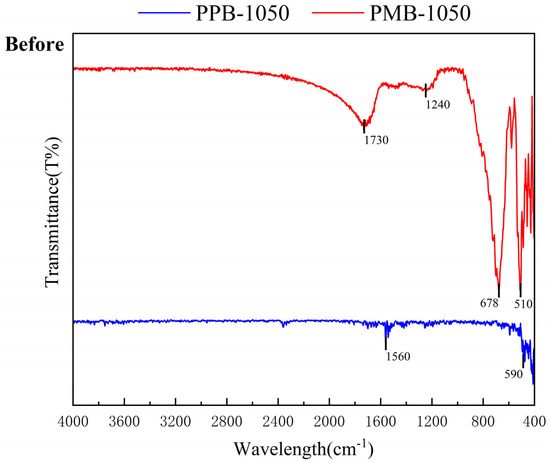
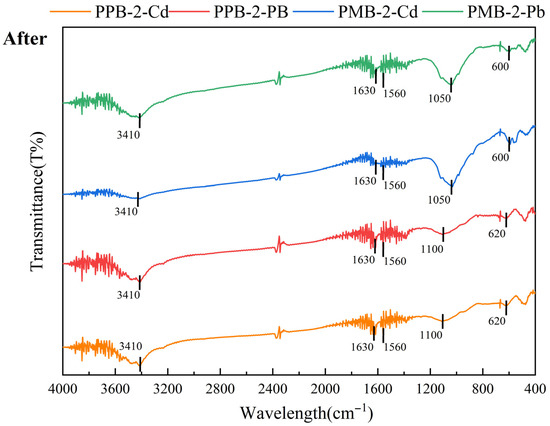
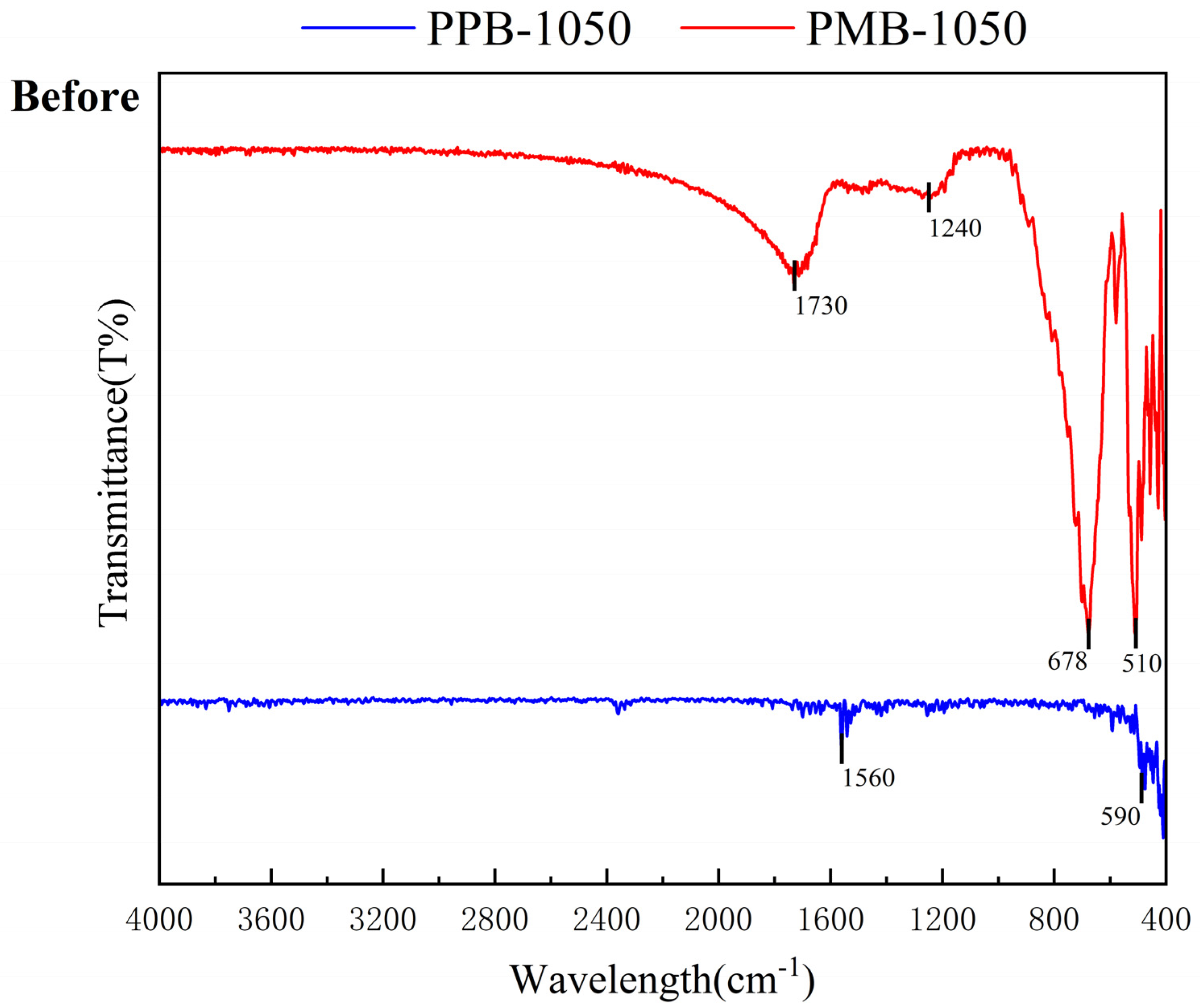
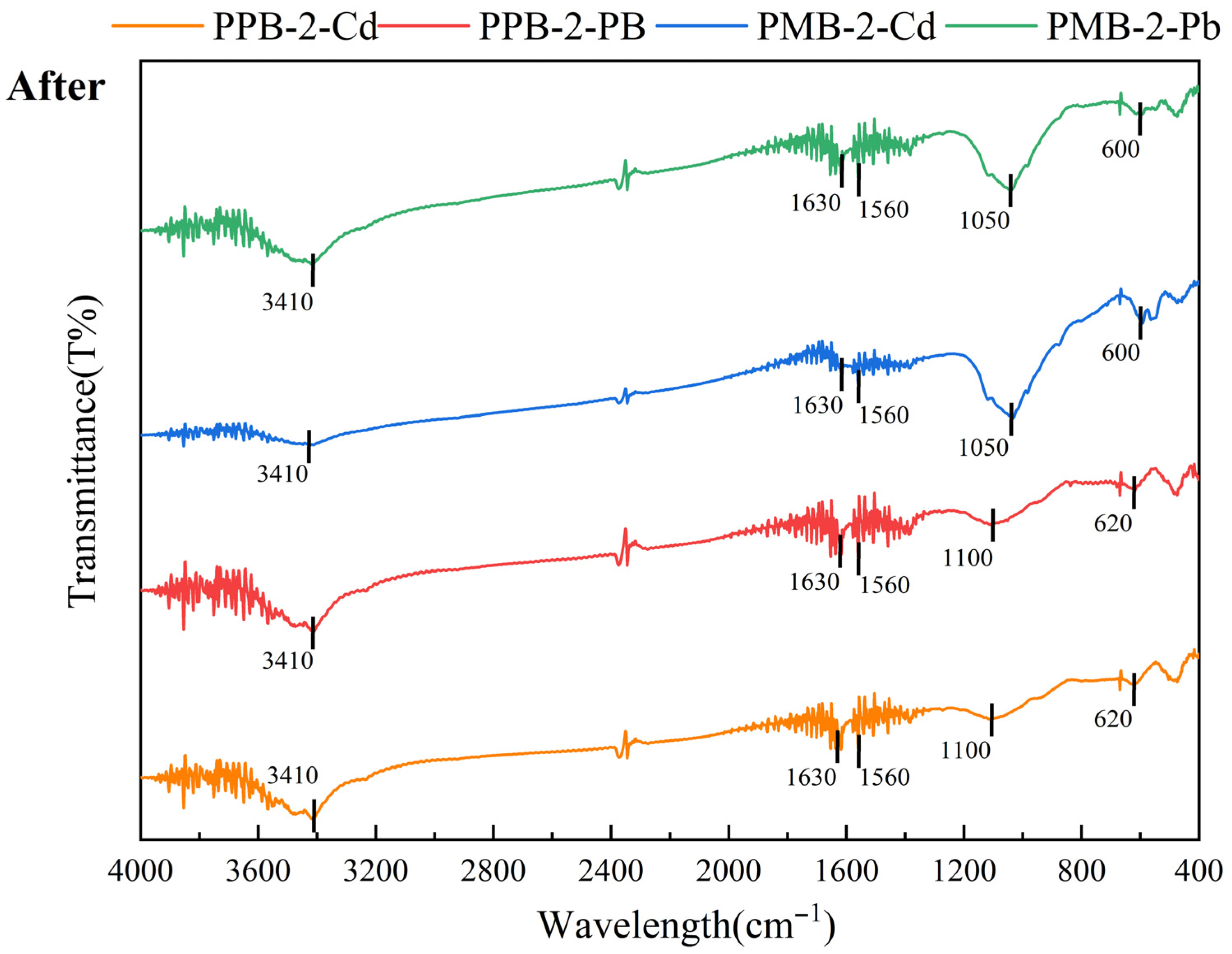
FTIR spectra were analyzed to identify the functional groups involved in Cd and Pb adsorption on PPB-2 and PMB-2 (Figure 8). Key bands were observed near 3400 cm−1 (O-H stretching of hydroxyl/phenolic groups), 1600 cm−1 (aromatic C=C vibration), 1400 cm−1 (carboxylate COO- symmetric stretch), and 1050 cm−1 (C-O stretching of alcohols, phenols, or esters). Peaks below 1000 cm−1 were attributed to inorganic mineral vibrations (e.g., phosphates, silicates). After metal adsorption, both biochars showed noticeable changes: the O-H band intensity decreased, indicating involvement of hydroxyl groups in coordination with Cd2+/Pb2+. The aromatic C=C peak at ~1600 cm−1 shifted or weakened, supporting cation–π interactions between the aromatic matrix and heavy metals. The carboxylate- and C-O-related bands in the 1400–1050 cm−1 region also exhibited reductions or shifts, confirming complexation via oxygen-containing functional groups. In the spectra of both PPB-2 and PMB-2 before adsorption, no distinct O-H stretching band around 3400 cm−1 was observed. This indicates that the high-temperature pyrolysis process (600 °C) under the CCPS regime likely led to the decomposition or condensation of most hydroxyl and phenolic groups, resulting in a more carbonized and aromatic structure. The absence of a prominent -OH band before adsorption further underscores that the O-H groups observed after adsorption may be attributed to surface hydration or newly formed complexes with metal ions, rather than pre-existing hydroxyl groups. Notably, PMB-2 exhibited more pronounced spectral alterations, especially in the low-wavenumber region (<1000 cm−1), where enhanced or new peaks appeared after adsorption. This suggests stronger involvement of inorganic constituents (e.g., carbonates, phosphates) in precipitation reactions, which is consistent with XRD results presented later showing the formation of Cd3(PO4)2 and PbCO3. In contrast, PPB-2 showed relatively subtler changes in inorganic bands, aligning with its lower ash content. These FTIR findings demonstrate that both biochars immobilize metals through surface complexation (hydroxyl, carboxyl groups) and cation–π interactions, while PMB-2’s richer inorganic composition further enhances precipitation-driven passivation. This functional group behavior supports PMB-2’s superior performance in soil remediation, as observed in the ring-pipe experiments.
Figure 8.
Infrared spectra of PPB-2 and PMB-2 before and after adsorbing Cd and Pb.
3.2.4. Phase Composition Analysis
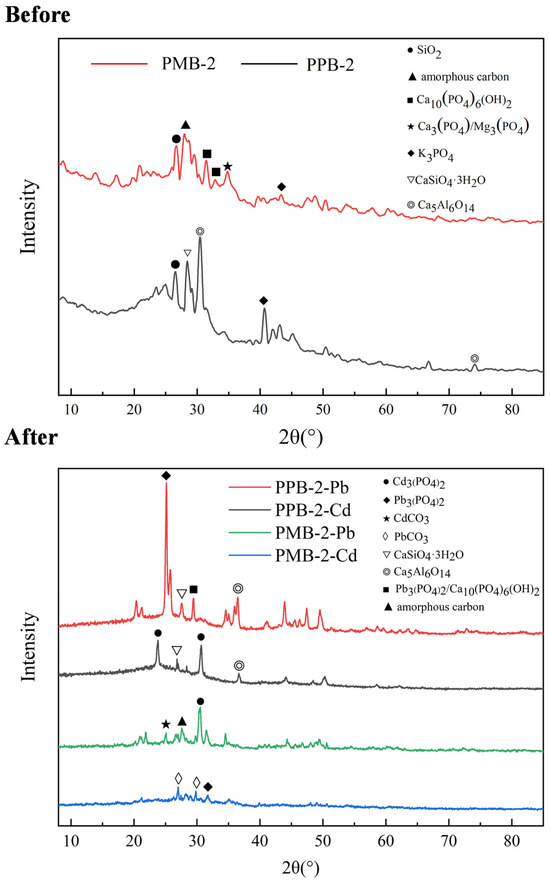
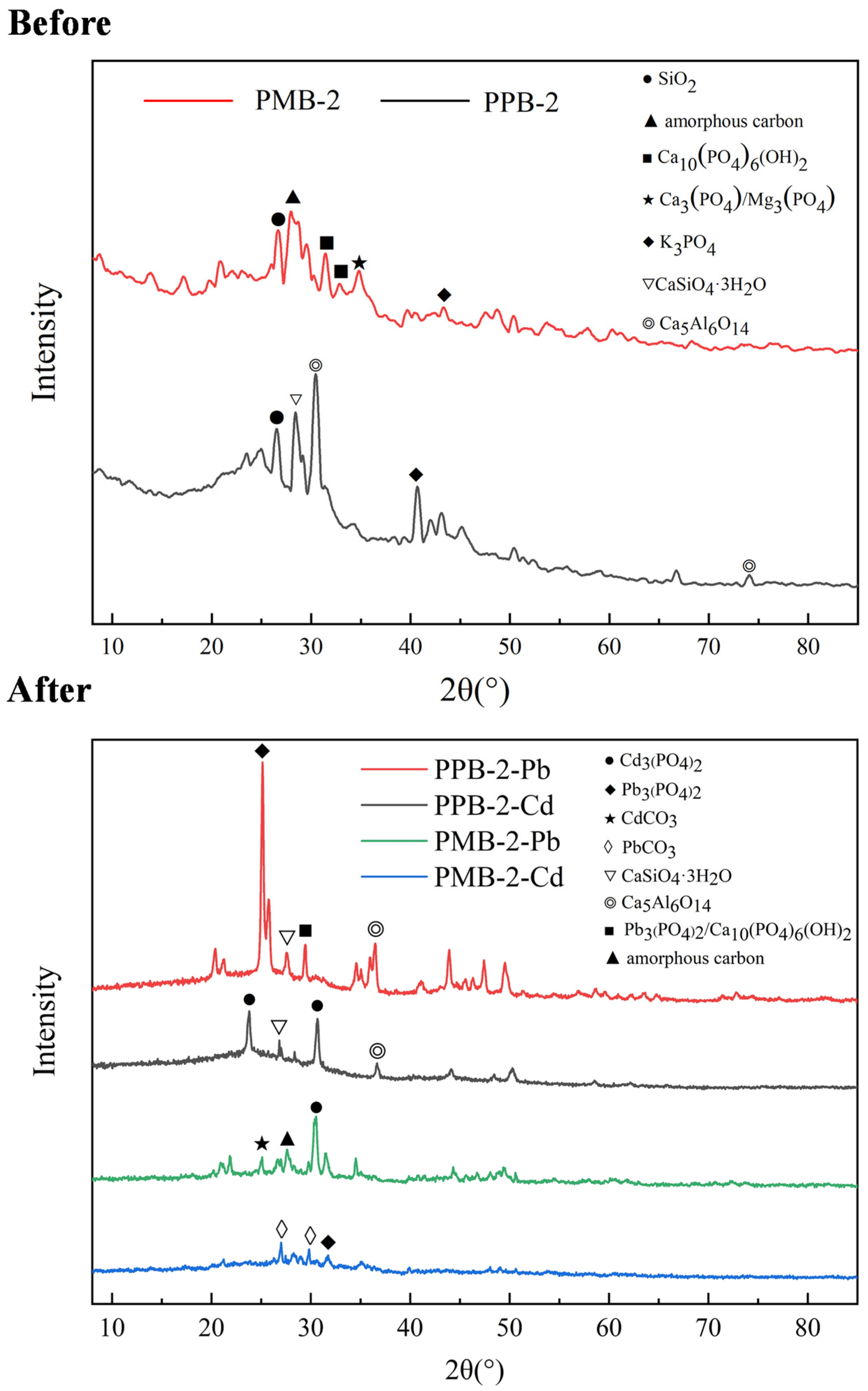
This study investigated the phase composition of biochars before and after heavy metal adsorption using XRD (Figure 9). As shown in Figure 9, PPB-2 exhibited a well-defined crystalline structure, with major phases identified as calcium silicate and calcium phosphate. In contrast, PMB-2 was predominantly amorphous, providing a greater number of active sites for reaction [50]. The post-adsorption XRD patterns (Figure 9) revealed the appearance of new characteristic peaks, confirming the formation of precipitates. For PPB-2, the primary new phases were identified as Cd3(PO4)2 and Pb3(PO4)2, indicating that its metal immobilization relied mainly on phosphate precipitation. In comparison, PMB-2 not only facilitated phosphate precipitation but also showed distinct peaks corresponding to PbCO3 and CdCO3, demonstrating that carbonate precipitation was a key immobilization mechanism. This multiple precipitation mechanism, particularly the ability to form highly stable lead carbonate, enabled PMB-2 to effectively transform Pb from a labile into a stable form in soil. This result aligns well with the soil remediation experiment, in which PMB-2 significantly reduced the mobile carbonate-bound fraction (F2) of Pb. Therefore, this study demonstrates that the amorphous structure of PMB-2 promotes synergistic precipitation effects, leading to superior passivation performance for both Pb and Cd.
Figure 9.
X-ray diffraction patterns of PPB-2 and PMB-2 before and after adsorbing Cd and Pb.
4. Conclusions
This study utilized typical agricultural wastes, specifically PP and PM, sourced from the Wanzhou District of Chongqing City, as raw materials. Biochar was synthesized through two distinct processes: ordinary pyrolysis, which produced PPB-1 and PMB-1, and CCPS, which yielded PPB-2 and PMB-2. Different biochar samples were incorporated into soils contaminated with Cd and Pb using PMMA ring tubes as carriers. Several characterization methods were employed, including SEM, FTIR, and XRD. These analytical techniques were applied not only to investigate the structural properties of the biochar but also to elucidate their passivation effects and underlying mechanisms in Cd- and Pb-contaminated soils. Collectively, the results suggest that in the context of water dissolution adsorption, the biochar produced from the circulating catalytic pyrolysis system exhibits superior performance, with PPB-2 demonstrating the highest removal effect and efficiency. In terms of soil remediation, PMB-2 generally outperforms PPB-2. After 40 days, the total concentration of Cd in the PMB-2 treatment group decreased from 22.36 mg/kg to 11.21 mg/kg, with a removal efficiency of 49.87%. Similarly, the Pb concentration dropped from 718.28 mg/kg to 400.09 mg/kg, reflecting a decrease of 44.3%. Furthermore, PMB-2 significantly reduces the concentration of the reduced state (F2) of Pb, facilitating its transformation to the oxidized state (F3), and demonstrates superior efficacy compared to PPB-2 in stabilizing heavy metal forms.
The observed differences arise from the compatibility of biochar structure with the soil environment. CCPS facilitates the formation of honeycomb-like multi-level pores in PPB-2, which enhances its ability to interact with heavy metals in solution, resulting in high adsorption efficiency. In contrast, the interaction between biochar in the soil and heavy metals is limited, preventing the pore advantages of PPB-2 from being fully realized. Although PMB-2 exists in a fine particle agglomerated state, it has a surface rich in carboxyl and phenolic hydroxyl groups. Additionally, PMB-2 contains amorphous components. The fixation efficiency of target heavy metals is improved through complexation and precipitation, facilitated by the material’s high specific surface area and abundant active sites. Consequently, its soil passivation efficacy outperforms that of PPB-2, validating the superior suitability of pig manure-derived CCPS biochar for remediating Cd and Pb co-contaminated soil.
This study has several limitations. The ring pipe setup, while effective at the laboratory scale, requires validation under field conditions. The long-term stability of passivated metals and biochar aging effects were not assessed. Future research could conduct field-scale validation of the ring pipe setup, optimizing its structural parameters in conjunction with actual farmland conditions such as soil texture and hydrology to enhance its adaptability for large-scale application. Subsequent studies may focus on long-term dynamic monitoring of passivated heavy metals and analysis of biochar aging mechanisms, aiming to clarify the reactivation risks of heavy metals in long-term use and propose corresponding regulatory strategies
Author Contributions
Q.Z.: Conceptualization, Data curation, Formal analysis, Visualization, Writing—original draft. W.S.: Conceptualization, Data curation, Writing—original draft. R.T.: Resources, Supervision. Y.T.: Investigation, Resources. H.W.: Investigation, Resources. Y.Z.: Investigation, Supervision. J.S.: Investigation, Supervision. C.W.: Investigation, Supervision. G.L.: Conceptualization, Funding acquisition, Supervision, Writing—review and editing. Y.W.: Funding acquisition, Supervision, Writing—review and editing. All authors have read and agreed to the published version of the manuscript.
Funding
The present study was funded by the National Natural Science Foundation of China [Grant No. 51808089]; the Science and Technology Research Program of Chongqing Municipal Education Commission [Grant No. KJZD-M202501203].
Data Availability Statement
All data and materials generated or analyzed during this study are included in this article.
Acknowledgments
The authors thank all the people who provided help with this research. They are all among the authors of the article.
Conflicts of Interest
All authors declare no conflicts of interest.
References
- He, B.; Yun, Z.; Shi, J.; Jiang, G. Research progress of heavy metal pollution in China: Sources, analytical methods, status, and toxicity. Chin. Sci. Bull. 2013, 58, 134–140. [Google Scholar] [CrossRef] [Scilit]
- Manta, D.S.; Angelone, M.; Bellanca, A.; Neri, R.; Sprovieri, M. Heavy metals in urban soils: A case study from the city of Palermo (Sicily), Italy. Sci. Total Environ. 2002, 300, 229–243. [Google Scholar] [CrossRef] [Scilit]
- Chen, N.; Zheng, Y.; He, X.; Li, X.; Zhang, X. Analysis of the Report on the national general survey of soil contamination. J. Agro-Environ. Sci. 2017, 36, 1689–1692. [Google Scholar] [CrossRef]
- Jarup, L. Hazards of heavy metal contamination. Br. Med. Bull. 2003, 68, 167–182. [Google Scholar] [CrossRef] [Scilit]
- Liu, X.; Song, Q.; Tang, Y.; Li, W.; Xu, J.; Wu, J.; Wang, F.; Brookes, P.C. Human health risk assessment of heavy metals in soil-vegetable system: A multi-medium analysis. Sci. Total Environ. 2013, 463, 530–540. [Google Scholar] [CrossRef] [Scilit]
- Genchi, G.; Sinicropi, M.S.; Lauria, G.; Carocci, A.; Catalano, A. The Effects of Cadmium Toxicity. Int. J. Environ. Res. Public Health 2020, 17, 3782. [Google Scholar] [CrossRef] [Scilit] [PubMed]
- Ali, H.; Khan, E.; Ilahi, I. Environmental Chemistry and Ecotoxicology of Hazardous Heavy Metals: Environmental Persistence, Toxicity, and Bioaccumulation. J. Chem. 2019, 2019, 6730305. [Google Scholar] [CrossRef] [Scilit]
- Yang, Z.; Wang, Y.; Li, D.; Li, X.; Liu, X. Influence of Freeze–Thaw Cycles and Binder Dosage on the Engineering Properties of Compound Solidified/Stabilized Lead-Contaminated Soils. Int. J. Environ. Res. Public Health 2020, 17, 1077. [Google Scholar] [CrossRef] [Scilit] [PubMed]
- Yang, X.; Mao, X.; Shao, X.; Han, F.; Chang, T.; Qin, H.; Li, M. Enhanced Techniques of Soil Washing for the Remediation of Heavy Metal-Contaminated Soils. Agric. Res. 2018, 7, 99–104. [Google Scholar] [CrossRef] [Scilit]
- Abkenar, S.D.; Khakipour, N.; Alahdadi, I. Recent Advances in Electrochemical Treatment Technology for the Remediation of Contaminated Soil. Anal. Bioanal. Electrochem. 2024, 16, 280–306. [Google Scholar] [CrossRef]
- Ma, Q.; Wei, Z.-B.; Wu, Q.-T. [Effectiveness and Mechanisms of Chemical Leaching Combined with Electrokinetic Technology on the Remediation of Heavy Metal Contaminated Soil]. Huan Jing Ke Xue 2023, 44, 1668–1677. [Google Scholar] [CrossRef] [Scilit] [PubMed]
- Nnaji, N.D.; Onyeaka, H.; Miri, T.; Ugwa, C. Bioaccumulation for heavy metal removal: A review. SN Appl. Sci. 2023, 5, 125. [Google Scholar] [CrossRef] [Scilit]
- Mahmood, T. Phytoextraction of heavy metals—The process and scope for remediation of contaminated soils. Soil Environ. 2010, 29, 91–109. [Google Scholar]
- Wang, S.; Fang, L.; Dapaah, M.F.; Niu, Q.; Cheng, L. Bio-Remediation of Heavy Metal-Contaminated Soil by Microbial-Induced Carbonate Precipitation (MICP)—A Critical Review. Sustainability 2023, 15, 7622. [Google Scholar] [CrossRef] [Scilit]
- Tang, X.; Ni, Y. Review of Remediation Technologies for Cadmium in soil. In E3S Web of Conferences; EDP Sciences: Les Ulis, France, 2021; p. 1037. [Google Scholar] [CrossRef] [Scilit]
- You, S.; Deng, Z.; Chen, M.; Zheng, Y.; Liu, J.; Jiang, P. Mn Pretreatment Improves the Physiological Resistance and Root Exudation of Celosia argentea Linn. to Cadmium Stress. Int. J. Environ. Res. Public Health 2023, 20, 1065. [Google Scholar] [CrossRef] [Scilit] [PubMed]
- Li, H.; Wang, T.; Du, H.; Guo, P.; Wang, S.; Ma, M. Research progress in the joint remediation of plants–microbes–soil for heavy metal-contaminated soil in mining areas: A review. Sustainability 2024, 16, 8464. [Google Scholar] [CrossRef] [Scilit]
- Wang, J.; Wang, S. Preparation, modification and environmental application of biochar: A review. J. Clean. Prod. 2019, 227, 1002–1022. [Google Scholar] [CrossRef] [Scilit]
- Abukari, A.; Kaba, J.S.; Dawoe, E.; Abunyewa, A.A. A comprehensive review of the effects of biochar on soil physicochemical properties and crop productivity. Waste Dispos. Sustain. Energy 2022, 4, 343–359. [Google Scholar] [CrossRef] [Scilit]
- Fu, F.; Wang, Q. Removal of heavy metal ions from wastewaters: A review. J. Environ. Manag. 2011, 92, 407–418. [Google Scholar] [CrossRef] [Scilit]
- Li, Z.; Xing, B.; Ding, Y.; Li, Y.; Wang, S. A high-performance biochar produced from bamboo pyrolysis with in-situ nitrogen doping and activation for adsorption of phenol and methylene blue. Chin. J. Chem. Eng. 2020, 28, 2872–2880. [Google Scholar] [CrossRef] [Scilit]
- Nkoh, J.N.; Ajibade, F.O.; Atakpa, E.O.; Abdulaha-Al Baquy, M.; Mia, S.; Odii, E.C.; Xu, R. Reduction of heavy metal uptake from polluted soils and associated health risks through biochar amendment: A critical synthesis. J. Hazard. Mater. Adv. 2022, 6, 100086. [Google Scholar] [CrossRef] [Scilit]
- Dad, K.; Nawaz, M.; Dawood, M.; Hassan, R.; Nawaz, H.; Javed, K.; Zou, G.; Zhao, F. A review on biochar, its physicochemical properties and capacity to reduce the toxicity of heavy metals in soil. Biosci. Res. 2022, 19, 118–130. [Google Scholar]
- Tan, X.; Liu, Y.; Zeng, G.; Wang, X.; Hu, X.; Gu, Y.; Yang, Z. Application of biochar for the removal of pollutants from aqueous solutions. Chemosphere 2015, 125, 70–85. [Google Scholar] [CrossRef] [Scilit] [PubMed]
- Qiu, B.; Tao, X.; Wang, H.; Li, W.; Ding, X.; Chu, H. Biochar as a low-cost adsorbent for aqueous heavy metal removal: A review. J. Anal. Appl. Pyrolysis 2021, 155, 105081. [Google Scholar] [CrossRef] [Scilit]
- Ahmad, M.; Rajapaksha, A.U.; Lim, J.E.; Zhang, M.; Bolan, N.; Mohan, D.; Vithanage, M.; Lee, S.S.; Ok, Y.S. Biochar as a sorbent for contaminant management in soil and water: A review. Chemosphere 2014, 99, 19–33. [Google Scholar] [CrossRef] [Scilit]
- Khan, Z.H.; Gao, M.; Qiu, W.; Islam, S.; Song, Z. Mechanisms for cadmium adsorption by magnetic biochar composites in an aqueous solution. Chemosphere 2020, 246, 125701. [Google Scholar] [CrossRef] [Scilit]
- Liu, L.; Li, J.; Yue, F.; Yan, X.; Wang, F.; Bloszies, S.; Wang, Y. Effects of arbuscular mycorrhizal inoculation and biochar amendment on maize growth, cadmium uptake and soil cadmium speciation in Cd-contaminated soil. Chemosphere 2018, 194, 495–503. [Google Scholar] [CrossRef] [Scilit]
- Liang, M.; Lu, L.; He, H.; Li, J.; Zhu, Z.; Zhu, Y. Applications of Biochar and Modified Biochar in Heavy Metal Contaminated Soil: A Descriptive Review. Sustainability 2021, 13, 14041. [Google Scholar] [CrossRef] [Scilit]
- Taraqqi-A-Kamal, A.; Atkinson, C.J.; Khan, A.; Zhang, K.; Sun, P.; Akther, S.; Zhang, Y. Biochar remediation of soil: Linking biochar production with function in heavy metal contaminated soils. Plant Soil Environ. 2021, 67, 183–201. [Google Scholar] [CrossRef] [Scilit]
- Wu, Y.; Zhang, Y.; Wang, M.; Xia, Y.; Lan, G.; Yan, B.; Yu, Y.; Xiong, X.; Zou, J.; Zhu, Y. Study on the effect of cyclic catalytic pyrolysis on sludge pyrolysis products. J. Environ. Chem. Eng. 2024, 12, 111647. [Google Scholar] [CrossRef] [Scilit]
- Wu, Y.; Yu, Y.; Wang, Y.; Pan, X.; Shi, W.; Huang, Y.; Liao, Y.; Yang, Y.; Zuo, X. The effect of cyclic catalytic pyrolysis system on the co-pyrolysis products of sewage sludge and chicken manure, focusing on the yield and quality of syngas. Energy 2025, 314, 134182. [Google Scholar] [CrossRef] [Scilit]
- Zong, Y.; Chen, H.; Malik, Z.; Xiao, Q.; Lu, S. Comparative study on the potential risk of contaminated-rice straw, its derived biochar and phosphorus modified biochar as an amendment and their implication for environment. Environ. Pollut. 2022, 293, 118515. [Google Scholar] [CrossRef] [Scilit]
- de Figueiredo, C.C.; Chagas, J.K.M.; da Silva, J.; Paz-Ferreiro, J. Short-term effects of a sewage sludge biochar amendment on total and available heavy metal content of a tropical soil. Geoderma 2019, 344, 31–39. [Google Scholar] [CrossRef] [Scilit]
- Lin, G.; Wang, Y.; Wu, X.; Meng, J.; Ok, Y.S.; Wang, C.-H. Enhancing agricultural productivity with biochar: Evaluating feedstock and quality standards. Bioresour. Technol. Rep. 2025, 29, 102059. [Google Scholar] [CrossRef] [Scilit]
- Wang, Z.-j.; Liu, H.; Zeng, F.-k.; Yang, Y.-c.; Xu, D.; Zhao, Y.-C.; Liu, X.-f.; Kaur, L.; Liu, G.; Singh, J. Potato processing industry in China: Current scenario, future trends and global impact. Potato Res. 2023, 66, 543–562. [Google Scholar] [CrossRef] [Scilit] [PubMed]
- Liu, Z. EKC Empirical Analysis of Agricultural Non-point Source Pollution Sources in Chongqing City. J. Southwest China Norm. Univ. (Nat. Sci. Ed.) 2015, 40, 8. [Google Scholar] [CrossRef]
- Pan, X.; Wu, Y.; Li, T.; Lan, G.; Shen, J.; Yu, Y.; Xue, P.; Chen, D.; Wang, M.; Fu, C. A study of co-pyrolysis of sewage sludge and rice husk for syngas production based on a cyclic catalytic integrated process system. Renew. Energy 2023, 215, 118946. [Google Scholar] [CrossRef] [Scilit]
- GB 15618-2018; Soil Environmental Quality Risk Control Standard for Soil Contamination of Agricultural Land. China Environmental Publishing Group: Beijing, China, 2018.
- Su, J.; Guo, Z.; Zhang, M.; Xie, Y.; Shi, R.; Huang, X.; Tuo, Y.; He, X.; Xiang, P. Mn-modified bamboo biochar improves soil quality and immobilizes heavy metals in contaminated soils. Environ. Technol. Innov. 2024, 34, 103630. [Google Scholar] [CrossRef] [Scilit]
- Chen, L.; Ni, Q.; Wu, Y.; Fu, C.; Ping, W.; Bai, H.; Li, M.; Huang, H.; Liu, H. Passivation and Remediation of Pb and Cr in Contaminated Soil by Sewage Sludge Biochar Tubule. Environ. Sci. Pollut. Res. 2021, 28, 49102–49111. [Google Scholar] [CrossRef] [Scilit]
- Liang, C.; Hu, Y.-w.; Ji, M.-y.; Sang, W.-j.; Li, D.-x. Adsorptive characteristics of rice straw biochar on composite heavy metals Cd2+ and Pb2+ in soil. Res. Environ. Sci. 2020, 33, 1539–1548. [Google Scholar]
- Wang, Y.; Zheng, K.; Jiao, Z.; Zhan, W.; Ge, S.; Ning, S.; Fang, S.; Ruan, X. Simultaneous removal of Cu2+, Cd2+ and Pb2+ by modified wheat straw biochar from aqueous solution: Preparation, characterization and adsorption mechanism. Toxics 2022, 10, 316. [Google Scholar] [CrossRef] [Scilit] [PubMed]
- Burachevskaya, M.; Minkina, T.; Bauer, T.; Lobzenko, I.; Fedorenko, A.; Mazarji, M.; Sushkova, S.; Mandzhieva, S.; Nazarenko, A.; Butova, V.; et al. Fabrication of biochar derived from different types of feedstocks as an efficient adsorbent for soil heavy metal removal. Sci. Rep. 2023, 13, 2020. [Google Scholar] [CrossRef] [Scilit]
- Bostani, A.; Meng, X.; Jiao, L.; Rončević, S.D.; Zhang, P.; Sun, H. Differentiated effects and mechanisms of N-, P-, S-, and Fe-modified biochar materials for remediating Cd- and Pb-contaminated calcareous soil. Ecotoxicol. Environ. Saf. 2025, 289, 117661. [Google Scholar] [CrossRef] [Scilit] [PubMed]
- Chintala, R.; Mollinedo, J.; Schumacher, T.E.; Malo, D.D.; Julson, J.L. Effect of biochar on chemical properties of acidic soil. Arch. Agron. Soil Sci. 2014, 60, 393–404. [Google Scholar] [CrossRef] [Scilit]
- Liu, J.; Jiang, J.; Meng, Y.; Aihemaiti, A.; Xu, Y.; Xiang, H.; Gao, Y.; Chen, X. Preparation, Environmental Application and Prospect of Biochar-Supported Metal Nanoparticles: A Review. J. Hazard. Mater. 2020, 388, 122026. [Google Scholar] [CrossRef] [Scilit]
- Hossain, M.K.; Strezov, V.; Chan, K.Y.; Ziolkowski, A.; Nelson, P.F. Influence of pyrolysis temperature on production and nutrient properties of wastewater sludge biochar. J. Environ. Manag. 2011, 92, 223–228. [Google Scholar] [CrossRef] [Scilit]
- Shi, L.; Zhong, J.; Wu, M.; Liu, Q.; Yang, L.; Xu, X.; Wang, W.; Guan, X.; Lu, M. Turning Waste into Treasure: A Magnetic Sludge-Based Biochar for Efficient Co-Removal of Tetracycline and Cu2+. Langmuir 2025, 41, 32994–33008. [Google Scholar] [CrossRef] [Scilit]
- Ma, Z.; Yang, Y.; Ma, Q.; Zhou, H.; Luo, X.; Liu, X.; Wang, S. Evolution of the chemical composition, functional group, pore structure and crystallographic structure of bio-char from palm kernel shell pyrolysis under different temperatures. J. Anal. Appl. Pyrolysis 2017, 127, 350–359. [Google Scholar] [CrossRef] [Scilit]

Disclaimer/Publisher’s Note: The statements, opinions and data contained in all publications are solely those of the individual author(s) and contributor(s) and not of MDPI and/or the editor(s). MDPI and/or the editor(s) disclaim responsibility for any injury to people or property resulting from any ideas, methods, instructions or products referred to in the content. |
© 2025 by the authors. Licensee MDPI, Basel, Switzerland. This article is an open access article distributed under the terms and conditions of the Creative Commons Attribution (CC BY) license (https://creativecommons.org/licenses/by/4.0/).