Theoretical Framework and Methodological Study on Intelligent Control of Gas Extraction Pipeline Networks



Abstract
1. Introduction
2. Theoretical Model
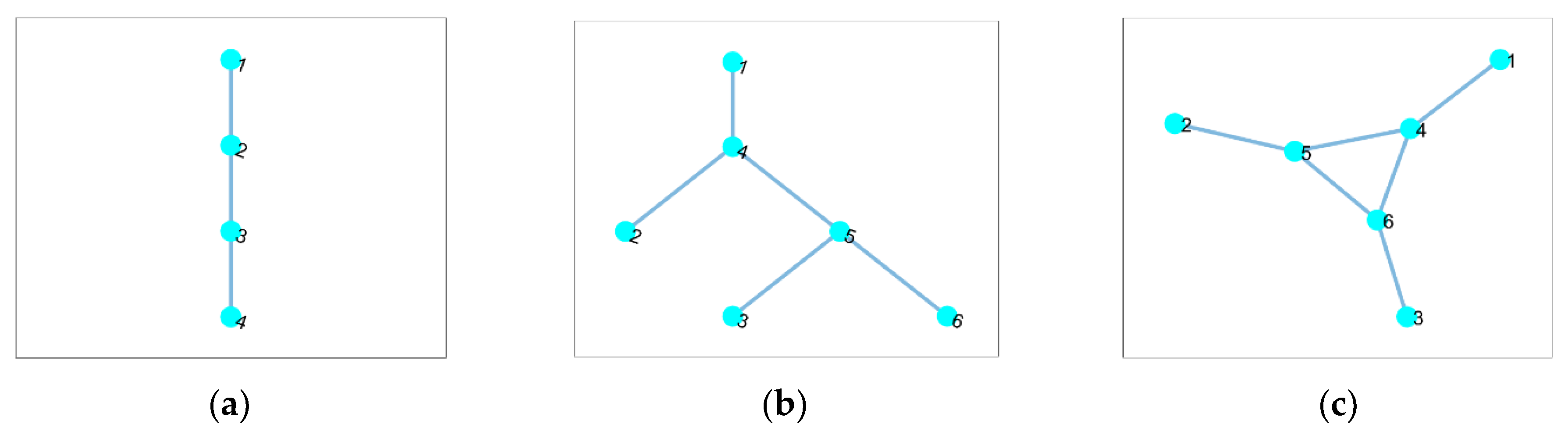
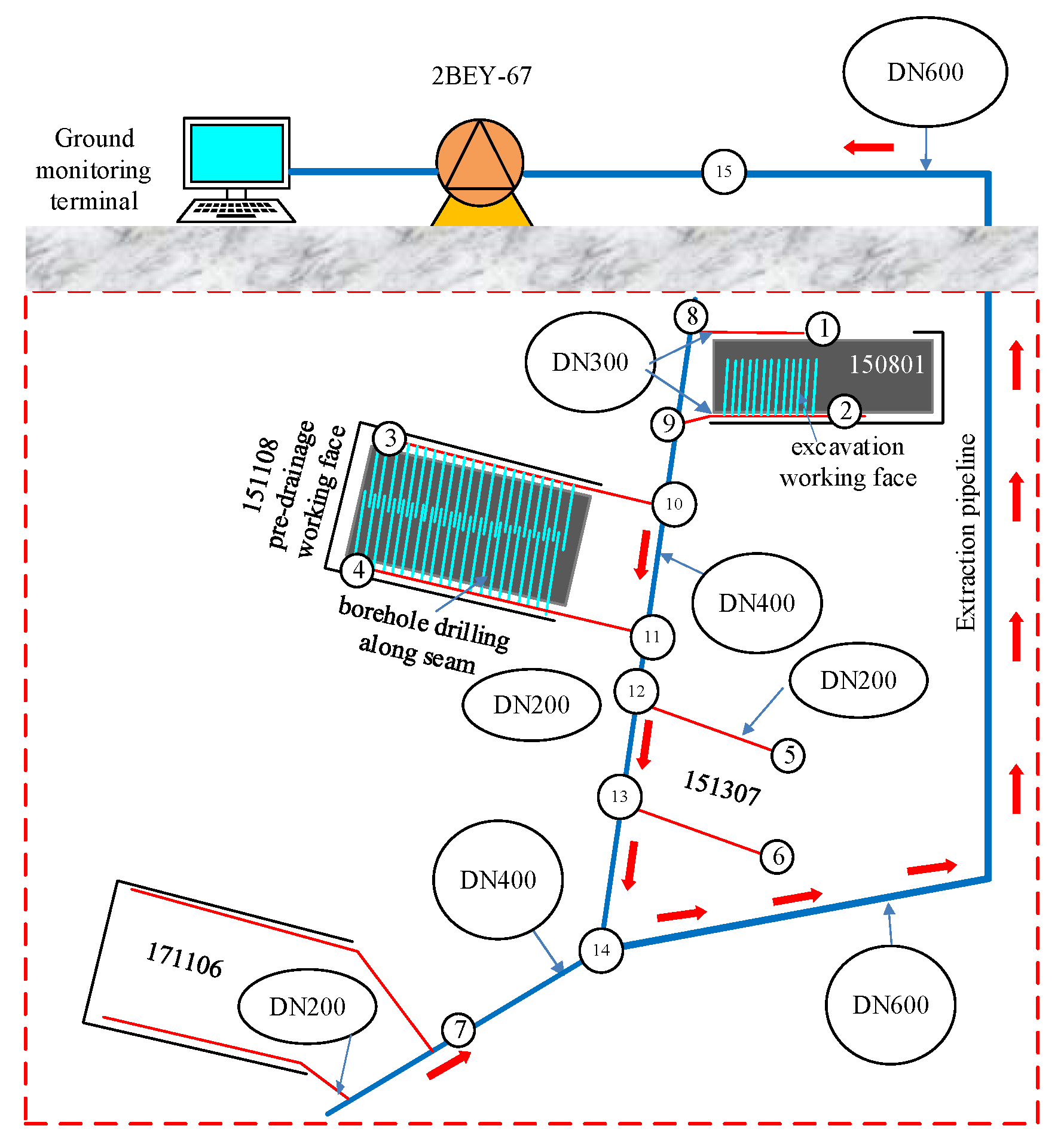
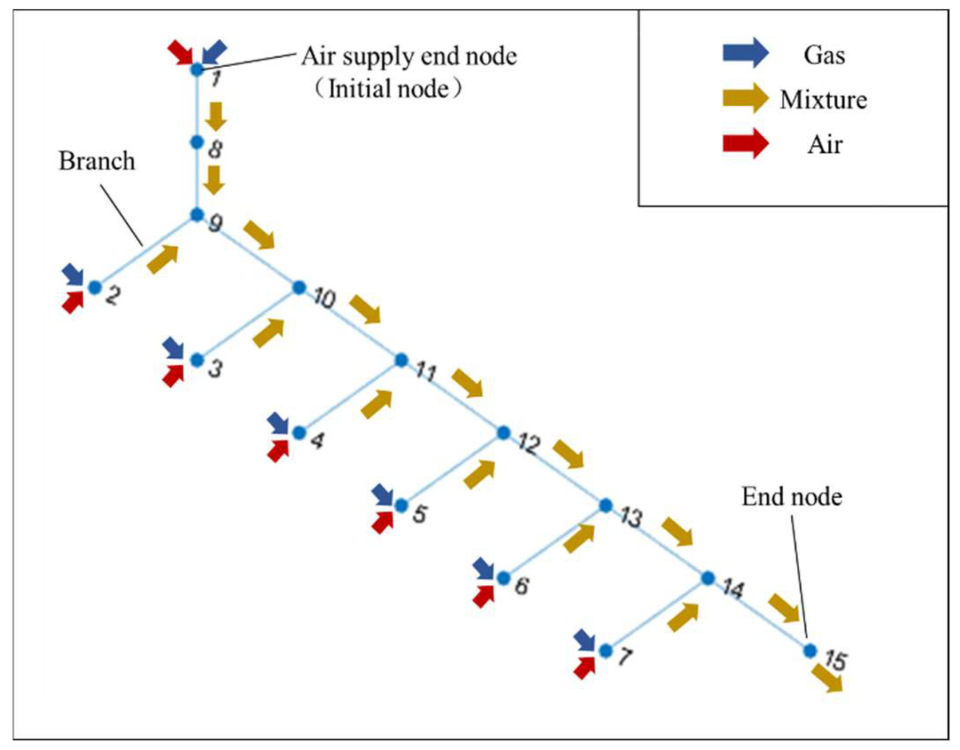
2.1. Graph Theoretical Model of Gas Drainage Pipeline Network
2.2. Gas Drainage Pipe Network Flow Model
- (1)
- Gas-air mixed flow equation
- (2)
- Mass flow equation
- (3)
- Equation of resistance along the gas pipeline
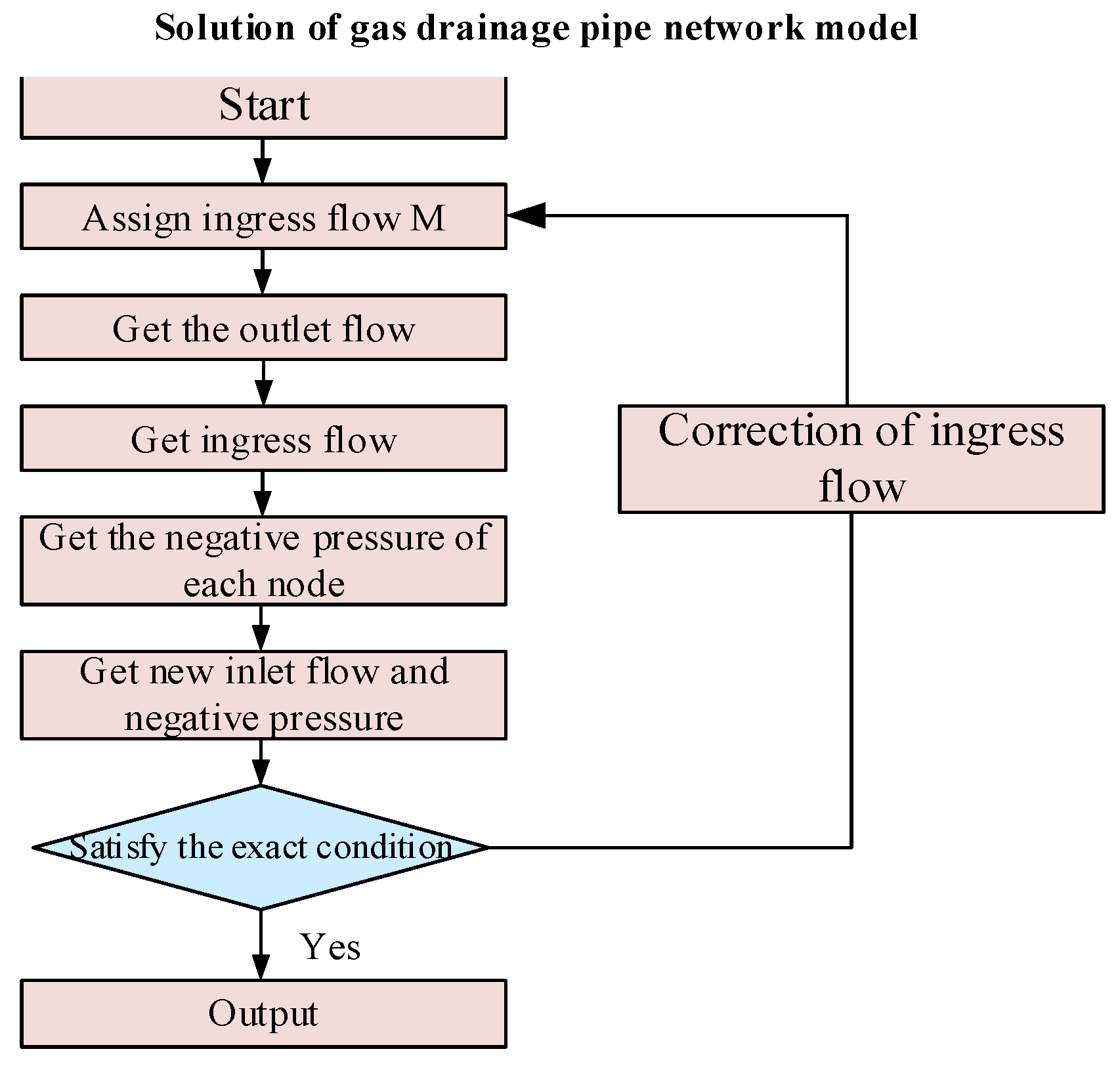
2.2.1. Gas Extraction Pipe Network Calculation Process
2.2.2. Pipe Section Flow Assignment Method
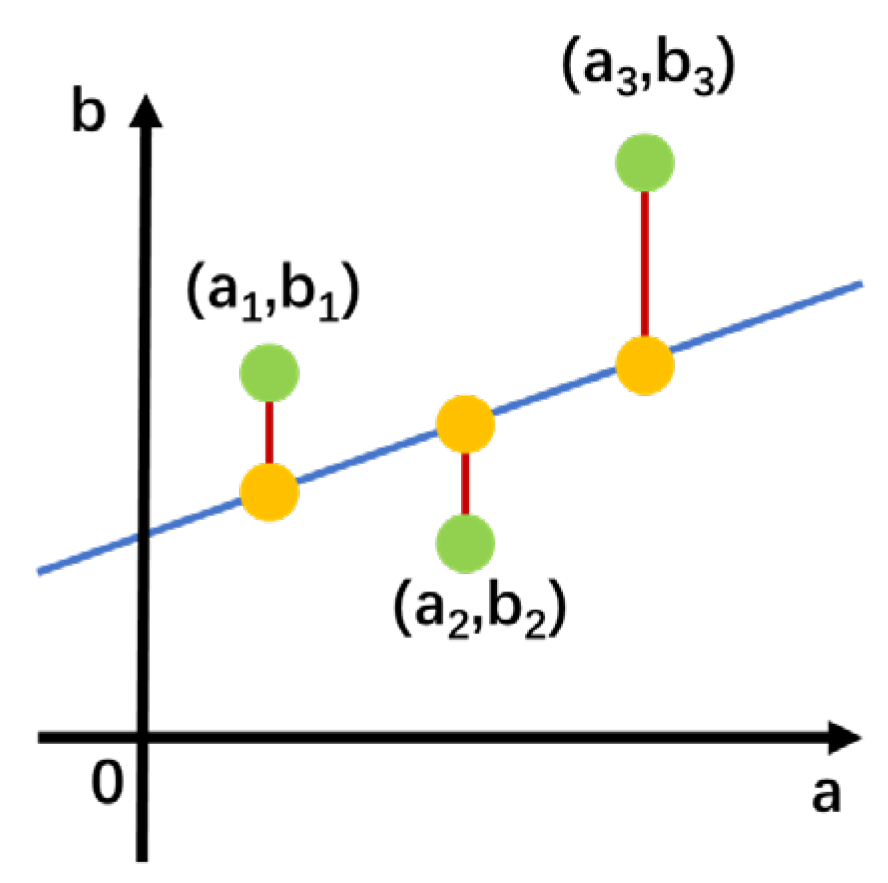
2.2.3. Parameter Fitting Optimization
3. Regulatory Parameter Sensitivity Analysis
3.1. The Influence of Control Parameters on the Pumping Network
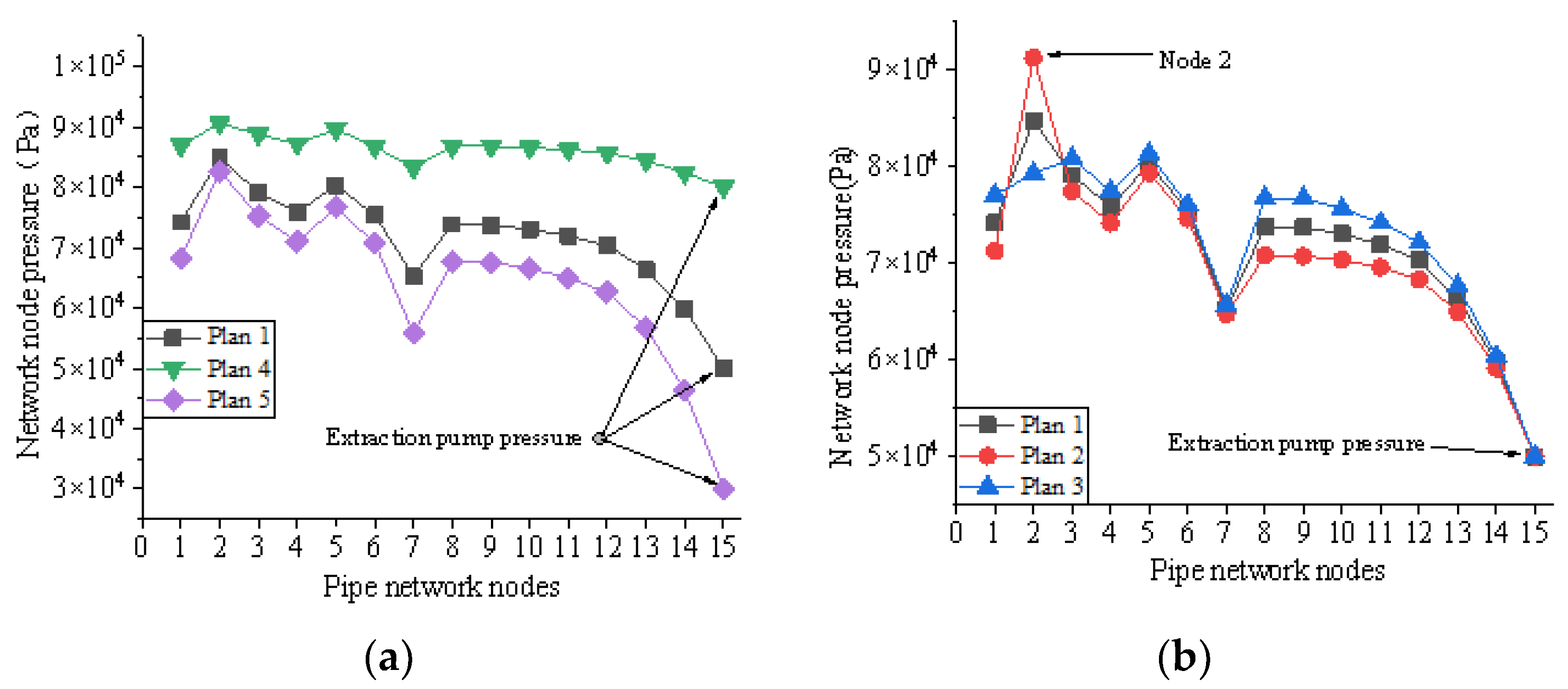
- (1)
- Proof of the conclusion of Figure 8a
- (2)
- Proof of the conclusion of Figure 8b
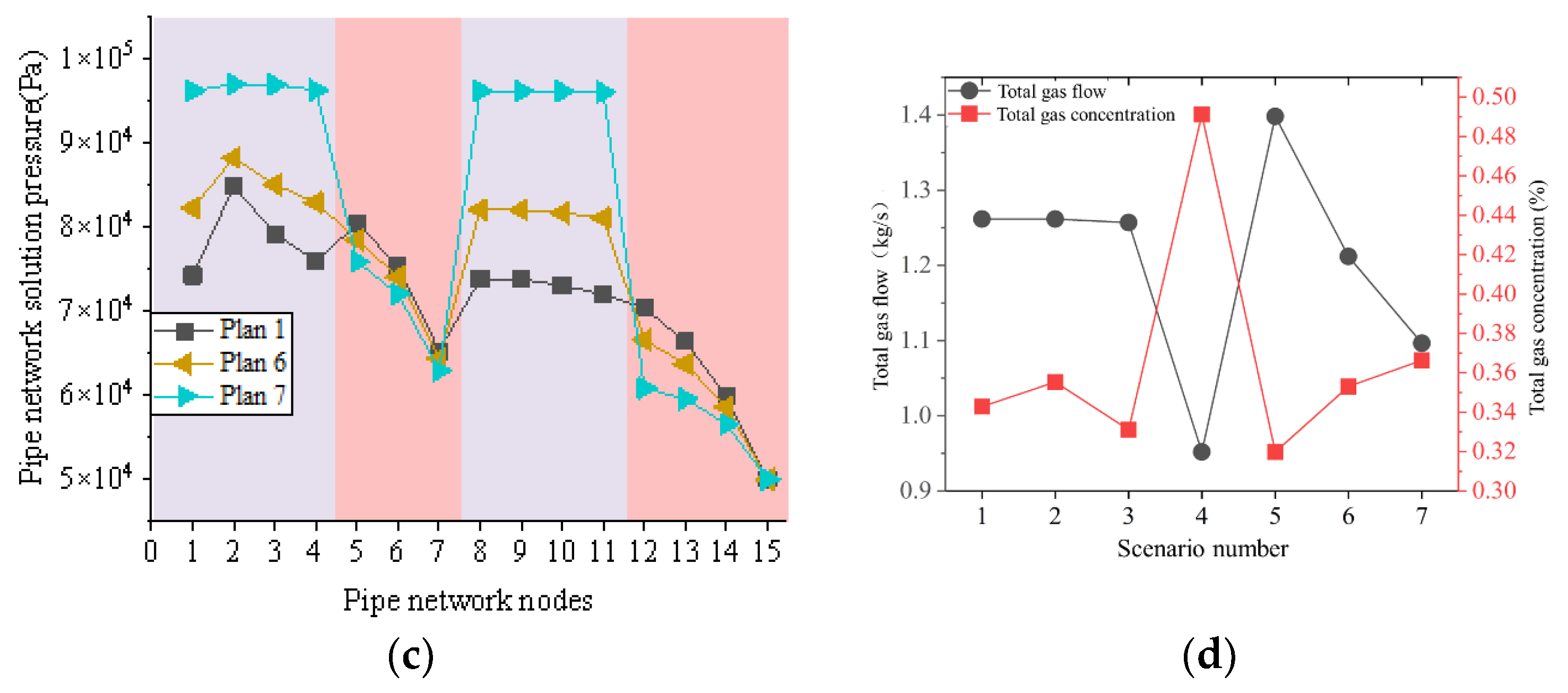
- (3)
- Proof of the conclusion of Figure 8c
- ①
- Increase the valve opening of the current path branch.
- ②
- Increase the extraction pump negative pressure.
- ③
- Decrease the valve opening of other branches outside the current path branch.
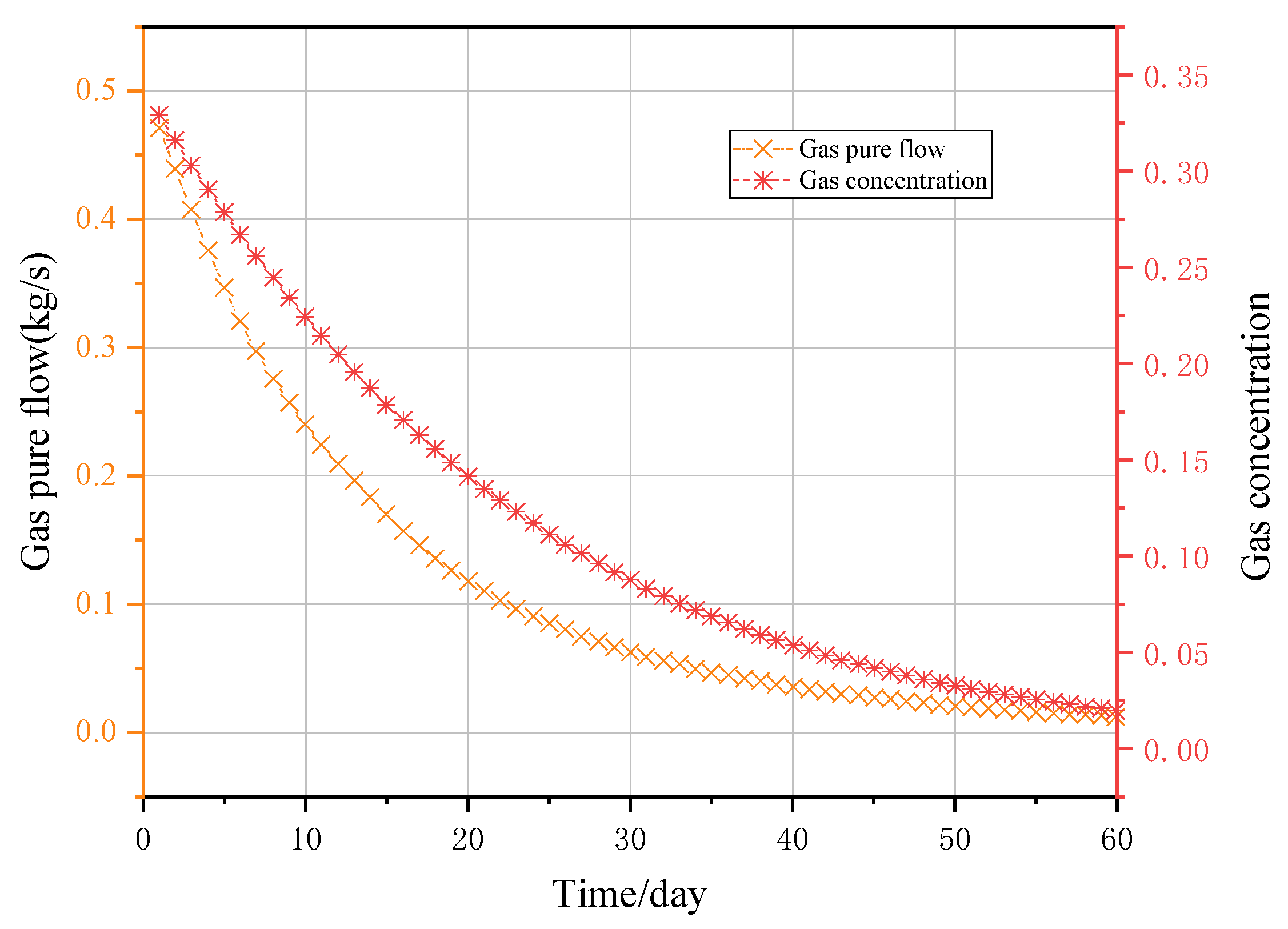
3.2. The Influence of Time Parameters on the Pumping Network
4. Intelligent Regulation and Control Strategies for Gas Extraction Pipeline Networks
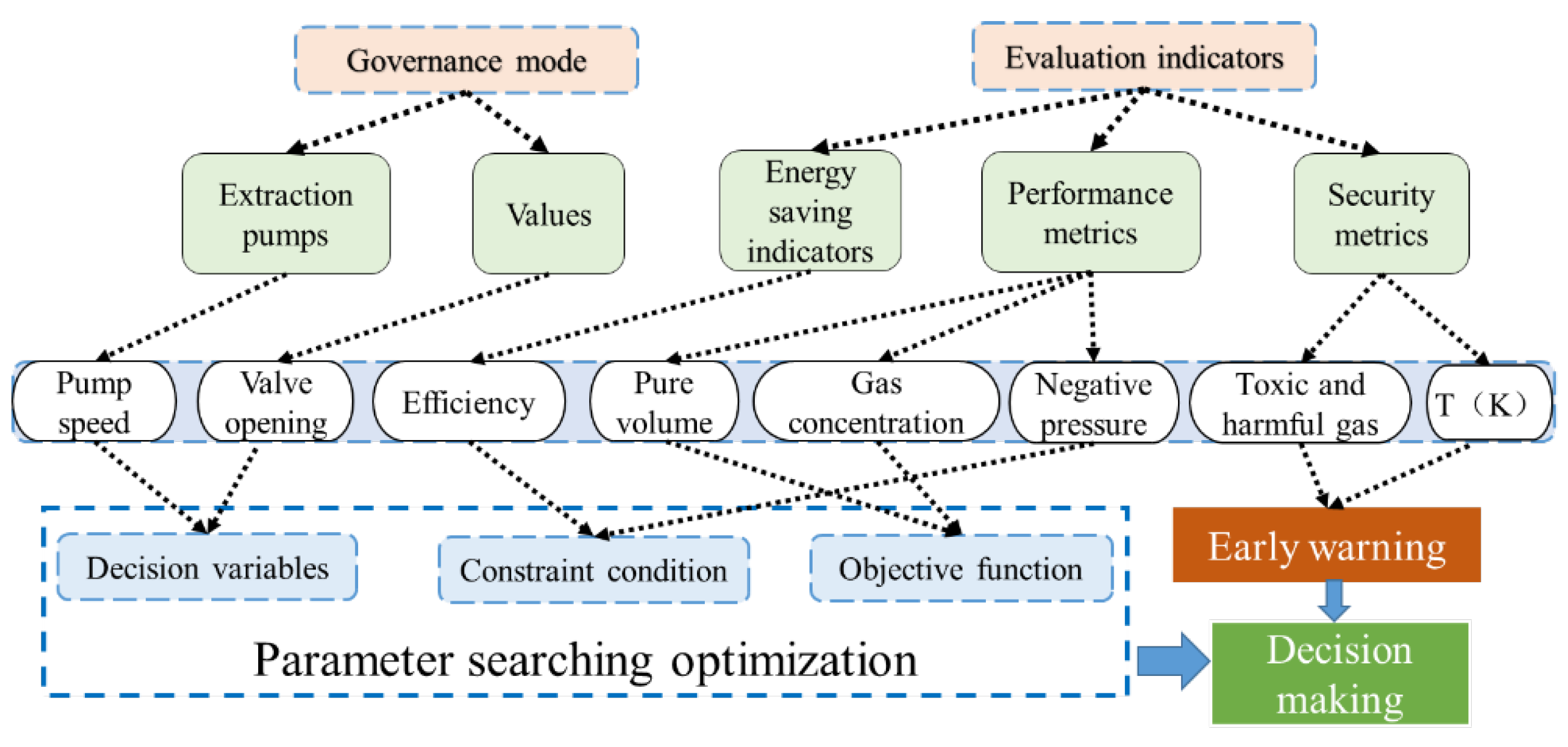
4.1. Regulation Mode
4.2. Evaluation Indicators
- (1)
- Safety indicators for gas extraction
- (2)
- Gas extraction effect index
- (3)
- Gas extraction efficiency index
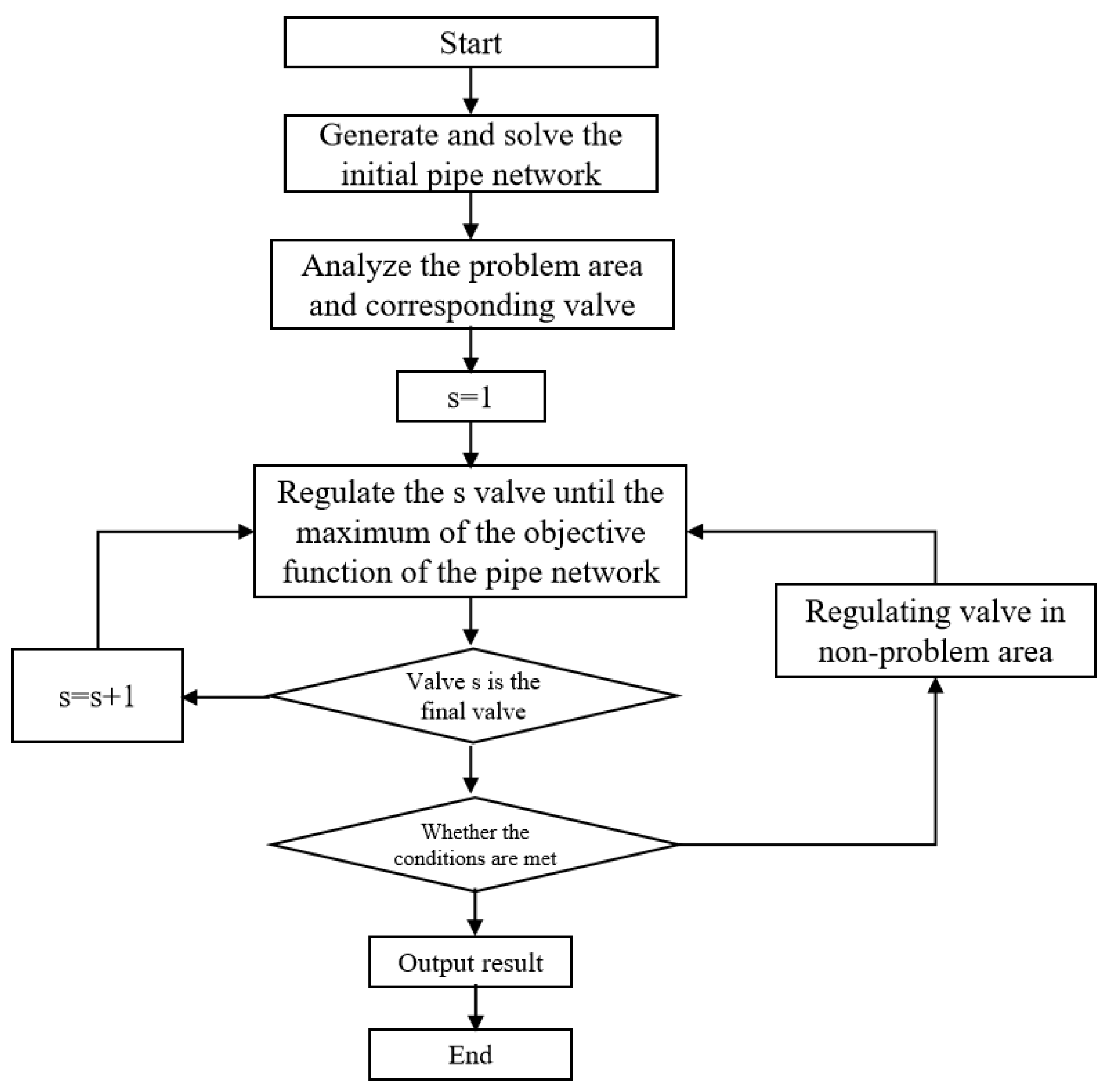
4.3. Regulation Strategy
4.4. Apply Performance Analysis
- ①
- Control the entire Western section extraction network, located at the wellhead pump station.
- ②
- Control the 151,108 belt roadway extraction pipeline.
- ③
- Control the 151,108 track roadway extraction pipeline.
- ④
- Control the 150,801 working face extraction area.
- ⑤
- Control the negative pressure of the pipeline network in the 171,106 working face area.
5. Discussion
6. Conclusions
- 1
- Theoretical and Practical Contributions of the Study
- (1)
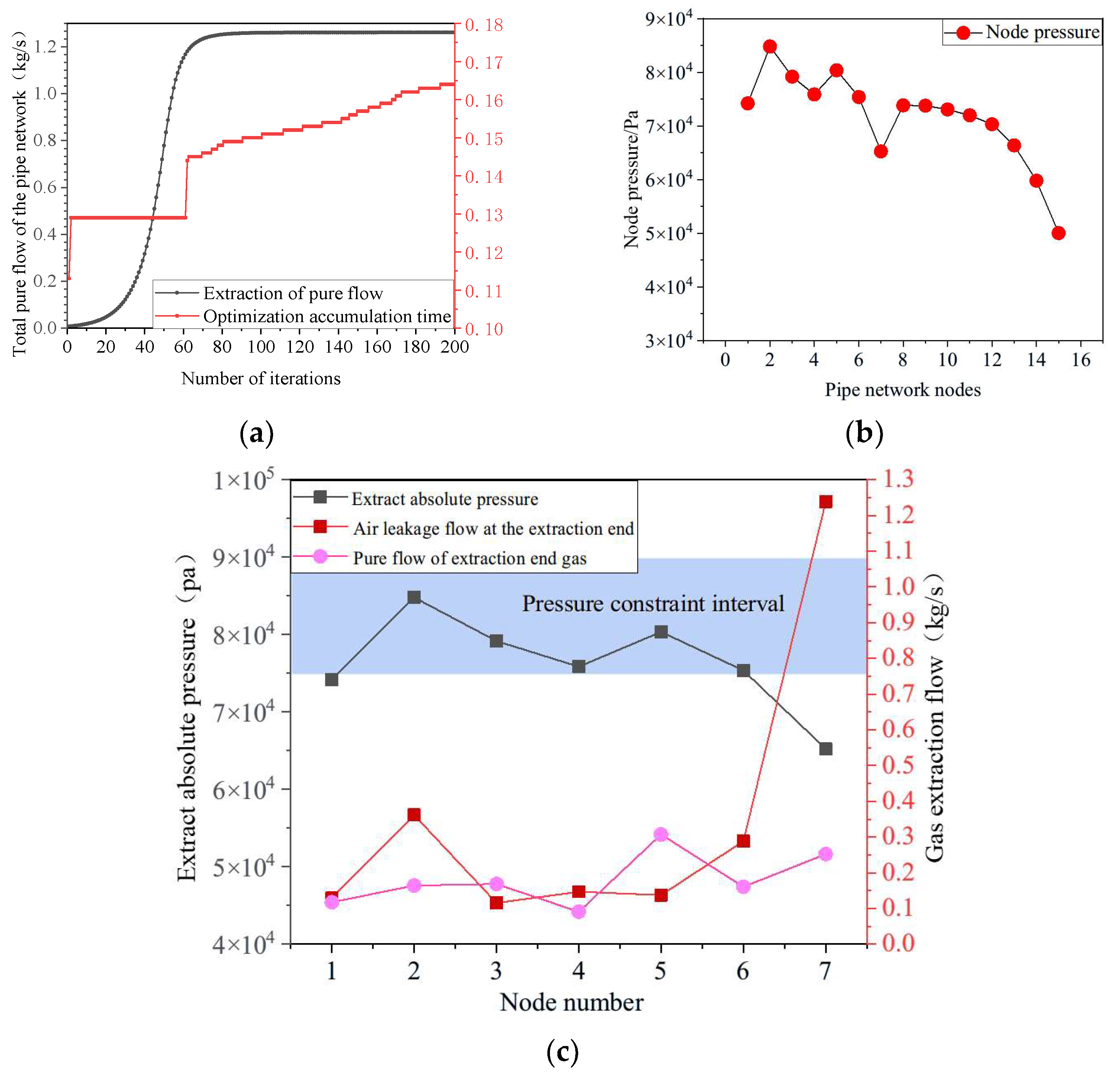
- Based on the method of value iteration adjustment, a gas extraction network solution model has been established. This solution method has good convergence effects and can be applied in gas extraction network calculations, providing guidance for network regulation. Sensitivity analysis of different control parameters was conducted based on the network solution model. The control rules for the distribution of network negative pressure at different branch valve control parameters and extraction pump control parameters were summarized and demonstrated. Based on these rules, control strategies were developed.
- (2)
- When increasing the gas extraction pump’s extraction pressure, the pressure at all nodes in the network increases and vice versa. When decreasing the valve opening of a certain terminal branch, the gas source end pressure of that branch increases, while the pressure at the remaining nodes decreases and vice versa. It is observed that when reducing the valve opening of a certain non-terminal branch, the pressure at the nodes flowing through that branch increases, while the pressure at the nodes not flowing through that branch decreases and vice versa.
- (3)
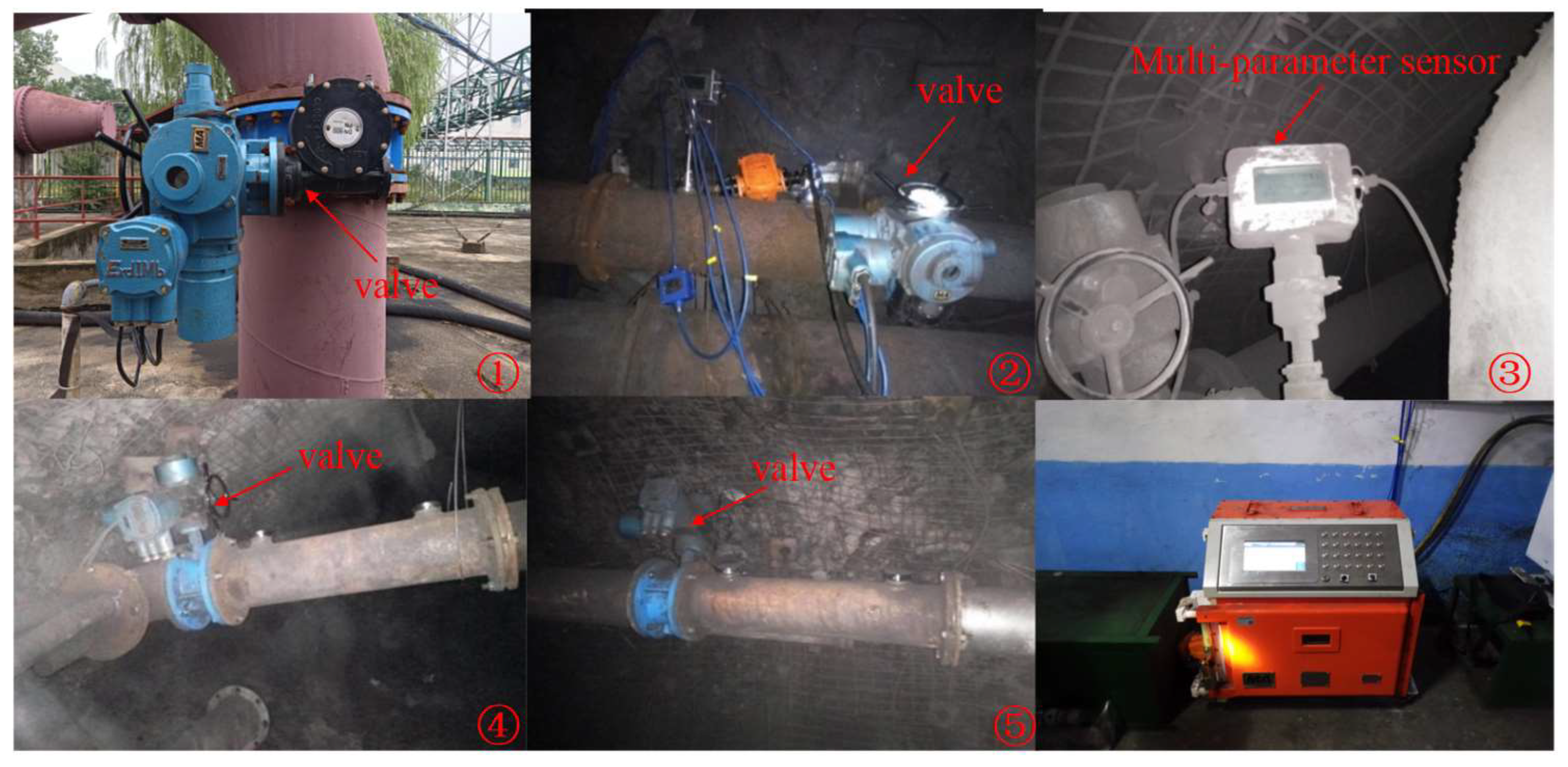
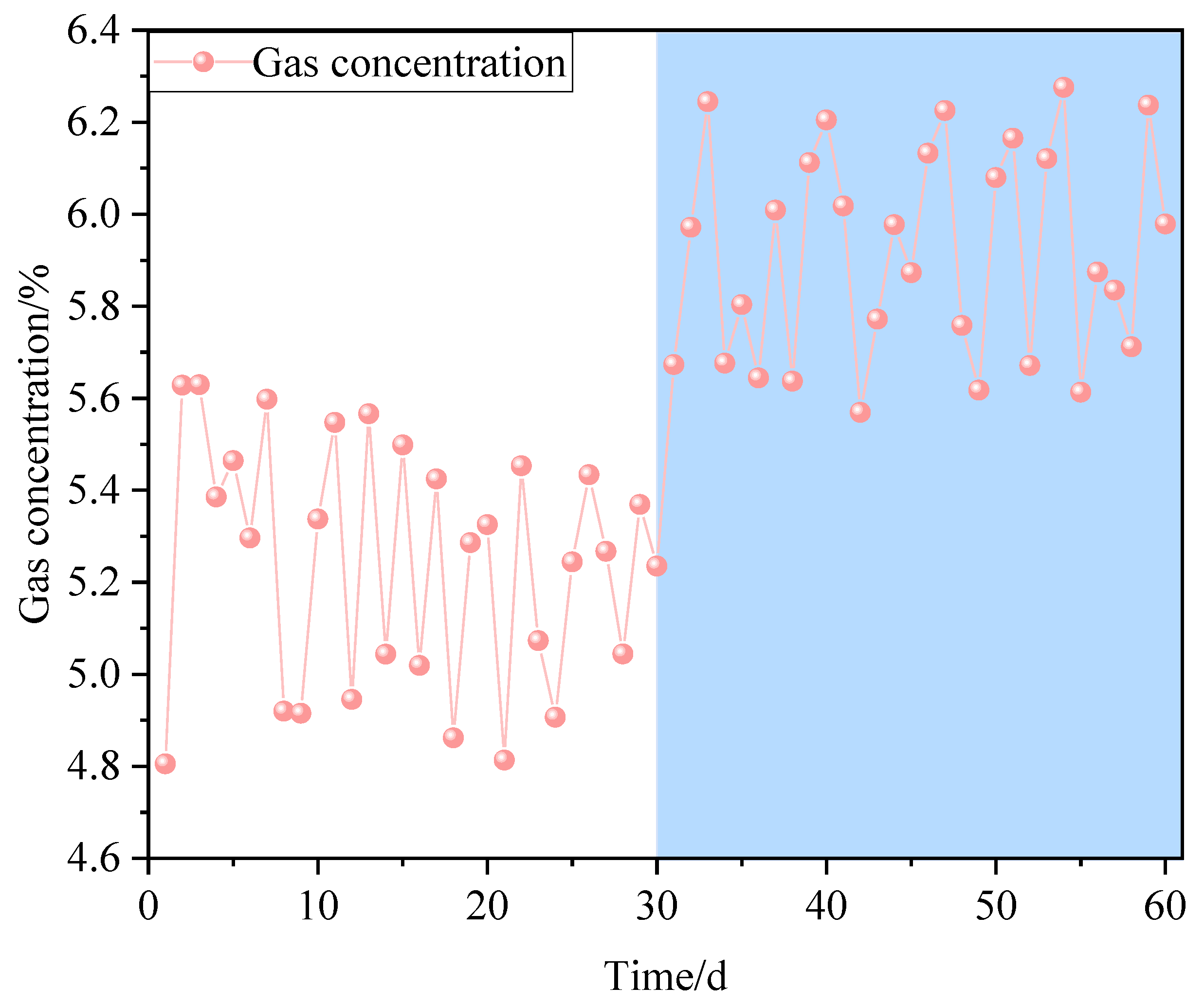
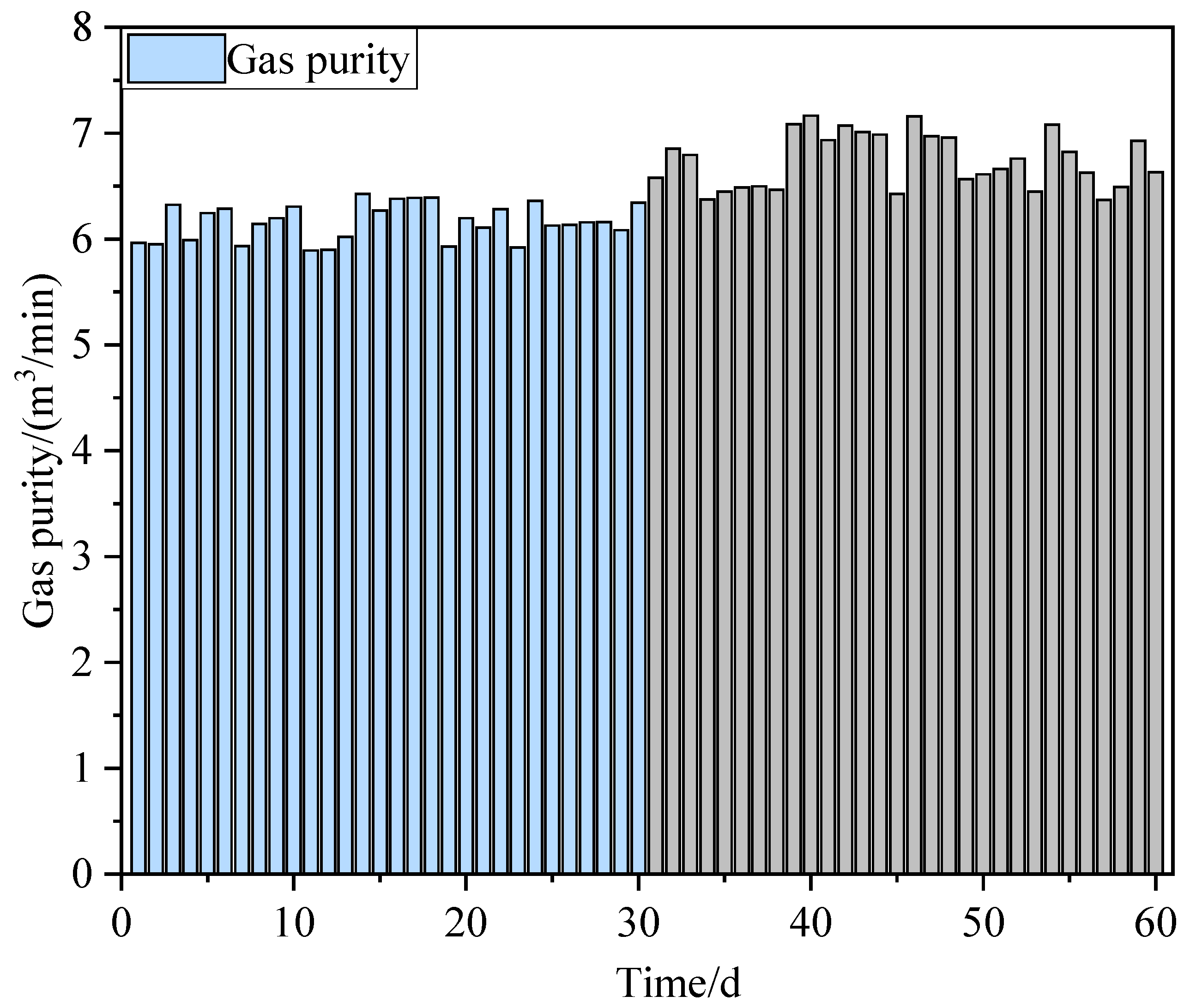
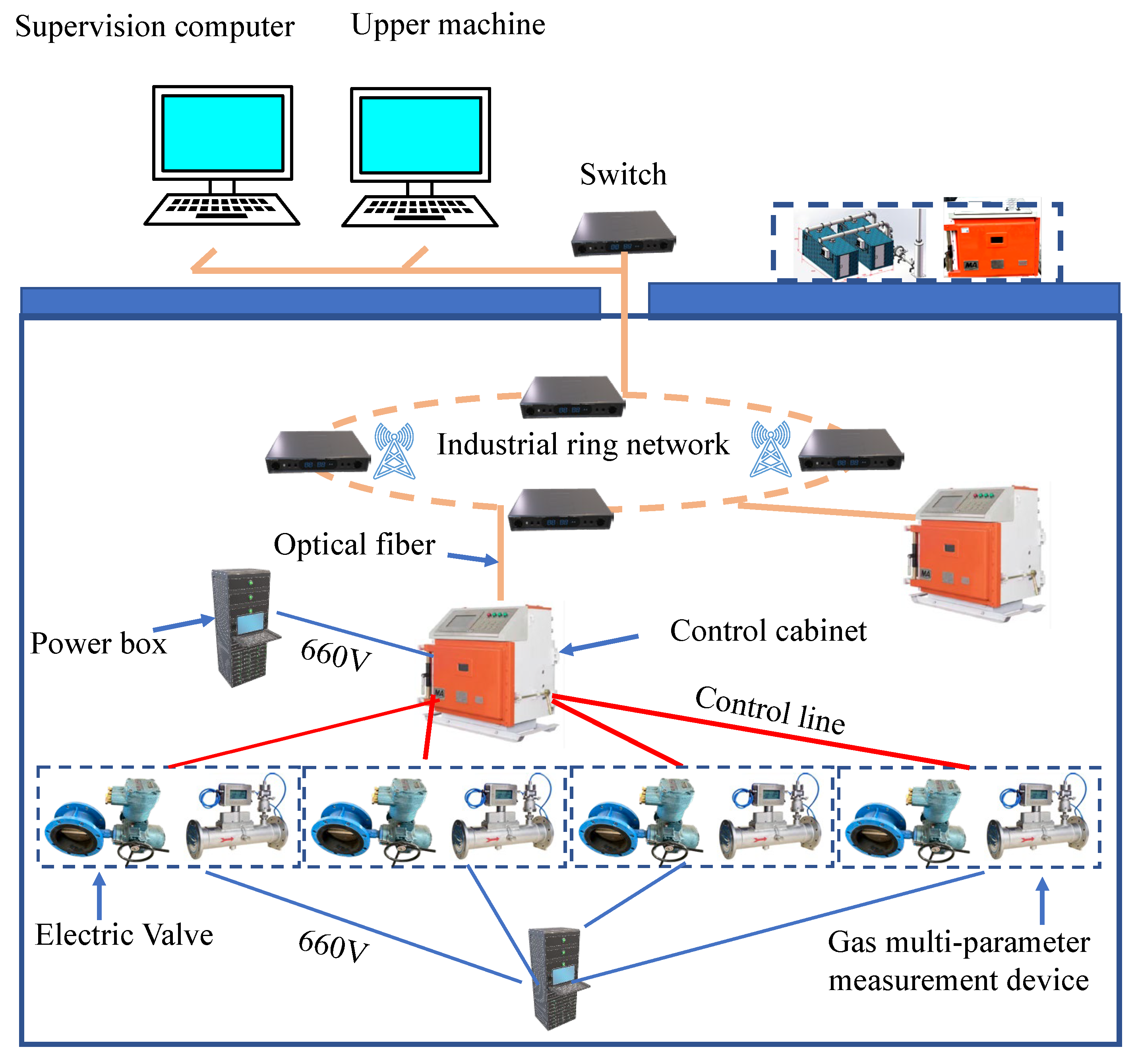
- Analyze the network’s structure and operating conditions and install valves at crucial points. Implement the intelligent gas extraction network control system for regulating the gas extraction network at Liuzhuang Coal Mine. Post-regulation, the pressures at different gas extraction sources have achieved equilibrium, leading to an overall gas concentration rise from the initial 5.3% to 5.99%, marking an improvement of approximately 11%. Prior to the regulation, the pure gas extraction volume in the primary network remained stable at approximately 6.3 m3/min. With intelligent control, the pure gas extraction volume now hovers around 6.6 m3/min, signifying a 0.3 m3/min increase. This advancement has facilitated the equitable distribution of extraction negative pressure and real-time dynamic intelligent control of the gas extraction network.
- 2
- Limitations of the Study
- 3
- Future Research
Author Contributions
Funding
Data Availability Statement
Acknowledgments
Conflicts of Interest
References
- Wang, K.; Wang, D.X.; Zhou, A.T. Intelligent decision-making and regulation method of gas extraction “borehole-pipe network” system. J. China Coal Soc. 2025, 50, 3235−3251. [Google Scholar] [CrossRef]
- Zhao, W.; Wang, K.; Ju, Y.; Fan, L.; Cao, H.; Yang, Y.; Wang, L. Quantification of the asynchronous gas diffusivity in macro-/micropores using a Nelder-Mead simplex algorithm and its application on predicting desorption-based indexes. Fuel 2023, 332, 126149. [Google Scholar] [CrossRef]
- Liu, Q.; Cheng, Y.; Zhou, H.; Guo, P.; An, F.; Chen, H. A mathematical model of coupled gas flow and coal deformation with gas diffusion and Klinkenberg effects. Rock Mech. Rock Eng. 2015, 48, 1163–1180. [Google Scholar] [CrossRef]
- Kuang, Y.; Lin, B. Unwatched pollution reduction: The effect of natural gas utilization on air quality. Energy 2023, 273, 127247. [Google Scholar] [CrossRef]
- Li, Z.; Ren, T.; Li, X.; Cheng, Y.; He, X.; Lin, J.; Yang, X. Full-scale pore structure characterization of different rank coals and its impact on gas adsorption capacity: A theoretical model and experimental study. Energy 2023, 277, 127621. [Google Scholar] [CrossRef]
- Ding, Y.; Yue, Z. An experimental investigation of the roles of water content and gas decompression rate for outburst in coal briquettes. Fuel 2018, 234, 1221–1228. [Google Scholar] [CrossRef]
- Si, L.; Ding, N.; Wei, J.; Sheng, L.; Wang, L.; Li, Z.; Chen, X. Gas-liquid competitive adsorption characteristics and coal wetting mechanism under different pre-adsorbed gas conditions. Fuel 2022, 329, 125441. [Google Scholar] [CrossRef]
- Shi, Y.; Lin, B.; Liu, T.; Zhao, Y.; Hao, Z. Synergistic ECBM extraction technology and engineering application based on hydraulic flushing combing gas injection displacement in low permeability coal seams. Fuel 2022, 318, 123688. [Google Scholar] [CrossRef]
- Zhou, A.; Du, C.; Wang, K.; Hu, J.; Fan, X. Experimental research on the law of the deformation and damage characteristics of raw coal/briquette adsorption-instantaneous pressure relief. Fuel 2022, 308, 122062. [Google Scholar] [CrossRef]
- Li, W.; Yang, K.; Deng, D.; Zhao, C.; Yang, S.; Cheng, Y. A lattice Boltzmann model for simulating gas transport in coal nanopores considering surface adsorption and diffusion effects. Fuel 2023, 340, 127507. [Google Scholar] [CrossRef]
- Liu, Q.; Sun, L.; Liu, Z.; Wang, G.; Ma, J. Effects of air volume and pre-oxidation on re-ignition characteristics of bituminous coal. Energy 2023, 265, 126124. [Google Scholar] [CrossRef]
- Zhou, F.; Xia, T.; Wang, X.; Zhang, Y.; Sun, Y.; Liu, J. Recent developments in coal mine methane extraction and utilization in China: A review. J. Nat. Gas Sci. Eng. 2016, 31, 437–458. [Google Scholar] [CrossRef]
- Tang, M.; Jiang, B.; Zhang, R.; Yin, Z.; Dai, G. Numerical analysis on the influence of gas extraction on air leakage in the gob. J. Nat. Gas Sci. Eng. 2016, 33, 278–286. [Google Scholar] [CrossRef]
- Xia, T.; Zhou, F.; Liu, J. A fully coupled coal deformation and compositional flow model for the control of the pre-mining coal seam gas extraction. Int. J. Rock Mech. Min. Sci. 2014, 72, 138–148. [Google Scholar] [CrossRef]
- Zhou, F.; Sun, Y.; Li, H. Research on the theoretical model and engineering technology of the coal seam gas drainage hole sealing. J. China Univ. Min. Technol. 2016, 45, 433–439. [Google Scholar]
- Xia, T.; Zhou, F.; Liu, J. Evaluation of the pre-drained coal seam gas quality. Fuel 2014, 130, 296–305. [Google Scholar] [CrossRef]
- Gao, F.; Xue, Y.; Gao, Y.; Zhang, Z.; Teng, T.; Liang, X. Fully coupled thermo-hydro-mechanical model for extraction of coal seam gas with slotted boreholes. J. Nat. Gas Sci. Eng. 2016, 31, 226–235. [Google Scholar] [CrossRef]
- Ziółkowski, P.; Badur, J.; Ziółkowski, P. An energetic analysis of a gas turbine with regenerative heating using turbine extraction at intermediate pressure-Brayton cycle advanced according to Szewalski’s idea. Energy 2019, 185, 763–786. [Google Scholar] [CrossRef]
- Zhou, A.; Li, J.; Gong, W.; Wang, K.; Du, C. Theoretical and numerical study on the contribution of multi-hole arrangement to coalbed methane extraction. Energy 2023, 284, 128598. [Google Scholar] [CrossRef]
- Cheng, Y.; Dong, J.; Li, W. Effect of negative pressure on coalbed methane extraction and application in the utilization of methane resource. J. China Coal Soc. 2017, 42, 1466–1474. [Google Scholar] [CrossRef]
- Zhang, T.; Pang, M.; Jiang, X. Influence of negative pressure on gas percolation characteristics of coal body in perforated drilling hole. Rock Soil Mech. 2019, 40, 2517–2525. [Google Scholar]
- Zhou, F.; Wang, X.; Xia, T. A model of safe drainage of coal seam gas. J. China Coal Soc. 2014, 39, 1659–1666. [Google Scholar]
- Wang, Z.; Ying, Z.; Sun, Y. Drainage negative pressure optimization based on negative pressure influence factor. Saf. Coal Mines 2015, 46, 12–16. [Google Scholar]
- Zhang, K. Study on the Influence Mechanism of Gas Drainage Concentration in Bedding Boreholes and Its Control Optimization. Master’s Thesis, Xi’an University of Science and Technology, Xi’an, China, 2021. [Google Scholar]
- Zhong, D.; Wang, L.; Wang, J.; Jia, M. An efficient mine ventilation solution method based on minimum independent closed loops. Energies 2020, 13, 5862. [Google Scholar] [CrossRef]
- Zhou, A.; Wang, K. A transient model for airflow stabilization induced by gas accumulations in a mine ventilation network. J. Loss Prev. Process Ind. 2017, 47, 104–109. [Google Scholar] [CrossRef]
- Lu, J.; Yue, J.; Jiang, C.; Liang, H.; Zhu, L. Feature extraction based on variational mode decomposition and support vector machine for natural gas pipeline leakage. Trans. Inst. Meas. Control 2020, 42, 759–769. [Google Scholar] [CrossRef]
- Dehmer, M.; Emmert-Streib, F.; Shi, Y. Quantitative graph theory: A new branch of graph theory and network science. Inf. Sci. 2017, 418, 575–580. [Google Scholar] [CrossRef]
- Wang, Q.; Dai, W.; Yang, C.; Ma, X. Modeling and analysis of coal mine main fan switchover system. J. China Coal Soc. 2018, 43, 606–614. [Google Scholar] [CrossRef]
- Zhou, A.; Du, C.; Wang, K.; Fan, X.; Wang, D.; Zhao, W.; Gao, H. Research on intelligent control theory and strategy of gas drainage pipe network based on graph theory. Fuel 2024, 357, 129867. [Google Scholar] [CrossRef]
- Zhang, H.; Qin, J.; Su, W. Study on Influence Mechanism of Negative Pressure on Gas Drainage Effect. Saf. Coal Mines 2019, 50, 23–26+31. [Google Scholar] [CrossRef]
- Wang, C.; Yu, L. Darcy flow through bumpy tubes. J. Porous Media 2015, 18, 457–461. [Google Scholar] [CrossRef]
- Zhang, P.; Wang, Q. Perturbation analysis and condition numbers of mixed least squares-scaled total least squares problem. Numer. Algorithms 2022, 89, 1223–1246. [Google Scholar] [CrossRef]
- Jolfaei, S.; Lakirouhani, A. Sensitivity analysis of effective parameters in borehole failure, using neural network. Adv. Civ. Eng. 2022, 2022, 4958004. [Google Scholar] [CrossRef]
- Yıldız, T.D. Loss of profits occurring due to the halting of mining operations arising from occupational accidents or reasons related to legislation. Gospod. Surowcami Miner. Miner. Resour. Manag. 2021, 37, 153–176. [Google Scholar] [CrossRef]
- Kahraman, M.M. Analysis of mining lost time incident duration influencing factors through machine learning. Min. Metall. Explor. 2021, 38, 1031–1039. [Google Scholar] [CrossRef]







| Segment Number | Ingress Node | Exit Node | Length of the Pipe (m) | Pipe Segment Diameter (m) | Pipe Segment Roughness (m) |
|---|---|---|---|---|---|
| 1 | 1 | 8 | 500 | 0.3 | 0.0001 |
| 2 | 2 | 9 | 500 | 0.3 | 0.0001 |
| 3 | 3 | 10 | 800 | 0.2 | 0.0001 |
| 4 | 4 | 11 | 800 | 0.2 | 0.0001 |
| 5 | 5 | 12 | 500 | 0.2 | 0.0001 |
| 6 | 6 | 13 | 500 | 0.2 | 0.0001 |
| 7 | 7 | 14 | 800 | 0.4 | 0.0001 |
| 8 | 8 | 9 | 200 | 0.4 | 0.0001 |
| 9 | 9 | 10 | 300 | 0.4 | 0.0001 |
| 10 | 10 | 11 | 200 | 0.4 | 0.0001 |
| 11 | 11 | 12 | 200 | 0.4 | 0.0001 |
| 12 | 12 | 13 | 300 | 0.4 | 0.0001 |
| 13 | 13 | 14 | 300 | 0.4 | 0.0001 |
| 14 | 14 | 15 | 600 | 0.6 | 0.0001 |
| Numbering | Mgp0 (kg/s) | Wind Leakage Drag Coefficient (Ra) | Attenuation Coefficient (β) |
|---|---|---|---|
| 1 | 0.05 | 4.95654 × 10¹³ | 0.05 |
| 2 | 0.09 | 9.95654 × 10¹² | 0.05 |
| 3 | 0.08 | 3.99565 × 10¹³ | 0.05 |
| 4 | 0.04 | 4.25654 × 10¹³ | 0.05 |
| 5 | 0.15 | 2.95654 × 10¹³ | 0.05 |
| 6 | 0.07 | 2.25654 × 10¹³ | 0.05 |
| 7 | 0.09 | 8.65654 × 10¹² | 0.05 |
| Valve Number | Valve Number and Valve Opening (%) | Pumping Pumping Absolute Pressure (pa) | |||||||||||||
|---|---|---|---|---|---|---|---|---|---|---|---|---|---|---|---|
| 1 | 2 | 3 | 4 | 5 | 6 | 7 | 8 | 9 | 10 | 11 | 12 | 13 | 14 | ||
| Scheme 1 | 75 | 30 | 75 | 75 | 75 | 75 | 75 | 75 | 75 | 75 | 75 | 75 | 75 | 75 | 5 × 10⁴ |
| Scheme 2 | 75 | 10 | 75 | 75 | 75 | 75 | 75 | 75 | 75 | 75 | 75 | 75 | 75 | 75 | 5 × 10⁴ |
| Scheme 3 | 75 | 100 | 75 | 75 | 75 | 75 | 75 | 75 | 75 | 75 | 75 | 75 | 75 | 75 | 5 × 10⁴ |
| Scheme 4 | 75 | 30 | 75 | 75 | 75 | 75 | 75 | 75 | 75 | 75 | 75 | 75 | 75 | 75 | 5 × 10⁴ |
| Scheme 5 | 75 | 30 | 75 | 75 | 75 | 75 | 75 | 75 | 75 | 75 | 75 | 75 | 75 | 75 | 5 × 10⁴ |
| Scheme 6 | 75 | 30 | 75 | 75 | 75 | 75 | 75 | 75 | 75 | 75 | 40 | 75 | 75 | 75 | 5 × 10⁴ |
| Scheme 7 | 75 | 30 | 75 | 75 | 75 | 75 | 75 | 75 | 75 | 75 | 10 | 75 | 75 | 75 | 5 × 10⁴ |
Disclaimer/Publisher’s Note: The statements, opinions and data contained in all publications are solely those of the individual author(s) and contributor(s) and not of MDPI and/or the editor(s). MDPI and/or the editor(s) disclaim responsibility for any injury to people or property resulting from any ideas, methods, instructions or products referred to in the content. |
© 2025 by the authors. Licensee MDPI, Basel, Switzerland. This article is an open access article distributed under the terms and conditions of the Creative Commons Attribution (CC BY) license (https://creativecommons.org/licenses/by/4.0/).
Share and Cite
Du, C.; Shu, L.; Huo, Z.; Guo, Y.; Li, Y. Theoretical Framework and Methodological Study on Intelligent Control of Gas Extraction Pipeline Networks. Processes 2025, 13, 3977. https://doi.org/10.3390/pr13123977
Du C, Shu L, Huo Z, Guo Y, Li Y. Theoretical Framework and Methodological Study on Intelligent Control of Gas Extraction Pipeline Networks. Processes. 2025; 13(12):3977. https://doi.org/10.3390/pr13123977
Chicago/Turabian StyleDu, Chang’ang, Longyong Shu, Zhonggang Huo, Yangyang Guo, and Yang Li. 2025. "Theoretical Framework and Methodological Study on Intelligent Control of Gas Extraction Pipeline Networks" Processes 13, no. 12: 3977. https://doi.org/10.3390/pr13123977
APA StyleDu, C., Shu, L., Huo, Z., Guo, Y., & Li, Y. (2025). Theoretical Framework and Methodological Study on Intelligent Control of Gas Extraction Pipeline Networks. Processes, 13(12), 3977. https://doi.org/10.3390/pr13123977