


Scientific research is essential because it is a fundamental way to learn about the world, develop knowledge, and solve problems faced by individuals and society. There are several reasons why it is important. First, scientific research allows us to discover new facts, laws of nature, and mechanisms of various phenomena. It gives us a better understanding of the world, from the smallest particles to complex ecosystems and societies. Many modern technologies, such as the internet, vaccines, renewable energy, and artificial intelligence, were developed thanks to scientific research. These technologies drive technical, economic, and medical progress. Research leads to the development of medicines, therapies, new energy sources, higher-quality food, and more effective teaching methods. Science directly translates into people’s health, safety, and quality of life. Scientific research helps us understand the impact humans have on the environment. It helps us predict climate change and develop ways to protect nature and use the Earth’s resources rationally. In science, decisions are based on evidence, not assumptions. Research provides reliable data that helps governments, organizations, and societies make wise and effective decisions. The research process teaches us to analyze, verify sources, formulate hypotheses, and draw logical conclusions. This shapes the attitude of a rational, conscious citizen. Science connects people from different countries and fields. Joint research promotes the sharing of knowledge, tolerance, and cultural development, thereby building bridges between nations [1,2,3,4,5,6,7].
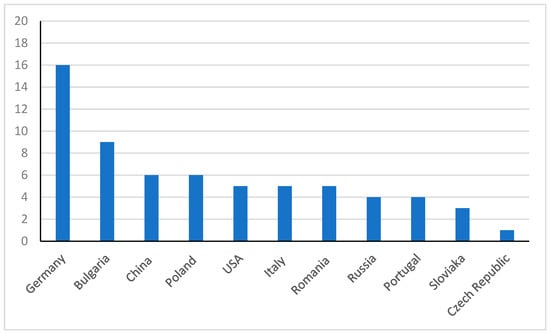
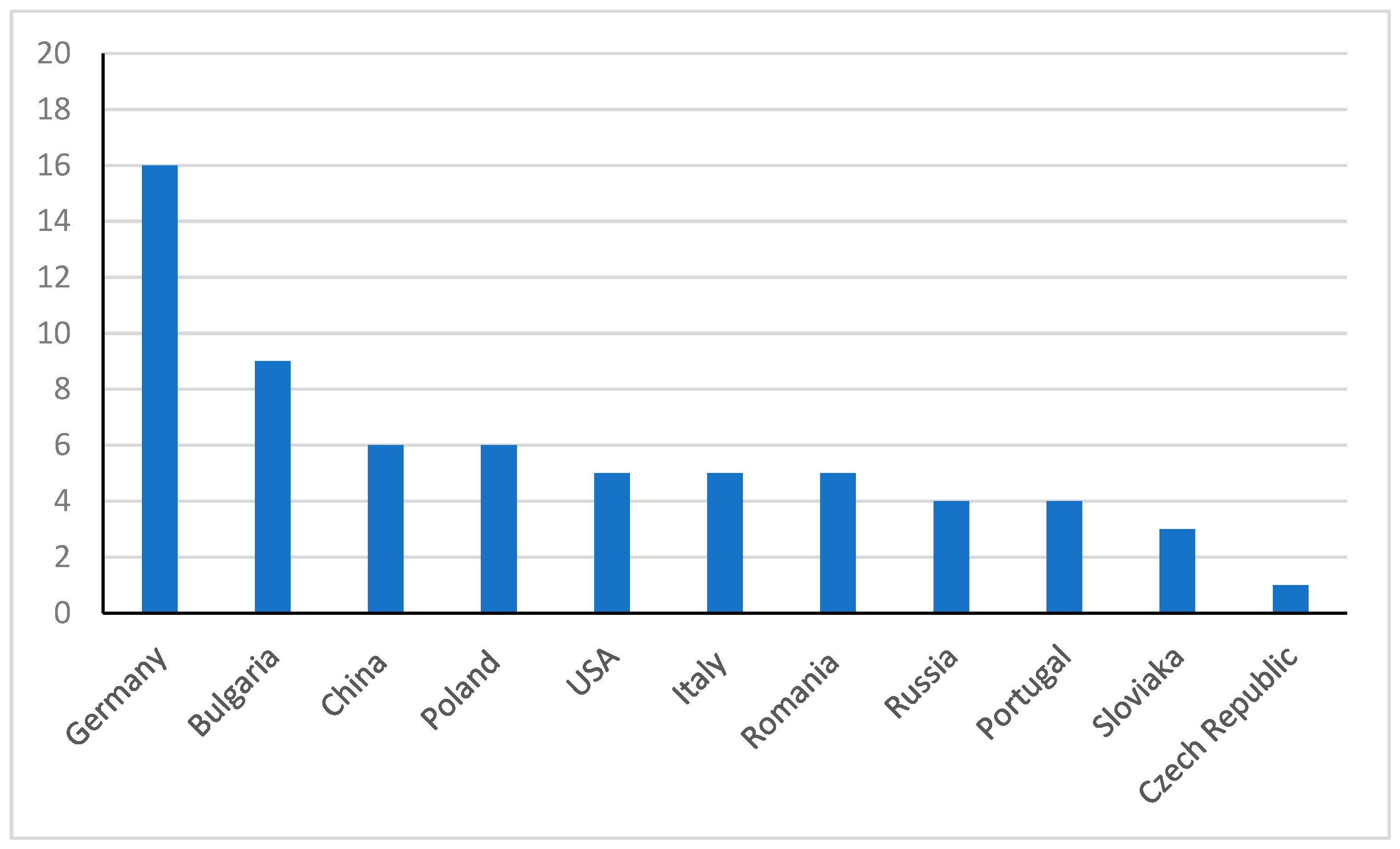
We are delighted to present this Special Issue, which showcases the achievements of scientists in process/systems research across a range of fields, including chemistry, biology, materials science, energy, the environment, food, pharmacy, manufacturing, and related engineering disciplines. In the volume of this Special Issue on “Processes in 2023” (https://www.mdpi.com/journal/processes/special_issues/QJ8HGPMVXU; accessed on 14 November 2025), 14 original articles were published [8,9,10,11,12,13,14,15,16,17,18,19,20,21]. These publications were authored by 64 scientists from the following countries: Germany, Bulgaria, China, Poland, USA, Italy, Romania, Russia, Portugal, Slovakia, and the Czech Republic (Figure 1).
Figure 1.
Geographical contributions to this Special Issue.
Six of the publications in this Special Issue can be classified as belonging to the fields of pharmaceutical, medical, and biological sciences [8,9,10,11,12,13].
Testing the stability of a drug under the influence of temperature and UV radiation is crucial in developing, registering, and controlling the quality of medicinal products. Using TLC in combination with densitometry, Żandarek et al. [8] developed qualitative and quantitative conditions to determine cefepime hydrochloride solutions individually and in mixtures containing biologically active substances, such as ketoprofen, gestodene with ethinylestradiol, estradiol, caffeine, calcium ions, paracetamol, bisoprolol, acetylsalicylic acid, and ibuprofen. They investigated the effect of temperature and UV radiation on the stability of cefepime in combination with other APIs. Studies were performed using silica gel 60F254 plates and an ethanol–2-propanol–acetone–water (4:4:1:3, v/v) mobile phase. These studies showed that the rates of change in concentration were consistent with first-order kinetics. Cefepime exhibited the greatest stability in mixtures with calcium ions. In contrast, the greatest degradation occurred in combination with hormones (gestodene and estradiol). The studies also demonstrated the detrimental impact of UV radiation on the stability of the antibiotic–drug combination. Another publication [9] describes a sensitive and economical thin-layer chromatography (TLC) densitometry method for the chromatographic separation of metronidazole (M), tinidazole (T), secnidazole (S), ornidazole (O), and 2-methyl-5-nitroimidazole (IMP), as well as the determination of M and T in tablets. These chromatographic conditions can be used by the pharmaceutical industry to detect M, S, O, and T in simple and complex drugs containing the aforementioned 5-nitroimidazoles. This method can also be used to determine if a pharmaceutical preparation is contaminated with IMP. This method has been fully validated. Szkudlarek [10], in turn, investigated the effect of palmitic acid (PA) on the tertiary structure of glycated human serum albumin (HSA). The study revealed that glycation of albumin in the presence of glucose–fructose syrup (GFS) and PA induces alterations in the tertiary structures of non-glycated human serum albumin (HSA) and glycated human serum albumin (gHSA). These structural changes, especially in glycated albumin, are important for treatment planning. Subsequent years saw continued research in this field by other scientists [22,23,24,25,26,27].
Astaxanthin is a natural carotenoid with powerful antioxidant properties. It is found in microalgae (Haematococcus pluvialis), krill, shrimp, salmon, and trout, giving them their characteristic red-pink color. Due to the high demand for astaxanthin, many production methods have been developed. Aldaghi et al. [11] presented a comprehensive life cycle assessment (LCA) comparing the environmental impact of producing astaxanthin both from algae and bacteria and synthetically. Their study revealed that chemical synthesis is the most environmentally friendly method of producing the pigment, followed by bacterial extraction and, finally, extraction from algae. In turn, Wang et al. [12] investigated how ultrasound affects bacterial DNA. They examined the influence of ultrasound power, application time, growth phase of the microorganism, washing buffer, and the presence of ions on transformation efficiency. This study fills gaps in the research on the mechanism of DNA transformation using ultrasound in microbiological applications (without microbubbles) and proves the versatility of ultrasound transformation once again. Scutellaria pycnoclada and Scutellaria baicalensis are two species belonging to the genus Scutellaria in the Lamiaceae family. Despite belonging to the same genus, they differ in occurrence, structure, and application. S. baicalensis originates from Asia (China, Mongolia, and Siberia) and contains high concentrations of flavonoids, particularly baicalin, baicalein, and wogonin. This species has strong anti-inflammatory, antioxidant, antiviral, antibacterial, and neuroprotective properties. Scutellaria pycnoclada is much less frequently described and poorly researched. However, phytochemical reviews indicate that it contains flavonoids and diterpenes in different proportions compared to S. baicalensis. Solov’eva et al. [13] studied Scutellaria pycnoclada and S. baicalensis. They detected a total of 14 flavonoids in S. pycnoclada and 17 in S. baicalensis using HPLC MS/MS. S. pycnoclada exhibited less diversity in methylated flavones than S. baicalensis. HPLC analysis revealed that the flavone content in various Scutellaria root lines was 1.4 to 12.7 times higher in a liquid medium than in an agar medium. S. baicalensis and S. pycnoclada differed significantly in the ratio of major flavones. S. pycnoclada has a different set of O-methyltransferases and lower enzymatic activity in biosynthesis compared to S. baicalensis. Other scientists have also conducted research in these areas [28,29,30,31,32,33].
The next eight publications can be classified as engineering sciences, including industrial applications [14,15,16,17,18,19,20,21]. Researchers from Germany presented two publications [14,15]. The first publication [14] concerned the multidimensional determination of multicomponent isotherm parameters for digital chromatographic twins, and the second publication [15] was based on a digital twin and validated the continuous polishing stage of peptides. They demonstrated that fitting isotherm parameters to design of experiments (DoE) runs and feeding these values back into the DoE as target values produced strong correlations. The digital twin optimized the buffer composition. This resulted in a 29% increase in yield and a 27% increase in productivity [14]. The digital twin was parameterized and validated. The authors then used this model to evaluate continuous chromatography options, which proved excellent for peptide purification in terms of purity and efficiency [15].
Vacuum residue hydrocracker naphtha (VRHN) is a chemically unstable product. Stratiev et al. [16] demonstrated that hydrotreating improves the chemical stability of naphtha and reduces its sulfur content to 3 ppm. Co-hydrogenation, on the other hand, increases the octane number (RON) in the naphtha mixture by 6 points and the motor octane number (MON) by 9 points. Vykydalová et al. [17] investigated the possibility of reducing the production costs of 3D printing materials characterized by low weight, excellent biocompatibility, and suitable thermal properties. In their study, the researchers employed a combination of thermogravimetry and chemiluminescence. Thermogravimetry records weight loss caused by the decomposition of volatile substances, while chemiluminescence describes polymer peroxidation in the early stages of oxidation, followed by weight loss. This combination had not been used in practice before. Meshram et al. [18] presented data on metallization and internal temperature profiles under steady-state operating conditions for the first pilot reactor for direct hydrogen reduction of iron smelting in the USA. The model was built using COMSOL Multiphysics software v.5.6. Niedermeier et al. [19] tested key components (pumps and valves) for heat storage system operation with flowing liquid lead in a new liquid lead test loop. The authors demonstrated the efficiency of the pumps, valves, and measuring devices in a demanding, corrosive environment at a temperature of 700 °C. Dumitru et al. [20] optimized the process parameters (milling depth and feed rate) for asphalt milling operations using a multi-response approach based on a Taguchi design of experiments (DOE) and gray relational analysis (GRA). Nine simulation tests were performed using the discrete element method (DEM). The optimal milling parameters for multi-response analysis were found to be a milling depth of 200 mm and a feed rate of 30 mm/min. Mendes et al. [21] focused on maintenance management, presenting an innovative, economical, and user-friendly model integrating Industry 4.0 (I4.0) and Total Productive Maintenance (TPM) principles to optimize production processes. The real-time monitoring system is equipped with sensors, a gateway, and Internet of Things (IoT) services. These components enable the acquisition, transmission, storage, and visualization of data via mobile and stationary devices. The model’s effectiveness has been confirmed through its implementation on a conveyor belt in a feed mill. Other scientists have also conducted research in these areas [34,35,36,37,38,39,40,41,42,43,44,45,46,47].
Despite covering a wide range of topics, the publications in this Special Issue, “Processes in 2023”, share a common focus: advancing processes, technologies, and analytical methods across the natural sciences and engineering. The publications cover research on the stability and quality of drugs, the evaluation of structural and metabolic alterations in biomolecules and plant tissues, and the development of biotechnological techniques and methods for modeling industrial processes. Some publications focus on innovative optimization tools, such as digital twins and multi-parameter analyses, which support more sustainable and efficient production. Other works emphasize the importance of environmental assessment and integrating modern industrial solutions with Industry 4.0 principles. Together, these publications provide a comprehensive overview of current research trends in technological process improvement, from laboratory-scale to industrial applications, and highlight the dynamic development of interdisciplinary strategies to improve the efficiency, safety, and sustainability of modern technologies.
I strongly encourage all scientists to read the publications included in this Special Issue of Processes, “Processes in 2023”.
I would like to express my sincere appreciation to all the authors and Prof. Dr. Giancarlo Cravotto, the Editor-in-Chief, for their invaluable contributions to this Special Issue, as well as to the editorial staff of Processes for their assistance and support.
Conflicts of Interest
The author declares no conflicts of interest.
References
- Hasan, S.; Sari, D.A.; Sholihah, N.; Sari, A.; Mahmudi, K.; Mahardika, I. The Role of Science in Society’s Development. Int. J. Educ. Inf. Technol. Others 2024, 7, 178–183. [Google Scholar]
- Griu, M. The Role of Scientific Research in Modern Society. East. Eur. J. Reg. Stud. 2016, 2, 109–114. [Google Scholar]
- Khan, J. The Role of Research and Development in Economic Growth: A Review. J. Econ. Bib. 2015, 2, 128–133. [Google Scholar]
- Krzeczkowska, M.; Slabon, A. Science and Society—A New Era for Science Communication in the Context of Sustainable Development. Chem.-Didact.-Ecol.-Metrol. 2024, 28, 121–134. [Google Scholar] [CrossRef] [Scilit]
- Moreira, A.F.; Câmara, S.F.; Tahim, E.F. Academic analysis of the indicators of the global innovation index. Res. Soc. Dev. 2022, 11, e19911326092. [Google Scholar] [CrossRef] [Scilit]
- Morrison, M.; Mourby, M.; Gowans, H.; Coy, S.; Kaye, J. Governance of research consortia: Challenges of implementing Responsible Research and Innovation within Europe. Life Sci. Soc. Policy 2020, 16, 13. [Google Scholar] [CrossRef] [Scilit]
- Owen, R.; Macnaghten, P.; Stilgoe, J. Responsible research and innovation: From science in society to science for society, with society. Sci. Public Policy 2012, 39, 751–760. [Google Scholar] [CrossRef] [Scilit]
- Żandarek, J.; Binert-Kusztal, Ż.; Starek, M.; Dąbrowska, M. The Stability Study of Cefepime Hydrochloride in Various Drug Combinations. Processes 2023, 11, 602. [Google Scholar] [CrossRef] [Scilit]
- Pyka-Pająk, A. Sensitive and Cost-Effective TLC-Densitometric Method for Determination of Metronidazole and Tinidazole in Tablets. Processes 2024, 12, 643. [Google Scholar] [CrossRef] [Scilit]
- Szkudlarek, A. Effect of Palmitic Acid on Tertiary Structure of Glycated Human Serum Albumin. Processes 2023, 11, 2746. [Google Scholar] [CrossRef] [Scilit]
- Aldaghi, S.A.; Ubais, R.; Schmitt, I.; Wendisch, V.F.; Costamagna, M.; Perucca, M. Life Cycle Assessment of Bacterial, Algal, and Synthetic Approaches for Astaxanthin Production at a Laboratory Scale: Comparative Environmental Analysis and Sensitivity of Energy Sources. Processes 2023, 11, 2911. [Google Scholar] [CrossRef] [Scilit]
- Wang, B.-P.; Yuan, Y.-M.; Yang, S.; Xu, Y.; Liao, C.-Y.; Niu, F.-X. Ultrasound-Mediated DNA Transformation of Bacteria. Processes 2023, 11, 2163. [Google Scholar] [CrossRef] [Scilit]
- Solov’eva, A.I.; Stepanova, A.Y.; Panov, Y.M.; Gladkov, E.A. Metabolic Characteristics of Hairy Root Clones of Scutellaria pycnoclada and Scutellaria baicalensis. Processes 2023, 11, 2102. [Google Scholar] [CrossRef] [Scilit]
- Zobel-Roos, S.; Vetter, F.; Scheps, D.; Pfeiffer, M.; Gunne, M.; Boscheinen, O.; Strube, J. Multivariate Parameter Determination of Multi-Component Isotherms for Chromatography Digital Twins. Processes 2023, 11, 1480. [Google Scholar] [CrossRef] [Scilit]
- Zobel-Roos, S.; Vetter, F.; Scheps, D.; Pfeiffer, M.; Gunne, M.; Boscheinen, O.; Strube, J. Digital Twin Based Design and Experimental Validation of a Continuous Peptide Polishing Step. Processes 2023, 11, 1401. [Google Scholar] [CrossRef] [Scilit]
- Stratiev, D.; Shishkova, I.; Ivanov, M.; Dinkov, R.; Toteva, V.; Angelova, D.; Kolev, I.; Tavlieva, M.; Yordanov, D. Alternative Options for Ebullated Bed Vacuum Residue Hydrocracker Naphtha Utilization. Processes 2023, 11, 3410. [Google Scholar] [CrossRef] [Scilit]
- Vykydalová, A.; Špitálský, Z.; Kováčová, M.; Rychlý, J. The Effect of Hollow Glass Microspheres on the Kinetics of Oxidation of Poly(ε-Caprolactone) Determined from Non-Isothermal Thermogravimetry and Chemiluminescence. Processes 2023, 11, 3372. [Google Scholar] [CrossRef] [Scilit]
- Meshram, A.; Korobeinikov, Y.; Nogare, D.D.; Zugliano, A.; Govro, J.; OMalley, R.J.; Sridhar, S. Modeling the First Hydrogen Direct Reduction Pilot Reactor for Ironmaking in the USA Using Finite Element Analysis and Its Validation Using Pilot Plant Trial Data. Processes 2023, 11, 3346. [Google Scholar] [CrossRef] [Scilit]
- Niedermeier, K.; Lux, M.; Purwitasari, A.; Weisenburger, A.; Daubner, M.; Müller-Trefzer, F.; Wetzel, T. Design of the LIMELIGHT Test Rig for Component Testing for High-Temperature Thermal Energy Storage with Liquid Metals. Processes 2023, 11, 2975. [Google Scholar] [CrossRef] [Scilit]
- Dumitru, T.; Petrescu, M.G.; Tănase, M.; Ilincă, C.N. Multi-Response Optimization Analysis of the Milling Process of Asphalt Layer Based on the Numerical Evaluation of Cutting Regime Parameters. Processes 2023, 11, 2401. [Google Scholar] [CrossRef] [Scilit]
- Mendes, D.; Gaspar, P.D.; Charrua-Santos, F.; Navas, H. Integrating TPM and Industry 4.0 to Increase the Availability of Industrial Assets: A Case Study on a Conveyor Belt. Processes 2023, 11, 1956. [Google Scholar] [CrossRef] [Scilit]
- Xu, G.; Jin, J.; Fu, Z.; Wang, G.; Lei, X.; Xu, J.; Wang, J. Extracellular vesicle-based drug overview: Research landscape, quality control and nonclinical evaluation strategies. Signal Transduct. Target. Ther. 2025, 10, 255. [Google Scholar] [CrossRef] [Scilit]
- Sim, Y.S.; Azizi, J.; Chear, N.J.Y.; Yusof, S.R.; Murugaiyah, V.; The, S.Y.; Goh, C.F. In vitro skin permeation of mitragynine: Optimisation of antioxidants for enhanced drug stability and formulation performance. Drug Deliv. Transl. Res. 2025, 15, 4202–4216. [Google Scholar] [CrossRef] [Scilit]
- Genina, N.; He, W.; Raijada, D.; Rantanen, J. Impact of additives on the long-term physical stability of antidepressant citalopram hydrobromide in personalized drug delivery systems. Int. J. Pharm. 2025, 679, 125713. [Google Scholar] [CrossRef] [Scilit]
- Sonpasare, K.; Lalchandani, D.S.; Chenkual, L.; Sathala, P.K.; Khatoon, R.; Porwal, P.K. Effect of glycation-induced concentration-dependent change in albumin structure and alteration in its binding capacity. J. Biomol. Struct. Dyn. 2024, 43, 6488–6497. [Google Scholar] [CrossRef] [Scilit]
- Tadawattana, P.; Sittiwanichai, S.; Japrung, D.; Pongprayoon, P. The effect of full glycation on structure and function of human serum albumin. J. Biomol. Struct. Dyn. 2025, 1–11. [Google Scholar] [CrossRef] [Scilit]
- Tong, G.H.; Zhang, F.Y.; Zheng, H.X.; Xu, C.Y.; Nie, W.; Abdalbagemohammedabdalsadeg, S.; Moosavi-Movahedi, A.A.; Hong, J.; Xiao, B.L. Studying on the effect and mechanism of four natural flavonoids in non-enzymatic glycation of bovine serum albumin based on spectroscopy and molecular simulation. J. Mol. Struct. 2025, 1347, 143320. [Google Scholar] [CrossRef] [Scilit]
- Tambat, V.S.; Singhania, R.R.; Sumathi, Y.; Chen, C.W.; Dong, C.D.; Michaud, P.; Patel, A.K. Astaxanthin: Nature’s multifunctional molecule, natural sources, health benefits, and process advancements. Crit. Rev. Biotechnol. 2025, 4, 1–19. [Google Scholar] [CrossRef] [Scilit] [PubMed]
- Huang, J.J.; Xie, Q.; Lin, S.; Xu, W.; Cheung, P.C.K. Microalgae-derived astaxanthin: Bioactivities, biotechnological approaches and industrial technologies for its production. Crit. Rev. Food Sci. Nutr. 2025, 65, 7358–7392. [Google Scholar] [CrossRef] [Scilit] [PubMed]
- Yue, S.; Ye, G.; Khalid, F.; Wang, T. From digital transformation to energy efficiency: Ownership concentration’s hidden role in driving climate solutions. Humanit. Soc. Sci. Commun. 2025, 12, 1615. [Google Scholar] [CrossRef] [Scilit]
- Feng, S.; Mao, Y.; Li, G.; Bai, J. Enterprise digital transformation, biased technological progress and carbon total factor productivity. J. Environ. Plan. Manag. 2023, 68, 154–184. [Google Scholar] [CrossRef] [Scilit]
- Yeo, H.J.; Shin, S.Y.; Park, S.U.; Park, C.H. Postharvest wounding treatment influences flavone production and biological activities of the hairy root cultures of Scutellaria baicalensis. Chem. Biol. Technol. Agric. 2025, 12, 13. [Google Scholar] [CrossRef] [Scilit]
- Lim, J.; Kim, K.; Kwon, D.Y.; Kim, J.K.; Sathasivam, R.; Park, S.U. Effects of Different Solvents on the Extraction of Phenolic and Flavonoid Compounds, and Antioxidant Activities, in Scutellaria baicalensis Hairy Roots. Horticulturae 2024, 10, 160. [Google Scholar] [CrossRef] [Scilit]
- Jiang, P.; Yang, H.; Luan, J.; Wang, M. Coking mechanism and abatement strategy of used lubricating oil resource regenerative utilization. Chem. Eng. Res. Des. 2025, 217, 490–501. [Google Scholar] [CrossRef] [Scilit]
- Che, Y.; Wu, Y.; Niu, Z. Oxidative degradation and upcycling of polyethylene wastes. Sci. China Chem. 2025, 68, 430–443. [Google Scholar] [CrossRef] [Scilit]
- Lin, Q.; Li, X.; Li, Y.; Deng, J.; Man, P.; Jia, Y. Comparative investigation on thermo-oxidative degradation and fire characteristics of flame-retardant and non-flame-retardant polyvinyl chloride wires. Therm. Sci. Eng. Prog. 2025, 57, 103210. [Google Scholar] [CrossRef] [Scilit]
- Dilmaç, N.; Alsalihi, E.A.T. Production of Highly Metalized Direct Reduced Iron (DRI) in Fluidized Bed by CO and H2: Determination of the Kinetic Triplet. Metall. Mater. Trans. B 2025, 56, 1672–1683. [Google Scholar] [CrossRef] [Scilit]
- Ling, J.; Yang, H.; Tian, G.; Cheng, J.; Wang, X.; Yu, X. Direct reduction of iron to facilitate net zero emissions in the steel industry: A review of research progress at different scales. J. Clean. Prod. 2024, 441, 140933. [Google Scholar] [CrossRef] [Scilit]
- Han, C.; Wei, G.; Zhu, R.; Li, C.; Wang, R. Biochar-based direct reduced iron production for short-process steelmaking: Current research status and future prospects. Int. J. Hydrogen Energy 2025, 157, 150524. [Google Scholar] [CrossRef] [Scilit]
- Zhang, Y.; Chen, R.; Jiang, M.; An, S.; Tao, P.; Fu, B.; Song, C.; Wang, J.; Deng, T.; Shang, W. Interfacial Engineering of Liquid Metals in Thermal Science and Technology. ACS Nano 2025, 19, 12478–12490. [Google Scholar] [CrossRef] [Scilit] [PubMed]
- Li, A.; Zhao, H.Y.; Lu, X.; Yang, Z.; Liu, J.; Yu, Z.Z.; Li, X. Liquid Metal-Enhanced Phase-Change Composites for Efficient Solar–Thermal–Electric Energy Conversion. ACS Appl. Mater. Interfaces 2025, 17, 48763–48772. [Google Scholar] [CrossRef] [Scilit]
- Li, X.; Zhang, Z.; Liu, H.; Feng, H.; Zhang, H.; Shi, F.; Gou, Z. Research on the Milling Characteristics of SBS Modified Asphalt Pavement with Different Service Years Using the Discrete Element Method. Materials 2025, 18, 3226. [Google Scholar] [CrossRef] [Scilit]
- Yu, H.; Zhang, X.; Chen, Q.; Lu, G.; Tan, Z. Carbon emission assessment in asphalt pavement maintenance: A comparative study of five methods. Case Stud. Constr. Mater. 2025, 22, e04668. [Google Scholar] [CrossRef] [Scilit]
- Zhang, K.; Mortenson, D.; Mehl, S. Asphalt pavement temperature modelling: Reduction of input complexity and prediction of asphalt ageing under climate change. Int. J. Pavement Eng. 2025, 26, 2571854. [Google Scholar] [CrossRef] [Scilit]
- Dinis, D. Maintenance Management: A Review on Problems and Solutions. Procedia Comput. Sci. 2025, 253, 3069–3077. [Google Scholar] [CrossRef] [Scilit]
- Wang, Y.; Wang, S.; Shan, B.; Ma, Y.; Xu, Q.; Wang, Y.; Cui, P.; Zhang, F. Sustainable process design and multi-objective optimization of efficient and energy-saving separation of xylene isomers via extractive distillation based on double extractants. Sep. Purif. Technol. 2025, 354, 128899. [Google Scholar] [CrossRef] [Scilit]
- Sun, Y.; Han, P.; Tian, X.; Wang, R.; Wang, H.; Li, C.; Liu, J. Process design and thermal integration for efficient separation of alpha-bisabolol via vacuum distillation. Sep. Purif. Technol. 2025, 367, 132830. [Google Scholar] [CrossRef] [Scilit]
Disclaimer/Publisher’s Note: The statements, opinions and data contained in all publications are solely those of the individual author(s) and contributor(s) and not of MDPI and/or the editor(s). MDPI and/or the editor(s) disclaim responsibility for any injury to people or property resulting from any ideas, methods, instructions or products referred to in the content. |
© 2025 by the author. Licensee MDPI, Basel, Switzerland. This article is an open access article distributed under the terms and conditions of the Creative Commons Attribution (CC BY) license (https://creativecommons.org/licenses/by/4.0/).