


Abstract
The low hardness of copper alloys, which are the substrate material used for continuous casting molds, makes them prone to plastic deformation, wear, and high-temperature oxidation, leading to premature failure and the formation of surface defects on billets. In this work, the microstructure, phase composition, mechanical, and tribological properties of Cr3C2–NiCr coatings deposited by high-velocity oxy-fuel (HVOF) spraying onto copper substrates used in molds were investigated. This research was driven by the need to extend the service life of copper molds in continuous steel casting processes. It was established that spraying parameters have a decisive influence on porosity, coating thickness, microhardness, and friction behavior under conditions simulating billet contact with the working surface of the mold. Among the investigated regimes, the coating deposited at a powder feed rate of 11.39 m/s exhibited a dense lamellar structure and the highest level of microhardness. Tribological tests confirmed that this coating exhibited the lowest coefficient of friction, whereas the other coatings were characterized by higher porosity and poorer wear resistance. Thus, the results emphasize the necessity of optimizing spraying parameters to develop highly effective HVOF protective coatings for copper molds operating under extreme thermomechanical loads during steel casting.
1. Introduction
The mold of continuous casting machines (CCM) plays a key role in the metallurgical cycle, as it is in the mold that a continuous billet of the required cross-section is formed and its primary solidification is ensured through heat extraction [1]. Under the conditions of continuous steel casting, the copper walls of the mold determine the stability of solidification and the uniformity of the billet structure, which directly affects the quality of the final steel product [2,3,4].
The main problems of this equipment include the low hardness of copper, accumulation of deformations, copper wear, copper entrapment by the melt, and the formation of billet defects. The lower section of the mold is particularly susceptible to severe wear, where the billet, sliding downward, comes into contact with the copper walls [5,6].
To address these problems, various methods are applied, including the deposition of protective coatings [2]. Conventional electroplated coatings of Cr or Ni have certain limitations, such as delamination of the chromium layer or the low wear resistance of the nickel coating, as well as high energy consumption and significant pollution from the spent electroplating solution [7].
The coating of a continuous casting mold should combine wear resistance with resistance to deformation. Low porosity, a stable microstructure, and resistance to various types of corrosion are of great importance. The coatings should not affect the mechanical properties or structure of the substrate, and they should also allow for local repair while remaining cost-effective [8].
The high-velocity oxy-fuel (HVOF) spraying method is one of the most effective approaches for strengthening the surface of copper continuous casting molds. In an HVOF system, a mixture of oxygen and fuel is combusted in a high-pressure combustion chamber, and the resulting stream of hot gases is expelled at high velocity through a nozzle. The coating powder material is injected into this stream, where it is heated and accelerated toward the surface of the copper mold plate [9]. Compared with some other thermal spraying techniques, HVOF provides a lower thermal impact on the substrate, thereby reducing the risk of deformation and microstructural changes.
Various materials can be used for HVOF, such as tungsten carbides, chromium carbides, and nickel- and cobalt-based alloys, which exhibit high hardness and wear resistance [10]. The most suitable materials are chromium carbides (Cr3C2–NiCr), which are characterized by low porosity, high wear resistance, and oxidation resistance. This is critically important, since porosity significantly reduces thermal conductivity by hindering heat transfer through the solid phase due to the presence of pores, decreasing the effective cross-section, and lengthening the heat flow path. In addition, pores serve as channels for the penetration of aggressive media, increasing the reaction surface area, and promoting the accumulation of corrosion products, which substantially accelerates oxidation and corrosion. Minimizing porosity is, therefore, crucial for improving thermal conductivity and enhancing the resistance of materials to degradation [11].
According to studies, spraying parameters (gas pressure, flame temperature, and powder feed rate) have a decisive influence on the formation of the coating structure. Ali Raza et al. noted that less porous coatings can be deposited by controlling the jet velocity and flame temperature through parameter adjustment [12]. Precise control of fuel and oxygen pressure is a critical aspect of the HVOF process. Their optimal ratio and absolute values determine flame temperature and velocity, which directly affect the degree of particle melting and particle velocity. These factors, in turn, govern the density, adhesion, hardness, porosity, phase composition, and microstructure of the resulting coating. Pressure variation allows the process to be adapted for different coating materials and substrates, as well as achieving the desired performance characteristics of the coating [13].
The powder feed rate is a critically important parameter in the thermal spraying process. Vignesh et al. confirmed that a low powder feed rate in HVOF ensures sufficient particle melting due to high thermal energy, which improves splat formation and reduces porosity [14]. An increase in the powder feed rate leads to a decrease in particle temperature and the incomplete melting of larger particles, while slower cooling causes recrystallization and increased coating porosity. However, the optimal feed rate depends on the coating material used, the spraying method, and the required properties of the final product [15]. Excessively high feed rates can lead to undesirable effects. Therefore, precise control and optimization of the powder feed rate are key to producing high-quality coatings.
Careful experimental adjustment of HVOF parameters is critically important. Research helps to identify the causes of defects (porosity, cracks, delamination) and to optimize the parameters to minimize them. Unlike existing studies that typically analyze isolated coating properties, our work focuses on a comprehensive structure–property analysis of Cr3C2–NiCr coatings produced under specific HVOF regimes optimized for copper substrates. Thus, the novelty of our study lies not in simulating the service conditions of a continuous casting mold, but in establishing clear correlations among process parameters, microstructure, and tribological characteristics of Cr3C2–NiCr coatings, thereby providing a scientific basis for subsequent transition to pilot-scale and industrial testing.
2. Materials and Methods
In this study, Cr3C2–NiCr (75/25) powder (H.C. Starck: AMPERIT® 584.054) with a particle size range of 15–45 μm was used for coating copper samples made of CuCrZr with dimensions of 25 × 25 × 10 mm. Prior to coating deposition, the substrate surfaces were ground with MIRKA sandpaper with sequential grit sizes from 100 to 2500 to obtain a uniform and smooth surface. Sandblasting was then performed using a Nordberg NS3 system with electrocorundum to contribute to surface roughness and improve coating adhesion to the substrate.
The HVOF LH-5000 system (Zhengzhou Lijia Thermal Spray Machinery Co., Ltd., Zhengzhou, China) was employed as the spraying equipment. Detailed information on the spraying parameters is provided in Table 1.
Table 1.
HVOF spraying parameters on LH-5000.
To determine the phase composition of the coating, X-ray diffraction (XRD) analysis was carried out. For this purpose, an X’PertPro diffractometer (Philips Corporation, Eindhoven, The Netherlands) with a Cu-Kα anode (λ = 0.154 nm) was used. The XRD parameters were: tube voltage U = 40 kV and tube current I = 30 mA. The diffraction patterns were interpreted using the HighScore 3.0 software and the PDF-4 database. Data were collected in the 2θ range from 20° to 90° with a step size of 0.02° and a counting time of 1 s per step.
The microstructural features of the coatings were examined using scanning electron microscopy (SEM) (TESCAN VEGA 3 LMH, Brno, Czech Republic) equipped with an energy-dispersive spectroscopy (EDS) system for detailed elemental analysis.
Porosity was evaluated using an Olympus BX53M (Olympus Corporation, Hachioji, Tokyo, Japan) metallographic microscope. The analysis was carried out in accordance with ASTM E2109 using ImageJ 1.52a software (NIH, Bethesda, MD, USA) [16]. For each coating, cross-sectional SEM images were analyzed. The mean porosity and standard deviation were calculated from five representative areas of approximately 20 × 20 µm2 per coating.
The surface roughness (Ra) of the coatings was measured for each sample at five different locations using an SSR300+ profilometer (Hangzhou Mituolinke Technology Co., Ltd., Hangzhou, China).
The mechanical properties of the samples were measured using a FISCHERSCOPE HM2000 (Helmut Fischer GmbH, Sindelfingen, Germany) under a load of 150 mN with a dwell time of 15 s. Tribological friction tests were carried out using a TRB3 tribometer (Anton Paar Srl, Peseux, Switzerland) according to the standard ball-on-disk method (ASTM G99) [17]. The counterbody was made of 100 Cr6 steel, with a load of 6 N and a sliding distance of 100 m.
Tribological tests were performed at a load of 6 N and a sliding distance of 100 m, which corresponds to typical laboratory conditions used for the comparative evaluation of Cr3C2–NiCr HVOF coatings [18,19,20,21]. The selected parameters ensure stable contact and reproducible results while maintaining the integrity of the copper substrate. This regime enables a consistent comparison of coating characteristics. However, the results are not intended for direct extrapolation to the actual operating conditions of continuous casting molds.
3. Results and Discussion
3.1. Microstructure of the Powders
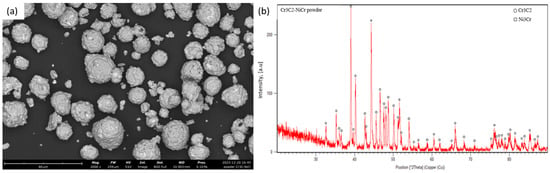
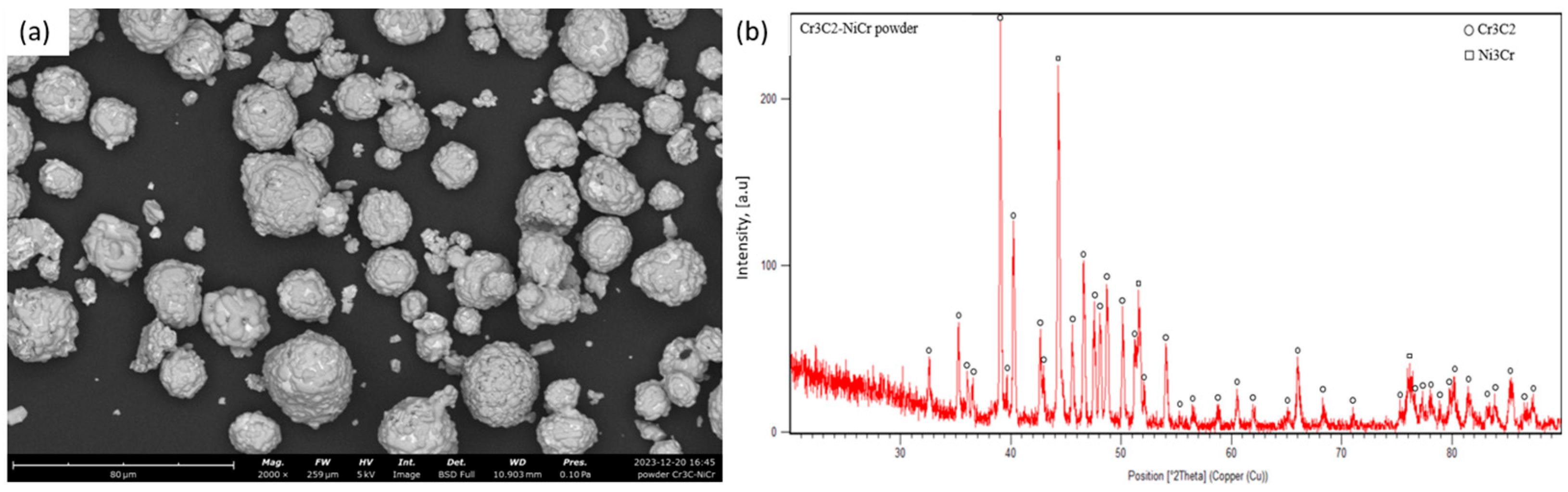
The Cr3C2–NiCr powder was examined using SEM (Figure 1). The Cr3C2–NiCr powder particles exhibited irregular, agglomerated morphologies with pronounced surface roughness and an average particle size of 15–45 μm (Figure 1a). Literature analysis confirms the presence of Ni in the light-gray regions as an agglomerating phase in the irregularly shaped areas, binding the chromium carbide particles, which appear as dark-gray regions [18,20].
Figure 1.
(a) Morphology of Cr3C2-NiCr powder; (b) XRD pattern diagram of Cr3C2-NiCr powder.
The X-ray diffraction pattern deposited for the Cr3C2–NiCr powder used for the coatings is shown in Figure 1b. Two main phases can be identified in the initial powder: (1) the CrNi3 binder, which provides high bonding strength as well as fracture toughness, and (2) the hard Cr3C2 phase, which imparts higher hardness and wear resistance [21,22].
3.2. Morphology and Microstructure of the Coating
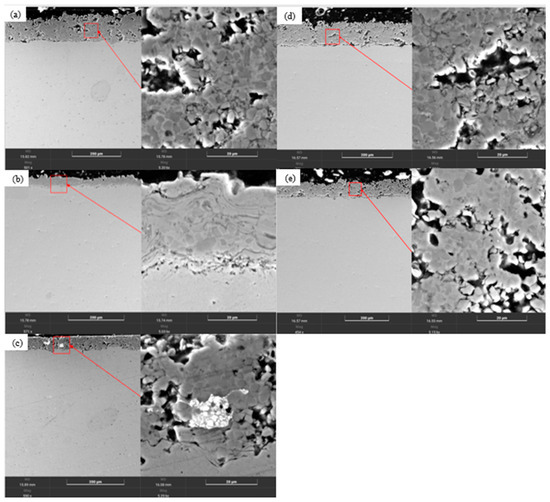
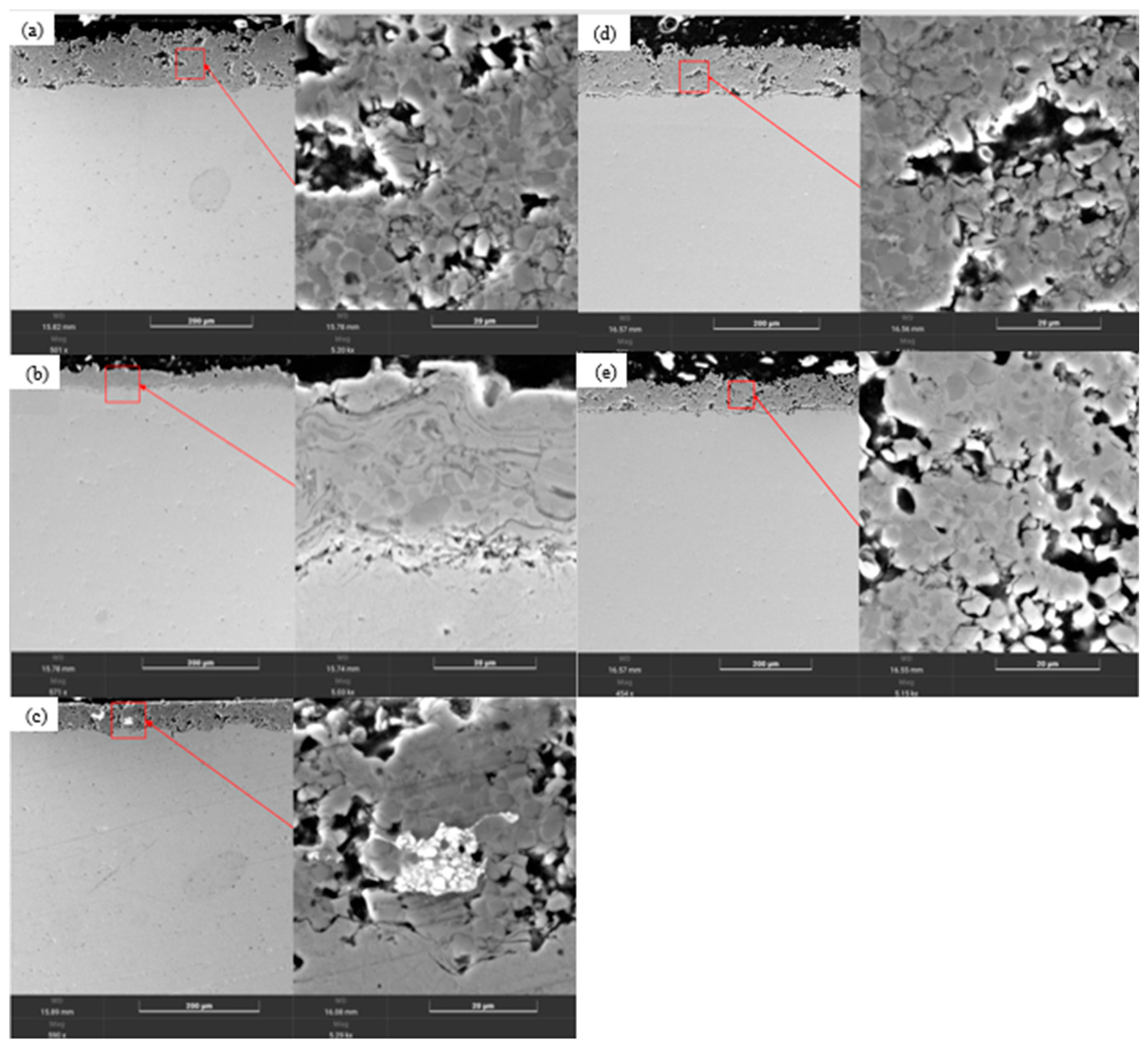
The presented cross-sectional microstructural images of coatings deposited by HVOF at different powder feed rates reveal significant differences in density, porosity, and the character of the interface with the substrate.
In the HVOF-1 (Figure 2a) and HVOF-3 (Figure 2c) samples, the coating structure appears loose and more heterogeneous, with an increased pore content. Areas of insufficient particle cohesion as well as defects at the coating–substrate interface were observed. At a powder feed velocity of 11.29 m/s, the reduction in particle kinetic energy resulted in inadequate layer densification due to poor melting and bonding. When the feed velocity was increased to 11.49 m/s, a structure with high porosity was deposited, particularly in the upper part of the coating. Large unmelted or partially melted particles were observed, indicating insufficient thermal input, as the particles did not have enough time to reach their melting temperature. Moreover, pronounced adhesion defects were identified at the coating–substrate interface.
Figure 2.
SEM cross-sectional images of the samples: (a) HVOF-1; (b) HVOF-2; (c) HVOF-3; (d) HVOF-4; (e) HVOF-5.
Thus, even slight variations in powder feed velocity (within ±0.1 m/s) have a noticeable effect on the coating microstructure. This highlights the high sensitivity of the HVOF process to feed parameters and the necessity of their precise adjustment to achieve optimal coating quality.
The presented microstructural images illustrate the effect of varying gas pressures (at a constant powder feed velocity of 11.39 m/s) in the HVOF process on the coating structure.
The HVOF-4 coating appears loose, with noticeably higher porosity (Figure 2d). Large inclusions and unmelted regions are visible. Insufficient propane results in a reduced combustion temperature, which decreases the degree of particle melting. Due to the lack of energy to fully melt the particles, porosity increases. In the HVOF-5 coating, the structure is heterogeneous, with increased porosity and larger pores compared to the first sample (Figure 2e). Excessive heat causes particle overheating, evaporation of certain components, and disruption of uniform deposition. Increasing propane pressure above the optimal level may lead to particle overheating, enhanced oxidation, and structural defects. Conversely, reducing propane pressure results in insufficient particle melting, while increasing it leads to overheating and defects in the coating structure.
The HVOF-2 coating was formed under spraying conditions that ensured proper particle melting without overheating and achieved a thermal balance between propane and oxygen supply. The resulting structure is characterized by high density and a distinct lamellar morphology with clearly developed horizontal layers (Figure 2b). The coating porosity is minimal, with well-flattened particles tightly bonded to each other, forming a compact and homogeneous structure. The presence of characteristic vortex lines and flow patterns in the microstructure indicates the plastic flow of the NiCr binder phase at the moment of molten particle impact on the substrate. Due to the uniform thermal exposure, individual pores and dark inclusions are observed evenly distributed throughout the volume. These morphological features confirm effective particle melting and deposition, as well as a balanced powder feed velocity that promotes the formation of a high-quality coating.
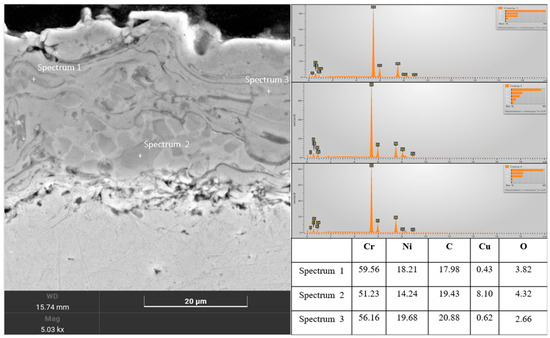
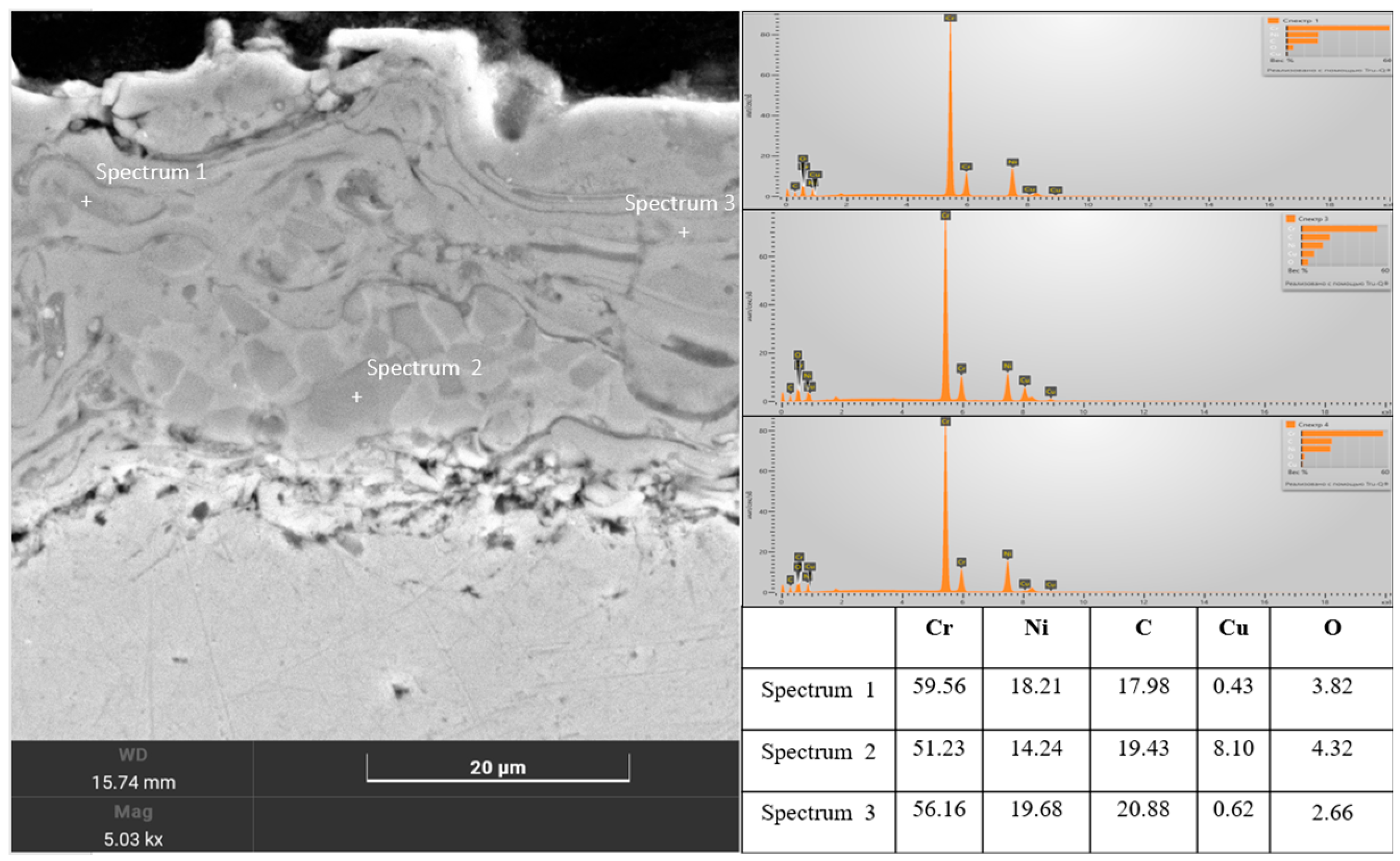
For local elemental analysis, three characteristic zones were selected, and the results are presented as EDS spectra and in a table of chemical composition (Figure 3). EDS analysis revealed that the investigated coating is predominantly composed of the carbide phase Cr3C2 combined with a NiCr metallic binder. In the first region, a high content of chromium and carbon with a noticeable amount of nickel was observed, indicating the presence of a carbide phase with NiCr inclusions; the small amount of oxygen is associated with local oxide inclusions. In the second region, the concentrations of chromium and nickel were slightly lower, whereas higher levels of copper were detected, which can be attributed to the proximity to the copper substrate and the diffusion of the element across the interface. The third region is characterized by a balanced content of Cr, Ni, and C, suggesting a uniform distribution of the carbide and metallic phases with minimal oxygen content and, consequently, a low degree of oxidation [23]. EDS results are consistent with the XRD data: the elemental distribution maps and local spectra confirm the phases identified from the diffraction patterns—Cr3C2 and NiCr.
Figure 3.
Results of local EDS analysis (Spectrum 1–3) with the elemental composition of the selected zones.
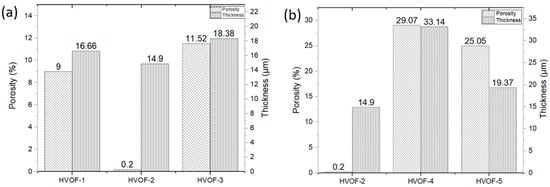
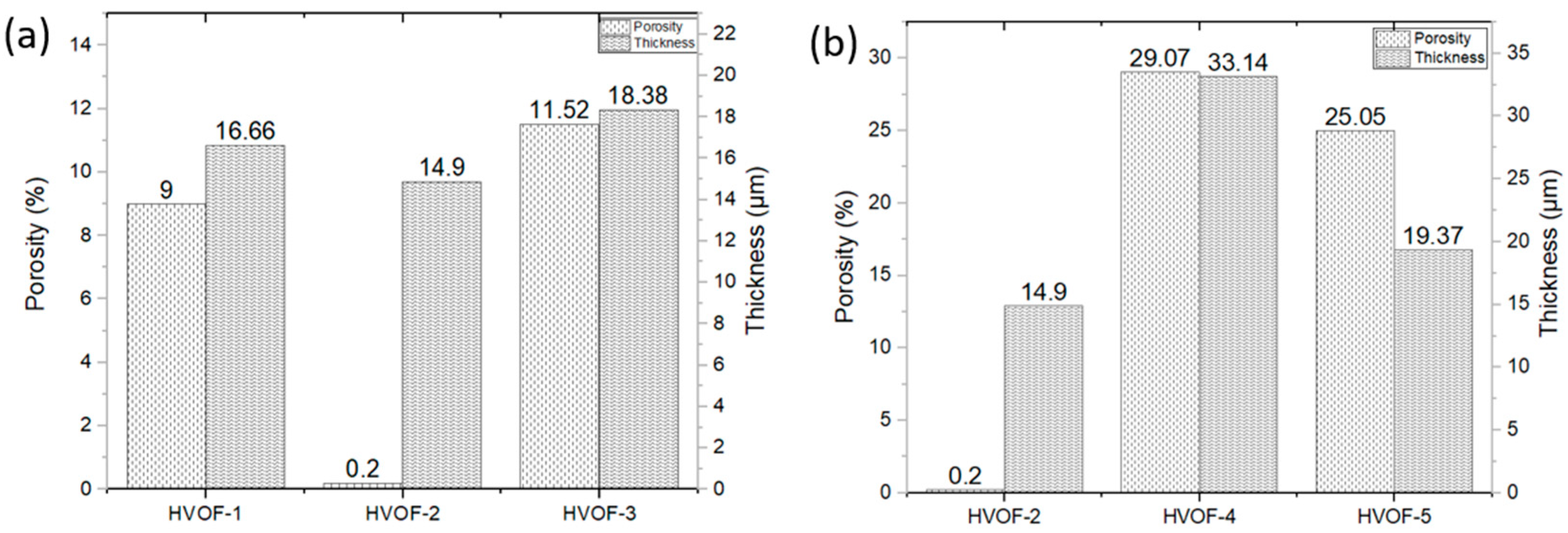
Although other samples had greater coating thickness, the best microstructural characteristics were obtained for the HVOF-2 coating. It exhibited the lowest porosity (0.2%) at a moderate thickness (Figure 4). This indicates an optimal balance of particle thermal energy, ensuring a sufficient degree of melting and splatting upon impact, which forms a dense lamellar structure with uniform interlamellar cohesion, as confirmed by SEM analysis. In contrast, coatings deposited at either lower or higher gas pressures and powder feed rates showed non-uniform solidification of the sprayed particles and increased porosity (9.0–29.1%), attributable to incomplete melting or oxidation of the particles. Thus, it can be concluded that excessive increases in gas flow or powder feed rate reduce particle residence time in the flame, whereas too low values cause overheating, both of which decrease the density and integrity of the coating.
Figure 4.
Dependence of porosity and thickness on: (a) powder feed velocity; (b) gas pressure.
Thus, an increase in thickness does not always correlate with an improvement in coating quality. In this case, the thinner layer formed at 11.39 m/s proved to be more uniform, dense, and structurally coherent. This is attributed to the optimal balance between thermal input and particle kinetic energy, which promotes effective melting and densification during deposition.
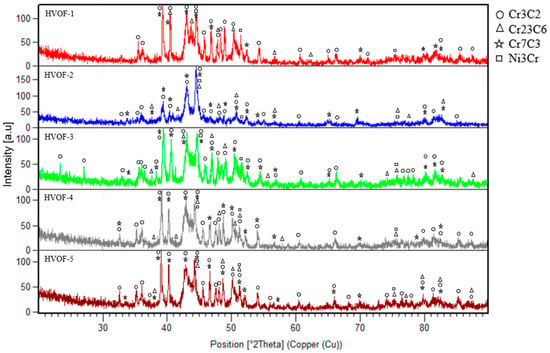
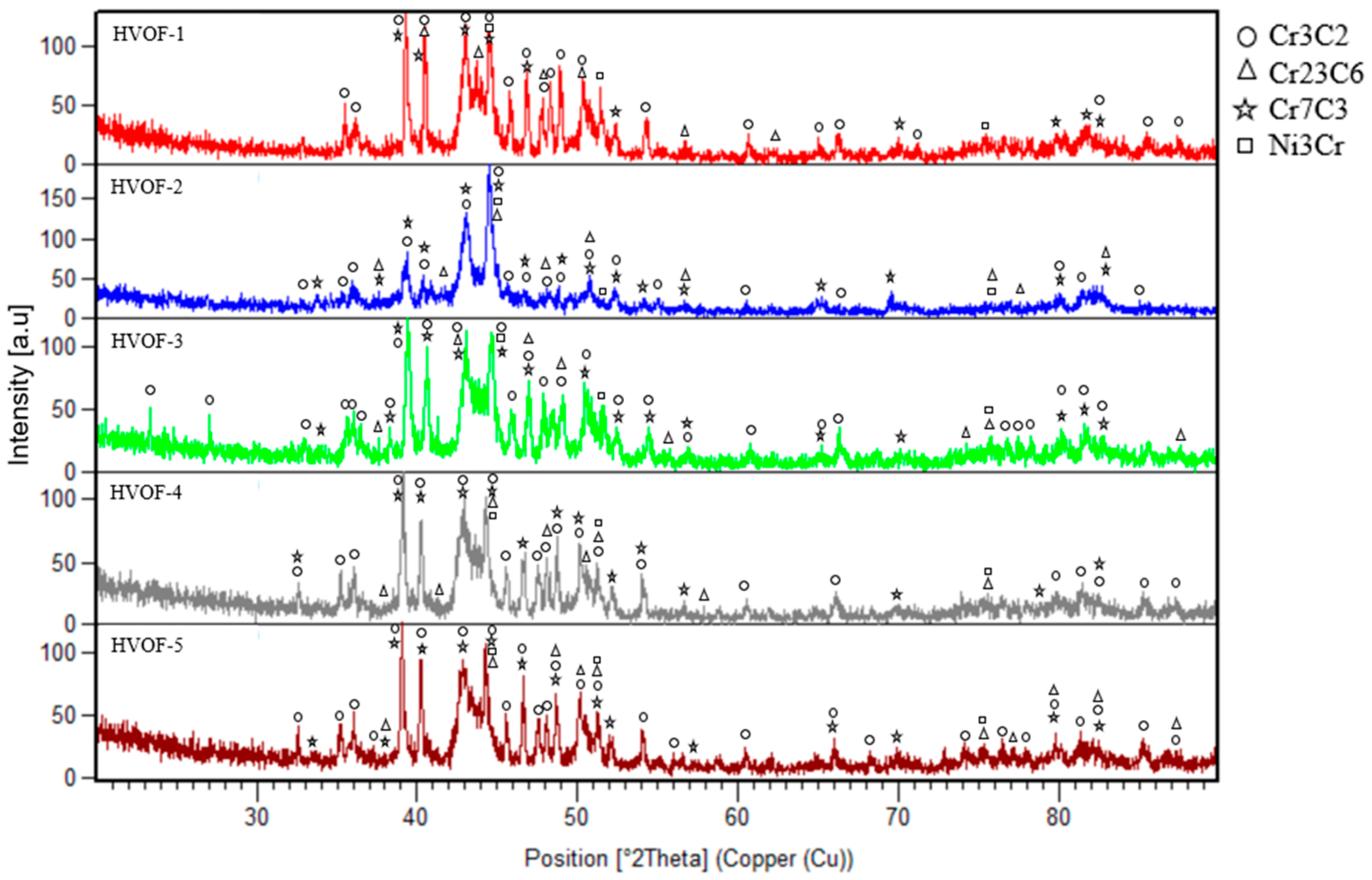
All samples contained a combination of carbide phases Cr3C2, Cr23C6, and Cr7C3, as well as the intermetallic phase Ni3Cr. The X-ray diffraction pattern of the Cr3C2–25NiCr coating is presented in Figure 5. Peaks corresponding to Cr3C2 carbide and the NiCr binder phase were observed both in the initial powder and in the deposited coatings. In addition, the phases Cr7C3 and Cr23C6 were identified in the coating, the formation of which is likely associated with the decarburization of Cr3C2 during thermal spraying [10]. The appearance of these phases may also result from partial fragmentation of carbide particles or their rebound from the substrate surface upon impact, leading to a reduced content of the initial carbide in the coating structure [19]. Similar phase transformations have also been reported in other studies [24].
Figure 5.
Results of X-ray phase analysis of Cr3C2-NiCr coatings deposited by HVOF method.
When comparing all the coatings, a very broad peak centered around 43° was observed in their structure. After spraying, all peaks became broadened, and a particularly broad peak centered at approximately 43° appeared in the coatings.
In the HVOF-1, HVOF-3, HVOF-4, and HVOF-5 coatings, the peaks were broader and less uniform, which may indicate a lower degree of crystallinity. The presence of a very broad peak suggested the formation of an amorphous phase due to the high cooling rate of the HVOF process. Differences in phase composition and peak intensities highlight the sensitivity of the microstructure to variations in these parameters.
The most distinct and crystallographically pronounced coating was observed in the HVOF-2 sample, which may indicate its optimal spraying parameters. The HVOF-2 sample exhibited sharper and more well-defined peaks, suggesting higher crystallinity or lower amorphous content in the coating. One possible reason was that the residence time of the particles in the flame was much shorter for the liquid-fuel spraying system.
An elevated Cr3C2 fraction, together with narrower XRD peaks, indicates preservation of the primary carbide phase with suppressed decarburization and a higher degree of binder crystallinity. This phase configuration establishes a stiffer load-bearing framework and reduces the proportion of the easily sheared matrix, thereby increasing microhardness and lowering the propensity for local plastic shear and micro-ploughing. Providing low porosity and high interlamellar cohesion, these features translate into a stable tribological response.
One of the key parameters determining the performance characteristics of a coating is surface roughness. The roughness of the coatings ranged from 2.03 μm to 2.42 μm (Table 2). The roughness value of the HVOF-2 sample was 2.034 μm, which is lower compared with the other samples. Reduced roughness indicates a more uniform surface, which in turn decreases the time and labor required for subsequent machining after spraying.
Table 2.
Surface roughness values Ra and Rz of the samples.
Excessively high Ra values can reduce the true contact area between the mold wall and the solidifying shell, leading to diminished heat transfer and the possible formation of surface defects such as waviness or cracks. Conversely, an optimally smooth yet sufficiently textured surface promotes uniform solidification and improves lubrication conditions. Accordingly, the revised text more clearly elucidates the relationship between the observed Ra values, the solidification process, and the surface quality of the cast strand, highlighting the industrial significance of the results.
The coating hardness was evaluated by measuring the microhardness on the cross-section of the sample. Differences in microstructural parameters (e.g., pore size), discussed in the previous section, could have influenced the deposited hardness values. Increased coating hardness, in turn, may contribute to reduced wear losses [25]. The HVOF-2 coating demonstrated slightly higher hardness compared with the coatings produced under other spraying conditions, which is associated with a larger fraction of molten material. The samples exhibited the following hardness values: HVOF-1—732.17 HV0.3, HVOF-3—950.66 HV0.3, HVOF-4—420.7 HV0.3, and HVOF-5—744.02 HV0.3 (Figure 4). The microhardness value reached 1050 HV0.3 for the HVOF-2 coated sample. This slightly exceeds the range reported in the literature for Cr3C2–NiCr HVOF coatings (typically 800–1000 HV0.3; see [26,27,28,29]). The hardness of this coating is higher than that of electroplated hard chromium (≈700–900 HV). In the present work, the measured hardness values exceed the hard-chromium range, which is traditionally used as an industrial coating for this application; detailed results, measurement conditions, and statistics are provided in Table 3.
Table 3.
Vickers microhardness results: Average value, standard deviation, and percentage error.
The higher hardness of the HVOF-2 coating is explained by its high chromium carbide (Cr3C2) content, which enhances resistance to abrasion and mechanical loading, together with a greater degree of particle melting, stronger interlamellar cohesion, and low porosity resulting from an optimal combination of powder feed rate and gas-delivery parameters. The wear resistance of materials depends on their mechanical properties, such as hardness. These differences may have contributed to the observed variations in wear resistance, which are discussed in detail in the following section.
From the standpoint of wear mechanics, high hardness increases the load-bearing capacity of a coating; however, the actual wear rate depends strongly on the coefficient of friction [26,27].
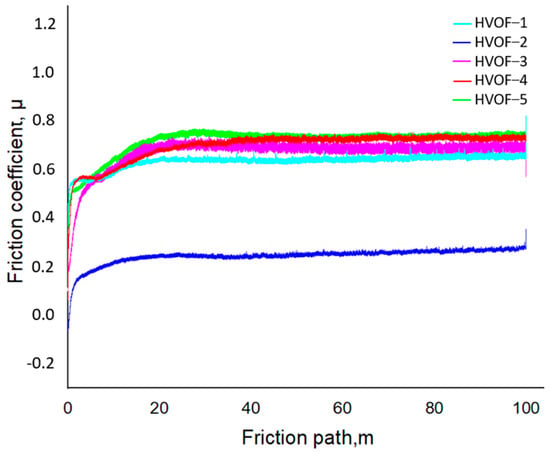
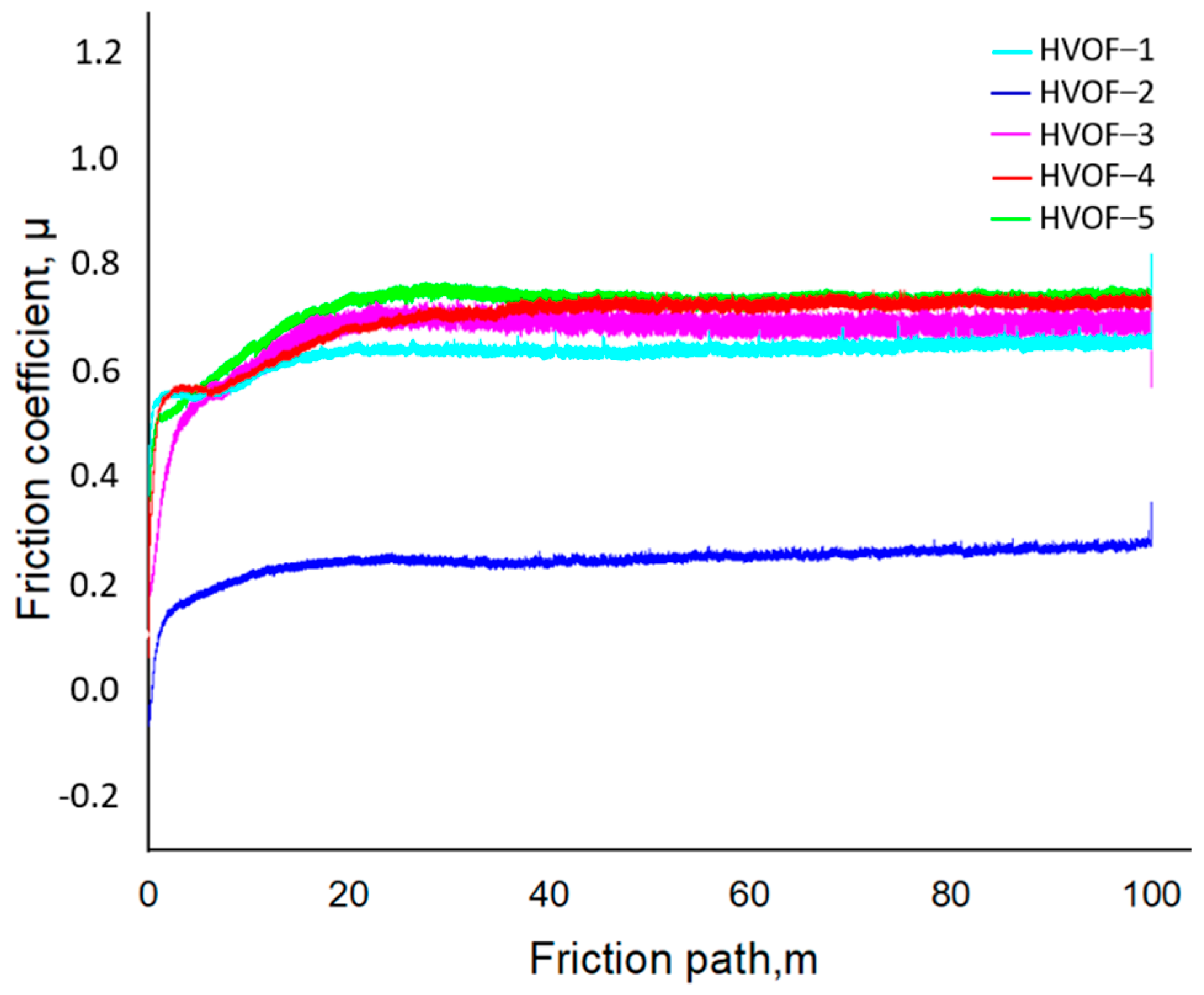
The dependence of the friction coefficient on the sliding distance for the investigated coatings is presented in Figure 6. It was shown that with changes in processing parameters, the friction coefficient varied within a wide range, from 0.245 to 0.719; for the HVOF-2 sample, after reaching a value of 0.245, it remained almost constant until the end of the test. Cr3C2–NiCr (HVOF) exhibits a low coefficient of friction, whereas electroplated hard chromium typically shows ~0.60–0.80 under laboratory dry-sliding conditions [28,29]. Coatings with a lower CoF are generally characterized by a lower wear rate [30].
Figure 6.
Dependence of the friction coefficient of the coatings on the sliding distance.
The improved tribological performance of Cr3C2–NiCr composite coatings is attributable to the formation and growth of high-strength phases (Cr3C2, CrNi3) within the structure. This underscores the importance of chemical composition and structural organization of the layer in friction and wear processes. The surface-layer morphology also has a substantial effect on tribological properties because it defines the deformation zone during sliding and, consequently, influences the coefficient of friction [31]. At the same time, the structure that provides maximum wear resistance may differ from that which ensures maximum hardness, owing to the complex interplay among chemical composition, phase constituents, and the mechanical properties of the coatings [32].
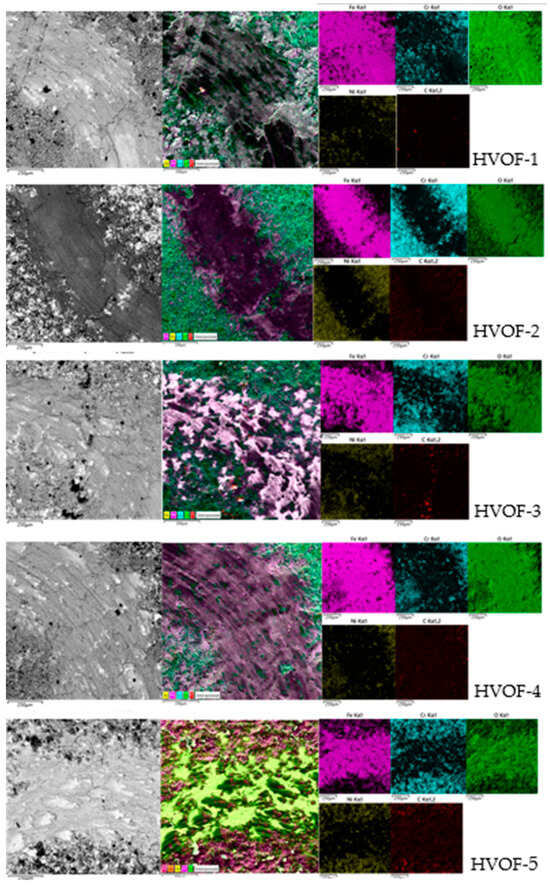
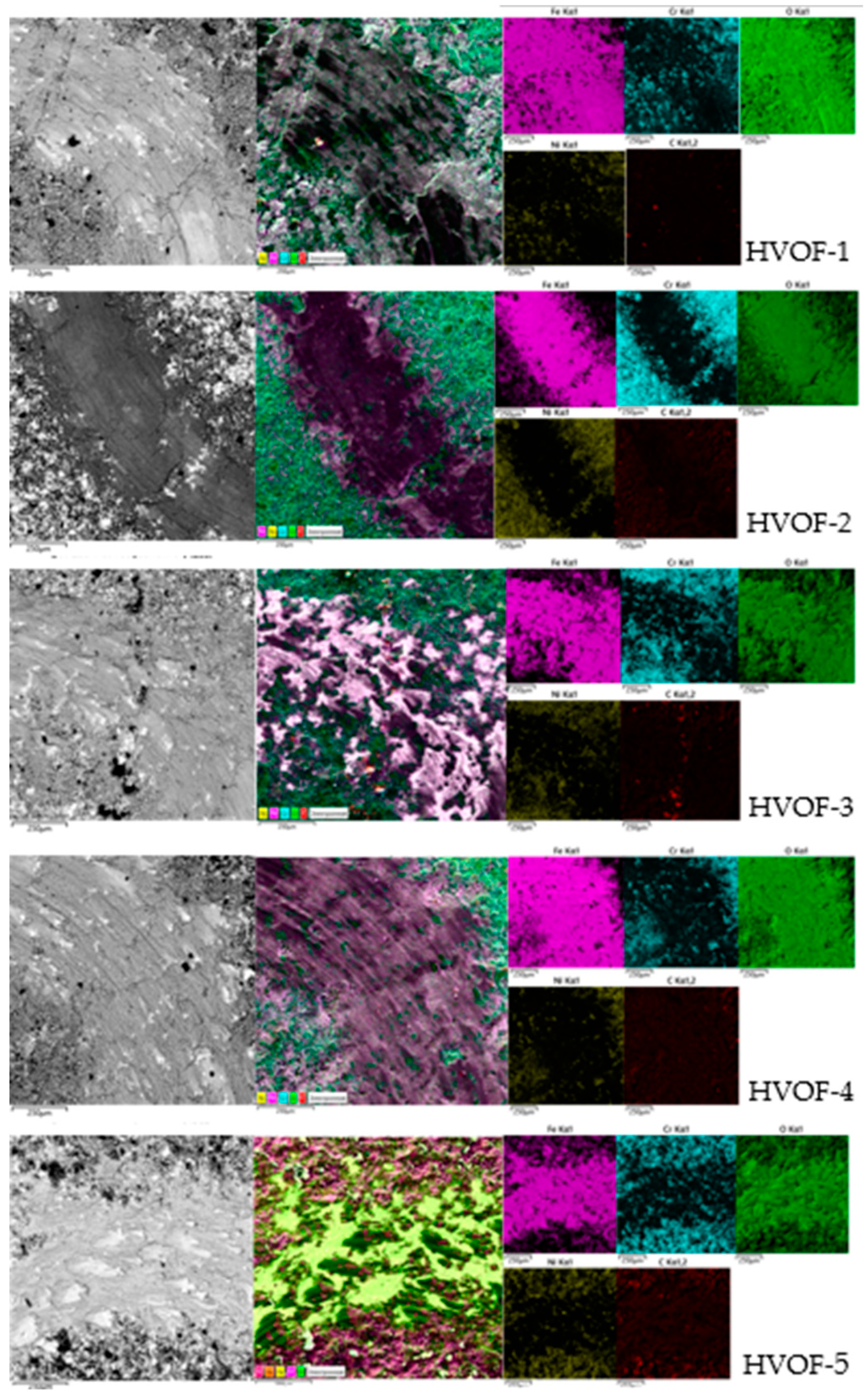
Figure 7 presents SEM and EDS images of the surfaces after tribological tests. In the central region of the wear track, the appearance of Fe—absent from the original coating composition—was detected. The formation of Fe- and O-enriched areas is attributed to material transfer from the steel counterbody and the development of an oxide tribofilm, indicating an adhesive–oxidative component of wear [33]. The presence of oxygen provides evidence for oxidative reactions and the formation of a thin tribo-oxide film (Fe3O4, Cr2O3). Simultaneously, longitudinal grooves and micro-ploughing marks confirm an abrasive wear contribution, whereas Ni- and Cr-enriched regions correspond to the original coating matrix. Therefore, the observed wear mechanism is combined and can be described as abrasive–adhesive–oxidative.
Figure 7.
SEM micrographs of the wear surface and the results of elemental mapping (EDS) of the wear tracks after tribological testing for the coatings obtained by the HVOF process: HVOF-1, HVOF-2, HVOF-3, HVOF-4, and HVOF-5.
The tribological test conditions represent laboratory screening and do not replicate in-service conditions; therefore, direct extrapolation to the service life of the continuous casting mold is limited. The values obtained should be interpreted as relative indicators of wear mechanisms.
The combination of these factors—a dense microstructure, optimal carbide distribution, and minimal thermochemical alteration of particles—results, for the HVOF-2 sample, in a low coefficient of friction and a less pronounced contribution of the abrasive, adhesive, and oxidative wear mechanisms.
4. Conclusions
Variations in powder feed rate and gas pressure during the HVOF process have a significant effect on the porosity, morphology, and adhesion of Cr3C2–NiCr coatings. Even slight deviations resulted in noticeable changes in coating quality. All coatings contained carbide phases (Cr3C2, Cr7C3, Cr23C6) and the Ni3Cr intermetallic compound. Partial decarburization of Cr3C2 occurred during spraying, which influenced hardness and wear resistance. The lowest surface roughness (Ra = 2.034 μm) provided a more uniform and smoother surface compared with the other coatings. The highest microhardness (1050 HV0.3) was recorded for the HVOF-2 coating, significantly exceeding the values of the other samples (420–950 HV0.3). The HVOF-2 coating also demonstrated the lowest and most stable coefficient of friction (0.245), whereas the other coatings exhibited higher values (0.3–0.7). SEM images and EDS revealed a combination of abrasive, adhesive, and oxidative wear mechanisms.
A powder feed rate of 11.39 m/s and propane and oxygen pressures of 3.8 and 4, respectively, provided an optimal balance between thickness, hardness, and friction coefficient, making this regime the most suitable for producing high-quality coatings.
Future studies will focus on high-temperature oxidation tests to more comprehensively evaluate the service performance of Cr3C2–NiCr coatings under conditions close to those of copper continuous casting molds.
Author Contributions
Conceptualization, S.A., D.B. and M.R.-G.; methodology, I.A. and D.K.; formal analysis, I.A. and A.K.; investigation, I.A., A.K. and S.A.; writing—original draft preparation, I.A. and A.K.; writing—review and editing, S.A. and D.B.; supervision, S.A. and M.R.-G.; project administration, I.A. and S.A. All authors have read and agreed to the published version of the manuscript.
Funding
This study was funded by the Committee of Science of the Ministry of Science and Higher Education of the Republic of Kazakhstan (Grant number: BR24992854).
Data Availability Statement
The original contributions presented in this study are included in the article. Further inquiries can be directed to the corresponding authors.
Conflicts of Interest
The author Dauir Kakimzhanov is employed by PlasmaScience LLP. All other authors declare no conflicts of interest.
Abbreviations
The following abbreviations are used in this manuscript:
| CCM | continuous casting machines |
| HVOF | high-velocity oxy-fuel |
| XRD | X-ray diffraction |
| EDS | energy-dispersive spectroscopy |
| SEM | scanning electron microscopy |
References
- Wang, S.; Xu, P.; Zhou, Y.; Duan, H.; Chen, D.; Long, M. The Effect of Mold Structure and Cooling Parameters on Heat Transfer during Billet High-Speed Continuous Casting. Materials 2023, 16, 3361. [Google Scholar] [CrossRef] [Scilit] [PubMed]
- Meng, F.; Zhou, Y.; Zhang, H.; Wang, Z.; Liu, D.; Cao, S.; Cui, X.; Nong, Z.; Man, T.; Liu, T. Development and Research Status of Wear-Resistant Coatings on Copper and Its Alloys: Review. Crystals 2025, 15, 204. [Google Scholar] [CrossRef] [Scilit]
- Vlasov, A.E. Repair and restoration of crystallizers of continuous casting machines. Bull. South Ural. State Univ. Ser. Metallurgy 2016, 16, 143–148. [Google Scholar] [CrossRef] [Scilit]
- Yu, J.; Liu, X.; Yu, Y.; Li, H.; Liu, P.; Huang, K.; Sun, R. Research and Application of High-Velocity Oxygen Fuel Coatings. Coatings 2022, 12, 828. [Google Scholar] [CrossRef] [Scilit]
- Barella, S.; Gruttadauria, A.; Mapelli, C.; Mombelli, D. Investigation of failure and damages on a continuous casting copper mould. Eng. Fail. Anal. 2014, 36, 432–438. [Google Scholar] [CrossRef] [Scilit]
- Gupta, A.; Singh, R.; Paul, A.; Kumar, S. Effect of mould geometry, coating, and plate thickness on the thermal profile of continuous casting moulds. J. South. Afr. Inst. Min. Metall. 2018, 118, 505–513. [Google Scholar] [CrossRef] [Scilit]
- Okonkwo, B.O.; Jeong, C.; Jang, C. Advances on Cr and Ni Electrodeposition for Industrial Applications—A Review. Coatings 2022, 12, 1555. [Google Scholar] [CrossRef] [Scilit]
- Meng, X.; Zhu, M. Effect of cooling structure on thermal behavior of copper plates of slab continuous casting mold. J. Cent. South Univ. 2013, 20, 318–325. [Google Scholar] [CrossRef] [Scilit]
- Li, M.; Christofides, P.D. Modeling and Control of High-Velocity Oxygen-Fuel (HVOF) Thermal Spray: A Tutorial Review. J. Therm. Spray Technol. 2009, 18, 753–768. [Google Scholar] [CrossRef] [Scilit]
- Xie, M.; Zhang, S.; Li, M. Comparative investigation on HVOF sprayed carbide-based coatings. Appl. Surf. Sci. 2013, 273, 799–805. [Google Scholar] [CrossRef] [Scilit]
- Yao, H.; Zhou, Z.; Wang, L.; Tan, Z.; He, D.; Zhao, L. Thermal Conductivity and Wear Behavior of HVOF-Sprayed Fe-Based Amorphous Coatings. Coatings 2017, 7, 173. [Google Scholar] [CrossRef] [Scilit]
- Raza, A.; Ahmad, F.; Badri, T.M.; Raza, M.R.; Malik, K. An Influence of Oxygen Flow Rate and Spray Distance on the Porosity of HVOF Coating and Its Effects on Corrosion—A Review. Materials 2022, 15, 6329. [Google Scholar] [CrossRef] [Scilit]
- Rakhadilov, B.; Muktanova, N.; Seitkhanova, A.; Kakimzhanov, D.; Dautbekov, M. Investigation of the Influence of the Oxygen Flow Rate on the Mechanical, Structural and Operational Properties of 86WC-10Co-4Cr Coatings, as Determined Using the High-Velocity Oxyfuel Spraying Method. Coatings 2024, 14, 1275. [Google Scholar] [CrossRef] [Scilit]
- SVignesh, S.; Shanmugam, K.; Balasubramanian, V.; Sridhar, K. Identifying the optimal HVOF spray parameters to attain minimum porosity and maximum hardness in iron based amorphous metallic coatings. Def. Technol. 2017, 13, 101–110. [Google Scholar] [CrossRef] [Scilit]
- He, J.; Ice, M.; Lavernia, E. Particle Melting Behavior during High-Velocity Oxygen Fuel Thermal Spraying. J. Therm. Spray Technol. 2001, 10, 83–93. [Google Scholar] [CrossRef] [Scilit]
- ASTM E2109-01(2014); Standard Test Methods for Determining Area Percentage Porosity in Thermal Sprayed Coatings. ASTM International: West Conshohocken, PA, USA, 2014.
- ASTM G99-17; Standard Test Method for Wear Testing with a Pin-on-Disk Apparatus. ASTM International: West Conshohocken, PA, USA, 2017.
- Poirier, D.; Legoux, J.-G.; Lima, R.S. Engineering HVOF-Sprayed Cr3C2-NiCr Coatings: The Effect of Particle Morphology and Spraying Parameters on the Microstructure, Properties, and High Temperature Wear Performance. J. Therm. Spray Technol. 2013, 22, 280–289. [Google Scholar] [CrossRef] [Scilit]
- Prudenziati, M.; Gazzadi, G.C.; Medici, M.; Dalbagni, G.; Caliari, M. Cr3C2-NiCr HVOF-Sprayed Coatings: Microstructure and Properties Versus Powder Characteristics and Process Parameters. J. Therm. Spray Technol. 2010, 19, 541–550. [Google Scholar] [CrossRef] [Scilit]
- Seitov, B.; Kurbanbekov, S.; Baltabayeva, D.; Kakimzhanov, D.; Katpayeva, K.; Temirbekov, A.; Bekbayev, S.; Mussakhan, N. Review of Physical and Mechanical Properties, Morphology, and Phase Structure in Cr3C2-NiCr Composite Coatings Sprayed by HVOF Method. Coatings 2025, 15, 479. [Google Scholar] [CrossRef] [Scilit]
- Ksiazek, M.; Łyp-Wrońska, K. An HVOF-Sprayed (Cr3C2-NiCr + Co) Composite Coating on Ductile Cast Iron: Microstructure, Mechanical Properties, and Scratch Resistance. Materials 2024, 17, 1484. [Google Scholar] [CrossRef] [Scilit]
- Brupbacher, M.C.; Zhang, D.; Buchta, W.M.; Graybeal, M.L.; Rhim, Y.-R.; Nagle, D.C.; Spicer, J.B. Synthesis and characterization of binder-free Cr3C2 coatings on nickel-based alloys for molten fluoride salt corrosion resistance. J. Nucl. Mater. 2015, 461, 215–220. [Google Scholar] [CrossRef] [Scilit]
- He, B.; Zhang, L.; Yun, X.; Wang, J.; Zhou, G.; Chen, Z.; Yuan, X. Comparative Study of HVOF Cr3C2–NiCr Coating with Different Bonding Layer on the Interactive Behavior of Fatigue and Corrosion. Coatings 2022, 12, 307. [Google Scholar] [CrossRef] [Scilit]
- Wang, B.Q.; Shui, Z.R. The hot erosion behavior of HVOF chromium carbide-metal cermet coatings sprayed with different powders. Wear 2002, 253, 550–557. [Google Scholar] [CrossRef] [Scilit]
- Shu, W.; Deng, X.; Guo, W.; Shi, W.; Li, S.; Zhang, B.; Bai, J.; Cui, Q. Microstructure and wear resistance of HVOF sprayed WC-10Co-4Cr coating on Ti-6Al-4V. Heat Treat. Surf. Eng. 2022, 4, 70–75. [Google Scholar] [CrossRef] [Scilit]
- Kato, K. Wear in relation to friction—A review. Wear 2000, 241, 151–157. [Google Scholar] [CrossRef] [Scilit]
- Zhai, W.; Bai, L.; Zhou, R.; Fan, X.; Kang, G.; Liu, Y.; Zhou, K. Recent Progress on Wear-Resistant Materials: Designs, Properties, and Applications. Adv. Sci. 2021, 8, 2003739. [Google Scholar] [CrossRef] [Scilit] [PubMed]
- Guilemany, J.M.; Espallargas, N.; Suegama, P.H.; Benedetti, A.V.; Fernández, J. High-Velocity Oxyfuel Cr3C2-NiCr Replacing Hard Chromium Coatings. J. Therm. Spray Technol. 2005, 14, 335–341. [Google Scholar] [CrossRef] [Scilit]
- Eckert, M. Tribological Characterization of Electrolytic Hard Chrome Coatings. Acta Mech. Slovaca 2021, 25, 10–15. [Google Scholar] [CrossRef] [Scilit]
- Ching, H.A.; Choudhury, D.; Nine, J.; Abu Osman, N.A. Effects of surface coating on reducing friction and wear of orthopaedic implants. Sci. Technol. Adv. Mater. 2014, 15, 014402. [Google Scholar] [CrossRef] [Scilit]
- Shi, R.; Wang, B.; Yan, Z.; Wang, Z.; Dong, L. Effect of Surface Topography Parameters on Friction and Wear of Random Rough Surface. Materials 2019, 12, 2762. [Google Scholar] [CrossRef] [Scilit] [PubMed]
- Ma, X.; Ruggerio, P. A Comparative Investigation of Feedstock Materials on Multiple Properties of HVOF-Formed Cr3C2-NiCr Coatings: Size Effects of Powders and Carbides on Sliding Abrasive Wear Behavior. In Proceedings of the ITSC 2024, Milan, Italy, 29 April–1 May 2024; pp. 558–569. [Google Scholar] [CrossRef] [Scilit]
- Muntean, R.; Pascal, D.-T.; Kazamer, N.; Mărginean, G.; Șerban, V.-A. Sliding Wear Behavior of High-Temperature Vacuum-Brazed WC-Co-NiP Functional Composite Coatings. Materials 2021, 15, 88. [Google Scholar] [CrossRef] [Scilit]

Disclaimer/Publisher’s Note: The statements, opinions and data contained in all publications are solely those of the individual author(s) and contributor(s) and not of MDPI and/or the editor(s). MDPI and/or the editor(s) disclaim responsibility for any injury to people or property resulting from any ideas, methods, instructions or products referred to in the content. |
© 2025 by the authors. Licensee MDPI, Basel, Switzerland. This article is an open access article distributed under the terms and conditions of the Creative Commons Attribution (CC BY) license (https://creativecommons.org/licenses/by/4.0/).