Article

Study on Utilization Boundaries and Contributions of Pore Throats of Different Scales in Low-Permeability Reservoirs

1
Zhun Dong Oil Production Plant, PetroChina Xinjiang Oilfield Company, Fukang 831500, China
2
Development Division, PetroChina Xinjiang Oilfield Company, Karamay 834000, China
3
School of Petroleum Engineering, Xi’an Shiyou University, Xi’an 710065, China
*
Author to whom correspondence should be addressed.
Processes 2025, 13(11), 3676; https://doi.org/10.3390/pr13113676
Submission received: 14 October 2025 / Revised: 3 November 2025 / Accepted: 12 November 2025 / Published: 13 November 2025
(This article belongs to the Section Energy Systems)

Abstract

Low-permeability sandstone oil reservoirs, as an important type of oil and gas resource, feature high reservoir density and low permeability. The utilization of pore throats of different scales during their development process is crucial for enhancing oil recovery. Based on nuclear magnetic resonance and CT scanning techniques, this paper systematically studies the utilization limits and energy contribution of pore larynx under different displacement methods. The results show that during the water injection development process, the main pore–throat radius used by water flooding is between 1 and 20 μm. Among them, the contribution of the small pore tends to stabilize after the pressure rises to a certain stage, the contribution of the medium pore increases with the rise in pressure, while the contribution of the large pore gradually decreases with the increase in pressure. After switching to CO2 gas flooding, the application range of the pore throat was further expanded to a smaller scale. The contribution of the small pore and the middle pore significantly increased in a specific pressure range, while the large pore made a greater contribution at a lower pressure. This paper has certain reference significance for the study of the limit and contribution of pore–throat exploitation in low-permeability sandstone oil reservoirs.

1. Introduction

As conventional oil and gas field resources gradually decline, low-permeability sandstone reservoirs, as an important source of oil and gas, account for approximately 40% of the total oil and gas resources, demonstrating significant development potential [1,2,3,4]. However, due to the reservoir’s low porosity and permeability characteristics, many technical challenges arise during extraction. The pore–throat structure characteristics within the reservoir directly affect the flow behavior of oil and gas, which in turn determines the recovery efficiency of the reservoir. Therefore, for the effective development of low-permeability reservoirs, it is crucial to identify the utilization boundaries of pore–throats at different scales and their contribution during the development process, as this is key to improving recovery rates and optimizing development plans [5,6,7].
Nuclear magnetic resonance (NMR) is a powerful tool for quantitatively characterizing the internal pore structure of rocks and is widely used in laboratory research. Only fluids within the pore–throats of cores generate NMR signals, which provide insight into the distribution of pore fluids [8,9,10,11,12]. Researchers, both domestically and internationally, have established a strong mathematical relationship between NMR relaxation time and pore–throat radius. Using high-pressure mercury injection data, the relaxation time can be directly converted into the pore–throat radius via a conversion factor. Several studies have extensively explored the correlation between relaxation time and pore radius. By applying the pore–throat ratio, the pore radius can be converted into the throat radius. These NMR pore–throat radius distribution curves have been incorporated into oilfield development evaluations, where the accuracy and effectiveness of NMR-based analysis of core samples from low-porosity, low-permeability reservoirs have been discussed [13,14,15]. In a study by Wang et al., nanostructure morphology and pore size distributions (PSDs) of 10 samples from the Lower Cambrian Niutitang Formation in northwestern Hunan were investigated using field emission scanning electron microscopy (FE-SEM), high-pressure mercury intrusion (HPMI), low-pressure nitrogen gas adsorption (LP-N2GA), and carbon dioxide gas adsorption (LP-CO2GA). In combination with the geochemical parameters and mineral composition, the factors influencing the nanoscale pore structure were analyzed [16]. In the work of Zhu et al., through a series of rock physics experiments, including gas measurement of porosity and permeability, casting thin sections, scanning electron microscopy, and high-pressure mercury injection, the quality of reservoir properties and microscopic pore–throat structure characteristics were systematically studied. Combined with fractal geometry theory, the effects of different pore–throat types, geometric shapes and scale sizes on the fractal characteristics and heterogeneity of sandstone pore–throat structure are clarified [17]. While previous studies have primarily focused on the distribution of pore–throat and pore radii across different types of reservoirs using NMR technology, there has been limited research on the activation thresholds and contributions of pore–throats under varying development conditions, such as during water flooding and gas injection.
In the gas injection phase following water flooding, the activation scale and degree of pore–throat utilization in core samples are critical factors influencing oil displacement efficiency [18,19,20,21,22]. Nuclear magnetic resonance (NMR) technology, an effective tool for reservoir characterization, provides quantitative data on the fluid distribution within pore–throats. This makes NMR essential for studying pore–throat activation during the gas injection process after water flooding. Research indicates that crude oil trapped in micron-scale pores is the primary contributor to water flooding recovery [5,23,24,25]. Moreover, variations in gas injection rates and pressures lead to noticeable changes in both the activation threshold and the degree of pore–throat utilization [26,27,28,29,30].
This paper investigates the tight oil reservoir of the Permian Wutonggou Formation in the Shanan Oilfield. By combining nuclear magnetic resonance (NMR) testing and CT scanning experiments, it analyzes the variations in NMR signal amplitudes from different pore–throat radii during the gas injection process following water flooding [31,32,33]. The study identifies the activation boundaries of pore–throats under various development methods. Using high-temperature, high-pressure physical flow simulation experiments, real-time monitoring of fluid distribution within core samples is conducted during the displacement process. The research examines the activation thresholds and contribution patterns of different-scale pore–throats under water injection and CO2 injection, providing theoretical insights for studies on pore–throat activation boundaries and contributions in low-permeability sandstone reservoirs [34,35].

2. Experimental Process

2.1. Experimental Materials

Six core samples from the Wutonggou Formation sandstone of the Shaqiu 5 Well Area in the Junggar Basin were chosen for the study. The basic physical properties of the cores are summarized in Table 1. The porosity ranged from 13.55% to 14.11%, and the permeability varied between 0.89 mD and 2.85 mD, typical of low-permeability sandstones with strong heterogeneity. The crude oil samples were taken from the same stratigraphic layer as the cores, and the experimental oil was prepared by mixing crude oil with refined kerosene at a 1:3 volume ratio. The viscosity of the degassed oil at 50 °C was 7.71 mPa·s, with an average density of 0.8446 g/cm3. The formation water used in the experiments was of the CaCl2 type, with an average chloride (Cl) concentration of 4222.53 mg/L and a total salinity of 7646.41 mg/L.

2.2. Experimental Equipment

The experimental setup for displacement is shown in Figure 1. The displacement pump used is an ISCO-260D (Teledyne ISCO Company, Lincoln, NE, USA) model, made in the USA, with a pressure range from 0 to 51.7 MPa and a continuous flow rate range from 0.001 to 80 mL/min. The vacuum pressurization saturation device is the NM-V model, with a working pressure range of 0 to 40 MPa. All of the equipment was manufactured by Jiangsu Huaxing Petroleum Instruments Co., Ltd. (Nantong, China). The nuclear magnetic resonance (NMR) instrument was manufactured by Suzhou Newmai Analytical Instruments Co., Ltd. (Suzhou, China), and its model is PQ001.

2.3. Experimental Principle

This experiment integrates low-field nuclear magnetic resonance (NMR) technology with CT scanning methods to develop a mathematical model that converts pore–throat radius to NMR T2 spectra. This model allows for the precise calculation of the upper and lower boundaries of pore–throat radii in core samples after water flooding and gas injection. It also enables the quantitative evaluation of pore–throat scale limits under various displacement methods in low-permeability sandstone reservoirs.
In the NMR spectrum, the T2 relaxation time on the horizontal axis is positively correlated with the pore–throat radius. The signal intensity at each point reflects the corresponding pore–throat volume and fluid distribution at that scale. The transverse relaxation time of fluids in porous media can be expressed as follows:
1 T 2 = ρ 2 S V
ρ 2 represents the transverse relaxation intensity in μm/ms. S is the surface area of the pores (in cm2), and V denotes the pore volume.
The pore radius is the product of the pore–throat ratio and the rock’s pore–throat radius, Therefore, Equation (1) can be rewritten as follows:
T 2 = R t R 1 n ρ 2 F s
In Equation (2), R t refers to the average pore–throat ratio of the rock. R 1 is the pore–throat radius of the rock (in μm). F s is the pore shape factor. Equation (2) can then be further transformed as follows:
B 1 = K T 2 1 m
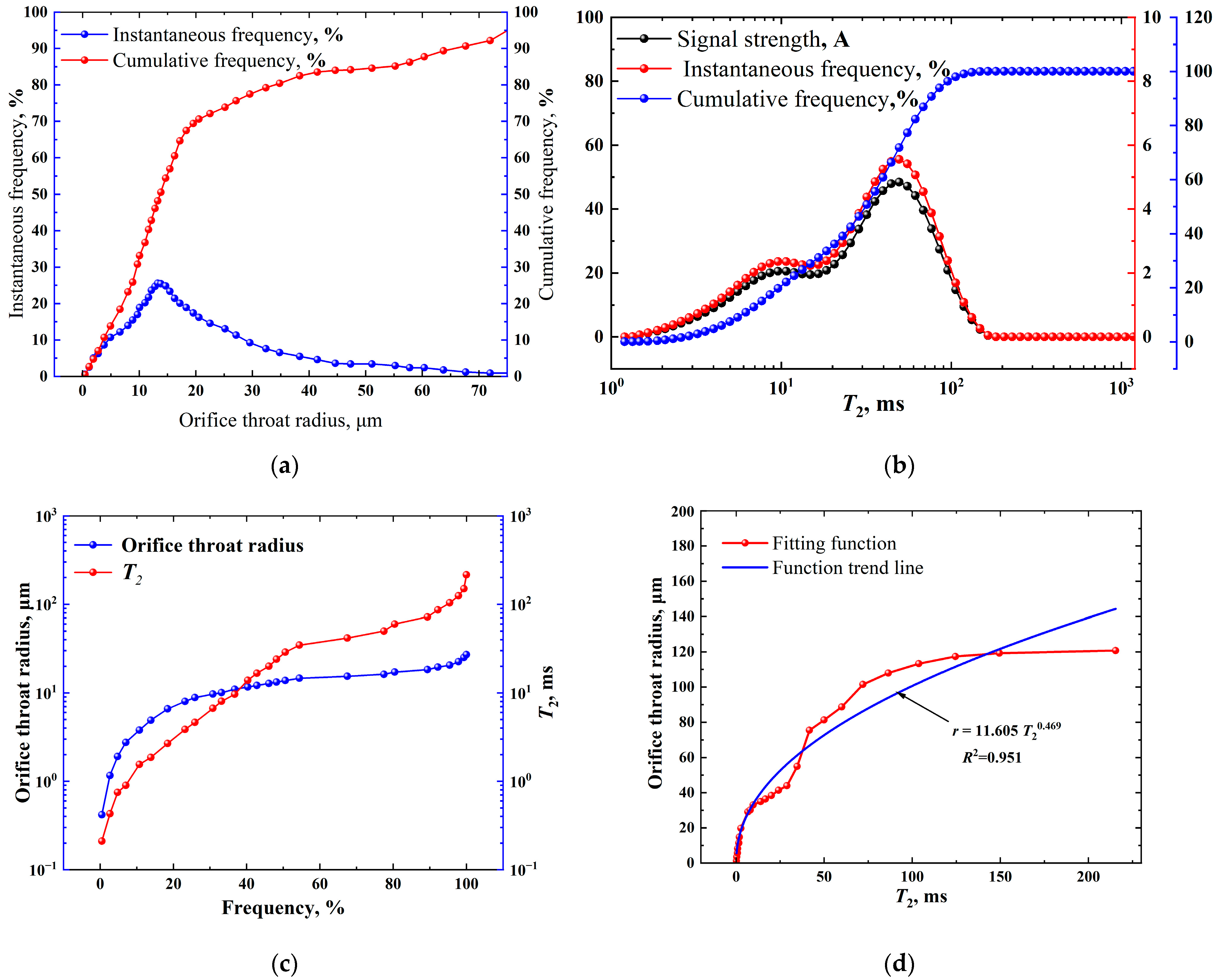
Figure 2a quantitatively represents the heterogeneity of the reservoir’s pore–throat system using a bimodal curve of instantaneous frequency and cumulative frequency. The instantaneous frequency distribution highlights the peak characteristics of the pore–throat proportion (with the main peak radius reflecting the dominant pore–throat size). The cumulative frequency curve depicts the cumulative distribution of pore–throat sizes. Together, these two curves allow for the clear identification of the spatial proportions of high-permeability channels and low-permeability regions within the reservoir. Figure 2b, based on the conversion model between NMR T2 relaxation time and pore radius, maps the relaxation time (T2) to a mathematical model of physical pore radius distribution, which indirectly reflects the graded characteristics of multiscale pores. Figure 2c presents the cumulative distribution curve of T2 signal intensity, revealing the graded characteristics of the reservoir’s pore system in terms of pore volume. T2 relaxation times greater than 10 ms correspond to large pores (which contribute the majority of the signal intensity), while T2 relaxation times less than 1 ms represent small pores or micropores. Figure 2d, through the development of a power-function model between T2 relaxation time and pore radius, enables the conversion of relaxation time into pore–throat radius, offering theoretical support for the precise delineation of pore–throat activation boundaries.
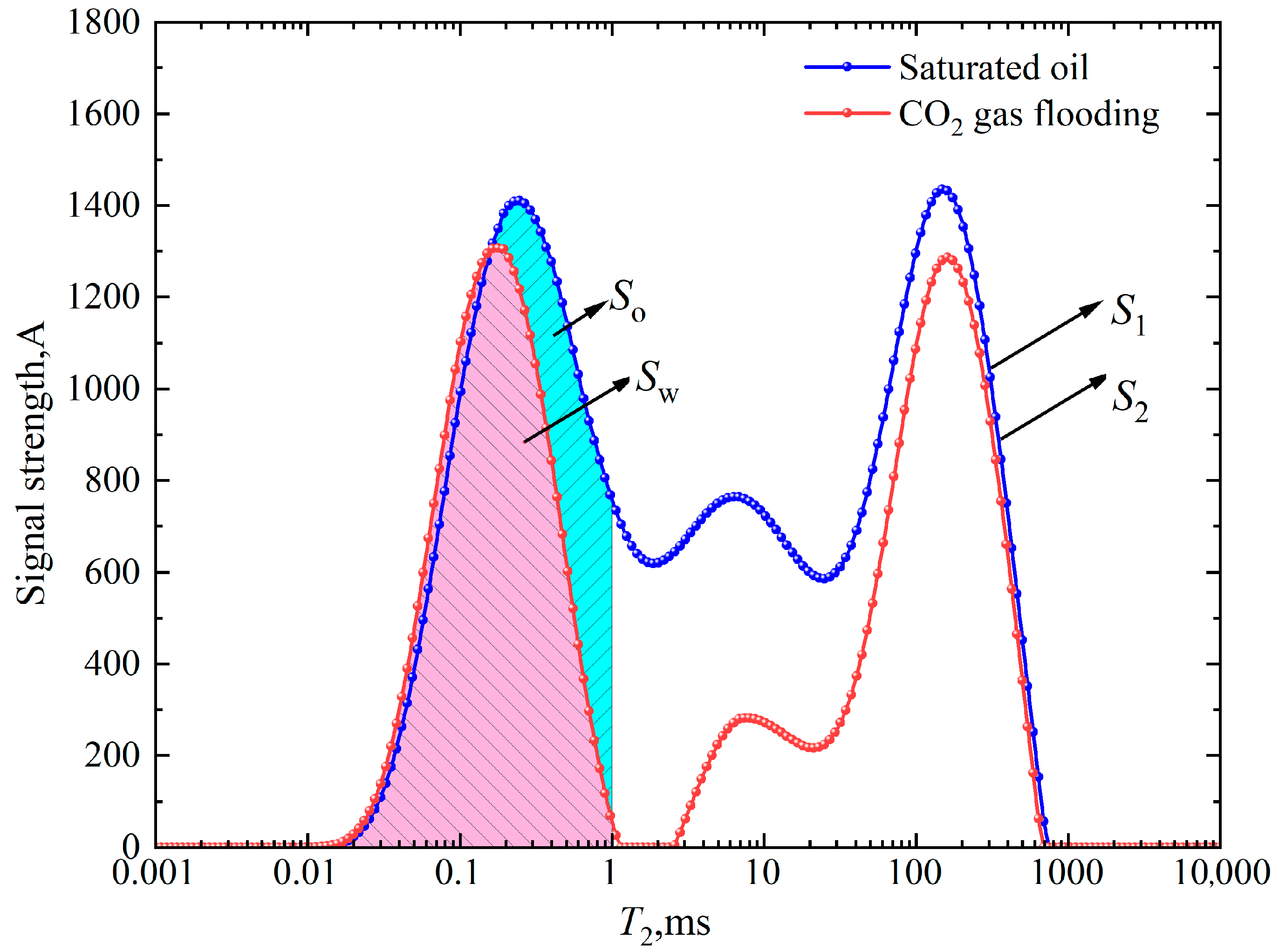
Figure 3 illustrates the principle behind calculating the contribution of pore–throats with pore diameters ranging from 0.001 ms to 1 ms. The T2 value of the initially saturated crude oil in pore–throats with relaxation times between 0.001 ms and 1 ms is represented by (So), while the T2 value of the residual oil after displacement is denoted by (Sw). For pore–throats with relaxation times ranging from 0.001 ms to 10,000 ms, the initial amount of saturated crude oil is represented by (S1), and the T2 value of the residual oil after displacement is represented by (S2). By comparing the frequency–area differences in the NMR T2 spectra before and after the displacement, the pore–throat contribution (I) can be calculated:
I = S o S w S 1 S 2 × 100 %
In Equation (4): I is the pore–throat contribution (%); SoSw represents the difference in T2 spectrum frequency area between the initial saturated oil volume and the residual oil volume after displacement for pore–throats with pore diameters ranging from 0.001 ms to 1 ms. S1S2 represents the difference in T2 spectrum frequency area between the initial saturated crude oil volume and the residual oil volume after displacement for pore–throats with pore diameters ranging from 0.001 ms to 10,000 ms.

2.4. Experimental Procedure

The experimental procedure is as follows:
(1)
Clean, desalinate, and dry the natural reservoir core samples. Measure their gas permeability and porosity, then apply vacuum extraction and saturate with simulated formation water. After saturation, perform NMR T2 spectrum sampling on the cores with the saturated formation water.
(2)
Prepare a 15,000 mg/L Mn2+ aqueous solution. Inject the manganese solution into the core at a constant flow rate of 0.05 mL/min to displace the simulated formation water, injecting 3 PV to 4 PV. Perform NMR T2 spectrum sampling on the manganese-displaced core samples to assess the effectiveness of eliminating water signals.
(3)
Inject experimental crude oil into the core at a constant flow rate (0.05 mL/min) to displace the formation water until the crude oil content at the outlet reaches 100%. Establish the original oil–water distribution in the formation, and perform NMR T2 spectrum sampling on the crude oil-saturated core samples.
(4)
Prepare a 2% potassium chloride + 0.5% organic anti-swelling agent solution. Inject this solution into the core at a constant flow rate of 0.05 mL/min to displace the crude oil, injecting 3 PV to 4 PV. Perform NMR T2 spectrum sampling on the core samples that underwent water flooding.
(5)
Set the experimental temperature to simulate reservoir conditions. Increase the pressure of the intermediate container filled with CO2 to the preset experimental pressures (6 MPa, 10 MPa, 14 MPa, 18 MPa, 22 MPa, and 26 MPa). Open the core holder inlet valve and inject CO2 into the core at a flow rate of 0.1 mL/min. Adjust the backpressure valve to maintain a constant backpressure.
(6)
Perform NMR T2 spectrum sampling on the CO2-displaced core samples to examine the oil–water distribution characteristics. Record the oil production and calculate oil recovery efficiency.
(7)
Wash the CO2 gas-flooded core samples with petroleum ether and benzene for 120 h. After washing, dry the core samples at 80 °C for 24 h. Repeat the above steps with cores of different permeabilities.

3. Experimental Results and Analysis

3.1. Characteristics of Sandstone Samples

The lower section of the Wutonggou Formation (P3wt1) in the Permian of the Junggar Basin is divided into four sandstone layers from bottom to top. The P3wt13−2 sandstone layer is the most developed and serves as the primary oil-bearing layer. The core samples for this experiment were obtained from the Shaqiu 5 area of the Shanan Oilfield. X-ray diffraction (XRD) whole-rock analysis was conducted on the Permian Wutonggou Formation reservoir of the Shanan Oilfield, with the test results presented in Table 2 and Table 3.
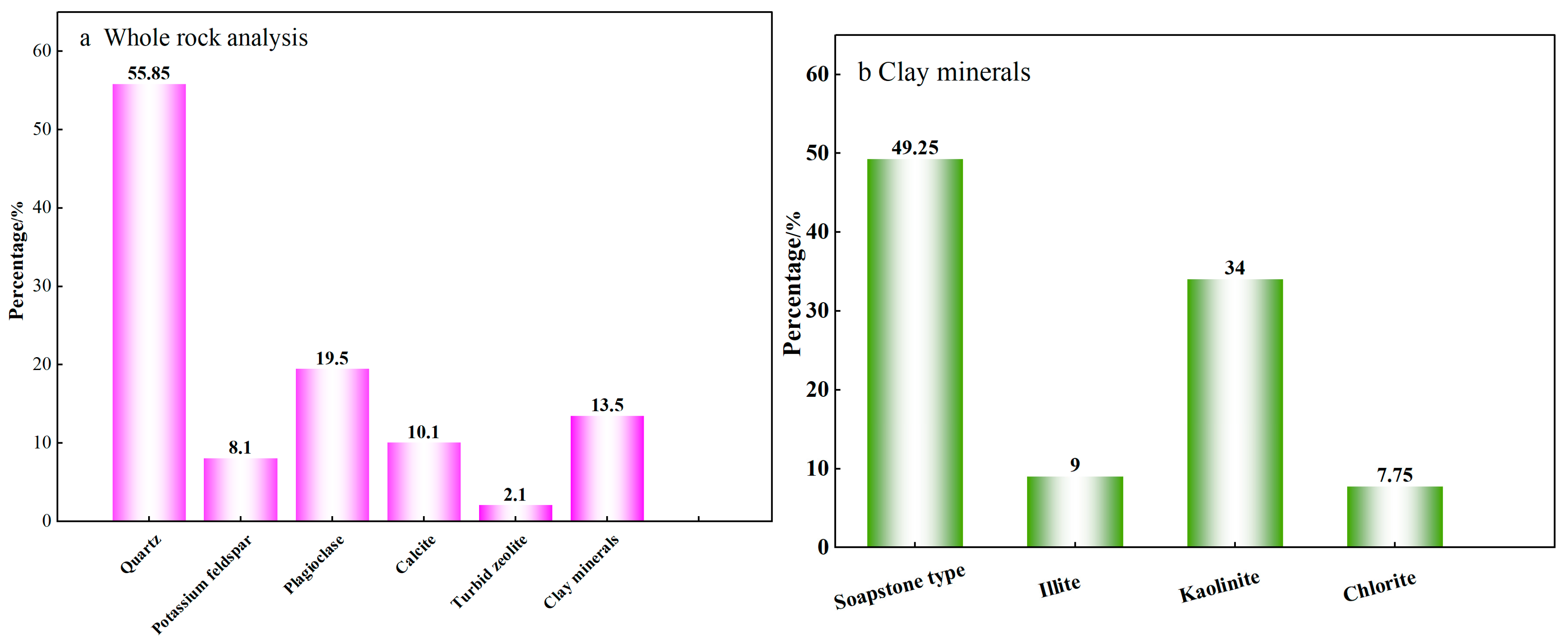
To provide a clearer comparison of the proportions of different rock minerals in the reservoir of the study area, a histogram of the rock-mineral types in the reservoir is shown in Figure 4.
The experimental results indicate that quartz has the highest content among the minerals, with an average value of 55.85%. This is followed by feldspar minerals, with potassium feldspar making up 8.1% and plagioclase making up 19.5%. The clay mineral content is also relatively high, averaging 13.5%. The clay minerals are primarily composed of montmorillonite (49.52%) and interlayered kaolinite (34%), with sheet-like chlorite (7.75%) as the second most abundant. These parameters reflect the typical mineral composition of low-permeability sandstones in the samples selected for this experiment. They are essential for analyzing the pore–throat size and connectivity, providing a foundation for determining the activation boundaries of pore–throats at different scales in subsequent studies.

3.2. Waterflood to CO2 Gas Injection: Pore–Throat Activation Boundaries

Waterflood followed by CO2 gas injection experiments were performed on core samples (1 to 6). Using the NMR T2 spectra of these six core samples, the crude oil recovery under different injection methods was quantitatively calculated. The calculation results are presented in Table 4. The oil recovery efficiency parameters provide a comprehensive reflection of the connectivity and seepage capacity of pore–throats at various scales.
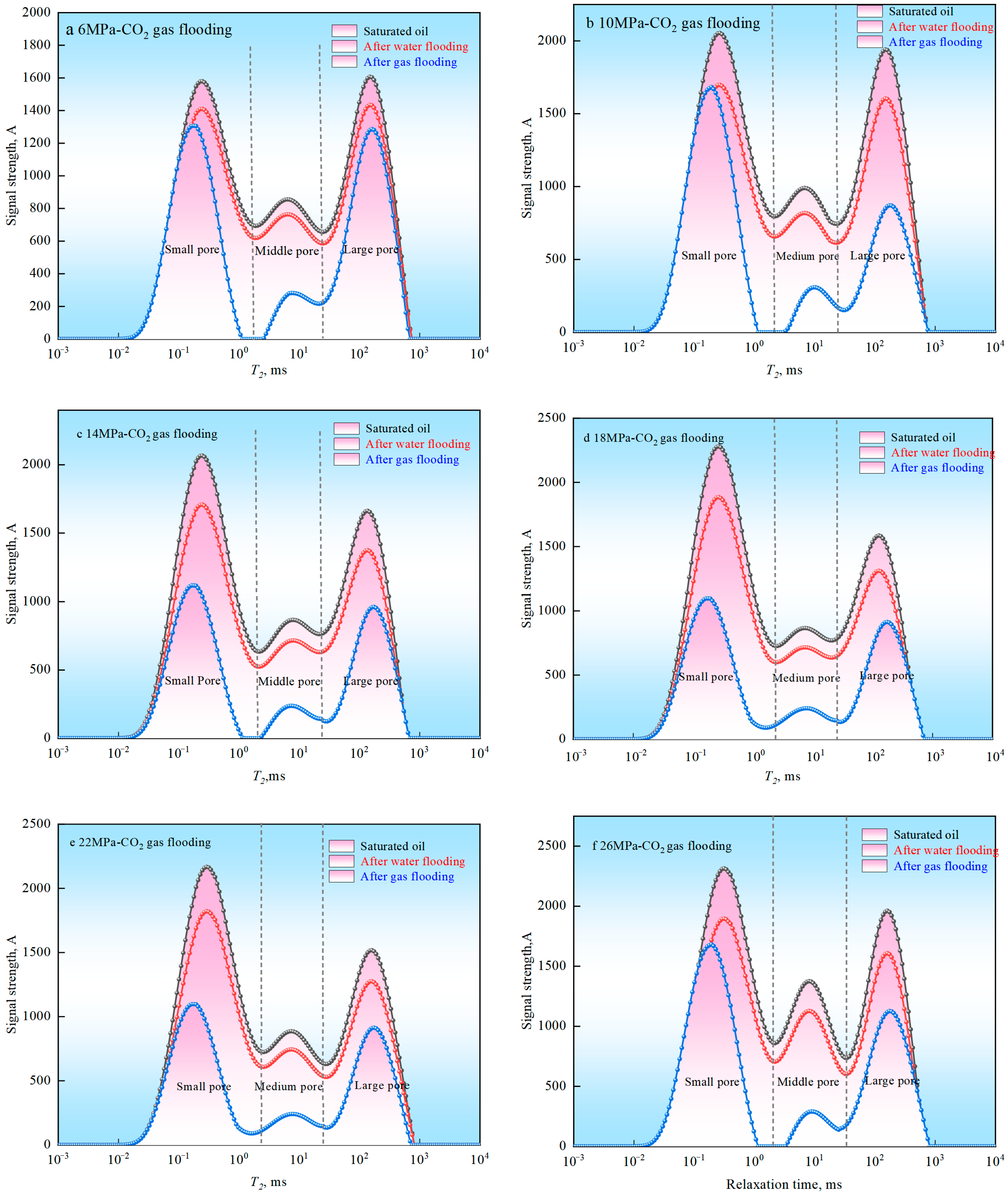
Figure 5 presents the NMR T2 spectra curves for waterflooding and CO2 gas injection at various pressures. For core sample 1, after waterflooding, the injection of 6 MPa CO2 increased the overall crude oil recovery by 23.18%, reaching 33.89%. For core sample 2, following waterflooding, the injection of 10 MPa CO2 increased the crude oil recovery by 29.69%, reaching 41.96%. For core sample 3, after waterflooding, CO2 injection at 14 MPa enhanced crude oil recovery in small pores by 19.82%, reaching 31.05%, while in large pores, the recovery increased by 38.62%, reaching 56.88%. The overall recovery compared to waterflooding increased by 34.32%, reaching 49.86%. For core sample 4, after waterflooding, the injection of 18 MPa CO2 raised the crude oil recovery in small pores by 31.80%, reaching 46.15%, and in large pores by 34.76%, reaching 54.85%. The overall recovery increased by 31.57%, reaching 50.78%, compared to the recovery after waterflooding.
For core sample 5, after waterflooding, the injection of 22 MPa CO2 increased crude oil recovery in small pores by 33.14%, reaching 43.43%, and in large pores by 29.64%, reaching 55.2%. The injection of CO2 significantly increased oil recovery in the core’s small pores. Compared to waterflooding, the overall crude oil recovery increased by 31.04%, reaching 49.87%. For core sample 6, following waterflooding, the injection of 26 MPa CO2 resulted in a 35.25% increase in recovery in small pores, reaching 57.74%, while recovery in large pores increased by 6.55%, reaching 16.41%. CO2 injection significantly enhanced oil recovery in the small pores of the core. Compared to waterflooding, the overall crude oil recovery increased by 31.65%, reaching 46.82%. By comparing the NMR T2 spectra curves for waterflooding, followed by CO2 injection at different pressures, it is evident that CO2 injection at 18 MPa yields the highest final recovery, with the highest oil recovery in both small and large pores and the best oil recovery efficiency.
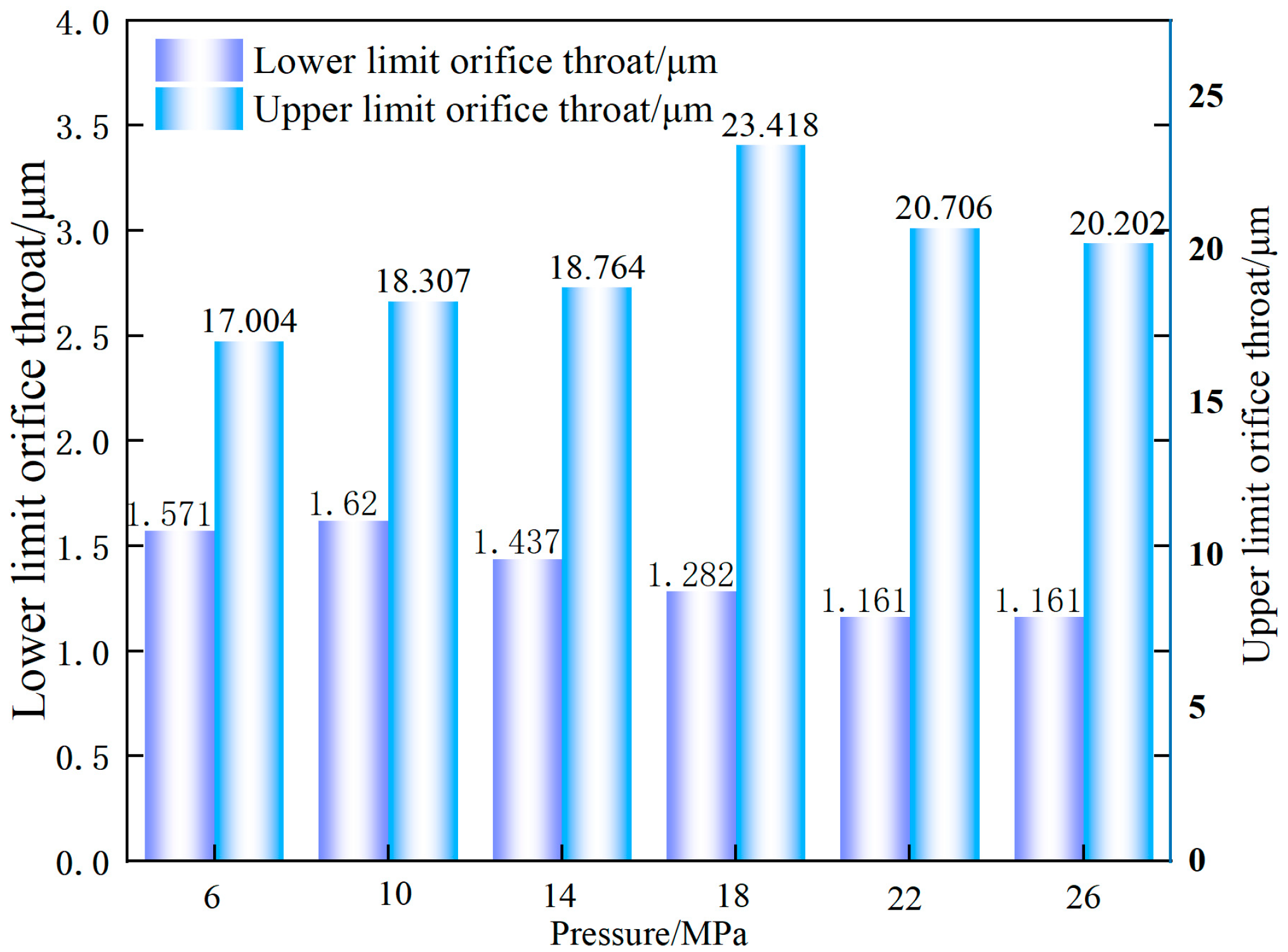
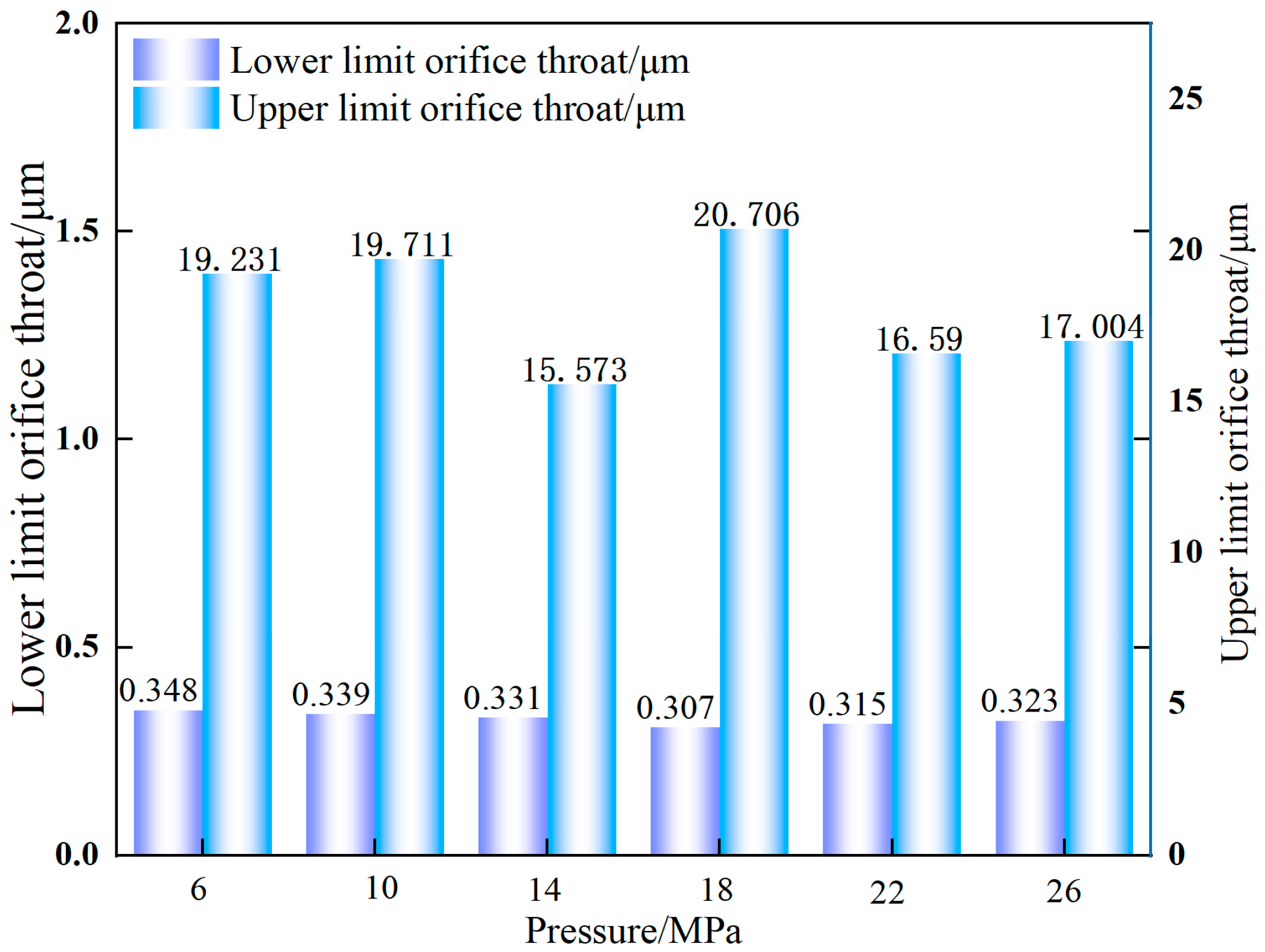
The calculation results for the pore–throat activation radii and crude oil recovery in the Wutonggou Formation of the Shaqiu 5 area are presented in Table 5. The minimum lower limit for activation by waterflooding is 1.161 μm, while the maximum upper limit is 23.418 μm. The average lower limit is 1.372 μm, and the average upper limit is 19.733 μm. For waterflooding followed by CO2 gas injection, the minimum lower limit is 0.307 μm, and the maximum upper limit is 20.706 μm. The average lower limit is 0.327 μm, and the average upper limit is 18.172 μm. Waterflooding primarily activates pore–throat radii between 1.372 μm and 19.733 μm, whereas CO2 gas injection activates pore–throats from 0.327 μm to 18.172 μm. As shown in Figure 6 and Figure 7, the activation boundaries for CO2 gas injection are higher than those for waterflooding, indicating a broader activation range and greater potential to enter smaller pore spaces and displace crude oil.

3.3. Contribution of Pore–Throats at Different Scales

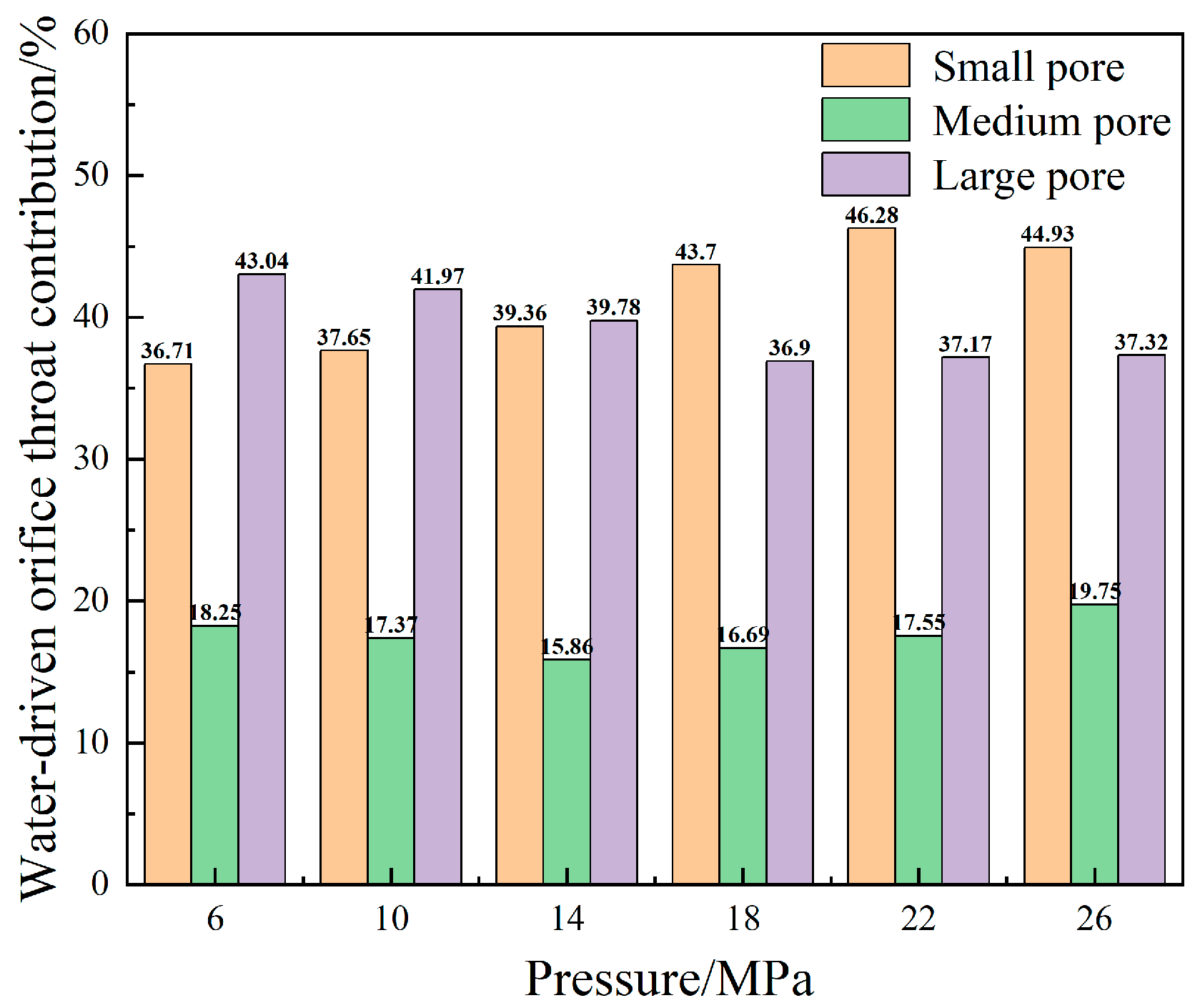
The contribution results for the Wutonggou Formation in the Shaqiu 5 area are shown in Table 6. It can be observed that during waterflooding, the contribution of large pores gradually decreases within the pressure range of 6 MPa to 18 MPa, from 43.04% to 36.60%, a reduction of 6.44%. At 22 MPa and 26 MPa, the contribution slightly increases. The contribution of medium pores is higher at lower pressures but decreases at higher pressures. The contribution of medium pores shows a pattern of first decreasing and then increasing within the pressure range of 6 MPa to 26 MPa. It reaches the lowest point of 15.86% at 14 MPa and then gradually rises to 19.75%. This is because medium pores are more easily displaced by water at higher pressures. For small pores, the contribution gradually increases from 38.71% to 46.70% within the pressure range of 6 MPa to 18 MPa and then decreases at 22 MPa and 26 MPa. This indicates that small pores contribute more to waterflooding at medium pressures, as they are more easily displaced by water at lower pressures. As shown in Figure 8, during the waterflooding process, the contribution of large pore–throats is initially higher. As the pressure increases, the contribution stabilizes, while the contribution of medium and small pore–throats gradually increases. Initially, the overall pore–throat contribution is uneven, but it becomes more uniform later in the process.
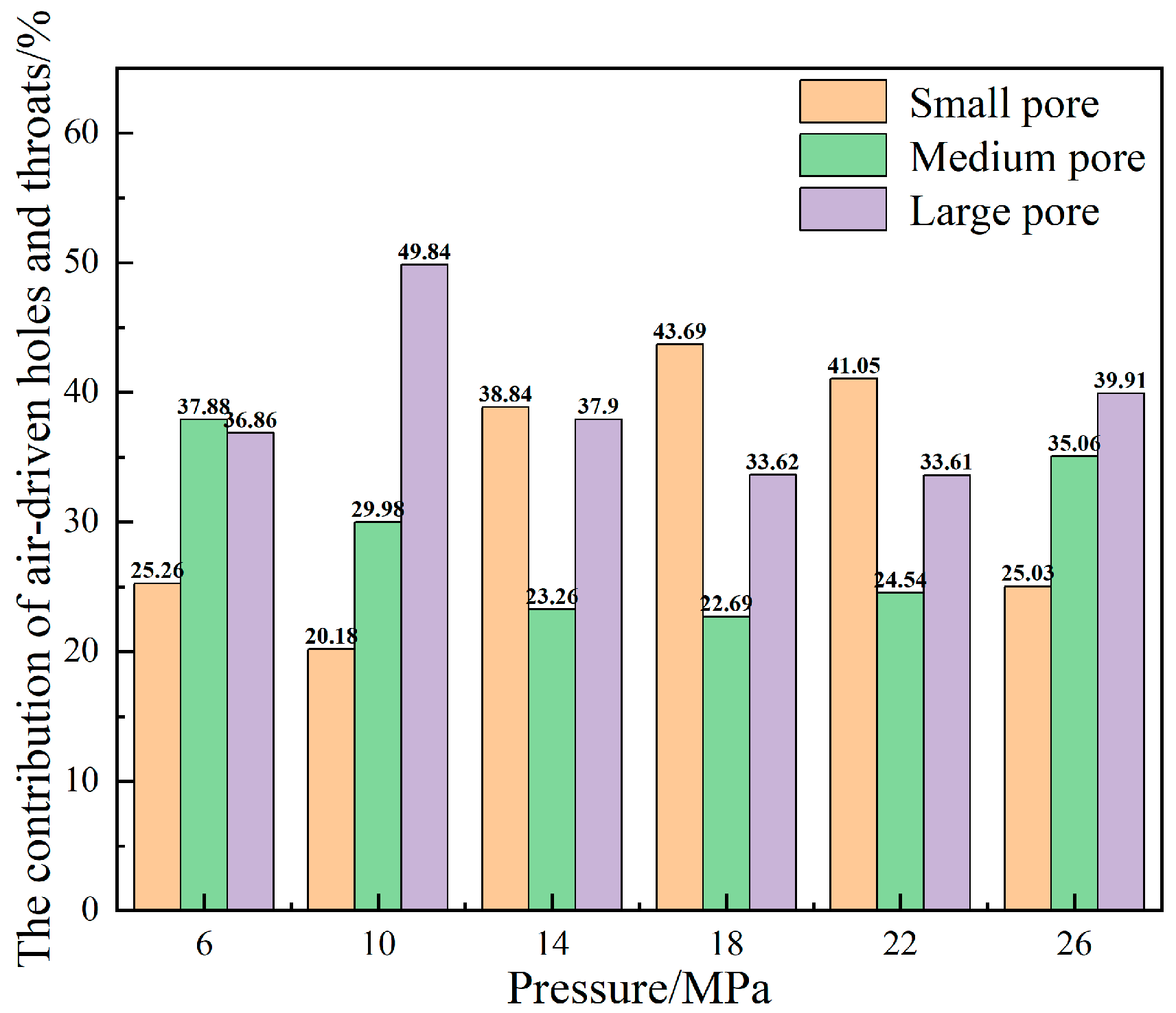
In the transition from waterflooding to gas injection in the Wutonggou Formation of the Shaqiu 5 area, the contribution of large pores first increases and then decreases within the pressure range of 6 MPa to 22 MPa. It reaches the maximum contribution of 49.84% at 10 MPa, followed by a slight increase at 22 MPa and 26 MPa. Large pores contribute more to gas injection at lower pressures, but their contribution decreases at higher pressures. The contribution of medium pores shows a trend of first decreasing and then increasing within the pressure range of 6 MPa to 26 MPa. It reaches the lowest point of 22.69% at 22 MPa, and then gradually increases to 35.06%. This may be due to the fact that medium pores are more easily displaced by gas in a finger-like form at higher pressures. The contribution of small pores significantly increases between 6 MPa and 14 MPa, from 25.26% to 38.84%, a 53.7% increase. However, the contribution decreases between 18 MPa and 26 MPa, suggesting that small pores contribute more to gas injection at medium pressures. As shown in Figure 9, during the transition from waterflooding to gas injection, the contribution of large pore–throats remains high as pressure increases, while the contributions of medium and small pore–throats gradually rise, leading to a more uniform distribution of overall pore–throat contributions. This trend helps improve the recovery factor of the reservoir.

4. Discussion

4.1. The Degree of Utilization of Water-Driven to CO2 and Gas-Flooding Crude Oil

As shown in Figure 6 and Figure 7, through the experimental results of water flooding and CO2 flooding after water flooding, it is concluded that when the injection pressure increases from 6 MPa to 26MPa, the overall utilization rate of water flooding reaches a maximum of 19.21%, the utilization rate of small pores reaches a maximum of 22.49%, and the utilization rate of medium pore and large pore reaches a maximum of 25.56%. The overall utilization rate of CO2 displacement reached a maximum of 33.89%, the utilization rate of small pores reached a maximum of 57.74%, and the utilization rates of medium pores and large pores reached a maximum of 56.88%. The utilization degree of water flooding on pores of different diameters is not high, and the utilization degree of medium and large pores is slightly higher than that of small pores, which is in line with the characteristic that water flooding usually can more easily enter larger pores. The utilization degree of CO2 flooding in the overall structure and in small pores, medium pores and large pores is much higher than that of water flooding, especially in small pores where the utilization degree is significantly increased.
The interfacial tension between CO2 and crude oil is relatively low. After CO2 injection, it can be miscible or nearly miscible with crude oil under high pressure, significantly reducing the viscosity of crude oil. This viscosity reduction effect enhances the fluidity of crude oil, enabling the crude oil in small pores to be utilized more effectively, thereby significantly increasing the overall utilization rate.
By comparing the data in Figure 8 with that in Figure 9, it can be seen that the maximum range for water drive is 1.106 μm to 20.706 μm, and the maximum range for CO2 drive is 0.303 μm to 20.706 μm. The upper and lower limits of water CO2 drive are higher and have a wider range than those of water drive. It indicates that CO2 is more likely to extract crude oil from smaller pores than water flooding, thereby enhancing the crude oil recovery rate.

4.2. CO2 Microscopic Oil Displacement Mechanism

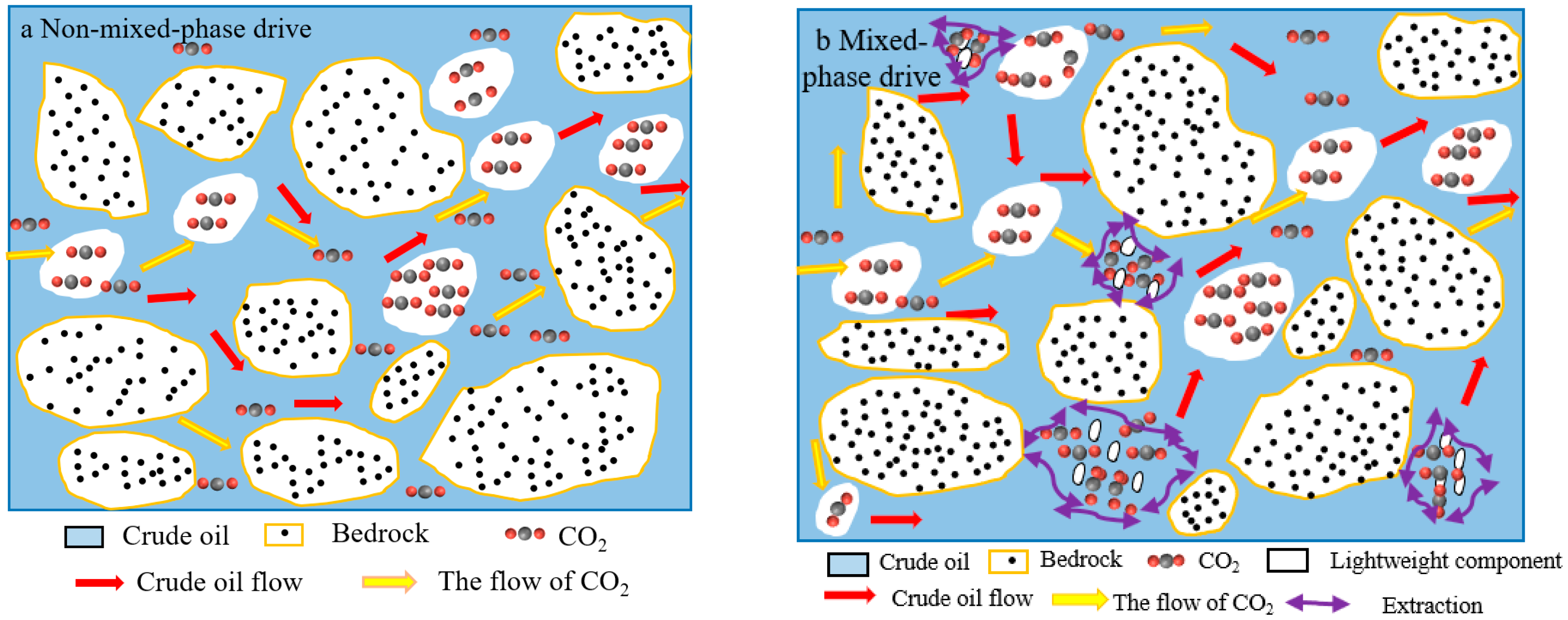
During CO2 displacement, the non-wetting phase characteristic causes CO2 to preferentially occupy large pore–throats [36]. At low injection volumes, capillary resistance is high, limiting oil recovery. As the injection volume increases, the swept volume expands and the oil recovery efficiency improves (Figure 10). In high-permeability cores, pore–throat connectivity is good, leading to broad CO2 sweep and low residual oil saturation, with high oil recovery efficiency when the optimal injection volume is large [37,38,39,40]. In low-permeability cores, dissolution pores dominate, resulting in poor sweep efficiency and wide distribution of residual oil, leading to higher saturation. Heterogeneity causes CO2 to form dominant flow channels in large pore–throats, while oil recovery in small pore–throats remains low, creating a phenomenon where large pore clusters of residual oil coexist with small pore oil droplets.
Injection pressure significantly influences the oil displacement mechanism: At low pressures, the displacement is non-miscible, with CO2 primarily diffusing along large pores, leading to insufficient oil recovery in small pores [41,42]. The recovery is mainly dependent on oil dissolution and oil swelling. Once the pressure exceeds the minimum miscibility pressure, CO2 enters smaller pores, extracting light hydrocarbons and reducing interfacial tension, significantly improving sweep efficiency under miscible displacement. When the pressure exceeds the miscibility pressure, fluid mass transfer is enhanced, and the recovery rate reaches its peak.

5. Conclusions

This study analyzes core samples from the Wutonggou Formation in the Shaqiu 5 Well Area of the Shanan Oilfield. By combining low-field nuclear magnetic resonance (NMR) technology with CT experiments, the pore–throat activation boundaries and contributions in low-permeability sandstone reservoirs under varying injection conditions are quantitatively characterized. The key findings are as follows:
(1)
At an injection pressure of 6.0 MPa, the lower limit of pore–throat mobilization is 0.348 μm; at 10.0 MPa, it is 0.339 μm; at 14.0 MPa, it is 0.331 μm; and at 18.0 MPa, it is 0.307 μm. Higher injection pressures result in a greater overall degree of pore–throat mobilization in the core.
(2)
During water flooding, large pore throats initially exhibit the highest contribution rate, reaching 43.04%. As pressure increases, the contribution rate gradually stabilizes at 22 MPa, while the contribution rates of medium and small pore throats progressively increase. Initially, the overall pore–throat contribution shows significant heterogeneity, which tends to homogenize in the later stages. During the transition from water flooding to CO2 flooding, the contribution rate of large pore throats remains high, peaking at 49.84% under 10 MPa pressure. Meanwhile, the contribution rates of medium and small pore throats gradually increase, leading to a more uniform distribution of overall pore–throat contributions, which aids in enhancing oil recovery.
(3)
In CO2 flooding, CO2 dissolves into the crude oil, causing volume expansion and viscosity reduction, accompanied by mass transfer and extraction processes. Injection pressure significantly influences these mechanisms. During the immiscible phase, the mobilization extent and range are limited, whereas miscibility substantially enhances both mobilization extent and range. In field applications, controlling the injection pressure to achieve miscible conditions with CO2 can effectively improve crude oil recovery.

Author Contributions

Methodology, X.L.; Software, W.M.; Formal analysis, L.G.; Investigation, W.G.; Data curation, L.G.; Writing—original draft, L.Z.; Writing—review & editing, C.W. All authors have read and agreed to the published version of the manuscript.

Funding

This research was supported by the National Natural Science Foundation of China (No. 52374041), the Key Research and Development Projects of Shaanxi Province (No. 2023-YBGY-306), and the Key Research Project of Shaanxi Provincial Department of Education (No. 22JY054).

Data Availability Statement

The original contributions presented in this study are included in the article. Further inquiries can be directed to the corresponding author.

Conflicts of Interest

Authors Xingwang Luo, Wenling Ma, Wenying Gao, Liqun Gao and Long Zhang were employed by the PetroChina Xinjiang Oilfield Company. The remaining author declare that the research was conducted in the absence of any commercial or financial relationships that could be construed as a potential conflict of interest.

References

  1. Pang, X. Hydrocarbon Accumulation Depth Limit in the WPS. In Quantitative Evaluation of the Whole Petroleum System: Hydrocarbon Thresholds and Their Application; Springer Nature: Singapore, 2023; pp. 131–157. [Google Scholar]
  2. Wang, X.; Qiao, X.; Mi, N.; Wang, R. Technologies for the Benefit Development of Low-Permeability Tight Sandstone Gas Reservoirs in the Yan’an Gas Field, Ordos Basin. Nat. Gas Ind. B 2019, 6, 272–281. [Google Scholar] [CrossRef]
  3. Ji, B.; Fang, J. An Overview of Efficient Development Practices at Low Permeability Sandstone Reservoirs in China. Energy Geosci. 2023, 4, 100179. [Google Scholar] [CrossRef]
  4. Shanley, K.W.; Cluff, R.M.; Robinson, J.W. Factors Controlling Prolific Gas Production from Low-Permeability Sandstone Reservoirs: Implications for Resource Assessment, Prospect Development, and Risk Analysis. AAPG Bull. 2004, 88, 1083–1121. [Google Scholar] [CrossRef]
  5. Wei, J.; Zhang, D.; Zhang, X.; Zhao, X.; Zhou, R. Experimental Study on Water Flooding Mechanism in Low Permeability Oil Reservoirs Based on Nuclear Magnetic Resonance Technology. Energy 2023, 278, 127960. [Google Scholar] [CrossRef]
  6. Wang, J.; Wu, S.; Li, Q.; Zhang, J.; Guo, Q. Characterization of the Pore-Throat Size of Tight Oil Reservoirs and Its Control on Reservoir Physical Properties: A Case Study of the Triassic Tight Sandstone of the Sediment Gravity Flow in the Ordos Basin, China. J. Pet. Sci. Eng. 2020, 186, 106701. [Google Scholar] [CrossRef]
  7. Dong, X.; Meng, X.; Pu, R. Impacts of Mineralogy and Pore Throat Structure on the Movable Fluid of Tight Sandstone Gas Reservoirs in Coal Measure Strata: A Case Study of the Shanxi Formation along the Southeastern Margin of the Ordos Basin. J. Pet. Sci. Eng. 2023, 220, 111257. [Google Scholar] [CrossRef]
  8. Razavifar, M.; Mukhametdinova, A.; Nikooee, E.; Burukhin, A.; Rezaei, A.; Cheremisin, A.; Riazi, M. Rock Porous Structure Characterization: A Critical Assessment of Various State-of-the-Art Techniques. Transp. Porous Media 2021, 136, 431–456. [Google Scholar] [CrossRef]
  9. Umeobi, H.I.; Li, Q.; Xu, L.; Tan, Y.; Onyekwena, C.C. Flow and Structural Analysis of Sedimentary Rocks by Core Flooding and Nuclear Magnetic Resonance: A Review. Rev. Sci. Instrum. 2021, 92, 71501. [Google Scholar] [CrossRef]
  10. Wang, Y.; Chang, T.; Zhou, J.; Wu, J.; Liu, S. Remaining Oil Distribution Characteristics in Sandy Conglomerate Reservoirs during CO2-WAG Flooding: Insights from Nuclear Magnetic Resonance (NMR) Technology. Processes 2025, 13, 2872. [Google Scholar] [CrossRef]
  11. Mondal, I.; Singh, K.H. Petrophysical Insights into Pore Structure in Complex Carbonate Reservoirs Using NMR Data. Pet. Res. 2024, 9, 439–450. [Google Scholar] [CrossRef]
  12. Zhang, N.; Wang, X.; Wang, S.; Wang, H. Pore Structure Analysis of Tight Sandstone Based on Nuclear Magnetic Resonance and Fractal Techniques. Acta Geophysica. 2025, 1–16. [Google Scholar] [CrossRef]
  13. Zhang, F.; Jiang, Z.; Sun, W.; Li, Y.; Zhang, X.; Zhu, L.; Wen, M. A Multiscale Comprehensive Study on Pore Structure of Tight Sandstone Reservoir Realized by Nuclear Magnetic Resonance, High Pressure Mercury Injection and Constant-Rate Mercury Injection Penetration Test. Mar. Pet. Geol. 2019, 109, 208–222. [Google Scholar] [CrossRef]
  14. Shao, X.; Pang, X.; Jiang, F.; Li, L.; Huyan, Y.; Zheng, D. Reservoir Characterization of Tight Sandstones Using Nuclear Magnetic Resonance and Incremental Pressure Mercury Injection Experiments: Implication for Tight Sand Gas Reservoir Quality. Energy Fuels 2017, 31, 10420–10431. [Google Scholar] [CrossRef]
  15. Xu, H.; Fan, Y.; Hu, F.; Li, C.; Yu, J.; Liu, Z.; Wang, F. Characterization of Pore Throat Size Distribution in Tight Sandstones with Nuclear Magnetic Resonance and High-Pressure Mercury Intrusion. Energies 2019, 12, 1528. [Google Scholar] [CrossRef]
  16. Wang, Y.; Zhu, Y.; Chen, S.; Li, W. Characteristics of the nanoscale pore structure in Northwestern Hunan shale gas reservoirs using field emission scanning electron microscopy, high-pressure mercury intrusion, and gas adsorption. Energy Fuels 2014, 28, 945–955. [Google Scholar] [CrossRef]
  17. Zhu, Y.; Yang, Y.; Zhang, Y.; Liu, L.; Li, H.; Sang, Q. Heterogeneity and permeability estimation of pore-throat structure at different scales in deep tight sandstone reservoirs: A case study of Paleogene Hetaoyuan Formation in Anpeng area, Nanxiang Basin, China. PLoS ONE 2024, 19, e0314799. [Google Scholar] [CrossRef]
  18. Wang, Z.; Ren, Z.; Li, P.; Liu, J. Microscopic Pore-Throat Structure Variability in Low-Permeability Sandstone Reservoirs and Its Impact on Water-Flooding Efficacy: Insights from the Chang 8 Reservoir in the Maling Oilfield, Ordos Basin, China. Energy Explor. Exploit. 2024, 42, 1554–1579. [Google Scholar] [CrossRef]
  19. Hao, Y.; Li, Z.; Su, Y.; Kong, C.; Chen, H.; Meng, Y. Experimental Investigation of CO2 Storage and Oil Production of Different CO2 Injection Methods at Pore-Scale and Core-Scale. Energy 2022, 254, 124349. [Google Scholar] [CrossRef]
  20. Liu, X.; Lai, J.; Fan, X.; Shu, H.; Wang, G.; Ma, X.; Liu, M.; Guan, M.; Luo, Y. Insights in the Pore Structure, Fluid Mobility and Oiliness in Oil Shales of Paleogene Funing Formation in Subei Basin, China. Mar. Pet. Geol. 2020, 114, 104228. [Google Scholar] [CrossRef]
  21. Zhao, R.; Xue, H.; Lu, S.; Li, J.; Tian, S.; Wang, M.; Dong, Z. Multi-Scale Pore Structure Characterization of Lacustrine Shale and Its Coupling Relationship with Material Composition: An Integrated Study of Multiple Experiments. Mar. Pet. Geol. 2022, 140, 105648. [Google Scholar] [CrossRef]
  22. Bai, Y.; Pu, W.; Jin, X.; Shen, C.; Ren, H. Review of the Micro and Macro Mechanisms of Gel-Based Plugging Agents for Enhancing Oil Recovery of Unconventional Water Flooding Oil Reservoirs. J. Mol. Liq. 2024, 399, 124318. [Google Scholar] [CrossRef]
  23. Chen, M.; Dai, J.; Liu, X.; Kuang, Y.; Wang, Z.; Gou, S.; Qin, M.; Li, M. Effect of Displacement Rates on Fluid Distributions and Dynamics during Water Flooding in Tight Oil Sandstone Cores from Nuclear Magnetic Resonance (NMR). J. Pet. Sci. Eng. 2020, 184, 106588. [Google Scholar] [CrossRef]
  24. Xi, K.; Cao, Y.; Li, K.; Liu, K.; Zhu, R.; Haile, B.G. Insight into Pore-Throat Size Distribution and the Controls on Oil Saturation of Tight Sandstone Reservoirs Using Nuclear Magnetic Resonance Parameters: A Case Study of the Lower Cretaceous Quantou Formation in the Southern Songliao Basin, China. AAPG Bull. 2020, 104, 2351–2377. [Google Scholar] [CrossRef]
  25. Wei, J.; Zhou, X.; Zhou, J.; Li, J.; Wang, A. Recovery Efficiency of Tight Oil Reservoirs with Different Injection Fluids: An Experimental Investigation of Oil-Water Distribution Feature. J. Pet. Sci. Eng. 2020, 195, 107678. [Google Scholar] [CrossRef]
  26. Yang, Y.; Liu, S. Review of Shale Gas Sorption and Its Models. Energy Fuels 2020, 34, 15502–15524. [Google Scholar] [CrossRef]
  27. Hu, J.; Yang, S.; Yang, K.; Deng, H.; Wang, M.; Li, J.; Gao, X. Enhanced Gas Recovery Coupled with CO2 Sequestration in Tight Sandstone Reservoirs with Different Pore-Throat Structures. Energy Fuels 2024, 38, 12005–12023. [Google Scholar] [CrossRef]
  28. Zhang, M.; Li, B.; Zheng, L.; Xin, Y.; Xing, W.; Li, Z. Experimental Study on CO2 Flooding within a Fractured Low-Permeability Reservoir: Impact of High Injection Rate. Fuel 2025, 384, 134002. [Google Scholar] [CrossRef]
  29. Krakowska, P.; Puskarczyk, E.; Jędrychowski, M.; Habrat, M.; Madejski, P.; Dohnalik, M. Innovative characterization of tight sandstones from Paleozoic basins in Poland using X-ray computed tomography supported by nuclear magnetic resonance and mercury porosimetry. J. Pet. Sci. Eng. 2018, 166, 389–405. [Google Scholar] [CrossRef]
  30. Golsanami, N.; Sun, J.; Zhang, Z. A review on the applications of the nuclear magnetic resonance (NMR) technology for investigating fractures. J. Appl. Geophys. 2016, 133, 30–38. [Google Scholar] [CrossRef]
  31. Yang, Y.; Xiao, W.; Bernabe, Y.; Xie, Q.; Wang, J.; He, Y.; Li, M.; Chen, M.; Ren, J.; Zhao, J.; et al. Effect of Pore Structure and Injection Pressure on Waterflooding in Tight Oil Sandstone Cores Using NMR Technique and Pore Network Simulation. J. Pet. Sci. Eng. 2022, 217, 110886. [Google Scholar] [CrossRef]
  32. Siavashi, J.; Najafi, A.; Sharifi, M.; Fahimpour, J.; Shabani, M.; Liu, B.; Liu, K.; Yan, J.; Ostadhassan, M. An Insight into Core Flooding Experiment via NMR Imaging and Numerical Simulation. Fuel 2022, 318, 123589. [Google Scholar] [CrossRef]
  33. Elsayed, M.; Isah, A.; Hiba, M.; Hassan, A.; Al-Garadi, K.; Mahmoud, M.; El-Husseiny, A.; Radwan, A.E. A Review on the Applications of Nuclear Magnetic Resonance (NMR) in the Oil and Gas Industry: Laboratory and Field-Scale Measurements. J. Pet. Explor. Prod. Technol. 2022, 12, 2747–2784. [Google Scholar] [CrossRef]
  34. He, X.; Wang, Y.; Zheng, Y.; Zhang, W.; Dai, Y.; Zou, H. Pore-Scale Gas–Water Two-Phase Flow Mechanisms for Underground Hydrogen Storage: A Mini Review of Theory, Experiment, and Simulation. Appl. Sci. 2025, 15, 5657. [Google Scholar] [CrossRef]
  35. Liu, G.; Xie, S.; Tian, W.; Wang, J.; Li, S.; Wang, Y.; Yang, D. Effect of Pore-Throat Structure on Gas-Water Seepage Behaviour in a Tight Sandstone Gas Reservoir. Fuel 2022, 310, 121901. [Google Scholar] [CrossRef]
  36. Liu, Q.; Li, J.; Liang, B.; Sun, W.; Liu, J.; Lei, Y. Microscopic flow of CO2 in complex pore structures: A recent 10-year review. Sustainability 2023, 15, 12959. [Google Scholar] [CrossRef]
  37. Milad, M.; Junin, R.; Sidek, A.; Imqam, A.; Tarhuni, M. Huff-n-puff technology for enhanced oil recovery in shale/tight oil reservoirs: Progress, gaps, and perspectives. Energy Fuels 2021, 35, 17279–17333. [Google Scholar] [CrossRef]
  38. Song, Z.; Li, Y.; Song, Y.; Bai, B.; Hou, J.; Song, K.; Jiang, A.; Su, S. A critical review of CO2 enhanced oil recovery in tight oil reservoirs of North America and China. In Proceedings of the SPE Asia Pacific Oil and Gas Conference and Exhibition, Online, 17–19 November 2020; SPE: Richardson, TX, USA, 2020; p. D011S005R002. [Google Scholar]
  39. Fu, G.T.; Zheng, Z.G.; Zhang, Y.Q.; Dai, Y.T.; Li, D.C.; Zhan, J.; Gao, C.N.; Fan, L.W. High-Pressure CO2 Solubility in Crude Oil and CO2 Miscibility Effects on Oil Recovery Performance in Low-Permeability Reservoirs. Energy Fuels 2024, 38, 23433–23446. [Google Scholar] [CrossRef]
  40. Li, T.; Wang, S.; Li, J.; Dong, K.; Wen, Z. Experimental study of pore-scale flow mechanism of immiscible CO2 flooding under in-situ temperature-pressure coupling conditions. PLoS ONE 2025, 20, e0321527. [Google Scholar] [CrossRef]
  41. Zhang, L.; Sun, T.; Han, X.; Shi, J.; Zhang, J.; Tang, H.; Yu, H. Feasibility of advanced CO2 injection and well pattern adjustment to improve oil recovery and CO2 storage in tight-oil reservoirs. Processes 2023, 11, 3104. [Google Scholar] [CrossRef]
  42. Jia, Y.; Ouyang, J.; Xu, F.; Gao, X.; Zhang, J.; Liu, S.; Li, D. Evaluating Nitrogen Gas Injection Performance for Enhanced Oil Recovery in Fractured Basement Complex Reservoirs: Experiments and Modeling Approaches. Processes 2025, 13, 326. [Google Scholar] [CrossRef]
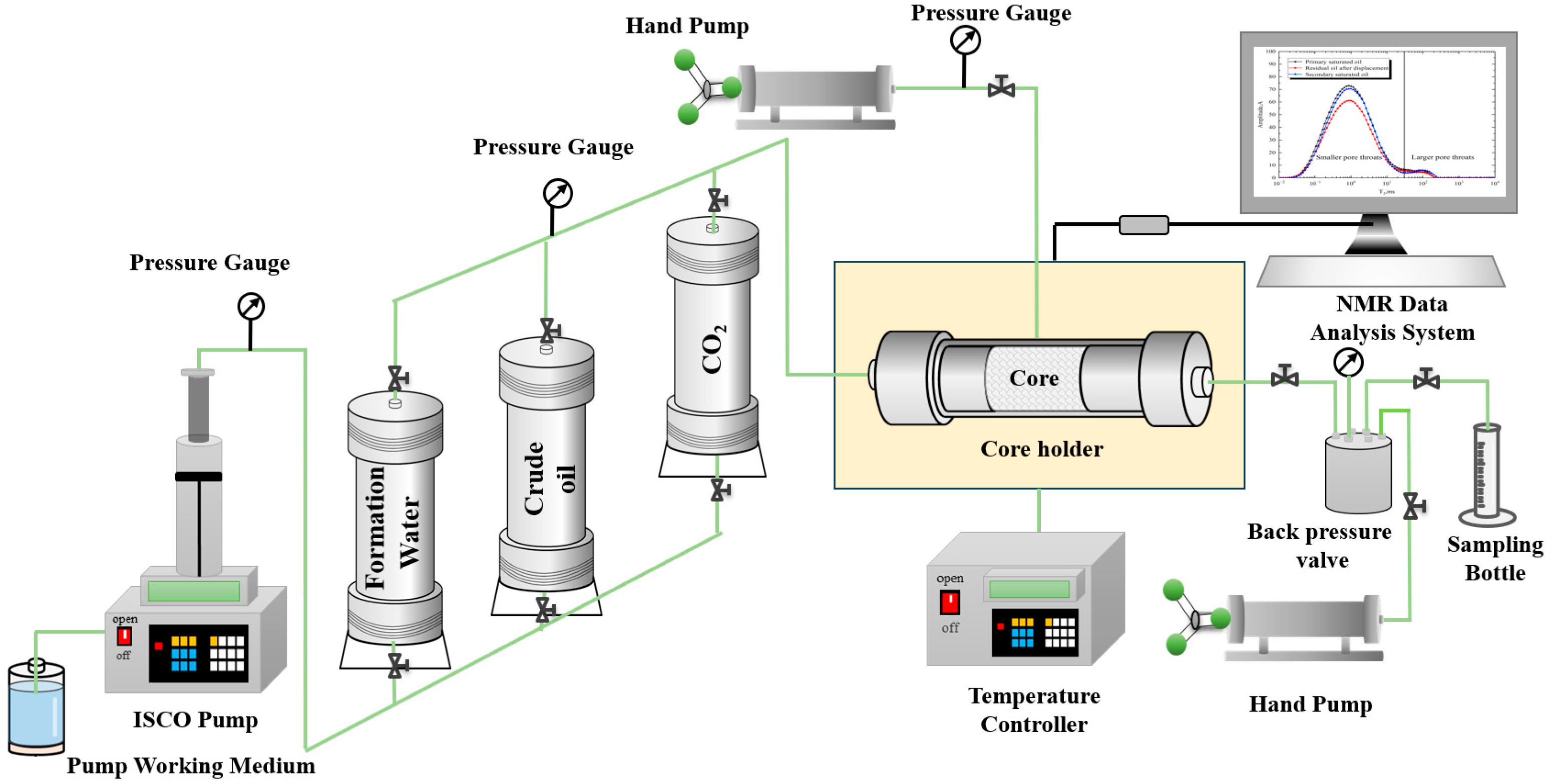
Figure 1. Schematic diagram of the experimental setup.
Processes 13 03676 g001
Figure 2. CT testing with nuclear magnetic T2 spectroscopy aperture throat radius conversion. (a) Instantaneous frequency and cumulative frequency diagrams of the orifice throat radius. (b) Pore radius distribution frequency diagram based on T2 relaxation time. (c) The cumulative distribution characteristic diagram of signal strength during T2 relaxation time. (d) The pore radius power function fitting model of T2 relaxation time.
Processes 13 03676 g002
Figure 3. Principle of calculation of contribution in 0.001~1 ms orifice throat.
Processes 13 03676 g003
Figure 4. Histogram of lithology and mineral types in the Wutonggou formation of the study area.
Processes 13 03676 g004
Figure 5. NMR curves of water and CO2 flooding core samples.
Processes 13 03676 g005
Figure 6. Scale of pore–throat contribution of water flooding core.
Processes 13 03676 g006
Figure 7. Scale of pore–throat contribution from water-to-gas flooding core.
Processes 13 03676 g007
Figure 8. Scale of water flooding core pore–throat mobilization.
Processes 13 03676 g008
Figure 9. Scale of water-to-gas CO2 pore and throat mobilization.
Processes 13 03676 g009
Figure 10. Microscopic oil displacement mechanism of CO2 flooding.
Processes 13 03676 g010
Table 1. Information core samples.
Core IDDepth/mStratigraphyLength/cmDiameter/cmPorosity/%Permeability × 10−3 μm2
11742.2P3wt13−25.052.5113.550.94
21952.3P3wt13−25.032.5014.110.89
32322.1P3wt13−25.022.5213.712.85
42311.3P3wt13−25.002.5113.861.26
51895.6P3wt13−25.032.5013.891.18
62031.1P3wt13−25.042.5013.871.09
Table 2. X–diffraction whole rock analysis of core samples.
NumberFormationMineral Content (%)
QuartzK-FeldsparPlagioclaseLaumontiteClay Minerals
1P3wt13−262.65.217.1/15.1
2P3wt13−242.123.021.4/13.5
3P3wt13−260.52.415.5/11.5
4P3wt13−258.21.824.02.113.9
Table 3. Relative clay mineral content of core samples.
NumberFormationRelative Content of Clay Minerals (%)
SItKC
1P3wt13−2515359
2P3wt13−2791533
3P3wt13−22211598
4P3wt13−24553911
S: Soapstone type; It: Illite; K: Kaolinite; C: Chlorite.
Table 4. Crude oil recovery from post-water-flooding cores at different CO2 injection pressures.
Core Sample IDDisplacement MediumPermeability
/×10−3 μm2
Porosity
/%
Liquid Displacement Pressure/MPaGas Displacement Pressure/MPaWaterflood Efficiency
/%
Gas Injection Efficiency
/%
Total Oil Recovery Efficiency
/%
1CO20.9413.556610.7133.8944.60
2CO20.8914.11101012.2741.9654.23
3CO22.8513.71141415.5449.8665.40
4CO21.2613.86181819.2150.7869.99
5CO21.1813.89222218.8349.8768.70
6CO21.0913.87262615.1746.8261.99
Table 5. Radius of water-to-CO2-gas flooding borehole throat mobilization and degree of crude oil mobilization.
Core Sample IDDisplacement MediumDisplacement Pressure/MPaPore–Throat Activation Radius/μmCrude Oil Recovery Degree/%
Lower LimitUpper LimitSmall PoresLarge PoresOverall
1Water61.57117.0044.2612.7110.71
A-1CO260.34819.23117.9543.9733.89
2Water101.62018.3076.2815.0612.27
A-2CO2100.33919.71110.2663.6841.96
3Water141.43718.76411.2318.2615.54
A-3CO2140.33115.79331.0556.8849.86
4Water181.28223.41814.3520.0919.21
A-4CO2180.30720.70646.1554.8550.78
5Water221.16120.70610.2925.5618.83
A-5CO2220.31516.59043.4355.249.87
6Water261.16120.20222.499.8615.17
A-6CO2260.32317.00457.7416.4146.82
Table 6. Scale of pore–throat contribution of water flooding and water-to-gas flooding at different injection pressures.
Core Sample IDDisplacement MediumDisplacement Pressure/MPaPore–Throat Contribution /%
Small PoresMedium PoresLarge Pores
1Water638.7118.2543.04
A-1CO2625.2637.8836.86
2Water1040.6517.3741.97
A-2CO21020.1829.9849.84
3Water1444.3615.8639.78
A-3CO21438.8423.2637.90
4Water1846.7016.6936.60
A-4CO21843.6922.6933.62
5Water2245.2817.5537.17
A-5CO22241.0524.5433.61
6Water2640.9319.7539.32
A-6CO22625.0335.0639.91
Disclaimer/Publisher’s Note: The statements, opinions and data contained in all publications are solely those of the individual author(s) and contributor(s) and not of MDPI and/or the editor(s). MDPI and/or the editor(s) disclaim responsibility for any injury to people or property resulting from any ideas, methods, instructions or products referred to in the content.