Next Article in Journal
Synergistic Effect of Metakaolin Waste and Nano-Silica on the Properties of Ultra-High-Performance Concrete
Next Article in Special Issue
Valorization of Sustainable Antioxidant Sources and New Perspectives for Utilization
Previous Article in Journal
Verification of the reactingFoam Solver Through Simulating Hydrogen–Methane Turbulent Diffusion Flame, and an Overview of Flame Types and Flame Stabilization Techniques
Previous Article in Special Issue
Functional Characterization of Scaptotrigona mexicana Honey: Physicochemical Properties, Antioxidant Capacity, and α-Amylase Inhibition for Food Process Applications
 
 
Due to scheduled maintenance work on our servers, there may be short service disruptions on this website between 11:00 and 12:00 CEST on March 28th.
Systematic Review

Sustainable Extraction of Bioactive Compounds from Food Processing By-Products: Strategies and Circular Economy Insights


by
Meire Ramalho de Oliveira
1,*,
José Roberto Herrera Cantorani
2 and
Luiz Alberto Pilatti
3
1
Department of Management, Federal Institute of Education, Science and Technology of São Paulo, Avenue Dr. Ênio Pires de Camargo, 2971-Ribeirão, Capivari 13365-010, SP, Brazil
2
Department of Physical Education, Federal Institute of Education, Science and Technology of São Paulo, Avenue Clara Gianotti de Souza, 5180-Jardim Agrochá, Registro 11900-000, SP, Brazil
3
Department of Production Engineering, Federal University of Technology—Paraná, R. Doutor Washington Subtil Chueire, 330-Jardim Carvalho, Ponta Grossa 84017-220, PR, Brazil
*
Author to whom correspondence should be addressed.
Processes 2025, 13(11), 3611; https://doi.org/10.3390/pr13113611
Submission received: 1 October 2025 / Revised: 31 October 2025 / Accepted: 5 November 2025 / Published: 7 November 2025

Abstract

The rising amount of food industry waste has sparked interest in its valorization as a source of bioactive compounds. This study combines bibliometric analysis and a systematic review to map the scientific literature on the recovery of bioactive compounds from food byproducts, focusing on green extraction strategies and their alignment with the principles of the circular economy. A total of 176 documents, published between 2015 and 2025, were analyzed. The analysis shows significant growth after 2020 and highlights bioactive compounds, extraction, and the circular economy as the primary research themes. Italy, Spain, and Brazil emerged as the leading countries in scientific production. The systematic review covers green extraction techniques, including ultrasound-assisted extraction (UAE), microwave-assisted extraction (MAE), pressurized liquid extraction (PLE), supercritical fluid extraction (SFE), enzyme-assisted extraction (EAE), and natural deep eutectic solvent extraction (NADES). UAE- and NADES-based processes were the most frequently applied extraction techniques, mainly targeting phenolic compounds and flavonoids. Significant progress has been observed, particularly in the advancement of extraction technologies, in the recovery of key bioactive compounds, and in their industrial applications. These methods recover phenolics, flavonoids, anthocyanins, and other compounds with antioxidant, antimicrobial, and cardioprotective properties, which have potential applications in functional foods, nutraceuticals, pharmaceuticals, cosmetics, and biodegradable packaging. Nutraceuticals and functional foods represent the main application areas, followed by cosmetics and pharmaceuticals. Despite progress, challenges remain, including scalability, equipment costs, solvent recovery, and process standardization. The green extraction of bioactive compounds from food byproducts shows promise and can support the goals of the 2030 Agenda.

1. Introduction

The increasing amount of waste in the food industry significantly contributes to global environmental pollution. This sector accounts for about 30% of all environmental impacts. Each year, roughly 1.3 billion tons of food are wasted [1,2]. This waste is usually sent to landfills or burned for energy. The result is economic loss and a reduction in biological potential [3,4]. Such inefficiency worsens food insecurity, depletes resources, and damages the environment [5]. As the population grows, global food demand is expected to rise by 35% to 56% between 2010 and 2050. This trend will intensify the waste problem [6,7,8]. Immediate, coordinated action is critical to reduce losses, valorize by-products, and build more sustainable food systems [9].
The United Nations (UN) 2030 Agenda highlights improved waste management as key to achieving food security and sustainability [10]. The circular economy addresses this challenge. Unlike the linear model of extraction, production, and disposal, it promotes regeneration. Resources remain in production cycles longer, which reduces losses [11]. In the agri-food sector, circularity means turning waste, by-products, and co-products into valuable inputs. These can re-enter supply chains [12,13]. This approach aligns with the Circular Economy Action Plan and 2030 Agenda strategies. Circularity is central to sustainable development [14].
While reducing waste generation is an essential strategy for sustainable food systems, significant amounts of byproducts are still generated during processing [15]. Because much of this waste has limited use and is often discarded, it results in both economic losses and environmental impacts [16]. To address these issues, some agro-industrial waste is being used as low-cost animal feed. According to [15], this practice reduces feed costs, minimizes the use of raw materials, and improves resource efficiency in agrifood systems.
Building on this approach, redirecting these residues to high-value applications, such as bioactive compound recovery, involves significant trade-offs. For instance, this process can decrease the availability of affordable raw materials and impact feed prices and livestock production systems. Nevertheless, valorizing by-products through the recovery of high-value compounds can be a complementary approach [17]. In addition, extracting bioactive compounds from this waste not only mitigates waste disposal but also creates new value chains in the nutraceutical, pharmaceutical, cosmetic, and biodegradable packaging sectors [18]. Ultimately, this strategy aligns with the principles of the circular economy and bioeconomy, contributing to the goals of the 2030 Agenda and sustainable production models [5].
Among the ways to add value, recovering bioactive compounds from food industry byproducts is a promising option [19]. For instance, peels, seeds, leaves, and bagasse can be transformed into functional ingredients. These are rich in polyphenols, terpenoids, alkaloids, and other nitrogenous compounds. The compounds are known for their antioxidant, anti-inflammatory, antimicrobial, and cardioprotective effects. Regular consumption is linked to the prevention of chronic, degenerative, and metabolic diseases [8,9,20]. Beyond health benefits, the practice of recovering these bioactives holds strong industrial appeal. With rising demand for natural ingredients and clean labels, functional extracts are increasingly used as alternatives to synthetic additives in food, cosmetics, and pharmaceuticals [21]. Stricter environmental regulations on toxic solvents also encourage the adoption of cleaner and safer extraction methods [22].
To use these compounds effectively on an industrial scale, efficient extraction techniques are essential. Conventional methods, such as maceration and solid–liquid extraction, are still employed. However, they have limitations, such as high solvent and energy consumption, lengthy processing times, and low efficiency [23]. Emerging techniques gain popularity by combining efficiency and sustainability. MAE and UAE reduce processing time and solvent volume, increasing yield. SFE, based on carbon dioxide, offers high selectivity and stability. It is considered one of the cleanest options. PLE can also be regarded as a green extraction method when using low-toxicity solvents, as it maximizes solubility and extraction kinetics. Using pulsed electric field and EAE provides greater selectivity and a lower environmental impact [8,24]. NADES is an emerging eco-friendly option due to its biodegradability and low toxicity. However, they still face challenges with viscosity, standardization, and scalability [25].
Despite these advances, industrial-scale applications remain limited. Key factors include equipment costs, protocol standardization, solvent recovery, extract stability, and overall economic viability at large scale. Previous reviews have addressed the circular economy in the agrifood sector [12] or advances in extraction techniques [23], but only in a segmented manner. A current synthesis linking these fields and highlighting trends, opportunities, and challenges from a circularity perspective is still lacking.
This study aims to map the evolution of international scientific production on the recovery of bioactive compounds from food industry by-products. It uses bibliometric analysis and systematic review. The review discusses standard green extraction methods and their role in sustainable production chains. It also considers their alignment with the circular economy and with the UN 2030 Agenda. The review was planned and registered in an open protocol at Open Science Framework (OSF) [26].

2. Materials and Methods

The methodological procedures of this study relied on two main approaches: bibliometric analysis and a systematic literature review. Combining these methods provided a comprehensive overview of the international scientific literature and a detailed analysis of green extraction techniques used for valorizing food byproducts.
On 15 July 2025, searches were conducted in Scopus and Web of Science due to their extensive, multidisciplinary coverage. Two strategies were used: a broad search for bibliometric analysis and a more restrictive search for systematic reviews, each adjusted for database syntax. Main terms included bioactive compounds, extraction methods, green and sustainable extraction, food and agro-industrial waste, processing residues, circular economy, bioeconomy, and waste valorization and recovery. Complete search strings are available in the Supplementary PRISMA-S Material [26]. No language or time restrictions were set. Articles retrieved dated from 2015 to 2025.
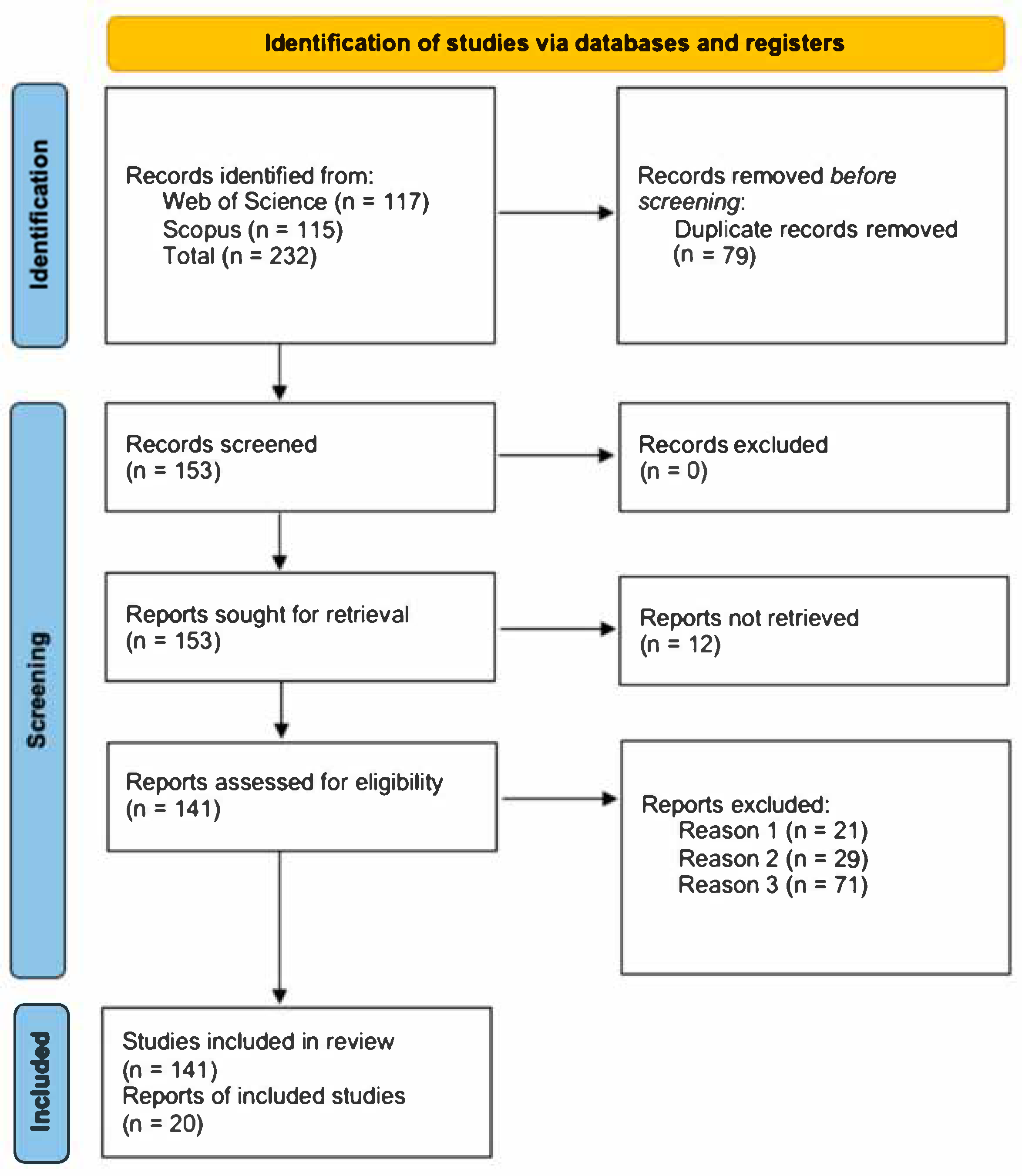
The initial total retrieved was 281 records (Scopus: 131; WoS: 150). After removing duplicates, 176 unique records remained, forming the dataset for a bibliometric analysis conducted in the R environment (R Core Team, Vienna, Austria) using RStudio 2024.12.0+467 and the Bibliometrix package (version 4.3.2, University of Naples Federico II, Naples, Italy). In parallel, a restrictive search string for the systematic review yielded 153 records. Of these, 20 articles met the eligibility criteria and were included in the qualitative synthesis (Figure 1). Inclusion criteria required alignment with the principles of sustainable extraction: (i) employment of renewable or low-toxicity solvents, (ii) use of energy-efficient extraction techniques, and (iii) incorporation of environmental sustainability assessments.
Screening was conducted in two stages. First, titles and abstracts were checked to exclude records clearly unrelated to green extraction of bioactive compounds from food byproducts. Second, full-text screening applied predefined eligibility criteria. Both stages involved two independent reviewers, who resolved disagreements by consensus. We extracted structured information for each included study: (i) extraction methods and operational parameters; (ii) waste origin; (iii) target bioactive compounds; (iv) main biological activities; (v) industrial potential and applications; (vi) scalability challenges; and (vii) sustainability trends. We followed a standardized protocol to ensure consistency and reproducibility. All instructions, criteria, and data extraction forms are available as Supplementary Material on OSF [26].

2.1. Risk of Bias Assessment

The risk of bias in the included studies was evaluated by two independent reviewers using criteria adapted from the Joanna Briggs Institute (JBI) for laboratory and experimental studies. Disagreements were resolved through consensus. Studies classified as high risk were included but analyzed separately to assess their impact on the findings with sensitivity analyses. The complete PRISMA-P checklist is available as Supplementary Material on the OSF website [26].

2.2. Data Synthesis

Data synthesis used a structured narrative format and comparative tables. No meta-analysis was performed due to methodological heterogeneity among studies, including differences in matrices, extraction techniques, parameters, and outcomes. Results were categorized by residue type, extraction technique, identified bioactive compounds, bioactivity, and potential application. This approach enabled the identification of patterns, gaps, and challenges for industrial-scale implementation.

2.3. Confidence in the Evidence

Confidence in the evidence base was assessed using the GRADE (Grading of Recommendations Assessment, Development, and Evaluation) approach. For each outcome, we evaluated the risk of bias, inconsistency, imprecision, indirectness, and publication bias. We then categorized results as high, moderate, low, or very low confidence to facilitate critical review and highlight research gaps.

2.4. Registration and Supplementary Materials

This study adheres to the PRISMA-P, PRISMA-S, and PRISMA 2020 guidelines. The protocol has been registered with the OSF [26]. Supplementary Materials comprise the PRISMA-P checklist, comprehensive search strategies (PRISMA-S), an editable PRISMA 2020 flowchart, a standardized data extraction form, screening and extraction instructions, summary notes, and additional logs, including sensitivity analyses. All supplementary files are available in the OSF repository [26].

3. Results

3.1. Bibliometric Analysis

3.1.1. Temporal Distribution of Publications

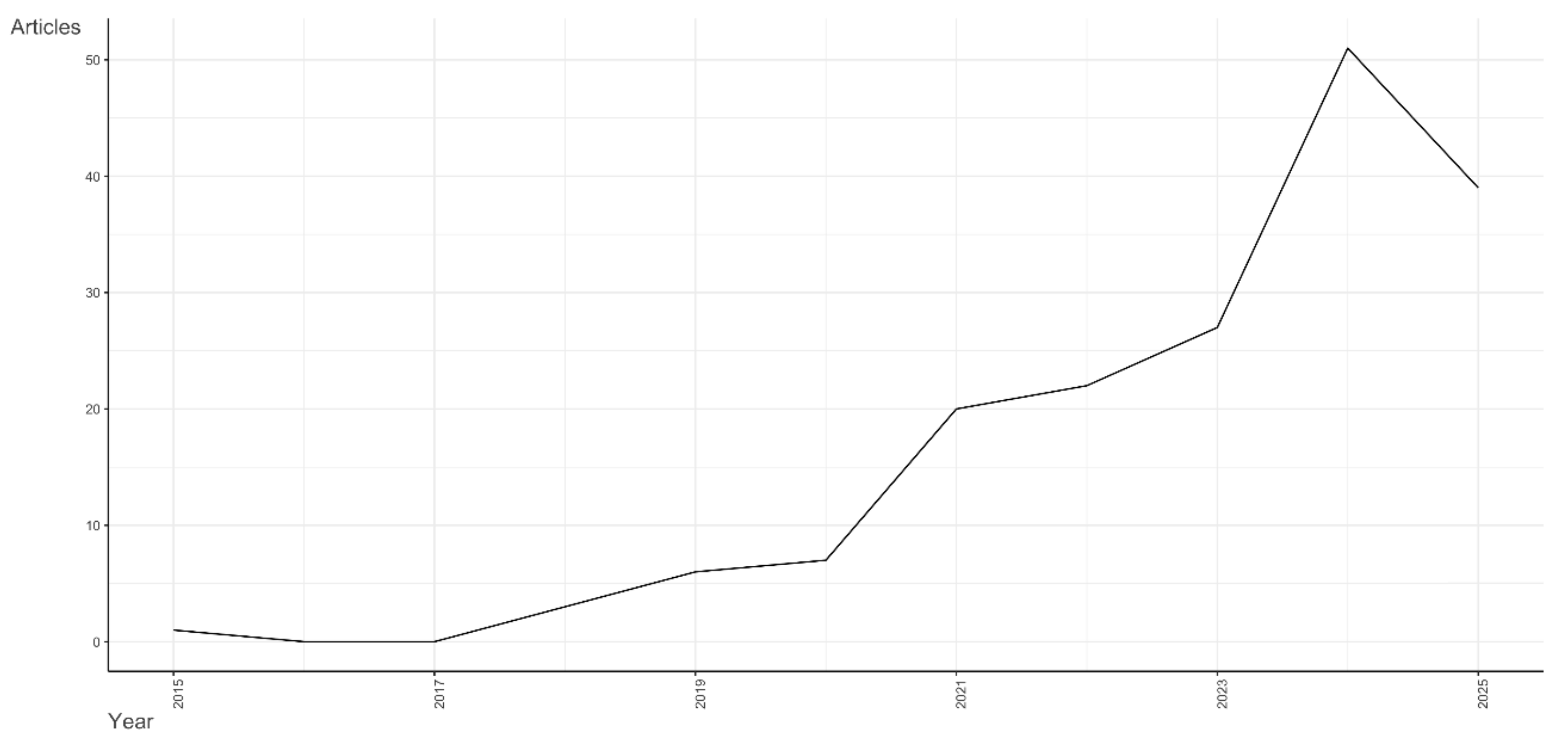
Figure 2 shows the development of scientific research on the sustainable extraction of bioactive compounds from food industry waste between 2015 and 2025.

3.1.2. Thematic Analysis

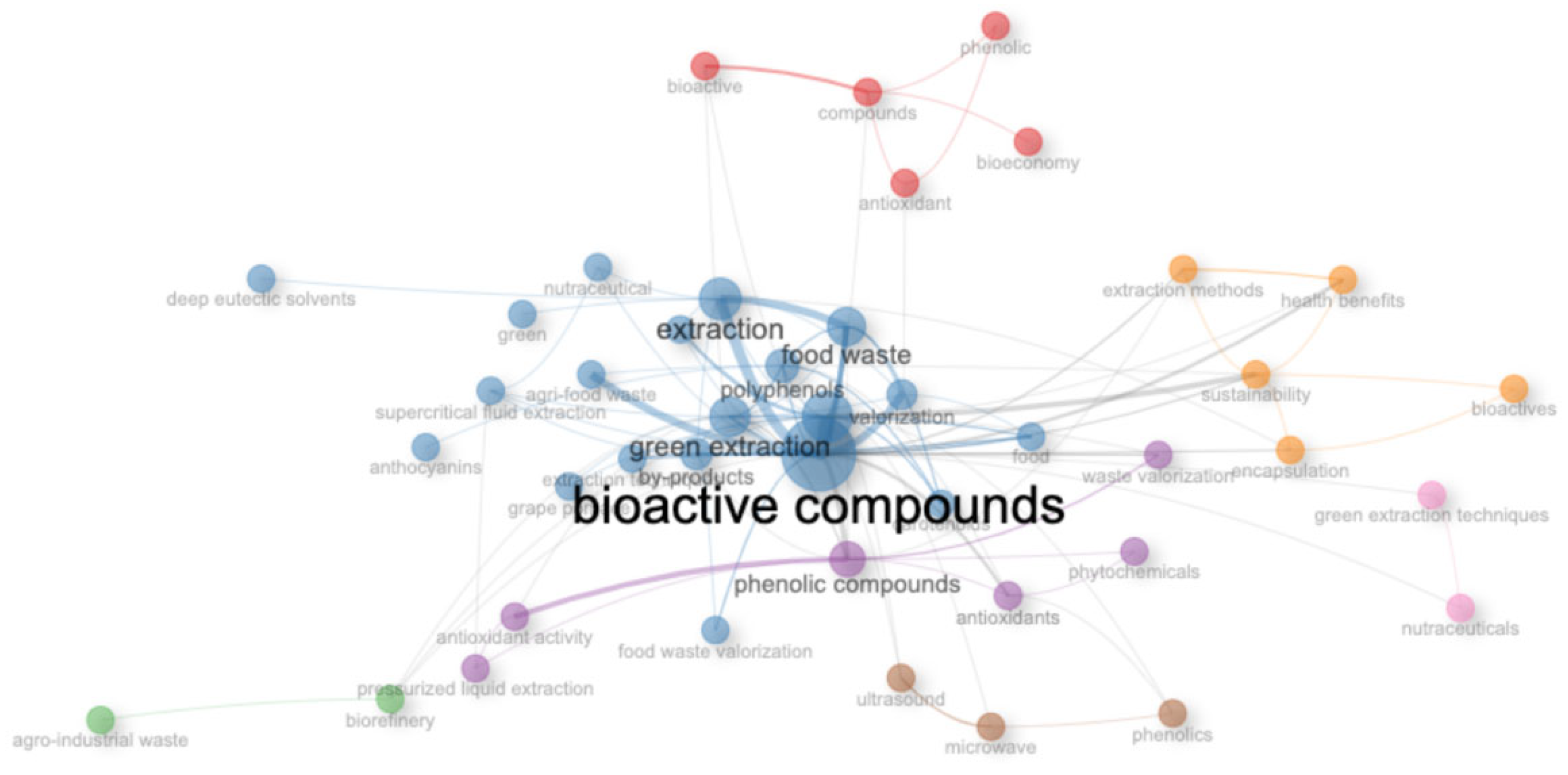
Figure 3 presents a co-occurrence network of the main themes in the sustainable extraction of bioactive compounds from food industry waste. Each circle represents a node or keyword from the documents. The circle’s size indicates the term’s frequency in the dataset. Lines connect associated terms; thicker lines indicate stronger connections [28]. This visualization serves as the basis for the following network analysis.
Building on this visualization, the network analysis highlights key topics—such as extraction methods, sustainability, and valorization—that are central to sustainable extraction from food industry waste during the studied period.
A co-occurrence network is built using the betweenness centrality, closeness centrality, and PageRank of terms, represented as nodes. These metrics for each node appear in Table S1 of the Supplementary Material on the OSF website at [26]. Building on this network analysis approach, the following section examines the thematic development of the research field over time.
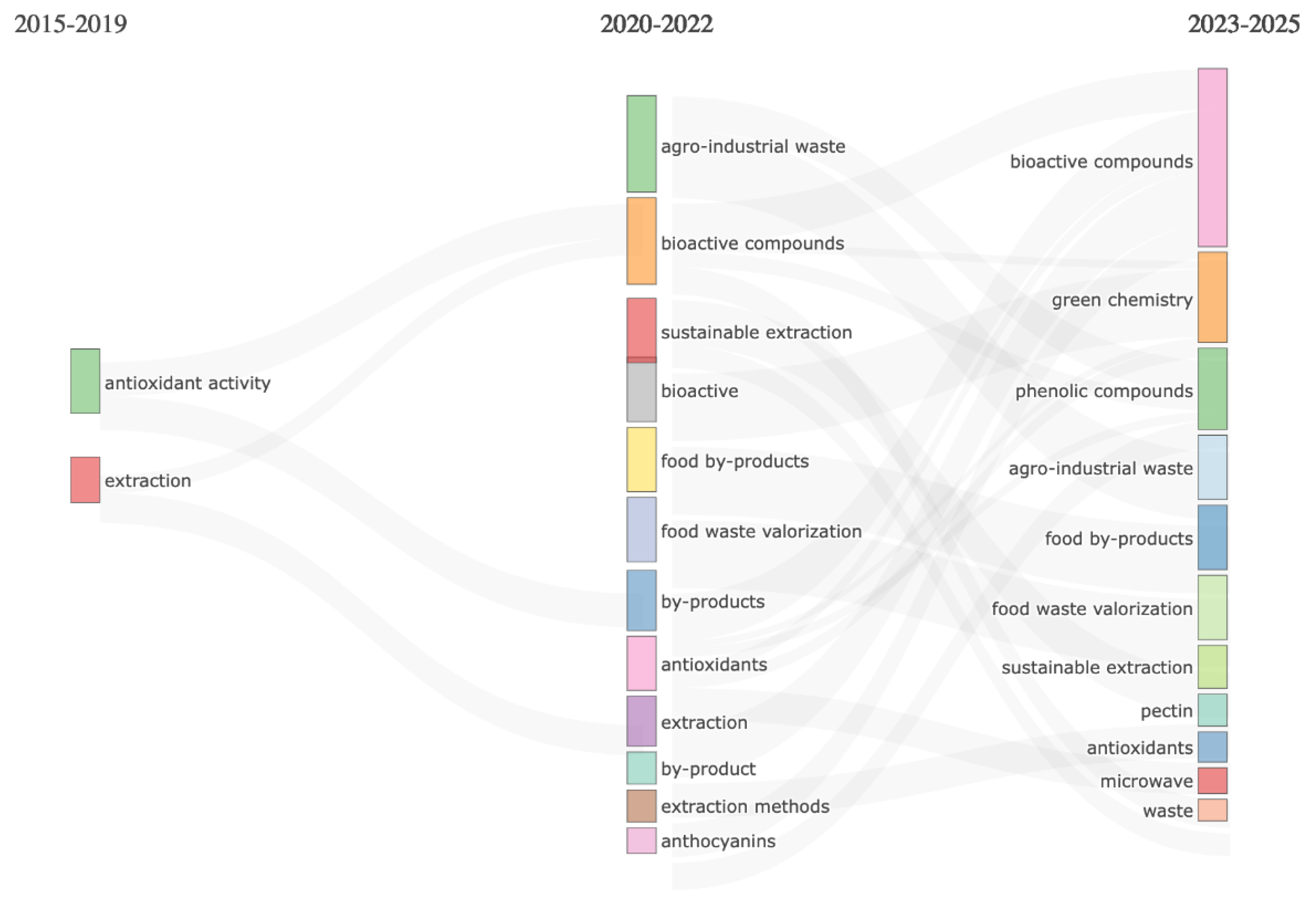
Figure 4 shows the thematic development of research on the sustainable extraction of bioactive compounds from food industry waste. It distinguishes three periods: 2015–2019, 2020–2022, and 2023–2025, each defined by main themes identified through keyword competition analysis.
Bibliometrix segments time automatically using three criteria: publication count, trends over time, and shifts in keyword frequency and overlap [7].
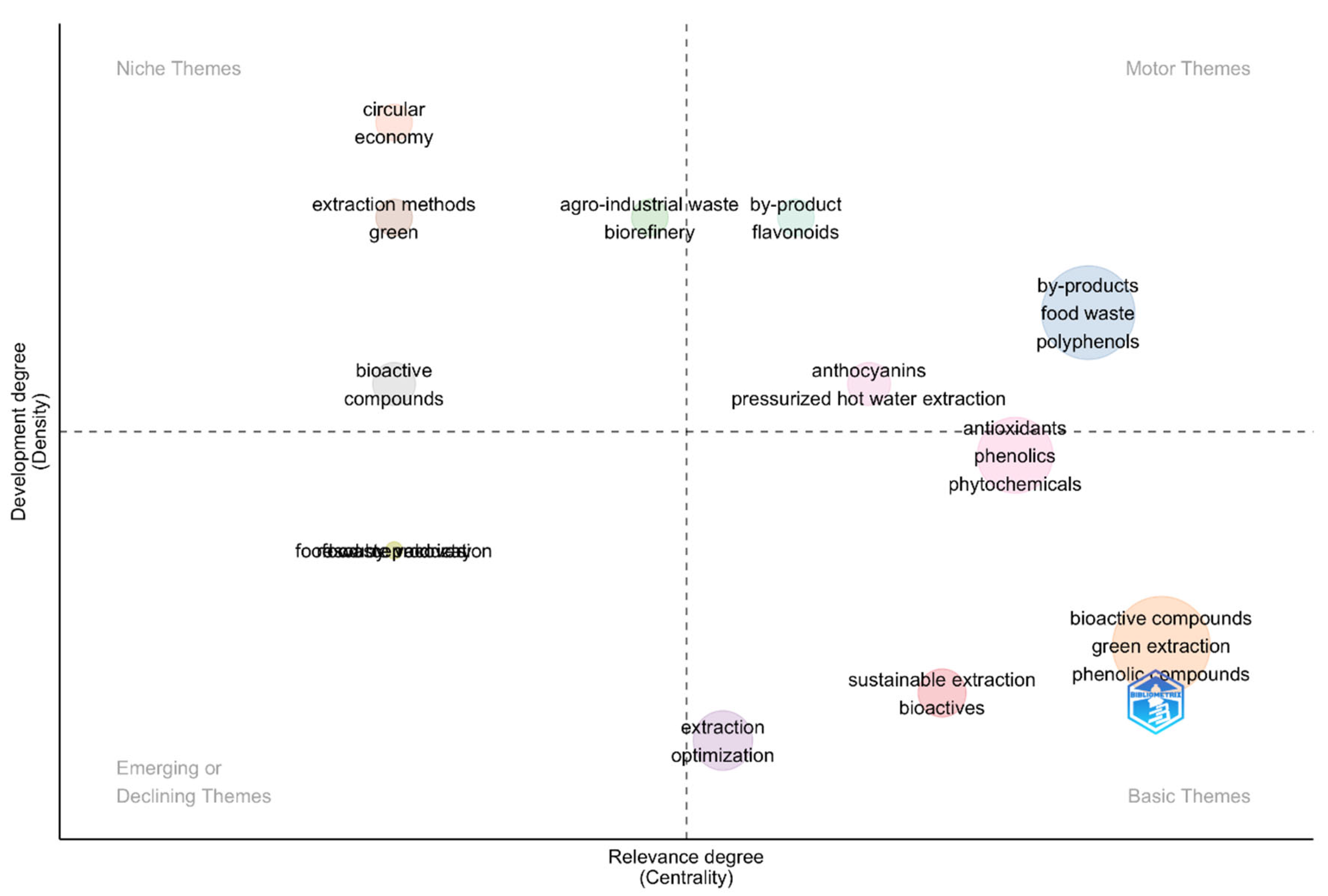
Figure 5 presents a thematic map showing the relevance, development, and growth potential of research topics. The x-axis (centrality) measures how much a topic interacts with others. The y-axis (density) shows its internal development. These axes divide the map into four quadrants: driving themes (highly developed and connected), niche themes (well-developed but less connected), emerging or declining themes (underdeveloped and low interaction), and core themes (essential but still in development) [29,30].
Driving themes are in the first quadrant (Q1). Niche themes are in the second quarter (Q2). Emerging or declining themes appear in the third (Q3). Fundamental and cross-cutting themes are in the fourth quarter (Q4). Circle size shows the number of documents linked to each theme in a cluster. Details on themes, occurrences, clusters, and centralities are in Table S2 on the OSF website [26].
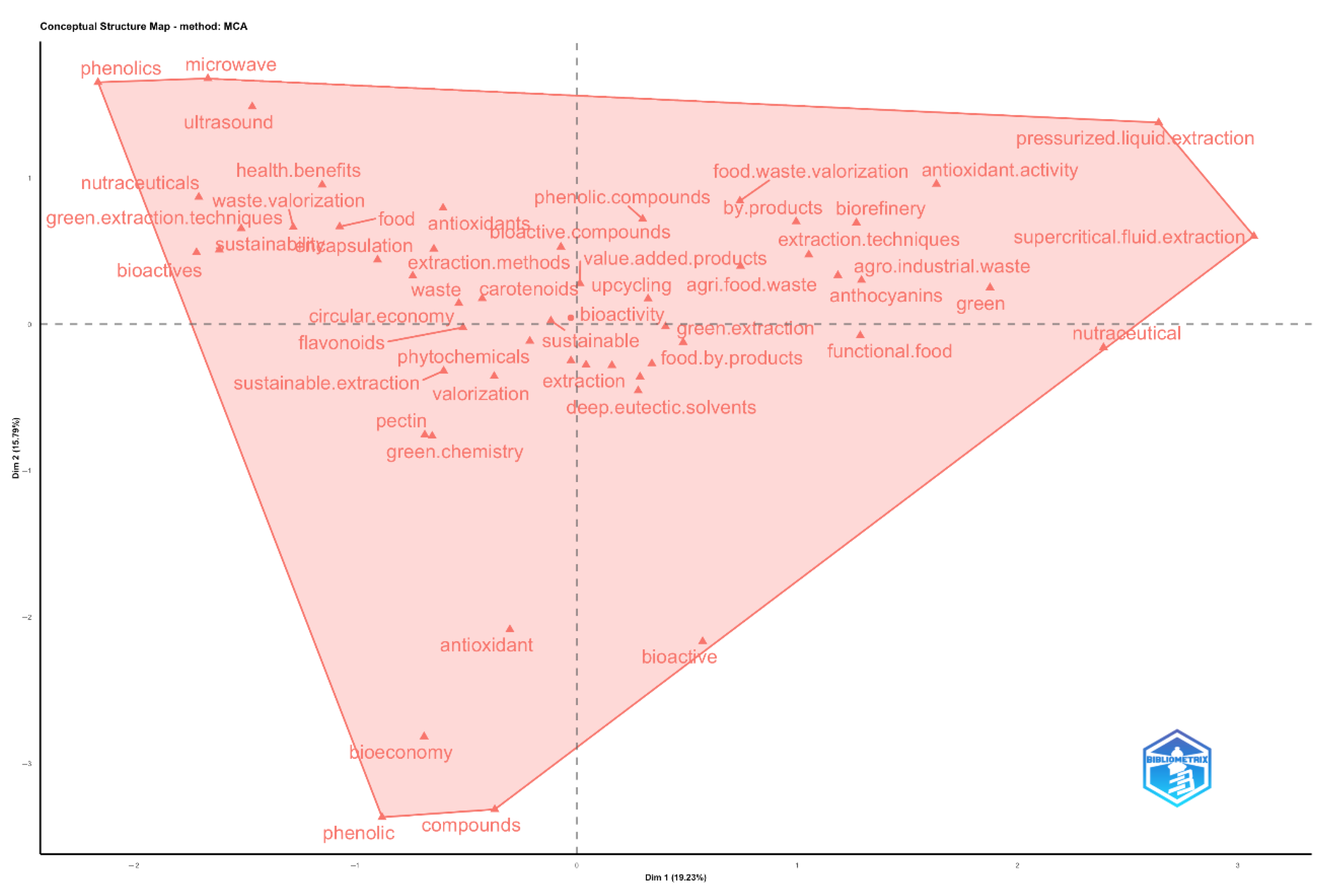
Figure 6 shows a conceptual map of research on the sustainable extraction of bioactive compounds from food industry waste. The map visually displays relationships between concepts. Closely placed terms are more similar and commonly occur together in articles, while distant points show weaker links. A cluster of points forms a profile [31]. The graph uses Multiple Correspondence Analysis (MCA), which projects data into two main dimensions for easier viewing. This visual illustrates relationships between terms (keywords) across documents [32]. Here, dimension 1 explains 19.23% and dimension 2 explains 17.76% of the total variation. Together, they account for 36.99% of the conceptual structure and highlight relationships between terms. However, this plane does not capture all the information.

3.1.3. Patterns of International Scientific Collaboration

Table 1 presents publications and international collaborations by country on the sustainable extraction of bioactive compounds from food industry waste (2015–2025). Publications are split into Single Country Publications (SCPs), for research from one country, and Multiple Country Publications (MCPs). The total publication rate (Frequency) and the proportion of collaborations (MCP Ratio: MCP divided by MCP plus SCP) are also reported. This distinction reveals levels of cooperation and national roles.
Table 2 presents the direction and frequency of cross-country collaborations on research on the Sustainable Extraction of Bioactive Compounds from Food Industry Waste (2015–2025). Countries with at least two collaborations are included.

3.1.4. Most Relevant Publication Sources

Table 3 shows the influence of sources using journals’ h-index, total citations per article (TC), and number of published documents (NP) for 19 sources with over 50 citations. The h-index measures the productivity and scholarly impact of journals or authors [33].
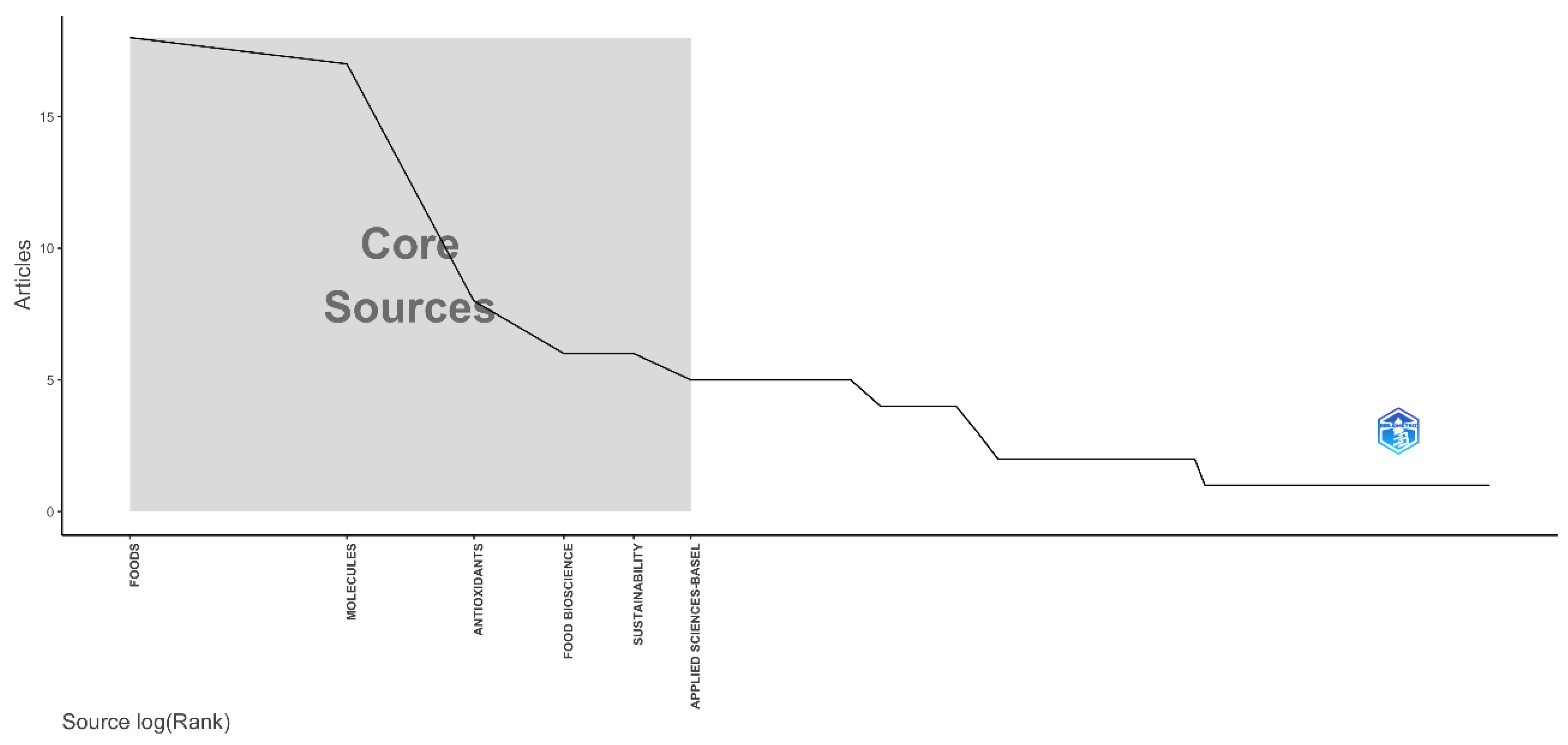
Figure 7 applies Bradford’s Law to publication sources on Sustainable Extraction of Bioactive Compounds from Food Industry Waste (2015–2025). Journals are sorted in descending order by article count. Log (Rank) on the x-axis shows each journal’s ranking.
The shaded area (Core Sources) highlights the most influential, productive journals. After the core group, productivity drops sharply. Remaining journals rank lower, publish fewer articles, and have reduced thematic density [34].

3.2. Systematic Review on Sustainable Extraction of Bioactive Compounds from Food Industry Waste

To provide further insight into the literature’s focus, the systematic review analyzed 20 publications. It focused on key green extraction techniques and identified specific target compounds. It also compared compound bioactivity, commercial viability, potential applications, scale-up barriers, and sustainability trends. The data are shown in Table 4.
The editable PRISMA 2020 flowchart and summary decision records are available as Supplementary Material on the OSF [26].

4. Discussion

4.1. Bibliometric Findings and Trends

The bibliometric study reveals a significant increase in scientific research on bioactive compounds derived from food industry waste, particularly after 2020.
The co-occurrence network analysis (Figure 3) reveals that bioactive compounds are central, connecting topics like extraction, food waste, and green extraction. Cluster 1 (red) focuses on bioeconomy and functional classification, highlighting the phenolic and antioxidant aspects and stressing their role in sustainable development. The bioeconomy offers a transformative model based on sustainable biological resources [55]. Cluster 2 (blue), the largest, confirms bioactive compounds as the primary research focus, closely associated with extraction, food waste valorization, phenolic compounds, and antioxidants. Their centrality demonstrates influence across clusters and interdisciplinary fields. Growing interest from the scientific, food, and pharmaceutical sectors [56] underscores their importance.
Cluster 3 (green) covers agro-industrial waste and biorefinery, focusing on adding value to waste through biorefinery processes, aiming to reduce agro-industrial residues and convert biomass into fuels, energy, and chemicals [57]. Cluster 4 (purple) includes phenolic compounds, food waste valorization, phytochemicals, and antioxidants, relating waste valorization to antioxidant function. Extracted compounds serve as functional ingredients in food, pharmaceutical, and cosmetic industries as eco-friendly alternatives to synthetic additives, supporting sustainability [5]. Cluster 5 (orange) highlights extraction methods, sustainability, health benefits, and bioactives, emphasizing optimized, eco-friendly extraction suited to healthcare, pharmaceutical, and agri-food sectors [23]. Cluster 6 (brown) focuses on microwave, ultrasound, and phenolics, describing how these emerging extraction technologies raise yields, reduce processing time, and minimize solvent use, supporting sustainable waste valorization. Rising demand for greener alternatives has driven eco-friendly extraction, especially in the food industry [58]. Finally, cluster 7 (pink) shows green extraction techniques and nutraceutical fields, suggesting that sustainable methods yield less toxic, high-yield, environmentally friendly compounds that address environmental impact and energy costs associated with traditional extraction [59].
The analysis shown in Figure 4 illustrates how research topics have evolved over three distinct periods. During the first period (2015–2019), the focus was on discovering compounds with antioxidant activity. The primary emphasis was on extraction methods. In the second period (2020–2022), interest shifted toward sustainability and waste utilization. Themes like agro-industrial waste, sustainable extraction, food waste valorization, and by-products emerged. These areas became more diverse and in-depth, expanding the scope of research. The transition between 2015 and 2019 and 2020–2022 shows that initial themes, such as antioxidant activity and extraction, branched out. This led to more specific topics, such as bioactive compounds and by-products. From 2020 to 2022 to 2023–2025, established themes such as bioactive compounds, agro-industrial waste, sustainable extraction, food waste valorization, and food by-products stay prominent. New topics appear, including green chemistry, phenolic compounds, microwaves, pectin, and waste. Notably, the appearance of bioactive compounds in the last two periods suggests it is a trending theme. Sustainable extraction, food waste valorization, and agro-industrial waste also became more significant in the second period. This reflects a shift toward sustainable practices. The emergence of green chemistry and microwave technology indicates a move toward cleaner technologies and environmentally friendly processes.
Figure 5’s thematic map identifies key themes, niche areas, emerging and declining trends, and core and cross-cutting topics. This breakdown clarifies which subjects gain or lose relevance and shows relationships between themes, indicating future directions. The map includes 10 clusters, with cluster 4 (bioactive compounds, 52 nodes) and cluster 3 (extraction, 45 nodes) being the most prominent.
Quadrant Q1 (driving themes) groups topics with high centrality and density. This results in consolidated and strategic themes. Three clusters were formed, all belonging to cluster 3 (extraction). The cluster, including by-products, food waste, and polyphenols, represents the core of the research. It consolidates and strategizes its approach. It focuses on valorizing food waste to extract phenolic compounds with high functional value. The cluster of by-products and flavonoids emphasizes the reuse of waste and the production of flavonoids. Flavonoids are a class of phenolic compounds known for their antioxidant, anti-inflammatory, and health benefits. The smaller cluster focuses on anthocyanins and hot-water extraction, highlighting the use of advanced technologies for their extraction. This reflects the application of emerging, clean techniques for obtaining specific compounds. These research themes are mature topics. They show strong integration between sustainability, food chemistry, and technological development.
Quadrant Q2 (niche themes) consists of four clusters. High density shows a strong network of studies, but low centrality means this is not yet the primary focus. Still, it shows promise. The circular economy cluster includes waste valorization and the production of bioactive compounds. Studies on extraction methods and green chemistry involve techniques and methodologies, particularly those related to green extraction, with a focus on sustainability. The cluster on agro-industrial waste and biorefinery highlights research aimed at converting agro-industrial waste into high-value products through biorefineries. This connection shows the relationship between residual biomass availability and the use of sustainable industrial technologies for its valorization.
Quadrant Q3 (Emerging and Declining Themes) covers topics with low centrality and density, indicating early development. These topics include extraction optimization and the valorization of food waste. Extraction optimization improves extraction processes; food waste valorization uses methods to convert food waste into value.
Quadrant Q4 (basic themes) groups topics with high centrality and low density. This indicates a key role but also a need for further exploration. The cluster of bioactive and phenolic compounds forms the core of the research. Sustainable extraction of bioactives highlights a trend toward environmentally responsible practices. Although these themes are closely linked to others, they still require further consolidation.
The group of antioxidants, phenolics, and phytochemicals lies at the edge of the main themes. This placement signals a shift toward a well-established, stable research core.
The term ‘bioactive compounds’ appears in two quadrants because of its role in distinct thematic networks. In terms of basic themes, it is related to broader topics such as green extraction and phenolic compounds. Conversely, in niche themes, it focuses more on chemical and functional studies.
Analysis of the nodes, represented by themes, shows that extraction, bioactive compounds, and the circular economy have high betweenness centrality, closeness centrality, and PageRank. Specifically, extraction (betweenness centrality = 4,925,933; closeness centrality = 0.002; PageRank = 0.031), bioactive compounds (betweenness centrality = 4,832,580; closeness centrality = 0.002; PageRank = 0.047), and the circular economy (betweenness centrality = 3,477,887; closeness centrality = 0.002; PageRank = 0.033) are central, bridging, and prominent nodes. Collectively, these themes influence the network’s flow and connectivity.
The thematic map highlighted key themes, including bioactive compounds, extraction, and the circular economy, as central ideas that connect various research areas. Notably, these findings are similar to those reported by [5,8], who also identified the recovery of bioactive compounds as a central axis of research in sustainable food systems. This similarity is significant, as the centrality can be explained by the growing industrial and regulatory interest in replacing synthetic additives with naturally occurring molecules, which has intensified global research efforts. Furthermore, the emphasis on the circular economy aligns with recent literature highlighting the integration of waste valorization into broader bioeconomy strategies. Taken together, this convergence suggests a maturing research agenda, migrating from exploratory studies to more applied and systemic approaches.
The Conceptual Structure Map (Figure 6), created through MCA, visualizes the conceptual layout by illustrating how keywords co-occur. The proximity between terms indicates they often appear together in documents. Clusters identify related subthemes. The map can be divided into several groups: a core group of bioactive compounds and waste valorization; advanced extraction technologies; sustainability and bioeconomy; compounds and their functional properties; and process optimization and innovation. The core group includes bioactive compounds, phenolic compounds, by-products, green extraction, and agro-industrial waste. This group combines advanced extraction methods, such as MAE, UAE, PLE, and SFE, with sustainable practices. These practices include the circular economy, bioeconomy, green chemistry, sustainable extraction, and waste valorization. Studies on advanced extraction methods focus on enhancing yield and sustainability in waste processing and the extraction of bioactive compounds. The sustainability and bioeconomy cluster focuses on strategies to minimize environmental impact and improve the value of food byproducts. Other key areas include research on specific compounds, such as flavonoids, anthocyanins, carotenoids, and phytochemicals. There are also health-related applications, including nutraceuticals, health benefits, and functional foods. The cluster dedicated to process optimization and innovation—with topics like natural deep eutectic solvents, extraction techniques, encapsulation, and value-added products—represents the forefront of research. It highlights the use of green solvents, innovations in encapsulation, and the development of high-value products. This map reveals opportunities to integrate themes. The variety of extraction methods indicates potential for comparative studies assessing performance, cost, and environmental impacts. Linking these methods to sustainable practices also opens pathways for research into the circular and bioeconomies. Studies on specific compounds and their applications provide a route for transferring knowledge into the food and nutraceutical industries. This strengthens the connection between academia and the market.
The scientific output of countries is detailed in Table 1. Analyzing the distribution of countries with the highest scientific production and collaboration shows that Italy (30 articles, 17 SCP, and 3 MCP) leads the ranking. Spain leads with 26 articles (17 SCP and 9 MCP), followed by Brazil (18, 16 SCP, and 2 MCP), India (16, 12 SCP, and 4 MCP), and Portugal (14, 11 SCP, and 3 MCP). This highlights European dominance among the main contributors. In all countries, production is mainly driven by SCP, demonstrating strong autonomous research capacity. However, countries like Spain, India, Portugal, and China have more MCPs than others. This indicates established scientific cooperation networks. Countries such as Mexico, Lithuania, Peru, and Thailand show only domestic production. South Korea and the United Arab Emirates mainly produce through international collaboration. The UK produces both SCP and MCP, with most (75%) involving international cooperation. MCP research suggests a higher level of maturity. Internationalization often correlates with increased visibility, access to global funding, and a broader range of topics. When this rate exceeds 50%, it indicates stronger collaborations that provide benefits like shared infrastructure and knowledge [7].
Table 2 presents direction and frequency. Countries like Italy, Spain, Brazil, India, and Portugal have high levels of output and cooperation. This prominence can be attributed to several structural and strategic factors. In Italy and Spain, strong agri-food industries—especially those linked to wine, olive oil, fruits, and vegetables—have fostered significant research on the valorization of agricultural byproducts [60]. The European countries are also aligned with European sustainability frameworks. These include the “EU Green Deal” and the “Farm to Fork Strategy”, which prioritize circular economy practices and green technological innovation. Furthermore, these nations have well-established research networks and receive substantial funding from European programs such as Horizon Europe. This encourages collaborative projects [61,62]. Strong connections exist between Spain and Portugal (6), India and China (4), China and the USA (3), China and the UK (3), and India and the USA (3). The most collaborative pair is Portugal and Spain, followed by India and China. Triangular collaborations among India, China, the USA, and the UK reinforce the core of scientific cooperation. Brazil collaborates with Germany, the UK, and Chile, but it is not part of the most closely knit collaboration network.
The source analysis shown in Table 3 highlights key journals. Specifically, Table 3 lists 19 journals with more than 45 citations each. Among these, the most cited journals are Molecules, Trac-Trends in Analytical Chemistry, and Foods, while the most productive journals include Foods, Molecules, and Antioxidants. Notably, these journals have a broad scope, covering topics related to green extraction, bioactive compounds, and circularity in the agri-food sector, making them central platforms for disseminating scientific advances in this field [63,64].
Some journals have a small number of papers but a high number of citations, such as Processes, which only has two articles but 100 citations. To further illustrate the distribution of journals, Figure 7 presents data using Bradford’s Law, which groups sources into zones of dispersion instead of solely by productivity. In this context, Zone 1 is defined as the core, containing the most influential journals, identified using cumulative sums rather than individual rankings. This core indicates the primary influence, highlighting its role as a key platform for knowledge sharing and strengthening research agendas. By analyzing these journals, we gain insights into the distribution of scientific output, visibility patterns, and the field’s impact [65]. Specifically, the core journals in this area are Foods and Molecules, each with 18 and 17 articles, respectively. In comparison, Antioxidants and Food Bioscience both feature eight articles, while Sustainability and Applied Sciences-Basel each have six. In summary, these zones of dispersion reflect a balanced distribution of articles.

4.2. Insights into Green Extraction Methods for Bioactive Compounds

The review focused on articles about emerging extraction methods that could replace traditional techniques. It examined efficiency, use of organic solvents, and alignment with circular economy principles. Among the 20 studies reviewed, 40% employed UAE-based methods, 15% used MAE, 20% concentrated on NADES/DES, 10% utilized PLE/SFE, and 15% adopted hybrid techniques. Ultrasound-assisted methods are the most prevalent. Interest in green solvents, such as NADES, is rising. Phenolics and flavonoids were the primary targets, reported in 70% of studies. Anthocyanins appeared in 35%. Pectin, oils, and proteins were detected in 10% each. These findings highlight the critical role of antioxidant molecules from agro-industrial residues in the food and health sectors. Functional foods and nutraceuticals were the main uses (80%), followed by cosmetics (50%), pharmaceuticals (35%), and energy recovery or biomaterials (15%). Regarding sustainability, 75% of studies emphasized the circular economy and waste recovery. Sixty percent mentioned green solvents. Only 20% explicitly discussed industrial scalability. Overall, the findings show that while green extraction methods are advancing, most applications remain at the laboratory scale.
While the previous findings reveal a strong presence of UAE and MAE technologies, it is essential to note that only 20% of studies have achieved pilot-scale validation. This highlights a persistent gap between laboratory feasibility and industrial application. Despite frequent references to the circular economy and green solvents, regulatory approval for NADES-based extracts remains uncertain, requiring toxicological studies and clearer frameworks. When comparing application areas, food and nutraceuticals are more established, whereas packaging and energy recovery remain insufficiently explored. To demonstrate feasibility in these underdeveloped areas, further techno-economic assessments (TEAs) and life-cycle analyses (LCAs) are needed.
Most studies remain at Technology Readiness Level (TRL) 3–4 (proof-of-concept and laboratory validation). Progress toward TRL 6–7 (pilot scale or industrial demonstration) remains limited [66]. Economic viability is also insufficiently explored. The high viscosity of NADES raises downstream recovery costs. Enzyme-assisted methods face challenges due to the high expense of biocatalysts. Few studies include TEA, which is essential for assessing competitiveness with conventional methods. Although nutraceutical and cosmetic applications dominate, integration with the packaging and bioenergy industries remains limited. This reduces the potential for comprehensive circular economy models. Regulatory challenges are also insufficiently addressed. For example, NADES have not yet been classified as food-grade solvents by the EFSA or FDA, which hinders their commercialization. The following sections analyze each extraction method, highlighting both potential and challenges [67].
To further clarify the advantages and limitations of individual methods, it is helpful to analyze how each green extraction technique addresses both opportunities and challenges. Among these, the UAE has been the most extensively studied and utilized. It is most commonly recognized for extracting bioactives, such as polyphenols, flavonoids, and anthocyanins, from residues like chestnut episperm, blackcurrant pomace, eggplant peel, cereal distillates, and orange peels [36,37,39]. Beyond their antioxidant activity, some extracts have practical applications; for example, pectin, which exhibits thickening and emulsifying properties, can serve as a replacement for synthetic additives [42]. Potential uses include natural colorants (E163) for food and cosmetics [36], dietary supplements [37], and energy recovery in biorefineries, as demonstrated by the incorporation of biochar in the UAE [38]. Challenges include standardization, pH and temperature control, managing ethanol costs, and scaling up recovery processes [35,36]. Despite these challenges, the UAE remains a key market for industrial applications, especially within circular reuse strategies.
In parallel with the UAE, MAE is also a notable alternative for the recovery of phenolic compounds and flavonoids from saffron flowers [45], black beans [46], and peaches [47]. In saffron flowers, RSM (Response Surface Methodology) optimization led to higher recovery of phenolics, flavonoids, and anthocyanins, highlighting its potential for developing functional ingredients [45]. Comparative studies show that MAE and UAE yield similar results and support the use of water as a sustainable extraction solvent [38]. Despite its effectiveness, MAE is limited by challenges in temperature control and scalability.
PLE and SFE are valued for producing high-purity extracts. In Hass avocado, combining NADES with UAE and PLE improved flavonoid recovery, including quercetin, rutin, and luteolin. It also reduced reliance on petrochemical solvents [41]. In jabuticaba, PLE-SPE with DES/NADES produced stable anthocyanins. These are suitable as natural colorants [48]. In passion fruit, PLE recovered phenolics with antioxidant activity [49]. These techniques align with sustainability and scalability goals. However, they face challenges, including high equipment costs, regulatory restrictions on DES solvents, and solvent recovery issues.
EAE helps recover bioactive compounds under gentle conditions. This preserves their functionality. In red beets, betalains with stable colors were produced, supporting their use as natural colorants [43]. In leafy vegetables, combining EAE with Naviglio Estrattore® increased polyphenol extraction. This has potential applications in nutraceuticals and functional foods [44]. High enzyme costs, variability in efficiency, and a lack of standardization limit the broader adoption of this technology.
Nanobubble technology, with biosurfactants from the UAE and Camellia oleifera peels, boosts phenolic yield more than traditional methods [40]. This method is promising but still needs to prove scalability and long-term stability.
NADES leads in circular economy innovations. Phenolic extracts from avocado peels have antioxidant and antimicrobial properties. They have potential uses in biodegradable packaging, coatings, and functional foods [51]. In avocado seeds and epicarp, combining NADES, UAE, and PLE reduced the need for organic solvents [36]. NADES-based methods also recovered antihypertensive bioactives from pomegranate seeds [52]. However, high solvent viscosity, recovery challenges, and a lack of standardization limit broad industrial application.
Advanced green extraction Technologies, such as UAE, MAE, SFE, PLE, and NADES-based processes, are increasingly recognized as essential for the sustainable recovery of bioactive compounds from food by-products [68,69,70]. Compared to conventional maceration or solid–liquid extraction, these methods offer greater selectivity, shorter processing times, lower solvent and energy use, and better compatibility with renewable solvents [23,71]. Recent studies highlight hybrid configurations, such as UAE + MAE, PLE + SFE, or NADES combined with ultrasound or pressure. These hybrids improve yield and purity while reducing the number of downstream steps [72,73]. Innovative methods, such as nanobubbles or enzyme-assisted processes, further expand the range of accessible compounds. They also enable gentle, low-impact conditions suitable for sensitive molecules [74]. Despite their promise, most of these technologies remain at early TRLs. Barriers include equipment cost, challenges in solvent recovery, process standardization, and regulatory acceptance of green solvents such as NADES [75]. Integrating techno-economic assessments and life-cycle analyses into process development is increasingly recommended to bridge laboratory innovations and industrial applications [76]. These trends support recent reviews that emphasize the strategic role of green technologies in scaling up the circular bioeconomy.
According to the Food and Agriculture Organization of the United Nations and the United Nations Environment Programme, roots, tubers, and oilseeds are the agro-food sectors that generate the most waste. Fruits and vegetables have higher loss rates than cereals and legumes at different stages of the chain [77]. For solutions, hybrid green extraction methods, such as UAE + MAE and PLE + SFE, are efficient for high-moisture materials, such as fruit pomace. NADES-based processes work well for recovering thermomolecular compounds from peels and seeds [78,79]. Some applications are now commercial or pre-commercial. For example, pectin extraction from citrus peels [80,81,82], the production of polyphenol-rich extracts from grape pomace [83,84], and the development of antioxidant powders from coffee residues make their use possible as functional food ingredients or additives [85,86].
Green extraction methods are rapidly advancing in efficiency, sustainability, and compatibility with circular economy principles. However, their industrial scalability is still limited by technological, economic, and regulatory challenges. Overcoming these hurdles will require integrating TEA and LCA, explicitly considering TRL stages, and aligning with policy frameworks like the EU Green Deal, the Farm to Fork Strategy, and the UN Sustainable Development Goals. Only by combining laboratory innovation with regulatory approval and supply chain integration can these methods transition from experimental success to widespread industrial adoption.
This review employed several methodological choices: (i) we deliberately excluded gray literature and citation tracking, which may have reduced comprehensiveness; (ii) variability among studies prevented us from conducting a quantitative meta-analysis; and (iii) we found fewer than 10 homogeneous studies per outcome, limiting our ability to explore publication bias (funnel plots). We documented all detailed methodological limitations and decisions in the protocol registered with the OSF [26].

5. Conclusions

The study of recovering bioactive compounds from food industry waste and byproducts offers a strategy to combine technological innovation, sustainability, and the principles of the circular economy. Bibliometric analysis revealed significant growth in scientific output since 2020, reinforcing core themes such as bioactive compounds, extraction methods, and the circular economy as key areas of international research. Countries like Italy, Spain, and Brazil have distinguished themselves in scientific research, while international collaboration enhances the field’s maturity and global visibility.
The literature review found that new environmentally friendly extraction methods, such as UAE, MAE, PLE, SFE, EAE, and NADES, offer cleaner, more efficient alternatives to traditional techniques. In a review of 20 studies, UAE was used most often (40%), followed by methods using NADES (20%) and MAE (15%). These methods help extract compounds with potent antioxidant, antimicrobial, and heart-protective properties that can be used in foods, medicines, cosmetics, dietary supplements, and biodegradable packaging. However, issues such as scaling up to industrial levels, equipment costs, standardizing procedures, solvent recovery, and regulatory compliance still need to be addressed for successful industrial use.
When considering sustainability factors, it is evident that valorizing agri-food waste can reduce environmental impacts, decrease the use of harmful solvents, and improve integration within circular economy systems. This strategy supports the 2030 Agenda and aims to establish more resilient and sustainable food systems.
This study shows significant potential for eco-friendly extraction of bioactive compounds from food industry byproducts, but progress is limited by underinvestment in applied research, innovation, and supporting policies. The main message is a call to boost global collaboration and coordination among academia, industry, and regulators to turn scientific advances into practical, sustainable circular economy solutions.
This work provides a structured evidence base and highlights trends that should guide the development of sustainable technologies, public policy, and industrial strategies for valorizing agricultural and food waste—supporting the central message of advancing a sustainable circular economy.

Supplementary Materials

The following supporting information can be downloaded at: https://www.mdpi.com/article/10.3390/pr13113611/s1, Table S1: Keywords co-occurrences analysis; Table S2: Thematic Map Terms.

Author Contributions

Conceptualization, J.R.H.C. and M.R.d.O.; methodology, J.R.H.C. and M.R.d.O.; software, J.R.H.C. and M.R.d.O.; validation, J.R.H.C. and M.R.d.O.; formal analysis, J.R.H.C. and M.R.d.O.; investigation, J.R.H.C. and M.R.d.O.; resources, J.R.H.C., M.R.d.O. and L.A.P.; data curation, J.R.H.C. and M.R.d.O.; writing—original draft preparation, J.R.H.C. and M.R.d.O.; writing—review and editing, J.R.H.C., M.R.d.O. and L.A.P.; visualization, J.R.H.C. and M.R.d.O.; supervision, J.R.H.C. and M.R.d.O.; project administration, J.R.H.C. and M.R.d.O. All authors have read and agreed to the published version of the manuscript.

Funding

This research received no external funding.

Data Availability Statement

The original contributions presented in this study are included in the article and Supplementary Materials, and an open protocol is available at OSF [26]. Further inquiries can be directed to the corresponding author.

Conflicts of Interest

The authors declare no conflict of interest.

References

  1. Despoudi, S.; Bucatariu, C.; Otles, S.; Kartal, C. Chapter 1—Food waste management, valorization, and sustainability in the food industry. In Food Waste Recovery, 2nd ed.; Galanakis, C.M., Ed.; Academic Press: San Diego, CA, USA, 2021; pp. 3–19. [Google Scholar] [CrossRef]
  2. Panzella, L.; Moccia, F.; Nasti, R.; Marzorati, S.; Verotta, L.; Napolitano, A. Bioactive phenolic compounds from agri-food wastes: An update on green and sustainable extraction methodologies. Front. Nutr. 2020, 7, 60. [Google Scholar] [CrossRef]
  3. Campos, D.A.; Gómez-García, R.; Vilas-Boas, A.A.; Madureira, A.R.; Pintado, M.M. Management of fruit industrial by-products—A case study on circular economy approach. Molecules 2020, 25, 320. [Google Scholar] [CrossRef]
  4. Oliveira, M.R.; Oliveira, R.S.; Gouvêa, A.W.F.; Cantorani, J.R.H. Ecodesign: Estudo de caso em uma agroindústria de palmito pupunha. Rev. Gestão Proj. 2024, 15, 476–506. [Google Scholar] [CrossRef]
  5. Bekavac, N.; Krog, K.; Stanić, A.; Šamec, D.; Šalić, A.; Benković, M.; Jurinjak Tušek, A. Valorization of food waste: Extracting bioactive compounds for sustainable health and environmental solutions. Antioxidants 2025, 14, 714. [Google Scholar] [CrossRef]
  6. Van Dijk, M.; Morley, T.; Rau, M.L.; Saghai, Y. A meta-analysis of projected global food demand and population at risk of hunger for the period 2010–2050. Nat. Food 2021, 2, 494–501. [Google Scholar] [CrossRef]
  7. Cantorani, J.R.H.; Oliveira, M.R.; Pilatti, L.A.; Sousa, T.B. Agri-Food Sector: Contemporary trends, possible gaps, and prospective directions. Metrics 2025, 2, 3. [Google Scholar] [CrossRef]
  8. Roselli, V.; Pugliese, G.; Leuci, R.; Brunetti, L.; Gambacorta, L.; Tufarelli, V.; Piemontese, L. Green methods to recover bioactive compounds from food industry waste: A sustainable practice from the perspective of the circular economy. Molecules 2024, 29, 2682. [Google Scholar] [CrossRef]
  9. Oleszek, M.; Kowalska, I.; Bertuzzi, T.; Oleszek, W. Phytochemicals derived from agricultural residues and their valuable properties and applications. Molecules 2023, 28, 342. [Google Scholar] [CrossRef] [PubMed]
  10. Alonso-Munoz, S.; García-Muiña, F.E.; Medina-Salgado, M.S.; González-Sánchez, R. Towards circular economy practices in food waste management: A retrospective overview and a research agenda. Br. Food J. 2022, 124, 478–500. [Google Scholar] [CrossRef]
  11. Sharma, N.K.; Govindan, K.; Lai, K.K.; Chen, W.K.; Kumar, V. The transition from linear economy to circular economy for sustainability among SMEs: A study on prospects, impediments, and prerequisites. Bus. Strategy Environ. 2021, 30, 1803–1822. [Google Scholar] [CrossRef]
  12. Esposito, B.; Sessa, M.R.; Sica, D.; Malandrino, O. Towards circular economy in the agri-food sector. A systematic literature review. Sustainability 2020, 12, 7401. [Google Scholar] [CrossRef]
  13. Almonaitytė, K.; Kruopienė, J. Towards circularity in agriculture: A case of bioactive compound recovery from sea buckthorn residual leaves and twigs. Processes 2025, 13, 1884. [Google Scholar] [CrossRef]
  14. Chiaraluce, G.; Bentivoglio, D.; Finco, A. Circular economy for a sustainable agri-food supply chain: A review for current trends and future pathways. Sustainability 2021, 13, 9294. [Google Scholar] [CrossRef]
  15. Rao, M.; Bast, A.; De Boer, A. Valorized food processing by-products in the EU: Finding the balance between safety, nutrition, and sustainability. Sustainability 2021, 13, 4428. [Google Scholar] [CrossRef]
  16. Kotykova, O.; Babych, M.; Kuzmenko, O. Environmental impacts of food loss and waste: Land degradation. Future Food J. Food Agric. Soc. 2021, 9, 1–17. [Google Scholar] [CrossRef]
  17. Lucarini, M.; Durazzo, A.; Bernini, R.; Campo, M.; Vita, C.; Souto, E.B.; Romani, A. Fruit wastes as a valuable source of value-added compounds: A collaborative perspective. Molecules 2021, 26, 6338. [Google Scholar] [CrossRef]
  18. Oliveira, I.; Pinto, T.; Afonso, S.; Karaś, M.; Szymanowska, U.; Gonçalves, B.; Vilela, A. Sustainability in bio-based edible films, coatings, and packaging for small fruits. Appl. Sci. 2025, 15, 1462. [Google Scholar] [CrossRef]
  19. Saorin Puton, B.M.; Demaman Oro, C.E.; Lisboa Bernardi, J.; Exenberger Finkler, D.; Venquiaruto, L.D.; Dallago, R.M.; Tres, M.V. Sustainable valorization of plant residues through enzymatic hydrolysis for the extraction of bioactive compounds: Applications as functional ingredients in cosmetics. Processes 2025, 13, 1314. [Google Scholar] [CrossRef]
  20. Sorrenti, V.; Burò, I.; Consoli, V.; Vanella, L. Recent advances in health benefits of bioactive compounds from food wastes and by-products: Biochemical aspects. Int. J. Mol. Sci. 2023, 24, 2019. [Google Scholar] [CrossRef]
  21. Alexandri, M.; Kachrimanidou, V.; Papapostolou, H.; Papadaki, A.; Kopsahelis, N. Sustainable food systems: The case of functional compounds towards the development of clean label food products. Foods 2022, 11, 2796. [Google Scholar] [CrossRef]
  22. Płotka-Wasylka, J.; Rutkowska, M.; Owczarek, K.; Tobiszewski, M.; Namieśnik, J. Extraction with environmentally friendly solvents. TrAC Trends Anal. Chem. 2017, 91, 12–25. [Google Scholar] [CrossRef]
  23. Martins, R.; Barbosa, A.; Advinha, B.; Sales, H.; Pontes, R.; Nunes, J. Green extraction techniques of bioactive compounds: A state-of-the-art review. Processes 2023, 11, 2255. [Google Scholar] [CrossRef]
  24. Usman, I.; Hussain, M.; Imran, A.; Afzaal, M.; Saeed, F.; Javed, M.; Saewan, S.A. Traditional and innovative approaches for the extraction of bioactive compounds. Int. J. Food Prop. 2022, 25, 1215–1233. [Google Scholar] [CrossRef]
  25. Janicka, P.; Płotka-Wasylka, J.; Jatkowska, N.; Chabowska, A.; Fares, M.Y.; Andruch, V.; Gębicki, J. Trends in the new generation of green solvents in extraction processes. Curr. Opin. Green Sustain. Chem. 2022, 37, 100670. [Google Scholar] [CrossRef]
  26. Cantorani, J.R.H.; de Oliveira, M.R.; Pilatti, L.A. Protocol for Systematic Review and Bibliometric Analysis: Sustainable Extraction of Bioactive Compounds from Food Industry Byproducts: Circular Economy Strategies and Perspectives. Available online: https://osf.io/ywhzu/overview (accessed on 30 September 2025).
  27. Page, M.J.; McKenzie, J.E.; Bossuyt, P.M.; Boutron, I.; Hoffmann, T.C.; Mulrow, C.D.; Moher, D. The PRISMA 2020 statement: An updated guideline for reporting systematic reviews. BMJ 2021, 372, n71. [Google Scholar] [CrossRef] [PubMed]
  28. Narong, D.K.; Hallinger, P. A keyword co-occurrence analysis of research on service learning: Conceptual foci and emerging research trends. Educ. Sci. 2023, 13, 339. [Google Scholar] [CrossRef]
  29. Nyulas, J.; Dezsi, Ș.; Niță, A.F.; Magyari-Sáska, Z.; Frey, M.L.; Horváth, A. Twenty-Five years of scientific production on geoparks from the perspective of bibliometric analysis using PRISMA. Sustainability 2025, 17, 2218. [Google Scholar] [CrossRef]
  30. Cantorani, J.R.H.; Oliveira, M.R. Forty-five years of disability and rehabilitation research: Review of the journal Disability and Rehabilitation through bibliometric analysis. Disabil. Rehabil. 2024, 47, 2960–2974. [Google Scholar] [CrossRef]
  31. Maulidiya, D.; Nugroho, B.; Santoso, H.B.; Hasibuan, Z.A. Thematic evolution of smart learning environments, insights and directions from a 20-year research milestones: A bibliometric analysis. Heliyon 2024, 10, e26191. [Google Scholar] [CrossRef]
  32. Niknejad, N.; Ismail, W.; Bahari, M.; Hendradi, R.; Salleh, A.Z. Mapping the research trends on blockchain technology in the food and agriculture industry: A bibliometric analysis. Environ. Technol. Innov. 2021, 21, 101272. [Google Scholar] [CrossRef]
  33. Mondal, H.; Deepak, K.K.; Gupta, M.; Kumar, R. The h-index: Understanding its predictors, significance, and criticism. J. Fam. Med. Prim. Care 2023, 12, 2531–2537. [Google Scholar] [CrossRef] [PubMed]
  34. Ionescu, Ș.; Delcea, C.; Chiriță, N.; Nica, I. Exploring the use of artificial intelligence in agent-based modeling applications: A bibliometric study. Algorithms 2024, 17, 21. [Google Scholar] [CrossRef]
  35. Xuereb, M.A.; Psakis, G.; Attard, K.; Lia, F.; Gatt, R. A comprehensive analysis of non-thermal ultrasonic-assisted extraction of bioactive compounds from citrus peel waste through a one-factor-at-a-time approach. Molecules 2025, 30, 648. [Google Scholar] [CrossRef] [PubMed]
  36. Kruszewski, B.; Boselli, E. Blackcurrant pomace as a rich source of anthocyanins: Ultrasound-assisted extraction under different parameters. Appl. Sci. 2024, 14, 821. [Google Scholar] [CrossRef]
  37. Donno, D.; Turrini, F.; Farinini, E.; Mellano, M.G.; Boggia, R.; Beccaro, G.L.; Gamba, G. Chestnut episperm as a promising natural source of phenolics from agri-food processing by-products: Optimisation of a sustainable extraction protocol by ultrasounds. Agriculture 2024, 14, 246. [Google Scholar] [CrossRef]
  38. Fraterrigo Garofalo, S.; Demichelis, F.; Peletti, V.; Picco, L.; Tommasi, T.; Fino, D. Comparative study of polyphenol extraction using physical techniques and water as a solvent: A sustainable approach for the valorization of apple pomace. Environ. Sci. Pollut. Res. 2024, 1–14. [Google Scholar] [CrossRef]
  39. Mikucka, W.; Witońska, I.; Zielińska, M.; Bułkowska, K.; Binczarski, M. Concept for the valorization of cereal processing waste: Recovery of phenolic acids by using waste-derived tetrahydrofurfuryl alcohol and biochar. Chemosphere 2023, 313, 137457. [Google Scholar] [CrossRef]
  40. Javed, M.; Belwal, T.; Ruyuan, Z.; Xu, Y.; Li, L.; Luo, Z. Optimization and mechanism of phytochemicals extraction from Camellia oleifera shells using novel biosurfactant nanobubbles solution coupled with ultrasonication. Food Bioproc. Technol. 2022, 15, 1101–1114. [Google Scholar] [CrossRef]
  41. Grisales-Mejía, J.F.; Cedeño-Fierro, V.; Ortega, J.P.; Torres-Castañeda, H.G.; Andrade-Mahecha, M.M.; Martínez-Correa, H.A.; Ibáñez, E. Advanced NADES-based extraction processes for the recovery of phenolic compounds from Hass avocado residues: A sustainable valorization strategy. Sep. Purif. Technol. 2024, 351, 128104. [Google Scholar] [CrossRef]
  42. Kazemi, M.; Khodaiyan, F.; Hosseini, S.S. Eggplant peel as a high potential source of highly methylated pectin: Ultrasonic extraction optimization and characterization. LWT 2019, 105, 182–189. [Google Scholar] [CrossRef]
  43. Lombardelli, C.; Benucci, I.; Mazzocchi, C.; Esti, M. A novel process for the recovery of betalains from unsold red beets by low-temperature enzyme-assisted extraction. Foods 2021, 10, 236. [Google Scholar] [CrossRef]
  44. Doria, E.; Boncompagni, E.; Marra, A.; Dossena, M.; Verri, M.; Buonocore, D. Polyphenols extraction from vegetable wastes using a green and sustainable method. Front. Sustain. Food Syst. 2021, 5, 690399. [Google Scholar] [CrossRef]
  45. Cerdá-Bernad, D.; Baixinho, J.P.; Fernández, N.; Frutos, M.J. Evaluation of microwave-assisted extraction as a potential green technology for the isolation of bioactive compounds from saffron (Crocus sativus L.) floral by-products. Foods 2022, 11, 2335. [Google Scholar] [CrossRef] [PubMed]
  46. Mali, P.S.; Kumar, P. Optimization of microwave-assisted extraction of bioactive compounds from black bean waste and evaluation of its antioxidant and antidiabetic potential in vitro. Food Chem. Adv. 2023, 3, 100543. [Google Scholar] [CrossRef]
  47. Plazzotta, S.; Ibarz, R.; Manzocco, L.; Martín-Belloso, O. Optimizing the antioxidant biocompound recovery from peach waste extraction assisted by ultrasounds or microwaves. Ultrason. Sonochem. 2020, 63, 104954. [Google Scholar] [CrossRef]
  48. Mesquita, L.M.S.; Contieri, L.S.; Sosa, F.H.; Pizani, R.S.; Chaves, J.; Viganó, J.; Rostagno, M.A. Combining eutectic solvents and pressurized liquid extraction coupled in-line with solid-phase extraction to recover, purify, and stabilize anthocyanins from Brazilian berry waste. Green Chem. 2023, 25, 1884–1897. [Google Scholar] [CrossRef]
  49. Pereira, D.T.V.; Zabot, G.L.; Reyes, F.G.R.; Iglesias, A.H.; Martínez, J. Integration of pressurized liquids and ultrasound in the extraction of bioactive compounds from passion fruit rinds: Impact on phenolic yield, extraction kinetics and technical-economic evaluation. Innov. Food Sci. Emerg. Technol. 2021, 67, 102549. [Google Scholar] [CrossRef]
  50. Teixeira, G.L.; Maciel, L.G.; Mazzutti, S.; Barbi, R.C.T.; Ribani, R.H.; Ferreira, S.R.S.; Block, J.M. Sequential green extractions based on supercritical carbon dioxide and pressurized ethanol for the recovery of lipids and phenolics from Pachira aquatica seeds. J. Clean. Prod. 2021, 306, 127223. [Google Scholar] [CrossRef]
  51. Rodríguez-Martínez, B.; Ferreira-Santos, P.; Alfonso, I.M.; Martínez, S.; Genisheva, Z.; Gullón, B. Deep eutectic solvents as a green tool for the extraction of bioactive phenolic compounds from avocado peels. Molecules 2022, 27, 6646. [Google Scholar] [CrossRef] [PubMed]
  52. Guzmán-Lorite, M.; Marina, M.L.; García, M.C. Successive extraction using natural deep eutectic solvents and pressurized liquids for a greener and holistic recovery of proteins from pomegranate seeds. Food Res. Int. 2022, 161, 111862. [Google Scholar] [CrossRef]
  53. Bertolo, M.R.; Martins, V.C.; Plepis, A.M.G.; Junior, S.B. Utilization of pomegranate peel waste: Natural deep eutectic solvents as a green strategy to recover valuable phenolic compounds. J. Clean. Prod. 2021, 327, 129471. [Google Scholar] [CrossRef]
  54. Bassani, A.; García-Roldán, A.; Spigno, G.; Jauregi, P. Extraction of phenolic compounds from spent coffee ground using natural deep eutectic solvents: New modeling approach. J. Food Process Eng. 2024, 47, e14584. [Google Scholar] [CrossRef]
  55. Aguilar, A.; Twardowski, T.; Wohlgemuth, R. Bioeconomy for sustainable development. Biotechnol. J. 2019, 14, e1800638. [Google Scholar] [CrossRef] [PubMed]
  56. Kussmann, M.; Abe Cunha, D.H.; Berciano, S. Bioactive compounds for human and planetary health. Front. Nutr. 2023, 10, 1193848. [Google Scholar] [CrossRef]
  57. Paini, J.; Benedetti, V.; Ail, S.S.; Castaldi, M.J.; Baratieri, M.; Patuzzi, F. Valorization of wastes from the food production industry: A review towards an integrated agri-food processing biorefinery. Waste Biomass Valor. 2022, 13, 31–50. [Google Scholar] [CrossRef]
  58. Wen, L.; Zhang, Z.; Sun, D.W.; Sivagnanam, S.P.; Tiwari, B.K. A combination of emerging technologies for the extraction of bioactive compounds. Crit. Rev. Food Sci. Nutr. 2020, 60, 1826–1841. [Google Scholar] [CrossRef]
  59. Arshad, I.; Gosken, G.; Farid, M.; Zafar, M.; Zubair, M. Green and clean extraction technologies for novel nutraceuticals. In Bioactive Extraction and Application in Food and Nutraceutical Industries; Springer: New York, NY, USA, 2024; pp. 391–417. [Google Scholar] [CrossRef]
  60. Rodríguez-Pérez, M.; García-Béjar, B.; Burgos-Ramos, E.; Silva, P. Valorization of olive oil and wine industry byproducts: Challenges and opportunities in sustainable food applications. Foods 2025, 14, 2475. [Google Scholar] [CrossRef]
  61. European Commission. The European Green Deal; European Commission: Brussels, Belgium, 2019; Available online: https://eur-lex.europa.eu/legal-content/EN/TXT/?uri=CELEX:52019DC0640 (accessed on 20 October 2025).
  62. European Commission. Farm to Fork Strategy—For a Fair, Healthy and Environmentally-Friendly Food System; European Commission: Brussels, Belgium, 2020; 23p, Available online: https://food.ec.europa.eu/document/download/472acca8-7f7b-4171-98b0-ed76720d68d3_en?filename=f2f_action-plan_2020_strategy-info_en.pdf (accessed on 20 October 2025).
  63. MDPI. Foods—Aims & Scope. Available online: https://www.mdpi.com/journal/foods/about (accessed on 20 October 2025).
  64. MDPI. Molecules—Aims & Scope. Available online: https://www.mdpi.com/journal/molecules/about (accessed on 20 October 2025).
  65. Gupta, S.; Kanaujia, A.; Lathabai, H.H.; Singh, V.K.; Mayr, P. Patterns in the growth and thematic evolution of artificial intelligence research: A study using Bradford distribution of productivity and path analysis. Int. J. Intell. Syst. 2024, 2024, 5511224. [Google Scholar] [CrossRef]
  66. Lee, S.Y.; Coutinho, J.A.; Weingarten, M. Sustainable recovery of microbial-derived natural pigments using deep eutectic solvents: Advances, potential, and challenges. Sep. Purif. Technol. 2025, 361, 131413. [Google Scholar] [CrossRef]
  67. Gidado, M.J.; Gunny, A.A.N.; AlNashef, I.M. Deep eutectic solvents as green alternatives in postharvest fruit preservation: A comprehensive review. Food Bioproc. Technol. 2025, 18, 9109–9141. [Google Scholar] [CrossRef]
  68. Díaz-de-Cerio, E.; Trigueros, E. Evaluating the sustainability of emerging extraction technologies for valorization of food waste: Microwave, ultrasound, enzyme-assisted, and supercritical fluid extraction. Agriculture 2025, 15, 2100. [Google Scholar] [CrossRef]
  69. Palos-Hernández, A.; González-Paramás, A.M.; Santos-Buelga, C. Latest advances in green extraction of polyphenols from plants, foods and food by-products. Molecules 2024, 30, 55. [Google Scholar] [CrossRef]
  70. Patra, A.; Abdullah, S.; Pradhan, R.C. Review on the extraction of bioactive compounds and characterization of fruit industry by-products. Bioresour. Bioprocess. 2022, 9, 14. [Google Scholar] [CrossRef]
  71. Usman, M.; Nakagawa, M.; Cheng, S. Emerging trends in green extraction techniques for bioactive natural products. Processes 2023, 11, 3444. [Google Scholar] [CrossRef]
  72. Khadhraoui, B.; Ummat, V.; Tiwari, B.K.; Fabiano-Tixier, A.S.; Chemat, F. Review of ultrasound combinations with hybrid and innovative techniques for extraction and processing of food and natural products. Ultrason. Sonochem. 2021, 76, 105625. [Google Scholar] [CrossRef]
  73. Rodríguez-Blázquez, S.; Gómez-Mejía, E.; Rosales-Conrado, N.; León-González, M.E. Recent insights into eco-friendly extraction techniques for obtaining bioactive compounds from fruit seed oils. Foods 2025, 14, 2271. [Google Scholar] [CrossRef]
  74. Wang, Y.; Wang, T. Preparation method and application of nanobubbles: A review. Coatings 2023, 13, 1510. [Google Scholar] [CrossRef]
  75. Capaldi, G.; Binello, A.; Aimone, C.; Mantegna, S.; Grillo, G.; Cravotto, G. New trends in extraction-process intensification: Hybrid and sequential green technologies. Ind. Crops Prod. 2024, 209, 117906. [Google Scholar] [CrossRef]
  76. Priyadarshini, A.; Tiwari, B.K.; Rajauria, G. Assessing the environmental and economic sustainability of functional food ingredient production process. Processes 2022, 10, 445. [Google Scholar] [CrossRef]
  77. Gustafson, S. FAO SOFA Report 2019: New Insights into Food Loss and Waste; International Food Policy Research Institute: Washington, DC, USA, 2019; Available online: https://www.ifpri.org/blog/fao-sofa-report-2019-new-insights-food-loss-and-waste/ (accessed on 20 October 2025).
  78. Oliveira, I.L.D.; Domínguez-Rodríguez, G.; Montero, L.; Viganó, J.; Cifuentes, A.; Rostagno, M.A.; Ibáñez, E. Advanced extraction techniques combined with natural deep eutectic solvents for extracting phenolic compounds from pomegranate (Punica granatum L.) peels. Int. J. Mol. Sci. 2024, 25, 9992. [Google Scholar] [CrossRef] [PubMed]
  79. Vicente-Zurdo, D.; Gómez-Mejía, E.; Morante-Zarcero, S.; Rosales-Conrado, N.; Sierra, I. Analytical strategies for green extraction, characterization, and bioactive evaluation of polyphenols, tocopherols, carotenoids, and fatty acids in agri-food bio-residues. Molecules 2025, 30, 1326. [Google Scholar] [CrossRef] [PubMed]
  80. Voragen, A.G.; Coenen, G.J.; Verhoef, R.P.; Schols, H.A. Pectin, a versatile polysaccharide present in plant cell walls. Struct. Chem. 2009, 20, 263–275. [Google Scholar] [CrossRef]
  81. Ciriminna, R.; Fidalgo, A.; Delisi, R.; Ilharco, L.M.; Pagliaro, M. Pectin production and global market. Agro Food Ind. Hi Tech 2016, 27, 17–20. [Google Scholar]
  82. Marić, M.; Grassino, A.N.; Zhu, Z.; Barba, F.J.; Brnčić, M.; Brnčić, S.R. An overview of the traditional and innovative approaches for pectin extraction from plant food wastes and by-products: Ultrasound-, microwaves-, and enzyme-assisted extraction. Trends Food Sci. Technol. 2018, 76, 28–37. [Google Scholar] [CrossRef]
  83. Beres, C.; Costa, G.N.S.; Cabezudo, I.; Silva-James, N.K.; Teles, A.S.C.; Cruz, A.P.G.; Mellinger-Silva, C.; Tonon, R.V.; Cabral, L.M.C.; Freitas, S.P. Towards integral utilization of grape pomace from winemaking process: A review. Waste Manag. 2017, 68, 581–594. [Google Scholar] [CrossRef]
  84. Teixeira, A.; Baenas, N.; Dominguez-Perles, R.; Barros, A.; Rosa, E.; Moreno, D.A.; Garcia-Viguera, C. Natural bioactive compounds from winery by-products as health promoters: A review. Int. J. Mol. Sci. 2014, 15, 15638–15678. [Google Scholar] [CrossRef]
  85. Campos-Vega, R.; Loarca-Piña, G.; Vergara-Castañeda, H.A.; Oomah, B.D. Spent coffee grounds: A review on current research and future prospects. Trends Food Sci. Technol. 2015, 45, 24–36. [Google Scholar] [CrossRef]
  86. Janissen, B.; Huynh, T. Chemical composition and value-adding applications of coffee industry by-products: A review. Resour. Conserv. Recycl. 2018, 128, 110–117. [Google Scholar] [CrossRef]
Figure 1. PRISMA 2020 flow diagram of study identification, screening, eligibility, and inclusion based on three green extraction eligibility criteria: (1) renewable or low-toxicity solvents; (2) energy-efficient extraction techniques; and (3) environmental sustainability assessment. Source: Constructed by the authors (2025), based on the PRISMA 2020 statement [27].
Processes 13 03611 g001
Figure 2. Annual scientific publications on sustainable extraction of bioactive compounds from food industry by-products (2015–2025). Source: Own elaboration in the R environment using RStudio 2024.12.0+467 and the Bibliometrix package (version 4.3.2), along with Microsoft Excel 2016.
Processes 13 03611 g002
Figure 3. Keyword co-occurrence analysis of scientific production: Sustainable extraction of bioactive compounds from food industry waste (2015–2025). Source: Own elaboration in the R environment using RStudio 2024.12.0+467 and the Bibliometrix package (version 4.3.2), along with Microsoft Excel 2016.
Processes 13 03611 g003
Figure 4. Thematic evolution of scientific production related to sustainable extraction, waste valorization, and bioactive compounds from food industry by-products (2015–2025). Source: Own elaboration in the R environment using RStudio 2024.12.0+467 and the Bibliometrix package (version 4.3.2), along with Microsoft Excel 2016.
Processes 13 03611 g004
Figure 5. Thematic analysis of scientific production on Sustainable Extraction of Bioactive Compounds from Food Industry Waste (2015–2025). Source: Own elaboration in the R environment using RStudio 2024.12.0+467 and the Bibliometrix package (version 4.3.2), along with Microsoft Excel 2016.
Processes 13 03611 g005
Figure 6. Factorial map on sustainable extraction of bioactive compounds from food industry waste (2015–2025). Source: Own elaboration in the R environment using RStudio 2024.12.0+467 and the Bibliometrix package (version 4.3.2), along with Microsoft Excel 2016.
Processes 13 03611 g006
Figure 7. Bradford’s Law applied to journals on sustainable extraction of bioactive compounds from food industry waste (2015–2025). Source: Own elaboration in the R environment using RStudio 2024.12.0+467 and the Bibliometrix package (version 4.3.2), along with Microsoft Excel 2016.
Processes 13 03611 g007
Table 1. Publications and international collaboration by country on sustainable extraction of bioactive compounds from food industry waste (2015–2025).
CountryNumber of ArticlesFrequencySCPMCPMCP Rate
Italy301727310
Spain2614.817934.6
Brazil1810.216211.1
India169.112425
Portugal14811321.4
China116.38327.3
Malaysia63.44233.3
Croatia52.84120
Romania42.33125
Serbia42.33125
United Kingdom42.31375
Greece31.72133.3
Mexico31.7300
Pakistan31.72133.3
Hungary21.11150
Korea21.102100
Lithuania21.1200
Peru21.1200
Thailand21.1200
U Arab Emirates21.102100
Argentina10.6100
Belgium10.601100
Canada10.6100
Egypt10.6100
Ethiopia10.601100
Finland10.601100
France10.601100
Iran10.601100
New Zealand10.6100
Poland10.6100
Singapore10.6100
Tunisia10.601100
Turkey10.601100
Uruguay10.6100
USA10.601100
Source: Source: Own elaboration in the R environment using RStudio 2024.12.0+467 and the Bibliometrix package (version 4.3.2), along with Microsoft Excel 2016.
Table 2. Direction and frequency of international research collaboration on sustainable extraction of bioactive compounds from food Industry waste (2015–2025).
FromToFrequency
SpainPortugal6
IndiaChina4
ChinaUsa3
IndiaUnited Kingdom3
IndiaUsa3
BrazilChile2
BrazilGermany2
BrazilUnited Kingdom2
ChinaMalaysia2
ChinaPakistan2
ChinaTurkey2
ChinaUnited Kingdom2
IndiaKorea2
IndiaMalaysia2
IndiaPakistan2
PortugalTunisia2
SpainIndia2
United KingdomGermany2
Source: Own elaboration in the R environment using RStudio 2024.12.0+467 and the Bibliometrix package (version 4.3.2), along with Microsoft Excel 2016.
Table 3. Source impact on research about sustainable extraction of bioactive compounds from food industry waste (2015–2025). Indexed in the WoS and Scopus.
Elementh-IndexTCNP
Molecules1156517
Trac-Trends in Analytical Chemistry54825
Foods846218
Science of the Total Environment22092
Antioxidants52078
Trends in Food Science & Technology51535
Applied Sciences-Basel41535
Journal of Agricultural and Food Chemistry31434
Sustainability51246
Antibiotics-Basel11121
Journal of Food Process Engineering31024
Processes21002
Environmental Technology & Innovation1961
Innovative Food Science & Emerging Technologies2872
Food Bioscience3796
Comprehensive Reviews in Food Science and Food Safety1701
Applied Food Research1554
Sustainable Chemistry and Pharmacy4515
Frontiers in Nutrition1472
Source: Own elaboration in the R environment using RStudio 2024.12.0+467 and the Bibliometrix package (version 4.3.2), along with Microsoft Excel 2016.
Table 4. Systematic analysis of studies on green extraction methods for bioactive compounds from food industry by-products (2015–2025).
Extraction MethodResidue OriginTarget CompoundMain BioactivityRepresentative ApplicationsKey ChallengesSustainability TrendsSource
UAEOrange peels (Citrus sinensis)Polyphenols, flavonoids, carotenoids, vitamins. CAntioxidant, anti-inflammatoryFunctional foods (nutraceuticals, pectin), cosmetics (natural colorants)Solvent removal, stabilityCircular economy; residue valorization; green solvents[35]
UAEBlackcurrant pomace (Ribes nigrum L., var. Tiben)AnthocyaninsAntioxidant, antimicrobialFood colorants, supplementspH control, ethanol costCircular economy; replacement of synthetic dyes[36]
Optimized UAEChestnut epigeal (Castanea sativa)Polyphenols, tannins, flavonolsAntioxidant, anti-agingFoods (supplements), cosmeceuticalsHeating control, scale-upResidue valorization; eco-friendly extraction[37]
UAE + MAEApple pomacePolyphenolsAntioxidant, immunomodulatoryFunctional foods, cosmeticsThermal stability, recyclingLow-carbon footprint; renewable solvents[38]
UAE + biochar recoveryDistillery stillagePhenolic acidsAntioxidantFood preservatives, cosmetics, and energy recoveryBiochar dosage, safetyBio-derived solvents; energy recovery[39]
NBs + UAE with biosurfactant (green)Camellia oleifera shellsPhenolics, flavonoidsAntioxidantNutraceuticals, cosmeticsNanobubble scalabilityWater nanobubbles; biosurfactants[40]
NADES + UAE + PLEAvocado seeds/epicarp (Persea americana)Phenolics, flavonoids, anthocyaninsAntioxidant, anticancerNutraceuticals, cosmeticsViscosity, feasibilityBiodegradable NADES; fewer organic solvents[41]
Optimized UAE (Box–Behnken Design)Eggplant peels (Solanum melongena)HM Pectin, phenolicsAntioxidant, emulsifyingFood stabilizers, biodegradable packagingCavitation controlCircular economy; residue valorization[42]
EAERed beet (Beta vulgaris ssp.)Betalains (betacyanins and betaxanthins)Antioxidant; stability and color intensity.Natural food colorants (beverages, processed foods); use of agro-residues as raw materialTemperature control, enzyme costs, standardization, and scalabilityCircular economy, waste valorization, and replacement of synthetic dyes[43]
EAE pre-treatment + Naviglio Extractor® (NE)Mixed vegetables (parsley, broccoli, spinach, etc.)Phenolics, flavonoidsAntioxidant, antimicrobialFoods, biomaterials, pharmaEnzyme cost, standardizationClean technologies; eco-friendly solvents[44]
Optimized MAE (RSM)Saffron floral by-products (Crocus sativus L.)Phenolics, flavonoids, anthocyaninsAntioxidant, cytoprotectiveNutraceuticals, natural colorantsTemperature control, scale feasibilityWaste valorization[45]
Optimized MAE (Box–Behnken design—BBD)Black bean husks (Phaseolus vulgaris L.)Anthocyanins, phenolicsAntioxidant, antidiabeticFoods, natural dyesDegradation risk, validationLegume residue valorization: energy efficiency[46]
MAE + UAE optimized by RSM (22 factorial)Peach residues (Prunus persica)Phenolics, flavonoids, vitamin CAntioxidantFoods, beveragesDrying, pilot validationJuice residue valorization; low-carbon footprint[47]
PLE-SPE with DES/NADESJabuticaba residues (Plinia cauliflora)AnthocyaninsAntioxidant, heat-stableFood additives, cosmeticsEquipment cost, regulationBiodegradable solvents; waste valorization[48]
PLE + UAPLE (compared)Passion fruit peels (Passiflora edulis)Phenolics, flavonoidsAntioxidant, vasodilatory, antitumorNutraceuticals, beverages, cosmeticsHigh cost, scale validationCircular economy; ethanol/water solvent[49]
SFE (CO2) for oil; PLE (ethanol) for phenolicsPachira aquatica seeds (munguba)Oils (palmitic, oleic, linoleic), phenolicsAntioxidantOils (foods, cosmetics, energy)Cost, solvent reductionAmazonian residue valorization; CO2/EtOH green extraction[50]
DES/NADESAvocado peels (Persea americana)Catechin, rutin, phenolic acidsAntioxidant, antimicrobialFoods (antioxidants), packaging, pharmaViscosity, recoveryGreener solvents; agro-residue valorization[51]
NADES (ChCl: HAc + HIFU) followed by PLE (bicarbonate buffer pH 11)Pomegranate seeds (Punica granatum)Proteins, peptides, phenolicsAntioxidant, antihypertensive, antidiabeticFoods, nutraceuticalsSolvent removal, costSuccessive green techniques: juice residue valorization[52]
NADES (ChCl + glucose/sucrose/glycerol/lactic/citric acid) + UAEPomegranate peel (Punica granatum)Phenolics, anthocyaninsAntioxidantFunctional foods, packaging, and cosmeticsViscosity of NADES, solvent recoveryEco-scale; biocompatible solvents[53]
Solid–liquid extraction with NADES (2nd order kinetics)Spent coffee grounds (SCG)Phenolics, chlorogenic acidsAntioxidantFoods, beverages, cosmeticsBatch variability, recoveryBiodegradable NADES; fewer experiments via modeling[54]
Source: Own authorship (2025).
Disclaimer/Publisher’s Note: The statements, opinions and data contained in all publications are solely those of the individual author(s) and contributor(s) and not of MDPI and/or the editor(s). MDPI and/or the editor(s) disclaim responsibility for any injury to people or property resulting from any ideas, methods, instructions or products referred to in the content.