Article

Exploring the Mechanisms of CO2-Driven Coalbed Methane Recovery Through Molecular Simulations


1
School of Petroleum Engineering, Chongqing University of Science and Technology, Chongqing 401331, China
2
Hubei Key Laboratory of Petroleum Geochemistry and Environment, College of Resources and Environment, Yangtze University, Jingzhou 434023, China
*
Author to whom correspondence should be addressed.
Processes 2025, 13(11), 3509; https://doi.org/10.3390/pr13113509
Submission received: 19 September 2025 / Revised: 21 October 2025 / Accepted: 28 October 2025 / Published: 1 November 2025
(This article belongs to the Section Energy Systems)

Abstract

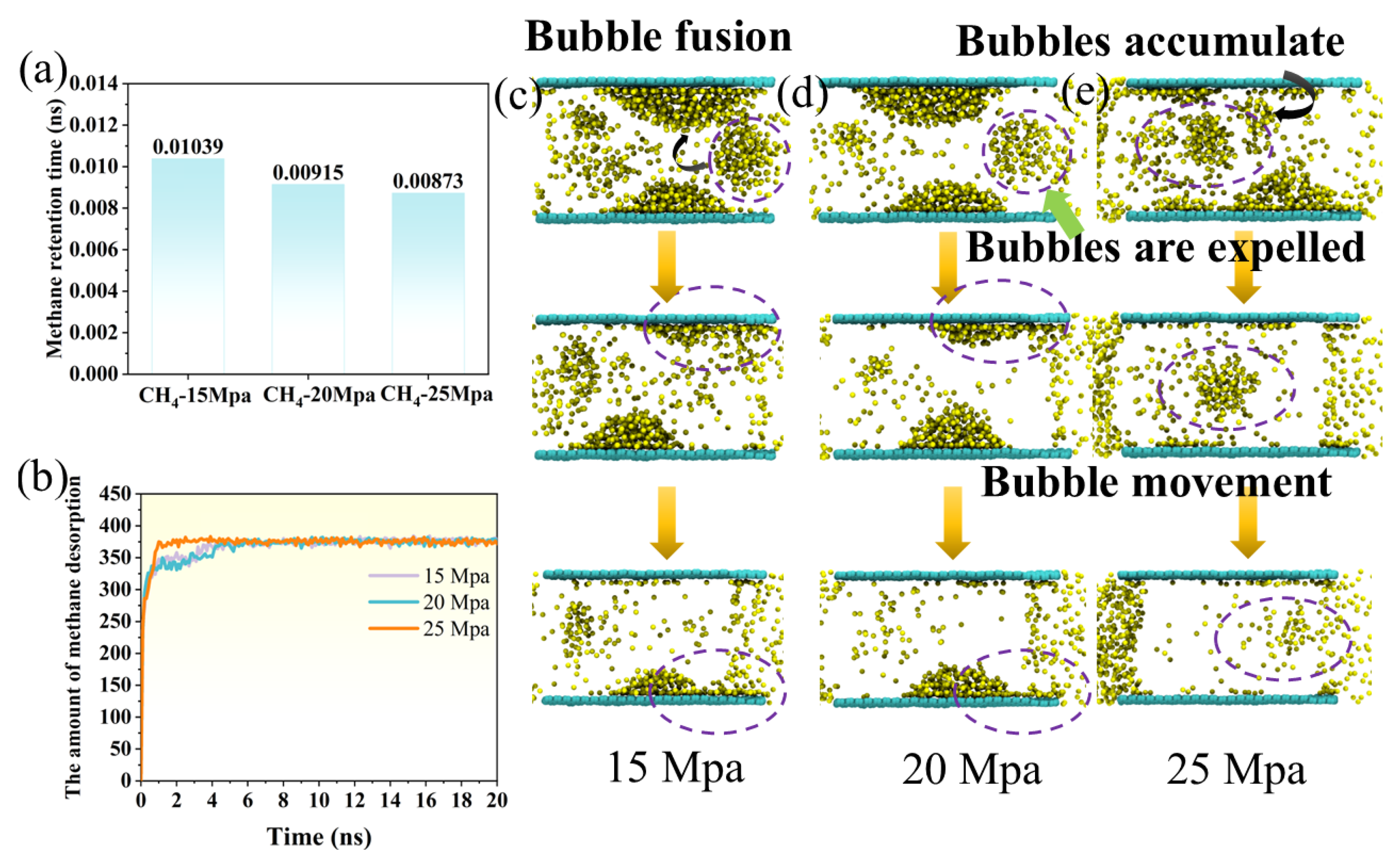
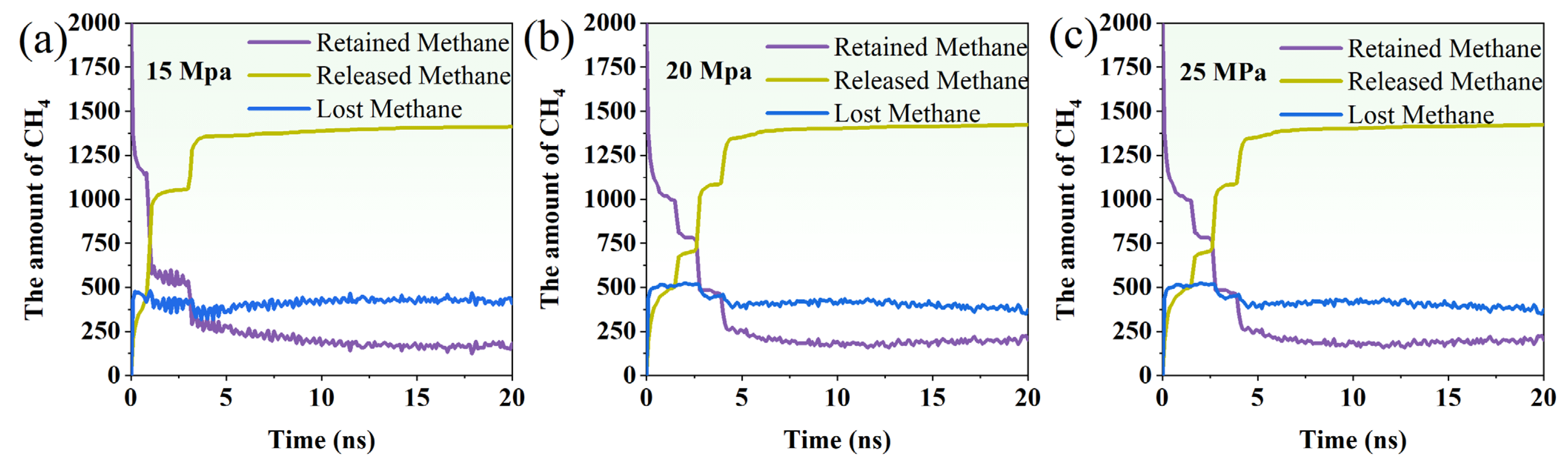
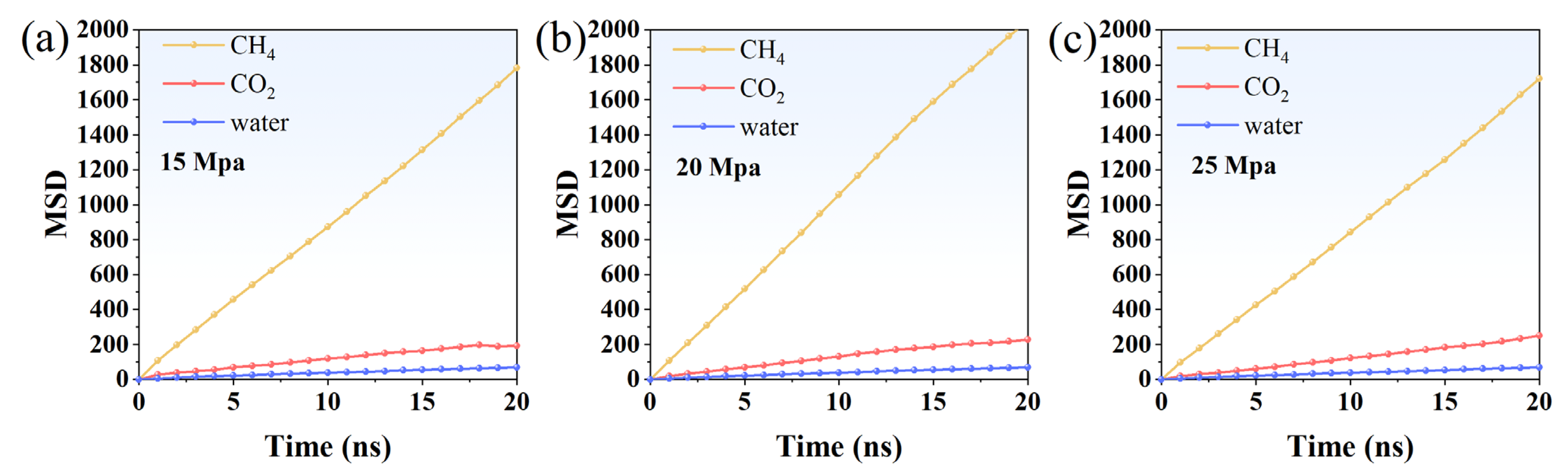
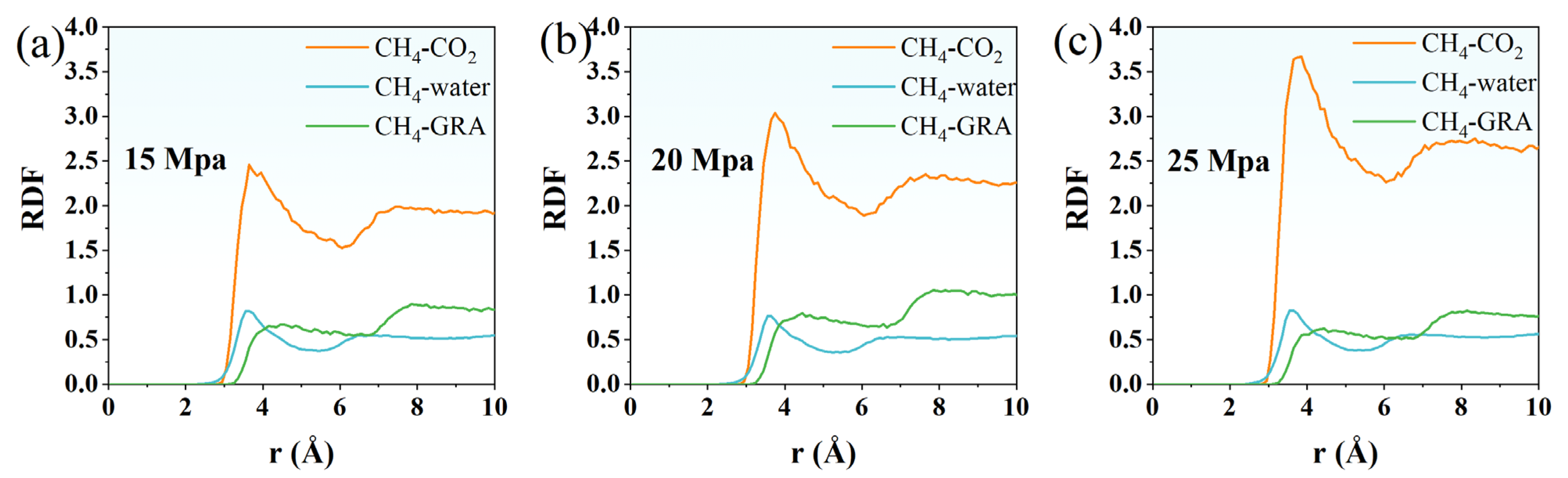
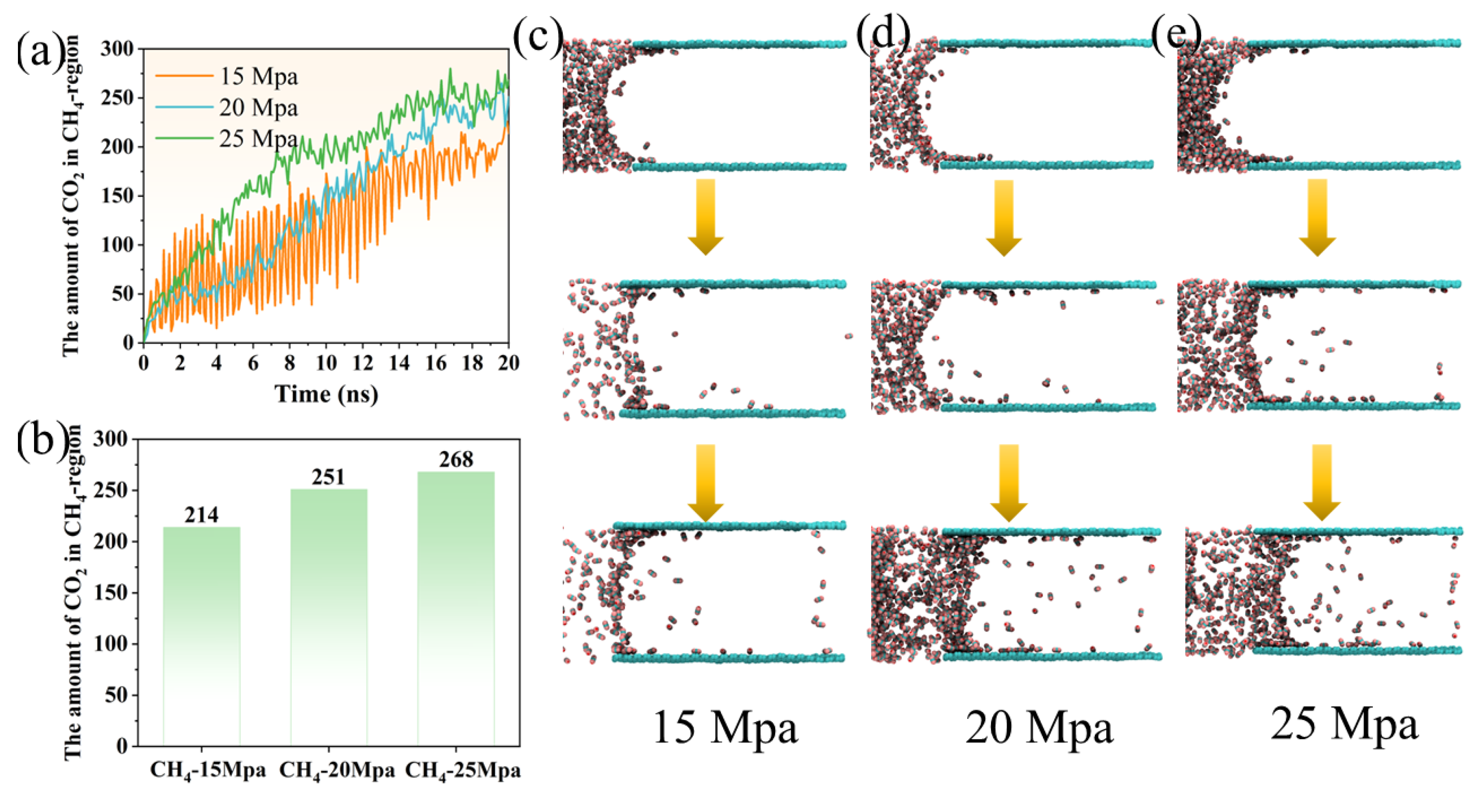
Efficient coalbed methane (CBM) recovery combined with carbon dioxide (CO2) sequestration is a promising strategy for sustainable energy production and greenhouse gas mitigation. However, the molecular mechanisms controlling pressure-dependent CH4 displacement by CO2 in coal nanopores remain insufficiently understood. In this study, molecular dynamics simulations were conducted to investigate CO2-driven CH4 recovery in a slit-pore coal model under driving pressures of 15, 20, and 25 Mpa. The simulations quantitatively captured the competitive adsorption, diffusion, and migration behaviors of CH4, CO2, and water, providing insights into how pressure influences enhanced coalbed methane (ECBM) recovery at the nanoscale. The results show that as the pressure increases from 15 to 25 Mpa, the mean residence time of CH4 on the coal surface decreases from 0.0104 ns to 0.0087 ns (a 16% reduction), reflecting accelerated molecular mobility. The CH4–CO2 radial distribution function peak height rises from 2.20 to 3.67, indicating strengthened competitive adsorption and interaction between the two gases. Correspondingly, the number of CO2 molecules entering the CH4 region grows from 214 to 268, demonstrating higher invasion efficiency at elevated pressures. These quantitative findings illustrate a clear shift from capillary-controlled desorption at low pressure to pressure-driven convection at higher pressures. The results provide molecular-level evidence for optimizing CO2 injection pressure to improve CBM recovery efficiency and CO2 storage capacity.
Keywords: coalbed methane; CO2 injection; molecular dynamics; gas displacement; pressure-dependent adsorption coalbed methane; CO2 injection; molecular dynamics; gas displacement; pressure-dependent adsorption