Integrated Application of Dynamic Risk-Based Inspection and Integrity Operating Windows in Petrochemical Plants


Abstract
1. Introduction
- Applications of these methods mainly depend on static data from the previous periodic inspection history; the latest variations of process conditions are not fed back into the risk calculation.
- Risk value may be overestimated or underestimated due to the process parameter fluctuations, which may lead to unexpected failures or excessive inspections.
- Risk control and mitigation strategies provided by the RBI method, such as applying inspections and maintenance, cannot fundamentally reduce the probability of failure. A degradation with high damage rate may still occur due to process parameter deviations, which would account for catastrophic failure of the equipment.
- The DRBI model and DRBI-IOWs integrated methodology need to be further investigated. Although the RBI-IOWs-integrated approach has been proposed in reference [8], a more accurate risk profile and tendency should be established to enable a more effective maintenance and management. It means that the real-time monitored parameters should not only be controlled within the IOW limits, but also should be used to assess the risk dynamically for inspection strategy development.
- A carefully designed software system with real-time data collection and preset calculation logic should be developed to apply the integrated method. Although commercial software for RBI applications was well developed, such as DNV’s Synergi Plant V5.6 and Lloyd’s All Assets Platform REV04, the functions of dynamic data interaction and risk calculation are still in development.
- Developed software system should be compatible, robust, and reliable, which is available for different plants, processes, loops, and corrosion mechanisms to achieve the consistency of risk trends and the monitored dynamic indicators.
2. Integrated Method of DRBI and IOWs
3. Development of Integrated DRBI and IOW Systems
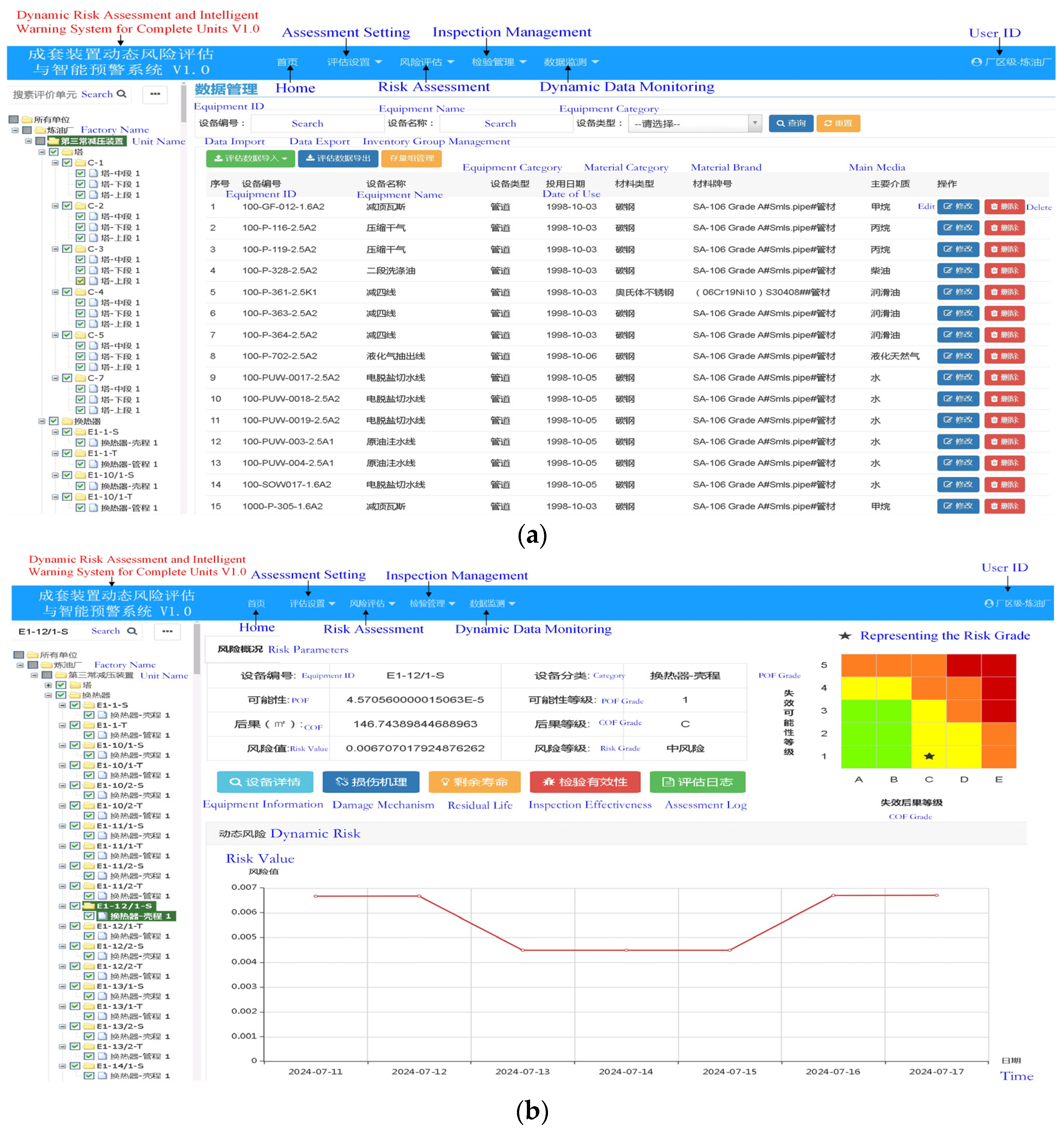
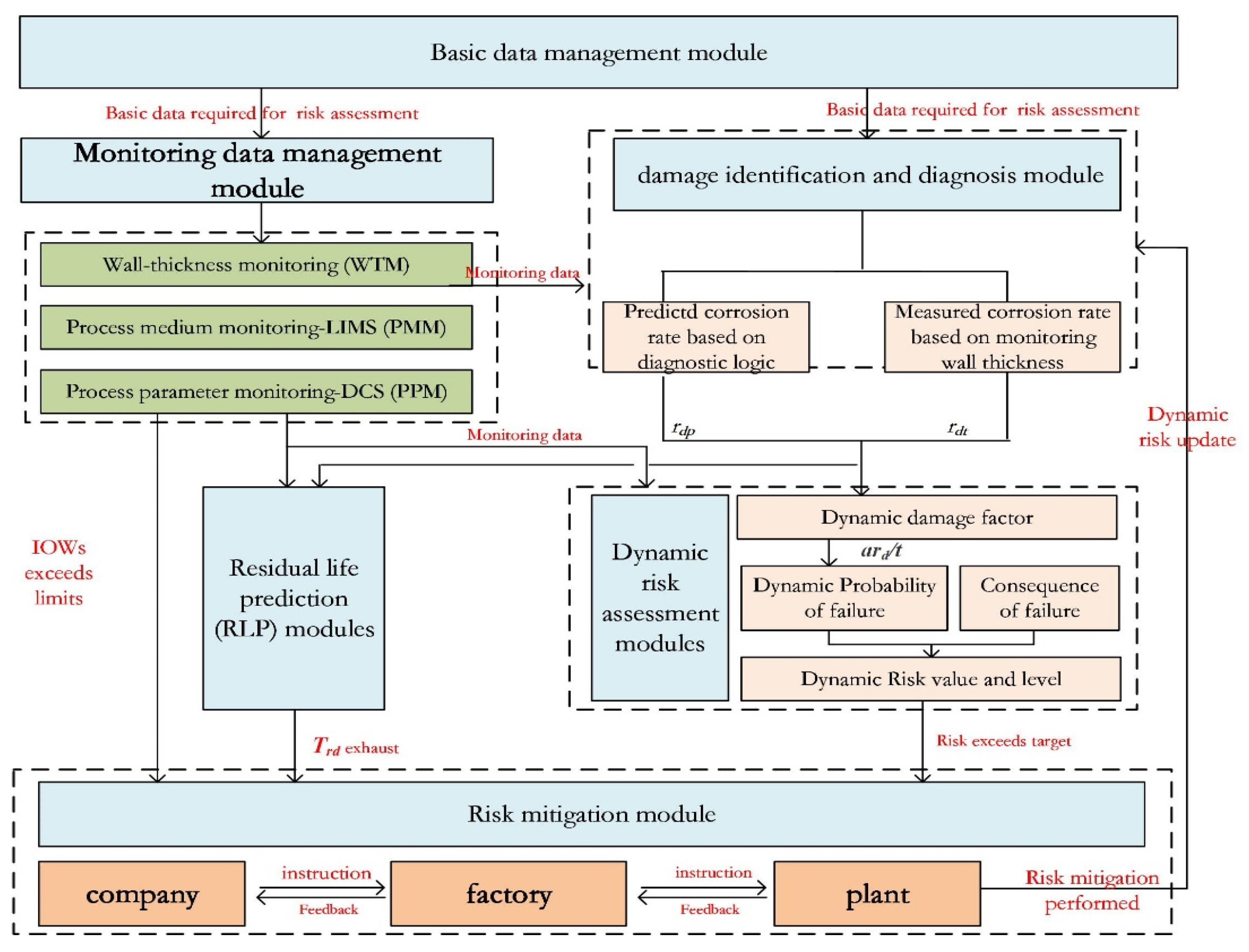
- More than 100 default values for evaluation data, which is convenient for engineering personnel users.
- Preset process, medium template, automatic damage diagnosis.
- Display of dynamic risk curve with traceability of risk calculation history.
- Three-level (company, factory, and plant) warning interface, which facilitates feedback on risk control actions.
4. Application of Integrated Method and System
5. Conclusions
Author Contributions
Funding
Data Availability Statement
Conflicts of Interest
Nomenclature
| CDU | crude distillation unit |
| DCS | distributed control system |
| DID | damage identification diagnosis |
| DRBI | dynamic risk-based inspection |
| IOWs | integrity operating windows |
| LIMS | laboratory information management system |
| PMM | process medium monitoring |
| PPM | process parameter monitoring |
| RBI | risk-based inspection |
| RBM | risk-based maintenance |
| RLP | residual life prediction |
| TAN | total acid number |
| WTM | wall-thickness monitoring |
| Art | component wall thickness factor |
| rd | diagnosed corrosion rate/sensitivity |
| rdt | long-term corrosion rate |
| t | nominal thickness |
| tT | monitored minimum wall-thickness |
| TT | assessment time point |
| T0 | latest wall thickness monitoring time point |
References
- Khan, F.I.; Haddara, M.M. Risk-based maintenance (RBM): A new approach for process plant inspection and maintenance. Process Saf. Prog. 2004, 23, 252–265. [Google Scholar] [CrossRef] [Scilit]
- Khan, F.I.; Haddara, M.M. Risk-based maintenance (RBM): A quantitative approach for maintenance/inspection scheduling and planning. J. Loss Prev. Process. Ind. 2003, 16, 561–573. [Google Scholar] [CrossRef] [Scilit]
- Elwerfalli, A.; Alsadaie, S.; Mujtaba, I.M. Estimation of shutdown schedule to remove fouling layers of heat exchangers using risk-based inspection (RBI). Process 2021, 9, 2177. [Google Scholar] [CrossRef] [Scilit]
- Kim, J.; Lim, W.; Lee, Y.; Kim, S.; Park, S.R.; Suh, S.K.; Moon, L. Development of corrosion control document database system in crude distillation unit. Ind. Eng. Chem. Res. 2011, 50, 8272–8277. [Google Scholar] [CrossRef] [Scilit]
- Alsyouf, I. The role of maintenance in improving companies’s productivity and profitability. Int. J. Prod. Econ. 2007, 105, 70–78. [Google Scholar] [CrossRef] [Scilit]
- Alrifaey, M.; Hong, T.S.; Asarry, A.; Supeni, E.E.; Ang, C.K. Optimization and selection of maintenance policies in an electrical gas turbine generator based on the hybrid reliability-centered maintenance (RCM) model. Process 2020, 204, 670. [Google Scholar] [CrossRef] [Scilit]
- Wang, Q.F.; Liu, W.B.; Zhong, X.; Yang, J.F. Development and application of equipment maintenance and safety integrity management system. J. Loss Prev. Process. Ind. 2011, 24, 321–332. [Google Scholar]
- Arena, E.; Fargione, G.; Giudice, F.; Latona, E. RBI-IOWs integrated approach to risk assessment: Methodological framework and application. J. Loss Prev. Process. Ind. 2022, 79, 104838. [Google Scholar] [CrossRef] [Scilit]
- Arunraj, N.S.; Maiti, J. Risk-based maintenance—Techniques and applications. J. Hazard. Mater. 2007, 142, 653–661. [Google Scholar] [CrossRef] [Scilit]
- Bertolini, M.; Bevilacqua, M.; Ciarapica, F.E.; Giacchetta, G. Development of risk-based inspection and maintenance procedures for an oil refinery. J. Loss Prev. Process. Ind. 2009, 22, 244–253. [Google Scholar] [CrossRef] [Scilit]
- Leoni, L.; Carlo, F.D.; Paltrinieri, N.; Sgarbossa, F.; BahooToroody, A. On risk-based maintenance: A comprehensive review of three approaches to track the impact of consequence modelling for predicting maintenance actions. J. Loss Prev. Process. Ind. 2021, 72, 104555. [Google Scholar] [CrossRef] [Scilit]
- Fauriat, W.; Zio, E. Optimization of an aperiodic sequential inspection and condition-based maintenance policy driven by value of information. Reliab. Eng. Syst. Saf. 2020, 204, 107133. [Google Scholar] [CrossRef] [Scilit]
- Zou, G.; Banisoleiman, K.; Gonzalez, A.; Faber, M.H. Probabilistic investigations into the value of information: A comparison of condition-based and time-based maintenance strategies. Ocean Eng. 2019, 188, 106181. [Google Scholar] [CrossRef] [Scilit]
- Cullum, J.; Binns, J.; Lonsdale, M.; Abbassi, R.; Garaniya, V. Risk-based maintenance scheduling with application to naval vessels and ships. Ocean Eng. 2018, 148, 476–485. [Google Scholar] [CrossRef] [Scilit]
- General Administration of Quality Supervision, Inspection and Quarantine. Special Equipment Safety Technical Specifications TSG-21, Supervision Regulation on Safety Technology for Stationary Pressure Vessel; General Administration of Quality Supervision, Inspection and Quarantine: Beijing, China, 2016. [Google Scholar]
- Recommended Practice 580; Risk-Based Inspection, 3rd ed. American Petroleum Institute: Washington, DC, USA, 2016.
- Recommended Practice 581; Risk-Based Inspection Methodology, 3rd ed. American Petroleum Institute: Washington, DC, USA, 2020.
- Hu, H.J.; Cheng, G.X.; Li, Y.; Tang, Y.P. Risk-based maintenance strategy and its applications in a petrochemical reforming reaction system. J. Loss Prev. Process. Ind. 2009, 22, 392–397. [Google Scholar] [CrossRef] [Scilit]
- Bhatia, K.; Khan, F.; Patel, H.; Abbassi, R. Dynamic risk-based inspection methodology. J. Loss Prev. Process. Ind. 2019, 62, 103974. [Google Scholar] [CrossRef] [Scilit]
- Recommended Practice 584; Integrity Operating Windows, 1st ed. American Petroleum Institute: Washington, DC, USA, 2014.
- Lagad, V.; Zaman, V. Utilizing integrity operating windows (IOWs) for enhanced plant reliability & safety. J. Loss Prev. Process. Ind. 2015, 35, 352–356. [Google Scholar]
- Xing, J.D.; Zeng, Z.G.; Zio, E. A framework for dynamic risk assessment with condition monitoring data and inspection data. Reliab. Eng. Syst. Saf. 2019, 191, 106552. [Google Scholar] [CrossRef] [Scilit]
- Zio, E. The future of risk assessment. Reliab. Eng. Syst. Saf. 2018, 177, 176–190. [Google Scholar] [CrossRef] [Scilit]
- Kim, H.; Lee, S.H.; Park, J.S.; Kim, H.; Chang, Y.S.; Heo, G. Reliability data update using condition monitoring and prognostics in probabilistic safety assessment. Nucl. Eng. Technol. 2015, 47, 204–211. [Google Scholar] [CrossRef] [Scilit]
- Zeng, Z.G.; Kang, R.; Chen, Y.X. Using PoF models to predict system reliability considering failure collaboration. Chin. J. Aeronaut. 2016, 29, 1294–1301. [Google Scholar] [CrossRef] [Scilit]
- Khan, F.; Hashemi, S.J.; Paltrinieri, N.; Amyotte, P.; Cozzani, V.; Reniers, G. Dynamic risk management: A contemporary approach to process safety management. Curr. Opin. Chem. Eng. 2016, 14, 9–17. [Google Scholar] [CrossRef] [Scilit]
- Recommended Standard GB/T 26610; Guideline for Implementation of Risk-Based Inspection of Pressure Equipment. General Administration of Quality Supervision: Beijing, China, 2022.
- Recommended Practice 571; Damage Mechanisms Affecting Fixed Equipment in the Refining Industry, 3rd ed. American Petroleum Institute: Washington, DC, USA, 2020.
- Recommended Practice 939-C; Guidelines for Avoiding Sulfidation (Sulfidic) Corrosion Failures in Oil Refineries, 2nd ed. American Petroleum Institute: Washington, DC, USA, 2019.
- Recommended Practice 510; Pressure Vessel Inspection Code: In-Service Inspection, Rating, Repair, and Alteration, 10th ed. American Petroleum Institute: Washington, DC, USA, 2014.
- Recommended Practice 570; Piping Inspection Code: In-Service Inspection, Rating, Repair, and Alteration of Piping Systems, 4th ed. American Petroleum Institute: Washington, DC, USA, 2016.
- Yang, J.F.; Li, R.; Chen, L.C.; Hu, Y.H.; Dou, Z. Research on equipment corrosion diagnosis method and prediction model driven by data. Process Saf. Environ. Prot. 2022, 158, 418–431. [Google Scholar] [CrossRef] [Scilit]
- Yang, J.F.; Suo, G.Y.; Chen, L.C.; Dou, Z.; Hu, Y.H. Prediction method of key corrosion state parameters in refining process based on multi-source data. Energy 2023, 263, 125594. [Google Scholar] [CrossRef] [Scilit]



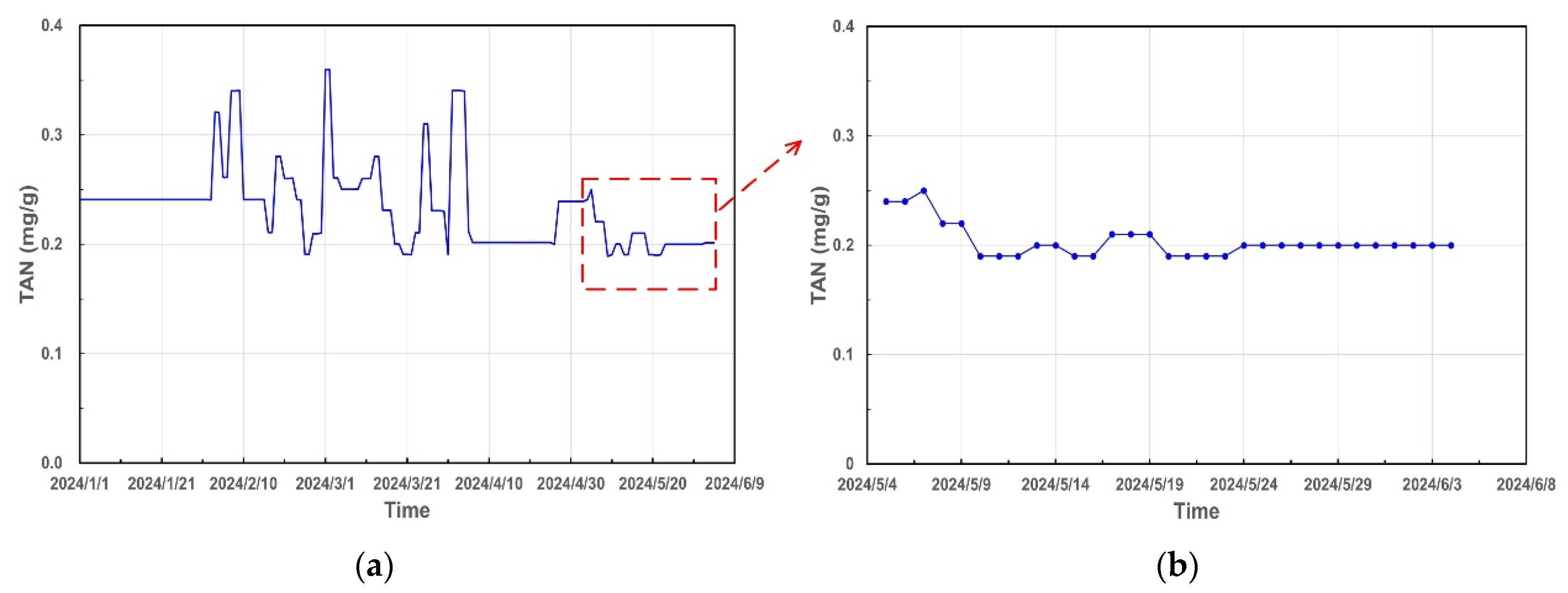
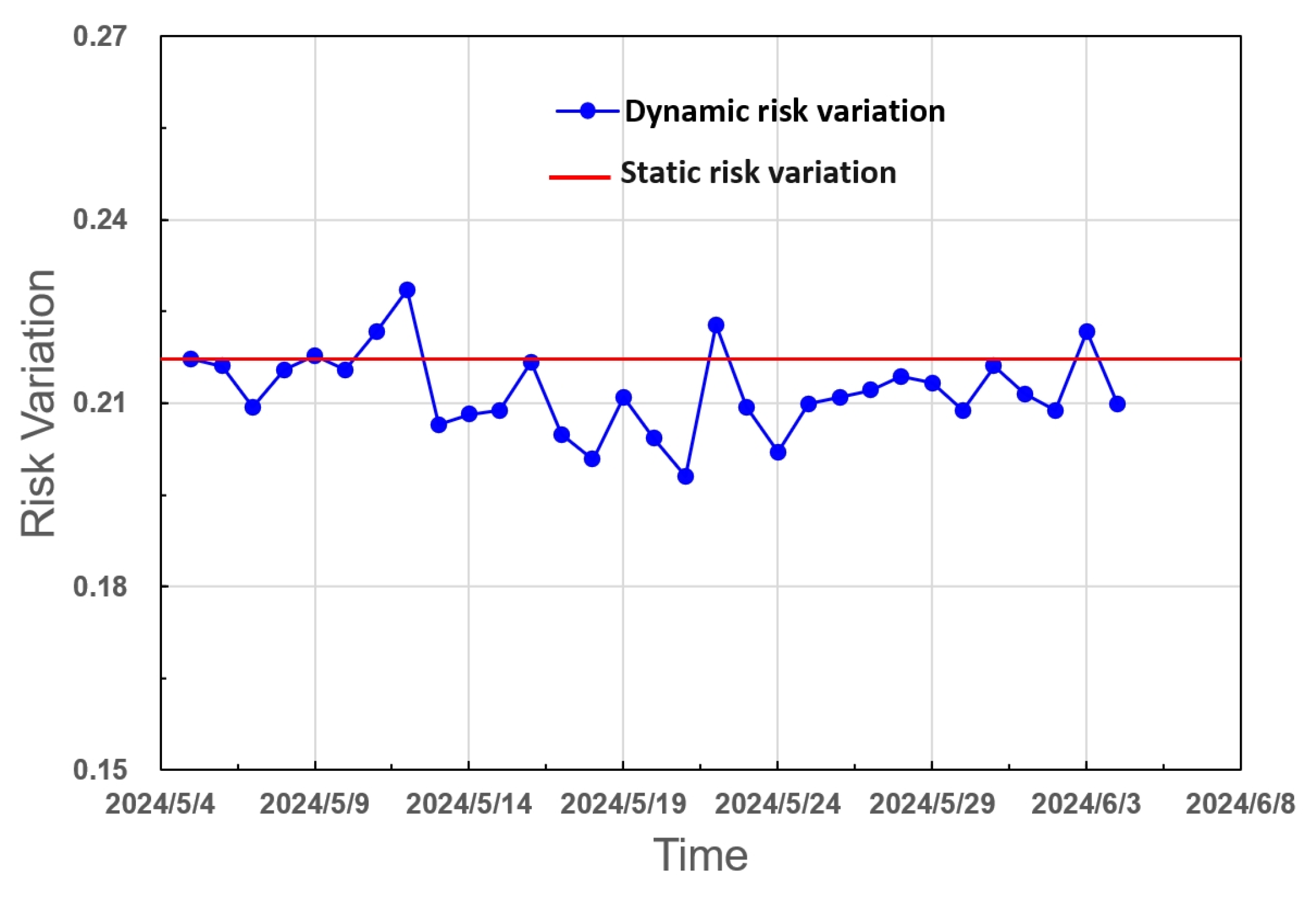
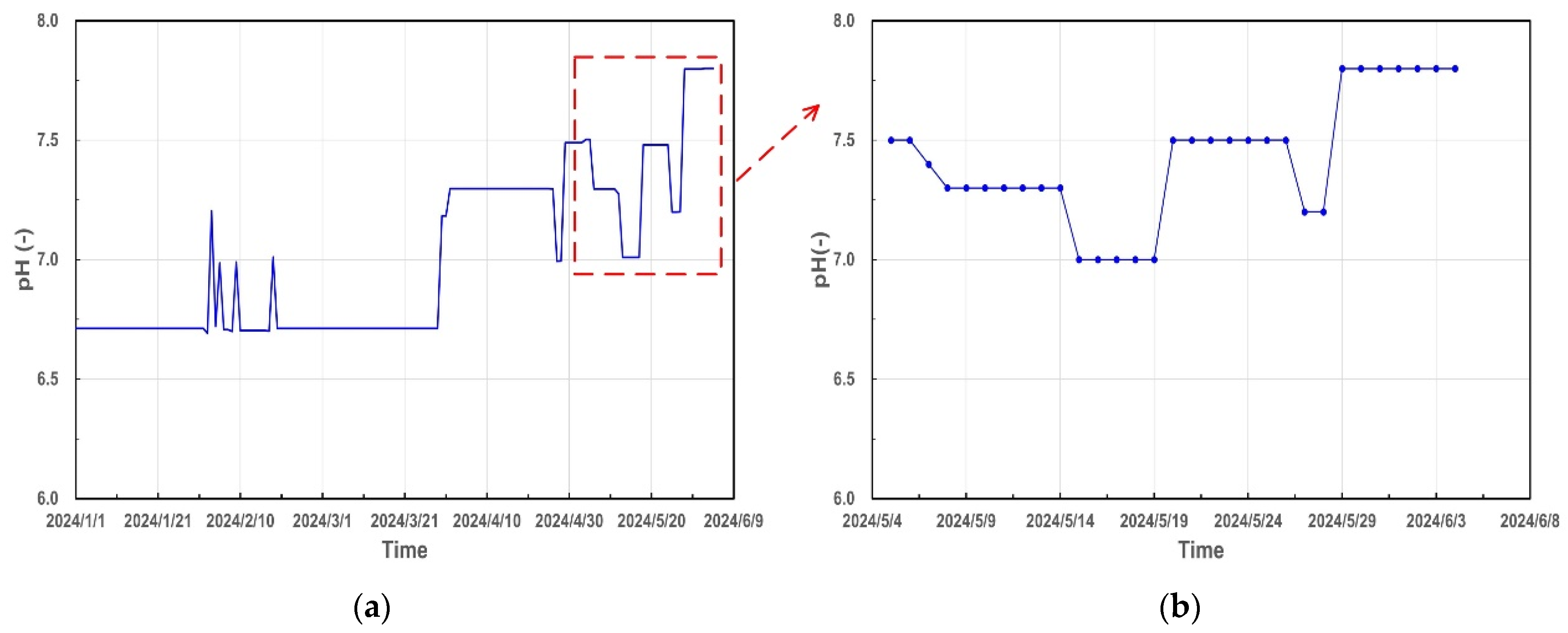


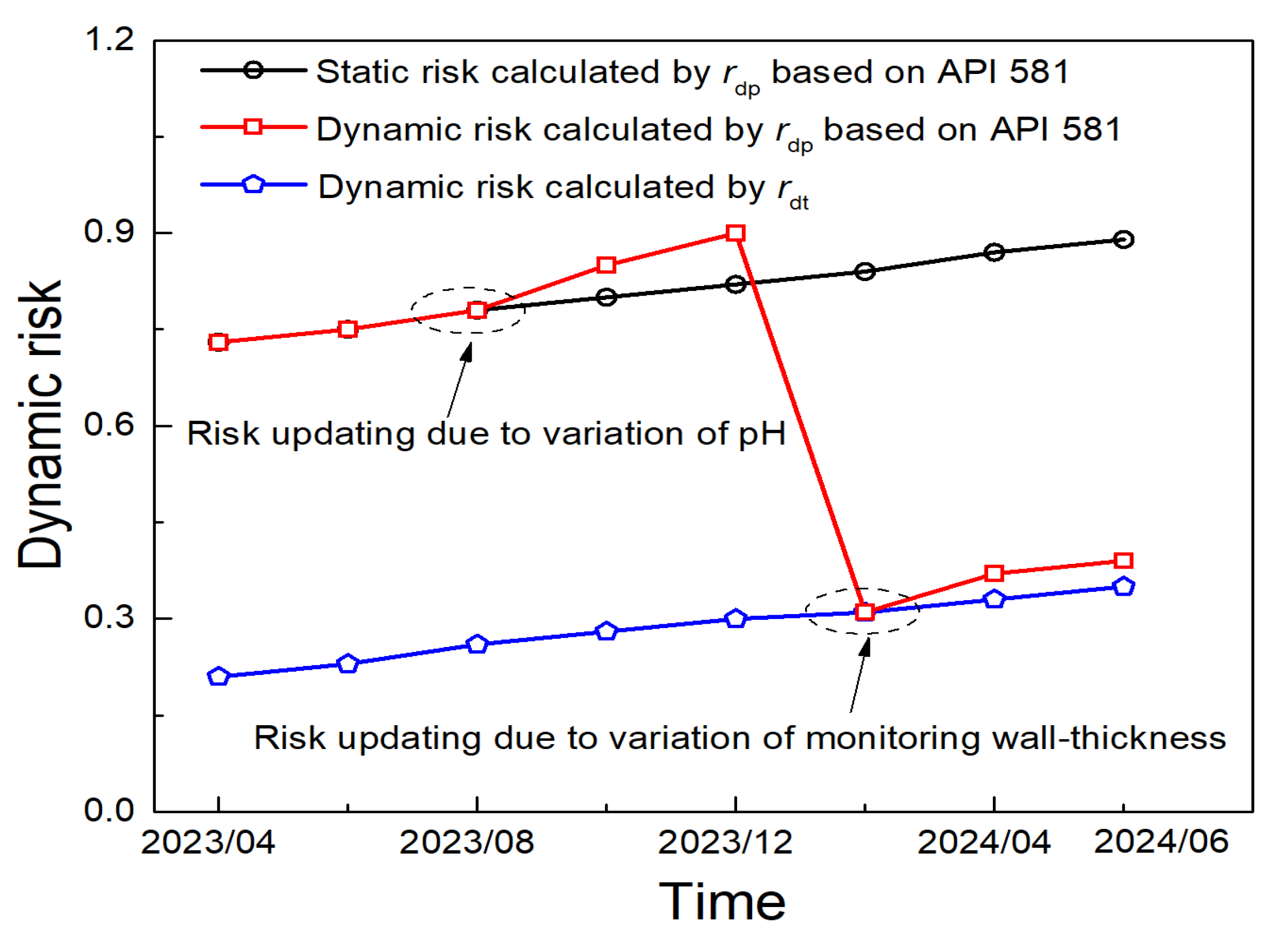


| No. | Corrosion Loops | Damage Mechanisms | LIMS Indicators | DCS Indicators | CMS Indicators |
|---|---|---|---|---|---|
| 1 | Crude oil circuit before desalting | Hydrochloric acid corrosion | pH, Cl− content | Temperature | Wall thickness |
| 2 | Crude oil circuit after desalting | Hydrochloric acid corrosion | pH, Cl− content | Temperature | Wall thickness |
| 3 | Prefractionator top oil-gas | Hydrochloric acid-ammonium salt corrosion | pH, Cl− content | Temperature | Wall thickness |
| 4 | Prefractionator bottom oil-gas | Sulfidation-naphthenic acid corrosion | S content, TAN | Temperature, flow rate | Wall thickness |
| 5 | Atmospheric tower overhead circuit | Hydrochloric acid-ammonium salt corrosion | pH, Cl− content | Temperature | Wall thickness |
| 6 | First-line circuit of atmospheric tower | Hydrochloric acid corrosion | pH, Cl− content | Temperature | Wall thickness |
| 7 | Second-line circuit of atmospheric tower | Sulfidation-naphthenic acid corrosion | S content, TAN | Temperature, flow rate | Wall thickness |
| 8 | Third-line circuit of atmospheric tower | Sulfidation-naphthenic acid corrosion | S content, TAN | Temperature, flow rate | Wall thickness |
| 9 | Atmospheric tower | Sulfidation-naphthenic acid corrosion | S content, TAN | Temperature, flow rate | Wall thickness |
| 10 | First-line circuit of vacuum tower | Hydrochloric acid-ammonium salt corrosion | pH, Cl− content | Temperature | Wall thickness |
| 11 | Second-line circuit of vacuum tower | Sulfidation-naphthenic acid corrosion | S content, TAN | Temperature, flow rate | Wall thickness |
| 12 | Third-line circuit of vacuum tower | Sulfidation-naphthenic acid corrosion | S content, TAN | Temperature, flow rate | Wall thickness |
| 13 | Fourth-line circuit of vacuum tower | Sulfidation-naphthenic acid corrosion | S content, TAN | Temperature, flow rate | Wall thickness |
| 14 | Vacuum tower bottom | Sulfidation-naphthenic acid corrosion | S content, TAN | Temperature, flow rate | Wall thickness |
| Equipment ID | 250-P-106-2.5A2 | E1-2/1-T | C-1-Bottom |
|---|---|---|---|
| Equipment name | Second-branch crude oil line | Tube-side of heat exchanger | Prefractionator bottom |
| Corrosion loop | Prefractionator bottom oil-gas | Atmospheric tower overhead circuit | Prefractionator bottom oil-gas |
| Operation temperature (°C) | 255 | 124 | 250 |
| Operation pressure (MPa) | 1.75 | 0.7 | 0.08 |
| Nominal thickness (mm) | 8 | 28 | 14 |
| Diameter (mm) | 250 | 900 | 3800 |
| Length/height (m) | 47.5 | 2 | 2.85 |
| Material brand | SA 106 Gr A | SA 106 Gr A | SA 106 Gr A |
| Main medium | Typical crude oil | Naphtha | Typical crude oil |
Disclaimer/Publisher’s Note: The statements, opinions and data contained in all publications are solely those of the individual author(s) and contributor(s) and not of MDPI and/or the editor(s). MDPI and/or the editor(s) disclaim responsibility for any injury to people or property resulting from any ideas, methods, instructions or products referred to in the content. |
© 2024 by the authors. Licensee MDPI, Basel, Switzerland. This article is an open access article distributed under the terms and conditions of the Creative Commons Attribution (CC BY) license (https://creativecommons.org/licenses/by/4.0/).
Share and Cite
Han, Z.; Liu, J.; Li, J.; Kang, H.; Xie, G. Integrated Application of Dynamic Risk-Based Inspection and Integrity Operating Windows in Petrochemical Plants. Processes 2024, 12, 1509. https://doi.org/10.3390/pr12071509
Han Z, Liu J, Li J, Kang H, Xie G. Integrated Application of Dynamic Risk-Based Inspection and Integrity Operating Windows in Petrochemical Plants. Processes. 2024; 12(7):1509. https://doi.org/10.3390/pr12071509
Chicago/Turabian StyleHan, Zhiyuan, Juanbo Liu, Jun Li, Haoyuan Kang, and Guoshan Xie. 2024. "Integrated Application of Dynamic Risk-Based Inspection and Integrity Operating Windows in Petrochemical Plants" Processes 12, no. 7: 1509. https://doi.org/10.3390/pr12071509
APA StyleHan, Z., Liu, J., Li, J., Kang, H., & Xie, G. (2024). Integrated Application of Dynamic Risk-Based Inspection and Integrity Operating Windows in Petrochemical Plants. Processes, 12(7), 1509. https://doi.org/10.3390/pr12071509