Article

Estimating the Influencing Factors of Gas–Water Relative Permeability in Condensate Gas Reservoirs under High-Temperature and High-Pressure Conditions

1
CNOOC Energy Technology & Services Limited, CNOOC EnerTech Drilling & Production Zhanjiang Branch, Zhanjiang 524057, China
2
College of Petroleum Engineering, Guangdong University of Petrochemical Technology, Maoming 525000, China
*
Authors to whom correspondence should be addressed.
Processes 2024, 12(4), 728; https://doi.org/10.3390/pr12040728
Submission received: 2 March 2024 / Revised: 27 March 2024 / Accepted: 29 March 2024 / Published: 3 April 2024

Abstract

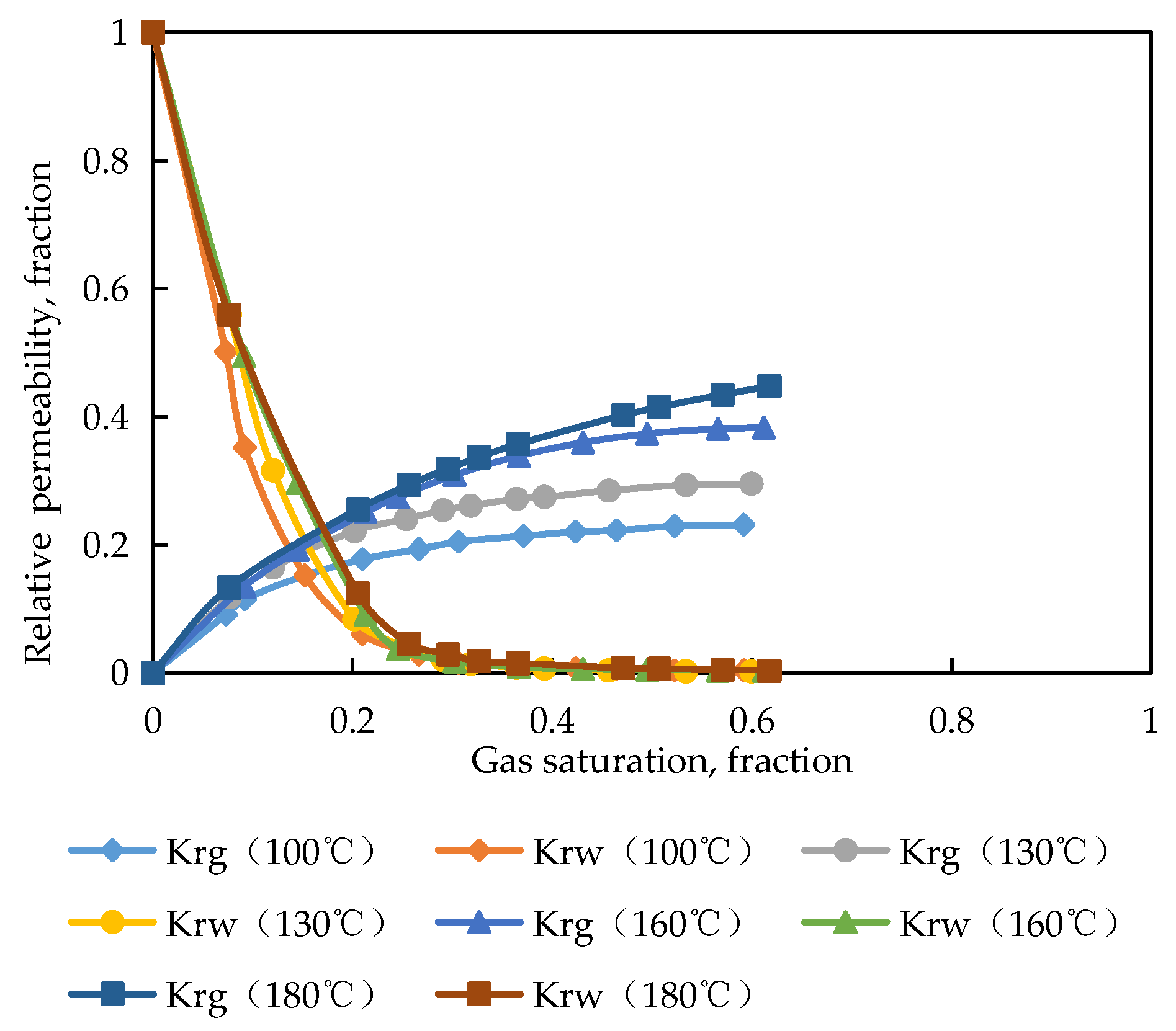
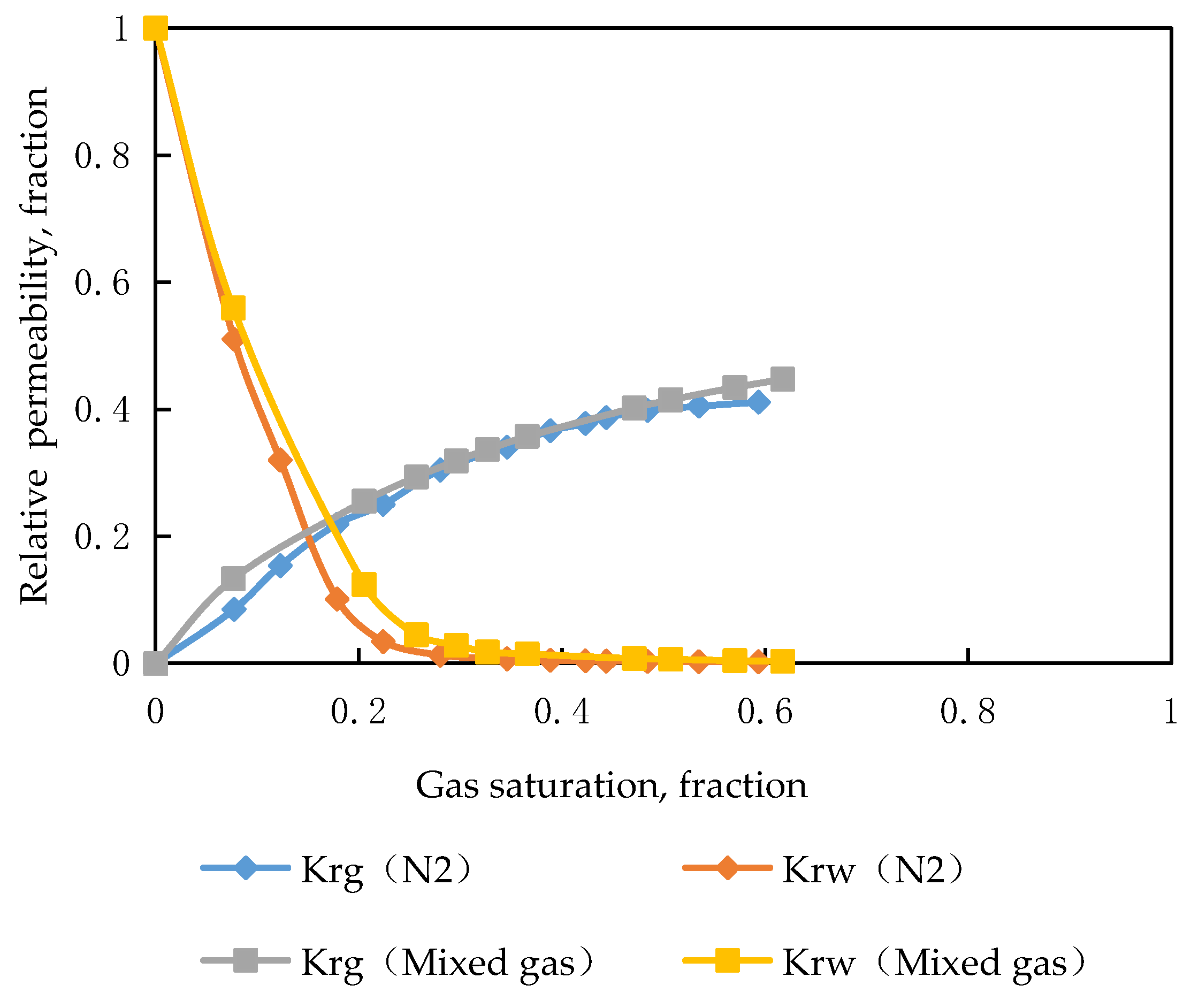
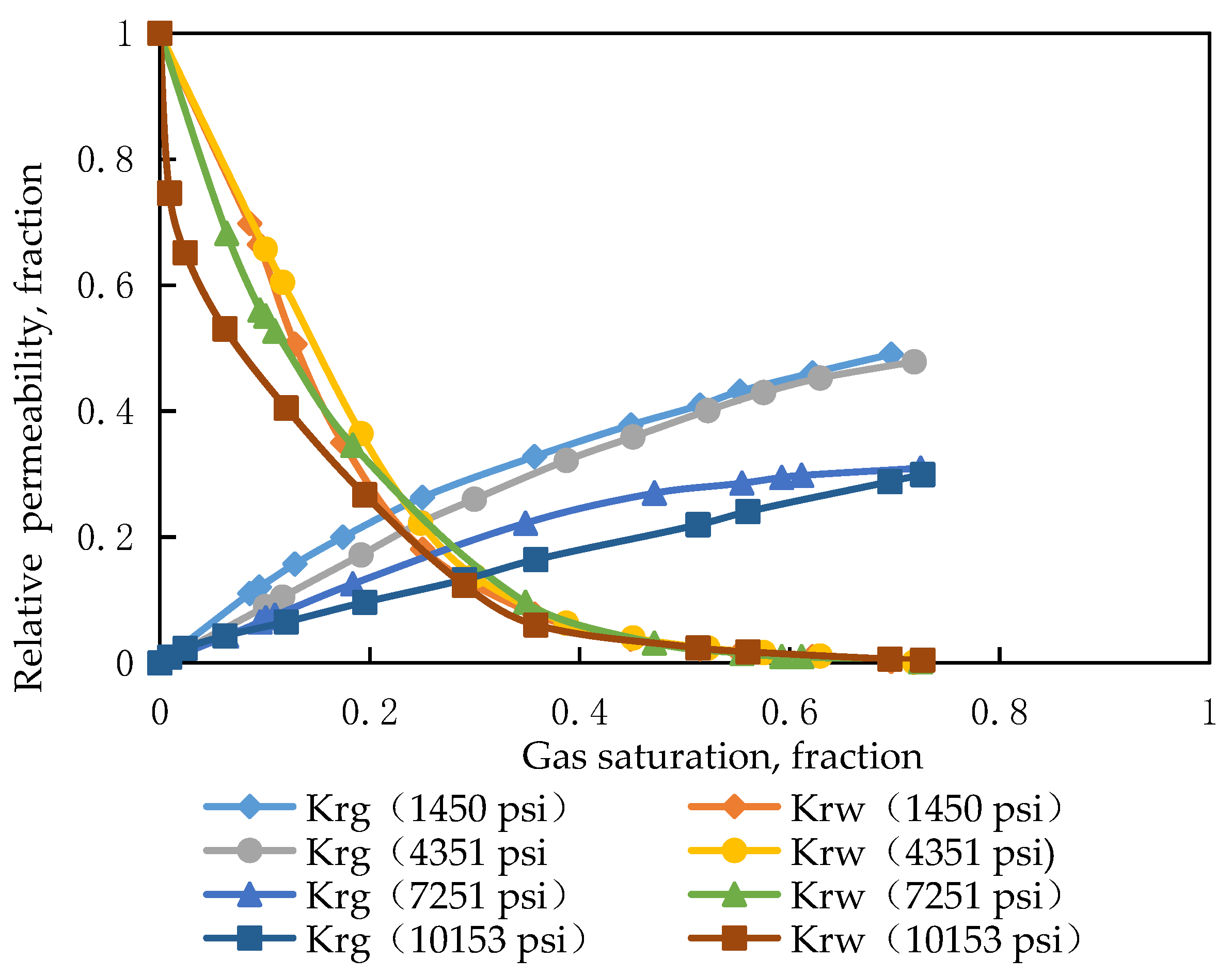
The gas–water relative permeability curve plays a crucial role in reservoir simulation and development for condensate gas reservoirs. This paper conducted a series of high-temperature and high-pressure analysis experiments on real gas cores from Wells A and B in Block L of the Yinggehai Basin to investigate the effects of temperature, pressure, and different types of gas media on gas–water seepage. The gas–water relative permeability was simulated in this experiment through variations in temperature, pressure, and gas composition. Temperature has a significant impact on both gas and water relative permeability, particularly on gas relative permeability. As temperature increases, gas relative permeability shows a substantial increase, while water relative permeability remains relatively unchanged. Under the same effective stress, increasing pressure causes downward shifts in both the gas and water relative permeability curves; however, there is a more pronounced decrease in gas relative permeability. Gas composition has minimal influence on the gas–water relative permeability except at higher water saturation where differences become apparent. When water saturation ranges from 80% to 50%, there is no significant variation observed in the measured relative permeability of different displacement gases. However, as water saturation exceeds 80%, distinctions gradually emerge. The relative permeability of nitrogen is approximately 92% lower than that of mixed gas when the bound water saturation reaches 80%. This investigation provides valuable insights into the characteristics of gas–water relative permeability in high-temperature and high-pressure condensate reservoirs within Yinggehai Basin, thereby offering significant contributions to development strategies for similar reservoirs.
Keywords: gas–water relative permeability; high temperature; high pressure; condensate gas reservoir; influencing factors gas–water relative permeability; high temperature; high pressure; condensate gas reservoir; influencing factors