Article

Bi-Level Inverse Robust Optimization Dispatch of Wind Power and Pumped Storage Hydropower Complementary Systems

1
State Grid Corporation of China, Beijing 100031, China
2
China Electric Power Research Institute, Beijing 100192, China
3
Electric Power Research Institute State Grid Jibei Electric Power Co., Ltd., Beijing 100054, China
*
Author to whom correspondence should be addressed.
Processes 2024, 12(4), 729; https://doi.org/10.3390/pr12040729
Submission received: 21 February 2024 / Revised: 21 March 2024 / Accepted: 29 March 2024 / Published: 4 April 2024
(This article belongs to the Special Issue Process Design and Modeling of Low-Carbon Energy Systems)

Abstract

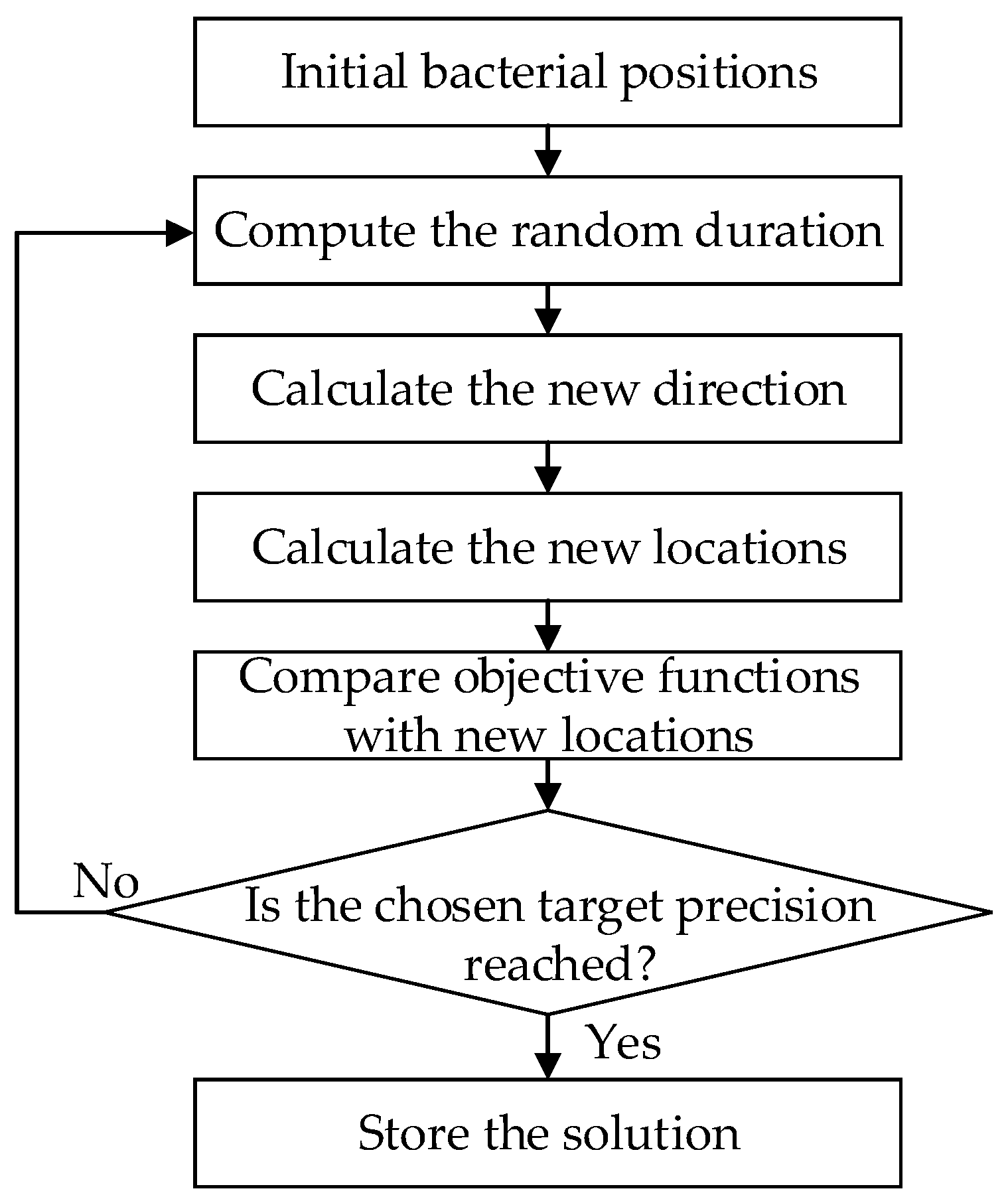
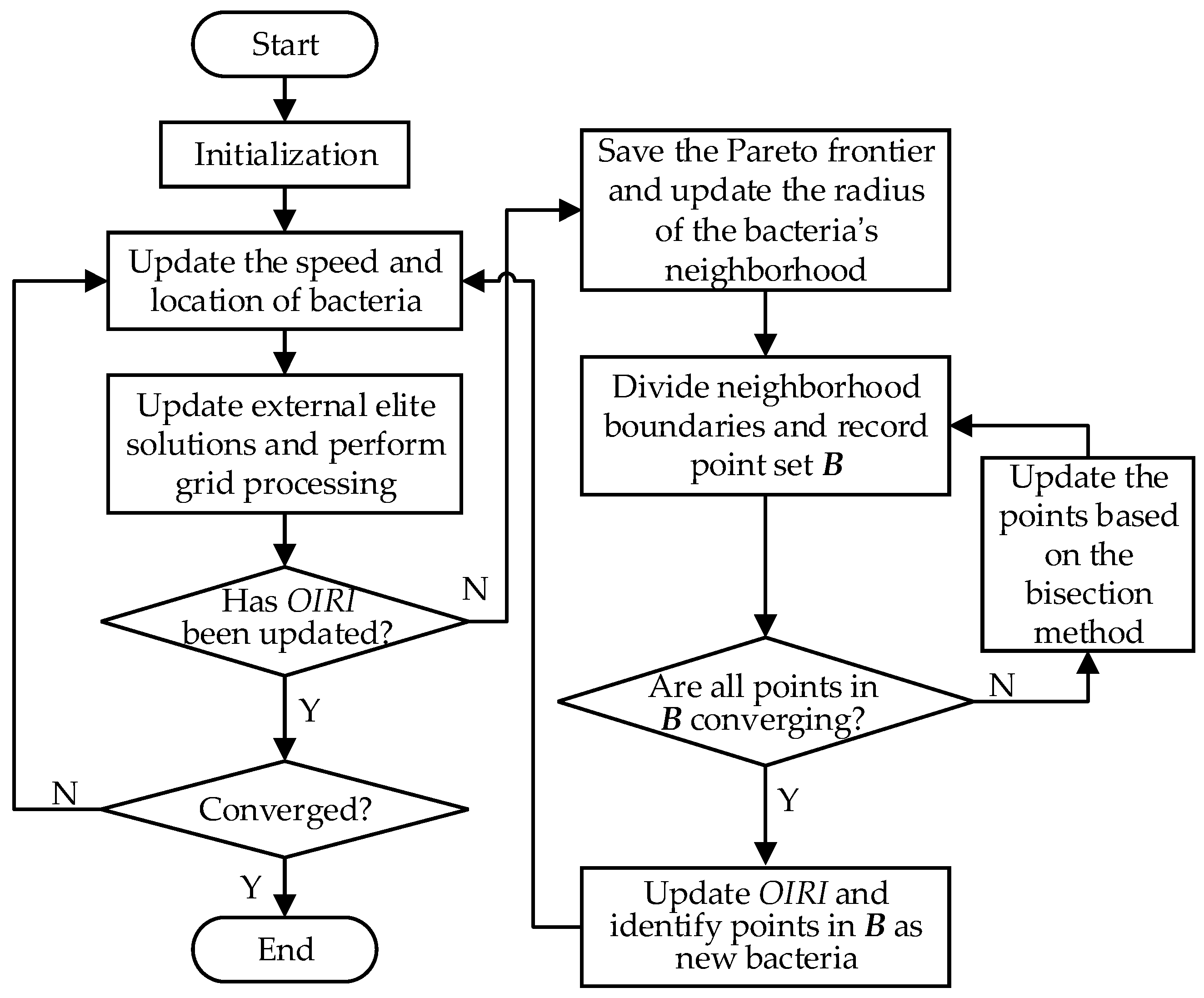
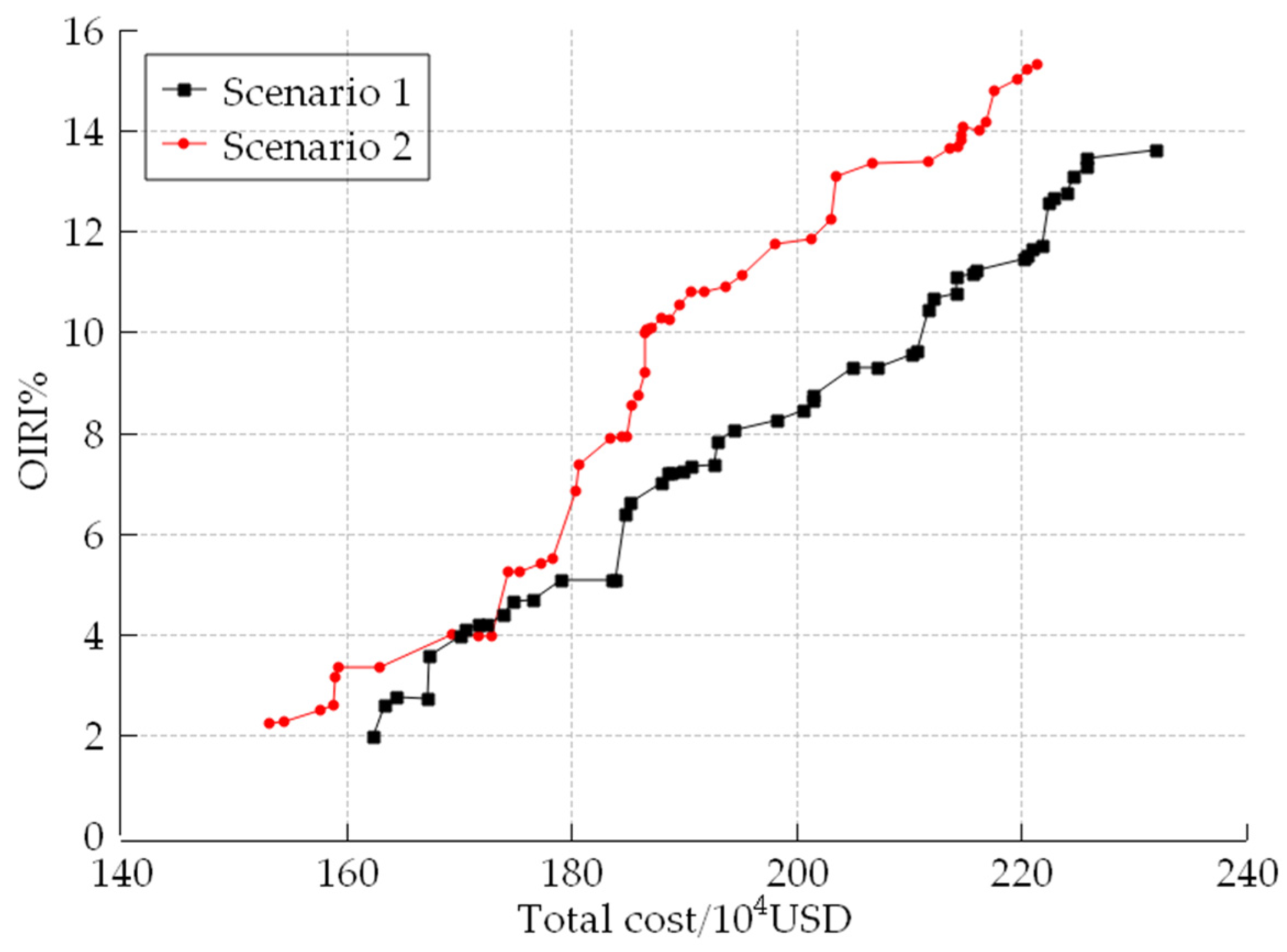
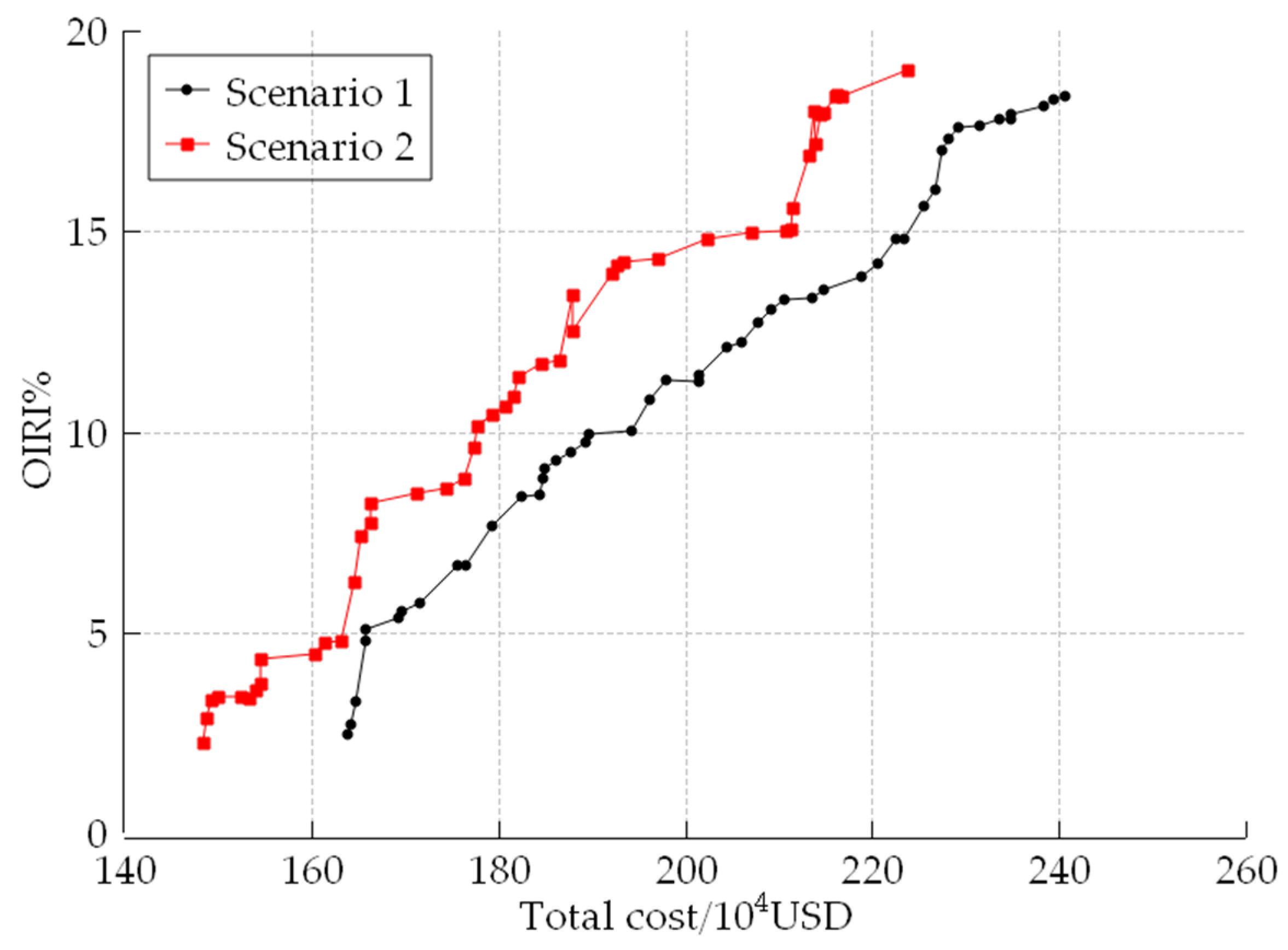
This paper presents a bi-level inverse robust economic dispatch optimization model consisting of wind turbines and pumped storage hydropower (PSH). The inner level model aims to minimize the total generation cost, while the outer level introduces the optimal inverse robust index (OIRI) for wind power output based on the ideal perturbation constraints of the objective function. The OIRI represents the maximum distance by which decision variables in the non-dominated frontier can be perturbed. Compared to traditional methods for quantifying the worst-case sensitivity region using polygons and ellipses, the OIRI can more accurately quantify parameter uncertainty. We integrate the grid multi-objective bacterial colony chemotaxis algorithm and the bisection method to solve the proposed model. The former is adopted to solve the inner level problem, while the latter is used to calculate the OIRI. The proposed approach establishes the relationship between the maximum forecast deviation and the minimum generation cost associated with each non-dominated solution in the optimal load allocation. To demonstrate its economic viability and effectiveness, we simulate the proposed approach using real power system operation data and conduct a comparative analysis.
Keywords: wind power; pumped storage hydropower; economic dispatch wind power; pumped storage hydropower; economic dispatch