An Efficient and Accurate Approach to Electrical Boundary Layer Nanofluid Flow Simulation: A Use of Artificial Intelligence




Abstract
1. Introduction
2. Proposed Numerical Scheme
3. Stability Analysis
4. Consistency of the Proposed Scheme
5. Problem Formulation
6. Results and Discussion
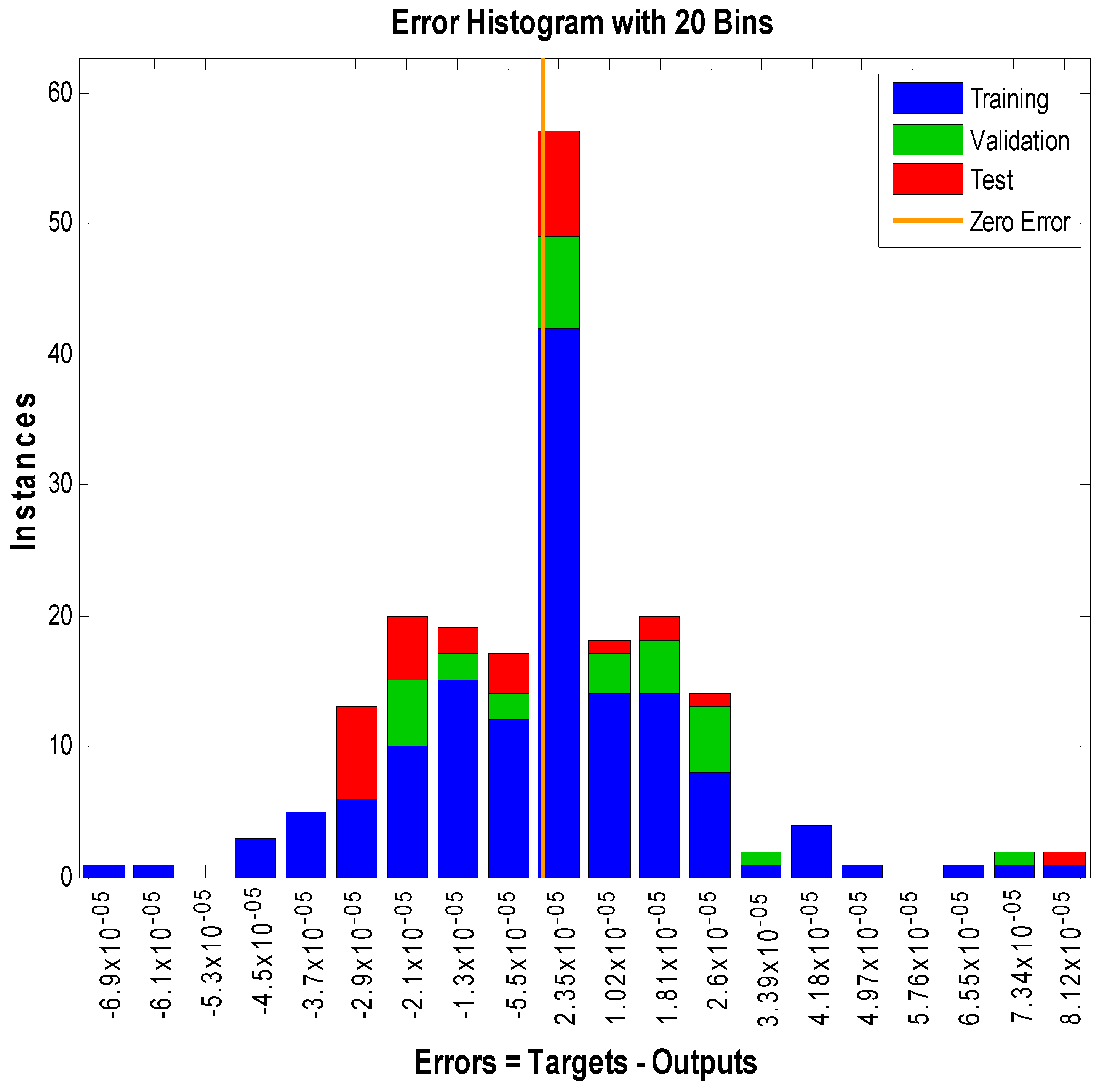
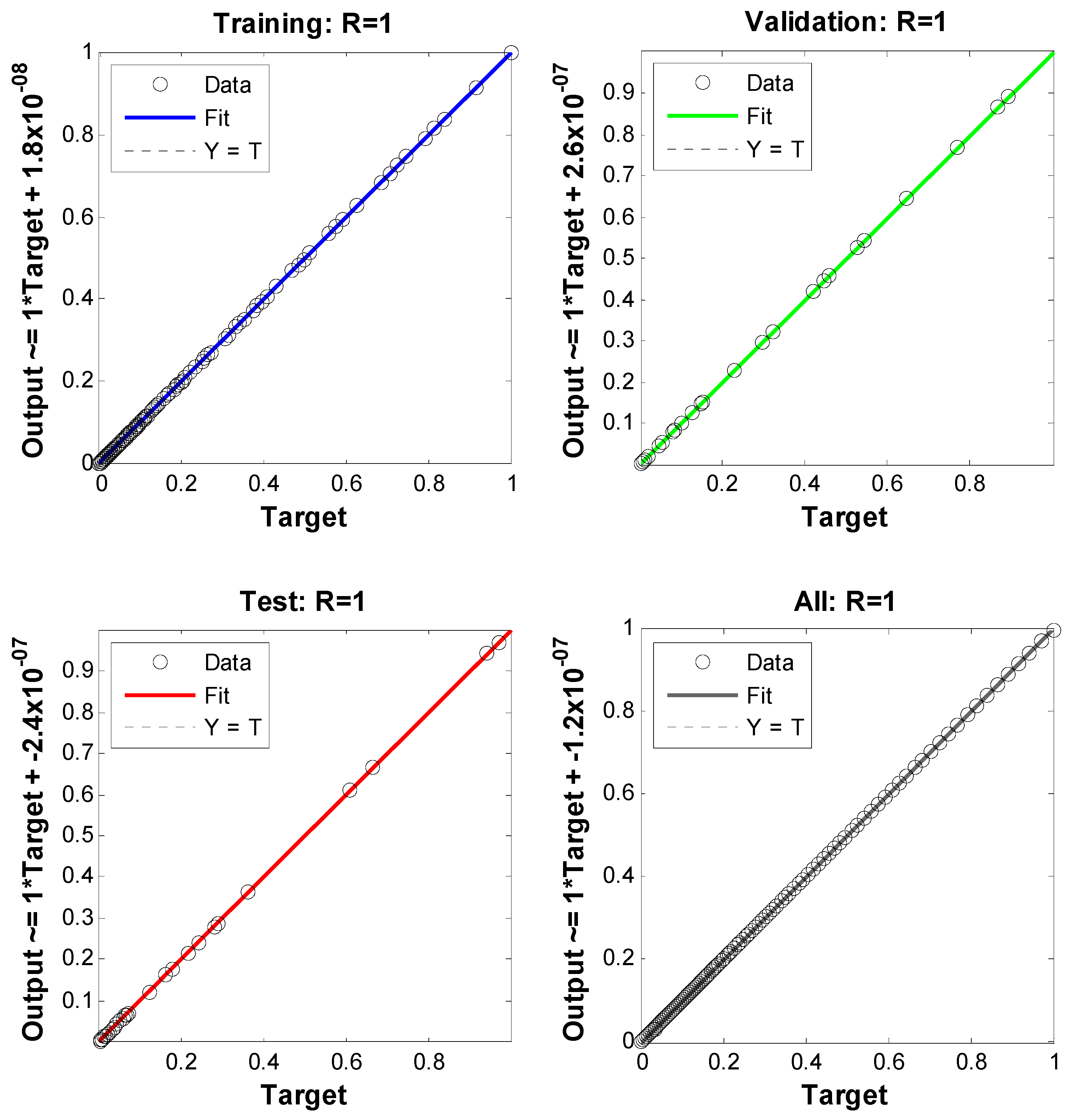
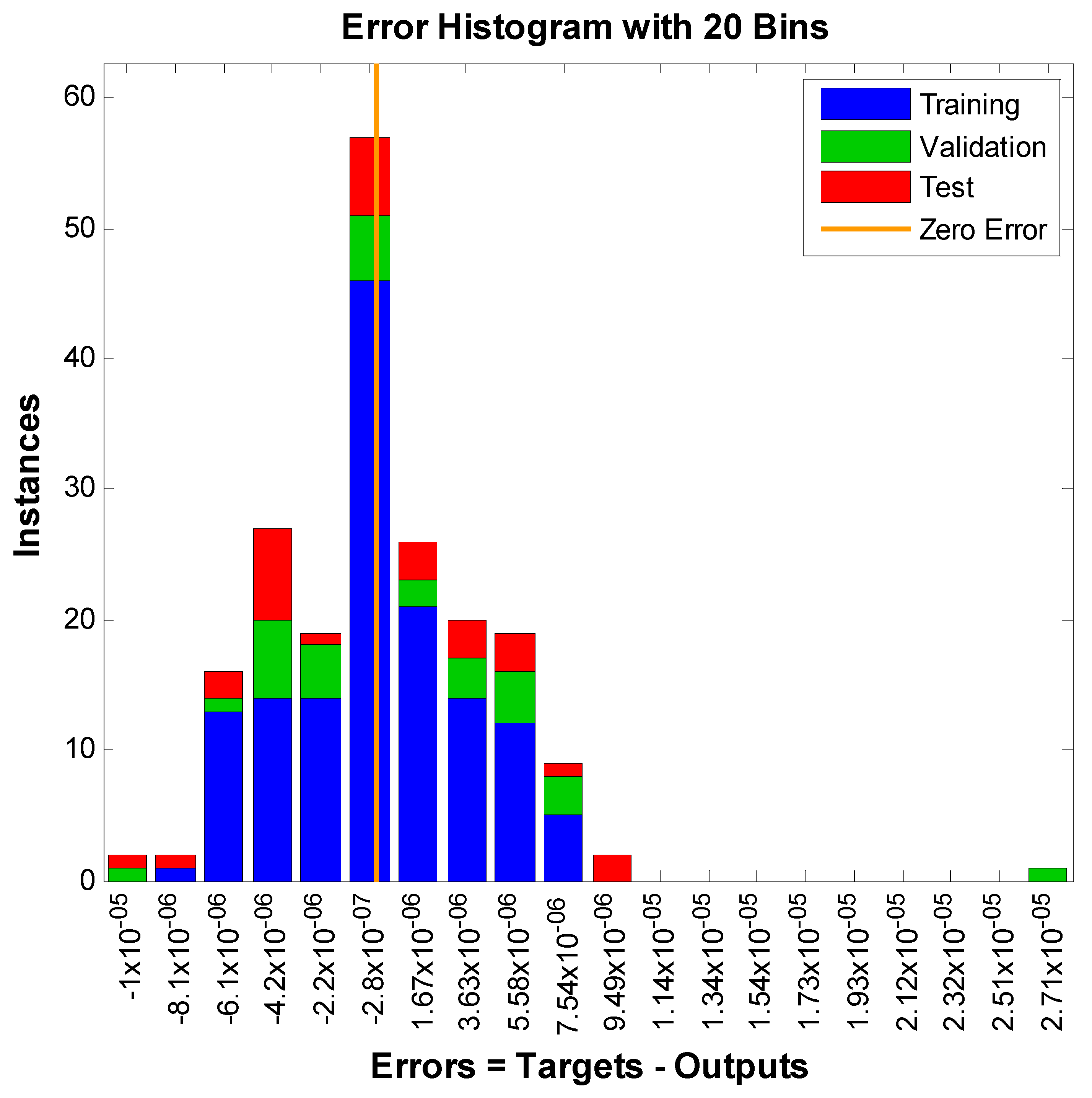
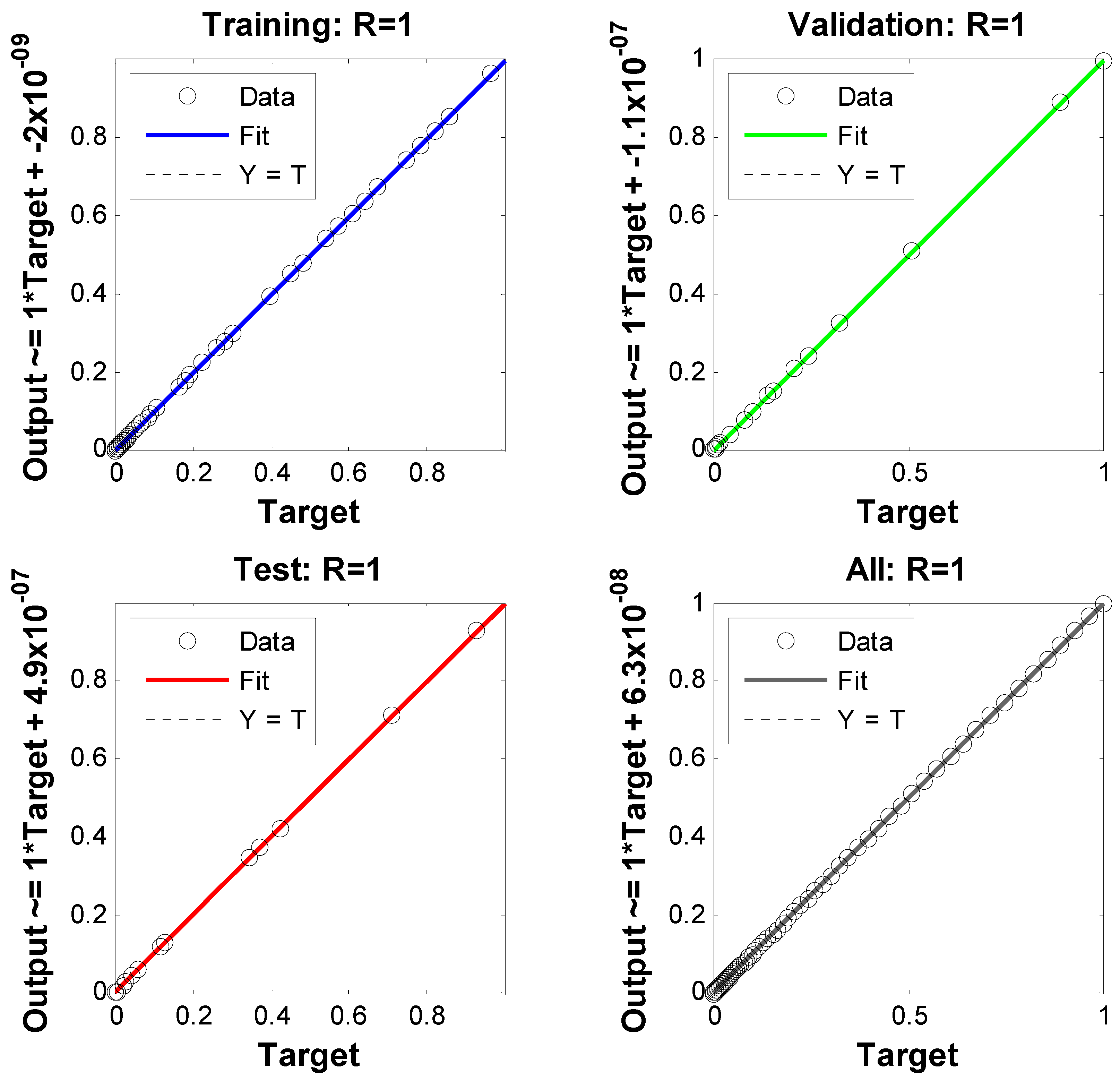
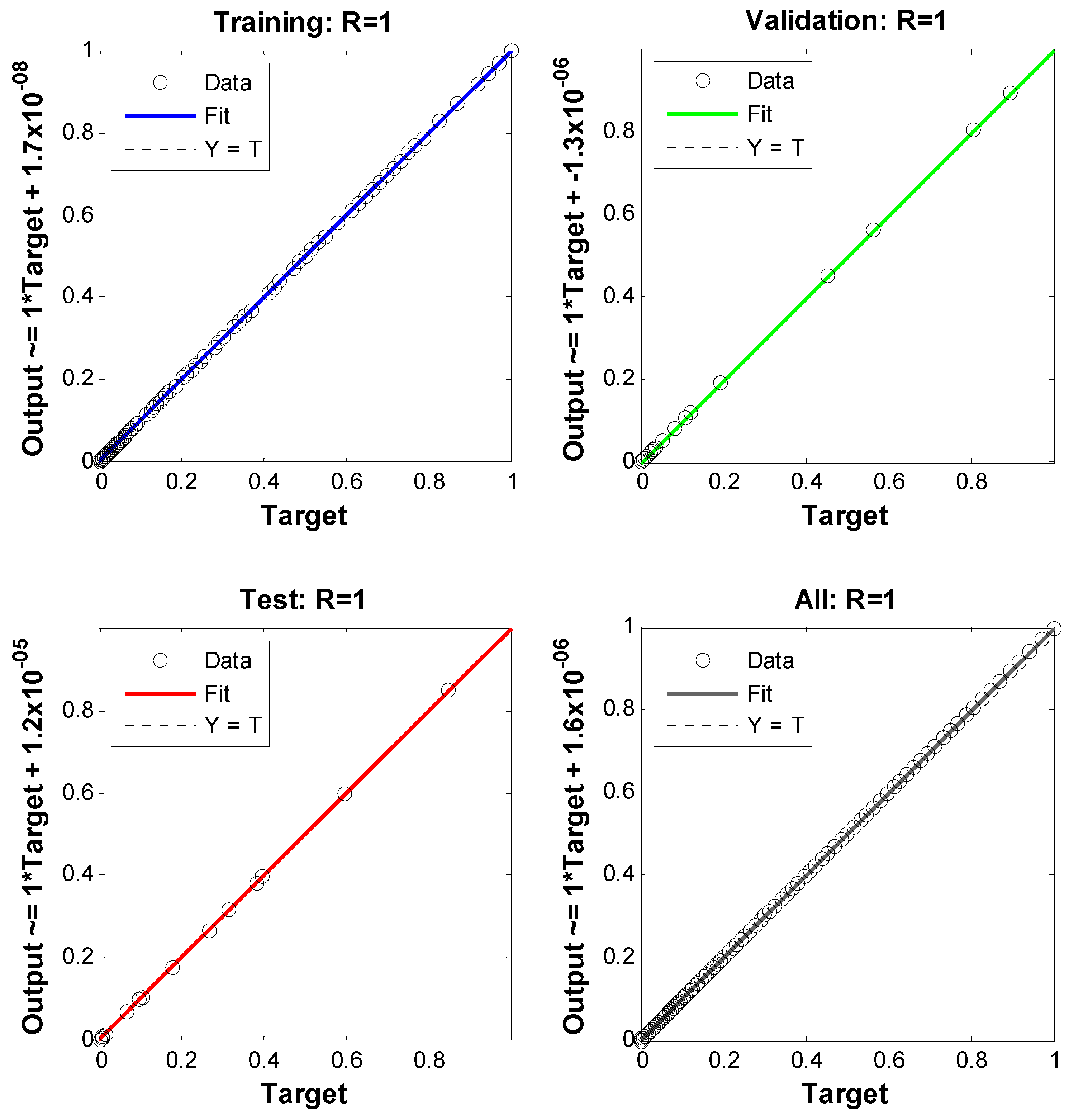
- Finding an approximation to the solution of a system of nonlinear equations is possible with the help of the LM method, a powerful optimization tool. As a result, it can be used effectively to address the difficult equations describing fluid flow in an electrical boundary layer.
- The finite element method (FEM), an effective method for solving partial differential equations, forms the basis of the computational process. This guarantees a correct and trustworthy solution to the equations.
- The utilization of the LM approach and computational scheme enables the simulation of various situations encompassing diverse viscosities, magnetic field intensities, and temperatures. This characteristic renders it a valuable instrument for investigating the fluid dynamics of electrical boundary layer flow.
7. Conclusions
Author Contributions
Funding
Data Availability Statement
Acknowledgments
Conflicts of Interest
Nomenclature
| Horizontal component of velocity | Magnetic permeability | ||
| Vertical component of velocity | Density of the fluid | ||
| Temperature of the fluid | Electrical conductivity | ||
| Concentration | Brownian motion coefficient | ||
| IMF’s component in the -direction | Thermophoresis coefficient | ||
| IMF’s component in the -direction | Specific heat capacity | ||
| reaction rate parameter | Wall temperature | ||
| Ambient temperature | Concentration at wall/sheet | ||
| Ambient concentration | Magnetic diffusivity of the fluid | ||
| , | Magnetic parameters | Reciprocal of the magnetic Prandtl number | |
| Eckert number | Brownian motion parameter | ||
| Prandtl number | Thermophoresis parameter | ||
| Schmidt number | Local electric parameter | ||
| Dimensionless reaction rate parameter |
References
- Iqbal, M.S.; Malik, F.; Mustafa, I.; Khan, I.; Ghaffari, A.; Riaz, A.; Nisar, K. Impact of induced magnetic field on thermal enhancement in gravity driven Fe3O4 ferrofluid flow through vertical non-isothermal surface. Results Phys. 2020, 19, 103472. [Google Scholar] [CrossRef] [Scilit]
- Kumar, D. Radiation effect on magnetohydrodynamic flow with induced magnetic field and Newtonian heating/cooling: An analytic approach. Propuls. Power Res. 2021, 10, 303–313. [Google Scholar] [CrossRef] [Scilit]
- Nawaz, Y.; Arif, M.S. Modified class of explicit and enhanced stability region schemes: Application to mixed convection flow in a square cavity with a convective wall. Int. J. Numer. Methods Fluids 2021, 93, 1759–1787. [Google Scholar] [CrossRef] [Scilit]
- Hayat, T.; Rashid, M.; Khan, M.I.; Alsaedi, A. Melting heat transfer and induced magnetic field effects on flow of water based nanofluid over a rotating disk with variable thickness. Results Phys. 2018, 9, 1618–1630. [Google Scholar] [CrossRef] [Scilit]
- Nawaz, Y.; Arif, M.S.; Shatanawi, W.; Nazeer, A. An explicit fourth-order compact numerical scheme for heat transfer of boundary layer flow. Energies 2021, 14, 3396. [Google Scholar] [CrossRef] [Scilit]
- Khan, S.A.; Hayat, T.; Alsaedi, A. Entropy generation in chemically reactive flow of Reiner-Rivlin liquid conveying tiny particles considering thermal radiation. Alex. Eng. J. 2023, 66, 257–268. [Google Scholar] [CrossRef] [Scilit]
- Nawaz, Y.; Arif, M.S.; Bibi, M.; Abbasi, J.N.; Javed, U.; Nazeer, A. A Finite Difference Method and Effective Modification of Gradient Descent Optimization Algorithm for MHD Fluid Flow Over a Linearly Stretching Surface. Comput. Mater. Contin. 2020, 62, 657–677. [Google Scholar] [CrossRef] [Scilit]
- Alsaedi, A.; Muhammad, K.; Hayat, T. Numerical study of MHD hybrid nanofluid flow between two coaxial cylinders. Alex. Eng. J. 2022, 61, 8355–8362. [Google Scholar] [CrossRef] [Scilit]
- Muhammad, K.H.; Hayat, T.; Momani, S.; Asghar, S. FDM analysis for squeezed flow of hybrid nanofluid in presence of Cattaneo-Christov (C-C) heat flux and convective boundary condition. Alex. Eng. J. 2022, 61, 4719–4727. [Google Scholar] [CrossRef] [Scilit]
- Chu, Y.-M.; Al-Khaled, K.; Khan, N.; Khan, M.I.; Khan, S.U.; Hashmi, M.S.; Iqbal, M.A.; Tlili, I. Study of Buongiorno’s nanofluid model for flow due to stretching disks in presence of gyrotactic microorganisms. Ain Shams Eng. J. 2021, 12, 3975–3985. [Google Scholar] [CrossRef] [Scilit]
- Alblawi, A.; Malik, M.Y.; Nadeem, S.; Abbas, N. Buongiorno’s Nanofluid Model over a Curved Exponentially Stretching Surface. Processes 2019, 7, 665. [Google Scholar] [CrossRef] [Scilit]
- Khatun, S.; Nasrin, R. Numerical Modeling of Buongiorno’s Nanofluid on Free Convection: Thermophoresis and Brownian Effects. J. Nav. Archit. Mar. Eng. 2021, 18, 217–239. [Google Scholar] [CrossRef] [Scilit]
- Akram, S.; Athar, M.; Saeed, K.; Razia, A.; Muhammad, T.; Hussain, A. Hybrid double-diffusivity convection and induced magnetic field effects on peristaltic waves of Oldroyd 4-constant nanofluids in non-uniform channel. Alex. Eng. J. 2023, 65, 785–796. [Google Scholar] [CrossRef] [Scilit]
- Hasibi, A.; Gholami, A.; Asadi, Z.; Ganji, D.D. Importance of induced magnetic field and exponential heat source on convective flow of Casson fluid in a micro-channel via AGM. Theor. Appl. Mech. Lett. 2022, 12, 100342. [Google Scholar] [CrossRef] [Scilit]
- Sakiadis, B.C. Boundary-layer behavior on continuous solid surfaces: I. Boundary-layer equations for two-dimensional and axisymmetric flow. AIChE J. 1961, 7, 26–28. [Google Scholar] [CrossRef] [Scilit]
- Sakiadis, B.C. Boundary-layer behavior on continuous solid surfaces: II. The boundary layer on a continuous flat surface. AiChE J. 1961, 7, 221–225. [Google Scholar] [CrossRef] [Scilit]
- Crane, L.J. Flow past a stretching plate. Z. Angew. Math. Und Phys. ZAMP 1970, 21, 645–647. [Google Scholar] [CrossRef] [Scilit]
- Tsou, F.K.; Sparrow, E.M.; Goldstein, R.J. Flow and heat transfer in the boundary layer on a continuous moving surface. Int. J. Heat Mass Transf. 1967, 10, 219–235. [Google Scholar] [CrossRef] [Scilit]
- Sadeghi, M.S.; Dogonchi, A.S.; Ghodrat, M.; Chamkha, A.J.; Alhumade, H.; Karimi, N. Natural convection of CuO-water nanofluid in a conventional oil/water separator cavity: Application to combined-cycle power plants. J. Taiwan Inst. Chem. Eng. 2021, 124, 307–319. [Google Scholar] [CrossRef] [Scilit]
- Dogonchi, A.S.; Mishra, S.R.; Karimi, N.; Chamkha, A.J.; Alhumade, H. Interaction of fusion temperature on the magnetic free convection of nano-encapsulated phase change materials within two rectangular fins-equipped porous enclosure. J. Taiwan Inst. Chem. Eng. 2021, 124, 327–340. [Google Scholar] [CrossRef] [Scilit]
- Sadeghi, M.S.; Tayebi, T.; Dogonchi, A.S.; Armaghani, T.; Talebizadehsardari, P. Analysis of hydrothermal characteristics of magnetic Al2O3-H2O nanofluid within a novel wavy enclosure during natural convection process considering internal heat generation. Math. Methods Appl. Sci. 2020. [CrossRef] [Scilit]
- Abbasi, B.A.; Iqbal, J.; Ahmad, R.; Bibi, S.; Mahmood, T.; Kanwal, S.; Bashir, S.; Gul, F.; Hameed, S. Potential phytochemicals in the prevention and treatment of esophagus cancer: A green therapeutic approach. Pharmacol. Rep. 2019, 71, 644–652. [Google Scholar] [CrossRef] [Scilit] [PubMed]
- Kudenatti, R.B.; Jyothi, B. Two-dimensional boundary-layer flow and heat transfer over a wedge: Numerical and asymptotic solutions. Therm. Sci. Eng. Prog. 2019, 11, 66–73. [Google Scholar] [CrossRef] [Scilit]
- Basha, H.; Kumar, N.N.; Reddy, G.J. Effect of Prandtl number on leading edge accretion and ablation: A numerical study of unsteady boundary layer flow over a flat plate. Heat Transf.—Asian Res. 2019, 48, 2844–2881. [Google Scholar] [CrossRef] [Scilit]
- Cortell, R. Flow and heat transfer of a fluid through a porous medium over a stretching surface with internal heat generation/absorption and suction/blowing. Fluid Dyn. Res. 2005, 37, 231–245. [Google Scholar] [CrossRef] [Scilit]
- Dessie, H.; Kishan, N. MHD effects on heat transfer over stretching sheet embedded in porous medium with variable viscosity, viscous dissipation and heat source/sink. Ain Shams Eng. J. 2014, 5, 967–977. [Google Scholar] [CrossRef] [Scilit]
- Abel, M.S.; Nandeppanavar, M.M.; Malkhed, M.B. Hydromagnetic boundary layer flow and heat transfer in viscoelastic fluid over a continuously moving permeable stretching surface with nonuniform heat source/sink embedded in fluid-saturated porous medium. Chem. Eng. Commun. 2010, 197, 633–655. [Google Scholar] [CrossRef] [Scilit]
- Krishna, M.V.; Chamkha, A.J. Hall and ion slip effects on Unsteady MHD Convective Rotating flow of Nanofluids—Application in Biomedical Engineering. J. Egypt. Math. Soc. 2020, 28, 1. [Google Scholar] [CrossRef] [Scilit]
- Krishna, M.V.; Chamkha, A.J. Hall effects on MHD squeezing flow of a water-based nanofluid between two parallel disks. J. Porous Media 2019, 22, 209–223. [Google Scholar] [CrossRef] [Scilit]
- Krishna, M.V.; Swarnalathamma, B.V.; Chamkha, A.J. Investigations of Soret, Joule and Hall effects on MHD rotating mixed convective flow past an infinite vertical porous plate. J. Ocean. Eng. Sci. 2019, 4, 263–275. [Google Scholar] [CrossRef] [Scilit]
- Krishna, M.V.; Ahammad, N.A.; Chamkha, A.J. Radiative MHD flow of Casson hybrid nanofluid over an infinite exponentially accelerated vertical porous surface. Case Stud. Therm. Eng. 2021, 27, 101229. [Google Scholar] [CrossRef] [Scilit]
- Damseh, R.A.; Al-Odat, M.Q.; Chamkha, A.J.; Shannak, B.A. Combined effect of heat generation or absorption and first-order chemical reaction on micropolar fluid flows over a uniformly stretched permeable surface. Int. J. Therm. Sci. 2009, 48, 1658–1663. [Google Scholar] [CrossRef] [Scilit]
- Chamkha, A.J.; Khaled, A.R.A. Similarity solutions for hydromagnetic simultaneous heat and mass transfer by natural convection from an inclined plate with internal heat generation or absorption. Heat Mass Transf. 2001, 37, 117–123. [Google Scholar] [CrossRef] [Scilit]
- Javadpour, R.; Heris, S.Z.; Mohammadfam, Y.; Mousavi, S.B. Optimizing the heat transfer characteristics of MWCNTs and TiO2 water-based nanofluids through a novel designed pilot-scale setup. Sci. Rep. 2022, 12, 15154. [Google Scholar] [CrossRef] [Scilit] [PubMed]
- Sarvari, A.A.; Heris, S.Z.; Mohammadpourfard, M.; Mousavi, S.B.; Estellé, P. Numerical investigation of TiO2 and MWCNTs turbine meter oil nanofluids: Flow and hydrodynamic properties. Fuel 2022, 320, 123943. [Google Scholar] [CrossRef] [Scilit]
- Karimi Shoar, Z.; Pourpasha, H.; Zeinali Heris, S.; Mousavi, S.B.; Mohammadpourfard, M. The effect of heat transfer characteristics of macromolecule fouling on heat exchanger surface: A dynamic simulation study. Can. J. Chem. Eng. 2023, 101, 5802–5817. [Google Scholar] [CrossRef] [Scilit]
- Rahmanzadeh, M.; Asadi, T.; Atashafrooz, M. The Development and Application of the RCW Method for the Solution of the Blasius Problem. J. Appl. Comput. Mech. 2020, 6, 105–111. [Google Scholar]
- Atashafrooz, M.; Sajjadi, H.; Delouei, A.A. Interacting influences of Lorentz force and bleeding on the hydrothermal behaviors of nanofluid flow in a trapezoidal recess with the second law of thermodynamics analysis. Int. Commun. Heat Mass Transf. 2020, 110, 104411. [Google Scholar] [CrossRef] [Scilit]
- Rehman, K.U.; Shatanawi, W.; Asghar, Z.; Bahaidarah, H.M.S. Neural networking analysis for MHD mixed convection Casson flow past a multiple surfaces: A numerical solution. AIMS Math. 2023, 8, 15805–15823. [Google Scholar] [CrossRef] [Scilit]
- Zhao, J.; Nguyen, H.; Nguyen-Thoi, T.; Asteris, P.G.; Zhou, J. Improved Levenberg-Marquardt backpropagation neural network by particle swarm and whale optimization algorithms to predict the deflection of RC beams. Eng. Comput. 2022, 38, 3847–3869. [Google Scholar] [CrossRef] [Scilit]
- Nguyen, H.X.; Cao, H.Q.; Nguyen, T.T.; Tran, T.N.C.; Tran, H.N.; Jeon, J.W. Improving robot precision positioning using a neural network based on Levenberg Marquardt–APSO algorithm. IEEE Access 2021, 9, 75415–75425. [Google Scholar] [CrossRef] [Scilit]
- Ali, M.S.; Ayaz, M.; Mansoor, T. Prediction of discharge through a sharp-crested triangular weir using ANN model trained with Levenberg-Marquardt algorithm, model. Earth Syst. Environ. 2022, 8, 1405–1417. [Google Scholar] [CrossRef] [Scilit]
- Ye, Z.; Kim, M.K. Predicting electricity consumption in a building using an optimized backpropagation and Levenberg-Marquardt backpropagation neural network: Case study of a shopping mall in China. Sustain. Cities Soc. 2018, 42, 176–183. [Google Scholar] [CrossRef] [Scilit]
- Rehman, K.U.; Shatanawi, W.; Çolak, A.B. Levenberg–Marquardt Training Technique Analysis of Thermally Radiative and Chemically Reactive Stagnation Point Flow of Non-Newtonian Fluid with Temperature Dependent Thermal Conductivity. Mathematics 2023, 11, 753. [Google Scholar] [CrossRef] [Scilit]
- Al Salman, H.J.; Nawaz, Y.; Al Ghafli, A.A. An Implicit Finite Difference Scheme and Neural Network Approach for Non-Newtonian Nanofluid Flow Using Induced Magnetic Field. Mathematics 2023, 11, 2089. [Google Scholar] [CrossRef] [Scilit]
- Hayat, T.; Mustafa, M.; Pop, I. Heat and mass transfer for Soret and Dufour’s effect on mixed convection boundary layer flow over a stretching vertical surface in a porous medium filled with a viscoelastic fluid. Commun. Nonlinear Sci. Numer. Simul. 2010, 15, 1183–1196. [Google Scholar] [CrossRef] [Scilit]
- Yih, K.A. Free convection effect on MHD coupled heat and mass transfer of a moving permeable vertical surface. Int. Commun. Heat Mass Transf. 1999, 26, 95–104. [Google Scholar] [CrossRef] [Scilit]


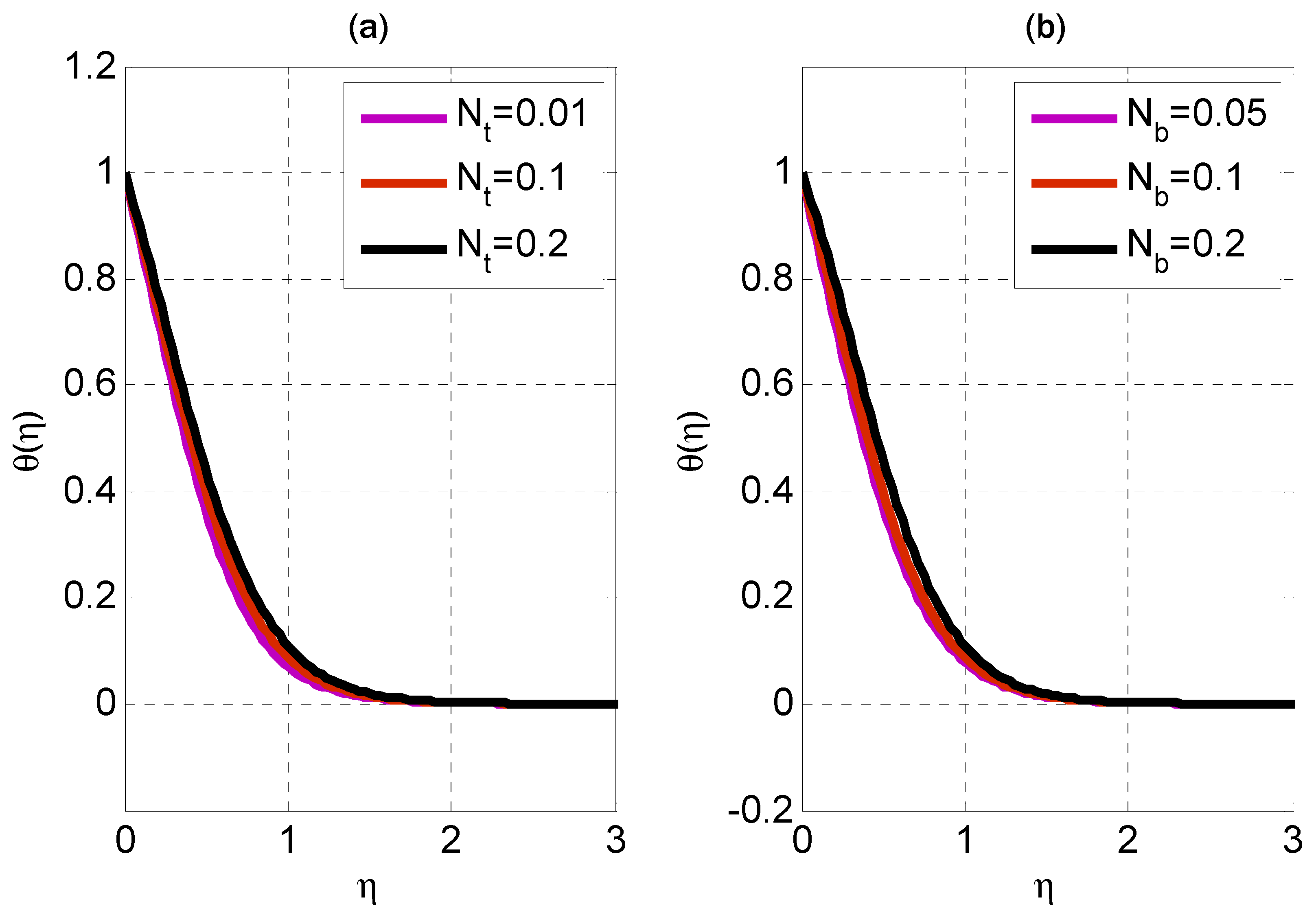
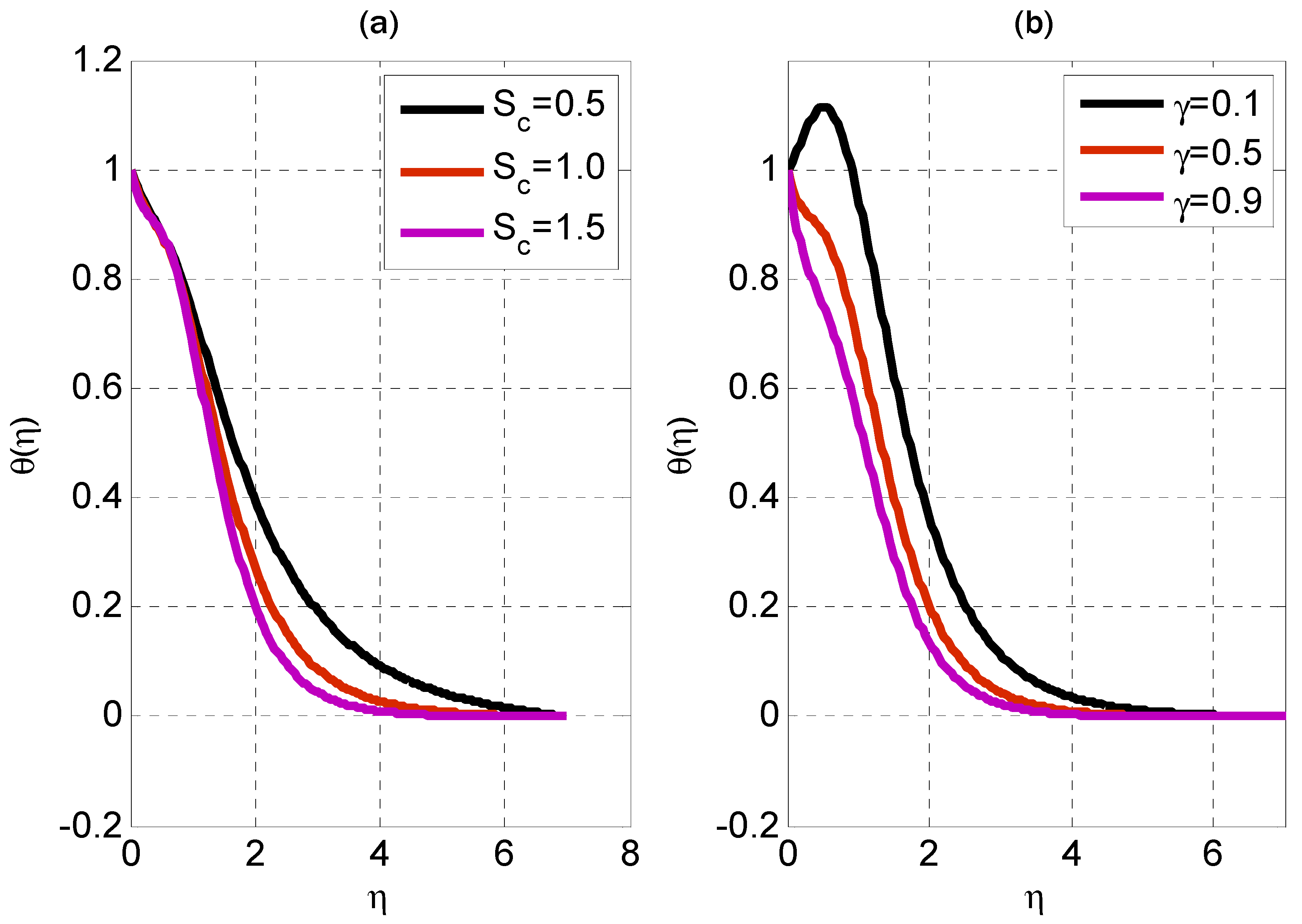

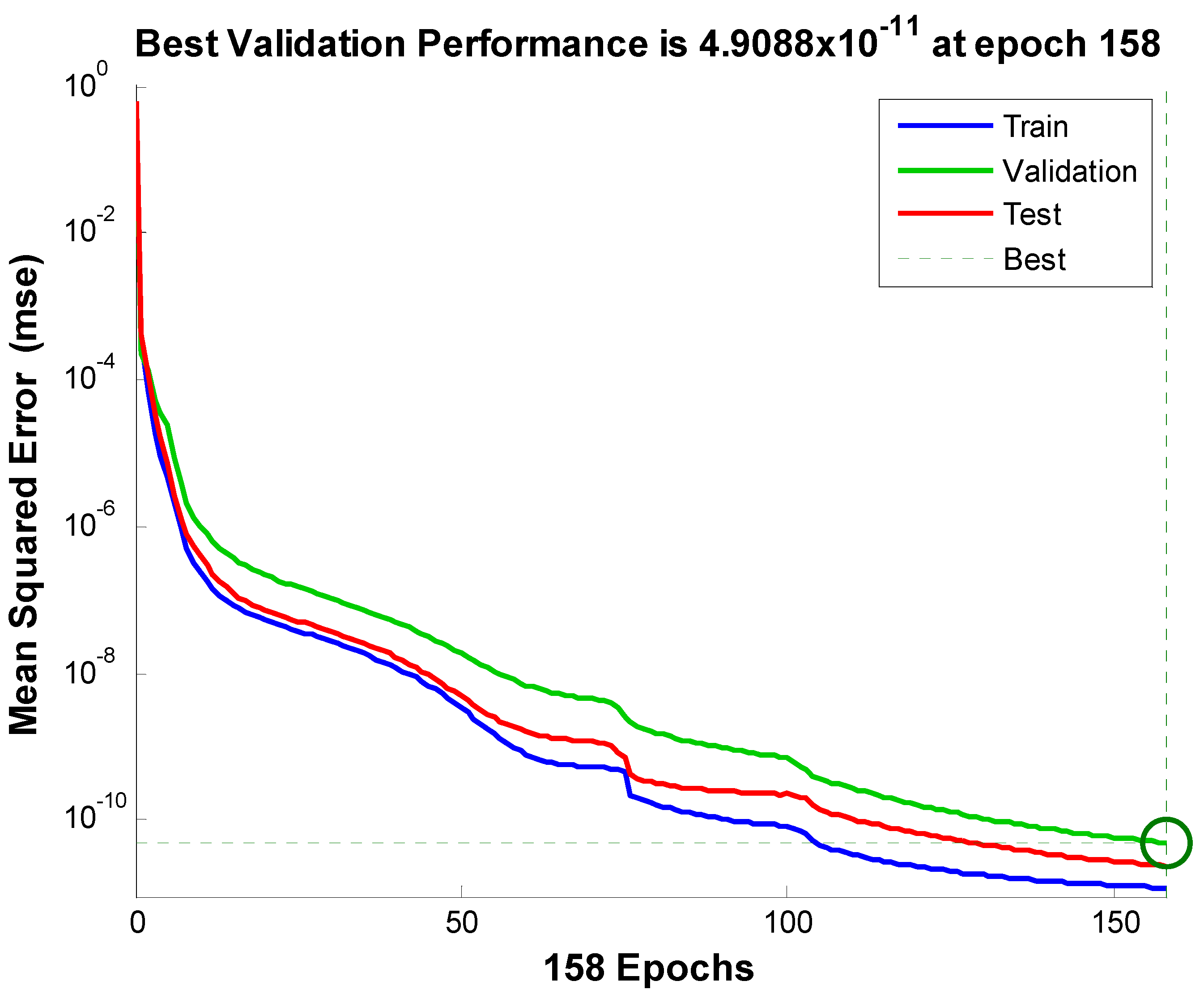
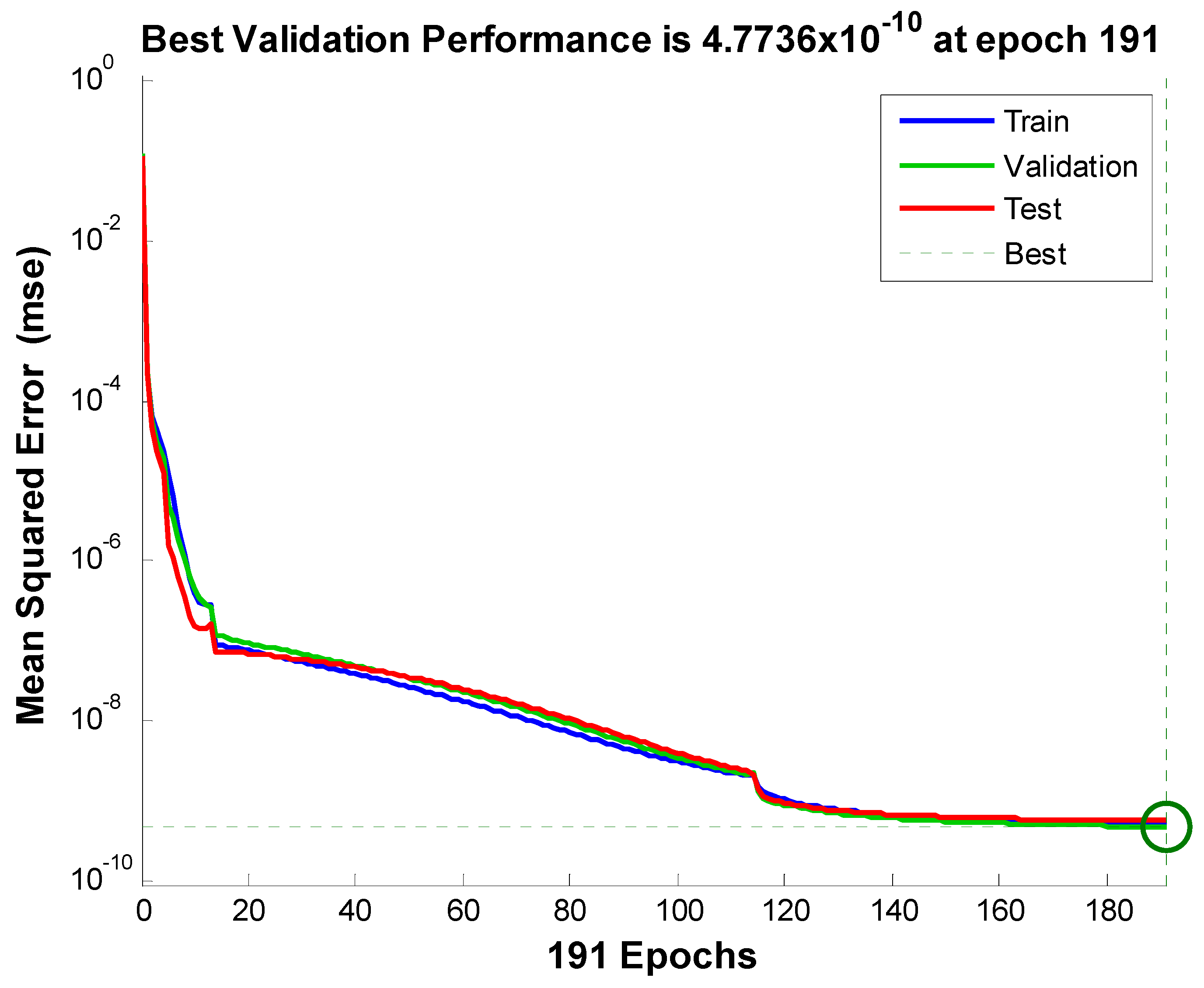




| Hayat et al. [46] | Yih [47] | Proposed | MATLAB bvp4c | |
|---|---|---|---|---|
| 0.0 | 1.000000 | 1.0000 | 1.0005 | 1.0002 |
| 0.5 | 1.224747 | 1.2247 | 1.2275 | 1.2247 |
| 1.0 | 1.414217 | 1.4142 | 1.4189 | 1.4142 |
| 1.5 | 1.581147 | 1.5811 | 1.5867 | 1.5811 |
| 2.0 | 1.732057 | 1.7321 | 1.7384 | 1.7321 |
| 0.01 | 0.01 | 0.9 | 1.0523 |
| 0.1 | 1.0860 | ||
| 0.01 | 0.1 | 1.0404 | |
| 0.01 | 1.5 | 1.0530 |
| 0.01 | 0.01 | 0.1 | 5 | 1.3159 |
| 0.02 | 1.3000 | |||
| 0.01 | 0.02 | 1.2855 | ||
| 0.01 | 0.5 | 0.5491 | ||
| 0.1 | 5.5 | 1.3821 |
| 0.01 | 0.02 | 1.5 | 0.9 | 0.9783 |
| 0.015 | 0.7723 | |||
| 0.01 | 0.025 | 1.0714 | ||
| 0.02 | 1.9 | 1.0974 | ||
| 1.5 | 1 | 1.0490 |
Disclaimer/Publisher’s Note: The statements, opinions and data contained in all publications are solely those of the individual author(s) and contributor(s) and not of MDPI and/or the editor(s). MDPI and/or the editor(s) disclaim responsibility for any injury to people or property resulting from any ideas, methods, instructions or products referred to in the content. |
© 2023 by the authors. Licensee MDPI, Basel, Switzerland. This article is an open access article distributed under the terms and conditions of the Creative Commons Attribution (CC BY) license (https://creativecommons.org/licenses/by/4.0/).
Share and Cite
Baazeem, A.S.; Arif, M.S.; Abodayeh, K. An Efficient and Accurate Approach to Electrical Boundary Layer Nanofluid Flow Simulation: A Use of Artificial Intelligence. Processes 2023, 11, 2736. https://doi.org/10.3390/pr11092736
Baazeem AS, Arif MS, Abodayeh K. An Efficient and Accurate Approach to Electrical Boundary Layer Nanofluid Flow Simulation: A Use of Artificial Intelligence. Processes. 2023; 11(9):2736. https://doi.org/10.3390/pr11092736
Chicago/Turabian StyleBaazeem, Amani S., Muhammad Shoaib Arif, and Kamaleldin Abodayeh. 2023. "An Efficient and Accurate Approach to Electrical Boundary Layer Nanofluid Flow Simulation: A Use of Artificial Intelligence" Processes 11, no. 9: 2736. https://doi.org/10.3390/pr11092736
APA StyleBaazeem, A. S., Arif, M. S., & Abodayeh, K. (2023). An Efficient and Accurate Approach to Electrical Boundary Layer Nanofluid Flow Simulation: A Use of Artificial Intelligence. Processes, 11(9), 2736. https://doi.org/10.3390/pr11092736