Article

A Gas Emission Prediction Model Based on Feature Selection and Improved Machine Learning

1
Liaoning Institute of Science and Engineering, Jinzhou 121000, China
2
College of Business Administration, Liaoning Technical University, Huludao 125105, China
*
Author to whom correspondence should be addressed.
Processes 2023, 11(3), 883; https://doi.org/10.3390/pr11030883
Submission received: 7 February 2023 / Revised: 7 March 2023 / Accepted: 10 March 2023 / Published: 15 March 2023
(This article belongs to the Special Issue Research on Process System Engineering)

Abstract

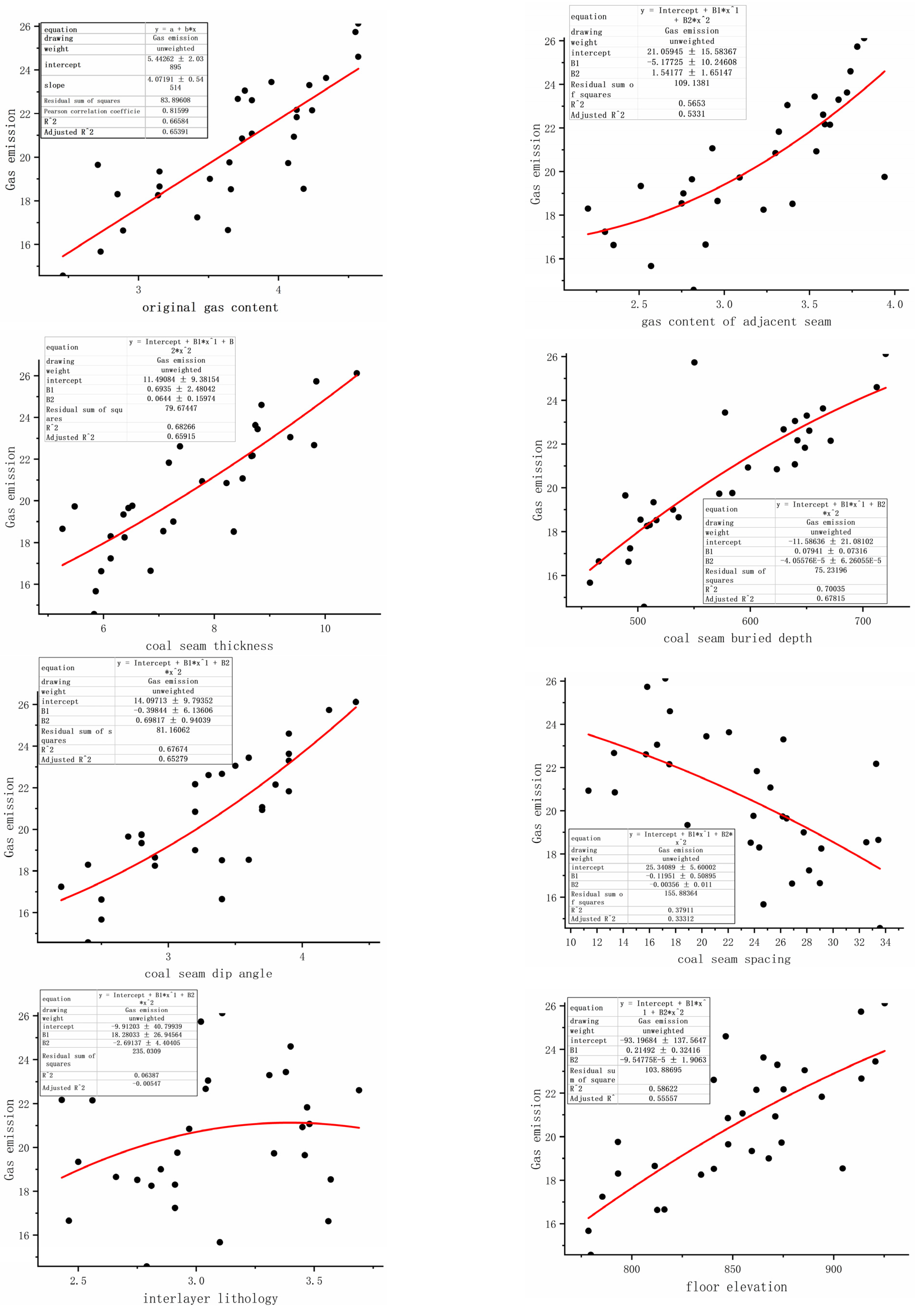
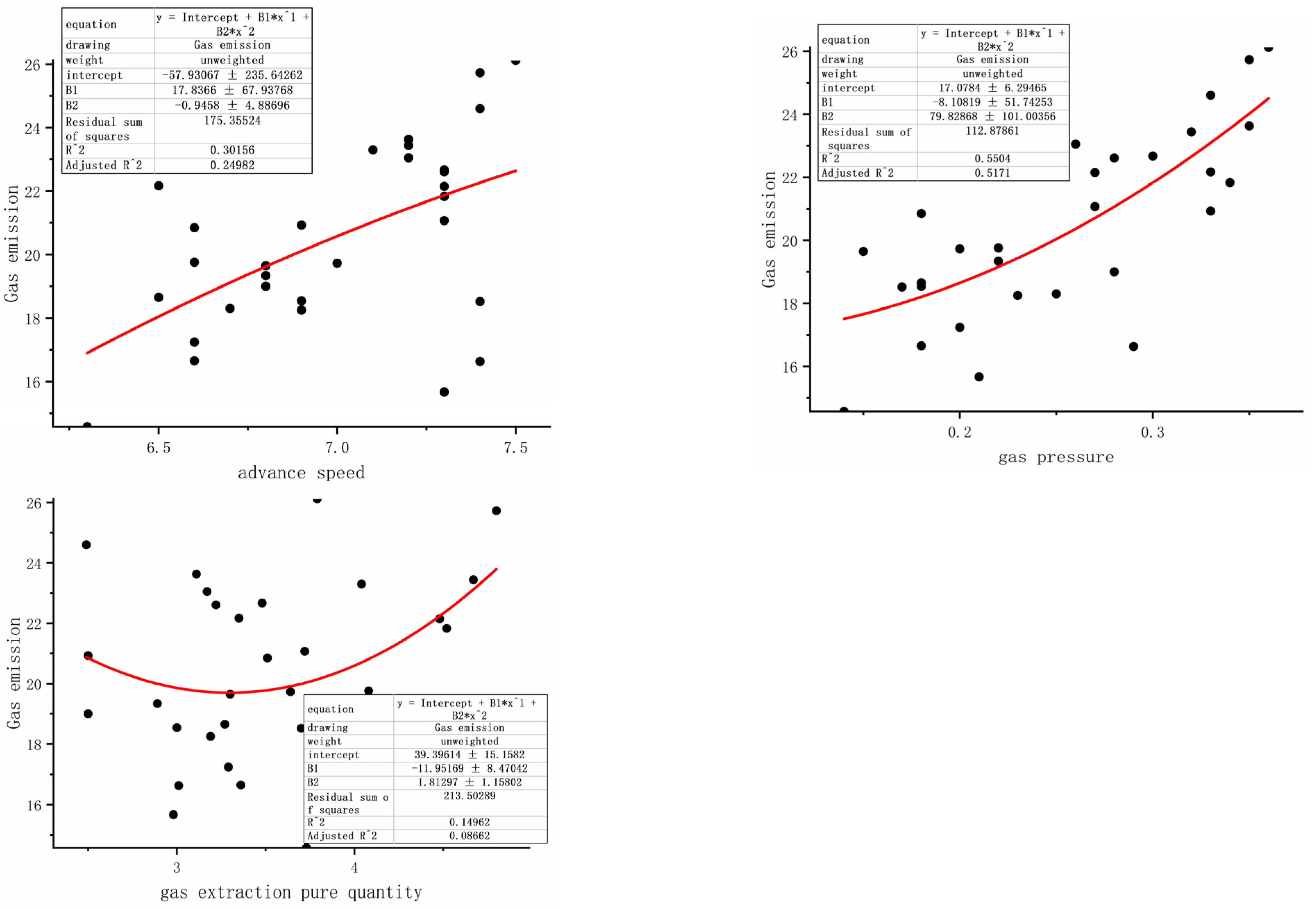
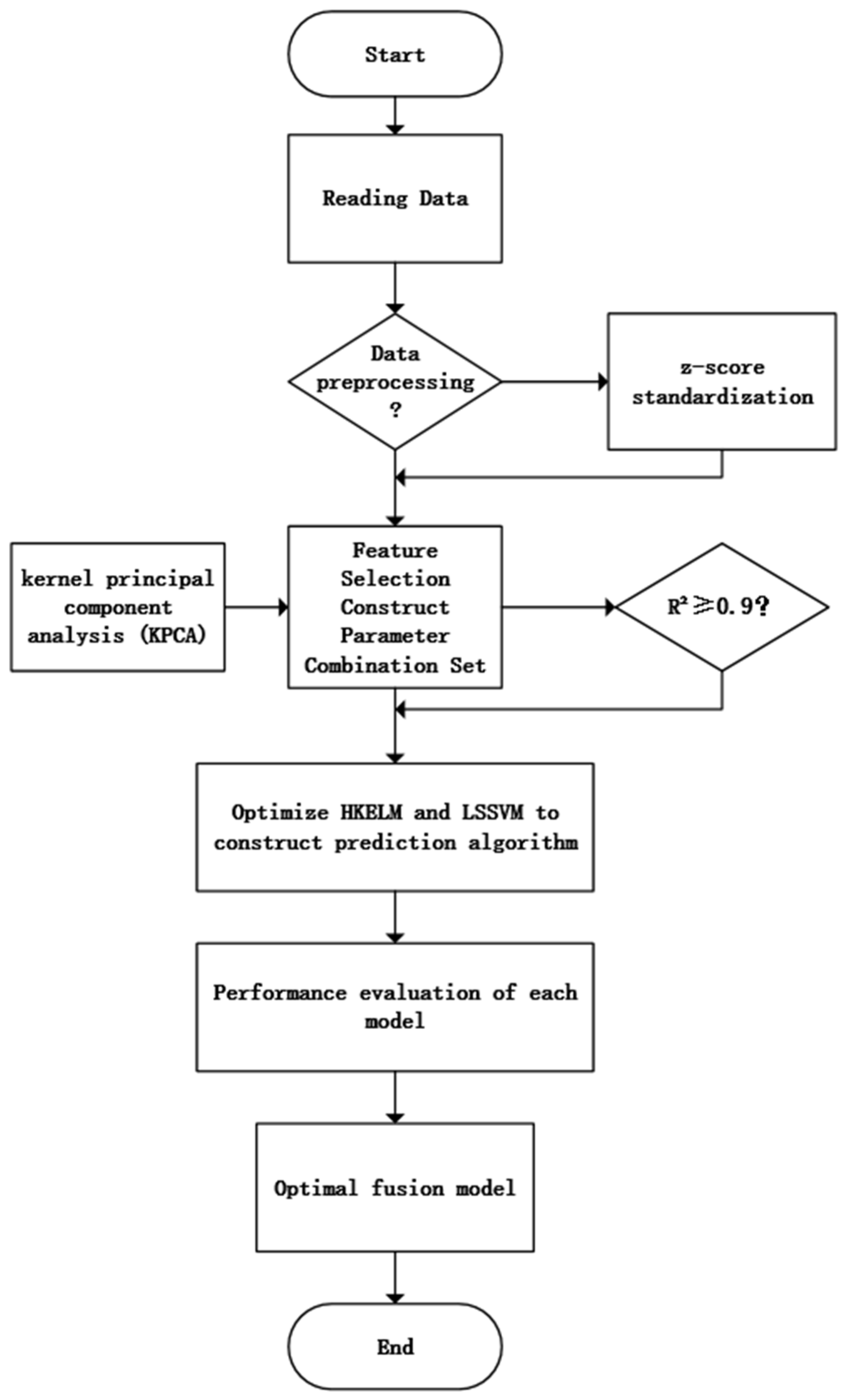
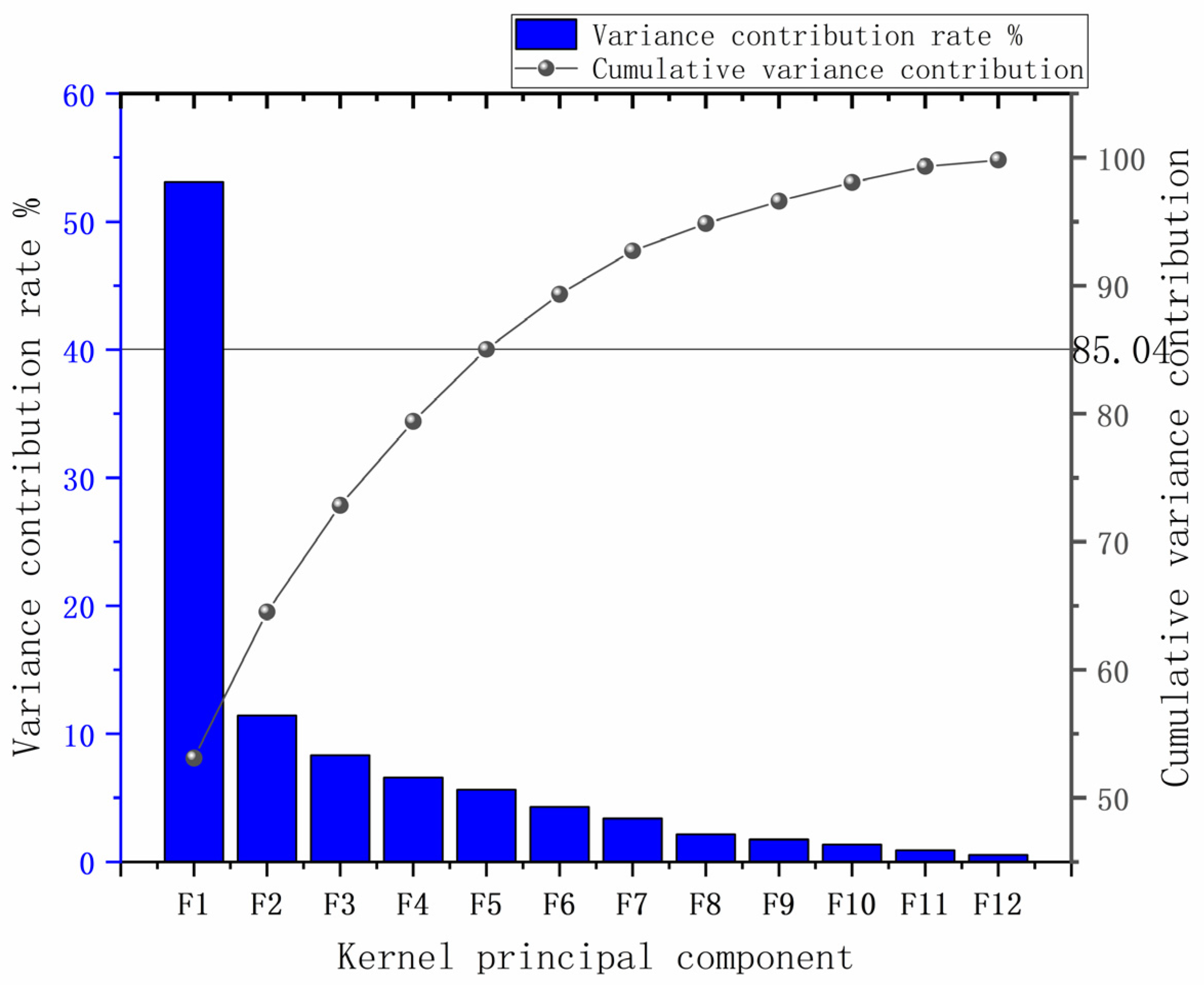
This paper proposed a gas emission prediction method based on feature selection and improved machine learning, as traditional gas emission prediction models are neither accurate nor universally applicable. Through analysis, this paper identified 12 factors that affected gas emissions. A total of 30 groups of typical data for gas outflow were standardized, after which a full subset regression feature selection method was used to categorize 12 influencing factors into different regular patterns and select 18 feature parameter sets. Meanwhile, based on nuclear principal component analysis (KPCA), an optimized gas emission prediction model was constructed where the dimensionality of the original data was reduced. An optimized algorithm set was constructed based on the hybrid kernel extreme learning machine (HKELM) and the least squares support vector machine (LSSVM). The performance of feature parameters adopted in the prediction algorithm was evaluated according to certain metrics. By comparing the results of different sets, the final prediction sequence could be obtained, and a model that was composed of the optimal feature parameters was applied to the optimal machine learning algorithm. The results showed that the HKELM outperformed LSSVM in prediction accuracy, running speed, and stability. The root meant square error (RMSE) for the final prediction sequence was 0.22865, the determination coefficient (R2) was 0.99395, the mean absolute error (MAE) was 0.20306, and the mean absolute percentage error (MAPE) was 1.0595%. Every index of accuracy evaluation performed well and the constructed prediction model had high-prediction accuracy and a wide application.
Keywords: gas emission; regression forecasting; feature selection; machine learning; hybrid kernel extreme learning machine gas emission; regression forecasting; feature selection; machine learning; hybrid kernel extreme learning machine