Article

Numerical Simulation of Cavitation Characteristics of a Centrifugal Pump Based on an Improved ZGB Model

1
School of Energy and Power Engineering, Jiangsu University of Science and Technology, Zhenjiang 212003, China
2
China Marine Design & Research Institute of China, Shanghai 200011, China
*
Author to whom correspondence should be addressed.
Processes 2023, 11(2), 438; https://doi.org/10.3390/pr11020438
Submission received: 7 December 2022 / Revised: 24 January 2023 / Accepted: 28 January 2023 / Published: 1 February 2023

Abstract

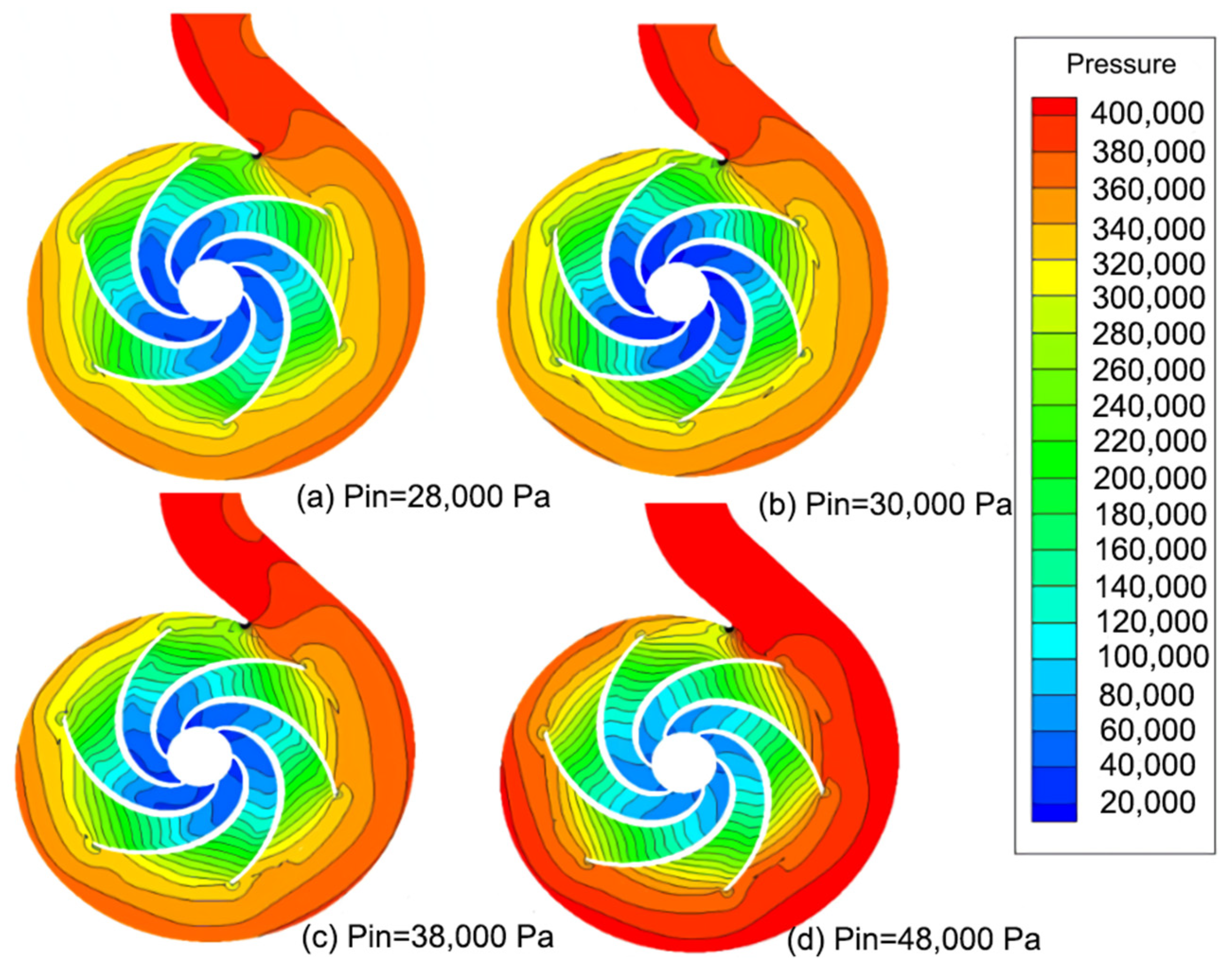
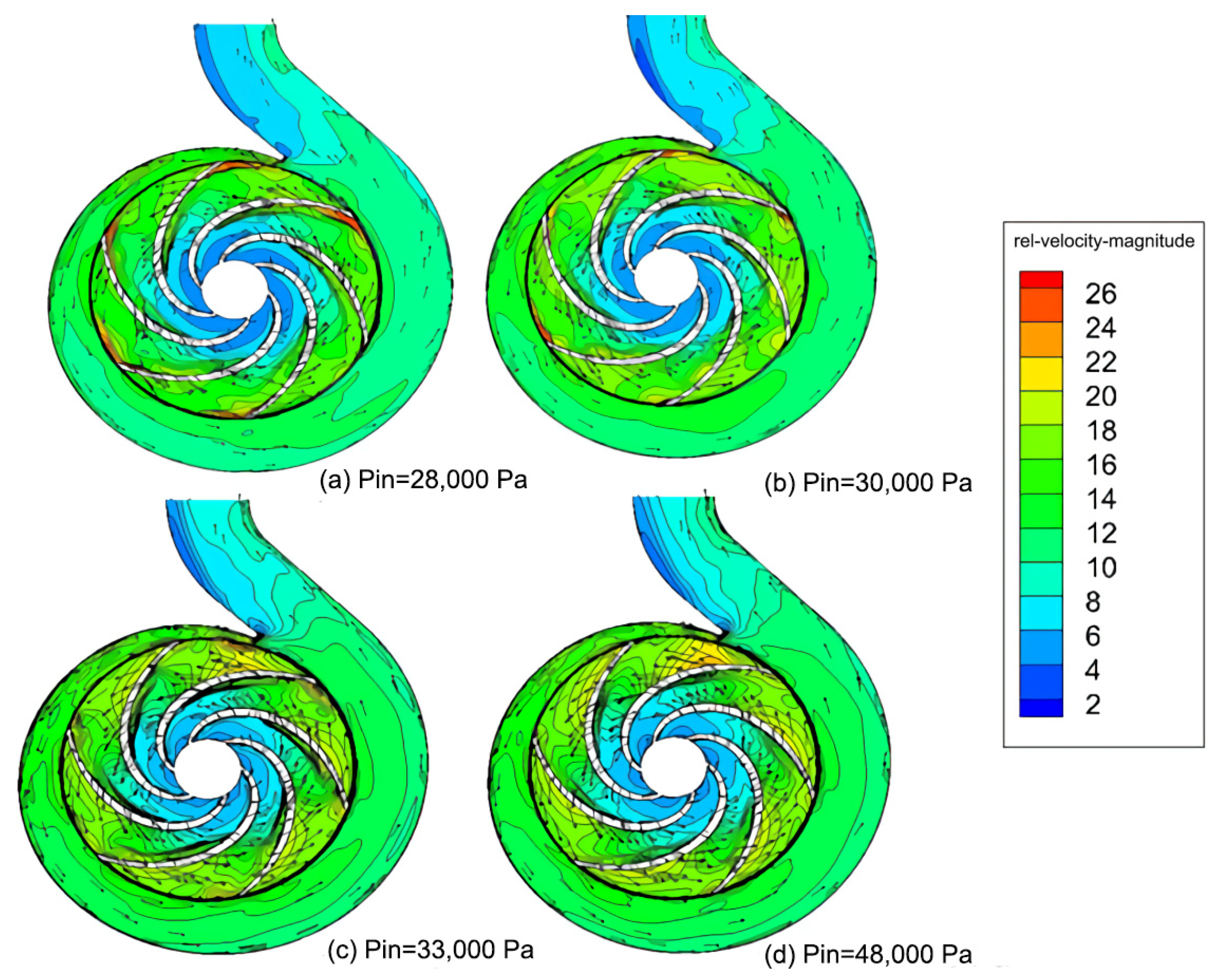
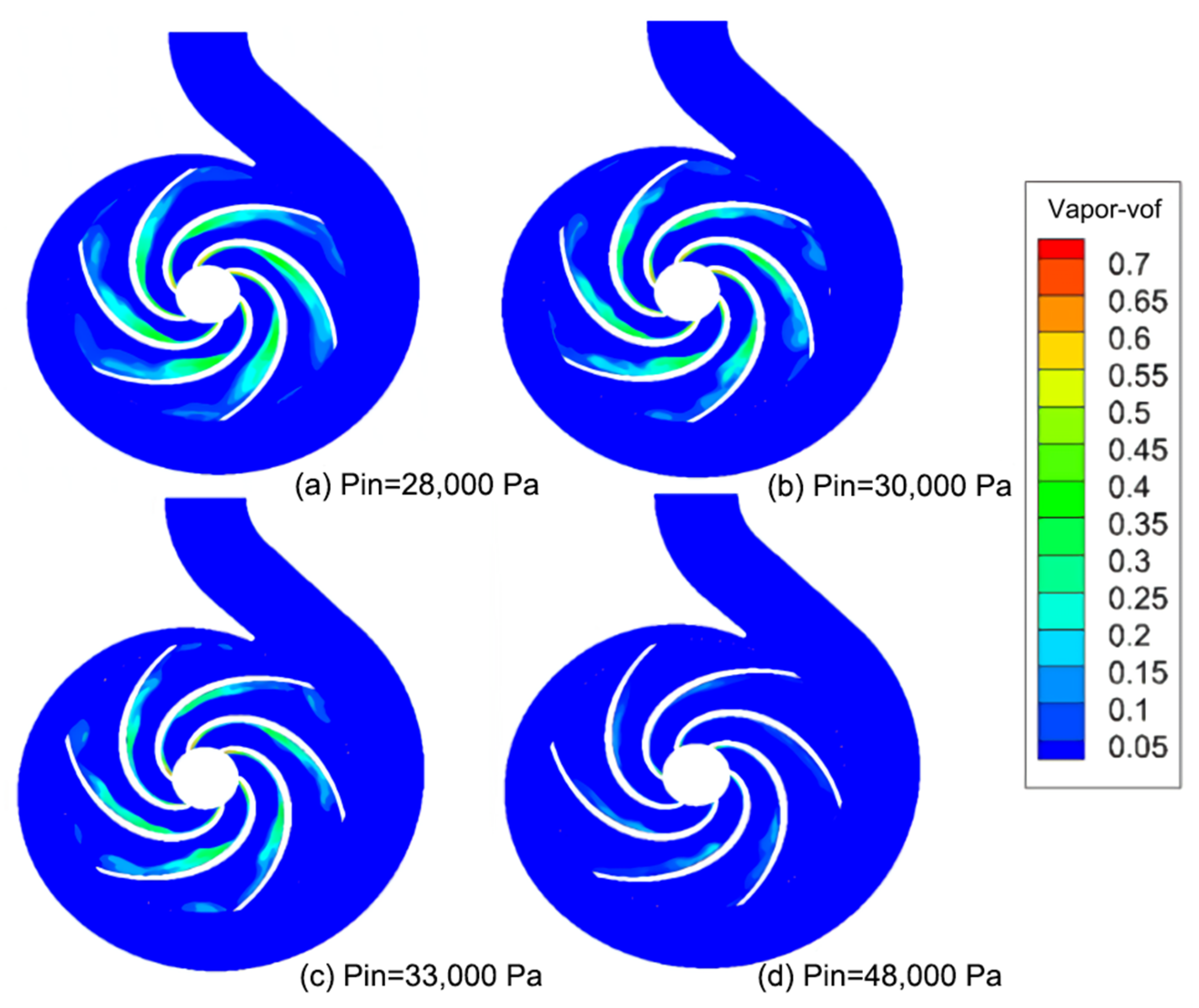
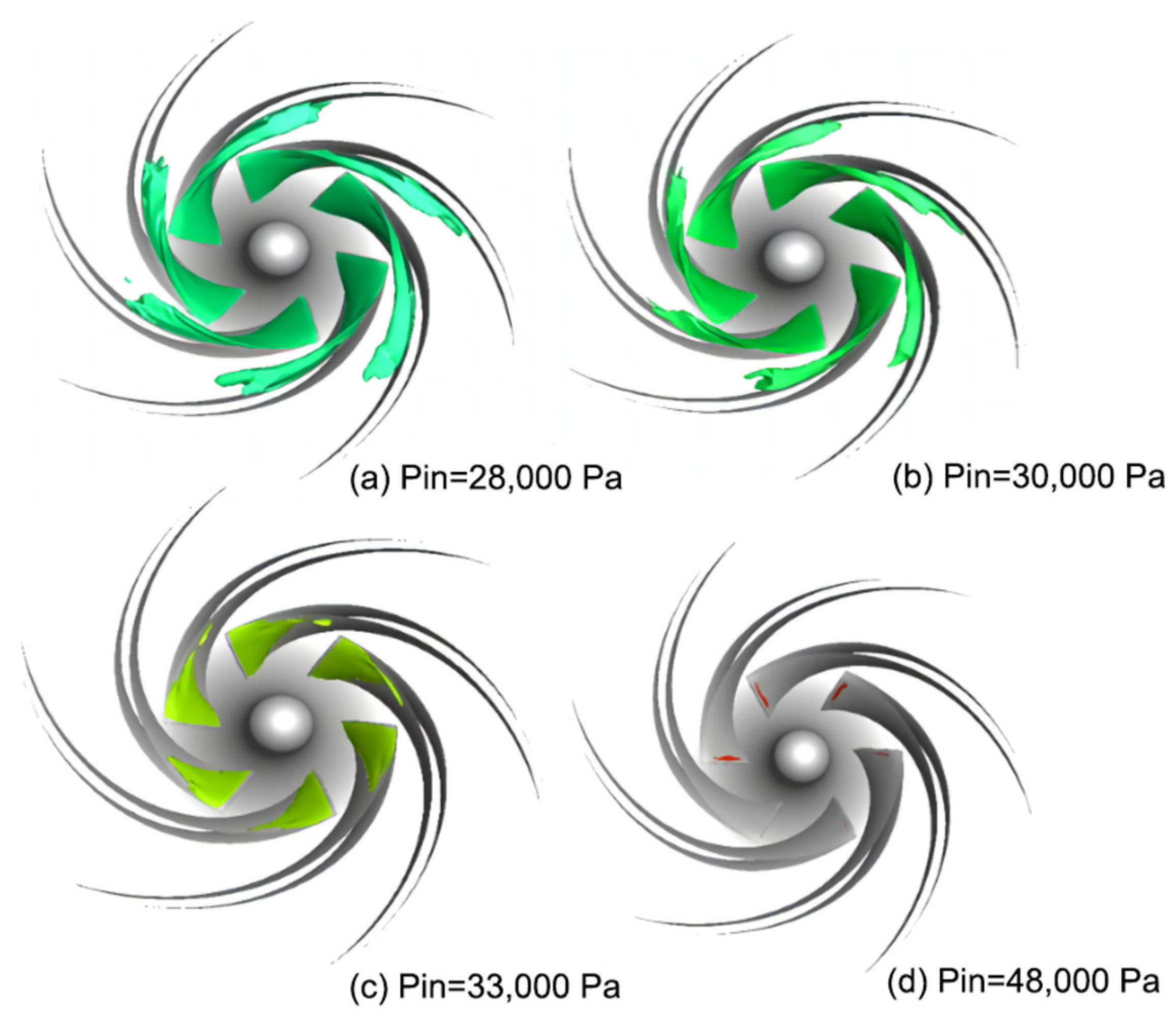
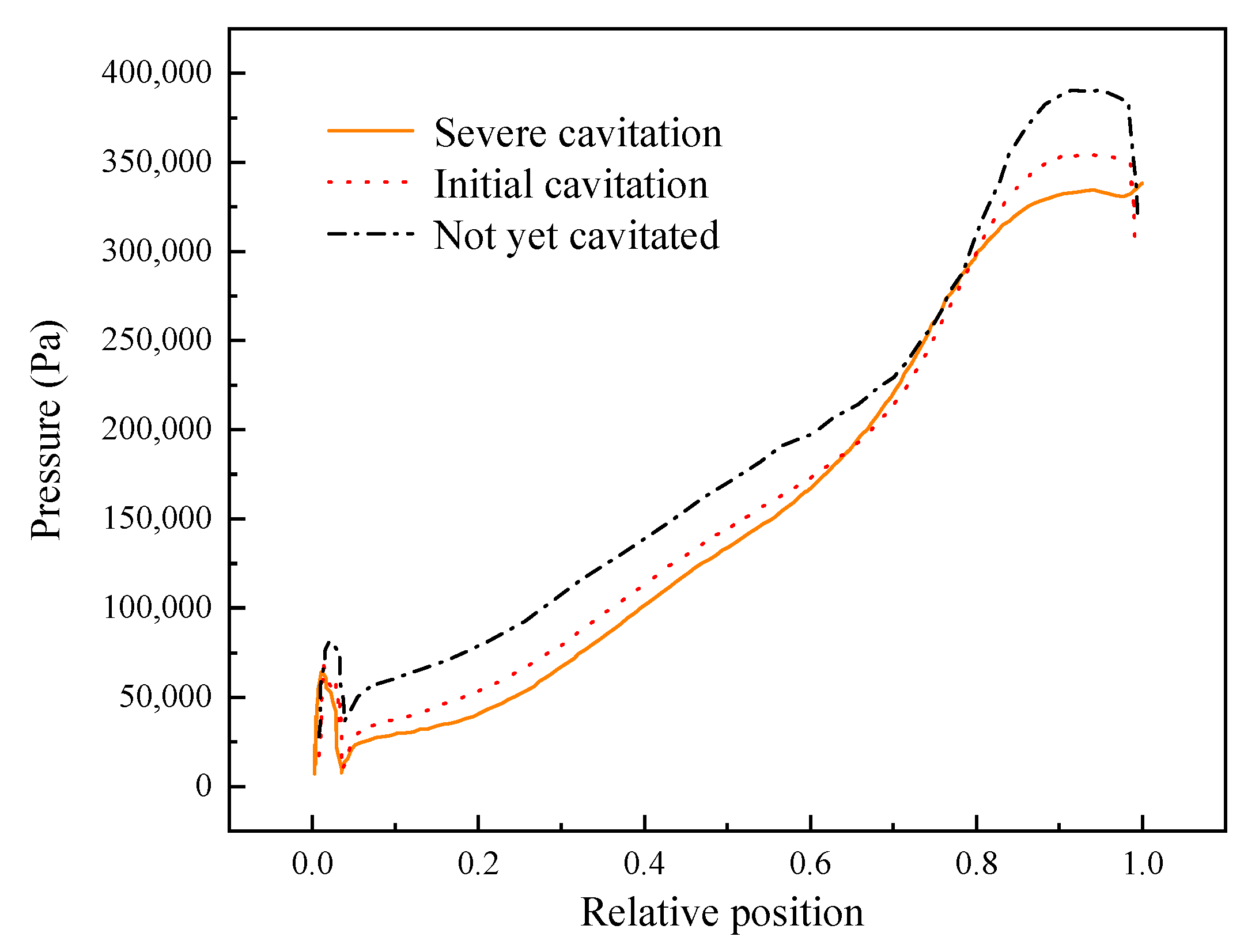
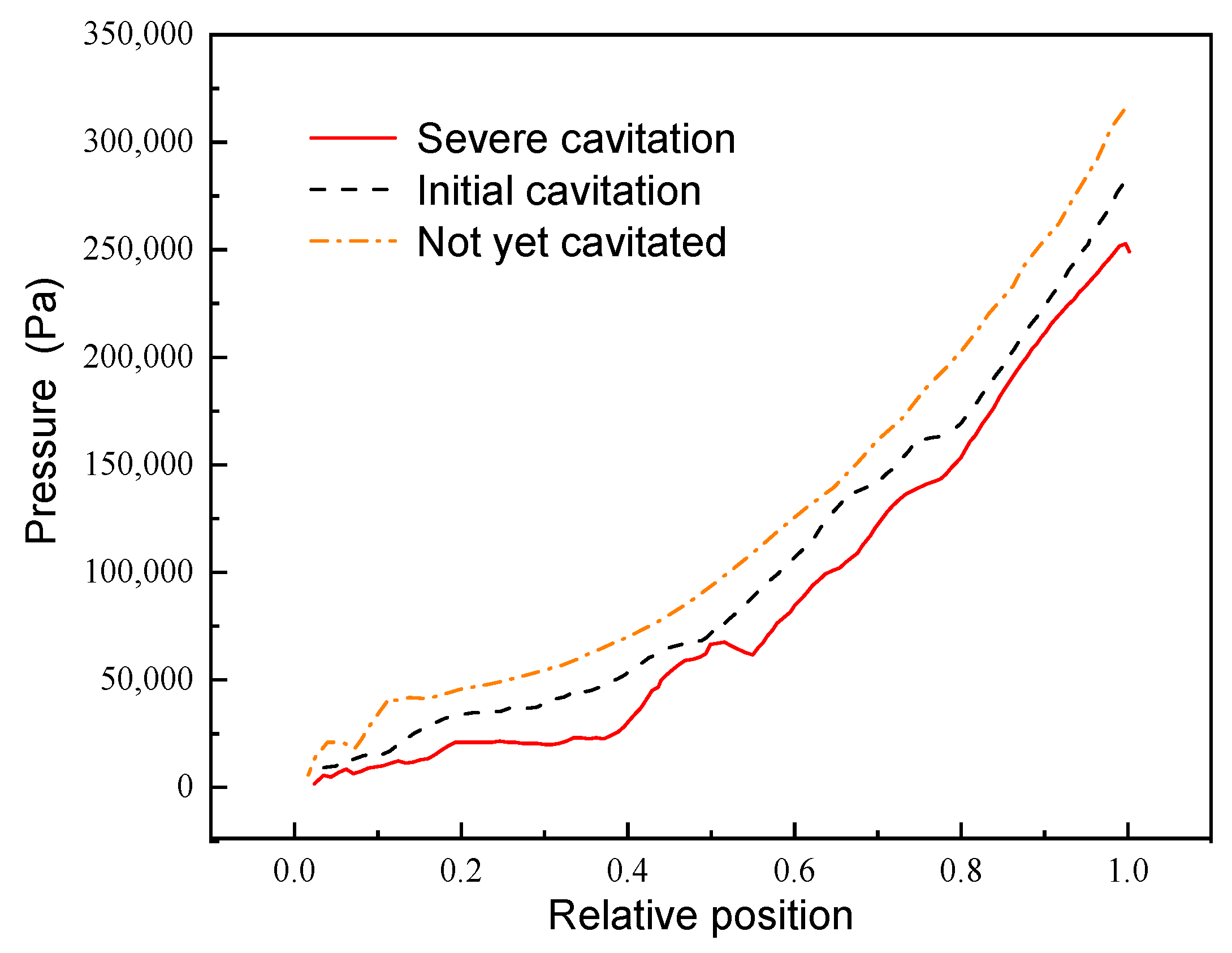
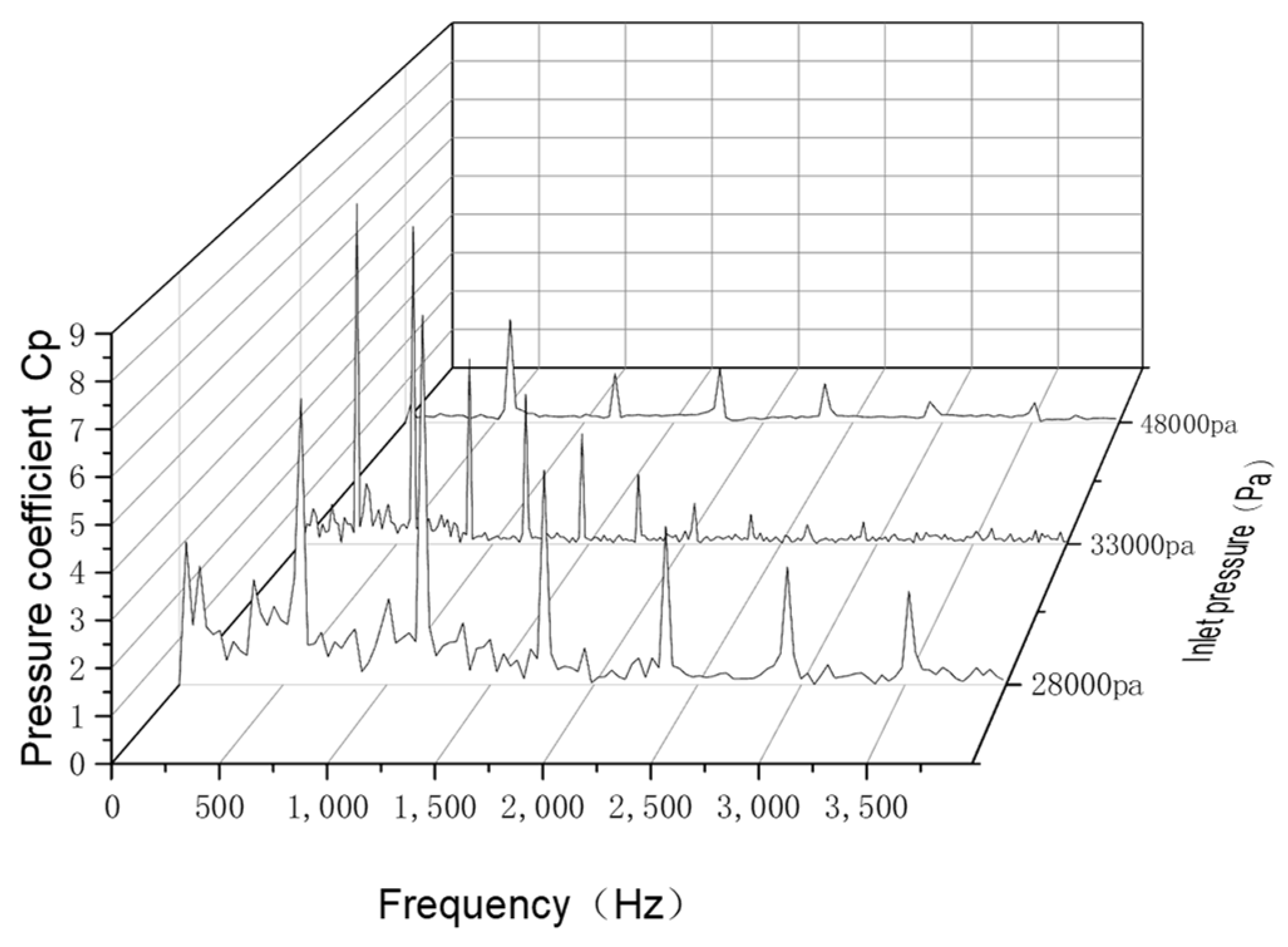
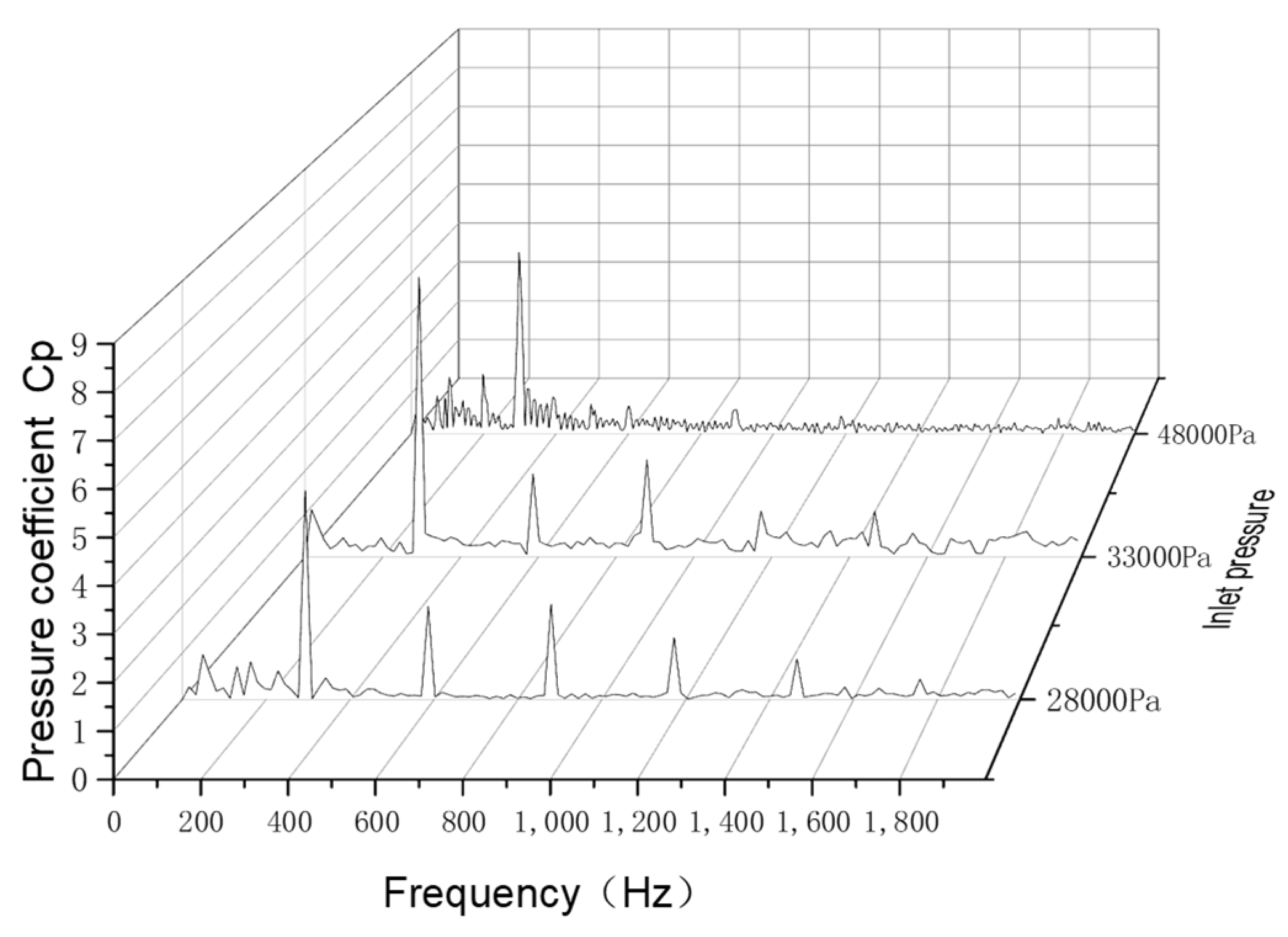
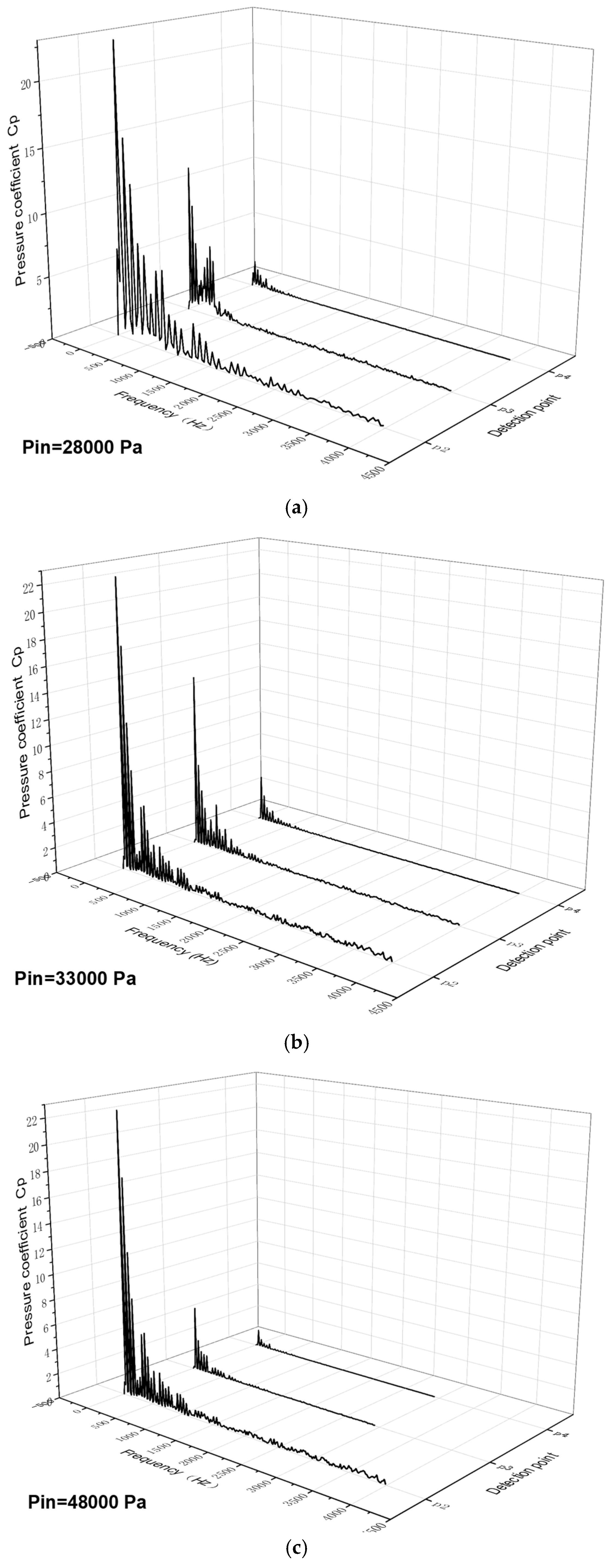
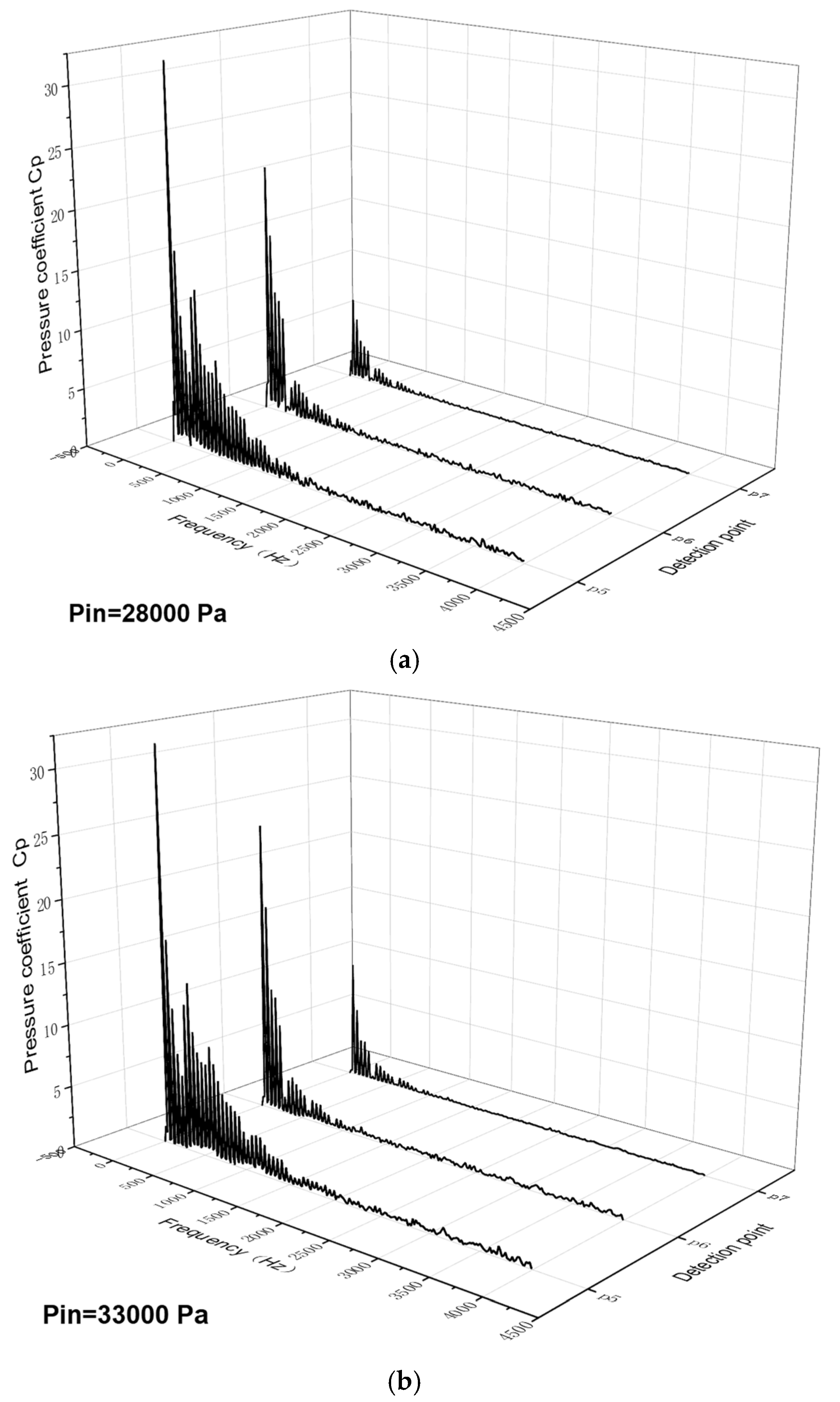
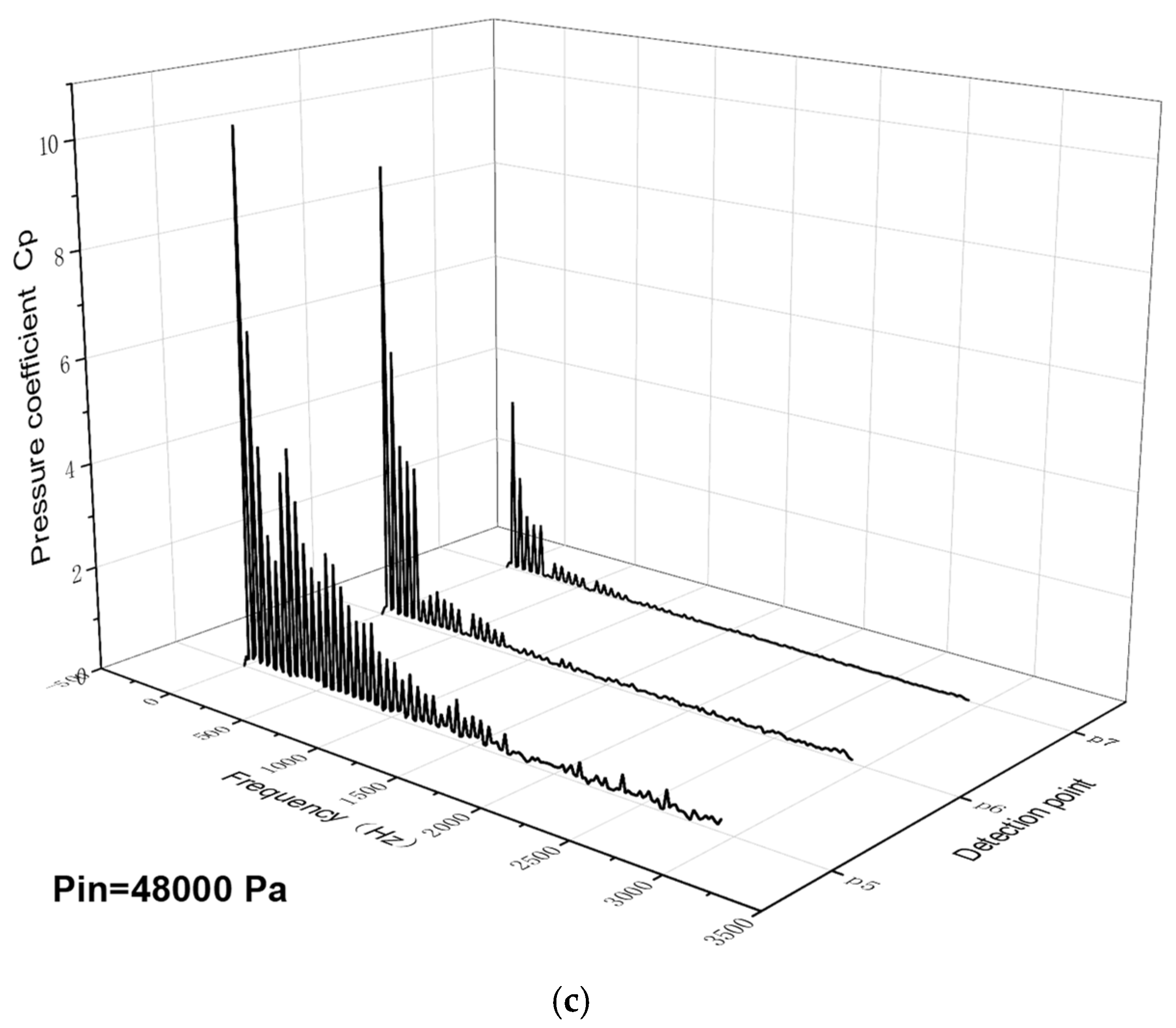
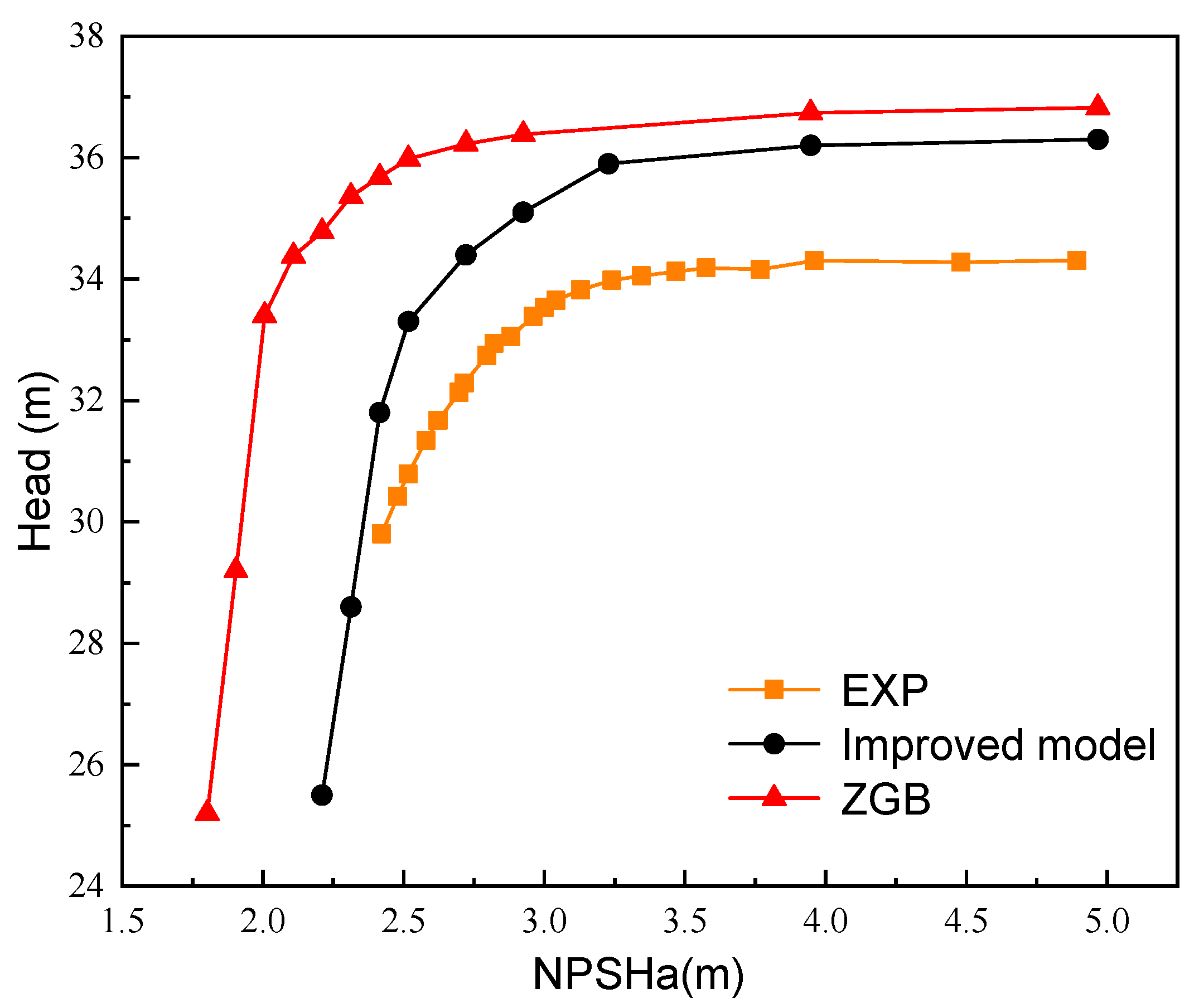
We modified the Zwart–Gerber–Belamri (ZGB) cavitation and RNG turbulence models based on their rotational motion characteristics, as well as simulating the phenomenon of small fluctuations in rotational speed due to the action of hydraulic excitation force, to increase the precision of numerical simulations of the cavitation characteristics of centrifugal pumps. According to the theory behind the enhanced model, the pressure gradient in the impeller runner changes uniformly, and the cavitation bubble initially manifests itself at the front edge of the blade’s suction. With the reduction in the effective margin, changes in the impeller flow channel’s pressure gradient increased, the blade’s suction-side cavitation area expanded, and the flow field’s internal disturbance enhanced, resulting in hydraulic loss to the centrifugal pump, considerably reduced operating performance, and the blade pressure side by the cavitation-affected area becoming smaller. The blade’s suction-surface pressure–load curve can be divided into a low-pressure cavitation zone, a pressure fluctuation zone, and a pressure stabilization zone. The pressure–frequency-domain diagram of each monitoring point has a discrete distribution, and the main frequency is the blade-passing frequency ƒ = 293 Hz and its n times frequency. With the deepening of the cavitation, the amplitude of the main frequency in the low-frequency band showed a trend of increasing and then decreasing, and the amplitude of the high-frequency band showed an increasing trend. When we applied the ZGB cavitation model based on the improved rotational motion characteristics to our numerical calculation of the centrifugal pumps’ cavitation characteristics, our calculated cavitation performance curve was closer to the experimental value than the ZGB model, and when the centrifugal pump’s cavitation degree was increased, the area covered by the vacuole area was 1/4 of the suction side of the vane.
Keywords: centrifugal pump; cavitation model; cavitation; numerical simulation centrifugal pump; cavitation model; cavitation; numerical simulation