Article

Agent-Based and Stochastic Optimization Incorporated with Machine Learning for Simulation of Postcombustion CO2 Capture Process


1
Department of Energy and Process Engineering, NTNU—Norwegian University of Science and Technology, Kolbjørn Hejes vei 1 B, 7491 Trondheim, Norway
2
Department of Electrical Engineering, Information Technology and Cybernetics, USN—University of South-Eastern Norway, Campus Porsgrunn, 3199 Borre, Norway
*
Author to whom correspondence should be addressed.
Processes 2022, 10(12), 2727; https://doi.org/10.3390/pr10122727
Submission received: 24 October 2022 / Revised: 5 December 2022 / Accepted: 12 December 2022 / Published: 16 December 2022
(This article belongs to the Special Issue Research on Process System Engineering)

Abstract

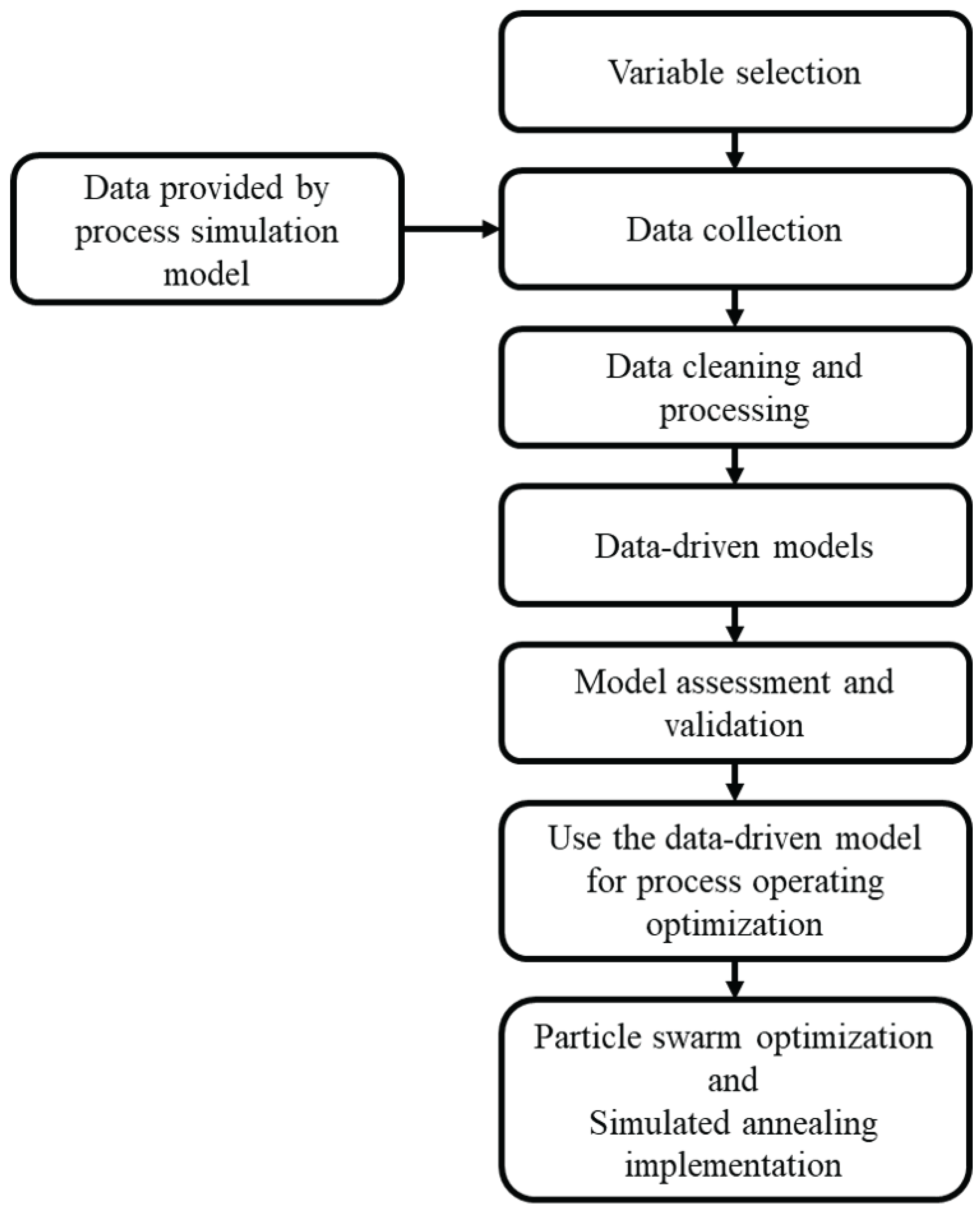
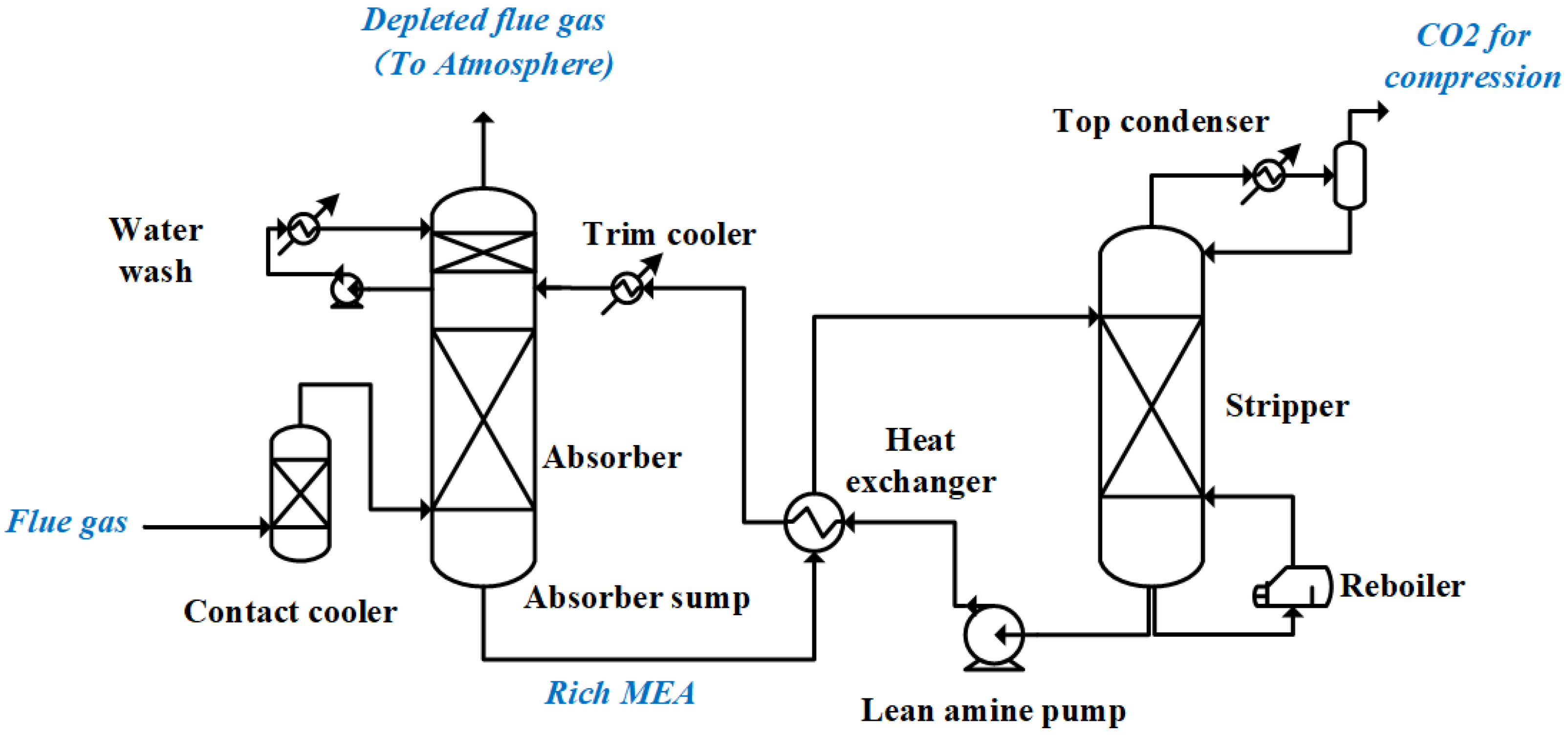
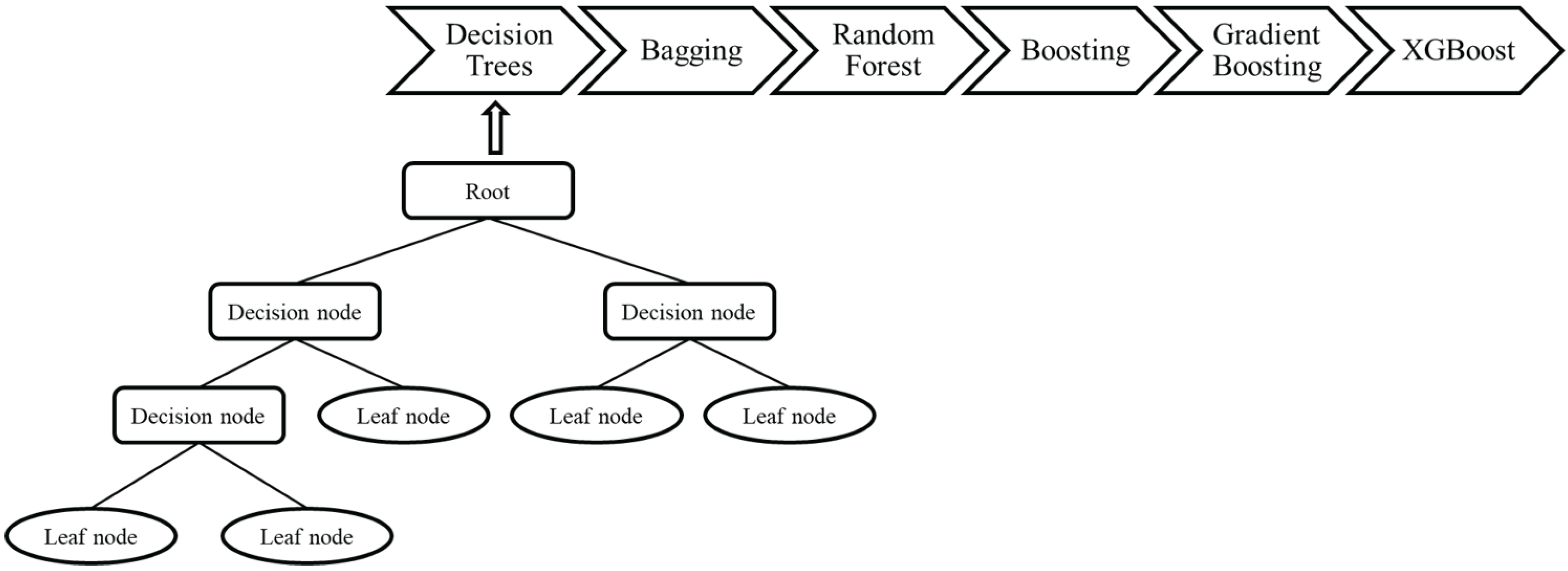
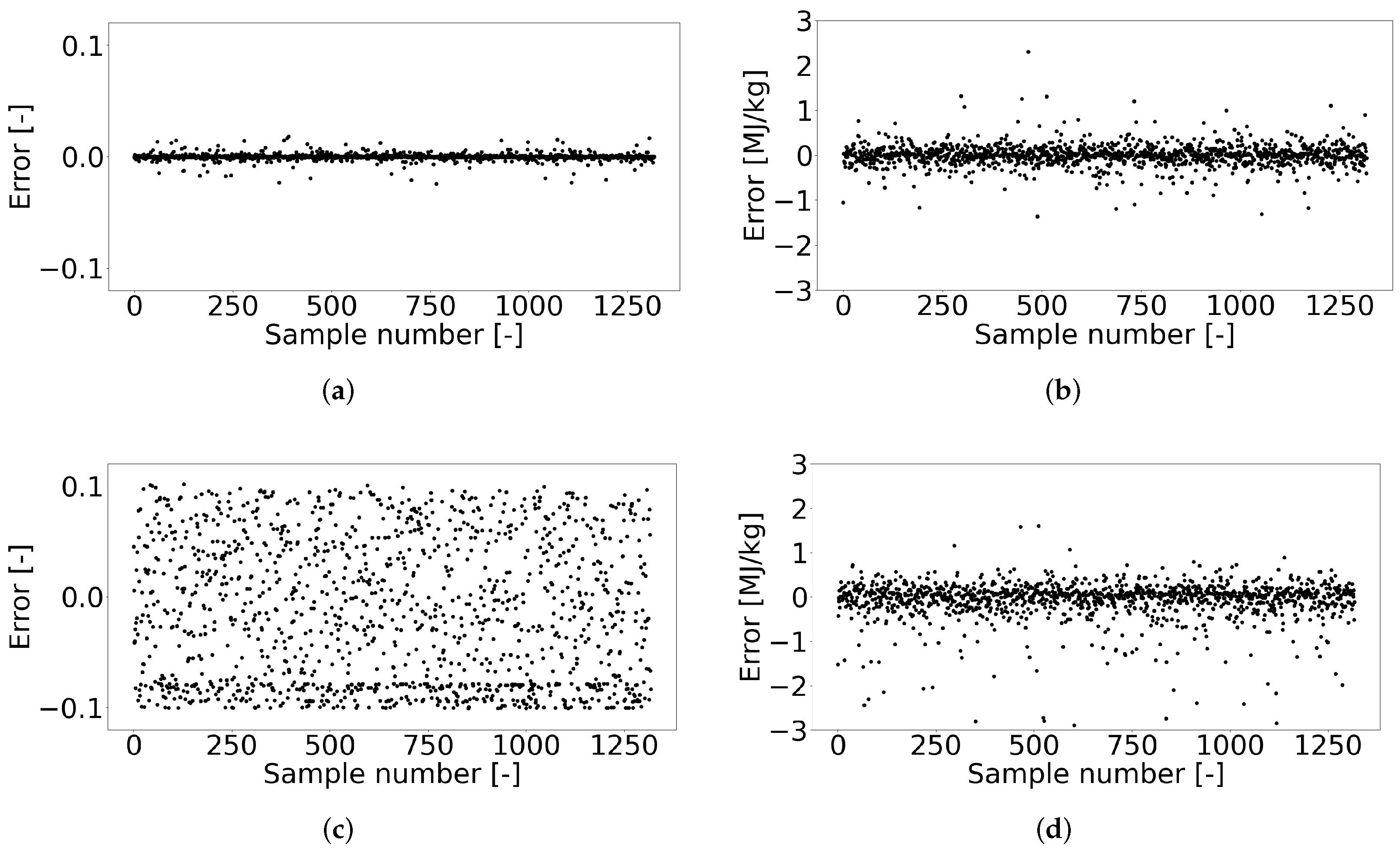
In this paper, a novel method is proposed for the incorporation of data-driven machine learning techniques into process optimization. Such integration improves the computational time required for calculations during optimization and benefits the online application of advanced control algorithms. The proposed method is illustrated via the chemical absorption-based postcombustion CO2 capture process, which plays an important role in the reduction of CO2 emissions to address climate challenges. These processes simulated in a software environment are typically based on first-principle models and calculate physical properties from basic physical quantities such as mass and temperature. Employing first-principle models usually requires a long computation time, making process optimization and control challenging. To overcome this challenge, in this study, machine learning algorithms are used to simulate the postcombustion CO2 capture process. The extreme gradient boosting (XGBoost) and support vector regression (SVR) algorithms are employed to build models for prediction of carbon capture rate (CR) and specific reboiler duty (SRD). The R2 (a statistical measure that represents the fitness) of these models is, on average, greater than 90% for all the cases. XGBoost and SVR take 0.022 and 0.317 s, respectively, to predict CR and SRD of 1318 cases, whereas the first-principal process simulation model needs 3.15 s to calculate one case. The models built by XGBoost are employed in the optimization methods, such as an agent-based approach represented by the particle swarm optimization and stochastic technique indicated by the simulated annealing, to find specific optimal operating conditions. The most economical case, in which the CR is 72.2% and SRD is 4.3 MJ/kg, is obtained during optimization. The results show that computations with the data-driven models incorporated in the optimization technique are faster than first-principle modeling approaches. Thus, the application of machine learning techniques in the optimization of carbon capture technologies is demonstrated successfully.
Keywords: postcombustion carbon capture; machine learning; process optimization; data-driven process modeling postcombustion carbon capture; machine learning; process optimization; data-driven process modeling