1. Introduction
The global shift towards a more sustainable economy is still shaping reforms in the global economy and finance. Environmental issues, including climate change, resource depletion, and ecological degradation, have prompted many governments and firms to incorporate environmental factors into their capital allocation strategies. Sustainability finance is therefore recognized as the primary tool for turning environmental issues into investment products (
Küfeoğlu 2026).
There has been an increase in investments channeled into equity-based financial instruments linked to clean energy, environmental innovation, and climate change mitigation (
Vinci 2025). Moreover, progress has been made in creating exchange-traded funds and sustainability indexes, both of which are themed around sustainability. There has also been an increase in investments in environmental, social, and governance (ESG)-compliant financial instruments, which are regarded not only as financial instruments but also as catalysts for the development of a low-carbon and resource-efficient economy (
Ahmad et al. 2024).
The financial features of sustainability-oriented equity investments and the risks associated with them remain debatable, despite growing recognition of these investments. Although the literature has emphasized the favorable environmental effects of green investments, as well as their long-run social implications (
Alsagr 2023), the recent literature on the market profile of green investments, especially from a long- and high-frequency perspective, is inconclusive (
Chatziantoniou et al. 2022;
Semmler et al. 2024;
Thi Xuan and Thai Hung 2024). Existing studies, such as
Gupta and Chaudhary (
2026), have examined the risk-adjusted performance and volatility of sustainability-focused indices within specific national contexts, particularly emerging markets. While these contributions provide valuable insights into country-level dynamics, they remain limited in terms of cross-market comparability and do not explicitly assess how sustainability-oriented equity instruments behave relative to both conventional developed-market benchmarks and emerging-market equity assets within a unified analytical framework. This study extends the literature by adopting a broader comparative perspective. In this regard, the debate continues over whether sustainability-oriented equity indices can help investors achieve high, competitive risk-adjusted returns, as well as diversification benefits and financial resilience, compared to conventional market indices. These concerns need to be considered from both an investor’s and a policymaker’s perspective. From an investor’s perspective, it is important to understand the underlying financial profile; from a policymaker’s perspective, it is important to understand the underlying structural financial constraints to design an appropriate sustainability governance framework.
This study contributes to the literature in three main ways. First, it extends existing research on sustainability-oriented equity performance by providing comparative analysis across thematic green funds, conventional developed-market benchmarks, and an emerging-market equity index, thereby offering a broader interpretive framework than studies focused on a single market or asset class. Second, the study adopts a high-frequency, long-horizon empirical design based on daily data from 2010 to 2025 and integrates multiple performance and risk measures, including logarithmic returns, CAGR, Sharpe and Sortino ratios, beta, correlation, and drawdown, within a consistent and replicable analytical framework. Third, the study contributes to the sustainability finance literature by linking observed financial characteristics to the broader question of whether market-based green equity instruments are structurally aligned with the requirements of long-term sustainability transition finance.
The selection of financial indices for this study is intended to provide a representative comparison between sustainability-oriented equity instruments and conventional market benchmarks. The ICLN and QCLN indices are widely used thematic exchange-traded funds that focus on clean energy and environmental innovation, making them suitable proxies for sustainability-oriented equity investments. ECON is included as a representative emerging-market equity benchmark, allowing comparison with an asset class that shares certain characteristics with green investments, such as higher growth expectations and exposure to policy and macroeconomic risks. The traditional benchmarks SPY, QQQ, GSPC, and XLE are included to represent broad U.S. equity market performance, technology-driven growth sectors, the underlying S&P 500 market index, and the conventional energy sector, respectively. Together, these indices provide a structured framework for comparing the financial performance, risk characteristics, and market integration of sustainability-oriented assets with both conventional and emerging-market equity benchmarks. By employing daily financial data from 2010 to 2025, the research aims to determine whether returns, risks, volatility, correlations, and drawdowns uniquely characterize the financial indices of green investment products.
From the perspective of the sustainability transition, these financial characteristics are not merely of interest to investors but are central to the capacity of market-based mechanisms to support long-term environmental objectives. The transition toward a low-carbon, environmentally sustainable economy requires stable, patient, and scalable capital capable of financing technologies and infrastructure with long investment horizons and uncertain payoffs. Persistent underperformance, elevated volatility, and high exposure to systemic market risk may therefore undermine the ability of sustainability-oriented equity instruments to attract and retain long-term institutional investors, such as pension funds and insurance companies, that are critical to financing the sustainability transition. In this sense, evaluating the financial viability and risk profile of sustainability-oriented equity indices provides insight into whether current market-based green finance instruments are structurally aligned with the requirements of a durable and credible sustainability transition.
In this context, the central research question of this study is whether sustainability-oriented equity indices exhibit financial characteristics that systematically differ from those of conventional and emerging-market equity benchmarks in returns, volatility, risk-adjusted performance, market sensitivity, and diversification potential. More specifically, the study investigates whether green equity investments can provide competitive, risk-adjusted returns and diversification benefits relative to traditional market indices, or whether their financial performance is characterized by higher volatility and stronger integration with broader equity markets.
2. Literature Review
2.1. Sustainable Finance and Theoretical Foundations
Sustainable finance is a key instrument for achieving green and climate objectives through financial action: capital markets finance green technology, green energy, and environmentally friendly enterprises. As a result, sustainable finance tools are now regarded as enablers of the sustainability transition rather than merely as investment products (
Fichtner et al. 2025).
The existing literature indicates that investments in sustainability have dual objectives: to generate financial returns and achieve environmental or societal outcomes (
Cheung et al. 2022;
Fichtner et al. 2025). This dual objective of sustainability investments distinguishes it from other financial investments, adding another layer of complexity to asset pricing, portfolio management, and risk management. Sustainability-linked assets may thus be influenced by both financial and non-financial factors (
Cheung et al. 2022;
Fichtner et al. 2025).
However, as interest in sustainability grows, several key issues arise regarding incorporating sustainability objectives into capital markets, including efficiency, risk, and long-term financial viability (
Dupir 2024). It is still important to determine whether sustainability-oriented equity investments can compete with traditional investments on market-based performance criteria to evaluate their ability to attract and sustain private capital.
It is also necessary to distinguish between broad ESG-screened investment products and thematic green equity products. While both are often discussed under the umbrella of sustainable finance, they differ materially in their asset selection logic. Broad ESG products generally apply firm-level environmental, social, and governance screens across a diversified market universe, whereas thematic green funds are more concentrated in firms with direct exposure to clean energy, environmental technologies, or related activities. This distinction matters for risk analysis because thematic products may exhibit higher sector concentration and policy sensitivity than diversified ESG benchmarks.
The relationship between sustainability-oriented investing and portfolio theory has been studied extensively. Modern Portfolio Theory (MPT) states that diversification across a wide range of assets with low correlation can maximize returns for a given level of risk (
Fabozzi et al. 2008). Sustainability-oriented investment strategies often rely on screening mechanisms, either positive or negative, to limit the investment universe according to environmental, social, or governance criteria (
Daugaard et al. 2024).
Several research papers also show that these constraints may reduce diversification benefits and increase idiosyncratic risk, leading to suboptimal risk/return trade-offs (
Busch et al. 2016;
Ferri and Intonti 2022).
These theoretical considerations naturally extend to questions of asset pricing and investor preferences in sustainability-oriented markets.
2.2. Asset Pricing and Investor Preferences
Another concept discussed in the literature on sustainable finance is the “green premium” or “greenium,” which refers to investors’ willingness to forgo expected financial returns to hold assets considered environmentally friendly (
Addae-Dapaah and Wilkinson 2020;
Peciukevičius 2025). Preference-based pricing theory questions the traditional assumption that investors aim to maximize financial returns, arguing that they derive utility from non-financial sources (
Dyckhoff 2018;
Kvam and Busemeyer 2020).
Evidence shows that sustainable assets are likely to be more highly valued but offer lower returns than traditional assets (
Cunha et al. 2020;
Yue et al. 2020). This has been seen in stocks, green bonds, and other climate-based financial products. The arrival of the green premium, sustainable assets are likely to underperform traditional assets, even with high demand (
Lalwani 2024).
The significance of these implications is more for long-term investors and policymakers. Although the existence of a green premium can provide financing for green activities, it can also deter investors focused on returns, thereby impeding the growth of sustainability finance (
Fu et al. 2023).
From an empirical perspective, this argument implies that sustainability-oriented assets may exhibit lower risk-adjusted returns than conventional assets if investors are willing to accept weaker financial performance in exchange for environmental or social utility.
From this perspective, sustainability screening may shift the efficient frontier, reducing expected returns for a given level of risk (
Steuer and Utz 2023). Critics of sustainability screening also argue that thematic funds, including clean energy and environmental innovation funds, are prone to sector concentration and regulatory risks (
Criscuolo and Menon 2015).
On the other hand, other studies in the literature suggest that sustainability-oriented investing may contribute to portfolio resiliency over the long term (
Dupir 2025;
Șerban 2025). This is based on the notion held by proponents of these firms that they can manage risks over time, including environmental, regulatory, and consumer behavior risks. Thus, sustainable assets can reduce tail risks from climate change, helping maintain portfolio value over time, even if they negatively impact portfolio performance in the short term (
Dupir 2025;
Șerban 2025).
Beyond these pricing considerations, the literature emphasizes the importance of understanding the risk profile and market behavior of sustainability-oriented assets.
2.3. Risk Characteristics of Green Equity Investments
Risk considerations are central to sustainability-oriented equity investments (
Gai et al. 2025). Most clean energy and environmental innovation businesses operate in capital-intensive industries with high technology adoption rates and changing regulatory environments, and they use public policy incentives (
al-Rasheed 2024).
Empirical analysis shows that clean energy equities are often characterized by elevated volatility due to sectoral concentration, technological uncertainty, and regulatory exposure (
Dutta et al. 2020). Of particular interest is the fact that changes in interest rates have a significant effect on the same. When interest rates increase, long-term investments become less attractive, and periods of monetary tightening are characterized by substantial underperformance of green equity indices (
Katoch and Peer 2025;
Tufail et al. 2024).
Furthermore, sustainable assets are characterized by substantial uncertainty (
Wang et al. 2026). Changes in policies regarding subsidies, taxes, and climate change are observed to have significant impacts on sustainability (
Adebayo et al. 2025). The observed volatility and substantial drawdowns in the green equity market suggest that sustainable assets are highly sensitive to changes in expectations regarding sustainability and sustainability policies (
Adebayo et al. 2025;
Wang et al. 2026). While these sectoral and policy-related risks shape the volatility profile of green equity investments, an additional question concerns how these assets behave relative to broader financial markets, which relates to their systematic risk and diversification potential.
Systematic risk refers to the sensitivity of an asset to broad market movements and is commonly captured by the beta coefficient (
Hong and Sarkar 2007). Understanding the systematic risk of green equity indices is particularly important because it determines whether these assets can provide diversification benefits within a broader investment portfolio. It has been found that the beta values of green equity indices are significantly greater than one, indicating an amplification of market movements (
Ramzan et al. 2024).
The presence of high systematic risk also has substantial implications for diversification. If sustainability assets demonstrate strong alignment with broader equity markets, their ability to provide hedging or diversification benefits may be limited. Empirical research has found a strong positive correlation between green equity indices and conventional equity benchmarks, particularly during periods of stress (
Fabozzi and Focardi 2025;
Gurrib et al. 2023;
Trancoso and Gomes 2024).
Such a high level of market integration also casts doubt on the assumption that sustainability-focused investments are defensive and stabilizing in a portfolio (
Basile and Ferrari 2024). In fact, green equities often resemble high-growth or technology-focused stocks, which perform well during periods of market expansion and experience large drawdowns during market contractions (
Koltonuk 2020).
The analogy may be particularly pertinent to the concept of sustainability transition, as many clean energy supply chains and environmental innovation projects have been integrated into emerging economies. As a result, investments made in the pursuit of sustainability may exhibit certain risk profiles associated with emerging markets, particularly in times of global uncertainty (
Caferra and Falcone 2023).
2.4. Policy Frameworks Research Gap and Contributions
In addition to market-based characteristics, the literature highlights the critical role of policy and institutional frameworks in shaping the financial performance of sustainability-oriented assets (
Ahmed et al. 2019;
Weber 2017). Established, credible policies are essential to reduce uncertainty and promote investment in clean energy and environmental technologies. Inconsistency in policies is considered detrimental and increases uncertainty (
Sindzingre 2015). These include carbon pricing, extended-duration subsidy commitments, green industrial strategies, and climate-related disclosure requirements. Empirical studies have found that markets respond favorably to long-duration policy announcements, while policy reversals and ambiguities lead to volatility and outflows from green investments (
Bui and Vu 2025;
Ramiah et al. 2016).
From this perspective, it is only possible to understand the financial performance of sustainability-oriented investments in terms of their institutional and governance context. The market performance of sustainability-oriented investments depends on the policy environment in which sustainability transitions occur.
Although the extant literature has made a significant contribution to understanding the environmental implications and financial attributes of sustainability-oriented investments, several gaps remain. Firstly, several studies have used low-frequency data, thereby limiting their effectiveness. Secondly, a few studies have compared green and conventional assets, with little consideration of emerging-market equities as a relevant benchmark. Thirdly, there remains a gap in understanding the relationship among risk-adjusted performance, integration, and policy significance.
This study seeks to fill an information gap by providing a long-run, high-frequency comparative analysis of sustainability-oriented, traditional, and emerging-market equity indices. By including the dynamics of returns, risks, correlations, and drawdowns in a fully replicable manner, the study aims to provide a deeper financial understanding of green investments within the broader context of the sustainability transition.
In contrast to prior studies focusing on single-country or single-asset analyses, this study adopts a multi-benchmark and high-frequency approach, allowing for a more comprehensive assessment of the financial structure and market behavior of sustainability-oriented equity instruments.
3. Data and Methodology
3.1. Data Description
The empirical analysis uses daily closing prices from January 2010 to early 2025. The dataset includes thematic sustainability-oriented equity funds, conventional developed-market benchmark indices, and one emerging-market equity fund. All series were aligned on common trading dates. Missing observations were not interpolated; returns were computed only when consecutive valid daily closing prices were available for the relevant asset. As for green investments, the analysis will include ICLN, which represents the iShares Global Clean Energy ETF, and QCLN, which represents the NASDAQ Clean Edge Green Energy ETF. Additionally, ECON represents the Columbia Research Enhanced Emerging Economies ETF, while traditional indices will include SPY, QQQ, the S&P 500 Index, and XLE.
Table 1 provides an overview of the sustainability-oriented and conventional equity indices included in the empirical analysis.
The sustainability-oriented instruments included in this study are thematic equity exchange-traded funds rather than broad ESG market indices. Their inclusion is based on their explicit focus on clean energy, environmental innovation, and related low-carbon activities. However, these funds are constructed using provider-specific methodologies, which may include eligibility thresholds based on revenue from green activities, industry classification, thematic screens, and index rebalancing rules. As a result, the term sustainability-oriented in this study refers specifically to listed thematic green equity products and should not be interpreted as encompassing the full universe of sustainable assets, such as broad ESG indices, green bonds, transition finance instruments, or private climate infrastructure. This distinction is important because index construction affects sector concentration, geographic exposure, technology composition, and therefore the observed return and risk characteristics.
3.2. Return Measurement and Risk Metrics
The empirical strategy is designed to evaluate the historical performance of a specific set of thematic green equity instruments using a structured, replicable, multi-metric framework. While the individual measures employed in the analysis are standard in financial econometrics, the study’s contribution lies in their integrated application within a high-frequency, long-horizon comparative framework rather than in the introduction of a new econometric estimator. This approach enables consistent evaluation of return dynamics, risk exposure, and market integration across sustainability-oriented, conventional, and emerging-market equity benchmarks.
To ensure time additivity and long-horizon robustness, daily logarithmic returns are computed as the first difference of the natural logarithm of consecutive daily closing prices,
(
Neuberger and Payne 2021). Cumulative returns are then obtained by compounding the underlying daily return series over time. In addition, monthly compounded returns are calculated by compounding daily returns within each calendar month in order to examine medium-term dynamics while reducing day-to-day noise.
Before conducting the empirical analysis, the stationarity properties of the return series were examined using the Augmented Dickey–Fuller (ADF) test. This step is important because the sample period from 2010 to 2025 spans multiple macro-financial and institutional regimes, and non-stationary series could bias inference regarding volatility, correlation, and risk-adjusted performance. The ADF results indicate that all return series are stationary at conventional significance levels (see
Appendix A.2,
Table A1).
Long-run performance is evaluated using the compound annual growth rate (CAGR), calculated as the annualized growth of each asset over the full sample period, based on the number of trading years in the sample. Annualized volatility is computed from the standard deviation of daily returns multiplied by the square root of 252 trading days.
Risk-adjusted performance is primarily evaluated using the Sharpe ratio and the Sortino ratio. In the baseline specification, the Sharpe ratio is computed using the daily 3-month U.S. Treasury bill rate as the proxy for the risk-free rate, aligned with the frequency of the return series. This choice is consistent with standard asset-pricing practice for U.S.-dollar-denominated financial assets. Because Sharpe ratio rankings may be sensitive to the treatment of the risk-free rate, particularly for assets with moderate excess returns, a robustness check is also conducted using a zero risk-free rate. The relative underperformance of the sustainability-oriented indices remains qualitatively unchanged under this alternative specification. The Sortino ratio is calculated by replacing total volatility with downside deviation, which is estimated from negative daily returns and then annualized.
Systematic risk is measured using beta, estimated from an ordinary least squares regression of each asset’s daily returns on the daily returns of SPY, the market benchmark, over the full sample period. Correlation analysis is based on Pearson pairwise correlations computed from daily return series. Rolling volatility and rolling correlation measures, where reported graphically, are computed using a 30-trading-day moving window. Maximum drawdown is measured as the largest peak-to-trough decline in the cumulative return index over the sample period.
Although the Sharpe and Sortino ratios are standard measures of risk-adjusted performance, they are rooted in a mean-variance framework and may be less informative when return distributions are non-normal or exhibit substantial tail risk. This consideration is particularly relevant for sustainability-oriented and thematic equity products, which may display asymmetric downside behavior, fat tails, and volatility clustering. Accordingly, the present findings should be interpreted as evidence within a standard portfolio-risk framework. Future extensions could incorporate alternative downside and tail-sensitive metrics, such as value-at-risk (VaR), conditional value-at-risk (CVaR), expected shortfall, and higher-moment or drawdown-based measures, to assess whether the relative riskiness of green equity products becomes even more pronounced under non-normal return assumptions.
Observations with missing prices were handled by aligning the series on common trading dates and computing returns only where consecutive valid prices were available for a given asset.
3.3. Analytical Framework
The empirical methodology for this study comprises four steps: data acquisition and preprocessing, transformation of asset returns to logarithmic returns, construction of performance and risk indicators, and cross-sectional comparison of asset classes.
Such a strategy ensures full replicability. The use of daily data over a 15-year sample period is sufficient for strong inference about volatility persistence, correlations, and risk exposure, which are particularly relevant for sustainability-oriented investments in a changing regulatory and macroeconomic environment.
All indicators are calculated directly from the daily return series using consistent annualization and benchmarking assumptions across all indices to ensure comparability.
While the individual measures employed in the analysis are standard in financial econometrics, the study’s contribution lies in their integrated application within a high-frequency, long-horizon comparative framework rather than in the introduction of a new econometric estimator. This design enhances comparability across asset classes and provides a more comprehensive assessment of the financial characteristics of sustainability-oriented equity instruments.
3.4. Inferential and Conditional Volatility Analysis
To complement the descriptive performance and risk metrics, additional inferential and conditional volatility analyses are conducted.
First, differences in mean returns across sustainability-oriented and conventional indices are evaluated using standard two-sample t-tests. In addition, differences in risk-adjusted performance are assessed using the Jobson–Korkie test with Memmel correction, which enables statistical comparison of Sharpe ratios across assets.
Second, to account for time-varying volatility and volatility clustering, features commonly observed in financial return series, a GARCH(1,1) model is estimated for each index. The model is specified as:
where
denotes the return at time
,
is the conditional mean, and
is the error term. The conditional variance σ
t2 depends on past squared shocks ϵ
2t−1 (ARCH effect) and past variance σ
2t−1 (GARCH effect). The parameters
and
capture short-run volatility shocks and persistence, respectively.
4. Empirical Results
To assess the stability of the findings under different macroeconomic regimes, the subperiod approach was employed. The full sample period from 2010 to 2025 spans an unusually eventful macro-financial environment, including the post-global financial crisis recovery, prolonged quantitative easing, the pandemic shock, major energy market disruptions, tightening monetary policy, and rapid growth in sustainable investing. These conditions are likely to have influenced both the performance and the valuation sensitivity of green equity products. The subperiod analysis is therefore intended not only as a robustness exercise but also to interpret the results in light of distinct macroeconomic and policy regimes that may have disproportionately affected sustainability-oriented assets. In the subperiod approach, the sample was divided into three economically meaningful periods: 2010 to 2015, 2016 to 2019, and 2020 to 2025, corresponding respectively to the post-global-financial-crisis recovery, the pre-pandemic normalization phase, and the pandemic/post-pandemic period characterized by major policy and energy-market disruptions. The rationale for this sub-period classification is discussed in
Appendix A.1 and
Appendix A.3.
The findings were qualitatively consistent across subperiods, except during periods with stronger policy support and energy market disruptions, when clean energy indices performed better (see
Appendix A.1,
Appendix A.3,
Appendix A.5 and
Appendix A.6).
4.1. Return and Volatility Characteristics
Descriptive statistics for the daily returns of all the indices are shown in
Table 2. The standard deviation of daily returns is considerably higher for sustainability-focused indices than for conventional indices. Although the mean daily returns are positive across all indices, return volatility is considerably higher for green assets, i.e., QCLN and ICLN.
These differences are further illustrated in
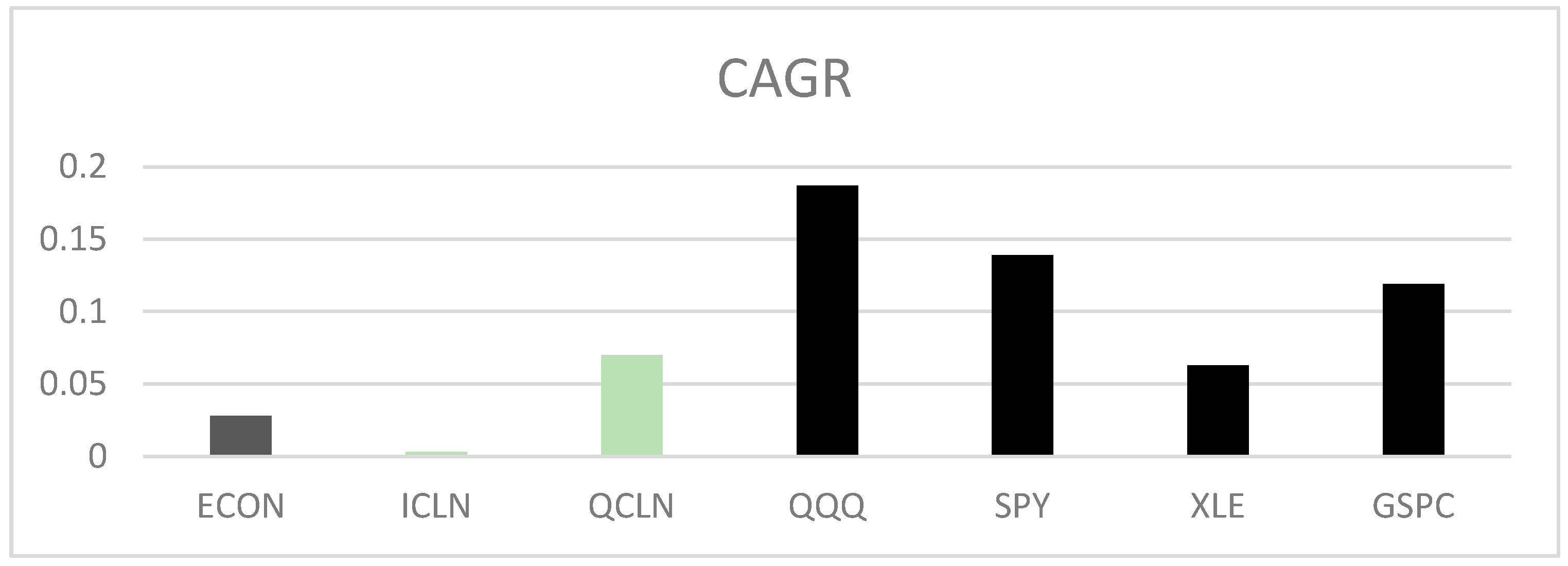
Figure 1, which plots the compound annual growth rate (CAGR) for the sampled indices and compares long-run annualized returns across sustainability-oriented, emerging-market, and traditional equity benchmarks.
Figure 1 shows a persistent relative underperformance over the sample in the long-run return profiles of sustainability-oriented, emerging-market, and traditional equity instruments from 2010–2025. Technology-oriented equity instruments such as QQQ and SPY exhibit significantly higher compound annual growth rates, driven by strong long-term capital appreciation from diversified business operations and positive macroeconomic conditions.
Among the sustainability-focused indices, QCLN shows moderate long-term growth, suggesting that a part of the clean energy and environmental innovations segment has delivered financial returns over the long term. However, this remains far below the performance of conventional indices, implying that the financial performance of green equity investments does not reflect a growth story. By contrast, ICLN exhibits a roughly flat long-run growth profile over the sample period, indicating that cumulative capital appreciation is minimal relative to the conventional benchmarks. This result suggests that not all thematic green equity products participate equally in long-run market appreciation, and that index composition materially affects financial outcomes. This diversity indicates the influence of the index’s composition and the sector mix on returns. The long-term performance variations among green indices can be attributed to several factors, including investment location, the technologies used, sector maturity, and sensitivity to policies and regulations. The constituents of the green indices that are more exposed are more likely to face risks from financial market fluctuations and policy risks, thereby affecting their growth prospects, despite their strong environmental relevance.
This comparison with emerging market equities further provides context for these findings. As mentioned above, while emerging market equity indices have lower long-term growth potential than their developed-world counterparts, they have shown greater stability than some sustainability-oriented equity indices. This further suggests that environmentally oriented equities are perceived as having a risk profile similar to that of high-growth but institutionally dependent asset classes, and that sustainability-oriented equities are indeed subject to a significant risk premium.
Based on
Figure 1, over long-term investment horizons, investments in sustainability-focused equity instruments have not produced financial returns comparable to those of more traditional equity instruments. This suggests that the financial performance of green equity instruments may be constrained under current market conditions, especially in the absence of supportive policy structures.
Figure 1, therefore, provides the necessary context for subsequent discussions of the risks, volatility, and integration of equity instruments, thereby supporting the idea that sustainability-oriented investments face inherent challenges in aligning their environmental and financial objectives.
4.2. Risk-Adjusted Performance and Drawdowns
The risk-adjusted measures presented in
Table 3 show that the sustainability indices underperform the traditional benchmarks on both the Sharpe and Sortino ratios. The higher volatility is not matched by higher returns, which means that the efficiency profile is consistently weaker over the sample period.
The downside risk dynamics can also be further explained through drawdown analysis. The sustainability-oriented indices have a maximum drawdown of over 70%, whereas the broad market benchmark’s drawdown ranges from 33% to 35%. Such trends can be observed in cumulative performance paths and periods of clustering volatility.
4.3. Monthly Return Dynamics
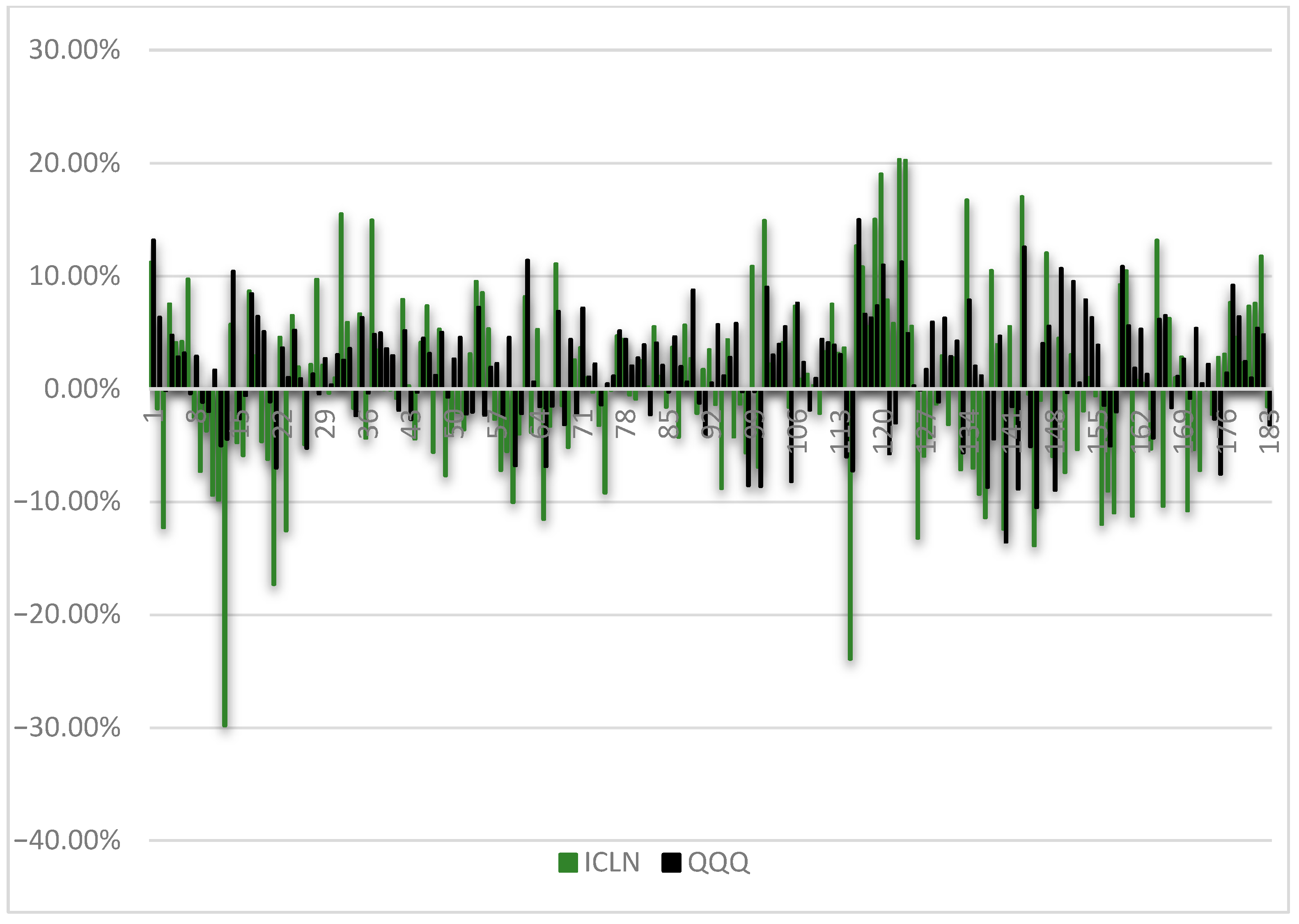
In addition, to examine medium-term behavior and smooth out noise from daily returns, the analysis and graphing of the monthly compounded returns are performed and are shown in
Figure 2. This figure displays the series of monthly compounded returns for representative green and traditional indices over the sample period.
Figure 2 illustrates higher observed volatility in medium-term return dynamics between sustainability-oriented equity indices and traditional market indices. Sustainability-oriented indices show pronounced month-to-month volatility characterized by frequent and sudden reversals in returns and numerous large negative monthly returns exceeding −15%. Such significant negative returns underscore that the volatility of green equity returns is not limited to day-to-day returns but persists even when returns are accumulated over a month.
In fact, large negative monthly returns also point to the susceptibility of sustainability-related assets to high downside risk. In most cases, these events have been associated with changes in macroeconomic conditions, expectations regarding monetary policy, or sustainability policy frameworks. In fact, clean energy and environmental innovation companies, which rely on long-term investment horizons and are significantly affected by changes in discount rates, can experience substantial negative valuation changes each month due to adverse market conditions.
On the contrary, the traditional equity indices display less dispersed returns and more gradual transitions between positive and negative months. While traditional indices struggle during market stress, the monthly return paths are smoother, reflecting greater sectoral diversification, more stable earnings outlooks, and less sensitivity to policy-related factors. The reduced volatility in monthly returns further reflects the relative financial stability of traditional indices at intermediate horizons.
Regarding investment, these factors are significant for investors, especially for institutional investors such as pension funds, insurance companies, and asset managers who are subject to medium-term risk constraints. The volatility of monthly returns is a key factor for portfolio management and for compliance with regulatory requirements. However, as negative returns in sustainability-focused indices rise, tracking errors are increasing.
From a sustainability transition perspective, the results indicate that green equity instruments can identify thematic growth opportunities, but they are highly sensitive to sentiment. As discussed earlier, sustainability investments face a major problem in performing effectively as standalone capital allocation tools, especially in addressing uncertainty and volatility. Stability could be a major factor in sustainability transition paths, making green investments more attractive to institutional investors.
4.4. Systematic Risk and Market Integration
The risk estimates in
Table 4 indicate that the sustainability-focused indices have higher betas than SPY. Notably, the QCLN has a beta well above 1.
Table 4 reports point estimates of beta; future extensions may include full regression diagnostics, such as standard errors and confidence intervals, to assess the statistical precision of these estimates.
The correlation structures are also analyzed through the correlation matrix shown in
Table 5. Sustainability-focused indices exhibit a strong positive correlation with traditional equity indices, thereby limiting their diversification potential.
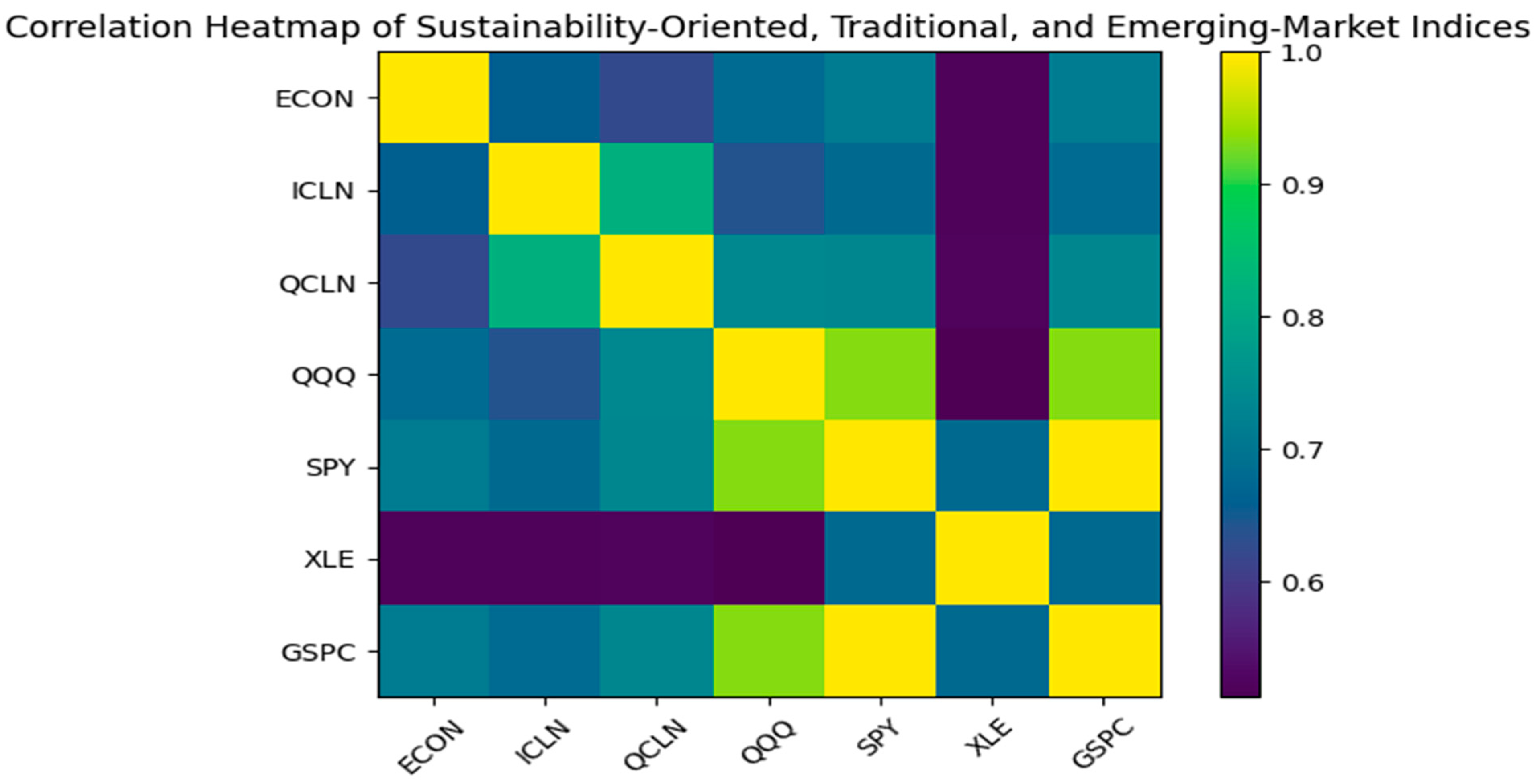
Figure 3 illustrates the correlation structure among sustainability-oriented, traditional, and emerging-market indices.
Figure 3 shows a clear relationship between sustainability-oriented stock index funds and conventional financial markets. This indicates that environmentally focused assets are a major component of conventional financial markets. The high correlation between the two clean energy index funds, ICLN and QCLN, suggests that these funds are likely influenced by factors such as government policies on renewable energy and technology, as well as investors’ attitudes towards the environment.
There is a strong, positive relationship between green stock investments and traditional financial markets, including the SPY and QQQ stock index funds. This is reflected in a correlation of 0.65 or higher, indicating that green stocks move in step with traditional financial markets in response to factors such as the economy, monetary policy, and global risk. Therefore, when traditional financial markets rise, green equities tend to increase alongside them, and they decline during market downturns. This pattern indicates a strong co-movement with broader market dynamics rather than an independent risk structure.
The strong positive correlations between green equity investments and traditional equity benchmarks suggest that, within an equity-only framework, green thematic funds provide limited diversification benefits against broad equity market risk. This conclusion should be interpreted narrowly. It does not rule out the possibility that sustainability-oriented assets may offer conditional diversification benefits relative to specific sectors, under market regimes, or when combined with non-equity asset classes such as fixed income, commodities, or green bonds.
Green investments appear to exhibit financial characteristics like those of high-growth equity segments, including elevated beta and strong sensitivity to general market movements. However, these relationships should not be interpreted as evidence that sustainability-oriented assets are inherently riskier because of their environmental orientation. Instead, the observed risk profile may reflect the sectoral composition of the underlying firms, many of which operate in technology-intensive, growth-oriented industries that historically exhibit higher market sensitivity. The links between sustainability-based asset indices and emerging market stocks imply that green assets and stocks have moderate to strong correlations with other stocks. As a result, it can be deduced that green assets share characteristics with emerging market stocks, including the effects of global capital flows, uncertainty, and shocks.
The implications of the correlation pattern in the study are also important in understanding the sustainability transition. When the market is strong, high market integration is expected to attract capital, but it can also lead to high volatility in green assets. Therefore, market-based finance might not be enough for the sustainability transition. According to the study, we need financial tools and frameworks to reduce market risks, such as curtailing market finance and enhancing sustainability-based investments.
From the pattern in
Figure 3, we can conclude that sustainability-based equity indices are highly correlated with market trends, making them poor for diversification and hedging. This could be attributed to the introduction of green assets into the global market, as balancing sustainability and financial stability in the green economy is difficult.
The present analysis focuses on equity-to-equity correlations and beta relationships. Accordingly, the findings should not be interpreted as a general rejection of all diversification or hedging roles for sustainable assets. A more granular analysis using regime-dependent correlations, sectoral benchmarks, and cross-asset comparisons may reveal conditional diversification properties not captured in the present framework.
4.5. Inferential Results and Volatility Dynamics
The inferential tests support the descriptive findings reported earlier. Pairwise comparisons of mean returns indicate that the differences between sustainability-oriented indices and conventional benchmarks are not consistently statistically significant at conventional levels, reflecting the high volatility of return series.
However, tests of risk-adjusted performance using the Jobson–Korkie framework indicate that the Sharpe ratios of sustainability-oriented indices are generally lower than those of conventional benchmarks, with several pairwise comparisons showing statistically significant differences. This result reinforces the conclusion that higher volatility is not compensated by higher returns.
The GARCH(1,1) estimates further reveal that sustainability-oriented indices exhibit higher volatility persistence, as reflected in larger
coefficients compared to traditional indices, as reported in
Table 6.
This suggests that volatility shocks in green equity markets tend to be more persistent over time. Overall, these results provide additional support for the interpretation that sustainability-oriented equity indices exhibit elevated and persistent risk dynamics, consistent with their sectoral concentration and sensitivity to policy and macroeconomic conditions.
5. Discussion
The empirical findings have important implications for the sustainability transition, suggesting that thematic green equity instruments currently operate under financial conditions that differ materially from those required for stable long-term transition finance. Rather than repeating the descriptive results, the key issue is why these instruments exhibit elevated volatility, weaker risk-adjusted performance, and strong exposure to broad market movements. This interpretation remains conditional on the historical sample and may evolve as sustainable finance markets mature and policy regimes become more stable. The relatively weak Sharpe and Sortino ratios observed for the green indices may, if anything, understate risk if these return series are characterized by non-normality and elevated tail exposure.
This result is also consistent with the green-premium argument outlined in the literature review, according to which investors may accept lower risk-adjusted returns for sustainability-oriented assets because these assets provide non-financial utility through environmental or social alignment.
This study found that some structural factors can explain how sustainability-focused stocks perform financially. Three mechanisms appear especially relevant. First, thematic green funds are concentrated in a relatively narrow set of industries, particularly clean energy technology and environmental innovation, thereby increasing sector-specific risk. Second, many constituent firms have growth-oriented valuation profiles, making them more sensitive to changes in the discount rate and monetary tightening. Third, the expected cash flows of these firms are more dependent on policy credibility, subsidy design, and long-horizon transition expectations than those of diversified conventional benchmarks. Taken together, these factors help explain why green thematic equity products display higher volatility, stronger beta exposure, and weaker downside resilience.
These indices tend to move in step with various macroeconomic indicators. However, these indicators are particularly relevant when monetary policy is adjusted, energy prices are volatile, or regulatory uncertainty is present. This suggests the financial and economic risks associated with clean-energy and environmental-innovation companies.
The volatility patterns and drawdowns observed in these equities also suggest that sustainability-oriented equities are highly sensitive to changes in investor sentiment and policy credibility. Regulatory support mechanisms, such as subsidies, tax incentives, and long-term climate commitments, consolidate policy influence over the expected cash flows in clean energy segments. Consequently, doubts about policy sustainability or effectiveness are quickly reflected in price movements. This phenomenon explains volatility clustering and drawdowns in green equities, especially during periods of high geopolitical risk.
This result aligns with the few studies in the field that show sustainability and clean energy stocks are significantly influenced by macroeconomic conditions, policy risks, and financial conditions (
Fu et al. 2022;
Hassan 2023;
Shah et al. 2018). This also demonstrates the influence of credible policies and subsidy programs on expected cash flows and investor sentiment in the clean energy sector (
Fu et al. 2022;
Hassan 2023;
Shah et al. 2018). However, studies also offer a different, more nuanced perspective on the macroeconomic and policy risks faced by the clean energy sector and the sustainability sector in general (
Alessandro 2024;
Broadstock et al. 2021). In fact, studies on the macroeconomic risks faced by broad sustainability and ESG indices, rather than clean energy indices, show that these stocks are less volatile and perform worse than traditional indices (
Alessandro 2024;
Broadstock et al. 2021). In fact, a recent study has also shown that the influence of climate and economic policy risks on the performance of green stocks might be insignificant in extreme market conditions, thereby negating the policy-uncertainty premium (
Zhang et al. 2025). This finding introduces an important qualification to the policy-based interpretation developed in the present study. If climate and economic policy risks do not systematically generate a premium or discount under extreme market conditions, then policy support may not operate through a simple uncertainty-pricing channel. Instead, policy may influence green asset performance more indirectly, for example, through its effects on expected revenues, subsidy duration, industrial scale-up, financing conditions, and investor sentiment during normal market regimes. Accordingly, the relationship between policy credibility and green equity performance may be nonlinear and state-dependent rather than uniform across all market conditions.
A second main finding relates to the systematic risk and market integration of sustainability-oriented investments. The results suggest that sustainability-oriented equity indices are strongly exposed to general market movements and behave similarly to high-growth equity segments. However, these findings should not be interpreted as establishing a causal relationship between sustainability orientation and higher financial risk. Instead, the observed beta and correlation patterns may largely reflect the structural composition of these funds, which are concentrated in sectors such as renewable energy technology and environmental innovation that historically display higher market sensitivity. When the market is declining, sustainability-oriented assets fall alongside, and often more steeply than, the broader equity markets. This contradicts the perception of green assets as defensive or diversifying assets and aligns more closely with the risk profile of high-growth equity markets. Consequently, the higher systematic risk observed in green equity indices may stem more from sector concentration and growth characteristics than from the sustainability label itself.
From a portfolio perspective, this implies that sustainability investments may increase portfolio risk unless carefully hedged against lower-risk investments. The lack of diversification benefits also implies that investors cannot rely on green equity investments to reduce market risk. Instead, these investments appear to be used for strategic or preference considerations rather than for risk-reducing ones.
From a sustainability transition perspective, the results reveal a persistent gap between achieving environmental objectives and the functioning of financial markets. Investments in sustainability play a significant role in integrating financial markets with green technologies, green energy, and environmental innovations. The state of green financial instruments, which are volatile and deliver suboptimal risk-adjusted returns, may not be sufficient to mobilize finance without enabling institutions. This discussion has highlighted the challenges of mobilizing financial markets to achieve sustainability objectives.
These results align with studies indicating that green and clean energy stocks tend to have very high betas and a positive correlation with the market, suggesting that these stocks increase market risk rather than offset it (
Broadstock et al. 2022;
Reboredo and Ugolini 2020). During a market correction, green and clean energy stocks perform as badly as, or worse than, other stocks due to their growth nature and the effects of changes in discount rates and investor sentiment (
Wang et al. 2022). This implies that sustainability stocks increase overall portfolio risk unless they are hedged, which contradicts the notion of green stocks as a portfolio diversifier. This is not necessarily the case, as other research indicates that ESG indexes, especially best-in-class screens, tend to have slightly lower portfolio risk and sometimes lower hedging effectiveness than standard indexes (
Arif et al. 2021;
Broadstock et al. 2020). This is because the asset’s definition differs. Green and clean energy stocks are pure plays and behave exactly like any other growth stock. The fact that sustainability transition stocks perform worse and are more volatile than standard indexes also suggests that market forces may not be sufficient to drive investment in sustainable technologies without clear and credible government and institutional support (
Bolton and Kacperczyk 2023;
Gianfrate and Peri 2019).
Conducting a comparative analysis of green stocks and other green assets across developing economies worldwide could deepen understanding of green investments. It is interesting to note that these two classes of assets have the same volatility and drawdown, and their correlation is also the same. This is further evidence that green assets exhibit characteristics similar to high-risk, high-growth investments. As with emerging market equities, green investments are seen as having high growth potential but also high political and regulatory risk.
Most notably, the perception has a substantial implication for investor confidence and capital allocation. In the market assessment, the implicit discounting of sustainability-oriented financial products is evident due to regulatory uncertainties and policy inconsistencies, despite strong support for long-term environmental policy goals. Therefore, the success of sustainability-oriented financial products depends not only on the technological innovations and environmental requirements, but also on the credibility and durability of the policies.
From the above discussion, it is evident that the sub-optimal financial performance of sustainability-oriented equity indices may persist in the absence of structural changes in policy and market conditions and, in fact, is a fundamental aspect of the current sustainability finance system. This is done by working together between financial markets and institutions. Investors are instrumental in mobilizing resources for sustainable investments; however, policymakers are essential in developing an appropriate framework that enables these investments to achieve sustainability and returns. The connection between sustainability and incentives is key in developing an environmentally sustainable economy.
6. Conclusions
This paper examines the financial performance and risks of sustainability-focused stocks, based on a global view of sustainability, including clean energy and environmental opportunity stocks, as well as traditional stocks from rich and growing markets. The paper uses daily financial data from 2010 to 2025 and adopts a broad perspective, contributing to the literature on the financial performance of sustainability-focused stocks.
From the empirical analysis, it is concluded that investments based on sustainability equity are more volatile, experience deeper drawdowns, and have risk-adjusted returns that are consistently lower than those of traditional equity investments. In various aspects of financial performance and risk profile, such as cumulative returns, volatility, Sharpe ratios, Sortino ratios, systemic risk, correlation, and drawdowns, green investment instruments are observed to exhibit higher risk characteristics amid macro risks and prevailing market conditions. Sustainability-based equity instruments appear to amplify rather than reduce the risks faced in financial markets at present and provide limited diversification benefits within an equity-only framework relative to traditional equity instruments. More precisely, the evidence indicates limited diversification benefits relative to broad conventional equity benchmarks over the sample period considered here.
What is noteworthy is that the analysis shows these factors are not specific to sub-periods or to any particular market events. The robustness tests indicate that the relative underperformance and high-risk profile of green indices appear to be persistent over the sample period. While intervals with high support measures or policy interventions and those with high energy market developments are associated with high performance, they are often characterized by high volatility and are not long-term trends.
Regarding the sustainability transition, an inherent tension has been identified between environmental goals and the efficiency of financial markets. Investments in sustainability can significantly mobilize financial resources for low-carbon technologies, green energy, and environmental innovations. An analysis of the financial nature of investments in sustainability has identified that the efficiency of financial markets in the context of the sustainability transition may be challenged, owing to the risk factors associated with this market for risk-aware investors.
This comparison between sustainability-oriented and emerging-market equities is intended to further substantiate the argument. Both types of equities have high growth potential coupled with high risk due to their exposure to governance standards, institutional integrity, and policy consistency. Therefore, sustainability-oriented equities may remain at a financial disadvantage under current market and policy conditions, despite their growing social importance.
The conclusions of this study are based on historical market data and should therefore be interpreted with appropriate caution. Historical return, volatility, beta, and correlation patterns do not necessarily predict the future behavior of sustainability-oriented assets, particularly in a rapidly evolving policy, technological, and institutional environment. Changes in climate policy credibility, industrial strategy, market maturity, energy system transformation, and investor preferences may alter the future financial characteristics of green equity instruments. Accordingly, the present findings should be understood as an assessment of the historical risk-return profile of these assets rather than a deterministic forecast of their long-run future performance.
The findings presented in the above sections have important implications for various stakeholders. Therefore, policymakers must recognize the need to develop sustainable policies to address regulatory uncertainty and the financial sustainability of green investment instruments. The implementation of climate commitment plans, subsidy schemes, and carbon pricing strategies may be significant to achieve the above objective. Similarly, investors must recognize the importance of sustainable equity investments and the risks involved, as these investments are not risk-free. From the perspective of the sustainability transition, these findings suggest that the financial characteristics of sustainability-oriented equity instruments may constrain their ability to function as stable, long-term sources of transition finance. In the absence of credible and durable policy frameworks, market-based green equity instruments alone may be insufficient to support the scale and persistence of investment required for a successful sustainability transition.
The findings have differentiated implications for several stakeholder groups. For policymakers, the results suggest the importance of stable, credible, and long-duration climate policy frameworks, including predictable subsidy design, carbon pricing mechanisms, and industrial transition support, to reduce policy uncertainty for green investment. For market regulators, the findings highlight the need for stronger disclosure standards, clearer classification of thematic green financial products, and more transparent index-construction methodologies so that investors can better assess concentration risk and policy sensitivity. For investors and asset managers, the results imply that thematic green equity funds should not be treated as automatic diversifiers within equity portfolios; rather, they should be evaluated as higher-beta, sector-concentrated instruments whose role may be strategic or mission-driven rather than defensive.
From a transition-finance perspective, these findings indicate that green equity markets may need to be complemented by other instruments, including green bonds, blended-finance structures, and public risk-sharing mechanisms, if private capital is to support long-horizon sustainability objectives at scale.
This study contributes to the literature by providing a comprehensive, high-frequency comparative examination of sustainability-oriented, traditional, and emerging-market equity indices. In this context, it aims to provide a holistic representation of the underlying financial processes by integrating multiple measures into a single analytical framework. Moreover, it emphasizes the need to analyze sustainability-oriented investments from an environmental and macrofinancial viewpoint.
In addition, inferential testing and conditional volatility modeling using a GARCH framework provide further support for the observed differences in risk-adjusted performance and volatility persistence between sustainability-oriented and conventional indices. These results strengthen the interpretation of the empirical findings by incorporating both statistical inference and time-varying risk dynamics.
From the discussion above, various avenues for further research can be identified. Firstly, the possibility of using additional sustainable instruments, such as green bonds, can be assessed as a means of managing equity market risks. Secondly, an analysis of green indices from technological and geographic perspectives can provide further insight into the risks they entail. Finally, the interrelation between sustainable investments and climate policy may be explored. Future research may also extend the present framework by employing tail-risk and downside-risk measures, including Value at Risk (VaR) and Conditional Value at Risk (CVaR), in order to assess whether the risk profile of sustainability-oriented equity instruments differs further under non-normal return distributions.
In conclusion, sustainability-oriented equity investments play a core role in fostering a low-carbon, environmentally sustainable global economy. At the same time, it is vital to note that significant sustainability-related risks are associated with sustainability-oriented equity investments, in addition to diversification and performance risks.
The present study should be interpreted as a comparative historical assessment rather than a full structural model of financial risk. More advanced approaches, such as asymmetric or multivariate GARCH-family models, regime-switching models, expected shortfall estimation, tail-risk methods, and systemic-risk decomposition, would provide a richer characterization of conditional volatility, tail dependence, and market-state heterogeneity, and therefore represent important avenues for future research.