Review

A Comprehensive Review of the Approach to Ultrasonography in Neonatal Shock: The Partnership Between Targeted Neonatal Echocardiography and Point-of-Care Ultrasound


1
Division of Neonatal Perinatal Medicine, Jewish General Hospital, McGill University, Montreal, QC H3T 1E2, Canada
2
Division of Neonatal Perinatal Medicine, Montreal Children’s Hospital, McGill University, Montreal, QC H4A 3H9, Canada
3
Department of Pediatrics, Mount Sinai Hospital, University of Toronto, Toronto, ON M5G 1X5, Canada
4
Department of Pediatrics, Children’s Hospital of Philadelphia, Perelman School of Medicine, University of Pennsylvania, Philadelphia, PA 19104, USA
*
Author to whom correspondence should be addressed.
Children 2026, 13(9), 1268; https://doi.org/10.3390/children13091268 (registering DOI)

Submission received: 1 August 2026 / Revised: 16 September 2026 / Accepted: 16 September 2026 / Published: 18 September 2026

Abstract

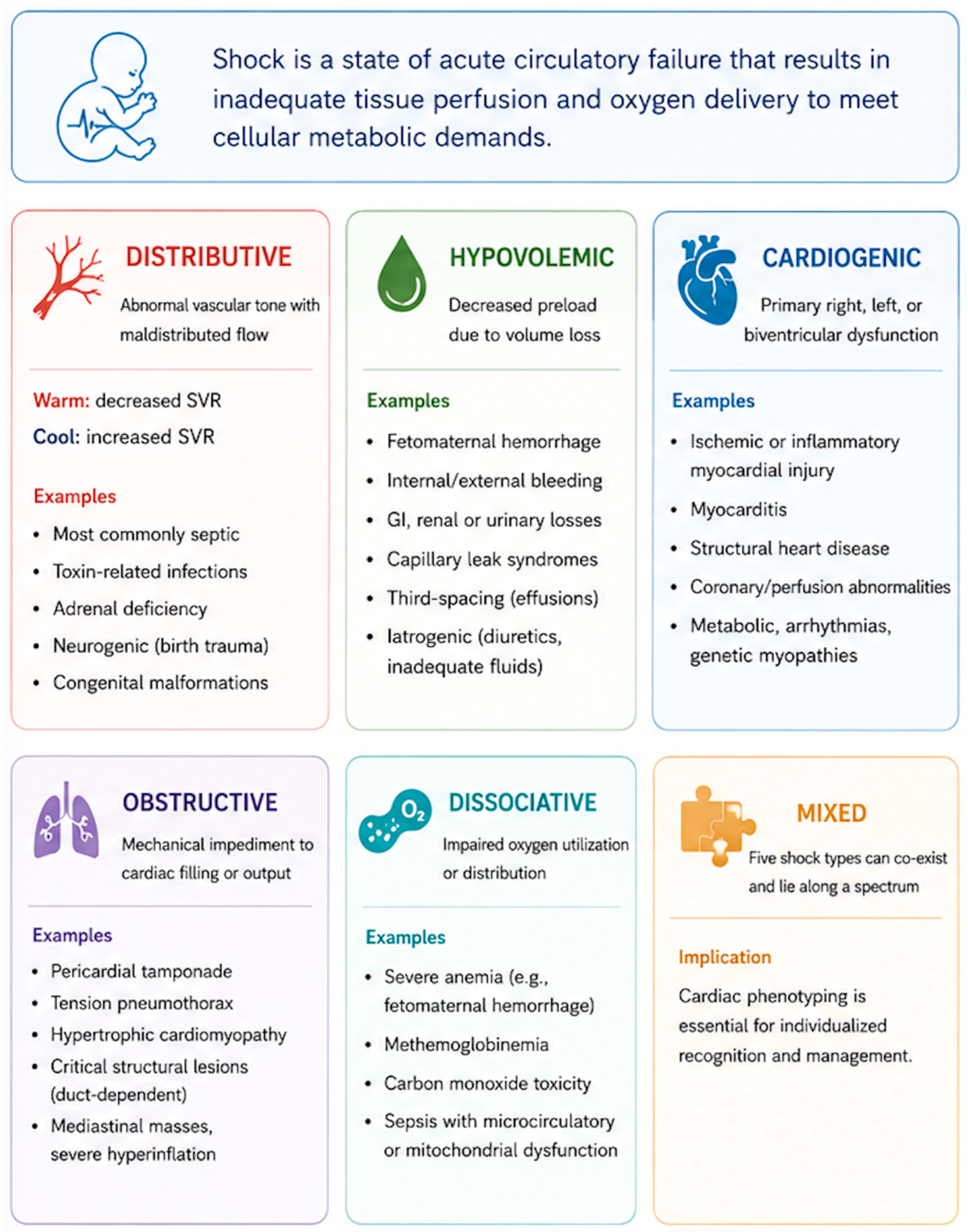
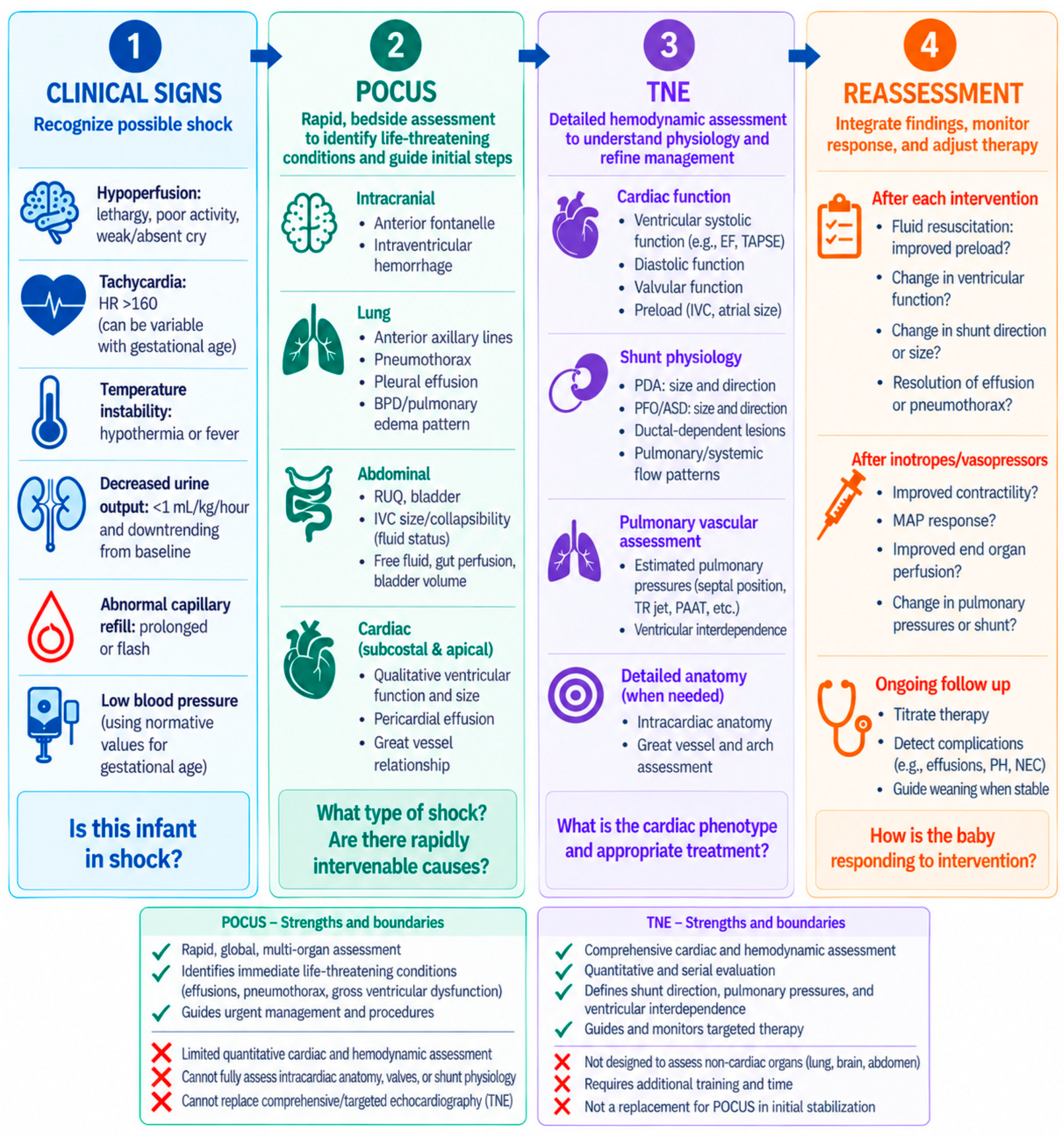
The neonatal cardiovascular system is dynamic and influenced by multiple factors, which makes neonatal shock a challenging early clinical diagnosis. Real-time monitoring has been limited to indirect measurements of hemodynamic well-being, such as heart rate, blood pressure, capillary refill time, and biochemical markers of adequate oxygen delivery and oxygen consumption. Bedside diagnostic ultrasound to guide decision-making has become increasingly integrated into modern neonatal care. It allows clinicians to enhance physiologic monitoring, differentiate among diverse cardiovascular phenotypes, including time-critical conditions such as tamponade, that may present with similar clinical signs, and interpret complex, evolving physiology in real time. By providing this additional layer of physiologic insight, it may enable more precise, individualized management, with potential implications for fluid administration, vasoactive support, and ventilatory strategies. Among neonatologists who incorporate bedside imaging into clinical practice, some rely on focused point-of-care ultrasound (POCUS) skills, while others have formal training in targeted neonatal echocardiography (TNE). This review outlines the distinct but complementary roles of POCUS and TNE, highlighting the specific diagnostic questions each can address, as well as their respective limitations in the evaluation of neonatal shock. Broadly, POCUS is designed to rapidly identify causes of clinical deterioration through focused lung, cardiac, abdominal, and cranial assessments. In contrast, TNE provides a more comprehensive and longitudinal evaluation of cardiovascular function guiding management over time. Differences in training pathways may create a perceived dichotomy between POCUS and TNE; however, these modalities are inherently complementary and should be integrated in the care of critically ill infants. Ultimately, the neonate must be assessed holistically, with ultrasound serving to augment—rather than replace—clinical judgment within the broader clinical context. A clear understanding of the interdependent roles of POCUS and TNE is essential to enable timely, meaningful, and integrated use of bedside ultrasound in the neonatal intensive care unit.
Keywords: point-of-care ultrasound; targeted neonatal echocardiography; neonatal shock point-of-care ultrasound; targeted neonatal echocardiography; neonatal shock