The Revised ACE Pyramid: A Contemporary Framework for Understanding Childhood Adversity and Advancing Toxic Stress Prevention and Healing


Highlights
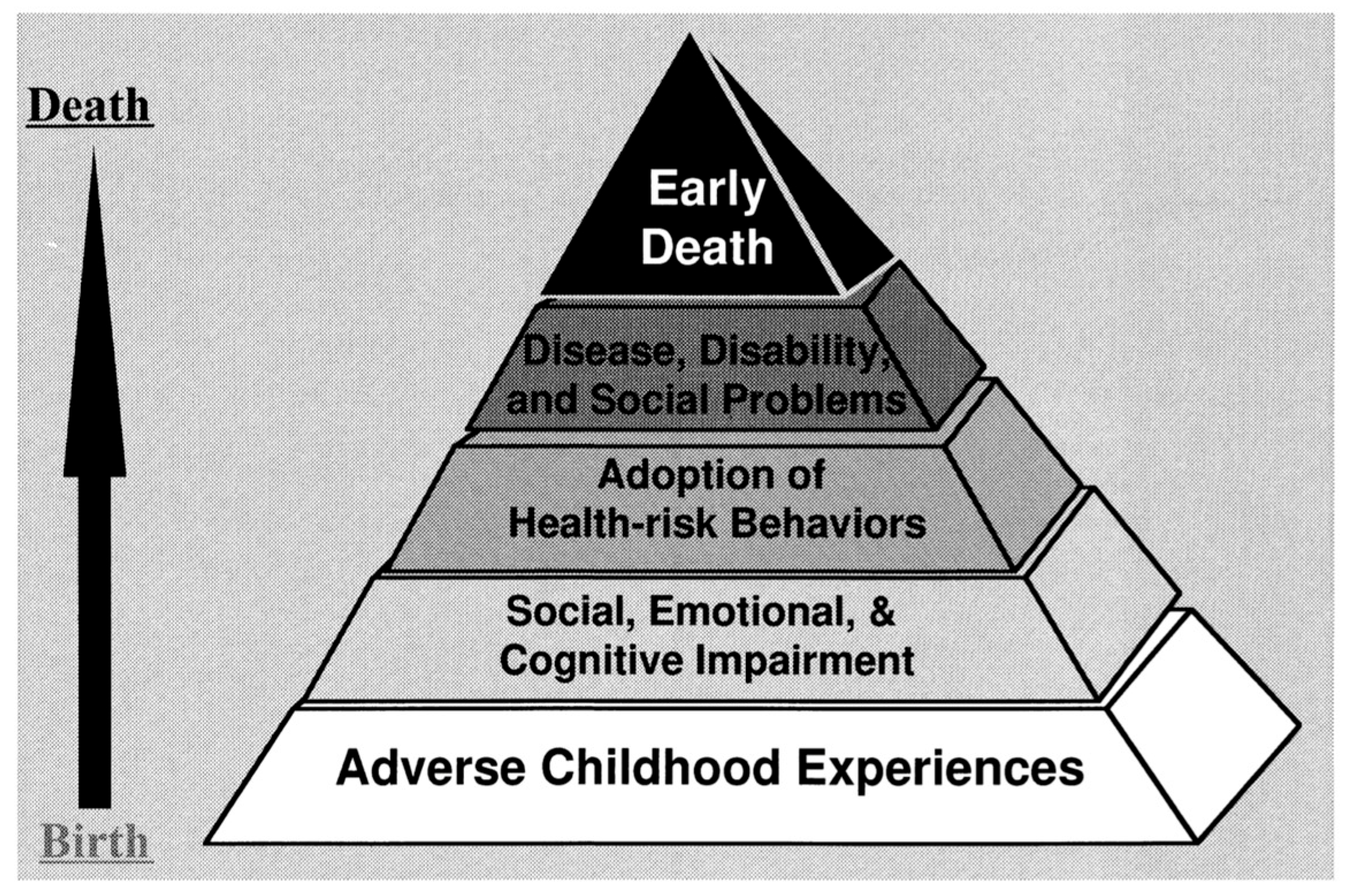
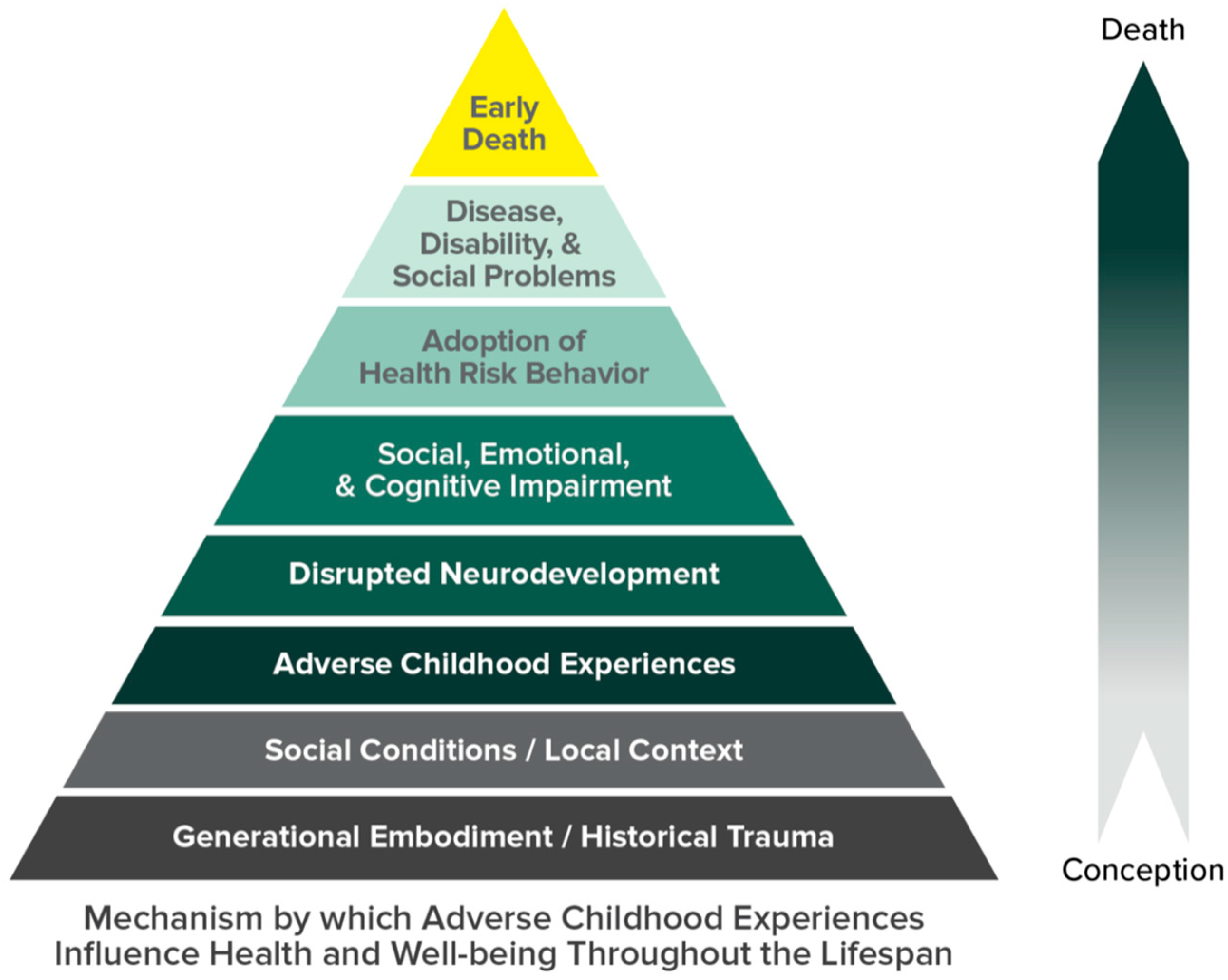
- The revised ACE Pyramid incorporates more than two decades of advances in the science of toxic stress while preserving the familiar structure of the original framework.
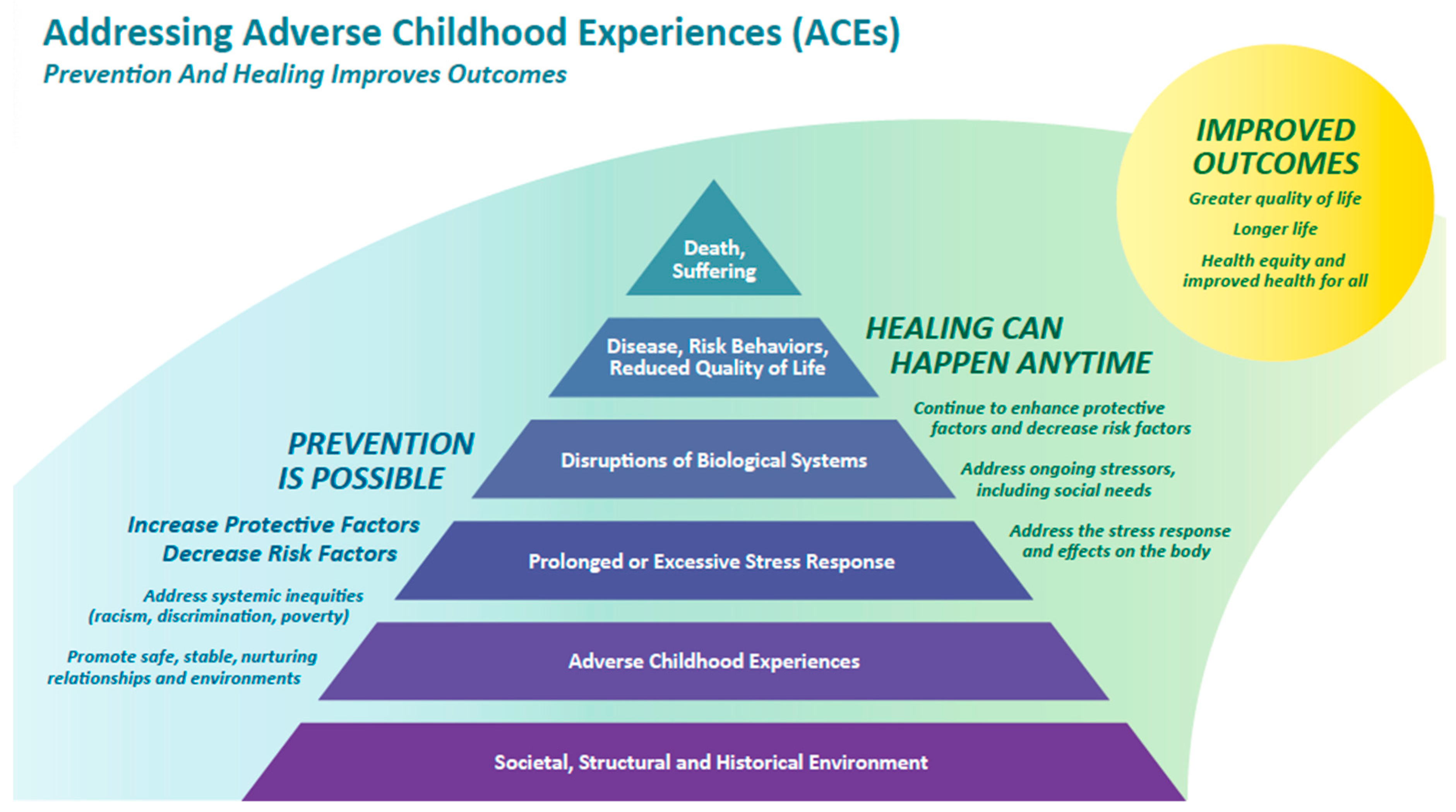
- The revised framework positions prolonged or excessive activation of the stress response as a central mechanistic pathway linking childhood adversity to lifelong health outcomes.
- The framework supports a shift from viewing ACEs primarily as risk indicators toward understanding and addressing toxic stress biology as a target for prevention and intervention.
- It provides a shared framework for informing pediatric practice, public health, research, and policy aimed at improving outcomes for children and families.
Abstract
1. Introduction
2. Materials and Methods
3. Results
4. Discussion
4.1. Scientific Rationale for the Revised ACE Pyramid
4.1.1. Societal, Structural and Historical Environment
4.1.2. Adverse Childhood Experiences
- Abuse: Physical, emotional, or sexual;
- Neglect: Physical or emotional;
- Household Challenges: Incarceration, mental illness, substance misuse or dependence, parental separation or divorce, or intimate partner violence.
4.1.3. Prolonged Excessive Stress Response
- Positive stress: Mild or moderate and short-lived stress response necessary for healthy development.
- Tolerable stress: More severe stress response, but limited in duration or intensity, which allows for recovery.
- Toxic Stress: Extreme, frequent, or extended activation of the body’s stress response, resulting in changes in neurologic, endocrine, and immune system development.
4.1.4. Disruptions of Biological Systems
- Neurologic system: A growing body of research is uncovering mechanistic pathways by which early life adversity can impact dysregulation across a number of neurologic systems: sensorimotor, arousal and energy, reward processing, autonomic nervous system, hypothalamic–pituitary–adrenal axis, cognitive processes, and attachment and relational neural networks [15]. Neurologic effects include brain volume changes in some regions, alterations in neural connectivity patterns, and disruptions of neurotransmitter function. This can increase risk for physical and mental health conditions such as chronic pain, sleep issues, addictions, blood pressure issues, anxiety, depression, and impairments in executive functioning, learning, and memory [15,22,23,24,25,26,27,28].
- Immune function: The acute stress response involves activation of the immune system to prepare the body in anticipation of potential injury. Prolonged activation of the stress response, however, can lead to dysregulation of the immune system, increased inflammatory markers with Th2-biased response, and increased risk for chronic inflammation, reduced immune function, or auto-immune disease [13,15,31,33,34].
- Attachment and relational: Lack of safety and co-regulation from safe, stable, nurturing caregiver and environment can erode trust, self-esteem, and future relationships. Research has demonstrated disruptions in neural networks for mentalization, empathy, and protective hypervigilance which can lead to insecure attachment and social thinning [15,38,39,40].
4.1.5. Disease, Risk Behaviors and Reduced Quality of Life
- Disease: Without intervention, the disruptions in biological systems (i.e., neurologic, endocrine, immune, genetic regulatory, and attachment and relational) can result in a wide range of physical and mental health problems in childhood and throughout adult life (for more detail on mechanistic pathways and disease implications ).
- Risk Behaviors: Disruptions in biological systems due to toxic stress can lead some people to adopt health risk behaviors, such as smoking, alcohol and other drug use, or overeating. This can happen in a couple of ways [4,23]:
- Health risk behaviors are often adopted as coping strategies to feel better in the short term.
- Toxic stress also alters reward pathways in the brain, which can result in adoption of health risk behaviors. The adoption of health risk behaviors is one pathway leading to disease. However, many of those who experience ACEs or other early life adversities do not adopt health risk behaviors yet still develop disease [42,43].
- Quality of Life: Disruptions in biological systems, such as executive functioning, mental health, or attachment systems (emotional bonding), can also lead to reduced quality of life—for example, reduced employment opportunities or income potential [9], as well as social thinning, loneliness, divorce or separation [44,45].
4.1.6. Death and Suffering
4.1.7. Prevention and Healing Improve Outcomes
4.1.8. Prevention Is Possible
- Expanding economic supports like paid family leave, flexible workplace policies, and tax credits like the Earned Income Tax Credit to reduce financial stress;
- Investing in evidence-based home-visiting programs like Healthy Families America, Nurse–Family Partnership and Parents as Teachers;
- Increasing access to parenting supports such as Triple P, Child–Parent Psychotherapy (CPP), Parent–Child Interaction Therapy (PCIT), and SafeCare;
- Equitable access to culturally responsive services such as mental health and substance abuse treatment and healthcare;
- Strengthening childcare standards and ensuring family access to high quality childcare centers;
- Providing mentoring and after-school programs;
- Career training and educational opportunities to support economic security;
- Disseminating public education campaigns that shift social norms from blaming parents for ACEs to recognizing ACEs as structural and systems issues [54].
4.1.9. Healing Can Happen Anytime
4.2. Limitations
5. Conclusions
Author Contributions
Funding
Institutional Review Board Statement
Informed Consent Statement
Data Availability Statement
Acknowledgments
Conflicts of Interest
Abbreviations
| ACE | Adverse Childhood Experiences |
| CDC | Centers for Disease Control and Prevention |
| CPP | Child–Parent Psychotherapy |
| CRP | C-Reactive Protein |
| EMDR | Eye Movement Desensitization and Reprocessing |
| KP | Kaiser Permanente |
| PCIT | Parent–Child Interaction Therapy |
| TF-CBT | Trauma Focused Cognitive Behavioral Therapy |
References
- Dube, S.R.; Felitti, V.J.; Dong, M.; Giles, W.H.; Anda, R.F. The impact of adverse childhood experiences on health problems: Evidence from four birth cohorts dating back to 1900. Prev. Med. 2003, 37, 268–277. [Google Scholar] [CrossRef] [Scilit] [PubMed]
- Felitti, V.J.; Anda, R.F.; Nordenberg, D.; Williamson, D.F.; Spitz, A.M.; Edwards, V.; Koss, M.P.; Marks, J.S. Relationship of childhood abuse and household dysfunction to many of the leading causes of death in adults. The Adverse Childhood Experiences (ACE) Study. Am. J. Prev. Med. 1998, 14, 4. [Google Scholar] [CrossRef] [Scilit] [PubMed]
- Centers for Disease Control and Prevention. About the CDC-Kaiser ACE Study. Available online: https://www.cdc.gov/violenceprevention/aces/about.html (accessed on 15 May 2026).
- Bhushan, D.; Kotz, K.; McCall, J.; Wirtz, S.; Gilgoff, R.; Dube, S.R.; Powers, C.; Olson-Morgan, J.; Galeste, M.; Patterson, K.; et al. The Roadmap for Resilience: The California Surgeon General’s Report on Adverse Childhood Experiences, Toxic Stress, and Health; Office of the California Surgeon General: Sacramento, CA, USA, 2020. [Google Scholar] [CrossRef] [Scilit]
- Hughes, K.; Bellis, M.A.; Hardcastle, K.A.; Sethi, D.; Butchart, A.; Mikton, C.; Jones, L.; Dunne, M.P. The effect of multiple adverse childhood experiences on health: A systematic review and meta-analysis. Lancet Public Health 2017, 2, e356–e366. [Google Scholar] [CrossRef] [Scilit] [PubMed]
- Merrick, M.T.; Ford, D.C.; Ports, K.A.; Guinn, A.S.; Chen, J.; Klevens, J.; Metzler, M.; Jones, C.M.; Simon, T.R.; Daniel, V.M.; et al. Vital Signs: Estimated Proportion of Adult Health Problems Attributable to Adverse Childhood Experiences and Implications for Prevention—25 States, 2015–2017. MMWR Morb. Mortal. Wkly. Rep. 2019, 68, 999–1005. [Google Scholar] [CrossRef] [Scilit] [PubMed]
- Petruccelli, K.; Davis, J.; Berman, T. Adverse childhood experiences and associated health outcomes: A systematic review and meta-analysis. Child Abus. Negl. 2019, 97, 104127. [Google Scholar] [CrossRef] [Scilit] [PubMed]
- Murphy, S.L.; Kochanek, K.D.; Xu, J.; Arias, E. Mortality in the United States, 2023. In National Center Health Statistics (U.S.); CDC: Atlanta, GA, USA, 2024. [Google Scholar] [CrossRef] [Scilit] [PubMed]
- Metzler, M.; Merrick, M.T.; Klevens, J.; Ports, K.A.; Ford, D.C. Adverse childhood experiences and life opportunities: Shifting the narrative. Child. Youth Serv. Rev. 2017, 72, 141–149. [Google Scholar] [CrossRef] [Scilit] [PubMed]
- Shonkoff, J.P.; Garner, A.S.; Siegel, B.S.; Dobbins, M.I.; Earls, M.F.; McGuinn, L.; Pascoe, J.; Wood, D.L.; Committee on Psychosocial Aspects of Child and Family Health and Committee on Early Childhood, Adoption, and Dependent Care. The Lifelong Effects of Early Childhood Adversity and Toxic Stress. Pediatrics 2012, 129, e232–e246. [Google Scholar] [CrossRef] [Scilit] [PubMed]
- Giovanelli, A.; Mondi, C.F.; Reynolds, A.J.; Ou, S.R. Adverse childhood experiences: Mechanisms of risk and resilience in a longitudinal urban cohort. Dev. Psychopathol. 2020, 32, 1418–1439. [Google Scholar] [CrossRef] [Scilit] [PubMed]
- Centers for Disease Control and Prevention. About the CDC-Kaiser ACE Study: The ACE Pyramid. Available online: https://www.cdc.gov/violenceprevention/aces/about.html (accessed on 15 May 2026).
- Nelson, C.A.; Bhutta, Z.A.; Burke Harris, N.; Danese, A.; Samara, M. Adversity in childhood is linked to mental and physical health throughout life. BMJ 2020, 371, m3048. [Google Scholar] [CrossRef] [Scilit] [PubMed]
- Bucci, M.; Marques, S.S.; Oh, D.; Harris, N.B. Toxic Stress in Children and Adolescents. Adv. Pediatr. 2016, 63, 403–428. [Google Scholar] [CrossRef] [Scilit] [PubMed]
- Gilgoff, R.; Mengelkoch, S.; Elbers, J.; Kotz, K.; Radin, A.; Pasumarthi, I.; Murthy, R.; Sindher, S.; Harris, N.B.; Slavich, G.M. The Stress Phenotyping Framework: A multidisciplinary biobehavioral approach for assessing and therapeutically targeting maladaptive stress physiology. Stress. 2024, 27, 2327333. [Google Scholar] [CrossRef] [Scilit] [PubMed]
- Bhushan, D.; Kotz, K.; McCall, J.; Wirtz, S.; Gilgoff, R.; Dube, S.R.; Powers, C.; Olson-Morgan, J.; Galeste, M.; Patterson, K.; et al. The Biology of Toxic Stress. In The Roadmap for Resilience: The California Surgeon General’s Report on Adverse Childhood Experiences, Toxic Stress, and Health; Office of the California Surgeon General: Sacramento, CA, USA, 2020; pp. 12–35. [Google Scholar] [CrossRef] [Scilit]
- National Academies of Sciences, Engineering, and Medicine. Vibrant and Healthy Kids: Aligning Science, Practice, and Policy to Advance Health Equity; National Academies Press: Washington, DC, USA, 2019. [Google Scholar]
- U.S. Department of Health and Human Services, Office of Disease Prevention and Health Promotion. Healthy People 2030: Social Determinants of Health. Available online: https://health.gov/healthypeople/objectives-and-data/social-determinants-health (accessed on 1 February 2026).
- Centers for Disease Control and Prevention; Division of Violence Prevention. Essentials for Childhood: Creating Safe, Stable, Nurturing Relationships and Environments for All Children. Available online: https://stacks.cdc.gov/view/cdc/117721 (accessed on 2 September 2026).
- Pinderhughes, H.; Davis, R.A.; Williams, M. Adverse Community Experiences and Resilience: A Framework for Addressing and Preventing Community Trauma; Prevention Institute: Oakland, CA, USA, 2015; Available online: https://www.preventioninstitute.org/sites/default/files/publications/Adverse%20Community%20Experiences%20and%20Resilience%20Executive%20Summary.pdf (accessed on 2 September 2026).
- Bhushan, D.; Kotz, K.; McCall, J.; Wirtz, S.; Gilgoff, R.; Dube, S.R.; Powers, C.; Olson-Morgan, J.; Galeste, M.; Patterson, K.; et al. Tertiary Prevention Strategies in Healthcare. In The Roadmap for Resilience: The California Surgeon General’s Report on Adverse Childhood Experiences, Toxic Stress, and Health; Office of the California Surgeon General: Sacramento, CA, USA, 2020; pp. 94–130. [Google Scholar] [CrossRef] [Scilit]
- Burke, N.N.; Finn, D.P.; McGuire, B.E.; Roche, M. Psychological stress in early life as a predisposing factor for the development of chronic pain: Clinical and preclinical evidence and neurobiological mechanisms. J. Neurosci. Res. 2017, 95, 1257–1270. [Google Scholar] [CrossRef] [Scilit] [PubMed]
- Duffy, K.A.; McLaughlin, K.A.; Green, P.A. Early life adversity and health-risk behaviors: Proposed psychological and neural mechanisms. Ann. N. Y. Acad. Sci. 2018, 1428, 151–169. [Google Scholar] [CrossRef] [Scilit] [PubMed]
- Eisenberger, N.I.; Cole, S.W. Social neuroscience and health: Neurophysiological mechanisms linking social ties with physical health. Nat. Neurosci. 2012, 15, 669–674. [Google Scholar] [CrossRef] [Scilit] [PubMed]
- Lanius, R.A.; Boyd, J.E.; McKinnon, M.C.; Nicholson, A.A.; Frewen, P.; Vermetten, E.; Jetly, R.; Spiegel, D. A Review of the Neurobiological Basis of Trauma-Related Dissociation and Its Relation to Cannabinoid- and Opioid-Mediated Stress Response: A Transdiagnostic, Translational Approach. Curr. Psychiatry Rep. 2018, 20, 118. [Google Scholar] [CrossRef] [Scilit] [PubMed]
- Novick, A.M.; Levandowski, M.L.; Laumann, L.E.; Philip, N.S.; Price, L.H.; Tyrka, A.R. The effects of early life stress on reward processing. J. Psychiatr. Res. 2018, 101, 80–103. [Google Scholar] [CrossRef] [Scilit] [PubMed]
- Slavich, G.M. Social Safety Theory: A Biologically Based Evolutionary Perspective on Life Stress, Health, and Behavior. Annu. Rev. Clin. Psychol. 2020, 16, 265–295. [Google Scholar] [CrossRef] [Scilit] [PubMed]
- Teicher, M.H.; Samson, J.A. Annual Research Review: Enduring neurobiological effects of childhood abuse and neglect. J. Child Psychol. Psychiatry 2016, 57, 241–266. [Google Scholar] [CrossRef] [Scilit] [PubMed]
- Raspopow, K.; Abizaid, A.; Matheson, K.; Anisman, H. Psychosocial stressor effects on cortisol and ghrelin in emotional and non-emotional eaters: Influence of anger and shame. Horm. Behav. 2010, 58, 677–684. [Google Scholar] [CrossRef] [Scilit] [PubMed]
- Sapolsky, R.M.; Romero, L.M.; Munck, A.U. How do glucocorticoids influence stress responses? Integrating permissive, suppressive, stimulatory, and preparative actions. Endocr. Rev. 2000, 21, 55–89. [Google Scholar] [CrossRef] [Scilit] [PubMed]
- Nelson, C.A.; Gabard-Durnam, L.J. Early Adversity and Critical Periods: Neurodevelopmental Consequences of Violating the Expectable Environment. Trends Neurosci. 2020, 43, 133–143. [Google Scholar] [CrossRef] [Scilit] [PubMed]
- Tomiyama, A.J. Stress and Obesity. Annu Rev. Psychol. 2019, 70, 703–718. [Google Scholar] [CrossRef] [Scilit] [PubMed]
- Elwenspoek, M.M.C.; Kuehn, A.; Muller, C.P.; Turner, J.D. The effects of early life adversity on the immune system. Psychoneuroendocrinology 2017, 82, 140–154. [Google Scholar] [CrossRef] [Scilit] [PubMed]
- Slavich, G.M. Understanding inflammation, its regulation, and relevance for health: A top scientific and public priority. Brain Behav. Immun. 2015, 45, 13–14. [Google Scholar] [CrossRef] [Scilit] [PubMed]
- Slavich, G.M.; Mengelkoch, S.; Cole, S.W. Human social genomics: Concepts, mechanisms, and implications for health. Lifestyle Med. 2023, 4, e75. [Google Scholar] [CrossRef] [Scilit] [PubMed]
- Slavich, G.M.; Cole, S.W. The Emerging Field of Human Social Genomics. Clin. Psychol. Sci. 2013, 1, 331–348. [Google Scholar] [CrossRef] [Scilit] [PubMed]
- Brown, D.W.; Anda, R.F.; Tiemeier, H.; Felitti, V.J.; Edwards, V.J.; Croft, J.B.; Giles, W.H. Adverse Childhood Experiences and the Risk of Premature Mortality. Am. J. Prev. Med. 2009, 37, 389–396. [Google Scholar] [CrossRef] [Scilit] [PubMed]
- Perry, B. The Neuroarcheology of Childhood Maltreatment the Neurodevelopmental Costs of Adverse Childhood Events. 2009. Available online: https://www.semanticscholar.org/paper/The-Neuroarcheology-of-Childhood-Maltreatment-The-Perry/35bf24c5d43f42a3c8f5e91b81db933372b54c27 (accessed on 15 May 2026).
- Feldman, R. The adaptive human parental brain: Implications for children’s social development. Trends Neurosci. 2015, 38, 387–399. [Google Scholar] [CrossRef] [Scilit] [PubMed]
- Cooke, J.E.; Kochendorfer, L.B.; Stuart-Parrigon, K.L.; Koehn, A.J.; Kerns, K.A. Parent-child attachment and children’s experience and regulation of emotion: A meta-analytic review. Emotion 2019, 19, 1103–1126. [Google Scholar] [CrossRef] [Scilit] [PubMed]
- Swedo, E.A.; Pampati, S.; Anderson, K.N.; Thorne, E.; McKinnon, I.I.; Brener, N.D.; Stinson, J.; Mpofu, J.J.; Niolon, P.H. Adverse Childhood Experiences and Health Conditions and Risk Behaviors Among High School Students—Youth Risk Behavior Survey, United States, 2023. MMWR Suppl. 2024, 73, 39–50. [Google Scholar] [CrossRef] [Scilit] [PubMed]
- Monnat, S.M.; Chandler, R.F. Long-Term Physical Health Consequences of Adverse Childhood Experiences. Sociol. Q. 2015, 56, 723–752. [Google Scholar] [CrossRef] [Scilit] [PubMed]
- Waehrer, G.M.; Miller, T.R.; Silverio Marques, S.C.; Oh, D.L.; Burke Harris, N. Disease burden of adverse childhood experiences across 14 states. PLoS ONE 2020, 15, e0226134. [Google Scholar] [CrossRef] [Scilit] [PubMed]
- Loudermilk, E.; Obure, R.; Obenauer, J.; Quinn, M.; Stinson, J. The Role of Adverse Childhood Experiences in Adult Divorce and Separation. In Proceedings of the Appalachian Student Research Forum, Johnson City, TN, USA, 6–7 April 2016; Available online: https://dc.etsu.edu/etsu-works/7952/ (accessed on 2 September 2026).
- McCrory, E.; Foulkes, L.; Viding, E. Social thinning and stress generation after childhood maltreatment: A neurocognitive social transactional model of psychiatric vulnerability. Lancet Psychiatry 2022, 9, 828–837. [Google Scholar] [CrossRef] [Scilit] [PubMed]
- Anda, R.; Felitti, V. Childhood Abuse, Household Dysfunction, and Indicators of Impaired Adult Worker Performance. Perm. J. 2004, 8, 30. [Google Scholar] [CrossRef] [Scilit] [PubMed]
- Font, S.A.; Maguire-Jack, K. Pathways from childhood abuse and other adversities to adult health risks: The role of adult socioeconomic conditions. Child Abus. Negl. 2016, 51, 390–399. [Google Scholar] [CrossRef] [Scilit] [PubMed]
- Yu, J.; Patel, R.A.; Haynie, D.L.; Vidal-Ribas, P.; Govender, T.; Sundaram, R.; Gilman, S.E. Adverse childhood experiences and premature mortality through mid-adulthood: A five-decade prospective study. Lancet Reg. Health-Am. 2022, 15, 100349. [Google Scholar] [CrossRef] [Scilit] [PubMed]
- Mian, O.; Belsky, D.W.; Cohen, A.A.; Anderson, L.N.; Gonzalez, A.; Ma, J.; Sloboda, D.M.; Bowdish, D.M.; Verschoor, C.P. Associations between exposure to adverse childhood experiences and biological aging: Evidence from the Canadian Longitudinal Study on Aging. Psychoneuroendocrinology 2022, 142, 105821. [Google Scholar] [CrossRef] [Scilit] [PubMed]
- A Conceptual Framework for Action on the Social Determinants of Health: Debates, Policy & Practice, Case Studies; World Health Organization: Geneva, Switzerland, 2010.
- Blueprint for Change Impact Report Prevent Child Abuse America; Prevent Child Abuse America: Chicago, IL, USA, 2024; Available online: https://preventchildabuse.org/wp-content/uploads/2025/05/PCAA-2024-Impact-Report-Digital-1.pdf (accessed on 2 March 2026).
- Prevent Child Abuse America. Available online: https://preventchildabuse.org (accessed on 2 March 2026).
- National Center for Injury Prevention and Control, Division of Violence Prevention, Centers for Disease Control and Prevention. Essentials for Childhood: Steps to Create Safe, Stable, Nurturing Relationships and Environments. 2014. Available online: https://americanspcc.org/wp-content/uploads/2017/03/Adverse-Childhood-Experiences-ACEs-CDC-essentials_for_childhood_framework.pdf (accessed on 1 February 2026).
- Primary Prevention National Messaging Toolkit. December 2025. Available online: https://preventchildabuse.org/wp-content/uploads/2026/01/PCAA_Digital-Toolkit_final.pdf (accessed on 2 March 2026).
- Gilgoff, R.; Schwartz, T.; Owen, M.; Bhushan, D.; Burke Harris, N. Opportunities to Treat Toxic Stress. Pediatrics 2023, 151, 1. [Google Scholar] [CrossRef] [Scilit] [PubMed]
- Black, D.S.; Slavich, G.M. Mindfulness meditation and the immune system: A systematic review of randomized controlled trials. Ann. N. Y. Acad. Sci. 2016, 1373, 13–24. [Google Scholar] [CrossRef] [Scilit] [PubMed]
- Koncz, A.; Demetrovics, Z.; Takacs, Z.K. Meditation interventions efficiently reduce cortisol levels of at-risk samples: A meta-analysis. Health Psychol. Rev. 2021, 15, 56–84. [Google Scholar] [CrossRef] [Scilit] [PubMed]
- Pascoe, M.C.; Thompson, D.R.; Jenkins, Z.M.; Ski, C.F. Mindfulness mediates the physiological markers of stress: Systematic review and meta-analysis. J. Psychiatr. Res. 2017, 95, 156–178. [Google Scholar] [CrossRef] [Scilit] [PubMed]
- Jones, R.; Tarter, R.; Ross, A.M. Greenspace Interventions, Stress and Cortisol: A Scoping Review. Int. J. Environ. Res. Public Health 2021, 18, 2802. [Google Scholar] [CrossRef] [Scilit] [PubMed]
- Kondo, M.C.; Jacoby, S.F.; South, E.C. Does spending time outdoors reduce stress? A review of real-time stress response to outdoor environments. Health Place 2018, 51, 136–150. [Google Scholar] [CrossRef] [Scilit] [PubMed]
- Marie-Mitchell, A.; Delgado, C.; Gilgoff, R. Parenting Education to Improve Relational Health Through Pediatric Primary Care: A Scoping Review. J. Prim. Care Community Health 2024, 15, 21501319241306302. [Google Scholar] [CrossRef] [Scilit] [PubMed]
- Lieberman, A.F.; Ghosh Ippen, C.; VAN Horn, P. Child-parent psychotherapy: 6-month follow-up of a randomized controlled trial. J. Am. Acad. Child Adolesc. Psychiatry 2006, 45, 913–918. [Google Scholar] [CrossRef] [Scilit] [PubMed]
- Lieberman, A.F.; Van Horn, P.; Ippen, C.G. Toward evidence-based treatment: Child-parent psychotherapy with preschoolers exposed to marital violence. J. Am. Acad. Child Adolesc. Psychiatry 2005, 44, 1241–1248. [Google Scholar] [CrossRef] [Scilit] [PubMed]
- Shapiro, F. The role of eye movement desensitization and reprocessing (EMDR) therapy in medicine: Addressing the psychological and physical symptoms stemming from adverse life experiences. Perm. J. 2014, 18, 71–77. [Google Scholar] [CrossRef] [Scilit] [PubMed]
- Wilson, G.; Farrell, D.; Barron, I.; Hutchins, J.; Whybrow, D.; Kiernan, M.D. The Use of Eye-Movement Desensitization Reprocessing (EMDR) Therapy in Treating Post-traumatic Stress Disorder—A Systematic Narrative Review. Front Psychol. 2018, 9, 923. [Google Scholar] [CrossRef] [Scilit] [PubMed]
- Kar, N. Cognitive behavioral therapy for the treatment of post-traumatic stress disorder: A review. Neuropsychiatr. Dis. Treat. 2011, 7, 167–181. [Google Scholar] [CrossRef] [Scilit] [PubMed]


Disclaimer/Publisher’s Note: The statements, opinions and data contained in all publications are solely those of the individual author(s) and contributor(s) and not of MDPI and/or the editor(s). MDPI and/or the editor(s) disclaim responsibility for any injury to people or property resulting from any ideas, methods, instructions or products referred to in the content. |
© 2026 by the authors. Licensee MDPI, Basel, Switzerland. This article is an open access article distributed under the terms and conditions of the Creative Commons Attribution (CC BY) license.
Share and Cite
Kotz, K.; Gilgoff, R.; Krackov, A.; Klika, B.; Merrick, M. The Revised ACE Pyramid: A Contemporary Framework for Understanding Childhood Adversity and Advancing Toxic Stress Prevention and Healing. Children 2026, 13, 1261. https://doi.org/10.3390/children13091261
Kotz K, Gilgoff R, Krackov A, Klika B, Merrick M. The Revised ACE Pyramid: A Contemporary Framework for Understanding Childhood Adversity and Advancing Toxic Stress Prevention and Healing. Children. 2026; 13(9):1261. https://doi.org/10.3390/children13091261
Chicago/Turabian StyleKotz, Krista, Rachel Gilgoff, Andy Krackov, Bart Klika, and Melissa Merrick. 2026. "The Revised ACE Pyramid: A Contemporary Framework for Understanding Childhood Adversity and Advancing Toxic Stress Prevention and Healing" Children 13, no. 9: 1261. https://doi.org/10.3390/children13091261
APA StyleKotz, K., Gilgoff, R., Krackov, A., Klika, B., & Merrick, M. (2026). The Revised ACE Pyramid: A Contemporary Framework for Understanding Childhood Adversity and Advancing Toxic Stress Prevention and Healing. Children, 13(9), 1261. https://doi.org/10.3390/children13091261