1. Introduction
Airway contamination caused by regurgitation, emesis, blood, or aspirated material is a time-critical problem during pediatric airway management. Copious material can obscure the glottis, impede ventilation, delay tracheal intubation, and contribute to hypoxemia and pulmonary aspiration. These consequences may develop particularly rapidly in infants because their smaller airway dimensions, higher oxygen consumption, reduced functional residual capacity, and limited physiologic reserve shorten the safe apneic period [
1]. For this bench comparison, suction was standardized at −200 mmHg to reproduce an extreme high-vacuum emergency condition in which wall suction may be maximized during sudden, large-volume contamination. This setting exceeds routine recommended pediatric suction pressures and should not be interpreted as clinical practice guidance.
Previous simulation studies have shown that suction performance is influenced by catheter diameter and lumen size. Nikolla et al. reported greater flow rates with large-bore suction systems than with a conventional Yankauer, and Finke et al. found that a DuCanto catheter evacuated fluids of differing viscosities more effectively than Yankauer and standard suction catheters [
2,
3]. Andreae et al. likewise reported improved evacuation of simulated emesis with alternative suction devices [
4]. This work contributed to the development of Suction-Assisted Laryngoscopy Airway Decontamination (SALAD), which emphasizes early, continuous suction during management of a massively contaminated airway [
5,
6].
Most published studies, however, have evaluated devices in open containers, unconstrained bench systems, or adult airway models. Such experiments characterize intrinsic evacuation capability but do not reproduce the limited working space, restricted device maneuverability, or inaccessible dependent recesses of an infant oropharynx. It therefore remains uncertain whether performance in an unconstrained model predicts functional performance in an anatomically constrained infant airway.
The infant airway has a relatively large tongue, small oral cavity, short pharyngeal space, and more cephalad and anterior larynx compared with older children and adults [
7,
8]. These features may limit positioning of a rigid suction tip. A flexible catheter may reach confined or dependent regions more readily, despite its smaller lumen and lower intrinsic flow capacity. Thus, suction performance may reflect an interaction among device design, airway geometry, operator access, and contaminant properties.
We compared a standard Yankauer suction tip with a 14 Fr flexible suction catheter in two complementary models: an anatomically constrained infant airway mannequin and an unconstrained open container. We hypothesized that the Yankauer’s advantage under unconstrained conditions would be attenuated within the infant airway mannequin. The study was designed to compare devices under a standardized high-vacuum emergency simulation; it was not designed to determine a safe suction pressure for pediatric patients.
2. Methods
2.1. Study Design
This pilot bench simulation was conducted at the Children’s Minnesota Simulation Center. Two complementary experimental models were used. The open-container model evaluated intrinsic evacuation capability independent of airway anatomy, whereas the infant airway mannequin evaluated device performance within a confined upper airway. The project involved no patients, animals, or identifiable data and therefore did not require human-subjects review.
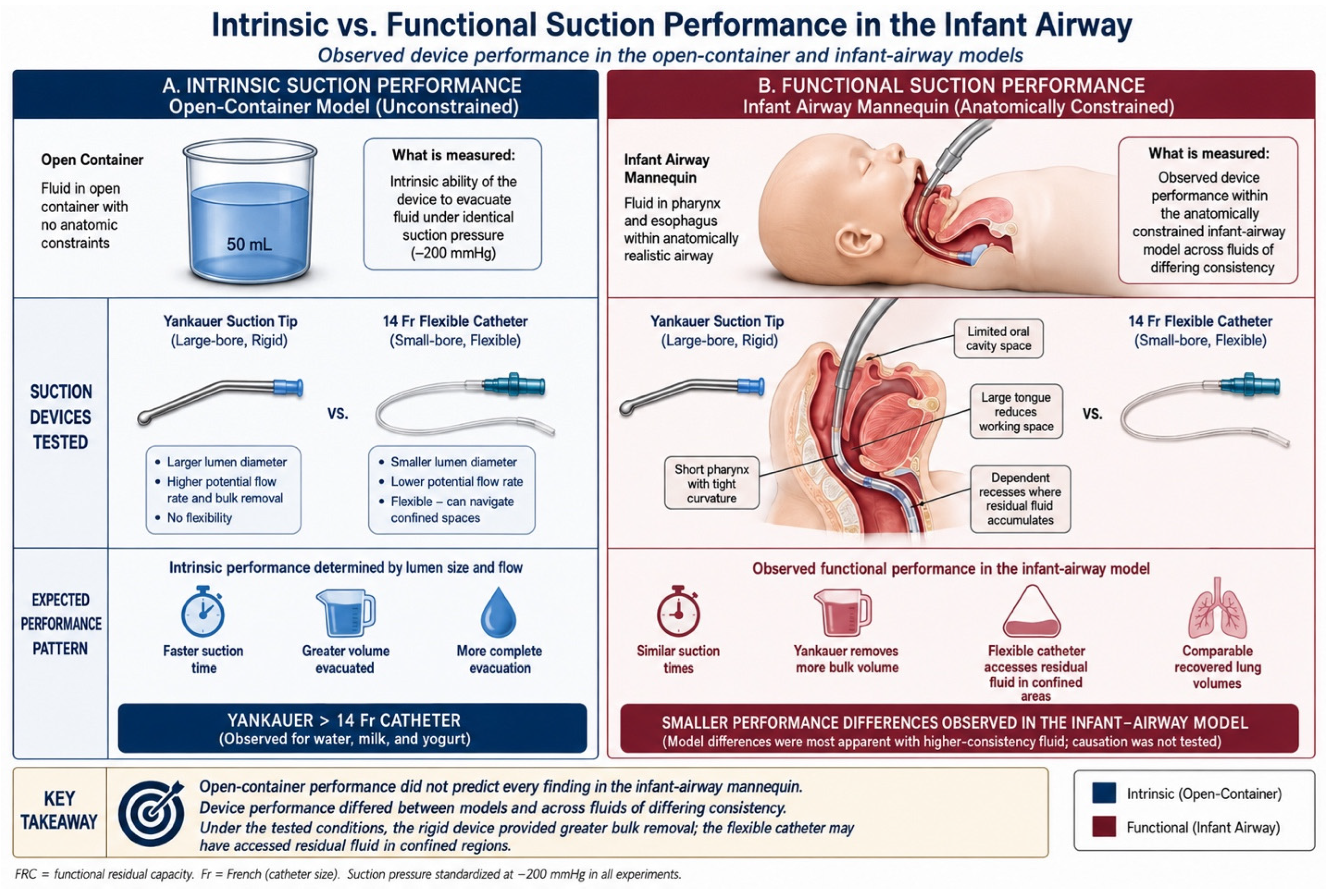
A conceptual comparison of the two experimental models and the factors that may influence device performance is provided in
Figure 1.
2.2. Experimental Setup
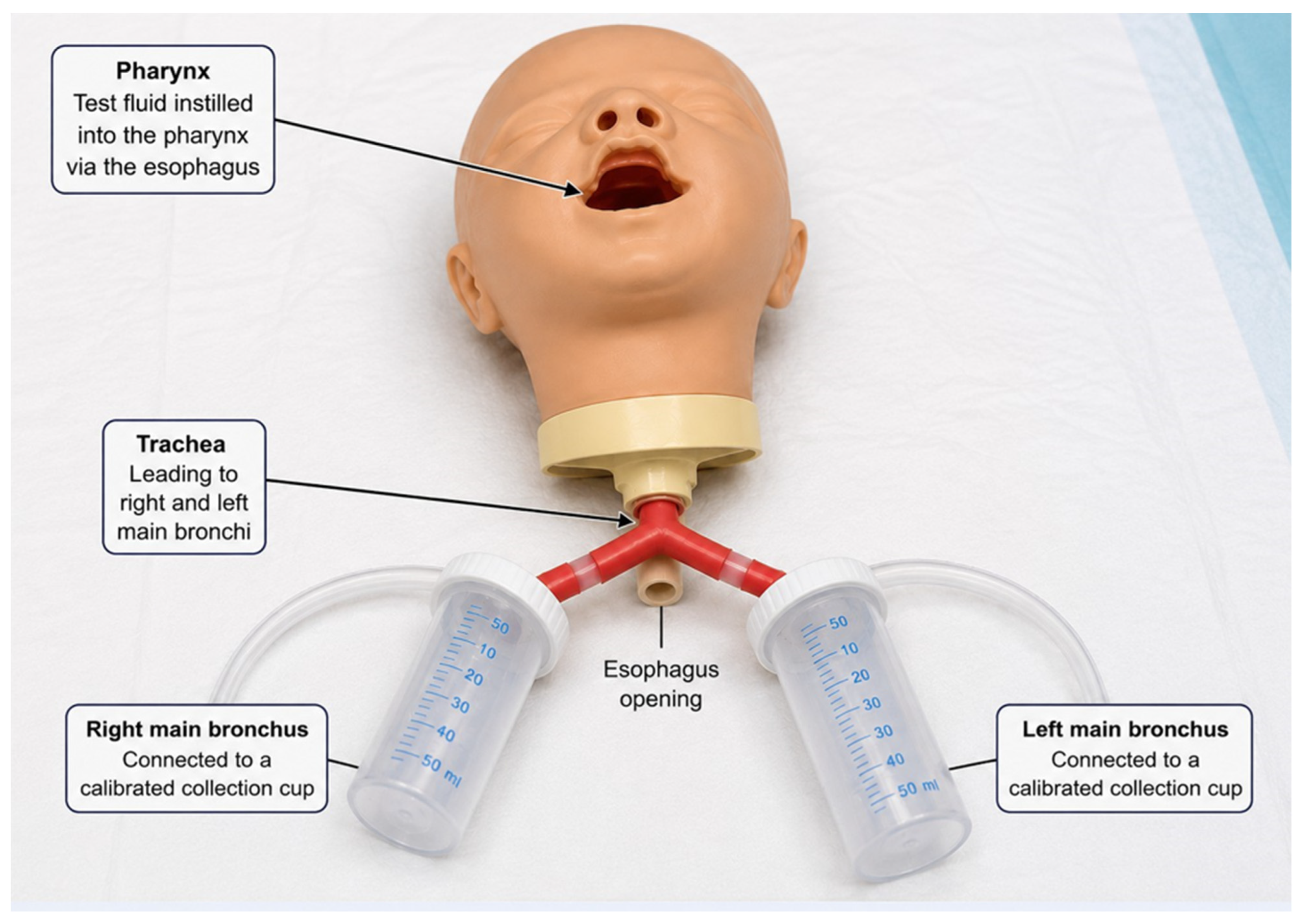
An AirSim
® Baby X airway mannequin (TruCorp Ltd., Lurgan, Co. Armagh, Northern Ireland, UK; model TCJR10001X) was positioned supine (
Figure 2). The simulator provides a confined infant upper-airway space and esophageal and bronchial outlets, permitting measurement of fluid distribution after simulated regurgitation. Although commercially described as anatomically realistic, it cannot reproduce living-tissue compliance, mucosal responses, airway reflexes, or dynamic airway collapse.
Wall suction was standardized at −200 mmHg throughout the experiments, using the same source, tubing, and collection system. Pressure was verified before each experimental session. This pressure was selected to represent a fixed high-vacuum emergency bench condition encountered when clinicians maximize wall suction during sudden, large-volume oropharyngeal contamination to restore visualization and facilitate airway control. It was not selected as a recommended setting for routine neonatal suctioning or suctioning through an endotracheal tube. Current neonatal resuscitation specifications generally use 80–100 mmHg, and the 2022 American Association for Respiratory Care guideline recommends keeping pressure below −120 mmHg during neonatal and pediatric artificial-airway suctioning [
9,
10]. Thus, the experimental setting intentionally addressed a different indication but exceeded pressures recommended for routine neonatal/pediatric suctioning.
Three reproducible test fluids represented progressively increasing consistency:
The fluids were selected as pragmatic surrogates for increasingly thick airway contaminants. Their viscosity and other rheological properties were not formally measured; consequently, the terms low, intermediate, and high consistency are descriptive rather than quantitative [
2,
3,
4].
2.3. Suction Devices
Two suction devices commonly available in pediatric operating rooms were evaluated:
Yankauer suction tip (K87; Cardinal Health, Dublin, OH, USA);
14 French flexible suction catheter (T260C; Cardinal Health, Dublin, OH, USA).
The Yankauer was chosen as a commonly used rigid device for rapid bulk clearance of the oropharynx. The 14 Fr flexible catheter was chosen because it is readily available and can be directed into confined regions that may be difficult to reach with a rigid tip.
Identical suction tubing and collection canisters were used for all trials. One investigator performed every procedure with a standardized technique to reduce operator variability.
2.4. Infant Airway Mannequin Model
For each mannequin trial, 50 mL of test fluid was rapidly instilled through the esophageal opening into the pharyngeal cavity with a syringe. The syringe then remained attached to the esophageal port to limit retrograde drainage during suctioning.
Suction began immediately after instillation. Direct or video laryngoscopy and other airway adjuncts were not used. The operator passed the assigned device through all accessible regions of the pharynx. A trial ended when two complete passes yielded no additional fluid; this was the prespecified stopping criterion.
Each device–fluid combination was evaluated in five independent trials. Fluids were tested in the sequence water, whole milk, and yogurt. Between trials, the mannequin was emptied by suction through the esophageal port and then inverted; the pharyngeal cavity was visually inspected to confirm clearance before the next trial.
2.5. Outcome Measures
The following outcomes were recorded for each mannequin trial:
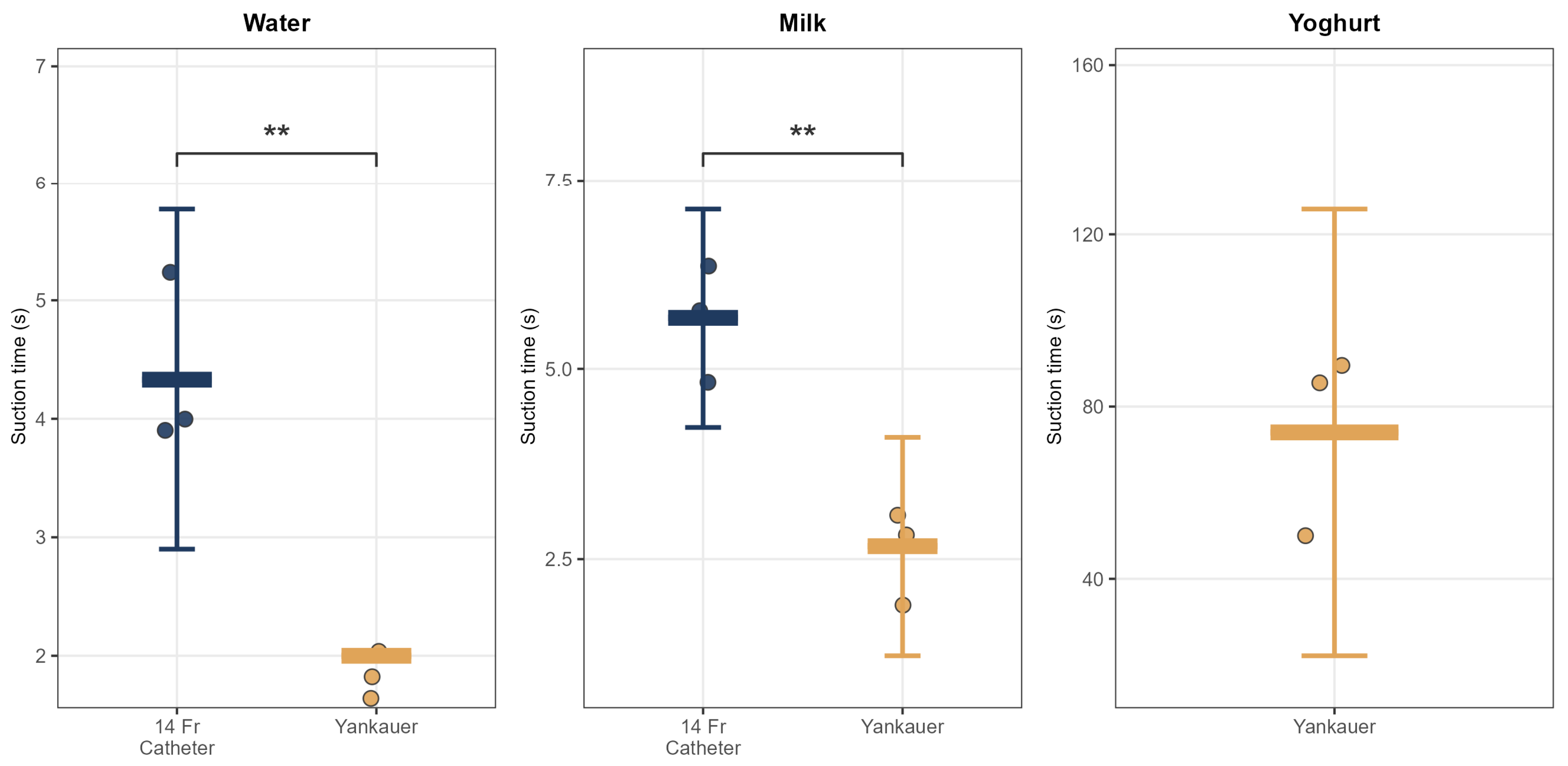
Suction time (seconds);
Pharyngeal volume evacuated (mL);
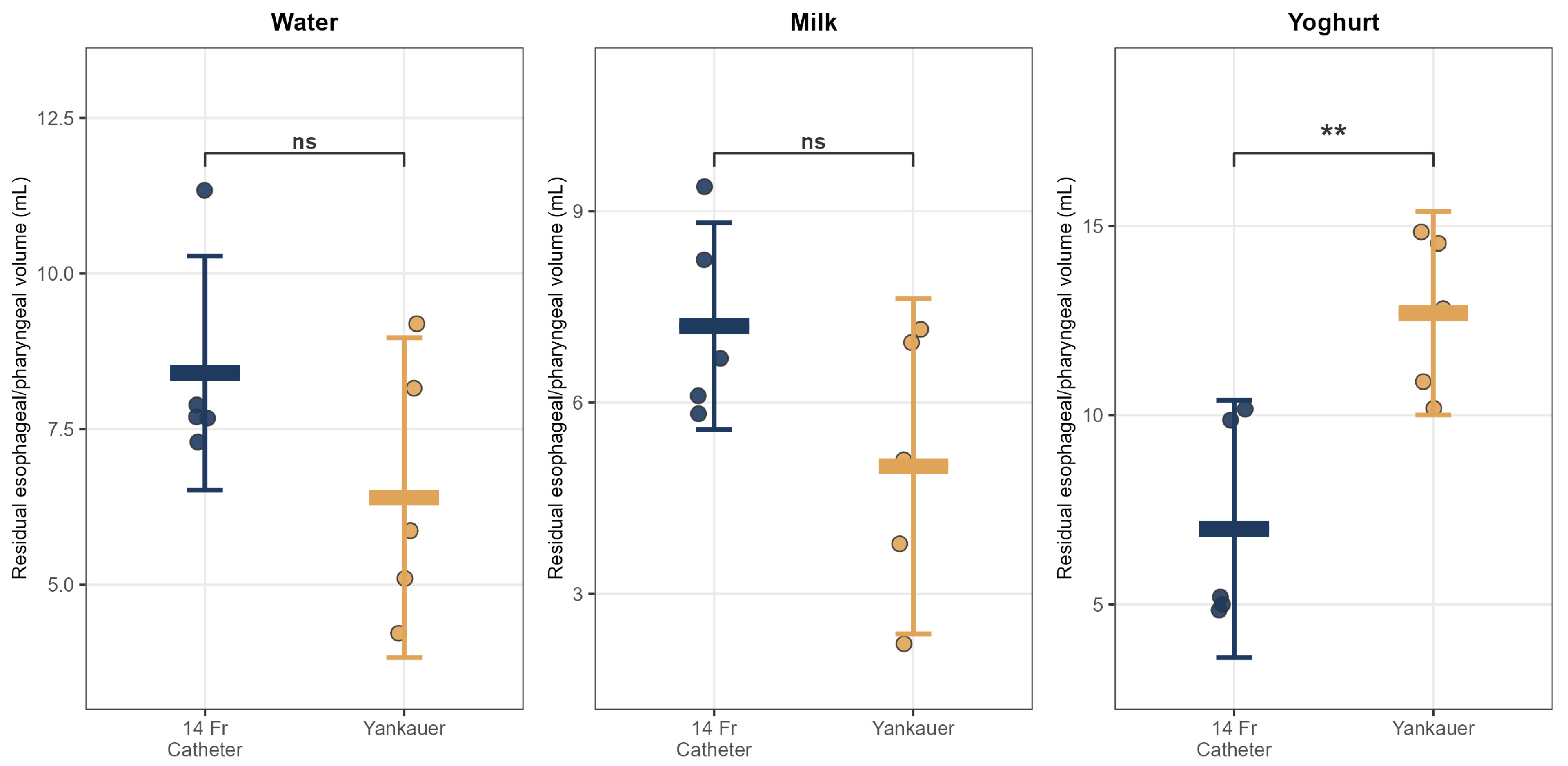
Residual pharyngeal/esophageal volume (mL);
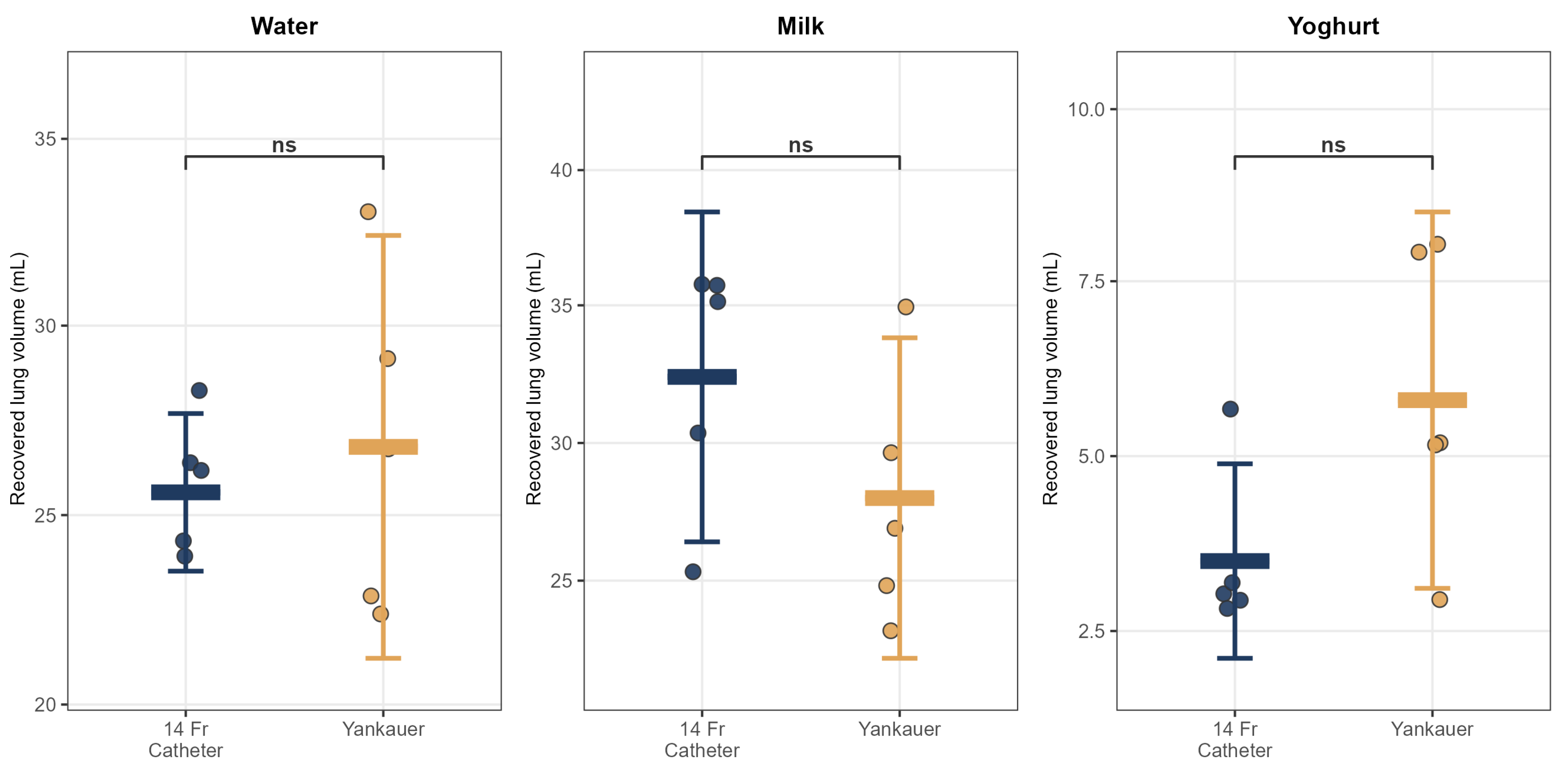
Recovered lung volume (mL).
Suction time was measured from initiation of suction until the stopping criterion was reached. Evacuated pharyngeal volume was read directly from the calibrated suction collection canister. Recovered lung volume was read directly from the calibrated containers connected to the bronchial outlets. Residual pharyngeal/esophageal volume was not measured independently; it was calculated for each trial by mass balance as the 50 mL instilled volume minus the evacuated pharyngeal volume and recovered lung volume.
2.6. Unconstrained Open-Container Model
To characterize intrinsic performance without airway constraints, 50 mL of each fluid was placed in an open container and suctioned with each device at the same −200 mmHg pressure.
Each device–fluid combination was evaluated in three independent trials. Three repetitions were used because preliminary open-container trials showed little variability; five repetitions were retained for the mannequin model because catheter position and airway geometry introduced greater variability.
A trial was stopped at five minutes if complete evacuation had not occurred. This prespecified pragmatic upper limit was chosen to distinguish complete evacuation from functional failure while preventing indefinitely prolonged bench trials; 300 s also greatly exceeded the evacuation times observed for completed trials and the time frame relevant to emergency airway clearance. Accordingly, the yogurt trials involving the 14 Fr catheter represent unsuccessful, right-censored attempts rather than completed evacuation times.
2.7. Statistical Analysis
This exploratory pilot study emphasized effect magnitude, consistency, and uncertainty. No prospective sample-size calculation was performed.
Continuous outcomes are presented as individual observations, means, and 95% confidence intervals (CIs). Devices were compared separately within each fluid and model using two-sided independent-sample t tests. Mann–Whitney U tests were used as sensitivity analyses because normality could not be assessed reliably with the small sample sizes.
No adjustment was made for multiple comparisons; p values are therefore exploratory and should not be interpreted as confirmatory. A device-by-model interaction was not formally tested because the two models used different stopping rules, outcome structures, and numbers of repetitions. Differences between models are described as observed patterns rather than statistically established interactions.
The 14 Fr catheter did not completely evacuate yogurt in any open-container trial before the five-minute limit. These censored failures are reported descriptively and were not assigned an artificial completion time or included in a parametric comparison.
Statistical significance was defined as a two-sided p-value < 0.05. Interpretation emphasizes estimates and observed patterns rather than statistical significance alone.
4. Discussion
4.1. Principal Findings
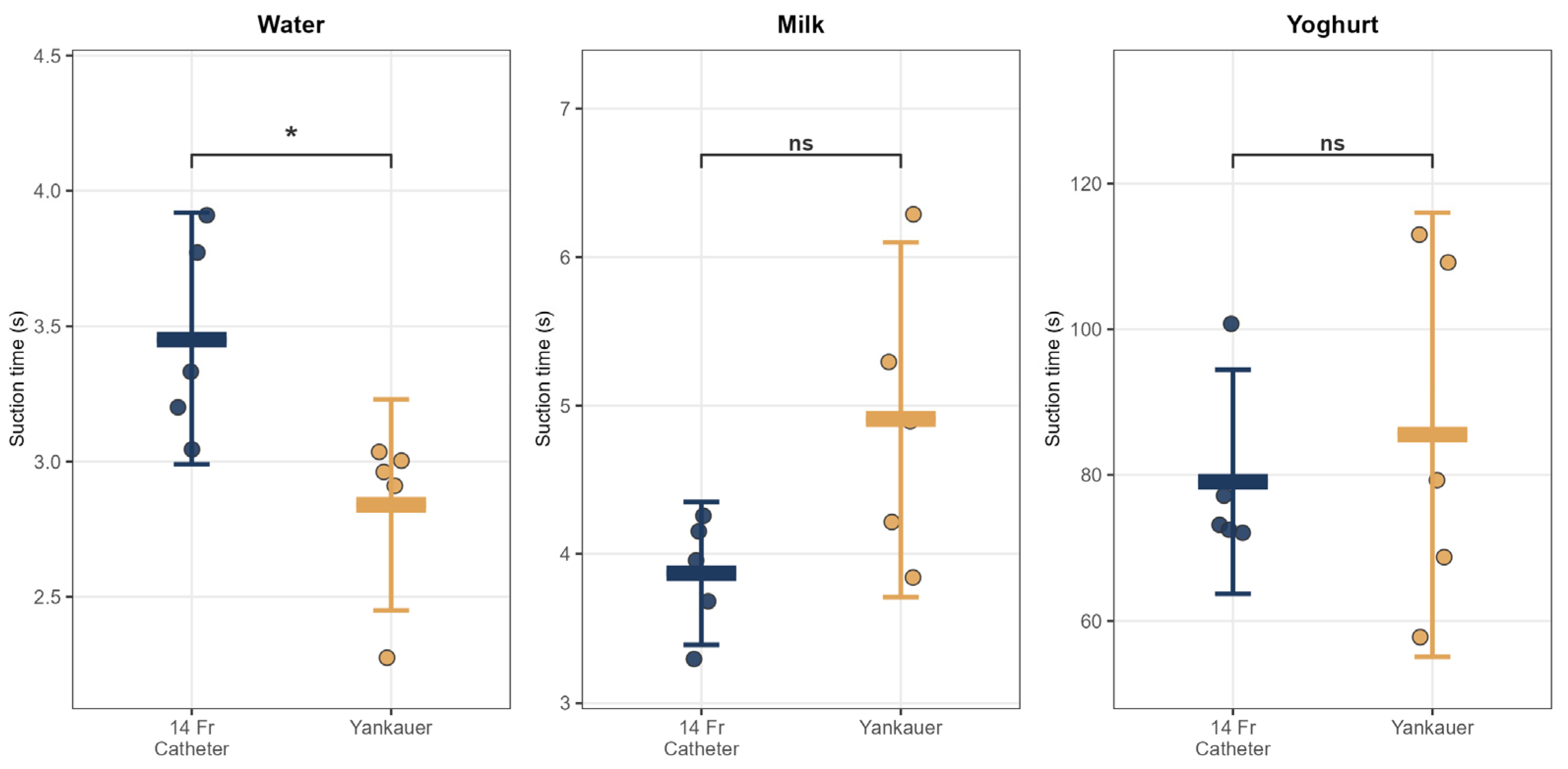
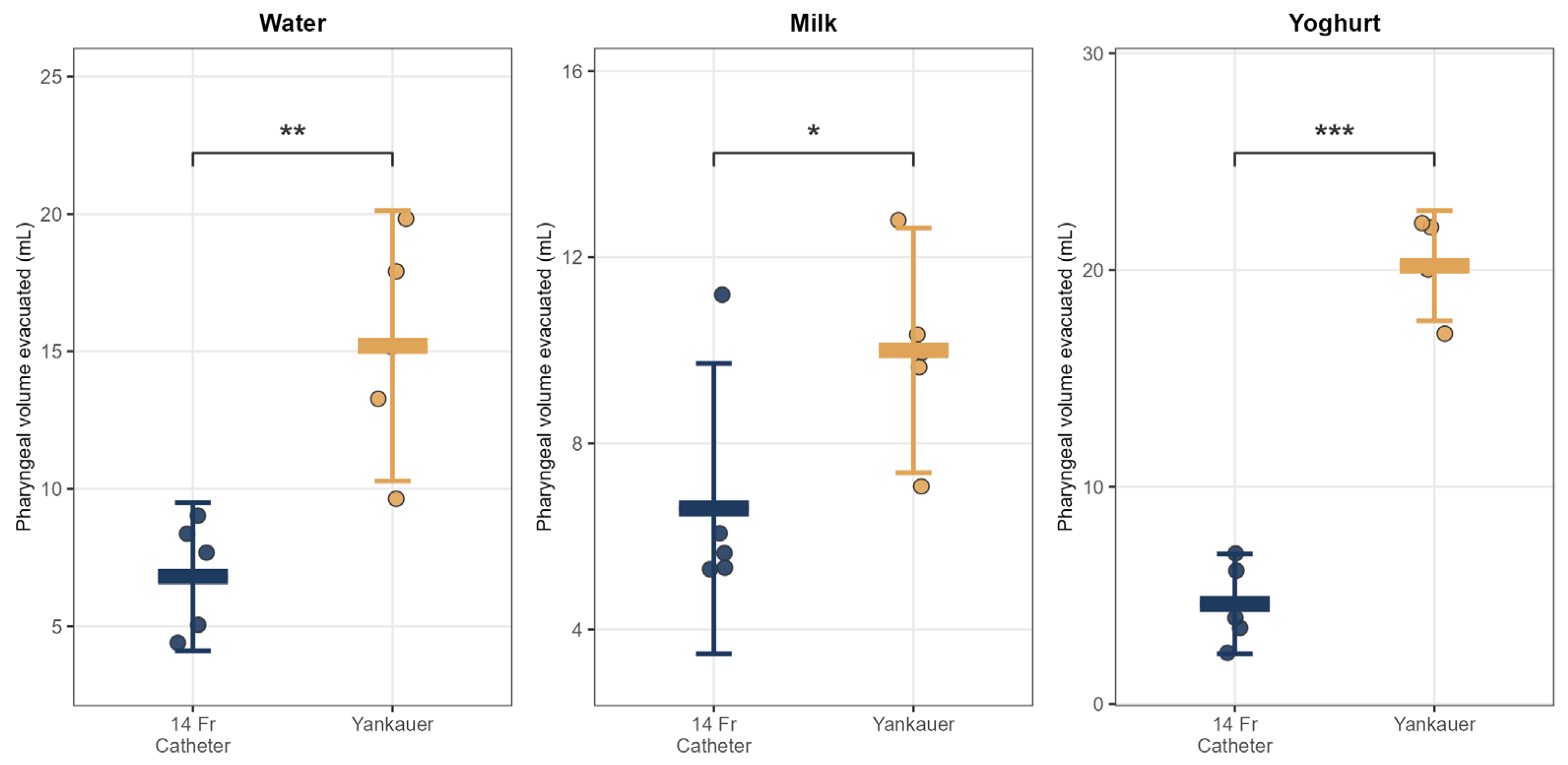
This pilot simulation produced three principal findings. First, the Yankauer provided greater bulk evacuation under the tested high-vacuum conditions. Second, performance in an open container did not parallel every finding in the anatomically constrained infant mannequin: device suction times were similar for milk and yogurt, and the flexible catheter left less residual yogurt. Third, fluid consistency strongly influenced both devices, with yogurt producing prolonged suction and failure of the 14 Fr catheter to complete evacuation in the open container. Together, these findings show that device lumen, airway access, and contaminant consistency should be considered when interpreting bench suction performance.
4.2. Relationship to Previous Studies
Previous simulations have generally shown improved evacuation with larger suction lumens. Nikolla et al. reported higher flow rates with large-bore systems, Finke et al. demonstrated superior removal using the DuCanto catheter, and Andreae et al. reported improved evacuation of simulated emesis with alternative devices [
2,
3,
4]. These studies informed the SALAD approach to the massively contaminated airway [
5,
6].
Our study extends this work by comparing the same devices in open-container and infant-mannequin settings. The results should not be taken as proof of an anatomical interaction because the models were not analyzed in a unified factorial design. They do, however, show that an unconstrained flow comparison alone may not capture access limitations within a small airway model.
4.3. Why the Infant Airway Behaved Differently
The Yankauer’s larger effective lumen favored rapid bulk removal in the open container. Within the mannequin, the smaller oral and pharyngeal spaces constrained device positioning, and fluid could enter dependent or less accessible regions. These conditions plausibly reduced the advantage of the rigid device.
Infant airway characteristics—including a relatively large tongue, limited oral space, short pharyngeal dimensions, and a cephalad larynx—can restrict maneuverability [
7,
8]. Commercial mannequins also differ from living airways in geometry, surface characteristics, compliance, and fluid–surface interactions. Therefore, the observed model differences may reflect both clinically relevant space constraints and simulator-specific properties.
The greater residual yogurt volume after Yankauer suction may indicate that the flexible catheter reached areas inaccessible to the rigid tip. This mechanism was not directly observed or measured, however, and alternative explanations include differences in catheter placement, wall adherence of the test fluid, and trial-to-trial fluid distribution.
4.4. Clinical Implications
The study represents an acute, high-volume oropharyngeal-contamination scenario rather than routine secretion management. During massive regurgitation or bleeding, the immediate goals are rapid bulk clearance, restoration of glottic visualization, and timely ventilation and intubation. Under the tested conditions, the Yankauer removed more pharyngeal material, but suction time was not consistently shorter in the mannequin and residual yogurt was greater.
These results do not establish a preferred clinical sequence. They instead suggest a hypothesis: a rigid device may be useful for accessible bulk material, while a flexible catheter may help reach residual material in confined regions. This complementary strategy requires direct testing during simulated laryngoscopy and ultimately clinical evaluation.
The use of negative pressure of −200 mmHg must also be interpreted carefully. It reflects a high-vacuum emergency bench condition used to compare devices, not a recommendation for routine pediatric suctioning. The study did not assess tissue injury or physiologic adverse effects, and it cannot determine whether the same relative performance would occur at 80–120 mmHg.
4.5. Implications for Pediatric SALAD
SALAD emphasizes proactive, continuous suction before and during laryngoscopy in a massively contaminated airway [
5,
6,
11]. Most evidence derives from adult models, large-bore devices, and educational outcomes. The present findings caution against assuming that performance observed in an open container or adult airway will translate unchanged to an infant airway.
Future pediatric SALAD studies should evaluate rigid and flexible devices at clinically relevant pressure settings; incorporate direct or video laryngoscopy, ongoing contamination, and measures of glottic visualization and intubation success; and assess whether sequential or simultaneous suction strategies offer benefit.
4.6. Implications of Fluid Consistency
Water was cleared rapidly by both devices. With increasing consistency, suction took longer and the Yankauer’s bulk-evacuation advantage became more apparent. Yogurt produced the clearest separation in the open container but also exposed limitations of the rigid tip within the mannequin.
The selected fluids were reproducible but were not rheologically characterized and cannot reproduce the heterogeneous particulate composition, temperature, acidity, surface tension, or non-Newtonian behavior of actual gastric contents. The results therefore apply to the tested materials rather than to all clinical contaminants.
4.7. Study Limitations
This study has several important limitations. It was a small exploratory simulation using one commercial infant mannequin, one Yankauer design, one flexible catheter, and one operator. The mannequin cannot reproduce living-tissue compliance, mucosal injury, airway reflexes, bradycardia, dynamic collapse, or the physiologic consequences of aspiration. Commercial simulators may also differ materially and anatomically from human infant airways. Fluid viscosity was not formally measured, device order was not randomized, the operator could not be blinded, and the stopping criterion depended partly on operator assessment. The small numbers of trials limited assessment of distributional assumptions and statistical interactions, and multiple comparisons were not adjusted. The calculated residual volume may include measurement error and material adhering to internal surfaces. Most importantly, all trials used −200 mmHg, exceeding pressures recommended for routine neonatal/pediatric suctioning and artificial-airway suctioning [
9,
10]. Although this setting was chosen to model a high-vacuum emergency condition, the study did not evaluate pressure safety, and relative device performance at 80–120 mmHg is unknown. These findings are hypothesis-generating and should not be interpreted as clinical evidence supporting −200 mmHg in infants or children.
5. Conclusions
During simulated emergency infant oropharyngeal contamination at a standardized high-vacuum setting, the Yankauer removed greater bulk pharyngeal volumes, whereas the 14 Fr flexible catheter left less residual yogurt in the anatomically constrained model. Open-container performance did not predict every finding in the mannequin. These results do not establish pressure safety, clinical superiority, or a recommended pediatric suction strategy. Further studies should compare devices at clinically recommended pediatric pressures, use more anatomically and mechanically representative models, and incorporate laryngoscopy, airway visualization, and intubation outcomes.