Bronchopulmonary Dysplasia and Innate Immunity: A Narrative Review of the Roles of IL-1β and IL-8 (CXCL8)


Highlights
- Human and animal studies consistently demonstrate an association between elevated IL-1β and IL-8 (CXCL8) levels and the development of bronchopulmonary dysplasia in preterm infants.
- Activation of innate immune pathways, particularly IL-1β- and IL-8-mediated inflammatory responses, contributes to persistent lung inflammation and impaired alveolar development characteristic of bronchopulmonary dysplasia.
- The available evidence supports the involvement of IL-1β and IL-8 (CXCL8) in the inflammatory mechanisms associated with bronchopulmonary dysplasia in preterm infants.
- Further studies are needed to clarify the clinical utility of these cytokines as biomarkers and to determine whether modulation of these pathways may have therapeutic relevance in bronchopulmonary dysplasia.
Abstract
1. Introduction
1.1. Epidemiology, Risk Factors, Pathogenesis and Genetics of Bronchopulmonary Disease
1.2. The Role of the Innate Immune System in the Development of BPD
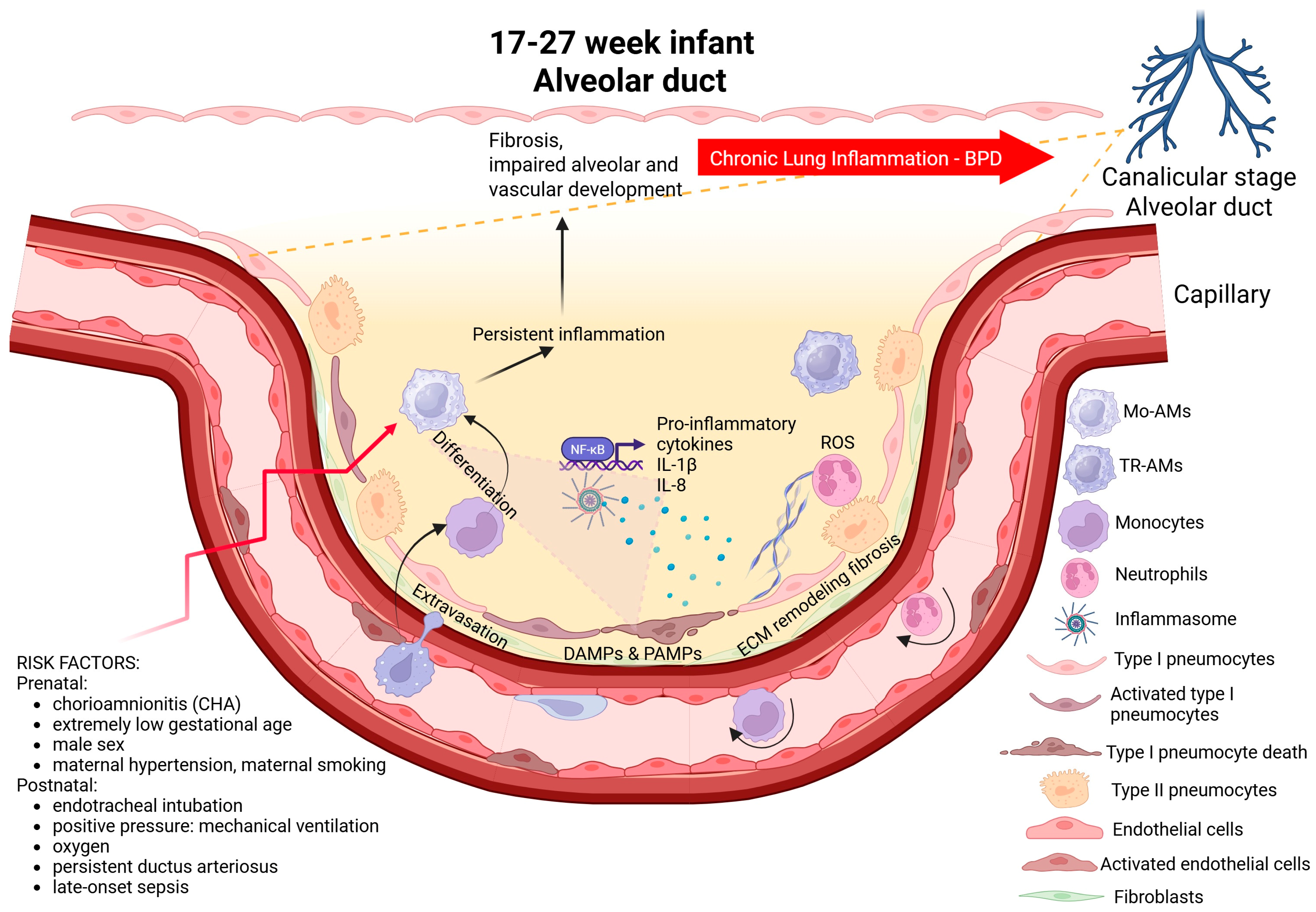
1.3. Initiation of Inflammation (Figure 1)

1.4. Cytokine and Chemokine Release
1.5. Resolution of Inflammation
2. Materials and Methods
2.1. Search Strategy
2.2. Study Selection Criteria
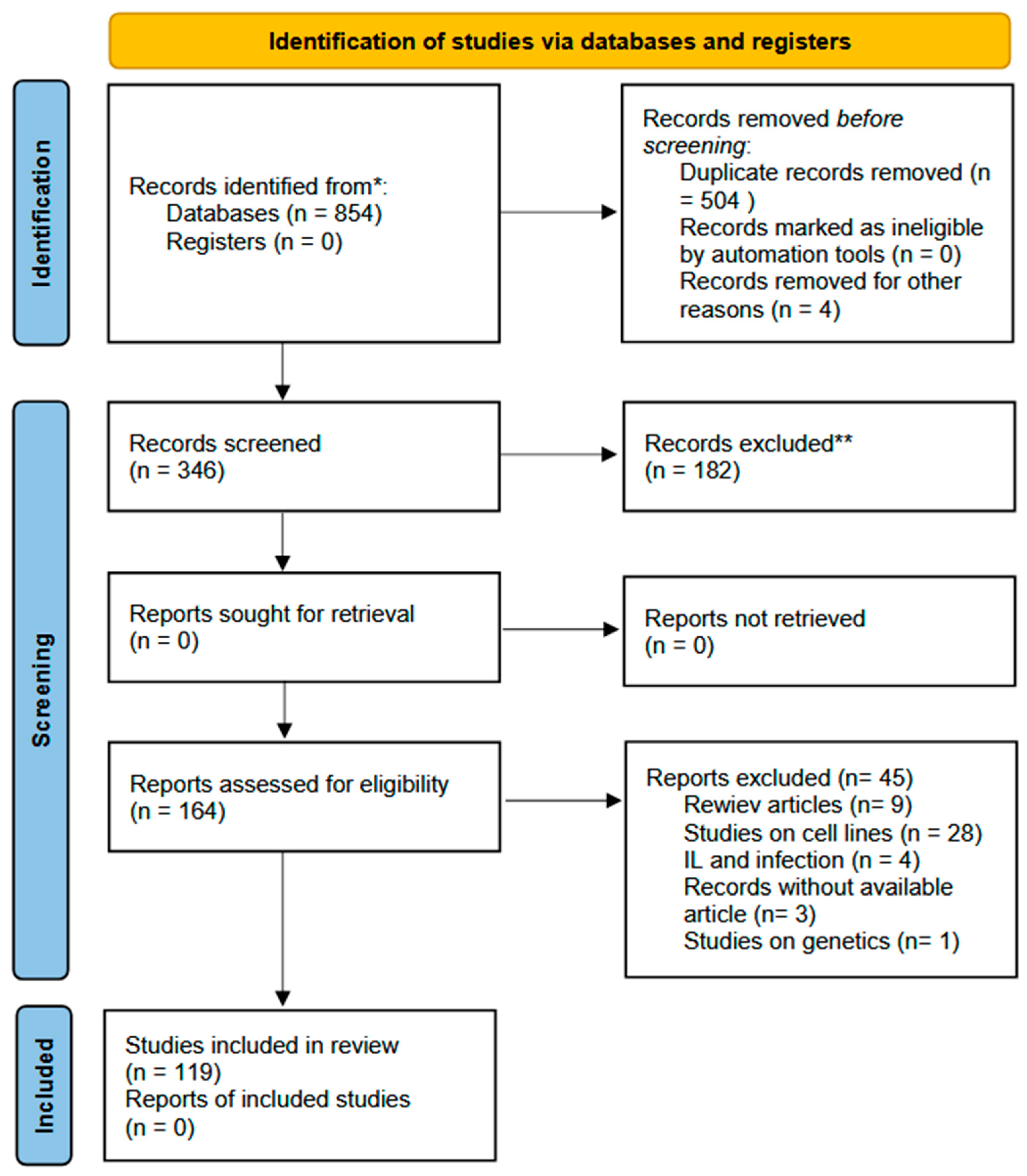
2.3. Literature Selection Process
3. Cytokines
3.1. IL-1β
3.2. Human Studies on IL-1β
3.3. Animal Studies on IL-1beta
3.4. IL-8/CXCL8
3.5. Human Studies
3.6. Animal Studies
4. Discussion
4.1. IL-1β as an Upstream Driver of Inflammation
4.2. IL-8–Mediated Neutrophil Recruitment and Amplification of Injury
4.3. Integration of Prenatal and Postnatal Inflammatory Signals
4.4. Cellular and Molecular Integration
4.5. Methodological Heterogeneity: BPD Definitions and Gestational Age as Confounders
4.6. Translational Limitations of Animal Models Regarding IL-8 Biology
4.7. Clinical Implications
5. Conclusions
Supplementary Materials
Author Contributions
Funding
Institutional Review Board Statement
Informed Consent Statement
Data Availability Statement
Conflicts of Interest
Abbreviations
| BPD | Bronchopulmonary dysplasia |
| CHA | Chorioamnionitis |
| FIRS | Fetal inflammatory response |
| HA | Arterial hypertension |
| IUGR | Intrauterine growth restriction |
| CD | Cord blood |
| NEC | Necrotizing enterocolitis |
| HsPDA | Hemodynamically significant patent ductus arteriosus |
| TA | Tracheal aspirate |
| PRR | Pattern-recognition receptor |
| PAMP | Pathogen-associated molecular patter |
| DAMP | Damage-associated molecular pattern |
| NOD | Nucleotide-binding oligomerization domain |
| NLR | NOD like receptors |
| LRR | Leucin-rich repeat |
| NLRP3 | NLR family pyrin domain containing 3 |
| BALF | Bronchoalveolar lavage fluid |
| ELBW | Extremely low birth weight |
| IL | Interleukin |
| TLR | Toll-like receptors |
| CXCL | Chemokine |
| CXCR | Chemokine receptor |
| IFN | Interferon |
References
- Northway, W.H., Jr.; Rosan, R.C.; Porter, D.Y. Pulmonary disease following respirator therapy of hyaline-membrane disease: Bronchopulmonary dysplasia. N. Engl. J. Med. 1967, 276, 357–368. [Google Scholar] [CrossRef]
- Ohuma, E.O.; Moller, A.-B.; Bradley, E.; Chakwera, S.; Hussain-Alkhateeb, L.; Lewin, A.; Okwaraji, Y.B.; Mahanani, W.R.; Johansson, E.W.; Lavin, T.; et al. National, regional, and global estimates of preterm birth in 2020, with trends from 2010: A systematic analysis. Lancet 2023, 402, 1261–1271. [Google Scholar] [CrossRef] [PubMed]
- Siffel, C.; Kistler, K.D.; Lewis, J.F.M.; Sarda, S.P. Global incidence of bronchopulmonary dysplasia among extremely preterm infants: A systematic literature review. J. Matern.-Fetal Neonatal Med. 2021, 34, 1721–1731. [Google Scholar] [CrossRef] [PubMed]
- Bell, E.F.; Hintz, S.R.; Hansen, N.I.; Bann, C.M.; Wyckoff, M.H.; DeMauro, S.B.; Walsh, M.C.; Vohr, B.R.; Stoll, B.J.; Carlo, W.A.; et al. Mortality, In-Hospital Morbidity, Care Practices, and 2-Year Outcomes for Extremely Preterm Infants in the US, 2013–2018. JAMA 2022, 327, 248–263. [Google Scholar] [CrossRef] [PubMed]
- Morrow, L.A.; Wagner, B.D.; Ingram, D.A.; Poindexter, B.B.; Schibler, K.; Cotton, C.M.; Dagle, J.; Sontag, M.K.; Mourani, P.M.; Abman, S.H. Antenatal Determinants of Bronchopulmonary Dysplasia and Late Respiratory Disease in Preterm Infants. Am. J. Respir. Crit. Care Med. 2017, 196, 364–374. [Google Scholar] [CrossRef] [PubMed]
- Alonsoa, A.S.; Diazb, S.P.; Sotoc, R.S.; Avila-Alvarez, A. Epidemiology and risk factors for bronchopulmonary dysplasia in preterm infants born at or less than 32 weeks of gestation. An. Pediatr. (Engl. Ed.) 2022, 96, 242–251. [Google Scholar]
- Cokyaman, T.; Kavuncuoglu, S. Bronchopulmonary dysplasia frequency and risk factors in very low birth weight infants: A 3-year retrospective study. North Clin. Istanb. 2020, 7, 124–130. [Google Scholar] [PubMed]
- Ito, M.; Kato, S.; Saito, M.; Miyahara, N.; Arai, H.; Namba, F.; Ota, E.; Nakanishi, H. Bronchopulmonary Dysplasia in Extremely Premature Infants: A Scoping Review for Identifying Risk Factors. Biomedicines 2023, 11, 553. [Google Scholar] [CrossRef] [PubMed]
- Xu, Y.P.; Chen, Z.; Dorazio, R.M.; Bai, G.N.; Du, L.Z.; Shi, L.P. Risk factors for bronchopulmonary dysplasia infants with respiratory score greater than four: A multi-center, prospective, longitudinal cohort study in China. Sci. Rep. 2023, 13, 17868. [Google Scholar] [CrossRef] [PubMed]
- Kim, C.J.; Romero, R.; Chaemsaithong, P.; Chaiyasit, N.; Yoon, B.H.; Kim, Y.M. Acute chorioamnionitis and funisitis: Definition, pathologic features, and clinical significance. Am. J. Obstet. Gynecol. 2015, 213, S29–S52. [Google Scholar] [CrossRef] [PubMed]
- Watterberg, K.L.; Demers, L.M.; Scott, S.M.; Murphy, S. Chorioamnionitis and early lung inflammation in infants in whom bronchopulmonary dysplasia develops. Pediatrics 1996, 97, 210–215. [Google Scholar] [CrossRef] [PubMed]
- Hartling, L.; Liang, Y.; Lacaze-Masmonteil, T. Chorioamnionitis as a risk factor for bronchopulmonary dysplasia: A systematic review and meta-analysis. Arch. Dis. Child.-Fetal Neonatal Ed. 2012, 97, F8–F17. [Google Scholar] [CrossRef] [PubMed]
- Villamor-Martinez, E.; Álvarez-Fuente, M.; Ghazi, A.M.T.; Degraeuwe, P.; Zimmermann, L.J.I.; Kramer, B.W.; Villamor, E. Association of Chorioamnionitis with Bronchopulmonary Dysplasia Among Preterm Infants. JAMA Netw. Open 2019, 2, e1914611. [Google Scholar] [CrossRef] [PubMed]
- Gobec, K.; Mukenauer, R.; Keše, D.; Erčulj, V.; Grosek, Š.; Perme, T. Association between colonization of the respiratory tract with Ureaplasma species and bronchopulmonary dysplasia in newborns with extremely low gestational age: A retrospective study. Croat. Med. J. 2023, 64, 75–83. [Google Scholar] [CrossRef] [PubMed]
- Bose, C.L.; Laughon, M.M.; Allred, E.N.; O’Shea, T.M.; Van Marter, L.J.; Ehrenkranz, R.A.; Fichorova, R.N.; Leviton, A.; ELGAN Study Investigators. Systemic inflammation associated with mechanical ventilation among extremely preterm infants. Cytokine 2013, 61, 315–322. [Google Scholar] [CrossRef] [PubMed]
- Huang, J.; Shen, W.; Wu, F.; Mao, J.; Liu, L.; Chang, Y.; Zhang, R.; Ye, X.; Qiu, Y.; Ma, L.; et al. Risk factors for severe bronchopulmonary dysplasia in a Chinese cohort of very preterm infants. Saudi Med. J. 2024, 45, 369–378. [Google Scholar] [CrossRef] [PubMed]
- Lavoie, P.M.; Pham, C.; Jang, K.L. Heritability of bronchopulmonary dysplasia, defined according to the consensus statement of the National Institutes of Health. Pediatrics 2008, 122, 479–485. [Google Scholar] [CrossRef] [PubMed]
- Wang, H.; St Julien, K.R.; Stevenson, D.K.; Hoffmann, T.J.; Witte, J.S.; Lazzeroni, L.C.; Krasnow, M.A.; Quaintance, C.C.; Oehlert, J.W.; Jelliffe-Pawlowski, L.L.; et al. A genome-wide association study (GWAS) for bronchopulmonary dysplasia. Pediatrics 2013, 132, 290–297. [Google Scholar] [CrossRef]
- Zhang, Y.; Liang, C. Innate recognition of microbial-derived signals in immunity and inflammation. Sci. China Life Sci. 2016, 59, 1210–1217. [Google Scholar] [CrossRef] [PubMed]
- Prince, L.S.; Dieperink, H.I.; Okoh, V.O.; Fierro-Perez, G.A.; Lallone, R.L. Toll-like receptor signaling inhibits structural development of the distal fetal mouse lung. Dev. Dyn. 2005, 233, 553–561. [Google Scholar] [CrossRef] [PubMed]
- Kelley, N.; Jeltema, D.; Duan, Y.; He, Y. The NLRP3 Inflammasome: An Overview of Mechanisms of Activation and Regulation. Int. J. Mol. Sci. 2019, 20, 3328. [Google Scholar] [CrossRef] [PubMed]
- Lamkanfi, M.; Dixit, V.M. Mechanisms and Functions of Inflammasomes. Cell 2014, 157, 1013–1022. [Google Scholar] [CrossRef] [PubMed]
- Xu, J.; Núñez, G. The NLRP3 Inflammasome: Activation and Regulation. Trends Biochem. Sci. 2022, 48, 331–344. [Google Scholar] [CrossRef] [PubMed]
- Pereira, M.; Gazzinelli, R.T. Regulation of innate immune signaling by IRAK proteins. Front. Immunol. 2023, 14, 1133354. [Google Scholar] [CrossRef] [PubMed]
- Zhang, J.; Wang, X.; Vikash, V.; Ye, Q.; Wu, D.; Liu, Y.; Dong, W. ROS and ROS-Mediated Cellular Signaling. Oxidative Med. Cell. Longev. 2016, 2016, 4350965. [Google Scholar] [CrossRef] [PubMed]
- Khan, I.S.; Molina, C.; Ren, X.; Auyeung, V.C.; Cohen, M.; Tsukui, T.; Atakilit, A.; Sheppard, D. Impaired myofibroblast proliferation is a central feature of pathologic post-natal alveolar simplification. eLife 2024, 13, RP94425. [Google Scholar] [CrossRef]
- Goswami, K.K.; Bose, A.; Baral, R. Macrophages in tumor: An inflammatory perspective. Clin. Immunol. 2021, 232, 108875. [Google Scholar] [CrossRef] [PubMed]
- Basil, M.C.; Levy, B.D. Specialized pro-resolving mediators: Endogenous regulators of infection and inflammation. Nat. Rev. Immunol. 2016, 16, 51–67. [Google Scholar] [CrossRef] [PubMed]
- Humberg, A.; Fortmann, I.; Siller, B. Preterm birth and sustained inflammation: Consequences for the neonate. Semin. Immunopathol. 2020, 42, 451–468. [Google Scholar] [CrossRef] [PubMed]
- Page, M.J.; McKenzie, J.E.; Bossuyt, P.M.; Boutron, I.; Hoffmann, T.C.; Mulrow, C.D.; Shamseer, L.; Tetzlaff, J.M.; Akl, E.A.; Brennan, S.E.; et al. The PRISMA 2020 statement: An updated guideline for reporting systematic reviews. BMJ 2021, 372, n71. [Google Scholar] [CrossRef] [PubMed]
- Turner, M.D.; Nedjai, B.; Hurst, T.; Pennington, D.J. Cytokines and chemokines: At the crossroads of cell signalling and inflammatory disease. Biochim. Biophys. Acta 2014, 1843, 2563–2582. [Google Scholar] [CrossRef] [PubMed]
- Dinarello, C.A. Historical Insights into Cytokines. Eur. J. Immunol. 2007, 37, S34–S45. [Google Scholar] [CrossRef] [PubMed]
- Liu, C.; Chu, D.; Kalantar-Zadeh, K.; George, J.; Young, H.A.; Liu, G. Cytokines: From Clinical Significance to Quantification. Adv. Sci. 2021, 8, 2004433. [Google Scholar] [CrossRef] [PubMed] [PubMed Central]
- Dinarello, C.A. Proinflammatory cytokines. Chest 2000, 118, 503–508. [Google Scholar] [CrossRef] [PubMed]
- Yoon, B.H.; Romero, R.; Jun, J.K.; Park, K.H.; Park, J.D.; Ghezzi, F.; Kim, B.I. Amniotic fluid cytokines (interleukin-6, tumor necrosis factor-α, interleukin-1β, and interleukin-8) and the risk for the development of bronchopulmonary dysplasia. Am. J. Obstet. Gynecol. 1997, 177, 825–830. [Google Scholar] [PubMed]
- Aghai, Z.H.; Camacho, J.; Saslow, J.G.; Mody, K.; Eydelman, R.; Bhat, V.; Stahl, G.; Pyon, K.; Bhandari, V. Impact of histological chorioamnionitis on tracheal aspirate cytokines in premature infants. Am. J. Perinatol. 2012, 29, 567–572. [Google Scholar] [CrossRef] [PubMed]
- Köksal, N.; Kayık, B.; Cetinkaya, M.; Özkan, H.; Budak, F.; Kiliç, Ş.; Canitez, Y.; Oral, B. Value of serum and bronchoalveolar fluid lavage pro- and anti-inflammatory cytokine levels for predicting bronchopulmonary dysplasia in premature infants. Eur. Cytokine Netw. 2012, 23, 29–35. [Google Scholar] [CrossRef] [PubMed]
- Tullus, K.; Noack, G.W.; Burman, L.G.; Nilsson, R.; Wretlind, B.; Brauner, A. Elevated cytokine levels in tracheobronchial aspirate fluids from ventilator treated neonates with bronchopulmonary dysplasia. Eur. J. Pediatr. 1996, 155, 112–116. [Google Scholar] [CrossRef] [PubMed]
- Kotecha, S.; Wilson, L.; Wangoo, A.; Silverman, M.; Shaw, R.J. Increase in interleukin (IL)-1β and IL-6 in bronchoalveolar lavage fluid obtained from infants with chronic lung disease of prematurity. Pediatr. Res. 1996, 40, 250–256. [Google Scholar] [CrossRef] [PubMed]
- Rindfleisch, M.S.; Hasday, J.D.; Taciak, V.; Broderick, K.; Viscardi, R.M. Potential role of interleukin-1 in the development of bronchopulmonary dysplasia. J. Interferon Cytokine Res. 1996, 16, 365–373. [Google Scholar] [CrossRef] [PubMed]
- Kakkera, D.K.; Siddiq, M.M.; Parton, L.A. Interleukin-1 balance in the lungs of preterm infants who develop bronchopulmonary dysplasia. Neonatology 2005, 87, 82–90. [Google Scholar] [CrossRef] [PubMed]
- Ambalavanan, N.; Carlo, W.A.; D’Angio, C.T.; McDonald, S.A.; Das, A.; Schendel, D.; Thorsen, P.; Higgins, R.D.; Eunice Kennedy Shriver National Institute of Child Health and Human Development Neonatal Research Network. Cytokines Associated with Bronchopulmonary Dysplasia or Death in Extremely Low Birth Weight Infants. Pediatrics 2009, 123, 1132–1141. [Google Scholar] [CrossRef] [PubMed]
- Sahni, M.; Yeboah, B.; Das, P.; Shah, D.; Ponnalagu, D.; Singh, H.; Nelin, L.D.; Bhandari, V. Novel biomarkers of bronchopulmonary dysplasia and bronchopulmonary dysplasia-associated pulmonary hypertension. J. Perinatol. 2020, 40, 1634–1643. [Google Scholar] [CrossRef] [PubMed] [PubMed Central]
- Stichel, H.; Bäckström, E.; Hafström, O.; Nilsson, S.; Lappalainen, U.; Bry, K. Inflammatory cytokines in gastric fluid at birth and the development of bronchopulmonary dysplasia. Acta Paediatr. 2011, 100, 1206–1212. [Google Scholar] [CrossRef] [PubMed]
- Gentner, S.; Laube, M.; Uhlig, U.; Yang, Y.; Fuchs, H.W.; Dreyhaupt, J.; Hummler, H.D.; Uhlig, S.; Thome, U.H. Inflammatory Mediators in Tracheal Aspirates of Preterm Infants Participating in a Randomized Trial of Permissive Hypercapnia. Front. Pediatr. 2017, 5, 246. [Google Scholar] [CrossRef] [PubMed]
- Tao, X.; Mo, L.; Zeng, L. Hyperoxia Induced Bronchopulmonary Dysplasia-Like Inflammation via miR34a-TNIP2-IL-1β Pathway. Front. Pediatr. 2022, 10, 805860. [Google Scholar] [CrossRef] [PubMed]
- Bry, K.; Hogmalm, A.; Bäckström, E. Mechanisms of inflammatory lung injury in the neonate: Lessons from a transgenic mouse model of bronchopulmonary dysplasia. Semin. Perinatol. 2010, 34, 211–221. [Google Scholar] [CrossRef] [PubMed]
- Lukkarinen, H.; Hogmalm, A.; Lappalainen, U.; Bry, K. Matrix metalloproteinase-9 deficiency worsens lung injury in a model of bronchopulmonary dysplasia. Am. J. Respir. Cell Mol. Biol. 2009, 41, 59–68. [Google Scholar] [CrossRef] [PubMed]
- Bry, K.; Whitsett, J.A.; Lappalainen, U. IL-1β disrupts postnatal lung morphogenesis in the mouse. Am. J. Respir. Cell Mol. Biol. 2007, 36, 32–42. [Google Scholar] [CrossRef] [PubMed] [PubMed Central]
- Bry, K.; Lappalainen, U. Pathogenesis of bronchopulmonary dysplasia: The role of interleuken 1β in the regulation of inflammation-mediated pulmonary retinoic acid pathways in transgenic mice. Semin. Perinatol. 2006, 30, 121–128. [Google Scholar] [CrossRef] [PubMed]
- Nold, M.F.; Mangan, N.E.; Rudloff, I.; Cho, S.X.; Shariatian, N.; Samarasinghe, T.D.; Skuza, E.M.; Pedersen, J.; Veldman, A.; Berger, P.J.; et al. Interleukin-1 receptor antagonist prevents murine bronchopulmonary dysplasia induced by perinatal inflammation and hyperoxia. Proc. Natl. Acad. Sci. USA 2013, 110, 14384–14389. [Google Scholar] [CrossRef] [PubMed]
- Huang, D.; Xu, D.; You, C.; Li, B.; Li, L.; Yang, Q.; Zhou, W.; Meng, Q.; Liang, Z. Caspase-8-driven NLRP3 inflammasome activation exacerbates bronchopulmonary dysplasia by increasing the apoptosis and pyroptosis crosstalk of alveolar epithelial cells. Int. Immunopharmacol. 2025, 161, 115025. [Google Scholar] [CrossRef] [PubMed]
- León Silva, A.H.; Tian, R.; Ballengee, S.; Jamal, A.; Menon, S.; Chalikonda, S.V.; Lassance-Soares, R.M.; Tan, A.; Duara, J.; Schmidt, A.; et al. Caspase-1 inhibition mitigates neonatal hyperoxia-induced vascular and cardiopulmonary inflammation in neonatal rats. Clin. Sci. 2025, 139, 1611–1627. [Google Scholar] [CrossRef] [PubMed] [PubMed Central]
- Dapaah-Siakwan, F.; Zambrano, R.; Luo, S.; Duncan, M.R.; Kerr, N.; Donda, K.; de Rivero Vaccari, J.P.; Keane, R.W.; Dietrich, W.D.; Benny, M.; et al. Caspase-1 Inhibition Attenuates Hyperoxia-induced Lung and Brain Injury in Neonatal Mice. Am. J. Respir. Cell Mol. Biol. 2019, 61, 341–354. [Google Scholar] [CrossRef] [PubMed]
- Tu, Z.; Guo, H.; Gao, Y.; Xiao, W.; Xie, X.; Yu, H.; Liang, Q.; Zhou, Y. Macrophage pyroptosis mediates hyperoxia-induced inflammatory lung injury in neonates. Front. Immunol. 2025, 16, 1546986. [Google Scholar] [CrossRef] [PubMed] [PubMed Central]
- Stouch, A.N.; McCoy, A.M.; Greer, R.M.; Lakhdari, O.; Yull, F.E.; Blackwell, T.S.; Hoffman, H.M.; Prince, L.S. IL-1β and Inflammasome Activity Link Inflammation to Abnormal Fetal Airway Development. J. Immunol. 2016, 196, 3411–3420. [Google Scholar] [CrossRef] [PubMed] [PubMed Central]
- Hummler, J.K.; Dapaah-Siakwan, F.; Vaidya, R.; Zambrano, R.; Luo, S.; Chen, S.; Kerr, N.; de Rivero Vaccari, J.P.; Keane, R.W.; Dietrich, W.D.; et al. Inhibition of Rac1 Signaling Downregulates Inflammasome Activation and Attenuates Lung Injury in Neonatal Rats Exposed to Hyperoxia. Neonatology 2017, 111, 280–288. [Google Scholar] [CrossRef] [PubMed]
- Pan, J.; Zhan, C.; Yuan, T.; Wang, W.; Shen, Y.; Sun, Y.; Wu, T.; Gu, W.; Chen, L.; Yu, H. Effects and molecular mechanisms of intrauterine infection/inflammation on lung development. Respir. Res. 2018, 19, 93. [Google Scholar] [CrossRef] [PubMed] [PubMed Central]
- Liao, J.; Kapadia, V.S.; Brown, L.S.; Cheong, N.; Longoria, C.; Mija, D.; Ramgopal, M.; Mirpuri, J.; McCurnin, D.C.; Savani, R.C. The NLRP3 inflammasome is critically involved in the development of bronchopulmonary dysplasia. Nat. Commun. 2015, 6, 8977. [Google Scholar] [CrossRef] [PubMed] [PubMed Central]
- Jobe, A.H.; Kramer, B.W.; Moss, T.J.; Newnham, J.P.; Ikegami, M. Decreased indicators of lung injury with continuous positive expiratory pressure in preterm lambs. Pediatr. Res. 2002, 52, 387–392. [Google Scholar] [CrossRef] [PubMed]
- Hillman, N.H.; Kallapur, S.G.; Pillow, J.J.; Moss, T.J.; Polglase, G.R.; Nitsos, I.; Jobe, A.H. Airway Injury from Initiating Ventilation in Preterm Sheep. Pediatr. Res. 2010, 67, 60–65. [Google Scholar] [CrossRef] [PubMed]
- Naik, A.S.; Kallapur, S.G.; Bachurski, C.J.; Jobe, A.H.; Michna, J.; Kramer, B.W.; Ikegami, M. Effects of ventilation with different positive end-expiratory pressures on cytokine expression in the preterm lamb lung. Am. J. Respir. Crit. Care Med. 2001, 164, 494–498. [Google Scholar] [CrossRef] [PubMed]
- Azman, Z.; Vidinopoulos, K.; Somers, A.; Hooper, S.B.; Zahra, V.A.; Thiel, A.M.; Galinsky, R.; Tran, N.T.; Allison, B.J.; Polglase, G.R. In utero ventilation induces lung parenchymal and vascular alterations in extremely preterm fetal sheep. Am. J. Physiol.-Lung Cell. Mol. Physiol. 2024, 326, L330–L343. [Google Scholar] [CrossRef] [PubMed]
- Brew, N.; Hooper, S.B.; Allison, B.J.; Wallace, M.J.; Harding, R. Injury and repair in the very immature lung following brief mechanical ventilation. Am. J. Physiol.-Lung Cell. Mol. Physiol. 2011, 301, L917–L926. [Google Scholar] [CrossRef] [PubMed]
- Yang, X.; Luo, G.; Lou, F. Nesfatin-1 Suppresses Inflammation in Bronchopulmonary Dysplasia by Regulating HMGB-1/TLR4/p65/NLRP3 Signaling Pathway. Discov. Med. 2025, 37, 933–945. [Google Scholar] [CrossRef] [PubMed]
- Ivanovska, J.; Kang, N.C.; Ivanovski, N.; Nagy, A.; Belik, J.; Gauda, E.B. Recombinant adiponectin protects the newborn rat lung from lipopolysaccharide-induced inflammatory injury. Physiol. Rep. 2020, 8, e14553. [Google Scholar] [CrossRef] [PubMed] [PubMed Central]
- Li, K.; Zhang, F.; Wei, L.; Han, Z.; Liu, X.; Pan, Y.; Guo, C.; Han, W. Recombinant Human Elafin Ameliorates Chronic Hyperoxia-Induced Lung Injury by Inhibiting Nuclear Factor-Kappa B Signaling in Neonatal Mice. J. Interferon Cytokine Res. 2020, 40, 320–330. [Google Scholar] [CrossRef] [PubMed]
- Ozdemir, R.; Gokce, I.K.; Taslidere, A.C.; Tanbek, K.; Gul, C.C.; Sandal, S.; Turgut, H.; Kaya, H.; Aslan, M. Does Chrysin prevent severe lung damage in Hyperoxia-Induced lung injury Model? Int. Immunopharmacol. 2021, 99, 108033. [Google Scholar] [CrossRef] [PubMed]
- Kryeziu, I.; Reçica, S.; Thaçi, Q.; Kurshumliu, F.; Hadzi-Petrushev, N.; Basholli-Salihu, M.; Mladenov, M.; Sopi, R.B. Quercetin supplementation attenuates airway hyperreactivity and restores airway relaxation in rat pups exposed to hyperoxia. Exp. Biol. Med. 2023, 248, 1492–1499. [Google Scholar] [CrossRef] [PubMed] [PubMed Central]
- Reçica, S.; Kryeziu, I.; Thaçi, Q.; Avtanski, D.; Mladenov, M.; Basholli-Salihu, M.; Sopi, R.B. Protective Effects of Resveratrol Against Airway Hyperreactivity, Oxidative Stress, and Lung Inflammation in a Rat Pup Model of Bronchopulmonary Dysplasia. Physiol. Res. 2024, 73, 239–251. [Google Scholar] [CrossRef] [PubMed] [PubMed Central]
- Ozdemir, R.; Gokce, I.K.; Tekin, S.; Cetin Taslidere, A.; Turgut, H.; Tanbek, K.; Gul, C.C.; Deveci, M.F.; Aslan, M. The protective effects of apocynin in hyperoxic lung injury in neonatal rats. Pediatr. Pulmonol. 2022, 57, 109–121. [Google Scholar] [CrossRef] [PubMed]
- Xu, W.; Zhao, Y.; Zhang, B.; Xu, B.; Yang, Y.; Wang, Y.; Liu, C. Resveratrol attenuates hyperoxia-induced oxidative stress, inflammation and fibrosis and suppresses Wnt/β-catenin signalling in lungs of neonatal rats. Clin. Exp. Pharmacol. Physiol. 2015, 42, 1075–1083. [Google Scholar] [CrossRef] [PubMed]
- Ozdemir, R.; Yurttutan, S.; Talim, B.; Uysal, B.; Erdeve, O.; Oguz, S.S.; Dilmen, U. Colchicine protects against hyperoxic lung injury in neonatal rats. Neonatology 2012, 102, 265–269. [Google Scholar] [CrossRef] [PubMed]
- Wang, J.; Zhang, A.; Huang, F.; Xu, J.; Zhao, M. MSC-EXO and tempol ameliorate bronchopulmonary dysplasia in newborn rats by activating HIF-1α. Pediatr. Pulmonol. 2023, 58, 1367–1379. [Google Scholar] [CrossRef] [PubMed]
- Tayman, C.; Çakır, U.; Akduman, H.; Karabulut, Ş.; Çağlayan, M. The therapeutic effect of Apocynin against hyperoxy and Inflammation-Induced lung injury. Int. Immunopharmacol. 2021, 101, 108190. [Google Scholar] [CrossRef] [PubMed]
- Akduman, H.; Tayman, C.; Çakir, U.; Çakir, E.; Dilli, D.; Türkmenoğlu, T.T.; Gönel, A. Astaxanthin Prevents Lung Injury Due to Hyperoxia and Inflammation. Comb. Chem. High Throughput Screen. 2021, 24, 1243–1250. [Google Scholar] [CrossRef] [PubMed]
- Ozdemir, R.; Demirtas, G.; Parlakpinar, H.; Polat, A.; Tanbag, K.; Taslidere, E.; Karadag, A. Dexpanthenol therapy reduces lung damage in a hyperoxic lung injury in neonatal rats. J. Matern. Fetal-Neonatal Med. 2016, 29, 1801–1807. [Google Scholar] [CrossRef] [PubMed]
- Aslan, M.; Gokce, I.K.; Turgut, H.; Tekin, S.; Cetin Taslidere, A.; Deveci, M.F.; Kaya, H.; Tanbek, K.; Gul, C.C.; Ozdemir, R. Molsidomine decreases hyperoxia-induced lung injury in neonatal rats. Pediatr. Res. 2023, 94, 1341–1348. [Google Scholar] [CrossRef] [PubMed]
- Yang, Z.; Song, J.; Guo, J.; Li, J.; Gao, F.; Zheng, W.; Jin, Z.; Li, J. Effects of PGE1 on the ERS pathway in neonatal rats with hyperoxic lung injury. Pediatr. Res. 2025, 97, 835–842. [Google Scholar] [CrossRef] [PubMed]
- Sun, Y.; Chen, C.; Liu, Y.; Sheng, A.; Wang, S.; Zhang, X.; Wang, D.; Wang, Q.; Lu, C.; Lin, Z. Adipose Stem Cells Derived Exosomes Alleviate Bronchopulmonary Dysplasia and Regulate Autophagy in Neonatal Rats. Curr. Stem Cell Res. Ther. 2024, 19, 919–932. [Google Scholar] [CrossRef] [PubMed]
- Chu, X.; Zhang, X.; Weng, B.; Yin, X.; Cai, C. Erythromycin Attenuates Hyperoxia Induced Lung Injury by Enhancing GSH Expression and Inhibiting Expression of Inflammatory Cytokines. Fetal Pediatr. Pathol. 2023, 42, 766–774. [Google Scholar] [CrossRef] [PubMed]
- Ivanovski, N.; Wang, H.; Tran, H.; Ivanovska, J.; Pan, J.; Miraglia, E.; Leung, S.; Posiewko, M.; Li, D.; Mohammadi, A.; et al. L-citrulline attenuates lipopolysaccharide-induced inflammatory lung injury in neonatal rats. Pediatr. Res. 2023, 94, 1684–1695. [Google Scholar] [CrossRef] [PubMed]
- Xu, X.; Liu, L.; Dong, N.; Xin, T.; Shi, Q.; Li, D.; Ju, X. Intratracheal administration of mesenchymal stem cells ameliorates hyperoxia-induced bronchopulmonary dysplasia by inhibiting NLRP3 inflammasome activation: The critical role of Aldh1a2. Stem Cell Res. Ther. 2025, 17, 37. [Google Scholar] [CrossRef] [PubMed] [PubMed Central]
- Chen, C.; Jin, Y.; Jin, H.; Chen, S.; Wang, L.; Ji, L.; Wang, S.; Zhang, X.; Sheng, A.; Sun, Y. Adipose mesenchymal stem cells-derived exosomes attenuated hyperoxia-induced lung injury in neonatal rats via inhibiting the NF-κB signaling pathway. Pediatr. Pulmonol. 2024, 59, 2523–2534. [Google Scholar] [CrossRef] [PubMed]
- Zhu, D.; Tan, J.; Maleken, A.S.; Muljadi, R.; Chan, S.T.; Lau, S.N.; Elgass, K.; Leaw, B.; Mockler, J.; Chambers, D.; et al. Human amnion cells reverse acute and chronic pulmonary damage in experimental neonatal lung injury. Stem Cell Res. Ther. 2017, 8, 257. [Google Scholar] [CrossRef] [PubMed] [PubMed Central]
- Chou, H.C.; Chang, C.H.; Chen, C.H.; Lin, W.; Chen, C.M. Consecutive daily administration of intratracheal surfactant and human umbilical cord-derived mesenchymal stem cells attenuates hyperoxia-induced lung injury in neonatal rats. Stem Cell Res. Ther. 2021, 12, 258. [Google Scholar] [CrossRef] [PubMed] [PubMed Central]
- Monz, D.; Tutdibi, E.; Mildau, C.; Shen, J.; Kasoha, M.; Laschke, M.W.; Roolfs, T.; Schmiedl, A.; Tschernig, T.; Bieback, K.; et al. Human Umbilical Cord Blood Mononuclear Cells in a Double-Hit Model of Bronchopulmonary Dysplasia in Neonatal Mice. PLoS ONE 2013, 8, e74740. [Google Scholar] [CrossRef] [PubMed]
- Grisafi, D.; Pozzobon, M.; Dedja, A.; Vanzo, V.; Tomanin, R.; Porzionato, A.; Macchi, V.; Salmaso, R.; Scarpa, M.; Cozzi, E.; et al. Human amniotic fluid stem cells protect rat lungs exposed to moderate hyperoxia. Pediatr. Pulmonol. 2013, 48, 1070–1080. [Google Scholar] [CrossRef] [PubMed]
- Wang Yuchun, M.A.; Jiang, L. Role of vitamin D–vitamin D receptor signaling on hyperoxia-induced bronchopulmonary dysplasia in neonatal rats. Pediatr. Pulmonol. 2021, 56, 2335–2344. [Google Scholar] [PubMed]
- Chen, Z.; Xie, X.; Jiang, N.; Li, J.; Shen, L.; Zhang, Y. CCR5 signaling promotes lipopolysaccharide-induced macrophage recruitment and alveolar developmental arrest. Cell Death Dis. 2021, 12, 184. [Google Scholar] [CrossRef] [PubMed] [PubMed Central]
- Zhang, F.; Wang, M.; Li, Z.; Deng, J.; Fan, Y.; Gou, Z.; Zhou, Y.; Huang, L.; Lu, L. Rapamycin attenuates pyroptosis by suppressing mTOR phosphorylation and promoting autophagy in LPS-induced bronchopulmonary dysplasia. Exp. Lung Res. 2023, 49, 178–192. [Google Scholar] [CrossRef] [PubMed]
- Yoshimura, T.; Matsushima, K.; Tanaka, S.; Robinson, E.A.; Appella, E.; Oppenheim, J.J.; Leonard, E.J. Purification of a human monocyte-derived neutrophil chemotactic factor that has peptide sequence similarity to other host defense cytokines. Proc. Natl. Acad. Sci. USA 1987, 84, 9233–9237. [Google Scholar] [CrossRef] [PubMed]
- Matsushima, K.; Yang, D.; Oppenheim, J.J. Interleukin-8: An evolving chemokine. Cytokine 2022, 153, 155828. [Google Scholar] [CrossRef] [PubMed]
- Nakagawa, H.; Hatakeyama, S.; Ikesue, A.; Miyai, H. Generation of interleukin-8 by plasmin from AVLPR-interleukin-8, the human fibroblast-derived neutrophil chemotactic factor. FEBS Lett. 1991, 282, 412–414. [Google Scholar] [PubMed]
- Van den Steen, P.E.; Proost, P.; Wuyts, A.; Van Damme, J.; Opdenakker, G. Neutrophil gelatinase B potentiates interleukin-8 tenfold by aminoterminal processing, whereas it degrades CTAP-III, PF-4, and GRO-α and leaves RANTES and MCP-2 intact. Blood J. Am. Soc. Hematol. 2000, 96, 2673–2681. [Google Scholar]
- Padrines, M.; Wolf, M.; Walz, A.; Baggiolini, M. Interleukin-8 processing by neutrophil elastase, cathepsin G and proteinase-3. FEBS Lett. 1994, 352, 231–235. [Google Scholar] [PubMed]
- Chakraborty, M.; McGreal, E.P.; Williams, A.; Davies, P.L.; Powell, W.; Abdulla, S.; Voitenok, N.N.; Hogwood, J.; Gray, E.; Spiller, B.; et al. Role of serine proteases in the regulation of interleukin-877 during the development of bronchopulmonary dysplasia in preterm ventilated infants. PLoS ONE 2014, 9, e114524. [Google Scholar] [CrossRef] [PubMed] [PubMed Central]
- Griffith, J.W.; Sokol, C.L.; Luster, A.D. Chemokines and chemokine receptors: Positioning cells for host defense and immunity. Annu. Rev. Immunol. 2014, 32, 659–702. [Google Scholar] [CrossRef] [PubMed]
- Harada, A.; Sekido, N.; Akahoshi, T.; Wada, T.; Mukaida, N.; Matsushima, K. Essential involvement of interleukin-8 (IL-8) in acute inflammation. J. Leukoc. Biol. 1994, 56, 559–564. [Google Scholar] [CrossRef] [PubMed]
- Aihara, M.; Tsuchimoto, D.; Takizawa, H.; Azuma, A.; Wakebe, H.; Ohmoto, Y.; Imagawa, K.; Kikuchi, M.; Mukaida, N.; Matsushima, K. Mechanisms involved in Helicobacter pylori-induced interleukin-8 production by a gastric cancer cell line, MKN45. Infect. Immun. 1997, 65, 3218–3224. [Google Scholar] [CrossRef] [PubMed]
- Baggiolini, M.; Dewald, B.; Moser, B. Human chemokines: An update. Annu. Rev. Immunol. 1997, 15, 675–705. [Google Scholar] [CrossRef] [PubMed]
- Alcorn, M.J.; Booth, J.L.; Coggeshall, K.M.; Metcalf, J.P. Adenovirus type 7 induces interleukin-8 production via activation of extracellular regulated kinase 1/2. J. Virol. 2001, 75, 6450–6459. [Google Scholar] [CrossRef] [PubMed]
- Mahe, Y.; Mukaida, N.; Kuno, K.; Akiyama, M.; Ikeda, N.; Matsushima, K.; Murakami, S. Hepatitis B virus X protein transactivates human interleukin-8 gene through acting on nuclear factor kB and CCAAT/enhancer-binding protein-like cis-elements. J. Biol. Chem. 1991, 266, 13759–13763. [Google Scholar] [PubMed]
- Kunz, M.; Hartmann, A.; Flory, E.; Toksoy, A.; Koczan, D.; Thiesen, H.J.; Mukaida, N.; Neumann, M.; Rapp, U.R.; Bröcker, E.B.; et al. Anoxia-induced up-regulation of interleukin-8 in human malignant melanoma: A potential mechanism for high tumor aggressiveness. Am. J. Pathol. 1999, 155, 753–763. [Google Scholar] [PubMed]
- Carveth, H.J.; Bohnsack, J.F.; McIntyre, T.M.; Baggiolini, M.; Prescott, S.M.; Zimmerman, G.A. Neutrophil activating factor (NAF) induces polymorphonuclear leukocyte adherence to endothelial cells and to subendothelial matrix proteins. Biochem. Biophys. Res. Commun. 1989, 162, 387–393. [Google Scholar] [CrossRef] [PubMed]
- Huber, A.R.; Kunkel, S.L.; Todd, R.F.; Weiss, S.J. Regulation of Transendothelial neutrophil migration by endogenous interleukin-8. Science 1991, 254, 99–102, Erratum in Science 1991, 254, 631. Erratum in Science 1991, 254, 1435. [Google Scholar] [CrossRef] [PubMed]
- Mul, F.P.J.; Zuurbier, A.E.M.; Calafat, J.; van Wetering, S.; Hiemstra, P.S.; Roos, D.; Hordijk, P.L. Sequential migration of neutrophils across monolayers of endothelial and epithelial cells. J. Leukoc. Biol. 2000, 68, 529–537. [Google Scholar] [CrossRef] [PubMed]
- Burns, A.R.; Simon, S.I.; Kukielka, G.L.; Rowen, J.L.; Lu, H.; Mendoza, L.H.; Brown, E.S.; Entman, M.L.; Smith, C.W. Chemotactic factors stimulate CD18-dependent canine neutrophil adherence and motility on lung fibroblasts. J. Immunol. 1996, 156, 3389–3401. [Google Scholar] [CrossRef] [PubMed]
- Mukaida, N. Interleukin-8: An expanding universe beyond neutrophil chemotaxis and activation. Int. J. Hematol. 2000, 72, 391–398. [Google Scholar] [PubMed]
- Schroder, J.M. The monocyte-derived neutrophil activating peptide (NAP/interleukin 8) stimulates human neutrophilara chidonate-5-lipoxygenase, but not the release of cellular arachidonate. J. Exp. Med. 1989, 170, 847–863. [Google Scholar] [PubMed]
- Bussolino, F.; Sironi, M.; Bocchietto, E.; Mantovani, A. Synthesis of platelet-activating factor by polymorphonuclear neutrophils stimulated with interleukin-8. J. Biol. Chem. 1992, 267, 14598–14603. [Google Scholar] [PubMed]
- Wada, T.; Tomosugi, N.; Naito, T.; Yokoyama, H.; Kobayashi, K.; Harada, A.; Mukaida, N.; Matsushima, K. Prevention of proteinuria by the administration of anti-interleukin 8 antibody in experimental acute immune complex-induced glomerulonephritis. J. Exp. Med. 1994, 180, 1135–1140. 527. [Google Scholar] [CrossRef] [PubMed]
- Bao, Z.; Ye, Q.; Gong, W.; Xiang, Y.; Wan, H. Humanized monoclonal antibody against the chemokine CXCL-8 (IL-8) effectively prevents acute lung injury. Int. Immunopharmacol. 2010, 10, 259–263. [Google Scholar] [CrossRef] [PubMed]
- Becker, D.; O’Rourke, L.M.; Blackman, W.S.; Planck, S.R.; Rosenbaum, J.T. Reduced Leukocyte Migration, but Normal Rolling and Arrest, in Interleukin-8 Receptor Homologue Knockout Mice. Investig. Ophthalmol. Vis. Sci. 2000, 41, 1812–1817. [Google Scholar] [PubMed]
- Ghezzi, F.; Gomez, R.; Romero, R.; Yoon, B.H.; Edwin, S.S.; David, C.; Janisse, J.; Mazor, M. Elevated interleukin-8 concentrations in amniotic fluid of mothers whose neonates subsequently develop bronchopulmonary dysplasia. Eur. J. Obstet. Gynecol. Reprod. Biol. 1998, 78, 5–10. [Google Scholar] [CrossRef] [PubMed]
- An, H.; Nishimaki, S.; Ohyama, M.; Haruki, A.; Naruto, T.; Kobayashi, N.; Sugai, T.; Kobayashi, Y.; Mori, M.; Seki, K.; et al. Interleukin-6, interleukin-8, and soluble tumor necrosis factor receptor-I in the cord blood as predictors of chronic lung disease in premature infants. Am. J. Obstet. Gynecol. 2004, 191, 1649–1654. [Google Scholar] [CrossRef] [PubMed]
- Yılmaz, C.; Köksal, N.; Özkan, H.; Dorum, B.A.; Bağcı, O. Low serum IGF-1 and increased cytokine levels in tracheal aspirate samples are associated with bronchopulmonary dysplasia. Turk. J. Pediatr. 2017, 59, 122–129. [Google Scholar] [CrossRef] [PubMed]
- Groneck, P.; Götze-Speer, B.; Oppermann, M.; Eiffert, H.; Speer, C.P. Association of pulmonary inflammation and increased microvascular permeability during the development of bronchopulmonary dysplasia: A sequential analysis of inflammatory mediators in respiratory fluids of high-risk preterm neonates. Pediatrics 1994, 93, 712–718. [Google Scholar] [CrossRef]
- D’Angio, C.T.; Basavegowda, K.; Avissar, N.E.; Finkelstein, J.N.; Sinkin, R.A. Comparison of tracheal aspirate and bronchoalveolar lavage specimens from premature infants. Neonatology 2002, 82, 145–149. [Google Scholar] [CrossRef] [PubMed]
- Niu, J.O.; Munshi, U.K.; Siddiq, M.M.; Parton, L.A. Early increase in endothelin-1 in tracheal aspirates of preterm infants: Correlation with bronchopulmonary dysplasia. J. Pediatr. 1998, 132, 965–970. [Google Scholar] [CrossRef] [PubMed]
- Bourbia, A.; Cruz, M.A.; Rozycki, H.J. NF-κB in tracheal lavage fluid from intubated premature infants: Association with inflammation, oxygen, and outcome. Arch. Dis. Child.-Fetal Neonatal Ed. 2006, 91, F36–F39. [Google Scholar] [CrossRef] [PubMed] [PubMed Central]
- Takasaki, J.; Ogawa, Y. Interleukin 8 and granulocyte elastase in the tracheobronchial aspirate of infants without respiratory distress syndrome or intrauterine infection and development of chronic lung disease. Pediatr. Int. 1997, 39, 437–441. [Google Scholar] [CrossRef] [PubMed]
- Su, B.H.; Chiu, H.Y.; Lin, T.W.; Lin, H.C. Interleukin-8 in bronchoalveolar lavage fluid of premature infants at risk of chronic lung disease. J. Formos. Med. Assoc. 2005, 104, 244–248. [Google Scholar] [PubMed]
- Little, S.; Dean, T.; Bevin, S.; Hall, M.; Ashton, M.; Church, M.; Warner, J.; Shute, J. Role of elevated plasma soluble ICAM-1 and bronchial lavage fluid IL-8 levels as markers of chronic lung disease in premature infants. Thorax 1995, 50, 1073–1079. [Google Scholar] [CrossRef] [PubMed] [PubMed Central][Green Version]
- Huang, H.C.; Tai, F.Y.; Wang, F.S.; Liu, C.A.; Hsu, T.Y.; Ou, C.Y.; Yang, K.D. Correlation of Augmented IL-8 Production to Premature Chronic Lung Disease: Implication of Posttranscriptional Regulation. Pediatr. Res. 2005, 58, 216–221. [Google Scholar] [CrossRef] [PubMed][Green Version]
- Jónsson, B.; Tullus, K.; Brauner, A.; Lu, Y.; Noack, G. Early increase of TNFα and IL-6 in tracheobronchial aspirate fluid indicator of subsequent chronic lung disease in preterm infants. Arch. Dis. Child.-Fetal Neonatal Ed. 1997, 77, F198–F201. [Google Scholar] [CrossRef] [PubMed] [PubMed Central]
- Jones, C.A.; Cayabyab, R.G.; Kwong, K.Y.; Stotts, C.; Wong, B.; Hamdan, H.; Minoo, P.; deLemos, R.A. Undetectable interleukin (IL)-10 and persistent IL-8 expression early in hyaline membrane disease: A possible developmental basis for the predisposition to chronic lung inflammation in preterm newborns. Pediatr. Res. 1996, 39, 966–975. [Google Scholar] [CrossRef] [PubMed] [PubMed Central]
- Collaco, J.M.; McGrath-Morrow, S.A.; Griffiths, M.; Chavez-Valdez, R.; Parkinson, C.; Zhu, J.; Northington, F.J.; Graham, E.M.; Everett, A.D. Perinatal Inflammatory Biomarkers and Respiratory Disease in Preterm Infants. J. Pediatr. 2022, 246, 34–39.e3. [Google Scholar] [CrossRef] [PubMed] [PubMed Central]
- Zhang, Z.; Wu, W.; Hou, L.; Jiang, J.; Wan, W.; Li, Z. Cytokines and Exhaled Nitric Oxide Are Risk Factors in Preterm Infants for Bronchopulmonary Dysplasia. BioMed Res. Int. 2021, 2021, 6648208. [Google Scholar] [CrossRef] [PubMed] [PubMed Central]
- Leroy, S.; Caumette, E.; Waddington, C.; Hébert, A.; Brant, R.; Lavoie, P.M. A Time-Based Analysis of Inflammation in Infants at Risk of Bronchopulmonary Dysplasia. J. Pediatr. 2018, 192, 60–65.e1. [Google Scholar] [CrossRef] [PubMed]
- Palojärvi, A.; Andersson, S.; Siitonen, S.; Janér, C.; Petäjä, J. High tissue factor in lungs and plasma associates with respiratory morbidity in preterm infants. Acta Paediatr. 2012, 101, 403–409. [Google Scholar] [CrossRef] [PubMed]
- Gupta, G.K.; Cole, C.H.; Abbasi, S.; Demissie, S.; Njinimbam, C.; Nielsen, H.C.; Colton, T.; Frantz, I.D., 3rd. Effects of early inhaled beclomethasone therapy on tracheal aspirate inflammatory mediators IL-8 and IL-1ra in ventilated preterm infants at risk for bronchopulmonary dysplasia. Pediatr. Pulmonol. 2000, 30, 275–281. [Google Scholar] [PubMed]
- Li, X.; Liu, H. Effect of Low Dose Glucocorticoid Inhalation on Bronchopulmonary Dysplasia in Premature Infants. Horm. Metab. Res. 2025, 57, 96–100. [Google Scholar] [CrossRef] [PubMed]
- Honda, R.; Ichiyama, T.; Sunagawa, S.; Maeba, S.; Hasegawa, K.; Furukawa, S. Inhaled corticosteroid therapy reduces cytokine levels in sputum from very preterm infants with chronic lung disease. Acta Paediatr. 2009, 98, 118–122. [Google Scholar] [CrossRef] [PubMed]
- Parikh, N.A.; Locke, R.G.; Chidekel, A.; Leef, K.H.; Emberger, J.; Paul, D.A.; Stefano, J.L. Effect of inhaled corticosteroids on markers of pulmonary inflammation and lung maturation in preterm infants with evolving chronic lung disease. J. Osteopath. Med. 2004, 104, 114–120. [Google Scholar] [PubMed]
- Mehta, R.; Purohit, A.; Petrova, A. Extreme prematurity-associated alterations of pulmonary inflammatory mediators before and after surfactant administration. Pediatr. Neonatol. 2023, 64, 160–167. [Google Scholar] [CrossRef] [PubMed]
- Chang, Y.S.; Ahn, S.Y.; Yoo, H.S.; Sung, S.I.; Choi, S.J.; Oh, W.I.; Park, W.S. Mesenchymal stem cells for bronchopulmonary dysplasia: Phase 1 dose-escalation clinical trial. J. Pediatr. 2014, 164, 966–972.e6. [Google Scholar] [CrossRef] [PubMed]
- Gitto, E.; Reiter, R.J.; Sabatino, G.; Buonocore, G.; Romeo, C.; Gitto, P.; Buggé, C.; Trimarchi, G.; Barberi, I. Correlation among cytokines, bronchopulmonary dysplasia and modality of ventilation in preterm newborns: Improvement with melatonin treatment. J. Pineal Res. 2005, 39, 287–293. [Google Scholar] [CrossRef] [PubMed]
- Skouroliakou, M.; Konstantinou, D.; Agakidis, C.; Kaliora, A.; Kalogeropoulos, N.; Massara, P.; Antoniadi, M.; Panagiotakos, D.; Karagiozoglou-Lampoudi, T. Parenteral MCT/ω-3 Polyunsaturated Fatty Acid-Enriched Intravenous Fat Emulsion Is Associated with Cytokine and Fatty Acid Profiles Consistent with Attenuated Inflammatory Response in Preterm Neonates: A Randomized, Double-Blind Clinical Trial. Nutr. Clin. Pract. 2016, 31, 235–244. [Google Scholar] [CrossRef] [PubMed]
- Viscardi, R.M.; Hasday, J.D.; Gumpper, K.F.; Taciak, V.; Campbell, A.B.; Palmer, T.W. Cromolyn sodium prophylaxis inhibits pulmonary proinflammatory cytokines in infants at high risk for bronchopulmonary dysplasia. Am. J. Respir. Crit. Care Med. 1997, 156, 1523–1529. [Google Scholar] [CrossRef] [PubMed][Green Version]
- Lyon, A.J.; McColm, J.; Middlemist, L.; Fergusson, S.; McIntosh, N.; Ross, P.W. Randomised trial of erythromycin on the development of chronic lung disease in preterm infants. Arch. Dis. Child.-Fetal Neonatal Ed. 1998, 78, F10–F14. [Google Scholar] [CrossRef] [PubMed] [PubMed Central]
- Kasper, D.C.; Mechtler, T.P.; Reischer, G.H.; Witt, A.; Langgartner, M.; Pollak, A.; Herkner, K.R.; Berger, A. The bacterial load of Ureaplasma parvum in amniotic fluid is correlated with an increased intrauterine inflammatory response. Diagn. Microbiol. Infect. Dis. 2010, 67, 117–121. [Google Scholar] [CrossRef] [PubMed]
- Baier, J.R.; Loggins, J.; Kruger, T.E. Monocyte chemoattractant protein-1 and interleukin-8 are increased in bronchopulmonary dysplasia: Relation to isolation of Ureaplasma urealyticum. J. Investig. Med. 2001, 49, 362–369. [Google Scholar] [CrossRef] [PubMed]
- Kotecha, S.; Hodge, R.; Schaber, J.A.; Miralles, R.; Silverman, M.; Grant, W.D. Pulmonary Ureaplasma urealyticum is associated with the development of acute lung inflammation and chronic lung disease in preterm infants. Pediatr. Res. 2004, 55, 61–68. [Google Scholar] [CrossRef] [PubMed]
- Beeton, M.L.; Maxwell, N.C.; Davies, P.L.; Nuttall, D.; McGreal, E.; Chakraborty, M.; Spiller, O.B.; Kotecha, S. Role of pulmonary infection in the development of chronic lung disease of prematurity. Eur. Respir. J. 2011, 37, 1424–1430. [Google Scholar] [CrossRef] [PubMed]
- Yada, Y.; Honma, Y.; Koike, Y.; Takahashi, N.; Momoi, M.Y. Association of development of chronic lung disease of newborns with neonatal colonization of Ureaplasma and cord blood interleukin-8 level. Pediatr. Int. 2010, 52, 718–722. [Google Scholar] [CrossRef] [PubMed]
- Glaser, K.; Gradzka-Luczewska, A.; Szymankiewicz-Breborowicz, M.; Kawczynska-Leda, N.; Henrich, B.; Waaga-Gasser, A.M.; Speer, C.P. Perinatal Ureaplasma Exposure Is Associated with Increased Risk of Late Onset Sepsis and Imbalanced Inflammation in Preterm Infants and May Add to Lung Injury. Front. Cell. Infect. Microbiol. 2019, 9, 68. [Google Scholar] [CrossRef] [PubMed] [PubMed Central]
- Rocha, G.; Proença, E.; Guedes, A.; Carvalho, C.; Areias, A.; Ramos, J.P.; Rodrigues, T.; Guimarães, H. Cord blood levels of IL-6, IL-8 and IL-10 may be early predictors of bronchopulmonary dysplasia in preterm newborns small for gestational age. Dis. Markers 2012, 33, 925632. [Google Scholar] [CrossRef] [PubMed] [PubMed Central]
- Kayki, G.; Sag, E.; Aliyev, F.; Ozen, S.; Yigit, S. Cord blood chemokine levels as a predictor of oxidative stress and morbidities of prematurity. Cytokine 2025, 194, 157006. [Google Scholar] [CrossRef] [PubMed]
- Paananen, R.; Husa, A.K.; Vuolteenaho, R.; Herva, R.; Kaukola, T.; Hallman, M. Blood cytokines during the perinatal period in very preterm infants: Relationship of inflammatory response and bronchopulmonary dysplasia. J. Pediatr. 2009, 154, 39–43.e3. [Google Scholar] [CrossRef] [PubMed]
- De Dooy, J.; Ieven, M.; Stevens, W.; De Clerck, L.; Mahieu, L. High levels of CXCL8 in tracheal aspirate samples taken at birth are associated with adverse respiratory outcome only in preterm infants younger than 28 weeks gestation. Pediatr. Pulmonol. 2007, 42, 193–203. [Google Scholar] [CrossRef] [PubMed]
- Munshi, U.K.; Niu, J.O.; Siddiq, M.M.; Parton, L.A. Elevationof interleukin-8 and interleukin-6 precedes the influx of neutrophils in tracheal aspirates from preterm infants who develop bronchopulmonary dysplasia. Pediatr. Pulmonol. 1997, 24, 331–336. [Google Scholar] [PubMed]
- Shimotake, T.K.; Izhar, F.M.; Rumilla, K.; Li, J.; Tan, A.; Page, K.; Brasier, A.R.; Schreiber, M.D.; Hershenson, M.B. Interleukin (IL)-1β in tracheal aspirates from premature infants induces airway epithelial cell IL-8 expression via an NF-κB dependent pathway. Pediatr. Res. 2004, 56, 907–913. [Google Scholar] [CrossRef] [PubMed]
- Thome, U.; Götze-Speer, B.; Speer, C.P.; Pohlandt, F. Comparison of pulmonary inflammatory mediators in preterm infants treated with intermittent positive pressure ventilation or high frequency oscillatory ventilation. Pediatr. Res. 1998, 44, 330–337. [Google Scholar] [CrossRef] [PubMed][Green Version]
- Dani, C.; Bertini, G.; Pezzati, M.; Filippi, L.; Pratesi, S.; Caviglioli, C.; Rubaltelli, F.F. Effects of pressure support ventilation plus volume guarantee vs. high-frequency oscillatory ventilation on lung inflammation in preterm infants. Pediatr. Pulmonol. 2006, 41, 242–249. [Google Scholar] [CrossRef] [PubMed]
- Capoluongo, E.; Vento, G.; Santonocito, C.; Matassa, P.G.; Vaccarella, C.; Giardina, B.; Romagnoli, C.; Zuppi, C.; Ameglio, F. Comparison of serum levels of seven cytokines in premature newborns undergoing different ventilatory procedures: High frequency oscillatory ventilation or synchronized intermittent mandatory ventilation. Eur. Cytokine Netw. 2005, 16, 199–205. [Google Scholar] [PubMed]
- Lista, G.; Castoldi, F.; Fontana, P.; Reali, R.; Reggiani, A.; Bianchi, S.; Compagnoni, G. Lung inflammation in preterm infants with respiratory distress syndrome: Effects of ventilation with different tidal volumes. Pediatr. Pulmonol. 2006, 41, 357–363. [Google Scholar] [CrossRef] [PubMed]
- Aghai, Z.H.; Kode, A.; Saslow, J.G.; Nakhla, T.; Farhath, S.; Stahl, G.E.; Eydelman, R.; Strande, L.; Leone, P.; Rahman, I. Azithromycin Suppresses Activation of Nuclear Factor-kappa B and Synthesis of Pro-inflammatory Cytokines in Tracheal Aspirate Cells from Premature Infants. Pediatr. Res. 2007, 62, 483–488. [Google Scholar] [CrossRef] [PubMed]
- Nunes, C.R.; Procianoy, R.S.; Corso, A.L.; Silveira, R.C. Use of Azithromycin for the Prevention of Lung Injury in Mechanically Ventilated Preterm Neonates: A Randomized Controlled Trial. Neonatology 2020, 117, 522–528. [Google Scholar] [CrossRef] [PubMed]
- Yao, Y.; Zhang, G.; Wang, F.; Wang, M. Efficacy of budesonide in the prevention and treatment of bronchopulmonary dysplasia in premature infants and its effect on pulmonary function. Am. J. Transl. Res. 2021, 13, 4949–4958, eCollection 2021. [Google Scholar] [PubMed]
- Witkowski, S.M.; de Castro, E.M.; Nagashima, S.; Martins, A.P.C.; Okamoto, C.T.; Nakata, G.T.M.; Collete, M.; Machado-Souza, C.; de Noronha, L. Analysis of interleukins 6, 8, 10 and 17 in the lungs of premature neonates with bronchopulmonary dysplasia. Cytokine 2020, 131, 155118. [Google Scholar] [CrossRef] [PubMed]
- Coalson, J.J.; Winter, V.T.; Siler-Khodr, T.; Yoder, B.A. Neonatal chronic lung disease in extremely immature baboons. Am. J. Respir. Crit. Care Med. 1999, 160, 1333–1346. [Google Scholar] [CrossRef] [PubMed]
- Kramer, B.W.; Moss, T.J.; Willet, K.E.; Newnham, J.P.; Sly, P.D.; Kallapur, S.G.; Ikegami, M.; Jobe, A.H. Dose and time response after intraamniotic endotoxin in preterm lambs. Am. J. Respir. Crit. Care Med. 2001, 164, 982–988. [Google Scholar] [CrossRef] [PubMed]
- Cheah, F.C.; Jobe, A.H.; Moss, T.J.; Newnham, J.P.; Kallapur, S.G. Oxidative stress in fetal lambs exposed to intra-amniotic endotoxin in a chorioamnionitis model. Pediatr. Res. 2008, 63, 274–279. [Google Scholar] [CrossRef] [PubMed]
- McAdams, R.M.; Vanderhoeven, J.; Beyer, R.P.; Bammler, T.K.; Farin, F.M.; Liggitt, H.D.; Kapur, R.P.; Gravett, M.G.; Rubens, C.E.; Adams Waldorf, K.M. Choriodecidual infection downregulates angiogenesis and morphogenesis pathways in fetal lungs from Macaca nemestrina. PLoS ONE 2012, 7, e46863, Erratum in PLoS ONE 2013, 8, 10-1371. https://doi.org/10.1371/annotation/2832117a-0601-4416-a256-c7e64c541a0b. [Google Scholar] [CrossRef] [PubMed] [PubMed Central]
- Ikegami, M.; Kallapur, S.G.; Jobe, A.H. Initial responses to ventilation of premature lambs exposed to intra-amniotic endotoxin 4 days before delivery. Am. J. Physiol.-Lung Cell. Mol. Physiol. 2004, 286, L573–L579. [Google Scholar] [CrossRef] [PubMed]
- Yoder, B.A.; Coalson, J.J.; Winter, V.T.; Siler-Khodr, T.; Duffy, L.B.; Cassell, G.H. Effects of antenatal colonization with Ureaplasma urealyticum on pulmonary disease in the immature baboon. Pediatr. Res. 2003, 54, 797–807. [Google Scholar] [CrossRef] [PubMed]
- Wallace, M.J.; Probyn, M.E.; Zahra, V.A.; Crossley, K.; Cole, T.J.; Davis, P.G.; Morley, C.J.; Hooper, S.B. Early biomarkers and potential mediators of ventilation-induced lung injury in very preterm lambs. Respir. Res. 2009, 10, 19. [Google Scholar] [CrossRef] [PubMed] [PubMed Central]
- Thomson, M.A.; Yoder, B.A.; Winter, V.T.; Giavedoni, L.; Chang, L.Y.; Coalson, J.J. Delayed extubation to nasal continuous positive airway pressure in the immature baboon model of bronchopulmonary dysplasia: Lung clinical and pathological findings. Pediatrics 2006, 118, 2038–2050. [Google Scholar] [CrossRef] [PubMed]
- Deng, H.; Mason, S.N.; Auten, R.L., Jr. Lung inflammation in hyperoxia can be prevented by antichemokine treatment in newborn rats. Am. J. Respir. Crit. Care Med. 2000, 162, 2316–2323. [Google Scholar] [CrossRef] [PubMed]
- Vozzelli, M.A.; Mason, S.N.; Whorton, M.H.; Auten, R.L., Jr. Antimacrophage chemokine treatment prevents neutrophil and macrophage influx in hyperoxia-exposed newborn rat lung. Am. J. Physiol.-Lung Cell. Mol. Physiol. 2004, 286, L488–L493. [Google Scholar] [CrossRef] [PubMed]
- Gie, A.G.; Regin, Y.; Salaets, T.; Casiraghi, C.; Salomone, F.; Deprest, J.; Vanoirbeek, J.; Toelen, J. Intratracheal budesonide/surfactant attenuates hyperoxia-induced lung injury in preterm rabbits. Am. J. Physiol.-Lung Cell. Mol. Physiol. 2020, 319, L949–L956. [Google Scholar] [CrossRef] [PubMed]
- Dani, C.; Corsini, I.; Burchielli, S.; Cangiamila, V.; Romagnoli, R.; Jayonta, B.; Longini, M.; Paternostro, F.; Buonocore, G. Natural surfactant combined with beclomethasone decreases lung inflammation in the preterm lamb. Respiration 2011, 82, 369–376. [Google Scholar] [CrossRef] [PubMed]
- Kwon, J.H.; Kim, M.; Bae, Y.K.; Kim, G.H.; Choi, S.J.; Oh, W.; Um, S.; Jin, H.J. Decorin Secreted by Human Umbilical Cord Blood-Derived Mesenchymal Stem Cells Induces Macrophage Polarization via CD44 to Repair Hyperoxic Lung Injury. Int. J. Mol. Sci. 2019, 20, 4815. [Google Scholar] [CrossRef] [PubMed] [PubMed Central]
- Kramer, B.W.; Albertine, K.H.; Moss, T.J.; Nitsos, I.; Ladenburger, A.; Speer, C.P.; Newnham, J.P.; Jobe, A.H. All-trans retinoic acid and intra-amniotic endotoxin-mediated effects on fetal sheep lung. Anat. Rec. 2008, 291, 1271–1277. [Google Scholar] [CrossRef] [PubMed] [PubMed Central]
- Jensen, E.A.; Dysart, K.; Gantz, M.G.; McDonald, S.; Bamat, N.A.; Keszler, M.; Kirpalani, H.; Laughon, M.M.; Poindexter, B.B.; Duncan, A.F.; et al. The diagnosis of bronchopulmonary dysplasia in very preterm infants. An evidence-based approach. Am. J. Respir. Crit. Care Med. 2019, 200, 751–759. [Google Scholar] [CrossRef] [PubMed]

Disclaimer/Publisher’s Note: The statements, opinions and data contained in all publications are solely those of the individual author(s) and contributor(s) and not of MDPI and/or the editor(s). MDPI and/or the editor(s) disclaim responsibility for any injury to people or property resulting from any ideas, methods, instructions or products referred to in the content. |
© 2026 by the authors. Licensee MDPI, Basel, Switzerland. This article is an open access article distributed under the terms and conditions of the Creative Commons Attribution (CC BY) license.
Share and Cite
Bačaj Ivanić, D.; Grosek, Š.; Kopitar, A.N. Bronchopulmonary Dysplasia and Innate Immunity: A Narrative Review of the Roles of IL-1β and IL-8 (CXCL8). Children 2026, 13, 888. https://doi.org/10.3390/children13070888
Bačaj Ivanić D, Grosek Š, Kopitar AN. Bronchopulmonary Dysplasia and Innate Immunity: A Narrative Review of the Roles of IL-1β and IL-8 (CXCL8). Children. 2026; 13(7):888. https://doi.org/10.3390/children13070888
Chicago/Turabian StyleBačaj Ivanić, Dubravka, Štefan Grosek, and Andreja Nataša Kopitar. 2026. "Bronchopulmonary Dysplasia and Innate Immunity: A Narrative Review of the Roles of IL-1β and IL-8 (CXCL8)" Children 13, no. 7: 888. https://doi.org/10.3390/children13070888
APA StyleBačaj Ivanić, D., Grosek, Š., & Kopitar, A. N. (2026). Bronchopulmonary Dysplasia and Innate Immunity: A Narrative Review of the Roles of IL-1β and IL-8 (CXCL8). Children, 13(7), 888. https://doi.org/10.3390/children13070888