International Multicenter Video Review on Neonatal Procedures: Lessons Learned from a Collaborative Study

 , , , and
Highlights
- Multicenter video review identifies critical procedural variations and facilitates international, interprofessional dialogue between neonatal centers.
- Collaborative video review generates novel clinical perspectives on care, informing possible refinement and adaptation of local guidelines at both institutions participating in multicenter video review.
- Expanding video review from a local to a multicenter framework uncovers hidden clinical disparities that standard guideline comparisons overlook.
- The provided implementation roadmap offers a strategy to foster international knowledge exchange and could potentially enhance patient safety on a broader scale.
Abstract
1. Introduction
2. Materials and Methods
3. Results
3.1. Roadmap Development
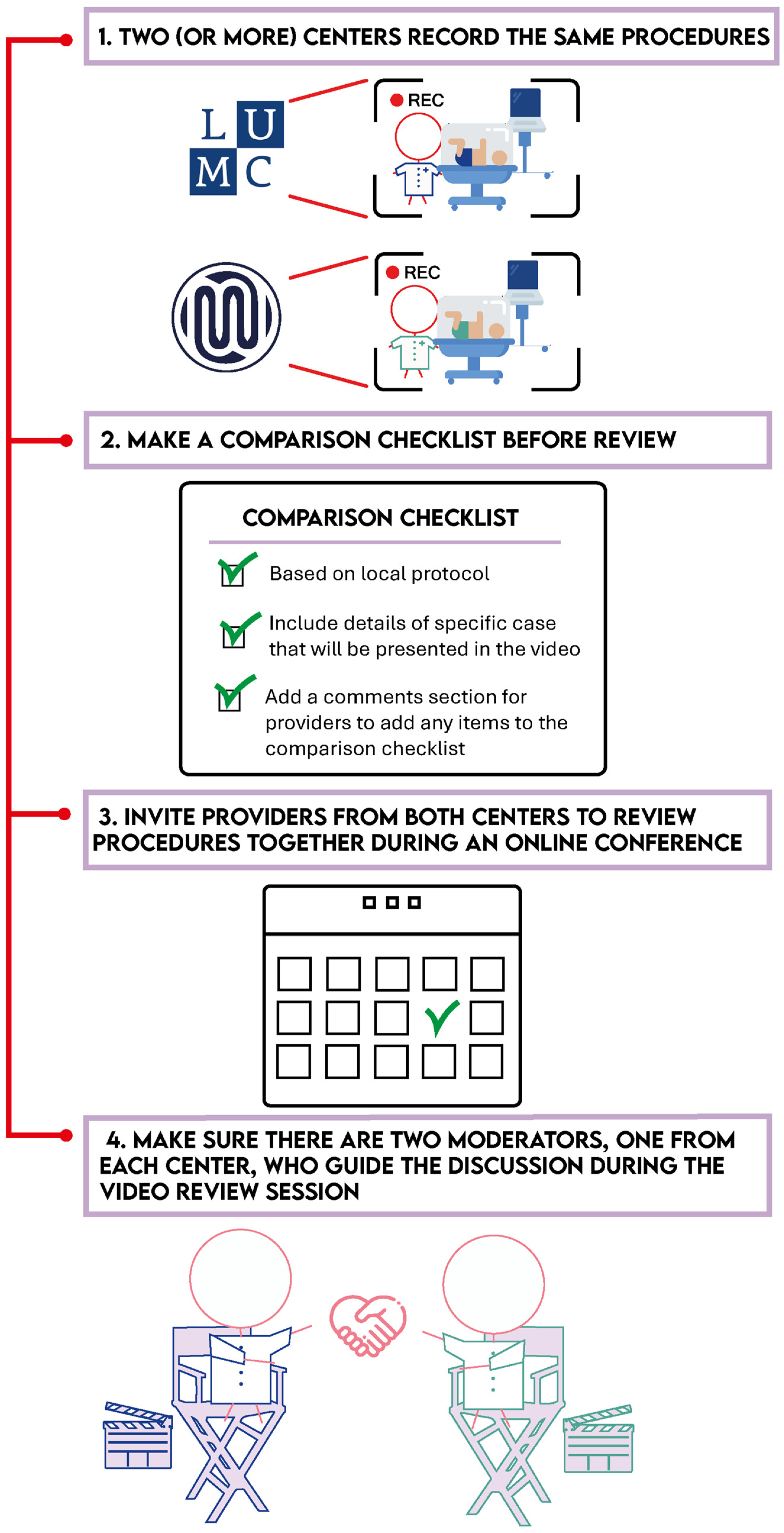
- Two centers that had independently established local video recording and review programs initiated a collaboration to organize multicenter video review and collaboratively review recordings of neonatal procedures. Importantly, both NICUs managed a similar patient population, ensuring that the evaluated neonatal procedures were clinically comparable.
- Prior to each session, a specific procedure was selected and technically comparable recordings were identified. To guide the dialogue, a comparison checklist was created, based on the local guidelines of each center and distributed among attending staff members prior to the video review session (Appendix A). This checklist incorporated critical clinical and contextual characteristics, such as gestational age, birthweight and indication for the intervention. The protection of patient data was upheld through the anonymization of patient data in the videos, alongside the utilization of a sharing-only format for the online review sessions.
- Providers from both centers, comprising both medical and nursing staff, were invited to collaboratively evaluate the procedure in an online meeting. Across the five sessions, attendance varied between 2 and 20 participants per session from each center, with a mean attendance of eight neonatal providers per session. On average, five neonatal care providers from the MUV and eleven from the LUMC attended the sessions. Sessions lasted between 30 and 60 min and were hosted via online video conferencing platforms (Cisco Systems, Inc., San Jose, CA, USA) or Microsoft Teams (Microsoft, Redmond, Washington, DC, USA).
- Sessions were co-chaired by the researchers from both centers (VH and HS) to moderate the online session, monitor the time and maintain a safe learning environment. Following a brief introduction of the clinical case, providers viewed the recordings from both centers and engaged in open discussions and addressed cross-institutional queries. During the sessions, the baseline checklists were iteratively updated to integrate immediate lessons learned from the discussion (Appendix A). Throughout the study period, the researchers deliberated these lessons learned within their respective departments and documented subsequent practice modifications based on the multicenter sessions.
3.2. Procedural Variations
3.3. Practice Modifications
4. Discussion
5. Conclusions
Author Contributions
Funding
Institutional Review Board Statement
Informed Consent Statement
Data Availability Statement
Conflicts of Interest
Abbreviations
| GA | Gestational age |
| LISA | Less invasive surfactant administration |
| LUMC | Leiden University Medical Center |
| MUV | Medical University of Vienna |
| MIST | Minimally invasive surfactant therapy |
| NICU | Neonatal Intensive Care Unit |
| PBCC | Physiologically based cord clamping |
| PICC | Peripherally inserted venous catheter |
| RDS | Respiratory distress syndrome |
| UVC | Umbilical venous catheter |
| POCUS | Point of care ultrasonography |
Appendix A

| CHARACTERISTICS | NICU of the MUV | NICU of the LUMC | |
|---|---|---|---|
| GA (birth) | 26 + 1 | 24 + 6 | |
| Birthweight | 1160 g | 740 g | |
| Reason for procedure | Pneumothorax | Persistent need for O2 | |
| PROCEDURE | Relevance of the identified difference/similarity (Relevant: *) (Not relevant: x) | ||
| Catheter size & type | Rüsch, 4 mm | Shiley, 2.5 mm | x |
| Depth | 7 + kg = 10 cm | 7 + kg = 8 cm | x |
| Tube position confirmation | Auscultation, Pedi-Cap if in doubt: chest X-ray | Pedi-Cap, auscultation, chest X-ray | * |
| Nasogastric tube in situ? | Most of the time | Sometimes; yes in this video | X |
| Suction of nasopharynx | Mostly, when tube is in situ | Mostly when tube is removed. Air/stomach suction has been performed before procedure | x |
| Backup respiratory support | Neo-Tee, bag-mask | Neopuff, no bag-mask | x |
| Mask (type) | Anatomical mask, Vyaire; Size 1 | Fisher & Paykel masks; size XS | * |
| Settings | Neopuff; PIP 20-25/PEEP 5-6 | Neopuff; PIP 25 cm H2O/PEEP 8 cm H2O | x |
| FiO2 value | 100% | 100% | x |
| Respirator (type) and settings | Servo-N Conventional ventilation | SLE6000 | x |
| Pre-medication and comfort | Fentanyl Vecuronium | Propofol (atropine, but not used in this video) | * |
| Assessing comfort | Muscle tone, assessed by physician and nurse subjectively | Stretching of the toes is a marker for grade of analgosedation next to general muscle tone and reactivity of the child. | * |
| Securing tube | Adhesive skin strips | Suturing of the tube is standard | * |
| Communication | Sometimes difficult to give correct instructions when using the videolaryngoscope | Sometimes difficult to give correct instructions when using the videolaryngoscope | * |
| CHARACTERISTICS | NICU of the MUV | NICU of the LUMC | |
|---|---|---|---|
| GA (birth) | 30 + 6 wks | 29 + 6 wks | |
| Birthweight | 1600 g | 1020 g | |
| Reason for procedure | RDS, FiO2 > 35% | RDS, dyspnea, FiO2 > 30% | |
| PROCEDURE | Relevance of the identified difference/similarity (Yes, relevant: *) (No, not relevant: X) | ||
| Catheter type & size | Surfcath, Vygon, 6F | Surfcath, Vygon, 6F | x |
| Nasogastric tube in situ | Most of the time; in this video, yes | Sometimes; in this video, yes | x |
| Pre-procedure suctioning | Not necessarily; in this video, during laryngoscopy | Air/stomach suction can be performed before procedure | x |
| Backup respiratory support | Neo-Tee, nCPAP | Neopuff, no bag-mask for CPAP or NIPPV | x |
| Pre-oxygenation target | >94% on nCPAP | Unknown in this video | x |
| Primary ventilator model | Acutronic Fabian | SLE6000 | x |
| Equipment | Acutronic Videolaryngoscope | Acutronic Videolaryngoscope | x |
| Preparation checks | Circulatory stable, IV access secured | No signs of pneumothorax, circulatory stable, IV access secured | x |
| (pre)medication and sedation | Non-pharmacological analgesia preferred (sucrose, facilitated tucking/nesting) if necessary; Ketamine 0.5 mg/kg, Fentanyl 3–5 µg/kg or Midazolam 0.1 mg/kg | (atropine if necessary) Propofol 1 mg/kg (Sometimes sucrose/facilitated tucking) | * |
| Positioning of head | Neutral, extra layer | No extra layer under head | x |
| Procedural specifics | Insert catheter until black mark is not seen anymore Prefer oro-endotracheal insertion Assistant will apply surfactant Suction during application, maintain comfort handling | Bring catheter to desired depth If vocal cords are not in open position, you can pull catheter back and wait Laryngoscope can either be removed (more CPAP pressure)/be left in situ during surfactant administration (assessing surfactant reflux) | x |
| Heart rate | If bradycardic < 100 bpm, desaturation < 80% intermittent positive pressure ventilation | If bradycardic/desaturation, stop procedure; give CPAP with mouth closed | x |
| Administration of surfactant | 200 mg/kg within 1–3 min in small amounts, administer air afterwards | 200 mg/kg within 30 s–3 min in small amounts to avoid reflux | x |
| CASE | NICU of the MUV | NICU of the LUMC | |
|---|---|---|---|
| GA (birth) | 34 + 5 | 28 + 2 | |
| Birthweight | 2500 | 1300 | |
| Reason for procedure | RDS; 100% FiO2, PFC | Access issues, no IV possible | |
| PROCEDURE | Relevance of the identified difference/similarity (Yes, relevant: *) (No, not relevant: X) | ||
| Catheter specifications | Vygon 5 fr, 40 cm, 2 Lumen <1500 g Argyle 2.5–3.5 fr/Vygon 4 fr Term Vygon 5 fr | <3500 g: Vygon 3.5 Fr, 1 lumen >3500 g: 5 fr 4 fr 2 lumen 4.5 fr 3 lumen 8 fr for exchange transfusion | x |
| Calculated insertion depth | ((kg×3) + 9)/2 + 1 = 8.2 | ((kgx3) + 9)/2 = 6.45 | x |
| (pre)medication & sedation | Non-pharmacological analgesia (sucrose, facilitated tucking/nesting) | >24 h pp, prophylaxis; amoxicillin/clavulanic acid Non-pharmacological analgesia (sucrose, facilitated tucking/nesting) | * |
| Sterility | Yes | Yes | x |
| Baby’s position | Neutral | Neutral | x |
| Medical staff | 1–2 experienced neonatal residents, nurse | Experienced pediatric resident, nurse | x |
| Technique | Disinfection UC/skin/umbilical clamp Sterile draping, flush UVC line Cut umbilical clamp Cut UC and probe the lumen Insert catheter and push to calculated position Fixation by suture | Sterile draping, flush UVC Disinfect umbilical cord and skin with chlorhexidine, clean skin around umbilicus with saline Place a purse string suture around umbilical cord Cut UC at 0.5–1 cm from insertion. Insert catheter and push to calculated position If available, check position by ultrasound Fixation by suture, leukoplast | * |
| If a resistance is noticeable/no further push is possible, a second catheter can be pushed forward as well/use pressure on liver to move catheter forward Position/ultrasound guided—if nothing works pull catheter back to peripheral position | If a resistance is noticeable/no further push is possible, a second catheter can be pushed forward next to the first one as well/use pressure on liver to move catheter/ultrasound-guided—if nothing works, pull catheter back to peripheral position | X | |
| Imaging guidance | Always X-ray and, if unclear, ultrasound | If correct position confirmed by ultrasound, no X-ray; recheck position after 1–2 days by ultrasound If position is not confirmed by ultrasound, use X-ray | * |
| Line duration and maintenance | 7 days maximum duration Heparin >36 GA, 1–3 days 150 IE/kg/d after 3 days 300 IE/kg/d 32–36 GA, after 3 days 150 IE/kg/d <32 GA, after 7 days 150 IE/kg/d | The indication for a line is evaluated daily and removed on day 7 This can be deviated from on a case-by-case basis after careful consideration 4 h care in supine for risk of bleeding No maximum duration of stay of catheter Heparin: unnecessary in UVC | * |
| CASE | NICU of the MUV | NICU of the LUMC | |
|---|---|---|---|
| GA (birth) | 29 + 2 GA, 2 days | 41 + 5 GA | |
| Birthweight | 1150 | 3883 | |
| Reason for procedure | Parenteral nutrition | Listeria meningitis, long-term antibiotic administration CVC in arm | |
| PROCEDURE | Relevance of the identified difference/similarity (Yes, relevant: *) (No, not relevant: X) | ||
| Catheter brand & size | Premicath (Vygon, 20 cm, 1 Fr) | Nutriline (Vygon, 30 cm, 2 Fr) | x |
| Anatomical landmark/target vein | Median cubital vein | Basilic vein | x |
| Pre-medication & analgesia | Non-pharmacological (sucrose, facilitated tucking, nesting) | Non-pharmacological (sucrose, facilitated tucking, nesting) | x |
| Sterility & room setup | Strict sterile field; nurse positioned opposite the proceduralist to maintain infant comfort | Strict sterile field; nurse positioned opposite the proceduralist to maintain infant comfort | x |
| Medical personnel | 1–2 clinicians (Neonatologist or Fellow, Nurse) | 1–2 clinicians (Neonatologist, Fellow, or Physician Assistant; Nurse) | x |
| Insertion depth measurement | Site of insertion to the shoulder line | Site of insertion to the shoulder line | x |
| Specific skin preparation techniques | Hand placed inside a sterile plastic bag and secured with Steri-Strips; entire arm washed and draped | Dual-stage disinfection: non-sterile skin disinfection by the nurse, followed by sterile chlorhexidine prep (allowed to air-dry); sterile draping | * |
| Vein visualization method | Transillumination utilizing a WeeSight LED device | Transillumination utilizing an Astodia light source | x |
| Venipuncture & catheter deployment | Apply upper arm tourniquet Puncture target vein and advance catheter Secure catheter using Steri-Strips and Tegaderm transparent dressing | Secure contralateral arm in reactive term infants Apply upper arm tourniquet Introduce introducer needle into the vein Advance PICC using dedicated forceps Withdraw introducer needle Secure with Steri-Strips (optional Grip-Lok and Tegaderm) | * |
| Position confirmation | Exclusively verified via chest/abdominal X-ray | Primary verification via X-ray or ultrasound; mandated position recheck on Days 1–3 using ultrasound (preferred) or repeat X-ray | * |
| Continuous heparinization & patency maintenance | Postnatal age & GA-dependent protocol: 50 IU/kg/day adjusted by age milestones: GA > 37 weeks: Initiate on Day 1GA: Initiate Day 3GA <: Initiate Day 7 | Weight-dependent continuous infusion concentration: Weight < 1 kg: at Weight > 1 kg: at | x |
| CASE | NICU of the MUV | NICU of the LUMC | |
|---|---|---|---|
| GA (birth) | 29 + 1 GA | 31 + 2 GA | |
| Birthweight | 1080 | 1400 | |
| Reason for Procedure | Cervix insufficiency and preterm labor | Hodgkin lymphoma; from GA 15 start chemotherapy; preterm labor | |
| PROCEDURE | Relevance of the identified difference/similarity (Yes, relevant: *) (No, not relevant: X) | ||
| Brand of Birth Trolley | Concord Birth Trolley | Concord Birth Trolley | x |
| SYSTEM & ELIGIBILITY | |||
| Bedside Stabilization System | Concord Birth Trolley | Concord Birth Trolley | x |
| Gestational Age Threshold | <weeks (if no major complications anticipated) | <weeks | x |
| Absolute Contraindications | TTTS/TAPS, triplets or higher-order multiples | Placenta previa, placenta accreta/percreta, untreated TTTS, monoamniotic/monochorionic twins, triplets or higher-order multiples | x |
| Cord Clamping Criteria | |||
| Physiological Target Parameters | Spontaneous breathing with target, and HR > 100 bpm | Spontaneous breathing with target, and HR > 100 bpm | x |
| Clamping Duration (Stable Infant) | Minimum 2 min; maximum 10 min | Minimum 3 min; maximum 10 min | * |
| Non-Breathing-Infant Strategy | Initiate CPAP (via Perivent; Benveniste if < 28 weeks) and PPV if required. If acute resuscitation or intubation fails on the Concord, transition infant immediately to a standard resuscitation table. | Intubation can be performed directly on the Concord platform (provided parents consent/are comfortable). Once stabilization criteria are achieved, wait 3 min before clamping. | * |
| Early Clamping Triggers | Maternal: Massive hemorrhage, placental abruption, or obstetrician discretion. Neonatal: Asphyxia/no heart rate requiring immediate advanced resuscitation off the trolley. | Maternal: Massive hemorrhage, placental abruption, or obstetrician discretion. Neonatal: Asphyxia/no heart rate requiring immediate advanced resuscitation off the trolley. | x |
| Environmental Logistics | |||
| Sterility Protocols | OR: Strict sterility maintained caudal to the umbilical cord; sterile cover applied to Concord platform. DR: Non-sterile procedure. | OR: Neonatologist remains sterile until the pulse oximeter probe is attached; sterile platform cover used. DR: Non-sterile procedure. | x |
| Spatial Position (OR) | Trolley platform is positioned directly between the mother’s legs. Infant is placed on the platform in a lateral position. | Trolley is positioned parallel to the left side of the operating table. Infant is placed on the platform in a supine position. | * |
| Spatial Position (DR) | Platform positioned parallel to the mother. | Platform positioned parallel to the mother’s left side near the symphysis pubis; mother’s left leg is lowered to accommodate setup. | * |
| Medical Personnel | 1 Neonatologist, 1 Neonatal Nurse | 1 Neonatologist, 1 Neonatal Nurse | x |
| Procedural workflow | |||
| Standard Steps (OR & DR) | Obstetrician delivers the infant, accounts for umbilical cord length, and transfers the infant to the Concord platform. Avoid touching or manipulating the cord to prevent vasoconstriction/cessation of pulsation. Neonatologist receives the infant, applies a thermal wrap and hat, and attaches a pulse oximeter probe. Once clamping criteria are met, the cord is cut, and the infant is transferred to the NICU. | Obstetrician delivers the infant, accounts for umbilical cord length, and transfers the infant to the Concord platform. Neonatologist receives the infant and applies a thermal wrap and hat, while the nurse attaches the pulse oximeter probe. Maternal oxytocin is administered immediately following cord clamping. Once stabilized, the infant is transferred to the NICU. | * |
References
- Hill, M.E.; Aliaga, S.R.; Foglia, E.E. Learning with digital recording and video review of delivery room resuscitation. Semin. Fetal Neonatal Med. 2022, 27, 101396. [Google Scholar] [CrossRef]
- Brogaard, L.; Uldbjerg, N. Filming for auditing of real-life emergency teams: A systematic review. BMJ Open Qual. 2019, 8, e000588. [Google Scholar] [CrossRef] [PubMed]
- Oakley, E.; Stocker, S.; Staubli, G.; Young, S. Using video recording to identify management errors in pediatric trauma resuscitation. Pediatrics 2006, 117, 658–664. [Google Scholar] [CrossRef]
- Schilleman, K.; Siew, M.L.; Lopriore, E.; Morley, C.J.; Walther, F.J.; Te Pas, A.B. Auditing resuscitation of preterm infants at birth by recording video and physiological parameters. Resuscitation 2012, 83, 1135–1139. [Google Scholar] [CrossRef]
- Wagner, M.; den Boer, M.C.; Jansen, S.; Groepel, P.; Visser, R.; Witlox, R.; Bekker, V.; Lopriore, E.; Berger, A.; Pas, A.B.T. Video-based reflection on neonatal interventions during COVID-19 using eye-tracking glasses: An observational study. Arch. Dis. Child. Fetal Neonatal Ed. 2022, 107, 156–160. [Google Scholar]
- Law, B.H.Y.; Cheung, P.Y.; Wagner, M.; van Os, S.; Zheng, B.; Schmölzer, G. Analysis of neonatal resuscitation using eye tracking: A pilot study. Arch. Dis. Child. Fetal Neonatal Ed. 2018, 103, 82–84. [Google Scholar] [CrossRef]
- Heesters, V.; van Zanten, H.A.; Heijstek, V.; Te Pas, A.B.; Witlox, R.S.G.M. Record, reflect and refine: Using video review as an initiative to improve neonatal care. Pediatr. Res. 2024, 96, 299–308. [Google Scholar] [CrossRef]
- Gröpel, P.; Wagner, M.; Bibl, K.; Schwarz, H.; Eibensteiner, F.; Berger, A.; Cardona, F.S. Provider Visual Attention Correlates With the Quality of Pediatric Resuscitation: An Observational Eye-Tracking Study. Front. Pediatr. 2022, 10, 867304. [Google Scholar] [CrossRef]
- Herting, E.; Härtel, C.; Göpel, W. Less invasive surfactant administration (LISA): Chances and limitations. Arch. Dis. Child. Fetal Neonatal Ed. 2019, 104, 655–659. [Google Scholar] [CrossRef] [PubMed]
- Pichler, K.; Kuehne, B.; Dekker, J.; Stummer, S.; Giordano, V.; Berger, A.; Kribs, A.; Klebermass-Schrehof, K. Assessment of comfort during less invasive surfactant administration in very preterm infants: A multicenter study. Neonatology 2023, 120, 473–481. [Google Scholar] [CrossRef] [PubMed]
- Carbajal, R.; Eriksson, M.; Courtois, E.; Boyle, E.; Avila-Alvarez, A.; Andersen, R.D.; Sarafidis, K.; Polkki, T.; Matos, C.; Lago, P.; et al. Sedation and analgesia practices in neonatal intensive care units (EUROPAIN): Results from a prospective cohort study. Lancet Respir. Med. 2015, 3, 796–812. [Google Scholar] [CrossRef]
- Anthony, S.; Jacobusse, G.W.; van der Pal-de Bruin, K.M.; Buitendijk, S.; Zeitlin, J. Do differences in maternal age, parity and multiple births explain variations in fetal and neonatal mortality rates in Europe?—Results from the EURO-PERISTAT project. Paediatr. Perinat. Epidemiol. 2009, 23, 292–300. [Google Scholar] [CrossRef]
- Keller, M.; Saugstad, O.; Steenbrugge, M.S.; Thiele, N. Caring for Tomorrow: EFCNI White Paper on Maternal and Newborn Health and Aftercare Services; European Foundation for the Care of Newborn Infants: Munich, Germany, 2011; 195p. [Google Scholar]
- Simma, B.; Walter, S.; Konstantelos, D.; van Vonderen, J.; Te Pas, A.B.; Rüdiger, M.; Küster, H. Delivery Room Management of Infants with Very Low Birth Weight in 3 European Countries-The Video Apgar Study. J. Pediatr. 2020, 222, 106–111.e2. [Google Scholar] [CrossRef]
- Garcia, S.I.; Finch, A.S.; Ridgeway, J.L.; Beckman, T.J.; Montori, V.M.; Rivera, M.; Gajic, O.; Kennedy, C.C.; Kelm, D.J. Understanding Team Dynamics and Culture of Safety Using Video Reflexive Ethnography during Real-Time Emergent Intubation. Ann. Am. Thorac. Soc. 2024, 21, 1065–1073. [Google Scholar] [CrossRef]
- Gizzi, C.; Gagliardi, L.; Trevisanuto, D.; Ghirardello, S.; Di Fabio, S.; Beke, A.; Buonocore, G.; Charitou, A.; Cucerea, M.; Degtyareva, M.V.; et al. Variation in delivery room management of preterm infants across Europe: A survey of the Union of European Neonatal and Perinatal Societies. Eur. J. Pediatr. 2023, 182, 4173–4183. [Google Scholar] [CrossRef]
- Lapcharoensap, W.; Bennett, M.V.; Powers, R.J.; Finer, N.N.; Halamek, L.P.; Gould, J.B.; Sharek, P.J.; Lee, H.C. Effects of delivery room quality improvement on premature infant outcomes. J. Perinatol. 2017, 37, 349–354. [Google Scholar] [CrossRef] [PubMed]
- Jensen, E.A.; Lorch, S.A. Effects of a Birth Hospital’s Neonatal Intensive Care Unit Level and Annual Volume of Very Low-Birth-Weight Infant Deliveries on Morbidity and Mortality. JAMA Pediatr. 2015, 169, e151906. [Google Scholar] [CrossRef]
- Roehr, C.C.; Gröbe, S.; Rüdiger, M.; Hummler, H.; Nelle, M.; Proquitté, H.; Hammer, H.; Schmalisch, G. Delivery room management of very low birth weight infants in Germany, Austria and Switzerland—A comparison of protocols. Eur. J. Med. Res. 2010, 15, 493–503. [Google Scholar] [CrossRef] [PubMed]
- Singh, Y.; Oddie, S. Marked variation in delivery room management in very preterm infants. Resuscitation 2013, 84, 1558–1561. [Google Scholar] [CrossRef] [PubMed]
- Trevisanuto, D.; Gizzi, C.; Gagliardi, L.; Ghirardello, S.; Di Fabio, S.; Beke, A.; Buonocore, G.; Charitou, A.; Cucerea, M.; Degtyareva, M.V.; et al. Neonatal Resuscitation Practices in Europe: A Survey of the Union of European Neonatal and Perinatal Societies. Neonatology 2022, 119, 184–192. [Google Scholar] [CrossRef]
- Schilleman, K.; Witlox, R.S.; van Vonderen, J.J.; Roegholt, E.; Walther, F.J.; Te Pas, A.B. Auditing documentation on delivery room management using video and physiological recordings. Arch. Dis. Child. Fetal Neonatal Ed. 2014, 99, 485–490. [Google Scholar] [CrossRef] [PubMed]
- Chien, L.Y.; Macnab, Y.; Aziz, K.; Andrews, W.; Mcmillan, D.D.; Lee, S.K. Variations in central venous catheter-related infection risks among Canadian neonatal intensive care units. Pediatr. Infect. Dis. J. 2002, 21, 505–511. [Google Scholar] [CrossRef]
- Wennberg, J.E. Unwarranted variations in healthcare delivery: Implications for academic medical centres. BMJ 2002, 325, 961–964. [Google Scholar] [CrossRef] [PubMed]
- Pan, S.; Lin, C.; Tsui, B.C.H. Neonatal and paediatric point-of-care ultrasound review. Australas. J. Ultrasound Med. 2023, 26, 46–58. [Google Scholar] [CrossRef]
- Singh, Y.; Tissot, C.; Fraga, M.V.; Yousef, N.; Cortes, R.G.; Lopez, J.; Sanchez-De-Toledo, J.; Brierley, J.; Colunga, J.M.; Raffaj, D.; et al. International evidence-based guidelines on Point of Care Ultrasound (POCUS) for critically ill neonates and children issued by the POCUS Working Group of the European Society of Paediatric and Neonatal Intensive Care (ESPNIC). Crit. Care 2020, 24, 65. [Google Scholar] [CrossRef]
- Kim, E.W.; Teague-Ross, T.J.; Greenfield, W.W.; Keith Williams, D.; Kuo, D.; Hall, R.W. Telemedicine collaboration improves perinatal regionalization and lowers statewide infant mortality. J. Perinatol. 2013, 33, 725–730. [Google Scholar] [CrossRef] [PubMed]
- Emergency video telemedicine consultation for newborn resuscitations: The Mayo Clinic experience. Mayo Clin. Proc. 2016, 91, 1735–1743.
- Gray, J.E.; Safran, C.; Davis, R.B.; Pompilio-Weitzner, G.; Stewart, J.E.; Zaccagnini, L.; Pursley, D. Baby CareLink: Using the internet and telemedicine to improve care for high-risk infants. Pediatrics 2000, 106, 1318–1324. [Google Scholar] [CrossRef]


| 1 | Practice Variations | Practice Modifications | |
|---|---|---|---|
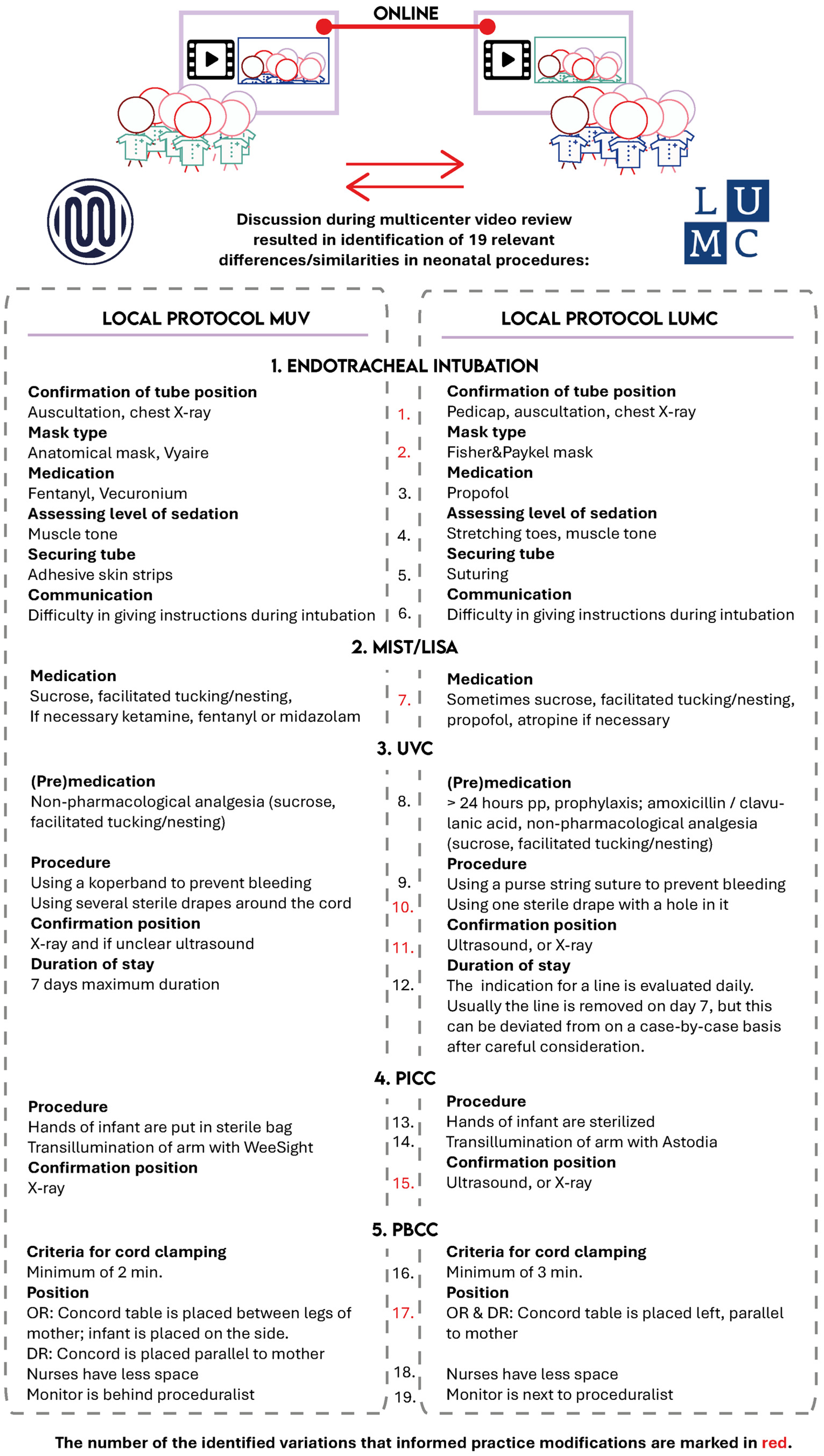
| Session 1: Endotracheal intubation | 1. | The first topic of discussion was the use of a colorimetric CO2 detector (Pedi-Cap; Nellcor Puritan Bennett, Pleasanton, CA, USA) to verify the position of the endotracheal tube. Initially, the MUV utilized the Pedi-Cap only when the intubating clinician expressed uncertainty regarding correct tube placement, whereas the LUMC used it routinely. | Following the collaborative video review, MUV providers increased their utilization of the Pedi-Cap to shorten the time to tube position verification and minimize reliance on subsequent auscultation or radiography. As the device was already included in the MUV procedural checklist, this session re-emphasized its clinical utility. |
| 2 | Furthermore, a different brand of face masks had been utilized at the MUV. | After a thorough discussion regarding the pros and cons of the masks employed in Leiden, these models were implemented in Vienna as well. | |
| 3 | In addition, disparities in pre-medication regimens for sedation were discussed. The two centers employed different pharmacological agents and reported distinct clinical experiences, prompting a discussion as to why the LUMC opted for propofol while the MUV preferred fentanyl and vecuronium. | No modification was made. | |
| 4 | Another procedural variation identified was the method of tube fixation: while the LUMC standardly sutured the tube, the MUV relied solely on adhesive skin strips. | No modification was made. | |
| 5 | In both centers, the impact of “human factors” was evident, specifically regarding effective communication and the delivery of correct instructions during video-laryngoscopy-guided intubation. | No modification was made. | |
| 6 | Finally, the clinical indicators used to assess adequate sedation differed between the centers: the LUMC evaluated muscle tone in combination with the toe-extension reflex to determine the depth of analgesia, whereas the MUV assessed general infantile muscle tone. | No modification was made. | |
| Session 2: Minimally invasive surfactant therapy/less invasive surfactant administration | 7 | The primary focus of the multicenter review session on MIST/LISA was the variation in pre-medication regimens utilized prior to surfactant administration. The MUV prioritized non-pharmacological comfort measures, including the administration of sucrose and the utilization of facilitated tucking or nesting. Concurrently, intravenous sedatives—such as ketamine, fentanyl, or midazolam—were administered only on indication. Conversely, the LUMC similarly initiated care with non-pharmacological measures (sucrose and facilitated tucking) but exhibited a lower threshold for escalating to intravenous sedation, standardly utilizing propofol. | Since the multicenter session, the LUMC has placed more emphasis on education and training regarding infant comfort optimization through facilitated tucking during MIST/LISA. This shift was driven by the hypothesis that enhancing non-pharmacological comfort might reduce the subsequent need for pharmacological sedatives. This targeted staff training on comfort measures was subsequently implemented in January 2024. |
| Session 3: Umbilical venous catheter insertion | 8, 9, 12 | First, differences in pre-medication were discussed, including differences in prophylactic antibiotics. Second, procedural differences were discussed, including using a purse string suture vs a koperband to prevent bleeding. Finally, antibiotic prophylaxis was routinely administered in Leiden for neonates older than 24 h of life at insertion, whereas no prophylaxis was utilized in Vienna. | No modification was made. |
| 10 | During the UVC insertion session, sterile preparation challenges were discussed. Both centers reported difficulties maintaining umbilical cord sterility. While both institutions utilize a sterilized umbilical cord clamp, clinicians frequently questioned its sterility. The LUMC employed a sterile drape with a central aperture, pulling the cord through with the clamp attached—a technically challenging maneuver. In Vienna, clinicians circumferentially draped multiple smaller sheets around the cord to create an opening, avoiding pulling the clamp through. | Following the session, the LUMC implemented a new cord-cutting technique that eliminated the unsterile clamp from the sterile field. Concurrently, Vienna updated its checklist to include a specific protocol for draping the semi-sterile clamp until cord cleavage. | |
| 11 | A procedural variation was also detected in UVC tip localization. The LUMC utilized ultrasonography, whereas the MUV predominantly relied on radiography. Ultrasonography was discussed as a reliable, operator-dependent modality. | Following these discussions, the MUV initiated ultrasound training for junior faculty and implemented a corresponding clinical guideline. Regarding catheterization duration, Vienna enforces a strict seven-day maximum, whereas Leiden evaluates the indication daily; though typically removed by day seven, the LUMC maintains no fixed maximum. | |
| Session 4: Peripherally inserted central catheter (venous lines) | 13 | During the fourth multicenter session, PICC insertion was discussed, revealing variations in sterile field preparation. The MUV enclosed the neonate’s hands in a sterile bag to prevent contamination from the digits, whereas the LUMC disinfected the hands and placed them directly into the sterile field. | No modification was made. |
| 14 | Additionally, insertion depth was measured differently: either from the insertion site to the target anatomical endpoint (utilized by the MUV) or from the wrist to the axilla (utilized by the LUMC). | No modification was made. | |
| 15 | Regarding catheter tip localization, cross-institutional dialogue focused on strategies to introduce ultrasonography as a verification tool and methods to train the clinical team in this emerging technique | Both centers used more ultrasound verification of catheter tip localization after this session. | |
| Session 5: Physiologically based cord clamping | 16, 18, 19 | In the fifth session, PBCC during stabilization following birth was discussed. Both institutions had recently implemented this technique, revealing variations in the positioning of the Concord Birth Trolley (Concord Neonatal B.V., Leiden, The Netherlands). In the operating room (OR) setting, the MUV placed the trolley platform between the mother’s legs, whereas the LUMC positioned it parallel to the mother. Regarding umbilical cord management, the MUV adhered to a minimum clamping time of two minutes, whereas the LUMC maintained a minimum of three minutes. Both centers reported difficulties visualizing respiratory parameters on the clinical monitor during the procedure. At the MUV, the monitor was positioned behind the proceduralist, whereas the LUMC placed it adjacent to the operator. Strategies were discussed to improve monitor visibility and minimize reliance on verbal team feedback. Finally, the interprofessional discussion highlighted the nurse’s perspective, noting that spatial constraints restricted their mobility, frequently leading to a more passive role and limiting space for essential equipment (e.g., intubation supplies). Consequently, participants emphasized that structured communication and rigorous pre-procedural training are essential to mitigate these spatial limitations. | No modification was made. |
| 17 | Furthermore, the MUV placed the infant in a lateral recumbent position to optimize comfort, whereas the LUMC utilized a supine position. The predominantly utilized delivery modes also differed: the MUV performed PBCC primarily during cesarean sections, whereas the LUMC, whose implementation was ongoing, utilized it mainly during vaginal deliveries. | Based on these review sessions, the LUMC integrated the MUV’s OR setup configuration into its ongoing implementation strategy. |
Disclaimer/Publisher’s Note: The statements, opinions and data contained in all publications are solely those of the individual author(s) and contributor(s) and not of MDPI and/or the editor(s). MDPI and/or the editor(s) disclaim responsibility for any injury to people or property resulting from any ideas, methods, instructions or products referred to in the content. |
© 2026 by the authors. Licensee MDPI, Basel, Switzerland. This article is an open access article distributed under the terms and conditions of the Creative Commons Attribution (CC BY) license.
Share and Cite
Heesters, V.; Schwarz, H.; Zanten, H.A.v.; Bibl, K.; Werther, T.; Klebermass-Schrehof, K.; Berger, A.; Jansen, S.; Pas, A.B.t.; Witlox, R.; et al. International Multicenter Video Review on Neonatal Procedures: Lessons Learned from a Collaborative Study. Children 2026, 13, 816. https://doi.org/10.3390/children13060816
Heesters V, Schwarz H, Zanten HAv, Bibl K, Werther T, Klebermass-Schrehof K, Berger A, Jansen S, Pas ABt, Witlox R, et al. International Multicenter Video Review on Neonatal Procedures: Lessons Learned from a Collaborative Study. Children. 2026; 13(6):816. https://doi.org/10.3390/children13060816
Chicago/Turabian StyleHeesters, Veerle, Hannah Schwarz, Henriette A. van Zanten, Katharina Bibl, Tobias Werther, Katrin Klebermass-Schrehof, Angelika Berger, Sophie Jansen, Arjan B. te Pas, Ruben Witlox, and et al. 2026. "International Multicenter Video Review on Neonatal Procedures: Lessons Learned from a Collaborative Study" Children 13, no. 6: 816. https://doi.org/10.3390/children13060816
APA StyleHeesters, V., Schwarz, H., Zanten, H. A. v., Bibl, K., Werther, T., Klebermass-Schrehof, K., Berger, A., Jansen, S., Pas, A. B. t., Witlox, R., & Wagner, M. (2026). International Multicenter Video Review on Neonatal Procedures: Lessons Learned from a Collaborative Study. Children, 13(6), 816. https://doi.org/10.3390/children13060816