Early Life Stress and Adversity in Children: Neuroendocrine Mechanisms, Epigenetic Regulation, and Lifespan Developmental Outcomes—A Narrative Review




Highlights
- Early life stress (ELS) has been associated with long-term neuroendocrine, immune, and epigenetic alterations that shape developmental trajectories across the lifespan.
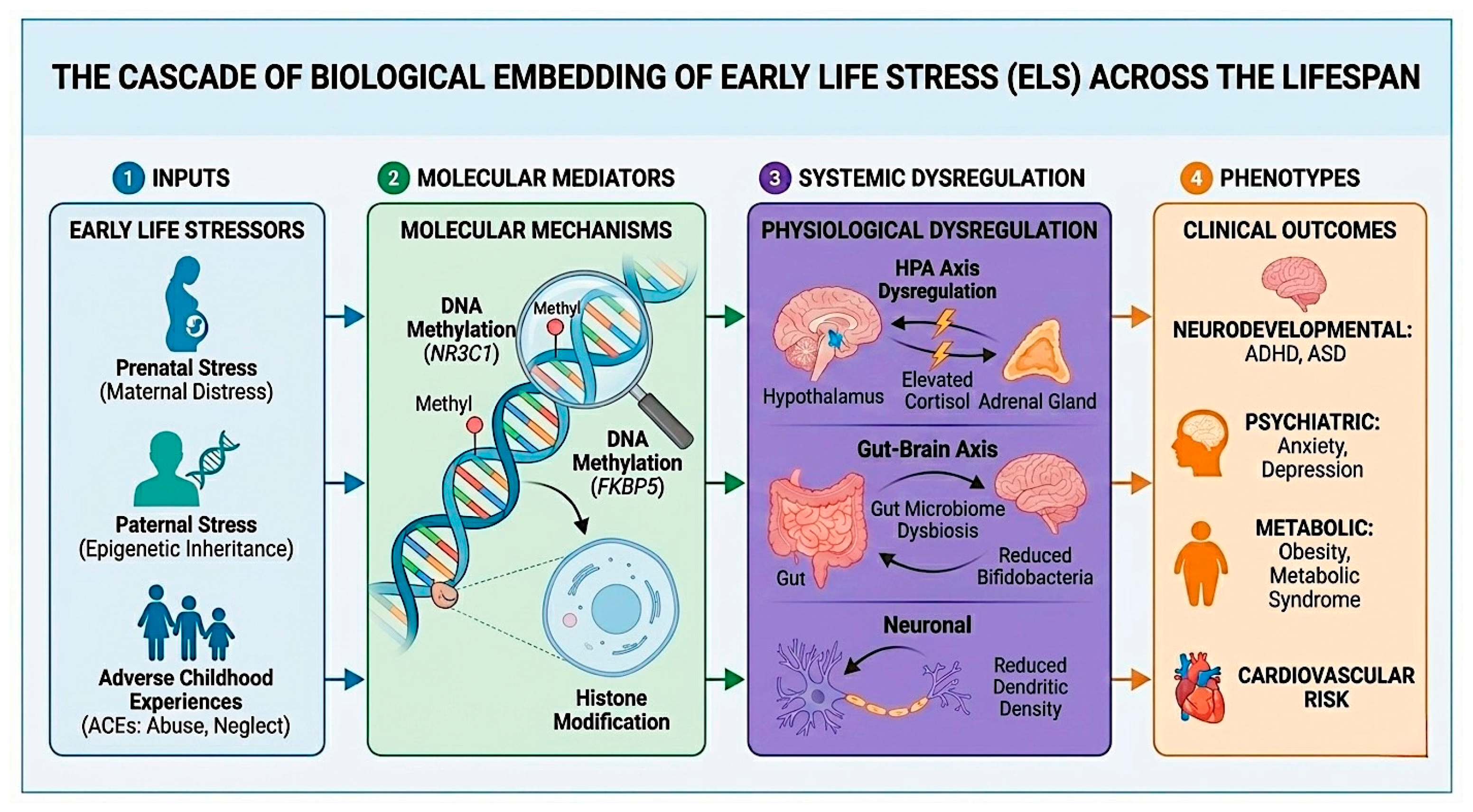
- Dysregulation of the hypothalamic–pituitary–adrenal (HPA) axis, placental signaling pathways, and stress-related epigenetic mechanisms represent key mediators linking early adversity to later physical and mental health outcomes.
- Identification of stress-related neurobiological and epigenetic pathways may support earlier detection of vulnerable pediatric populations and improve preventive intervention strategies.
- Understanding developmental programming mechanisms may facilitate the development of targeted, multidisciplinary approaches to reduce the long-term burden of stress-related disorders.
Abstract
1. Introduction
2. Methodology of the Review
3. Stress: Definition and Neuroendocrine Regulation
4. Early Life Stress and Childhood Trauma
5. Neuroendocrinology of Early Life Stress
5.1. HPA Axis and Glucocorticoid Programming
5.2. ANS Dysregulation
5.3. Hypothalamic–Pituitary–Thyroid (HPT) Axis Interaction
5.4. Monoaminergic Systems: Serotonergic and Dopaminergic Pathways
5.5. Oxytocin and Stress Buffering Systems
6. Effects of Early Life Stress
6.1. Physical and Neuropsychiatric Outcomes
6.2. Epigenetic and Cellular Aging Effects (Telomeres)
6.3. Neurodevelopmental Disorders
6.4. Post-Traumatic Stress Disorder
6.5. Immune System and Gut Microbiome
6.6. Circadian Rhythms and Sleep Regulation
6.7. Addiction and Reward-Related Behavior
6.8. Neuroimaging Evidence
6.9. Resilience and Adaptive Programming
7. Maternal Stress
7.1. Pregnancy and Early Life Experiences
7.2. Placenta
7.3. Fetal Programming
8. Paternal Stress
9. Epigenetics
9.1. DNA Methylation
9.2. Histone Modifications and Non-Coding RNAs
9.3. Key Stress-Related Genes and Pathways
9.4. Epigenetic Programming of the HPA Axis
9.5. Maternal and Paternal Contributions
10. Clinical Implications and Translational Relevance
11. Conclusions
Author Contributions
Funding
Institutional Review Board Statement
Informed Consent Statement
Data Availability Statement
Conflicts of Interest
Abbreviations
| ELS | Early Life Stress |
| ACEs | Adverse Childhood Experiences |
| HPA | Hypothalamic–Pituitary–Adrenal |
| ANS | Autonomic Nervous System |
| PVN | Paraventricular Nucleus |
| CRH | Corticotropin-Releasing Hormone |
| AVP | Arginine Vasopressin |
| ACTH | Adrenocorticotropic Hormone |
| LC | Locus Coeruleus |
| GCs | Glucocorticoids |
| DHEA | Dehydroepiandrosterone |
| GR | Glucocorticoid Receptors |
| MR HRV | Mineralocorticoid Receptors Heart Rate Variability |
| HPT | Hypothalamic–Pituitary–Thyroid |
| TRH | Thyrotropin-Releasing Hormone |
| TSH | Thyroid-Stimulating Hormone |
| IL-6 | Interleukin-6 |
| TNF-α | Tumor Necrosis Factor-alpha |
| CRP | C-Reactive Protein |
| ASD | Autism Spectrum Disorder |
| ADHD | Attention-Deficit/Hyperactivity Disorder |
| PTSD | Post-Traumatic Stress Disorder |
| IL-1β | Interleukin-1β |
| IL-10 | Interleukin-10 |
| CNS | Central Nervous System |
| 11β-HSD2 | 11β-hydroxysteroid dehydrogenase type 2 |
| CpG | Cytosine–phosphate–Guanine |
| FKBP5 | FK506-binding protein 5 |
| BDNF | Brain-Derived Neurotrophic Factor |
| SLC6A4 | Serotonin transporter gene |
| POMC | Pro-opiomelanocortin |
| miRNAs | microRNAs |
| PEARLS | Pediatric ACEs and Related Life-events Screener |
| SDQ | Strengths and Difficulties Questionnaire |
| CBCL | Child Behavior Checklist |
| TF-CBT | Trauma-focused cognitive behavioral therapy |
References
- Chrousos, G.P.; Gold, P.W. The concepts of stress and stress system disorders: Overview of physical and behavioral homeostasis. JAMA 1992, 267, 1244–1252. [Google Scholar] [CrossRef] [Scilit]
- Chrousos, G.P. Stress and disorders of the stress system. Nat. Rev. Endocrinol. 2009, 5, 374–381. [Google Scholar] [CrossRef] [Scilit]
- Kazakou, P.; Nicolaides, N.C.; Chrousos, G.P. Basic concepts and hormonal regulators of the stress system. Horm. Res. Paediatr. 2022, 96, 8–16. [Google Scholar] [CrossRef] [Scilit]
- Chrousos, G.P. Regulation and dysregulation of the hypothalamic-pituitary-adrenal axis: The corticotropin-releasing hormone perspective. Endocrinol. Metab. Clin. N. Am. 1992, 21, 833–858. [Google Scholar] [CrossRef] [Scilit]
- Tsigos, C.; Chrousos, G.P. Physiology of the hypothalamic-pituitary-adrenal axis in health and dysregulation in psychiatric and autoimmune disorders. Endocrinol. Metab. Clin. N. Am. 1994, 23, 451–466. [Google Scholar] [CrossRef] [Scilit] [PubMed]
- Nicolaides, N.C.; Chrousos, G.; Kino, T. Glucocorticoid receptor. In Endotext; Feingold, K.R., Ed.; MDText.com, Inc.: South Dartmouth, MA, USA, 2020. [Google Scholar]
- Agorastos, A.; Chrousos, G.P. The neuroendocrinology of stress: The stress-related continuum of chronic disease development. Mol. Psychiatry 2022, 27, 502–513. [Google Scholar] [CrossRef] [Scilit]
- Tsigos, C.; Kyrou, I.; Kassi, E.; Chrousos, G.P. Stress: Endocrine physiology and pathophysiology. In Endotext; Feingold, K.R., Ed.; MDText.com, Inc.: South Dartmouth, MA, USA, 2020. [Google Scholar]
- Stefanaki, C.; Pervanidou, P.; Boschiero, D.; Chrousos, G.P. Chronic stress and body composition disorders: Implications for health and disease. Hormones 2018, 17, 33–43. [Google Scholar] [CrossRef] [Scilit] [PubMed]
- Pervanidou, P.; Agorastos, A.; Kolaitis, G.; Chrousos, G.P. Neuroendocrine responses to early life stress and trauma and susceptibility to disease. Eur. J. Psychotraumatol. 2017, 8, 1351218. [Google Scholar] [CrossRef] [Scilit]
- Reynolds, R.M.; Labad, J.; Buss, C.; Ghaemmaghami, P.; Räikkönen, K. Transmitting biological effects of stress in utero: Implications for mother and offspring. Psychoneuroendocrinology 2013, 38, 1843–1849. [Google Scholar] [CrossRef] [Scilit]
- Agorastos, A.; Pervanidou, P.; Chrousos, G.P.; Baker, D.G. Developmental trajectories of early life stress and trauma: A narrative review on neurobiological aspects beyond stress system dysregulation. Front. Psychiatry 2019, 10, 118. [Google Scholar] [CrossRef] [Scilit]
- Remmers, M.C.C.; Reijs, R.P.; Hoebe, C.J.P.A. Defining and distinguishing early life stress, trauma, adversity, toxic and chronic stress and allostatic load: A descriptive review. Scand. J. Public Health 2024, 53, 670–684. [Google Scholar] [CrossRef] [Scilit] [PubMed]
- Morgart, K.; Harrison, J.N.; Hoon, A.H., Jr.; Wilms Floet, A.M. Adverse childhood experiences and developmental disabilities: Risks, resiliency, and policy. Dev. Med. Child Neurol. 2021, 63, 1149–1154. [Google Scholar] [CrossRef] [Scilit]
- Nicolaides, N.C.; Kanaka-Gantenbein, C.; Pervanidou, P. Developmental neuroendocrinology of early-life stress: Impact on child development and behavior. Curr. Neuropharmacol. 2024, 22, 461–474. [Google Scholar] [CrossRef] [Scilit] [PubMed]
- Gkesoglou, T.; Pervanidou, P.; Bozikas, V.P.; Agorastos, A. Neurobiology of early life traumatic stress and trauma: Prolonged neuroendocrine dysregulation as a neurodevelopmental risk factor. Psychiatriki 2022, 4, 122–132. [Google Scholar] [CrossRef] [Scilit] [PubMed]
- Zheng, L.; Liu, P.; Li, X.; Yan, S.; Qiu, Y.; Xu, Y.; Yang, Y.; Chen, L.; Li, G. Association between adverse childhood experiences and mortality: A systematic review and meta-analysis. Psychiatry Res. 2025, 343, 116275. [Google Scholar] [CrossRef] [Scilit]
- Gao, X.; Li, G.; Yang, Q. Adverse childhood experiences and psychological distress: A systematic review and meta-analysis. Asian J. Psychiatr. 2026, 119, 104923. [Google Scholar] [CrossRef] [Scilit]
- Huang, H.; Yang, G.; Jiang, X.; Wang, J.; Shi, S.; Feng, N.; Zhong, V.W. Adverse childhood experiences, genetic predisposition, and lifestyle factors: Roles in cardiometabolic-depressive disorder multimorbidity trajectories. J. Affect. Disord. 2026, 394, 120546. [Google Scholar] [CrossRef] [Scilit]
- Polanska, K.; Krol, A.; Merecz-Kot, D.; Jurewicz, J.; Makowiec-Dabrowska, T.; Chiarotti, F.; Calamandrei, G.; Hanke, W. Maternal stress during pregnancy and neurodevelopmental outcomes of children during the first 2 years of life. J. Paediatr. Child Health 2017, 53, 263–270. [Google Scholar] [CrossRef] [Scilit]
- Braithwaite, E.C.; Kundakovic, M.; Ramchandani, P.G.; Murphy, S.E.; Champagne, F.A. Maternal prenatal depressive symptoms predict infant NR3C1 1F and BDNF IV DNA methylation. Epigenetics 2015, 10, 408–417. [Google Scholar] [CrossRef] [Scilit]
- Kuhlman, K.R.; Chiang, J.J.; Horn, S.; Bower, J.E. Developmental psychoneuroendocrine and psychoneuroimmune pathways from childhood adversity to disease. Neurosci. Biobehav. Rev. 2017, 80, 166–184. [Google Scholar] [CrossRef] [Scilit]
- Cottrell, E.C.; Seckl, J.R. Prenatal stress, glucocorticoids and the programming of adult disease. Front. Behav. Neurosci. 2009, 3, 19. [Google Scholar] [CrossRef] [Scilit]
- Agorastos, A.; Pervanidou, P.; Chrousos, G.P.; Kolaitis, G. Early life stress and trauma: Developmental neuroendocrine aspects of prolonged stress system dysregulation. Hormones 2018, 17, 507–520. [Google Scholar] [CrossRef] [Scilit] [PubMed]
- Pervanidou, P.; Makris, G.; Chrousos, G.; Agorastos, A. Early life stress and pediatric posttraumatic stress disorder. Brain Sci. 2020, 10, 169. [Google Scholar] [CrossRef] [Scilit] [PubMed]
- McGowan, P.O.; Matthews, S.G. Prenatal stress, glucocorticoids, and developmental programming of the stress response. Endocrinology 2018, 159, 69–82. [Google Scholar] [CrossRef] [Scilit] [PubMed]
- Hostinar, C.E.; Johnson, A.E.; Gunnar, M.R. Early social deprivation and the social buffering of cortisol stress responses in late childhood: An experimental study. Dev. Psychol. 2015, 51, 1597–1608. [Google Scholar] [CrossRef] [Scilit]
- Venn, R.; Sigrist, C.; Rudzki, S.; D’Cunha, N.M.; Buchhorn, R.; Koenig, J.; Northey, J.M.; Naumovski, N.; McKune, A.J. Mental health consequences of early life stress in children: The autonomic nervous system as a potential target for early detection and intervention? Psychoneuroendocrinology 2025, 179, 107505. [Google Scholar] [CrossRef] [Scilit]
- Chubar, V.; Vaessen, T.; Noortgate, W.V.D.; Lutin, E.; Bosmans, G.; Bekaert, B.; Van Leeuwen, K.; Calders, F.; Weyn, S.; Bijttebier, P.; et al. Mild daily stress, in interaction with NR3C1 DNA methylation levels, is linked to alterations in the HPA axis and ANS response to acute stress in early adolescents. Psychoneuroendocrinology 2023, 150, 106045. [Google Scholar] [CrossRef] [Scilit]
- Eng, L.; Lam, L. Thyroid function during the fetal and neonatal periods. NeoReviews 2020, 21, e30–e36. [Google Scholar] [CrossRef] [Scilit]
- Cheng, X.; Zhang, H.; Guan, S.; Zhao, Q.; Shan, Y. Receptor modulators associated with the hypothalamus–pituitary–thyroid axis. Front. Pharmacol. 2023, 14, 1291856. [Google Scholar] [CrossRef] [Scilit]
- Moog, N.K.; Entringer, S.; Heim, C.; Wadhwa, P.D.; Kathmann, N.; Buss, C. Influence of maternal thyroid hormones during gestation on fetal brain development. Neuroscience 2017, 342, 68–100. [Google Scholar] [CrossRef] [Scilit]
- Anifantaki, F.; Pervanidou, P.; Lambrinoudaki, I.; Panoulis, K.; Vlahos, N.; Eleftheriades, M. Maternal prenatal stress, thyroid function and neurodevelopment of the offspring: A mini review of the literature. Front. Neurosci. 2021, 15, 692446. [Google Scholar] [CrossRef] [Scilit]
- Shallie, P.D.; Naicker, T. The placenta as a window to the brain: A review on the role of placental markers in prenatal programming of neurodevelopment. Int. J. Dev. Neurosci. 2019, 73, 41–49. [Google Scholar] [CrossRef] [Scilit] [PubMed]
- Sodhi, M.S.; Sanders-Bush, E. Serotonin and brain development. Int. Rev. Neurobiol. 2004, 59, 111–174. [Google Scholar] [CrossRef] [Scilit] [PubMed]
- Houwing, D.J.; Buwalda, B.; van der Zee, E.A.; de Boer, S.F.; Olivier, J.D.A. The serotonin transporter and early life stress: Translational perspectives. Front. Cell Neurosci. 2017, 11, 117. [Google Scholar] [CrossRef] [Scilit]
- Hanson, J.L.; Williams, A.V.; Bangasser, D.A.; Peña, C.J. Impact of early life stress on reward circuit function and regulation. Front. Psychiatry 2021, 12, 744690. [Google Scholar] [CrossRef] [Scilit]
- Vela, R.M. The effect of severe stress on early brain development, attachment, and emotions: A psychoanatomical formulation. Psychiatr. Clin. N. Am. 2014, 37, 519–534. [Google Scholar] [CrossRef] [Scilit]
- Kroll-Desrosiers, A.R.; Nephew, B.C.; Babb, J.A.; Guilarte-Walker, Y.; Moore Simas, T.A.; Deligiannidis, K.M. Association of peripartum synthetic oxytocin administration and depressive and anxiety disorders within the first postpartum year. Depress. Anxiety 2017, 34, 137–146. [Google Scholar] [CrossRef] [Scilit]
- Lautarescu, A.; Craig, M.C.; Glover, V. Prenatal stress: Effects on fetal and child brain development. Int. Rev. Neurobiol. 2020, 150, 17–40. [Google Scholar] [CrossRef] [Scilit]
- Gu, J.; Guan, H.B. Maternal psychological stress during pregnancy and risk of congenital heart disease in offspring: A systematic review and meta-analysis. J. Affect. Disord. 2021, 291, 32–38. [Google Scholar] [CrossRef] [Scilit]
- Smith, K.E.; Pollak, S.D. Early life stress and development: Potential mechanisms for adverse outcomes. J. Neurodev. Disord. 2020, 12, 34. [Google Scholar] [CrossRef] [Scilit] [PubMed]
- Zhu, S.; Shan, S.; Liu, W.; Li, S.; Hou, L.; Huang, X.; Liu, Y.; Yi, Q.; Sun, W.; Tang, K.; et al. Adverse childhood experiences and risk of diabetes: A systematic review and meta-analysis. J. Glob. Health 2022, 12, 04082. [Google Scholar] [CrossRef] [Scilit]
- Danese, A.; Tan, M. Childhood maltreatment and obesity: Systematic review and meta-analysis. Mol. Psychiatry 2014, 19, 544–554. [Google Scholar] [CrossRef] [Scilit]
- Rosa, M.J.; Lee, A.G.; Wright, R.J. Evidence establishing a link between prenatal and early-life stress and asthma development. Curr. Opin. Allergy Clin. Immunol. 2018, 18, 148–158. [Google Scholar] [CrossRef] [Scilit]
- Guxens, M.; Sonnenschein-van der Voort, A.M.; Tiemeier, H.; Hofman, A.; Sunyer, J.; de Jongste, J.C.; Jaddoe, V.W.; Duijts, L. Parental psychological distress during pregnancy and wheezing in preschool children: The Generation R Study. J. Allergy Clin. Immunol. 2014, 133, 59–67.e12. [Google Scholar] [CrossRef] [Scilit]
- Hartwig, I.R.; Sly, P.D.; Schmidt, L.A.; van Lieshout, R.J.; Bienenstock, J.; Holt, P.G.; Arck, P.C. Prenatal adverse life events increase the risk for atopic diseases in children, which is enhanced in the absence of a maternal atopic predisposition. J. Allergy Clin. Immunol. 2014, 134, 160–169. [Google Scholar] [CrossRef] [Scilit]
- LeMoult, J.; Humphreys, K.L.; Tracy, A.; Hoffmeister, J.A.; Ip, E.; Gotlib, I.H. Meta-analysis: Exposure to early life stress and risk for depression in childhood and adolescence. J. Am. Acad. Child Adolesc. Psychiatry 2020, 59, 842–855. [Google Scholar] [CrossRef] [Scilit] [PubMed]
- Jauhar, S.; Johnstone, M.; McKenna, P.J. Schizophrenia. Lancet 2022, 399, 473–486. [Google Scholar] [CrossRef] [Scilit] [PubMed]
- Jeon, D.; Kim, S.; Lee, S.K.; Chu, K. Chronic social stress in early life can predispose mice to antisocial maltreating behavior. Encephalitis 2024, 4, 23–30. [Google Scholar] [CrossRef] [Scilit]
- Raleva, M. Early life stress: A key link between childhood adversity and risk of attempting suicide. Psychiatr. Danub. 2018, 30, 341–347. [Google Scholar]
- Shin, S.H.; Kim, Y.K. Early life stress, neuroinflammation, and psychiatric illness of adulthood. Adv. Exp. Med. Biol. 2023, 1411, 105–134. [Google Scholar] [CrossRef] [Scilit]
- Talge, N.M.; Neal, C.; Glover, V. Early Stress, Translational Research and Prevention Science Network: Fetal and Neonatal Experience on Child and Adolescent Mental Health. Antenatal maternal stress and long-term effects on child neurodevelopment: How and why? J. Child Psychol. Psychiatry 2007, 48, 245–261. [Google Scholar] [CrossRef] [Scilit] [PubMed]
- Gui, Y.; Wei, Q.; Shi, Y.; Zhang, Y.; Shi, H.; Xiao, X. Prenatal maternal stress, sleep quality, and neonatal birth weight: A prospective cohort study. Stress Health 2024, 40, e3419. [Google Scholar] [CrossRef] [Scilit] [PubMed]
- Garcia-Flores, V.; Romero, R.; Furcron, A.E.; Levenson, D.; Galaz, J.; Zou, C.; Hassan, S.S.; Hsu, C.D.; Olson, D.; Metz, G.A.S.; et al. Prenatal maternal stress causes preterm birth and affects neonatal adaptive immunity in mice. Front. Immunol. 2020, 11, 254. [Google Scholar] [CrossRef] [Scilit] [PubMed]
- Marchetto, N.M.; Glynn, R.A.; Ferry, M.L.; Ostojic, M.; Wolff, S.M.; Yao, R.; Haussmann, M.F. Prenatal stress and newborn telomere length. Am. J. Obstet. Gynecol. 2016, 215, 94.e1–94.e8. [Google Scholar] [CrossRef] [Scilit]
- Entringer, S.; Epel, E.S.; Lin, J.; Buss, C.; Shahbaba, B.; Blackburn, E.H.; Simhan, H.N.; Wadhwa, P.D. Maternal psychosocial stress during pregnancy is associated with newborn leukocyte telomere length. Am. J. Obstet. Gynecol. 2013, 208, 134.e1-7. [Google Scholar] [CrossRef] [Scilit]
- Hussain, T.; Murtaza, G.; Metwally, E.; Kalhoro, D.H.; Kalhoro, M.S.; Rahu, B.A.; Sahito, R.G.A.; Yin, Y.; Yang, H.; Chughtai, M.I.; et al. The role of oxidative stress and antioxidant balance in pregnancy. Mediat. Inflamm. 2021, 2021, 9962860. [Google Scholar] [CrossRef] [Scilit]
- Makris, G.; Eleftheriades, A.; Pervanidou, P. Early life stress, hormones, and neurodevelopmental disorders. Horm. Res. Paediatr. 2023, 96, 17–24. [Google Scholar] [CrossRef] [Scilit]
- Jamil, S.; Raza, M.L.; Moradikor, N.; Haghipanah, M. Early life stress and brain development: Neurobiological and behavioral effects of chronic stress. Prog. Brain Res. 2025, 291, 49–79. [Google Scholar] [CrossRef] [Scilit]
- Kassotaki, I.; Valsamakis, G.; Mastorakos, G.; Grammatopoulos, D.K. Placental CRH as a signal of pregnancy adversity and impact on fetal neurodevelopment. Front. Endocrinol. 2021, 12, 714214. [Google Scholar] [CrossRef] [Scilit]
- Folger, A.T.; Eismann, E.A.; Stephenson, N.B.; Shapiro, R.A.; Macaluso, M.; Brownrigg, M.E.; Gillespie, R.J. Parental adverse childhood experiences and offspring development at 2 years of age. Pediatrics 2018, 141, e20172826. [Google Scholar] [CrossRef] [Scilit]
- Siegel, D.J. The Developing Mind: How Relationships and the Brain Interact to Shape Who We Are, 2nd ed.; The Guilford Press: New York, NY, USA, 2012. [Google Scholar]
- Fan, L.; Kang, T. Early childhood trauma and its long-term impact on cognitive and emotional development: A systematic review and meta-analysis. Ann. Med. 2025, 57, 2536199. [Google Scholar] [CrossRef] [Scilit] [PubMed]
- Cook, N.; Ayers, S.; Horsch, A. Maternal posttraumatic stress disorder during the perinatal period and child outcomes: A systematic review. J. Affect. Disord. 2018, 225, 18–31. [Google Scholar] [CrossRef] [Scilit]
- Karimov-Zwienenberg, M.; Symphor, W.; Peraud, W.; Décamps, G. Childhood trauma, PTSD/CPTSD and chronic pain: A systematic review. PLoS ONE 2024, 19, e0309332. [Google Scholar] [CrossRef] [Scilit]
- Makris, G.; Agorastos, A.; Chrousos, G.P.; Pervanidou, P. Stress system activation in children and adolescents with autism spectrum disorder. Front. Neurosci. 2022, 15, 756628. [Google Scholar] [CrossRef] [Scilit]
- Charmandari, E.; Achermann, J.C.; Carel, J.C.; Söder, O.; Chrousos, G.P. Stress response and child health. Sci. Signal. 2012, 5, mr1. [Google Scholar] [CrossRef] [Scilit]
- Coussons-Read, M.E.; Okun, M.L.; Nettles, C.D. Psychosocial stress increases inflammatory markers and alters cytokine production across pregnancy. Brain Behav. Immun. 2007, 21, 343–350. [Google Scholar] [CrossRef] [Scilit] [PubMed]
- Zijlmans, M.A.; Korpela, K.; Riksen-Walraven, J.M.; de Vos, W.M.; de Weerth, C. Maternal prenatal stress is associated with the infant intestinal microbiota. Psychoneuroendocrinology 2015, 53, 233–245. [Google Scholar] [CrossRef] [Scilit] [PubMed]
- Jašarević, E.; Howard, C.D.; Misic, A.M.; Beiting, D.P.; Bale, T.L. Stress during pregnancy alters temporal and spatial dynamics of the maternal and offspring microbiome in a sex-specific manner. Sci. Rep. 2017, 7, 44182. [Google Scholar] [CrossRef] [Scilit]
- Bolte, E.E.; Moorshead, D.; Aagaard, K.M. Maternal and early life exposures and their potential to influence development of the microbiome. Genome Med. 2022, 14, 4. [Google Scholar] [CrossRef] [Scilit]
- Agorastos, A.; Nicolaides, N.C.; Bozikas, V.P.; Chrousos, G.P.; Pervanidou, P. Multilevel interactions of stress and circadian system: Implications for traumatic stress. Front. Psychiatry 2020, 10, 1003. [Google Scholar] [CrossRef] [Scilit]
- Yu, H.J.; Liu, X.; Yang, H.G.; Chen, R.; He, Q.Q. The association of adverse childhood experiences and its subtypes with adulthood sleep problems: A systematic review and meta-analysis of cohort studies. Sleep Med. 2022, 98, 26–33. [Google Scholar] [CrossRef] [Scilit]
- Tschetter, K.E.; Callahan, L.B.; Flynn, S.A.; Rahman, S.; Beresford, T.P.; Ronan, P.J. Early life stress and susceptibility to addiction in adolescence. Int. Rev. Neurobiol. 2022, 161, 277–302. [Google Scholar] [CrossRef] [Scilit]
- Lee, R.S.; Oswald, L.M.; Wand, G.S. Early life stress as a predictor of co-occurring alcohol use disorder and post-traumatic stress disorder. Alcohol Res. 2018, 39, 147–159. [Google Scholar] [CrossRef] [Scilit] [PubMed]
- Sanchez, E.O.; Bangasser, D.A. The effects of early life stress on impulsivity. Neurosci. Biobehav. Rev. 2022, 137, 104638. [Google Scholar] [CrossRef] [Scilit]
- Herzberg, M.P.; Gunnar, M.R. Early life stress and brain function: Activity and connectivity associated with processing emotion and reward. NeuroImage 2020, 209, 116493. [Google Scholar] [CrossRef] [Scilit]
- Wyrwoll, C.S.; Holmes, M.C. Prenatal excess glucocorticoid exposure and adult affective disorders: A role for serotonergic and catecholamine pathways. Neuroendocrinology 2012, 95, 47–55. [Google Scholar] [CrossRef] [Scilit] [PubMed]
- Charil, A.; Laplante, D.P.; Vaillancourt, C.; King, S. Prenatal stress and brain development. Brain Res. Rev. 2010, 65, 56–79. [Google Scholar] [CrossRef] [Scilit]
- Buss, C.; Davis, E.P.; Muftuler, L.T.; Head, K.; Sandman, C.A. High pregnancy anxiety during mid-gestation is associated with decreased gray matter density in 6–9-year-old children. Psychoneuroendocrinology 2010, 35, 141–153. [Google Scholar] [CrossRef] [Scilit]
- Teicher, M.H.; Samson, J.A.; Anderson, C.M.; Ohashi, K. The effects of childhood maltreatment on brain structure, function and connectivity. Nat. Rev. Neurosci. 2016, 17, 652–666. [Google Scholar] [CrossRef] [Scilit] [PubMed]
- Coulon, M.; Nowak, R.; Andanson, S.; Petit, B.; Lévy, F.; Boissy, A. Effects of prenatal stress and emotional reactivity of the mother on emotional and cognitive abilities in lambs. Dev. Psychobiol. 2015, 57, 626–636. [Google Scholar] [CrossRef] [Scilit]
- Frodl, T.; O’Keane, V. How does the brain deal with cumulative stress? A review with focus on developmental stress, HPA axis function and hippocampal structure in humans. Neurobiol. Dis. 2013, 52, 24–37. [Google Scholar] [CrossRef] [Scilit] [PubMed]
- Johnson, M.; Jones, E.; Gliga, T. Brain adaptation and alternative developmental trajectories. Dev. Psychopathol. 2015, 27, 425–442. [Google Scholar] [CrossRef] [Scilit]
- Martins Saur, A.; dos Santos, M.A. Risk factors associated with stress symptoms during pregnancy and postpartum: Integrative literature review. Women Health 2021, 61, 651–667. [Google Scholar] [CrossRef] [Scilit]
- Hsu, H.C.; Wickrama, K.A.S. Maternal life stress and health during the first 3 years postpartum. Women Health 2018, 58, 565–582. [Google Scholar] [CrossRef] [Scilit]
- Fisher, J.; Cabral de Mello, M.; Patel, V.; Rahman, A.; Tran, T.; Holton, S.; Holmes, W. Prevalence and determinants of common perinatal mental disorders in women in low- and lower-middle-income countries: A systematic review. Bull. World Health Organ. 2012, 90, 139G–149G. [Google Scholar] [CrossRef] [Scilit]
- Yonkers, K.A.; Smith, M.V.; Forray, A.; Epperson, C.N.; Costello, D.; Lin, H.; Belanger, K. Pregnant women with posttraumatic stress disorder and risk of preterm birth. JAMA Psychiatry 2014, 71, 897–904. [Google Scholar] [CrossRef] [Scilit] [PubMed]
- Kingston, D.; Heaman, M.; Fell, D.; Dzakpasu, S.; Chalmers, B. Factors associated with perceived stress and stressful life events in pregnant women: Findings from the Canadian maternity experiences survey. Matern. Child Health J. 2012, 16, 158–168. [Google Scholar] [CrossRef] [Scilit] [PubMed]
- Alves, A.C.; Cecatti, J.G.; Souza, R.T. Resilience and stress during pregnancy: A comprehensive multidimensional approach in maternal and perinatal health. Sci. World J. 2021, 2021, 9512854. [Google Scholar] [CrossRef] [Scilit]
- Heim, C.M.; Entringer, S.; Buss, C. Translating basic research knowledge on the biological embedding of early-life stress into novel approaches for the developmental programming of lifelong health. Psychoneuroendocrinology 2019, 105, 123–137. [Google Scholar] [CrossRef] [Scilit]
- O’Donnell, K.J.; Glover, V.; Jenkins, J.; Browne, D.; Ben-Shlomo, Y.; Golding, J.; O’Connor, T.G. Prenatal maternal mood is associated with altered diurnal cortisol in adolescence. Psychoneuroendocrinology 2013, 38, 1630–1638. [Google Scholar] [CrossRef] [Scilit] [PubMed]
- Tollenaar, M.S.; Beijers, R.; Jansen, J.; Riksen-Walraven, J.M.; de Weerth, C. Maternal prenatal stress and cortisol reactivity to stressors in human infants. Stress 2011, 14, 53–65. [Google Scholar] [CrossRef] [Scilit]
- Barua, S.; Junaid, M.A. Lifestyle, pregnancy and epigenetic effects. Epigenomics 2015, 7, 85–102. [Google Scholar] [CrossRef] [Scilit]
- Eleftheriades, A.; Koulouraki, S.; Belegrinos, A.; Eleftheriades, M.; Pervanidou, P. Maternal obesity and neurodevelopment of the offspring. Nutrients 2025, 17, 891. [Google Scholar] [CrossRef] [Scilit]
- O’Donnell, K.J.; Bugge Jensen, A.; Freeman, L.; Khalife, N.; O’Connor, T.G.; Glover, V. Maternal prenatal anxiety and downregulation of placental 11β-HSD2. Psychoneuroendocrinology 2012, 37, 818–826. [Google Scholar] [CrossRef] [Scilit] [PubMed]
- Gur, T.L.; Shay, L.; Palkar, A.V.; Fisher, S.; Varaljay, V.A.; Dowd, S.; Bailey, M.T. Prenatal stress affects placental cytokines and neurotrophins, commensal microbes, and anxiety-like behavior in adult female offspring. Brain Behav. Immun. 2017, 64, 50–58. [Google Scholar] [CrossRef] [Scilit]
- Valsamakis, G.; Chrousos, G.; Mastorakos, G. Stress, female reproduction and pregnancy. Psychoneuroendocrinology 2019, 100, 48–57. [Google Scholar] [CrossRef] [Scilit] [PubMed]
- Zhang, W.; Li, Q.; Deyssenroth, M.; Lambertini, L.; Finik, J.; Ham, J.; Huang, Y.; Tsuchiya, K.J.; Pehme, P.; Buthmann, J.; et al. Timing of prenatal exposure to trauma and altered placental expressions of HPA axis genes and neurodevelopment genes. J. Neuroendocrinol. 2018, 30, e12581. [Google Scholar] [CrossRef] [Scilit]
- Glover, V.; O’Donnell, K.J.; O’Connor, T.G.; Fisher, J. Prenatal maternal stress, fetal programming, and mechanisms underlying later psychopathology—A global perspective. Dev. Psychopathol. 2018, 30, 843–854. [Google Scholar] [CrossRef] [Scilit]
- Monk, C.; Feng, T.; Lee, S.; Krupska, I.; Champagne, F.A.; Tycko, B. Distress during pregnancy: Epigenetic regulation of placenta glucocorticoid-related genes and fetal neurobehavior. Am. J. Psychiatry 2016, 173, 705–713. [Google Scholar] [CrossRef] [Scilit]
- Wang, G.; Huang, Y.; Hu, T.; Zhang, B.; Tang, Z.; Yao, R.; Huang, Y.; Fan, X.; Ni, X. Contribution of placental 11β-HSD2 to the pathogenesis of preeclampsia. FASEB J. 2020, 34, 15379–15399. [Google Scholar] [CrossRef] [Scilit] [PubMed]
- Moog, N.K.; Buss, C.; Entringer, S.; Shahbaba, B.; Gillen, D.L.; Hobel, C.J.; Wadhwa, P.D. Maternal exposure to childhood trauma is associated during pregnancy with placental-fetal stress physiology. Biol. Psychiatry 2016, 79, 831–839. [Google Scholar] [CrossRef] [Scilit]
- Bronson, S.L.; Bale, T.L. Prenatal stress-induced increases in placental inflammation and offspring hyperactivity are male-specific and ameliorated by maternal anti-inflammatory treatment. Endocrinology 2014, 155, 2635–2646. [Google Scholar] [CrossRef] [Scilit]
- Hirst, J.J.; Cumberland, A.L.; Shaw, J.C.; Bennett, G.A.; Kelleher, M.A.; Walker, D.W.; Palliser, H.K. Loss of neurosteroid-mediated protection following stress during fetal life. J. Steroid Biochem. Mol. Biol. 2016, 160, 181–188. [Google Scholar] [CrossRef] [Scilit]
- Nutton, G.; Silburn, S.; Arney, F.; Moss, B. The First Five Years: Starting Early; Early Childhood Series No. 2; Northern Territory Government: Darwin, Australia, 2011.
- Chan, J.C.; Nugent, B.M.; Bale, T.L. Parental advisory: Maternal and paternal stress can impact offspring neurodevelopment. Biol. Psychiatry 2018, 83, 886–894. [Google Scholar] [CrossRef] [Scilit]
- Rodgers, A.B.; Bale, T.L. Germ cell origins of posttraumatic stress disorder risk: The transgenerational impact of parental stress experience. Biol. Psychiatry 2015, 78, 307–314. [Google Scholar] [CrossRef] [Scilit]
- Klengel, T.; Dias, B.G.; Ressler, K.J. Models of intergenerational and transgenerational transmission of risk for psychopathology in mice. Neuropsychopharmacology 2016, 41, 219–231. [Google Scholar] [CrossRef] [Scilit] [PubMed]
- Xu, X.; Miao, Z.; Sun, M.; Wan, B. Epigenetic mechanisms of paternal stress in offspring development and diseases. Int. J. Genom. 2021, 2021, 6632719. [Google Scholar] [CrossRef] [Scilit]
- Short, A.K.; Fennell, K.A.; Perreau, V.M.; Fox, A.; O’Bryan, M.K.; Kim, J.H.; Bredy, T.W.; Pang, T.Y.; Hannan, A.J. Elevated paternal glucocorticoid exposure alters the small noncoding RNA profile in sperm and modifies anxiety and depressive phenotypes in the offspring. Transl. Psychiatry 2016, 6, e837. [Google Scholar] [CrossRef] [Scilit]
- Rodgers, A.B.; Morgan, C.P.; Bronson, S.L.; Revello, S.; Bale, T.L. Paternal stress exposure alters sperm microRNA content and reprograms offspring HPA stress axis regulation. J. Neurosci. 2013, 33, 9003–9012. [Google Scholar] [CrossRef] [Scilit]
- Bohacek, J.; Farinelli, M.; Mirante, O.; Steiner, G.; Gapp, K.; Coiret, G.; Ebeling, M.; Durán-Pacheco, G.; Iniguez, A.L.; Manuella, F.; et al. Pathological brain plasticity and cognition in the offspring of males subjected to postnatal traumatic stress. Mol. Psychiatry 2015, 20, 621–631. [Google Scholar] [CrossRef] [Scilit] [PubMed]
- Sherin, J.E.; Nemeroff, C.B. Post-traumatic stress disorder: The neurobiological impact of psychological trauma. Dialogues Clin. Neurosci. 2011, 13, 263–278. [Google Scholar] [CrossRef] [Scilit]
- Franklin, T.B.; Russig, H.; Weiss, I.C.; Gräff, J.; Linder, N.; Michalon, A.; Vizi, S.; Mansuy, I.M. Epigenetic transmission of the impact of early stress across generations. Biol. Psychiatry 2010, 68, 408–415. [Google Scholar] [CrossRef] [Scilit] [PubMed]
- Kinnally, E.L.; Capitanio, J.P. Paternal early experiences influence infant development through non-social mechanisms in rhesus macaques. Front. Zool. 2015, 12, S14. [Google Scholar] [CrossRef] [Scilit]
- Martin, S. Journal Watch review of influences of maternal and paternal PTSD on epigenetic regulation of the glucocorticoid receptor gene in Holocaust survivor offspring. J. Am. Psychoanal. Assoc. 2014, 62, 1101–1103. [Google Scholar] [CrossRef] [Scilit]
- Batchelor, V.; Pang, T.Y. HPA axis regulation and stress response is subject to intergenerational modification by paternal trauma and stress. Gen. Comp. Endocrinol. 2019, 280, 47–53. [Google Scholar] [CrossRef] [Scilit]
- Philpott, L.F.; Leahy-Warren, P.; FitzGerald, S.; Savage, E. Stress in fathers in the perinatal period: A systematic review. Midwifery 2017, 55, 113–127. [Google Scholar] [CrossRef] [Scilit]
- Murgatroyd, C.; Wu, Y.; Bockmühl, Y.; Spengler, D. Genes learn from stress: How infantile trauma programs us for depression. Epigenetics 2010, 5, 194–199. [Google Scholar] [CrossRef] [Scilit]
- Meaney, M.J.; Szyf, M.; Seckl, J.R. Epigenetic mechanisms of perinatal programming of hypothalamic-pituitary-adrenal function and health. Trends Mol. Med. 2007, 13, 269–277. [Google Scholar] [CrossRef] [Scilit]
- Szyf, M. The epigenetics of perinatal stress. Dialogues Clin. Neurosci. 2019, 21, 369–378. [Google Scholar] [CrossRef] [Scilit] [PubMed]
- Babenko, O.; Kovalchuk, I.; Metz, G.A. Epigenetic programming of neurodegenerative diseases by an adverse environment. Brain Res. 2012, 1444, 96–111. [Google Scholar] [CrossRef] [Scilit] [PubMed]
- McGowan, P.O.; Sasaki, A.; D’Alessio, A.C.; Dymov, S.; Labonté, B.; Szyf, M.; Turecki, G.; Meaney, M.J. Epigenetic regulation of the glucocorticoid receptor in human brain associates with childhood abuse. Nat. Neurosci. 2009, 12, 342–348. [Google Scholar] [CrossRef] [Scilit]
- Martin, C.; Zhang, Y. Mechanisms of epigenetic inheritance. Curr. Opin. Cell Biol. 2007, 19, 266–272. [Google Scholar] [CrossRef] [Scilit]
- Dunn, E.C.; Soare, T.W.; Zhu, Y.; Simpkin, A.J.; Suderman, M.J.; Klengel, T.; Smith, A.D.A.C.; Ressler, K.J.; Relton, C.L. Sensitive periods for the effect of childhood adversity on DNA methylation: Results from a prospective longitudinal study. Biol. Psychiatry 2019, 85, 838–849. [Google Scholar] [CrossRef] [Scilit]
- Mychasiuk, R.; Schmold, N.; Ilnytskyy, S.; Kovalchuk, O.; Kolb, B.; Gibb, R. Prenatal bystander stress alters brain, behavior, and the epigenome of developing rat offspring. Dev. Neurosci. 2011, 33, 159–169. [Google Scholar] [CrossRef] [Scilit]
- Xu, L.; Sun, Y.; Gao, L.; Cai, Y.Y.; Shi, S.S. Prenatal restraint stress is associated with demethylation of corticotrophin-releasing hormone (CRH) promoter and enhances CRH transcriptional responses to stress in adolescent rats. Neurochem. Res. 2014, 39, 1193–1198. [Google Scholar] [CrossRef] [Scilit]
- Doherty, T.S.; Forster, A.; Roth, T.L. Global and gene-specific DNA methylation alterations in the adolescent amygdala and hippocampus in an animal model of caregiver maltreatment. Behav. Brain Res. 2016, 298, 55–61. [Google Scholar] [CrossRef] [Scilit]
- Van der Knaap, L.J.; Riese, H.; Hudziak, J.J.; Verbiest, M.M.P.J.; Verhulst, F.C.; Oldehinkel, A.J.; Van Oort, F.V.A. Glucocorticoid receptor gene (NR3C1) methylation following stressful events between birth and adolescence: The TRAILS study. Transl. Psychiatry 2014, 4, e381. [Google Scholar] [CrossRef] [Scilit] [PubMed]
- Pérez, R.F.; Santamarina, P.; Tejedor, J.R.; Urdinguio, R.G.; Álvarez-Pitti, J.; Redon, P.; Fernández, A.F.; Fraga, M.F.; Lurbe, E. Longitudinal genome-wide DNA methylation analysis uncovers persistent early-life DNA methylation changes. J. Transl. Med. 2019, 17, 15. [Google Scholar] [CrossRef] [Scilit] [PubMed]
- Weaver, I.C. Epigenetic programming by maternal behavior and pharmacological intervention: Nature versus nurture. Epigenetics 2007, 2, 22–28. [Google Scholar] [CrossRef] [Scilit] [PubMed]
- Perroud, N.; Rutembesa, E.; Paoloni-Giacobino, A.; Mutabaruka, J.; Mutesa, L.; Stenz, L.; Malafosse, A.; Karege, F. The Tutsi genocide and transgenerational transmission of maternal stress: Epigenetics and biology of the HPA axis. World J. Biol. Psychiatry 2014, 15, 334–345. [Google Scholar] [CrossRef] [Scilit]
- Conradt, E.; Lester, B.M.; Appleton, A.A.; Armstrong, D.A.; Marsit, C.J. The roles of DNA methylation of NR3C1 and 11β-HSD2 and exposure to maternal mood disorder in utero on newborn neurobehavior. Epigenetics 2013, 8, 1321–1329. [Google Scholar] [CrossRef] [Scilit]
- Meaney, M.J.; Aitken, D.H.; Bodnoff, S.R.; Iny, L.J.; Tatarewicz, J.E.; Sapolsky, R.M. Early postnatal handling alters glucocorticoid receptor concentrations in selected brain regions. Behav. Neurosci. 2013, 127, 637–641. [Google Scholar] [CrossRef] [Scilit]
- Hellstrom, I.C.; Dhir, S.K.; Diorio, J.C.; Meaney, M.J. Maternal licking regulates hippocampal glucocorticoid receptor transcription through a thyroid hormone-serotonin-NGFI-A signaling cascade. Phil. Trans. R. Soc. B 2012, 367, 2495–2510. [Google Scholar] [CrossRef] [Scilit] [PubMed]
- Weaver, I.C.; Cervoni, N.; Champagne, F.A.; D’Alessio, A.C.; Sharma, S.; Seckl, J.R.; Dymov, S.; Szyf, M.; Meaney, M.J. Epigenetic programming by maternal behavior. Nat. Neurosci. 2004, 7, 847–854. [Google Scholar] [CrossRef] [Scilit]
- Paquette, A.G.; Lester, B.M.; Koestler, D.C.; Lesseur, C.; Armstrong, D.A.; Marsit, C.J. Placental FKBP5 genetic and epigenetic variation is associated with infant neurobehavioral outcomes in the RICHS cohort. PLoS ONE 2014, 9, e104913. [Google Scholar] [CrossRef] [Scilit]
- Yehuda, R.; Daskalakis, N.P.; Bierer, L.M.; Bader, H.N.; Klengel, T.; Holsboer, F.; Binder, E.B. Holocaust exposure induced intergenerational effects on FKBP5 methylation. Biol. Psychiatry 2016, 80, 372–380. [Google Scholar] [CrossRef] [Scilit]
- Stavrou, S.; Nicolaides, N.C.; Critselis, E.; Darviri, C.; Charmandari, E.; Chrousos, G.P. Paediatric stress: From neuroendocrinology to contemporary disorders. Eur. J. Clin. Investig. 2017, 47, 262–269. [Google Scholar] [CrossRef] [Scilit]
- Cao-Lei, L.; de Rooij, S.R.; King, S.; Matthews, S.G.; Metz, G.A.S.; Roseboom, T.J.; Szyf, M. Prenatal stress and epigenetics. Neurosci. Biobehav. Rev. 2020, 117, 198–210. [Google Scholar] [CrossRef] [Scilit] [PubMed]
- Wankerl, M.; Miller, R.; Kirschbaum, C.; Hennig, J.; Stalder, T.; Alexander, N. Effects of genetic and early environmental risk factors for depression on serotonin transporter expression and methylation profiles. Transl. Psychiatry 2014, 4, e402. [Google Scholar] [CrossRef] [Scilit] [PubMed]
- Jensen Pena, C.; Monk, C.; Champagne, F.A. Epigenetic effects of prenatal stress on 11β-hydroxysteroid dehydrogenase-2 in the placenta and fetal brain. PLoS ONE 2012, 7, e39791. [Google Scholar] [CrossRef] [Scilit]
- Marsit, C.J.; Maccani, M.A.; Padbury, J.F.; Lester, B.M. Placental 11β-HSD methylation is associated with newborn growth and neurobehavioral outcome. PLoS ONE 2012, 7, e33794. [Google Scholar] [CrossRef] [Scilit] [PubMed]
- Stroud, L.R.; Papandonatos, G.D.; Parade, S.H.; Salisbury, A.L.; Phipps, M.G.; Lester, B.M.; Padbury, J.F.; Marsit, C.J. Prenatal major depressive disorder, placenta glucocorticoid and serotonergic signaling, and infant cortisol response. Psychosom. Med. 2016, 78, 979–990. [Google Scholar] [CrossRef] [Scilit]
- Kertes, D.A.; Kamin, H.S.; Hughes, D.A.; Rodney, N.C.; Bhatt, S.; Mulligan, C.J. Prenatal maternal stress predicts methylation of HPA-axis genes in mothers and newborns. Child Dev. 2016, 87, 61–72. [Google Scholar] [CrossRef] [Scilit] [PubMed]
- Nicolaides, N.C.; Kyratzi, E.; Lamprokostopoulou, A.; Chrousos, G.P.; Charmandari, E. Stress, the stress system and glucocorticoids. Neuroimmunomodulation 2015, 22, 6–19. [Google Scholar] [CrossRef] [Scilit] [PubMed]
- Lambertini, L.; Chen, J.; Nomura, Y. Mitochondrial gene expression profiles and maternal psychosocial stress in pregnancy. PLoS ONE 2015, 10, e0138929. [Google Scholar] [CrossRef] [Scilit]
- Palacios-García, I.; Lara-Vásquez, A.; Montiel, J.F.; Díaz-Véliz, G.F.; Sepúlveda, H.; Utreras, E.; Montecino, M.; González-Billault, C.; Aboitiz, F. Prenatal stress down-regulates Reelin expression via promoter methylation. PLoS ONE 2015, 10, e0117680. [Google Scholar] [CrossRef] [Scilit]
- Qadir, M.I.; Anwer, F. Epigenetic modification related to acetylation of histone and methylation of DNA in immunological disorders. Crit. Rev. Eukaryot. Gene Expr. 2019, 29, 1–15. [Google Scholar] [CrossRef] [Scilit]
- González, C.R.; González, B. Epigenetic reprogramming in paternal germ cells under stress. Front. Endocrinol. 2021, 11, 630948. [Google Scholar] [CrossRef] [Scilit]
- Ye, M.; Hessler, D.; Ford, D.; Benson, M.; Koita, K.; Bucci, M.; Long, D.; Harris, N.B.; Thakur, N. Pediatric ACEs and Related Life Event Screener (PEARLS) latent domains and child health in a safety-net primary care practice. BMC Pediatr. 2023, 23, 367. [Google Scholar] [CrossRef] [Scilit]
- Caro-Cañizares, I.; Díaz de Neira-Hernando, M.; Pfang, B.; Baca-Garcia, E.; Carballo, J.J. The Strengths and Difficulties Questionnaire-Dysregulation Profile, Non-Suicidal Self-Injury Behaviors and the Mediating Role of Stressful Life Events. Span. J. Psychol. 2018, 21, E22. [Google Scholar] [CrossRef] [Scilit]
- Loeb, J.; Stettler, E.M.; Gavila, T.; Stein, A.; Chinitz, S. The Child Behavior Checklist PTSD Scale: Screening for PTSD in young children with high exposure to trauma. J. Trauma Stress 2011, 24, 430–434. [Google Scholar] [CrossRef] [Scilit]
- Thielemann, J.F.B.; Kasparik, B.; König, J.; Unterhitzenberger, J.; Rosner, R. A systematic review and meta-analysis of trauma-focused cognitive behavioral therapy for children and adolescents. Child Abus. Negl. 2022, 134, 105899. [Google Scholar] [CrossRef] [Scilit]
- Cohen, J.A.; Deblinger, E.; Mannarino, A.P. Trauma-Focused Cognitive Behavioral Therapy for Children and Parents. Child Adolesc. Psychiatr. Clin. N. Am. 2026, 35, 305–318. [Google Scholar] [CrossRef] [Scilit]
- McGuire, A.; Steele, R.G.; Singh, A. Systematic review on the application of Trauma-Focused Cognitive Behavioral Therapy (TF-CBT) for preschool-aged children. Clin. Child Fam. Psychol. Rev. 2021, 24, 20–37. [Google Scholar] [CrossRef] [Scilit]
- Kaminski, J.W.; Robinson, L.R.; Hutchins, H.J.; Newsome, K.B.; Barry, C.M. Evidence base review of couple- and family-based psychosocial interventions to promote infant and early childhood mental health, 2010–2019. J. Marital Fam. Ther. 2022, 48, 23–55. [Google Scholar] [CrossRef] [Scilit]
- Goodrum, N.M.; Prinz, R.J. Family-based prevention of child traumatic stress. Pediatr. Clin. N. Am. 2022, 69, 633–644. [Google Scholar] [CrossRef] [Scilit]



| Pattern | Typical Findings | Potential Explanatory Factors |
|---|---|---|
| Hyperactivation | Increased basal cortisol, elevated cortisol awakening response, increased ACTH reactivity | Recent stress exposure, early developmental stages, acute/chronic adversity, heightened stress sensitivity |
| Hypoactivation | Blunted cortisol response, reduced basal cortisol, attenuated stress reactivity | Severe chronic adversity, prolonged HPA axis activation leading to adaptive downregulation, PTSD-related phenotypes |
| Mixed/Variable Findings | Both hyper- and hypo-responsiveness reported across studies | Differences in age at assessment, sex, timing of exposure, type of adversity, cumulative stress burden, cortisol sampling methodology |
| Affected System/Domain | Key Pathophysiological Mechanism | Specific Health Outcomes |
|---|---|---|
| Neuroendocrine | Permanent HPA axis reprogramming; chronically elevated or blunted cortisol levels | Dysregulated stress response, hormonal imbalances, metabolic syndrome |
| Neurodevelopmental | Altered brain morphology (reduced hippocampal volume, enlarged amygdala) | ADHD, ASD, learning disabilities |
| Psychiatric | Epigenetic “scars” affecting neurotransmitter systems (GABA, Serotonin) | Major Depressive Disorder (MDD), generalized anxiety, suicide ideation |
| Cardiometabolic | Prenatal “thrifty phenotype” programming; increased sympathetic activity | Hypertension, insulin resistance, obesity, early-onset cardiovascular disease |
| Immunological | Chronic low-grade inflammation (increased IL-6, CRP); immune cell senescence | Atopic diseases (asthma, eczema), autoimmune disorders, reduced vaccine response |
| Biological Aging | Oxidative stress and ELS-induced telomere shortening | Accelerated biological aging and reduced lifespan (premature cellular aging) |
| Molecular Target | Epigenetic Mechanism | Impact on HPA Axis/Brain | Clinical Phenotype |
|---|---|---|---|
| NR3C1 (GR Gene) | Hypermethylation of Promoter Region (Exon 1F) | Downregulation of GR in the hippocampus; impaired negative feedback | Hypersensitivity to stress, emotional instability, and depression |
| FKBP5 | Demethylation of Intron 7/Genetic Polymorphisms | Resistance to GCs; prolonged HPA axis activation after a stressor | Increased risk for PTSD, ADHD-like behaviors, and mood disorders |
| 11β-HSD2 | ELS-induced Downregulation (Placental) | Failure to deactivate maternal cortisol; “Flooding” of the fetal environment | Intrauterine Growth Restriction (IUGR), low birth weight, and future HPA priming |
| SLC6A4 (5-HTT) | Promoter Hypermethylation | Reduced serotonin transporter expression; altered amygdala reactivity | Anxiety disorders, impaired social behavior, and ASD-related traits |
| BDNF | DNA Methylation Changes in Brain-Derived Neurotrophic Factor | Reduced neuroplasticity and dendritic density in the prefrontal cortex | Cognitive deficits, memory impairment, and neurodevelopmental delays |
Disclaimer/Publisher’s Note: The statements, opinions and data contained in all publications are solely those of the individual author(s) and contributor(s) and not of MDPI and/or the editor(s). MDPI and/or the editor(s) disclaim responsibility for any injury to people or property resulting from any ideas, methods, instructions or products referred to in the content. |
© 2026 by the authors. Licensee MDPI, Basel, Switzerland. This article is an open access article distributed under the terms and conditions of the Creative Commons Attribution (CC BY) license.
Share and Cite
Pipelias, P.; Kanaka-Gantenbein, C.; Pervanidou, P. Early Life Stress and Adversity in Children: Neuroendocrine Mechanisms, Epigenetic Regulation, and Lifespan Developmental Outcomes—A Narrative Review. Children 2026, 13, 802. https://doi.org/10.3390/children13060802
Pipelias P, Kanaka-Gantenbein C, Pervanidou P. Early Life Stress and Adversity in Children: Neuroendocrine Mechanisms, Epigenetic Regulation, and Lifespan Developmental Outcomes—A Narrative Review. Children. 2026; 13(6):802. https://doi.org/10.3390/children13060802
Chicago/Turabian StylePipelias, Panagiotis, Christina Kanaka-Gantenbein, and Panagiota Pervanidou. 2026. "Early Life Stress and Adversity in Children: Neuroendocrine Mechanisms, Epigenetic Regulation, and Lifespan Developmental Outcomes—A Narrative Review" Children 13, no. 6: 802. https://doi.org/10.3390/children13060802
APA StylePipelias, P., Kanaka-Gantenbein, C., & Pervanidou, P. (2026). Early Life Stress and Adversity in Children: Neuroendocrine Mechanisms, Epigenetic Regulation, and Lifespan Developmental Outcomes—A Narrative Review. Children, 13(6), 802. https://doi.org/10.3390/children13060802