Enhancing Youth Mental Health Through Virtual Lifestyle Behavior Change Support: A Pilot Feasibility Trial

 , , ,
, , ,
Highlights
- Approximately 25% of youth with mental distress engaged with HELP e-resources.
- Engaged youth reported favorable mental health and lifestyle patterns over 3 months.
- Screen time habits appeared most responsive to behavior change content.
- HELP may represent a feasible, community-based support to bridge gaps in pediatric mental health care.
- Youth with milder baseline mental health appeared more likely to benefit.
Abstract
1. Introduction
2. Methods
2.1. Participants
2.2. The HELP E-Resource
2.3. Study Measures and Data Collection
2.4. Statistical Analyses
3. Results
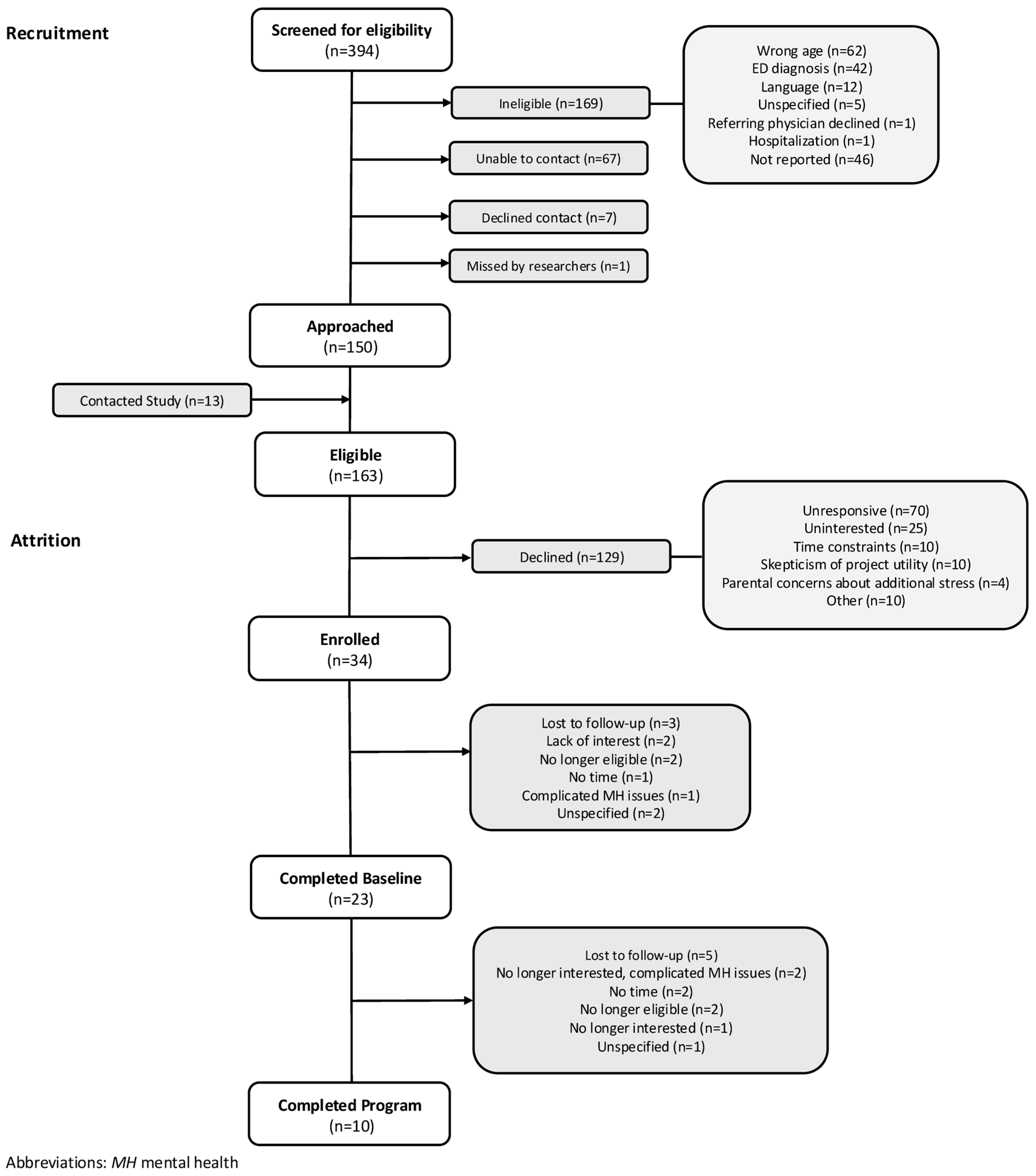
3.1. Recruitment and Attrition
3.2. Engagement with HELP
3.3. Study Participants
3.4. Participant Feedback
“I have really enjoyed the resources I’ve used so far. They’ve been super detail and helpful in helping me find different ways to maintain a healthy lifestyle.”.(H17, Male, 18, Week 4 Check-In)
“It makes me feel happy and my mom feel reassured that there is something good for me out there.”.(H11, Male, 14, Week 4 Check-In)
“[I’m] definitely motivated, I feel like I have a way that can help me get towards doing better with this stuff.”.(H22, Female, 16, Week 4 Check-In)
“I have liked them I really like being able to set goals and being given options of goals to choose from.”.(H19, Female, 15, Week 7 Check-In)
“…made me feel discouraged at times”.(H25, Female, 13, Week 1 Check-In)
“The goals, I like how you can set goals it gives you kind of step by step on how you achieve the goal”.(H25, Female, 13, Week 3 Check-In)
“I like the amount of resources that there are but sometimes I feel like they can be kind of long which can be overwhelming”.(H25, Female, 13, Week 3 Check-In)
“More things like that to make it personalized for the user would be great.”.(H17, Male, 18, Week 4 Check-In)
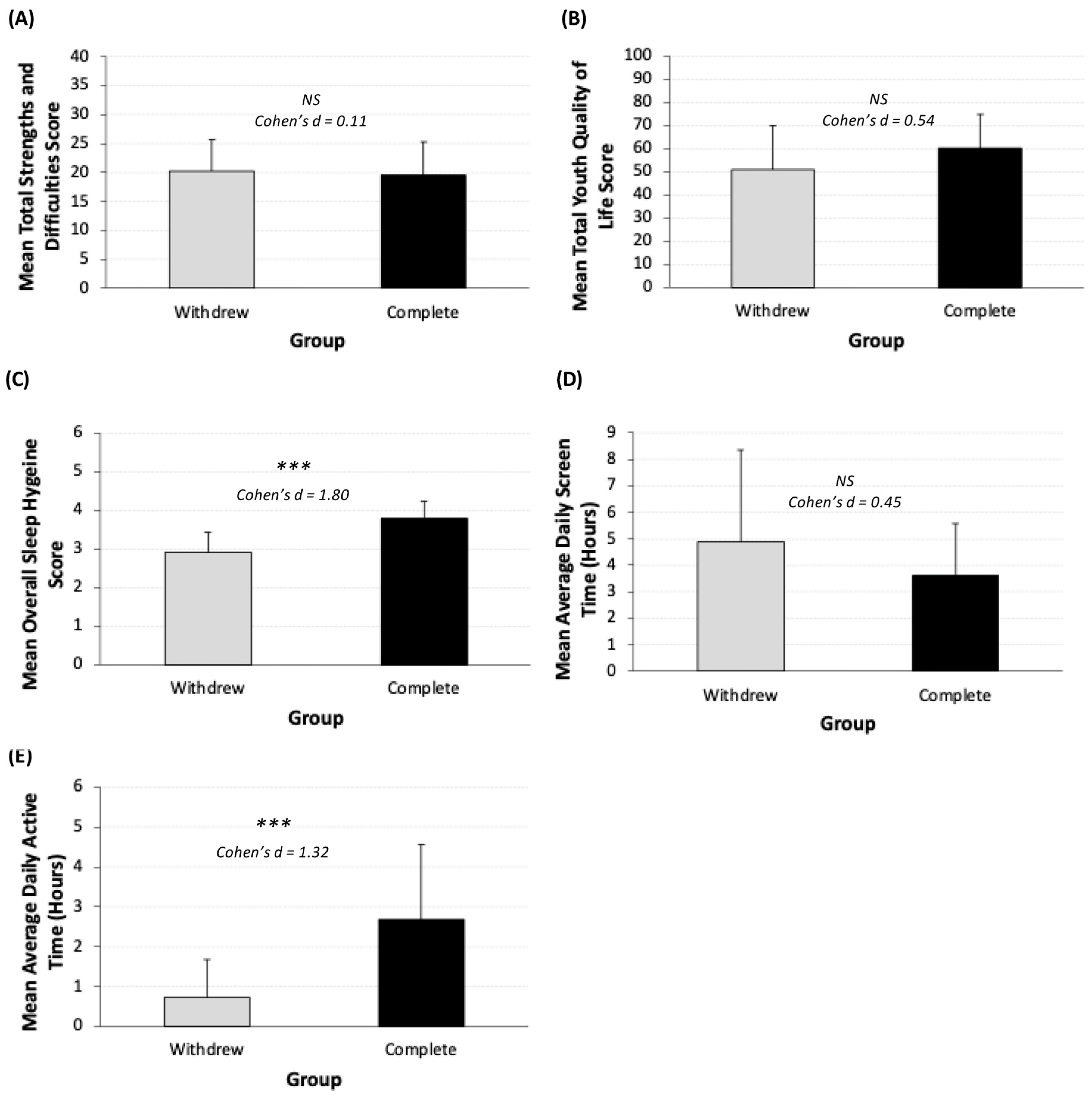
3.5. Baseline Differences by HELP Study Completion
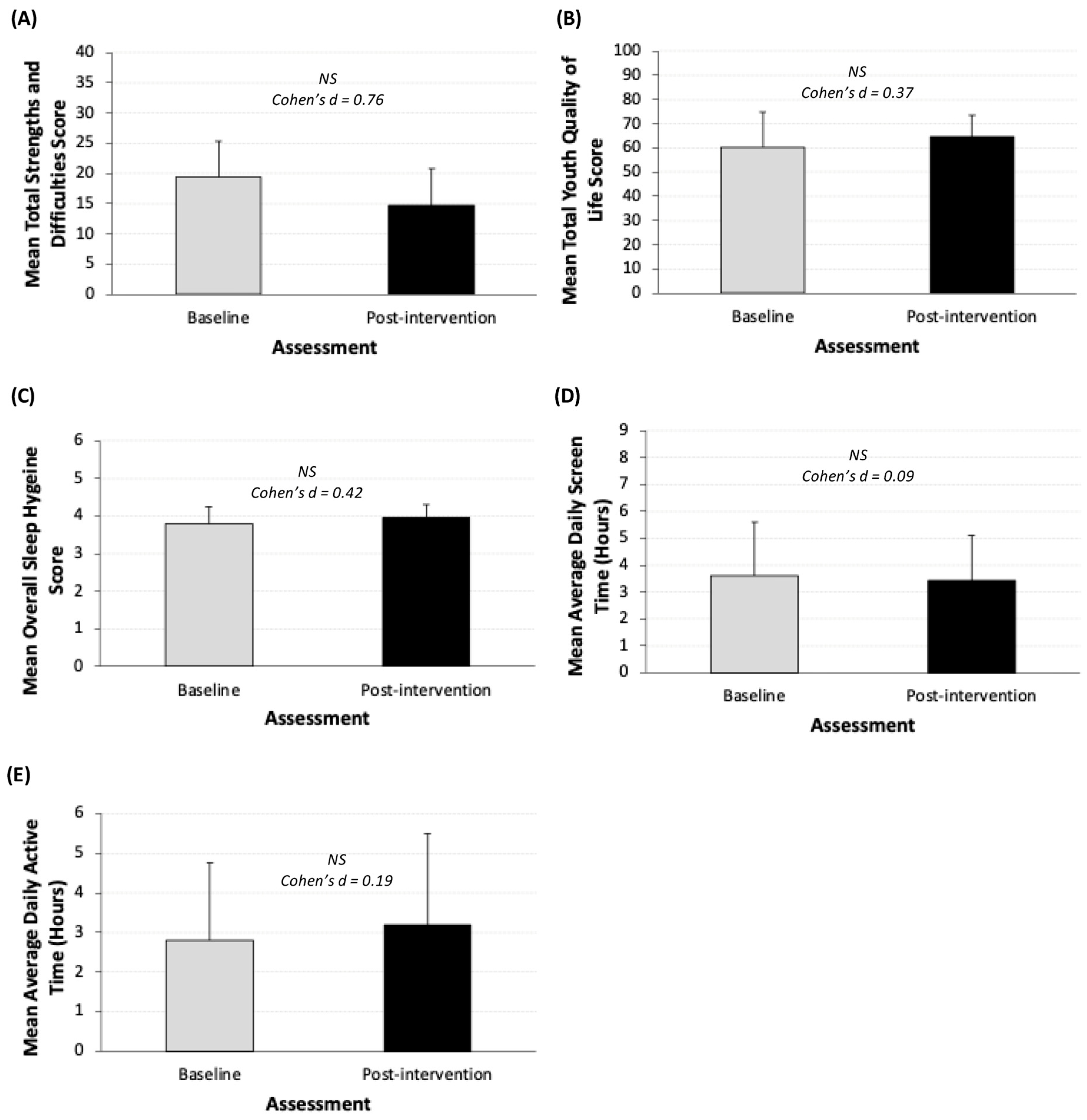
3.6. Overall Impact of HELP Resource Access
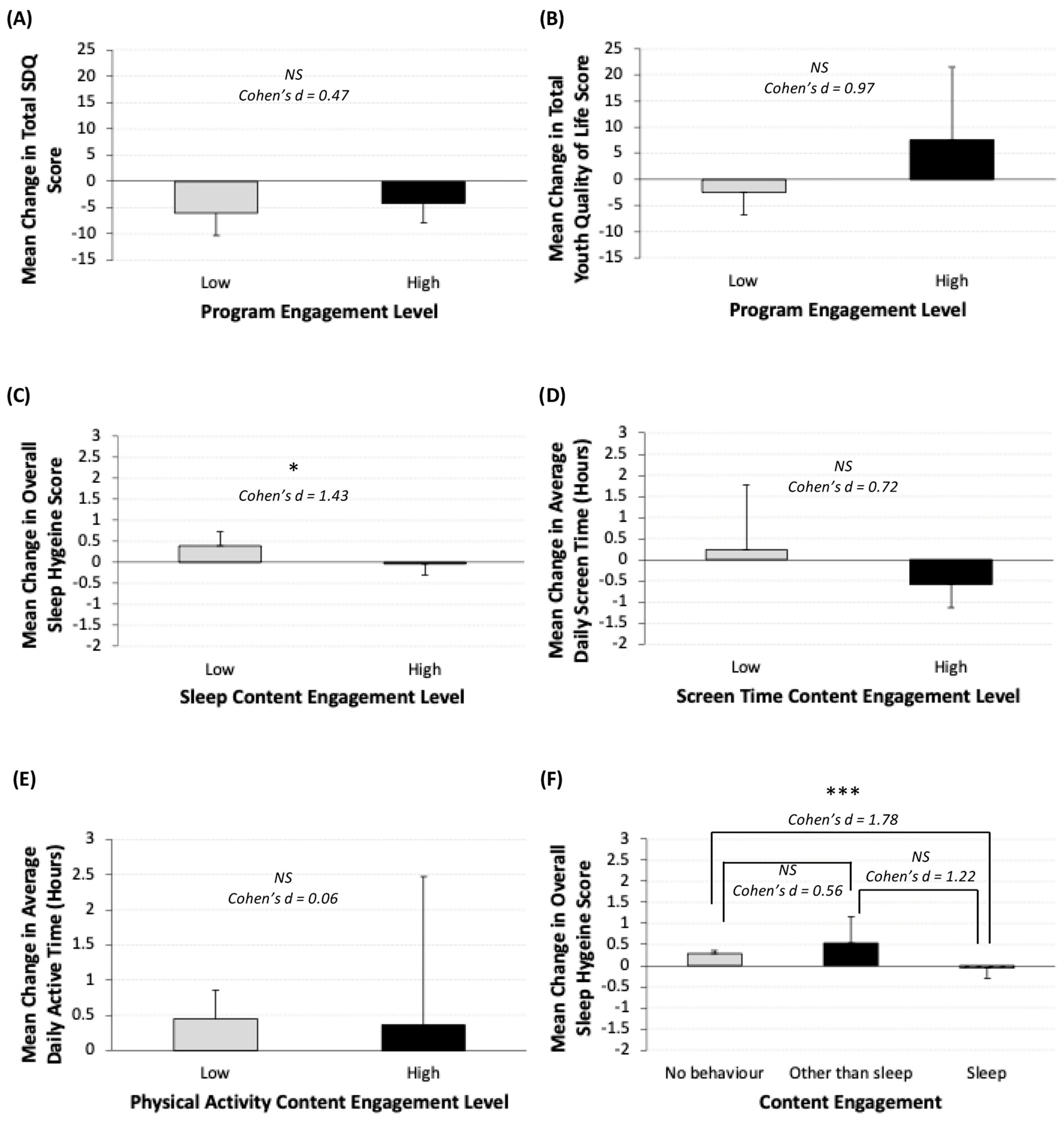
3.7. Impact of HELP Resource Access by Engagement Level
4. Discussion
4.1. Recruitment, Retention, and Feasibility
4.2. Exploratory Mental Health and Lifestyle Outcomes
4.3. Strengths and Limitations
5. Conclusions
Supplementary Materials
Author Contributions
Funding
Institutional Review Board Statement
Informed Consent Statement
Data Availability Statement
Acknowledgments
Conflicts of Interest
References
- Racine, N.; McArthur, B.A.; Cooke, J.E.; Eirich, R.; Zhu, J.; Madigan, S. Global Prevalence of Depressive and Anxiety Symptoms in Children and Adolescents During COVID-19: A Meta-Analysis. JAMA Pediatr. 2021, 175, 1142–1150. [Google Scholar] [CrossRef]
- Gutiérrez-Sacristán, A.; Serret-Larmande, A.; Hutch, M.R.; Sáez, C.; Aronow, B.J.; Bhatnagar, S.; Bonzel, C.-L.; Cai, T.; Devkota, B.; Hanauer, D.A.; et al. Hospitalizations Associated with Mental Health Conditions Among Adolescents in the US and France During the COVID-19 Pandemic. JAMA Netw. Open 2022, 5, e2246548. [Google Scholar] [CrossRef] [PubMed]
- Children’s Mental Health Ontario Kids Can’t Wait. Available online: https://cmho.org/wp-content/uploads/CMHO-Report-WaitTimes-2020.pdf (accessed on 1 March 2024).
- Babic, M.J.; Smith, J.J.; Morgan, P.J.; Eather, N.; Plotnikoff, R.C.; Lubans, D.R. Longitudinal Associations between Changes in Screen-Time and Mental Health Outcomes in Adolescents. Ment. Health Phys. Act. 2017, 12, 124–131. [Google Scholar] [CrossRef]
- Zhu, X.; Haegele, J.A.; Healy, S. Movement and Mental Health: Behavioral Correlates of Anxiety and Depression among Children of 6–17 years Old in the U.S. Ment. Health Phys. Act. 2019, 16, 60–65. [Google Scholar] [CrossRef]
- Marino, C.; Andrade, B.; Campisi, S.C.; Wong, M.; Zhao, H.; Jing, X.; Aitken, M.; Bonato, S.; Haltigan, J.; Wang, W.; et al. Association Between Disturbed Sleep and Depression in Children and Youths: A Systematic Review and Meta-Analysis of Cohort Studies. JAMA Netw. Open 2021, 4, e212373. [Google Scholar] [CrossRef]
- Juel, A.; Kristiansen, C.B.; Madsen, N.J.; Munk-Jørgensen, P.; Hjorth, P. Interventions to Improve Lifestyle and Quality-of-Life in Patients with Concurrent Mental Illness and Substance Use. Nord. J. Psychiatry 2017, 71, 197–204. [Google Scholar] [CrossRef]
- Johnson, R.; Robertson, W.; Towey, M.; Stewart-Brown, S.; Clarke, A. Changes over Time in Mental Well-Being, Fruit and Vegetable Consumption and Physical Activity in a Community-Based Lifestyle Intervention: A before and after Study. Public. Health 2017, 146, 118–125. [Google Scholar] [CrossRef]
- Manicavasagar, V.; Horswood, D.; Burckhardt, R.; Lum, A.; Hadzi-Pavlovic, D.; Parker, G. Feasibility and Effectiveness of a Web-Based Positive Psychology Program for Youth Mental Health: Randomized Controlled Trial. J. Med. Internet Res. 2014, 16, e140. [Google Scholar] [CrossRef]
- Giovanelli, A.; Karver, T.S.; Roundfield, K.D.; Woodruff, S.; Wierzba, C.; Wolny, J.; Kaufman, M.R. The Appa Health App for Youth Mental Health: Development and Usability Study. JMIR Form. Res. 2023, 7, e49998. [Google Scholar] [CrossRef]
- Goodman, R. Psychometric Properties of the Strengths and Difficulties Questionnaire. J. Am. Acad. Child Adolesc. Psychiatry 2001, 40, 1337–1345. [Google Scholar] [CrossRef]
- Grasso, M.; Lazzaro, G.; Demaria, F.; Menghini, D.; Vicari, S. The Strengths and Difficulties Questionnaire as a Valuable Screening Tool for Identifying Core Symptoms and Behavioural and Emotional Problems in Children with Neuropsychiatric Disorders. Int. J. Environ. Res. Public Health 2022, 19, 7731. [Google Scholar] [CrossRef]
- Harris, P.A.; Taylor, R.; Thielke, R.; Payne, J.; Gonzalez, N.; Conde, J.G. Research Electronic Data Capture (REDCap)—A Metadata-Driven Methodology and Workflow Process for Providing Translational Research Informatics Support. J. Biomed. Inform. 2009, 42, 377–381. [Google Scholar] [CrossRef]
- Edwards, T.C.; Huebner, C.E.; Connell, F.A.; Patrick, D.L. Adolescent Quality of Life, Part I: Conceptual and Measurement Model. J. Adolesc. 2002, 25, 275–286. [Google Scholar] [CrossRef] [PubMed]
- Patrick, D.L.; Edwards, T.C.; Topolski, T.D. Adolescent Quality of Life, Part II: Initial Validation of a New Instrument. J. Adolesc. 2002, 25, 287–300. [Google Scholar] [CrossRef] [PubMed]
- Storfer-Isser, A.; Lebourgeois, M.K.; Harsh, J.; Tompsett, C.J.; Redline, S. Psychometric Properties of the Adolescent Sleep Hygiene Scale. J. Sleep. Res. 2013, 22, 707–716. [Google Scholar] [CrossRef]
- Hardy, L.L.; Booth, M.L.; Okely, A.D. The Reliability of the Adolescent Sedentary Activity Questionnaire (ASAQ). Prev. Med. 2007, 45, 71–74. [Google Scholar] [CrossRef] [PubMed]
- Hay, J.A.; Cairney, J. Development of the Habitual Activity Estimation Scale for Clinical Research: A Systematic Approach. Pediatr. Exerc. Sci. 2006, 18, 193–202. [Google Scholar] [CrossRef]
- Cohen, J. The Earth Is Round (p < 0.05). Am. Psychol. 1994, 49, 997–1003. [Google Scholar] [CrossRef]
- Cohen, J. Statistical Power Analysis for the Behavioral Sciences; Routledge: Milton Park, UK, 2013; ISBN 9781134742707. [Google Scholar]
- Bélair, M.-A.; Kohen, D.E.; Kingsbury, M.; Colman, I. Relationship between Leisure Time Physical Activity, Sedentary Behaviour and Symptoms of Depression and Anxiety: Evidence from a Population-Based Sample of Canadian Adolescents. BMJ Open 2018, 8, e021119. [Google Scholar] [CrossRef]
- Jiménez Boraita, R.; Gargallo Ibort, E.; Dalmau Torres, J.M.; Arriscado Alsina, D. Lifestyle Habits, Health Indicators and Sociodemographic Factors Associated with Health-Related Quality of Life and Self-Esteem in Adolescents. Clin. Child. Psychol. Psychiatry 2024, 29, 493–512. [Google Scholar] [CrossRef]
- Isasi, C.R.; Ostrovsky, N.W.; Wills, T.A. The Association of Emotion Regulation with Lifestyle Behaviors in Inner-City Adolescents. Eat. Behav. 2013, 14, 518–521. [Google Scholar] [CrossRef]
- Robinson, M.; Kendall, G.E.; Jacoby, P.; Hands, B.; Beilin, L.J.; Silburn, S.R.; Zubrick, S.R.; Oddy, W.H. Lifestyle and Demographic Correlates of Poor Mental Health in Early Adolescence. J. Paediatr. Child. Health 2011, 47, 54–61. [Google Scholar] [CrossRef]
- Loewen, O.K.; Maximova, K.; Ekwaru, J.P.; Faught, E.L.; Asbridge, M.; Ohinmaa, A.; Veugelers, P.J. Lifestyle Behavior and Mental Health in Early Adolescence. Pediatrics 2019, 143, e20183307. [Google Scholar] [CrossRef]
- O’Connor, K.; Bagnell, A.; McGrath, P.; Wozney, L.; Radomski, A.; Rosychuk, R.J.; Curtis, S.; Jabbour, M.; Fitzpatrick, E.; Johnson, D.W.; et al. An Internet-Based Cognitive Behavioral Program for Adolescents with Anxiety: Pilot Randomized Controlled Trial. JMIR Ment. Health 2020, 7, e13356. [Google Scholar] [CrossRef] [PubMed]
- Grudin, R.; Ahlen, J.; Mataix-Cols, D.; Lenhard, F.; Henje, E.; Månsson, C.; Sahlin, H.; Beckman, M.; Serlachius, E.; Vigerland, S. Therapist-Guided and Self-Guided Internet-Delivered Behavioural Activation for Adolescents with Depression: A Randomised Feasibility Trial. BMJ Open 2022, 12, e066357. [Google Scholar] [CrossRef]
- O’Dea, B.; Subotic-Kerry, M.; King, C.; Mackinnon, A.J.; Achilles, M.R.; Anderson, M.; Parker, B.; Werner-Seidler, A.; Torok, M.; Cockayne, N.; et al. A Cluster Randomised Controlled Trial of a Web-Based Youth Mental Health Service in Australian Schools. Lancet Reg. Health West. Pac. 2021, 12, 100178. [Google Scholar] [CrossRef] [PubMed]
- Schleider, J.L.; Dobias, M.; Sung, J.; Mumper, E.; Mullarkey, M.C. Acceptability and Utility of an Open-Access, Online Single-Session Intervention Platform for Adolescent Mental Health. JMIR Ment. Health 2020, 7, e20513. [Google Scholar] [CrossRef]
- Musiat, P.; Johnson, C.; Atkinson, M.; Wilksch, S.; Wade, T. Impact of Guidance on Intervention Adherence in Computerised Interventions for Mental Health Problems: A Meta-Analysis. Psychol. Med. 2022, 52, 229–240. [Google Scholar] [CrossRef] [PubMed]
- Levin, M.E.; Pistorello, J.; Seeley, J.R.; Hayes, S.C. Feasibility of a Prototype Web-Based Acceptance and Commitment Therapy Prevention Program for College Students. J. Am. Coll. Health 2014, 62, 20–30. [Google Scholar] [CrossRef]
- Lillevoll, K.R.; Vangberg, H.C.B.; Griffiths, K.M.; Waterloo, K.; Eisemann, M.R. Uptake and Adherence of a Self-Directed Internet-Based Mental Health Intervention with Tailored e-Mail Reminders in Senior High Schools in Norway. BMC Psychiatry 2014, 14, 14. [Google Scholar] [CrossRef]
- Titov, N.; Dear, B.F.; Johnston, L.; Lorian, C.; Zou, J.; Wootton, B.; Spence, J.; McEvoy, P.M.; Rapee, R.M. Improving Adherence and Clinical Outcomes in Self-Guided Internet Treatment for Anxiety and Depression: Randomised Controlled Trial. PLoS ONE 2013, 8, e62873. [Google Scholar] [CrossRef]
- Klimczak, K.S.; Twohig, M.P.; Peacock, G.G.; Levin, M.E. Using Peer-Support Coaching to Improve Adherence to Online ACT Self-Help for College Mental Health: A Randomized Controlled Trial. Behav. Res. Ther. 2023, 160, 104228. [Google Scholar] [CrossRef] [PubMed]
- Goodman, R.; Meltzer, H.; Bailey, V. The Strengths and Difficulties Questionnaire: A Pilot Study on the Validity of the Self-Report Version. Eur. Child Adolesc. Psychiatry 1998, 7, 125–130. [Google Scholar] [CrossRef]
- Tremblay, M.S.; Carson, V.; Chaput, J.-P.; Connor Gorber, S.; Dinh, T.; Duggan, M.; Faulkner, G.; Gray, C.E.; Gruber, R.; Janson, K.; et al. Canadian 24-Hour Movement Guidelines for Children and Youth: An Integration of Physical Activity, Sedentary Behaviour, and Sleep. Appl. Physiol. Nutr. Metab. 2016, 41, S311–S327. [Google Scholar] [CrossRef]
- Khan, A.; Khan, S.R.; Lee, E.-Y. Association between Lifestyle Behaviours and Mental Health of Adolescents: Evidence from the Canadian HBSC Surveys, 2002–2014. Int. J. Environ. Res. Public Health 2022, 19, 6899. [Google Scholar] [CrossRef]
- Liu, M.; Wu, L.; Yao, S. Dose–Response Association of Screen Time-Based Sedentary Behaviour in Children and Adolescents and Depression: A Meta-Analysis of Observational Studies. Br. J. Sports Med. 2016, 50, 1252–1258. [Google Scholar] [CrossRef] [PubMed]
- Sampasa-Kanyinga, H.; Lien, A.; Hamilton, H.A.; Chaput, J.-P. Canadian 24-h Movement Guidelines, Life Stress, and Self-Esteem Among Adolescents. Front. Public Health 2022, 10, 702162. [Google Scholar] [CrossRef]
- Clement-Carbonell, V.; Portilla-Tamarit, I.; Rubio-Aparicio, M.; Madrid-Valero, J.J. Sleep Quality, Mental and Physical Health: A Differential Relationship. Int. J. Environ. Res. Public Health 2021, 18, 460. [Google Scholar] [CrossRef]
- John, B.; Bellipady, S.S.; Bhat, S.U. Sleep Promotion Program for Improving Sleep Behaviors among Adolescents in Selected Schools: A Randomized Controlled Trial. Int. J. Ment. Health Promot. 2017, 19, 51–68. [Google Scholar] [CrossRef]
- Wolfson, A.R.; Harkins, E.; Johnson, M.; Marco, C. Effects of the Young Adolescent Sleep Smart Program on Sleep Hygiene Practices, Sleep Health Efficacy, and Behavioral Well-Being. Sleep. Health 2015, 1, 197–204. [Google Scholar] [CrossRef] [PubMed]
- Hrafnkelsdottir, S.M.; Brychta, R.J.; Rognvaldsdottir, V.; Chen, K.Y.; Johannsson, E.; Gudmundsdottir, S.L.; Arngrimsson, S.A. Less Screen Time and More Physical Activity Is Associated with More Stable Sleep Patterns among Icelandic Adolescents. Sleep. Health 2020, 6, 609–617. [Google Scholar] [CrossRef] [PubMed]
- Bang, F.; Roberts, K.C.; Chaput, J.P.; Goldfield, G.S.; Prince, S.A. Physical Activity, Screen Time and Sleep Duration: Combined Associations with Psychosocial Health among Canadian Children and Youth. Health Rep. 2020, 31, 9–16. [Google Scholar] [CrossRef] [PubMed]
- Zulyniak, S.; Williams, J.V.A.; Bulloch, A.G.M.; Lukmanji, A.; Patten, S.B. The Association of Recreational and Non-Recreational Physical Activity with Mental Health: A Canadian Cross-Sectional Analysis. J. Affect. Disord. Rep. 2020, 1, 100021. [Google Scholar] [CrossRef]



| Total (n = 23) | Complete Data (n = 10) | Withdrawn (n = 13) | ||||
|---|---|---|---|---|---|---|
| M | SD | M | SD | M | SD | |
| Age (years) | 15.7 | 1.7 | 15.8 | 1.2 | 15.5 | 2.1 |
| n | % | n | % | n | % | |
| Gender | ||||||
| Female | 14 | 61% | 7 | 70% | 7 | 54% |
| Male | 7 | 30% | 3 | 30% | 4 | 31% |
| Non Binary | 1 | 4% | 0 | 0% | 1 | 8% |
| Unreported | 1 | 4% | 0 | 0% | 1 | 8% |
| n | % | n | % | n | % | |
| Patient Diagnoses † | ||||||
| Anxiety | 12 | 52% | 6 | 60% | 6 | 46% |
| Neurodevelopmental Disorder | 9 | 39% | 5 | 50% | 3 | 23% |
| Depression | 8 | 35% | 5 | 50% | 4 | 31% |
| Diagnosis Unavailable | 7 | 30% | 2 | 20% | 5 | 38% |
Disclaimer/Publisher’s Note: The statements, opinions and data contained in all publications are solely those of the individual author(s) and contributor(s) and not of MDPI and/or the editor(s). MDPI and/or the editor(s) disclaim responsibility for any injury to people or property resulting from any ideas, methods, instructions or products referred to in the content. |
© 2026 by the authors. Licensee MDPI, Basel, Switzerland. This article is an open access article distributed under the terms and conditions of the Creative Commons Attribution (CC BY) license.
Share and Cite
Smith, M.H.; Longmuir, P.E.; Robb, M.; Norris, M.L.; DiGasparro, M.; Laurie, K.; Baechler, N.; McBrearty, N.; Courtney, K.; Cooligan, F.; et al. Enhancing Youth Mental Health Through Virtual Lifestyle Behavior Change Support: A Pilot Feasibility Trial. Children 2026, 13, 163. https://doi.org/10.3390/children13020163
Smith MH, Longmuir PE, Robb M, Norris ML, DiGasparro M, Laurie K, Baechler N, McBrearty N, Courtney K, Cooligan F, et al. Enhancing Youth Mental Health Through Virtual Lifestyle Behavior Change Support: A Pilot Feasibility Trial. Children. 2026; 13(2):163. https://doi.org/10.3390/children13020163
Chicago/Turabian StyleSmith, Meaghan Halle, Patricia E. Longmuir, Marjorie Robb, Mark L. Norris, Miranda DiGasparro, Kaitlin Laurie, Natasha Baechler, Natasha McBrearty, Kimberly Courtney, Fiona Cooligan, and et al. 2026. "Enhancing Youth Mental Health Through Virtual Lifestyle Behavior Change Support: A Pilot Feasibility Trial" Children 13, no. 2: 163. https://doi.org/10.3390/children13020163
APA StyleSmith, M. H., Longmuir, P. E., Robb, M., Norris, M. L., DiGasparro, M., Laurie, K., Baechler, N., McBrearty, N., Courtney, K., Cooligan, F., Cloutier, P., & Gray, C. (2026). Enhancing Youth Mental Health Through Virtual Lifestyle Behavior Change Support: A Pilot Feasibility Trial. Children, 13(2), 163. https://doi.org/10.3390/children13020163