


Abstract
Traumatic brain injury (TBI) is a leading cause of critical illness and mortality in children. Transfusion of blood products, a common intervention in the management of pediatric TBI, has important implications for related principles, including trauma-induced coagulopathy, cerebral perfusion, and cerebral oxygen delivery. Knowledge gaps persist due to the limited availability of pediatric-specific data regarding blood product transfusion in TBI. In particular, there is a lack of prospective studies defining appropriate specific laboratory thresholds and transfusion targets, as well as insufficient evidence to guide the weighing of potential benefits against transfusion-related risks in this population. Although blood product transfusion in pediatric TBI has been associated with worse clinical outcomes, the underlying mechanisms and contributing factors remain poorly understood. In this review, we aimed to describe the pediatric literature on component and whole blood product transfusion in children with TBI and the pathophysiological mechanisms underlying the development of coagulopathy in this population. In addition, we incorporated available pediatric guidelines and recommendations specific to the setting of acute brain injury.
1. Introduction
Traumatic brain injury (TBI) is a leading cause of critical illness in children [1]. The estimated annual incidence of pediatric TBI is between 47 and 280 cases per 100,000 population globally, with a bimodal age distribution of less than 3 years and 15 to 18 years of age [2]. TBI, along with hemorrhagic shock and its sequelae, is the primary driver of mortality in injured children [3]. Children with TBI are more likely to receive blood product transfusions due to their association with other injuries leading to hemorrhagic circulatory collapse requiring volume resuscitation, and/or the presence of coagulopathy. Trauma-induced coagulopathy (TIC) is an entity heavily debated upon, but typically defined by the presence of impaired coagulation parameters such as a prolonged prothrombin time (PT), prolonged activated partial thromboplastin time (aPTT), or increased International Normalized Ratio (INR), leading to hemostatic, immune, and inflammatory changes in the setting of trauma [4,5,6,7]. Although TIC is commonly studied in adults, its understanding in children is limited and has not been well explored [7]. In the setting of isolated TBI, coagulopathy also occurs, particularly in severe TBI (sTBI), and may involve mechanisms distinct from TIC [8,9]. TBI-associated coagulopathy is a recognized risk factor for secondary brain injury and is independently associated with adverse outcomes [10]. Even in isolated TBI without other associated injuries, conflict exists in balancing the correction of laboratory derangements indicative of coagulopathy with the need for placement of invasive intracranial devices, neurosurgical interventions and prevention of progression of intracranial hemorrhage. Outcomes associated with the receipt of blood products, including packed red blood cells (PRBC), plasma, platelets, cryoprecipitate, and/or whole blood in the setting of TBI are also worse [11]. Despite the association with adverse outcomes, limited pediatric studies have led to an absence of robust, evidence-based management principles in this field, as such the balance between the consequences of anemia and coagulopathy with adverse effects related to blood product transfusion has yet to be elucidated. In this review, we aimed to describe the pediatric literature on component and whole blood product transfusion in children with TBI and the pathophysiological mechanisms underlying the development of coagulopathy in this setting. We incorporated available pediatric TBI-specific guidelines and recommendations in our review.
2. Methods
We searched published literature for relevant articles from inception to present in the following databases: MEDLINE (Ovid), EMBASE (Elsevier), Web of Science or SCOPUS, Cochrane Library including CENTRAL and CDSR, clinicaltrials.gov, and WHO International Clinical Trials Registry Platform (ICTRP). We used the search terms PEDIATRICS, CHILDREN, TRAUMATIC BRAIN INJURY, BLOOD OR BLOOD TRANSFUSION. We manually reviewed the articles to determine eligibility for inclusion in our review. Reference lists of pertinent studies were also reviewed for relevant articles.
3. Definitions and Epidemiology of Coagulopathy and Transfusion in Pediatric TBI
The term acute traumatic coagulopathy (ATC) is an entity commonly described in trauma-related literature and refers to the endogenous coagulopathy that develops immediately after severe traumatic injury [12,13,14]. Mechanistically, it has been described to occur as a result of the combination of tissue injury and shock acquired from traumatic injury [15]. ATC is the initial process that precedes TIC, which encompasses ATC and iatrogenic coagulopathy resulting from therapeutic resuscitation, the latter referred to as “resuscitation-associated coagulopathy” (RAC) [15,16]. The classic “lethal triad” and more recent “lethal diamond” (including hypocalcemia) have been well-documented and simplistically describe these mechanisms [17]. However, it is essential to note that these definitions lack standardization and quantitative diagnostic criteria. Additionally, the underlying mechanisms involved are complex [4,18]. TBI-associated coagulopathy has been described in both adults and children and is thought to have pathways distinct from TIC [19,20]. It occurs in isolated TBI and does not generally follow widespread injury and/or hypoperfusion [21,22,23]. Similarities with disseminated intravascular coagulopathy (DIC) have been described, with some authors proposing that the mechanisms underlying DIC are similar, as the coagulopathy seen in patients with TBI consistently fits definitions proposed by the International Society on Thrombosis and Haemostasis (ISTH) [24,25]. Table 1 summarizes the various coagulopathy terminology described in trauma-related literature (Table 1).
Table 1.
Definition of terms. Various coagulopathy related terminology used in trauma related literature.
The reported incidence of TIC in children is highly variable [5]. Standardization has been difficult primarily due to the absence of laboratory testing and specific thresholds to define TIC [7]. Multiple confounders exist in pediatric TBI literature due to its association with other traumatic injuries and an overall lack of studies examining isolated TBI alone in children. The reported incidence of coagulopathy specific to isolated TBI in children ranges anywhere from 15 to 87% [19]. The timeframe for the development of TBI-associated coagulopathy is also much debated. Both early and late temporal courses have been described, with some adult literature reporting its development within minutes after sTBI and others with a more protracted onset at 12 h to up to 4.5 days [26]. Blood transfusion rates in the setting of pediatric TBI, including all component blood products, are reported to be around 18.5% and 10–44% for PRBC alone [11]. Overall, due to the heterogeneity in studies and their populations, definitions, diagnostic thresholds, and proposed mechanisms, comparisons across studies have been difficult, and the characterization of the epidemiology of pediatric TBI has been challenging.
4. Pathophysiological Considerations and Concepts
4.1. Mechanisms Leading to TBI-Associated Coagulopathy
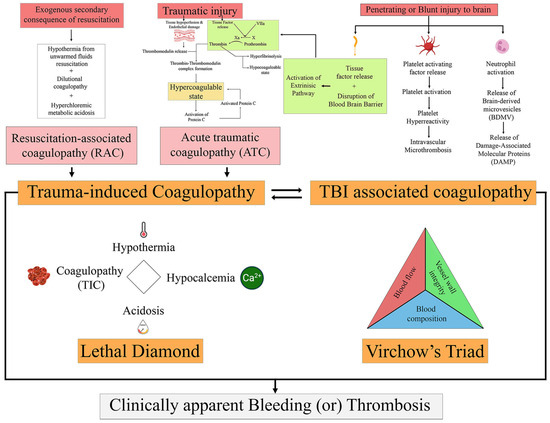
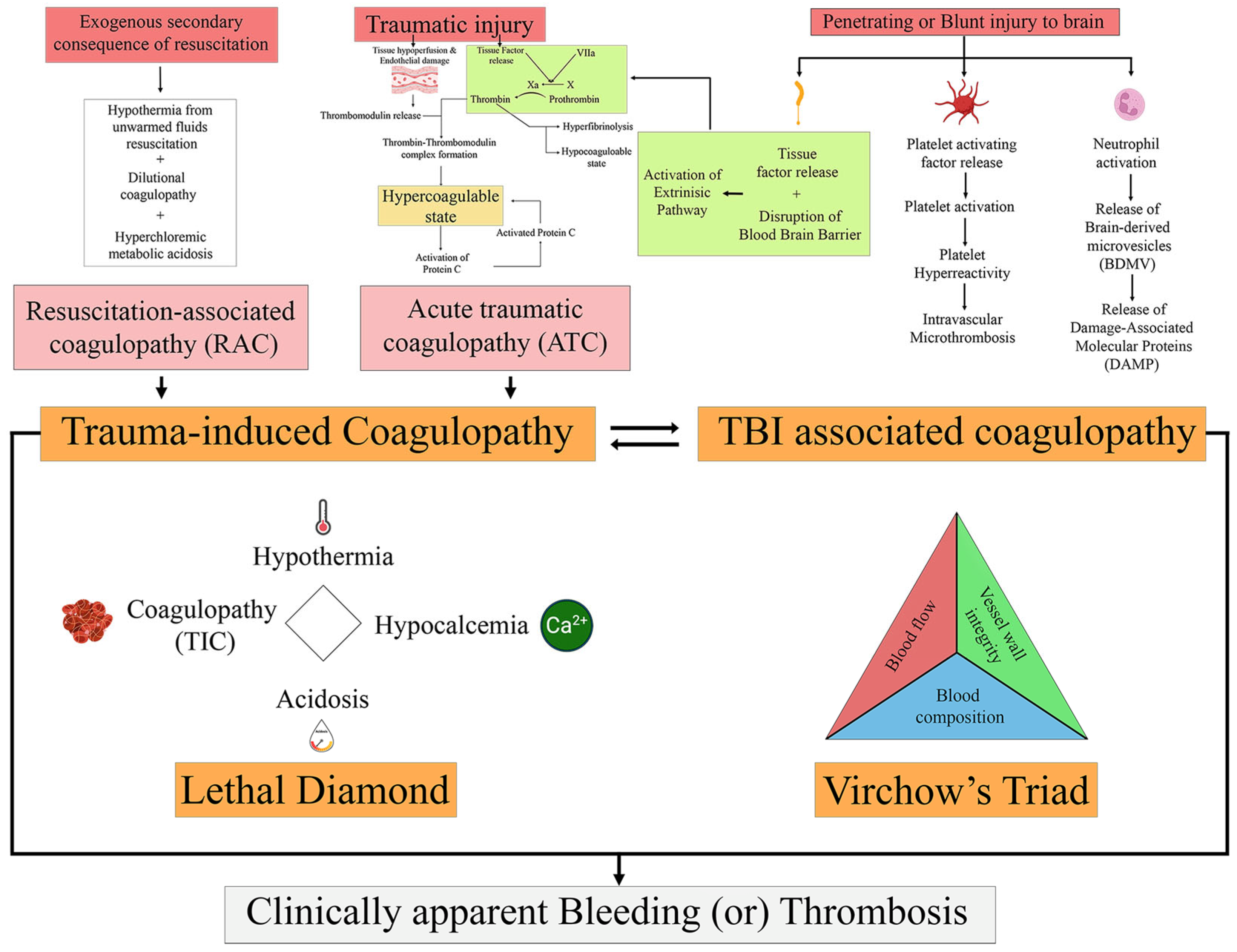
Brain injury is associated with the disruption of the coagulation and fibrinolytic system, leading to both coagulopathy and disordered fibrinolysis [27]. Patients with isolated TBI differ from those with extracranial injuries as they usually do not have massive blood loss and are less likely to receive large amounts of fluid resuscitation to avoid potentially worsening intracranial pressure. Thus, mechanisms underlying the development of TBI-associated coagulopathy are thought to be unique and independent of iatrogenic causes [9]. Various multifactorial mechanisms and cellular alterations have been proposed to explain the development of systemic hemostasis and coagulopathy from localized injury in the brain (Figure 1). A predominant hypothesis is that the central nervous system (CNS) is abundant in the membrane lipoprotein tissue factor, and that direct injury to the brain causes its release into the circulation via disruption of the endothelium and blood–brain barrier (BBB) [28]. Animal models have demonstrated this hypothesis, and human studies have documented the release of endothelium-specific biomarkers, including thrombomodulin and syndecan-1, after sTBI [29]. Overall, this leads to activation of the extrinsic coagulation pathway, including activated protein C, ultimately leading to thrombin generation with subsequent fibrin formation and hyperfibrinolysis. In the setting of other injuries, concomitant trauma-related hypoperfusion-induced dysregulation of the protein C system is also known to occur [30]. Secondary ischemic and inflammatory processes contribute to the process.
Figure 1.
Various terminology used in trauma-related literature and their underlying mechanisms. TIC consists of endogenous and exogenous mechanisms, ATC and RAC, respectively. TBI-associated coagulopathy, similar to TIC, leads to tissue factor release with subsequent activation of the extrinsic pathway. Additionally, platelet and neutrophil activation are also thought to be play a role. The understanding and overlap between the link of the mechanisms involved, especially that between TIC and TBI-associated coagulopathy, continue to evolve. ATC—Acute traumatic coagulopathy; RAC—Resuscitation associated coagulopathy; TIC—Trauma-Induced Coagulopathy.
Activation of platelets leading to platelet hyperactivity is another identified pathway contributing to the development of coagulopathy, but the exact mechanisms remain unclear [8]. Multiple factors, including the release of platelet activating factor (PAF), one of the classic autacoids also found abundantly within the CNS, act via G-protein-coupled transmembrane receptors to activate circulating platelets, as suggested by animal studies and the presence of platelet aggregation and increased risk for intravascular microthrombosis in children with TBI [8]. Additionally, platelet-endothelial interactions, including those with von Willebrand factor and ADAMTS-13, and the contribution of phospholipids, including phosphatidylserine, are also likely involved, serving as a bridge between platelet activation and thrombin generation. Finally, inflammatory cells such as activated neutrophils and the neutrophil extracellular traps pathway, with subsequent release of other procoagulant factors, including brain-derived microvesicles and damage-associated molecular proteins, are also likely to be mechanistically involved. Overall, all these described mechanisms are only supported by circumstantial animal evidence and continue to evolve [8].
Ultimately, the release of tissue factor and other procoagulant factors, platelet activation, and endothelial interactions all likely contribute to the pathophysiology of TBI-associated coagulopathy, but direct evidence is lacking. A Japanese multicenter prospective study aimed to elucidate the mechanisms underlying TBI-associated coagulopathy and TIC and found that the coagulofibrinolytic changes in both were similar and consistent with those seen in DIC [24]. Both hypo- and hypercoagulability have been reported in pediatric TBI, with D-dimer and fibrinogen degradation products (FDP) detected within minutes of injury, followed by prolongation of PT and aPTT hours later, suggesting a consumptive pathophysiology [9]. Additionally, abnormal fibrinolysis and fibrinolytic shutdown are other phenotypes that occur in the setting of trauma and isolated TBI. It is thought to occur secondary to compensatory mechanisms, and its presence is associated with adverse events and poor outcomes [31,32].
4.2. TBI Management Principles and Considerations
The management of pediatric TBI is guided by the principles of cerebral oxygenation and cerebral perfusion pressure (CPP), with a goal to optimize both without causing cerebral edema. CPP is defined by mean arterial pressure minus the mean intracranial pressure (ICP) and reflects the pressure gradient that drives cerebral blood flow (CBF). It is regulated by autoregulation and the cerebral metabolic rate for oxygen. CPP management is often used to guide sTBI management [33]. Because cerebral hypoxia can occur despite adequate CPP, the use of brain tissue partial pressure of oxygen (PBrO2) monitoring has been more widely utilized in the management of severe TBI, with studies suggesting that higher PBrO2 (>10 mmHg) may be associated with better outcomes [34,35]. However, no studies have directly evaluated this. Children with TBI are thus likely to receive blood product transfusions to either improve oxygen delivery and/or correct coagulopathy. The concomitant presence of hemorrhage and shock of various etiology common in the setting of trauma (e.g., hemorrhagic shock, obstructive shock from tamponade physiology, neurogenic shock) is likely to affect the resuscitation of patients with TBI, and these patients are more likely to receive intravascular volume, including blood products.
The use of hyperosmolar therapy is mainstay in the management of increased ICP, which is the primary driver of mortality in children with sTBI [33]. Theoretically, the use of hyperosmolar therapy can potentially lead to adverse events in the setting of TBI, including dilutional coagulopathy, such as that seen with crystalloid resuscitation. However, randomized trials in adults have failed to show an association between these two [36,37]. The prolonged use of continuous hypertonic saline solution was found to be associated with increased rates of RBC and plasma transfusions [38]. Other potential complications related to hyperosmolar therapy in the setting of trauma and TBI are an increased risk for the development of hospital-acquired venous thromboembolism (HA-VTE) [39]. Guidelines for pediatric sTBI recommend keeping serum sodium levels below 160 mEq/L to avoid the complication of VTE. Similarly, these guidelines also suggest keeping serum sodium levels below 170 mEq/L to avoid the complications of anemia and thrombocytopenia. Overall, the effect of hyperosmolar therapy and its relation to TBI-associated coagulopathy and outcomes have not been well-studied. Trials in adults investigating the association of various hyperosmolar agents with the development of coagulopathy and inflammatory markers are currently ongoing [40].
Finally, the contribution of developmental hemostasis in pediatric TBI-associated coagulopathy also remains to be elucidated. Age-dependent differences and the effect of various pathologies on pediatric hemostatic balance are poorly understood mechanisms. In the setting of disruption of this balance via an accrual of risk factors, such as from inflamed injured states or the presence of foreign materials, e.g., central venous access devices, critically ill children afflicted with trauma with or without associated TBI are prone to not only bleeding, but also HA-VTE [41].
5. Blood Transfusion in the Setting of Pediatric TBI
5.1. Packed Red Blood Cells
PRBCs are the most utilized and transfused blood component regardless of clinical indication [42]. Hemorrhagic shock frequently occurs with TBI in the setting of polytrauma, confounding studies investigating the association between PRBC transfusion and outcomes in pediatric TBI alone. PRBC transfusion is thus utilized with a goal to improve oxygen delivery and correct symptoms related to anemia. However, oxygen delivery at the microcirculatory level is more complex than the Fick-derived oxygen delivery equation (cardiac output x arterial oxygen content), with the effect of viscosity on flow resistance (Poiseuille’s law) often not being fully considered [43,44]. Thus, the balance between anemia and increased viscosity in the setting of oxygen delivery remains poorly understood, not only in the realm of TBI, but in other transfusion-related situations as well. Additionally, there is a lack of literature regarding transfusion strategies targeting physiological parameters versus hemoglobin cut-offs. Thus, it remains unclear if PRBC transfusions can be tailored to individual physiological reserve. However, some adult studies using vascular occlusion and near-infrared spectroscopy suggest the potential for identification of populations who would benefit most from a PRBC transfusion [45].
In a small retrospective analysis, initial admission hemoglobin levels and averaged hemoglobin over 7 days in pediatric TBI were not associated with adverse outcomes [46]. Specific to sTBI in children, TBI guidelines suggest targeting a minimum hemoglobin goal of 7 g/dL, which was intentionally set to be consistent with current general PRBC transfusion recommendations for critically ill children with acute brain injury, considering transfusion to target hemoglobin levels between 7 and 10 g/dL [33,47] (Table 2). Current TBI guidelines for children do not support the use of invasive PBrO2 monitoring. However, if PBrO2 is utilized, a level greater than 10 mm Hg is recommended [33]. PBrO2 can be manipulated by increasing arterial oxygenation (increasing FiO2 and mean airway pressure, with the latter needing to be balanced with its potential effect on cerebral venous drainage), raising cardiac output with vasoactive substances, controlling minute ventilation to target PaCO2 levels to provide adequate CBF but avoid increases in ICP, and optimizing blood hemoglobin levels with PRBC transfusions [48]. However, the influence of PRBC transfusion on PBrO2 remains elusive, with studies demonstrating inconsistent improvement in local cerebral oxygenation and multiple limitations, including differences in response of damaged vs. undamaged brains and the effect of volume-related changes on cerebral perfusion itself [35]. Additionally, one of these studies found that the increased PBrO2 only occurred early after transfusion and with transient effects [35]. More importantly, the effect of increasing PBrO2 on clinical outcomes and its impact on cellular level oxygenation currently remains unclear.
Table 2.
Summary of existing recommendations for pediatric sTBI and blood product transfusions.
Adults RCTs have had conflicting results when assessing the effect of a restrictive versus liberal transfusion strategy in TBI. A recent 2024 RCT in adults with acute brain injury found that those randomized to a liberal transfusion goal of less than 9 g/dL versus a restrictive goal of less than 7 g/dL were less likely to have unfavorable neurologic outcomes [51]. Contrary to this, another recent RCT in critically ill adults with TBI and anemia showed that a liberal transfusion strategy of PRBC transfusion given for a hemoglobin of 10 g/dL or lower did not show reduced risk of unfavorable neurologic outcome [52]. Most recent meta-analyses have concluded that there currently is no difference in unfavorable neurologic outcome or mortality despite controlling for Glasgow coma scale (GCS) scores between restrictive and liberal groups [53,54,55]. To date, no pediatric trials specific to PRBC transfusion and TBI exist.
5.2. Plasma and Its Components
The use of plasma and its components is typically used to address coagulopathy in various clinical settings by replenishing clotting factors. Plasma refers to the liquid component of blood containing both coagulation factors and inhibitors, and includes fresh frozen plasma (FFP), cryoprecipitate, thawed plasma, liquid plasma and cryoprecipitate poor plasma. Additionally, it is said to aid in the repair of endothelial injury and in mitigating excitotoxicity, thus protecting against cerebral edema and secondary brain injury [56]. Adult trials investigating the use of plasma, similar to that in PRBC trials, have had conflicting results [57,58,59,60,61]. However, recent studies investigating the use of prehospital resuscitation with plasma in severely injured patients have shown a mortality benefit, especially in those with sTBI [59,60,61]. Retrospective analysis of the National Trauma Databank in children with sTBI has shown that early plasma administration is associated with a lower risk of 4-h mortality, but overall associated mortality reported in studies remains high [62,63]. Moreso, prospective trials in pediatrics are lacking. Fibrinolytic shutdown after trauma is a more common occurrence seen in children compared to adults [64]. Prospective observational data in children have shown that delayed resuscitation with plasma in those already with established fibrinolytic shutdown has poor outcomes, and that over resuscitation with plasma in those that are not clinically coagulopathic or bleeding is independently associated with sustained fibrinolytic shutdown [49]. Overall, further studies are needed to investigate how the fibrinolytic system is affected in isolated pediatric TBI and the role of plasma therapy. There remains an absence of high-quality evidence to guide plasma transfusion strategies in critically ill children with TBI. Expert recommendations state that plasma transfusions for an INR ≤ 1.5 in the setting of placement of an ICP monitoring device may not be beneficial [50,65] (Table 2).
The literature on the use of cryoprecipitate in the setting of TBI is even more sparse, with no pediatric-specific literature available. Cryoprecipitate has the advantage of having higher concentrations of fibrinogen compared to fresh frozen plasma. A single-center retrospective cohort study in Tokyo, Japan, involving adults diagnosed with severe TBI and acute subdural hematoma who received empirical cryoprecipitate transfusion, found no adverse events. Due to multiple confounders, however, they concluded that cryoprecipitate might potentially lower rates of coagulopathy and mortality, but without strong certainty [66].
5.3. Platelets
Decreased platelet counts are also a frequent observation in children with TBI [67]. Prospective evaluation has suggested that the degree of decrease in platelet count is correlated to severity and prognosis of TBI, and that this is more relevant than the actual presence of thrombocytopenia [67,68,69]. Additionally, platelet dysfunction is also known to occur in moderate to severe TBI [70]. Platelet transfusions are thus utilized to treat or prevent bleeding regardless of the specific mechanism of TBI involved. In adult TBI patients, studies suggest specific initial platelet cut-offs associated with higher odds of intracranial hemorrhage progression, especially in those on prehospital antiplatelet therapy [68,69]. Prospective evaluation in adults receiving a massive transfusion protocol in the setting of trauma, not specific to isolated TBI, has documented a reduction in fibrinolysis but no improvement in clotting time, clot strength, platelet aggregation, and platelet count [71]. There has been no documented improvement in outcomes with platelet transfusions even in adult literature. As with plasma transfusions, no specific indications related to TBI have been defined in pediatrics based on current available literature. Most experts agree that platelet transfusions for platelet counts > 100,000/μL in this setting may not be beneficial and might have the potential for harm [11,50]. Platelet transfusions might be considered if an ICP monitoring device needs to be inserted in a neurologically deteriorating child with a platelet count < 100,000/μL [65,72] (Table 2).
5.4. Whole Blood
Pediatric literature on whole blood transfusion is mostly related to its use in the setting of injured children with hemorrhagic shock, with guidelines recommending its consideration for resuscitation [73,74]. In a propensity-matched cohort of children afflicted with trauma, including those with sTBI, those who received low-titer group O cold-stored whole blood had faster resolution of acidosis and received less plasma and platelet transfusion volume compared to component transfusion. Specific to pediatric TBI, few studies exist. Retrospective studies of the Trauma Quality Improvement Program database in 2020–2021 found that the use of whole blood in pediatric trauma patients with TBI had a lower risk of death in the first 24 h compared to those receiving component therapy [75]. Whole blood contains higher levels of nitric oxide and 2,3 diphosphoglycerate, has a higher hematocrit because of less hemodilution from additives, and has greater clotting factor activity [76]. Thus, the composition of whole blood theoretically induces less vasoconstriction and improves oxygen delivery, thereby improving cerebral oxygenation by increasing oxygen unloading to the tissues. Higher hematocrit theoretically may protect against cerebral edema. However, the effect of blood viscosity on cerebral flow mechanics and its interaction with the microcirculation, as previously mentioned, is complex.
6. Current State of Transfusion Practice and Knowledge Gaps
The absence of high-quality data constrains the current state of transfusion practice in pediatric TBI. Although outcomes associated with component blood product transfusions are poor, the drivers of these outcomes remain unclear. Efforts should be made to standardize definitions of TIC and TBI-associated coagulopathy in pediatrics and to include pediatric-specific cutoffs. Comparative pediatric trials specific to both isolated TBI and TBI in the setting of polytrauma that examine restrictive versus liberal hemoglobin targets, similar to those used in adults, are urgently needed. Studies examining transfusion indications and thresholds for plasma and platelets, including during invasive procedures such as ICP device placement, are essential. The use of whole blood versus component therapy for pediatric TBI warrants further investigation, as it may improve oxygen delivery and correct coagulopathy more efficiently than component therapy, thereby improving outcomes. The role of viscoelastic testing in pediatric TBI has not been addressed in this review, but pediatric transfusion guidelines suggest considering its use as an adjunct to standard coagulation tests. Finally, the roles of other hemostatic products, including antifibrinolytics such as tranexamic acid, factor VII concentrate, and prothrombin complex concentrate, have also not been covered in this review. However, they carry essential management implications that urgently need investigation.
7. Summary
Blood product transfusion is common in the setting of pediatric TBI and seems to be associated with poor outcomes. Although there is some adult evidence, the overall understanding of TBI-associated coagulopathy remains poor. Pathophysiological cellular mechanisms have been described, but direct investigations are lacking. Overall, the literature specific to pediatrics and isolated TBI remains sparse, limiting the ability to make robust recommendations to guide transfusions in these settings. Future studies in pediatric TBI are urgently needed, focusing on standardization of definitions, transfusion indications and thresholds, and the role of whole blood and other hemostatic products. In summary, we have reviewed literature specific to blood transfusions in pediatric TBI and found a paucity of specific data.
Author Contributions
R.M.T.H. collected the literature, wrote the first draft and revised the manuscript, N.V. reviewed and provided critical revision of the manuscript, D.K. reviewed and provided critical revision of the manuscript, O.K. reviewed and provided critical revision of the manuscript, M.C. conceived the concept and wrote the manuscript and provided critical revision of the manuscript. All authors have read and agreed to the published version of the manuscript.
Funding
No funding was received for the work on this manuscript.
Institutional Review Board Statement
Not applicable.
Informed Consent Statement
Not applicable.
Data Availability Statement
No new data were created or analyzed in this study. Data sharing is not applicable to this article.
Acknowledgments
Emily Johnson-Barlow, for performing the full literature search of the articles reviewed to aid in writing this manuscript.
Conflicts of Interest
The authors declare no conflict of interest.
References
- Riemann, L.; Zweckberger, K.; Unterberg, A.; El Damaty, A.; Younsi, A. Collaborative European NeuroTrauma Effectiveness Research in Traumatic Brain Injury (CENTER-TBI) Investigators and Participants. Injury Causes and Severity in Pediatric Traumatic Brain Injury Patients Admitted to the Ward or Intensive Care Unit: A Collaborative European Neurotrauma Effectiveness Research in Traumatic Brain Injury (CENTER-TBI) Study. Front. Neurol. 2020, 11, 345. [Google Scholar]
- Dewan, M.C.; Mummareddy, N.; Wellons, J.C., 3rd; Bonfield, C.M. Epidemiology of Global Pediatric Traumatic Brain Injury: Qualitative Review. World Neurosurg. 2016, 91, 497–509.e1. [Google Scholar] [CrossRef] [Scilit] [PubMed]
- Theodorou, C.M.; Galganski, L.A.; Jurkovich, G.J.; Farmer, D.L.; Hirose, S.; Stephenson, J.T.; Trappey, A.F. Causes of early mortality in pediatric trauma patients. J. Trauma Acute Care Surg. 2021, 90, 574–581. [Google Scholar] [CrossRef] [Scilit] [PubMed]
- Buzzard, L.; Schreiber, M. Trauma-induced coagulopathy: What you need to know. J. Trauma Acute Care Surg. 2024, 96, 179–185. [Google Scholar] [CrossRef] [Scilit]
- Christiaans, S.C.; Duhachek-Stapelman, A.L.; Russell, R.T.; Lisco, S.J.; Kerby, J.D.; Pittet, J.F. Coagulopathy after severe pediatric trauma. Shock 2014, 41, 476–490. [Google Scholar] [CrossRef] [Scilit]
- Morgan, K.M.; Feeney, E.V.; Spinella, P.C.; Gaines, B.A.; Leeper, C.M. Patterns of trauma-induced coagulopathy in injured children: A principal component analysis investigating endothelial, coagulation, and platelet biomarkers. J. Trauma Acute Care Surg. 2025, 98, 36–41. [Google Scholar] [CrossRef] [Scilit]
- Haas, T.; Cushing, M.M. Hemostatic Balance in Severe Trauma. Front. Pediatr. 2020, 8, 600501. [Google Scholar] [CrossRef] [Scilit]
- Zhang, J.; Zhang, F.; Dong, J.F. Coagulopathy induced by traumatic brain injury: Systemic manifestation of a localized injury. Blood 2018, 131, 2001–2006. [Google Scholar] [CrossRef] [Scilit]
- Samuels, J.M.; Moore, E.E.; Silliman, C.C.; Banerjee, A.; Cohen, M.J.; Ghasabyan, A.; Chandler, J.; Coleman, J.R.; Sauaia, A. Severe traumatic brain injury is associated with a unique coagulopathy phenotype. J. Trauma Acute Care Surg. 2019, 86, 686–693. [Google Scholar] [CrossRef] [Scilit]
- James, V.; Chong, S.-L.; Shetty, S.S.; Ong, G.Y. Early coagulopathy in children with isolated blunt head injury is associated with mortality and poor neurological outcomes. J. Neurosurg. Pediatr. PED 2020, 25, 663–669. [Google Scholar] [CrossRef] [Scilit]
- Chegondi, M.; Hernandez Rivera, J.F.; Alkhoury, F.; Totapally, B.R. The need for blood transfusion therapy is associated with increased mortality in children with traumatic brain injury. PLoS ONE 2023, 18, e0279709. [Google Scholar] [CrossRef] [Scilit] [PubMed]
- Carroll, R.C.; Craft, R.M.; Langdon, R.J.; Clanton, C.R.; Snider, C.C.; Wellons, D.D.; Dakin, P.A.; Lawson, C.M.; Enderson, B.L.; Kurek, S.J. Early evaluation of acute traumatic coagulopathy by thrombelastography. Transl. Res. 2009, 154, 34–39. [Google Scholar] [CrossRef] [Scilit] [PubMed]
- Frith, D.; Goslings, J.C.; Gaarder, C.; Maegele, M.; Cohen, M.J.; Allard, S.; Johansson, P.I.; Stanworth, S.; Thiemermann, C.; Brohi, K. Definition and drivers of acute traumatic coagulopathy: Clinical and experimental investigations. J. Thromb. Haemost. 2010, 8, 1919–1925. [Google Scholar] [CrossRef] [Scilit] [PubMed]
- Floccard, B.; Rugeri, L.; Faure, A.; Saint Denis, M.; Boyle, E.M.; Peguet, O.; Levrat, A.; Guillaume, C.; Marcotte, G.; Vulliez, A.; et al. Early coagulopathy in trauma patients: An on-scene and hospital admission study. Injury 2012, 43, 26–32. [Google Scholar] [CrossRef] [Scilit]
- Theusinger, O.M.; Baulig, W.; Levy, J.H. Coagulation in trauma. Trends Anaesth. Crit. Care 2015, 5, 23–27. [Google Scholar] [CrossRef] [Scilit]
- Kushimoto, S.; Kudo, D.; Kawazoe, Y. Acute traumatic coagulopathy and trauma-induced coagulopathy: An overview. J. Intensive Care 2017, 5, 6. [Google Scholar] [CrossRef] [Scilit]
- Dupuy, C.; Martinez, T.; Duranteau, O.; Gauss, T.; Kapandji, N.; Pasqueron, J.; Holleville, M.; Abi Abdallah, G.; Harrois, A.; Ramonda, V.; et al. Comparison of the lethal triad and the lethal diamond in severe trauma patients: A multicenter cohort. World J. Emerg. Surg. 2025, 20, 2. [Google Scholar] [CrossRef] [Scilit]
- Moore, H.B.; Gando, S.; Iba, T.; Kim, P.Y.; Yeh, C.H.; Brohi, K.; Hunt, B.J.; Levy, J.H.; Draxler, D.F.; Stanworth, S.; et al. Defining trauma-induced coagulopathy with respect to future implications for patient management: Communication from the SSC of the ISTH. J. Thromb. Haemost. 2020, 18, 740–747. [Google Scholar] [CrossRef] [Scilit]
- Talving, P.; Lustenberger, T.; Lam, L.; Inaba, K.; Mohseni, S.; Plurad, D.; Green, D.J.; Demetriades, D. Coagulopathy after isolated severe traumatic brain injury in children. J. Trauma 2011, 71, 1205–1210. [Google Scholar] [CrossRef] [Scilit]
- Talving, P.; Benfield, R.; Hadjizacharia, P.; Inaba, K.; Chan, L.S.; Demetriades, D. Coagulopathy in severe traumatic brain injury: A prospective study. J. Trauma 2009, 66, 55–61, discussion 61–62. [Google Scholar] [CrossRef] [Scilit]
- Herbert, J.P.; Guillotte, A.R.; Hammer, R.D.; Litofsky, N.S. Coagulopathy in the Setting of Mild Traumatic Brain Injury: Truths and Consequences. Brain Sci. 2017, 7, 92. [Google Scholar] [CrossRef] [Scilit]
- Chang, R.; Cardenas, J.C.; Wade, C.E.; Holcomb, J.B. Advances in the understanding of trauma-induced coagulopathy. Blood 2016, 128, 1043–1049. [Google Scholar] [CrossRef] [Scilit] [PubMed]
- Krishna, G.; Aggarwal, V.; Singh, I. Prospective Analysis of Coagulopathy Associated with Isolated Traumatic Brain Injury and Clinical Outcome. Indian J. Neurosurg. 2021, 11, 253–259. [Google Scholar] [CrossRef] [Scilit]
- Wada, T.; Shiraishi, A.; Gando, S.; Yamakawa, K.; Fujishima, S.; Saitoh, D.; Kushimoto, S.; Ogura, H.; Abe, T.; Mayumi, T.; et al. Pathophysiology of Coagulopathy Induced by Traumatic Brain Injury Is Identical to That of Disseminated Intravascular Coagulation with Hyperfibrinolysis. Front. Med. 2021, 8, 767637. [Google Scholar] [CrossRef] [Scilit] [PubMed]
- Stein, S.C.; Smith, D.H. Coagulopathy in traumatic brain injury. Neurocritical Care 2004, 1, 479–488. [Google Scholar] [CrossRef] [Scilit]
- Lustenberger, T.; Talving, P.; Kobayashi, L.; Inaba, K.; Lam, L.; Plurad, D.; Demetriades, D. Time course of coagulopathy in isolated severe traumatic brain injury. Injury 2010, 41, 924–928. [Google Scholar] [CrossRef] [Scilit]
- Hulka, F.; Mullins, R.J.; Frank, E.H. Blunt brain injury activates the coagulation process. Arch. Surg. 1996, 131, 923–927, discussion 927–928. [Google Scholar] [CrossRef] [Scilit]
- Zhang, J.; Jiang, R.; Liu, L.; Watkins, T.; Zhang, F.; Dong, J.F. Traumatic brain injury-associated coagulopathy. J. Neurotrauma 2012, 29, 2597–2605. [Google Scholar] [CrossRef] [Scilit]
- Albert, V.; Subramanian, A.; Agrawal, D.; Pati, H.P.; Gupta, S.D.; Mukhopadhyay, A.K. Acute Traumatic Endotheliopathy in Isolated Severe Brain Injury and Its Impact on Clinical Outcome. Med. Sci. 2018, 6, 5. [Google Scholar] [CrossRef] [Scilit]
- Brohi, K.; Cohen, M.J.; Ganter, M.T.; Schultz, M.J.; Levi, M.; Mackersie, R.C.; Pittet, J.-F. Acute Coagulopathy of Trauma: Hypoperfusion Induces Systemic Anticoagulation and Hyperfibrinolysis. J. Trauma Acute Care Surg. 2008, 64, 1211–1217. [Google Scholar] [CrossRef] [Scilit]
- Leeper, C.M.; Neal, M.D.; McKenna, C.; Sperry, J.L.; Gaines, B.A. Abnormalities in fibrinolysis at the time of admission are associated with deep vein thrombosis, mortality, and disability in a pediatric trauma population. J. Trauma Acute Care Surg. 2017, 82, 27–34. [Google Scholar] [CrossRef] [Scilit] [PubMed]
- Leeper, C.M.; Strotmeyer, S.J.; Neal, M.D.; Gaines, B.A. Window of Opportunity to Mitigate Trauma-induced Coagulopathy: Fibrinolysis Shutdown not Prevalent Until 1 Hour Post-injury. Ann. Surg. 2019, 270, 528–534. [Google Scholar] [CrossRef] [Scilit] [PubMed]
- Kochanek, P.M.; Tasker, R.C.; Carney, N.; Totten, A.M.; Adelson, P.D.; Selden, N.R.; Davis-O’Reilly, C.; Hart, E.L.; Bell, M.J.; Bratton, S.L.; et al. Guidelines for the Management of Pediatric Severe Traumatic Brain Injury, Third Edition: Update of the Brain Trauma Foundation Guidelines. Pediatr. Crit. Care Med. 2019, 20, S1–S82. [Google Scholar] [CrossRef] [Scilit] [PubMed]
- Figaji, A.A.; Zwane, E.; Thompson, C.; Fieggen, A.G.; Argent, A.C.; Le Roux, P.D.; Peter, J.C. Brain tissue oxygen tension monitoring in pediatric severe traumatic brain injury. Part 1: Relationship with outcome. Childs Nerv. Syst. 2009, 25, 1325–1333. [Google Scholar] [CrossRef] [Scilit]
- Figaji, A.A.; Zwane, E.; Kogels, M.; Fieggen, A.G.; Argent, A.C.; Le Roux, P.D.; Peter, J.C. The effect of blood transfusion on brain oxygenation in children with severe traumatic brain injury. Pediatr. Crit. Care Med. 2010, 11, 325–331. [Google Scholar] [CrossRef] [Scilit]
- Chong, S.-L.; Zhu, Y.; Wang, Q.; Caporal, P.; Roa, J.D.; Chamorro, F.I.P.; Teran Miranda, T.E.; Dang, H.; Gan, C.S.; Abbas, Q.; et al. Clinical Outcomes of Hypertonic Saline vs Mannitol Treatment Among Children with Traumatic Brain Injury. JAMA Netw. Open 2025, 8, e250438. [Google Scholar] [CrossRef] [Scilit]
- Wang, H.; Cao, H.; Zhang, X.; Ge, L.; Bie, L. The effect of hypertonic saline and mannitol on coagulation in moderate traumatic brain injury patients. Am. J. Emerg. Med. 2017, 35, 1404–1407. [Google Scholar] [CrossRef] [Scilit]
- Gonda, D.D.; Meltzer, H.S.; Crawford, J.R.; Hilfiker, M.L.; Shellington, D.K.; Peterson, B.M.; Levy, M.L. Complications associated with prolonged hypertonic saline therapy in children with elevated intracranial pressure. Pediatr. Crit. Care Med. 2013, 14, 610–620. [Google Scholar] [CrossRef] [Scilit]
- Webster, D.L.; Fei, L.; Falcone, R.A.; Kaplan, J.M. Higher-volume hypertonic saline and increased thrombotic risk in pediatric traumatic brain injury. J. Crit. Care 2015, 30, 1267–1271. [Google Scholar] [CrossRef] [Scilit]
- Evaluation of Coagulation Activation in Patients with Intracranial Hypertension After Treatment with Mannitol or Hypertonic Saline Solution. 2018. Available online: https://clinicaltrials.gov/study/NCT03409237 (accessed on 20 December 2025).
- Huibonhoa, R.M.T.; Faustino, E.V.S. A Narrative Review on the Approach to Hospital-Acquired Venous Thromboembolism in Pediatric Trauma and Critically Ill Children. Turk. J. Haematol. 2025, 42, 256–264. [Google Scholar]
- Kanwar, V.S.; Callaghan, M.U.; Rajpurkar, M. Blood Products and Their Uses. In American Academy of Pediatrics Textbook of Pediatric Care; American Academy of Pediatrics: Itasca, IL, USA, 2016. [Google Scholar]
- Gobatto, A.L.N.; Link, M.A.; Solla, D.J.; Bassi, E.; Tierno, P.F.; Paiva, W.; Taccone, F.S.; Malbouisson, L.M. Transfusion requirements after head trauma: A randomized feasibility controlled trial. Crit. Care 2019, 23, 89. [Google Scholar] [CrossRef] [Scilit] [PubMed]
- Thomas, D.J.; Marshall, J.; Russell, R.W.R.; Wetherley-Mein, G.; Boulay, G.H.D.; Pearson, T.C.; Symon, L.; Zilkha, E. Effect of Hæmatocrit on Cerebral Blood-Flow in Man. Lancet 1977, 310, 941–943. [Google Scholar] [CrossRef] [Scilit] [PubMed]
- Creteur, J.; Neves, A.P.; Vincent, J.L. Near-infrared spectroscopy technique to evaluate the effects of red blood cell transfusion on tissue oxygenation. Crit. Care 2009, 13, S11. [Google Scholar] [CrossRef] [Scilit] [PubMed]
- Yee, K.F.; Walker, A.M.; Gilfoyle, E. The Effect of Hemoglobin Levels on Mortality in Pediatric Patients with Severe Traumatic Brain Injury. Can. Respir. J. 2016, 2016, 6803860. [Google Scholar] [CrossRef] [Scilit]
- Valentine, S.L.; Bembea, M.M.; Muszynski, J.A.; Cholette, J.M.; Doctor, A.; Spinella, P.C.; Steiner, M.E.; Tucci, M.; Hassan, N.E.; Parker, R.I.; et al. Consensus Recommendations for RBC Transfusion Practice in Critically Ill Children From the Pediatric Critical Care Transfusion and Anemia Expertise Initiative. Pediatr. Crit. Care Med. 2018, 19, 884–898. [Google Scholar] [CrossRef] [Scilit]
- Kochanek, P.M.; Tasker, R.C.; Bell, M.J.; Adelson, P.D.; Carney, N.; Vavilala, M.S.; Selden, N.R.; Bratton, S.L.; Grant, G.A.; Kissoon, N.; et al. Management of Pediatric Severe Traumatic Brain Injury: 2019 Consensus and Guidelines-Based Algorithm for First and Second Tier Therapies. Pediatr. Crit. Care Med. 2019, 20, 269–279. [Google Scholar] [CrossRef] [Scilit]
- Leeper, C.M.; Neal, M.D.; Billiar, T.R.; Sperry, J.L.; Gaines, B.A. Overresuscitation with plasma is associated with sustained fibrinolysis shutdown and death in pediatric traumatic brain injury. J. Trauma Acute Care Surg. 2018, 85, 12–17. [Google Scholar] [CrossRef] [Scilit]
- Nellis, M.E.; Karam, O.; Valentine, S.L.; Bateman, S.T.; Remy, K.E.; Lacroix, J.; Cholette, J.M.; Bembea, M.M.; Russell, R.T.; Steiner, M.E.; et al. Executive Summary of Recommendations and Expert Consensus for Plasma and Platelet Transfusion Practice in Critically Ill Children: From the Transfusion and Anemia EXpertise Initiative-Control/Avoidance of Bleeding (TAXI-CAB). Pediatr. Crit. Care Med. 2022, 23, 34–51. [Google Scholar] [CrossRef] [Scilit] [PubMed]
- Taccone, F.S.; Rynkowski, C.B.; Møller, K.; Lormans, P.; Quintana-Díaz, M.; Caricato, A.; Cardoso Ferreira, M.A.; Badenes, R.; Kurtz, P.; Søndergaard, C.B.; et al. Restrictive vs Liberal Transfusion Strategy in Patients with Acute Brain Injury: The TRAIN Randomized Clinical Trial. JAMA 2024, 332, 1623–1633. [Google Scholar] [CrossRef] [Scilit]
- Turgeon, A.F.; Fergusson, D.A.; Clayton, L.; Patton, M.-P.; Neveu, X.; Walsh, T.S.; Docherty, A.; Malbouisson, L.M.; Pili-Floury, S.; English, S.W.; et al. Liberal or Restrictive Transfusion Strategy in Patients with Traumatic Brain Injury. N. Engl. J. Med. 2024, 391, 722–735. [Google Scholar] [CrossRef] [Scilit]
- Yuan, X.; Zhang, S.; Wan, J.; Chen, C.; Wang, P.; Fan, S.; Liu, Y.; Yang, J.; Hou, J.; You, Q.; et al. Efficacy of restrictive versus liberal transfusion strategies in patients with traumatic brain injury: A systematic review and meta-analysis of randomized controlled trials. Ann. Intensive Care 2024, 14, 177. [Google Scholar] [CrossRef] [Scilit]
- Montgomery, E.Y.; Barrie, U.; Kenfack, Y.J.; Edukugho, D.; Caruso, J.P.; Rail, B.; Hicks, W.H.; Oduguwa, E.; Pernik, M.N.; Tao, J.; et al. Transfusion Guidelines in Traumatic Brain Injury: A Systematic Review and Meta-Analysis of the Currently Available Evidence. Neurotrauma Rep. 2022, 3, 554–568. [Google Scholar] [CrossRef] [Scilit] [PubMed]
- Obi, O.; Koppanatham, A.; Varkey, T. The Efficacy and Safety of Liberal Transfusion Strategy Versus Restrictive Transfusion Strategy in Patients with Traumatic Head Injury: A Meta-analysis of Randomized Controlled Trials (P6-7.005). Neurology 2025, 104, 164. [Google Scholar] [CrossRef] [Scilit]
- Chang, R.; Folkerson, L.E.; Sloan, D.; Tomasek, J.S.; Kitagawa, R.S.; Choi, H.A.; Wade, C.E.; Holcomb, J.B. Early plasma transfusion is associated with improved survival after isolated traumatic brain injury in patients with multifocal intracranial hemorrhage. Surgery 2017, 161, 538–545. [Google Scholar] [CrossRef] [Scilit] [PubMed]
- Etemadrezaie, H.; Baharvahdat, H.; Shariati, Z.; Lari, S.M.; Shakeri, M.T.; Ganjeifar, B. The effect of fresh frozen plasma in severe closed head injury. Clin. Neurol. Neurosurg. 2007, 109, 166–171. [Google Scholar] [CrossRef] [Scilit]
- Zhang, L.-M.; Li, R.; Sun, W.-B.; Wang, X.-P.; Qi, M.-M.; Bai, Y.; Bai, J.; Zheng, W.-C. Low-Dose, Early Fresh Frozen Plasma Transfusion Therapy After Severe Trauma Brain Injury: A Clinical, Prospective, Randomized, Controlled Study. World Neurosurg. 2019, 132, e21–e27. [Google Scholar] [CrossRef] [Scilit]
- Pusateri, A.E.; Moore, E.E.; Moore, H.B.; Le, T.D.; Guyette, F.X.; Chapman, M.P.; Sauaia, A.; Ghasabyan, A.; Chandler, J.; McVaney, K.; et al. Association of Prehospital Plasma Transfusion with Survival in Trauma Patients with Hemorrhagic Shock When Transport Times Are Longer Than 20 Minutes: A Post Hoc Analysis of the PAMPer and COMBAT Clinical Trials. JAMA Surg. 2020, 155, e195085. [Google Scholar] [CrossRef] [Scilit]
- Moore, H.B.; Moore, E.E.; Chapman, M.P.; McVaney, K.; Bryskiewicz, G.; Blechar, R.; Chin, T.; Burlew, C.C.; Pieracci, F.; West, F.B.; et al. Plasma-first resuscitation to treat haemorrhagic shock during emergency ground transportation in an urban area: A randomised trial. Lancet 2018, 392, 283–291. [Google Scholar] [CrossRef] [Scilit]
- Sperry Jason, L.; Guyette Francis, X.; Brown Joshua, B.; Yazer Mark, H.; Triulzi Darrell, J.; Early-Young Barbara, J.; Adams Peter, W.; Daley Brian, J.; Miller Richard, S.; Harbrecht Brian, G.; et al. Prehospital Plasma during Air Medical Transport in Trauma Patients at Risk for Hemorrhagic Shock. N. Engl. J. Med. 2018, 379, 315–326. [Google Scholar] [CrossRef] [Scilit]
- Furman, L.; Feeney, E.V.; Gaines, B.A.; Leeper, C.M. Time-limited association between plasma transfusion and mortality in pediatric traumatic brain injury. J. Trauma Acute Care Surg. 2025, 99, 588–596. [Google Scholar] [CrossRef] [Scilit]
- Furman, L.; Feeney, E.V.; Gaines, B.A.; Leeper, C.M. Impact of Early Plasma Resuscitation in Pediatric Severe Traumatic Brain Injury. J. Pediatr. Surg. 2025, 60, 162500. [Google Scholar] [CrossRef] [Scilit]
- Leeper, C.M.; Neal, M.D.; McKenna, C.J.; Gaines, B.A. Trending Fibrinolytic Dysregulation: Fibrinolysis Shutdown in the Days After Injury Is Associated with Poor Outcome in Severely Injured Children. Ann. Surg. 2017, 266, 508–515. [Google Scholar] [CrossRef] [Scilit] [PubMed]
- Nellis, M.E.; Karam, O.; Aldave, G.; Rocque, B.G.; Bauer, D.F. Scenario Decision-Making About Plasma and Platelet Transfusion for Intracranial Monitor Placement: Cross-Sectional Survey of Pediatric Intensivists and Neurosurgeons. Pediatr. Crit. Care Med. 2024, 25, e205–e213. [Google Scholar] [CrossRef] [Scilit] [PubMed]
- Shibahashi, K.; Nishimura, S.; Sugiyama, K.; Hoda, H.; Hamabe, Y.; Fujita, H. Initial Results of Empirical Cryoprecipitate Transfusion in the Treatment of Isolated Severe Traumatic Brain Injury: Use of In-house-produced Cryoprecipitate. Neurol. Med. Chir. 2019, 59, 371–378. [Google Scholar] [CrossRef] [Scilit]
- Kamal, H.M.; Sammou, H.; Mardini, A.A.; Zaitoni, A. Fall of platelet count in children with traumatic brain injury: Is it of value? Chin. J. Traumatol. 2011, 14, 336–342. [Google Scholar]
- Joseph, B.; Pandit, V.; Meyer, D.; Butvidas, L.; Kulvatunyou, N.; Khalil, M.; Tang, A.; Zangbar, B.; O’Keeffe, T.; Gries, L.; et al. The significance of platelet count in traumatic brain injury patients on antiplatelet therapy. J. Trauma Acute Care Surg. 2014, 77, 417–421. [Google Scholar] [CrossRef] [Scilit]
- Schnüriger, B.; Inaba, K.; Abdelsayed, G.A.; Lustenberger, T.; Eberle, B.M.; Barmparas, G.; Talving, P.; Demetriades, D. The impact of platelets on the progression of traumatic intracranial hemorrhage. J. Trauma 2010, 68, 881–885. [Google Scholar] [CrossRef] [Scilit]
- Riojas, C.M.; Ekaney, M.L.; Ross, S.W.; Cunningham, K.W.; Furay, E.J.; Brown, C.V.R.; Evans, S.L. Platelet Dysfunction after Traumatic Brain Injury: A Review. J. Neurotrauma 2021, 38, 819–829. [Google Scholar] [CrossRef] [Scilit]
- Vulliamy, P.; Gillespie, S.; Gall, L.S.; Green, L.; Brohi, K.; Davenport, R.A. Platelet transfusions reduce fibrinolysis but do not restore platelet function during trauma hemorrhage. J. Trauma Acute Care Surg. 2017, 83, 388–397. [Google Scholar] [CrossRef] [Scilit]
- Russell, R.; Bauer, D.F.; Goobie, S.M.; Haas, T.; Nellis, M.E.; Nishijima, D.K.; Vogel, A.M.; Lacroix, J. Plasma and Platelet Transfusion Strategies in Critically Ill Children Following Severe Trauma, Traumatic Brain Injury, and/or Intracranial Hemorrhage: From the Transfusion and Anemia EXpertise Initiative-Control/Avoidance of Bleeding. Pediatr. Crit. Care Med. 2022, 23, e14–e24. [Google Scholar] [CrossRef] [Scilit]
- Russell, R.T.; Esparaz, J.R.; Beckwith, M.A.; Abraham, P.J.; Bembea, M.M.; Borgman, M.A.; Burd, R.S.; Gaines, B.A.; Jafri, M.; Josephson, C.D.; et al. Pediatric traumatic hemorrhagic shock consensus conference recommendations. J. Trauma Acute Care Surg. 2023, 94, S2–S10. [Google Scholar] [CrossRef] [Scilit]
- Abou Khalil, E.; Morgan, K.M.; Gaines, B.A.; Spinella, P.C.; Leeper, C.M. Use of whole blood in pediatric trauma: A narrative review. Trauma Surg. Acute Care Open 2024, 9, e001127. [Google Scholar] [CrossRef] [Scilit]
- Painter, R.; Nahmias, J.; Nguyen, P.D.; Guner, Y.; Goodman, L.F.; Chen, P.M.; Chen, J.; Liang, T.; Grigorian, A. Whole blood transfusion in pediatric trauma patients with traumatic brain injury may decrease the risk of early death. Pediatr. Surg. Int. 2025, 41, 270. [Google Scholar] [CrossRef] [Scilit]
- Anand, T.; Obaid, O.; Nelson, A.; Chehab, M.; Ditillo, M.; Hammad, A.; Douglas, M.; Bible, L.; Joseph, B. Whole blood hemostatic resuscitation in pediatric trauma: A nationwide propensity-matched analysis. J. Trauma Acute Care Surg. 2021, 91, 573–578. [Google Scholar] [CrossRef] [Scilit]

Disclaimer/Publisher’s Note: The statements, opinions and data contained in all publications are solely those of the individual author(s) and contributor(s) and not of MDPI and/or the editor(s). MDPI and/or the editor(s) disclaim responsibility for any injury to people or property resulting from any ideas, methods, instructions or products referred to in the content. |
© 2026 by the authors. Licensee MDPI, Basel, Switzerland. This article is an open access article distributed under the terms and conditions of the Creative Commons Attribution (CC BY) license.