Review

Molecular and Cellular Mechanisms of Electronegative Lipoproteins in Cardiovascular Diseases


1
Department of Medical Laboratory Science and Biotechnology, College of Health Sciences, Kaohsiung Medical University, Kaohsiung 807378, Taiwan
2
Graduate Institute of Medicine, College of Medicine and Drug Development and Value Creation Research Center, Kaohsiung Medical University, Kaohsiung 807378, Taiwan
3
Center for Lipid Biosciences, Kaohsiung Medical University Hospital, Kaohsiung Medical University, Kaohsiung 807377, Taiwan
4
Division of Cardiology, Department of International Medicine, Kaohsiung Medical University Hospital, Kaohsiung 807377, Taiwan
5
Division of Cardiology, Department of Internal Medicine, Kaohsiung Municipal Ta-Tung Hospital, Kaohsiung 80145, Taiwan
*
Author to whom correspondence should be addressed.
These authors contributed equally to this work.
Biomedicines 2020, 8(12), 550; https://doi.org/10.3390/biomedicines8120550

Submission received: 27 October 2020 / Revised: 23 November 2020 / Accepted: 26 November 2020 / Published: 29 November 2020

Abstract

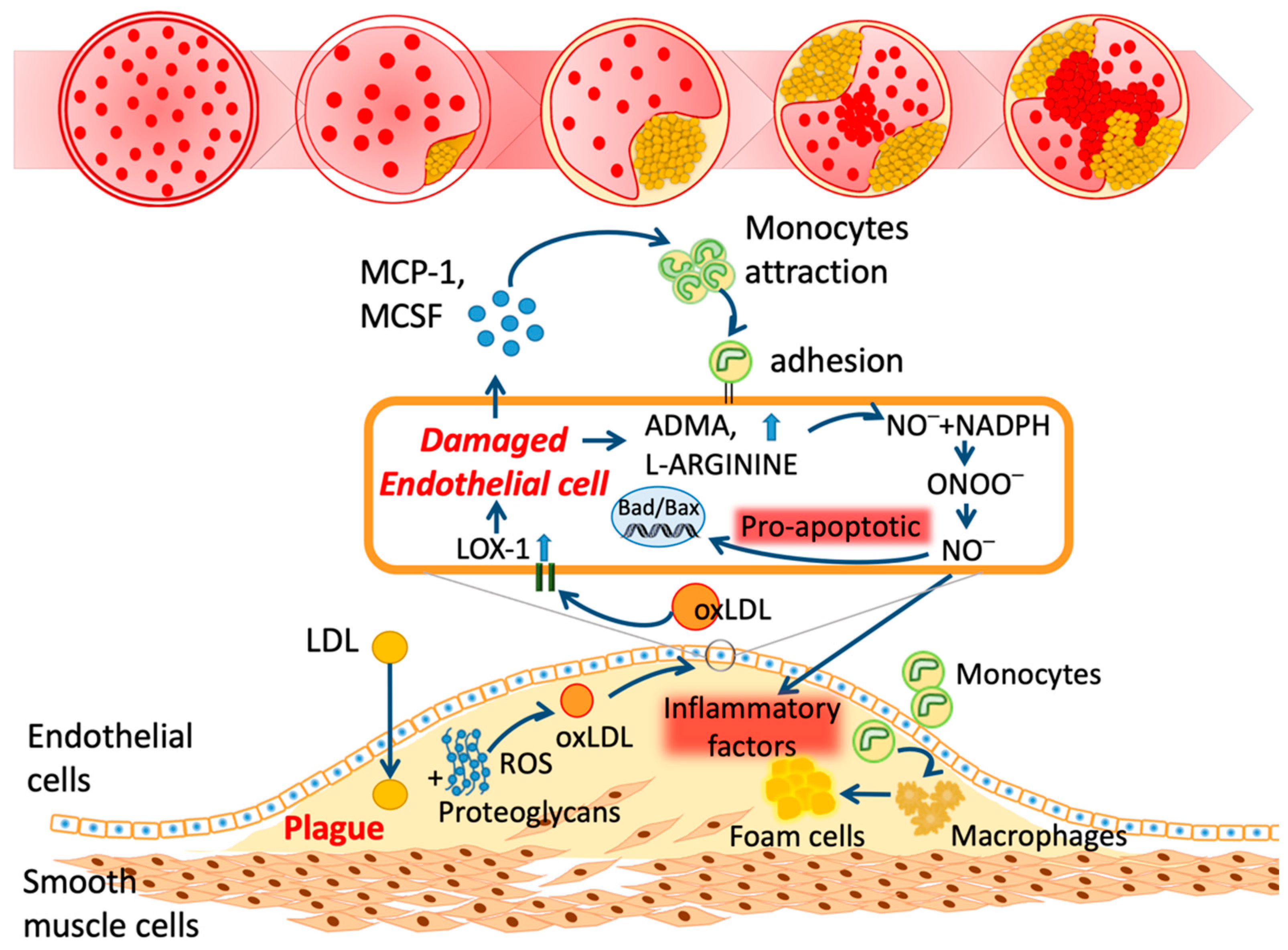
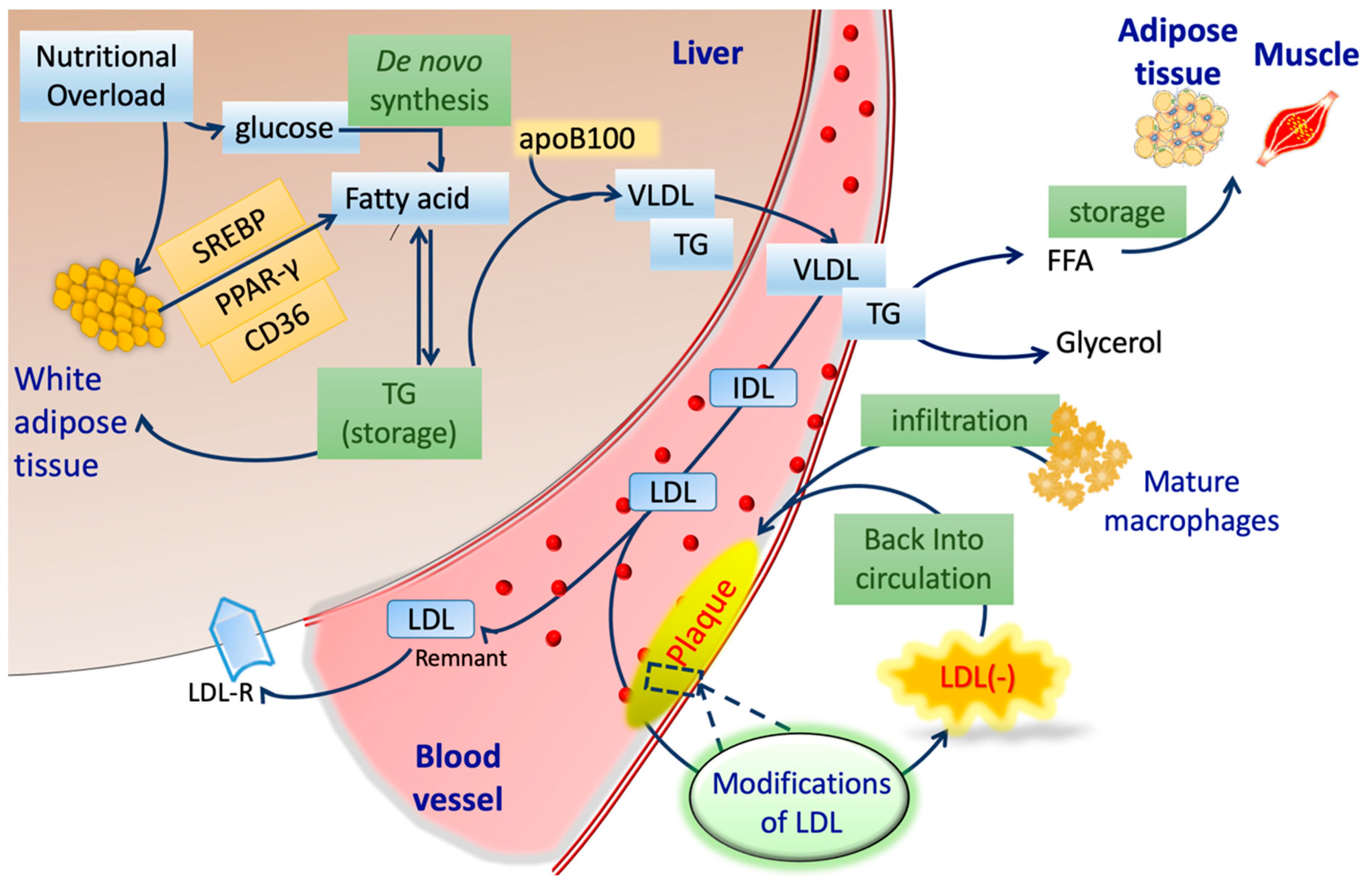
Dysregulation of glucose and lipid metabolism increases plasma levels of lipoproteins and triglycerides, resulting in vascular endothelial damage. Remarkably, the oxidation of lipid and lipoprotein particles generates electronegative lipoproteins that mediate cellular deterioration of atherosclerosis. In this review, we examined the core of atherosclerotic plaque, which is enriched by byproducts of lipid metabolism and lipoproteins, such as oxidized low-density lipoproteins (oxLDL) and electronegative subfraction of LDL (LDL(−)). We also summarized the chemical properties, receptors, and molecular mechanisms of LDL(−). In combination with other well-known markers of inflammation, namely metabolic diseases, we concluded that LDL(−) can be used as a novel prognostic tool for these lipid disorders. In addition, through understanding the underlying pathophysiological molecular routes for endothelial dysfunction and inflammation, we may reassess current therapeutics and might gain a new direction to treat atherosclerotic cardiovascular diseases, mainly targeting LDL(−) clearance.
Keywords: electronegative LDL; LDL(−); L5 LDL; oxidized LDL; oxLDL; lectin-like oxLDL receptor-1; LOX-1; dyslipidemia; endothelial dysfunction; atherosclerosis; cardiovascular disease electronegative LDL; LDL(−); L5 LDL; oxidized LDL; oxLDL; lectin-like oxLDL receptor-1; LOX-1; dyslipidemia; endothelial dysfunction; atherosclerosis; cardiovascular disease