Ayahuasca and Its Main Component N,N-Dimethyltryptamine (DMT) for the Treatment of Mental Disorders: Mechanisms of Action, Clinical Studies, and Tools to Explore the Human Mind
 , , ,
, , ,  ,
,  ,
, 
Abstract
1. Introduction
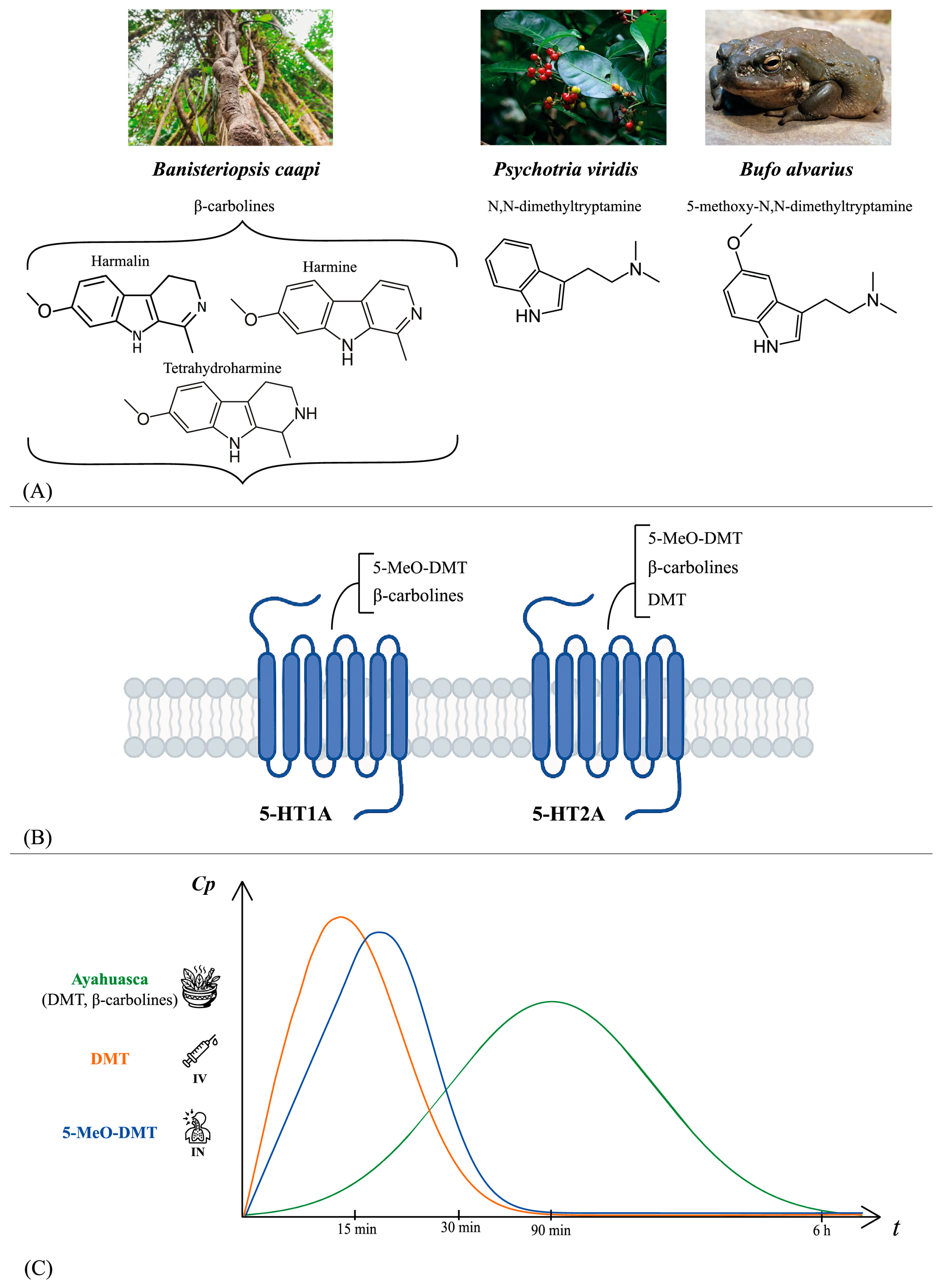
2. Ayahuasca: Composition, Preparation, Pharmacokinetics, and Pharmacodynamics
3. DMT’s Mechanism of Action
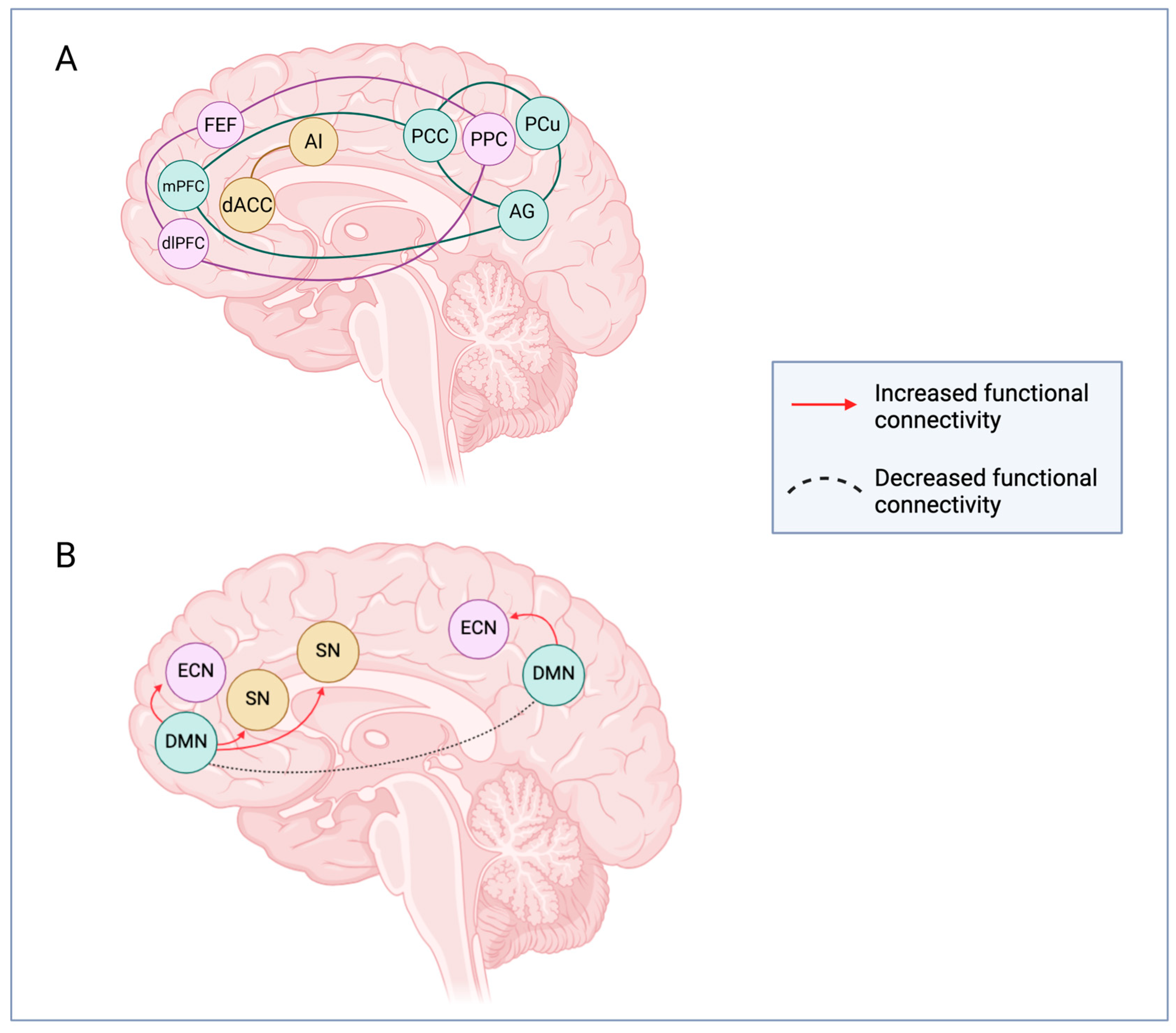
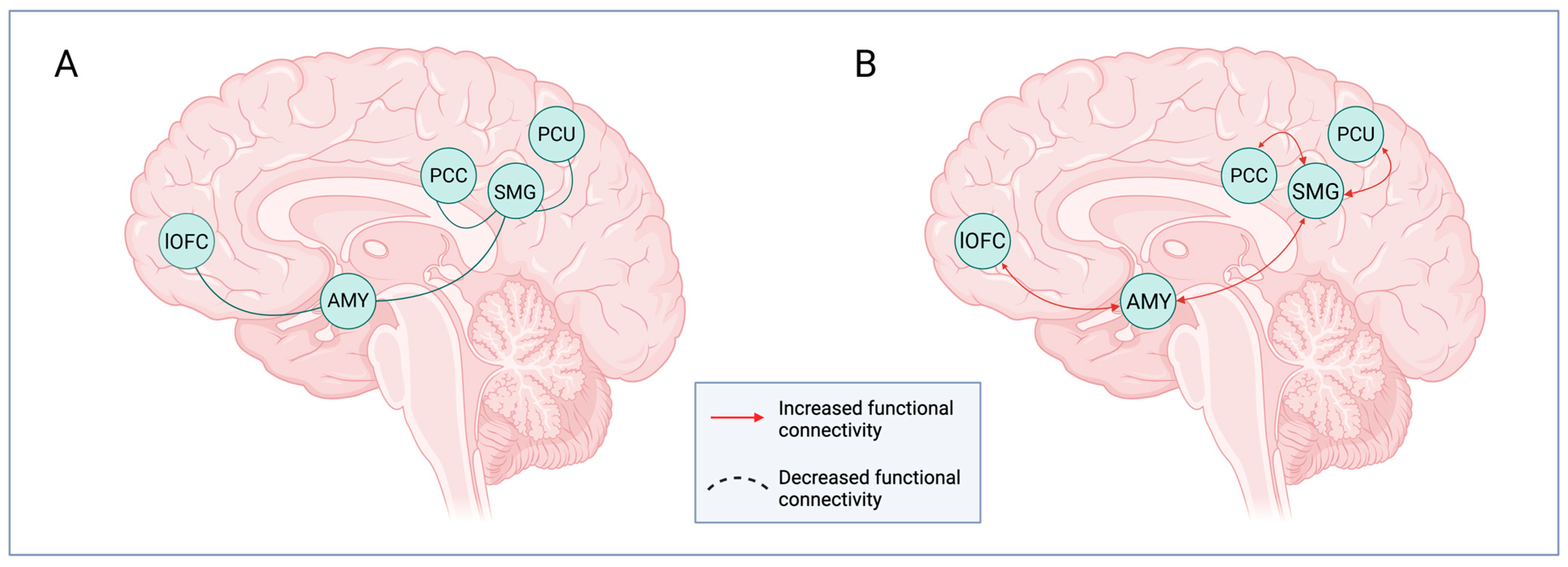
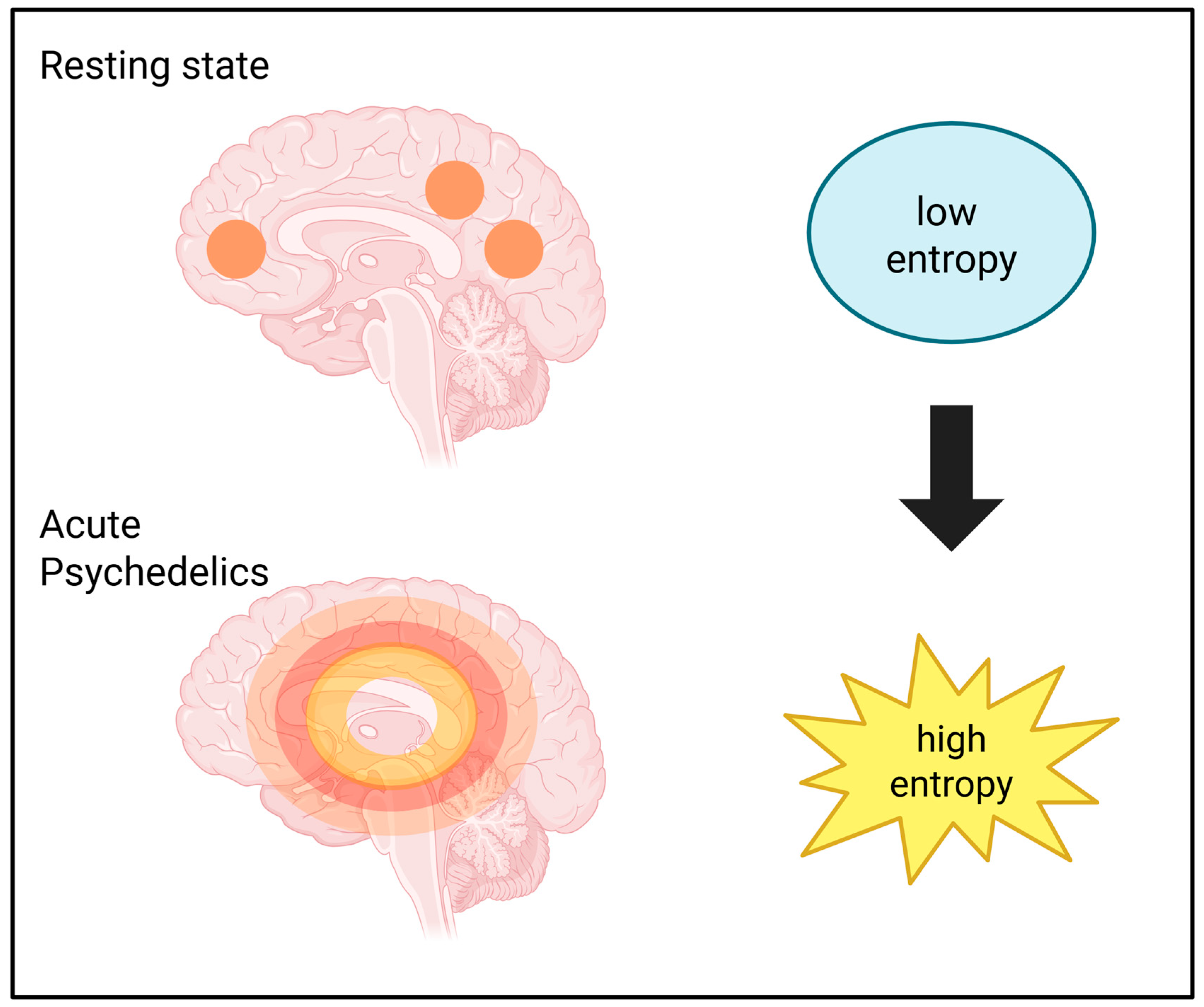
4. DMT, Neural Circuitries, and Brain Entropy
5. Overview of Major Clinical Trials of Ayahuasca, DMT, and 5-MeO-DMT in Mental Disorders
5.1. Clinical Studies on Ayahuasca, DMT, and 5-MeO-DMT in TRD
5.2. Clinical Studies on Ayahuasca and DMT in MDD
5.3. Clinical Studies on Ayahuasca and DMT in GAD
6. Psychedelics as Tools to Explore the Human Mind
7. Conclusions and Future Perspectives
Author Contributions
Funding
Institutional Review Board Statement
Informed Consent Statement
Data Availability Statement
Conflicts of Interest
References
- Nichols, D.E. Psychedelics. Pharmacol. Rev. 2016, 68, 264–355. [Google Scholar] [CrossRef] [PubMed]
- Vargas, M.V.; Dunlap, L.E.; Dong, C.; Carter, S.J.; Tombari, R.J.; Jami, S.A.; Cameron, L.P.; Patel, S.D.; Hennessey, J.J.; Saeger, H.N.; et al. Psychedelics Promote Neuroplasticity through the Activation of Intracellular 5-HT2A Receptors. Science 2023, 379, 700–706. [Google Scholar] [CrossRef] [PubMed]
- Melani, A.; Bonaso, M.; Biso, L.; Zucchini, B.; Conversano, C.; Scarselli, M. Uncovering Psychedelics: From Neural Circuits to Therapeutic Applications. Pharmaceuticals 2025, 18, 130. [Google Scholar] [CrossRef]
- Reckweg, J.T.; van Leeuwen, C.J.; Henquet, C.; van Amelsvoort, T.; Theunissen, E.L.; Mason, N.L.; Paci, R.; Terwey, T.H.; Ramaekers, J.G. A Phase 1/2 Trial to Assess Safety and Efficacy of a Vaporized 5-Methoxy-N,N-Dimethyltryptamine Formulation (GH001) in Patients with Treatment-Resistant Depression. Front. Psychiatry 2023, 14, 1133414. [Google Scholar] [CrossRef]
- Frecska, E.; Bokor, P.; Winkelman, M. The Therapeutic Potentials of Ayahuasca: Possible Effects against Various Diseases of Civilization. Front. Pharmacol. 2016, 7, 35. [Google Scholar] [CrossRef] [PubMed]
- Rivier, L.; Lindgren, J.-E. “Ayahuasca,” the South American Hallucinogenic Drink: An Ethnobotanical and Chemical Investigation. Econ. Bot. 1972, 26, 101–129. [Google Scholar] [CrossRef]
- Berlowitz, I.; Egger, K.; Cumming, P. Monoamine Oxidase Inhibition by Plant-Derived β-Carbolines; Implications for the Psychopharmacology of Tobacco and Ayahuasca. Front. Pharmacol. 2022, 13, 886408. [Google Scholar] [CrossRef]
- dos Santos, R.G.; Hallak, J.E.C. Ayahuasca: Pharmacology, Safety, and Therapeutic Effects. CNS Spectr. 2025, 30, e2. [Google Scholar] [CrossRef]
- Zeifman, R.J.; Spriggs, M.J.; Kettner, H.; Lyons, T.; Rosas, F.E.; Mediano, P.A.M.; Erritzoe, D.; Carhart-Harris, R.L. From Relaxed Beliefs under Psychedelics (REBUS) to Revised Beliefs after Psychedelics (REBAS). Sci. Rep. 2025, 15, 3651. [Google Scholar] [CrossRef]
- Hamill, J.; Hallak, J.; Dursun, S.M.; Baker, G. Ayahuasca: Psychological and Physiologic Effects, Pharmacology and Potential Uses in Addiction and Mental Illness. Curr. Neuropharmacol. 2019, 17, 108–128. [Google Scholar] [CrossRef]
- Ray, T.S. Correction: Psychedelics and the Human Receptorome. PLoS ONE 2010, 5, 10.1371/annotation/e580a864-cf13-40c2-9bd9-b9687a6f0fe4. [Google Scholar] [CrossRef]
- Palhano-Fontes, F.; Barreto, D.; Onias, H.; Andrade, K.C.; Novaes, M.M.; Pessoa, J.A.; Mota-Rolim, S.A.; Osório, F.L.; Sanches, R.; dos Santos, R.G.; et al. Rapid Antidepressant Effects of the Psychedelic Ayahuasca in Treatment-Resistant Depression: A Randomized Placebo-Controlled Trial. Psychol. Med. 2019, 49, 655–663. [Google Scholar] [CrossRef] [PubMed]
- Wallach, J.; Cao, A.B.; Calkins, M.M.; Heim, A.J.; Lanham, J.K.; Bonniwell, E.M.; Hennessey, J.J.; Bock, H.A.; Anderson, E.I.; Sherwood, A.M.; et al. Identification of 5-HT2A Receptor Signaling Pathways Associated with Psychedelic Potential. Nat. Commun. 2023, 14, 8221. [Google Scholar] [CrossRef]
- Ruffell, S.; Netzband, N.; Bird, C.; Young, A.H.; Juruena, M.F. The Pharmacological Interaction of Compounds in Ayahuasca: A Systematic Review. Braz. J. Psychiatry 2020, 42, 646–656, Erratum in Braz. J. Psychiatry 2020, 42, 688. https://doi.org/10.1590/1516-4446-2020-0023.. [Google Scholar] [CrossRef]
- Domínguez-Clavé, E.; Soler, J.; Elices, M.; Pascual, J.C.; Álvarez, E.; de la Fuente Revenga, M.; Friedlander, P.; Feilding, A.; Riba, J. Ayahuasca: Pharmacology, Neuroscience and Therapeutic Potential. Brain Res. Bull. 2016, 126, 89–101. [Google Scholar] [CrossRef]
- Gonçalves, J.; Castilho, M.; Rosado, T.; Luís, Â.; Restolho, J.; Fernández, N.; Gallardo, E.; Duarte, A.P. In Vitro Study of the Bioavailability and Bioaccessibility of the Main Compounds Present in Ayahuasca Beverages. Molecules 2021, 26, 5555. [Google Scholar] [CrossRef]
- Rossi, G.N.; Dias, I.C.d.S.; Baker, G.; Bouso Saiz, J.C.; Dursun, S.M.; Hallak, J.E.C.; Dos Santos, R.G. Ayahuasca, a Potentially Rapid Acting Antidepressant: Focus on Safety and Tolerability. Expert Opin. Drug Saf. 2022, 21, 789–801. [Google Scholar] [CrossRef] [PubMed]
- Carli, M.; Aringhieri, S.; Kolachalam, S.; Longoni, B.; Grenno, G.; Rossi, M.; Gemignani, A.; Fornai, F.; Maggio, R.; Scarselli, M. Is Adult Hippocampal Neurogenesis Really Relevant for the Treatment of Psychiatric Disorders? Curr. Neuropharmacol. 2021, 19, 1640–1660. [Google Scholar] [CrossRef]
- Matos, T.S.; da Silva Zandonadi, F.; Rosini Silva, A.A.; Dias Soares, S.; de Souza Lima, A.; Pastore, G.M.; de Melo Porcari, A.; Sussulini, A. Differentiation of Ayahuasca Samples According to Preparation Mode and Botanical Varieties Using Metabolomics. J. Psychoact. Drugs 2025, 57, 505–514. [Google Scholar] [CrossRef] [PubMed]
- Rodríguez, L.; López, A.; Moyna, G.; Seoane, G.A.; Davyt, D.; Vázquez, Á.; Hernández, G.; Carrera, I. New Insights into the Chemical Composition of Ayahuasca. ACS Omega 2022, 7, 12307–12317. [Google Scholar] [CrossRef]
- Fonseca, A.M.; dos Santos, R.G.; de Medeiros, L.S.; Veiga, T.A.M.; Cassas, F.; Bruniera, C.P.; Rossi, G.N.; Bouso, J.C.; Hallak, J.E.C.; Santos, F.P.; et al. Long-Term Ayahuasca Use Is Associated with Preserved Global Cognitive Function and Improved Memory: A Cross-Sectional Study with Ritual Users. Eur. Arch. Psychiatry Clin. Neurosci. 2025, 275, 519–531. [Google Scholar] [CrossRef]
- Trevisani, A.C.; Trevisani, J.P.C.; Haverroth, M.; Melo, A.D.C.; dos Santos, I.C.; Barbosa, L.N.; Gonçalves, D.D. A Systematic Literature Review of the Potential Therapeutic Effects of Ayahuasca Tea Prepared From the Use of Banisteriopsis Caapi and Psychotria Viridis. J. Agric. Stud. 2021, 9, 112. [Google Scholar] [CrossRef]
- Stiperski Matoc, M.; Stiperski, Z.; Hruška, T. Position of the Ceremony with the Psychedelic Drink Ayahuasca in the Society of the Amero-Indians of the Amazon. In Amazon Ecosystem—Past Discoveries and Future Prospects; IntechOpen: London, UK, 2023. [Google Scholar]
- Berlowitz, I.; O’Shaughnessy, D.M.; Heinrich, M.; Wolf, U.; Maake, C.; Martin-Soelch, C. Teacher Plants—Indigenous Peruvian-Amazonian Dietary Practices as a Method for Using Psychoactives. J. Ethnopharmacol. 2022, 286, 114910. [Google Scholar] [CrossRef]
- Bouso, J.C.; Andión, Ó.; Sarris, J.J.; Scheidegger, M.; Tófoli, L.F.; Opaleye, E.S.; Schubert, V.; Perkins, D. Adverse Effects of Ayahuasca: Results from the Global Ayahuasca Survey. PLoS Glob. Public Health 2022, 2, e0000438. [Google Scholar] [CrossRef] [PubMed]
- Kaasik, H.; Souza, R.C.Z.; Zandonadi, F.S.; Tófoli, L.F.; Sussulini, A. Chemical Composition of Traditional and Analog Ayahuasca. J. Psychoact. Drugs 2021, 53, 65–75. [Google Scholar] [CrossRef]
- Durante, Í.; dos Santos, R.G.; Bouso, J.C.; Hallak, J.E. Risk Assessment of Ayahuasca Use in a Religious Context: Self-Reported Risk Factors and Adverse Effects. Braz. J. Psychiatry 2021, 43, 362–369. [Google Scholar] [CrossRef]
- Gable, R.S. Risk Assessment of Ritual Use of Oral Dimethyltryptamine (DMT) and Harmala Alkaloids. Addiction 2007, 102, 24–34. [Google Scholar] [CrossRef] [PubMed]
- Gonçalves, J.; Luís, Â.; Gallardo, E.; Duarte, A.P. A Systematic Review on the Therapeutic Effects of Ayahuasca. Plants 2023, 12, 2573. [Google Scholar] [CrossRef]
- Shanon, B. A Structural Typology of Ayahuasca Visualizations. In The Antipodes of the Mind; Oxford University Press: Oxford, UK, 2002; pp. 86–98. [Google Scholar]
- Anderson, B.T. Ayahuasca as Antidepressant? Psychedelics and Styles of Reasoning in Psychiatry. Anthropol. Conscious. 2012, 23, 44–59. [Google Scholar] [CrossRef]
- Apud, I.; Scuro, J.; Carrera, I.; Oliveri, A. Psychological Effects and Subjective Experiences of Ayahuasca Rituals in Participants of Two Neoshamanic Centers of Uruguay. J. Psychedelic Stud. 2022, 6, 72–79. [Google Scholar] [CrossRef]
- Aicher, H.D.; Mueller, M.J.; Dornbierer, D.A.; Suay, D.; Elsner, C.; Wicki, I.; Meling, D.; Caflisch, L.; Hempe, A.; Steinhart, C.; et al. Potential Therapeutic Effects of an Ayahuasca-Inspired N,N-DMT and Harmine Formulation: A Controlled Trial in Healthy Subjects. Front. Psychiatry 2024, 14, 1302559. [Google Scholar] [CrossRef]
- Riba, J.; Barbanoj, M.J. Bringing Ayahuasca to the Clinical Research Laboratory. J. Psychoact. Drugs 2005, 37, 219–230. [Google Scholar] [CrossRef] [PubMed]
- Carbonaro, T.M.; Gatch, M.B. Neuropharmacology of N,N-Dimethyltryptamine. Brain Res. Bull. 2016, 126, 74–88. [Google Scholar] [CrossRef] [PubMed]
- Wittayakarn, N.; Tan, Y.-M.; Choomalaiwong, P.; Chen, S.; Hoer, D.; Thaoboonruang, N.; Lohitnavy, M. Development of a Physiologically Based Pharmacokinetic Model of N,N-Dimethyltryptamine, Harmine, and Their Interactions from Ayahuasca in Rats and Humans. Toxicol. Sci. 2025, 208, 48–60. [Google Scholar] [CrossRef]
- Strassman, R.J. Human Psychopharmacology of N,N-Dimethyltryptamine. Behav. Brain Res. 1995, 73, 121–124. [Google Scholar] [CrossRef]
- Riba, J.; Valle, M.; Urbano, G.; Yritia, M.; Morte, A.; Barbanoj, M.J. Human Pharmacology of Ayahuasca: Subjective and Cardiovascular Effects, Monoamine Metabolite Excretion, and Pharmacokinetics. J. Pharmacol. Exp. Ther. 2003, 306, 73–83. [Google Scholar] [CrossRef]
- Vogt, S.B.; Ley, L.; Erne, L.; Straumann, I.; Becker, A.M.; Klaiber, A.; Holze, F.; Vandersmissen, A.; Mueller, L.; Duthaler, U.; et al. Acute Effects of Intravenous DMT in a Randomized Placebo-Controlled Study in Healthy Participants. Transl. Psychiatry 2023, 13, 172. [Google Scholar] [CrossRef] [PubMed]
- van der Heijden, K.V.; Otto, M.E.; Schoones, J.W.; van Esdonk, M.J.; Borghans, L.G.J.M.; van Hasselt, J.G.C.; van Gerven, J.M.A.; Jacobs, G. Clinical Pharmacokinetics of N,N-Dimethyltryptamine (DMT): A Systematic Review and Post-Hoc Analysis. Clin. Pharmacokinet. 2025, 64, 215–227. [Google Scholar] [CrossRef]
- Good, M.; Joel, Z.; Benway, T.; Routledge, C.; Timmermann, C.; Erritzoe, D.; Weaver, R.; Allen, G.; Hughes, C.; Topping, H.; et al. Pharmacokinetics of N,N-Dimethyltryptamine in Humans. Eur. J. Drug Metab. Pharmacokinet. 2023, 48, 311–327. [Google Scholar] [CrossRef]
- Luan, L.X.; Eckernäs, E.; Ashton, M.; Rosas, F.E.; Uthaug, M.V.; Bartha, A.; Jagger, S.; Gascon-Perai, K.; Gomes, L.; Nutt, D.J.; et al. Psychological and Physiological Effects of Extended DMT. J. Psychopharmacol. 2024, 38, 56–67. [Google Scholar] [CrossRef]
- Reckweg, J.T.; Uthaug, M.V.; Szabo, A.; Davis, A.K.; Lancelotta, R.; Mason, N.L.; Ramaekers, J.G. The Clinical Pharmacology and Potential Therapeutic Applications of 5-methoxy-N,N-dimethyltryptamine (5-MeO-DMT). J. Neurochem. 2022, 162, 128–146. [Google Scholar] [CrossRef]
- Ramaekers, J.G.; Mallaroni, P.; Kloft, L.; Reckweg, J.T.; Toennes, S.W.; van Oorsouw, K.; Mason, N.L. Altered State of Consciousness and Mental Imagery as a Function of N,N-Dimethyltryptamine Concentration in Ritualistic Ayahuasca Users. J. Cogn. Neurosci. 2023, 35, 1382–1393. [Google Scholar] [CrossRef]
- Kwaśny, A.; Wilkowska, A.; Cubała, W.J. Short-Term Safety and Tolerability Profile of 5-Methoxy-N,N-Dimethyltryptamine in Human Subjects: A Systematic Review of Clinical Trials. Front. Psychiatry 2024, 15, 1477996. [Google Scholar] [CrossRef]
- Shen, H.-W.; Jiang, X.-L.; Winter, J.C.; Yu, A.-M. Psychedelic 5-Methoxy-N,N-Dimethyltryptamine: Metabolism, Pharmacokinetics, Drug Interactions, and Pharmacological Actions. Curr. Drug Metab. 2010, 11, 659–666. [Google Scholar] [CrossRef] [PubMed]
- Scarselli, M.; Annibale, P.; Gerace, C.; Radenovic, A. Enlightening G-Protein-Coupled Receptors on the Plasma Membrane Using Super-Resolution Photoactivated Localization Microscopy. Biochem. Soc. Trans. 2013, 41, 191–196. [Google Scholar] [CrossRef] [PubMed]
- Maggio, R.; Fasciani, I.; Petragnano, F.; Coppolino, M.F.; Scarselli, M.; Rossi, M. Unraveling the Functional Significance of Unstructured Regions in G Protein-Coupled Receptors. Biomolecules 2023, 13, 1431. [Google Scholar] [CrossRef]
- Scarselli, M.; Armogida, M.; Chiacchio, S.; DeMontis, M.G.; Colzi, A.; Corsini, G.U.; Maggio, R. Reconstitution of Functional Dopamine D2s Receptor by Co-Expression of Amino- and Carboxyl-Terminal Receptor Fragments. Eur. J. Pharmacol. 2000, 397, 291–296. [Google Scholar] [CrossRef] [PubMed]
- Carbonaro, T.M.; Eshleman, A.J.; Forster, M.J.; Cheng, K.; Rice, K.C.; Gatch, M.B. The Role of 5-HT2A, 5-HT2C and MGlu2 Receptors in the Behavioral Effects of Tryptamine Hallucinogens N,N-Dimethyltryptamine and N,N-Diisopropyltryptamine in Rats and Mice. Psychopharmacology 2015, 232, 275–284. [Google Scholar] [CrossRef]
- Hayashi, T.; Su, T.-P. Sigma-1 Receptor Chaperones at the ER- Mitochondrion Interface Regulate Ca2+ Signaling and Cell Survival. Cell 2007, 131, 596–610. [Google Scholar] [CrossRef]
- Mori, T.; Hayashi, T.; Hayashi, E.; Su, T.-P. Sigma-1 Receptor Chaperone at the ER-Mitochondrion Interface Mediates the Mitochondrion-ER-Nucleus Signaling for Cellular Survival. PLoS ONE 2013, 8, e76941. [Google Scholar] [CrossRef]
- Sałaciak, K.; Pytka, K. Revisiting the Sigma-1 Receptor as a Biological Target to Treat Affective and Cognitive Disorders. Neurosci. Biobehav. Rev. 2022, 132, 1114–1136. [Google Scholar] [CrossRef]
- Crottès, D.; Guizouarn, H.; Martin, P.; Borgese, F.; Soriani, O. The Sigma-1 Receptor: A Regulator of Cancer Cell Electrical Plasticity? Front. Physiol. 2013, 4, 175. [Google Scholar] [CrossRef]
- Soares, C.; Lima, G.; Pais, M.L.; Teixeira, M.; Cabral, C.; Castelo-Branco, M. Increased Functional Connectivity between Brain Regions Involved in Social Cognition, Emotion and Affective-Value in Psychedelic States Induced by N,N-Dimethyltryptamine (DMT). Front. Pharmacol. 2024, 15, 1454628. [Google Scholar] [CrossRef]
- Quesque, F.; Brass, M. The Role of the Temporoparietal Junction in Self-Other Distinction. Brain Topogr. 2019, 32, 943–955. [Google Scholar] [CrossRef]
- Vollenweider, F.X.; Preller, K.H. Psychedelic Drugs: Neurobiology and Potential for Treatment of Psychiatric Disorders. Nat. Rev. Neurosci. 2020, 21, 611–624. [Google Scholar] [CrossRef]
- Rolls, E.T.; Cheng, W.; Feng, J. The Orbitofrontal Cortex: Reward, Emotion and Depression. Brain Commun. 2020, 2, fcaa196. [Google Scholar] [CrossRef]
- Carhart-Harris, R.L.; Leech, R.; Hellyer, P.J.; Shanahan, M.; Feilding, A.; Tagliazucchi, E.; Chialvo, D.R.; Nutt, D. The Entropic Brain: A Theory of Conscious States Informed by Neuroimaging Research with Psychedelic Drugs. Front. Hum. Neurosci. 2014, 8, 20. [Google Scholar] [CrossRef] [PubMed]
- Viol, A.; Palhano-Fontes, F.; Onias, H.; de Araujo, D.B.; Viswanathan, G.M. Shannon Entropy of Brain Functional Complex Networks under the Influence of the Psychedelic Ayahuasca. Sci. Rep. 2017, 7, 7388. [Google Scholar] [CrossRef] [PubMed]
- Shannon, C.E. A Mathematical Theory of Communication. Bell Syst. Tech. J. 1948, 27, 379–423. [Google Scholar] [CrossRef]
- Schartner, M.M.; Carhart-Harris, R.L.; Barrett, A.B.; Seth, A.K.; Muthukumaraswamy, S.D. Increased Spontaneous MEG Signal Diversity for Psychoactive Doses of Ketamine, LSD and Psilocybin. Sci. Rep. 2017, 7, 46421. [Google Scholar] [CrossRef]
- Lebedev, A.V.; Kaelen, M.; Lövdén, M.; Nilsson, J.; Feilding, A.; Nutt, D.J.; Carhart-Harris, R.L. LSD-induced Entropic Brain Activity Predicts Subsequent Personality Change. Hum. Brain Mapp. 2016, 37, 3203–3213. [Google Scholar] [CrossRef]
- Tagliazucchi, E.; Carhart-Harris, R.; Leech, R.; Nutt, D.; Chialvo, D.R. Enhanced Repertoire of Brain Dynamical States during the Psychedelic Experience. Hum. Brain Mapp. 2014, 35, 5442–5456. [Google Scholar] [CrossRef] [PubMed]
- Timmermann, C.; Roseman, L.; Haridas, S.; Rosas, F.E.; Luan, L.; Kettner, H.; Martell, J.; Erritzoe, D.; Tagliazucchi, E.; Pallavicini, C.; et al. Human Brain Effects of DMT Assessed via EEG-FMRI. Proc. Natl. Acad. Sci. USA 2023, 120, e2218949120. [Google Scholar] [CrossRef] [PubMed]
- Tononi, G.; Boly, M.; Massimini, M.; Koch, C. Integrated Information Theory: From Consciousness to Its Physical Substrate. Nat. Rev. Neurosci. 2016, 17, 450–461. [Google Scholar] [CrossRef]
- Fingelkurts, A.A.; Fingelkurts, A.A. Altered Structure of Dynamic Electroencephalogram Oscillatory Pattern in Major Depression. Biol. Psychiatry 2015, 77, 1050–1060. [Google Scholar] [CrossRef]
- NCT02914769 Antidepressant Effects of Ayahuasca: A Randomized Placebo Trial in Treatment Resistant Depression 2016. Available online: https://clinicaltrials.gov/study/NCT02914769?cond=NCT02914769%20&rank=1 (accessed on 18 February 2026).
- NCT04698603 A Phase 1/2 Study of GH001 in Patients with Treatment-Resistant Depression 2020. Available online: https://clinicaltrials.gov/study/NCT04698603?cond=NCT04698603%20&rank=1 (accessed on 18 February 2026).
- NCT05800860 A Randomized, Double-Blind, Placebo-Controlled, Phase 2b Trial with an Open-Label Extension to Determine the Safety and Efficacy of GH001 in Patients with Treatment-Resistant Depression 2023. Available online: https://clinicaltrials.gov/study/NCT05800860?cond=NCT05800860%20&rank=1 (accessed on 18 February 2026).
- GH Research GH Research Reports Third Quarter 2025 Financial Results and Provides Business Updates. Available online: https://investor.ghres.com/news-releases/news-release-details/gh-research-reports-third-quarter-2025-financial-results-and (accessed on 18 February 2026).
- NCT05660642 An Open-Label, Phase 2a Study to Evaluate the Safety, Tolerability and Pharmacodynamics of BPL-003 in Patients with Treatment Resistant Depression 2022. Available online: https://clinicaltrials.gov/study/NCT05660642?cond=NCT05660642&rank=1 (accessed on 18 February 2026).
- NCT05870540 A Quadruple Masked, Dose-Finding Study to Evaluate the Efficacy and Safety of Intranasal BPL-003, with Open Label Extension, in Patients with Treatment-Resistant Depression 2023. Available online: https://clinicaltrials.gov/study/NCT05870540?cond=nCT05870540&rank=1 (accessed on 18 February 2026).
- NCT06094907 An Open Label Trial of Inhaled N,N-Dimethyltryptamine in Patients with Partial Response in Depression 2023. Available online: https://clinicaltrials.gov/study/NCT06094907?cond=NCT06094907&rank=1 (accessed on 18 February 2026).
- Falchi-Carvalho, M.; Palhano-Fontes, F.; Wießner, I.; Barros, H.; Bolcont, R.; Laborde, S.; Silva, S.R.B.; Montanini, D.; Barbosa, D.C.; Teixeira, E.; et al. Rapid and Sustained Antidepressant Effects of Vaporized N,N-Dimethyltryptamine: A Phase 2a Clinical Trial in Treatment-Resistant Depression. Neuropsychopharmacology 2025, 50, 895–903. [Google Scholar] [CrossRef]
- NCT04673383 SPL026 (DMT Fumarate) in Healthy Subjects and MDD Patients 2021. Available online: https://clinicaltrials.gov/study/NCT04673383?cond=NCT04673383%20&rank=1 (accessed on 18 February 2026).
- Brennan, W.; Field, M.; Schon, C.; Inamdar, A.; Kelman, A. Psychedelic Training Program Development: Lessons from the Evolution of the EMBARK Program. Front. Psychol. 2025, 16, 1637887. [Google Scholar] [CrossRef] [PubMed]
- NCT05553691 An Open-Label Study Investigating the Safety, Tolerability, Pharmacokinetics, Pharmacodynamics & Exploratory Efficacy of Intravenous SPL026 Drug Product (DMT Fumarate) Alone or in Combination with SSRIs in Patients with Major Depressive 2022. Available online: https://clinicaltrials.gov/study/NCT05553691?cond=NCT05553691&rank=1 (accessed on 18 February 2026).
- Cybin Cybin Highlights 2024 Accomplishments and Upcoming Milestones for 2025. Available online: https://www.businesswire.com/news/home/20250113186119/en/Cybin-Highlights-2024-Accomplishments-and-Upcoming-Milestones-for-2025 (accessed on 18 February 2026).
- NCT06051721 A Phase 2a, Randomized, Double-Blind, Active-Controlled Study to Assess the Preliminary Clinical Efficacy, Safety, Tolerability, and Pharmacokinetics, of CYB004 in Participants with Generalized Anxiety Disorder (GAD) 2023. Available online: https://clinicaltrials.gov/study/NCT06051721?cond=NCT06051721&rank=1 (accessed on 18 February 2026).
- Storm, J.F.; Klink, P.C.; Aru, J.; Senn, W.; Goebel, R.; Pigorini, A.; Avanzini, P.; Vanduffel, W.; Roelfsema, P.R.; Massimini, M.; et al. An Integrative, Multiscale View on Neural Theories of Consciousness. Neuron 2024, 112, 1531–1552. [Google Scholar] [CrossRef]
- Baars, B.J. Global Workspace Theory of Consciousness: Toward a Cognitive Neuroscience of Human Experience. Prog. Brain Res. 2005, 150, 45–53. [Google Scholar]
- Aru, J.; Suzuki, M.; Rutiku, R.; Larkum, M.E.; Bachmann, T. Coupling the State and Contents of Consciousness. Front. Syst. Neurosci. 2019, 13, 43. [Google Scholar] [CrossRef]
- Goldman-Rakic, P.S. Chapter 33 The “Psychic Cell” of Ramón y Cajal. Prog. Brain Res. 2002, 136, 427–434. [Google Scholar]
- Suzuki, M.; Larkum, M.E. General Anesthesia Decouples Cortical Pyramidal Neurons. Cell 2020, 180, 666–676.e13. [Google Scholar] [CrossRef] [PubMed]
- Voss, U.; Holzmann, R.; Tuin, I.; Hobson, A.J. Lucid Dreaming: A State of Consciousness with Features of Both Waking and Non-Lucid Dreaming. Sleep 2009, 32, 1191–1200. [Google Scholar] [CrossRef]
- Le, T.N.; Levenson, M.R. Wisdom as Self-Transcendence: What’s Love (& Individualism) Got to Do with It? J. Res. Pers. 2005, 39, 443–457. [Google Scholar] [CrossRef]
- Bharioke, A.; Munz, M.; Brignall, A.; Kosche, G.; Eizinger, M.F.; Ledergerber, N.; Hillier, D.; Gross-Scherf, B.; Conzelmann, K.-K.; Macé, E.; et al. General Anesthesia Globally Synchronizes Activity Selectively in Layer 5 Cortical Pyramidal Neurons. Neuron 2022, 110, 2024–2040.e10. [Google Scholar] [CrossRef]
- Mays, R.; Mays, S. Near-Death Experiences Are Caused by the Separation of Consciousness from the Body: An NDE Scale Analysis. J. Sci. Explor. 2024, 38, 190–211. [Google Scholar] [CrossRef]
- Dean, J.G.; Liu, T.; Huff, S.; Sheler, B.; Barker, S.A.; Strassman, R.J.; Wang, M.M.; Borjigin, J. Biosynthesis and Extracellular Concentrations of N,N-Dimethyltryptamine (DMT) in Mammalian Brain. Sci. Rep. 2019, 9, 9333. [Google Scholar] [CrossRef]
- Romeo, B.; Kervadec, E.; Fauvel, B.; Strika-Bruneau, L.; Amirouche, A.; Bezo, A.; Piolino, P.; Benyamina, A. The Intensity of the Psychedelic Experience Is Reliably Associated with Clinical Improvements: A Systematic Review and Meta-Analysis. Neurosci. Biobehav. Rev. 2025, 172, 106086. [Google Scholar] [CrossRef]
- Cameron, L.P.; Tombari, R.J.; Lu, J.; Pell, A.J.; Hurley, Z.Q.; Ehinger, Y.; Vargas, M.V.; McCarroll, M.N.; Taylor, J.C.; Myers-Turnbull, D.; et al. A Non-Hallucinogenic Psychedelic Analogue with Therapeutic Potential. Nature 2021, 589, 474–479. [Google Scholar] [CrossRef] [PubMed]
- Olson, D.E. The Subjective Effects of Psychedelics May Not Be Necessary for Their Enduring Therapeutic Effects. ACS Pharmacol. Transl. Sci. 2021, 4, 563–567. [Google Scholar] [CrossRef]
- Butler, M.; Jelen, L.; Rucker, J. Expectancy in Placebo-Controlled Trials of Psychedelics: If so, so What? Psychopharmacology 2022, 239, 3047–3055. [Google Scholar] [CrossRef] [PubMed]
- Aday, J.S.; Heifets, B.D.; Pratscher, S.D.; Bradley, E.; Rosen, R.; Woolley, J.D. Great Expectations: Recommendations for Improving the Methodological Rigor of Psychedelic Clinical Trials. Psychopharmacology 2022, 239, 1989–2010. [Google Scholar] [CrossRef] [PubMed]
- Olson, J.A.; Suissa-Rocheleau, L.; Lifshitz, M.; Raz, A.; Veissière, S.P.L. Tripping on Nothing: Placebo Psychedelics and Contextual Factors. Psychopharmacology 2020, 237, 1371–1382. [Google Scholar] [CrossRef]
- Colloca, L.; Fava, M. What Should Constitute a Control Condition in Psychedelic Drug Trials? Nat. Ment. Health 2024, 2, 1152–1160. [Google Scholar] [CrossRef] [PubMed]



| Reference ID | Study Design | Enrollment | Date, Start—End | Aims | Arms and Interventions | Results |
|---|---|---|---|---|---|---|
| NCT02914769 (CNPq-466760/2014-0) [68] | Phase 1/2—Interventional Study | n = 35 | February 2014—December 2016 | To test ayahuasca’s efficacy in TRD |
|
|
| NCT04698603 (GH001-TRD-102) [69] | Phase 1/2—Interventional Study | n = 16 | November 2019—November 2021 | To investigate safety, antidepressant effects, and dose-related psychoactive effects of inhaled GH001 (5-MeO-DMT) in TRD |
|
|
| NCT05660642 (BPL-003-204) [72] | Phase 2a—Interventional Study | n = 12 (Arm A) n = 12 (Arm B) | February 2023—July 2025 | To evaluate the safety, tolerability, and efficacy of intranasal BPL-003 (5-MeO-DMT) in patients with TRD |
|
|
| NCT05800860 (GH001-TRD-201) [70] | Phase 2b—Interventional Study | n = 81 | May 2023—March 2025 | To determine the safety and efficacy of inhaled GH001 (5-MeO-DMT) in TRD |
|
|
| NCT05870540 (BPL-003-201) [73] | Phase 2b—Interventional Study | n = 196 | September 2023—June 2025 | To evaluate the efficacy and safety of intranasal BPL-003 (5-MeO-DMT), with open-label extension, in patients with TRD |
| Results not yet available; publication expected by mid-2025 |
| NCT06094907 (DMTPRD) [74] | Phase 2—Interventional Study | n = 14 | October 2023—March 2024 | To evaluate the acute and subacute effects of inhaled DMT in patients with TRD |
|
|
| Reference ID | Study Design | Enrollment | Date, Start—End | Aims | Arms and Interventions | Results |
|---|---|---|---|---|---|---|
| NCT04673383 (CT026_001) [76] | Phase 1/2a—Interventional Study | n (Part A) = 32 n (Part B) = 34 | February 2021—December 2022 | To evaluate the safety and tolerability of SPL026 (DMT fumarate) in healthy volunteers and the efficacy in MDD patients with moderate to severe depression |
|
|
| NCT05553691 (CT026_004) [78] | Phase 1—Interventional Study | n = 17 | December 2022—August 2023 | To evaluate the safety, tolerability, and exploratory efficacy of a single dose of SPL026 (DMT fumarate) alone or in combination with SSRIs in patients with MDD |
|
|
| Reference ID | Study Design | Enrollment | Date, Start—End | Aims | Arms and Interventions | Results |
|---|---|---|---|---|---|---|
| NCT06051721 (CYB004-002) [80] Status: recruiting | Phase 2—Interventional Study | n = 36 | May 2024—February 2025 | To examine the safety, tolerability, pharmacokinetics, and preliminary clinical efficacy of CYB004 (deuterium analog of DMT) in moderate to severe GAD (GAD-7 score ≥10) |
| Key safety and efficacy data were expected in early Q1 2025 |
Disclaimer/Publisher’s Note: The statements, opinions and data contained in all publications are solely those of the individual author(s) and contributor(s) and not of MDPI and/or the editor(s). MDPI and/or the editor(s) disclaim responsibility for any injury to people or property resulting from any ideas, methods, instructions or products referred to in the content. |
© 2026 by the authors. Licensee MDPI, Basel, Switzerland. This article is an open access article distributed under the terms and conditions of the Creative Commons Attribution (CC BY) license.
Share and Cite
Melani, A.; Papini, G.; Bonaso, M.; Biso, L.; Kolachalam, S.; Bragazzi, N.L.; Conversano, C.; Orrù, G.; Longoni, B.; Scarselli, M. Ayahuasca and Its Main Component N,N-Dimethyltryptamine (DMT) for the Treatment of Mental Disorders: Mechanisms of Action, Clinical Studies, and Tools to Explore the Human Mind. Biomedicines 2026, 14, 506. https://doi.org/10.3390/biomedicines14030506
Melani A, Papini G, Bonaso M, Biso L, Kolachalam S, Bragazzi NL, Conversano C, Orrù G, Longoni B, Scarselli M. Ayahuasca and Its Main Component N,N-Dimethyltryptamine (DMT) for the Treatment of Mental Disorders: Mechanisms of Action, Clinical Studies, and Tools to Explore the Human Mind. Biomedicines. 2026; 14(3):506. https://doi.org/10.3390/biomedicines14030506
Chicago/Turabian StyleMelani, Alice, Giorgia Papini, Marco Bonaso, Letizia Biso, Shivakumar Kolachalam, Nicola Luigi Bragazzi, Ciro Conversano, Graziella Orrù, Biancamaria Longoni, and Marco Scarselli. 2026. "Ayahuasca and Its Main Component N,N-Dimethyltryptamine (DMT) for the Treatment of Mental Disorders: Mechanisms of Action, Clinical Studies, and Tools to Explore the Human Mind" Biomedicines 14, no. 3: 506. https://doi.org/10.3390/biomedicines14030506
APA StyleMelani, A., Papini, G., Bonaso, M., Biso, L., Kolachalam, S., Bragazzi, N. L., Conversano, C., Orrù, G., Longoni, B., & Scarselli, M. (2026). Ayahuasca and Its Main Component N,N-Dimethyltryptamine (DMT) for the Treatment of Mental Disorders: Mechanisms of Action, Clinical Studies, and Tools to Explore the Human Mind. Biomedicines, 14(3), 506. https://doi.org/10.3390/biomedicines14030506