Extracorporeal Cytokine Adsorption in Acute Cardiovascular Care: Pathophysiological Insights and Clinical Perspectives

 , , , and
Abstract
1. Introduction
2. Methods
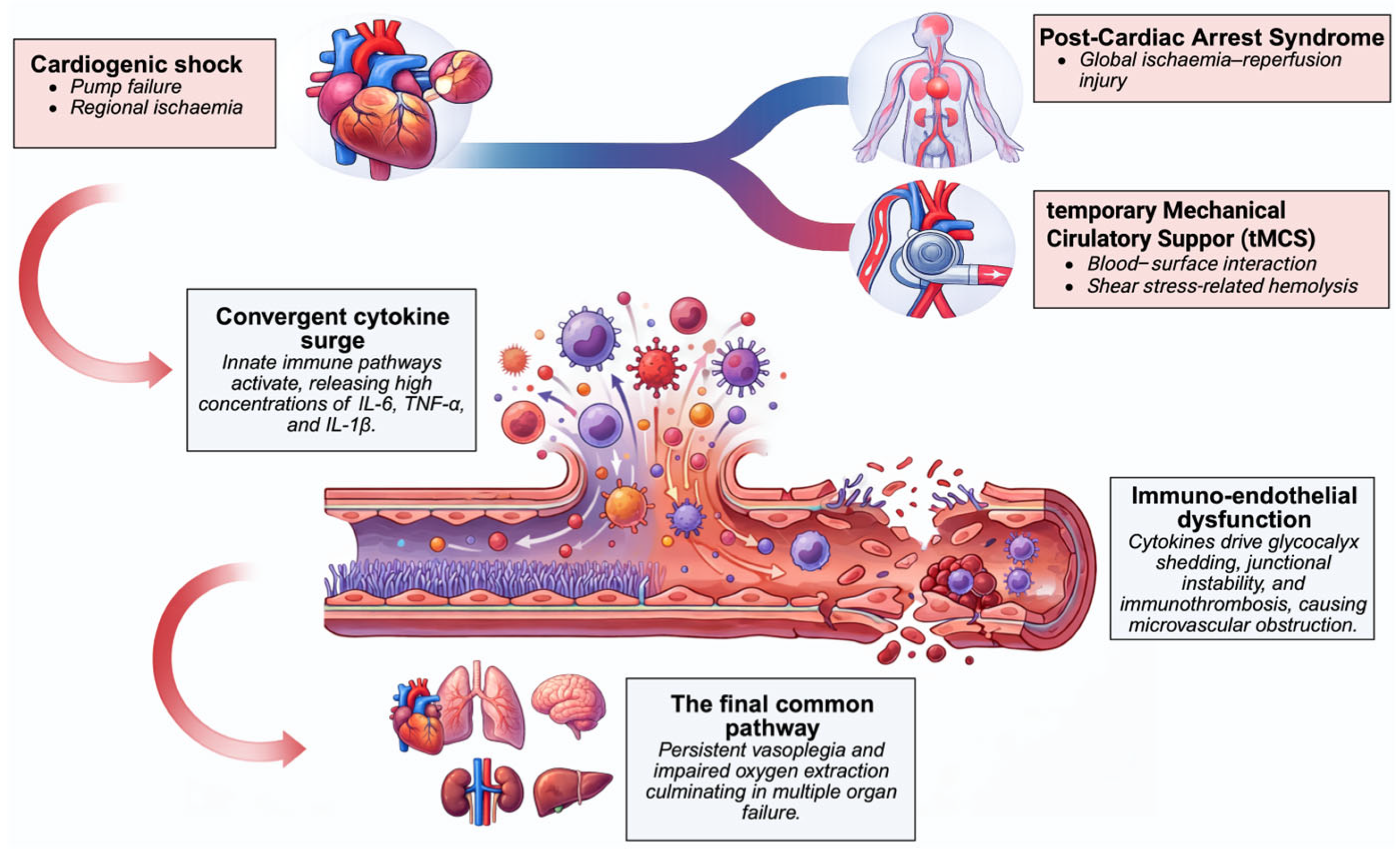
3. Pathophysiological Basis of Hyperinflammation in Acute Cardiovascular Care
3.1. Cardiogenic Shock
3.2. Post-Cardiac Arrest Syndrome
3.3. Temporary Mechanical Circulatory Support and eCPR
4. Rationale for Extracorporeal Cytokine Adsorption in CS, PCAS and tMCS
5. Principles and Mechanisms of Extracorporeal Adsorption Therapies
6. Clinical Evidence for Extracorporeal Cytokine Adsorption
6.1. Extracorporeal Cytokine Adsorption in CS- and tMCS-Supported Conditions
6.2. Extracorporeal Cytokine Adsorption in PCAS
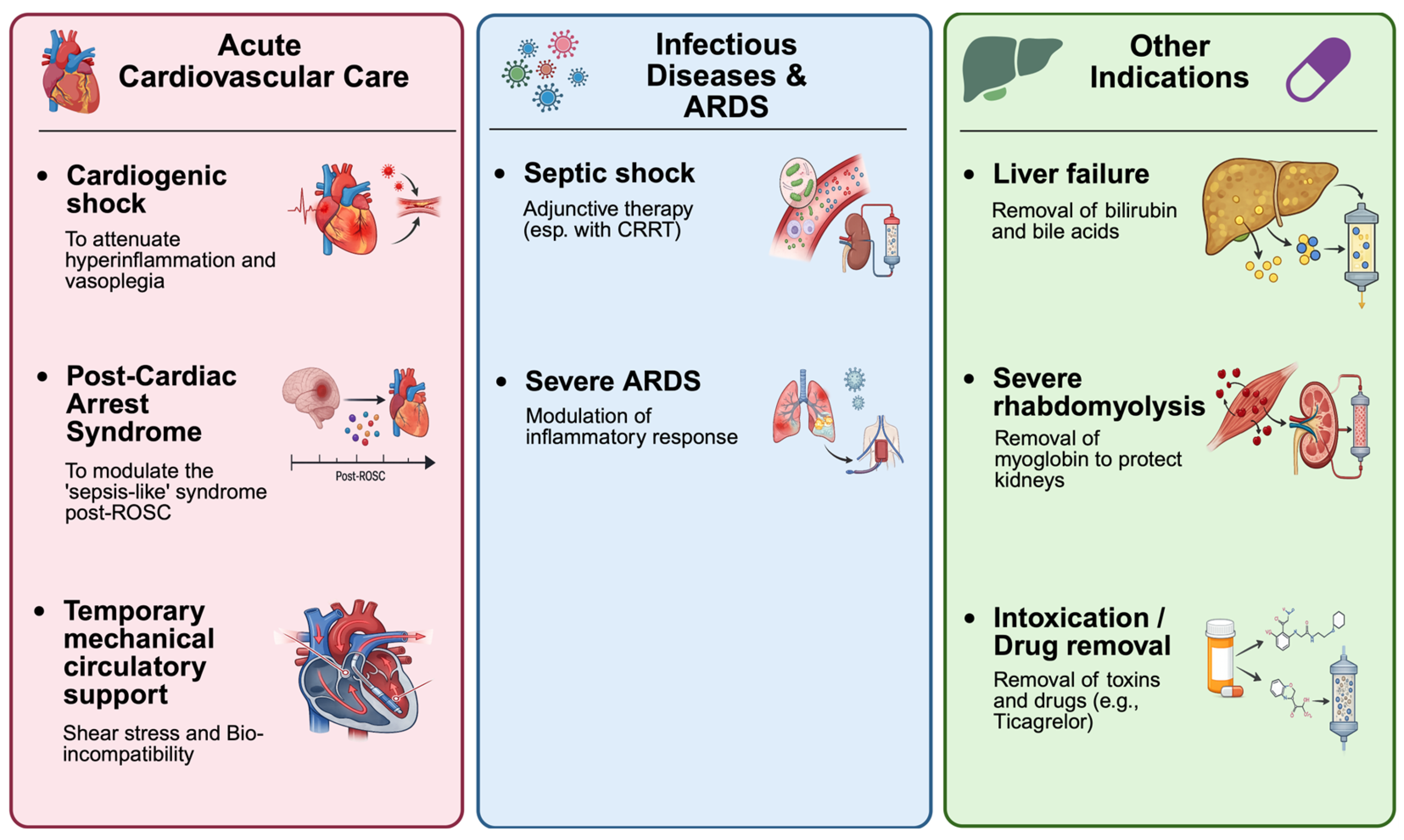
6.3. Extracorporeal Cytokine Adsorption in Septic Shock, Acute Respiratory Distress Syndrome, Rhabdomyolysis and Cardiac Surgery
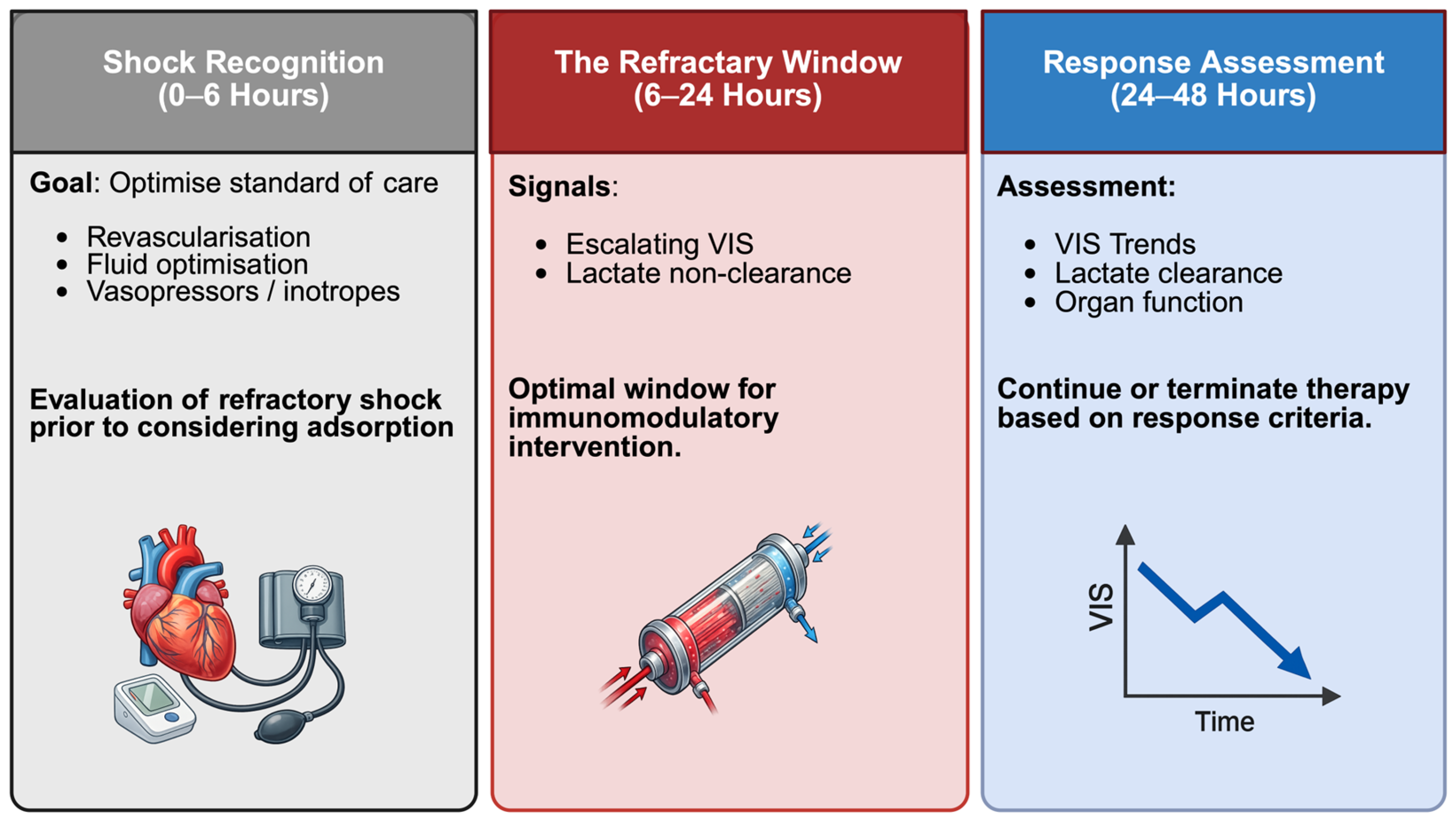
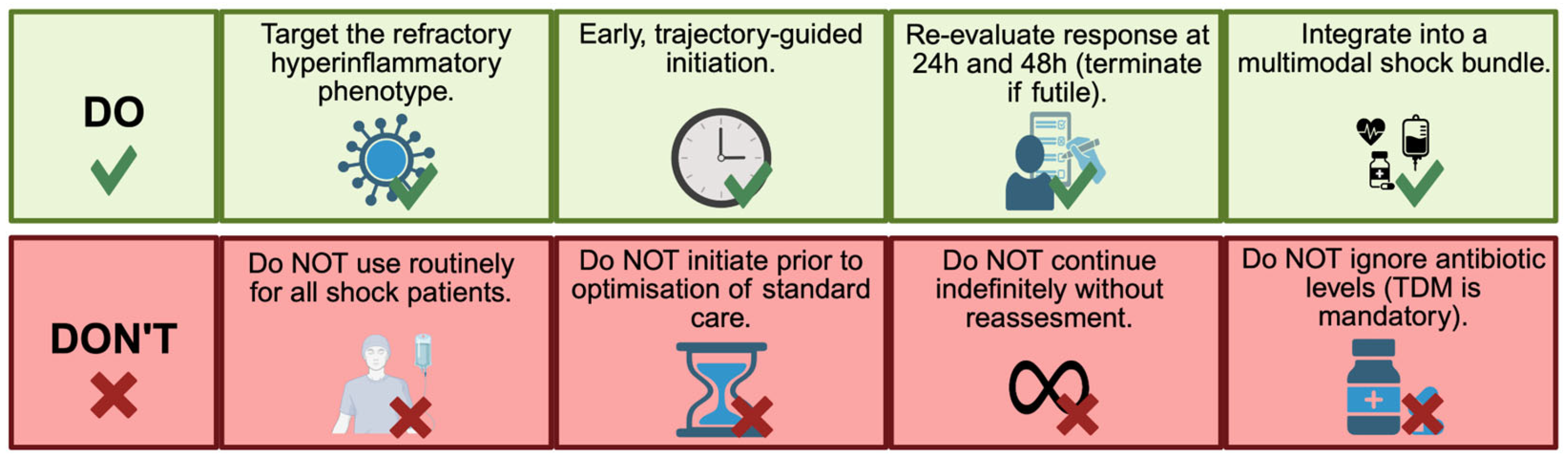
7. Practical Aspects in Extracorporeal Cytokine Adsorption: Patient Selection, Timing, and Dosing
8. Limitations
9. Conclusions and Future Perspectives
Author Contributions
Funding
Data Availability Statement
Acknowledgments
Conflicts of Interest
References
- Berg, D.D.; Bohula, E.A.; Van Diepen, S.; Katz, J.N.; Alviar, C.L.; Baird-Zars, V.M.; Barnett, C.F.; Barsness, G.W.; Burke, J.A.; Cremer, P.C.; et al. Epidemiology of Shock in Contemporary Cardiac Intensive Care Units. Circ. Cardiovasc. Qual. Outcomes 2019, 12, e005618. [Google Scholar] [CrossRef] [Scilit] [PubMed]
- Hunziker, L.; Radovanovic, D.; Jeger, R.; Pedrazzini, G.; Cuculi, F.; Urban, P.; Erne, P.; Rickli, H.; Pilgrim, T.; the AMIS Plus Registry Investigators. Twenty-Year Trends in the Incidence and Outcome of Cardiogenic Shock in AMIS Plus Registry. Circ. Cardiovasc. Interv. 2019, 12, e007293. [Google Scholar] [CrossRef] [Scilit] [PubMed]
- Sterling, L.H.; Fernando, S.M.; Talarico, R.; Qureshi, D.; van Diepen, S.; Herridge, M.S.; Price, S.; Brodie, D.; Fan, E.; Di Santo, P.; et al. Long-Term Outcomes of Cardiogenic Shock Complicating Myocardial Infarction. J. Am. Coll. Cardiol. 2023, 82, 985–995. [Google Scholar] [CrossRef] [Scilit] [PubMed]
- Lüsebrink, E.; Binzenhöfer, L.; Adamo, M.; Lorusso, R.; Mebazaa, A.; Morrow, D.A.; Price, S.; Jentzer, J.C.; Brodie, D.; Combes, A.; et al. Cardiogenic shock. Lancet 2024, 404, 2006–2020. [Google Scholar] [CrossRef] [Scilit]
- Kologrivova, I.; Kercheva, M.; Panteleev, O.; Ryabov, V. The Role of Inflammation in the Pathogenesis of Cardiogenic Shock Secondary to Acute Myocardial Infarction: A Narrative Review. Biomedicines 2024, 12, 2073. [Google Scholar] [CrossRef] [Scilit]
- Dettling, A.; Weimann, J.; Sundermeyer, J.; Beer, B.N.; Besch, L.; Becher, P.M.; Brunner, F.J.; Kluge, S.; Kirchhof, P.; Blankenberg, S.; et al. Association of systemic inflammation with shock severity, 30-day mortality, and therapy response in patients with cardiogenic shock. Clin. Res. Cardiol. 2024, 113, 324–335. [Google Scholar] [CrossRef] [Scilit]
- Nolan, J.P.; Neumar, R.W.; Adrie, C.; Aibiki, M.; Berg, R.A.; Böttiger, B.W.; Callaway, C.; Clark, R.S.; Geocadin, R.G.; Jauch, E.C.; et al. Post-cardiac arrest syndrome: Epidemiology, pathophysiology, treatment, and prognostication. Resuscitation 2008, 79, 350–379. [Google Scholar] [CrossRef] [Scilit]
- Stub, D.; Bernard, S.; Duffy, S.J.; Kaye, D.M. Post cardiac arrest syndrome: A review of therapeutic strategies. Circulation 2011, 123, 1428–1435. [Google Scholar] [CrossRef] [Scilit]
- Lüsebrink, E.; Binzenhöfer, L.; Hering, D.; Sierra, L.V.; Schrage, B.; Scherer, C.; Speidl, W.S.; Uribarri, A.; Sabate, M.; Noc, M.; et al. Scrutinizing the Role of Venoarterial Extracorporeal Membrane Oxygenation: Has Clinical Practice Outpaced the Evidence? Circulation 2024, 149, 1033–1052. [Google Scholar] [CrossRef] [Scilit]
- Zeymer, U.; Freund, A.; Hochadel, M.; Ostadal, P.; Belohlavek, J.; Rokyta, R.; Massberg, S.; Brunner, S.; Lüsebrink, E.; Flather, M.; et al. Venoarterial extracorporeal membrane oxygenation in patients with infarct-related cardiogenic shock: An individual patient data meta-analysis of randomised trials. Lancet 2023, 402, 1338–1346. [Google Scholar] [CrossRef] [Scilit]
- Kreutz, J.; Mihali, K.; Harbaum, L.; Chatzis, G.; Patsalis, N.; Syntila, S.; Schieffer, B.; Markus, B. CytoSorb® Hemadsorption During Microaxial Flow Pump (mAFP) Support in Cardiogenic Shock: A Propensity Score-Matched Cohort Study. Biomedicines 2025, 13, 2568. [Google Scholar] [CrossRef] [Scilit]
- Kreutz, J.; Harbaum, L.; Barutcu, C.B.; Rehman, A.S.; Patsalis, N.; Mihali, K.; Chatzis, G.; Choukeir, M.; Syntila, S.; Schieffer, B.; et al. CytoSorb® Hemadsorption in Cardiogenic Shock: A Real-World Analysis of Hemodynamics, Organ Function, and Clinical Outcomes During Mechanical Circulatory Support. Biomedicines 2025, 13, 324. [Google Scholar] [CrossRef] [Scilit] [PubMed]
- Monard, C.; Bianchi, N.; Poli, E.; Altarelli, M.; Debonneville, A.; Oddo, M.; Liaudet, L.; Schneider, A. Cytokine hemoadsorption with CytoSorb® in post-cardiac arrest syndrome, a pilot randomized controlled trial. Crit. Care 2023, 27, 36. [Google Scholar] [CrossRef] [Scilit] [PubMed]
- Waksman, R.; Pahuja, M.; Van Diepen, S.; Proudfoot, A.G.; Morrow, D.; Spitzer, E.; Nichol, G.; Weisfeldt, M.L.; Moscucci, M.; Lawler, P.R.; et al. Standardized Definitions for Cardiogenic Shock Research and Mechanical Circulatory Support Devices: Scientific Expert Panel from the Shock Academic Research Consortium (SHARC). Circulation 2023, 148, 1113–1126. [Google Scholar] [CrossRef] [Scilit] [PubMed]
- Silvis, M.J.M.; Dengler, S.E.K.G.; Odille, C.A.; Mishra, M.; van der Kaaij, N.P.; Doevendans, P.A.; Sluijter, J.P.G.; de Kleijn, D.P.V.; de Jager, S.C.A.; Bosch, L.; et al. Damage-Associated Molecular Patterns in Myocardial Infarction and Heart Transplantation: The Road to Translational Success. Front. Immunol. 2020, 11, 599511. [Google Scholar] [CrossRef] [Scilit]
- Andrié, R.P.; Becher, U.M.; Frommold, R.; Tiyerili, V.; Schrickel, J.W.; Nickenig, G.; Schwab, J.O. Interleukin-6 is the strongest predictor of 30-day mortality in patients with cardiogenic shock due to myocardial infarction. Crit. Care 2012, 16, R152. [Google Scholar] [CrossRef] [Scilit]
- Putowski, Z.; Pluta, M.P.; Rachfalska, N.; Krzych, Ł.J.; De Backer, D. Sublingual Microcirculation in Temporary Mechanical Circulatory Support: A Current State of Knowledge. J. Cardiothorac. Vasc. Anesth. 2023, 37, 2065–2072. [Google Scholar] [CrossRef] [Scilit]
- Van Diepen, S.; Katz, J.N.; Albert, N.M.; Henry, T.D.; Jacobs, A.K.; Kapur, N.K.; Kilic, A.; Menon, V.; Ohman, E.M.; Sweitzer, N.K.; et al. Contemporary Management of Cardiogenic Shock: A Scientific Statement from the American Heart Association. Circulation 2017, 136, e232–e268. [Google Scholar] [CrossRef] [Scilit]
- Garan, A.R.; Kanwar, M.; Thayer, K.L.; Whitehead, E.; Zweck, E.; Hernandez-Montfort, J.; Mahr, C.; Haywood, J.L.; Harwani, N.M.; Wencker, D.; et al. Complete Hemodynamic Profiling with Pulmonary Artery Catheters in Cardiogenic Shock Is Associated with Lower In-Hospital Mortality. JACC Heart Fail. 2020, 8, 903–913. [Google Scholar] [CrossRef] [Scilit]
- Kadosh, B.S.; Berg, D.D.; Bohula, E.A.; Park, J.-G.; Baird-Zars, V.M.; Alviar, C.; Alzate, J.; Barnett, C.F.; Barsness, G.W.; Burke, J.; et al. Pulmonary Artery Catheter Use and Mortality in the Cardiac Intensive Care Unit. JACC Heart Fail. 2023, 11, 903–914. [Google Scholar] [CrossRef] [Scilit]
- Kanwar, M.K.; Blumer, V.; Zhang, Y.; Sinha, S.S.; Garan, A.R.; Hernandez-Montfort, J.; Khalif, A.; Hickey, G.W.; Abraham, J.; Mahr, C.; et al. Pulmonary Artery Catheter Use and Risk of In-hospital Death in Heart Failure Cardiogenic Shock. J. Card. Fail. 2023, 29, 1234–1244. [Google Scholar] [CrossRef] [Scilit] [PubMed]
- Maack, C.; Eschenhagen, T.; Hamdani, N.; Heinzel, F.R.; Lyon, A.R.; Manstein, D.J.; Metzger, J.; Papp, Z.; Tocchetti, C.G.; Yilmaz, M.B.; et al. Treatments targeting inotropy. Eur. Heart J. 2019, 40, 3626–3644. [Google Scholar] [CrossRef] [Scilit] [PubMed]
- Basir, M.B.; Lemor, A.; Gorgis, S.; Taylor, A.M.; Tehrani, B.; Truesdell, A.G.; Bharadwaj, A.; Kolski, B.; Patel, K.; Gelormini, J.; et al. Vasopressors independently associated with mortality in acute myocardial infarction and cardiogenic shock. Catheter. Cardiovasc. Interv. 2022, 99, 650–657. [Google Scholar] [CrossRef] [Scilit] [PubMed]
- Møller, J.E.; Engstrøm, T.; Jensen, L.O.; Eiskjær, H.; Mangner, N.; Polzin, A.; Schulze, P.C.; Skurk, C.; Nordbeck, P.; Clemmensen, P.; et al. Microaxial Flow Pump or Standard Care in Infarct-Related Cardiogenic Shock. N. Engl. J. Med. 2024, 390, 1382–1393. [Google Scholar] [CrossRef] [Scilit]
- McDonagh, T.A.; Metra, M.; Adamo, M.; Gardner, R.S.; Baumbach, A.; Böhm, M.; Burri, H.; Butler, J.; Čelutkienė, J.; Chioncel, O.; et al. 2021 ESC Guidelines for the diagnosis and treatment of acute and chronic heart failure: Developed by the Task Force for the diagnosis and treatment of acute and chronic heart failure of the European Society of Cardiology (ESC) with the special contribution of the Heart Failure Association (HFA) of the ESC. Rev. Española Cardiol. 2021, 42, 3599–3726. [Google Scholar] [CrossRef] [Scilit]
- Sinha, S.S.; Morrow, D.A.; Kapur, N.K.; Kataria, R.; Roswell, R.O. 2025 Concise Clinical Guidance: An ACC Expert Consensus Statement on the Evaluation and Management of Cardiogenic Shock: A Report of the American College of Cardiology Solution Set Oversight Committee. J. Am. Coll. Cardiol. 2025, 85, 1618–1641. [Google Scholar] [CrossRef] [Scilit]
- Jung, C.; Bruno, R.R.; Jumean, M.; Price, S.; Krychtiuk, K.A.; Ramanathan, K.; Dankiewicz, J.; French, J.; Delmas, C.; Mendoza, A.-A.; et al. Management of cardiogenic shock: State-of-the-art. Intensive Care Med. 2024, 50, 1814–1829. [Google Scholar] [CrossRef] [Scilit]
- Neumar, R.W.; Nolan, J.P.; Adrie, C.; Aibiki, M.; Berg, R.A.; Böttiger, B.W.; Callaway, C.; Clark, R.S.B.; Geocadin, R.G.; Jauch, E.C.; et al. Post-cardiac arrest syndrome: Epidemiology, pathophysiology, treatment, and prognostication a consensus statement from the International Liaison Committee on Resuscitation. Circulation 2008, 118, 2452–2483. [Google Scholar] [CrossRef] [Scilit]
- Langeland, H.; Damås, J.K.; Mollnes, T.E.; Ludviksen, J.K.; Ueland, T.; Michelsen, A.E.; Løberg, M.; Bergum, D.; Nordseth, T.; Skjærvold, N.K.; et al. The inflammatory response is related to circulatory failure after out-of-hospital cardiac arrest: A prospective cohort study. Resuscitation 2022, 170, 115–125. [Google Scholar] [CrossRef] [Scilit]
- Seppä, A.M.J.; Skrifvars, M.B.; Pekkarinen, P.T. Inflammatory response after out-of-hospital cardiac arrest—Impact on outcome and organ failure development. Acta Anaesthesiol. Scand. 2023, 67, 1273–1287. [Google Scholar] [CrossRef] [Scilit]
- Liu, Y.; Chen, Y.; Wang, L.; Yu, D.; Chen, P.; Chen, S.; Gong, P. Circulating CD24/Siglec-10 biomarkers predict post-resuscitation outcomes in a cardiac arrest cohort. Sci. Rep. 2025, 15, 37816. [Google Scholar] [CrossRef] [Scilit] [PubMed]
- Adrie, C.; Laurent, I.; Monchi, M.; Cariou, A.; Dhainaou, J.F.; Spaulding, C. Postresuscitation disease after cardiac arrest: A sepsis-like syndrome? Curr. Opin. Crit. Care 2004, 10, 208–212. [Google Scholar] [CrossRef] [Scilit] [PubMed]
- Perkins, G.D.; Neumar, R.; Hsu, C.H.; Hirsch, K.G.; Aneman, A.; Becker, L.B.; Couper, K.; Callaway, C.W.; Hoedemaekers, C.W.; Lim, S.L.; et al. Improving Outcomes after Post-Cardiac Arrest Brain Injury: A Scientific Statement from the International Liaison Committee on Resuscitation. Circulation 2024, 150, e158–e180. [Google Scholar] [CrossRef] [Scilit] [PubMed]
- Gregers, E.; Frederiksen, P.H.; Udesen, N.L.J.; Linde, L.; Banke, A.; Povlsen, A.L.; Larsen, J.P.; Hassager, C.; Jensen, L.O.; Lassen, J.F.; et al. Immediate inflammatory response to mechanical circulatory support in a porcine model of severe cardiogenic shock. Intensive Care Med. Exp. 2024, 12, 39. [Google Scholar] [CrossRef] [Scilit]
- Millar, J.E.; Fanning, J.P.; McDonald, C.I.; McAuley, D.F.; Fraser, J.F. The inflammatory response to extracorporeal membrane oxygenation (ECMO): A review of the pathophysiology. Crit. Care 2016, 20, 387. [Google Scholar] [CrossRef] [Scilit]
- Li, Y.; Volleman, C.; Dubelaar, D.P.C.; Vlaar, A.P.J.; van den Brom, C.E. Exploring the Impact of Extracorporeal Membrane Oxygenation on the Endothelium: A Systematic Review. Int. J. Mol. Sci. 2024, 25, 10680. [Google Scholar] [CrossRef] [Scilit]
- Radley, G.; Pieper, I.L.; Ali, S.; Bhatti, F.; Thornton, C.A. The inflammatory response to ventricular assist devices. Front. Immunol. 2018, 9, 409218. [Google Scholar] [CrossRef] [Scilit]
- Keebler, M.E.; Haddad, E.V.; Choi, C.W.; McGrane, S.; Zalawadiya, S.; Schlendorf, K.H.; Brinkley, D.M.; Danter, M.R.; Wigger, M.; Menachem, J.N.; et al. Venoarterial Extracorporeal Membrane Oxygenation in Cardiogenic Shock. JACC Heart Fail. 2018, 6, 503–516. [Google Scholar] [CrossRef] [Scilit]
- Fazzini, L.; Golino, M.; Moroni, F.; Castrichini, M.; Tersalvi, G.; Manca, P.; Abbate, A. Interleukin-6 in Cardiogenic Shock. Curr. Cardiol. Rep. 2025, 27, 129. [Google Scholar] [CrossRef] [Scilit]
- Saravi, B.; Goebel, U.; Hassenzahl, L.O.; Jung, C.; David, S.; Feldheiser, A.; Stopfkuchen-Evans, M.; Wollborn, J. Capillary leak and endothelial permeability in critically ill patients: A current overview. Intensive Care Med. Exp. 2023, 11, 96. [Google Scholar] [CrossRef] [Scilit]
- Boss, K.; Jahn, M.; Wendt, D.; Haidari, Z.; Demircioglu, E.; Thielmann, M.; Ruhparwar, A.; Kribben, A.; Tyczynski, B. Extracorporeal cytokine adsorption: Significant reduction of catecholamine requirement in patients with AKI and septic shock after cardiac surgery. PLoS ONE 2021, 16, e0246299. [Google Scholar] [CrossRef] [Scilit] [PubMed]
- Hohn, A.; Malewicz-Oeck, N.M.; Buchwald, D.; Annecke, T.; Zahn, P.K.; Baumann, A. REmoval of cytokines during CArdiac surgery (RECCAS): A randomised controlled trial. Crit. Care 2024, 28, 406. [Google Scholar] [CrossRef] [Scilit] [PubMed]
- Reis, T.; Premužić, V.; Kitawara, K.; Noronha, I.L.; Ronco, C. Basic Mechanisms of Hemoadsorption: Incumbency for Better Clinical Utility. Blood Purif. 2025, 1–14. [Google Scholar] [CrossRef] [Scilit] [PubMed]
- Chen, J.; Han, W.; Chen, J.; Zong, W.; Wang, W.; Wang, Y.; Cheng, G.; Li, C.; Ou, L.; Yu, Y. High performance of a unique mesoporous polystyrene-based adsorbent for blood purification. Regen. Biomater. 2017, 4, 31–37. [Google Scholar] [CrossRef] [Scilit]
- Ferrer, R.; Thielmann, M.; Kribben, A.; Unglaube, M.; Tyczynski, B.; Kreutz, J.; Baumann, A.; Guenther, U.; Henzler, D.; Kirschning, T.; et al. The international, prospective CytOSorb® treatMent Of critically ill patientS (COSMOS) registry: Interim results from the first 150 patients. J. Intensive Med. 2025, 5, 392–399. [Google Scholar] [CrossRef] [Scilit]
- Smirnova, D.; Serzans, R.; Klibus, M.; Liguts, V.; Lece, A.; Skesters, A.; Villa, G.; Sabelnikovs, O. Hemoperfusion Using the Oxiris Membrane in Septic Shock Patients with Preserved Kidney Function: A Case Series. J. Clin. Med. 2025, 14, 2113. [Google Scholar] [CrossRef] [Scilit]
- Mattecka, S.; Brunner, P.; Hähnel, B.; Kunze, R.; Vogt, B.; Sheriff, A. PentraSorb C-Reactive Protein: Characterization of the Selective C-Reactive Protein Adsorber Resin. Ther. Apher. Dial. 2019, 23, 474–481. [Google Scholar] [CrossRef] [Scilit]
- Soltesz, A.; Molnar, Z.A.; Szakal-Toth, Z.; Tamaska, E.; Katona, H.; Fabry, S.; Csikos, G.; Berzsenyi, V.; Tamas, C.; Edes, I.F.; et al. Influence of Venoarterial Extracorporeal Membrane Oxygenation Integrated Hemoadsorption on the Early Reversal of Multiorgan and Microcirculatory Dysfunction and Outcome of Refractory Cardiogenic Shock. J. Clin. Med. 2022, 11, 6517. [Google Scholar] [CrossRef] [Scilit]
- Lovrić, D.; Pašalić, M.; Križanac, S.; Kovačić, K.; Skorić, B.; Jurin, H.; Miličić, D.; Premužić, V. The addition of Cytosorb in patients on VA-ECMO improves urinary output and ICU survival. Ther. Apher. Dial. 2024, 28, 103–111. [Google Scholar] [CrossRef] [Scilit]
- Ko, R.E.; Choi, K.H.; Lee, K.; Jeon, J.; Jang, H.R.; Chung, C.R.; Cho, Y.H.; Park, T.K.; Lee, J.M.; Bin Song, Y.; et al. The effects of extracorporeal blood purification (oXiris®) in patients with cardiogenic shock who require VA-ECMO (CLEAN ECMO): A prospective, open-label, randomized controlled pilot study. Crit. Care 2025, 29, 255. [Google Scholar] [CrossRef] [Scilit]
- Nguyen, M.; Alvarez, M.; Evezard, C.; Berthoud, V.; Leleu, D.; Pais-De-Barros, J.-P.; Bouchot, O.; Abou-Arab, O.; Bouhemad, B.; Masson, D.; et al. Endotoxin removal by the OXIRIS filter for cardiogenic shock requiring veno-arterial extra-corporeal life support: The ECMORIX randomized controlled trial. Ann. Intensive Care 2025, 15, 92. [Google Scholar] [CrossRef] [Scilit] [PubMed]
- Torzewski, J.; Mattecka, S.; Mayer, B.; Stone, G.W.; Sheriff, A. Selective C-reactive protein apheresis in acute myocardial infarction: Rationale and design of a prospective international randomized controlled trial. Coron. Artery Dis. 2025, 36, 428–433. [Google Scholar] [CrossRef] [Scilit] [PubMed]
- Calabrò, M.G.; Febres, D.; Recca, G.; Lembo, R.; Fominskiy, E.; Scandroglio, A.M.; Zangrillo, A.; Pappalardo, F. Blood Purification with CytoSorb in Critically Ill Patients: Single-Center Preliminary Experience. Artif. Organs 2019, 43, 189–194. [Google Scholar] [CrossRef] [Scilit] [PubMed]
- Napp, L.C.; Ziegeler, S.; Kindgen-Milles, D. Rationale of Hemoadsorption during Extracorporeal Membrane Oxygenation Support. Blood Purif. 2019, 48, 203–214. [Google Scholar] [CrossRef] [Scilit]
- Napp, L.C.; Lebreton, G.; De Somer, F.; Supady, A.; Pappalardo, F. Opportunities, controversies, and challenges of extracorporeal hemoadsorption with CytoSorb during ECMO. Artif. Organs 2021, 45, 1240–1249. [Google Scholar] [CrossRef] [Scilit]
- Dogan, G.; Hanke, J.; Puntigam, J.; Haverich, A.; Schmitto, J.D. Hemoadsorption in cardiac shock with bi ventricular failure and giant-cell myocarditis: A case report. Int. J. Artif. Organs 2018, 41, 474–479. [Google Scholar] [CrossRef] [Scilit]
- Mitsis, A.; Sokratous, S.; Karmioti, G.; Kyriakou, M.; Drakomathioulakis, M.; Myrianthefs, M.M.; Eftychiou, C.; Kadoglou, N.P.E.; Tzikas, S.; Fragakis, N.; et al. The Role of C-Reactive Protein in Acute Myocardial Infarction: Unmasking Diagnostic, Prognostic, and Therapeutic Insights. J. Clin. Med. 2025, 14, 4795. [Google Scholar] [CrossRef] [Scilit]
- Supady, A.; Zahn, T.; Kuhl, M.; Maier, S.; Benk, C.; Kaier, K.; Böttiger, B.W.; Bode, C.; Lother, A.; Staudacher, D.L.; et al. Cytokine adsorption in patients with post-cardiac arrest syndrome after extracorporeal cardiopulmonary resuscitation (CYTER)—A single-centre, open-label, randomised, controlled trial. Resuscitation 2022, 173, 169–178. [Google Scholar] [CrossRef] [Scilit]
- Zahn, T.; Schanze, N.; Staudacher, D.L.; Wengenmayer, T.; Maier, S.; Benk, C.; Gauchel, N.; Duerschmied, D.; Supady, A. The Effect of Cytokine Adsorption on Leukocyte and Platelet Activation after Extracorporeal Cardiopulmonary Resuscitation. Thromb. Haemost. 2024, 124, 533–545. [Google Scholar] [CrossRef] [Scilit]
- Akin, M.; Garcheva, V.; Sieweke, J.T.; Flierl, U.; Daum, H.C.; Bauersachs, J.; Schäfer, A. Early use of hemoadsorption in patients after out-of hospital cardiac arrest—A matched pair analysis. PLoS ONE 2020, 15, e0241709. [Google Scholar] [CrossRef] [Scilit]
- Saldaña-Gastulo, J.J.C.; Llamas-Barbarán, M.D.R.; Coronel-Chucos, L.G.; Hurtado-Roca, Y. Cytokine hemoadsorption with CytoSorb® in patients with sepsis: A systematic review and meta-analysis. Crit. Care Sci. 2023, 35, 217. [Google Scholar] [CrossRef] [Scilit] [PubMed]
- Steindl, D.; Schroeder, T.; Krannich, A.; Nee, J. Hemoadsorption in the Management of Septic Shock: A Systematic Review and Meta-Analysis. J. Clin. Med. 2025, 14, 2285. [Google Scholar] [CrossRef] [Scilit] [PubMed]
- Guarino, M.; Costanzini, A.; Luppi, F.; Maritati, M.; Contini, C.; De Giorgio, R.; Spampinato, M.D. Extracorporeal Cytokine Adsorption in Sepsis: Current Evidence and Future Perspectives. Biomedicines 2025, 13, 1684. [Google Scholar] [CrossRef] [Scilit] [PubMed]
- Schwindenhammer, V.; Girardot, T.; Chaulier, K.; Grégoire, A.; Monard, C.; Huriaux, L.; Illinger, J.; Leray, V.; Uberti, T.; Crozon-Clauzel, J.; et al. oXiris® Use in Septic Shock: Experience of Two French Centres. Blood Purif. 2019, 47, 29–35. [Google Scholar] [CrossRef] [Scilit]
- Theisen, B.E.; Lichtenstern, C.; Nusshag, C.; Tan, B.; Hölle, T.; Weigand, M.A.; Kalenka, A.; Fiedler-Kalenka, M.O. Simultaneous removal of endotoxins, inflammatory mediators and uremic toxins in ICU patients with septic shock: A retrospective cohort study. Sci. Rep. 2024, 14, 19645. [Google Scholar] [CrossRef] [Scilit]
- Zhang, H.; Zhu, G.; Yan, L.; Lu, Y.; Fang, Q.; Shao, F. The absorbing filter Oxiris in severe coronavirus disease 2019 patients: A case series. Artif. Organs 2020, 44, 1296. [Google Scholar] [CrossRef] [Scilit]
- Zhang, L.; Srisawat, N.; Lee, C.C.; Lee, D.H.; Lee, K.; Liu, Z.; Nor, F.S.M.; Mustafar, R.B.; Peerapornratana, S.; Pham, H.M.; et al. Blood Purification Critical Care Nephrology Extracorporeal Blood Purification with the oXiris® Filter for Patients with Sepsis and Hyperinflammatory Conditions: The Asia-Pacific oXiris Expert Meeting 2024 Consensus Statements. Blood Purif. 2025, 54, 621–638. [Google Scholar] [CrossRef] [Scilit]
- Hawchar, F.; László, I.; Öveges, N.; Trásy, D.; Ondrik, Z.; Molnar, Z. Extracorporeal cytokine adsorption in septic shock: A proof of concept randomized, controlled pilot study. J. Crit. Care 2019, 49, 172–178. [Google Scholar] [CrossRef] [Scilit]
- Brouwer, W.P.; Duran, S.; Kuijper, M.; Ince, C. Hemoadsorption with CytoSorb shows a decreased observed versus expected 28-day all-cause mortality in ICU patients with septic shock: A propensity-score-weighted retrospective study. Crit. Care 2019, 23, 317. [Google Scholar] [CrossRef] [Scilit]
- Schittek, G.A.; Zoidl, P.; Eichinger, M.; Orlob, S.; Simonis, H.; Rief, M.; Metnitz, P.; Fellinger, T.; Soukup, J. Adsorption therapy in critically ill with septic shock and acute kidney injury: A retrospective and prospective cohort study. Ann. Intensive Care 2020, 10, 154. [Google Scholar] [CrossRef] [Scilit]
- Kogelmann, K.; Hübner, T.; Schwameis, F.; Drüner, M.; Scheller, M.; Jarczak, D. First Evaluation of a New Dynamic Scoring System Intended to Support Prescription of Adjuvant CytoSorb Hemoadsorption Therapy in Patients with Septic Shock. J. Clin. Med. 2021, 10, 2939. [Google Scholar] [CrossRef] [Scilit]
- Guan, M.; Wang, H.; Tang, X.; Zhao, Y.; Wang, F.; Zhang, L.; Fu, P. Continuous Renal Replacement Therapy with Adsorbing Filter oXiris in Acute Kidney Injury with Septic Shock: A Retrospective Observational Study. Front. Med. 2022, 9, 789623. [Google Scholar] [CrossRef] [Scilit] [PubMed]
- Broman, M.E.; Hansson, F.; Vincent, J.L.; Bodelsson, M. Endotoxin and cytokine reducing properties of the oXiris membrane in patients with septic shock: A randomized crossover double-blind study. PLoS ONE 2019, 14, e0220444. [Google Scholar] [CrossRef] [Scilit] [PubMed]
- Abdelaty, M.; Mohamed, A.; Saad, M.O.; Mitwally, H.; Alkadi, M.M.; Hashim, A.; Al Malki, H.; Ali, H.S.; Mohamed, A.S.; Mustafa, E.; et al. Extracorporeal blood purification with Oxiris® filter in critically ill patients with COVID-19 requiring continuous renal replacement therapy. Int. J. Artif. Organs 2023, 46, 629–635. [Google Scholar] [CrossRef] [Scilit] [PubMed]
- Rieder, M.; Duerschmied, D.; Zahn, T.; Lang, C.; Benk, C.; Lother, A.; Biever, P.; Bode, C.; Wengenmayer, T.; Staudacher, D.; et al. Cytokine Adsorption in Severe Acute Respiratory Failure Requiring Veno-Venous Extracorporeal Membrane Oxygenation. ASAIO J. 2021, 67, 332–338. [Google Scholar] [CrossRef] [Scilit]
- Supady, A.; Weber, E.; Rieder, M.; Lother, A.; Niklaus, T.; Zahn, T.; Frech, F.; Müller, S.; Kuhl, M.; Benk, C.; et al. Cytokine adsorption in patients with severe COVID-19 pneumonia requiring extracorporeal membrane oxygenation (CYCOV): A single centre, open-label, randomised, controlled trial. Lancet Respir. Med. 2021, 9, 755–762, Correction in Lancet Respir. Med. 2021, 9, E62. [Google Scholar] [CrossRef] [Scilit]
- Akil, A.; Ziegeler, S.; Rehers, S.; Ernst, E.C.; Fischer, S. Blood purification therapy in patients with severe COVID-19 requiring veno-venous ECMO therapy: A retrospective study. Int. J. Artif. Organs 2022, 45, 615–622. [Google Scholar] [CrossRef] [Scilit]
- Ferrer, R.; Tyczynski, B.; Kreutz, J.; Scharf, C.; Thielmann, M.; Bellgardt, M.; Kribben, A.; Hohlstein, P.; Germano, N.; Henzler, D.; et al. Hemoadsorption therapy in severe rhabdomyolysis: A report from the international, prospective COSMOS (CytOSorb® TreatMent of Critically ill PatientS) registry. Ren. Fail. 2025, 47, 2600720. [Google Scholar] [CrossRef] [Scilit]
- Poli, E.C.; Alberio, L.; Bauer-Doerries, A.; Marcucci, C.; Roumy, A.; Kirsch, M.; De Stefano, E.; Liaudet, L.; Schneider, A.G. Cytokine clearance with CytoSorb® during cardiac surgery: A pilot randomized controlled trial. Crit. Care 2019, 13, 108. [Google Scholar] [CrossRef] [Scilit]
- Doenst, T.; Diab, M.; Lehmann, T.; Akhyari, P.; Platzer, S.; Wendt, D.; Deppe, A.-C.; Strauch, J.; Hagel, S.; Günther, A.; et al. Cytokine Hemoadsorption During Cardiac Surgery Versus Standard Surgical Care for Infective Endocarditis (REMOVE): Results from a Multicenter Randomized Controlled Trial. Circulation 2022, 145, 959–968. [Google Scholar] [CrossRef] [Scilit]
- Geisler, D.; Arleth, N.; Grabenwöger, J.; Arnold, Z.; Aschacher, T.; Winkler, B.; Mach, M.; Grabenwöger, M. Impact of CytoSorb® on interleukin-6 in cardiac surgery. Front. Cardiovasc. Med. 2023, 10, 1166093. [Google Scholar] [CrossRef] [Scilit]
- Schneider, A.G.; André, P.; Scheier, J.; Schmidt, M.; Ziervogel, H.; Buclin, T.; Kindgen-Milles, D. Pharmacokinetics of anti-infective agents during CytoSorb hemoadsorption. Sci. Rep. 2021, 11, 10493. [Google Scholar] [CrossRef] [Scilit]
- Brozat, C.I.; Zoller, M.; Frank, S.; Bruegel, M.; Gräfe, C.; Rebholz, D.; Paal, M.; Graf, H.; Liebchen, U.; Scharf, C. Albumin and Platelet Loss during the Application of CytoSorb® in Critically Ill Patients: A post hoc Analysis of the Cyto-SOLVE Trial. Blood Purif. 2025, 54, 93–101. [Google Scholar] [CrossRef] [Scilit]



| Study Population | Methods | Hemoadsorption Protocol | Key Findings | Clinical Outcome |
|---|---|---|---|---|
| Soltesz et al., 2022–VA-ECMO + CytoSorb (n = 58) [48] | Propensity score matched cohort study (n = 29 each) in patients with refractory CS | VA-ECMO + CytoSorb, integrated into ECMO, replaced every 24 h, removed after 72 h | ↓ SOFA score (p = 0.04), ↓ lactate (p = 0.015), ↓ p(v-a) CO2 gap (p < 0.001), ↓ CRP (p = 0.005), ↓ vasopressor requirement compared to control group | In-hospital mortality 44.8% vs. 62.1% (control), fewer bleeding complications in the HA group (p = 0.049); 90-day survival not significantly better |
| Lovrić et al., 2024–VA-ECMO + CytoSorb (n = 16) [49] | VA-ECMO-supported patients with CS, retrospective single-centre study | CytoSorb within the first 24 h after initiation of VA-ECMO | Significantly lower vasopressor doses, higher urine output, lower lactate levels and numerically lower mortality in the CytoSorb group (not statistically significant) | Mortality: 22.2% in the CytoSorb group vs. 57.1% in the control group (p = 0.12) |
| Kreutz et al., 2025–CS with CytoSorb (n = 129) [12] | Retrospective cohort study, CS patients, various types of MCS | CytoSorb in combination with MCS (Impella, VA-ECMO, ECMELLA) | Reduction in VIS from 38.0 to 16.3 (p = 0.002), reduction in lactate (p = 0.014), myoglobin (p < 0.01), LDH (p = 0.048) and PCT (p < 0.001); successful weaning from MCS | Observed in-hospital mortality (60.5%) was lower than predicted by the applied risk estimate (80%); hypothesis-generating. Improvement in organ perfusion and MCS support (not significant) |
| Ko et al., 2025–oXiris in patients with CS requiring VA-ECMO (n = 40) [50] | 40 patients with CS and VA-ECMO, 20 with oXiris vs. 20 without | oXiris in combination with VA-ECMO | No significant difference in endotoxin levels at 48 h; significant temporal reductions in IL-6 (baseline-24 h p = 0.020; baseline-7 days p = 0.003); significant decrease in VIS at 48 h (p < 0.001) and 7 days (p = 0.007) | No significant differences in ECMO weaning, ECMO duration, or mortality |
| Nguyen et al., 2025–ECMORIX RCT (n = 40) [51] | 40 patients with VA-ECMO and CRRT, 20 with oXiris, 20 with St-150 filter | oXiris in combination with VA-ECMO and CRRT | No significant differences in LPS plasma concentrations, no between-group differences in LPS activity, inflammatory markers (IL-6, TNF-α, IL-10, MCP-1), SOFA score, VIS | No difference in 28 days mortality |
| Torzewski et al., 2025–CRP-Apheresis in Acute Myocardial Infarction Registry [52] | Prospective registry-based case series; patients with NSTE-ACS treated with selective CRP apheresis in addition to standard-of-care therapy | Selective C-reactive protein apheresis initiated early after symptom onset; repeated apheresis sessions during the acute phase | Rapid and sustained reduction in circulating CRP levels; attenuation of inflammatory response; limited infarct size progression and preserved left ventricular function on follow-up imaging | Procedure feasible and safe with no treatment-related complications; survival of all treated patients during the acute phase |
| Study Population | Methods | Hemoadsorption Protocol | Key Findings | Clinical Outcome |
|---|---|---|---|---|
| Monard et al., 2021–PCAS (n = 21) [13] | RCT: Patients after CA, noradrenaline (>0.2 µg/kg/min) and/or serum lactate level > 6 mmol/L and/or time to ROSC > 25 min. 11 patients received HA, 10 patients received SOC | CytoSorb started within 18 h after admission to ICU, median duration 21 h | The median relative reduction in IL-6 after 48 h was 75% (60, 94) in the HA group compared to 5% (–47, 70) in the SOC group (p = 0.06) | HA was safe to administer to CA survivors at risk of PCAS |
| Supady et al., CYTER Trial, 2022–PCAS (n = 50) [58] | Single-centre, open label, randomized, controlled trial in patients scheduled for eCPR N = 26 with HA, n = 24 without | CytoSorb integrated into ECMO, changed every 24 h, removed after 72 h | IL-6 decreased in the CytoSorb group (408 → 324 pg/mL), while IL-6 increased in the control group (133→241 pg/mL); no significant difference | No significant improvement in survival, vasopressor requirement or biomarkers (NSE, S100b, troponin T) |
| Akin et al., HACORE Study, 2020 (n = 72) [60] | Patients after OHCA, HACORE database 24 patients with HA vs. 48 without HA | Early routine CytoSorb hemoadsorption (≤4 h after ICU admission) | No significant reduction in IL 6, but higher mortality in the hemoadsorption group (83% vs. 65%, p = 0.011) | HA appears to be associated with higher mortality after 30 days |
| Study Population | Methods | Hemoadsorption Protocol | Key Findings | Clinical Outcome |
|---|---|---|---|---|
| Hawchar et al., 2018: Extracorporeal cytokine adsorption in septic shock (n = 20) [68] | 20 patients with early onset of septic shock without need for RRT, 10 with HA, 10 with SOC | Hemodialysis catheter inserted into central vein for CytoSorb | Significant decrease in norepinephrine (p = 0.016), PCT (p = 0.04) and Big-endothelin-1 (p = 0.03) | HA found to be safe with significant effects on vasopressor requirement, no effect on mortality (50% in both groups) |
| Brouwer et al.; 2019: Hemoadsorption with CytoSorb in ICU patients with septic shock (n = 116) [69] | Retrospective study, n = 67 patients with CRRT + CytoSorb, n = 49 with CRRT only | CytoSorb added to CRRT | Factors significantly associated with mortality at 28 days were SOFA score (p = 0.014), lactate levels (p = 0.014) and norepinephrine levels (p = 0.021). Days until start of CytoSorb in patients who died (1.13) vs. survival group (2.14)–not significant | Patients with CytoSorb had a significantly lower 28-day mortality (p = 0.038) |
| Schittek et al., 2020: Septic Shock and Acute Kidney Injury (SA-AKI) (n = 76) [70] | Retrospective control group and prospective intervention group in a tertiary hospital | Hemoadsorption used for patients with septic shock and SA-AKI | Patients treated with hemoadsorption had a shorter length of stay and reduced therapeutic support (e.g., catecholamine dependency, RRT duration). However, there were no significant differences in ICU or hospital mortality rates after multivariate analysis | No reduction in ICU or hospital mortality |
| Kogelmann et al., 2021: Early Septic Shock (n = 502) [71] | Retrospective analysis of 502 patients with septic shock, 98 received adjunctive CytoSorb treatment and 304 received standard therapy | CytoSorb adjunctive therapy, with timing and dosing guided by a dynamic scoring system | The dynamic scoring system identified patients with distinct mortality patterns. Early initiation of CytoSorb therapy significantly improved survival at 56 days, ICU, and hospital mortality | Early start of CytoSorb therapy was associated with significantly improved survival outcomes |
| Guan et al., 2022: CRRT with oXiris in AKI with septic shock (n = 136) [72] | Retrospective analysis of 136 patients with septic shock (n = 70) with oXiris, control group (n = 66) with the ST150 hemofilter | CRRT with endotoxic and cytokine adsorption function hemofilter (oXiris) | Early mortality in 7 and 14 days was significantly lower in oXiris group compared with ST150 group, significantly faster reduction in SOFA score, VIS and PCT after 24, 48 and 72 h | No difference was found in 90-day mortality, oXiris might reduce the short-term (<14-day) mortality compared with ST150 groups in septic shock with AKI |
| Broman et al., 2019: oXiris in septic shock (n = 16) [73] | Crossover double blind design, n = 9 patients with oXiris and CRRT, n = 7 with standard filter | CRRT in septic shock with oXiris membrane | Significant decrease in endotoxin levels, TNF-alpha, IL6/8 and IFNy, significant reduction in norepinephrine rate in oXiris patients | Mortality not described potential benefits in managing septic shock |
| Abdelaty et al., 2023: oXiris filter in critically ill COVID-19 patients (n = 58) [74] | National, multicenter, retrospective study of patients with COVID-19, Patients were categorized into two groups: Oxiris® CRRT and standard CRRT | oXiris with CRRT in severely ill COVID-19 patients with AKI | Significant reduction in IL-6 and significant improvement in PaO2/FiO2 ratio after Oxiris® CRRT initiation | Number of patients alive and ventilator-free at 30 days was higher in the Oxiris® group, statistically not significant |
| Rieder et al., 2021: Severe ARDS requiring vv-ECMO (n = 18) [75] | Single-centre registry study comparing patients with and without cytokine adsorption, propensity score matching 9 Patients with HA and 9 without | CytoSorb hemoadsorption used in 9 patients with severe ARDS requiring vv-ECMO | Cytokine adsorption combined with vv-ECMO showed a numerical reduction in mortality and significant improvements in fluid resuscitation, vasopressor support, and lactate levels within 72 h | Mortality not described potential benefits in managing severe ARDS |
| Supady et al., 2021: CYCOV Study (n = 34) [76] | Single-centre RCT: patients with COVID-19 selected for ECMO, 17 with HA, 17 with SOC | CytoSorb device was incorporated into the ECMO circuit before connection to the patient circuit, replaced every 24 h, and removed after 72 h | No significant differences for IL-6 levels, lactate, fluid balance or survival | Early initiation of cytokine adsorption in patients with severe COVID-19 and vv-ECMO had a negative effect on survival |
| Akil et al.; 2022: Blood purification therapy in COVID-19 requiring vv-ECMO (n = 26) [77] | Retrospective study: 26 critically ill COVID-19 patients requiring vv-ECMO, 16 with HA, 10 with SOC | Hemoadsorption was either integrated into the ECMO circuit or into a CRRT machine run, adsorbers were changed every 24 h | Significant decrease in IL-6 in HA group, decrease in lactate (p = 0.067), norepinephrine levels were comparable after 72 h between the 2 groups | Mortality was similar in both groups, causes of death were not related to direct complication of vv-ECMO, CRRT or HA |
| Ferrer et al., 2025: Hemoadsorption therapy in severe rhabdomyolysis (n = 31) [78] | Observational, prospective, multicenter, international real-world data collection | Host circuit: RRT in 81%, stand-alone hemoperfusion in 19%. Median number of adsorbers per patient 3, mean daily adsorber usage 18.2 ± 9.9 h; mean total treatment duration 94.4 ± 133.3 h | Significant decrease in myoglobin (p = 0.001), creatine kinase (p = 0.002), lactate (p = 0.001), serum creatinine (p = 0.013), and 24 h fluid balance (p = 0.030) | ICU mortality 26%; no serious device-related adverse effects; platelets and albumin remained stable during therapy |
| Poli et al., 2019: Cytokine clearance with CytoSorb during cardiac surgery (n = 30) [79] | Single-centre pilot randomized controlled trial. Patients were randomly allocated to either SOC (n = 15) or CytoSorb (n = 15) during CPB | CytoSorb integrated into the CPB circuit (intraoperative only) | No significant decrease in measured pro-/anti-inflammatory cytokines across perioperative time points; no relevant adsorption of coagulation factors (only signs of coagulation activation) | Feasible/safe; no difference in vasopressor requirement, RRT, ICU length of stay, or in-hospital mortality |
| Diab et al., REMOVE trial, 2022: Cytokine hemoadsorption during cardiac surgery versus standard surgical care for infective endocarditis (n = 288) [80] | Multicenter randomized controlled trial, hemoadsorption vs. standard surgical care (138 vs. 142), four patients in the HA and 2 in the control group were excluded because they did not undergo surgery | CytoSorb integrated into CPB during surgery | Dampened surgery-associated cytokine increases lower selected cytokines at end of CPB, but primary endpoint (ΔSOFA) not different | Neutral, no reduction in postoperative organ dysfunction or clinically relevant secondary outcomes, including 30-day mortality |
Disclaimer/Publisher’s Note: The statements, opinions and data contained in all publications are solely those of the individual author(s) and contributor(s) and not of MDPI and/or the editor(s). MDPI and/or the editor(s) disclaim responsibility for any injury to people or property resulting from any ideas, methods, instructions or products referred to in the content. |
© 2026 by the authors. Licensee MDPI, Basel, Switzerland. This article is an open access article distributed under the terms and conditions of the Creative Commons Attribution (CC BY) license.
Share and Cite
Mihali, K.; Harbaum, L.; Markus, B.; Chatzis, G.; Patsalis, N.; Syntila, S.; Schieffer, B.; Kreutz, J. Extracorporeal Cytokine Adsorption in Acute Cardiovascular Care: Pathophysiological Insights and Clinical Perspectives. Biomedicines 2026, 14, 360. https://doi.org/10.3390/biomedicines14020360
Mihali K, Harbaum L, Markus B, Chatzis G, Patsalis N, Syntila S, Schieffer B, Kreutz J. Extracorporeal Cytokine Adsorption in Acute Cardiovascular Care: Pathophysiological Insights and Clinical Perspectives. Biomedicines. 2026; 14(2):360. https://doi.org/10.3390/biomedicines14020360
Chicago/Turabian StyleMihali, Klevis, Lukas Harbaum, Birgit Markus, Georgios Chatzis, Nikolaos Patsalis, Styliani Syntila, Bernhard Schieffer, and Julian Kreutz. 2026. "Extracorporeal Cytokine Adsorption in Acute Cardiovascular Care: Pathophysiological Insights and Clinical Perspectives" Biomedicines 14, no. 2: 360. https://doi.org/10.3390/biomedicines14020360
APA StyleMihali, K., Harbaum, L., Markus, B., Chatzis, G., Patsalis, N., Syntila, S., Schieffer, B., & Kreutz, J. (2026). Extracorporeal Cytokine Adsorption in Acute Cardiovascular Care: Pathophysiological Insights and Clinical Perspectives. Biomedicines, 14(2), 360. https://doi.org/10.3390/biomedicines14020360