Gene Therapy in Crohn’s Disease: Current Preclinical Challenges and Future Translational Avenues
Abstract
1. Introduction
2. Genes Predisposing to CD
3. The Main Features and Players on the Inflammatory Battlefield
4. Current Treatments for CD
5. Challenges and Prospectives for the Gene Therapy of CD
5.1. Selection of a Therapeutic Gene
5.2. Selection of a Promoter
5.3. Selection of a Vector
5.3.1. Adeno-Associated Virus (AAV)
5.3.2. Adenoviral (AdV) Vectors
5.3.3. Retroviral Vectors
5.3.4. Non-Viral Strategies
5.4. Vector-Targeted Cells
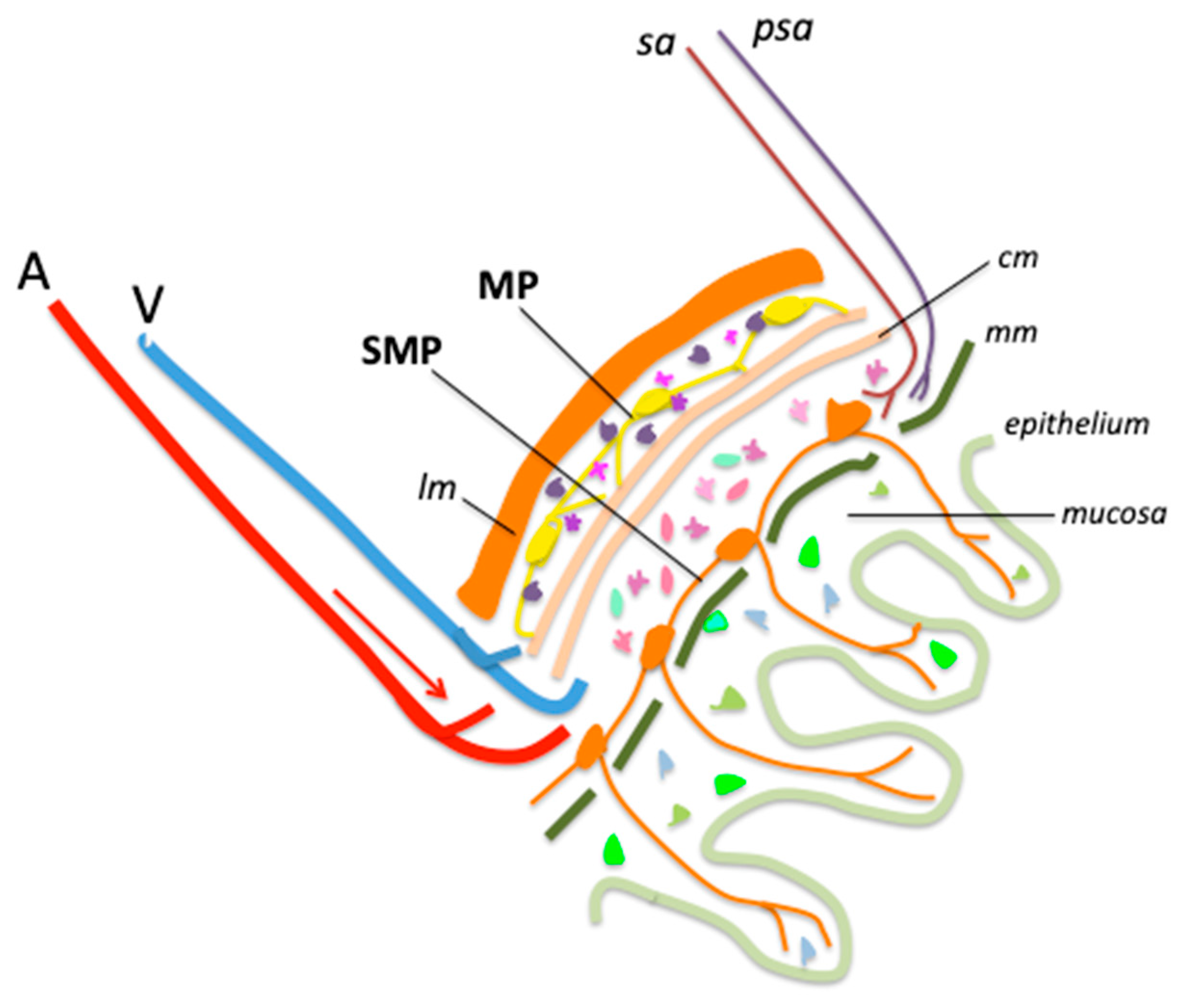
5.5. Choice of a Route of Administration
5.5.1. Intravenous Administration
5.5.2. Enteral Administration
5.5.3. Intraperitoneal Administration
5.5.4. Bowel Intramural Administration
5.6. The Animal and Cellular Model Challenges
6. Prospects and Challenges for Future Gene Therapy in CD
7. Conclusions
Author Contributions
Funding
Conflicts of Interest
Abbreviations
| AAV | Adeno-associated viral vectors |
| AdV | Adenovirus |
| CAG | CMV early enhancer/chicken β-actin/short β-globin |
| CBA | Chicken β-actin |
| CBh | CBA hybrid |
| CD | Crohn’s disease |
| CMV | Cytomegalovirus |
| Cnp | 2′,3′-cyclic-nucleotide 3′-phosphodiesterase |
| CNS | Central nervous system |
| CRC | Colorectal cancer |
| CSF | Colony-stimulating factor |
| eGAPS | enteric glia associated with psychological stress |
| EGF | Epidermal growth factor |
| EGFP | Enhanced green fluorescent protein |
| EGCs | Enteric glial cells |
| ENS | Enteric nervous system |
| GDNF | Glial cell line-derived neurotrophic factor |
| GFAP | Glial fibrillary protein |
| GWAS | Genome-wide association studies |
| IBD | Inflammatory bowel diseases |
| IDLV | Integrase-defective lentiviral vectors |
| IFN | Interferon |
| IL | Interleukin |
| ILC | Innate lymphoid cells |
| IV | Intravenous |
| LV | Lentivirus |
| MAG | Myelin-associated glycoprotein |
| Mbp | Myelin basic protein gene |
| MLV | Murine leukemia virus |
| MP | Myenteric plexus |
| Mpz | Myelin-specific myelin protein zero |
| PGK | Phosphoglycerate kinase |
| Plp | Proteolipid protein |
| PLP-1 | Proteolipid protein 1 |
| PNS | Peripheral nervous system |
| sCAG | Short CMV early enhancer/chicken β-actin/short β-globin |
| SIN | Self-inactivating |
| SMA | Superior mesenteric artery |
| SMP | Submucosal plexus |
| SOX10 | SRY-Box Transcription Factor 10 |
| SYN | Synapsin |
| TGF | Transforming growth factor |
| TNBS | 2,4,6-trinitrobenzene sulphonic acid |
| TNF | Tumor necrosis factor |
| VIP | Vasoactive intestinal peptide |
| VSV-G | Vesicular stomatitis virus G protein |
References
- Gordon, H.; Minozzi, S.; Kopylov, U.; Verstockt, B.; Chaparro, M.; Buskens, C.; Warusavitarne, J.; Agrawal, M.; Allocca, M.; Atreya, R.; et al. ECCO Guidelines on Therapeutics in Crohn’s Disease: Medical Treatment. J. Crohn’s Colitis 2024, 18, 1531–1555. [Google Scholar] [CrossRef] [Scilit]
- Click, B.; Merchea, A.; Colibaseanu, D.T.; Regueiro, M.; Farraye, F.A.; Stocchi, L. Ileocolic Resection for Crohn Disease: The Influence of Different Surgical Techniques on Perioperative Outcomes, Recurrence Rates, and Endoscopic Surveillance. Inflamm. Bowel Dis. 2022, 28, 289–298. [Google Scholar] [CrossRef] [Scilit]
- Torres, J.; Mehandru, S.; Colombel, J.-F.; Peyrin-Biroulet, L. Crohn’s Disease. Lancet 2017, 389, 1741–1755. [Google Scholar] [CrossRef] [Scilit]
- Uhlig, H.H.; Schwerd, T.; Koletzko, S.; Shah, N.; Kammermeier, J.; Elkadri, A.; Ouahed, J.; Wilson, D.C.; Travis, S.P.; Turner, D.; et al. The Diagnostic Approach to Monogenic Very Early Onset Inflammatory Bowel Disease. Gastroenterology 2014, 147, 990–1007.e3. [Google Scholar] [CrossRef] [Scilit]
- Uhlig, H.H.; Schwerd, T. From Genes to Mechanisms: The Expanding Spectrum of Monogenic Disorders Associated with Inflammatory Bowel Disease. Inflamm. Bowel Dis. 2016, 22, 202–212. [Google Scholar] [CrossRef] [Scilit] [PubMed]
- Denson, L.A.; Curran, M.; McGovern, D.P.B.; Koltun, W.A.; Duerr, R.H.; Kim, S.C.; Sartor, R.B.; Sylvester, F.A.; Abraham, C.; de Zoeten, E.F.; et al. Challenges in IBD Research: Precision Medicine. Inflamm. Bowel Dis. 2019, 25, S31–S39. [Google Scholar] [CrossRef] [Scilit] [PubMed]
- Cleynen, I.; Boucher, G.; Jostins, L.; Schumm, L.P.; Zeissig, S.; Ahmad, T.; Andersen, V.; Andrews, J.M.; Annese, V.; Brand, S.; et al. Inherited Determinants of Crohn’s Disease and Ulcerative Colitis Phenotypes: A Genetic Association Study. Lancet 2016, 387, 156–167. [Google Scholar] [CrossRef] [Scilit] [PubMed]
- Jans, D.; Cleynen, I. The Genetics of Non-Monogenic IBD. Hum. Genet. 2023, 142, 669–682. [Google Scholar] [CrossRef] [Scilit] [PubMed]
- Mirkov, M.U.; Verstockt, B.; Cleynen, I. Genetics of Inflammatory Bowel Disease: Beyond NOD2. Lancet Gastroenterol. Hepatol. 2017, 2, 224–234. [Google Scholar] [CrossRef] [Scilit] [PubMed]
- Garza-Hernandez, D.; Sepulveda-Villegas, M.; Garcia-Pelaez, J.; Aguirre-Gamboa, R.; Lakatos, P.L.; Estrada, K.; Martinez-Vazquez, M.; Trevino, V. A Systematic Review and Functional Bioinformatics Analysis of Genes Associated with Crohn’s Disease Identify More than 120 Related Genes. BMC Genom. 2022, 23, 302. [Google Scholar] [CrossRef] [Scilit] [PubMed]
- Noble, A.J.; Nowak, J.K.; Adams, A.T.; Uhlig, H.H.; Satsangi, J. Defining Interactions Between the Genome, Epigenome, and the Environment in Inflammatory Bowel Disease: Progress and Prospects. Gastroenterology 2023, 165, 44–60.e2. [Google Scholar] [CrossRef] [Scilit]
- de Ponthaud, C.; Abdalla, S.; Belot, M.-P.; Shao, X.; Penna, C.; Brouquet, A.; Bougnères, P. Increased CpG Methylation at the CDH1 Locus in Inflamed Ileal Mucosa of Patients with Crohn Disease. Clin. Epigenetics 2024, 16, 28. [Google Scholar] [CrossRef] [Scilit]
- Nanki, K.; Fujii, M.; Shimokawa, M.; Matano, M.; Nishikori, S.; Date, S.; Takano, A.; Toshimitsu, K.; Ohta, Y.; Takahashi, S.; et al. Somatic Inflammatory Gene Mutations in Human Ulcerative Colitis Epithelium. Nature 2020, 577, 254–259. [Google Scholar] [CrossRef] [Scilit]
- Meresse, B.; Rutgeerts, P.; Malchow, H.; Dubucquoi, S.; Dessaint, J.P.; Cohard, M.; Colombel, J.F.; Desreumaux, P. Low Ileal Interleukin 10 Concentrations Are Predictive of Endoscopic Recurrence in Patients with Crohn’s Disease. Gut 2002, 50, 25–28. [Google Scholar] [CrossRef] [Scilit] [PubMed]
- Dang, J.T.; Dang, T.T.; Wine, E.; Dicken, B.; Madsen, K.; Laffin, M. The Genetics of Postoperative Recurrence in Crohn Disease: A Systematic Review, Meta-Analysis, and Framework for Future Work. Crohn’s Colitis 360 2021, 3, otaa094. [Google Scholar] [CrossRef] [Scilit] [PubMed]
- Ngollo, M.; Perez, K.; Hammoudi, N.; Gorelik, Y.; Delord, M.; Auzolle, C.; Bottois, H.; Cazals-Hatem, D.; Bezault, M.; Nancey, S.; et al. Identification of Gene Expression Profiles Associated with an Increased Risk of Post-Operative Recurrence in Crohn’s Disease. J. Crohn’s Colitis 2022, 16, 1269–1280. [Google Scholar] [CrossRef] [Scilit] [PubMed]
- Magro, F.; Doherty, G.; Peyrin-Biroulet, L.; Svrcek, M.; Borralho, P.; Walsh, A.; Carneiro, F.; Rosini, F.; de Hertogh, G.; Biedermann, L.; et al. ECCO Position Paper: Harmonization of the Approach to Ulcerative Colitis Histopathology. J. Crohn’s Colitis 2020, 14, 1503–1511. [Google Scholar] [CrossRef] [Scilit]
- Martini, E.; Krug, S.M.; Siegmund, B.; Neurath, M.F.; Becker, C. Mend Your Fences: The Epithelial Barrier and Its Relationship With Mucosal Immunity in Inflammatory Bowel Disease. Cell. Mol. Gastroenterol. Hepatol. 2017, 4, 33–46. [Google Scholar] [CrossRef] [Scilit]
- Chang, J.T. Pathophysiology of Inflammatory Bowel Diseases. N. Engl. J. Med. 2020, 383, 2652–2664. [Google Scholar] [CrossRef] [Scilit]
- Langner, C.; Magro, F.; Driessen, A.; Ensari, A.; Mantzaris, G.J.; Villanacci, V.; Becheanu, G.; Borralho Nunes, P.; Cathomas, G.; Fries, W.; et al. The Histopathological Approach to Inflammatory Bowel Disease: A Practice Guide. Virchows Arch. 2014, 464, 511–527. [Google Scholar] [CrossRef] [Scilit]
- Guan, Q. A Comprehensive Review and Update on the Pathogenesis of Inflammatory Bowel Disease. J. Immunol. Res. 2019, 2019, 7247238. [Google Scholar] [CrossRef] [Scilit]
- Seguella, L.; Gulbransen, B.D. Enteric Glial Biology, Intercellular Signalling and Roles in Gastrointestinal Disease. Nat. Rev. Gastroenterol. Hepatol. 2021, 18, 571–587. [Google Scholar] [CrossRef] [Scilit]
- Ahmadzai, M.M.; Seguella, L.; Gulbransen, B.D. Circuit-Specific Enteric Glia Regulate Intestinal Motor Neurocircuits. Proc. Natl. Acad. Sci. USA 2021, 118, e2025938118. [Google Scholar] [CrossRef] [Scilit]
- Rao, M.; Gulbransen, B.D. Enteric Glia. Cold Spring Harb. Perspect. Biol. 2025, 17, a041368. [Google Scholar] [CrossRef] [Scilit]
- Santhosh, S.; Zanoletti, L.; Stamp, L.A.; Hao, M.M.; Matteoli, G. From Diversity to Disease: Unravelling the Role of Enteric Glial Cells. Front. Immunol. 2024, 15, 1408744. [Google Scholar] [CrossRef] [Scilit] [PubMed]
- Gabella, G. Glial Cells in the Myenteric Plexus. Z. Naturforsch B 1971, 26, 244–245. [Google Scholar] [CrossRef] [Scilit]
- Cook, R.D.; Burnstock, G. The Ultrastructure of Auerbach’s Plexus in the Guinea-Pig. II. Non-Neuronal Elements. J. Neurocytol. 1976, 5, 195–206. [Google Scholar] [CrossRef] [Scilit] [PubMed]
- Gershon, M.D.; Rothman, T.P. Enteric Glia. Glia 1991, 4, 195–204. [Google Scholar] [CrossRef] [Scilit]
- Kister, A.; Kister, I. Overview of Myelin, Major Myelin Lipids, and Myelin-Associated Proteins. Front. Chem. 2022, 10, 1041961. [Google Scholar] [CrossRef] [Scilit]
- Rao, M.; Nelms, B.D.; Dong, L.; Salinas-Rios, V.; Rutlin, M.; Gershon, M.D.; Corfas, G. Enteric Glia Express Proteolipid Protein 1 and Are a Transcriptionally Unique Population of Glia in the Mammalian Nervous System. Glia 2015, 63, 2040–2057. [Google Scholar] [CrossRef] [Scilit] [PubMed]
- Boesmans, W.; Lasrado, R.; Vanden Berghe, P.; Pachnis, V. Heterogeneity and Phenotypic Plasticity of Glial Cells in the Mammalian Enteric Nervous System. Glia 2015, 63, 229–241. [Google Scholar] [CrossRef] [Scilit] [PubMed]
- Rosenberg, H.J.; Rao, M. Enteric Glia in Homeostasis and Disease: From Fundamental Biology to Human Pathology. iScience 2021, 24, 102863. [Google Scholar] [CrossRef] [Scilit]
- Liu, C.; Yang, J. Enteric Glial Cells in Immunological Disorders of the Gut. Front. Cell Neurosci. 2022, 16, 895871. [Google Scholar] [CrossRef] [Scilit]
- Seguella, L.; McClain, J.L.; Esposito, G.; Gulbransen, B.D. Functional Intraregional and Interregional Heterogeneity between Myenteric Glial Cells of the Colon and Duodenum in Mice. J. Neurosci. 2022, 42, 8694–8708. [Google Scholar] [CrossRef] [Scilit]
- Delvalle, N.M.; Dharshika, C.; Morales-Soto, W.; Fried, D.E.; Gaudette, L.; Gulbransen, B.D. Communication Between Enteric Neurons, Glia, and Nociceptors Underlies the Effects of Tachykinins on Neuroinflammation. Cell. Mol. Gastroenterol. Hepatol. 2018, 6, 321–344. [Google Scholar] [CrossRef] [Scilit]
- Benskey, M.J.; Kuhn, N.C.; Galligan, J.J.; Garcia, J.; Boye, S.E.; Hauswirth, W.W.; Mueller, C.; Boye, S.L.; Manfredsson, F.P. Targeted Gene Delivery to the Enteric Nervous System Using AAV: A Comparison across Serotypes and Capsid Mutants. Mol. Ther. 2015, 23, 488–500. [Google Scholar] [CrossRef] [Scilit]
- Laddach, A.; Chng, S.H.; Lasrado, R.; Progatzky, F.; Shapiro, M.; Erickson, A.; Sampedro Castaneda, M.; Artemov, A.V.; Bon-Frauches, A.C.; Amaniti, E.-M.; et al. A Branching Model of Lineage Differentiation Underpinning the Neurogenic Potential of Enteric Glia. Nat. Commun. 2023, 14, 5904. [Google Scholar] [CrossRef] [Scilit]
- Guyer, R.A.; Stavely, R.; Robertson, K.; Bhave, S.; Mueller, J.L.; Picard, N.M.; Hotta, R.; Kaltschmidt, J.A.; Goldstein, A.M. Single-Cell Multiome Sequencing Clarifies Enteric Glial Diversity and Identifies an Intraganglionic Population Poised for Neurogenesis. Cell Rep. 2023, 42, 112194. [Google Scholar] [CrossRef] [Scilit] [PubMed]
- Laranjeira, C.; Sandgren, K.; Kessaris, N.; Richardson, W.; Potocnik, A.; Vanden Berghe, P.; Pachnis, V. Glial Cells in the Mouse Enteric Nervous System Can Undergo Neurogenesis in Response to Injury. J. Clin. Investig. 2011, 121, 3412–3424. [Google Scholar] [CrossRef] [Scilit]
- Neunlist, M.; Van Landeghem, L.; Mahé, M.M.; Derkinderen, P.; des Varannes, S.B.; Rolli-Derkinderen, M. The Digestive Neuronal-Glial-Epithelial Unit: A New Actor in Gut Health and Disease. Nat. Rev. Gastroenterol. Hepatol. 2013, 10, 90–100. [Google Scholar] [CrossRef] [Scilit] [PubMed]
- Soret, R.; Coquenlorge, S.; Cossais, F.; Meurette, G.; Rolli-Derkinderen, M.; Neunlist, M. Characterization of Human, Mouse, and Rat Cultures of Enteric Glial Cells and Their Effect on Intestinal Epithelial Cells. Neurogastroenterol. Motil. 2013, 25, e755–e764. [Google Scholar] [CrossRef] [Scilit]
- Bach-Ngohou, K.; Mahé, M.M.; Aubert, P.; Abdo, H.; Boni, S.; Bourreille, A.; Denis, M.G.; Lardeux, B.; Neunlist, M.; Masson, D. Enteric Glia Modulate Epithelial Cell Proliferation and Differentiation through 15-Deoxy-12,14-Prostaglandin J2. J. Physiol. 2010, 588, 2533–2544. [Google Scholar] [CrossRef] [Scilit] [PubMed]
- Neunlist, M.; Aubert, P.; Bonnaud, S.; Van Landeghem, L.; Coron, E.; Wedel, T.; Naveilhan, P.; Ruhl, A.; Lardeux, B.; Savidge, T.; et al. Enteric Glia Inhibit Intestinal Epithelial Cell Proliferation Partly through a TGF-Beta1-Dependent Pathway. Am. J. Physiol. Gastrointest. Liver Physiol. 2007, 292, G231–G241. [Google Scholar] [CrossRef] [Scilit]
- Van Landeghem, L.; Chevalier, J.; Mahé, M.M.; Wedel, T.; Urvil, P.; Derkinderen, P.; Savidge, T.; Neunlist, M. Enteric Glia Promote Intestinal Mucosal Healing via Activation of Focal Adhesion Kinase and Release of proEGF. Am. J. Physiol. Gastrointest. Liver Physiol. 2011, 300, G976–G987. [Google Scholar] [CrossRef] [Scilit]
- von Boyen, G.B.T.; Schulte, N.; Pflüger, C.; Spaniol, U.; Hartmann, C.; Steinkamp, M. Distribution of Enteric Glia and GDNF during Gut Inflammation. BMC Gastroenterol. 2011, 11, 3. [Google Scholar] [CrossRef] [Scilit]
- Spits, H.; Artis, D.; Colonna, M.; Diefenbach, A.; Di Santo, J.P.; Eberl, G.; Koyasu, S.; Locksley, R.M.; McKenzie, A.N.J.; Mebius, R.E.; et al. Innate Lymphoid Cells—A Proposal for Uniform Nomenclature. Nat. Rev. Immunol. 2013, 13, 145–149. [Google Scholar] [CrossRef] [Scilit]
- Spits, H.; Di Santo, J.P. The Expanding Family of Innate Lymphoid Cells: Regulators and Effectors of Immunity and Tissue Remodeling. Nat. Immunol. 2011, 12, 21–27. [Google Scholar] [CrossRef] [Scilit]
- Progatzky, F.; Shapiro, M.; Chng, S.H.; Garcia-Cassani, B.; Classon, C.H.; Sevgi, S.; Laddach, A.; Bon-Frauches, A.C.; Lasrado, R.; Rahim, M.; et al. Regulation of Intestinal Immunity and Tissue Repair by Enteric Glia. Nature 2021, 599, 125–130. [Google Scholar] [CrossRef] [Scilit] [PubMed]
- Grubišić, V.; McClain, J.L.; Fried, D.E.; Grants, I.; Rajasekhar, P.; Csizmadia, E.; Ajijola, O.A.; Watson, R.E.; Poole, D.P.; Robson, S.C.; et al. Enteric Glia Modulate Macrophage Phenotype and Visceral Sensitivity Following Inflammation. Cell Rep. 2020, 32, 108100. [Google Scholar] [CrossRef] [Scilit] [PubMed]
- Stakenborg, M.; Abdurahiman, S.; De Simone, V.; Goverse, G.; Stakenborg, N.; van Baarle, L.; Wu, Q.; Pirottin, D.; Kim, J.-S.; Chappell-Maor, L.; et al. Enteric Glial Cells Favor Accumulation of Anti-Inflammatory Macrophages during the Resolution of Muscularis Inflammation. Mucosal Immunol. 2022, 15, 1296–1308. [Google Scholar] [CrossRef] [Scilit]
- Kermarrec, L.; Durand, T.; Neunlist, M.; Naveilhan, P.; Neveu, I. Enteric Glial Cells Have Specific Immunosuppressive Properties. J. Neuroimmunol. 2016, 295, 79–83. [Google Scholar] [CrossRef] [Scilit] [PubMed]
- Chow, A.K.; Grubišić, V.; Gulbransen, B.D. Enteric Glia Regulate Lymphocyte Activation via Autophagy-Mediated MHC-II Expression. Cell. Mol. Gastroenterol. Hepatol. 2021, 12, 1215–1237. [Google Scholar] [CrossRef] [Scilit]
- Ibiza, S.; García-Cassani, B.; Ribeiro, H.; Carvalho, T.; Almeida, L.; Marques, R.; Misic, A.M.; Bartow-McKenney, C.; Larson, D.M.; Pavan, W.J.; et al. Glial-Cell-Derived Neuroregulators Control Type 3 Innate Lymphoid Cells and Gut Defence. Nature 2016, 535, 440–443. [Google Scholar] [CrossRef] [Scilit] [PubMed]
- Cornet, A.; Savidge, T.C.; Cabarrocas, J.; Deng, W.L.; Colombel, J.F.; Lassmann, H.; Desreumaux, P.; Liblau, R.S. Enterocolitis Induced by Autoimmune Targeting of Enteric Glial Cells: A Possible Mechanism in Crohn’s Disease? Proc. Natl. Acad. Sci. USA 2001, 98, 13306–13311. [Google Scholar] [CrossRef] [Scilit] [PubMed]
- Cabarrocas, J.; Savidge, T.C.; Liblau, R.S. Role of Enteric Glial Cells in Inflammatory Bowel Disease. Glia 2003, 41, 81–93. [Google Scholar] [CrossRef] [Scilit] [PubMed]
- Pochard, C.; Coquenlorge, S.; Jaulin, J.; Cenac, N.; Vergnolle, N.; Meurette, G.; Freyssinet, M.; Neunlist, M.; Rolli-Derkinderen, M. Defects in 15-HETE Production and Control of Epithelial Permeability by Human Enteric Glial Cells From Patients With Crohn’s Disease. Gastroenterology 2016, 150, 168–180. [Google Scholar] [CrossRef] [Scilit]
- Grubišić, V.; Perez-Medina, A.L.; Fried, D.E.; Sévigny, J.; Robson, S.C.; Galligan, J.J.; Gulbransen, B.D. NTPDase1 and -2 Are Expressed by Distinct Cellular Compartments in the Mouse Colon and Differentially Impact Colonic Physiology and Function after DSS Colitis. Am. J. Physiol. Gastrointest. Liver Physiol. 2019, 317, G314–G332. [Google Scholar] [CrossRef] [Scilit]
- Grubišić, V.; Bali, V.; Fried, D.E.; Eltzschig, H.K.; Robson, S.C.; Mazei-Robison, M.S.; Gulbransen, B.D. Enteric Glial Adenosine 2B Receptor Signaling Mediates Persistent Epithelial Barrier Dysfunction Following Acute DSS Colitis. Mucosal Immunol. 2022, 15, 964–976. [Google Scholar] [CrossRef] [Scilit]
- Dora, D.; Ferenczi, S.; Stavely, R.; Toth, V.E.; Varga, Z.V.; Kovacs, T.; Bodi, I.; Hotta, R.; Kovacs, K.J.; Goldstein, A.M.; et al. Evidence of a Myenteric Plexus Barrier and Its Macrophage-Dependent Degradation During Murine Colitis: Implications in Enteric Neuroinflammation. Cell. Mol. Gastroenterol. Hepatol. 2021, 12, 1617–1641. [Google Scholar] [CrossRef] [Scilit]
- Wiese, J.J.; Manna, S.; Kühl, A.A.; Fascì, A.; Elezkurtaj, S.; Sonnenberg, E.; Bubeck, M.; Atreya, R.; Becker, C.; Weixler, B.; et al. Myenteric Plexus Immune Cell Infiltrations and Neurotransmitter Expression in Crohn’s Disease and Ulcerative Colitis. J. Crohn’s Colitis 2024, 18, 121–133. [Google Scholar] [CrossRef] [Scilit]
- Suman, S. Enteric Nervous System Alterations in Inflammatory Bowel Disease: Perspectives and Implications. Gastrointest. Disord. 2024, 6, 368–379. [Google Scholar] [CrossRef] [Scilit] [PubMed]
- Ferrante, M.; de Hertogh, G.; Hlavaty, T.; D’Haens, G.; Penninckx, F.; D’Hoore, A.; Vermeire, S.; Rutgeerts, P.; Geboes, K.; van Assche, G. The Value of Myenteric Plexitis to Predict Early Postoperative Crohn’s Disease Recurrence. Gastroenterology 2006, 130, 1595–1606. [Google Scholar] [CrossRef] [Scilit] [PubMed]
- Lemmens, B.; de Buck van Overstraeten, A.; Arijs, I.; Sagaert, X.; Van Assche, G.; Vermeire, S.; Tertychnyy, A.; Geboes, K.; Wolthuis, A.; D’Hoore, A.; et al. Submucosal Plexitis as a Predictive Factor for Postoperative Endoscopic Recurrence in Patients with Crohn’s Disease Undergoing a Resection with Ileocolonic Anastomosis: Results from a Prospective Single-Centre Study. J. Crohn’s Colitis 2017, 11, 212–220. [Google Scholar] [CrossRef] [Scilit]
- Ferrante, M.; Pouillon, L.; Mañosa, M.; Savarino, E.; Allez, M.; Kapizioni, C.; Arebi, N.; Carvello, M.; Myrelid, P.; De Vries, A.C.; et al. Results of the Eighth Scientific Workshop of ECCO: Prevention and Treatment of Postoperative Recurrence in Patients With Crohn’s Disease Undergoing an Ileocolonic Resection With Ileocolonic Anastomosis. J. Crohn’s Colitis 2023, 17, 1707–1722. [Google Scholar] [CrossRef] [Scilit] [PubMed]
- Schneider, K.M.; Blank, N.; Alvarez, Y.; Thum, K.; Lundgren, P.; Litichevskiy, L.; Sleeman, M.; Bahnsen, K.; Kim, J.; Kardo, S.; et al. The Enteric Nervous System Relays Psychological Stress to Intestinal Inflammation. Cell 2023, 186, 2823–2838.e20. [Google Scholar] [CrossRef] [Scilit]
- Uchino, M.; Ikeuchi, H.; Hata, K.; Minagawa, T.; Horio, Y.; Kuwahara, R.; Nakamura, S.; Watanabe, K.; Saruta, M.; Fujii, T.; et al. Intestinal Cancer in Patients with Crohn’s Disease: A Systematic Review and Meta-Analysis. J. Gastroenterol. Hepatol. 2021, 36, 329–336. [Google Scholar] [CrossRef] [Scilit]
- Mariant, C.L.; Bacola, G.; Van Landeghem, L. Mini-Review: Enteric Glia of the Tumor Microenvironment: An Affair of Corruption. Neurosci. Lett. 2023, 814, 137416. [Google Scholar] [CrossRef] [Scilit]
- Schonkeren, S.L.; Thijssen, M.S.; Vaes, N.; Boesmans, W.; Melotte, V. The Emerging Role of Nerves and Glia in Colorectal Cancer. Cancers 2021, 13, 152. [Google Scholar] [CrossRef] [Scilit]
- He, K.; Wang, H.; Huo, R.; Jiang, S.-H.; Xue, J. Schwann Cells and Enteric Glial Cells: Emerging Stars in Colorectal Cancer. Biochim. Biophys. Acta Rev. Cancer 2024, 1879, 189160. [Google Scholar] [CrossRef] [Scilit]
- Valès, S.; Bacola, G.; Biraud, M.; Touvron, M.; Bessard, A.; Geraldo, F.; Dougherty, K.A.; Lashani, S.; Bossard, C.; Flamant, M.; et al. Tumor Cells Hijack Enteric Glia to Activate Colon Cancer Stem Cells and Stimulate Tumorigenesis. EBioMedicine 2019, 49, 172–188. [Google Scholar] [CrossRef] [Scilit] [PubMed]
- van Baarle, L.; De Simone, V.; Schneider, L.; Santhosh, S.; Abdurahiman, S.; Biscu, F.; Schneider, R.; Zanoletti, L.; Siqueira de Mello, R.; Verbandt, S.; et al. IL-1R Signaling Drives Enteric Glia-Macrophage Interactions in Colorectal Cancer. Nat. Commun. 2024, 15, 6079. [Google Scholar] [CrossRef] [Scilit]
- Ferrante, M.; D’Haens, G.; Jairath, V.; Danese, S.; Chen, M.; Ghosh, S.; Hisamatsu, T.; Kierkus, J.; Siegmund, B.; Bragg, S.M.; et al. Efficacy and Safety of Mirikizumab in Patients with Moderately-to-Severely Active Crohn’s Disease: A Phase 3, Multicentre, Randomised, Double-Blind, Placebo-Controlled and Active-Controlled, Treat-through Study. Lancet 2024, 404, 2423–2436. [Google Scholar] [CrossRef] [Scilit]
- Ferrante, M.; Panaccione, R.; Baert, F.; Bossuyt, P.; Colombel, J.-F.; Danese, S.; Dubinsky, M.; Feagan, B.G.; Hisamatsu, T.; Lim, A.; et al. Risankizumab as Maintenance Therapy for Moderately to Severely Active Crohn’s Disease: Results from the Multicentre, Randomised, Double-Blind, Placebo-Controlled, Withdrawal Phase 3 FORTIFY Maintenance Trial. Lancet 2022, 399, 2031–2046. [Google Scholar] [CrossRef] [Scilit]
- Ferrante, M.; Irving, P.M.; Abreu, M.T.; Axler, J.; Gao, X.; Cao, Q.; Fujii, T.; Rausch, A.; Torres, J.; Neimark, E.; et al. Maintenance Risankizumab Sustains Induction Response in Patients with Crohn’s Disease in a Randomized Phase 3 Trial. J. Crohn’s Colitis 2024, 18, 416–423. [Google Scholar] [CrossRef] [Scilit]
- Christensen, B.; Scharl, M.; Bressler, B.; Khan, Z.; Halchenko, Y.; Gisler, C.; Kamble, P.; Adsul, S.; Farhat, Z.; Ferrante, M. Real-World Clinical Effectiveness and Safety of Vedolizumab and Ustekinumab in Biologic-Naïve Patients With Early or Late Crohn’s Disease: Results From the EVOLVE Expansion Study. Crohn’s Colitis 360 2025, 7, otaf031. [Google Scholar] [CrossRef] [Scilit] [PubMed]
- Chapman, T.P.; Satsangi, J. Expanding Therapeutic Options in Crohn’s Disease. Lancet 2024, 404, 2396–2398. [Google Scholar] [CrossRef] [Scilit]
- Peyrin-Biroulet, L.; Chapman, J.C.; Colombel, J.-F.; Caprioli, F.; D’Haens, G.; Ferrante, M.; Schreiber, S.; Atreya, R.; Danese, S.; Lindsay, J.O.; et al. Risankizumab versus Ustekinumab for Moderate-to-Severe Crohn’s Disease. N. Engl. J. Med. 2024, 391, 213–223. [Google Scholar] [CrossRef] [Scilit]
- Colombel, J.F.; Sandborn, W.J.; Reinisch, W.; Mantzaris, G.J.; Kornbluth, A.; Rachmilewitz, D.; Lichtiger, S.; D’Haens, G.; Diamond, R.H.; Broussard, D.L.; et al. Infliximab, Azathioprine, or Combination Therapy for Crohn’s Disease. N. Engl. J. Med. 2010, 362, 1383–1395. [Google Scholar] [CrossRef] [Scilit]
- D’Haens, G.; Baert, F.; van Assche, G.; Caenepeel, P.; Vergauwe, P.; Tuynman, H.; De Vos, M.; van Deventer, S.; Stitt, L.; Donner, A.; et al. Early Combined Immunosuppression or Conventional Management in Patients with Newly Diagnosed Crohn’s Disease: An Open Randomised Trial. Lancet 2008, 371, 660–667. [Google Scholar] [CrossRef] [Scilit] [PubMed]
- Barberio, B.; Gracie, D.J.; Black, C.J.; Ford, A.C. Maintenance of Clinical Remission with Biologics and Small Molecules in Inflammatory Bowel Disease According to Trial Design: Meta-Analysis. Dig. Liver Dis. 2024, 56, 7–14. [Google Scholar] [CrossRef] [Scilit] [PubMed]
- Cho, C.W.; You, M.-W.; Oh, C.H.; Lee, C.K.; Moon, S.K. Long-Term Disease Course of Crohn’s Disease: Changes in Disease Location, Phenotype, Activities, and Predictive Factors. Gut Liver 2022, 16, 157–170. [Google Scholar] [CrossRef] [Scilit]
- Chanchlani, N.; Lin, S.; Bewshea, C.; Hamilton, B.; Thomas, A.; Smith, R.; Roberts, C.; Bishara, M.; Nice, R.; Lees, C.W.; et al. Mechanisms and Management of Loss of Response to Anti-TNF Therapy for Patients with Crohn’s Disease: 3-Year Data from the Prospective, Multicentre PANTS Cohort Study. Lancet Gastroenterol. Hepatol. 2024, 9, 521–538. [Google Scholar] [CrossRef] [Scilit]
- Valibouze, C.; Desreumaux, P.; Zerbib, P. Post-Surgical Recurrence of Crohn’s Disease: Situational Analysis and Future Prospects. J. Visc. Surg. 2021, 158, 401–410. [Google Scholar] [CrossRef] [Scilit]
- Maggiori, L.; Brouquet, A.; Zerbib, P.; Lefevre, J.H.; Denost, Q.; Germain, A.; Cotte, E.; Beyer-Berjot, L.; Munoz-Bongrand, N.; Desfourneaux, V.; et al. Penetrating Crohn Disease Is Not Associated With a Higher Risk of Recurrence After Surgery: A Prospective Nationwide Cohort Conducted by the Getaid Chirurgie Group. Ann. Surg. 2019, 270, 827–834. [Google Scholar] [CrossRef] [Scilit]
- Burisch, J.; Jess, T.; Martinato, M.; Lakatos, P.L.; ECCO-EpiCom. The Burden of Inflammatory Bowel Disease in Europe. J. Crohn’s Colitis 2013, 7, 322–337. [Google Scholar] [CrossRef] [Scilit] [PubMed]
- Buisson, A.; Chevaux, J.-B.; Allen, P.B.; Bommelaer, G.; Peyrin-Biroulet, L. Review Article: The Natural History of Postoperative Crohn’s Disease Recurrence. Aliment. Pharmacol. Ther. 2012, 35, 625–633. [Google Scholar] [CrossRef] [Scilit] [PubMed]
- de Groof, E.J.; Gardenbroek, T.J.; Buskens, C.J.; Tanis, P.J.; Ponsioen, C.Y.; D’Haens, G.R.A.M.; Bemelman, W.A. The Association between Intensified Medical Treatment, Time to Surgery and Ileocolic Specimen Length in Crohn’s Disease. Color. Dis. 2017, 19, 551–558. [Google Scholar] [CrossRef] [Scilit] [PubMed]
- Beelen, E.M.J.; van der Woude, C.J.; Pierik, M.J.; Hoentjen, F.; de Boer, N.K.; Oldenburg, B.; van der Meulen, A.E.; Ponsioen, C.I.J.; Dijkstra, G.; Bruggink, A.H.; et al. Decreasing Trends in Intestinal Resection and Re-Resection in Crohn’s Disease: A Nationwide Cohort Study. Ann. Surg. 2021, 273, 557–563. [Google Scholar] [CrossRef] [Scilit] [PubMed]
- Regueiro, M.; Feagan, B.G.; Zou, B.; Johanns, J.; Blank, M.A.; Chevrier, M.; Plevy, S.; Popp, J.; Cornillie, F.J.; Lukas, M.; et al. Infliximab Reduces Endoscopic, but Not Clinical, Recurrence of Crohn’s Disease After Ileocolonic Resection. Gastroenterology 2016, 150, 1568–1578. [Google Scholar] [CrossRef] [Scilit]
- De Cruz, P.; Kamm, M.A.; Hamilton, A.L.; Ritchie, K.J.; Krejany, E.O.; Gorelik, A.; Liew, D.; Prideaux, L.; Lawrance, I.C.; Andrews, J.M.; et al. Efficacy of Thiopurines and Adalimumab in Preventing Crohn’s Disease Recurrence in High-Risk Patients—A POCER Study Analysis. Aliment. Pharmacol. Ther. 2015, 42, 867–879. [Google Scholar] [CrossRef] [Scilit]
- Feagan, B.G.; Sandborn, W.J.; Gasink, C.; Jacobstein, D.; Lang, Y.; Friedman, J.R.; Blank, M.A.; Johanns, J.; Gao, L.-L.; Miao, Y.; et al. Ustekinumab as Induction and Maintenance Therapy for Crohn’s Disease. N. Engl. J. Med. 2016, 375, 1946–1960. [Google Scholar] [CrossRef] [Scilit] [PubMed]
- Berg, D.J.; Davidson, N.; Kühn, R.; Müller, W.; Menon, S.; Holland, G.; Thompson-Snipes, L.; Leach, M.W.; Rennick, D. Enterocolitis and Colon Cancer in Interleukin-10-Deficient Mice Are Associated with Aberrant Cytokine Production and CD4(+) TH1-like Responses. J. Clin. Investig. 1996, 98, 1010–1020. [Google Scholar] [CrossRef] [Scilit]
- Spencer, S.D.; Di Marco, F.; Hooley, J.; Pitts-Meek, S.; Bauer, M.; Ryan, A.M.; Sordat, B.; Gibbs, V.C.; Aguet, M. The Orphan Receptor CRF2-4 Is an Essential Subunit of the Interleukin 10 Receptor. J. Exp. Med. 1998, 187, 571–578. [Google Scholar] [CrossRef] [Scilit]
- Buelens, C.; Verhasselt, V.; De Groote, D.; Thielemans, K.; Goldman, M.; Willems, F. Human Dendritic Cell Responses to Lipopolysaccharide and CD40 Ligation Are Differentially Regulated by Interleukin-10. Eur. J. Immunol. 1997, 27, 1848–1852. [Google Scholar] [CrossRef] [Scilit]
- Moore, K.W.; de Waal Malefyt, R.; Coffman, R.L.; O’Garra, A. Interleukin-10 and the Interleukin-10 Receptor. Annu. Rev. Immunol. 2001, 19, 683–765. [Google Scholar] [CrossRef] [Scilit] [PubMed]
- Groux, H.; O’Garra, A.; Bigler, M.; Rouleau, M.; Antonenko, S.; de Vries, J.E.; Roncarolo, M.G. A CD4+ T-Cell Subset Inhibits Antigen-Specific T-Cell Responses and Prevents Colitis. Nature 1997, 389, 737–742. [Google Scholar] [CrossRef] [Scilit]
- Powrie, F.; Leach, M.W.; Mauze, S.; Menon, S.; Caddle, L.B.; Coffman, R.L. Inhibition of Th1 Responses Prevents Inflammatory Bowel Disease in Scid Mice Reconstituted with CD45RBhi CD4+ T Cells. Immunity 1994, 1, 553–562. [Google Scholar] [CrossRef] [Scilit] [PubMed]
- Herfarth, H.H.; Böcker, U.; Janardhanam, R.; Sartor, R.B. Subtherapeutic Corticosteroids Potentiate the Ability of Interleukin 10 to Prevent Chronic Inflammation in Rats. Gastroenterology 1998, 115, 856–865. [Google Scholar] [CrossRef] [Scilit]
- Fedorak, R.N.; Gangl, A.; Elson, C.O.; Rutgeerts, P.; Schreiber, S.; Wild, G.; Hanauer, S.B.; Kilian, A.; Cohard, M.; LeBeaut, A.; et al. Recombinant Human Interleukin 10 in the Treatment of Patients with Mild to Moderately Active Crohn’s Disease. The Interleukin 10 Inflammatory Bowel Disease Cooperative Study Group. Gastroenterology 2000, 119, 1473–1482. [Google Scholar] [CrossRef] [Scilit] [PubMed]
- Schreiber, S.; Fedorak, R.N.; Nielsen, O.H.; Wild, G.; Williams, C.N.; Nikolaus, S.; Jacyna, M.; Lashner, B.A.; Gangl, A.; Rutgeerts, P.; et al. Safety and Efficacy of Recombinant Human Interleukin 10 in Chronic Active Crohn’s Disease. Crohn’s Disease IL-10 Cooperative Study Group. Gastroenterology 2000, 119, 1461–1472. [Google Scholar] [CrossRef] [Scilit]
- Colombel, J.F.; Rutgeerts, P.; Malchow, H.; Jacyna, M.; Nielsen, O.H.; Rask-Madsen, J.; Van Deventer, S.; Ferguson, A.; Desreumaux, P.; Forbes, A.; et al. Interleukin 10 (Tenovil) in the Prevention of Postoperative Recurrence of Crohn’s Disease. Gut 2001, 49, 42–46. [Google Scholar] [CrossRef] [Scilit]
- Chernoff, A.E.; Granowitz, E.V.; Shapiro, L.; Vannier, E.; Lonnemann, G.; Angel, J.B.; Kennedy, J.S.; Rabson, A.R.; Wolff, S.M.; Dinarello, C.A. A Randomized, Controlled Trial of IL-10 in Humans. Inhibition of Inflammatory Cytokine Production and Immune Responses. J. Immunol. 1995, 154, 5492–5499. [Google Scholar] [CrossRef] [Scilit]
- Tilg, H.; van Montfrans, C.; van den Ende, A.; Kaser, A.; van Deventer, S.J.H.; Schreiber, S.; Gregor, M.; Ludwiczek, O.; Rutgeerts, P.; Gasche, C.; et al. Treatment of Crohn’s Disease with Recombinant Human Interleukin 10 Induces the Proinflammatory Cytokine Interferon Gamma. Gut 2002, 50, 191–195. [Google Scholar] [CrossRef] [Scilit]
- Sanchez, A.L.; Langdon, C.M.; Akhtar, M.; Lu, J.; Richards, C.D.; Bercik, P.; McKay, D.M. Adenoviral Transfer of the Murine Oncostatin M Gene Suppresses Dextran-Sodium Sulfate-Induced Colitis. J. Interferon Cytokine Res. 2003, 23, 193–201. [Google Scholar] [CrossRef] [Scilit]
- Verstockt, S.; Verstockt, B.; Vermeire, S. Oncostatin M as a New Diagnostic, Prognostic and Therapeutic Target in Inflammatory Bowel Disease (IBD). Expert Opin. Ther. Targets 2019, 23, 943–954. [Google Scholar] [CrossRef] [Scilit] [PubMed]
- Hogaboam, C.M.; Vallance, B.A.; Kumar, A.; Addison, C.L.; Graham, F.L.; Gauldie, J.; Collins, S.M. Therapeutic Effects of Interleukin-4 Gene Transfer in Experimental Inflammatory Bowel Disease. J. Clin. Investig. 1997, 100, 2766–2776. [Google Scholar] [CrossRef] [Scilit] [PubMed]
- Vallance, B.A.; Radojevic, N.; Hogaboam, C.M.; Deng, Y.; Gauldie, J.; Collins, S.M. IL-4 Gene Transfer to the Small Bowel Serosa Leads to Intestinal Inflammation and Smooth Muscle Hyperresponsiveness. Am. J. Physiol. Gastrointest. Liver Physiol. 2007, 292, G385–G394. [Google Scholar] [CrossRef] [Scilit] [PubMed]
- Wirtz, S.; Becker, C.; Blumberg, R.; Galle, P.R.; Neurath, M.F. Treatment of T Cell-Dependent Experimental Colitis in SCID Mice by Local Administration of an Adenovirus Expressing IL-18 Antisense mRNA. J. Immunol. 2002, 168, 411–420. [Google Scholar] [CrossRef] [Scilit]
- Mueller, C.; Braag, S.A.; Martino, A.T.; Tang, Q.; Campbell-Thompson, M.; Flotte, T.R. The Pros and Cons of Immunomodulatory IL-10 Gene Therapy with Recombinant AAV in a Cftr-/- -Dependent Allergy Mouse Model. Gene Ther. 2009, 16, 172–183. [Google Scholar] [CrossRef] [Scilit]
- Gray, S.J.; Foti, S.B.; Schwartz, J.W.; Bachaboina, L.; Taylor-Blake, B.; Coleman, J.; Ehlers, M.D.; Zylka, M.J.; McCown, T.J.; Samulski, R.J. Optimizing Promoters for Recombinant Adeno-Associated Virus-Mediated Gene Expression in the Peripheral and Central Nervous System Using Self-Complementary Vectors. Hum. Gene Ther. 2011, 22, 1143–1153. [Google Scholar] [CrossRef] [Scilit] [PubMed]
- Kuzmin, D.A.; Shutova, M.V.; Johnston, N.R.; Smith, O.P.; Fedorin, V.V.; Kukushkin, Y.S.; van der Loo, J.C.M.; Johnstone, E.C. The Clinical Landscape for AAV Gene Therapies. Nat. Rev. Drug Discov. 2021, 20, 173–174. [Google Scholar] [CrossRef] [Scilit]
- Au, H.K.E.; Isalan, M.; Mielcarek, M. Gene Therapy Advances: A Meta-Analysis of AAV Usage in Clinical Settings. Front. Med. 2021, 8, 809118. [Google Scholar] [CrossRef] [Scilit]
- Chai, S.; Wakefield, L.; Norgard, M.; Li, B.; Enicks, D.; Marks, D.L.; Grompe, M. Strong Ubiquitous Micro-Promoters for Recombinant Adeno-Associated Viral Vectors. Mol. Ther. Methods Clin. Dev. 2023, 29, 504–512. [Google Scholar] [CrossRef] [Scilit] [PubMed]
- Kery, R.; Chen, A.P.F.; Kirschen, G.W. Genetic Targeting of Astrocytes to Combat Neurodegenerative Disease. Neural Regen. Res. 2020, 15, 199–211. [Google Scholar] [CrossRef] [Scilit]
- von Jonquieres, G.; Mersmann, N.; Klugmann, C.B.; Harasta, A.E.; Lutz, B.; Teahan, O.; Housley, G.D.; Fröhlich, D.; Krämer-Albers, E.-M.; Klugmann, M. Glial Promoter Selectivity Following AAV-Delivery to the Immature Brain. PLoS ONE 2013, 8, e65646. [Google Scholar] [CrossRef] [Scilit]
- Ozgür-Gunes, Y.; Le Stunff, C.; Bougnères, P. Oligodendrocytes, the Forgotten Target of Gene Therapy. Cells 2024, 13, 1973. [Google Scholar] [CrossRef] [Scilit] [PubMed]
- Özgür-Günes, Y.; Chedik, M.; Le Stunff, C.; Fovet, C.-M.; Bougnères, P. Long-Term Disease Prevention with a Gene Therapy Targeting Oligodendrocytes in a Mouse Model of Adrenomyeloneuropathy. Hum. Gene Ther. 2022, 33, 936–949. [Google Scholar] [CrossRef] [Scilit]
- Powell, S.K.; Samulski, R.J.; McCown, T.J. AAV Capsid-Promoter Interactions Determine CNS Cell-Selective Gene Expression In Vivo. Mol. Ther. 2020, 28, 1373–1380. [Google Scholar] [CrossRef] [Scilit]
- Forghani, R.; Garofalo, L.; Foran, D.R.; Farhadi, H.F.; Lepage, P.; Hudson, T.J.; Tretjakoff, I.; Valera, P.; Peterson, A. A Distal Upstream Enhancer from the Myelin Basic Protein Gene Regulates Expression in Myelin-Forming Schwann Cells. J. Neurosci. 2001, 21, 3780–3787. [Google Scholar] [CrossRef] [Scilit] [PubMed]
- Schiza, N.; Sargiannidou, I.; Kagiava, A.; Karaiskos, C.; Nearchou, M.; Kleopa, K.A. Transgenic Replacement of Cx32 in Gap Junction-Deficient Oligodendrocytes Rescues the Phenotype of a Hypomyelinating Leukodystrophy Model. Hum. Mol. Genet. 2015, 24, 2049–2064. [Google Scholar] [CrossRef] [Scilit]
- Sargiannidou, I.; Kagiava, A.; Kleopa, K.A. Gene Therapy Approaches Targeting Schwann Cells for Demyelinating Neuropathies. Brain Res. 2020, 1728, 146572. [Google Scholar] [CrossRef] [Scilit] [PubMed]
- Xiang, H.; Xu, H.; Fan, F.; Shin, S.-M.; Hogan, Q.H.; Yu, H. Glial Fibrillary Acidic Protein Promoter Determines Transgene Expression in Satellite Glial Cells Following Intraganglionic Adeno-Associated Virus Delivery in Adult Rats. J. Neurosci. Res. 2018, 96, 436–448. [Google Scholar] [CrossRef] [Scilit] [PubMed]
- Rao, M.; Gershon, M.D. Enteric Nervous System Development: What Could Possibly Go Wrong? Nat. Rev. Neurosci. 2018, 19, 552–565. [Google Scholar] [CrossRef] [Scilit] [PubMed]
- Gulbransen, B.D.; Christofi, F.L. Are We Close to Targeting Enteric Glia in Gastrointestinal Diseases and Motility Disorders? Gastroenterology 2018, 155, 245–251. [Google Scholar] [CrossRef] [Scilit]
- Wang, J.-H.; Gessler, D.J.; Zhan, W.; Gallagher, T.L.; Gao, G. Adeno-Associated Virus as a Delivery Vector for Gene Therapy of Human Diseases. Signal Transduct. Target. Ther. 2024, 9, 78. [Google Scholar] [CrossRef] [Scilit] [PubMed]
- Maurya, S.; Sarangi, P.; Jayandharan, G.R. Safety of Adeno-Associated Virus-Based Vector-Mediated Gene Therapy-Impact of Vector Dose. Cancer Gene Ther. 2022, 29, 1305–1306. [Google Scholar] [CrossRef] [Scilit]
- Srivastava, A. Rationale and Strategies for the Development of Safe and Effective Optimized AAV Vectors for Human Gene Therapy. Mol. Ther. Nucleic Acids 2023, 32, 949–959. [Google Scholar] [CrossRef] [Scilit]
- Cheng, D.Y.; Kolls, J.K.; Lei, D.; Noel, R.A. In Vivo and in Vitro Gene Transfer and Expression in Rat Intestinal Epithelial Cells by E1-Deleted Adenoviral Vector. Hum. Gene Ther. 1997, 8, 755–764. [Google Scholar] [CrossRef] [Scilit]
- Wirtz, S.; Galle, P.R.; Neurath, M.F. Efficient Gene Delivery to the Inflamed Colon by Local Administration of Recombinant Adenoviruses with Normal or Modified Fibre Structure. Gut 1999, 44, 800–807. [Google Scholar] [CrossRef] [Scilit]
- Foreman, P.K.; Wainwright, M.J.; Alicke, B.; Kovesdi, I.; Wickham, T.J.; Smith, J.G.; Meier-Davis, S.; Fix, J.A.; Daddona, P.; Gardner, P.; et al. Adenovirus-Mediated Transduction of Intestinal Cells in Vivo. Hum. Gene Ther. 1998, 9, 1313–1321. [Google Scholar] [CrossRef] [Scilit]
- Lindsay, J.O.; Ciesielski, C.J.; Scheinin, T.; Hodgson, H.J.; Brennan, F.M. The Prevention and Treatment of Murine Colitis Using Gene Therapy with Adenoviral Vectors Encoding IL-10. J. Immunol. 2001, 166, 7625–7633. [Google Scholar] [CrossRef] [Scilit] [PubMed]
- Lindsay, J.; Van Montfrans, C.; Brennan, F.; Van Deventer, S.; Drillenburg, P.; Hodgson, H.; Te Velde, A.; Sol Rodriguez Pena, M. IL-10 Gene Therapy Prevents TNBS-Induced Colitis. Gene Ther. 2002, 9, 1715–1721. [Google Scholar] [CrossRef] [Scilit]
- Alonso-Padilla, J.; Papp, T.; Kaján, G.L.; Benkő, M.; Havenga, M.; Lemckert, A.; Harrach, B.; Baker, A.H. Development of Novel Adenoviral Vectors to Overcome Challenges Observed With HAdV-5-Based Constructs. Mol. Ther. 2016, 24, 6–16. [Google Scholar] [CrossRef] [Scilit]
- Trivedi, P.D.; Byrne, B.J.; Corti, M. Evolving Horizons: Adenovirus Vectors’ Timeless Influence on Cancer, Gene Therapy and Vaccines. Viruses 2023, 15, 2378. [Google Scholar] [CrossRef] [Scilit] [PubMed]
- Syyam, A.; Nawaz, A.; Ijaz, A.; Sajjad, U.; Fazil, A.; Irfan, S.; Muzaffar, A.; Shahid, M.; Idrees, M.; Malik, K.; et al. Adenovirus Vector System: Construction, History and Therapeutic Applications. Biotechniques 2022, 73, 297–305. [Google Scholar] [CrossRef] [Scilit] [PubMed]
- Muravyeva, A.; Smirnikhina, S. Strategies for Modifying Adenoviral Vectors for Gene Therapy. Int. J. Mol. Sci. 2024, 25, 12461. [Google Scholar] [CrossRef] [Scilit]
- Watanabe, M.; Nishikawaji, Y.; Kawakami, H.; Kosai, K.-I. Adenovirus Biology, Recombinant Adenovirus, and Adenovirus Usage in Gene Therapy. Viruses 2021, 13, 2502. [Google Scholar] [CrossRef] [Scilit] [PubMed]
- Leikas, A.J.; Ylä-Herttuala, S.; Hartikainen, J.E.K. Adenoviral Gene Therapy Vectors in Clinical Use-Basic Aspects with a Special Reference to Replication-Competent Adenovirus Formation and Its Impact on Clinical Safety. Int. J. Mol. Sci. 2023, 24, 16519. [Google Scholar] [CrossRef] [Scilit]
- Park, A.; Lee, J.Y. Adenoviral Vector System: A Comprehensive Overview of Constructions, Therapeutic Applications and Host Responses. J. Microbiol. 2024, 62, 491–509. [Google Scholar] [CrossRef] [Scilit]
- Lundstrom, K. Viral Vectors in Gene Therapy: Where Do We Stand in 2023? Viruses 2023, 15, 698. [Google Scholar] [CrossRef] [Scilit]
- Zhang, H.; Wang, H.; An, Y.; Chen, Z. Construction and Application of Adenoviral Vectors. Mol. Ther. Nucleic Acids 2023, 34, 102027. [Google Scholar] [CrossRef] [Scilit] [PubMed]
- Buckinx, R.; Timmermans, J.-P. Targeting the Gastrointestinal Tract with Viral Vectors: State of the Art and Possible Applications in Research and Therapy. Histochem. Cell Biol. 2016, 146, 709–720. [Google Scholar] [CrossRef] [Scilit] [PubMed]
- Lau, C.; Soriano, H.E.; Ledley, F.D.; Finegold, M.J.; Wolfe, J.H.; Birkenmeier, E.H.; Henning, S.J. Retroviral Gene Transfer into the Intestinal Epithelium. Hum. Gene Ther. 1995, 6, 1145–1151. [Google Scholar] [CrossRef] [Scilit] [PubMed]
- Noel, R.A.; Shukla, P.; Henning, S.J. Optimization of Gene Transfer into Intestinal Epithelial Cells Using a Retroviral Vector. J. Pediatr. Gastroenterol. Nutr. 1994, 19, 43–49. [Google Scholar] [CrossRef] [Scilit]
- Lozier, J.N.; Yankaskas, J.R.; Ramsey, W.J.; Chen, L.; Berschneider, H.; Morgan, R.A. Gut Epithelial Cells as Targets for Gene Therapy of Hemophilia. Hum. Gene Ther. 1997, 8, 1481–1490. [Google Scholar] [CrossRef] [Scilit]
- Laine, F.; Blouin, V.; Ferry, N. Evaluation of recombinant retrovirus and adenovirus for gene transfer to normal and pathologic intestinal tissue. Gastroenterol. Clin. Biol. 1999, 23, 221–228. [Google Scholar]
- Seppen, J.; Barry, S.C.; Klinkspoor, J.H.; Katen, L.J.; Lee, S.P.; Garcia, J.V.; Osborne, W.R. Apical Gene Transfer into Quiescent Human and Canine Polarized Intestinal Epithelial Cells by Lentivirus Vectors. J. Virol. 2000, 74, 7642–7645. [Google Scholar] [CrossRef] [Scilit]
- Matsumoto, H.; Kimura, T.; Haga, K.; Kasahara, N.; Anton, P.; McGowan, I. Effective in Vivo and Ex Vivo Gene Transfer to Intestinal Mucosa by VSV-G-Pseudotyped Lentiviral Vectors. BMC Gastroenterol. 2010, 10, 44. [Google Scholar] [CrossRef] [Scilit]
- Jacomino, M.; Lau, C.; James, S.Z.; Shukla, P.; Henning, S.J. Gene Transfer into Fetal Rat Intestine. Hum. Gene Ther. 1996, 7, 1757–1762. [Google Scholar] [CrossRef] [Scilit] [PubMed]
- Hasson, E.; Slovatizky, Y.; Shimoni, Y.; Falk, H.; Panet, A.; Mitrani, E. Solid Tissues Can Be Manipulated Ex Vivo and Used as Vehicles for Gene Therapy. J. Gene Med. 2005, 7, 926–935. [Google Scholar] [CrossRef] [Scilit] [PubMed]
- Taghdiri, M.; Mussolino, C. Viral and Non-Viral Systems to Deliver Gene Therapeutics to Clinical Targets. Int. J. Mol. Sci. 2024, 25, 7333. [Google Scholar] [CrossRef] [Scilit] [PubMed]
- Kanter, J.; Walters, M.C.; Krishnamurti, L.; Mapara, M.Y.; Kwiatkowski, J.L.; Rifkin-Zenenberg, S.; Aygun, B.; Kasow, K.A.; Pierciey, F.J.; Bonner, M.; et al. Biologic and Clinical Efficacy of LentiGlobin for Sickle Cell Disease. N. Engl. J. Med. 2022, 386, 617–628. [Google Scholar] [CrossRef] [Scilit] [PubMed]
- Locatelli, F.; Cavazzana, M.; Frangoul, H.; de la Fuente, J.; Algeri, M.; Meisel, R. Autologous Gene Therapy for Hemoglobinopathies: From Bench to Patient’s Bedside. Mol. Ther. 2024, 32, 1202–1218. [Google Scholar] [CrossRef] [Scilit]
- Labrosse, R.; Chu, J.I.; Armant, M.A.; Everett, J.K.; Pellin, D.; Kareddy, N.; Frelinger, A.L.; Henderson, L.A.; O’Connell, A.E.; Biswas, A.; et al. Outcomes of Hematopoietic Stem Cell Gene Therapy for Wiskott-Aldrich Syndrome. Blood 2023, 142, 1281–1296. [Google Scholar] [CrossRef] [Scilit]
- Bona, R.; Michelini, Z.; Mazzei, C.; Gallinaro, A.; Canitano, A.; Borghi, M.; Vescio, M.F.; Di Virgilio, A.; Pirillo, M.F.; Klotman, M.E.; et al. Safety and Efficiency Modifications of SIV-Based Integrase-Defective Lentiviral Vectors for Immunization. Mol. Ther. Methods Clin. Dev. 2021, 23, 263–275. [Google Scholar] [CrossRef] [Scilit] [PubMed]
- Ramamoorth, M.; Narvekar, A. Non Viral Vectors in Gene Therapy- an Overview. J. Clin. Diagn. Res. 2015, 9, GE01–GE06. [Google Scholar] [CrossRef] [Scilit]
- Schmiedlin-Ren, P.; Kesisoglou, F.; Mapili, J.A.; Sabek, S.E.; Barnett, J.L.; Chey, W.D.; Roessler, B.; Zimmermann, E.M. Increased Transduction of Human Intestinal Epithelial Cells by Adenoviral Vectors in Inflammatory Bowel Disease. Inflamm. Bowel Dis. 2005, 11, 464–472. [Google Scholar] [CrossRef] [Scilit]
- Wang, N.; Zhang, H.; Zhang, B.-Q.; Liu, W.; Zhang, Z.; Qiao, M.; Zhang, H.; Deng, F.; Wu, N.; Chen, X.; et al. Adenovirus-Mediated Efficient Gene Transfer into Cultured Three-Dimensional Organoids. PLoS ONE 2014, 9, e93608. [Google Scholar] [CrossRef] [Scilit]
- Wu, Y.; Liu, J.; Woo, S.; Finegold, M.J.; Brandt, M.L. Prenatal Orogastric Gene Delivery Results in Transduction of the Small Bowel in the Fetal Rabbit. Fetal Diagn. Ther. 1999, 14, 323–327. [Google Scholar] [CrossRef] [Scilit]
- David, A.L.; Peebles, D.M.; Gregory, L.; Waddington, S.N.; Themis, M.; Weisz, B.; Ruthe, A.; Lawrence, L.; Cook, T.; Rodeck, C.H.; et al. Clinically Applicable Procedure for Gene Delivery to Fetal Gut by Ultrasound-Guided Gastric Injection: Toward Prenatal Prevention of Early-Onset Intestinal Diseases. Hum. Gene Ther. 2006, 17, 767–779. [Google Scholar] [CrossRef] [Scilit]
- Rahim, A.A.; Wong, A.M.S.; Hoefer, K.; Buckley, S.M.K.; Mattar, C.N.; Cheng, S.H.; Chan, J.K.Y.; Cooper, J.D.; Waddington, S.N. Intravenous Administration of AAV2/9 to the Fetal and Neonatal Mouse Leads to Differential Targeting of CNS Cell Types and Extensive Transduction of the Nervous System. FASEB J. 2011, 25, 3505–3518. [Google Scholar] [CrossRef] [Scilit]
- Schuster, D.J.; Dykstra, J.A.; Riedl, M.S.; Kitto, K.F.; Belur, L.R.; McIvor, R.S.; Elde, R.P.; Fairbanks, C.A.; Vulchanova, L. Biodistribution of Adeno-Associated Virus Serotype 9 (AAV9) Vector after Intrathecal and Intravenous Delivery in Mouse. Front. Neuroanat. 2014, 8, 42. [Google Scholar] [CrossRef] [Scilit]
- Fu, H.; Dirosario, J.; Killedar, S.; Zaraspe, K.; McCarty, D.M. Correction of Neurological Disease of Mucopolysaccharidosis IIIB in Adult Mice by rAAV9 Trans-Blood-Brain Barrier Gene Delivery. Mol. Ther. 2011, 19, 1025–1033. [Google Scholar] [CrossRef] [Scilit]
- Mattar, C.N.; Waddington, S.N.; Biswas, A.; Johana, N.; Ng, X.W.; Fisk, A.S.; Fisk, N.M.; Tan, L.G.; Rahim, A.A.; Buckley, S.M.K.; et al. Systemic Delivery of scAAV9 in Fetal Macaques Facilitates Neuronal Transduction of the Central and Peripheral Nervous Systems. Gene Ther. 2013, 20, 69–83. [Google Scholar] [CrossRef] [Scilit]
- Gombash, S.E.; Cowley, C.J.; Fitzgerald, J.A.; Hall, J.C.E.; Mueller, C.; Christofi, F.L.; Foust, K.D. Intravenous AAV9 Efficiently Transduces Myenteric Neurons in Neonate and Juvenile Mice. Front. Mol. Neurosci. 2014, 7, 81. [Google Scholar] [CrossRef] [Scilit] [PubMed]
- Buckinx, R.; Van Remoortel, S.; Gijsbers, R.; Waddington, S.N.; Timmermans, J.-P. Proof-of-Concept: Neonatal Intravenous Injection of Adeno-Associated Virus Vectors Results in Successful Transduction of Myenteric and Submucosal Neurons in the Mouse Small and Large Intestine. Neurogastroenterol. Motil. 2016, 28, 299–305. [Google Scholar] [CrossRef] [Scilit] [PubMed]
- Gombash, S.E.; Cowley, C.J.; Fitzgerald, J.A.; Lepak, C.A.; Neides, M.G.; Hook, K.; Todd, L.J.; Wang, G.-D.; Mueller, C.; Kaspar, B.K.; et al. Systemic Gene Delivery Transduces the Enteric Nervous System of Guinea Pigs and Cynomolgus Macaques. Gene Ther. 2017, 24, 640–648. [Google Scholar] [CrossRef] [Scilit] [PubMed]
- Polyak, S.; Mach, A.; Porvasnik, S.; Dixon, L.; Conlon, T.; Erger, K.E.; Acosta, A.; Wright, A.J.; Campbell-Thompson, M.; Zolotukhin, I.; et al. Identification of Adeno-Associated Viral Vectors Suitable for Intestinal Gene Delivery and Modulation of Experimental Colitis. Am. J. Physiol. Gastrointest. Liver Physiol. 2012, 302, G296–G308. [Google Scholar] [CrossRef] [Scilit]
- Shao, G.; Greathouse, K.; Huang, Q.; Wang, C.-M.; Sferra, T.J. Gene Transfer to the Gastrointestinal Tract after Peroral Administration of Recombinant Adeno-Associated Virus Type 2 Vectors. J. Pediatr. Gastroenterol. Nutr. 2006, 43, 168–179. [Google Scholar] [CrossRef] [Scilit]
- Polyak, S.; Mah, C.; Porvasnik, S.; Herlihy, J.-D.; Campbell-Thompson, M.; Byrne, B.J.; Valentine, J.F. Gene Delivery to Intestinal Epithelial Cells in Vitro and in Vivo with Recombinant Adeno-Associated Virus Types 1, 2 and 5. Dig. Dis. Sci. 2008, 53, 1261–1270. [Google Scholar] [CrossRef] [Scilit]
- During, M.J.; Xu, R.; Young, D.; Kaplitt, M.G.; Sherwin, R.S.; Leone, P. Peroral Gene Therapy of Lactose Intolerance Using an Adeno-Associated Virus Vector. Nat. Med. 1998, 4, 1131–1135. [Google Scholar] [CrossRef] [Scilit]
- Ma, L.-T.; Lian, J.-X.; Bai, Y.; Shang, M.-J.; Zhang, Z.-Z.; Wu, F.-F.; Chen, J.; Meng, X.-B.; Zheng, J.; Li, T.; et al. Adeno-Associated Virus Vector Intraperitoneal Injection Induces Colonic Mucosa and Submucosa Transduction and Alters the Diversity and Composition of the Faecal Microbiota in Rats. Front. Cell. Infect. Microbiol. 2022, 12, 1028380. [Google Scholar] [CrossRef] [Scilit]
- Christianson, J.A.; Liang, R.; Ustinova, E.E.; Davis, B.M.; Fraser, M.O.; Pezzone, M.A. Convergence of Bladder and Colon Sensory Innervation Occurs at the Primary Afferent Level. Pain 2007, 128, 235–243. [Google Scholar] [CrossRef] [Scilit]
- Christianson, J.A.; McIlwrath, S.L.; Koerber, H.R.; Davis, B.M. Transient Receptor Potential Vanilloid 1-Immunopositive Neurons in the Mouse Are More Prevalent within Colon Afferents Compared to Skin and Muscle Afferents. Neuroscience 2006, 140, 247–257. [Google Scholar] [CrossRef] [Scilit] [PubMed]
- Christianson, J.A.; Traub, R.J.; Davis, B.M. Differences in Spinal Distribution and Neurochemical Phenotype of Colonic Afferents in Mouse and Rat. J. Comp. Neurol. 2006, 494, 246–259. [Google Scholar] [CrossRef] [Scilit]
- La, J.H.; Schwartz, E.S.; Gebhart, G.F. Differences in the Expression of Transient Receptor Potential Channel V1, Transient Receptor Potential Channel A1 and Mechanosensitive Two Pore-Domain K+ Channels between the Lumbar Splanchnic and Pelvic Nerve Innervations of Mouse Urinary Bladder and Colon. Neuroscience 2011, 186, 179–187. [Google Scholar] [CrossRef] [Scilit]
- Tan, L.L.; Bornstein, J.C.; Anderson, C.R. Distinct Chemical Classes of Medium-Sized Transient Receptor Potential Channel Vanilloid 1-Immunoreactive Dorsal Root Ganglion Neurons Innervate the Adult Mouse Jejunum and Colon. Neuroscience 2008, 156, 334–343. [Google Scholar] [CrossRef] [Scilit]
- Iliopoulou, L.; Kollias, G. Harnessing Murine Models of Crohn’s Disease Ileitis to Advance Concepts of Pathophysiology and Treatment. Mucosal Immunol. 2022, 15, 10–26. [Google Scholar] [CrossRef] [Scilit]
- Sheikh, I.A.; Bianchi-Smak, J.; Laubitz, D.; Schiro, G.; Midura-Kiela, M.T.; Besselsen, D.G.; Vedantam, G.; Jarmakiewicz, S.; Filip, R.; Ghishan, F.K.; et al. Transplant of Microbiota from Crohn’s Disease Patients to Germ-Free Mice Results in Colitis. Gut Microbes 2024, 16, 2333483. [Google Scholar] [CrossRef] [Scilit]
- Caruso, R.; Lo, B.C.; Chen, G.Y.; Núñez, G. Host-Pathobiont Interactions in Crohn’s Disease. Nat. Rev. Gastroenterol. Hepatol. 2025, 22, 395–414. [Google Scholar] [CrossRef] [Scilit] [PubMed]
- Metwaly, A.; Haller, D. The TNF∆ARE Model of Crohn’s Disease-like Ileitis. Inflamm. Bowel Dis. 2024, 30, 132–145. [Google Scholar] [CrossRef] [Scilit]
- Tindle, C.; Fonseca, A.G.; Taheri, S.; Katkar, G.D.; Lee, J.; Maity, P.; Sayed, I.M.; Ibeawuchi, S.-R.; Vidales, E.; Pranadinata, R.F.; et al. A Living Organoid Biobank of Patients with Crohn’s Disease Reveals Molecular Subtypes for Personalized Therapeutics. Cell Rep. Med. 2024, 5, 101748. [Google Scholar] [CrossRef] [Scilit]
- Noben, M.; Verstockt, B.; de Bruyn, M.; Hendriks, N.; Van Assche, G.; Vermeire, S.; Verfaillie, C.; Ferrante, M. Epithelial Organoid Cultures from Patients with Ulcerative Colitis and Crohn’s Disease: A Truly Long-Term Model to Study the Molecular Basis for Inflammatory Bowel Disease? Gut 2017, 66, 2193–2195. [Google Scholar] [CrossRef] [Scilit]
- Niklinska-Schirtz, B.J.; Venkateswaran, S.; Anbazhagan, M.; Kolachala, V.L.; Prince, J.; Dodd, A.; Chinnadurai, R.; Gibson, G.; Denson, L.A.; Cutler, D.J.; et al. Ileal Derived Organoids From Crohn’s Disease Patients Show Unique Transcriptomic and Secretomic Signatures. Cell. Mol. Gastroenterol. Hepatol. 2021, 12, 1267–1280. [Google Scholar] [CrossRef] [Scilit] [PubMed]
- Dotti, I.; Mayorgas, A.; Salas, A. Generation of Human Colon Organoids from Healthy and Inflammatory Bowel Disease Mucosa. PLoS ONE 2022, 17, e0276195. [Google Scholar] [CrossRef] [Scilit] [PubMed]
- Ren, J.; Huang, S. Intestinal Organoids in Inflammatory Bowel Disease: Advances, Applications, and Future Directions. Front. Cell Dev. Biol. 2025, 13, 1517121. [Google Scholar] [CrossRef] [Scilit] [PubMed]
- Hao, X.P.; Lucero, C.M.; Turkbey, B.; Bernardo, M.L.; Morcock, D.R.; Deleage, C.; Trubey, C.M.; Smedley, J.; Klatt, N.R.; Giavedoni, L.D.; et al. Experimental Colitis in SIV-Uninfected Rhesus Macaques Recapitulates Important Features of Pathogenic SIV Infection. Nat. Commun. 2015, 6, 8020. [Google Scholar] [CrossRef] [Scilit]
- Takahashi, N.; Kitazawa, C.; Itani, Y.; Awaga, Y.; Hama, A.; Hayashi, I.; Takamatsu, H. Exploratory Clinical Characterization of Experimentally-Induced Ulcerative Colitis Nonhuman Primates. Heliyon 2020, 6, e03178. [Google Scholar] [CrossRef] [Scilit] [PubMed]
- Ribbons, K.A.; Zhang, X.J.; Thompson, J.H.; Greenberg, S.S.; Moore, W.M.; Kornmeier, C.M.; Currie, M.G.; Lerche, N.; Blanchard, J.; Clark, D.A. Potential Role of Nitric Oxide in a Model of Chronic Colitis in Rhesus Macaques. Gastroenterology 1995, 108, 705–711. [Google Scholar] [CrossRef] [Scilit]
- McQueen, P.; Busman-Sahay, K.; Rieder, F.; Noël-Romas, L.; McCorrister, S.; Westmacott, G.; Estes, J.D.; Burgener, A. Intestinal Proteomic Analysis of a Novel Non-Human Primate Model of Experimental Colitis Reveals Signatures of Mitochondrial and Metabolic Dysfunction. Mucosal Immunol. 2019, 12, 1327–1335. [Google Scholar] [CrossRef] [Scilit]

Disclaimer/Publisher’s Note: The statements, opinions and data contained in all publications are solely those of the individual author(s) and contributor(s) and not of MDPI and/or the editor(s). MDPI and/or the editor(s) disclaim responsibility for any injury to people or property resulting from any ideas, methods, instructions or products referred to in the content. |
© 2025 by the authors. Licensee MDPI, Basel, Switzerland. This article is an open access article distributed under the terms and conditions of the Creative Commons Attribution (CC BY) license (https://creativecommons.org/licenses/by/4.0/).
Share and Cite
Abdalla, S.; Brouquet, A.; Aron-Badin, R.; Bougnères, P. Gene Therapy in Crohn’s Disease: Current Preclinical Challenges and Future Translational Avenues. Biomedicines 2025, 13, 3078. https://doi.org/10.3390/biomedicines13123078
Abdalla S, Brouquet A, Aron-Badin R, Bougnères P. Gene Therapy in Crohn’s Disease: Current Preclinical Challenges and Future Translational Avenues. Biomedicines. 2025; 13(12):3078. https://doi.org/10.3390/biomedicines13123078
Chicago/Turabian StyleAbdalla, Solafah, Antoine Brouquet, Romina Aron-Badin, and Pierre Bougnères. 2025. "Gene Therapy in Crohn’s Disease: Current Preclinical Challenges and Future Translational Avenues" Biomedicines 13, no. 12: 3078. https://doi.org/10.3390/biomedicines13123078
APA StyleAbdalla, S., Brouquet, A., Aron-Badin, R., & Bougnères, P. (2025). Gene Therapy in Crohn’s Disease: Current Preclinical Challenges and Future Translational Avenues. Biomedicines, 13(12), 3078. https://doi.org/10.3390/biomedicines13123078