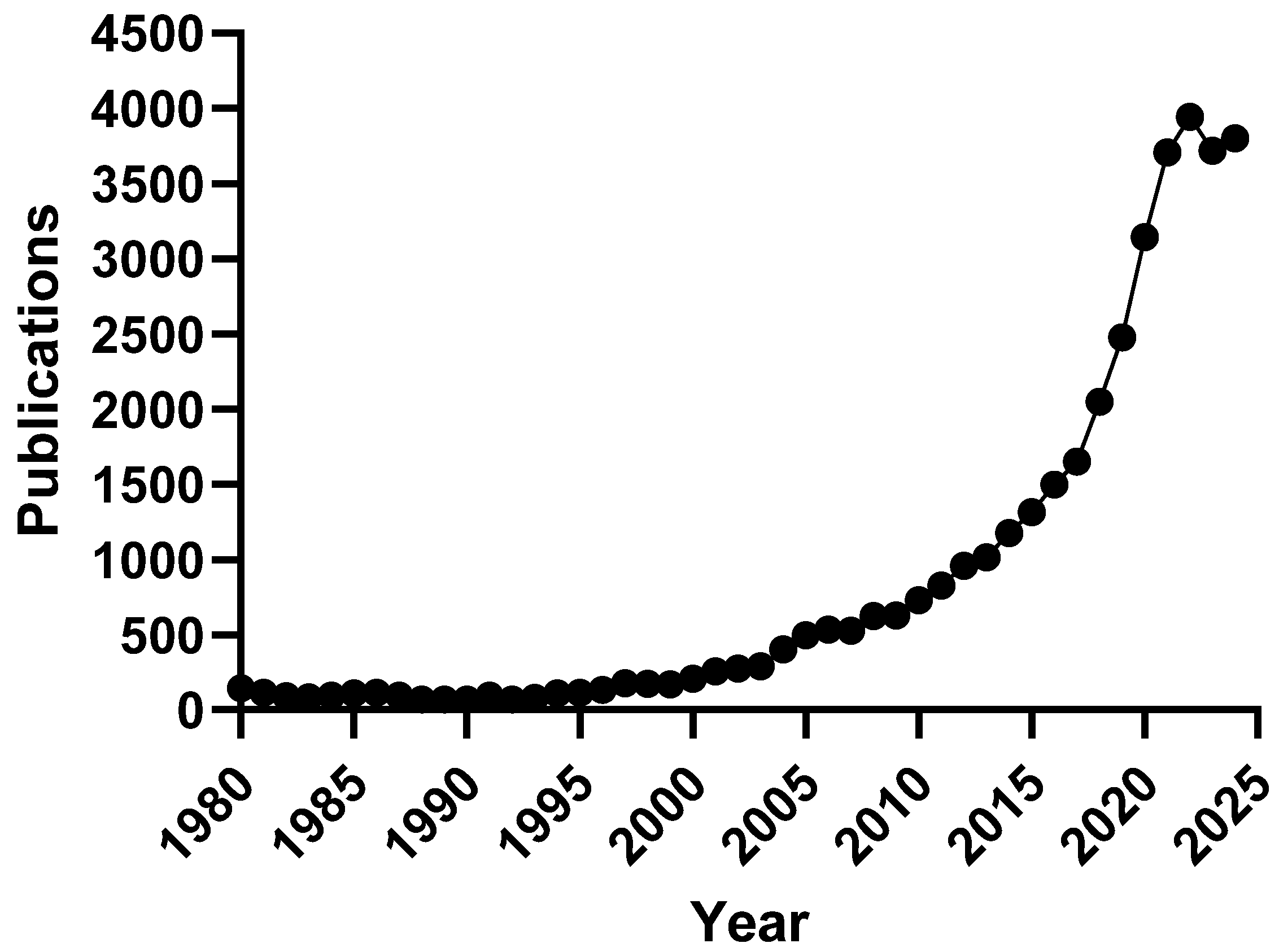
Special Issue: Therapeutic Potential for Cannabis and Cannabinoids 2.0


- Original Research Articles
- 2.
- Review Articles
- 3.
- Closing Remarks
Conflicts of Interest
List of Contributions
- Masocha, W.; Aly, E.; Albaloushi, A.; Al-Romaiyan, A. Licofelone, a Dual COX/LOX Inhibitor, Ameliorates Paclitaxel-Induced Mechanical Allodynia in Rats in a Cannabinoid Receptor-Dependent Manner. Biomedicines 2024, 12, 1545. https://doi.org/10.3390/biomedicines12071545.
- Khan, I.; Kaur, S.; Rishi, A.K.; Boire, B.; Aare, M.; Singh, M. Cannabidiol and Beta-Caryophyllene Combination Attenuates Diabetic Neuropathy by Inhibiting NLRP3 Inflammasome/NFκB through the AMPK/sirT3/Nrf2 Axis. Biomedicines 2024, 12, 1442. https://doi.org/10.3390/biomedicines12071442.
- Trainito, A.; Gugliandolo, A.; Chiricosta, L.; Salamone, S.; Pollastro, F.; Mazzon, E.; Lui, M. Cannabinol Regulates the Expression of Cell Cycle-Associated Genes in Motor Neuron-like NSC-34: A Transcriptomic Analysis. Biomedicines 2024, 12, 1340. https://doi.org/10.3390/biomedicines12061340.
- Hayduk, S.A.; Hughes, A.C.; Winter, R.L.; Milton, M.D.; Ward, S.J. Single and Combined Effects of Cannabigerol (CBG) and Cannabidiol (CBD) in Mouse Models of Oxaliplatin-Associated Mechanical Sensitivity, Opioid Antinociception, and Naloxone-Precipitated Opioid Withdrawal. Biomedicines 2024, 12, 1145. https://doi.org/10.3390/biomedicines12061145.
- An, D.; Carrazoni, G.S.; Souto das Neves, B.-H.; D’Hooge, R.; Peigneur, S.; Tytgat, J. The Sobering Sting: Oleoyl Serotonin Is a Novel Stephanoconus Snail Venom-Derived Antagonist of Cannabinoid Receptors That Counteracts Learning and Memory Deficits. Biomedicines 2024, 12, 454. https://doi.org/10.3390/biomedicines12020454.
- Wong-Salgado, P.; Soares, F.; Moya-Salazar, J.; Ramírez-Méndez, J.F.; Moya-Salazar, M.M.; Apesteguía, A.; Castro, A. Therapeutic Potential of Cannabinoid Profiles Identified in Cannabis L. Crops in Peru. Biomedicines 2024, 12, 306. https://doi.org/10.3390/biomedicines12020306.
- Artimagnella, O.; Mazzon, E.; Salamone, S.; Pollastro, F.; Gugliandolo, A.; Chiricosta, L. Cannabinerol (CBNR) Influences Synaptic Genes Associated with Cytoskeleton and Ion Channels in NSC-34 Cell Line: A Transcriptomic Study. Biomedicines 2024, 12, 189. https://doi.org/10.3390/biomedicines12010189.
- Raup-Konsavage, W.M.; Sepulveda, D.E.; Wang, J.; Dokholyan, N.V.; Vrana, K.E.; Graziane, N.M. Antinociceptive Effects of Cannabichromene (CBC) in Mice: Insights from von Frey, Tail-Flick, Formalin, and Acetone Tests. Biomedicines 2024, 12, 83. https://doi.org/10.3390/biomedicines12010083.
- Martínez-Aguirre, C.; Márquez, L.A.; Santiago-Castañeda, C.L.; Carmona-Cruz, F.; Nuñez-Lumbreras, M.d.l.A.; Martínez-Rojas, V.A.; Alonso-Vanegas, M.; Aguado-Carrillo, G.; Gómez-Víquez, N.L.; Galván, E.J.; et al. Cannabidiol Modifies the Glutamate Over-Release in Brain Tissue of Patients and Rats with Epilepsy: A Pilot Study. Biomedicines 2023, 11, 3237. https://doi.org/10.3390/biomedicines11123237.
- Abuhasira, R.; Schwartz, L.; Novack, V. Medical Cannabis Is Not Associated with a Decrease in Activities of Daily Living in Older Adults. Biomedicines 2023, 11, 2697. https://doi.org/10.3390/biomedicines11102697.
- Safi, K.; Sobieraj, J.; Błaszkiewicz, M.; Żyła, J.; Salata, B.; Dzierżanowski, T. Tetrahydrocannabinol and Cannabidiol for Pain Treatment—An Update on the Evidence. Biomedicines 2024, 12, 307. https://doi.org/10.3390/biomedicines12020307.
- Rathod, S.S.; Agrawal, Y.O.; Nakhate, K.T.; Meeran, M.F.N.; Ojha, S.; Goyal, S.N. Neuroinflammation in the Central Nervous System: Exploring the Evolving Influence of Endocannabinoid System. Biomedicines 2023, 11, 2642. https://doi.org/10.3390/biomedicines11102642.
- Leinen, Z.J.; Mohan, R.; Premadasa, L.S.; Acharya, A.; Mohan, M.; Byrareddy, S.N. Therapeutic Potential of Cannabis: A Comprehensive Review of Current and Future Applications. Biomedicines 2023, 11, 2630. https://doi.org/10.3390/biomedicines11102630.
- Christensen, C.; Rose, M.; Cornett, C.; Allesø, M. Decoding the Postulated Entourage Effect of Medicinal Cannabis: What It Is and What It Isn’t. Biomedicines 2023, 11, 2323. https://doi.org/10.3390/biomedicines11082323.
References
- Bostwick, J.M. Blurred boundaries: The therapeutics and politics of medical marijuana. Mayo Clin. Proc. 2012, 87, 172–186. [Google Scholar] [CrossRef] [Scilit] [PubMed]
- Abi-Jaoude, E.; Chen, L.; Cheung, P.; Bhikram, T.; Sandor, P. Preliminary Evidence on Cannabis Effectiveness and Tolerability for Adults With Tourette Syndrome. J. Neuropsychiatry Clin. Neurosci. 2017, 29, 391–400. [Google Scholar] [CrossRef] [Scilit]
- Hill, K.P.; Palastro, M.D.; Johnson, B.; Ditre, J.W. Cannabis and Pain: A Clinical Review. Cannabis Cannabinoid Res. 2017, 2, 96–104. [Google Scholar] [CrossRef] [Scilit] [PubMed]
- Pisanti, S.; Bifulco, M. Modern History of Medical Cannabis: From Widespread Use to Prohibitionism and Back. Trends Pharmacol. Sci. 2017, 38, 195–198. [Google Scholar] [CrossRef] [Scilit] [PubMed]
- Baron, E.P. Medicinal Properties of Cannabinoids, Terpenes, and Flavonoids in Cannabis, and Benefits in Migraine, Headache, and Pain: An Update on Current Evidence and Cannabis Science. Headache 2018, 58, 1139–1186. [Google Scholar] [CrossRef] [Scilit] [PubMed]
- Fraguas-Sánchez, A.I.; Torres-Suárez, A.I. Medical Use of Cannabinoids. Drugs 2018, 78, 1665–1703. [Google Scholar] [CrossRef] [Scilit] [PubMed]
- Legare, C.A.; Raup-Konsavage, W.M.; Vrana, K.E. Therapeutic Potential of Cannabis, Cannabidiol, and Cannabinoid-Based Pharmaceuticals. Pharmacology 2022, 107, 131–149. [Google Scholar] [CrossRef] [Scilit] [PubMed]
- Carliner, H.; Brown, Q.L.; Sarvet, A.L.; Hasin, D.S. Cannabis use, attitudes, and legal status in the U.S.: A review. Prev. Med. 2017, 104, 13–23. [Google Scholar] [CrossRef] [Scilit] [PubMed]
- Orenstein, D.G.; Glantz, S.A. Cannabis Legalization in State Legislatures: Public Health Opportunity and Risk. Marquette Law. Rev. 2020, 103, 1313–1400. [Google Scholar] [PubMed]
- ElSohly, M.A.; Radwan, M.M.; Gul, W.; Chandra, S.; Galal, A. Phytochemistry of Cannabis sativa L. Prog. Chem. Org. Nat. Prod. 2017, 103, 1–36. [Google Scholar]
- Gülck, T.; Møller, B.L. Phytocannabinoids: Origins and Biosynthesis. Trends Plant Sci. 2020, 25, 985–1004. [Google Scholar] [CrossRef] [Scilit] [PubMed]
- Alsherbiny, M.A.; Bhuyan, D.J.; Low, M.N.; Chang, D.; Li, C.G. Synergistic Interactions of Cannabidiol with Chemotherapeutic Drugs in MCF7 Cells: Mode of Interaction and Proteomics Analysis of Mechanisms. Int. J. Mol. Sci. 2021, 22, 10103. [Google Scholar] [CrossRef] [Scilit] [PubMed]
- Rock, E.M.; Parker, L.A. Constituents of Cannabis Sativa. Adv. Exp. Med. Biol. 2021, 1264, 1–13. [Google Scholar] [PubMed]

Disclaimer/Publisher’s Note: The statements, opinions and data contained in all publications are solely those of the individual author(s) and contributor(s) and not of MDPI and/or the editor(s). MDPI and/or the editor(s) disclaim responsibility for any injury to people or property resulting from any ideas, methods, instructions or products referred to in the content. |
© 2025 by the author. Licensee MDPI, Basel, Switzerland. This article is an open access article distributed under the terms and conditions of the Creative Commons Attribution (CC BY) license (https://creativecommons.org/licenses/by/4.0/).
Share and Cite
Raup-Konsavage, W.M. Special Issue: Therapeutic Potential for Cannabis and Cannabinoids 2.0. Biomedicines 2025, 13, 3056. https://doi.org/10.3390/biomedicines13123056
Raup-Konsavage WM. Special Issue: Therapeutic Potential for Cannabis and Cannabinoids 2.0. Biomedicines. 2025; 13(12):3056. https://doi.org/10.3390/biomedicines13123056
Chicago/Turabian StyleRaup-Konsavage, Wesley M. 2025. "Special Issue: Therapeutic Potential for Cannabis and Cannabinoids 2.0" Biomedicines 13, no. 12: 3056. https://doi.org/10.3390/biomedicines13123056
APA StyleRaup-Konsavage, W. M. (2025). Special Issue: Therapeutic Potential for Cannabis and Cannabinoids 2.0. Biomedicines, 13(12), 3056. https://doi.org/10.3390/biomedicines13123056