Review

Surface Plasmon Resonance Biosensors for Detection of SARS-CoV-2


1
Shandong Key Laboratory of Functional Materials for Integrated Lithium Niobate Photonic, Institute for Advanced Interdisciplinary Research (iAIR), University of Jinan, Jinan 250022, China
2
School of Chemistry and Chemical Engineering, University of Jinan, Jinan 250022, China
3
Department of Materials Process Engineering, Graduate School of Engineering, Nagoya University, Nagoya 464-8603, Japan
4
State Key Laboratory of Bio-Based Fiber Materials, School of Materials Science and Engineering, Zhejiang Sci-Tech University, Hangzhou 310018, China
5
State Key Laboratory of Chemo/Biosensing and Chemometrics, College of Chemistry and Chemical Engineering, Hunan University, Changsha 410082, China
*
Authors to whom correspondence should be addressed.
These authors contributed equally to this work.
Chemosensors 2026, 14(4), 97; https://doi.org/10.3390/chemosensors14040097
Submission received: 7 February 2026 / Revised: 31 March 2026 / Accepted: 14 April 2026 / Published: 19 April 2026

Abstract

Surface plasmon resonance (SPR) is a label-free, real-time biosensing technology with high sensitivity for the detection of biomolecular interactions. This review highlights recent advances in SPR biosensors for the detection of SARS-CoV-2. First, we outline design strategies, especially advanced plasmonic nanostructures and precise surface functionalization, that improve the specificity and binding affinity to viral targets. Next, we cover signal amplification methods, such as nanoparticle conjugation and plasmonic photothermal effects, which enhance the sensitivity for low-abundance viral components. Subsequently, we conducted a comparative analysis of SPR biosensors alongside traditional and emerging detection approaches for SARS-CoV-2, elucidating their individual merits and drawbacks. We also discuss how machine learning improves data interpretation and diagnostic accuracy. Finally, we discuss the current challenges and future development directions, particularly for clinical diagnostics, epidemic monitoring, and public health security. These advances support faster, more reliable, and accessible diagnostics for current and future viral outbreaks.

1. Introduction

SARS-CoV-2, the etiological agent of COVID-19, is an enveloped positive-sense single-stranded RNA virus with a single-stranded RNA genome serving as its genetic material [1]. Its viral envelope harbors four canonical structural proteins: spike glycoprotein (S), envelope protein (E), membrane protein (M), and nucleocapsid protein (N). Both these individual structural proteins and the inactivated whole SARS-CoV-2 virion can be employed as specific antigens for the detection and serological monitoring of COVID-19 [2,3,4,5].
The S protein, as the primary surface antigen of SARS-CoV-2, enables binding to the angiotensin-converting enzyme 2 (ACE2) receptor, and this process is achieved via recognition of the receptor-binding domain (RBD). This interaction mediates viral entry into host cells and leads to direct disruption of cellular structures [6]. After invading cells, the virus replicates extensively in the upper respiratory tract, infects lung cells and cardiovascular endothelial cells, disrupts ACE2 expression, and further disturbs the balance of the renin-angiotensin system, leading to vasoconstriction, increased vascular permeability, and inflammatory responses [7]. Clinical manifestations are highly diverse. The most common symptoms include fever and dry cough; some patients also experience fatigue, dyspnea, and abnormal lung imaging findings (typically manifesting as bilateral peripheral ground-glass opacities). Severe cases may progress to respiratory failure and hypoxemia [8]. More critically, some patients may develop a “cytokine storm,” characterized by immune dysregulation with excessive activation and release of numerous inflammatory cytokines, leading to acute respiratory distress syndrome (ARDS) and multiple organ failure, which represents the primary cause of mortality [7]. Regarding susceptibility, the general population is universally susceptible, with most cases occurring in individuals aged 30 to 79 years. However, the elderly and those with underlying conditions such as diabetes, cardiovascular diseases and chronic respiratory disorders are more likely to develop severe complications after infection [9,10]. In addition, some patients experience persistent fatigue, cough, and abnormal cardiac and pulmonary functions long after recovery, presenting a long-term challenge to public health [11]. Furthermore, with the rapid evolution of the virus into variants such as Delta and Omicron, transmission rates have accelerated, and immune escape capabilities have significantly increased, leading to repeated infection peaks worldwide [12].
Since the emergence of SARS-CoV-2 in late 2019, the pandemic has imposed multifaceted burdens on global society. This crisis has not only posed unprecedented challenges to public health systems worldwide but has also significantly driven innovation and diversification in biosensing technologies. Facing the triple pressures of rapid viral mutation, large-scale screening demands, and the need for precise therapeutic monitoring, single-detection methods have proven inadequate to meet the comprehensive requirements ranging from social epidemic control to scientific research analysis. Against this backdrop, diverse biosensing technologies have emerged in rapid development.
Compared to traditional biosensors limited by the instability of recognition elements, electrochemical biosensors based on molecularly imprinted polymers (MIPs) offer irreplaceable advantages in point-of-care testing (POCT) at the grassroots level due to their high stability, sensitivity, and selectivity. However, they are often constrained by mass transfer resistance at macromolecular imprinting sites and interference from complex samples [13]. As the “gold standard” for drug monitoring, liquid chromatography–mass spectrometry (LC-MS) possesses remarkable qualitative and quantitative detection capabilities. Nevertheless, its limitations—including restricted in-depth analysis of target compounds, requirement for specialized operational expertise, and inability to achieve real-time monitoring—render it unsuitable for POCT applications [14]. Quartz crystal microbalance (QCM) technology, while enabling label-free detection, is susceptible to viscoelastic effects and non-specific adsorption interference in liquid environments, which limits its application in detecting complex biological fluids such as undiluted plasma and saliva [15].
In contrast, surface plasmon resonance (SPR) technology, leveraging its unique optical detection mechanism, has successfully overcome the aforementioned bottlenecks. It is a powerful optical technique that leverages the physical phenomena occurring at the interface between a metal and its adjacent dielectric medium. This technique confers distinct advantages for investigating biomolecular interactions, including label-free detection, exceptional sensitivity, and rapid, real-time quantitative measurements. Accordingly, SPR biosensors have been engineered as label-free, real-time detection platforms for the rapid and high-throughput screening of SARS-CoV-2. A core merit of these biosensors lies in their ability to directly quantify changes in the refractive index of light at the sensor surface, which in turn enables the accurate determination of analyte concentration in a sample. This review thus focuses on summarizing the latest advances and key breakthroughs of SPR biosensors in the specific detection of SARS-CoV-2 and explores their innovative progress in nanoplasmonic modification, chip surface functionalization, signal amplification strategies, and automated system integration. Furthermore, we discuss their application prospects in responding to future emerging epidemics.

2. Recent Progress in Surface Plasmon Resonance Biosensors for the Detection of SARS-CoV-2

2.1. SPR Biosensor Design and Fabrication

2.1.1. Plasmonic Nanostructures

SPR technology has been successfully applied for the detection of SARS-CoV-2 via three main recognition strategies: direct antigen–antibody binding [3,4], aptamer-mediated molecular recognition [16,17,18], and direct viral particle detection [5]. Plasmonic nanostructure plays a pivotal role in improving sensing sensitivity and lowering the limit of detection by tailoring the physicochemical properties of the sensing interface. Specifically, nanomaterials induce localized surface plasmon resonance (LSPR) effects, generating intense localized electromagnetic field “hot spots” at the metal–dielectric interface through refractive index changes that cause resonance signal shifts, achieving signal enhancement via exponential amplification of electromagnetic field intensity. Furthermore, the high specific surface area of nanomaterials significantly increases the loading density of specific probe molecules (such as antibodies and aptamers), enhancing the effective capture efficiency of target analytes. The coordination of these multiple physical mechanisms enables the sensor to achieve refractive index response sensitivity to trace analytes that surpasses physical limits, and when combined with microfluidic enrichment technology, results in a significant reduction in the detection limit. Therefore, the design and optimization of advanced plasmonic nanostructures guided by theory provide an effective pathway for developing highly sensitive and specific SARS-CoV-2 detection technologies.
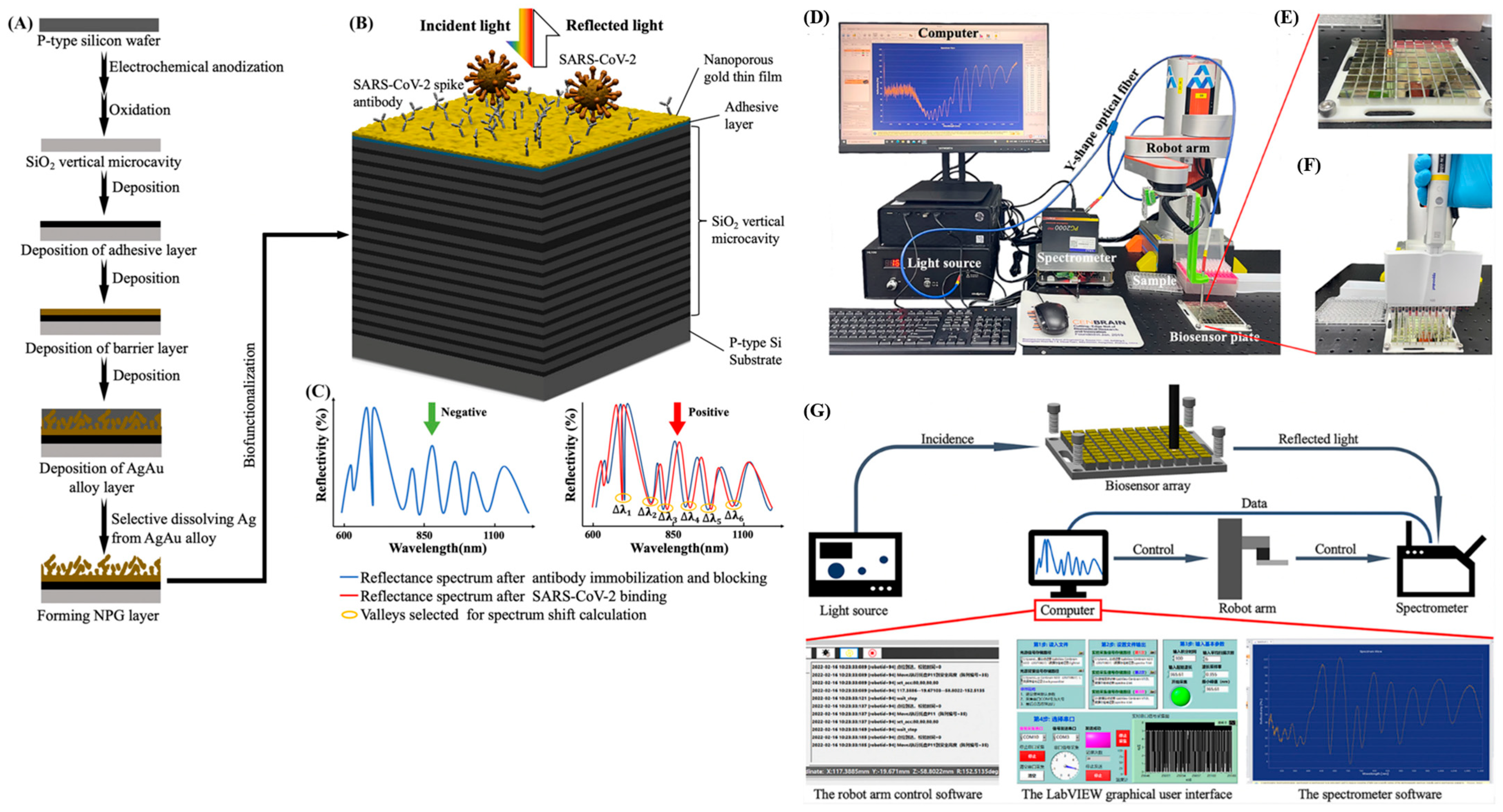
For instance, nanodisk arrays have been employed to enhance molecular adsorption and thus improve SARS-CoV-2 detection performance by amplifying the SPR electromagnetic field [19]. The resonance angle of such nanodisk arrays can be precisely tailored by tuning aspect ratio; optimized SPR sensors integrating Au nanodisks on an Au film have achieved a sensitivity of 250°/refractive index unit (RIU), a figure of merit (FOM) of 56.4 RIU−1, and a limit of detection (LOD) of 4 × 10⁻⁵ RIU, respectively [19]. Various two-dimensional (2D) nanomaterials have been integrated with SPR sensors, which has significantly improved viral detection sensitivity. For example, graphene-based layered nanostructures have been proposed for SARS-CoV-2 detection, leading to a notable sensitivity enhancement from 183 to 390°/RIU [20,21,22,23,24,25]. Ag nanostructures modified with Si and BaTiO3 nanolayers functionalized with a thiol-tethered DNA ligand layer were developed for SARS-CoV-2 sensing and exhibited a sensitivity of 130°/RIU, which is 7.6-fold higher than that of the traditional Kretschmann configuration [26]. Recently, an Ag/black phosphorus (BP)-coated SPR sensor has been reported for the reliable quantitative detection of SARS-CoV-2 IgG, viral single-stranded RNA (ssRNA) and the viral receptor-binding domain (RBD), achieving finite element method (FEM) calculated sensitivities of 4701, 5351 and 5333 nm/RIU, respectively, at the optimal Ag (49 nm) and black phosphorus (BP, 0.53 nm) film thicknesses [27]. A MXene-intercalated BP-MXene-BP heterostructure on a 51 nm Ag film has further boosted sensing performance, with the resulting sensor achieving a sensitivity of 341.5°/RIU [28]. Notably, the SPR sensor based on a 2D Ag/ZnTe/ZnS structure exhibited the highest reported sensitivity to date, reaching 474.1°/RIU [29]. Tene et al. replaced the traditional spacer layer with a double-layer MoS2 on BK7/Ag/Si3N4 substrate and anchored thiolated ssDNA to the structure, exhibiting a sensitivity of 375°/RIU with an unprecedented measurement accuracy of 0.002 deg−1 for viral particles down to a concentration of 1 mM [30]. Bhatt et al. constructed a layer-by-layer stacked nanocomposite of 2.2 nm BaTiO3 and 0.8 nm WS2 on an Ag film, which pushed the SARS-CoV-2 detection sensitivity to 450°/RIU and the FOM to 128.6 RIU−1 over a refractive index range of 1.33–1.34 [31]. To mitigate Ag oxidation, a major limitation of Ag-based SPR sensors, Mousania et al. engineered a BiFeO3/graphene capping layer on Au/Ag nanostructures; by optimizing the capping layer thickness and incident angle, the sensor achieved a sensitivity of 454°/RIU, an ultralow LOD of 2.2 × 10⁻⁶ RIU, and an FOM of 140 RIU−1 [32]. Additionally, Rong et al. fabricated a vertical microcavity-integrated LSPR hybrid biosensing platform for detecting the SARS-CoV-2 virus, featuring high detection throughput and ultrahigh sensitivity (Figure 1). In comparison with conventional LSPR biosensors, this hybrid platform possesses a compact architectural design and enables detection with a minimal sample volume (20 μL). Devices with a 40% porosity achieved an LOD of 319 viral copies/mL and could process 100 samples within 30 min, which highlights their great potential for on-site POC coronavirus detection [5]. In another innovative design, Yang et al. developed a differential-phase SPR sensor for the detection of the SARS-CoV-2 S protein via anti-S antibody-conjugated Au nanoparticle (anti-S@AuNP) sandwich probes; these probes synergistically amplified the phase shift signal, thereby reducing the LOD by one order of magnitude from 10−5 to 10−6 pg/mL [33]. Although plasmonic nanomaterial modification has substantially enhanced the sensitivity and lowered the detection limits of SPR biosensors, critical translational barriers remain. These include (i) limited colloidal and interfacial stability of noble metal nanostructures under physiological conditions, leading to signal drift and batch-to-batch variability; (ii) multi-step, lithography-dependent fabrication processes that hinder scalability and increase unit cost; (iii) insufficient reproducibility in probe immobilization density and orientation across sensor chips, compromising assay precision and inter-laboratory comparability; and (iv) high material and instrumentation expenses, which impede deployment in resource-constrained settings. Solving these problems is crucial for transforming the SPR platform from a laboratory device to a diagnostic tool that can be applied globally. Collectively, these pioneering studies provide a robust theoretical foundation and critical experimental groundwork for the rational design and construction of next-generation high-performance SPR biosensors for viral detection.

2.1.2. Surface Functionalization

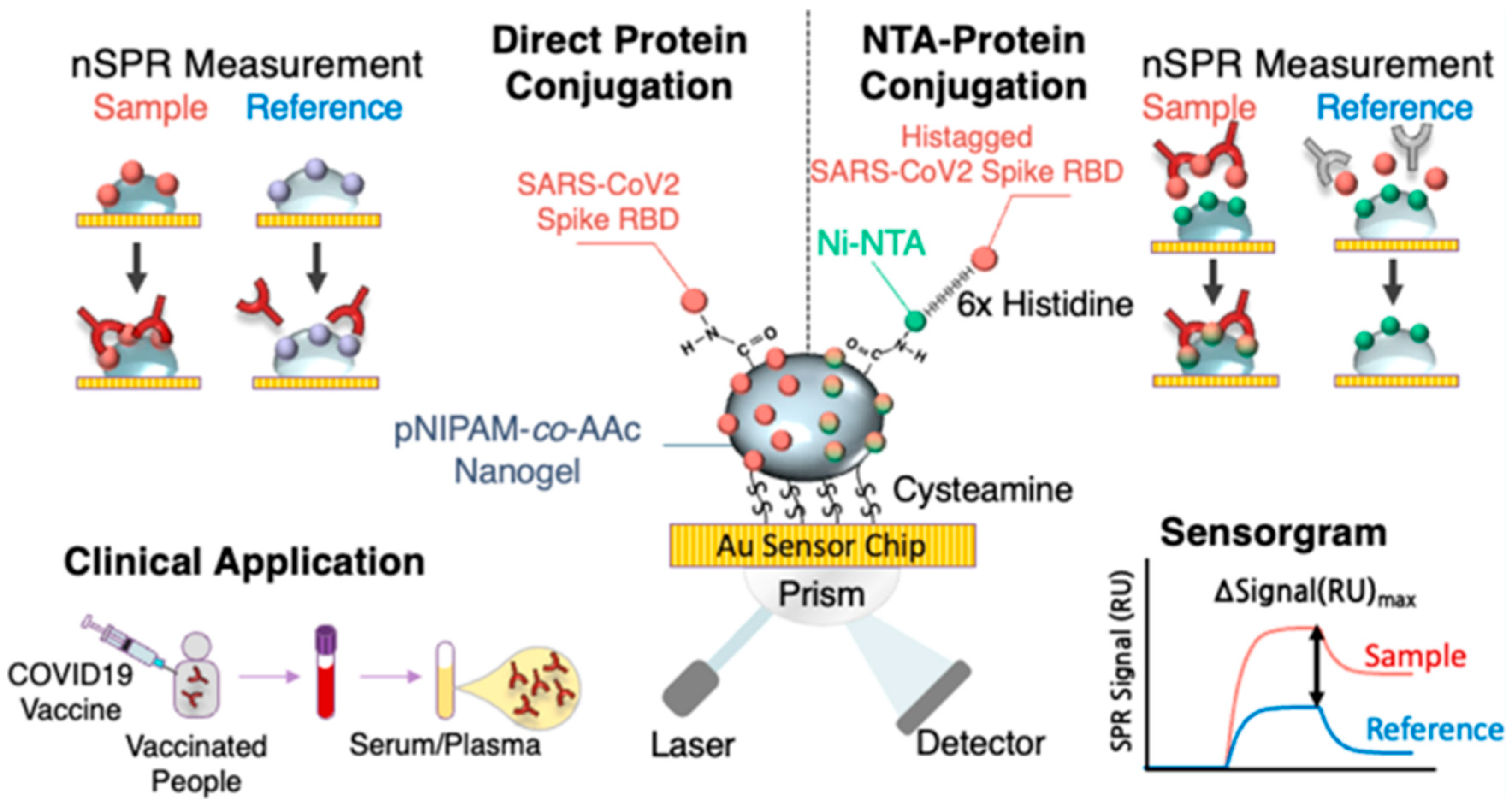
Besides plasmonic nanostructures for sensitivity enhancement, surface functionalization of the SPR platform represents another effective strategy for the selective capture of target analytes. Lee et al. developed a bio-responsive nanogel-based SPR platform for the detection of SARS-CoV-2 neutralizing antibodies (NAb) [3]. The multivalent binding interactions between the nanogel-conjugated RBD protein and SARS-CoV-2 NAb yielded significantly enhanced SPR signals, in stark contrast to the non-specific interference induced by serum proteins in SPR assays (Figure 2).
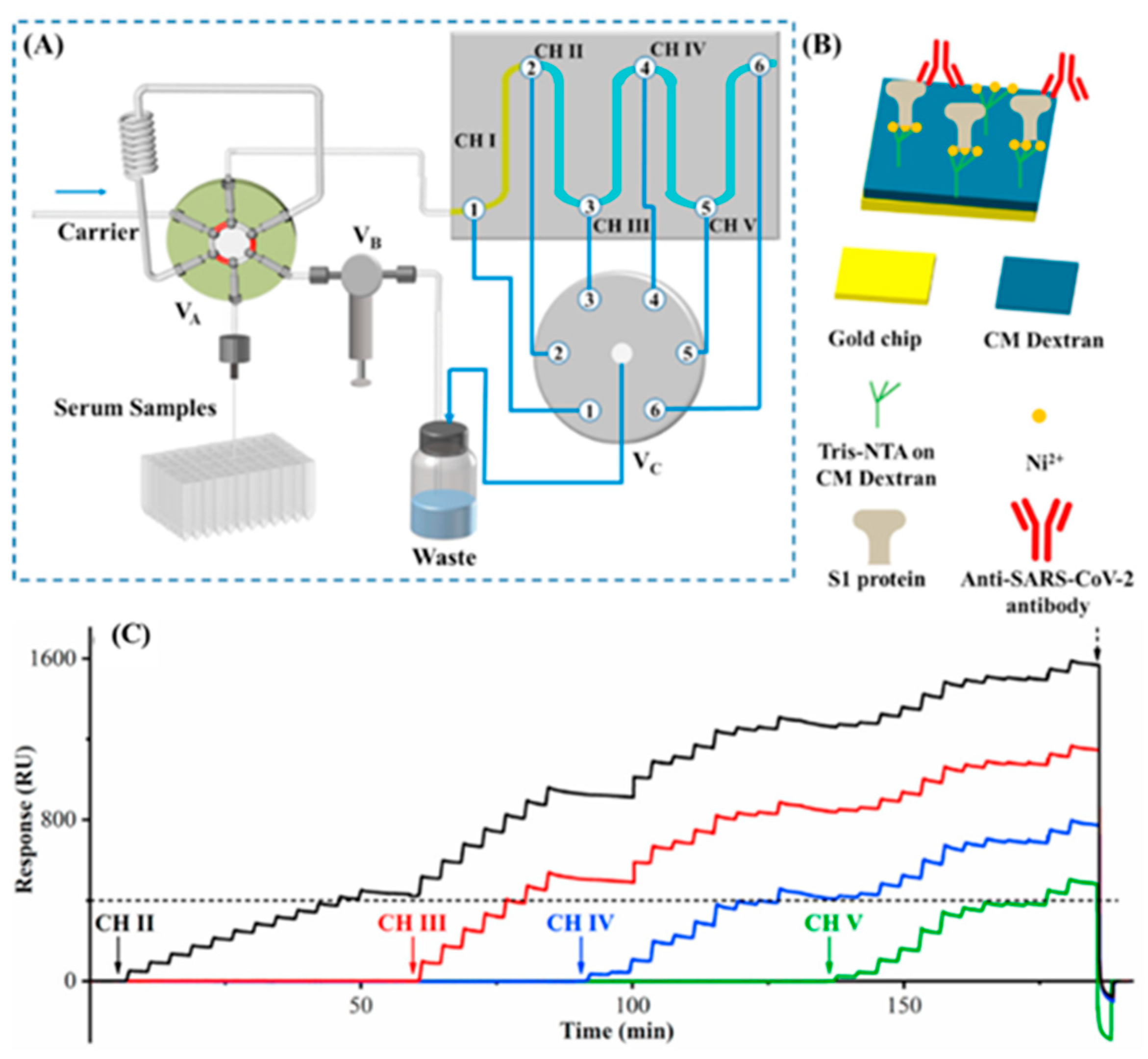
Zhou’s group developed a novel Tris-NTA sensing chip, which can not only stably immobilize protein probe molecules but also allow the chip surface to be regenerated multiple times, thereby improving the chip’s utilization efficiency and reducing experimental costs [34]. The group immobilized SARS-CoV-2 S1 protein molecules onto the as-prepared Tris-NTA sensor chip and successfully performed high-throughput analysis of specific antibodies in serum samples (Figure 3). This method eliminates the need for enzymes or fluorescent labeling, thereby significantly lowering detection cost. Notably, the method costs less than 60 cents per assay, making it far more cost-effective than commercial enzyme-linked immunosorbent assay (ELISA) kits, which range from US $4.4 to 11.4 per kit [35].
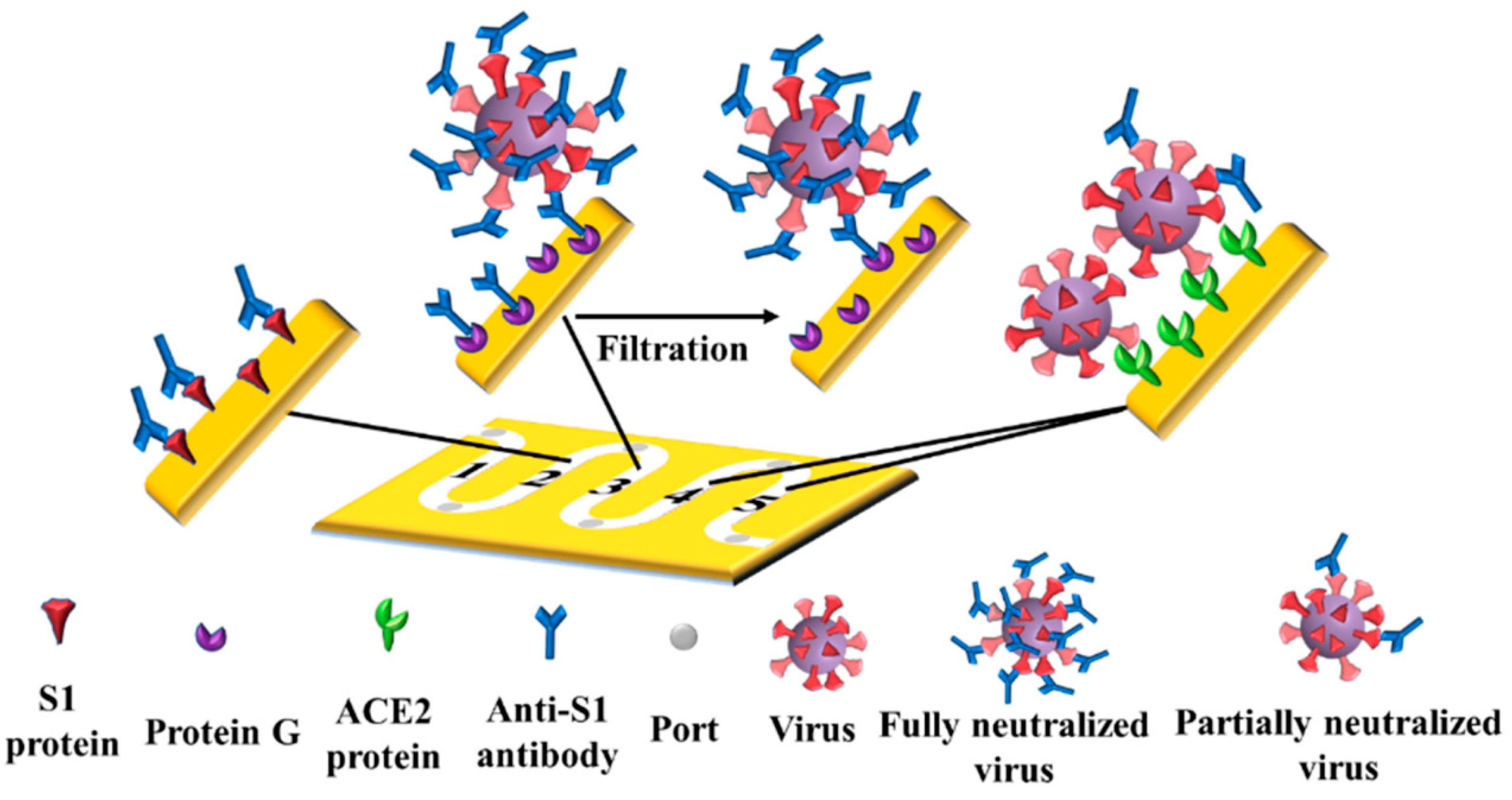
They further immobilized S1 protein, ACE2, and G-protein molecules onto distinct channels of a Tris-NTA sensor chip, achieving simultaneous online detection of anti-S1 antibodies, SARS-CoV-2 viral particles, and antibody-neutralized viral particles in serum samples (Figure 4). These three analytes were detected within a short time frame (<12 min), and the assay exhibited excellent sensor-to-sensor and cycle-to-cycle reproducibility (relative standard deviation, RSD < 5%) [36]. However, the results were sensitive to the sample–sensor contact time during detection. Insufficient contact time led to weak signals, whereas excessive contact time increased non-specific adsorption and sample consumption. Additionally, the Tris-NTA chip relied on the His-tag, requiring all captured proteins to be genetically engineered with it. The tag position could affect protein activity, and the presence of positive charges could induce non-specific binding on the protein surface, thereby elevating the background signal. Furthermore, excessive subtraction of the reference channel background introduced systematic errors, causing deviations in the detection results.
Lisyte et al. chemisorbed SARS-CoV-2 N protein on an 11-mercaptoundecanoic acid (MUA) self-assembled monolayer (SAM) chip, achieving a surface density of 3.61 ± 0.52 ng/mm2, which enabled the quantification of anti-N antibodies with an LOD of 0.057 nM and a limit of quantification (LOQ) of 0.19 nM [37]. Batool et al. replaced rigid SAMs with a 1-ethyl-3-(3-dimethylaminopropyl)carbodiimide/N-hydroxysuccinimide (EDC/NHS)-assembled supported lipid bilayer (SLB) that mimicked the viral entry interface, allowing real-time, label-free tracking of S-protein–ACE2 binding at a viral titer of 102 TCID50/mL—one order of magnitude lower than values reported in prior reports (103–104 TCID50/mL) [38]. Although chemical immobilization could stably anchor biological recognition elements onto sensor surfaces, the covalent coupling reaction presented notable limitations. The coupling process may induce protein conformational changes or modify active sites, compromising biological recognition capability. Meanwhile, immobilization density was sensitive to pH, temperature, and reaction time, making batch-to-batch reproducibility difficult to achieve. These challenges have hindered the adoption of chemical immobilization in high-precision and large-scale sensing applications. Addressing these bottlenecks would significantly enhance the practical potential of this technology.
Among the currently reported strategies for SARS-CoV-2 detection, immunoassays that leverage antigen–antibody binding specificity remain central to both clinical diagnostics and serosurveillance. Beyond the Tris-NTA–based SPR platform described previously, established modalities, including ELISA, lateral flow immunoassay (LFI) with fluorescence readout, and flow cytometry (FC), exploit this molecular recognition principle. Serological testing serves a dual diagnostic and epidemiological function: it enables quantitative assessment of host humoral immunity (e.g., IgG/IgM titers against spike or nucleocapsid antigens) and informs clinical decisions, such as identifying candidates for convalescent plasma therapy or evaluating vaccine-induced immune durability. For instance, the serological ELISA developed by Amanat et al. had been successfully employed for large-scale detection and identification of SARS-CoV-2 seroconverters. While traditional serological testing was time-consuming, which hindered its timely application in clinical detection [39]. To improve detection efficiency and clinical applicability, microfluidic chip technology was introduced into ELISA. This not only enabled the comprehensive and automated detection of anti-SARS-CoV-2 antibodies in serum samples of COVID-19 patients and vaccine recipients and reduced human error and reagent consumption, but also significantly shortened the detection time. Although automated chip ELISA improved detection sensitivity and speed, it still required horseradish peroxidase (HRP) for labeling, and the preparation and integration complexity of the microfluidic system was relatively high [40]. In addition, the automated technology based on lateral flow fluorescence immunoassay showed great potential for clinical application. The developed rapid antibody test kits, due to their high sensitivity and strong stability, provided new molecular tools for rapid and simple detection. However, when the antibody level of patients was below the detection limit, and due to individual differences in the immune response to infection, false negative results could occur, and it was necessary to combine this method with other detection methods [41]. Besides detecting specific antibodies in human serum samples, the virus could also be determined by detecting the virus antigens expressed on the cell surface. FC has been widely employed to assess both the binding capacity of antibodies to such antigen-presenting cells and their functional capacity to trigger NK cell degranulation, thereby enabling a more comprehensive evaluation of antibody biological activity [42]. However, FC entails complex data interpretation, high instrument costs, and stringent technical requirements, making it less suitable for high-throughput clinical diagnostics and primarily applicable to scientific research analysis.
In contrast, SPR biosensors enable real-time, label-free detection by measuring refractive index changes induced by antigen–antibody binding. This technology has distinct advantages: it allows continuous, quantitative monitoring of biomolecular interactions in real time; directly yields kinetic parameters including the association rate constant (ka), dissociation rate constant (kd), and equilibrium dissociation constant (KD); exhibits rapid response kinetics and eliminates the need for fluorescent or enzymatic labeling, thereby avoiding the potential impact of the labeling process on antibody activity. However, non-specific binding in complicated sample types such as undiluted serum may generate signal interference, and SPR instrumentation demands specialized operator training. Consequently, its deployment is currently limited to large-scale, resource-constrained clinical screening, rendering it appropriate for high-precision applications, including therapeutic antibody characterization, target engagement validation, and mechanistic virology studies. In summary, SPR technology occupies an irreplaceable niche for elucidating virus–antibody binding mechanisms and identifying high-affinity NAbs. Complementarily, the aforementioned methods, such as ELISA, LFI, and FC, serve distinct yet synergistic roles across diverse contexts, including high-throughput serosurveillance, POC clinical diagnosis, and functional immune profiling.
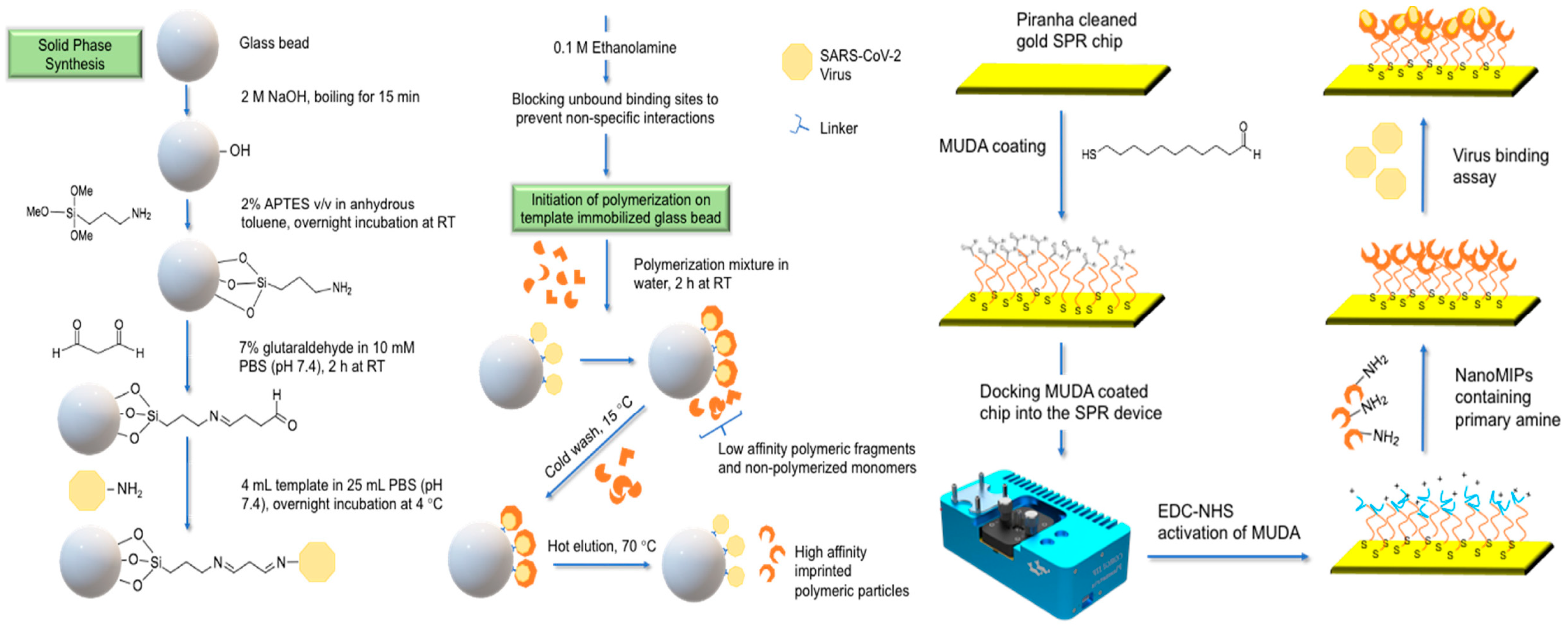
In addition to direct antigen–antibody interactions, direct viral detection and aptamer-based recognition represent two sensitive and versatile detection categories. Altintas and co-workers reported an SPR sensor based on MIP nanoparticles (MIP-NPs) for the rapid and cost-efficient diagnosis of SARS-CoV-2 [2]. The MIP-NPs were fabricated via a solid-phase imprinting method (Figure 5). The binding affinity between the MIP-NPs and target virus reached a KD of 0.12 pM. This label-free sensor enables the detection of SARS-CoV-2 viruses within a range of 0.25–1.75 × 10⁶ virus particles/mL and achieved an LOD of 104 particles/mL. This work demonstrated the dominant advantage of combining molecular imprinting technology with SPR facilities.
Leveraging aptamer–protein bioaffinity interactions, Lewis et al. designed an aptasensor utilizing a biotin–streptavidin platform to immobilize biotinylated aptamers, enabling selective and specific detection of the SARS-CoV-2 S1 spike protein [16]. This aptasensor exhibited a dynamic range of 1–100 nM and an LOD of 0.26 nM [16]. Zeni and co-workers developed an optical aptasensor for the detection of the RBD of the SARS-CoV-2 spike glycoprotein [17]. A specific aptameric sequence was immobilized on a polyethyleneglycol self-assembled monolayer coated onto an Au film deposited on an SPR plastic optical fiber device. Optical characterization verified specific binding of the S protein within the nanomolar range [17]. Chen and coworkers reported an SPR aptamer sensor that self-assembles thiolated Nb2C MXene quantum dots onto gold nanoparticles, mainly for the detection of the N gene of the SARS-CoV-2. The resulting conjugate anchored the N58 aptamer and amplified the plasmonic signal, achieving an LOD of 4.9 pg/mL across a linear range of 0.05–100 ng/mL [43]. SPR sensors utilizing aptamers as recognition elements offer excellent chemical and thermal stability, while avoiding the high costs associated with plasmonic nanostructure modifications. However, several application limitations remained. For instance, when analyzing complex clinical samples, background noise and non-specific adsorption could mask weak signals, thereby elevating the LOD. Furthermore, the selection of high-affinity aptamers was a time-consuming process that was highly dependent on the target’s conformation; consequently, the emergence of new viral variants often necessitates re-screening. Therefore, while these innovations hold significant promise for enhancing the sensitivity, versatility, and operational performance of SPR biosensors, future breakthroughs are essential. Specifically, improvements in anti-interference capabilities for complex matrices and strategies to effectively address viral mutations are needed to drive transformative progress in virus detection, continuous monitoring, and the efficiency of public health responses.

2.2. Signal Amplification Techniques

2.2.1. Nanoparticle Conjugation for Signal Enhancement

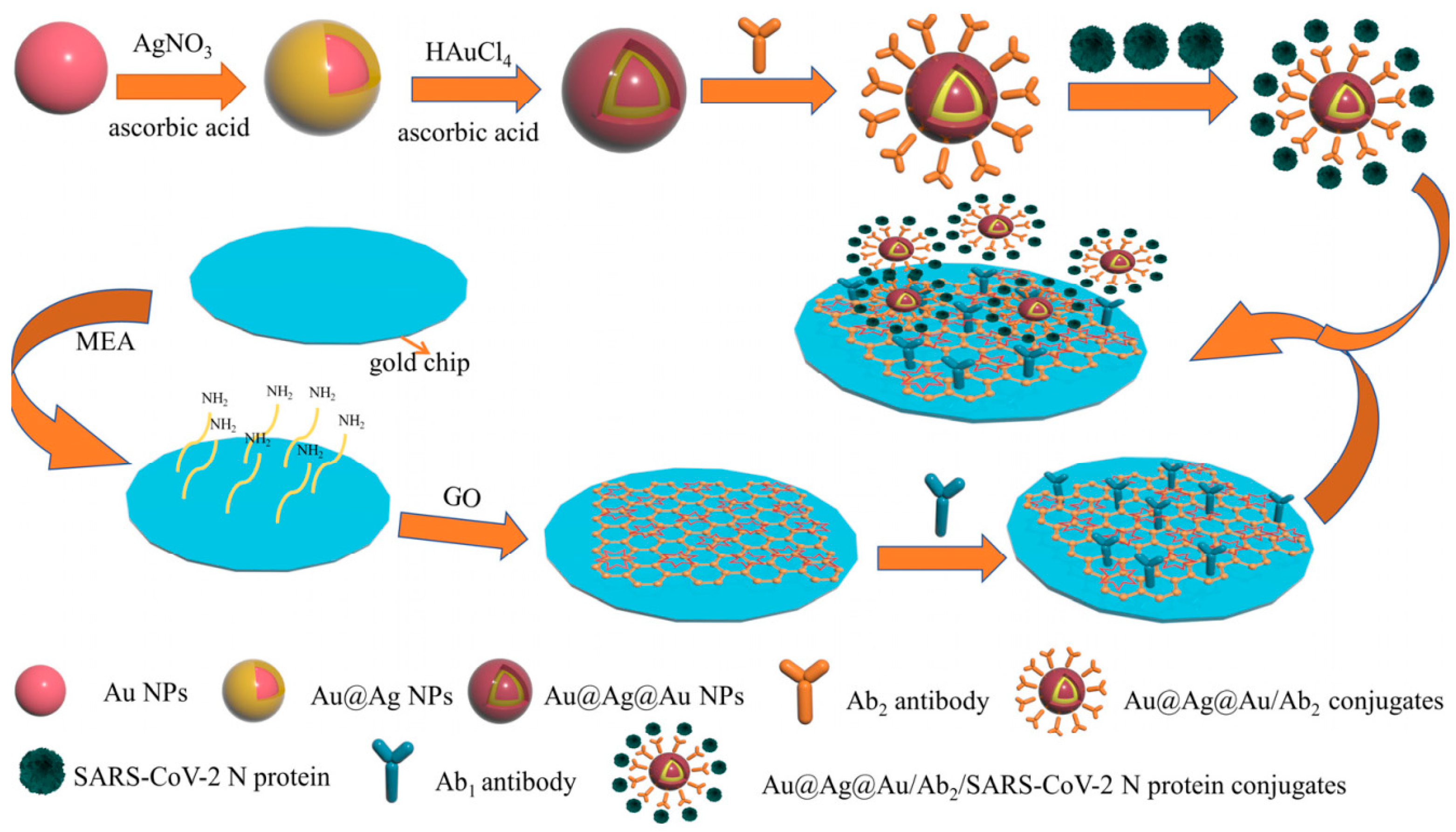
Ren and co-workers reported a sandwiched structure-based SPR biosensor for the detection of SARS-CoV-2 spike S1 protein. This sensor utilized a modified sensing platform consisting of Ti3C2-MXene nanosheets, together with signal enhancers in the form of polydopamine-Ag nanoparticles-anti-SARS-CoV-2 spike S1 protein (PAD-AgNP-Ab2) nanoconjugates. The biosensor exhibited a wider linear range of 0.0001 to 1000 ng/mL and achieved a low LOD of 0.012 pg/mL (signal-to-noise ratio, S/N = 3) [44]. The authors attributed the high sensitivity to the signal amplification strategy, which relied on three key aspects. First, the Ti3C2-MXene-modified sensing chip possessed a large specific surface area, high hydrophilicity, and excellent biocompatibility, facilitating efficient immobilization of probe molecules. Second, the formed PAD-AgNP-Ab2/S1 protein/Ab1 sandwich structure increased the mass of analytes captured by the SPR sensing chip, thereby amplifying the response signal by enhancing the real part of the refractive index at the chip surface. Third, the close proximity of dense AgNPs on the PAD nanosphere to the underlying Au film induced intense electromagnetic coupling, leading to an increase in the imaginary part of the refractive index at the chip surface. For the detection of 10−6 g/mL S1 protein, this dual-signal amplification strategy enhanced the response signal ~8.5-fold compared to a 3-mercaptopropionic acid (MPA)-based sensing strategy. Notably, 150 nm diameter AuNPs were found to efficiently induce gap-mode plasmon between the AuNPs and the Au chip substrate, resulting in a tenfold increase in the SPR angular shift compared to 40 nm diameter AuNPs [45]. This AuNPs-enhanced SPR approach lowered the LOD to 4 pg/mL for SARS-CoV-2 N protein detection, which is comparable to that of typical reverse transcription polymerase chain reaction (RT-PCR) testing (LOD: ~30 copies/mL; 4.5 pg/mL) [45]. Benefitting from the coordinated regulation of Au@Ag@Au NPs and GO, a sandwich immunoassay based on Au@Ag@Au NPs/Ab2/N protein/Ab1 was established for the detection of the N protein, achieving an LOD of 83 pg/mL and a linear dynamic range of 0.1~1000 ng/mL [46]. These Au@Ag@Au NPs with a high refractive index property enable achieving electromagnetic coupling with the plasmon waves propagating on the gold chip substrate. In contrast, the GO possessed an extensive specific surface area and rich oxygen-functionalized moieties, endowing it with distinctive light-absorption bands. These synergistic characteristics enabled the proposed biosensor to enhance plasmonic coupling and amplify the SPR response signal (Figure 6).
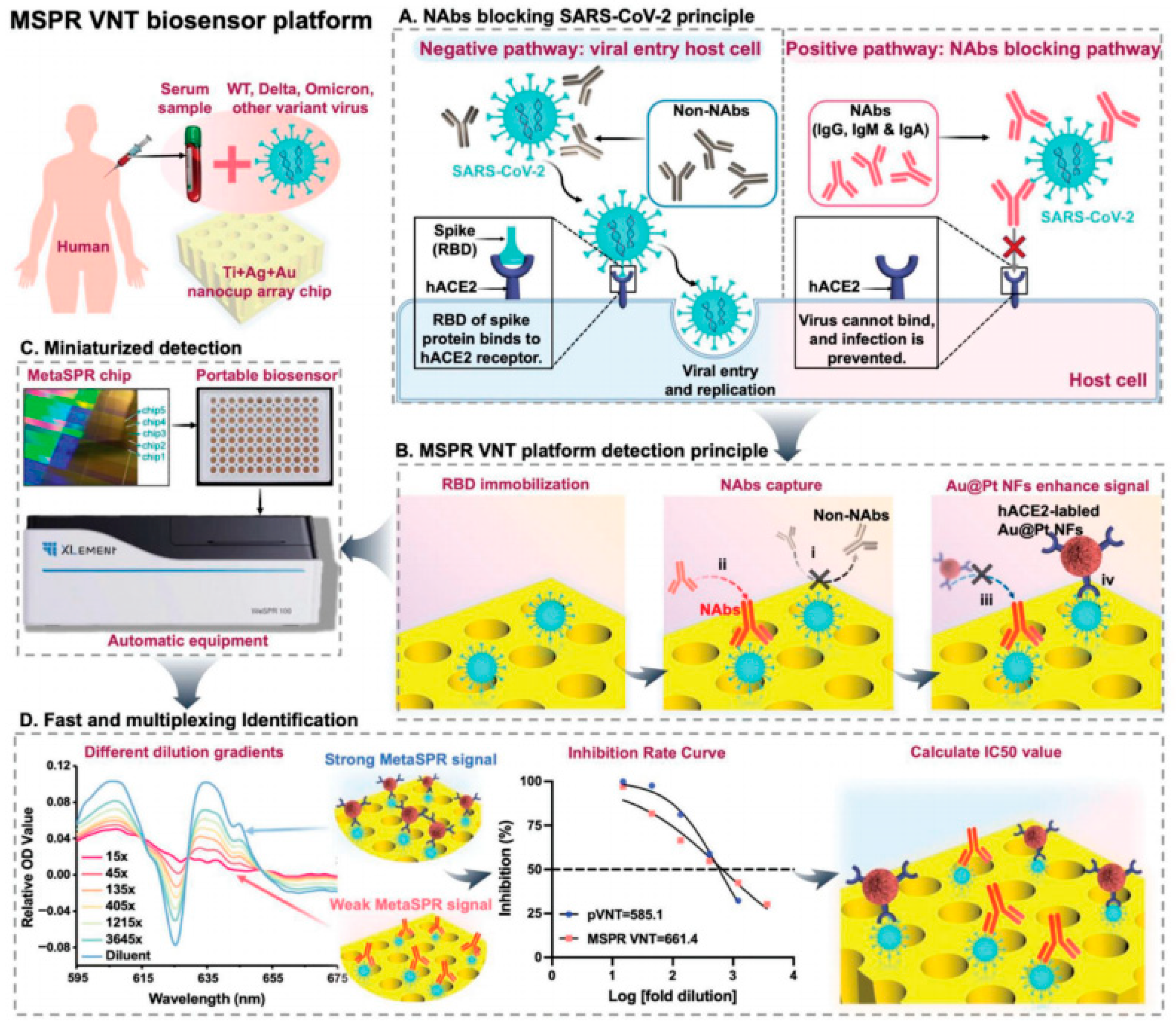
Li et al. engineered a nanomaterial-conjugated plasmonic resonance biosensor that exploits the S protein RBD for specific binding to human ACE2, and this biosensor was further applied to MetaSPR-based competitive and pseudo-virus neutralization tests, as shown in Figure 7. By immobilizing gold–platinum nanoflowers on an optimized MetaSPR chip to construct the sensing interface, the authors realized dual-signal amplification for the platform. The established MetaSPR-based VNT (MSPR VNT) platform enabled the rapid detection of cVNT and pVNT within 20 min, and it could quantify NAbs over an ultra-wide concentration range corresponding to 100- to 166,228-fold dilutions [47]. In 2025, Kausaite-Minkstimiene et al. developed a novel sandwich immunoassay for the specific detection of SARS-CoV-2 anti-RBD antibodies, in which biotinylated secondary anti-IgG antibodies combined with streptavidin-modified gold nanoparticles (anti-IgGbiot–SAv–AuNPs) were employed as the signal amplification probe. This method exhibited an LOD of 1.81 × 10⁻² nM and an LOQ of 5.49 × 10⁻² nM; compared to the direct detection format, the LOD and LOQ were improved by 11.58-fold and 11.64-fold, respectively [48].
The introduction of metal nanoparticles to amplify the detection signal, which formed a sandwich-type SPR sensor, greatly reduced non-specific interference caused by complex samples. This approach successfully resolved the issue of non-specific binding signals arising from the positive charge on the Tris-NTA chip surface (as detailed in Section 2.1.2) and significantly enhanced detection specificity. However, achieving such high sensitivity came at a cost. The multi-step incubation and washing processes not only required highly skilled technicians and prolonged the detection time, but the complex preparation of high-performance nanoprobes also limited the sensor’s reusability. Therefore, although this strategy demonstrated great potential in ultrasensitive detection, future breakthroughs were identified as necessary to simplify operational procedures and develop efficient chip regeneration techniques, thereby facilitating its transition from laboratory research to widespread clinical POC applications.

2.2.2. Signal Enhancement Using Plasmonic Photothermal and Other Effects

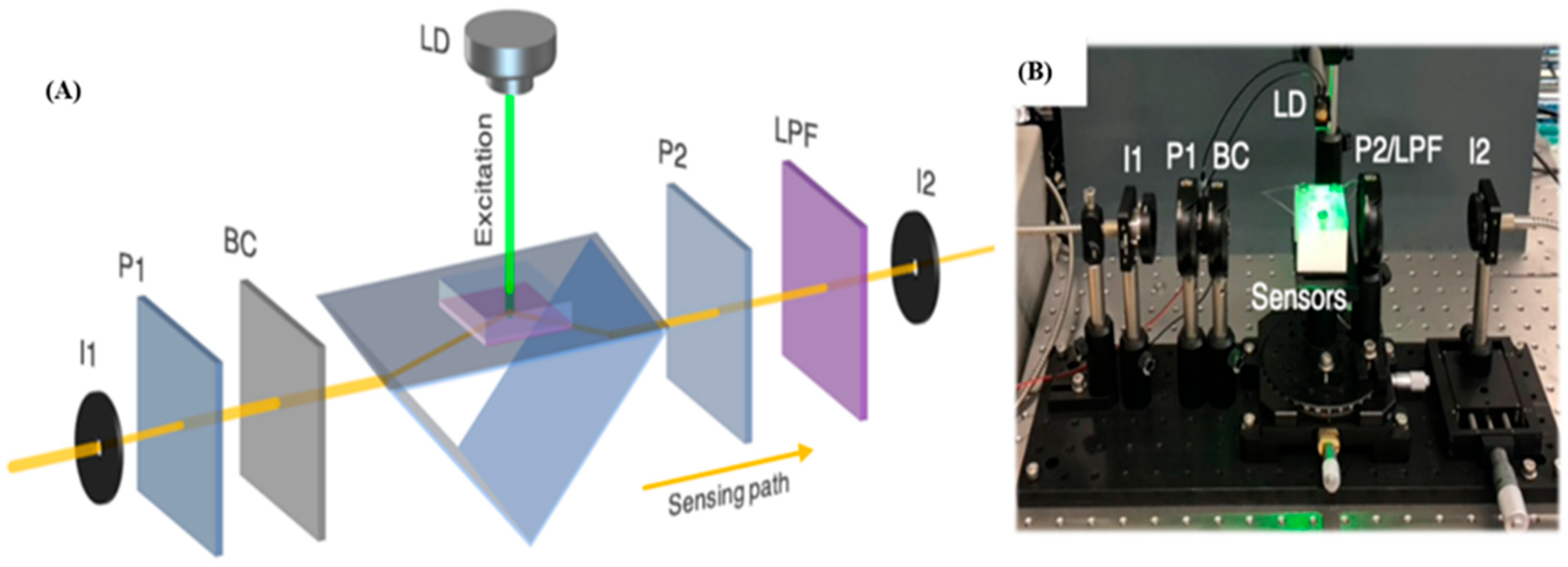
Wang and co-workers developed a plasma-based biosensor with multiple detection functions by combining the plasma photothermal (PPT) effect with the LSPR detection technology. (Figure 8). DNA receptors modified 2D gold nanoislands (AuNIs) were employed as the sensing platform, which enabled the sensitive detection of complementary SARS-CoV-2 nucleic acid sequences via nucleic acid hybridization. Moreover, the localized PPT-induced thermal effect optimized the hybridization temperature, thus facilitating the accurate discrimination of target gene sequences from non-target ones. Owing to this PPT-enhanced hybridization process, both the hybridization rate and the LSPR sensing response level were significantly improved. Specifically, for the 1 nM RDRp gene sequence of SARS-CoV-2, the Ka was elevated from 1.41 × 10⁵ to 1.11 × 10⁶ M−1 s−1 under the PPT heating enhancement. This dual-functional LSPR biosensor exhibited excellent sensitivity toward the target SARS-CoV-2 sequences, with an LOD of 0.22 × 10⁻³ nM [18].
Laser heterodyne feedback interferometry (LHFI) is defined as a physical phenomenon whereby the intensity and phase of a laser are modulated when a fraction of the laser output is retroreflected back into the laser resonator. Specifically, if the frequency of the output beam is tuned prior to its reentry into the resonator, the resultant sensing signal can be matched to the relaxation oscillation of the laser, which induces a prominent spontaneous signal enhancement of the amplification factor reaching up to 106 times. Tan and co-workers integrated the LHFI technology with an SPR immunoassay, and the gain amplification effect of LHFI improved the detection sensitivity of SPR biosensors, yielding a high refractive index resolution of 3.75 × 10⁻⁸ RIU. The developed biosensors achieved label-free detection of the SARS-CoV-2 spike antigen, exhibiting an excellent linear detection range from 0.01 to 1000 ng/mL and an LOD as low as 0.08 pg/mL [49]. These two pioneering studies independently addressed critical analytical challenges: the first mitigated high non-specific binding signals in complex matrices [18], while the second achieved sensitive detection of trace analytes [49]. However, both were constrained by the inherent physical characteristics of the systems, specifically the stringent requirements for environmental stability and the reliance on high-quality biological probes. Consequently, future research directions will focus on overcoming these common limitations through microfluidic integration, enhanced environmental control, and the development of fully regenerable probes. The analytical parameters of sensors with disparate structures, as discussed in Section 2.1 and Section 2.2, have been meticulously tabulated and comparatively assessed in Table 1 and Table 2 to elucidate their performance variations.

2.3. Comparison of SPR with Other Detection Techniques

With superior sensitivity, high accuracy, and rapid response, SPR sensors modified with nanomaterials or nanostructures have high potential for the detection of SARS-CoV-2. In recent years, a variety of optical sensing technologies, including SPR, surface-enhanced Raman spectroscopy (SERS), and fluorescence technology, have been extensively explored for this application. As reported by Raut et al., although SPR is inferior to SERS in terms of multi-target detection capability, it boasts greater cost-effectiveness and more mature technical systems. By contrast, SERS relies on specialized Raman spectrometers and custom-designed substrates, which inevitably leads to increased equipment costs. For SPR-based devices, the incorporation of nanomaterials can effectively enhance their stability and achieve signal amplification. Distinct from fluorescence detection that requires exogenous labels (which may potentially interfere with the biological activity of analytes), SPR is a label-free sensing technology. It allows for the real-time monitoring of virus–protein interactions and the label-free detection of target analytes via tracking refractive index changes at the sensor interface, which minimizes background interference and thus ensures higher detection accuracy [50].
Currently, serological techniques for identifying virus-specific antibodies in human plasma have garnered considerable attention for SARS-CoV-2 detection. While such approaches are less precise for confirming active viral infection, they reduce the assay time to merely several minutes, thus emerging as a promising strategy for the screening of individuals with suspected SARS-CoV-2 infection. Trzaskowski et al. investigated the feasibility of a detection system based on an SPR sensor for on-site diagnostics of COVID-19, which employed the RBD of the S protein and anti-SARS-CoV-2 antibodies as the capture ligand and analyte, respectively [51]. This system enabled the accurate detection of target antibodies in human plasma samples within 10 min, whereas commercially available SARS-CoV-2 antibody detection kits typically require approximately 15 to 30 min for analysis (Table 3). Etimov et al. introduced a highly sensitive device for detecting antibodies against SARS-CoV-2—the dual-resonance long-period grating (LPG) biosensing platform—and compared its detection performance with that of SPR [52]. Although the LPG approach exhibited superior analytical accuracy and sensitivity to SPR, the SPR-based method is amenable to POCT and achieves accuracy and sensitivity comparable to those of ELISA and rapid antigen tests. This renders the SPR method well-suited for the detection of acute SARS-CoV-2 infection, particularly during the early stages of viral replication.

2.4. Integration of SPR Biosensors with Machine Learning

As a branch of artificial intelligence, machine learning involves training models or algorithms to perform classification or prediction tasks based on input data. The integration of SPR with artificial intelligence and machine learning represents a promising future research direction. The 3-chymotrypsin-like protease (3CLpro) of SARS-CoV-2 is a well-recognized, promising antiviral target, as it plays an essential role in viral replication. Liao et al. employed SPR to determine the binding affinity of potential inhibitors and further applied random forest (RF) and support vector machine (SVM) models to predict their inhibitory efficiency for candidate screening. This integrated approach enabled the rapid identification of high-activity molecules in the main cluster, enhanced the accuracy of false positive elimination, shortened the drug discovery cycle, and thus provided a reliable strategy for subsequent clinical development [53]. Hu et al. developed a novel technique for SARS-CoV-2 detection by combining LSPR with machine learning algorithms [54]. Specifically, this technique first realizes the capture and detection of viral particles via LSPR, followed by imaging acquisition and feature extraction of the detection results. The extracted characteristic parameters were then used to train and validate a support vector machine model, which ultimately yielded an optimal classification model with excellent performance. This method holds great potential for the cost-effective, rapid, and accurate detection of SARS-CoV-2 virions in routine clinical environments as well as resource-limited environments. Kaziz et al. optimized a photonic crystal fiber-based surface plasmon resonance (PCF-SPR) by fine-tuning its key structural parameters—including the pitch, air hole diameter, and silver layer thickness—via the Taguchi L8(25) orthogonal array method. The optimally designed PCF-SPR sensor achieved ultrahigh wavelength sensitivity (10,000 nm/RIU) and amplitude sensitivity (235,882 RIU−1) [55].

3. Conclusions and Outlook

A diverse range of novel SPR sensors integrated with nanomaterials has been developed for the specific detection of SARS-CoV-2. Current research efforts are primarily focused on the miniaturization, portability, and multifunctionality of such sensors. Among these technological advancements, plasmonic nanostructures have attracted considerable research attention because of their unique optical properties, which significantly improve the sensitivity and lower the LOD in comparison with conventional SPR sensors. Furthermore, the surface functionalization of sensor chips via the immobilization of specific antigens/antibodies or aptamer modification enables the specific and accurate identification of the S and N proteins of SARS-CoV-2. In parallel, miniaturized and portable SPR devices have been rationally engineered to enable on-site rapid detection, thus providing robust technical support for real-time diagnostic applications in POC and field settings.
Owing to the low abundance of viral structural proteins and the limited resolution of conventional sensors, researchers have developed and employed a variety of signal amplification strategies to address these challenges. Nevertheless, existing strategies still suffer from certain inherent limitations. For example, the modification of sensors with nanoparticles may impair the biological activity of immobilized biomolecules, while multi-step amplification protocols tend to increase operational complexity and introduce additional experimental errors. Future research efforts should focus on the development of novel amplification mechanisms and the exploration of integrated signal amplification technologies based on the coupling of multiple physical fields (e.g., optical, electronic, and magnetic fields), with the aim of achieving synchronous enhancements in both detection specificity and sensitivity for SARS-CoV-2 analysis.
Although SPR technology boasts distinctive advantages over alternative detection approaches, it is still subject to certain inherent limitations. Future research endeavors should thus focus on the integration of complementary technologies—for instance, coupling SPR with microfluidic systems to achieve high-throughput sample analysis, or integrating it with electrochemical and fluorescence detection techniques for the construction of multi-signal output platforms. The incorporation of machine learning into the development of SPR sensors has emerged as an increasingly prominent research trend. In existing studies, machine learning algorithms have been successfully applied to the intelligent analysis of SPR sensing data and the optimization of sensor performance metrics. Nevertheless, the current integration of machine learning with SPR technology is confronted with notable challenges, including the scarcity of available training data and the inadequate generalization capability of established machine learning models. Accordingly, advancing the real-time integration of machine learning algorithms with SPR detection systems—so as to realize automated and intelligent data acquisition and result interpretation and analysis—remains a pivotal research direction that demands further in-depth investigation.
In conclusion, the development of SPR technology for SARS-CoV-2 detection has attained remarkable progress over the past few years. Going forward, with the continuous advancement of allied technologies in nanomaterials, artificial intelligence and other interdisciplinary fields, SPR technology is expected to further surmount the existing bottlenecks and thus play an increasingly pivotal role in the rapid detection of viral pathogens, surveillance of SARS-CoV-2 variant strains, and research and development of antiviral drugs. In doing so, this technology will provide more robust and efficient technical support for the prevention, control and management of infectious diseases globally.

Author Contributions

Conceptualization, Q.K.; resources, Q.K.; data curation, Q.K. and Y.Y.; writing—original draft preparation, Q.K. and Y.Y.; writing—review and editing, X.W., W.L. and J.D.; supervision, Q.K. and W.L.; project administration, Q.K., W.L. and J.D.; funding acquisition, Q.K. and J.D. All authors have read and agreed to the published version of the manuscript.

Funding

This work was supported by the Natural Science Foundation of Shandong Province of China (No. ZR2024MB068) and the Shandong Provincial Higher Education Youth Innovation Team Development Plan (No. 2024KJH143).

Data Availability Statement

The data presented in this work are available on request from the corresponding authors.

Acknowledgments

The authors thank Yukun Zeng from Sun Yat-Sum Memorial Middle School (Zhongshan 528400, China) for assistance with the collection and organization of the literature.

Conflicts of Interest

The authors declare no conflicts of interest.

References

  1. Long, Q.X.; Liu, B.Z.; Deng, H.J.; Wu, G.C.; Deng, K.; Chen, Y.K.; Liao, P.; Qiu, J.F.; Lin, Y.; Cai, X.F.; et al. Antibody Responses to SARS-CoV-2 in Patients with COVID-19. Nat. Med. 2020, 26, 845–848. [Google Scholar] [CrossRef]
  2. Bajaj, A.; Trimpert, J.; Abdulhalim, I.; Altintas, Z. Synthesis of Molecularly Imprinted Polymer Nanoparticles for SARS-CoV-2 Virus Detection Using Surface Plasmon Resonance. Chemosensors 2022, 10, 459. [Google Scholar] [CrossRef]
  3. Lee, S.K.; Yim, B.; Park, J.; Kim, N.G.; Kim, B.S.; Park, Y.; Yoon, Y.K.; Kim, J. Method for the Rapid Detection of SARS-CoV-2-Neutralizing Antibodies Using a Nanogel-Based Surface Plasmon Resonance Biosensor. ACS Appl. Polym. Mater. 2023, 5, 2195–2202. [Google Scholar] [CrossRef]
  4. Qu, J.H.; Leirs, K.; Maes, W.; Imbrechts, M.; Callewaert, N.; Lagrou, K.; Geukens, N.; Lammertyn, J.; Spasic, D. Innovative FO-SPR Label-Free Strategy for Detecting Anti-RBD Antibodies in COVID-19 Patient Serum and Whole Blood. ACS Sens. 2022, 7, 477–487. [Google Scholar] [CrossRef] [PubMed]
  5. Zheng, Y.; Bian, S.; Sun, J.; Wen, L.; Rong, G.; Sawan, M. Label-Free LSPR-Vertical Microcavity Biosensor for On-Site SARS-CoV-2 Detection. Biosensors 2022, 12, 151. [Google Scholar] [CrossRef]
  6. Zhou, P.; Yang, X.L.; Wang, X.G.; Hu, B.; Zhang, L.; Zhang, W.; Si, H.R.; Zhu, Y.; Li, B.; Huang, C.L.; et al. A Pneumonia Outbreak Associated with a New Coronavirus of Probable Bat Origin. Nature 2020, 579, 270–273. [Google Scholar] [CrossRef] [PubMed]
  7. Tay, M.Z.; Poh, C.M.; Rénia, L.; MacAry, P.A.; Ng, L.F.P. The Trinity of COVID-19: Immunity, Inflammation and Intervention. Nat. Rev. Immunol. 2020, 20, 363–374. [Google Scholar] [CrossRef]
  8. Huang, C.; Wang, Y.; Li, X.; Ren, L.; Zhao, J.; Hu, Y.; Zhang, L.; Fan, G.; Xu, J.; Gu, X.; et al. Clinical Features of Patients Infected with 2019 Novel Coronavirus in Wuhan, China. Lancet 2020, 395, 497–506. [Google Scholar] [CrossRef]
  9. Wang, D.; Hu, B.; Hu, C.; Zhu, F.; Liu, X.; Zhang, J.; Wang, B.; Xiang, H.; Cheng, Z.; Xiong, Y.; et al. Clinical Characteristics of 138 Hospitalized Patients with 2019 Novel Coronavirus–Infected Pneumonia in Wuhan, China. JAMA 2020, 323, 1061–1069. [Google Scholar] [CrossRef] [PubMed]
  10. Wu, Z.; McGoogan, J.M. Characteristics of and Important Lessons from the Coronavirus Disease 2019 (COVID-19) Outbreak in China: Summary of a Report of 72 314 Cases from the Chinese Center for Disease Control and Prevention. JAMA 2020, 323, 1239–1242. [Google Scholar] [CrossRef]
  11. Zhao, Y.M.; Shang, Y.M.; Song, W.B.; Li, Q.Q.; Xie, H.; Xu, Q.F.; Jia, J.L.; Li, L.M.; Mao, H.L.; Zhou, X.M.; et al. Follow-up Study of the Pulmonary Function and Related Physiological Characteristics of COVID-19 Survivors Three Months after Recovery. EClinicalMedicine 2020, 25, 100463. [Google Scholar] [CrossRef]
  12. Nyberg, T.; Ferguson, N.M.; Nash, S.G.; Webster, H.H.; Flaxman, S.; Andrews, N.; Hinsley, W.; Bernal, J.L.; Kall, M.; Bhatt, S.; et al. Comparative Analysis of the Risks of Hospitalisation and Death Associated with SARS-CoV-2 Omicron (B.1.1.529) and Delta (B.1.617.2) Variants in England: A Cohort Study. Lancet 2022, 399, 1303–1312. [Google Scholar] [CrossRef]
  13. Raziq, A.; Kidakova, A.; Boroznjak, R.; Reut, J.; Öpik, A.; Syritski, V. Development of a Portable MIP-Based Electrochemical Sensor for Detection of SARS-CoV-2 Antigen. Biosens. Bioelectron. 2021, 178, 113029. [Google Scholar] [CrossRef]
  14. Messner, C.B.; Demichev, V.; Wendisch, D.; Michalick, L.; White, M.; Freiwald, A.; Textoris-Taube, K.; Vernardis, S.I.; Egger, A.S.; Kreidl, M.; et al. Ultra-High-Throughput Clinical Proteomics Reveals Classifiers of COVID-19 Infection. Cell Syst. 2020, 11, 11–24. [Google Scholar] [CrossRef] [PubMed]
  15. Nemčeková, K.; Korčeková, J.; Svitková, V.; Baraniak, D.; Domšicová, M.; Melníková, E.; Hornychová, M.; Szebellaiová, V.; Gál, M.; Poturnayová, A. Comparative Analysis of QCM and Electrochemical Aptasensors for SARS-CoV-2 Detection. Biosensors 2024, 14, 431. [Google Scholar] [CrossRef]
  16. Lewis, T.; Giroux, E.; Jovic, M.; Martic-Milne, S. Localized Surface Plasmon Resonance Aptasensor for Selective Detection of SARS-CoV-2 S1 Protein. Analyst 2021, 146, 7207–7217. [Google Scholar] [CrossRef]
  17. Cennamo, N.; Pasquardini, L.; Arcadio, F.; Lunelli, L.; Vanzetti, L.; Carafa, V.; Altucci, L.; Zeni, L. SARS-CoV-2 Spike Protein Detection Through a Plasmonic D-Shaped Plastic Optical Fiber Aptasensor. Talanta 2021, 233, 122532. [Google Scholar] [CrossRef]
  18. Qiu, G.; Gai, Z.; Tao, Y.; Schmitt, J.; Kullak-Ublick, G.A.; Wang, J. Dual-Functional Plasmonic Photothermal Biosensors for Highly Accurate Severe Acute Respiratory Syndrome Coronavirus 2 Detection. ACS Nano 2020, 14, 5268–5277. [Google Scholar] [CrossRef]
  19. Guo, Y.; Su, X.; Wu, K.; Yong, K.T. Numerical Analysis of Three-Dimensional Nanodisk Array–Based Surface Plasmon Resonance Biosensors for SARS-CoV-2 Detection. Plasmonics 2023, 18, 769–779. [Google Scholar] [CrossRef] [PubMed]
  20. Akib, T.B.A.; Mou, S.F.; Rahman, M.M.; Rana, M.M.; Islam, M.R.; Mehedi, I.M.; Mahmud, M.A.P.; Kouzani, A.Z. Design and Numerical Analysis of a Graphene-Coated SPR Biosensor for Rapid Detection of the Novel Coronavirus. Sensors 2021, 21, 3491. [Google Scholar] [CrossRef] [PubMed]
  21. Moznuzzaman, M.; Khan, I.; Islam, M.R. Nano-Layered Surface Plasmon Resonance-Based Highly Sensitive Biosensor for Virus Detection: A Theoretical Approach to Detect SARS-CoV-2. AIP Adv. 2021, 11, 065023. [Google Scholar] [CrossRef]
  22. Taya, S.A.; Daher, M.G.; Almawgani, A.H.M.; Hindi, A.T.; Zyoud, S.H.; Colak, I. Detection of Virus SARS-CoV-2 Using a Surface Plasmon Resonance Device Based on BiFeO3-Graphene Layers. Plasmonics 2023, 18, 1441–1448. [Google Scholar] [CrossRef]
  23. Hossain, M.M.; Talukder, M.A. Graphene Surface Plasmon Sensor for Ultra-Low-Level SARS-CoV-2 Detection. PLoS ONE 2023, 18, e0284812. [Google Scholar] [CrossRef]
  24. Akib, T.B.A.; Mostufa, S.; Runa, M.M.; Hossain, M.B.; Islam, M.R. A Performance Comparison of Heterostructure Surface Plasmon Resonance Biosensor for the Diagnosis of Novel Coronavirus SARS-CoV-2. Opt. Quantum Electron. 2023, 55, 448. [Google Scholar] [CrossRef] [PubMed]
  25. Mostufa, S.; Akib, T.B.A.; Rana, M.M.; Mehedi, I.M.; Al-Saggaf, U.M.; Alsaggaf, A.U.; Alsaggaf, M.U.; Alam, M.S. Numerical Approach to Design the Graphene-Based Multilayered Surface Plasmon Resonance Biosensor for the Rapid Detection of the Novel Coronavirus. Opt. Contin. 2022, 1, 494–515. [Google Scholar] [CrossRef]
  26. Uddin, S.M.A.; Chowdhury, S.S.; Kabir, E. Numerical Analysis of a Highly Sensitive Surface Plasmon Resonance Sensor for SARS-CoV-2 Detection. Plasmonics 2021, 16, 2025–2037. [Google Scholar] [CrossRef] [PubMed]
  27. Kumar, R.; Singh, S.; Bouandas, H.; Alam, J. Detection of COVID-19 Using Surface Plasmon Resonance Sensor for Sensitivity Enhancement: Theoretical Analysis. Plasmonics 2025, 20, 7049–7059. [Google Scholar] [CrossRef]
  28. Venkatesan, K.K.; Samikannu, S. SARS-CoV-2 Detection Using Black Phosphorus-MXene-Black Phosphorus Heterostructure Surface Plasmon Resonance Biosensor. Plasmonics 2025, 20, 3333–3341. [Google Scholar] [CrossRef]
  29. Malakalapalli, S.; Santhosh, C.; Vasimalla, Y.; Balaji, R.; Maloji, S.; Kumar, S. High-Sensitivity Zinc-Based Surface Plasmon Resonance Biosensor for SARS-CoV-2 Detection Using Kretschmann Configuration. Plasmonics 2025, 20, 5793–5804. [Google Scholar] [CrossRef]
  30. Tene, T.; Bellucci, S.; Gomez, C.V. SPR Biosensor Based on Bilayer MoS2 for SARS-CoV-2 Sensing. Biosensors 2025, 15, 21. [Google Scholar] [CrossRef]
  31. Bhatt, S.; Bose, N.; Shushama, K.N.; Inum, R.; Hasan, K.B.M.R. Surface Plasmon Resonance Biosensor with High Sensitivity for Detecting SARS-CoV-2. Plasmonics 2025, 20, 843–853. [Google Scholar] [CrossRef]
  32. Mousania, Y.; Karimi, S.; Farmani, A. Designing High-Performance SPR Biosensor Using Hybrid Structure of BifeO3 and 2D Material for SARS-CoV-2 Detection. Plasmonics 2025, 20, 7209–7228. [Google Scholar] [CrossRef]
  33. Yang, J.; Deng, J.; Liu, Y.; Qin, Z.; Zhou, J.; Jia, X.; Wang, G.; Weng, Y.; Ling, F.; Zhou, B. Detection of the SARS-CoV-2 S Protein Using AuNPs Assisted Differential-Phase Surface Plasmon Resonance Biosensor. Sens. Actuator A-Phys. 2025, 382, 116156. [Google Scholar] [CrossRef]
  34. Liu, L.; Han, C.; Jiang, M.; Zhang, T.; Kang, Q.; Wang, X.; Wang, P.; Zhou, F. Rapid and Regenerable Surface Plasmon Resonance Determinations of Biomarker Concentration and Biomolecular Interaction Based on Tris-Nitrilotriacetic Acid Chips. Anal. Chim. Acta 2021, 1170, 338625. [Google Scholar] [CrossRef]
  35. Jiang, M.; Dong, T.; Han, C.; Liu, L.; Zhang, T.; Kang, Q.; Wang, P.; Zhou, F. Regenerable and High-Throughput Surface Plasmon Resonance Assay for Rapid Screening of Anti-SARS-CoV-2 Antibody in Serum Samples. Anal. Chim. Acta 2022, 1208, 339830. [Google Scholar] [CrossRef]
  36. Dong, T.; Han, C.; Jiang, M.; Zhang, T.; Kang, Q.; Wang, P.; Zhou, F. A Four-Channel Surface Plasmon Resonance Sensor Functionalized Online for Simultaneous Detections of Anti-SARS-CoV-2 Antibody, Free Viral Particles, and Neutralized Viral Particles. ACS Sens. 2022, 7, 3560–3570. [Google Scholar] [CrossRef]
  37. Lisyte, V.; Kausaite-Minkstimiene, A.; Brasiunas, B.; Popov, A.; Ramanaviciene, A. Surface Plasmon Resonance Immunosensor for Direct Detection of Antibodies against SARS-CoV-2 Nucleocapsid Protein. Int. J. Mol. Sci. 2024, 25, 8574. [Google Scholar] [CrossRef]
  38. Batool, R.; Soler, M.; Colavita, F.; Fabeni, L.; Matusali, G.; Lechuga, L.M. Biomimetic Nanoplasmonic Sensor for Rapid Evaluation of Neutralizing SARS-CoV-2 Monoclonal Antibodies as Antiviral Therapy. Biosens. Bioelectron. 2023, 226, 115137. [Google Scholar] [CrossRef] [PubMed]
  39. Amanat, F.; Stadlbauer, D.; Strohmeier, S.; Nguyen, T.H.O.; Chromikova, V.; McMahon, M.; Jiang, K.; Arunkumar, G.A.; Jurczyszak, D.; Polanco, J.; et al. A Serological Assay to Detect SARS-CoV-2 Seroconversion in Humans. Nat. Med. 2020, 26, 1033–1036. [Google Scholar] [CrossRef]
  40. González-González, E.; Garcia-Ramirez, R.; Díaz-Armas, G.G.; Esparza, M.; Aguilar-Avelar, C.; Flores-Contreras, E.A.; Rodríguez-Sánchez, I.; Delgado-Balderas, J.R.; Soto-García, B.; Aráiz-Hernández, D.; et al. Automated ELISA On-Chip for the Detection of Anti-SARS-CoV-2 Antibodies. Sensors 2021, 21, 6785. [Google Scholar] [CrossRef]
  41. Kang, K.; Huang, L.; Ouyang, C.; Du, J.; Yang, B.; Chi, Y.; He, S.; Ying, L.; Chen, G.; Wang, J. Development, Performance Evaluation, and Clinical Application of a Rapid SARS-CoV-2 IgM and IgG Test Kitbased on Automated Fluorescence Immunoassay. J. Med. Virol. 2021, 93, 2838–2847. [Google Scholar] [CrossRef] [PubMed]
  42. Mielke, D.; Stanfield-Oakley, S.; Jha, S.; Keyes, T.; Zalaquett, A.; Dunn, B.; Rodgers, N.; Oguin, T.; Sempowski, G.D.; Binder, R.A.; et al. Development of Flow Cytometry-Based Assays to Assess the Ability of Antibodies to Bind to SARS-CoV-2-Infected and Spike-Transfected Cells and Mediate NK Cell Degranulation. Cytometry 2022, 101, 483–496. [Google Scholar] [CrossRef] [PubMed]
  43. Chen, R.; Kan, L.; Duan, F.; He, L.; Wang, M.; Cui, J.; Zhang, Z.; Zhang, Z. Surface Plasmon Resonance Aptasensor Based on Niobium Carbide MXene Quantum Dots for Nucleocapsid of SARS-CoV-2 Detection. Microchim. Acta 2021, 188, 316. [Google Scholar] [CrossRef] [PubMed]
  44. Wu, Q.; Wu, W.; Chen, F.; Ren, P. Highly Sensitive and Selective Surface Plasmon Resonance Biosensor for the Detection of SARS-CoV-2 Spike S1 Protein. Analyst 2022, 147, 2809–2818. [Google Scholar] [CrossRef]
  45. Yano, T.A.; Kajisa, T.; Ono, M.; Miyasaka, Y.; Hasegawa, Y.; Saito, A.; Otsuka, K.; Sakane, A.; Sasaki, T.; Yasutomo, K.; et al. Ultrasensitive Detection of SARS-CoV-2 Nucleocapsid Protein Using Large Gold Nanoparticle-Enhanced Surface Plasmon Resonance. Sci. Rep. 2022, 12, 1060. [Google Scholar] [CrossRef]
  46. Fan, L.; Du, B.; Pei, F.; Hu, W.; Feng, S.; Liu, B.; Tong, Z.; Tan, W.; Mu, X. A Novel SPR Immunosensor Based on Dual Signal Amplification Strategy for Detection of SARS-CoV-2 Nucleocapsid Protein. Biosensors 2023, 13, 549. [Google Scholar] [CrossRef]
  47. Li, R.; Zhao, Y.; Fan, H.; Zhao, H.; Yin, S.; Zhang, Q.; Jin, M.; Liu, G.L.; Huang, L. Metasurface-Driven and Nanomaterial-Coupled Plasmonic Biosensor for the Rapid and Quantitative Clinical Identification of Neutralizing Antibodies against SARS-CoV-2 Variants. Adv. Funct. Mater. 2023, 33, 2306145. [Google Scholar] [CrossRef]
  48. Kausaite-Minkstimiene, A.; Giniunaite, A.; Popov, A.; Ramanaviciene, A. Gold Nanoparticle-Assisted SPR Immunosensor for Quantification of SARS-CoV-2 Anti-RBD Antibodies. Sens. Actuators B Chem. 2025, 432, 137465. [Google Scholar] [CrossRef]
  49. Dai, Z.; Xu, X.; Wang, Y.; Li, M.; Zhou, K.; Zhang, L.; Tan, Y. Surface Plasmon Resonance Biosensor with Laser Heterodyne Feedback for Highly-Sensitive and Rapid Detection of COVID-19 Spike Antigen. Biosens. Bioelectron. 2022, 206, 114163. [Google Scholar] [CrossRef]
  50. Raut, R.W.; Naik, H.S.; Sah, P.M.; Golinska, P.; Gade, A. A Comparative Analysis of Optical Biosensors for Rapid Detection of SARS-CoV-2 and Influenza. Biotechnol. Bioeng. 2025, 122, 1326–1346. [Google Scholar] [CrossRef]
  51. Trzaskowski, M.; Mazurkiewicz-Pisarek, A.; Trzciński, J.W.; Drozd, M.; Podgórski, R.; Zabost, A.; Augustynowicz-Kopeć, E. Portable Surface Plasmon Resonance Detector for COVID-19 Infection. Sensors 2023, 23, 3946. [Google Scholar] [CrossRef] [PubMed]
  52. Eftimov, T.; Genova-Kalou, P.; Dyankov, G.; Bock, W.J.; Mankov, V.; Ghaffari, S.S.; Veselinov, P.; Arapova, A.; Makouei, S. Capabilities of Double-Resonance LPG and SPR Methods for Hypersensitive Detection of SARS-CoV-2 Structural Proteins: A Comparative Study. Biosensors 2023, 13, 318. [Google Scholar] [CrossRef] [PubMed]
  53. Liao, Q.; Chen, Z.; Tao, Y.; Zhang, B.; Wu, X.; Yang, L.; Wang, Q.; Wang, Z. An Integrated Method for Optimized Identification of Effective Natural Inhibitors against SARS-CoV-2 3CLpro. Sci. Rep. 2021, 11, 22796. [Google Scholar] [CrossRef]
  54. Liang, J.; Zhang, W.; Qin, Y.; Li, Y.; Liu, G.L.; Hu, W. Applying Machine Learning with Localized Surface Plasmon Resonance Sensors to Detect SARS-CoV-2 Particles. Biosensors 2022, 12, 173. [Google Scholar] [CrossRef]
  55. Kaziz, S.; Echouchene, F.; Gazzah, M.H. Optimizing PCF-SPR Sensor Design Through Taguchi Approach, Machine Learning, and Genetic Algorithms. Sci. Rep. 2024, 14, 7837. [Google Scholar] [CrossRef] [PubMed]
Figure 1. Schematic diagram and detection mechanism of the LSPR- SiO2 vertical microcavity biosensor. (A) Fabrication process flow of the biosensor involving sequential steps of preparing a p-type silicon wafer, constructing the SiO2 vertical microcavity, orderly depositing the adhesive layer, the barrier layer, and the Ag-Au alloy thin film, and finally fabricating the biosensor die NPG modification. (B) Schematic illustration of the microcavity-LSPR integrated biosensor structure. SARS-CoV-2 neutralizing antibodies are immobilized on the sensor surface to achieve specific capture of the target SARS-CoV-2 virions. (C) Principle of optical signal response detection for the biosensor. A distinct shift in the reflectance spectrum is observed when the target virus is present in the sample; in contrast, no spectral shift is detected in the absence of the target virus. The automatic detection system utilized in this study is also presented here. (D) Schematic of the robotic arm-based automated detection system, comprising a computer, a light source, a spectrometer, a Y-shaped optical fiber, a sample module, and a biosensor detection array. (E) Magnified view of the automated reflectance spectrum measurement process. (F) Multi-channel enabled automated sampling process of the detection system. (G) Working principle of the above-mentioned automatic detection system (Adapted from ref. [5] with permission. Copyright © 2022 by the authors).
Chemosensors 14 00097 g001
Figure 2. Schematic illustration of antibody detection: the multivalent protein binding (MPB)-based nanogel SPR (nSPR) assay and its enhanced signal relative to the reference signal (Adapted from ref. [3] with permission. Copyright © 2023 American Chemical Society).
Chemosensors 14 00097 g002
Figure 3. (A) Schematic of the five-channel SPR coupled with an autosampler, for the detection of anti-SARS-CoV-2 antibodies in serum samples. (B) Schematic illustration of anti-SARS-CoV-2 antibody capture by the His-tagged S1 protein pre-immobilized onto the CM-dextran-based tris-NTA sensor surface. (C) Background-subtracted sensorgrams for assays of multiple samples containing the same (channels II and III) and different (channels IV and V) antibody concentrations. Black, red, blue, and green sensorgrams correspond to signals from channels II, III, IV, and V, respectively. The dashed line denotes the threshold for triggering the opening of the next channel for subsequent measurements. Vertical arrows indicate the initiation of each channel’s opening. Antibody molecules captured in the four channels were simultaneously stripped via a single injection of 20 mM NaOH (the inverted peak following the dashed arrow). The flow rate was set at 80 μL min−1 (Adapted from ref. [35] with permission. Copyright © 2022 Elsevier B.V. All rights reserved).
Chemosensors 14 00097 g003
Figure 4. Schematic of an SPR sensor for online detection of free anti-S1 antibodies, viral particles fully or partially neutralized by anti-S1 antibodies, and free viral particles. His-tagged S1 protein was pre-immobilized onto channel (CH) 2, His-tagged protein G onto CH 3, and His-tagged ACE2 onto CHs 4 and 5. The gray dots at both ends of each channel are openable and closeable ports for the online immobilization of probe molecules. Viral particles (much larger) and S1 protein (much smaller) are not drawn to scale relative to antibody molecules (Adapted from ref. [36] with permission. Copyright © 2022 American Chemical Society).
Chemosensors 14 00097 g004
Figure 5. Detailed schematic diagram of the solid-phase synthesis of nanoMIPs targeting SARS-CoV-2 (on the left) and the key steps nanoMIPs immobilization and subsequent viral detection (on the right) (Adapted from ref. [2] with permission. Copyright © 2022 by the authors).
Chemosensors 14 00097 g005
Figure 6. Schematic illustration of an SPR-based sensor integrated with the dual-signal enhancement strategy of Au@Ag@Au NPs/GO for the detection of SARS-CoV-2 N protein (Adapted from ref. [46] with permission. Copyright © 2023 by the authors).
Chemosensors 14 00097 g006
Figure 7. Scheme illustrating the reaction of NAbs in the host cell and the MSPR VNT biosensor platform. (A) The principle of the neutralization test for detecting NAbs in the host cell. (B) The principle of the MSPR VNT biosensor for NAbs detection: (i) non-NAbs or non-specific deposition; (ii) NAbs bio-recognition; (iii) specific adsorption of enhancers; (iv) NAbs-occupied site. (C) The miniaturized MSPR VNT detection platform comprises an optimized meta surface chip, a 96-well portable biosensor, and automatic reading equipment. (D) Rapid and quantitative clinical calculation of IC50 values enables the acquisition of NAbs (Adapted from ref. [47] with permission. Copyright © 2023 Wiley-VCH GmbH).
Chemosensors 14 00097 g007
Figure 8. Experimental setup and system optimization. (A) Schematic illustration and (B) experimental setup of the PPT-enhanced dual-functional LSPR biosensing system. For the LSPR sensing pathway, a collimated broadband beam passed through the aperture-iris (I1/I2), linear polarizers (P1/P2), and a birefringent crystal (BC) before undergoing total internal reflection at the AuNI-dielectric for LSPR detection. For the PPT excitation unit, a laser diode (LD) was irradiated at normal incidence onto the AuNIs to induce the PPT effect (Adapted from ref. [18] with permission. Copyright © 2020 American Chemical Society).
Chemosensors 14 00097 g008
Table 1. Comparison of SPR biosensor configurations for detection of SARS-CoV-2 virus.
StructureTarget AnalyteLinear Dynamic RangeVariation Range (RIU)Sensitivity (deg/RIU)LOD (RIU)FOM (RIU−1)DA (deg−1)
Vertical Microcavity-LSPR Hybrid Biosensor [5]Pseudovirus/100–106 copies/mL/319 copies/mL//
Nanodisk Arrays Sensor [19]virus/110.5–221 μg/cm32504 × 10−5//
BK7/Au/PtSe2/GO [20]S RBD/1.95–62.5 nM183.33/0.26/
BK7/TiO2/Ag/MoSe2/GO [21]S-glycoprotein0–10 nM0–0.7040 (Δn)194/0.2702/
BK7/Ag/BiFeO3/GO [22]virus0–525 mM1.334–1.355293.81///
BK7/Ag/WS2//KNbO3/BP/GO [23]S protein/0–800 fM2011 fM//
CaF2/TiO2/Ag/BP/GO [24]S protein0–1000 nM1.3348–1.3399390/87.950.464
BK7/WS2/Au/BaTiO3/GO [25]S RBD/0–62.5 nM230.77/37.220.161
BK7/Ag/Si/BaTiO3 [26]virus RNA/1.33–1.34130.3/692.28/
BAF10/Ag/BP [27]lgG, ssRNA and S RBD/0–27.8 nM (lgG)
0–300 nM (ssRNA)
0–62.5 nM (S RBD)
4700.85 nm/RIU (lgG)
5350.87 nm/RIU (ssRNA)
5333.33 nm/RIU (S RBD)
2.12 × 10⁻⁶ (lgG)
1.86 × 10⁻⁶ (ssRNA)
1.87 × 10⁻⁶ (S RBD)
46.53 (lgG)
46.01 (ssRNA)
46.19 (S RBD)
0.0099 nm−1 (lgG)
0.0086 nm−1 (ssRNA)
0.0099 nm−1
(S RBD)
CaF2/Ag/BP/MXene/BP [28]virus/1.3348–1.3398295.67/48.470.147
BK7/Ag/ZnTe/ZnS/BP [29]virus/1.3348–1.3398474.08//0.655
BK7/Ag/Si3N4/bilayer MoS2/Thiol-tethered ssDNA [30]viral RNA/0.01–10 mM375.01//0.002
CaF2/Ag/BaTiO3/WS2 [31]N protein/S protein/0–800 nM450/128.570.285
BK7/Au/Ag/PtSe2/BiFeO3/GO [32]virus/1.33–1.34454.12.20 × 10−6108.801.26
Au/S protein/anti-S@Au NPs [33]S protein10–1000 ag/mL0–1000 ag/mLimproved by 357%1 ag/mL//
Table 2. Comparison of different analytical methods for detection of SARS-CoV-2 virus.
Analytical MethodTarget AnalyteLinear Dynamic RangeLOD (RIU)LOQ (RIU)
SPR sensor based on Ni-NTA chip [3]NAbs///
SPR sensor based on Tris-NTA chip [34]IgG0.5–20.0 μg/mL0.047 μg/mL/
SPR sensor based on Tris-NTA chip [35]anti-SARS-CoV-2
antibody
0.5–96.0 μg/mL0.057 μg/mL/
SPR sensor based on Tris-NTA chip [36]anti-S1 antibody, free viral particles, neutralized virus particles0.5–96 μg/mL (anti-S1 antibody)
540–54,000 TU/mL (free viral particles)
100–50,000 TU/mL (fully neutralized virus particles)
0.058 μg/mL (anti-S1 antibody)
504 TU/mL (free viral particles)
126 TU/mL (fully neutralized virus particles)
/
SPR sensor based on Au/11-MUA chip [37]anti-SCoV2-rN75–7500 ng/mL8.55 ng/mL28.5 ng/mL
SPR sensor based on streptavidin–biotin-AuNP [16]S1 protein0–16 nM0.26 nM1.05 nM
SPR sensor based on D-shaped POF [17]S glycoprotein/37 nM/
MIP-based miniaturized
angular SPR [2]
virus0.25–1.75 × 10⁶ Particles/mL3.15 × 104 virus
particles
/
Nb2C QDs-based SPR aptasensor [43]N gene0.05–100 ng/mL4.9 pg/mL/
SPR sensor based on PAD-AgNP-Ab2/S1 protein/Ab1 sandwich structure [44]S1 subunit0.0001–1000 ng/mL12 fg/mL/
SPR sensor based on large gold nanoparticles [45]N protein0–2000 fM4 pg/mL/
SPR sensor based on Au@Ag@Au NPs and GO dual-amplification strategy [46]N protein0.1–1000 ng/mL83 pg/mL/
SPR sensor based on anti-IgGbiot–SAv–AuNPs [48]anti-RBD antibodies0.04–10.66 nM (indirect)
0.27–66.67 nM (direct)
18.14 pM (indirect)
0.21 nM (direct)
54.98 pM (indirect)
0.64 nM (direct)
Table 3. Comparison of single-sample detection time between present system and commercially available SARS-CoV-2 antibody detection. (Adapted from Ref. [51] with permission. Copyright © 2023 by the authors).
Test NameProducerReported Time to Result (min)
Elecsys® Anti-SARS-CoV-2Roche Diagnostics Corporation Indianapolis, IN, USA18
BioCheck SARS-CoV-2 lgG and lgM Combo TestBioCheck, Inc., South San Francisco, CA, USA30
Cellex qSARS-CoV-2 lgG/lgM Rapid TestCellex Inc., Cary NC, USA15–20
SARS-CoV-2 lgG lgM Antibody Rapid Test KitLumigenex Co., Ltd., Suzhou, China10
Novel Coronavirus 2019-nCoVAntibody TestBeijing Hotgen Biotech Co., Ltd., Beijing, China15
SARS-CoV-2 Antibody TestGuangzhou Wondfo Biotech Co., Ltd., Guangzhou, China15
Accre 6Shenzhen Tisenc Medical Devices Co., Ltd., Shenzhen, China22
Diagnostic Kit for lgM/lgG Antibody to Coronavirus (SARS-CoV-2)Zhuhai Livzon Diagnostics Inc., Zhuhai, China15
Portable Surface Plasmon Resonance Detector-<10
Disclaimer/Publisher’s Note: The statements, opinions and data contained in all publications are solely those of the individual author(s) and contributor(s) and not of MDPI and/or the editor(s). MDPI and/or the editor(s) disclaim responsibility for any injury to people or property resulting from any ideas, methods, instructions or products referred to in the content.