Abstract
Cysteine (Cys) is an essential thiol in food and biological systems, yet its selective quantification remains challenging due to interference from structurally related analytes such as homocysteine (Hcy) and glutathione (GSH). Here, we report a hemicyanine-based, turn-off fluorescent probe (PRH) that undergoes Cys-triggered cyclization to release PRH-OH, resulting in fluorescence quenching. PRH exhibits near-infrared emission at 630 nm, enabling low self-absorption and reduced background. The probe affords a broad linear range (0–100 μM) with a detection limit of 0.344 μM, along with high selectivity over Hcy, GSH, and 18 other amino acids. In food matrices (garlic, onion, and dried red pepper), PRH achieved recoveries of 98.8–101.3% with RSD < 2% (n = 3), demonstrating analytical robustness. Live-cell imaging in HeLa cells further verified practical responsiveness: N-ethylmaleimide-mediated thiol depletion increased PRH fluorescence, whereas Cys replenishment decreased it, consistent with the probe’s turn-off behavior. DFT calculations support an intramolecular charge-transfer change upon Cys reaction, correlating with the observed spectral shift. Overall, PRH provides a simple and selective platform for reliable Cys quantification in food samples and for visualizing Cys dynamics in cells.
1. Introduction
As a significant sulfur-containing amino acid [1], cysteine (Cys) plays an essential role in cellular proliferation [2], redox homeostasis maintenance, and immune response modulation [3]. Abnormal levels of Cys are closely associated with the onset of multiple pathological condition, such as increased blood viscosity and slowed blood flow, thereby increasing the risk of cardiovascular diseases [4]. It is associated with several diseases, which include Parkinson’s disease and Alzheimer’s disease [5,6]. Low levels of Cys can cause lethargy, slow growth, and autoimmune disease. Due to the similar chemical structures and reactivity of homocysteine, glutathione, and Cys, distinguishing Cys from other thiols remains a significant challenge [7]. Therefore, developing identification tools is critical for diagnosing cysteine-related pathologies and exploring the metabolism and physiological processes of Cys.
In recent years, numerous advanced detection techniques for Cys in biological systems have been reported, including electrochemical sensors [8], capillary electrophoresis [9], HPLC [10], fluorescence spectroscopy [11], etc. Among them, fluorescence spectroscopy and fluorescent probe-based assays are widely applied in fields including environmental monitoring, biological research, and clinical diagnostics [12,13,14,15,16,17] due to their advantages of real-time application, rapid response, low cost, simple operation, and applicability in biological imaging [18,19,20,21]. Traditional fluorescent groups include coumarin, BODIPY (boron-dipyrromethene), hemicyanine fluorescein, rhodamine, and anthocyanin [22,23]. Cyanine fluorescent groups have attracted significant research interest due to their distinctive spectral signatures such as a high absorption coefficient and NIR-I/NIR-II emission windows (700–1700 nm), which significantly reduce tissue autofluorescence [24,25,26,27,28]. Among various synthetic fluorophores, hemicyanine dyes are receiving increasing attention due to their higher stability, reduced interference from biological tissue penetration, and the color changes they often exhibit during the detection process [29,30,31,32,33,34,35,36]. Therefore, the development of a specific, highly sensitive, stable, and water-soluble fluorescent probe for Cys detection is of great importance [37,38].
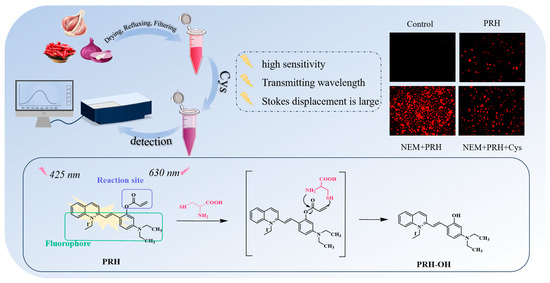
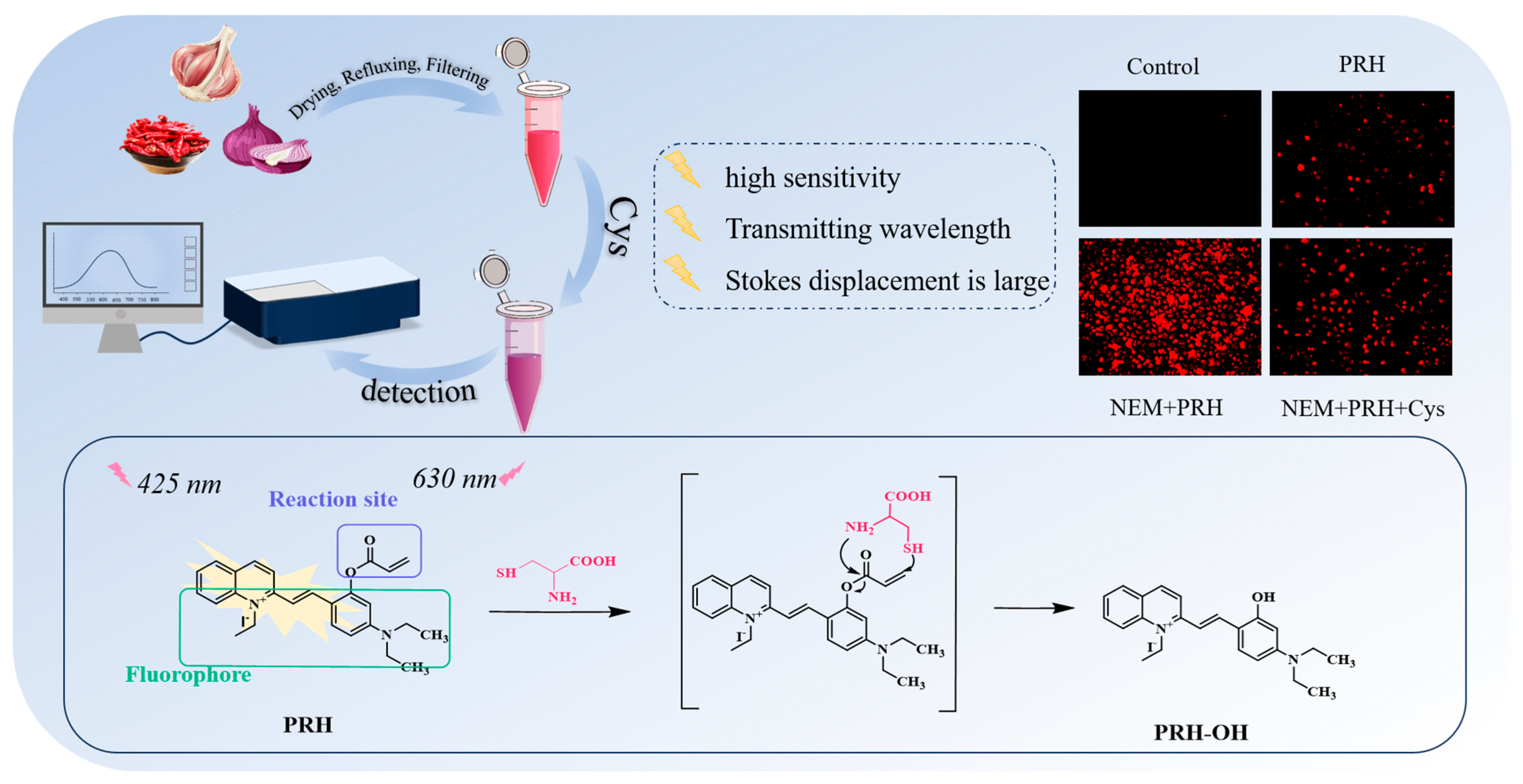
Herein, we develop a hemicyanine-based turn-off fluorescent probe (PRH) for selective determination of cysteine in food matrices and in live cells. Upon Cys-triggered intramolecular cyclization and release of PRH-OH, the near-infrared emission of PRH at 630 nm (λex = 425 nm) is quenched. PRH shows high selectivity over Hcy, GSH, and 18 other amino acids, a broad linear range (0–100 μM), and a low detection limit (0.344 μM). We further demonstrate accurate recovery in representative vegetable samples (garlic, onion, and dried red pepper) and visualize endogenous/exogenous Cys fluctuations in HeLa cells, highlighting analytical robustness and practical applicability. This work offers a simple, sensitive platform for reliable Cys quantification in foods together with complementary cellular imaging, without relying on near-infrared emission claims.
2. Materials and Methods
2.1. Experimental Reagents and Apparatus
No agents required further purification. Detailed specifications of all chemical reagents and analytical apparatus employed throughout this investigation have been systematically cataloged in the Supporting Information.
2.2. Organic Synthesis
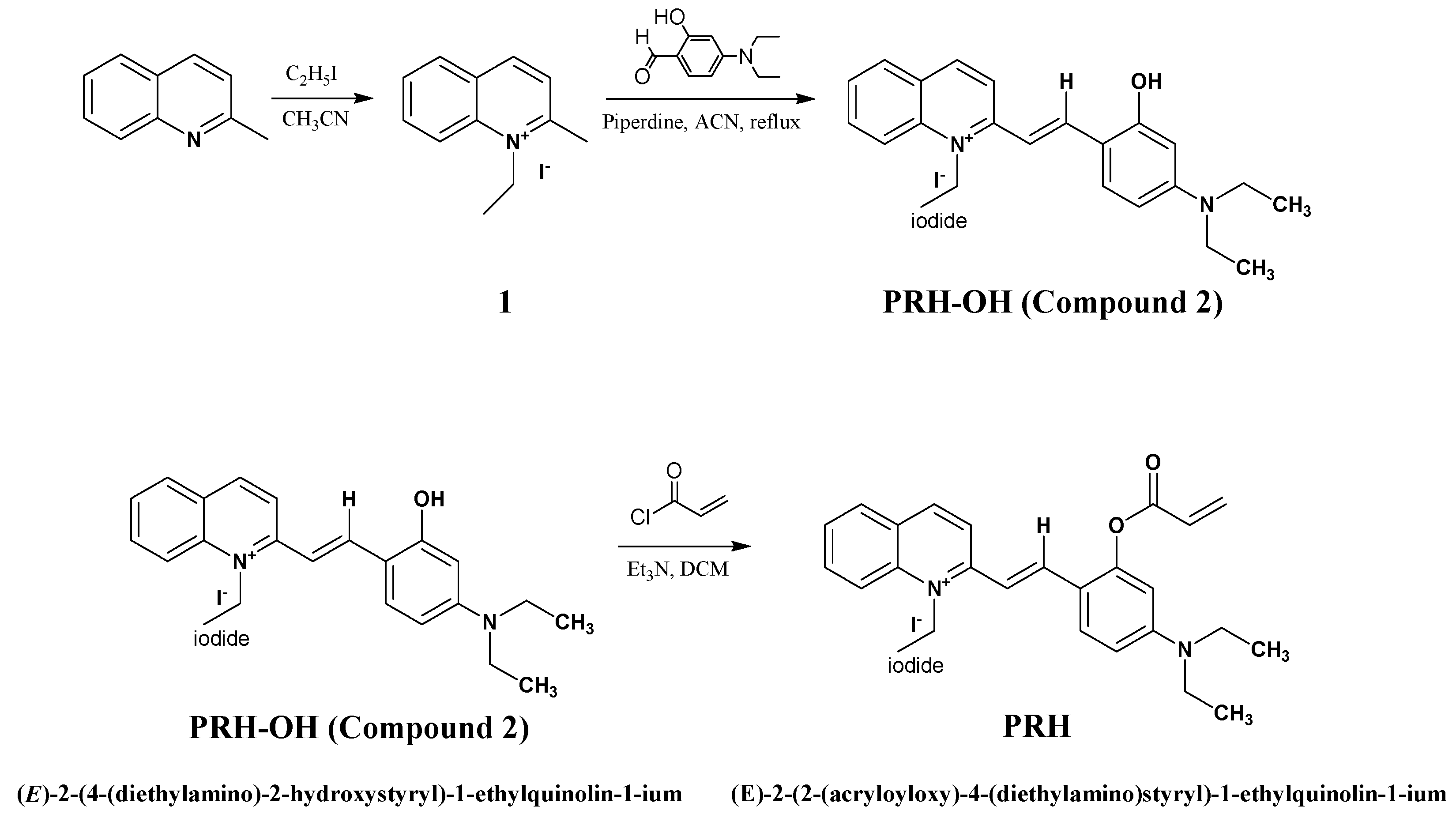
The synthetic route of the probe is depicted in Scheme 1. Under an argon atmosphere, 2-methylquinoline and ethyl iodide were mixed in anhydrous acetonitrile and reacted at 85 °C to obtain Compound 1. Compound 1 was then further reacted with 4-(Diethylamino) salicylaldehyde to afford PRH-OH. Under basic conditions, the hydroxyl group of PRH-OH modify with acryloyl chloride, eventually resulting in the formation of the probe. The detailed information has been described in the Supporting Information. The chemical structures of Compound 1, PRH-OH, and (E)-2-(2-(acryloyloxy)-4-(diethylamino)styryl)-1-ethylquinolin-1-ium (PRH) were characterized by the MS, 1H NMR, and 13C NMR (Figures S1–S9).
Scheme 1.
Syntheses of the probe.
2.3. Analysis of Food Samples
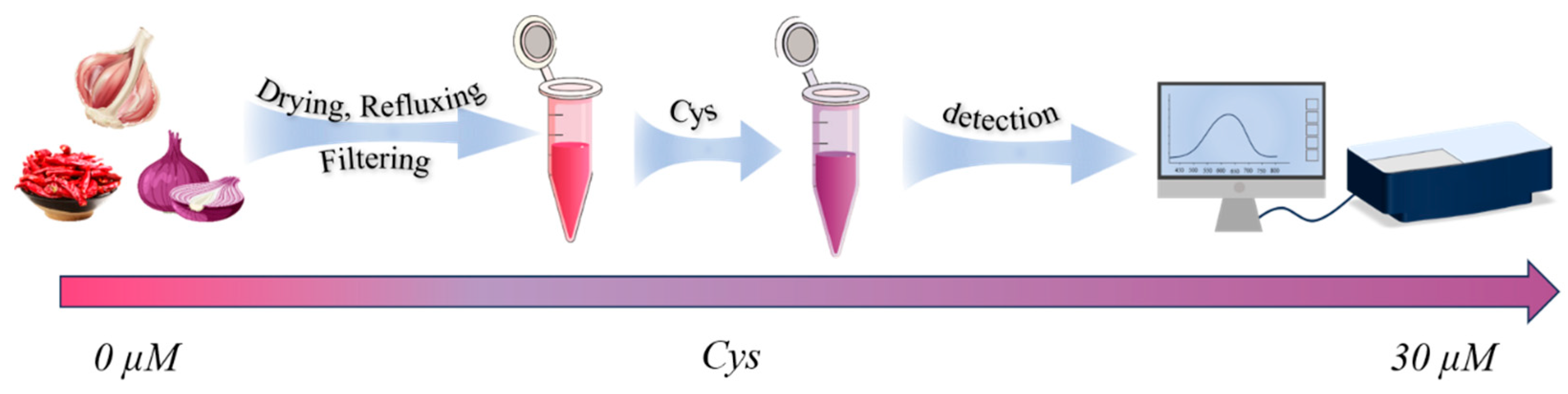
Food samples (dried chili peppers, garlic, and onions) were purchased on the same day from local supermarkets and markets to ensure freshness. The outer layers of the garlic and onions were peeled off [39]. Then, 5 g of each sample was weighed and dried at 65 °C for 8 h. After cooling, the food samples were carefully ground in a mortar and transferred to a flask. The samples (dried chili peppers, garlic, and onions) were then refluxed with 15 mL of 6 mmol HCl for 24 h. Once the reaction solution cooled to room temperature, solid Na2CO3 was added gradually until the pH reached 7.0. The solution was then diluted to 100 mL with PBS (pH = 7.0) and filtered. The resulting filtrate was used directly for the determination of Cys.
2.4. Recovery and Analysis of Sample
Food sample solutions were added with 10 μL of different Cys concentrations (0, 10, 20, and 30 mM), followed by the addition of probe PRH. The reaction mixtures were then diluted to 1 mL with PBS (10 mM, pH 7.4). Fluorescence emission at 630 nm was recorded, and each measurement was repeated three times.
The recovery rate was calculated using the formula provided in the Supporting Information.
2.5. Cell Imaging Experiment
PRH was utilized as a sensor for monitoring Cys levels in HeLa cells. Prior to analysis, the cells were maintained in a DMEM medium (37 °C, 5% CO2) under standard culture conditions. Then, HeLa cells were spread on a Petri dish (d = 35 mm) and incubated for 24 h. Subsequently, we carried out four groups of fluorescence imaging experiments under four different conditions. In the first group, cells were cultured with PBS only for 30 min. In the second group, cells were cultured with PRH (10 μM) for 30 min. In the third group, the cells were treated with NEM (a commonly used material for capturing Cys) (1 mM) for 30 min, washed twice with PBS, and then cultured for 30 min with PRH (10 μM) added. In the fourth group, the cells were treated with NEM (1 mM) for 30 min, washed twice with PBS, cultured with Cys (50 μM) for 15 min, and then cultured with probe PRH (10 μM) for 15 min.
3. Results
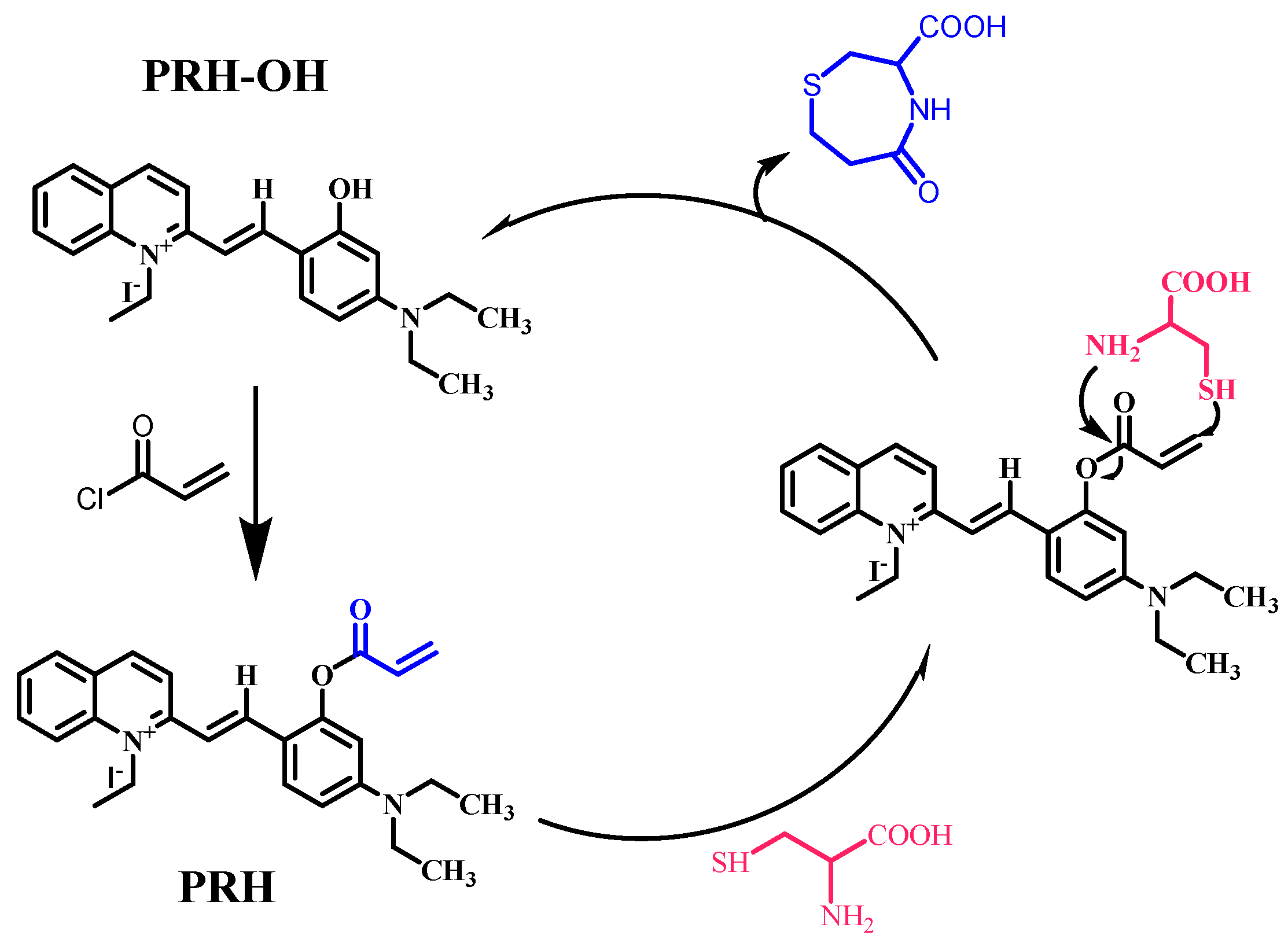
The reaction mechanism of Probe-Cys with Cys is shown in Figure 1. The reaction between the acryloyl group in PRH and cysteine is a typical Michael addition. The thiol group of cysteine acts as a nucleophile and attacks the β-carbon atom of the acryloyl group. The sulfur atom of the thiol provides an electron pair, which undergoes addition with the alkene to form a stable carbon-sulfur bond, thereby generating a thioether adduct. Subsequently, it is dehydrated to form PRH-OH. This reaction has high selectivity and efficiency and is a key reaction in biological coupling and protein modification.
Figure 1.
Reaction mechanism of Probe-Cys with Cys.
3.1. Spectral Properties of PRH
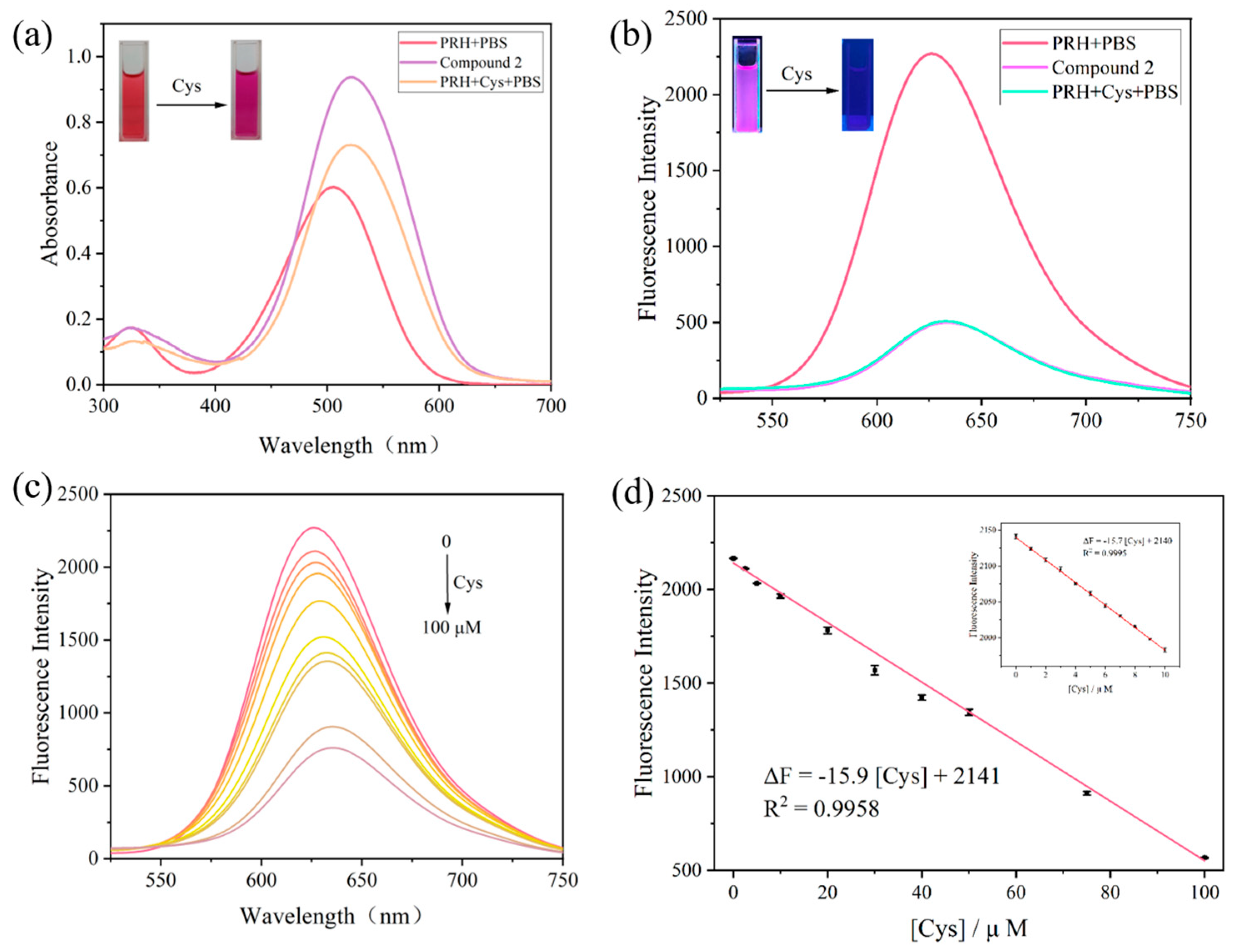
To evaluate the spectral response of Cys in PRH, we carried out UV-visible spectroscopy fluorescence spectrum experiments. Figure 2a shows the absorption spectra of PRH (30 μM) upon the addition of Cys (100 μM). The absorption peak of PRH is at 505 nm. After adding Cys, the absorption peak shifts to 522 nm, which is consistent with the absorption peak of Compound 2 (522 nm). The absorption spectra and fluorescence emission spectra of the probe in different solution systems (PBS, MeOH, EtOH, MeCN, 50% MeOH, 50% EtOH, 50% MeCN) were investigated (Figure S10). As shown in Figure S11, PRH-OH and PRH exhibit different signal peaks at 6.2 min and 10.1 min, respectively. Upon reaction with Cys, the peak at 10.1 min significantly decreased, and a peak representing PRH-OH appeared at 6.2 min. Furthermore, after reaction with Cys, the color of PRH transformed from red into purple, and the change was obvious. The absorbance gradually increased with the concentration of Cys (0–60 μM) (Figure S12). The linear fitting curve of absorbance variation with Cys (0~60 μM) concentration was drawn (Figure S13), and the linear regression equation Y = 0.00234 [Cys] + 0.61417 was obtained. The linear relationship between absorbance and Cys concentration (0~60 μM) was good (R2 = 0.99869). At the excitation wavelength of 425 nm, the fluorescence emission peak is 630 nm. After adding Cys, the fluorescence intensity decreased significantly (Figure 2b). Figure 2c shows the fluorescence emission spectra before and after PRH (200 μM) was added with (0~100 μM) Cys reaction. At 630 nm, the fluorescence intensity decreased gradually with the increase in Cys concentration. The changes in both fluorescence and UV–Vis absorption spectra confirm that PRH successfully responds to Cys. The linear fitting curve of fluorescence intensity with Cys (0~100 μM) concentration at 630 nm was drawn (Figure 2d), and the linear regression equation ΔF = −15.9 [Cys] + 2141 was obtained. The linear relationship between Cys concentration and fluorescence intensity (0~100 μM) was good (R2 =0.9958). The detection limit was 0.344 μM (LOD = 3σ/k).
Figure 2.
(a) UV absorption spectra of probes (100 μM) and probes with Cys (100 μM); (b) Fluorescence spectra of probes (100 μM), Compound 2 (100 μM), and probes with Cys (100 μM); (c) Fluorescence spectra of probes with different concentrations of Cys (0~100 μM) added; (d) Linear fitting curve of fluorescence intensity with the concentration of Cys in the range of 0~100 μM. λex = 425 nm.
The fluorescence response of PRH to Cys was subsequently analyzed for pH and time dependence (Figure S14). Efficient reaction kinetics were observed at physiological pH (7.4), demonstrating that the probe is well-suited for use in biological systems. The fluorescence intensity of PRH decreased with time after the addition of Cys (Figure S15). The fluorescence intensity showed a rapid initial decrease within 20 min, after which the rate of decrease slowed and the signal eventually plateaued. This kinetic profile, combined with the preceding data, confirms that PRH can sensitively detect Cys in biological systems.
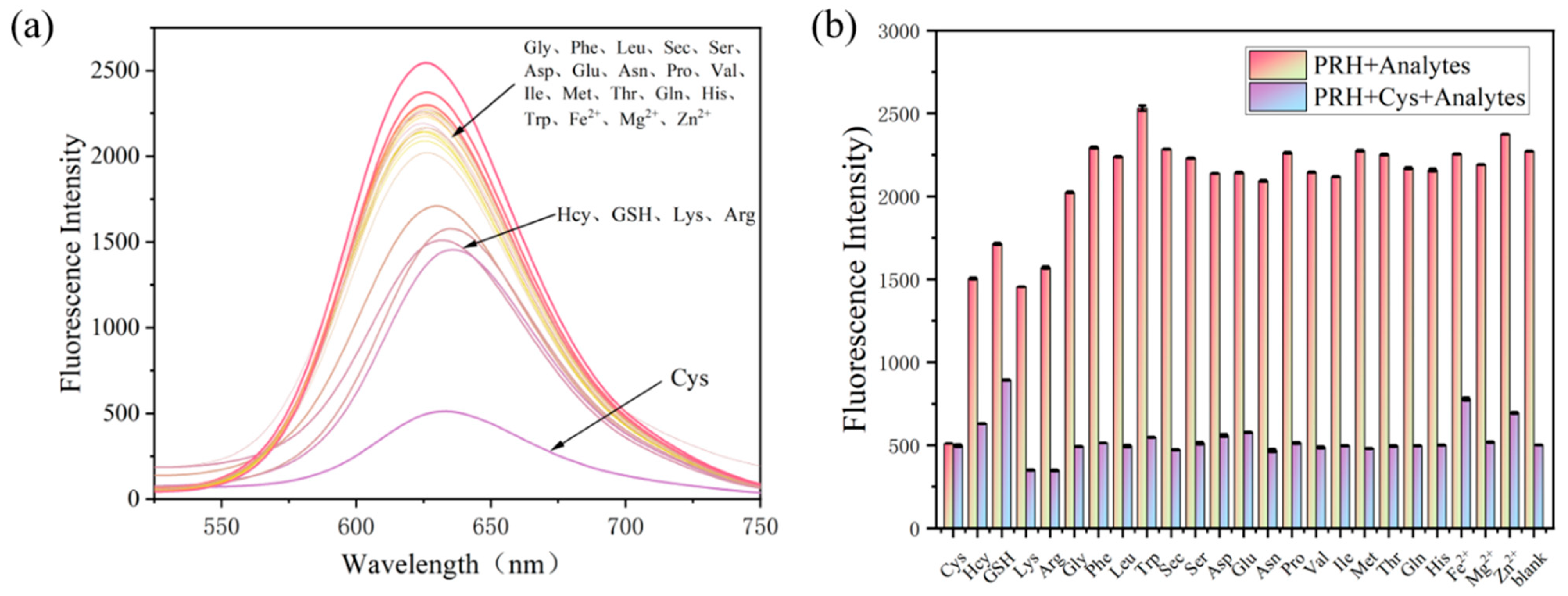
To evaluate the practical feasibility of PRH for Cys detection in complex environments and biological systems, we assessed its selectivity. As shown in Figure 3a, when PRH reacted with other analytes at the same time, the fluorescence intensity hardly changed compared with the control group, which included metal cations (Fe2+, Mg2+, Zn2+), amino acids (Cys, Gsh, Hcy, Ser, Gly, Trp, His, Phe, Leu, Sec, Asp, Glu, Thr, Gln, Lys, Asn, Pro, Val, Ile, Arg, Met), and some mercaptan substances (GSH, Hcy). Compared with the control group, the fluorescence intensity of PRH was significantly reduced after reaction with Cys. All the results indicated that PRH had high selectivity for Cys and could distinguish Cys from other thiols (GSH, Hcy) with similar physiologic properties. Through the color of the solutions under ultraviolet and visible light (Figure S16), it can also be intuitively observed that PRH exhibits high selectivity for Cys.
Figure 3.
(a,b) The fluorescence response of probes (100 μM) to various analytes (100 μM) and the excellent anti-interference performance of Cys (100 μM). λex = 425 nm, λem = 630 nm.
3.2. Sensing Mechanism Study
To elucidate the changes in the UV absorption spectra of PRH and Cys before and after the reaction, the relevant structures were calculated theoretically by using Gaussian 16 software. The frontier molecular orbitals (FMOs) and energy level transitions of PRH and the reaction product PRH-OH are presented in Figure S17. The HOMO and LUMO of PRH are mainly located in the whole conjugated system, and the HOMO and LUMO of PRH-OH are also well-distributed in the conjugated system. The energy gap of the reaction product PRH-OH (2.04 eV) is lower than that of PRH (2.46 eV), which can reasonably prove that the absorption wavelength of the system is significantly redshifted after the reaction of the probe PRH with Cys. The results of the theoretical calculation above support the proposed sensing mechanism of PRH for Cys.
In PRH, the phenolic hydroxyl group combines with the acryloyl group to form an acrylic ester, which exhibits a pulling effect on the electron cloud of the conjugated system. When the probe reacts with Cys and transforms into a phenolic hydroxyl structure, in a solution with pH 7.4, a portion of it is converted into oxygen anions, resulting in a push electron effect on the electron cloud of the conjugated system. The two compounds exhibit different fluorescence properties due to their different electronic cloud states.
3.3. Detection of Cys in Food Samples
The remarkable recognition capability of PRH towards Cys prompted us to further validate the reliability of PRH in detecting Cys in food samples. Consequently, a calibration curve correlating the fluorescence intensity of PRH with the concentration of Cys was utilized to estimate the Cys levels in three food items: garlic, onion, and dried chili. The experimental process is shown in Figure 4. Different concentrations of Cys (0 μM, 10 μM, 20 μM, and 30 μM) were spiked into these food samples. As illustrated in Table 1, the recovery rates of Cys ranged from 98.8% to 101.29%. Notably, the RSD values obtained were all below 2%, indicating that the detection method exhibits commendable accuracy and reproducibility. Thus, these results demonstrate the high feasibility of PRH in determining Cys levels in real food samples.
Figure 4.
Photographs of the food samples (dried chili, garlic, and onion) used for Cys extraction.
Table 1.
Determination of Cys concentration in food samples.
3.4. Live Cell Imaging
Based on the good optical properties of PRH in vitro, we further applied them to biological organisms.
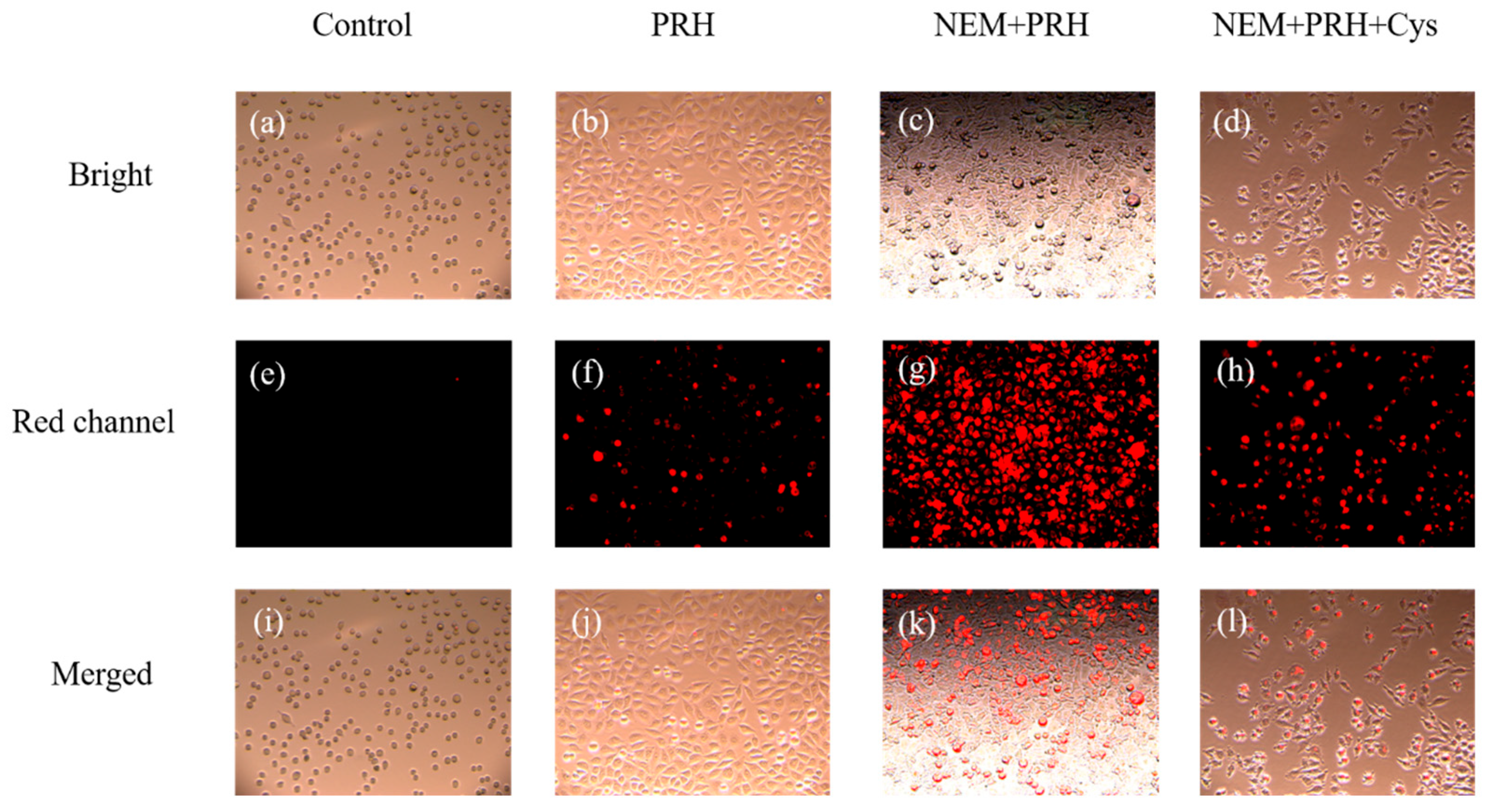
HeLa cells were treated with PBS (pH = 7.4) as the blank group, and the results showed that the cells had no background fluorescence in this condition (Figure 5c). Another group of HeLa cells were pretreated with PRH (10 μM), and the red channel showed fluorescence, indicating that probe PRH could successfully penetrate the cell membrane and had the possibility of detecting intracellular Cys (Figure 5f). To test our hypothesis, we will conduct a further inhibitor experiment. Cells in the inhibitory group (c) were pretreated with NEM (Thiol eliminator, 1 mM) for 30 min, and then washed twice with PBS, and the fluorescence of the red channel was significantly enhanced after PRH (10 μM) addition and incubation for 30 min (Figure 5g). The results indicate that PRH can successfully detect endogenous Cys in cells. Finally, we further researched the possibility of detecting exogenous Cys using the probe PRH in HeLa cells. HeLa cells pretreated with NEM (1 mM) were washed twice with PBS, then cultured with Cys (50 μM) for 15 min, and then cultured with probe PRH (10 μM) for 15 min. As expected, we observed a substantial reduction in red channel fluorescence intensity (Figure 5h). The change in fluorescence in the red channel is consistent with the change in fluorescence intensity of the quenched fluorescence probe. The probe PRH can successfully detect endogenous/exogenous Cys in cells.
Figure 5.
Fluorescence imaging of endogenous and exogenous Cys in HeLa cells. First line: Bright field images; Second line: Red channel images; Third line: Merged images. (a,e,i) HeLa cells were not subjected to any pretreatment; (b,f,j) HeLa cells were co-cultured with PRH; (c,g,k) HeLa cells were cultivated with NEM and PRH was added for co-incubation; (d,h,l) HeLa cells were pretreated with NEM, incubated with PRH, and Cys was added.
3.5. Comparison with Other Cys Fluorescent Probes
Previously reported probes have been mainly used for the detection of Cys in biological systems and have had limited applications in food sample analysis. But only a few probes can detect Cys in both biological systems and food. Compared with the existing Cys responsive fluorescent probes, PRH has the advantages of near-infrared emission and wide linear range. It can distinguish homocysteine and glutathione with the same physiological properties, without interference from the other 18 amino acids. In addition, PRH has been successfully used for the detection of Cys in food samples.
4. Discussion
This study successfully developed an “on-off” type fluorescent probe PRH based on semi-quinone dyes for highly selective detection of Cys. Compared with many previously reported probes [16,19,25], the significant advantage of PRH lies in its near-infrared emission (630 nm). This characteristic effectively reduces the interference caused by excitation light scattering and probe self-absorption and significantly reduces the background signal, thus achieving a higher signal-to-noise ratio in actual complex samples. This is fully demonstrated in its highly accurate food analysis results (recovery rate 98.8–101.3%, RSD < 2%). Although many Cys probes have emerged in recent years [7,28], most of them are either limited to biological imaging or are susceptible to interference in complex food matrices. The uniqueness of PRH lies in its outstanding dual application capabilities: it can not only dynamically visualize the changes in endogenous and exogenous Cys in living cells to confirm its biocompatibility and response reliability, but also be directly applied to actual complex food samples (such as garlic and chili peppers), exhibiting excellent accuracy and reproducibility. In addition, the selectivity of PRH for Cys far exceeds similar structures such as homocysteine (Hcy) and glutathione (GSH), as well as various amino acids. This characteristic overcomes the common challenge of poor selectivity of conventional thiol probes [7]. In conclusion, PRH, with its near-infrared emission, high selectivity, and excellent dual-platform applicability (cell imaging and food analysis), provides a powerful and reliable analytical tool for Cys-related basic biological research, disease diagnosis, and food quality monitoring.
5. Conclusions
In conclusion, this study successfully designed and synthesized a novel semi-quinone fluorescent probe, PRH, for highly selective and sensitive detection of cysteine. This probe, with its unique optical advantages of near-infrared emission, effectively overcomes the limitations of traditional probes that are prone to background interference in complex systems. The outstanding value of this work lies in the successful application of PRH across vastly different analytical platforms: in the field of food analysis, PRH was successfully used for accurate quantitative determination of Cys in actual samples (garlic, onion, and dried red pepper), and its excellent recovery rate and reproducibility proved its excellent analytical reliability and practical potential in complex food matrices. At the same time, in the field of biomedical research, PRH can be seamlessly applied to live cell imaging, successfully achieving dynamic visualization monitoring of endogenous and exogenous Cys fluctuations in cells, demonstrating good biocompatibility and response reliability. Therefore, PRH, as a highly performing multi-functional analytical tool, not only provides a powerful technical means for food quality and safety control, but also offers a new visualization method for the study of physiological and pathological processes related to Cys in living organisms, and has broad application prospects.
Supplementary Materials
The following supporting information can be downloaded at https://www.mdpi.com/article/10.3390/chemosensors13120413/s1. Figure S1: 1H NMR spectrum of Compound 1 in CDCl3; Figure S2: 13C NMR spectrum of Compound 1 in DMSO; Figure S3: HR-MS of Compound 1 in CH3OH; Figure S4: 1H NMR spectrum of PRH-OH in DMSO; Figure S5: 13C NMR spectrum of PRH-OH in DMSO-d6; Figure S6: HR-MS of PRH-OH in CH3OH; Figure S7: 1H NMR spectrum of PRH in DMSO; Figure S8: 13C NMR spectrum of PRH in DMSO-d6; Figure S9: HR-MS of PRH in CH3OH; Figure S10: Absorption and emission spectra in different solution systems; Figure S11: HPLC chromatograms of PRH, PRH + Cys, and PRH − OH; Figure S12: UV absorption spectrum of PRH with different concentrations of Cys (0~60 µM); Figure S13: The absorbance ratio is linearly related to the concentration of Cys (0~60 μM); Figure S14: Fluorescence intensity of probe at different pH values; Figure S15: Fluorescence intensity of probe and probe with Cys addition over time; Figure S16: The fluorescence response of probes to various analytes and their corresponding colors under sunlight; Figure S17: Theoretical models illustrating the energy level and relevant frontier molecular orbitals of PRH-OH and PRH; Table S1: Performance comparison of representative fluorescent probes with PRH [25,40,41,42,43].
Author Contributions
W.J.: Writing—original draft, Investigation, Methodology, and Data curation. Q.D.: Writing—original draft, Supervision, and Investigation. W.L.: Validation, Investigation, and Funding acquisition. L.L.: Investigation. T.L.: Supervision. J.B.: Investigation. M.Z.: Investigation. Q.M.: Supervision, Project administration, Resources, and Writing—review and editing. All authors have read and agreed to the published version of the manuscript.
Funding
This research was funded by the Liaoning Science and Technology Department, grant number 2024-BS-282, Education Department of Liaoning Province, Grant/Award Number: LJ212510169008.
Data Availability Statement
The authors confirm that the data supporting the findings of this study are available within the article.
Conflicts of Interest
No conflicts of interest exist in the submission of this manuscript, and the manuscript has been approved by all authors for publication. I would like to declare on behalf of my co-authors that the work described is original research that has not been published previously, and not under consideration for publication elsewhere, in whole or in part. All the authors listed have approved of the manuscript that is enclosed.
References
- Chen, R.; Wang, L.; Ding, G.; Han, G.; Qiu, K.; Sun, Y.; Diao, J. Constant Conversion Rate of Endolysosomes Revealed by a pH-Sensitive Fluorescent Probe. ACS Sens. 2023, 8, 2068–2078. [Google Scholar] [CrossRef]
- Ding, X.; Yang, B.; Liu, Z.; Shen, M.; Fan, Z.; Wang, X.; Yu, W. A novel intramolecular charge transfer-based near-infrared fluorescent probe with large Stokes shift for highly sensitive detection of cysteine in vivo. Anal. Chim. Acta 2023, 1280, 341873. [Google Scholar] [CrossRef]
- Dong, J.; Lu, G.; He, B.; Tu, Y.; Fan, C. A novel NIR fluorescent probe for monitoring cysteine in mitochondria of living cells. Arab. J. Chem. 2023, 16, 104765. [Google Scholar] [CrossRef]
- Dou, X.; Liu, W.; Luo, Y.; Zhang, L.; Luo, J.; Wu, C.; Huang, T.; Pu, X. A BODIPY-based “turn on” near-infrared fluorescence probe for specific detection of cysteine. Spectrochim. Acta Part A Mol. Biomol. Spectrosc. 2025, 327, 125441. [Google Scholar] [CrossRef]
- Fu, Z.-H.; Han, X.; Shao, Y.; Fang, J.; Zhang, Z.-H.; Wang, Y.-W.; Peng, Y. Fluorescein-Based Chromogenic and Ratiometric Fluorescence Probe for Highly Selective Detection of Cysteine and Its Application in Bioimaging. Anal. Chem. 2017, 89, 1937–1944. [Google Scholar] [CrossRef] [PubMed]
- Gao, J.; Li, F.; Chen, J.; Gao, Y.; Fan, C.; Huang, Y.; Yu, H.; Yang, X.; Wang, X. β-Galactosidase activity monitoring and bioimaging by a novel ICT mechanism-based NIR fluorescent probe with large Stokes shift. Sens. Actuators B Chem. 2024, 398, 134696. [Google Scholar] [CrossRef]
- Gong, M.; Su, J.; Chen, Y.; Zheng, K.; Yuan, L.; Qin, F.; Niu, H.; Ye, Y. A responsive aggregation-induced emission fluorescent probe for the detection of cysteine in food, serum samples and oxidative stress environments. Microchem. J. 2024, 206, 111671. [Google Scholar] [CrossRef]
- Gong, S.; Qin, A.; Zhang, Y.; Li, M.; Chen, X.; Liang, Y.; Xu, X.; Wang, Z.; Wang, S. A new ratiometric AIE fluorescent probe for detecting cysteine in food samples and imaging in the biological system. Food Chem. 2023, 400, 134108. [Google Scholar] [CrossRef]
- Hu, X.; Duan, R.; Wang, J.; Li, M.; Chen, H.; Zhang, J.; Zeng, L. Simultaneous detection of cysteine and glutathione in food with a two-channel near-infrared fluorescent probe. Spectrochim. Acta Part A Mol. Biomol. Spectrosc. 2025, 325, 125098. [Google Scholar] [CrossRef] [PubMed]
- Jia, D.; Li, Z.; Ma, H.; Ji, H.; Qi, H.; Zhang, C. Near-Infrared Fluorescence Probe with a New Recognition Moiety for the Specific Detection of Cysteine to Study the Corresponding Physiological Processes in Cells, Zebrafish, and Arabidopsis thaliana. Anal. Chem. 2024, 96, 6030–6036. [Google Scholar] [CrossRef] [PubMed]
- Li, N.; Wang, T.; Wang, N.; Fan, M.; Cui, X. A Substituted-Rhodamine-Based Reversible Fluorescent Probe for In Vivo Quantification of Glutathione. Angew. Chem. Int. Ed. 2023, 62, e202217326. [Google Scholar] [CrossRef]
- Li, Y.; Liu, F.; Zhu, D.; Zhu, T.; Zhang, Y.; Li, Y.; Luo, J.; Kong, L. A new near-infrared excitation/emission fluorescent probe for the detection of β-galactosidase in living cells and in vivo. Talanta 2022, 237, 122952. [Google Scholar] [CrossRef]
- Liu, C.; Mei, Y.; Yang, H.; Zhang, Q.; Zheng, K.; Zhang, P.; Ding, C. Ratiometric Fluorescent Probe for Real-Time Detection of β-Galactosidase Activity in Lysosomes and Its Application in Drug-Induced Senescence Imaging. Anal. Chem. 2024, 96, 223–3232. [Google Scholar] [CrossRef]
- Liu, H.; Ye, Z.; Deng, Y.; Yuan, J.; Wei, L.; Xiao, L. Blinking fluorescent probes for single-molecule localization-based super-resolution imaging. TrAC Trends Anal. Chem. 2023, 169, 117359. [Google Scholar] [CrossRef]
- Liu, X.; Lu, X.; Li, X.; Zhang, M.; Xue, L.; Yang, S.; Hu, R.; Cui, Y.; Jiang, X.; Sun, G. Highly selective fluorescent probe for cysteine via a tandem reaction and its bioimaging application in HeLa cells. Spectrochim. Acta Part A Mol. Biomol. Spectrosc. 2025, 326, 125223. [Google Scholar] [CrossRef] [PubMed]
- Liu, X.-D.; Sun, R.; Xu, Y.; Xu, Y.-J.; Ge, J.-F.; Lu, J.-M. A benzoxazine–hemicyanine based probe for the colorimetric and ratiometric detection of biothiols. Sens. Actuators B Chem. 2013, 178, 525–531. [Google Scholar] [CrossRef]
- Luo, W.; Diao, Q.; Lv, L.; Li, T.; Ma, P.; Song, D. A novel NIR fluorescent probe for enhanced β-galactosidase detection and tumor imaging in ovarian cancer models. Spectrochim. Acta Part A Mol. Biomol. Spectrosc. 2024, 317, 124411. [Google Scholar] [CrossRef]
- Luo, W.; Diao, Q.; Lv, L.; Li, T.; Ma, P.; Song, D. Near-infrared fluorescent probe based on carboxylesterase 2 and viscosity cascade response for early diagnosis of thyroid cancer. Sens. Actuators B Chem. 2024, 412, 135805. [Google Scholar] [CrossRef]
- Meng, X.; Ye, W.; Wang, S.; Feng, Y.; Chen, M.; Zhu, M.; Guo, Q. A ratiometric two-photon fluorescent probe for cysteine and homocysteine in living cells. Sens. Actuators B Chem. 2014, 201, 520–525. [Google Scholar] [CrossRef]
- Qiu, W.X.; Xu, Z.Y.; Sun, Z.; Li, N.B.; Luo, H.Q. Phenothiazine/xanthene-based fluorescent probes for trace and real-time detection of HClO in cells and complex environmental water samples. Sens. Actuators B Chem. 2023, 394, 134357. [Google Scholar] [CrossRef]
- Sun, Q.; He, D.; Zhang, L.; Li, Z.; Qu, L.; Sun, Y. Coumarin-hemicyanine-based far-red to near-infrared fluorescent probes: A new generation of fluorescent probe design platform. TrAC Trends Anal. Chem. 2023, 167, 117272. [Google Scholar] [CrossRef]
- Lv, L.; Luo, W.; Zhou, Y.; Li, T.; Diao, Q.; Ma, P.; Song, D. A highly sensitive ratiometric fluorescent probe based on fluorescein coumarin for detecting hydrazine in actual water and biological samples. Luminescence 2023, 38, 159–165. [Google Scholar] [CrossRef]
- Wang, G.; Xu, J.; Ma, Q.; Liu, S.; Hou, S.; Ma, Y.; Lian, Y.; Ren, C. A rhodamine-based fluorescent probe for specific recognition of mitochondrial cysteine. Microchem. J. 2024, 197, 109821. [Google Scholar] [CrossRef]
- Wang, X.; Wang, H.; Duan, J.; Sun, Q.; Zhang, C.; Xu, L.; Liu, Z. Phenothiazine-hemicyanine hybrid as a near-infrared fluorescent probe for ratiometric imaging of hypochlorite in vivo. Sens. Actuators B Chem. 2024, 407, 135453. [Google Scholar] [CrossRef]
- Xiao, M.-M.; Zhang, Y.-Y.; Wei, B.-Y.; Zheng, Y.; Miao, J.-Y.; Zhao, B.-X.; Lin, Z.-M. A highly selective ratio fluorescence probe for detecting cysteine and its bioimaging application. Microchem. J. 2023, 194, 109243. [Google Scholar] [CrossRef]
- Xu, L.; Wu, M.; Zhao, L.; Han, H.; Zhang, S.; Ma, P.; Sun, Y.; Wang, X.; Song, D. A novel highly sensitive and near-infrared fluorescent probe for detecting hypochlorite and its application in actual water sample and bioimaging. Talanta 2020, 215, 120892. [Google Scholar] [CrossRef] [PubMed]
- Yan, D.; Liu, L.; Liu, Q.; Hou, P.; Qi, P.; Zhang, X.; Liu, Y.; Chen, S. Red-Emitting Coumarin-Derived fluorescent probe for thiol detection and indirect recognition of β-Lactamase. Microchem. J. 2024, 206, 111622. [Google Scholar] [CrossRef]
- Yang, X.; Wang, J.; Zhang, Z.; Zhang, B.; Du, X.; Zhang, J.; Wang, J. BODIPY-based fluorescent probe for cysteine detection and its applications in food analysis, test strips and biological imaging. Food Chem. 2023, 416, 135730. [Google Scholar] [CrossRef]
- Yang, Y.; Zhao, C.; Chen, X.; Yang, S.; Zhang, R.; Wang, Y.; Wang, K.; Qian, J.; Long, L. Development of near-infrared fluorescent sensor and portable measuring device for on-site quantitation of Cys in food samples. Sens. Actuators B Chem. 2024, 414, 135953. [Google Scholar] [CrossRef]
- Yang, Z.; Kang, X.; Li, J.; Li, L.; Ye, X.; Liu, X.; Chen, K.; Deng, Y.; Peng, C.; Ren, B.; et al. A novel LD-targeting cysteine-activated fluorescent probe for diagnosis of APAP-induced liver injury and its application in food analysis. Food Chem. 2024, 456, 140064. [Google Scholar] [CrossRef] [PubMed]
- Yao, Y.; Ma, J.; Xing, S.; Zeng, F.; Wu, L.; Li, Y.; Du, J.; Yang, Q.; Li, Y. An innovative fluorescent probe based on dicyanoisoflurone derivatives for differential detection of Hg2+ and Cu2+ and its applications in bacteria, cell imaging and food analysis. Anal. Chim. Acta 2024, 1292, 342259. [Google Scholar] [CrossRef]
- Yin, G.; Sun, Y.; Luo, Y.; Cheng, Y.; Xue, S.; Wang, H.; Lu, Q.; Du, F.; Yin, P. Fluorescence imaging of homocysteine dynamics: Complementary diagnostic applications in Alzheimer’s disease. Anal. Chim. Acta 2025, 1342, 343688. [Google Scholar] [CrossRef]
- Zhang, B.; Zhou, F.; Yu, X.; Zhang, P.; Sun, X.; Su, J.; Fan, C.; Shu, W.; Dong, Q.; Zeng, C. An enantioselective fluorescent probe for detecting arginine and glutamic acids. Food Chem. 2024, 455, 139976. [Google Scholar] [CrossRef]
- Zhang, J.; Cheng, P.; Pu, K. Recent Advances of Molecular Optical Probes in Imaging of β-Galactosidase. Bioconjug. Chem. 2019, 30, 2089–2101. [Google Scholar] [CrossRef]
- Zhang, J.; Li, C.; Dutta, C.; Fang, M.; Zhang, S.; Tiwari, A.; Werner, T.; Luo, F.-T.; Liu, H. A novel near-infrared fluorescent probe for sensitive detection of β-galactosidase in living cells. Anal. Chim. Acta 2017, 968, 97–104. [Google Scholar] [CrossRef]
- Zheng, D.; Huang, J.; Fang, Y.; Deng, Y.; Peng, C.; Dehaen, W. Fluorescent probes for ozone-specific recognition: An historical overview and future perspectives. Trends Environ. Anal. Chem. 2023, 38, e00201. [Google Scholar] [CrossRef]
- Zhou, L.; Yang, T.; Zhang, T.; Song, Z.; Feng, G. A novel dual-function fluorescent probe for the detection of cysteine and its applications in vitro. Talanta 2024, 272, 125769. [Google Scholar] [CrossRef] [PubMed]
- Zhou, M.; Liu, C.; Lin, Y.; Bai, T.; Ye, T.; Qian, Z.; Li, L.; Guo, L.; Liu, H.; Wang, J. Novel near-infrared fluorescent probe with large stokes shift for detection of cysteine in food sample and living cells. Food Chem. 2025, 464, 141755. [Google Scholar] [CrossRef]
- Xu, Y.; Wang, J.; Han, R.; Du, X.; Hai, X.; Zhang, J.; Wang, J. Colorimetric and fluorescent probes for cysteine detection: Applications in food safety and cellular imaging. Food Chem. 2025, 463, 141044. [Google Scholar] [CrossRef] [PubMed]
- Wang, Q.; Wei, X.; Li, C.; Xie, Y. A novel p-aminophenylthio-and cyano-substituted BODIPY as a fluorescence turn-on probe for distinguishing cysteine and homocysteine from glutathione. Dye. Pigment. 2018, 148, 212–218. [Google Scholar] [CrossRef]
- Zhao, G.; Yang, W.; Li, F.; Deng, Z.; Hu, Y. A turn-on fluorescent probe for real-time detection of endogenous cysteine in living cells. J. Lumin. 2020, 226, 117506. [Google Scholar] [CrossRef]
- Zeng, R.-F.; Lan, J.-S.; Li, X.-D.; Liang, H.-F.; Liao, Y.; Lu, Y.-J.; Zhang, T.; Ding, Y. A fluorescent coumarin-based probe for the fast detection of cysteine with live cell application. Molecules 2017, 22, 1618. [Google Scholar] [CrossRef] [PubMed]
- Manibalan, K.; Chen, S.-M.; Mani, V.; Huang, T.-T.; Huang, S.-T. A sensitive ratiometric long-wavelength fluorescent probe for selective determination of cysteine/homocysteine. J. Fluoresc. 2016, 26, 1489–1495. [Google Scholar] [CrossRef] [PubMed]
Disclaimer/Publisher’s Note: The statements, opinions and data contained in all publications are solely those of the individual author(s) and contributor(s) and not of MDPI and/or the editor(s). MDPI and/or the editor(s) disclaim responsibility for any injury to people or property resulting from any ideas, methods, instructions or products referred to in the content. |
© 2025 by the authors. Licensee MDPI, Basel, Switzerland. This article is an open access article distributed under the terms and conditions of the Creative Commons Attribution (CC BY) license (https://creativecommons.org/licenses/by/4.0/).