
Review

Cellulose-Based Functional Materials for Sensing
Department of Chemical Sciences, University of Padova, Via F. Marzolo 1, 35131 Padova, Italy
*
Authors to whom correspondence should be addressed.
Chemosensors 2022, 10(9), 352; https://doi.org/10.3390/chemosensors10090352

Submission received: 29 July 2022 / Revised: 19 August 2022 / Accepted: 21 August 2022 / Published: 26 August 2022

Abstract

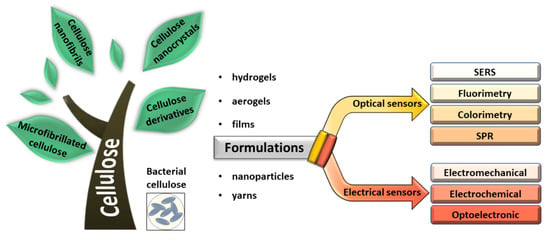
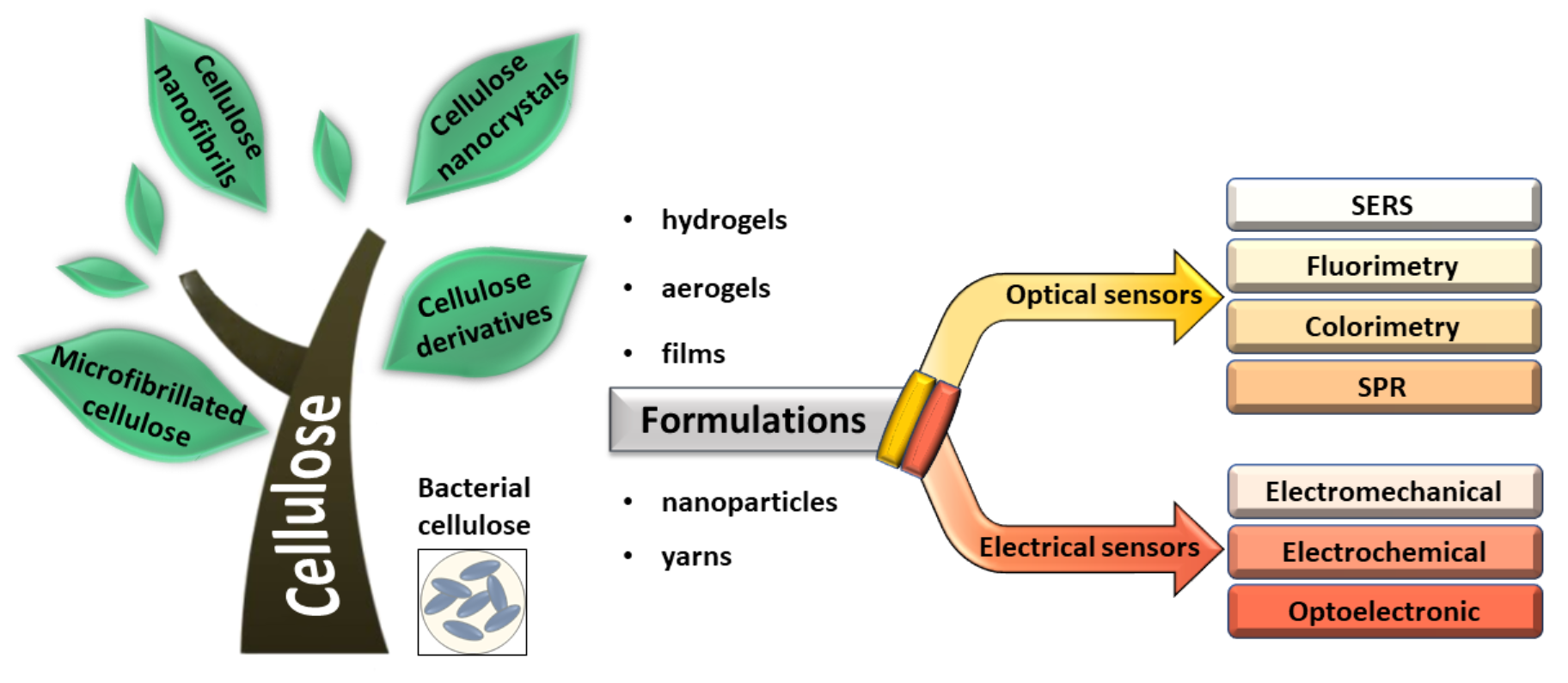
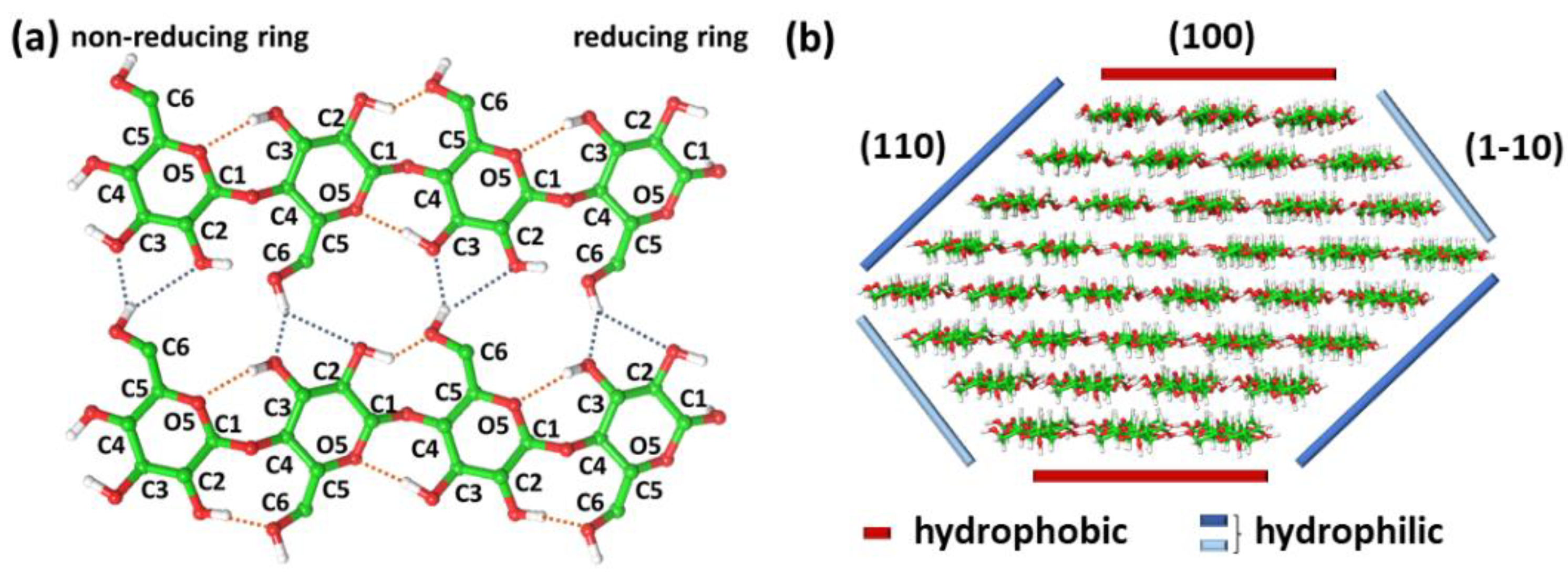
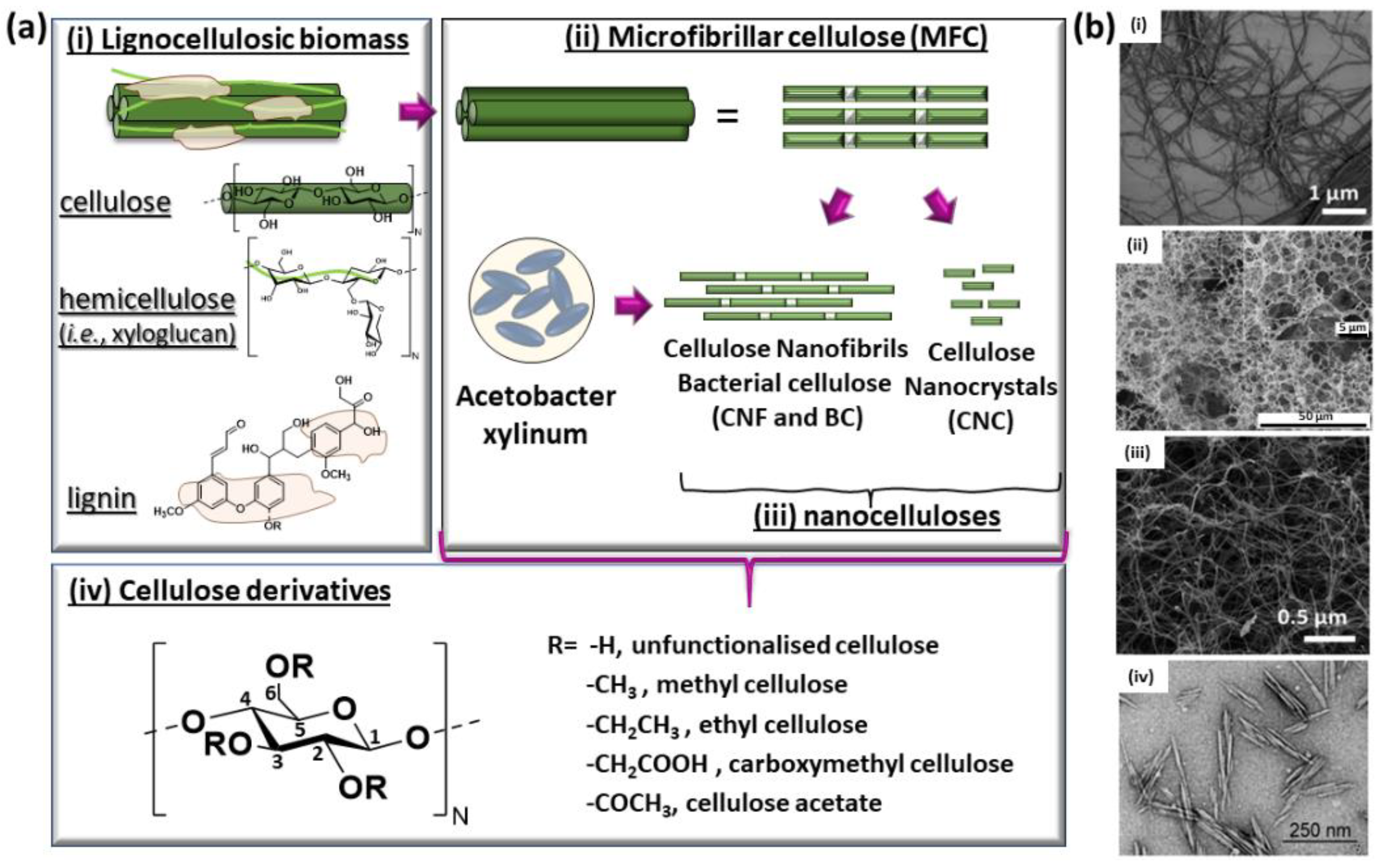
The growing bioeconomic demand for lightweight materials with combined sustainability, large-scale production, ease in functionalization and competitive mechanical properties has seen the revival of cellulose as a scaffold for several applications. In particular, due to its multifunctional features, cellulose has found application in sensor and biosensor fabrication. Nonetheless, the great variety of cellulose properties and formulations makes the choice of the best suited cellulose-based material for a specific sensing strategy a difficult task. This review offers a critical discussion and guide for the reader towards the understanding of which of the multiple cellulose derivatives and properties can be exploited for the optimal performance of the desired sensing device. We introduce the unique molecular structure, nanoarchitecture and main properties of cellulose and its derivatives. The different functionalization approaches for anchoring receptors on cellulose derivatives and the processing methodologies for fabricating cellulose-based sensors are explored. As far as the use and performance of cellulose-based functional materials in sensors is concerned, we discuss the recent advances of optical and electrochemical sensors and biosensors for biomedical and environmental monitoring.
Keywords: cellulose derivatives; nanocelluloses; cellulose hydrogels; cellulose films; sustainable materials; biosensors; paper-based sensors; optical sensors; electrochemical sensors; immunoassays cellulose derivatives; nanocelluloses; cellulose hydrogels; cellulose films; sustainable materials; biosensors; paper-based sensors; optical sensors; electrochemical sensors; immunoassays
Graphical Abstract