Leveraging ICT Tools to Improve Kidney Health: A Comprehensive Review of Innovations in Nephrology


Abstract
1. Introduction
2. Methodological Approach
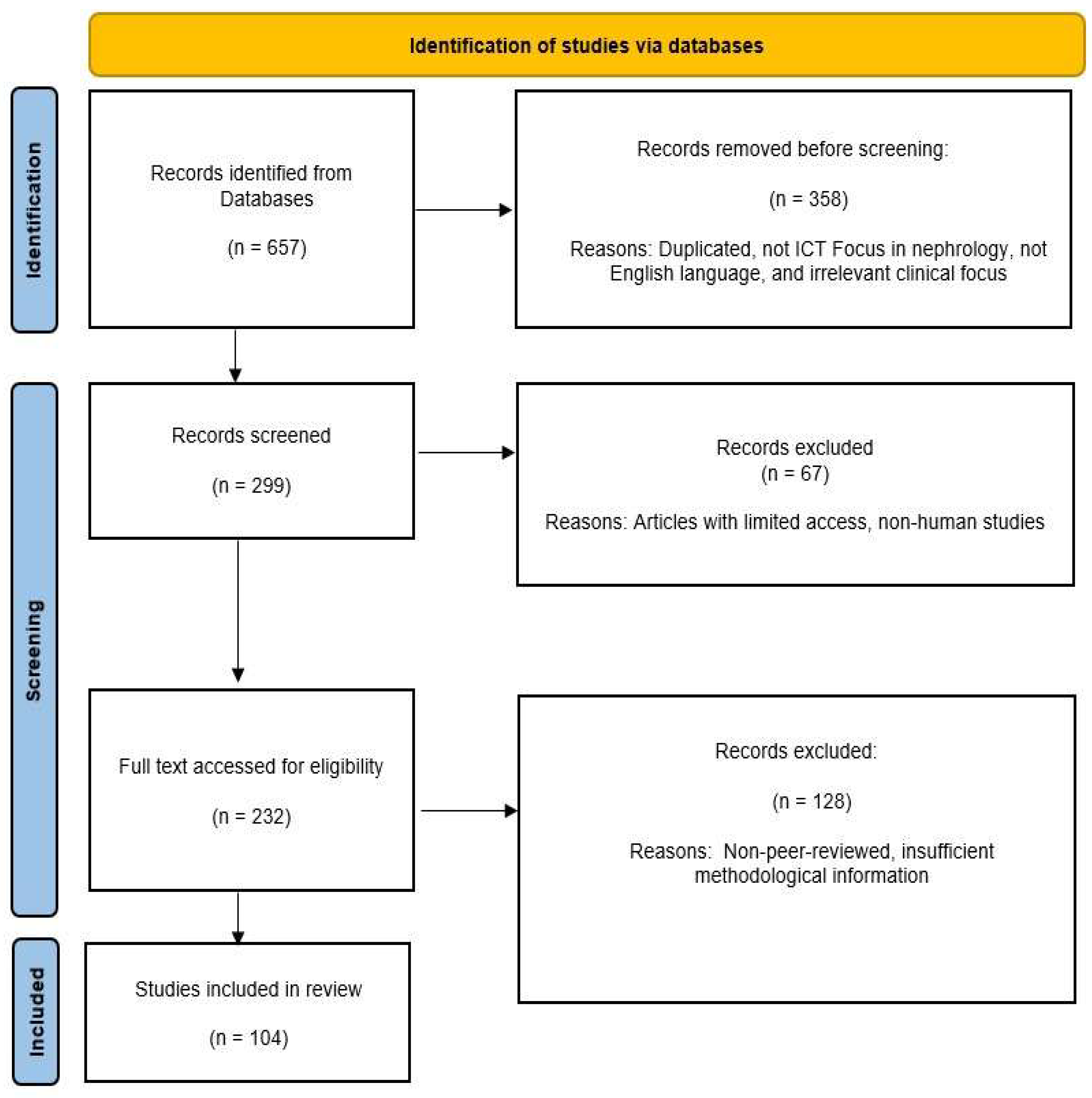
2.1. Study Selection
2.2. Main Body (Results/Review of Tools)
Thematic Review
- 1.
- Telenephrology and virtual care
- 2.
- Mobile health applications and patient empowerment
- 3.
- Artificial intelligence and predictive analytics
- 4.
- Wearable and sensor technologies
- 5.
- Integration of digital platforms into health systems
- 6.
- Challenges to reconfiguring kidney care
- 7.
- Several ICT tools have begun to reshape nephrology practice
- Remote patient monitoring (RPM): Cloud-based platforms such as Sharesource® (Vantive/Baxter) enable continuous monitoring of peritoneal dialysis patients, transmitting treatment data to clinicians in real time [32,33]. This allows for early detection of complications, personalized adjustments, and reduction in hospital visits.
- Versia® (Vantive/Baxter) digital health solutions: Emerging platforms provide patient dashboards, clinician portals, and integration with wearable devices, supporting comprehensive CKD management and engagement in home-based therapy [32].
- Artificial intelligence: AI algorithms are being applied to predict CKD progression, optimize dialysis prescriptions, and support decision-making in kidney transplantation [35]. Machine learning (ML) also enhances pathology interpretation, such as automated biopsy image analysis, with the potential to improve diagnostic accuracy and efficiency [36,37].
- Wearable devices and sensors: Devices that track blood pressure, fluid status and physical activity are increasingly being integrated into nephrology care [37]. Coupled with mobile health applications, they empower patients to actively participate in disease management and provide clinicians with real-time data for early intervention [38,39].
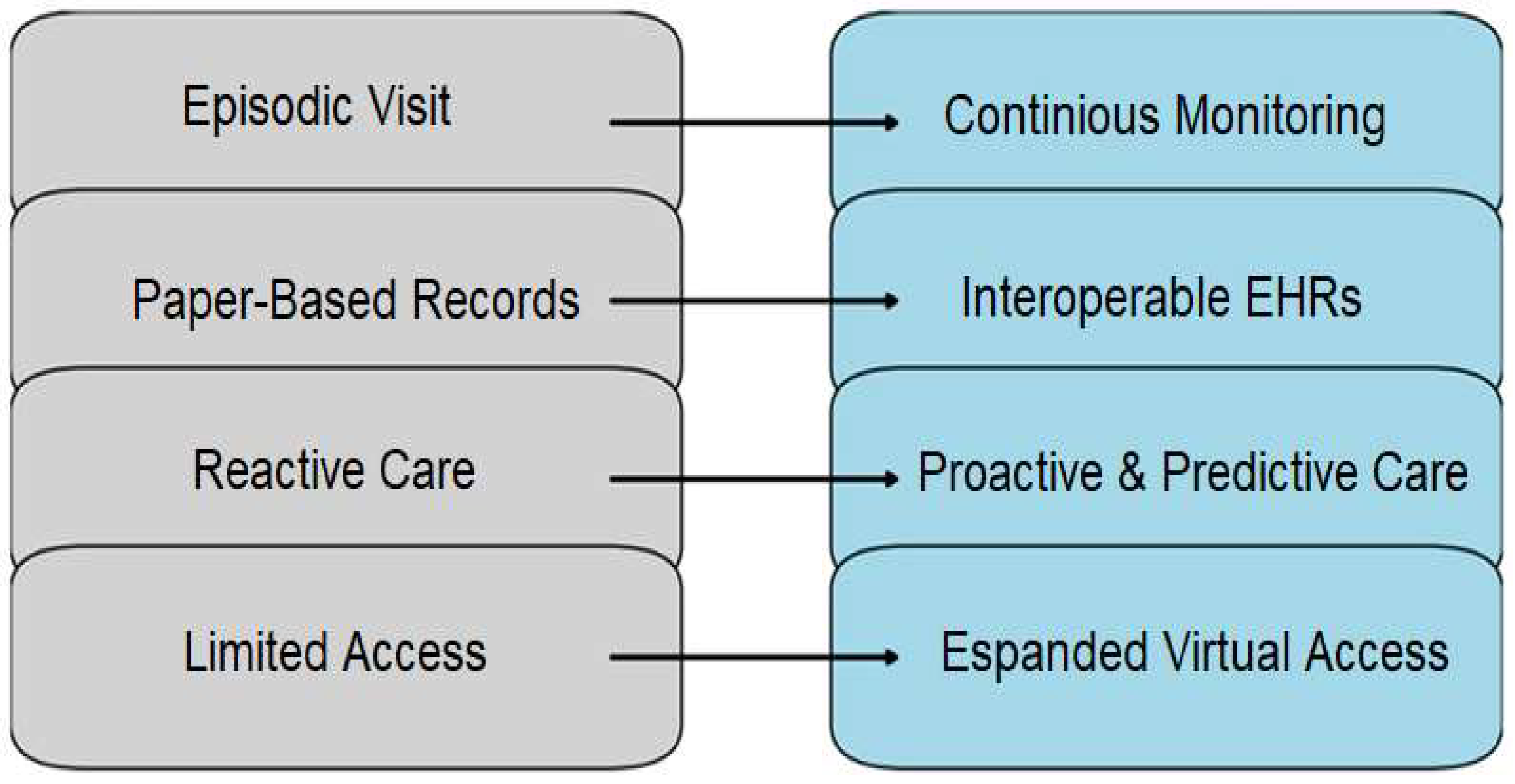
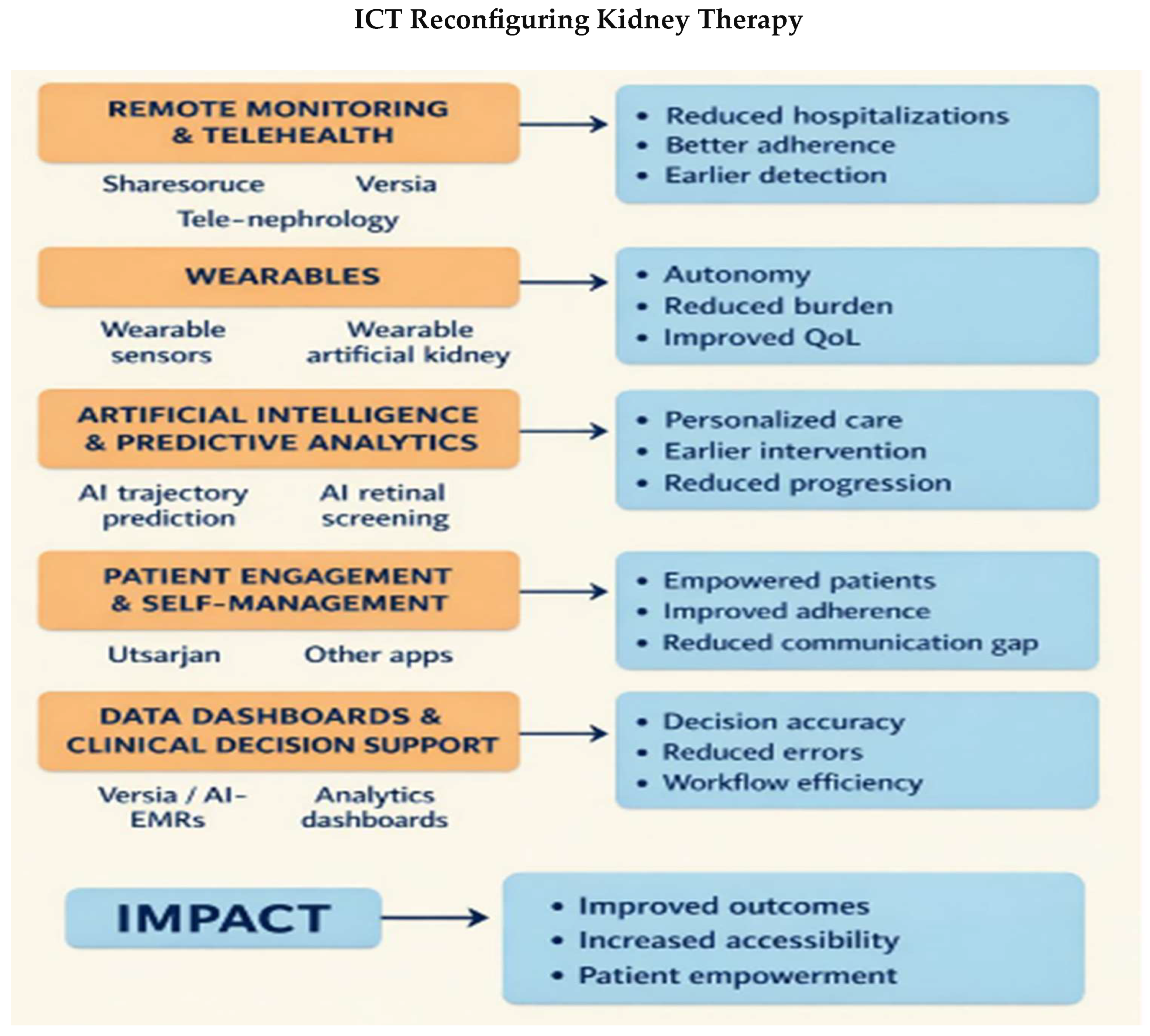
- A framework diagram to anchor the review.
- A summary table of ICT applications.
- A challenge/solution table to make support for the conclusion actionable.
- Wearable devices and sensors.
2.3. Section A—Remote Monitoring and Telehealth
2.3.1. Remote Monitoring and Telehealth
2.3.2. Sharesource (Vantive/Baxter)—Remote Patient Monitoring for Automated Peritoneal Dialysis (APD)
2.3.3. Versia—Renal Data Management System
2.3.4. Telenephrology Platforms
- Impact: Improved accessibility in rural regions, reduced travel burden, higher patient engagement, and evidence of equivalent or superior outcomes compared to in-person visits.
2.3.5. MACCS Platform—Post-Transplant Patient Home Monitoring
2.3.6. Overall Impact of Remote Monitoring and Telehealth
- Reduced hospitalizations through early detection of complications.
- Better adherence to treatment regimens and prescriptions.
- Earlier detection of adverse events (fluid overload, nonadherence, infections).
- Improved technique survival for dialysis modalities.
- Optimized resource utilization by reducing unnecessary in-person visits.
- Increased patient satisfaction due to convenience, empowerment, and personalization of care.
2.4. Section B—Wearable Devices and Portable Dialysis
2.4.1. Wearables and Portable Kidney Therapies
2.4.2. Wearable Sensors for Physiological Monitoring
- Blood pressure monitors (ambulatory and wrist-worn) for detection of hypertension, a major CKD risk factor.
- Hydration sensors using bioimpedance or photoplethysmography, supporting fluid balance management in dialysis patients.
- Glucose sensors (continuous glucose monitoring, (CGM)), which are particularly relevant for patients with diabetic kidney disease.
2.4.3. Wearable Artificial Kidneys (WAKs)
2.5. Overall Significance
2.5.1. Artificial Intelligence and Predictive Analytics
2.5.2. AI for CKD Trajectory Prediction
2.5.3. AI Retinal Screening for CKD Detection
2.5.4. AI in Renal Pathology
2.5.5. AI in Transplant Medicine
- Impact: Earlier detection of subclinical rejection, improved long-term graft survival, and safer immunosuppression management [59].
2.5.6. Overall Impact of AI and Predictive Analytics in Nephrology
- Improve the prediction of CKD progression and optimize resource allocation.
- Enable early, non-invasive CKD detection through retinal imaging.
- Enhance diagnostic reproducibility and accelerate pathology workflows.
- Optimize transplant outcomes through predictive immunology.
2.5.7. Patient Engagement Apps and Self-Management
2.5.8. Utsarjan—A Pediatric Nephrology Application
- Metrics: Reduction in relapse-related hospitalizations, improved medication adherence rates, patient/caregiver satisfaction scores, and timely physician intervention [68].
2.5.9. General Self-Management Apps in Nephrology
- Medication reminders (e.g., for phosphate binders, immunosuppressants, antihypertensive).
- Symptom tracking (blood pressure, weight, urine output, fatigue, pruritus).
- Dialysis logs to record ultrafiltration, session adherence, and dietary compliance.
- Educational content to improve disease awareness and empower behavioral change.
- ○
- ○
- Metrics: Percentage improvement in medication adherence, patient-reported outcome (PRO) measures (e.g., health-related quality of life, symptom burden), satisfaction scores, and reduced missed dialysis sessions [70].
2.5.10. Overall Contribution
2.5.11. Data Dashboards and Clinical Decision Support
2.5.12. Versia and AI-Enhanced Electronic Medical Records
- Impact: Facilitates proactive interventions, reduces preventable adverse events, and standardizes the quality of care across dialysis centers [76].
2.5.13. Analytics Dashboards (e.g., Sharesource Analytics 1.0)
2.5.14. Overall Impact of Dashboards and CDSS
- They improve clinical efficiency by reducing the cognitive load on providers.
- They lower the risk of human error and oversight through automated alerts.
- They support standardization and quality improvement, ensuring consistent adherence to best practice.
3. Discussion
- Personalized treatment: Data dashboards, clinical decision support systems, and AI-enhanced EMRs facilitate individualized therapeutic strategies tailored to patient-specific risk profiles [56].
- Multicenter, long-term clinical trials to validate efficacy and safety.
- Cost-effectiveness analyses to support sustainable adoption across diverse healthcare settings.
- Equitable digital health strategies to bridge the digital divide and ensure access for all patient populations.
3.1. Synthesis: From Reactive to Proactive Nephrology
3.2. Strengths of ICT in Nephrology
- 1.
- Improved outcomes:
- ○
- ○
- Continuous monitoring and decision support systems improve treatment precision and safety [65].
- 2.
- Accessibility:
- ○
- ○
- 3.
- Patient empowerment:
3.3. Clinical Significance
3.4. Challenges and Future Outlook in ICT for Nephrology
3.5. Digital Divide: Access and Literacy
3.6. Data Privacy, Security, and Interoperability
3.7. Cost and Reimbursement
3.8. Need for Regulatory Validation and Randomized Trials
3.9. Comparison with Traditional Care
3.10. Future Outlook
- Fully wearable kidneys: Advances in sorbent regeneration and miniaturization technologies may allow for continuous, portable dialysis, dramatically improving autonomy and quality of life [31].
3.11. Overall Perspective
4. Limitations
4.1. Limited Long-Term Evidence
4.2. Publication Bias
4.3. Variability in Regulatory Approvals
4.4. Limitations of the Current Evidence Base and Future Research Needs
5. Comparison with Existing Reviews and Novel Contribution of This Review
- Lack of ecosystem perspective:Existing reviews rarely conceptualize digital nephrology as a multi-layered technological ecosystem integrating AI, telehealth, imaging, wearable monitoring, and data platforms.
- Limited focus on clinical workflow integration:Many technological studies evaluate performance metrics (e.g., the predictive accuracy of AI models) but provide limited discussion on clinical implementation pathways, workflow redesign, and interoperability within health systems.
- Underrepresentation of safety and process-design considerations:Few reviews address the organizational, operational, and safety challenges associated with deploying complex extracorporeal platforms and digital monitoring systems in critical care nephrology.
5.1. Novel Contribution of This Narrative Review
- Conceptualizing a digital nephrology ecosystem, integrating ICT, AI-driven diagnostics, wearable sensors, telehealth platforms, and remote monitoring tools across the CKD and dialysis continuum.
- Linking technological innovation with clinical workflow redesign, highlighting ultrasound-enabled workflows, AI-assisted decision support, and digital vascular access monitoring strategies.
- Addressing implementation barriers and safety considerations, including the organizational risk management, protocol standardization, and process-design strategies required for complex extracorporeal therapies.
- Integrating patient-centered technological innovation, including wearable dialysis systems and mobile health platforms designed to improve quality of life and treatment adherence.
5.2. Future Directions and Research Agenda
6. Conclusions
Author Contributions
Funding
Institutional Review Board Statement
Informed Consent Statement
Data Availability Statement
Conflicts of Interest
Abbreviations
| AI | Artificial Intelligence |
| AKI | Acute Kidney Injury |
| APD | Automated Peritoneal Dialysis |
| APPs | Applications |
| AUC | Area Under the Curve |
| AWAKs | Automated Wearable Artificial Kidney |
| BP | Blood Pressure |
| CDSS | Clinical Decision Support Systems |
| CKD | Chronic Kidney Disease |
| CGM | Continuous Glucose Monitoring |
| CNN | Convolutional Neural Network |
| CV | Computer Vision |
| EBPT | Extracorporeal Blood Purification Treatment |
| eGFR | Estimated Glomerular Filtration Rate |
| EHR | Electronic Health Record |
| ESRD | End-Stage Renal Disease |
| HLA | Human Leukocyte Antigens |
| HD | Hemodialysis |
| ICT | Information and Communication Technologies |
| KRT | Kidney Replacement Therapy |
| LLMs | Large Language Models |
| LMIC | Low-and Middle-Income Countries |
| MACCS | Medical Assistant for Chronic Care Service/Support |
| ML | Machine Learning |
| PD | Peritoneal Dialysis |
| PRO | Patient Reported Outcome |
| QoL | Quality of Life |
| RCTs | Randomized Controlled Trial |
| RM | Remote Monitoring |
| ROC | Receiver Operating Characteristic |
| RPM | Remote Patient Monitoring |
| RRT | Renal Replacement Therapy |
| SaMD | Software as a Medical Device |
| WAK | Wearable Artificial Kidney |
References
- GBD Chronic Kidney Disease Collaboration. Global, regional, and national burden of chronic kidney disease, 1990–2017. Lancet 2020, 395, 709–733. [Google Scholar] [CrossRef]
- Jha, V.; Garcia-Garcia, G.; Iseki, K.; Li, Z.; Naicker, S.; Plattner, B.; Saran, R.; Wang, A.Y.; Yang, C.W. Chronic kidney disease: Global dimension and perspectives. Lancet 2013, 382, 260–272, Erratum in Lancet 2013, 382, 208. PMID: 23727169. [Google Scholar] [CrossRef] [PubMed]
- Bello, A.K.; Levin, A.; Tonelli, M.; Okpechi, I.G.; Feehally, J.; Harris, D.; Jindal, K.; Salako, B.L.; Rateb, A.; Osman, M.A.; et al. Assessment of global kidney health care status. JAMA 2017, 317, 1864. [Google Scholar] [CrossRef] [PubMed]
- Kidney Disease: Improving Global Outcomes (KDIGO). KDIGO 2012 clinical practice guideline for the evaluation and management of chronic kidney disease. Kidney Int. Suppl. 2013, 3, 1–150.
- Lew, S.Q.; Wallace, E.L.; Srivatana, V.; Warady, B.A.; Watnick, S.; Hood, J.; White, D.L.; Aggarwal, V.; Wilkie, C.; Naljayan, M.V.; et al. Telehealth for home dialysis in COVID-19 and beyond: A perspective from the American society of nephrology COVID-19 home dialysis subcommittee. Am. J. Kidney Dis. 2021, 77, 142–148. [Google Scholar] [CrossRef] [PubMed]
- Armignacco, P.; Lorenzin, A.; Neri, M.; Nalesso, F.; Garzotto, F.; Ronco, C. Wearable devices for blood purification: Principles, miniaturization, and technical challenges. Semin. Dial. 2015, 28, 125–130. [Google Scholar] [CrossRef] [PubMed]
- Mata-Lima, A.; Paquete, A.R.; Serrano-Olmedo, J.J. Remote patient monitoring and management in nephrology: A systematic review. Nefrologia 2024, 44, 639–667. [Google Scholar] [CrossRef]
- Casuscelli di Tocco, T.; Lacquaniti, A.; Ragno, C.; Sfravara, G.; Bocca, M.; Monardo, P. Telemedicine and Remote Monitoring in peritoneal dialysis improve clinical outcomes, quality of life and cost efficiency. G. Ital. Nefrol. 2024, 41, 89–108. [Google Scholar] [CrossRef]
- Osman, M.A.; Okel, J.; Okpechi, I.G.; Jindal, K.; Bello, A.K. Potential applications of telenephrology to enhance global kidney care. BMJ Glob. Health 2017, 2, e000292. [Google Scholar] [CrossRef]
- Koraishy, F.M.; Rohatgi, R. Telenephrology: An emerging platform for delivering renal health care. Am. J. Kidney Dis. Off. J. Natl. Kidney Found. 2020, 76, 417–426. [Google Scholar] [CrossRef]
- Jourde-Chiche, N.; Burtey, S. Accumulation of protein-bound uremic toxins: The kidney remains the leading culprit in the gut-liver-kidney axis. Kidney Int. 2020, 97, 1102–1104. [Google Scholar] [CrossRef] [PubMed]
- Deng, T.; Xue, Y.; Methakanjanasak, N. Digital health integration in chronic kidney disease. Clin. Chim. Acta 2025, 582, 120749. [Google Scholar] [CrossRef] [PubMed]
- Zoccali, C.; Mallamaci, F.; Lightstone, L.; Jha, V.; Pollock, C.; Tuttle, K.; Kotanko, P.; Wiecek, A.; Anders, H.J.; Remuzzi, G.; et al. A new era in the science and care of kidney diseases. Nat. Rev. Nephrol. 2024, 20, 460–472. [Google Scholar] [CrossRef] [PubMed]
- Lew, S.Q.; Ronco, C. Use of eHealth and remote patient monitoring: A tool to support home dialysis patients, with an emphasis on peritoneal dialysis. Clin. Kidney J. 2024, 17, i53–i61. [Google Scholar] [CrossRef]
- Rajkomar, A.; Farrington, K.; Mayer, A.; Walker, D.; Blandford, A. Patients’ and carers’ experiences of interacting with home haemodialysis technology: Implications for quality and safety. BMC Nephrol. 2014, 15, 195. [Google Scholar] [CrossRef]
- Ugwuowo, U.; Yamamoto, Y.; Arora, T.; Saran, I.; Partridge, C.; Biswas, A.; Martin, M.; Moledina, D.G.; Greenberg, J.H.; Simonov, M.; et al. Real-time prediction of acute kidney injury in hospitalized adults: Implementation and proof of concept. Am. J. Kidney Dis. 2020, 76, 806–814.e1. [Google Scholar] [CrossRef]
- Biebuyck, G.K.M.; Neradova, A.; de Fijter, C.W.H.; Jakulj, L. Impact of telehealth interventions added to peritoneal dialysis-care: A systematic review. BMC Nephrol. 2022, 23, 292. [Google Scholar] [CrossRef]
- Hermsen, M.; de Bel, T.; den Boer, M.; Steenbergen, E.J.; Kers, J.; Florquin, S.; Roelofs, J.; Stegall, M.D.; Alexander, M.P.; Smith, B.H.; et al. Deep learning-based histopathologic assessment of kidney tissue. J. Am. Soc. Nephrol. 2019, 30, 1968–1979. [Google Scholar] [CrossRef]
- Canaud, B.; Davenport, A.; Leray-Moragues, H.; Morena-Carrere, M.; Cristol, J.P.; Kooman, J.; Kotanko, P. Digital health support: Current status and future development for enhancing dialysis patient care and empowering patients. Toxins 2024, 16, 211. [Google Scholar] [CrossRef]
- Himmelfarb, J.; Vanholder, R.; Mehrotra, R.; Tonelli, M. The current and future landscape of dialysis. Nat. Rev. Nephrol. 2020, 16, 573–585. [Google Scholar] [CrossRef]
- Singh, P.; Goyal, L.; Mallick, D.C.; Surani, S.R.; Kaushik, N.; Chandramohan, D.; Simhadri, P.K. Artificial intelligence in nephrology: Clinical applications and challenges. Kidney Med. 2025, 7, 100927. [Google Scholar] [CrossRef]
- Thongprayoon, C.; Wathanavasin, W.; Cheungpasitporn, W. Artificial intelligence, machine learning, telemedicine, and digital transformation in nephrology and transplantation. Ren. Fail. 2025, 47, 2574537. [Google Scholar] [CrossRef] [PubMed] [PubMed Central]
- Li, W.-Y.; Chiu, F.-C.; Zeng, J.-K.; Li, Y.-W.; Huang, S.-H.; Yeh, H.-C.; Cheng, B.-W.; Yang, F.-J. Mobile. health app with social media to support self-management for patients with chronic kidney disease: Prospective randomized controlled study. J. Med. Internet Res. 2020, 22, e19452. [Google Scholar] [CrossRef] [PubMed]
- Jeon, N.; Staley, B.; Henriksen, C.; Lipori, G.P.; Winterstein, A.G. Development and validation of an automated algorithm for identifying patients at higher risk for drug-induced acute kidney injury. Am. J. Health Syst. Pharm. 2019, 76, 654–666. [Google Scholar] [CrossRef] [PubMed]
- Selvaskandan, H.; Gee, P.O.; Seethapathy, H. Technological innovations to improve patient engagement in nephrology. Adv. Kidney Dis. Health 2024, 31, 28–36. [Google Scholar] [CrossRef]
- Green, J.A.; Ephraim, P.L.; Hill-Briggs, F.; Browne, T.; Strigo, T.S.; Hauer, C.L.; Yule, C.; Stametz, R.A.; Littlewood, D.; Pendergast, J.F.; et al. Integrated. digital health system tools to support decision making and treatment preparation in CKD: The PREPARE NOW study. Kidney Med. 2021, 3, 565–575.e1. [Google Scholar] [CrossRef]
- Jawad, K.M.T.; Verma, A.; Amsaad, F.; Ashraf, L. AI-driven predictive analytics approach for early prognosis of Chronic Kidney Disease using ensemble learning and explainable AI. arXiv 2024. [Google Scholar] [CrossRef]
- Yuan, S.; Guo, L.; Xu, F. Artificial intelligence in nephrology: Predicting CKD progression and personalizing treatment. Int. Urol. Nephrol. 2025. [Google Scholar] [CrossRef]
- Tomašev, N.; Glorot, X.; Rae, J.W.; Zielinski, M.; Askham, H.; Saraiva, A.; Mottram, A.; Meyer, C.; Ravuri, S.; Protsyuk, I.; et al. A clinically applicable approach to continuous prediction of future acute kidney injury. Nature 2019, 572, 116–119. [Google Scholar] [CrossRef]
- Liu, W.; Yu, X.; Wang, J.; Zhou, T.; Yu, T.; Chen, X.; Xie, S.; Han, F.; Wang, Z. Improving kidney outcomes in patients with nondiabetic chronic kidney disease through an artificial intelligence-based health coaching mobile app: Retrospective cohort study. JMIR mHealth uHealth 2023, 11, e45531. [Google Scholar] [CrossRef]
- Shajari, S.; Kuruvinashetti, K.; Komeili, A.; Sundararaj, U. The emergence of AI-based wearable sensors for digital health technology: A review. Sensors 2023, 23, 9498. [Google Scholar] [CrossRef] [PubMed]
- Vantive Renal Care—(Versia and Sharesurce). Available online: https://www.vantive.com/ (accessed on 30 November 2025).
- Chang, M.-Y.; Chi, P.-J.; Wang, H.-H.; Lee, Y.-C.; Ho, L.-C.; Wu, C.-F.; Chen, C.-Y.; Liou, H.-H.; Hung, S.-Y. Evaluation of the impact of remote monitoring using the Sharesource connectivity platform on adherence to automated peritoneal dialysis in 51 patients. Med. Sci. Monit. 2023, 29, e939523. [Google Scholar] [CrossRef] [PubMed]
- Xie, G.; Chen, T.; Li, Y.; Chen, T.; Li, X.; Liu, Z. Artificial Intelligence in Nephrology: How Can Artificial Intelligence Augment Nephrologists’ Intelligence? Kidney Dis. 2020, 6, 1–6. [Google Scholar] [CrossRef] [PubMed] [PubMed Central]
- Khan, K.; Zameer, F.; Jain, P.; Kr, R.; Niranjan, V.; S, M.; Padyana, S. Artificial intelligence in revolutionizing kidney care and beyond: Kid-AI revolution. J. Bio-X Res. 2024, 7, 0022. [Google Scholar] [CrossRef]
- Huang, W.; Chen, Y.-Y.; He, F.-F.; Zhang, C. Revolutionizing nephrology research: Expanding horizons with kidney-on-a-chip and beyond. Front. Bioeng. Biotechnol. 2024, 12, 1373386. [Google Scholar] [CrossRef]
- Refaee, E.A. Digital transformation in healthcare: Leveraging machine learning for predictive analytics in chronic kidney diseases prevention. J. Innov. Digit. Transform. 2025, 2, 217–232. [Google Scholar] [CrossRef]
- Seng, K.P.; Ang, L.-M.; Peter, E.; Mmonyi, A. Machine. learning and AI technologies for smart wearables. Electronics 2023, 12, 1509. [Google Scholar] [CrossRef]
- Haghayegh, F.; Norouziazad, A.; Haghani, E.; Feygin, A.A.; Rahimi, R.H.; Ghavamabadi, H.A.; Sadighbayan, D.; Madhoun, F.; Papagelis, M.; Felfeli, T.; et al. Revolutionary point-of-care wearable diagnostics for early disease detection and biomarker discovery through intelligent technologies. Adv. Sci. 2024, 11, 2400595. [Google Scholar] [CrossRef]
- Abhinav, V.; Basu, P.; Verma, S.S.; Verma, J.; Das, A.; Kumari, S.; Yadav, P.R.; Kumar, V. Advancements in wearable and implantable BioMEMS devices: Transforming healthcare through technology. Micromachines 2025, 16, 522. [Google Scholar] [CrossRef]
- Meola, M.; Nalesso, F.; Petrucci, I.; Samoni, S.; Ronco, C. Ultrasound in acute kidney disease. Contrib. Nephrol. 2016, 188, 11–20. [Google Scholar] [CrossRef]
- Lazebnik, T.; Bahouth, Z.; Bunimovich-Mendrazitsky, S.; Halachmi, S. Predicting acute kidney injury following open partial nephrectomy treatment using SAT-pruned explainable machine learning model. BMC Med. Inform. Decis. Mak. 2022, 22, 133. [Google Scholar] [CrossRef] [PubMed]
- Azevêdo, A.L.; Albuquerque, A.C.R.M.D.M.; Adriano, L.S.; Bezerra, L.S.V.; Oliveira, J.G.R.D.; Rolim, K.M.C.; Barbosa, B.B.; Carioca, A.A.F.; Júnior, G.B.d.S. Renal health: Evaluation of the spontaneous use of a new m-health technology and validation of its content to support patients undergoing peritoneal dialysis. Int. J. Med. Inform. 2024, 189, 105499. [Google Scholar] [CrossRef] [PubMed]
- Androga, L.A.; Amundson, R.H.; Hickson, L.J.; Thorsteinsdottir, B.; Garovic, V.D.; Manohar, S.; Viehman, J.K.; Zoghby, Z.; Norby, S.M.; Kattah, A.G.; et al. Telehealth versus face-to-face visits: A comprehensive outpatient perspective-based cohort study of patients with kidney disease. PLoS ONE 2022, 17, e0265073. [Google Scholar] [CrossRef] [PubMed]
- Tang, Y.; Wu, T.; Wang, X.; Wu, X.; Chen, A.; Chen, G.; Tang, C.; He, L.; Liu, Y.; Zeng, M.; et al. Deep learning for the prediction of acute kidney injury after coronary angiography and intervention in patients with chronic kidney disease: A model development and validation study. Ren. Fail. 2025, 47, 2474206. [Google Scholar] [CrossRef] [PubMed]
- Patzer, R.E.; Basu, M.; Larsen, C.P.; Pastan, S.O.; Mohan, S.; Patzer, M. iChoose Kidney: A Clinical Decision Aid for Kidney Transplantation Versus Dialysis Treatment. J. Transplant. 2016, 100, 630–639. [Google Scholar] [CrossRef] [PubMed]
- Xu, Y.; Song, C.; Wei, W.; Miao, R. Development and validation of a cardiac surgery-associated acute kidney injury prediction model using the MIMIC-IV database. PLoS ONE 2025, 20, e0325151. [Google Scholar] [CrossRef] [PubMed]
- Sobrinho, A.; da Silva, L.D.; Perkusich, A.; Pinheiro, M.E.; Cunha, P. Design and evaluation of a mobile application to assist the self-monitoring of the chronic kidney disease in developing countries. BMC Med. Inform. Decis. Mak. 2018, 18, 7. [Google Scholar] [CrossRef] [PubMed]
- Morse, K.E.; Brown, C.; Fleming, S.; Todd, I.; Powell, A.; Russell, A. Monitoring Approaches for a Pediatric Chronic Kidney Disease Machine Learning Model. Appl. Clin. Inform. 2022, 13, 431–438. [Google Scholar] [CrossRef] [PubMed]
- Hueso, M.; Navarro, E.; Sandoval, D.; Cruzado, J.M. Progress in the development and challenges for the use of artificial kidneys and wearable dialysis devices. Kidney Dis. 2019, 5, 3–10. [Google Scholar] [CrossRef]
- Karageorgos, F.F.; Neiros, S.; Karakasi, K.-E.; Vasileiadou, S.; Katsanos, G.; Antoniadis, N.; Tsoulfas, G. Artificial kidney: Challenges and opportunities. World J. Transplant. 2024, 14, 89025. [Google Scholar] [CrossRef]
- Rumballe, B.A.; Georgas, K.M.; Combes, A.N.; Ju, A.L.; Gilbert, T.; Little, M.H. Nephron formation adopts a novel spatial topology at cessation of nephrogenesis. Dev. Biol. 2011, 360, 110–122. [Google Scholar] [CrossRef]
- Ma, M.; Chen, C.; Chen, D.; Zhang, H.; Du, X.; Sun, Q.; Fan, L.; Kong, H.; Chen, X.; Cao, C.; et al. A Machine Learning-Based Prediction Model for Acute Kidney Injury in Patients with Community-Acquired Pneumonia: Multicenter Validation Study. J. Med. Internet Res. 2024, 26, e51255. [Google Scholar] [CrossRef] [PubMed]
- Shi, J.; Han, H.; Chen, S.; Liu, W.; Li, Y. Machine learning for prediction of acute kidney injury in patients diagnosed with sepsis in critical care. PLoS ONE 2024, 19, e0301014. [Google Scholar] [CrossRef] [PubMed]
- Li, C.; Zhao, K.; Ren, Q.; Chen, L.; Zhang, Y.; Wang, G.; Xie, K. Development and validation of a model for predicting in-hospital mortality in patients with sepsis-associated kidney injury receiving renal replacement therapy: A retrospective cohort study based on the MIMIC-IV database. Front. Cell Infect. Microbiol. 2024, 14, 1488505. [Google Scholar] [CrossRef] [PubMed]
- Li, Z.; Liu, X.; Tang, Z.; Jin, N.; Zhang, P.; Eadon, M.T.; Song, Q.; Chen, Y.V.; Su, J. TrajVis: A visual clinical decision support system to translate artificial intelligence trajectory models in the precision management of chronic kidney disease. J. Am. Med. Inform. Assoc. 2024, 31, 2474–2485. [Google Scholar] [CrossRef] [PubMed]
- Kim, S.; Park, J.; Son, Y.; Lee, H.; Woo, S.; Lee, M. Development and Validation of a Machine Learning Algorithm for Predicting Diabetes Retinopathy in Patients with Type 2 Diabetes: Algorithm Development Study. JMIR Med. Inform. 2025, 13, e58107. [Google Scholar] [CrossRef] [PubMed]
- Wang, X.; Li, Y.; Cao, Z.; Li, Y.; Cao, J.; Wang, Y.; Li, M.; Zheng, J.; Peng, S.; Shi, W.; et al. Development and external validation of a machine learning model for cardiac valve calcification early screening in dialysis patients: A multicenter study. Ren. Fail. 2025, 47, 2491656. [Google Scholar] [CrossRef] [PubMed]
- Sharbatdaran, A.; Romano, D.; Teichman, K.; Dev, H.; Raza, S.I.; Goel, A.; Moghadam, M.C.; Blumenfeld, J.D.; Chevalier, J.M.; Shimonov, D.; et al. Deep learning automation of kidney, liver, and spleen segmentation for organ volume measurements in autosomal dominant polycystic kidney disease. Tomography 2022, 8, 1804–1819. [Google Scholar] [CrossRef]
- Zhou, J.; Wu, H.; Zhang, L.; Zhang, Q.; Wang, J.; Zhao, H.; Dang, Y.; Zhang, S.; Li, L. Development and validation of machine learning predictive models for assessing dialysis adequacy in dialysis patients. Int. J. Artif. Organs 2025, 48, 557–565. [Google Scholar] [CrossRef] [PubMed]
- Raynaud, M.; Aubert, O.; Divard, G.; Reese, P.P.; Kamar, N.; Yoo, D.; Chin, C.-S.; Bailly, É.; Buchler, M.; Ladrière, M.; et al. Dynamic prediction of renal survival among deeply phenotyped kidney transplant recipients using artificial intelligence: An observational, international, multicohort study. Lancet Digit. Health 2021, 3, e795–805. [Google Scholar] [CrossRef]
- Shapiro, R. Low toxicity immunosuppressive protocols in renal transplantation. Keio J. Med. 2004, 53, 18–22. [Google Scholar] [CrossRef][Green Version]
- Schwantes, I.R.; Axelrod, D.A. Technology-enabled care and artificial intelligence in kidney transplantation. Curr. Transplant. Rep. 2021, 8, 235–240. [Google Scholar] [CrossRef] [PubMed]
- Bonner, A.; Gillespie, K.; Campbell, K.L.; Corones-Watkins, K.; Hayes, B.; Harvie, B.; Kelly, J.T.; Havas, K. Evaluating the prevalence and opportunity for technology use in chronic kidney disease patients: A cross-sectional study. BMC Nephrol. 2018, 19, 28. [Google Scholar] [CrossRef] [PubMed]
- Liu, X.; Li, N.; Lv, L.; Fu, Y.; Cheng, C.; Wang, C.; Ye, Y.; Li, S.; Lou, T. Improving precision of glomerular filtration rate estimating model by ensemble learning. J. Transl. Med. 2017, 15, 231. [Google Scholar] [CrossRef] [PubMed]
- Mazoteras-Pardo, V.; Becerro-De-Bengoa-Vallejo, R.; Losa-Iglesias, M.E.; López-López, D.; Calvo-Lobo, C.; Rodríguez-Sanz, D.; Martínez-Jiménez, E.M.; Palomo-López, P. An Automated Blood Pressure Display for Self-Measurement in Patients With Chronic Kidney Disease (iHealth Track): Device Validation Study. JMIR Mhealth Uhealth 2020, 8, e14702. [Google Scholar] [CrossRef] [PubMed]
- Sanchez-Pinto, L.N.; Khemani, R.G. Development of a Prediction Model of Early Acute Kidney Injury in Critically Ill Children Using Electronic Health Record Data. Pediatr. Crit. Care Med. 2016, 17, 508–515. [Google Scholar] [CrossRef] [PubMed]
- Eskandar, K. Artificial intelligence in nephrology: Reconfiguring diagnosis, treatment, and patient care. KIDNEYS 2024, 13, 213–219. [Google Scholar] [CrossRef]
- Tangri, N.; Ferguson, T.W.; Bamforth, R.J.; Leon, S.J.; Arnott, C.; Mahaffey, K.W. Machine learning for prediction of chronic kidney disease progression: Validation of the Klinrisk model in the CANVAS Program and CREDENCE trial. Diabetes Obes. Metab. 2024, 26, 3371–3380. [Google Scholar] [CrossRef] [PubMed]
- Ledo, G.V.A.; Lozada-Perezmitre, E.; Pruinelli, L.; Gómez Flores, M.I.; Ramirez-Gonzalez, L.R. Validation of Educational Materials for a Mobile Application for Patients with Kidney Disease on Hemodialysis. Stud. Health Technol. Inform. 2024, 315, 114–118. [Google Scholar] [CrossRef] [PubMed]
- Fabbrini, P.; Pieruzzi, F.; Bellocchio, F.; Casana Eslava, R.; Silvestre Llopis, J.; Morillo Navarro, K.; Ferraresi, P.; Usvyat, L.; Larkin, J.; Rosemberg, J.; et al. The prognostic reasoning system for chronic kidney disease progression (PROGRES-CKD) may help improve waiting list management for outpatient nephrology services in a second-level public hospital in Italy. J. Nephrol. 2025, 38, 1219–1227. [Google Scholar] [CrossRef] [PubMed]
- Cho, J.; Woo, S.; Hwang, S.H.; Kim, S.; Lee, H.; Hwang, J.; Kim, J.; Kim, M.S.; Smith, L.; Lee, S.; et al. A Multimodal Predictive Model for Chronic Kidney Disease and Its Association with Vascular Complications in Patients with Type 2 Diabetes: Model Development and Validation Study in South Korea and the U.K. Diabetes Care 2025, 48, 1562–1570. [Google Scholar] [CrossRef] [PubMed]
- Wang, L.; McGregor, T.L.; Jones, D.P.; Bridges, B.C.; Fleming, G.M.; Shirey-Rice, J. Electronic health record-based predictive models for acute kidney injury screening in pediatric inpatients. Pediatr. Res. 2017, 82, 465–473. [Google Scholar] [CrossRef] [PubMed]
- Liu, W.; Ji, K.; Tang, Q.; Xia, W.; Zhang, W.; Shao, L. Development and validation of interpretable machine learning models for predicting AKI risk in patients treated with PD-1/PD-L1: A retrospective study. BMC Med. Inform. Decis. Mak. 2025, 25, 295. [Google Scholar] [CrossRef] [PubMed]
- Min, J.W.; Min, J.H.; Chang, S.H.; Chung, B.H.; Koh, E.S.; Kim, Y.S. A Risk Prediction Model (CMC-AKIX) for Postoperative Acute Kidney Injury Using Machine Learning: Algorithm Development and Validation. J. Med. Internet Res. 2025, 27, e62853. [Google Scholar] [CrossRef] [PubMed]
- Zhang, M.; Zhang, X.; Dai, M.; Wu, L.; Liu, K.; Wang, H.; Chen, W.; Liu, M.; Hu, Y. Development and validation of a Multi-Causal investigation and discovery framework for knowledge harmonization (MINDMerge): A case study with acute kidney injury risk factor discovery using electronic medical records. Int. J. Med. Inform. 2024, 191, 105588. [Google Scholar] [CrossRef] [PubMed]
- Ohara, T.; Ikeda, H.; Sugitani, Y.; Suito, H.; Huynh, V.Q.H.; Kinomura, M.; Haraguchi, S.; Sakurama, K. Artificial intelligence supported anemia control system (AISACS) to prevent anemia in maintenance hemodialysis patients. Int. J. Med. Sci. 2021, 18, 1831–1839. [Google Scholar] [CrossRef] [PubMed]
- Sim, J.J.; Rutkowski, M.P.; Selevan, D.C.; Batech, M.; Timmins, R.; Slezak, J.M. Kaiser Permanente Creatinine Safety Program: A Mechanism to Ensure Widespread Detection and Care for Chronic Kidney Disease. Am. J. Med. 2015, 128, 1204–1211.e1. [Google Scholar] [CrossRef] [PubMed]
- Koyner, J.L.; Adhikari, R.; Edelson, D.P.; Churpek, M.M. Development of a Multicenter Ward-Based AKI Prediction Model. Clin. J. Am. Soc. Nephrol. 2016, 11, 1935–1943. [Google Scholar] [CrossRef] [PubMed]
- Huang, C.; Murugiah, K.; Mahajan, S.; Li, S.X.; Dhruva, S.S.; Haimovich, J.S.; Wang, Y.; Schulz, W.L.; Testani, J.M.; Wilson, F.P.; et al. Enhancing the prediction of acute kidney injury risk after percutaneous coronary intervention using machine learning techniques: A retrospective cohort study. PLoS Med. 2018, 15, e1002703. [Google Scholar] [CrossRef] [PubMed]
- Luo, X.Q.; Zhang, N.Y.; Deng, Y.H.; Wang, H.S.; Kang, Y.X.; Duan, S.B. Major Adverse Kidney Events in Hospitalized Older Patients with Acute Kidney Injury: Machine Learning-Based Model Development and Validation Study. J. Med. Internet Res. 2025, 27, e52786. [Google Scholar] [CrossRef] [PubMed]
- Wood, E.; Trasolini, A.; Thomas, N. Barriers and facilitators to implementing and sustaining peer support in kidney care. J. Ren. Care 2022, 48, 128–138. [Google Scholar] [CrossRef] [PubMed] [PubMed Central]
- Lee, M.J.; Park, J.H.; Moon, Y.R.; Jo, S.Y.; Yoon, D.; Park, R.W.; Jeong, J.C.; Park, I.; Shin, G.-T.; Kim, H. Can we predict when to start renal replacement therapy in patients with chronic kidney disease using 6 months of clinical data? PLoS ONE 2018, 13, e0204586. [Google Scholar] [CrossRef] [PubMed]
- Chen, Z.; Wang, X.; Shao, Y.; Wang, K.; Xue, D. Diagnostic PANoptosis-related genes in acute kidney injury: Bioinformatics, machine learning, and validation. Ann. Med. 2025, 57, 2553930. [Google Scholar] [CrossRef] [PubMed]
- Wang, Y.; Zhou, X.; Jiang, Y.; Jiang, L.; Gao, L.; Liu, X.; Wang, X.; Sun, C.; Wu, Y. Diagnostic immune-related markers for diabetic kidney disease: A bioinformatics and machine learning approach. Ren. Fail. 2025, 47, 2525467. [Google Scholar] [CrossRef] [PubMed]
- Zheng, L.; Yang, J.; Zhao, L.; Li, C.; Fang, K.; Li, S.; Wu, J.; Zheng, M. Development and validation of the PHM-CPA model to predict in-hospital mortality for cirrhotic patients with acute kidney injury. Dig. Liver Dis. 2025, 57, 485–493. [Google Scholar] [CrossRef] [PubMed]
- Li, Y.; Taherkhani, S.; Saidov, K.; Matniyozova, M. Integrative multi-omics profiling for early diagnosis, stratification and personalized management of chronic kidney disease: A new paradigm. Clin. Exp. Med. 2025, 26, 94. [Google Scholar] [CrossRef]
- Briganti, G.; Le Moine, O. Artificial intelligence in medicine: Today and tomorrow. Front. Med. 2020, 7, 509744. [Google Scholar] [CrossRef]
- Jiang, Z.; Hong, S.; Chen, Y.; Du, C.; Hong, Z.; Xie, R.; Li, R.; Wu, J.; Jiang, H.; Lin, J.; et al. Development and validation of a prediction model for septic shock-associated acute kidney injury: A multicenter study using nomogram modeling. Shock 2025, 64, 311–321. [Google Scholar] [CrossRef] [PubMed]
- Jiang, S.; Xu, L.; Li, C.; Wang, X.; Guan, C.; Wang, Y. Development and validation of risk prediction models for acute kidney disease in gout patients: A retrospective study using machine learning. Eur. J. Med. Res. 2025, 30, 660. [Google Scholar] [CrossRef] [PubMed]
- Jo, E.-A.; Lee, J.; Moon, S.; Kim, J.S.; Han, A.; Ha, J.; Kim, Y.C.; Min, S. The role of artificial intelligence measured preoperative kidney volume in predicting kidney function loss in elderly kidney donors: A multicenter cohort study. Int. J. Surg. 2024, 110, 7169–7176. [Google Scholar] [CrossRef]
- Fresenius Kidney Care Care. Available online: https://www.freseniuskidneycare.com/ (accessed on 30 November 2025).
- Quazi, F.; Khanna, A.; Gorrepati, N. Data Security & Privacy in Healthcare. 2024. Available online: https://ssrn.com/abstract=4942328 (accessed on 1 January 2026).
- Gao, C.; Xu, Y.; Mehta, S.; Sang, Y.; Flaherty, C.; Surapaneni, A.; Pandit, K.; Chang, A.R.; Green, J.A.; Grams, M.E.; et al. Validation of an Algorithm to Identify End-Stage Kidney Disease in Electronic Health Records Data. Am. J. Kidney Dis. 2025, 86, 212–221.e1. [Google Scholar] [CrossRef] [PubMed]
- Fraccaro, P.; van der Veer, S.; Brown, B.; Prosperi, M.; O’Donoghue, D.; Collins, G.S.; Buchan, I.; Peek, N. An external validation of models to predict the onset of chronic kidney disease using population-based electronic health records from Salford, UK. BMC Med. 2016, 14, 104. [Google Scholar] [CrossRef] [PubMed]
- Wu, C.C.; Islam, M.M.; Poly, T.N.; Weng, Y.C. Artificial Intelligence in Kidney Disease: A Comprehensive Study and Directions for Future Research. Diagnostics 2024, 14, 397. [Google Scholar] [CrossRef] [PubMed] [PubMed Central]
- Hsu, C.N.; Liu, C.L.; Tain, Y.L.; Kuo, C.Y.; Lin, Y.C. Machine Learning Model for Risk Prediction of Community-Acquired Acute Kidney Injury Hospitalization from Electronic Health Records: Development and Validation Study. J. Med. Internet Res. 2020, 22, e16903. [Google Scholar] [CrossRef] [PubMed]
- Iwagami, M.; Tomlinson, L.A.; Mansfield, K.E.; Casula, A.; Caskey, F.J.; Aitken, G. Validity of estimated prevalence of decreased kidney function and renal replacement therapy from primary care electronic health records compared with national survey and registry data in the United Kingdom. Nephrol. Dial. Transplant. 2017, 32, ii142–ii150. [Google Scholar] [CrossRef] [PubMed]
- Huang, Y.; Fried, L.F.; Kyriakides, T.C.; Johnson, G.R.; Chiu, S.; Mcdonald, L. Automated safety event monitoring using electronic medical records in a clinical trial setting: Validation study using the VA NEPHRON-D trial. Clin. Trials 2019, 16, 81–89. [Google Scholar] [CrossRef] [PubMed]
- Zhao, C.C.; Nan, Z.H.; Li, B.; Yin, Y.L.; Zhang, K.; Liu, L.X. Development and validation of a novel risk-predicted model for early sepsis-associated acute kidney injury in critically ill patients: A retrospective cohort study. BMJ Open 2025, 15, e088404. [Google Scholar] [CrossRef] [PubMed]
- Ye, M.; Liu, C.; Yang, D.; Gao, H. Development and validation of a risk prediction model for acute kidney injury in coronary artery disease. BMC Cardiovasc. Disord. 2025, 25, 12. [Google Scholar] [CrossRef] [PubMed]
- Rojas, L.H.; Pereira-Morales, A.J.; Amador, W.; Montenegro, A.; Buelvas, W.; de la Espriella, V. Development and validation of interpretable machine learning models to predict glomerular filtration rate in chronic kidney disease Colombian patients. Ann. Clin. Biochem. 2025, 62, 57–66. [Google Scholar] [CrossRef] [PubMed]
- Haimi, M.; Gesser-Edelsburg, A. Application and implementation of telehealth services designed for the elderly population during the COVID-19 pandemic: A systematic review. Health Inform. J. 2022, 28, 14604582221075561. [Google Scholar] [CrossRef]
- Kalyesubula, R.; Aklilu, A.M.; Calice-Silva, V.; Kumar, V.; Kansiime, G. The Future of Kidney Care in Low- and Middle-Income Countries: Challenges, Triumphs, and Opportunities. Kidney360 2024, 5, 1047–1061. [Google Scholar] [CrossRef] [PubMed] [PubMed Central]
- Miao, J.; Thongprayoon, C.; Kashani, K.B.; Cheungpasitporn, W. Artificial intelligence as a tool for improving health literacy in kidney care. PLoS Digit. Health 2025, 4, e0000746. [Google Scholar] [CrossRef]
- Ramallo-Fariña, Y.; García-Pérez, L.; Castilla-Rodríguez, I.; Perestelo-Pérez, L.; Wägner, A.M.; de Pablos-Velasco, P.; Domínguez, A.C.; Cortés, M.B.; Vallejo-Torres, L.; Ramírez, M.E.; et al. Effectiveness and cost-effectiveness of knowledge transfer and behavior modification interventions in type 2 diabetes mellitus patients—The INDICA study: A cluster randomized controlled trial. Implement Sci. 2015, 10, 47. [Google Scholar] [CrossRef]
- Wouters, O.J.; O’Donoghue, D.J.; Ritchie, J.; Kanavos, P.G.; Narva, A.S. Early chronic kidney disease: Diagnosis, management and models of care. Nat. Rev. Nephrol. 2015, 11, 491–502. [Google Scholar] [CrossRef]
- Rashidi, P.; Bihorac, A. Artificial intelligence approaches to improve kidney care. Nat. Rev. Nephrol. 2020, 16, 71–72. [Google Scholar] [CrossRef]
- Nalesso, F.; Garzotto, F.; Martello, T.; Contessa, C.; Cattarin, L.; Protti, M.; Di Vico, V.; Stefanelli, L.F.; Scaparrotta, G.; Calò, L.A. The patient safety in extracorporeal blood purification treatments of critical patients. Front. Nephrol. 2022, 2, 871480. [Google Scholar] [CrossRef]
- Dai, X.; Yuan, L. Identification and validation of parthanatos-related genes in end-stage renal disease. Ren. Fail. 2025, 47, 2519834. [Google Scholar] [CrossRef] [PubMed]



| Inclusion Criteria | Exclusion Criteria |
|---|---|
| The study focuses on AI applications and ICT intervention in kidney care, including diagnostics, treatment, prevention, efficiency, and processes innovation. | Irrelevant clinical focus: Studies that did not focus on AI and/or ICT intervention in nephrology were not directly related to digital nephrology. |
| The study must discuss the application of “artificial intelligence”; “machine learning (ML)”; “ICT interventions”; “diagnostics”; “treatment”; “prevention”; “predictive modeling”; telemedicine and telemonitoring platforms; digital imaging workflows; remote patient monitoring systems; digital clinical decision support systems; and “wearable technology” in nephrology. | Articles with limited access, reports, doctoral theses and duplicate publications were excluded. |
| Peer-reviewed articles, systematic reviews, scoping reviews, and narrative reviews providing relevant conceptual insights are included. | Non-peer-reviewed articles or studies lacking experimental data or relevant reviews. Articles with insufficient methodological information to access the relevance. |
| Wearable technologies used in the nephrology field. | |
| Included studies have been published in the English language from 2011 to 2025. | Excluded studies published in non-English languages. |
| Studies involving adult or pediatric patients (human) with kidney disorders. | Non-human studies. |
| ICT Tool | Function in Nephrology | Example Use Case | Transformative Impact |
|---|---|---|---|
| Telenephrology | Virtual consultations | Dialysis follow-up and transplant care | Expands care beyond hospitals |
| Mobile Health Applications (Apps) | Self-management support | Medication, diet, and fluid monitoring | Empowers patient engagement |
| Artificial Intelligence/Machine Learning | Predictive analytics | AKI risk prediction, transplant rejection alerts | Shifts from reactive to proactive care |
| Wearable Technologies | Continuous monitoring | BP, hydration, and dialysis adequacy | Enables real-time interventions |
| EHR (Electronic Health Record) Integration | Interoperability & data sharing | Unified nephrology records | Enhances care coordination |
| Classification/Maturity Level | ICT Tool/Example | Main Use-Case/Function | Evidence Level (Short) |
|---|---|---|---|
| Proven | Remote patient management platforms (e.g., Sharesource/Claria/HomeChoice Claria) | Continuous monitoring of peritoneal dialysis (PD) exchanges, adherence, alerts for technique/failure. | Multiple clinical evaluations, registry/presenter data show improved adherence, reduced technique failure and earlier intervention. |
| Proven | Telehealth/video visits (telenephrology) | Routine outpatient follow-up, triage, education, post-transplant and dialysis consults. | Systematic reviews and multiple clinical series show improved access, patient satisfaction and reduced travel; established during COVID-19. |
| Proven | EHR-integrated dashboards & registries | Population management, CKD registries, risk stratification, referrals. | Proven value for care coordination and audit; many centers use dashboards to track labs and dialysis metrics. |
| Emerging | AI-based risk prediction (CKD progression models) | Predict who will progress, personalize follow-up frequency and therapy. | Rapidly growing literature with promising retrospective and some prospective validations; need external validation and bias audits. |
| Emerging | AI for pathology/biopsy image analysis | Automated quantification of fibrosis, glomerular lesion detection. | Multiple proof-of-concept and validation studies show improved speed/accuracy vs. manual scoring in some tasks. |
| Emerging | Connected dialysis machines & telemonitoring for HD (e.g., Versia) | Remote monitoring of HD session metrics, alarms, machine telemetry. | Growing pilot deployments; mixed but improving evidence; vendor pilots and conference data. |
| Emerging | Wearables & home sensors (BP, weight, fluid status, activity trackers) | Home physiologic monitoring to detect fluid overload, BP control, activity. | Pilot trials show feasibility; growing integration with mobile apps; evidence for clinical outcome improvement is emerging. |
| Experimental | Edge/fog computing, blockchain for secure RPM | Low-latency processing, immutable audit trails for device data. | Mostly proof-of-concept and engineering papers; not broadly used clinically in nephrology yet. |
| Experimental | Predictive closed-loop dialysis prescription (auto titration using ML) | Automated prescription adjustments based on continuous data. | Early experimental systems and small pilots; no widespread clinical adoption yet. |
| Experimental | Generative AI for clinical documentation and patient education | Drafting notes, summarizing encounters, generating patient-facing educational material. | Early generation tools tested; accuracy, hallucination risk and privacy concerns require caution. |
| Experimental | Implantable sensors for continuous fluid/pressure monitoring | Direct continuous monitoring of intravascular volume or renal hemodynamics. | Preclinical/very early human feasibility studies only. |
| Classification/Maturity Level | ICT Tool/Example | Example Vendor /Study | Implementation Note |
|---|---|---|---|
| Proven | Remote patient management platforms (e.g., Sharesource/Claria/HomeChoice Claria) | Vantive/Baxter Sharesource/Claria; published single-center and multicenter evaluations. | Widely used in APD programs, it requires integration with clinic workflows and staff to act on alerts. |
| Proven | Telehealth/video visits (Telenephrology) | Many general telehealth vendors and nephrology programs; several scoping reviews/case series. | Low barrier to adopt; needs clinical protocols, data privacy safeguards, and reimbursement pathways. |
| Proven | EHR-integrated dashboards & registries | Local/regional EHR tools, national registries (varies by country). | Integration & interoperability are common barriers; human-centered design improves uptake. |
| Emerging | AI-based risk prediction (CKD progression models) | Academic groups and vendor solutions; reviewers highlight potential but call for validation. | Strong potential to inform triage; must meet regulatory/validation standards before routine use. |
| Emerging | AI for pathology/biopsy image analysis | CNN/CV models from research groups; early-commercial partnerships emerging. | Useful for workload reduction and standardization; needs multi-center validation. |
| Emerging | Connected dialysis machines & telemonitoring for HD (e.g., Versia) | Vendor solutions (various dialysis manufacturers, e.g., Vantive/Baxter). | Requires robust networking, cybersecurity and clinical response pathways. |
| Emerging | Wearables & home sensors (BP, weight, fluid status, activity trackers) | Consumer-grade and medical-grade devices integrated via platforms. | Patient adherence and data validation are common challenges. |
| Experimental | Edge/fog computing, blockchain for secure RPM | Academic/industry prototypes. | Promising for security and offline resilience; complexity and regulation remain issues. |
| Experimental | Predictive closed-loop dialysis prescription (auto titration using ML) | Research prototypes, limited pilots. | Safety, regulatory approval and clinician trust are major hurdles. |
| Experimental | Generative AI for clinical documentation and patient education | LLMs/vendor experiments; early evaluations in nephrology. | Useful for efficiency but must be supervised and validated for clinical accuracy. |
| Experimental | Implantable sensors for continuous fluid/pressure monitoring | Academic/industry. |
| Category | Tool/Example | Function | Clinical Impact |
|---|---|---|---|
| Remote Monitoring & Telehealth | Sharesource (Vantivbe/Baxter) | Remote patient management for automated peritoneal dialysis (APD). | Enables bidirectional monitoring, earlier intervention, reduced complications. |
| Data Collection and Storage | Versia (Vantive/Baxter) | Renal data management system. | Centralizes dialysis/patient data, supports decision-making & workflow. |
| Home Monitoring | MACCS platform (Germany) | Digital home monitoring for kidney transplant patients. | Patient self-reporting (vitals, meds, labs), integrated with transplant centers. |
| Telemedicine | Telenephrology platforms | Virtual consultations & follow-up. | Expands specialist access, continuity of care, reduces travel. |
| Wearables & Portable Dialysis | NEPHRON+ project | Wearable artificial kidney and remote monitoring. | Enables ambulatory dialysis with multiparametric sensors. |
| Patient Mobility | AWAK/portable PD devices | Sorbent-based regenerative dialysis. | Mobility, reduced dialysate burden. |
| Wearable sensors (BP, hydration, glucose) | Continuous patient physiology monitoring. | Early detection of fluid overload, hypertension. | |
| Artificial Intelligence & Predictive Analytics | TrajVis | CKD trajectory visualization with AI predictions. | Supports early intervention, personalized therapy. |
| AI for Screening | RetiKid/RetiAge | AI retinal imaging for CKD risk screening. | Non-invasive early detection in primary care. |
| AI for Diagnostics | AI pathology tools (CellSpectra, SISKA, GloFinder) | Automated histopathology & cell stratification. | Improves biopsy analysis, guides targeted therapy. |
| Artificial Intelligence & Predictive Analytics | AI in transplantation | Risk prediction for rejection, immunosuppression guidance. | Prevents graft loss, optimizes therapy. |
| Patient Engagement & Apps | Utsarjan (India) | Mobile app for nephrotic syndrome in children. | Supports medication tracking, labs, real-time guidance. |
| Reminder & Communication | Dialysis log & reminder apps | Patient self-monitoring tools. | Enhances adherence, reduces missed sessions. |
| Data Dashboards & Clinical Decision Support | Sharesource Analytics 1.0 | Trend analysis of APD treatment data. | Identifies early issues (catheter function, adherence). |
| AI for Predictive Alerts | AI-enhanced EMRs | Integrates labs, dialysis data, predictive alerts. | Improves safety, clinician efficiency. |
| Category | Tool/Example | Key Outcomes Measured | Maturity Level |
|---|---|---|---|
| Remote Monitoring & Telehealth | Sharesource (Vantivbe/Baxter) | Technique survival, hospitalization rate, adherence, patient satisfaction. | Proven |
| Data collection and storage | Versia (Vantive/Baxter) | Data completeness, decision accuracy, workflow efficiency. | Proven/early adoption |
| Home Monitoring | MACCS platform (Germany) | Medication adherence, graft function, adverse events. | Proven (pilot studies) |
| Telemedicine | Telenephrology platforms | Patient access, visit frequency, satisfaction, cost savings. | Proven |
| Wearables & Portable Dialysis | NEPHRON+ project | Fluid balance, BP control, QoL, device safety. | Experimental |
| Patient Mobility | AWAK/portable PD devices | Dialysate volume reduction, patient mobility, QoL. | Experimental |
| Wearable sensors (BP, hydration, glucose) | BP trends, interdialytic weight gain, symptom detection. | Emerging | |
| Artificial Intelligence & Predictive Analytics | TrajVis | Prediction accuracy, CKD progression, time-to-intervention. | Emerging |
| AI for Screening | RetiKid/RetiAge | Screening sensitivity/specificity, early CKD diagnosis. | Emerging |
| AI for Diagnostics | AI pathology tools (CellSpectra, SISKA, GloFinder) | Lesion detection accuracy, treatment stratification. | Emerging |
| Artificial Intelligence & Predictive Analytics | AI in transplantation | Graft survival, immunosuppression dosing accuracy. | Experimental/emerging |
| Patient Engagement & Apps | Utsarjan (India) | Adherence %, relapse detection, parent/patient satisfaction. | Emerging |
| Reminder & Communication | Dialysis log & reminder apps | Adherence rates, QoL, communication with care team. | Emerging |
| Data Dashboards & Clinical Decision Support | Sharesource Analytics 1.0 | Event detection rate, intervention timeliness. | Proven |
| AI for Predictive Alerts | AI-enhanced EMRs | Reduced adverse events, clinician time saved. | Emerging |
Disclaimer/Publisher’s Note: The statements, opinions and data contained in all publications are solely those of the individual author(s) and contributor(s) and not of MDPI and/or the editor(s). MDPI and/or the editor(s) disclaim responsibility for any injury to people or property resulting from any ideas, methods, instructions or products referred to in the content. |
© 2026 by the authors. Licensee MDPI, Basel, Switzerland. This article is an open access article distributed under the terms and conditions of the Creative Commons Attribution (CC BY) license.
Share and Cite
Mata-Lima, A.; Serrano-Olmedo, J.J.; Paquete, A.R. Leveraging ICT Tools to Improve Kidney Health: A Comprehensive Review of Innovations in Nephrology. Healthcare 2026, 14, 785. https://doi.org/10.3390/healthcare14060785
Mata-Lima A, Serrano-Olmedo JJ, Paquete AR. Leveraging ICT Tools to Improve Kidney Health: A Comprehensive Review of Innovations in Nephrology. Healthcare. 2026; 14(6):785. https://doi.org/10.3390/healthcare14060785
Chicago/Turabian StyleMata-Lima, Abel, José Javier Serrano-Olmedo, and Ana Rita Paquete. 2026. "Leveraging ICT Tools to Improve Kidney Health: A Comprehensive Review of Innovations in Nephrology" Healthcare 14, no. 6: 785. https://doi.org/10.3390/healthcare14060785
APA StyleMata-Lima, A., Serrano-Olmedo, J. J., & Paquete, A. R. (2026). Leveraging ICT Tools to Improve Kidney Health: A Comprehensive Review of Innovations in Nephrology. Healthcare, 14(6), 785. https://doi.org/10.3390/healthcare14060785