Archetypes of Family Health Climates for Nutrition and Physical Activity Among Families in Singapore: A Cross-Sectional Study
 , , , , , and
Highlights
- Four family health climate archetypes were identified, reflecting differences in routines, resources and engagement in healthy behaviours
- Socioeconomic and family structure factors shape how families support physical activity and nutrition
- Interventions should be tailored to the needs and contexts of different family types.
- Family-based strategies should be supported by the broader community, and policy efforts should support family-based strategies
Abstract
1. Introduction
2. Materials and Methods
2.1. Participants and Procedures
2.2. Measures
2.2.1. Family Health Climate Scales
2.2.2. International Physical Activity Questionnaire (IPAQ)
2.2.3. Diet Screener
2.2.4. Pittsburgh Sleep Quality Index (PSQI)
2.2.5. Family-Related Lifestyle Behaviours
2.3. Data Analysis
2.3.1. Data Preparation
2.3.2. Cluster Analysis
2.3.3. Comparative Analyses Across Clusters
3. Results
3.1. Participant and Household Profile
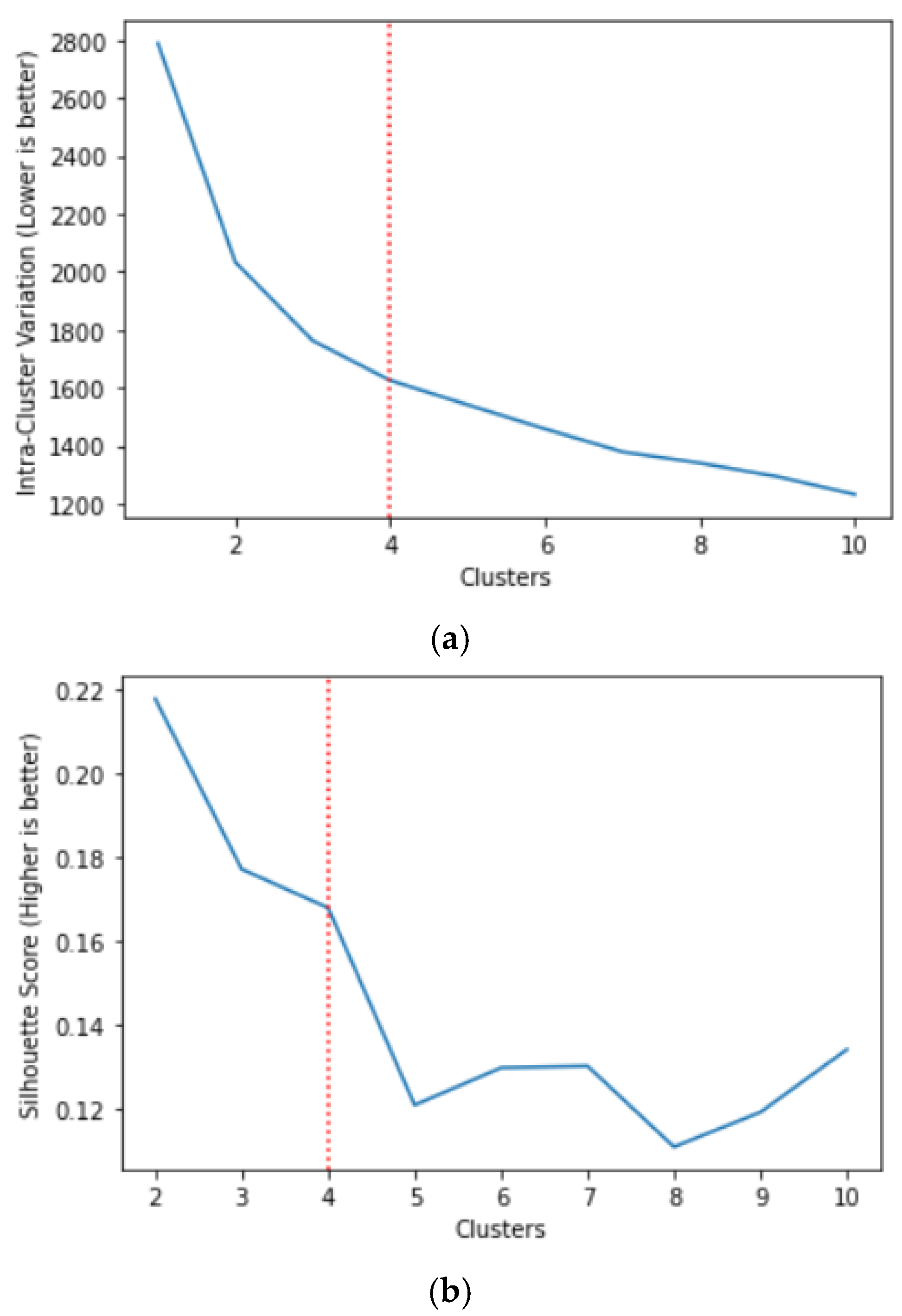
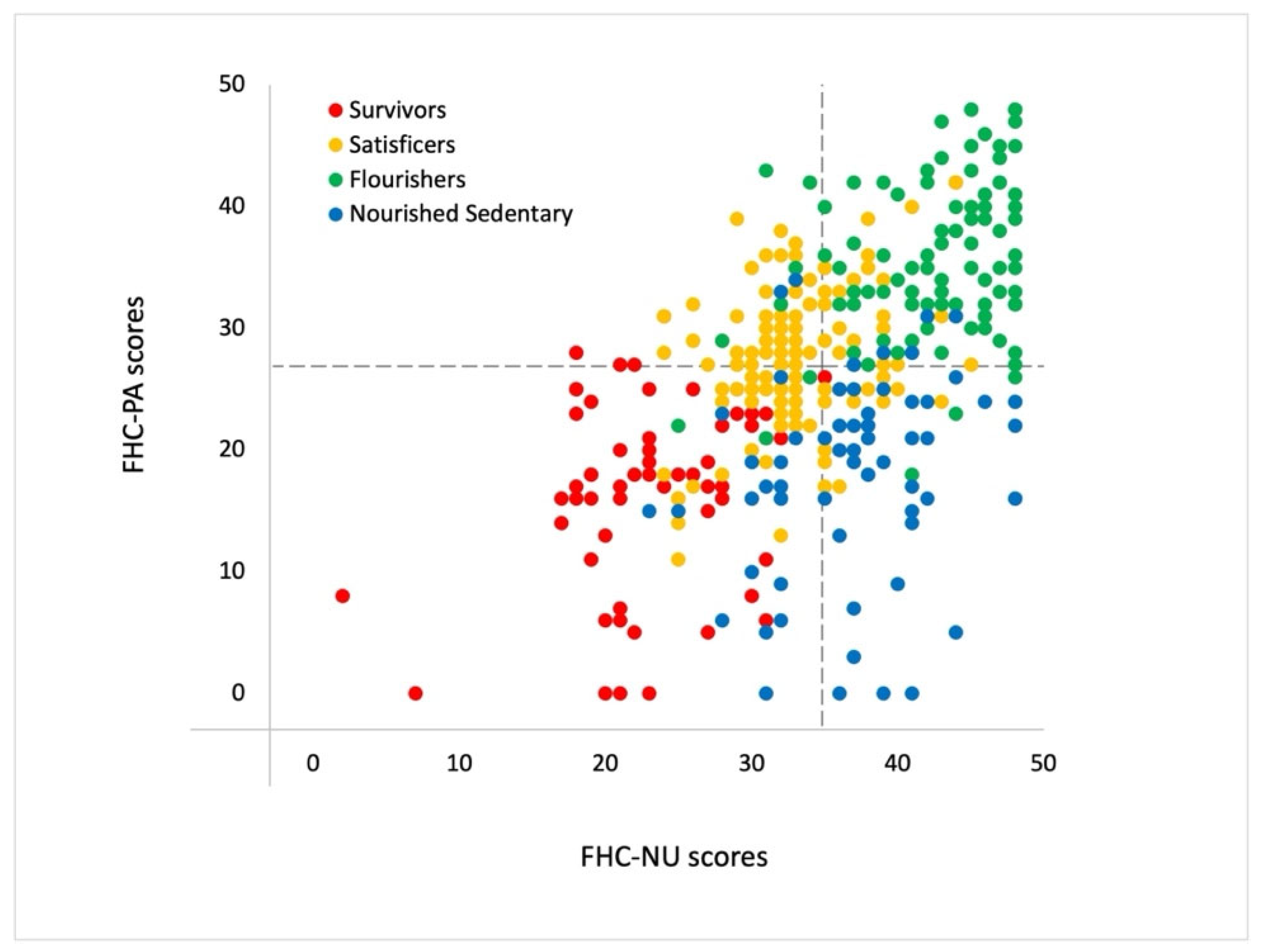
3.2. Clustering of FHC Scores
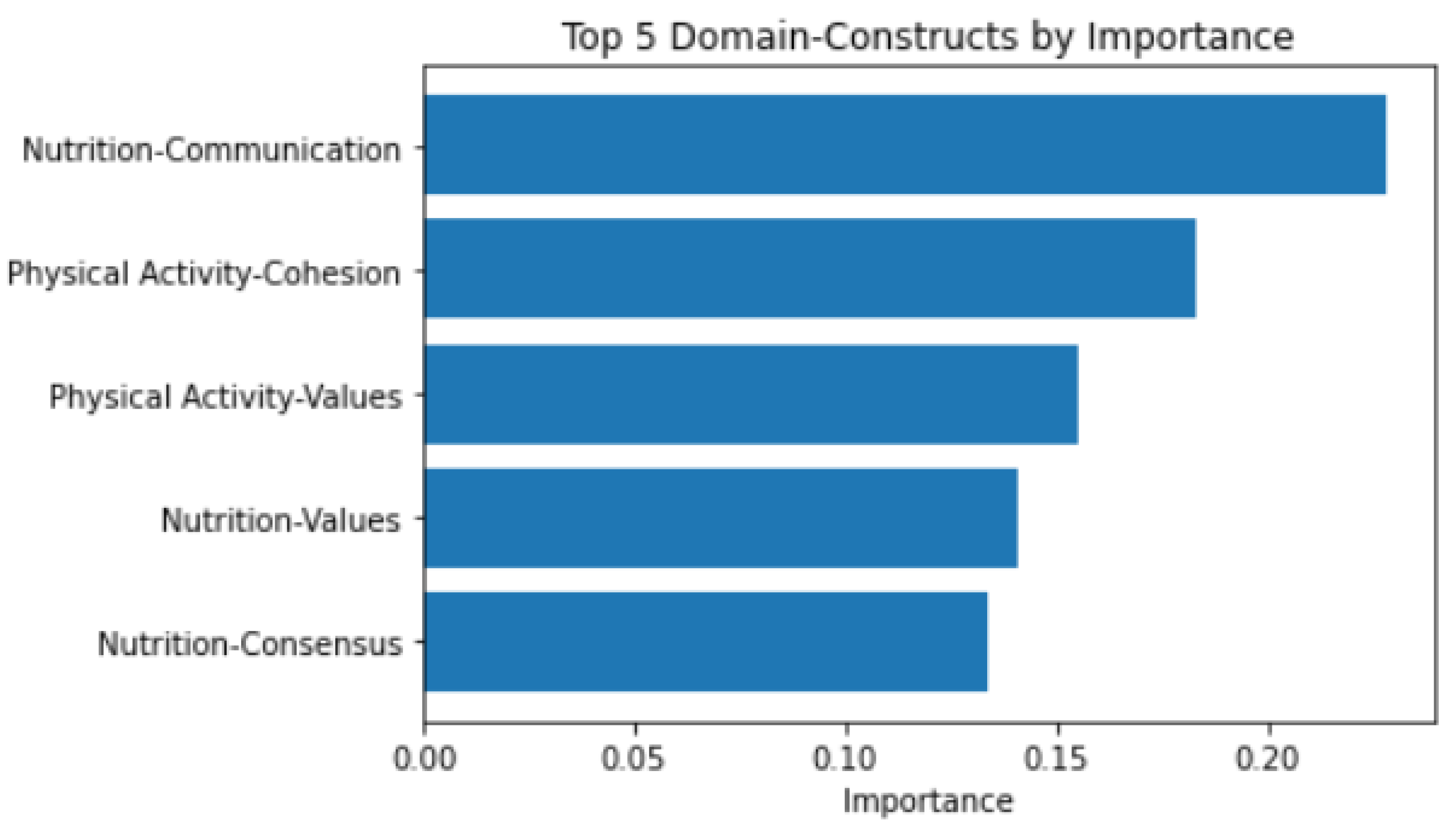
3.3. Domain-Construct Importance to Cluster Assignment
3.4. FHC Clusters and Demographics
3.5. FHC Clusters with Family Lifestyle Behaviour
3.6. FHC Clusters with Individual Lifestyle Behaviour
3.7. Clustering Robustness
4. Discussion
4.1. Survivors
4.2. Nourished Sedentary
4.3. Satisficers
4.4. Flourishers
4.5. Implications and Future Direction
4.6. Limitations
5. Conclusions
Supplementary Materials
Author Contributions
Funding
Institutional Review Board Statement
Informed Consent Statement
Data Availability Statement
Conflicts of Interest
Abbreviations
| ANOVA | Analysis of Variance |
| BMI | Body Mass Index |
| CI | Confidence Interval |
| DASH | Dietary Approaches to Stop Hypertension |
| FHC | Family Health Climate |
| HDB | Housing and Development Board |
| ICC | Intraclass Correlation Coefficient |
| IPAQ | International Physical Activity Questionnaire |
| MET | Metabolic Equivalent of Task |
| NU | Nutrition |
| PA | Physical Activity |
| PSQI | Pittsburgh Sleep Quality Index |
References
- Geng, X.; Liang, F.; Wang, P. The Global Burden of Non-Communicable Diseases Attributable to Behavioral Risk Factors and Its Trends from 1990 to 2021. J. Adv. Res. 2025. [Google Scholar] [CrossRef]
- Sun, X.; Yon, D.K.; Nguyen, T.T.; Tanisawa, K.; Son, K.; Zhang, L.; Shu, J.; Peng, W.; Yang, Y.; Branca, F.; et al. Dietary and Other Lifestyle Factors and Their Influence on Non-Communicable Diseases in the Western Pacific Region. Lancet Reg. Health–West. Pac. 2024, 43, 100842. [Google Scholar] [CrossRef]
- Nursiswati, N.; Candradewini, C.; Sari, D.S.; Kurniasih, S.A.; Ibrahim, K. Factors Associated with Healthy Behavior for Preventing Non-Communicable Diseases. J. Multidiscip. Healthc. 2025, 18, 1597–1613. [Google Scholar] [CrossRef] [PubMed]
- Strain, T.; Flaxman, S.; Guthold, R.; Semenova, E.; Cowan, M.; Riley, L.M.; Bull, F.C.; Stevens, G.A.; Abdul Raheem, R.; Agoudavi, K.; et al. National, Regional, and Global Trends in Insufficient Physical Activity among Adults from 2000 to 2022: A Pooled Analysis of 507 Population-Based Surveys with 5·7 Million Participants. Lancet Glob. Health 2024, 12, e1232–e1243. [Google Scholar] [CrossRef] [PubMed]
- Bronfenbrenner, U. Ecological Systems Theory. In Six Theories of Child Development: Revised Formulations and Current Issues; Jessica Kingsley Publishers: London, UK, 1992; pp. 187–249. [Google Scholar]
- Eriksson, M.; Sundberg, L.R.; Santosa, A.; Lindgren, H.; Ng, N.; Lindvall, K. Health Behavioural Change—The Influence of Social-Ecological Factors and Health Identity. Int. J. Qual. Stud. Health Well-Being 2025, 20, 2458309. [Google Scholar] [CrossRef]
- Ho, Y.-C.L.; Mahirah, D.; Ho, C.Z.-H.; Thumboo, J. The Role of the Family in Health Promotion: A Scoping Review of Models and Mechanisms. Health Promot. Int. 2022, 37, daac119. [Google Scholar] [CrossRef]
- Pourrashidi Alibigloo, H.; Eshaghi, Z. The Integrated Model of Health Behavior Promotion (IMHBP): A Synergistic Approach to Promote Health-Oriented Behaviors. Open Public Health J. 2025, 18, e18749445375249. [Google Scholar] [CrossRef]
- Su, Z.; Yang, D.; Wang, C.; Xiao, Z.; Cai, S. Structural Assessment of Family and Educational Influences on Student Health Behaviours: Insights from a Public Health Perspective. PLoS ONE 2025, 20, e0333086. [Google Scholar] [CrossRef] [PubMed]
- Rhodes, R.E.; Guerrero, M.D.; Vanderloo, L.M.; Barbeau, K.; Birken, C.S.; Chaput, J.-P.; Faulkner, G.; Janssen, I.; Madigan, S.; Mâsse, L.C.; et al. Development of a Consensus Statement on the Role of the Family in the Physical Activity, Sedentary, and Sleep Behaviours of Children and Youth. Int. J. Behav. Nutr. Phys. Act. 2020, 17, 74. [Google Scholar] [CrossRef]
- Maia, C.; Braz, D.; Fernandes, H.M.; Sarmento, H.; Machado-Rodrigues, A.M. The Impact of Parental Behaviors on Children’s Lifestyle, Dietary Habits, Screen Time, Sleep Patterns, Mental Health, and BMI: A Scoping Review. Children 2025, 12, 203. [Google Scholar] [CrossRef]
- Mejía, S.T.; Su, T.-T.; Smith, J.; Gonzalez, R. Spouses’ Individual and Shared Cumulative Risk: Implications for Functional Health and Longevity in Older Adulthood. Am. J. Prev. Med. 2025, 69, 107649. [Google Scholar] [CrossRef]
- Varghese, J.S.; Ghosh, A.; Stein, A.D.; Narayan, K.M.V.; Patel, S.A. The Association of Hypertension among Married Indian Couples: A Nationally Representative Cross-Sectional Study. Sci. Rep. 2024, 14, 10411. [Google Scholar] [CrossRef]
- Niermann, C.; Krapf, F.; Renner, B.; Reiner, M.; Woll, A. Family Health Climate Scale (FHC-Scale): Development and Validation. Int. J. Behav. Nutr. Phys. Act. 2014, 11, 30. [Google Scholar] [CrossRef]
- Wäsche, H.; Niermann, C.; Bezold, J.; Woll, A. Family Health Climate: A Qualitative Exploration of Everyday Family Life and Health. BMC Public Health 2021, 21, 1261. [Google Scholar] [CrossRef] [PubMed]
- Niermann, C.Y.N.; Kremers, S.P.J.; Renner, B.; Woll, A. Family Health Climate and Adolescents’ Physical Activity and Healthy Eating: A Cross-Sectional Study with Mother-Father-Adolescent Triads. PLoS ONE 2015, 10, e0143599. [Google Scholar] [CrossRef]
- Niermann, C.Y.N.; Spengler, S.; Gubbels, J.S. Physical Activity, Screen Time, and Dietary Intake in Families: A Cluster-Analysis With Mother-Father-Child Triads. Front. Public Health 2018, 6, 276. [Google Scholar] [CrossRef]
- Department of Statistics Singapore Census of Population 2020 Statistical Release 2: Households, Geographic Distribution, Transport and Difficulty in Basic Activities. Available online: https://www.singstat.gov.sg/-/media/files/publications/cop2020/sr2/cop2020sr2.ashx (accessed on 18 February 2026).
- Straughan, P.T.; Xu, C. Parents’ Knowledge, Attitudes, and Practices of Childhood Obesity in Singapore. Sage Open 2022, 12. [Google Scholar] [CrossRef]
- Tan, B.Q.M.; Hee, J.M.; Yow, K.S.; Sim, X.; Asano, M.; Chong, M.F.-F. Feeding-Related Knowledge, Attitudes, and Practices among Grandparents in Singapore. Nutrients 2019, 11, 1696. [Google Scholar] [CrossRef] [PubMed]
- Ministry of Health Staying Healthy. Available online: https://www.moh.gov.sg/staying-healthy/ (accessed on 28 February 2025).
- Ministry of Health War on Diabetes: Summary Report 2016–2019. Available online: https://isomer-user-content.by.gov.sg/3/de338897-bda1-4673-a555-8cbe906c0952/wod_public_report.pdf#:~:text=From 2010 to 2017%2C the&text=prevalence of diabetes among Singapore residents increased by&text=4%25 (accessed on 11 November 2025).
- Ho, Y.-C.L.; Chew, M.S.-L.; Ho, C.Z.-H.; Latib, A.B.; Lee, V.S.-Y.; Lin, G.J.; Thumboo, J.; Doshi, K. The Validation of Culturally Appropriate Scales to Assess the Family Health Climate in a Multi-Ethnic Asian Population. Front. Public Health 2022, 10, 988525. [Google Scholar] [CrossRef] [PubMed]
- Craig, C.L.; Marshall, A.L.; Sjöström, M.; Bauman, A.E.; Booth, M.L.; Ainsworth, B.E.; Pratt, M.; Ekelund, U.; Yngve, A.; Sallis, J.F.; et al. International Physical Activity Questionnaire: 12-Country Reliability and Validity. Med. Sci. Sports Exerc. 2003, 35, 1381–1395. [Google Scholar] [CrossRef]
- Whitton, C.; Ho, J.; Tay, Z.; Rebello, S.; Lu, Y.; Ong, C.; van Dam, R. Relative Validity and Reproducibility of a Food Frequency Questionnaire for Assessing Dietary Intakes in a Multi-Ethnic Asian Population Using 24-h Dietary Recalls and Biomarkers. Nutrients 2017, 9, 1059. [Google Scholar] [CrossRef]
- Fung, T.T.; Hu, F.B.; Wu, K.; Chiuve, S.E.; Fuchs, C.S.; Giovannucci, E. The Mediterranean and Dietary Approaches to Stop Hypertension (DASH) Diets and Colorectal Cancer. Am. J. Clin. Nutr. 2010, 92, 1429–1435. [Google Scholar] [CrossRef]
- Dunleavy, G.; Bajpai, R.; Comiran Tonon, A.; Chua, A.P.; Cheung, K.L.; Soh, C.-K.; Christopoulos, G.; de Vries, H.; Car, J. Examining the Factor Structure of the Pittsburgh Sleep Quality Index in a Multi-Ethnic Working Population in Singapore. Int. J. Environ. Res. Public. Health 2019, 16, 4590. [Google Scholar] [CrossRef]
- Housing & Development Board Public Housing in SIngapore: Residents’ Profile, Housing Satisfaction and Preferences. Available online: https://www.hdb.gov.sg/cs/infoweb/-/media/HDBContent/Images/CDG/Library/Library/SHS-2018-Monograph-1---2-Mar-2021_BLUE.pdf (accessed on 1 July 2024).
- World Health Organization. Appropriate Body-Mass Index for Asian Populations and Its Implications for Policy and Intervention Strategies. Lancet 2004, 363, 157–163. [Google Scholar] [CrossRef] [PubMed]
- Koo, T.K.; Li, M.Y. A Guideline of Selecting and Reporting Intraclass Correlation Coefficients for Reliability Research. J. Chiropr. Med. 2016, 15, 155–163. [Google Scholar] [CrossRef] [PubMed]
- Kenny, D.A.; Kashy, D.A.; Cook, W.L. Data Organization. In Dyadic Data Analysis; Guilford Press: New York, NY, USA, 2006; pp. 14–20. [Google Scholar]
- Lloyd, S. Least Squares Quantization in PCM. IEEE Trans. Inf. Theory 1982, 28, 129–137. [Google Scholar] [CrossRef]
- Thorndike, R.L. Who Belongs in the Family? Psychometrika 1953, 18, 267–276. [Google Scholar] [CrossRef]
- Shahapure, K.R.; Nicholas, C. Cluster Quality Analysis Using Silhouette Score. In Proceedings of the 2020 IEEE 7th International Conference on Data Science and Advanced Analytics (DSAA), Sydney, Australia, 6–9 October 2020; IEEE: New York, NY, USA, 2020; pp. 747–748. [Google Scholar]
- Cohen, J. A Coefficient of Agreement for Nominal Scales. Educ. Psychol. Meas. 1960, 20, 37–46. [Google Scholar] [CrossRef]
- Singapore Department of Statistics Population Trends 2025. Available online: https://www.singstat.gov.sg/-/media/files/publications/population/population2025.ashx (accessed on 11 November 2025).
- Tan, N.; Kaur-Gill, S.; Dutta, M.J.; Venkataraman, N. Food Insecurity in Singapore: The Communicative (Dis)Value of the Lived Experiences of the Poor. Health Commun. 2017, 32, 954–962. [Google Scholar] [CrossRef]
- Gómez, C.A.; Kleinman, D.V.; Pronk, N.; Wrenn Gordon, G.L.; Ochiai, E.; Blakey, C.; Johnson, A.; Brewer, K.H. Addressing Health Equity and Social Determinants of Health Through Healthy People 2030. J. Public Health Manag. Pract. 2021, 27, S249–S257. [Google Scholar] [CrossRef]
- Gaupholm, J.; Papadopoulos, A.; Asif, A.; Dodd, W.; Little, M. The Influence of Food Environments on Dietary Behaviour and Nutrition in Southeast Asia: A Systematic Scoping Review. Nutr. Health 2023, 29, 231–253. [Google Scholar] [CrossRef]
- Khaing Nang, E.E.; Khoo, E.Y.; Salim, A.; Tai, E.S.; Lee, J.; Van Dam, R.M. Patterns of Physical Activity in Different Domains and Implications for Intervention in a Multi-Ethnic Asian Population: A Cross-Sectional Study. BMC Public Health 2010, 10, 644. [Google Scholar] [CrossRef]
- Stalsberg, R.; Pedersen, A. V Are Differences in Physical Activity across Socioeconomic Groups Associated with Choice of Physical Activity Variables to Report? Int. J. Environ. Res. Public. Health 2018, 15, 922. [Google Scholar] [CrossRef]
- Cusatis, R.; Garbarski, D. Different Domains of Physical Activity: The Role of Leisure, Housework/Care Work, and Paid Work in Socioeconomic Differences in Reported Physical Activity. SSM-Popul. Health 2019, 7, 100387. [Google Scholar] [CrossRef]
- Samuel, L.J.; Wright, R.; Taylor, J.; Roberts Lavigne, L.C.; Szanton, S.L. Social Norms about Handling Financial Challenges in Relation to Health-Protective Capacity among Low-Income Older Adults. Gerontologist 2023, 63, 783–794. [Google Scholar] [CrossRef]
- Hughes, M.E.; Waite, L.J. Health in Household Context: Living Arrangements and Health in Late Middle Age. J. Health Soc. Behav. 2002, 43, 1–21. [Google Scholar] [CrossRef]
- Maroto, M. Sharing or Limiting the Wealth? Coresidence, Parental Support, and Wealth Outcomes in Canada. J. Fam. Econ. Issues 2019, 40, 102–116. [Google Scholar] [CrossRef]
- Smits, A.; Van Gaalen, R.I.; Mulder, C.H. Parent–Child Coresidence: Who Moves in With Whom and for Whose Needs? J. Marriage Fam. 2010, 72, 1022–1033. [Google Scholar] [CrossRef]
- Steiner, A. The Lived Experiences of Sandwich Generation Women and Their Health Behaviours. Master’s Thesis, Wilfrid Laurier University, Waterloo, ON, Canada, 2015. [Google Scholar]
- Subramaniam, A.; Mehta, K.K. Exploring the Lived Experiences of Caregiving for Older Family Members by Young Caregivers in Singapore: Transition, Trials, and Tribulations. Int. J. Environ. Res. Public. Health 2024, 21, 182. [Google Scholar] [CrossRef] [PubMed]
- Gordon, J.R.; Pruchno, R.A.; Wilson-Genderson, M.; Murphy, W.M.; Rose, M. Balancing Caregiving and Work: Role Conflict and Role Strain Dynamics. J. Fam. Issues 2012, 33, 662–689. [Google Scholar] [CrossRef] [PubMed]
- Ravyts, S.G.; Dzierzewski, J.M. Sleep Disturbance, Mental Health Symptoms, and Quality of Life: A Structural Equation Model Assessing Aspects of Caregiver Burden. Clin. Gerontol. 2024, 47, 484–493. [Google Scholar] [CrossRef]
- Wilson, S.J.; Padin, A.C.; Birmingham, D.J.; Malarkey, W.B.; Kiecolt-Glaser, J.K. When Distress Becomes Somatic: Dementia Family Caregivers’ Distress and Genetic Vulnerability to Pain and Sleep Problems. Gerontologist 2018, 59, e451–e460. [Google Scholar] [CrossRef] [PubMed]
- Erinosho, T.O.; Beth Dixon, L.; Young, C.; Brotman, L.M.; Hayman, L.L. Caregiver Food Behaviours Are Associated with Dietary Intakes of Children Outside the Child-Care Setting. Public Health Nutr. 2013, 16, 1263–1272. [Google Scholar] [CrossRef] [PubMed]
- Neumark-Sztainer, D.; Larson, N.I.; Fulkerson, J.A.; Eisenberg, M.E.; Story, M. Family Meals and Adolescents: What Have We Learned from Project EAT (Eating Among Teens)? Public Health Nutr. 2010, 13, 1113–1121. [Google Scholar] [CrossRef] [PubMed]
- Verjans-Janssen, S.; Van Kann, D.; Kremers, S.; Vos, S.; Jansen, M.; Gerards, S. A Cross-Sectional Study on the Relationship between the Family Nutrition Climate and Children’s Nutrition Behavior. Nutrients 2019, 11, 2344. [Google Scholar] [CrossRef]
- Chen, Y.-C.; Lee, C.-S.; Chiang, M.-C.; Tsui, P.-L.; Lan, B.-K.; Chen, Y.-J. Nourishing Holistic Well-Being: The Role of Family Dynamics and Family Cooking. Healthcare 2025, 13, 414. [Google Scholar] [CrossRef]
- Berg, C.; Strandhagen, E.; Mehlig, K.; Subramoney, S.; Lissner, L.; Björck, L. Normal Weight Adiposity in a Swedish Population: How Well Is Cardiovascular Risk Associated with Excess Body Fat Captured by BMI? Obes. Sci. Pract. 2015, 1, 50–58. [Google Scholar] [CrossRef]
- Mainous, A.G.; Tanner, R.J.; Anton, S.D.; Jo, A.; Luetke, M.C. Physical Activity and Abnormal Blood Glucose Among Healthy Weight Adults. Am. J. Prev. Med. 2017, 53, 42–47. [Google Scholar] [CrossRef]
- Merriam-Webster Satisfice. Available online: https://www.merriam-webster.com/dictionary/satisfice (accessed on 1 November 2024).
- Agency for Integrated Care Home Caregiving Grant. Available online: https://www.aic.sg/financial-assistance/home-caregiving-grant-hcg/ (accessed on 10 July 2024).
- Ministry of Manpower. Levy Concession for a Migrant Domestic Worker. Available online: https://www.mom.gov.sg/passes-and-permits/work-permit-for-foreign-domestic-worker/foreign-domestic-worker-levy/levy-concession (accessed on 10 July 2024).
- Plotnick, R.D. Childlessness and the Economic Well-Being of Older Americans. J. Gerontol. Ser. B 2009, 64B, 767–776. [Google Scholar] [CrossRef]
- Rao, M.; Afshin, A.; Singh, G.; Mozaffarian, D. Do Healthier Foods and Diet Patterns Cost More than Less Healthy Options? A Systematic Review and Meta-Analysis. BMJ Open 2013, 3, e004277. [Google Scholar] [CrossRef]
- Kelly, S.; Martin, S.; Kuhn, I.; Cowan, A.; Brayne, C.; Lafortune, L. Barriers and Facilitators to the Uptake and Maintenance of Healthy Behaviours by People at Mid-Life: A Rapid Systematic Review. PLoS ONE 2016, 11, e0145074. [Google Scholar] [CrossRef]
- Cornwell, E.Y.; Waite, L.J. Social Disconnectedness, Perceived Isolation, and Health among Older Adults. J. Health Soc. Behav. 2009, 50, 31–48. [Google Scholar] [CrossRef] [PubMed]
- Heinze, J.E.; Kruger, D.J.; Reischl, T.M.; Cupal, S.; Zimmerman, M.A. Relationships Among Disease, Social Support, and Perceived Health: A Lifespan Approach. Am. J. Community Psychol. 2015, 56, 268–279. [Google Scholar] [CrossRef] [PubMed]
- Abramowska-Kmon, A.; Mynarska, M.; Timoszuk, S. Coping Strategies for Happy Childless Ageing: An Explorative Study in Poland. Genus 2023, 79, 2. [Google Scholar] [CrossRef]
- Skerrett, K.; Spira, M.; Chandy, J. Emerging Elderhood: Transitions from Midlife. Clin. Soc. Work J. 2022, 50, 377–386. [Google Scholar] [CrossRef]
- Haslam, A.; Gill, J.; Taniguchi, T.; Love, C.; Jernigan, V.B. The Effect of Food Prescription Programs on Chronic Disease Management in Primarily Low-Income Populations: A Systematic Review and Meta-Analysis. Nutr. Health 2022, 28, 389–400. [Google Scholar] [CrossRef]
- Porter, C. What Gardens Grow: Outcomes from Home and Community Gardens Supported by Community-Based Food Justice Organizations. J. Agric. Food Syst. Community Dev. 2018, 8, 187–205. [Google Scholar] [CrossRef]
- Mikkelsen, B.E.; Novotny, R.; Gittelsohn, J. Multi-Level, Multi-Component Approaches to Community Based Interventions for Healthy Living—A Three Case Comparison. Int. J. Environ. Res. Public. Health 2016, 13, 1023. [Google Scholar] [CrossRef]
- Ewart-Pierce, E.; Mejía Ruiz, M.J.; Gittelsohn, J. “Whole-of-Community” Obesity Prevention: A Review of Challenges and Opportunities in Multilevel, Multicomponent Interventions. Curr. Obes. Rep. 2016, 5, 361–374. [Google Scholar] [CrossRef]
- Peters, L.E.R.; Shannon, G.; Kelman, I.; Meriläinen, E. Toward Resourcefulness: Pathways for Community Positive Health. Glob. Health Promot. 2021, 29, 5–13. [Google Scholar] [CrossRef]
- Dicent Taillepierre, J.C.; Liburd, L.; O’Connor, A.; Valentine, J.; Bouye, K.; McCree, D.H.; Chapel, T.; Hahn, R. Toward Achieving Health Equity: Emerging Evidence and Program Practice. J. Public Health Manag. Pract. 2016, 22, S43–S49. [Google Scholar] [CrossRef] [PubMed]



| Cluster | Name of Cluster | Mean FHC-PA Score | Mean FHC-NU Score | Number of Dyads |
|---|---|---|---|---|
| 1 | Survivors | 17.4 | 23.9 | 32 |
| 2 | Nourished Sedentary | 17.8 | 36.8 | 33 |
| 3 | Satisficers | 28.5 | 33.1 | 81 |
| 4 | Flourishers | 35.6 | 42.6 | 54 |
| Cluster | Proportion of Dyads | Family Health Climate Profile | Sociodemographics | Family Routines and Health Behaviours |
|---|---|---|---|---|
| Survivors | 16% (n = 32) | Lowest FHC-PA and FHC-NU scores | Lower-income profile; predominantly 2-generation public housing households with independent adult children | Infrequent shared physical activity and family meals; lower availability of healthy foods |
| Nourished Sedentary | 17% (n = 33) | Low FHC-PA, high FHC-NU | Mixed-to-higher income profile; higher proportion of multigenerational households with dependent children | Frequent family meals and healthy eating practices, but low engagement in physical activity |
| Satisficers | 40% (n = 81) | Moderate FHC-PA and FHC-NU | Middle-income profile; predominantly 2-generation public housing households with independent adult children | Moderate engagement in both healthy eating and physical activity routines, and greater use of domestic workers for meal preparation |
| Flourishers | 27% (n = 54) | Highest FHC-PA and FHC-NU scores | Higher income profile; greater private housing representation; higher proportion of single-generation households | Frequent shared physical activity and family meals, high availability of healthy foods |
| Variables | Survivors | Nourished Sedentary | Satisficers | Flourishers | X2 Tests and Post Hoc Comparisons |
|---|---|---|---|---|---|
| No. of generations in household | |||||
| 1 generation | 3.13% (n = 2) | 3.03% (n = 2) | 12.4% (n = 20) | 20.4% ** (n = 22) | X2 = 23.4, p = 0.001 Survivors-2 generations (adjusted p = 0.002) Flourishers-1 generation (adjusted p = 0.0007) |
| 2 generations | 87.5% ** (n = 56) | 72.7% (n = 48) | 69.1% (n = 112) | 64.8% (n = 70) | |
| 3 generations | 9.38% (n = 6) | 24.2% (n = 16) | 18.5% (n = 30) | 14.8% (n = 16) | |
| Housing | |||||
| Small-medium public housing flats | 56.3% (n = 36) | 48.5% (n = 32) | 56.8% (n = 92) | 40.7% (n = 44) | X2 = 15.0, p = 0.02 Flourishers-Private Housing (adjusted p = 0.00385) |
| Large public housing flats | 37.5% (n = 24) | 33.3% (n = 22) | 28.4% (n = 46) | 33.3% (n = 36) | |
| Private housing | 6.25% (n = 4) | 18.2% (n = 12) | 14.8% (n = 24) | 25.9% ** (n = 28) | |
| Household Income | |||||
| $0–$2500 | 15.6% (n = 10) | 9.09% (n = 6) | 9.88% (n = 16) | 9.26% (n = 10) | X2 = 21.1, p = 0.012 Satisficers-$2500–$7500 (adjusted p = 0.00034) Satisficers-Above $10,001 (adjusted p = 0.00137) |
| $2501–$7500 | 37.5% (n = 24) | 27.3% (n = 18) | 50.6% ** (n = 82) | 33.3% (n = 36) | |
| $7501–$10,000 | 21.9% (n = 14) | 24.2% (n = 16) | 19.8% (n = 32) | 20.4% (n = 22) | |
| Above $10,001 | 25.0% (n = 16) | 39.4% (n = 26) | 19.8% ** (n = 32) | 37.0% (n = 40) | |
| Household Lifecycle Stages | |||||
| Household with dependent children | 9.38% (n = 6) | 21.2% (n = 14) | 13.6% (n = 22) | 11.1% (n = 12) | X2 = 24.6, p < 0.001 Flourishers-Family without children (adjusted p = 0.00013) |
| Household with independent (adult) children | 87.5% (n = 56) | 75.8% (n = 50) | 74.1% (n = 120) | 66.7% (n = 72) | |
| Household without children | 3.13% (n = 2) | 3.03% (n = 2) | 12.4% (n = 20) | 22.2% ** (n = 24) | |
| Employment of a domestic worker | |||||
| Yes | 0.00% ** (n = 0) | 9.09% (n = 6) | 17.3% ** (n = 28) | 9.26% (n = 10) | X2 = 15.0, p = 0.002 Survivors-No (adjusted p = 0.00214) Satisficers-Yes (adjusted p = 0.00093) |
| The person who cooks in the household | |||||
| No one | 6.25% (n = 4) | 3.03% (n = 2) | 8.64% (n = 14) | 5.56% (n = 6) | X2 = 15.8, p = 0.015 Satisficers-Only DW cooks (adjusted p = 0.00261) Satisficers-Family member (adjusted p = 0.00084) |
| Domestic worker (DW) | 0.00% (n = 0) | 9.09% (n = 6) | 13.6% ** (n = 22) | 5.56% (n = 6) | |
| Family member | 93.8% (n = 60) | 87.9% (n = 58) | 77.8% ** (n = 126) | 88.9% (n = 96) | |
| Variables | Survivors | Nourished Sedentary | Satisficers | Flourishers | ANOVAs and Sidak Post Hoc Comparisons |
|---|---|---|---|---|---|
| On a Likert scale of 1 being ‘never’, 3 being ‘regularly’ and 5 being ‘very often’: | |||||
| How often does your family engage in physical activities together? | 1.72 | 1.77 | 2.37 | 3.08 | F(3,396) = 53.1, p < 0.001 All post hoc pairwise comparisons sig. (p < 0.001) except Survivors-Nourished Sedentary |
| How often do family members encourage each other to engage in physical activities? | 2.22 | 2.18 | 2.80 | 3.52 | F(3,396) = 37.7, p < 0.001 All post hoc pairwise comparisons sig. (p < 0.001) except Survivors-Nourished Sedentary |
| How often does your family have meals together each week? | 3.00 | 3.86 | 3.57 | 4.05 | F(3,396) = 11.3, p < 0.001 Post hoc comparisons: Survivors-Satisficers (p = 0.008) Survivors-Flourishers (p < 0.001) Survivors-Nourished Sedentary (p < 0.001) Satisficers-Flourishers (p = 0.008) |
| How often do family members encourage each other to eat healthily? | 2.38 | 3.76 | 3.21 | 4.04 | F(3,396) = 44.7, p < 0.001 Post-hoc comparisons: Survivors-Satisficers (p < 0.001) Survivors-Flourishers (p < 0.001) Survivors-Nourished Sedentary (p < 0.001) Satisficers-Flourishers (p < 0.001) Satisficers-Nourished Sedentary (p = 0.001) |
| How often are healthy foods (e.g., fruits and vegetables) available in the household? | 3.23 | 4.44 | 3.64 | 4.31 | F(3,396) = 28.2, p < 0.001 Post-hoc comparisons: Survivors-Satisficers (p = 0.024) Survivors-Flourishers (p < 0.001) Survivors-Nourished Sedentary (p < 0.001) Satisficers-Flourishers (p < 0.001) Satisficers-Nourished Sedentary (p < 0.001) |
| How often are unhealthy foods (e.g., soft drinks, fried snacks) available in the household? | 3.08 | 2.79 | 2.90 | 2.36 | F(3,396) = 8.27, p < 0.001 Post-hoc comparisons: Survivors-Flourishers (p < 0.001) Satisficers-Flourishers (p < 0.001) |
| Variables | Survivors | Nourished Sedentary | Satisficers | Flourishers | X2 Tests/ANOVAs and Post Hoc Comparisons |
|---|---|---|---|---|---|
| BMI | |||||
| Underweight | 7.81% (n = 5) | 13.6% (n = 9) | 9.26% (n = 15) | 10.2% (n = 11) | X2 = 5.91, p > 0.05 |
| Healthy | 48.4% (n = 31) | 54.6% (n = 36) | 45.1% (n = 73) | 45.4% (n = 49) | |
| Overweight | 26.6% (n = 17) | 21.2% (n = 14) | 32.1% (n = 52) | 32.4% (n = 35) | |
| Obese | 17.2% (n = 11) | 10.6% (n = 7) | 13.6% (n = 22) | 12.0% (n = 13) | |
| MET-min/week Physical activity during leisure (IPAQ) | 900 | 820 | 1058 | 1793 | F(3,396) = 3.73, p = 0.0115; Post-hoc comparisons: Flourishers-Nourished Sedentary (p = 0.035) |
| Nutrition quality (DASH score) | 19.0 | 21.4 | 20.1 | 22.5 | F(3,396) = 9.44, p < 0.001; Post-hoc comparisons: Survivors-Flourishers (p < 0.001) Satisficers-Flourishers (p < 0.001) Survivors-Nourished Sedentary (p = 0.025) |
| Sleep quality (PSQI score) | 6.9 | 5.7 | 5.7 | 5.1 | F(3,396) = 3.29, p = 0.0207; Post hoc comparisons: Survivors-Flourishers (p = 0.011) |
Disclaimer/Publisher’s Note: The statements, opinions and data contained in all publications are solely those of the individual author(s) and contributor(s) and not of MDPI and/or the editor(s). MDPI and/or the editor(s) disclaim responsibility for any injury to people or property resulting from any ideas, methods, instructions or products referred to in the content. |
© 2026 by the authors. Licensee MDPI, Basel, Switzerland. This article is an open access article distributed under the terms and conditions of the Creative Commons Attribution (CC BY) license.
Share and Cite
Mahirah, D.; Ho, Y.-C.L.; Chia, Z.H.; Chew, M.S.-L.; Koh, X.H.; Lim, J.-J.; Thumboo, J.; Doshi, K. Archetypes of Family Health Climates for Nutrition and Physical Activity Among Families in Singapore: A Cross-Sectional Study. Healthcare 2026, 14, 669. https://doi.org/10.3390/healthcare14050669
Mahirah D, Ho Y-CL, Chia ZH, Chew MS-L, Koh XH, Lim J-J, Thumboo J, Doshi K. Archetypes of Family Health Climates for Nutrition and Physical Activity Among Families in Singapore: A Cross-Sectional Study. Healthcare. 2026; 14(5):669. https://doi.org/10.3390/healthcare14050669
Chicago/Turabian StyleMahirah, Dhiya, Yi-Ching Lynn Ho, Zi Hsuan Chia, Mary Su-Lynn Chew, Xuan Han Koh, Jin-Jin Lim, Julian Thumboo, and Kinjal Doshi. 2026. "Archetypes of Family Health Climates for Nutrition and Physical Activity Among Families in Singapore: A Cross-Sectional Study" Healthcare 14, no. 5: 669. https://doi.org/10.3390/healthcare14050669
APA StyleMahirah, D., Ho, Y.-C. L., Chia, Z. H., Chew, M. S.-L., Koh, X. H., Lim, J.-J., Thumboo, J., & Doshi, K. (2026). Archetypes of Family Health Climates for Nutrition and Physical Activity Among Families in Singapore: A Cross-Sectional Study. Healthcare, 14(5), 669. https://doi.org/10.3390/healthcare14050669